Tag: Auto

  • Tesla Takes On Porsche With Battle On Germany’s Toughest Circuit

    Tesla Takes On Porsche With Battle On Germany’s Toughest Circuit

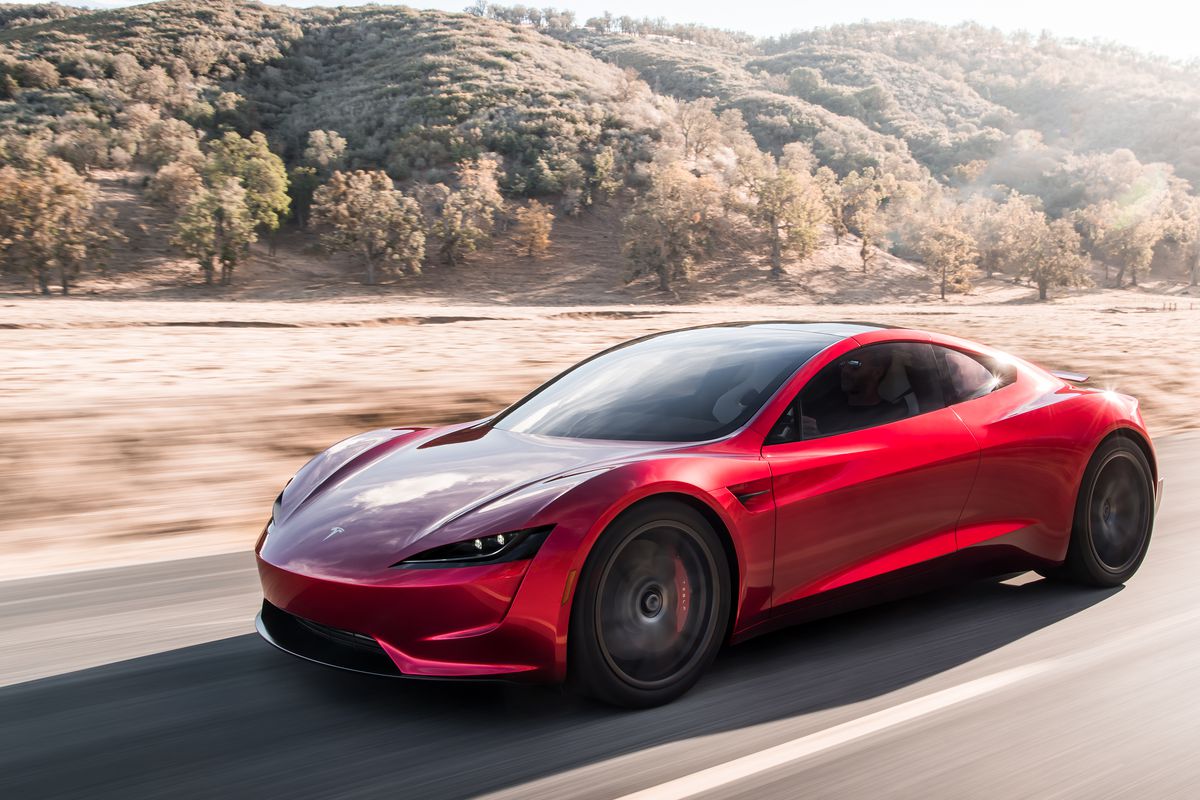
    Germany’s Auto Motor und Sport this week published photographs of a Tesla with “100D+” markings on the track where according to the magazine, it clocked an unofficial time of 7 minutes and 23 seconds, beating the recently launched electric Porsche Taycan’s lap time of 7 minutes 42 seconds.

    Tesla wants to steal Porsche’s bragging rights by testing its Model S on the northern loop of Germany’s Nuerburgring circuit, using a marketing tool that German carmakers have long used to tout the superiority of their products.

    Germany’s Auto Motor und Sport this week published photographs of a Tesla with “100D+” markings on the track where according to the magazine, it clocked an unofficial time of 7 minutes and 23 seconds, beating the recently launched electric Porsche Taycan’s lap time of 7 minutes 42 seconds.

    A formally timed record attempt was due to take place on Wednesday, with another attempt scheduled for Saturday, Auto Motor und Sport said.

    Tesla is using the Nordschleife, as the track is known, to market its “Plaid” mode on a 7-seater Tesla Model S, CEO Elon Musk confirmed on Twitter.

    “We expect these track times to be beaten by the actual production 7 seat Model S Plaid variant that goes into production around Oct/Nov next year,” Musk said on Tuesday.

    Setting a new record time for four-door electric cars would give the U.S.-based manufacturer’s ageing Model S a new lease of life just as Audi, Mercedes-Benz, BMW and Porsche prepare to launch electric cars.

    The Nordschleife is one of the world’s most treacherous thanks to its length of just over 20 km (12.5 miles), slanted cambers and an altitude difference of 300 meters (yards) between its highest and lowest point.

    Porsche says its 919 Evo hybrid racecar currently holds the record with a lap time of 5 minutes 19 seconds, set in 2018 by keeping up an average speed of 234 km (146.3 miles) an hour, despite blind corners, narrow bends and limited safety run-off zones.

    Porsche, BMW, Mitsubishi, Nissan, Cadillac and Aston Martin have used the racetrack as a boot camp to hone reliability and handling and to benchmark their vehicles against top competitors.

    “If you take the same corner, on the same road, at the same speed, in two different cars, you can see how your car measures up to the competition,” said driver Dirk Schoysman, who set a Nordschleife lap record in 1996 in a Nissan Skyline with a time of 7 minutes 59 seconds.

    For Nissan, the new record underscored the Skyline R33 GT-R’s global status as a serious sportscar, proving that Japanese brands could be as competitive as vehicles made by Germany’s finest manufacturers.

    The circuit opened in June 1927 to become an important battleground where legendary drivers like Tazio Nuvolari and Juan Manuel Fangio drove some of their most memorable races.

    In 1935 senior Nazi officials gathered at the German Grand Prix ready to cheer the home team, only to see Italy’s Nuvolari beat the Mercedes-Benz W25 and the Auto Union Typ B in an Alfa Romeo Tipo B P3.

    The track remained a venue for Grand Prix races until 1976 when a horrendous crash almost killed driving ace Niki Lauda, leading to the opening of a shorter, wider Nuerburgring track with improved facilities in May 1984.

    But carmakers have continued to use the older circuit’s 40 right-hand and 33 left-hand turns through the Eifel region’s forested hills to develop their regular vehicles.

    “Cars cannot keep secrets here, mistakes and problems will eventually rise to the surface,” Schoysman said.

    At the Hatzenbach corner, cars enter a dip forcing them over a series of undulations with their suspension compressed, testing the chassis to the limit.

    “If the car changes its line in that corner it may be a tire flexing, the suspension bushes that have gone through their stroke, or a problem with the stiffness of the car body, or its electronic stability program,” Schoysman explained.

    These development tweaks continue to be relevant for electric cars as well as for marketing purposes.

    Understanding the circumstances of the test lap will be crucial for evaluating Tesla’s achievement, Schoysman said.

    “Getting a new lap record shows the know-how of the company but there are always questions: Are the cars realistic copies of what the customer finds in a showroom? Or were they modified?”
  • Bugatti Celebrates 110th Anniversary With Baby 2

    Bugatti Celebrates 110th Anniversary With Baby 2

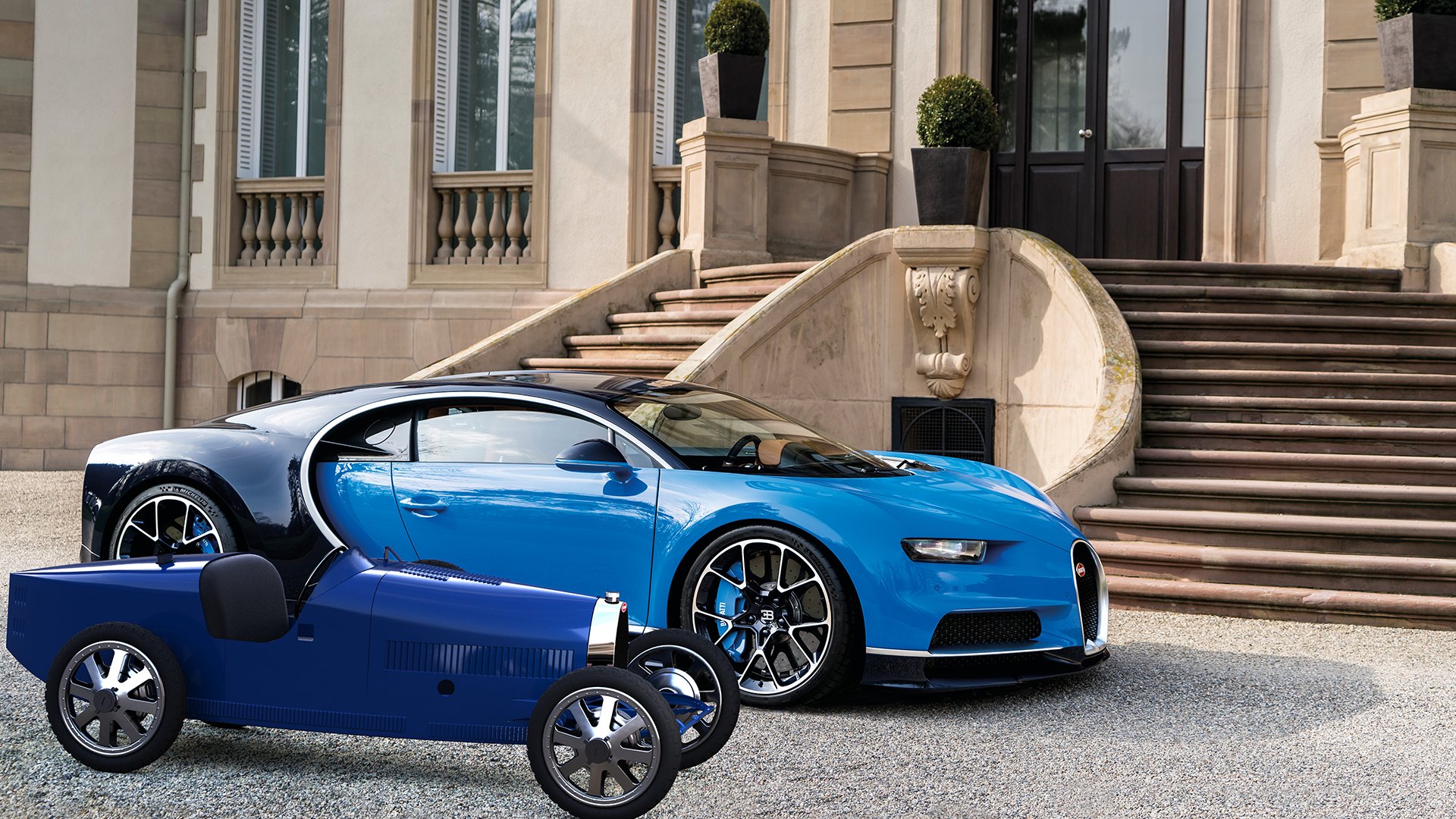
    Well! This one is not going to go transcending and set any earth-shattering speed record, yet it’s a Bugatti. It’s definitely something which rich kids with developing taste in cars would love to have, more so as it’s a bit grown up now. It’s the Bugatti Baby 2 which we first saw as a 3D printed model at the 2019 Geneva Motor Show and it is going to have a limited edition run. Bugatti will be manufacturing only 500 units of the Baby 2 and 500 lucky teenagers have already got one in their cart. Yes! It’s completely sold out.

    In fact, Stephen Winkelmann, President of Bugatti who also has a history of working with fast car brands is intrigued by the model and is excited to see it driving around the Bugatti premises. Incidentally, the Baby 2 also marks Bugatti’s 110th birthday. It has partnered with The Little Car Company to make this junior car. The first prototype, called the XP1, is already ready for test drives at La Grande Fete in Molsheim. To allow the Baby II to be driven by both adults and children, it has grown from the 50 percent scale of the original to a 75 percent scale replica of the Type 35 and includes a sliding pedal box for drivers of all age. In the first stage of its inception, the engineering team digitally scanned every single component of a 1924 Type 35 Lyon Grand Prix car. Then it got a new electric powertrain with lithium-ion batteries and regenerative braking along with few more redesigned elements to suit the need of modern age. It gets the same eight-spoke alloy wheels shod in new Michelin tires and it gets new hollow front axle along with the suspension and steering mechanism from the old Type 35.

    The old oil and pressure meters in the Baby 2 are now replaced with battery level, indicator and power gauge and the four-spoke steering wheel continues to be there.

    The cockpit gets the same four-spoke steering wheel ahead of the aluminum casing which sports Bugatti’s signature instruments. The old oil and pressure meters are now replaced with battery level, indicator and power gauge but the clock used to measure race performance in the iconic Type 35 remains as a symbol. The fuel pressure pump from the Type 35 has been digitally replicated and repurposed as a forward or reverse control, and all cars will come with a horn, rearview mirror, handbrake, headlights and a remote control to disable the car from up to 50 meters. In the centre of the dashboard is a plaque giving the unique chassis number of the Baby 2 and displayed on the nose of every car will be Bugatti’s famous ‘Macaron’ badge, made of 50g of solid silver, just like the Chiron.

    It also gets a rear-wheel drive powertrain and comes with two selectable power modes for drivers of a different experience. A 1kW ‘child mode’ with the top speed limited to 20 km/h, and a 4kW ‘adult mode’ with the top speed limited to 45 km/h. That said, there is also a Speed Key for experienced and confident drivers which takes the total power output to 10 kW and bars the speed limiter. It also comes equipped with a limited-slip differential which channelizes all the torque to the rear wheels. The car will come with two sizes of a removable battery, a standard 1.4 kWh pack and a long-range 2.8 kWh version. While the exact range will depend on driving style, the larger pack is expected to give a range of more than 30km.

    The standard car will be painted in French Racing Blue with a black leather interior, but other color options will be available for both the exterior and interior. Additionally, all owners of Baby IIs will receive membership of The Little Car Club, and be able to attend events where they, their children and their grandchildren can drive their cars at famous motor racing circuits. The Baby 2 is available in the European markets for 30,000 Euros.

  • Hyundai Motor Group Develops New Centre Side Airbag

    Hyundai Motor Group Develops New Centre Side Airbag

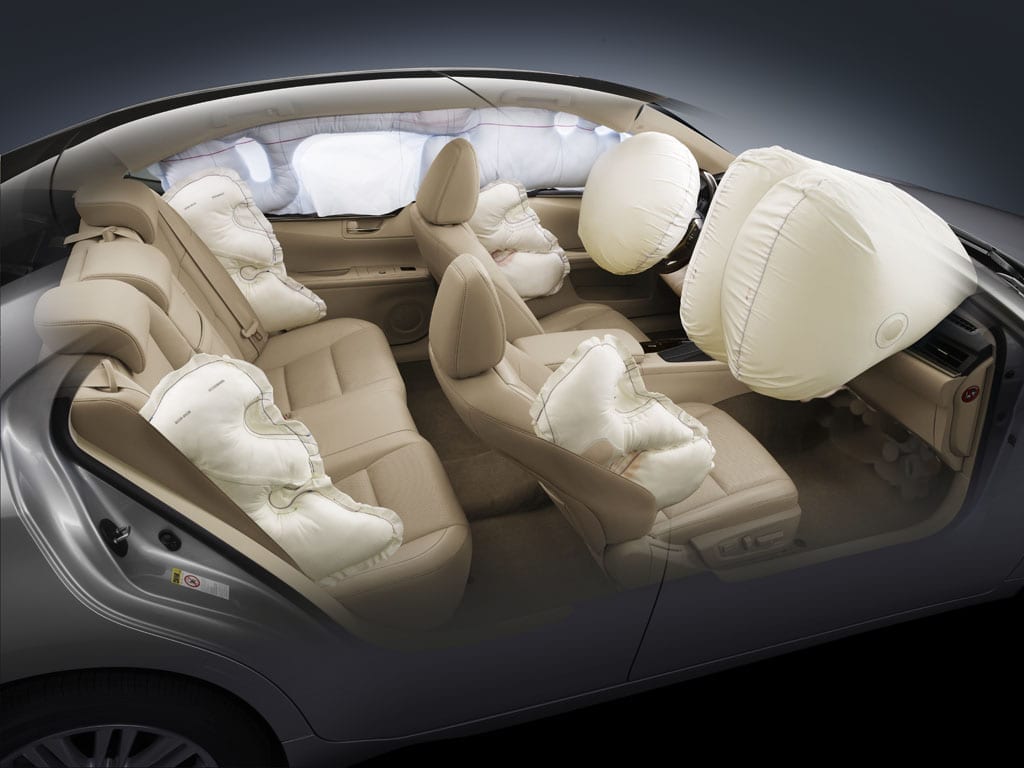
    Hyundai Motor Group has developed a new center side airbag, which works to separate the space between driver and passenger. The Group will roll out the technology in upcoming vehicles. This new, additional airbag expands into the space between driver and passenger seats to prevent head injuries of passengers in the front row. If there is no one in the front passenger seat, the airbag will protect the driver from side collision coming from the right side. The center side airbag is installed inside the driver’s seat and will deploy once the impact is sensed.

    The new center side airbag is expected to diminish head injuries caused by passengers colliding with each other by 80 percent. The Group has applied newly patented technology to maintain reliability but reduce the weight and size of the airbag.

    Hyundai Motor Group has developed a new technology to simplify the design and reduce the weight of component produce an airbag which is about 500g lighter than the competing products. Thanks to the smaller size of the airbag, the company’s design teams will have more flexibility in the type of seat design they envision for future products.

    The additional airbag expands into the space between driver and passenger seats to prevent head injuries

    Upcoming Euro NCAP is expected to include side-impact into its consideration beginning year 2020 and Hyundai Motor Group’s airbag will certainly help in addressing this.

  • MG eZS Teased Ahead Of India Launch

    MG eZS Teased Ahead Of India Launch

    MG Motor India had already said that it will launch its all-electric SUV the eZS in India in 2019 and now the company has teased the car on its social media page. The MG eZS will be one of the first-ever fully electric SUVs in India when it is launched. The eZS will be MG’s second launch in India after the upcoming MG Hector. The company further said that its electric vehicles will get over-the-air (OTA) technology and would go over 300 km in a single charge from its lithium-ion battery. MG is yet to announce the exact specifications for the eZS.

    By the end of 2019, MG Will have a total of 120 sales and service outlets across India and the company said it will also reach out to Indian target audience and educate them about electric vehicles and look to address issues such as range anxiety and charging infrastructure. Like the MG Hector, the eZS will also feature MG’s iSmart Next-Gen connected technology.

    The company, in fact, has already launched the electric SUV in the UK and it’s priced at around ₹ 18.36-20.07 lakh and will lock horns against the recently launched Hyundai Kona Electric. The company has already said that it is looking at December 2019 to launch the car in India.

    MG Motor India and Fortum India have joined hands to creating DC Fast Charging infrastructure (50 KW) in the country. The carmaker’s tie-up with Fortum will see the installation of the country’s first 50 KW DC fast-charging EV stations. Under the partnership, Fortum will install 50 KW CCS/CHAdeMO DC fast Public Charging Stations for Electric Vehicles across MG’s showrooms in 5 cities including Delhi NCR, Hyderabad, Mumbai, Bengaluru and Ahmedabad by September this year.

    The MG ZS EV for the UK is powered by a single electric motor that produces 141 bhp and 353 Nm of peak torque. The motor is powered by a 44.5kWh lithium-ion battery pack that can be charged up to 80 per cent in 43 minutes when plugged into a 50 kW fast charger. When charged with a domestic 7 kW wall box, the charging time extends to six and a half hours. MG promises a range of 262 km on a single charge on the ZS EV with the lithium-ion battery getting a seven-year warranty.

    The all-electric model will be locally assembled at the automaker’s Halol facility in Gujarat and prices will be competitive given that the GST rates for electric cars are now just 5 per cent.

  • BMW Engine Development Expert Duesmann Set To Become Audi Chief In April

    BMW Engine Development Expert Duesmann Set To Become Audi Chief In April

    BMW’s engine development and purchasing expert, Markus Duesmann, is set to become the CEO of Volkswagen’s Audi premium brand, after BMW dropped its opposition to his early departure, a German newspaper reported on Saturday.

    The Frankfurter Allgemeine Zeitung cited a person with knowledge of the appointment as saying Duesmann will start as Audi chief on April 1.

    It said BMW’s board would discuss Duesmann’s planned departure to Audi in the near future.

    Wolfsburg-based VW is on the lookout for clean-engine expertise as it struggles to overcome an emissions scandal that originated in Audi’s engine development department.

    Audi’s current CEO and VW board member Rupert Stadler was forced to step down temporarily after his arrest in June as part of an ongoing emissions investigation. VW is seeking to replenish its senior leadership while Stadler remains in custody.

    VW had said in July that Duesmann will take up his new position as soon as he is able to do so. He will be the second high-profile defection from rival German carmaker BMW after the poaching of Herbert Diess in July 2015.Duesmann’s BMW contract runs until Sept. 30, 2019, and it would also have a non-compete clause that BMW board members are required to sign.

    BMW had said that Duesmann had informed its chairman that he would not make himself available for an extension of his contract because of personal reasons.

  • Toyota Tests Solar-Powered Prius In Quest For Plugless Electric Car

    Toyota Tests Solar-Powered Prius In Quest For Plugless Electric Car

    Inspired by new ultra-thin solar panels developed for satellites, a project led by Toyota Moto is experimenting with a sun-powered Prius that it hopes will one day require no plugging in. In the Japanese government-funded demonstration project, Toyota engineers fitted solar panels designed by Sharp Corp to the hood, roof, rear window and spoiler to see how much juice the sun can generate. The electricity from the panels goes directly to the drive battery, so the Prius can charge while moving or when parked.

    On a good day, the charge can be sufficient for up to 56 kilometres (35 miles) of travel, more than the 47 kilometres driven a day by the average American, according to a study by the AAA Foundation for Traffic Safety.

    But the performance drops off quickly if it is cloudy or even when it’s too hot. If used in real-world driving in those conditions, the Prius would have to be plugged in to recharge.

    The solar cells are super-slim – just 0.03 millimetres, making them malleable enough to form-fit to the body of a car. The engineers needed to create a buffer between the car and the cells to protect them, so the actual solar panel modules are closer to a centimetre thick.

    The trunk of the car is filled with batteries for the solar panels, adding an extra weight of around 80 kilograms (180 lb).

    Making the entire package lighter and bringing down the extremely high costs are among the biggest challenges for the technology, said Satoshi Shizuka, Toyota’s lead engineer on the project, adding that commercialisation likely remained “years away”.

  • European Automakers Tell Governments They Must Help Sell Electric Cars

    European Automakers Tell Governments They Must Help Sell Electric Cars

    Europe’s carmakers are telling governments they must help build electric car charging points and provide consumer subsidies to boost sales of battery-powered vehicles and assist the industry in meeting stringent new emissions rules.

    German carmakers are accelerating plans to launch electric vehicles, under pressure from a European Union mandate to deliver a 37.5% cut in carbon dioxide emissions between 2021 and 2030, on top of a 40% cut in emissions between 2007 and 2021.

    Industry executives warned at this week’s Frankfurt auto show that the EU rules could be disastrous for profits and jobs because mainstream customers were not buying electric vehicles. Instead, consumers are opting for larger sport utility vehicles.

    “Our industry is eager to move as fast as possible toward zero-emission mobility. But this transition is a shared responsibility,” said PSA Group Chief Executive Carlos Tavares, who is also president of European auto industry association ACEA. “It requires a 360 degrees approach.”

    “Governments across the EU need to match the increasing pace at which we are launching these cars by dramatically stepping up investments in infrastructure. Moreover, they also have to put in place sustainable purchase incentives that are consistent across the EU,” Tavares said.

  • China Sees Decline In Electric Vehicle Sales For Second Consecutive Month

    China Sees Decline In Electric Vehicle Sales For Second Consecutive Month

    China has reported a decline of 16 percent in electric vehicle sales for the month of August. Last month the cumulative sales of all pure-electric, fuel-celled, and plugin hybrids vehicles stood at 85,000 units the China Association of Automobile Manufacturers, compared to 100,000+ vehicles sold during the same month in 2018. In addition to the decline in year-on-year (YoY) sales, China also registered month-on-month (MoM) drop of 4.7 per cent compared to the total EV sales in July 2019. This for the second straight month the EV sales have gone down in China, following the local government’s decision scale back subsidies.

    China is currently the world’s largest electric vehicle market, accounting for about half of the world’s EV sales. The electric vehicle segment is a strategically important industry in China, which hopes to electrify 60 per cent of its total vehicle population by 2035. However, the automotive industry is still heavily reliant on the government, which is why China decided to gradually reduce the subsidies for NEVs since 2017, with an aim to make the EV segment self-sufficient. But, the poor performance of China’s EV segment in the last two months is now putting pressure on the government to again come to the industry’s aid with new relief measures.

    In addition to EVs, China’s regular passenger vehicle wholesales also fell by 7.7 per cent in August, seeing a sales slump for the 14th consecutive month, coming down to 1.65 million units. One of the main reasons for this is also the slowdown of the Chinese economy, which is further affected by the ongoing trade conflict with the US.

  • FADA Asks SIAM To Calculate OEM Market Share Based On Retail Numbers

    FADA Asks SIAM To Calculate OEM Market Share Based On Retail Numbers

    The Federation of Automobile Dealers Associations (FADA) has announced sending a letter to the Society of India Automotive Manufacturers (SIAM), asking it to upgrade Auto OEM’s market share calculations on basis of actual registration numbers. FADA President Ashish Harsharaj Kale says that the actual registration data is which is found in Ministry of Road Transport & Highway’s Vahan Platform in much detail. Requesting for this much-needed reform, in his letter to SIAM President Rajan Wadhera, Kale mentioned that this is a globally followed norm and it should be implemented for the betterment of the Indian Auto Industry.

    Kale also says that many senior industry captains share this sentiment and had even voiced the need for such a practice at the recently held SIAM and ACMA conventions. The letter also claims that both dealers and component manufacturers feel if retail numbers were reported instead of wholesale figures, it would have been easier for them to predict the ongoing slowdown in the auto sector. Such a practice would have not only helped them manage their inventory efficiently and be better equipped for such troubled times.

    FADA has been advocating the need to upgrade Auto OEM’s market share calculations on basis of actual registrations from November 2018. The apex retail body says that many of its members have also done the same with their respective OEM’s and have received a positive response of accepting it if it becomes an industry practice.

  • Amazon adds important offline capabilities to Alexa Auto

    Amazon adds important offline capabilities to Alexa Auto

    Voice assistants are becoming more useful as companies like Amazon, Apple and Google are trying to penetrate as many markets and industries as possible. It’s great to have a car that allows you to make a call or ask for information concerning the weather without having to touch anything.

    Voice control has become a convenient way to do all these tasks while driving thanks to digital assistants like Amazon Alexa, Siri, and Google Assistant. The majority of the features offered by these assistants rely on connectivity, so when you’re driving through tunnels, parking garages or areas with a weak signal, these features are unavailable.

    To reduce the chance of being unable to access Alexa, Amazon launched something called Local Voice Control Extension, which is available in Alexa Auto SDK 2.0. The new feature enables offline access to Alexa in vehicles so that you can use music and radio, search and navigation, calling and messaging, as well as car control even when connectivity is intermittent or not available at all.

    With the latest version of Alexa Auto SDK, automakers will be able to add a lite version of Alexa’s cloud-based service to a car’s infotainment system, which kicks in when your car is no longer in an area with decent connectivity.

    The in-vehicle voice service will impact the purchasing decision of 59% buyers, and most (76%) people want continuity from their voice service at home to vehicle, Amazon claims. That’s why the name of the voice assistant vehicles offer could become a major selling point in the coming years.

  • Volvo XC40 Plug-in Hybrid Variant Launched Globally

    Volvo XC40 Plug-in Hybrid Variant Launched Globally

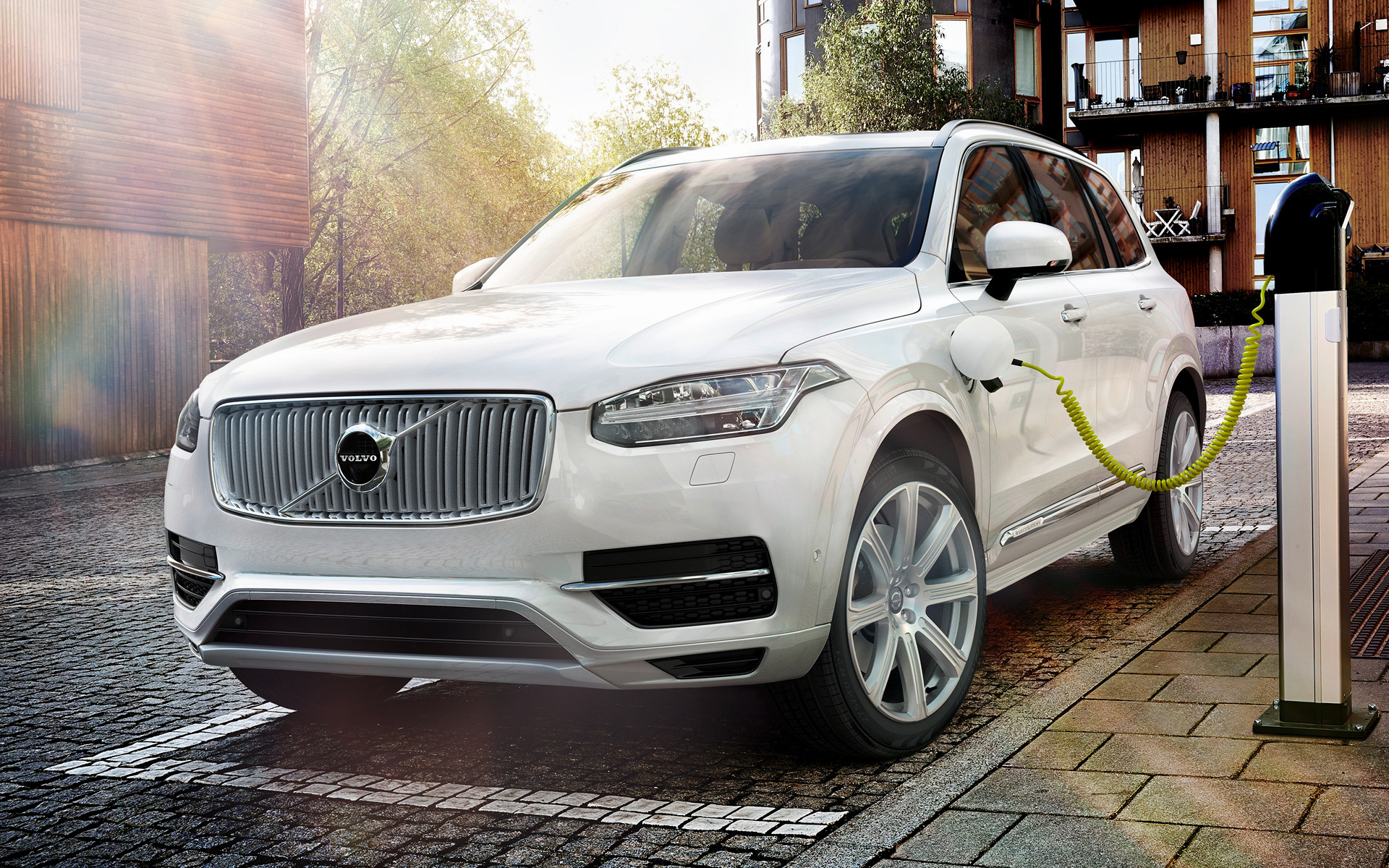
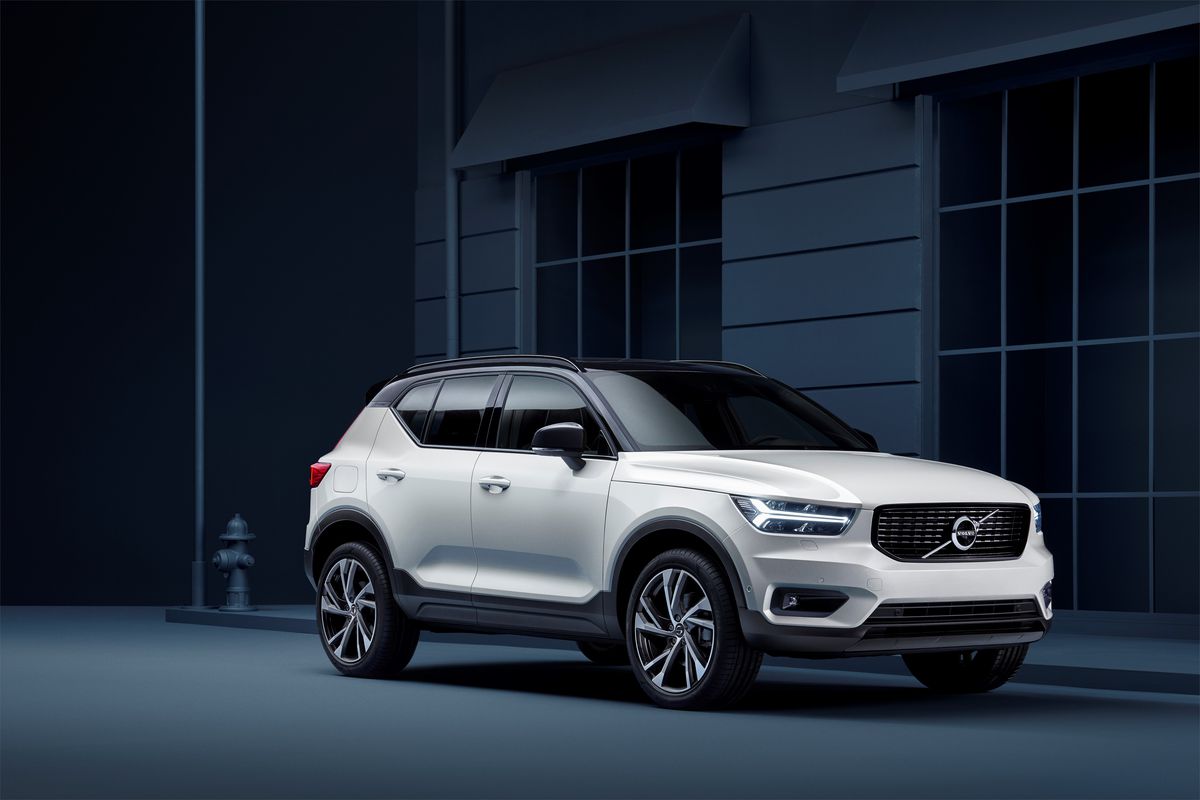
    Volvo has launched the plug-in hybrid variant of its XC40 compact SUV and with that, it has become the first automotive manufacturer to offer an electrified variant for each of its car models. The new T5 Twin Engine petrol-electric hybrid powertrain made its debut in UK and will be launched in other European markets soon. The Volvo XC40 plug-in hybrid has a front-wheel-drive system which uses a 180 bhp petrol engine which displaces 1.5-liters and has three-cylinders. There is also an electric motor which churns out 82 bhp and together, the combined power output is about 262 bhp, which is the highest in the XC40 lineup. There is a Lithium-ion battery with 10.7kWh capacity which provides an all-electric driving range of up to 46 kilometers.

    The initial data from World Harmonised Light-Duty Test Procedure (WLTP) indicates that the XC40 plug-in hybrid has a fuel efficiency of 59.98 kmpl while having a 0-100 kmph sprint time of 7.3 seconds. This is also the first occasion where a hybrid powertrain has been used in Volvo’s Compact Modular Architecture or CMA platform. The car also gets a 7-speed dual-clutch transmission as standard, which is a first in a new-generation Volvo model. Volvo will also be launching a fully electric variant of the XC40 premium compact SUV in 2020, and offer a complete range of powertrain options. The new powertrain offered in R-Design, R-Design Pro, Inscription and Inscription Pro trim levels.

    The XC40 T5 Twin Engine models get a charging outlet on the nearside front wing. The company will provide a 4.5 metre cable with a three-pin plug as standard while a type 2/mode 3 fast-charge cables will be available as an optional extra. Charging via the fast-charge cable will completely recharge the car’s high-voltage battery in as little as 2.5 hours. Fully charging via the three-pin plug cable takes between 3.5 and 6 hours.

    Volvo UK dealers have begun taking orders now and the first cars will be delivered in February 2020.

  • Hyundai Motor Joins European Electric Car Charging Venture Ionity

    Hyundai Motor Joins European Electric Car Charging Venture Ionity

    Ionity, the European electric vehicle charging joint venture of Volkswagen, BMW, Daimler and Ford, said on Monday that South Korea’s Hyundai Motor had joined as a shareholder.

    Ionity aims to install 400 high-speed charging stations across Europe by the end of next year in a bid to combat concerns about the range of electric vehicles, which is still considered a key factor limiting demand.

    So far, the venture has installed 140 stations in 14 European countries, while a further 50 are under construction.

    “The participation of new investors in Ionity is a clear signal of trust indicating that the work of our young company is already bearing fruit,” Chief Executive Michael Hajesch said in a statement.

    The announcement comes days before the Frankfurt Auto Show IAA, where sustainable driving and electric cars will take centre stage. Volkswagen will display its ID 3 electric vehicle, Porsche its Taycan electric sports car, and Mercedes-Benz its fully electric van.

    Carmakers are pouring much of their cash into developing electric vehicles, while energy providers hesitate to take on responsibility for the rollout, as long as electric car sales remain too low to provide a profitable customer base.

    Reporting by Christoph Steitz; Editing by Edmund Blair

  • Porsche Opens Factory For The All-electric Taycan

    Porsche Opens Factory For The All-electric Taycan

    After a construction period of less than 48 months, Porsche officially opened the new production facility for its first all-electric sports car at its Zuffenhausen site. The new production facility sets new standards in terms of energy efficiency and environmental friendliness. Assembly takes place in a flexible, networked and using 4.0 production technology. It is a further step towards the “Zero Impact Factory” with no negative environmental impact: production of the Porsche Taycan with zero-emission powertrain at the Zuffenhausen site will be carbon-neutral. In addition to using electricity from renewable sources and biogas to generate heat, the new production buildings are designed to be energy-efficient. Further examples are the electrically powered logistics vehicles, the use of waste heat in the paint shop, the greening of roof areas and a continuous and holistic approach to other potential resource savings.

    Oliver Blume, Chairman of the Executive Board of Porsche AG said, “We have a level of responsibility for the environment and society. Production of the Taycan is carbon-neutral. Heritage meets the future at our parent plant in Stuttgart-Zuffenhausen, which is the heart of the brand.”

    Porsche uses automated guided vehicle systems instead of traditional conveyor belts to transport components and vehicles from station to station. Production of the Porsche Taycan will see 1,500 new jobs created at the Zuffenhausen site. In total, the company is set to invest more than six billion euros in electromobility by 2022. The company has invested a total of 700 million euros in the new production facilities alone.

  • More than 1 million motor vehicles will have been sold through E-commerce next year

    More than 1 million motor vehicles will have been sold through E-commerce next year

    By next year, more than 1 million motor vehicles will have been sold online, according to research from Frost & Sullivan.

    “At the current rate of adoption, online vehicle sales are expected to comprise 5 percent of global vehicle sales by 2025, with China as a leading market,” says Julia Saini, a consultant at Frost & Sullivan’s mobility division.

    In the early days of online retailing, there was skepticism that consumers would purchase big-ticket items like motor vehicles online. But in recent times, consumers have embraced the concept – provided they know what they want.

    In 2016, Alibaba sold more than 100,000 cars during its 11.11 Singles Day, ranging from Maserati sports cars to 13,000 local Chery runabouts. Few people pop online to buy a car on a whim – those are carefully researched, calculated purchases with settlements deferred until a 24-hour window to take advantage of a special deal. But they were still online sales, driven by good deals.

    Saini says the digital transformation of the global automotive retail market is driving the need for customer-centric retail strategies and innovations along with omnichannel touchpoints to further refine the customer journey.

    “Adopting disruptive new auto retail models and emerging digital KPIs by leveraging technology and data-driven approaches will be imperative for attracting new customers, enhancing customer experience, and improving customer retention,” she says.

    “With the emergence of new purchase models such as vehicle subscription and short-term leasing, increased customer-centricity in terms of offerings, services, activities, roles, and functions is expected to be the focus of OEMs and dealerships in the future.”

    Saini and her colleague Yeswant Abhimanyu will lead an interactive webinar on the topic on September 26, discussing innovative business models, growth opportunities, and insights on initiatives and trends across the automotive e-retail market in Asia, North America and Europe.

  • Nissan Mulls Pulling Out Of South Korea As Trade Tensions Rise

    Nissan Mulls Pulling Out Of South Korea As Trade Tensions Rise

    Nissan Motor is considering pulling out of South Korea, the Financial Times reported on Friday, as political and trade tensions between Japan and South Korea have caused sales of Japanese products in the neighboring country to plummet.

    Nissan and other Japanese firms have been a casualty of consumer boycotts of products ranging from cars to beer in South Korea, triggered by sudden export curbs by Tokyo earlier this year as trust between the two countries has eroded over wartime issues.

    Citing unnamed sources, the FT said that besides stopping sales in South Korea, Nissan is also mulling its involvement in an assembly plant in Busan owned by Renault Samsung Motors Co, a joint venture with Nissan’s French automaking partner Renault SA. The plant makes cars mainly for export markets.

    Nissan spokespeople in South Korea and Japan declined to comment on the report.

    Japan’s second-biggest automaker has been trying to strengthen governance, slash costs and boost flagging profitability amid persistent allegations of financial misconduct stemming from former chairman Carlos Ghosn’s 20-year reign.

    Nissan’s market share in South Korea has long lagged its domestic rivals. Along with its luxury Infiniti brand, the automaker has sold just 3,581 cars in the country in January-August this year, down 27% from a year ago and trailing far behind Toyota Motor Corp.

    Japanese automakers are small players in the South Korean auto market, which is dominated by Hyundai Motor Co, and German imports including the Mercedes Benz and BMW brands.