Tag: Auto

  • VCAR – Vietnam Limousine for the Southeast Asian market

    VCAR – Vietnam Limousine for the Southeast Asian market

    VCAR, a new generation Limousine of Vietnam, has been launched at a recent ceremony with the participation of nearly 300 businessmen and investors from many Southeast Asian countries like Malaysia, the Philippines, Thailand and Singapore.

    Since the limousine first appeared in Vietnam 5 years ago, thousands of limousines with luxurious and comfortable interiorshave been sold. To grasp this trend, Vinter Capital Group Corporation and its close joint venture partner, Dasan, has manufactured limousines with VCAR brand for the purpose of exporting to Malaysia and other Southeast Asian countries,with the support of the parent company Dynamic Investment Fund from Vinter Capital Group Corporation based in Malaysia, Vietnam and Thailand.

    At the launching ceremony of the new model of limousine, Vinter and Dasan introduced the three versions of VCAR New Generation Limousines, includingVCAR VIP, VCARSolati and VCAR X with excellent and valuable interiors.

    “VCAR Limousine brings about totally new experiences with luxury and comfortable interiors. I hope that the venture between Vinter Capital Group and Dasan will create and bring more versions of VCAR limousine, especially VCAR X to Malaysia in the coming time”, said a Malaysian entrepreneur at the ceremony.

    “Limousine has beenfavored in Vietnam since the very first day. Six versions of limousine have been introduced in the market for the past 5 years. All the essentials of limousine in Vietnam are currently crystallized in VCAR X, a President’s new generation version in Vietnam, produced by Dasan,” said Mr. Le Thanh Tuan, President of VCAR Limousine.

    “The Malaysian market is hard-to-please and much larger compared to Vietnam. Even though the population of Malaysia is only one third of Vietnam, Malaysia’s GDP is three times higher than that of Vietnam. Malaysia’s total number of tourists and revenue from tourism are three times higher, and the income per capita is six times higher. The transportation infrastructure is also one of the best among ASEAN countries. Therefore, VCAR X with its outstanding features would be able to meet the best needs in Malaysia. We believe that the limousine, which is highly favored in Vietnam, could be developed in Malaysia,” Tuan said.

    Dasan and Vinter Capital Grouphave conducted a lot of researches, improvement and investment in order to produce the VCAR limousine with the best standard and unique design to satisfy requirements of the Malaysian market in particular and the Southeast Asian markets in general.

    President of Dasan, Mr. Dang Quang Khanh, said: “Dasan and Vinter Capital Group Corporation will promote operations and fully exploit the assembly and production capacity of factories in Malaysia and supply our products to Malaysia and ASEAN countries in the near future. We will constantly improve the technologies and designs to create more variants of VCAR limousine to satisfy and suit the market trend of Malaysia in particular, as well as other countries in general. Vinter Capital Group Corporation and Dasan expect thatVCAR limousine will be the first Vietnam car brand to reach out to the world”.

    “This event is the milestone of success and close joint venture between Dasan and Vinter Capital Group Corporation. We have committed strongly to support Dasan in expanding the market of VCAR limousine in Malaysia and other ASEAN countries as soon as possible,” said Mr.  Elvin Chew Chee Wooi and Ms. Dolly Hoang Minh Tuyet, Chairman and General Director of Vinter Capital Group.

    “Dasan and Vinter Capital Group had seriously prepared over a year to get this event done. We plan to let the first VCAR limousine to be driven in Malaysia within the next three months,” said Mr. Dang Quang Khanh.

    VCAR X, a President’s new generation version has included all the essentials of existing limousines in Vietnam. Besides strengths of “Ground Specialist”, VCAR X also eliminates redundant and impractical items and overcomes inherent weaknesses of the President version (with two 180-degree-rotation seats), and adds unique interior features that are equipped for the President version.

    With the overwhelming and positive respond by the entrepreneurs and investors from the ASEAN markets, Vinter Capital Group Corporation has committed to launch the limousine as soon as possible.

    Not only manufacturing limousine, Vinter has also actively involved in several segments of business such as property development and investment, agriculture sector, legal and consulting services and resort and restaurant services.
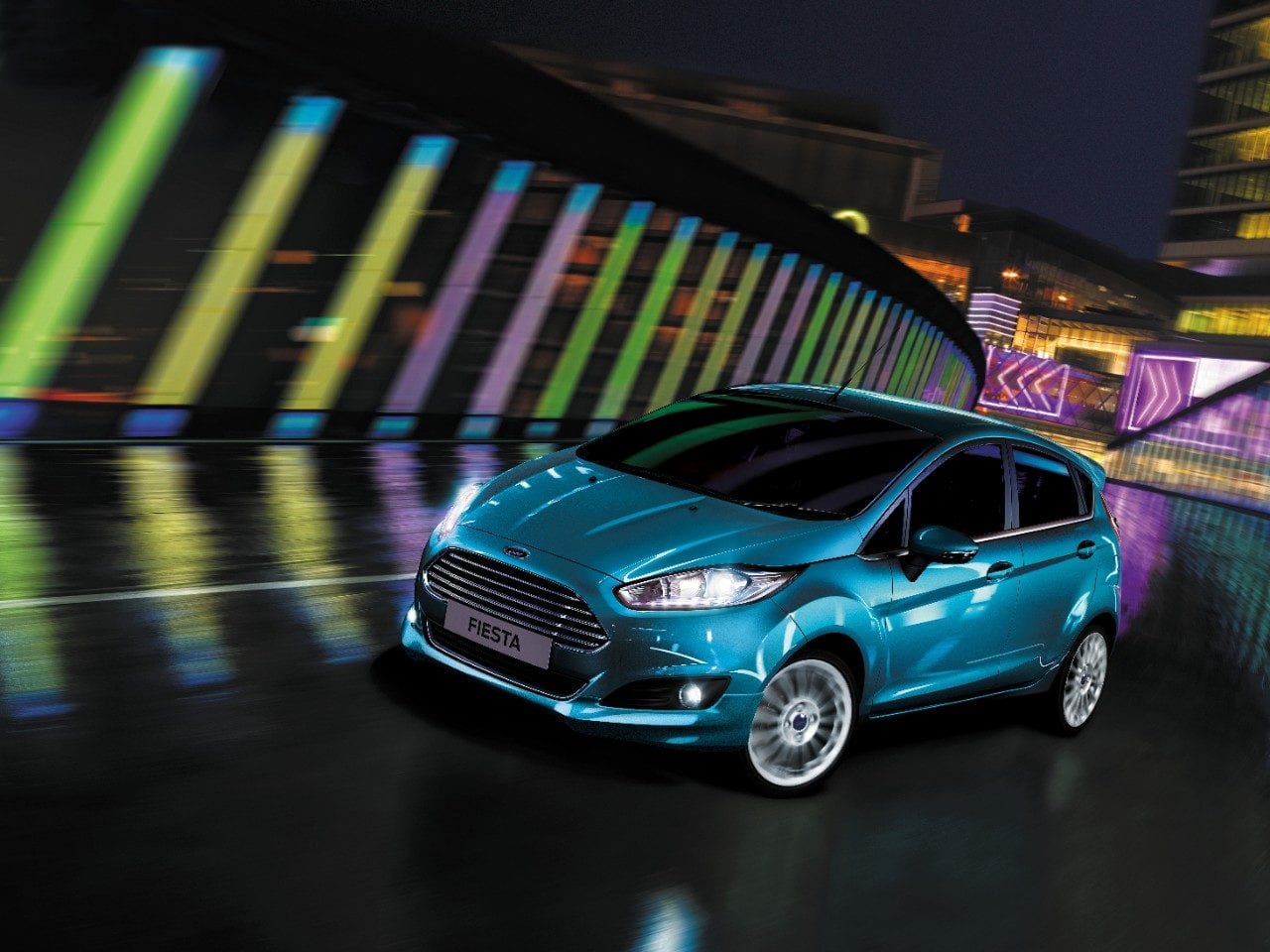

  • Ford bets on low oil prices, moves Focus production to China

    Ford bets on low oil prices, moves Focus production to China

    Ford Motor said on Tuesday it will move some production of its Focus small car to China and import the vehicles to the United States in a long-term bet on low oil prices and stable U.S.-China trade relations despite recent tensions.

    The move suggests China could play a much larger role in future vehicle production for North America, perhaps eclipsing Mexico as a low-cost manufacturing source.

    Ford painted the production shift from Mexico to China, slated for mid-2019, as a purely financial move that will save the company $500 million in reduced tooling costs.

    But Ford also expects to ship about 80,000 vehicles to China this year, including the redesigned Lincoln Navigator luxury sport utility vehicle, which goes into production this fall at Ford’s Kentucky truck plant.

    Ford’s decision to import its first vehicles from China to the United States is also the first major manufacturing investment decision made by new Chief Executive Jim Hackett, who succeeded Mark Fields in May. Discussion about the small-car production shift from Mexico to China began “a couple months ago” under Fields, said Joe Hinrichs, president of global operations.

    The decision also signals a shift in strategy at Ford, which is responding to dwindling U.S. consumer demand for small cars in favor of more expensive and more profitable trucks and SUVs. Cars accounted for more than 50 percent of U.S. auto sales as recently as 2012, but have fallen to just 37 percent of sales this year.

    Ford on Tuesday said it would invest $900 million at the Kentucky truck plant to build the redesigned Navigator and Ford Expedition. It has contingency plans to build more of the big SUVs at an Ohio plant if demand grows.

    In January, after U.S. President Donald Trump repeatedly criticized Ford for shipping small-car manufacturing to Mexico, Ford said it would kill plans to build a $1.8 billion Focus plant in San Luis Potosi and instead produce the new Focus at an existing plant in Hermosillo.

    “The Ford decision shows how flexible multinational companies are in terms of geography,” U.S. Commerce Secretary Wilbur Ross said in a statement.

    Trump did not address the issue on Tuesday.

    White House Press Secretary Sean Spicer said Trump “wants to create a tax system (so) that companies want to come back and bring back jobs in manufacturing here in the United States.”

    Although it is cheaper to build and ship cars to the United States from Mexico than China, “this was not a variable cost decision,” Hinrichs said in a briefing on Tuesday. “It allows us to free up a lot of capital” because Ford now has to retool only one plant – the existing Focus factory in Chongqing – rather than two to supply North America.

    The current Focus will be phased out of production in Wayne, Michigan, in mid-2018, according to Hinrichs. The Wayne plant will begin building a new Ranger midsize truck in late 2018 and a Bronco midsize SUV in 2020.

    Ford executives told Trump last year that moving production to Michigan of bigger vehicles that were more profitable would secure the Wayne plant’s future – a decision later praised by Trump.

    No U.S. jobs will be affected by shifting Focus production to China, Ford said, adding that it employs more U.S. hourly workers and builds more vehicles in the United States than any other automaker.

    The United Auto Workers labor union declined to comment.

    Hinrichs said “the capital saving outweighs the risk” of having to pay a potential border tax, or import tax, on the Chinese-built Focus.

    Ford U.S. Focus sales have fallen 22 percent this year, as low gas prices have helped spur more buyers into larger vehicles. Ford’s full-size F-series pickup truck remains the best-selling U.S. vehicle by a wide margin.

    Unlike many consumer products, few Chinese-made vehicles are sold in the United States.

    General Motors has been exporting Buick and Cadillac vehicles from China to the United States since last year, as has Volvo Cars, a unit of Chinese automaker Geely Automobile Holdings.

  • Hella and ZF enters into partnership for autonomous driving

    Hella and ZF enters into partnership for autonomous driving

    German auto component makers ZF and HELLA have entered a strategic partnership for making products for autonomous vehicles, the company informed a press statement. The partnership will strengthen both the companies in sensor technology, particularly for front camera systems, imaging and radar systems.

    “This strategic partnership for sensor technology with HELLA enhances our position as a complete systems supplier for modern assistance systems as well as autonomous driving functions,” says Dr. Stefan Sommer, CEO of ZF Friedrichshafen AG. “This non-exclusive cooperation with HELLA is an important expansion of our Vision Zero ecosystem of development partnerships. Thus, we can create a wider technological foundation for safety and autonomous driving.”

    ZF will further strengthen its portfolio as a systems supplier which offers both modern assistance systems and autonomous driving functions, whereas HELLA will drive technological development and benefits from a broader market access with its leading technologies. The first joint development project in camera technology will start immediately, with the objective of a market launch in 2020.

    Dr. Rolf Breidenbach, CEO at HELLA KGaA Hueck & Co., adds: “HELLA is a strong and experienced provider of sensor technologies. Our knowledge aligns perfectly with ZF’s expertise. By combining our strengths, we clearly aim to provide market leading and high performing assistance systems and autonomous driving functions. In addition, this cooperation will strengthen HELLA’s position as a well-regarded supplier for imaging and radar sensor technologies.”

    In their first joint project, the partners are targeting a current market trend: In the future, the highest Euro NCAP safety ratings will require the assistance of camera-supported assistance functions. Therefore, the demand for front cameras in all vehicle segments will rise. ZF and HELLA will offer automotive manufacturers a joint product and are starting development immediately with an expected SOP in 2020. ZF brings hardware and its expertise in functions, systems and integration to the table, whereas HELLA and its subsidiary HELLA Aglaia Mobile Vision contribute competence in efficient, tried-and-tested imaging software and application development.

    In the mid to long term, these cooperation partners will also provide camera systems for automated driving functions as well as for commercial vehicles and off-highway applications. ZF expands its camera portfolio and therefore offers more options to customers while continuing to work with established partner. HELLA Aglaia gains a new customer and partner for its independent and open software solutions for driver assistance systems.

    In their cooperative work in the radar systems sector, the partners will also identify opportunities to provide attractive volume-production solutions in the short to mid term by jointly building up their product portfolio. HELLA’s 360° surround view radar systems together with ZF’s mid-range and long-range radar systems will establish a new and comprehensive systems solution.

    While the joint development will focus on systems solutions, each partner will continue to develop and to offer its technology independently on a component level. Here, the true potential of a long-term development partnership lies in the ability to utilize common system architecture as well as product families which are adapted to each other.

  • Auto supplier Magna to manufacture BMW 5-series plug-in hybrids

    Auto supplier Magna to manufacture BMW 5-series plug-in hybrids

    Canadian auto supplier Magna International Inc will produce BMW’s new 5-series plug-in hybrid at its Austrian factory, the company said on Monday, part of a strategy to produce electric cars on a contract basis for global automakers.

    The BMW 530 plug-in hybrid will be manufactured beginning this summer at Magna’s plant in Graz, Austria, where it already plans to produce Jaguar’s I-PACE SUV beginning in early 2018.

    Global automakers and their suppliers are investing heavily in fully-electric and gasoline-electric hybrid vehicles. Consumer demand is still low versus that for gasoline engine vehicles, but companies are beginning to offer more choices to respond to government mandates for greater sales of vehicles that emit little or no carbon dioxide, and prepare for a future experts believe will be dominated by electric vehicles.

    Rival tier-one auto supplier Continental, for example, said in April it was increasing spending by 300 million euros ($334.68 million) on new products such as charging systems and battery management components related to electric vehicles.

    Magna, North America’s largest automotive supplier and the third globally, is alone among the top auto suppliers to perform contract manufacturing for carmakers. Its Austrian plant can produce about 200,000 cars per year. Magna is currently building a new paint shop in Slovenia due to increased demand.

    A Magna spokeswoman would not comment on a statement by the Slovenian government in March that the auto supplier would potentially invest up to 1.24 billion euros in the country, including a car plant with capacity of 100,000 to 200,000 vehicles per year.

    Having contract manufacturing in its portfolio creates a niche for the company as automakers slowly bring more electrified vehicles to market over the next decade. For automakers, outsourcing the assembly can be an advantage on low-volume models to minimize capital expenditures and avoid tying up their own production lines.

    Swamy Kotagiri, Magna’s chief technology officer, said he sees contract manufacturing of electric vehicles as a “near-term opportunity” for the company, given that by 2025, 40 to 50 percent of all vehicles produced will include some electrification elements.

    “We are setting up knowing the penetration will be higher.”

    Magna has also produced non-electric cars at its Austrian facility, including BMW’s Mini Countryman and Mercedes-Benz’ (DAIGn.DE) luxury G-Wagen SUV.

    Last month, Magna raised its full-year sales forecast on higher demand.

  • Fiat Chrysler recalling 297,000 vehicles for inadvertent air bag deployments

    Fiat Chrysler recalling 297,000 vehicles for inadvertent air bag deployments

    Fiat Chrysler Automobiles NV is recalling 297,000 older minivans because of a wiring problem that can lead to inadvertent air bag deployments, the company said on Thursday.

    The recall of 2011-2012 model year Dodge Grand Caravan minivans is linked to eight minor injuries, the automaker said, after initially reporting 13 injuries. Wiring may short-circuit, resulting in the driver-side air bag deploying without warning.

    The recall will begin in late July and includes 209,000 vehicles in the United States and nearly 88,000 vehicles in Canada. Dealers will replace the wiring if needed and add protective covering.

    Fiat Chrysler share fell nearly 2 percent to $10.69 on the New York Stock Exchange.

    Automakers have been recalling tens of millions of vehicles in recent years for a series of air bag problems, mainly tied to Takata inflators.

    More than a dozen automakers have called back 46 million Takata air bag inflators in 29 million U.S. vehicles that can rupture and emit deadly metal fragments. By 2019, automakers will recall 64 million to 69 million U.S. inflators in 42 million vehicles, U.S. regulators said in December.

    The new Fiat Chrysler recall is not linked to Takata, the company said.

  • Electric vehicles reach 2 million cars in 2016

    Electric vehicles reach 2 million cars in 2016

    The number of electric cars on the roads around the world rose to 2 million in 2016, following a year of strong growth in 2015, according to the latest edition of the International Energy Agency’s Global EV Outlook.

    China remained the largest market in 2016, accounting for more than 40% of the electric cars sold in the world. With more than 200 million electric two-wheelers and more than 300,000 electric buses, China is by far the global leader in the electrification of transport. China, the US and Europe made up the three main markets, totalling over 90% of all EVs sold around the world.

    In Norway, electric cars had a 29% market share last year, the highest globally, followed by the Netherlands with 6.4%, and Sweden with 3.4%. The electric car market is set to transition from early deployment to mass market adoption over the next decade or so, says the Global EV Outlook.

    Between 9 and 20 million electric cars could be deployed by 2020, and between 40 and 70 million by 2025, according to estimates based on recent statement from carmakers.

    Still, electric vehicles only made up 0.2% of total passenger light-duty vehicles in circulation in 2016. They have a long way to go before reaching numbers capable of making a significant contribution to greenhouse gas emission reduction targets.

    In order to limit temperature increases to below 2°C by the end of the century, the number of electric cars will need to reach 600 million by 2040, according to IEA’s Energy Technology Perspectives. Strong policy support will be necessary to keep EVs on track.

    Cities are taking leadership roles in encouraging EV adoption, often because of concerns about air quality. Major urban centres often achieve higher EV market shares compared to national averages. A third of global EV sales took place in 14 cities in 2015.

    Paris, for instance, has mandated that any electric car is allowed to re-charge at the re-charge stations of its car-sharing program, called Autolib.

    Amsterdam has a strategy of offering the installation of charging points on public parking spaces to people who make a request, ensuring that charging infrastructure is installed where it’s actually needed. London for its part encourages EV adoption by waiving its congestion charge.

    The analysis shows that fleet procurement is an important means of encouraging early EV uptake. Fleet operators, both public and private, can contribute significantly to the deployment of EVs, first from demand signals that they send to the market, and second thanks to their broader role as amplifiers in promoting and facilitating the uptake of EVs by their staff and customers.

    Clear and ambitious policy support is vital to keep the growth of EVs on track. Despite impressive improvements in costs and energy density over the past decade, battery packs are still expensive, driving up retail prices. Financial incentives for EV adoption and taxes on fossil fuels will continue to be important in the current phase of EV technology deployment to initiate and reinforce a positive feedback loop that, through increasing sales, production scale-ups and technology learning, will further support cost reductions for batteries and other components.

  • Tata Motors global sales decline 1 per cent in May

    Tata Motors global sales decline 1 per cent in May

    Tata Motors today reported over 1 per cent decline in global sales in May at 86,385 units, including that of Jaguar Land Rover (JLR) vehicles.

    The company had sold 87,414 units in May 2016, Tata Motors said in a statement.

    In the passenger vehicles category, global sales stood at 58,075 units last month as against 55,039 units during the same period in 2016, up 6 per cent.

    Sales of luxury brand Jaguar Land Rover grew 2 per cent to 47,131 units in May compared to 46,204 units in the same month of 2016.

    However, sales of commercial vehicles declined by 13 per cent to 28,310 units as against 32,375 units in the year-ago month.

  • Auto Expo 2017 opens in Hanoi

    Auto Expo 2017 opens in Hanoi

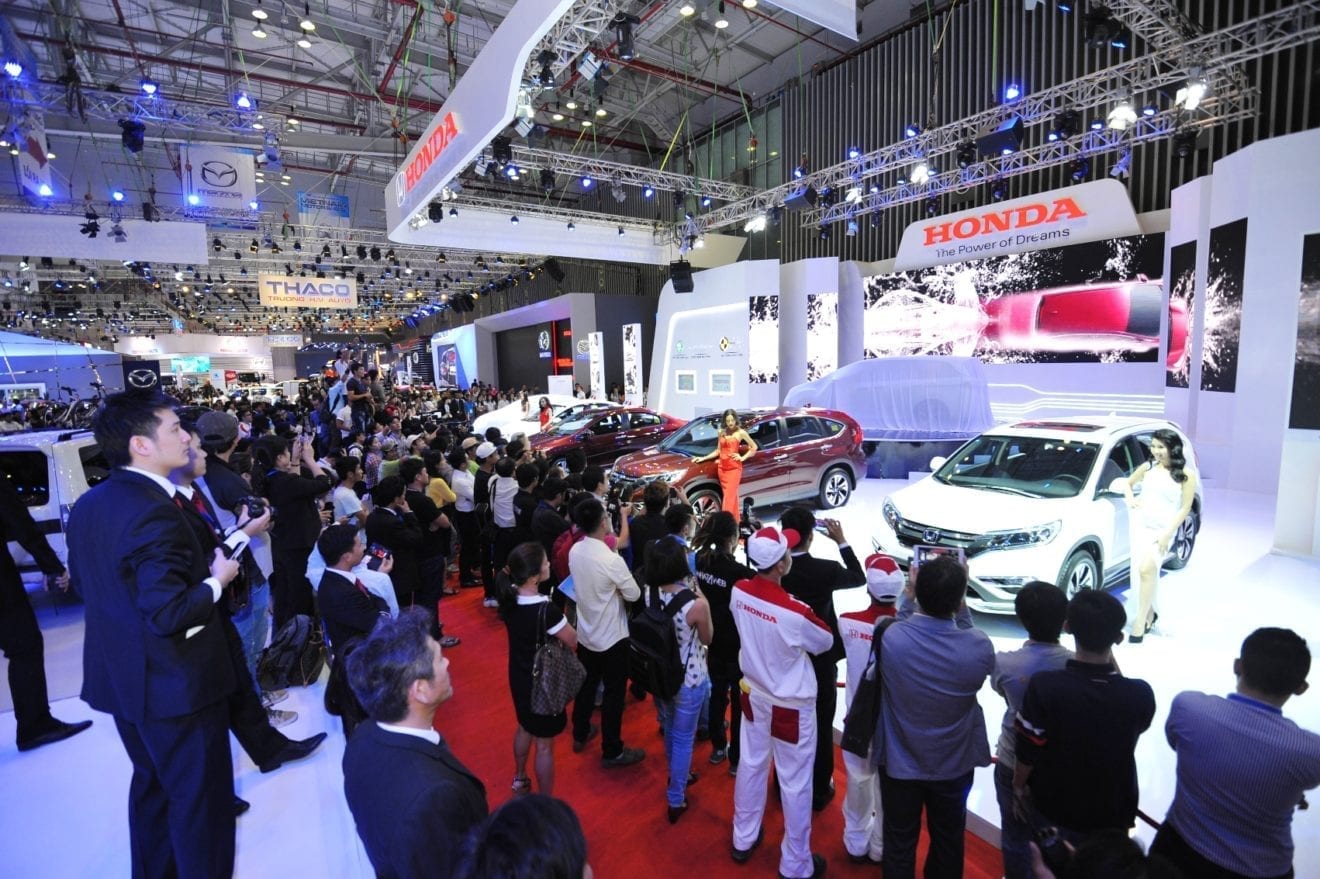
    Domestic auto assemblers and parts suppliers are showcasing their latest products at the 14th International Automobile and Supporting Industries Exhibition (Auto Expo 2017), which opened in Hanoi today.

    The four-day event, sponsored by the Ministry of Industry and Trade (MoIT), is being held at theHanoi International Exhibition Centre by the MoIT’s Industry Policy and Strategy Institute (IPSI) and the Vietnam Society of Automotive Engineers (VSAE).

    The expo has around 450 booths that have on display a wide range of vehicles, including passenger cars, buses, trucks, vans, vehicles for special purposes such as those serving construction, mining, agricultural, military, medical and hygiene activities, as well as two-wheelers such as scooters, motorcycles and electric bikes.

    With an exhibition space spanning 10,000sq.m, the expo also showcases spare parts and components for producing, manufacturing and assembling automobiles, motorbikes and other vehicles. On display are technologies in moulding, welding, plating, painting, automobile interior decor and toys; maintenance and repair equipment; measurement and diagnosis systems; as well as transportation rescue vehicles and devices.

    At the event, exhibitors have introduced services such as garage services, banking and insurance services, and consultative and assistance services for activities related to vehicle manufacturing and trading.

    In addition to the participation of local auto firms such as Vietnam Engine and Agricultural Machinery Corporation (VEAM), CAMC Việt Nam and Vietnam Machine Investment Development JSC (VIMID), the exhibition has also attracted foreign manufacturers and companies from the US, Japan, Thailand, South Korea, mainland China, Taiwan and Malaysia.

    Speaking at the opening ceremony of the exhibition, Deputy Minister of Industry and Trade Đỗ Thắng Hải said the expo would bring more business opportunities for auto firms, help them connect with the auto market and provide a favourable environment for enterprises looking for clients.

    In 2016, the Vietnamese auto market sold around 300,000 cars, up 24 per cent over the previous year, of which the sales of commercial vehicles and special purpose vehicles increased by 25 per cent and 33 per cent, respectively. In the first quarter of 2017, the auto market sold around 65,000 vehicles, a year-on-year increase of 8 per cent.-

  • Toyota working on ‘flying car’, Lexus luxury ‘yacht’

    Toyota working on ‘flying car’, Lexus luxury ‘yacht’

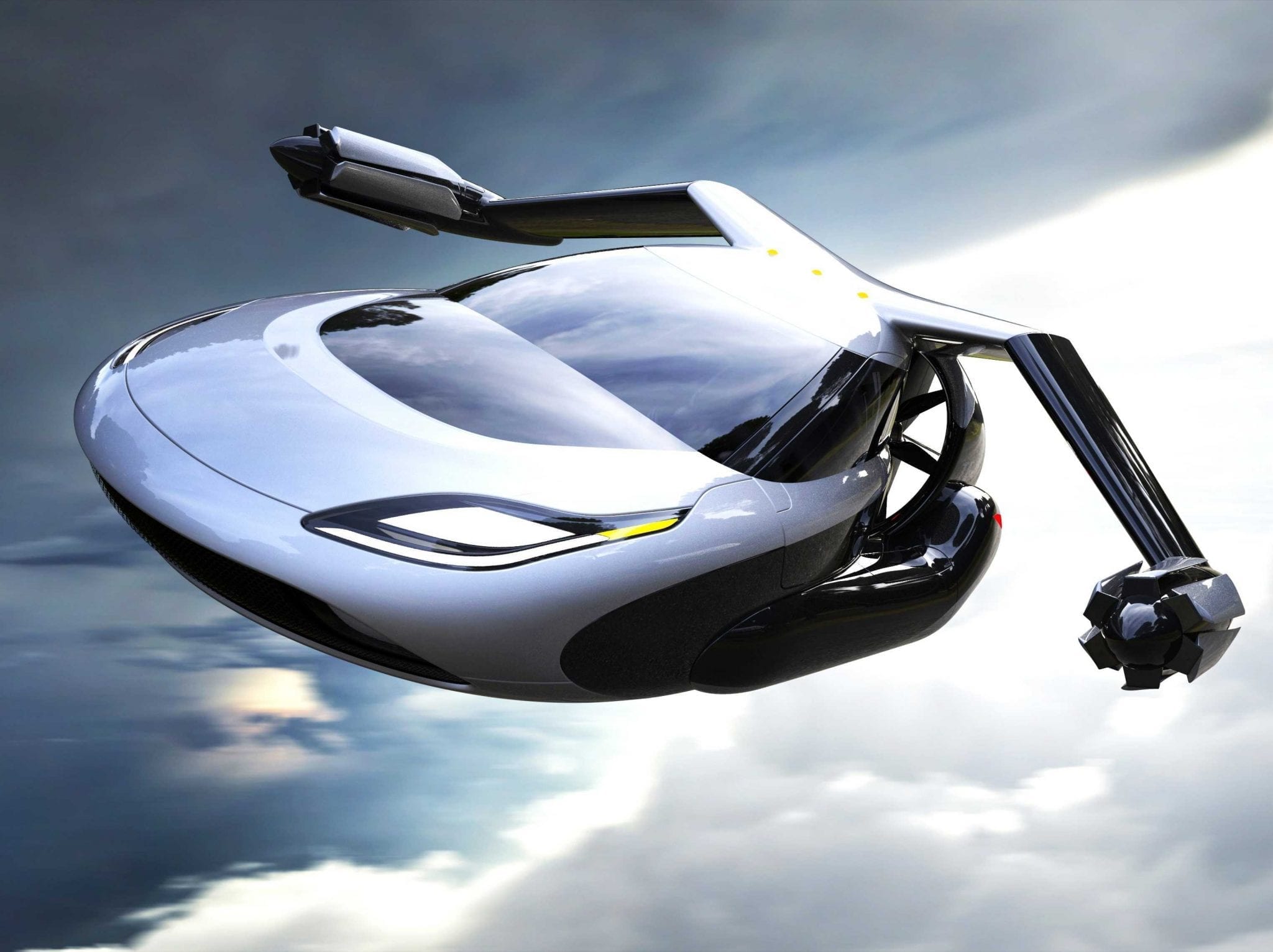
    A startup backed by the Japanese automaker has developed a test model that engineers hope will eventually develop into a tiny car with a driver who’ll be able to light the Olympic torch in the 2020 Tokyo games. For now, however, the project is a concoction of aluminum framing and eight propellers that barely gets off the ground and crashes after several seconds.

    Toyota has invested 42.5 million yen ($386,000) in startup Cartivator Resource Management to work on ” Sky Drive .” At a test flight Saturday in the city where the automaker is based, the gadgetry, about the size of a car and loaded with batteries and sensors, blew up a lot of sand and made a lot of noise.

    It managed to get up as high as eye level for several seconds before tilting and falling to the ground. Basketballs attached to its bottom served as cushions. After several attempts, the endeavor had to be canceled after one of the covers got detached from the frame and broke, damaging the propellers.

    The goal of Cartivator’s is to deliver a seamless transition from driving to flight, like the world of “Back to the Future,” said the project’s leader Tsubasa Nakamura.

    “I always loved planes and cars. And my longtime dream was to have a personal vehicle that can fly and go many places,” he told.

    The group is now working on a better design with the money from Toyota with the plan to have the first manned flight in 2019. No one has ridden on Sky Drive yet, or any drone, as that would be too dangerous.

    Still, dabbling in businesses other than cars is Toyota’s trademark. In recent years, it has been aggressively venturing into robotics and artificial intelligence, investing a billion dollars in a research and development company in Silicon Valley. It’s also working in Japan on using robotics to help the sick walk. It also just announced a five-year $35 million investment in its research center in Ann Arbor, Michigan, for autonomous and connected vehicle technologies.

    The idea that each generation must take up challenges is part of Toyota’s roots, said auto analyst Takaki Nakanishi.

    President Akio Toyoda’s great-grandfather Sakichi Toyoda started out developing the loom and then its automated improvements from the 1890s, before the company became an automaker. More recently, Toyota sees software and services as central to the auto industry, as cars become connected, start driving themselves and turn into lifestyle digital tools, Nakanishi said.

    As Toyota gets into the business of ecological vehicles, such as hybrids, electric cars and fuel cells, it’s turning into an energy company as well.

    “Toyota’s business is centered on mobility, anything that moves, including people, things, money, information, energy,” said Nakanishi.

    Toyota is traveling not only in the skies but also to the waters, although that still remains a tiny part of its sprawling empire.

    Toyota’s boat operations began in 1997. Toyota now offers four models and has sold a cumulative 845 boats. In contrast, Toyota sells about 10 million vehicles a year around the world.

    Reporters recently got a ride in Tokyo Bay of a Lexus luxury concept “yacht,” which runs on two gas engines. With a streamlined curvaceous design, inspired by a dolphin and evocative of a Lexus car, it’s being promised as a commercial product in the next few years.

    Designed for executives zipping through resort waters, it comes with fantasy-evoking features, like an anchor pulled in by a chain into a tiny door in the bow, which opens then closes mechanically.

    The engine, shiny like a chrome sculpture, is visible beneath the sheer floor surface. Shigeki Tomoyama, the executive in charge, said the boat was going for “a liberating effect.” A price was not given. Many Americans have already expressed interest, according to Toyota.

    The project started about two years ago under direct orders from Toyoda, who has with Tomoyama spearheaded Toyota’s Gazoo internet business, another non-auto business for Toyota.

    “He asked us to create a space that can work as a secret hiding place in the middle of the ocean,” Tomoyama said. “We went for the wow factor, which requires no words.”

  • Japan-Based Gecom Expands Production

    Japan-Based Gecom Expands Production

    GECOM, a manufacturer of automotive door locking components, plans to expand its operations in Greensburg, Indiana. The company plans to create up to 30 new jobs by 2019.

    The company, which is a subsidiary of Japan-based Mitsui Kinzoku ACT, will invest $26.29 million into its only U.S. production facility, launching three new manufacturing lines at its 403,550-square-foot plant at 1025 Barachel Lane in Greensburg.

    “Greensburg, Indiana, was selected as a manufacturing location in 1987 based on the proximity to most of our customers. The point remains true today,” said Jeff Wright, vice president and chief compliance officer at GECOM. “Our customers appreciate seeing GECOM’s commitment to stay in Indiana and the benefits it provides them. Additionally, the local Hoosier workforce is dedicated to GECOM’s success and work hard to maintain our reputation of quality automotive products at a competitive price. We look forward to this new business opportunity as we continue to support our local community.”

    With construction currently underway, the company plans for the first of its new lines to be operational later this year, with the remaining two lines starting production in 2019. With its new capacity, the company will boost production of slide door locks for Honda and Chrysler and hood latches for Nissan, Toyota and Subaru.

    As an incentive, the Indiana Economic Development Corporation offered GECOM Corporation up to $280,000 in conditional tax credits based on the company’s job creation plans. These incentives are performance-based, meaning until Hoosiers are hired, the company is not eligible to claim incentives. The city of Greensburg approved additional incentives at the request of the Greensburg-Decatur County Economic Development Corporation.

    GECOM currently employs 900 associates in Greensburg as part of its global network of more than 6,300 employees. The company is currently hiring, and plans to add 10 new research and development positions and 20 new production positions as part of its growth.

    “With companies like Japan-based GECOM continuing to expand in our state, there’s a reason why Indiana is adding manufacturing jobs at the second-fastest rate in the nation,” said Jim Schellinger, Indiana Secretary of Commerce. “Indiana’s automotive suppliers are operating in the center of a global economy. We have companies choosing to come to Indiana from around the world, locating here because of our state’s business-friendly environment, low taxes and outstanding workforce.”

    “We are excited for GECOM in this expansion,” said Greensburg Mayor Dan Manus. “GECOM has been in Greensburg now for 30 years and to have a company continue to grow and expand after that amount of time is a very positive thing for our community. We truly appreciate our GECOM family and what they do for our community and we will continue to support them in this expansion and any future expansions.”

  • Finance Ministry updates registration fees for autos, motorbikes

    Finance Ministry updates registration fees for autos, motorbikes

    The Ministry of Finance has recently updated the list of registration fees for automobiles and mortobikes, which has increased the price of many luxury models.

    In Vietnam, the registration fee is between 10 per cent and 12 per cent of the car value in different cities and provinces.

    According to the revised Decision 942/QĐ-BTC issued on May 24, the ministry has added the registration fees for 135 types of imported auto with nine seats and less, 19 types of locally-assembled cars with nine seats and less, two kinds of imported electric cars, 29 types of imported motorbikes and 127 kinds of locally-assembled motorbikes.

    Topping the list are luxury imported cars, which have high engine displacement.

    McLaren 650S Spider, with an engine displacement of 3,800cc, is priced at VNĐ22.02 billion (US$966,637); 6,000cc Bentley Flying Spur is priced at VNĐ19.5 billion; and 3,800cc McLaren 570S is priced at VNĐ12.57 billion. With a registration fee of 12 per cent in Hanoi, customers will have to pay VNĐ2.64 billion, VNĐ2.34 billion and VNĐ1.5 billion more to own these cars, respectively.

    The ministry added in the list imported Audi models and BMW models of X4 and X6, with prices ranging from VNĐ850 million to VNĐ3.4 billion and from VNĐ2.3 billion to VNĐ3.4 billion, respectively.

    The ministry also updated the prices of locally assembled models with nine seats and less into the list, including 2,400cc Toyota Hiace, which is priced at VNĐ802 million, Mercedes-Benz C200K, E250, E200 and E300 with prices ranging from VNĐ1.08 billion to VNĐ2.77 billion, 2,000cc Mazda CX5 AT-2WD at more than VNĐ1 billion and 2,400cc Ford Transit at VNĐ1.25 billion.

    Insiders said that the increase in registration fees was foreseen because it had been adjusted according to the market prices, as proposed by auto businesses.

    The ministry also added several imported motorbike types, including Harley-Davidson Cvo Limited, Harley-Davidson Ultra Limited Low, Harley-Davidson Street Glide Special and Honda CB1100 EX, which is priced between VNĐ455 million and VNĐ1.86 billion.

    The registration fee is being applied at 2 per cent of the motorbike value in cities and provinces nationwide, excluding two major cities of Hanoi and HCM City, where customers have to pay 5 per cent.

  • China will continue to relax foreign investment rules for auto industry

    China will continue to relax foreign investment rules for auto industry

    China will continue to relax foreign investment rules for the country’s auto sector and other high end manufacturing, lifting restrictions in an orderly fashion, the commerce ministry said on Thursday.

    The government is preparing to further open up the new energy vehicle battery market to foreign investment, Ministry spokesman Sun Jiwen told a regular briefing in Beijing.

  • Chinese regulator approves VW-JAC Motor electric car venture

    Chinese regulator approves VW-JAC Motor electric car venture

    Germany’s Volkswagen AG and Anhui Jianghuai Automobile Group have received approval from Chinese regulators to form a joint venture to make electric vehicles, the two automakers said on Monday.

    The National Development and Reform Commission (NDRC), China’s top state planner, gave a green light to JAC and VW to build 100,000 pure battery electric vehicles annually in a project worth 5.1 billion yuan ($740 million), according to a JAC Motor stock exchange filing.

    A VW spokesman confirmed the approval but said certain administrative procedures still needed to be completed for a joint venture contract to be signed with JAC Motor.

    Volkswagen, China’s largest foreign automaker, has pledged to rapidly develop a range of electric vehicles as the Chinese government aggressively promotes the segment as a way to cut intense smog in much of the country.

    VW already has joint ventures with China FAW Group and SAIC Motor Corp Ltd in the country.

    The has company previously said it aims to sell 400,000 “new energy vehicles,” a category which includes pure electric and plug-in petrol-electric hybrids, in China by 2020 to meet strict Chinese fuel economy and emissions regulations, with electric vehicles made with JAC Motor coming in addition to that figure.

  • BlackBerry working with automakers on anti-hack tool

    BlackBerry working with automakers on anti-hack tool

    BlackBerry is working with at least two automakers to develop a security service that would remotely scan vehicles for computer viruses and tell drivers to pull over if they were in critical danger, according to a financial analyst.

    The service, which would also be able to install security patches to an idle car, is being tested by luxury automakers Aston Martin and Range Rover, Macquarie analyst Gus Papageorgiou said in a note to clients sent late on Monday.

    Auto security is among several areas that BlackBerry is betting will boost its revenue after the Canadian company lost its dominance of the smartphone market to Apple Inc and others over the past decade.

    John Wall, the head of BlackBerry’s QNX division, and company spokeswoman Sarah McKinney both declined to comment.

    Matthew Clarke, a spokesman for Aston Martin, said in an email he was not aware of the company testing such a product. Representatives with Range Rover’s parent company, Jaguar Land Rover, could not be reached for comment.

    The service could be launched as early as next year, generating about $10 a month per vehicle for BlackBerry, according to Papageorgiou, who has followed BlackBerry for more than 15 years.

    Vehicles increasingly rely on dozens of computers that connect to each other as well as the internet, mobile networks and Bluetooth communications systems that make them vulnerable to remote hacks.

    “Although a connected, more software-centric automobile offers tremendous advantages to consumers, it also opens the doors to hackers,” Papageorgiou wrote in his note.

    Automaker interest in cyber security has risen dramatically since 2015, when two hacking experts uncovered vulnerabilities in Fiat Chrysler vehicles that led to a U.S. recall of 1.4 million autos.

    BlackBerry shares rose 5.3 percent to close at C$13.84 after touching C$14.15, the highest since March 2015.

  • Ford Motor to slash workforce by about 10 percent

    Ford Motor to slash workforce by about 10 percent

    Ford Motor is set to cut about 10 percent of its global employee headcount in an effort to boost profit and its sliding stock price.

    The job cuts, expected to be revealed as early as this week, would largely target salaried employees, said on Monday.

    The automaker is targeting $3 billion in cost cuts for 2017 in a bid to improve profitability in 2018, the journal said.