Tag: Auto

  • Australian state picks Tesla to provide grid-scale battery

    Australian state picks Tesla to provide grid-scale battery

    South Australia has picked Tesla to install the world’s largest grid-scale battery that would be paired with a wind farm provided by France’s Neoen, as the state battles to keep the lights on.

    South Australia has raced ahead of the rest of the country in turning to wind power, triggering a shutdown of coal-fired plants that has led to outages across the eastern part of the nation, driving up energy prices.

    The drawback to South Australia’s heavy reliance on renewables has been an inability to adequately store that energy, leading to vulnerabilities when the wind doesn’t blow.

    Under the terms of the agreement, Tesla must deliver the 10-battery within 100 days of a contract being signed or it’s free, matching a commitment made by Tesla Chief Executive Officer Elon Musk in a Twitter post in March.

    There will be a lot of people that will look at this, ‘did they get it done within 100 days? Did it work?’” Musk told reporters in South Australia’s capital city of Adelaide.

    “We are going to make sure it does.”

    Dozens of companies from 10 countries had expressed interest in the South Australian project, which is viewed as a major test for the reliability of large-scale renewable energy use.

    Tesla said in a statement that upon completion by December 2017, the system would be the largest lithium-ion battery storage project in the world, overtaking an 80 megawatt-hour power station at Mira Loma in Ontario, Calif., also built using Tesla batteries.

  • Marketplace for used automobiles Droom to invest upto $10m in acquisitions

    Marketplace for used automobiles Droom to invest upto $10m in acquisitions

    After closing its $20 million Series C round of funding last week, Droom, an online marketplace for used automobiles, plans to announce a few acquisitions by the end of this year, founder Sandeep Aggarwal said.

    “We are planning 2-3 acquisitions this year and will probably spend about $8-10 million. We have been in talks with several companies,” he added.

    Droom will also expand into Indonesia this year, a year later than its earlier planned foray into Southeast Asia. When asked on the deferred timelines, Aggarwal admitted the plan had been ‘delayed’ as the company had stayed focused on its operations in India.

    “We stayed focused on India because if we capture India, then we can capture many other countries. After Diwali (this year), we will expand internationally and Indonesia will be the first country. After that, we will be expanding to Malaysia, the Philippines, Thailand and Singapore,” he said.

    After SEA, Droom will consider Middle East and Western Europe for expansion. It expects international expansion to contribute 10-15 per cent of the total revenues in calendar year 2018. In 2019, overseas revenue could increase to 20-25 per cent, Aggarwal added.

    The company’s recently closed Series C round was lower than than the quantum it had raised as part of its earlier Series B financing.

    At a press briefing announcing the funding last week, Aggarwal had said: “Series C is smaller than Series B in terms of quantum  of money – it is not because we could not get more money – in fact more money was available, but we are still sitting on 70-80 per cent of our Series B. We feel bad that we could have raised the same money now at a much higher valuation now (when compared to Series B), and seen a lesser dilution.”

    The company says it was unable to spend its Series B funding entirely as it had achieved at least three times more its internal target. It also claims to be the first e-commerce company that had achieved low single-digit dilution in Series C.

    Droom will be launching two new services — RTO services and test drive at doorstep in the coming months. By December this year, it aims to cross Rs 5,000 crore in gross revenues and close to Rs 125 crore in net revenues. Droom has 1,79,000 auto dealers and has sold 1,50,000 vehicles since its inception.

    Aggarwal has recently been locked in a bitter spat with the top management of Shopclues, another online marketplace he co-founded.

    He had handed over the reins of Shopclues to his now-estranged wife Radhika Aggarwal in 2013, when he was arrested by the FBI for his alleged involvement in an insider trading case in the US in 2013. In March this year, Aggarwal took to social media to accuse his wife of pushing him out of Shopclues, in collusion with co-founder Sanjay Sethi.

  • Tesla’s Model S fails to ace some tests in IIHS evaluation

    Tesla’s Model S fails to ace some tests in IIHS evaluation

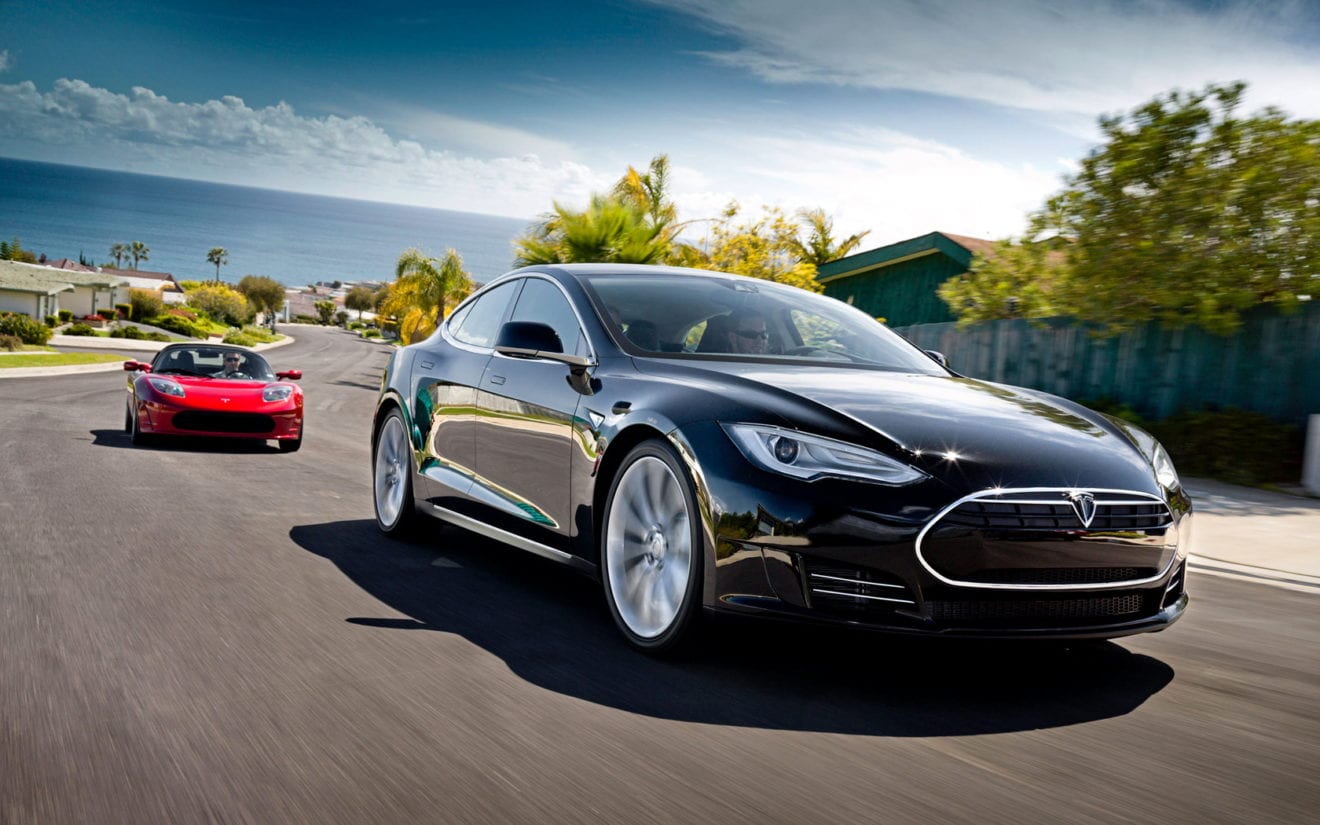
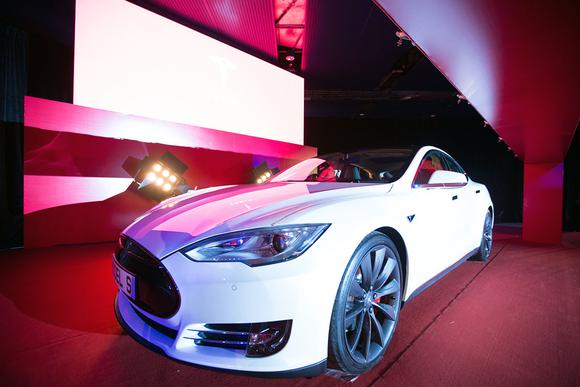
    Tesla Inc’s Model S did not get the top score in certain tests by the Insurance Institute for Highway Safety (IIHS), the agency said on Thursday.

    Chevrolet Impala, Ford Motor Co’s Taurus and Tesla’s Model S were the three sedans that got “only an acceptable rating” in a test designed to simulate what happens when the front driver-side corner of a vehicle strikes a tree or another vehicle, the IIHS said.

    Ford’s Lincoln Continental, the Mercedes-Benz E-Class and Toyota Motor Corp’s Avalon received the highest rating overall, the agency said.

    In the test, the seat belt in Tesla’s Model S was not effective and could lead to the driver’s head striking the steering wheel hard through the air bag, according to the report.

    Tesla’s Model S received the highest rating in IIHS’s crash testing in every category except one, the small overlap front crash test, where it received the second highest rating available, a Tesla spokesperson said in an email.

    “IIHS and dozens of other private industry groups around the world have methods and motivations that suit their own subjective purposes,” the spokesperson said.

    Tesla said the most objective and accurate independent vehicle safety test is done by the U.S. government, which found Model S and Model X to have the lowest probability of injury of any cars that it has ever tested.

    In order to get the top IIHS rating, automakers must have a frontal crash prevention system with automatic braking capabilities to prevent a rear-end collision.

    The vehicles must stop or slow down without driver intervention before hitting a target in tests at 12 or 25 miles per hour among other factors, IIHS said.

    Toyota said in a statement it is committed to developing safe and reliable vehicles.

    General Motors Co declined to comment, while Ford and Mercedes were not immediately available for comment.

    The IIHS is a research arm of the insurance industry, and its crash tests are increasingly influential in guiding vehicle safety design. Automakers strive for top ratings in IIHS tests as they do on federal crash tests.

  • Ford’s China sales post strongest growth of year in June

    Ford’s China sales post strongest growth of year in June

    Ford Motor Co said its China sales surged 15 percent in June, their strongest pace of the year, as the industry puts the phasing out of a tax cut behind it, adding that it was optimistic about the outlook for the second half.

    Peter Fleet, Ford’s Asia-Pacific chief, said the first quarter had been difficult after a tax on car purchases rose to 7.5 percent from 5 percent previously.

    Although Ford’s China sales declined 7 percent in the first-half from the same period a year ago, they were up 7 percent in the second quarter. Sales for June alone climbed to more than 100,000 vehicles.

    “I would expect to see for the third-quarter strong single digit percentage growth (for) the industry. That’s certainly how it looks to us based on the run rate and how the month of July has opened up,” Fleet said.

    Ford’s level of discounting tracked an overall 4 percent price decline for the industry so far this year, he said.

    “I’m not interested in driving our prices down to drive market share,” Fleet said.

  • Australia new vehicle sales surge to record in June

    Australia new vehicle sales surge to record in June

    Australian new vehicle sales jumped to a record in June, a second straight month of bumper results that augured well for consumer demand across the economy.

    The Australian Federal Chamber of Automotive Industries’ VFACTS report out on Wednesday showed 134,171 new vehicles were sold in June, up 4.4 percent on the same month last year. Both months had the same number of selling days.

    June is typically a strong month as dealers clear stock for the end of the financial year.

    Sales of sports utilities alone surged 11.7 percent in June, with the upper large segment rising almost 21 percent. Sales of light commercial vehicles climbed 12.2 percent while the heavy vehicle market gained 9.2 percent.

    The willingness to splash out on big-ticket items follows upbeat reports on retail sales for both April and May and points to a likely rebound in consumption for the second quarter after a muted start to the year.

    Toyota Motor Corp retained first place on the sales ladder with 18.3 percent of the market, while Mazda Motor Corp had another strong month taking 9.3 percent.

    Hyundai Motor took third spot with an improved share of 9.1 percent. The Holden unit of General Motors tied with Mitsubishi on 6.9 percent, while Ford trailed with 6.6 percent.

  • VW recalls 385,000 cars for a brake system update

    VW recalls 385,000 cars for a brake system update

    Volkswagen is recalling 385,000 cars in Germany for a software update to their anti-lock brake systems, news agency DPA reported, citing a spokesman for the automaker.

    Volkswagen’s VW, Audi and Skoda brands were affected, it said.

    According to DPA, the braking control system may not function properly in certain driving conditions, such as when the driver over-steers, under-steers or slams on the brakes.

    Volkswagen had no immediate comment.

  • Deputy PM encourages autos carrying Vietnamese brand name

    Deputy PM encourages autos carrying Vietnamese brand name

    Domestic automakers must manufacture autos under the Vietnamese brand name, Deputy Prime Minister Trinh Dinh Dung suggested.

    These autos must be of good quality, reasonably priced and have competitiveness in the region and the world, he added.

    Speaking with representatives of ministries and auto businesses at a conference on the automobile industry’s development in Ha Noi on Wednesday, the deputy PM said the Government was encouraging local, potential and prestigious businesses to co-operate with strategic partners in the world to study, manufacture and assemble autos with Vietnamese brand name.

    As for the support industry, Dung said it would not only meet the domestic market but also be competitive enough to take part in the global automobile manufacturing chain. For doing so, it must access and apply advanced technologies in the world.

    The industry will expand several automobile industrial complexes and centres by re-organising and re-arranging production; strengthening co-operation among automakers, assemblers and part suppliers, in addition to setting up vocational training centres, and conducting research and application to improve the investment efficiency and specialisation.

    To achieve the targets, Dung suggested that auto businesses and Vietnam Automobile Manufacturers’ Association must restructure the automobile industry to identify key products that would suit the country’s development trend, as well as the market demand.

    Each automaker should invest in advanced manufacturing technologies, raise the capacity of management and trade to cut costs, reduce production price, increase capacity, quality and the competitiveness of the products.

    The automakers, assemblers and part suppliers must take initiative, in co-operation with potential foreign partners, to expand manufacturing, as well as to develop the network of auto support industry that would meet international standards.

    The deputy PM requested the MoIT to co-ordinate with relevant sectors and ministries to supplement and complete the legal corridor, create an impartially-competitive environment for domestic automakers and importers, and meet the market principles to match with the country’s international commitments.

    It must define strategic partners in the automobile and support industries; encourage businesses to increase added value in auto manufacturing, especially of products carrying the country’s brand name; strengthen management and solve trade frauds in auto imports.

    The import tax on auto parts and components must also be adjusted.

    Dung has assigned the finance ministry to collaborate with relevant ministries to check and adjust import duties on auto parts and components, which would be in line with the Government’s orientation and international commitments.

    The ministries will study and propose preferential policies on taxes, fees and credit, ensuring the harmonisation of interests of people, the State and businesses. They need to strengthen the management of certificate of origin of complete built-up units, as per import types, which have surged in the recent time.

    The transport ministry will check and fulfil the regulations relevant to quality, safety and technologies, in addition to environment protection in manufacturing and assembling vehicles, reform administration procedures, simplify registration procedures for locally-assembled autos and create favourable conditions for businesses, ensuring high standards, while protecting the rights and interests of consumers.

    Meanwhile, the planning and investment ministry will work with other ministries to study and propose preferential policies to attract large-scale investment projects to Viet Nam, and encourage the development of products carrying Vietnamese brand names and other products suited to the customers’ preferences to increase export of autos to other countries of the ASEAN.

  • Audi to use Valeo’s stop-start technology in sports coupe

    Audi to use Valeo’s stop-start technology in sports coupe

    Luxury carmaker Audi will introduce Valeo’s micro-hybrid “stop-and-start” systems in its RS5 sports coupe, sources told Reuters, in a sign that the Paris-based supplier may be tapping new premium demand for the fuel-saving technology.

    The contract with Volkswagen’s (VOWG_p.DE) upscale Audi division underlines increased spending by automakers on technology designed to reduce carbon dioxide emissions, in response to tightening standards and testing regimes.

    Volkswagen and Valeo both declined to comment.

    Unlike a typical alternator, which converts engine torque to electricity to power a vehicle’s circuitry and charge its battery, the starter-alternator can also re-start the engine in a fraction of a second.

    The Valeo system delivers fuel savings of up to 15 percent by automatically shutting down the engine whenever a car is halted by a red light or traffic, with an in-step reduction of CO2 and pollution emissions in congested cities.

    First introduced in 2004, the so-called “i-StARS” technology is a flagship product of Valeo’s 4 billion euro ($4.6 billion)propulsion systems division, with 3 million units sold.

    But launch customer PSA Group (PEUP.PA) and other volume manufacturers have since dropped it from new models in favor of beefed-up starter motors, a cheaper though less efficient stop-and-start solution.

    The i-StARS system is beginning to find new markets, however, Valeo boss Jacques Aschenbroich told Reuters. “Demand for it is continuing to grow significantly,” the CEO said, predicting double-digit percentage sales rise.

    With the mild-hybrid RS5, which went on sale this month in Germany and in France next week, Audi becomes the first German premium brand to use the technology on its current vehicle lineup.

  • Nornickel bets on battery materials as electric car sales rise

    Nornickel bets on battery materials as electric car sales rise

    Russian miner Norilsk Nickel wants to expand in the market for materials used to make batteries for the fast-growing electric vehicle (EV) sector, its head of marketing and sales told Reuters.

    Nornickel, the world’s second-largest nickel producer and a major cobalt producer, and German chemicals company BASF said on Tuesday they were in talks to supply nickel and cobalt, needed to make lithium-ion batteries, in Europe, as the car industry’s push into electric vehicles gathers pace.

    For Nornickel, this is just the start.

    “We are discussing…transactions with several manufacturers in the industry,” Nornickel’s Markus Meurer said in an interview with Reuters.

    Nornickel and BASF’s talks cover cooperation to set the foundation to supply battery cell producers for electric vehicles in Europe with regionally produced cathode materials, they said on Tuesday.

    Meurer said the project with BASF would be developed over the next few months and that it was too early to say how much metal and in which form it would be supplied.

    “Timing will depend a lot on market development and on technology….The important question is how to enable the ramp-up of production of battery raw materials in parallel with increasing demand,” Meurer said.

    The number of electric vehicles on roads worldwide rose to a record high of 2 million last year, the International Energy Agency (IEA) said this month, as governments clamp down on fossil fuels such as gasoline and diesel.

    UBS recently raised its forecasts for global sales of electric vehicles in 2021 to 3.1 million from 2.5 million and to 14.2 million by 2025 from 9.7 million. It expects electric vehicles to account for 3.1 percent of global car sales in 2021 and 13.7 percent in 2025, against 1 percent this year.

    Last year, nickel demand for electric vehicle batteries rose 20 percent to 15,000 tonnes, according to Nornickel.

    Meurer said he expected demand for nickel from the electric vehicle market to rise to 300,000 tonnes in 10 years from 20,000 tonnes in 2017, making it the second-largest segment for nickel demand after stainless steel.

    Global demand for cobalt, a by-product of nickel and copper, last year was about 100,000 tonnes, of which roughly half was used in batteries to power electric cars. Nornickel produces about 5,000 tonnes of cobalt a year.

    Prices for cobalt metal have nearly tripled to nine-year peaks above $27 a lb from below $10 a lb in Dec 2015.

  • BMW, competing with Tesla, to introduce electric 3 Series

    BMW, competing with Tesla, to introduce electric 3 Series

    BMW plans to introduce an electric version of its popular 3 Series in September, a move designed to fend off rival Tesla.

    The German carmaker will present the vehicle at the IAA auto show in Frankfurt in September.

    The 3 series, which is a high volume sales model, will have a range of 400 km (248 miles) and is seen as a direct response to the success of Tesla’s Model 3, according to Handelsblatt.

    BMW declined to comment.

  • Auto firms ask to lower component import taxes

    Auto firms ask to lower component import taxes

    High import taxes on auto components and parts, packaging and logistics expenses are major reasons behind locally-assembled cars costing 10-20 per cent higher than imports from Thailand and Indonesia.

    As such, these are also factors hindering growth of the domestic automobile industry, the automobile working group said at the Vietnam Business Forum (VBF) 2017 recently.

    At the forum, a meeting between the Vietnamese Government and the business community held in Ha Noi, the group said higher prices made local automakers less competitive than imports from ASEAN members, and the situation will worsen when import taxes drop to zero per cent in the region next year.

    Sumito Ishii, general director of General Motors Viet Nam and head of the VBF automobile working group, said major automakers and auto part suppliers felt the local automobile industry was operating on a small scale, so it had not attracted the participation of sufficient global part suppliers.

    “The global suppliers will not invest if there is no clear business plan – whether automakers maintain or raise production in Viet Nam or not,” Ishii said.

    Of the current part suppliers in Viet Nam, more than 90 per cent are foreign-invested businesses, and the majority of auto components, parts and materials are imported.

    To help expand domestic auto production, the Government team currently in charge of the automobile industry should have auto assemblers and part suppliers participate in the process so they can understand the industry’s current situation better, the group said.

    The team should organise monthly conferences to discuss policy drafts for the industry and keep the Prime Minister informed.

    Policy makers should also continue working with businesses to build measures that will help cut production costs, reducing the pressure of competition on local automakers from 2018. Programmes have to be developed to connect businesses in the sector.

    “The connection between foreign investment businesses and domestic businesses is ineffective because there is no available database relevant to domestic parts and component suppliers. If we have a database, businesses can compare and contact local part suppliers easily,” Ishii said.

    He said foreign investment businesses should provide the list of auto parts and components that need to be localised with more details so as to help local suppliers prepare the necessary technologies.

    Meanwhile, local part suppliers would need to focus on meeting production demands, including quality, costs and delivery, and step up co-operation with foreign suppliers.

    “As for the automobile industry, the top priority is to build up a sustainable growth market. Relevant long-term, stable policies are needed to help businesses set up their plans,” Ishii said.

    Large output

    Deputy General Director of the Truong Hai Automobile Company (Thaco), Pham Van Tai, said industry needed an output large enough for businesses to invest in technology, machines and equipment to increase the localisation rate (or the rate of parts that are produced locally) and reduce production costs.

    Tai and representatives of other domestic automakers asked the Government to issue policies protecting the local auto market to help local auto and support industries to develop in a sustainable manner.

    Tai drew attention to proposals made by the Ministry of Industry and Trade (MoIT) recently, noting that they contained effective solutions.

    In the proposal, the MoIT asks the Government to cut import taxes on auto parts and components not produced locally to zero per cent from current 15-20 per cent.

    Meanwhile, import duties on components and parts that are being produced domestically should be maintained at the highest possible level to local production and create stable jobs for more than 120,000 workers in the auto industry, they said.

    “To encourage development of the support industry, the Government needs to exempt it from special consumption tax on locally-produced components and parts, contributing to decreasing the prices of cars in Viet Nam,” said Tai.

    The group also proposed that the Government takes measures to control trade fraud, strictly examine certificates of origin and create a healthy and fair environment for all businesses.

    Deputy MoIT Minister Tran Quoc Khanh said the Government gave a lot of importance to the auto support industry.

    It has issued Decree 111/2015/ND-CP and Decision 68/2017/QD-TTg on a 10-year (2016-2025) plan to develop the support industry, he noted.

    “Apart from the ministry’s measures and proposals from auto businesses, the ministry is willing to discuss the industry’s difficulties in order to ensure sustainable development in the future,” Khanh said.

    Earlier, in an evaluation on the country’s automobile industry after 20 years of development, the MoIT had said the industry had failed to reach its set targets, especially a 40 per cent of localisation rate for cars with nine seats or less by 2005 and 60 per cent by 2010. The current rate is between seven and 10 per cent.

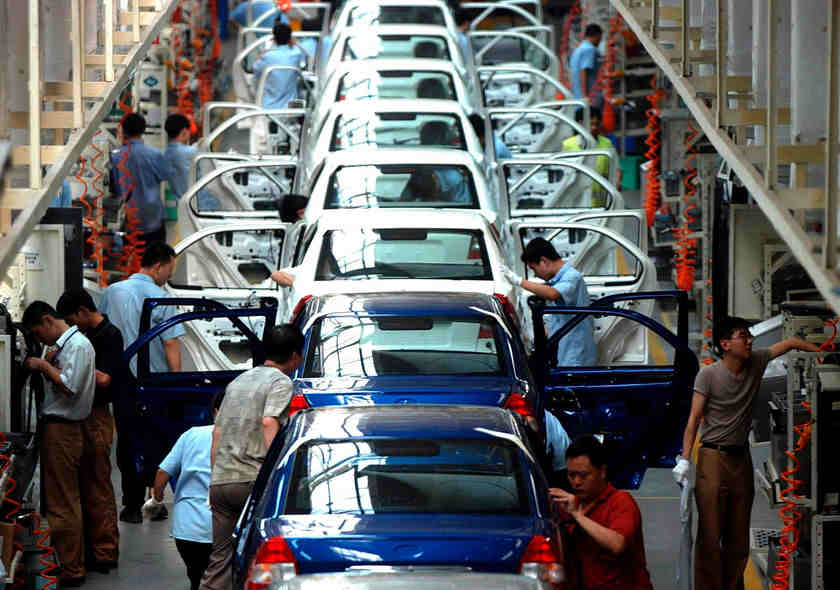
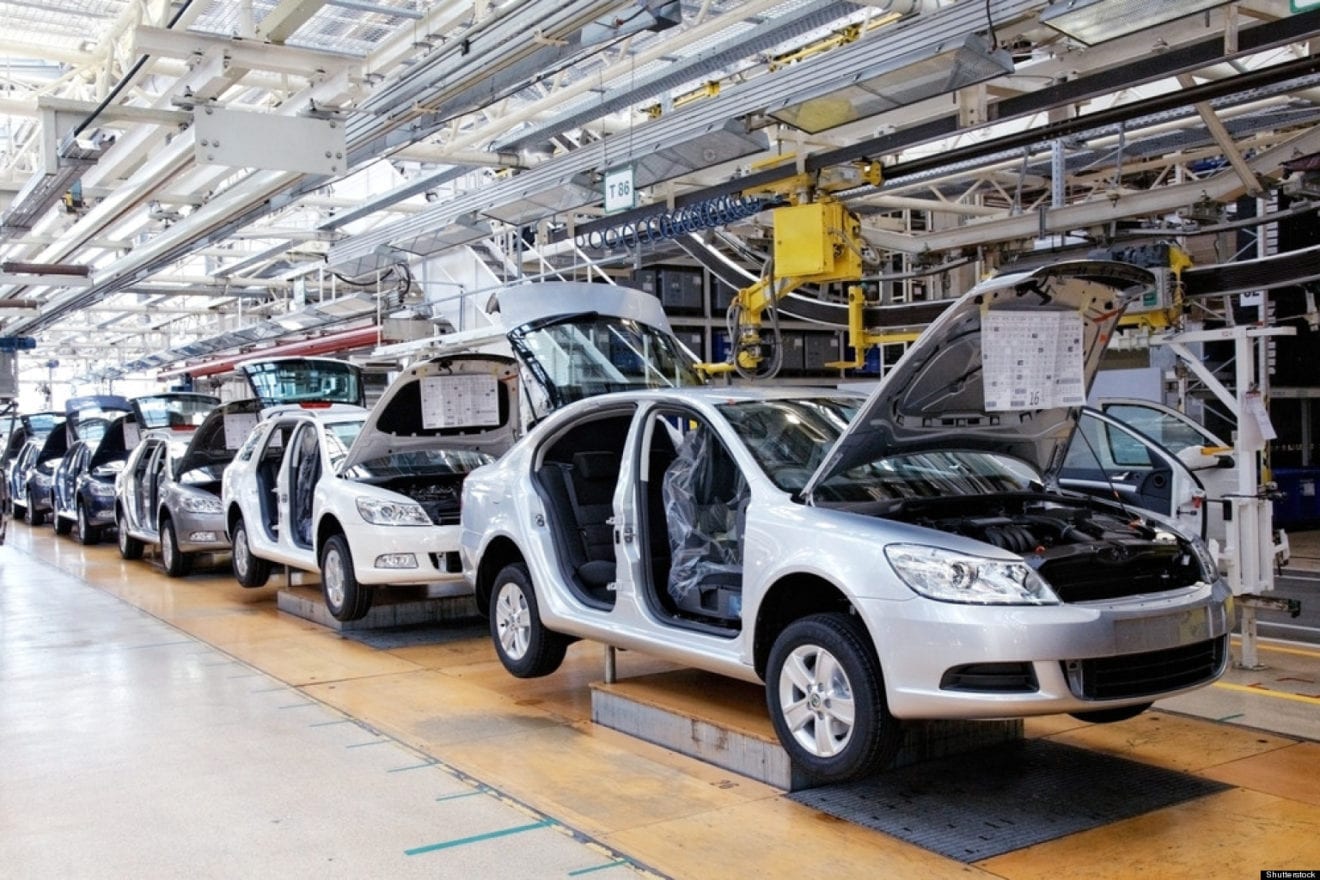
    The quality of local autos has improved but it is yet to match that of imported ones. Prices still remain higher than other countries in the region. Production stagnates at the basic assembly stage of four steps: welding, painting, assembling and examination.

    Besides low market capacity, the ministry said policies on taxes, fees and infrastructure lacked stability and there was no high consensus among State management bodies. These factors have led to a failure in creating favourable conditions for businesses in the auto industry.
  • Car ownership ratio remains low

    Car ownership ratio remains low

    The industry’s growth for 2012-2016 period was 38%, the highest rate in the South East Asia. About 45% of the new cars were registered in Hanoi and HCM City.

    As of 2016, about 211,000 vehicles were registered in HCM City and 291,000 in Hanoi. 600,000 cars were sold in remaining provinces and cities.

    Cars from Japan and South Korea were favoured in Vietnam. Customers now have more choice as more European car brands have appeared in Vietnam such as Renault and Volkswagen.

    However, the car ownership ratio in Vietnam is only 16 cars for 1,000 people. This rate is lower than Malaysia’s 341 cars, Thailand’s 196 cars and Indonesia’s 55 cars.

    According to Solidiance, one of the reasons is because prices are still high. Car manufacturing, as well as supporting industries, are still weak so Vietnam has to import completely built units. Moreover, poor infrastructure and constant congestion have discouraged people from buying cars.

    It is predicted that the demand will continue to rise with steady economic growth and increasing personal incomes. Import taxes will be reduced or lifted from 2018 after Vietnam joins various trade agreements such as the ASEAN Trade in Goods Agreement. As a result, the car prices will fall and become more affordable.

  • Alphabet partners with Avis to manage self-driving car fleet

    Alphabet partners with Avis to manage self-driving car fleet

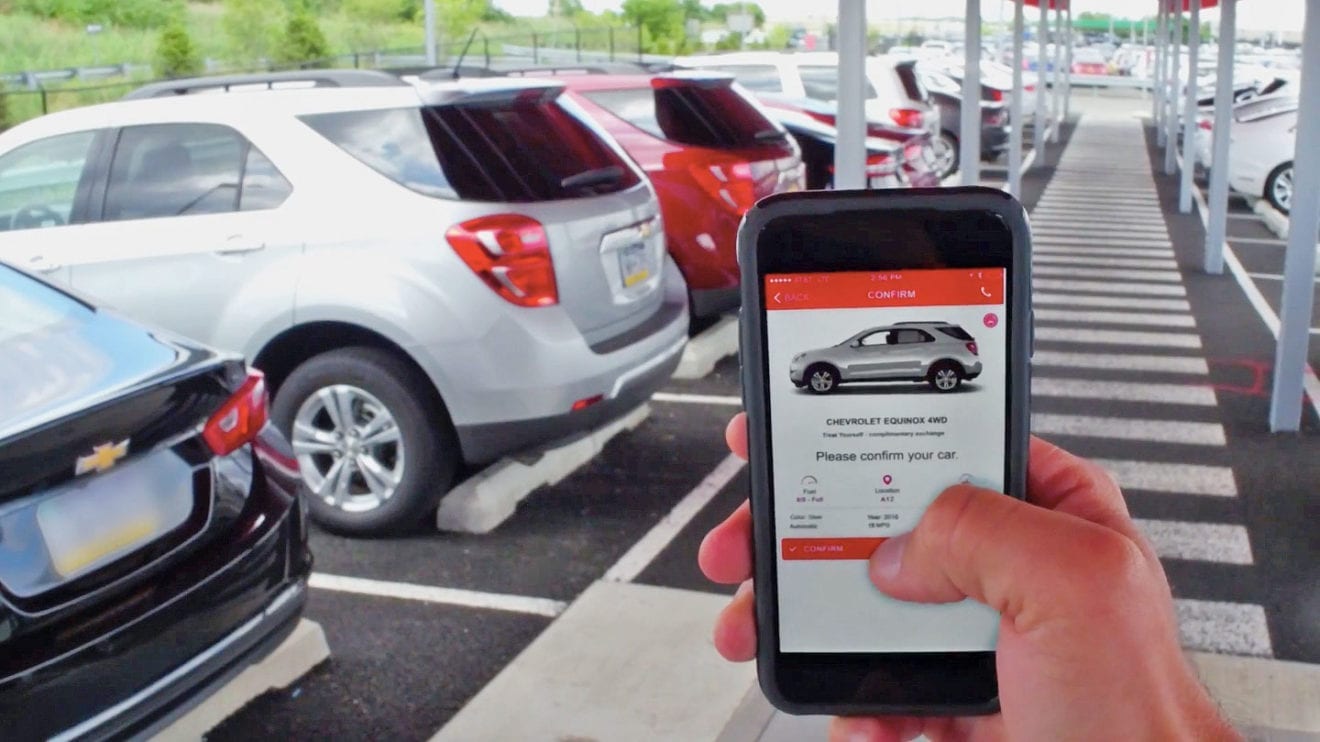
    Waymo, the self-driving car unit of Alphabet Inc, said on Monday it signed a multi-year agreement with Avis Budget Group Inc for the car rental firm to manage its growing fleet of autonomous vehicles, sparking a surge in Avis Budget’s stock.

    Investors bid Avis shares up by as much as 21 percent on Monday, the biggest intraday percentage gain for the stock in more than five years. The shares closed at $27.67, up about 14 percent.

    Shares in traditional rental car companies such as Avis and Hertz Global Holdings have taken a beating as more travelers use ride services such as Lyft and Uber Technologies The Waymo-Avis deal points to a potential future for rental car companies as managers for fleets of shared and autonomous vehicles require their services changing tires, cleaning interiors, and securing vehicles when they are not in operation.

    A Bloomberg report on Monday that Apple was using vehicles supplied by rival rental car company Hertz Global Holdings to test its self-driving car technology prompted a surge in that company’s shares.

    Also on Monday, General Motors Co Chief Financial Officer Chuck Stevens told analysts during a conference call that the automaker has “done a lot of thinking” about how to manage its growing fleet of self-driving vehicles. But he said “it’s early days on how that business model may play out.” GM has a large network of franchised dealers that could provide fleet management services, as well as an alliance with Lyft and its own Maven car-sharing unit.

    Waymo and Avis said they will launch their partnership in Phoenix, Arizona, where Waymo is allowing selected members of the public take rides in self-driving cars, including modified Chrysler Pacifica minivans built by Fiat Chrysler Automobiles NV. Waymo has said it plans to expand its fleet of Chrysler minivans to about 600 vehicles.

    Waymo and Avis did not say whether their partnership will expand to other cities, but John Krafcik, the head of Waymo, said in a statement that “with thousands of locations around the world, Avis Budget Group can help us bring our technology to more people, in more places.”

  • Honda outlines bold autonomous goals

    Honda outlines bold autonomous goals

    Honda Motor, long soft-spoken about its strategies for electric cars and autonomous driving in a world of raucous rivals, is suddenly talking louder.

    Executives last week outlined bold goals to deliver lane-changing autonomous driving for highways by 2020 and then extend the effort to city streets with Level 4 self-driving vehicles by 2025.

    At the same time, executives revealed that Honda has been quietly working on a range of electric vehicles under a new EV development division created in virtual secrecy in October.

    That unit will deliver not only a dedicated EV for China next year, it is working on another EV that will be introduced at an auto show this fall — possibly targeting North America.

    The revelations represent a leap forward for Japan’s No. 3 automaker as it races to catch up with competitors on the industry’s future technologies.

    The sense of urgency was palpable among executives last week as they showcased their plans here.

    “We have been lagging behind a little,” Honda R&D President Yoshiyuki Matsumoto said of the push, “so we are now trying to catch up. We are tightening the screws quickly.”

    CEO Takahiro Hachigo unveiled the strategy as part of a new 2030 midterm business vision, saying engineers needed more concrete targets and a clear timeline to keep them on track.

    At the same time, Honda has created two other divisions tasked with enhancing the perceived quality of its products and making them cheaper to develop and build. Honda wants to ensure that in a future in which self-driving EVs risk becoming like appliances, Honda cars will remain fun to drive.

    Urgency

    The sudden arrival of the plans reflects mounting pressure on Honda — a midsize global company, despite its appearance in the U.S. — to cope with industry consolidation, surging demand for costly new technologies and an onslaught of new competitors from Silicon Valley and China.

    “It does seem like a lot of stuff just appeared out of thin air,” said Christopher Richter, senior auto analyst at CLSA Asia-Pacific Markets in Tokyo. “Now that the engineering juggernaut has been pointed in this direction, things will start moving.”

    Honda has fallen behind traditional rivals such as Nissan Motor, Ford Motor and Volkswagen AG in chasing aggressive road maps for electric and self-driving vehicles. Moreover, upstarts such as Tesla, Waymo or even China’s LeEco, are opening new fronts of competition.

    In its Japanese home market, the fiercely independent Honda suddenly finds itself as odd man out in a new era of partnerships. The domestic industry has coalesced into two camps, with Mazda Motor, Subaru and Suzuki Motor Corp. joining into loose alliance with Toyota Motor, and Mitsubishi Motors teaming with Nissan Motor.

    Honda plans to spend big to make it all happen. The company will boost r&d spending 9.4 percent this year, to about $6.84 billion. But to demonstrate its competitive disadvantage in size, that commitment represents 5.3 percent of its forecasted revenue — larger rival Toyota will devote $9.57 billion to r&d this year, and that represents only 3.8 percent of its forecasted revenue.

    The situation is not lost on Honda. Leveraging partners is now a top priority under Hachigo’s business plan.

    Over the past year, Honda has deepened cooperation with General Motors in fuel cell vehicles, with Waymo in autonomous driving and with Hitachi in EV powertrains, among others.

    Expect more collaborations going ahead, Hachigo said.

    “We must secure higher competitiveness in automobile business for the future, especially in the areas of electrification and the realization of a collision-free society,” he said last week. “How we are going to achieve it remains the challenge.”

    Staying Honda

    Honda is wary of its vehicles falling into the commoditization that some forecast, in which automated EVs become bland by pulling together common parts and standardized electronics.

    Making Honda stand out from the crowd will be the stickler, Hachigo said.

    Honda set up a Product and Perceived Quality Planning Division in October to target the soft side of brand power, the subtle and hard-to-define nuances that connect people with their vehicles.

    Driving dynamics will be a top focus for the new plan, and Honda has created a prototype vehicle called the Dynamic Study to embody some of its future ideas.

    The concept vehicle is based on the current Civic sedan, with tweaks to the transmission, steering and chassis. Among them is a sporty downshift feature that revs like a stick shift when the car brakes into a curve, even though the transmission is automatic.

    Honda also aims to make its cars look better. Hachigo said the company will debut a new design language in the fall, though the company declined to offer any sneak peeks.

    Underpinning all these planned improvements will be doubled-down efforts to cut costs so vehicles brimming with ever-better technology won’t be priced out of the market.

    “Solidifying our foundations to facilitate electrification and future technologies such as automated driving is the key to our future,” the CEO said. “That’s where we need to make solid changes this time.”

  • Michelin to re-organise business leading to job losses

    Michelin to re-organise business leading to job losses

     Tyre giant Michelin has announced plans to significantly re-organise globally, resulting in significant job losses in France and the US most of which will be covered by natural attrition.

    In the United States 450 jobs in central functions are to be cut between 2018 and 2021. According to Michelin, 1,500 employees would actually leave the company in the same period, suggesting a large majority will result from natural attrition and retirement.

    In France, the transformation coincides with significant job creation. By 2021, 5,000 employees will leave the group in France, the majority due to retirement, and around 2,000 of these would be in Clermont-Ferrand.

    However, at the same time Michelin says it wants to recruit more than 3,500 people externally in France by 2021, including 1,000 in Clermont-Ferrand. The company will also start new activities in Clermont-Ferrand and at other sites in France, creating 250 new jobs. The firm says it aims to “progressively reach the target size of the future organizations, without forced redundancies.”

    The company would not replace 970 retirees, between now and 2021 in Clermont-Ferrand. And finally, in order to be closer to its customers and improve competitiveness, Michelin will locate 290 employee and manager positions in other countries where the group is operating.

    Corporate reorganisation 

    On 16 March 2017 Michelin launched a global reorganisation project. The goal was to “boost growth by adapting…operations to meet the evolving demands of…customers and employees. ” Now, on 22 June, the company has released further details of what has been taking place. In short there will now be 10 new regions, 14 business lines and 8 operational divisions.

    The 10 new regions will be given more operational responsibilities. These are Africa – India – Middle-East; South America; Central America; North America; Eastern Asia and Australia; China; Central Europe; Northern Europe, Southern Europe and Eastern Europe.

    Tyres  and accessories understand that UK and Eire operations will fit into the Northern European region. No details of who will be leading this region or were indeed this region will be physically based have yet been announced.

    Likewise, no details of job consolidation within this region have yet been released, but while the official details clearly focus on the USA and France, it wouldn’t be surprising to learn of some job consolidation in other regions too.

    In addition 14 “business lines” will develop offers for each customer category. The purpose of these Business Lines is to develop offers to satisfy global customer groups with similar needs around the world. They would have a key role in building the strategy of the group and would steer their business results in their respective customer segments.

    At the same time eight operational divisions will provide expertise and support for the regions and business lines. These are research and development; service technology development; manufacturing; supply chain; marketing and sales support; purchasing; operations quality assurance; and corporate and business services (CBS).

    In order to streamline the group’s central operations, the corporate divisions are to focus on their strategic missions. The group’s reporting would be based on consolidation of business lines and would be very similar to currently.