Tag: bangkok

  • KBank keen to buy Indonesian banks

    KBank keen to buy Indonesian banks

    The regulations require foreign banks to buy more than one bank, and that the targets must not be strong institutions.

    KBank president Pipit Aneaknithi said yesterday that the bank currently had partnerships with two banks in Indonesia, and was prepared in terms of facilities and capital to establish its own footprint in the Indonesian market.

    While Indonesia has very high potential for KBank and the takeover of local banks is an option, the requirement that foreign banks have to purchase more than one bank is something that it might not be particularly comfortable with, he said.

    The Bank of Thailand acknowledges this concern, he said, adding that market entry via the Qualified Asean Banks (QAB) scheme is another potential solution for KBank.

    The bank is therefore interested in applying for QAB status if the scheme’s framework is implemented.

    Meanwhile, the establishment of a physical branch in Indonesia is likely to be more difficult than doing so in Vietnam, which is another focus country for KBank, the president said.

    The best solution right now for KBank is therefore seen as the continued partnership with two local banks in Indonesia, he explained.

    Elsewhere in Asean, KBank currently has physical branches in two markets, one each in Cambodia and Laos.

    The Cambodian branch will be officially opened on February 8, with the Vientiane branch in Laos due to be opened later this year.

    With the presence of a physical branch in a foreign market not always the best solution, and the cost of establishing such an operation today a major matter, partnering with local banks is a tangible way to conduct business, he said.

    However, the difficulty is whether the bank and its partners have the same policy direction and share a similar interest in accommodating clients, he added.

    KBank, meanwhile, has been active in terms of international banking business in the past seven years by focusing on China, where it is upgrading to local banking this year.

    The market share of KBank in trade finance between Thailand and China has risen from 5 per cent to 15 per cent in seven years, Pipit said.

    He said the next step for KBank in tapping a regionalised trade-finance market dominated by China would be for the bank to facilitate financial services to Thai clients for business between one foreign country and another. “We should open a letter-of-credit service to our clients in China who want to run a business in Myanmar,” he said by way of example.

    Furthermore, KBank must embrace the digital platform in order to integrate its regional operating model.

    Under its banking-platform plan for 2016-2017, KBank must be able to service cross-border mobile transfers, multicurrency transactions and cross-border direct settlement, he stressed.

    KBank yesterday reported a 2016 net profit of Bt40.17 billion, some 1.77 per cent higher than the previous year’s level.

    The bank and its subsidiaries set aside a loan-loss reserve of Bt33.75 billion at the year’s end, up 28 per cent from Bt26.37 billion the year before.

    The higher reserve reflects the rise in non-performing loans last year, from 2.7 per cent to 3.32 per cent.

    Lending growth, meanwhile, supported net interest income, for which KBank recorded year-on-year growth of 5.5 per cent to Bt89.67 billion.

  • Five E-commerce Business Models Destined to Rule Thailand in 2017

    Five E-commerce Business Models Destined to Rule Thailand in 2017

    2016 predicted Thailand’s e-commerce boom and it has been forecasted that in 2017, internet users in Thailand will make up 50 percent of the population compared to last year’s 43 percent.

    Once plagued by a shaky foundation of uncertain payment settlement systems and a faltering mobile infrastructure, it seems Thailand has overcome that hurdle and in 2016 became Southeast Asia’s fastest growing e-commerce market.

    With a retail market that is expected to reach 3.21 billion by 2020 – according to Euromonitor International, Thailand is without a doubt carving its niche within the world of e-commerce.

    Fueled further by the launch of 4G services, it seems a path has been paved for numerous online retailers to up their game and offer greater formats of product distribution to an internet-savvy pool of consumers.

    Here are five types of e-commerce business models that are currently taking Thailand by storm.

    Meal Delivery Sites

    With the clean eating craze going strong – particularly in cities – healthy food delivery websites are becoming an increasingly popular business model. Offering healthy alternatives that run from organic to vegan to low-calorie and non-processed foods, the success of these websites can be attributed to the fact that they offer to take away the hassle thought to encompass healthy eating, aka grocery shopping etc. By eliminating these factors, the popularity of meal delivery sites can only grow exponentially.

    Online Deal Platforms

    Capitalising on the Thais’ love for a great deals, the humble coupon is back and stronger than ever. With online deal platforms such as Saleduck offering coupons and deals from powerhouse retail websites like Lazada and Expedia, consumers are able to find money-saving deals on everything from electronics to groceries to first-class airline tickets going for up to 80% off. To set themselves apart from competition, deal and couponing platforms often work closely with their partners to release exclusive codes to provide even greater savings to their customer base and the fact that most of these codes can be accessed without a fee is the icing on the cake.

    Social Media Shopping

    In 2016, PWC’s Total Retail survey noted that 51 percent of online shoppers in Thailand shopped directly through social media platforms such as Facebook and LINE citing interactivity as a strong motivator. Whilst price and convenience play a significant role, the driving force behind social media shopping can be linked to the stream of human connectivity that takes its form in reviews, comments and feedback that comes via social media. 53 percent of social media consumers said that customer reviews are what influences their buying decision.

    C2C Mobile Shopping

    Following in the same vein as social media shopping, C2C is also cited as one of the next big things to emerge in Thailand’s e-commerce ecosystem. The person to person interaction is an element that serves as the heartbeat of successful C2C platforms such as Pantipmarket and Tarad.com. Over 50% of online transactions being performed via mobile phone in Thailand, this is expected to further push consumer-to-consumer shopping further into the limelight.

    Digital Content Websites

    From mobile gaming to SVOD, Thailand’s digital revolution has certainly altered the ways in which people consume content. With over 10 different paid platforms for Thais to choose from including iflix and Doonee, Thailand’s affinity for mobile internet use plays a role in how we choose to consume content via digital platforms. In the world of gaming alone, major telecom operators in Thailand have announced strategies in acquiring digital content and games in an effort to meet the rise in demand.


  • TCL Electronics pictures broader appliances market beyond TVs in Thailand

    TCL Electronics pictures broader appliances market beyond TVs in Thailand

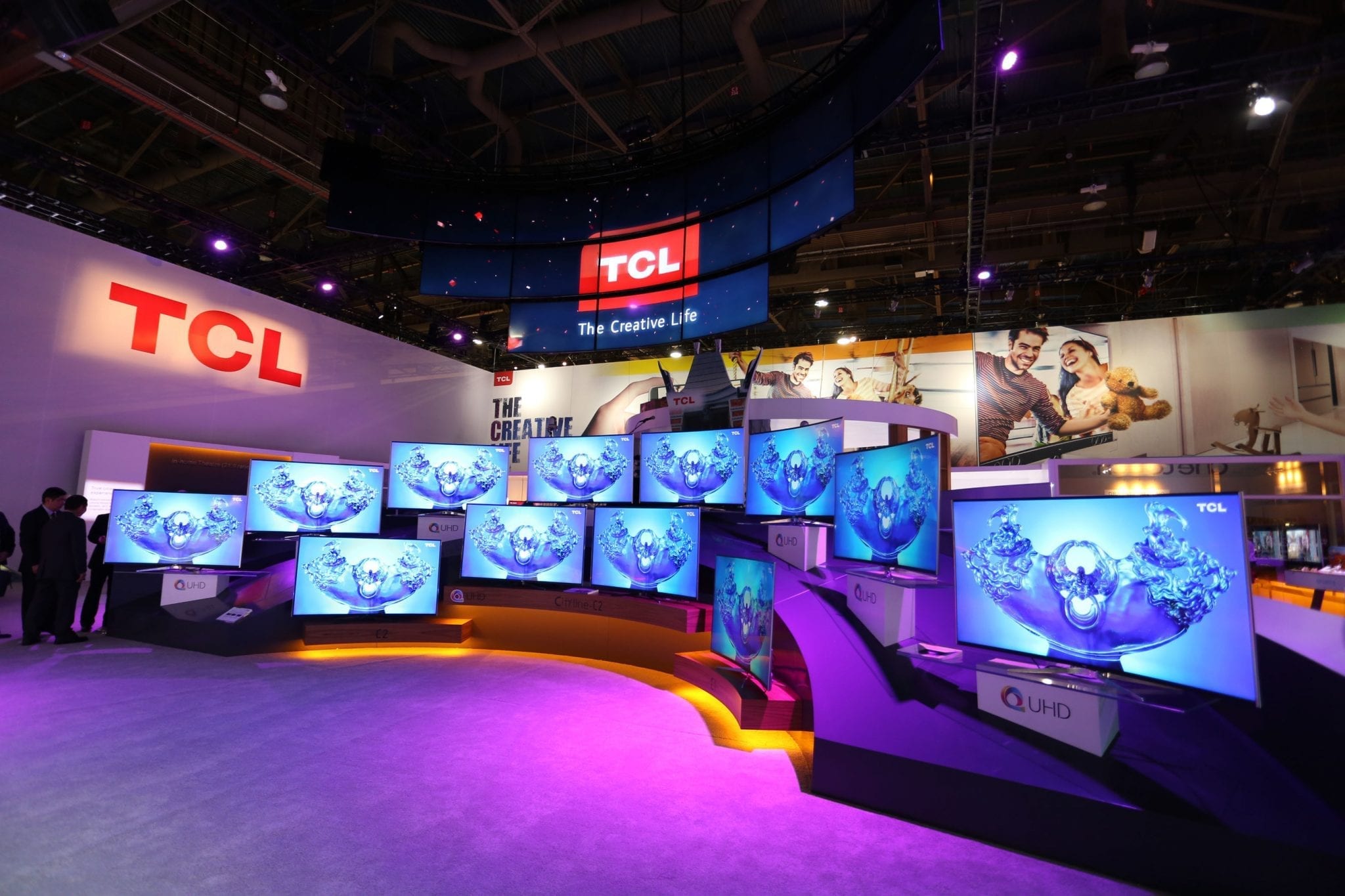
    TCL Electronics, a Chinese electrical appliance manufacturer that sells televisions in Thailand, is considering expanding its product range in the country. The company is conducting a market study that may pave the way for it to sell other home appliance products, including air-conditioners, refrigerators, and washing machines. Such a move would reduce TCL’s reliance on only one product line in the Thai market.

    Thailand’s overall consumer electronic market dropped 3 per cent year on year to Bt34.5 billion in the first 11 months of last year. Sales of flat-screen and plasma televisions dropped slumped by 8 per cent |over the period to about Bt23.3 billion.

    In contrast, overall sales of home appliance products, such as refrigerators, air-conditioners, and washing machines, increased by 6 per cent to Bt54 billion in the first 11 months of 2016.

    Sandy Zhou, head of marketing at TCL Electronics (Thailand), said TCL Thailand was keen to add a broader range of electrical appliances to its offerings in Thailand, meeting rising consumer demand in the segment. The strategy also would help TCL to improve its operational efficiency and lower management risk.

    She said that TCL Thailand achieved sales of Bt2.5 billion last year, maintaining its position as a top-three TV player in Thailand with 8 per cent market share.

    Zhou said TCL’s main income is derived from products such as Smart TV and QUHD TV, which cover the mid to premium ends of the market. TCL’s customer base can be categorised as 45 per cent in Bangkok, with 55 per cent in the rest of the country.

    “TCL Thailand expects to increase our market share in the local TV market to 10 per cent or approximately 300,000 units (Bt3.2 billion in sales value) this year. For other home appliances, our products will be launched on the market in the third and fourth quarters of this year,” she said.

    “We however have no plan to set up a manufacturing facility for our consumer electronic and home appliance products in Thailand at this moment,” said Zhou.

    TCL Thailand has been established in Thailand for more than 13 years, building up a brand loyalty and good teamwork in its workforce.

    “For this year, our strategy is to expand our sales channels domestically. We plan to increase the number of our dealers here by 30 per cent, and by 15 per cent for the number of modern retail stores. We also plan to adjust the image of our existing 100 showrooms in the Kingdom to be under the ‘Creative Life’ concept,” she said.

    Zhou said that TCL had 75,000 employees throughout Asia, the Americas, Europe and Oceania, with sales organisations in more than 80 countries and regions, and 23 research institutions and 21 manufacturing and processing bases worldwide.

    “TCL Thailand will focus on Thailand only. TCL Group also has offices in the Philippines, Vietnam and Indonesia,” she added.

    TCL Thailand pursues its business with customer- and product-oriented strategies. Core strategies include a focus on brand awareness and price performance through maximising product value and performance efficiency.

    Wannapong Tawara, associate director of GFK Retail and Technology, a market research company in Thailand, said Thailand’s TV market value in 2017 should be similar to that of 2016, considering consumers are still cautious on discretionary spending.

    However, electrical appliances including TVs that are designed to be connected with other applications appeared to be in high demand, tapping into new consumer lifestyles, Wannapong said. With this in mind, electric appliance makers should consider introducing a variety of products that offer complex entertainment and service options and are well priced and easy to use, while coming with good after-sales service.

  • Tourist arrival number 32m sets new Thai tourist record

    Tourist arrival number 32m sets new Thai tourist record

    The Tourism Authority of Thailand (TAT) says a new record was broken at the end of December when it received its 32-millionth visitor. The red carpet was laid out to welcome the fortunate arrival as part of ’Thailand’s Luckiest Visitor’ campaign which was originally started in 2015 to recognise and reward every millionth visitor to Thailand, from the 13 millionth to 29 millionth during June to December.

    TAT says that this campaign has subsequently proved to be hugely popular, with both tourists and media helping to enhanced Thailand’s brand image.

    So much so, that Thailand is expecting to earn total international tourism revenue of around Baht1.62 trillion (US$46bn) in 2016, representing a year-on-year increase of 11.68% compared to 2015.

    BIG PUSH TO ENCOURAGE MORE ARRIVALS

    To boost these numbers further, TAT says that several initiatives have been put in place to encourage more tourist arrivals, including visa waiver fees for visitors from 19 countries from 1 December, 2016, to 28 February, 2017 and a halving of visa-issue fees on arrival over the period.

    Meanwhile, the Tourism Authority of Thailand and the Tourism Ministry have announced newly revised tourism revenue targets for 2017 Bt2.71 trillion ($76.1bn) which represents an 8.2% rise on 2016.

    This follows earlier statements suggesting that Thailand’s tourist numbers for 2016 are now expected to total around 32.6m when the final count is in – an increase of around 8%.

    In addition, TAT has confirmed that it is bringing back its Thailand Tourism Festival (TTF) to coincide with Chinese New Year 2017 between 25-29 January this month. It is hoping his will attract more than 650,000 visitors.

  • Krungthai Bank to transfer tax refunds via Prompt Pay

    Krungthai Bank to transfer tax refunds via Prompt Pay

    Krungthai Bank has announced it is now fully ready to utilize the National E-Payment system ‘Prompt Pay’ and will starting January 4, 2017 use it to transfer senior citizen and disability stipends as well as tax refunds for the public.

    Vice President for Business Finances at Krungthai Bank Songpol Cheewpanyaroj has announced that from January 4 2017 onward, Krungthai, as the bank tasked by the Revenue Department with forwarding tax refunds to citizens signed on to the Prompt Pay system, will begin doling out the funds through the e-payment method. He noted that citizen can continue to register for the system between January 1 and March 31 so that they may use it to receive their refund.

    In February, the bank will also be using Prompt Pay to distribute government stipends to the elderly and disabled and urged those eligible for the assistance to register for Prompt Pay soon.

    At present, over 2.2 million citizens are in the Prompt Pay system, which was already used to disperse low-income earner aid to some 300,000 people.

  • Massive Failure of KBANK before New Year

    Massive Failure of KBANK before New Year

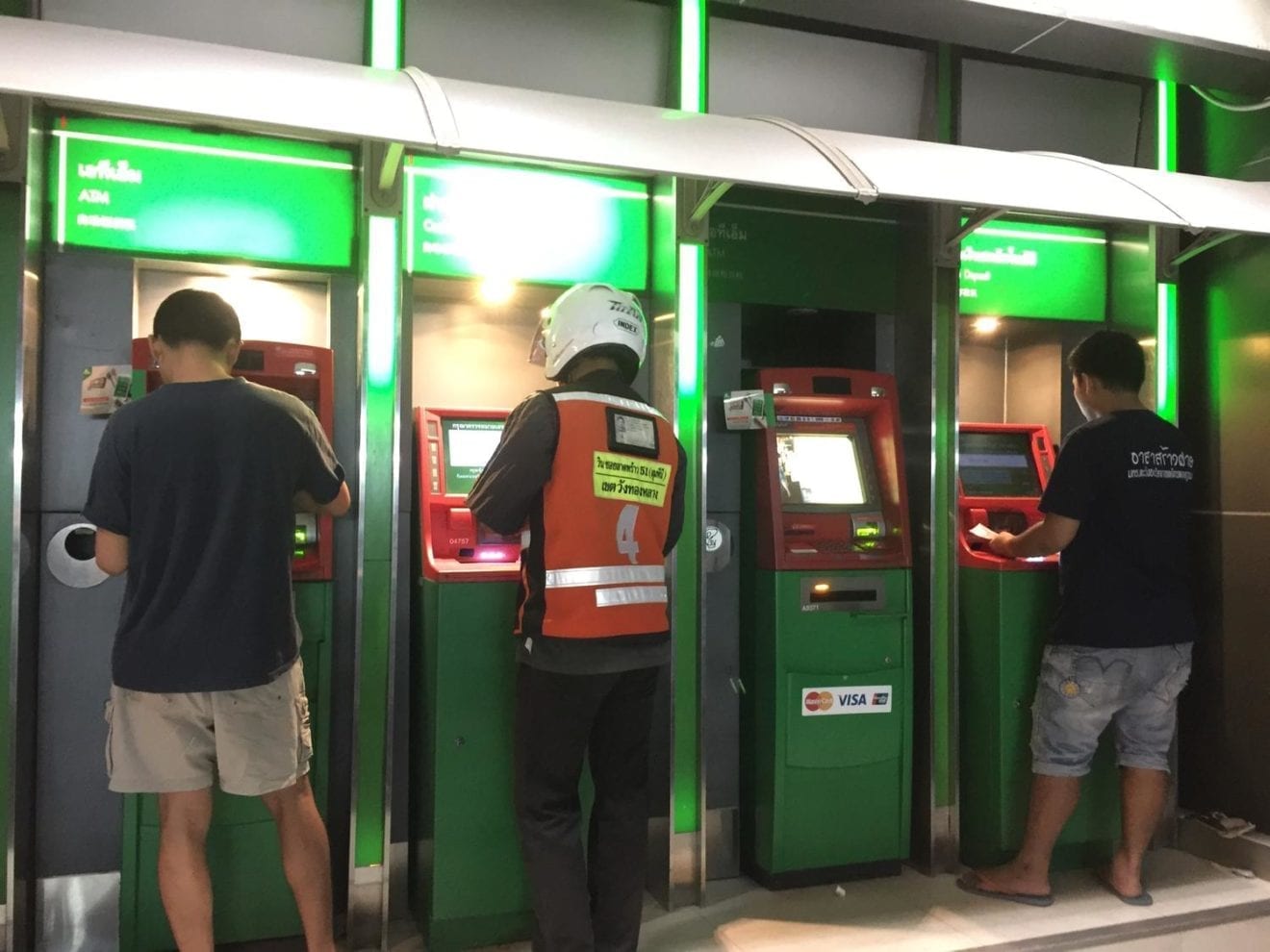
    Kasikorn Bank says it is working to fix the complete outage of its services Friday before New Year, which comes just before a bank holiday.

    On a day many say they need access to their money the most, K-Bank’s ATMs as well as online and mobile banking systems have been offline since Friday morning and were still unavailable as of 5pm.

    The bank has yet state the cause of the error, but responded to complaints on its Facebook page and Twitter account it was trying to solve the problem.

    The bank said it could not provide the specific time its website and application services would be working again.

    K-Bank’s mobile system was also disrupted briefly Thursday evening.

  • Easy Pass users can now top up with MasterCard via “easyBills”

    Easy Pass users can now top up with MasterCard via “easyBills”

    2C2P, Expressway Authority of Thailand (EXAT) and MasterCard have partnered to launch a new top-up channel for Electronic Toll Collection System for Easy Pass users in Thailand. Easy Pass users can now top up their cards easily with their MasterCard via easyBills’ mobile application or its website (www.easyBills.in.th), without having to pre-register their cards with the respective issuing banks. They will enjoy benefits including points accumulation upon card usage, extended due dates for payments made through the credit card, convenient storage of their favorite billers for repeat usage and checking their historical transactions, as well as the ability to set bill alerts on their calendar.  A thousand gift cards worth 500 baht each will be given away to the top 1,000 MasterCard cardholders who accumulate the highest Easy Pass top-up value via easyBills from now till 28 February 2017.

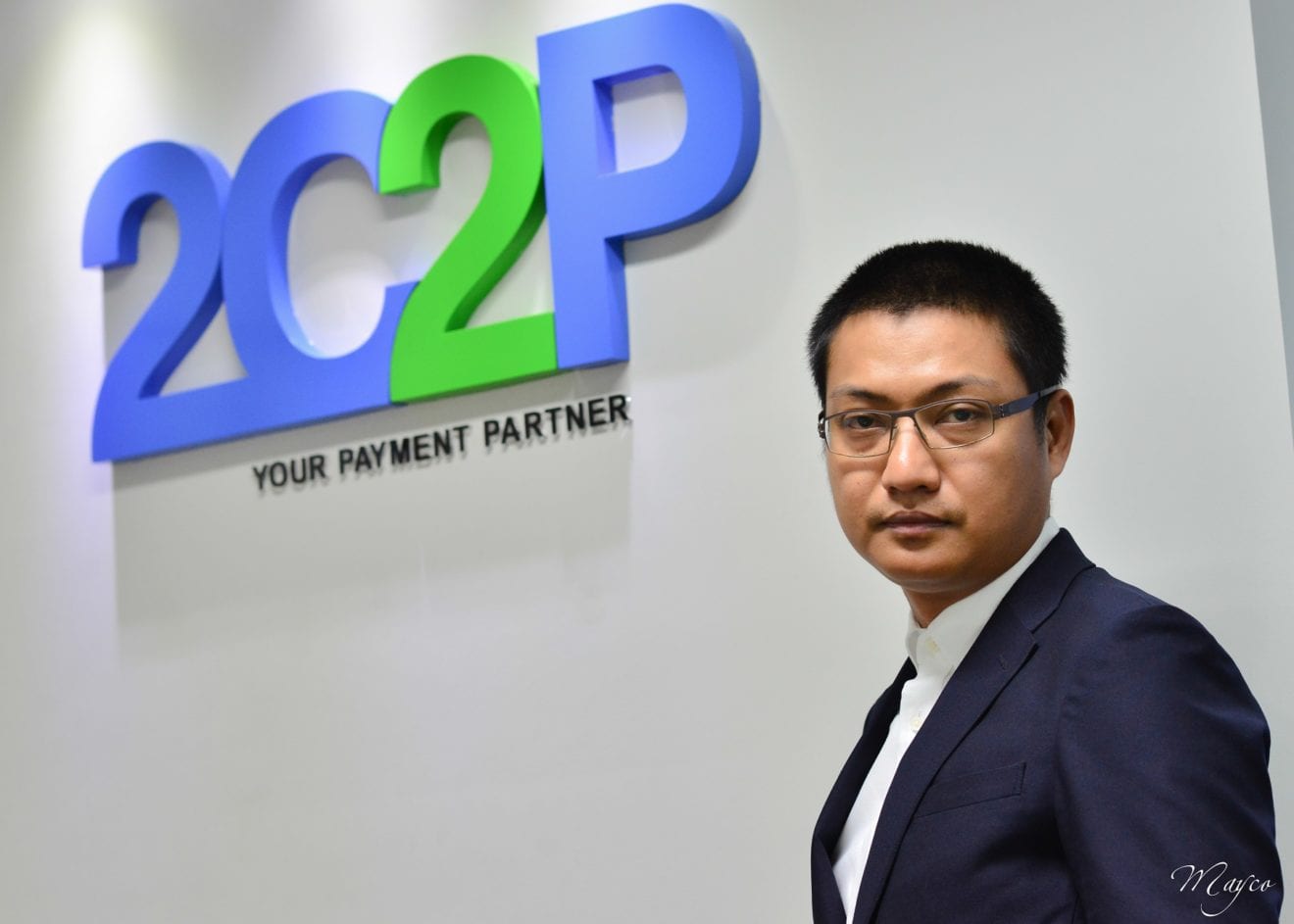
    Mr. Piyachart Ratanaprasartporn, Chief Executive Officer of 2C2P (Thailand) Co., Ltd., said:  “easyBills is an innovative payment service catered to digital users who are familiar with the online platform. The collaboration marks the first time that Easy Pass users can easily and conveniently top up their cards without cash, using their MasterCard without pre-registering with their banks, simply by downloading and using the easyBills mobile application on either iOS or Android, or by visiting easyBills’ website.

    easyBills helps consumers pay their bills easily, bringing convenience to everyone. It is equipped with special features that enable users to store their favorite billers for future usage, store their credit card details securely for future payments with 2C2P’s PCIDSS Level 1 certification and set biller alerts on their calendar to remind them of the payment due. Users will receive their payment confirmation via their emails,” Mr. Piyachart added. 

    Mr. Antonio Corro, Country Manager for Thailand & Myanmar, MasterCard, said, “MasterCard is very pleased to join our partners to increase convenience to our customers. They can now top up their Easy Pass card through the easyBills mobile application and website, with their MasterCard that is issued by all the banks in Thailand. They can be assured that all the online transactions are secure, while enjoying the privileges from using MasterCard. We believe this service will pave the way for Thailand to become a cashless society soon.”

    Mr.Narong Gieddech, Governor of Expressway Authority of Thailand (EXAT) said: “Since 2010 we have provided our service for the Electronic Toll Collection (ETC) system;  there are 1.3 million Easy Pass card users. We are excited to join hands with MasterCard and 2C2P who developed easyBills. easyBills’ application and website will be the 12th top-up channel for Easy Pass. This service will be bolstered by Thailand’s National e-Payment system, which the government is set to launch to transform Thailand into a cashless society.”

    easyBills “Pay Bill Easily…Get More Easier”, is developed by 2C2P in collaboration with MasterCard. Through this service, cardholders can pay utility bills, such as electricity, water supply, telephone, mobile phone top-up and e-wallet, as well as for insurance premium, online products, games, books and several other bills all in one app, anywhere anytime. Most importantly, security meets the international standard of 3D Secure.

    There will be a giveaway of a thousand Tesco Lotus gift cards worth 500 baht each. The prizes will be awarded to the top 1,000 MasterCard cardholders who accumulate the highest top-up value on their Easy Pass via easyBills from now until February 28, 2017.

  • Thai electric car rolls out

    Thai electric car rolls out

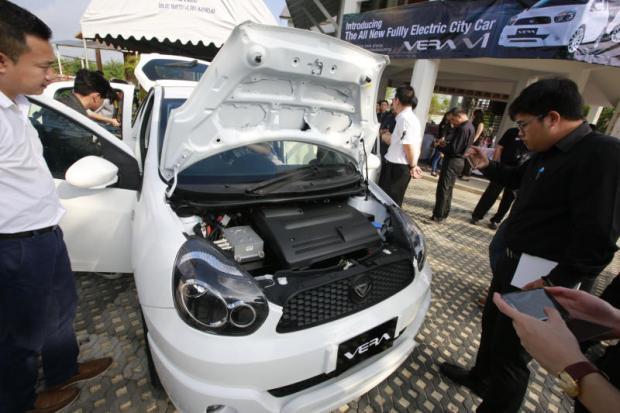
    Thailand’s first electric car brand has made its debut amid scepticism from an industry expert about its commercial viability. Vera Automotive, founded on Oct 7, 2015 by five Thai engineers from King Mongkut’s Institute of Technology Ladkrabang (KMITL), yesterday introduced the Vera V1 battery electric vehicle (BEV), powered with a battery capacity of 22 kilowatts per hour, which can be registered with the Land Transport Department as a passenger car.

    The maximum speed of the Vera V1 is up to 105 kilometres an hour. It can run up to 180km per charge, which takes six hours to complete.

    Co-founder Wanchai Meesiri said all Vera cars are designed by Thai engineers under the Thai brand, but the company has hired the Chinese carmaker Geely Automotive to produce the BEVs. The company imports the cars as completely built-up (CBU) vehicles to Thailand.

    Vera V1 is subject to all related taxes similar to other imported vehicles, including an 80% import duty, a 10% excise tax for all types of electric vehicles, a 10% interior tax and a 7% value-added tax.

    Yossapong Laoonual, chairman of the Electric Vehicle Association of Thailand (Evat), said it’s a good sign for the country to create its own electric vehicles, even if the vehicles are made by foreign firms.

    A retail price below 1 million baht is affordable for Thai customers, he said.

    But Asst Prof Yossapong warned that any startup that is selling electric vehicles has to plan its marketing strategy carefully, as the Thai car market has many dimensions for consumers to consider, including brand, service and trust.

    “Electric vehicles for Thailand remain very new, and they’re unlikely to become popular or proliferate in the short term,” he said. “If you are a new company or brand, the best solution is to sell electric vehicles as a fleet to other agencies, which are easier to provide after-sales services for.”

    Mr Wanchai said the primary purpose for establishing Vera Automotive is to make Thai BEVs for the local market.

    Managing director and co-founder Werachet Khan-ngern said Vera vehicles aim to capture only a niche market.

    He expects to sell about 100 units of Vera this year.

    “We hope in the foreseeable future the government will come up with clearer policies and supporting measures once the number of electric vehicles increases,” Mr Werachet said.

    He said the firm will provide after-sales services at its head office on Ladprakao Road.

  • Bangkok to get 14 new malls as Thailand gets the shopping bug

    Bangkok to get 14 new malls as Thailand gets the shopping bug

    Retail space, in particular shopping malls, will continue to grow this year, with health, beauty and pharmacy stores becoming the new retail battlefield.

    Fourteen retail projects will open in Bangkok and its suburbs this year, adding a total of 272,800sqm of space, said Mr Surachet Kongcheep, associate director of Colliers International Thailand. Of the total, five are shopping malls totalling about 178,640sqm, seven community malls totalling 51,850sqm, one department store of 36,000sqm, and one retail plaza with 6,310sqm in an office building.

    Colliers said the seven community malls due to open in Bangkok this year are We Retail Nana with 2,100sqm on Sukhumvit Road, ZY Walk Chula Soi 5 (4,500sqm) on Banthadthong Road, Happy Avenue Don Muang (4,053sqm) on Songprapa Road, Canapaya (17,094sqm) on Rama III Road, Landmark Mahachai (5,000sqm) on Rama II Road, Muang Thong City Park (phase 1, 17,000sqm) on Chaeng Watthana Road, and Hyde Sukhumvit (2,100sqm) on Sukhumvit Road. Fewer community malls are opening this year compared to the past few years, following the lacklustre performance of some community malls in the past one to two years.

    The five shopping complexes to open are Iconsiam, a luxury retail project developed by a joint venture between Siam Piwat Co, the operator of Siam Center and Siam Discovery, and Magnolia Quality Development Corp, the real estate developer under Charoen Pokphand Group, on Charoen Nakhon Road with 51,500sqm, Show DC on Rama IX Road, Ikea@CentralWestgate in Nonthaburi’s Bang Yai district, Gaysorn II near Ratchaprasong intersection with 6,000sqm and G Tower with 7,140sqm on Ratchadaphisek Road. Meanwhile, one department store to be opened this year is Iconsiam with 36,000sqm. Pearl Bangkok is a retail plaza on Phahon Yothin Road with 6,311sqm.

    Outside of Bangkok, several retail projects are set to open upcountry this year. Central Pattana Plc plans to open at least three shopping complexes with one each in Samut Sakhon’s Maha Chai district, Nakhon Ratchasima and Phuket. Robinson Department Store Plc plans to develop three new branches this year. Two are lifestyle shopping complexes in Phetchaburi and Kamphaeng Phet provinces, and the location of the third has not been disclosed.

    TSCA president Wallaya Chirathivat said new investment in shopping malls during 2016-17 has declined to 70 billion baht (S$2.83 billion), down from 100 billion over the past four to five years. Retail investment slowed due to economic slowdown at home and abroad.

    Mr Chatrchai Tuongrattanaphan, adviser to the Thai Retailers Association, said he believes consumer purchasing power will gradually improve this year.

    “The health and beauty sector will be the new retail battlefield this year because Thailand is gearing towards an ageing society, and when people earn more, demand for health and beauty products also rises,” he said.

    The local health and beauty business in 2016 is expected to be valued over 280 billion baht. Health and beauty store chains are Boots, Watsons, Tsuruha, Pure and Matsumoto Kiyoshi.

    Siam Makro Plc, the operator of Makro cash-and-carry stores under CP Group, will slow the opening of new stores in Thailand and shift focus to nearby countries instead. Siam Makro recently set up a subsidiary, Makro Ros, to operate its cash-and-carry store operations in Cambodia. The opening of Makro stores in Cambodia will be under a joint venture with a local partner.

    Domestically, Siam Makro will focus on opening Makro Food Service stores to cash in on the continuing growth of the hotel, restaurant and catering business.

    Meanwhile CP All Plc, the operator of 7-Eleven convenience stores, is expected to open some 700 new stores this year, on a par with last year. Mr Chatrchai said he expects Thailand’s retail market — currently worth 3.4 trillion baht — to grow by 3 per cent last year, and growth in 2017 will probably be higher.

  • Thai NBTC to relax per-second 4G billing condition

    Thai NBTC to relax per-second 4G billing condition

    Thailand’s telecoms regulator has relaxed an earlier directive requiring per-second billing for 4G services to only require operators to bill half of a service on a per-second basis.

    The National Broadcasting and Telecommunications Commission’s (NBTC) telecoms committee has decided to change the directive to no longer require operators to charge entirely on a per-second basis.

    Although the initial per-second requirement was introduced May last year, the NBTC has yet to enforce it because it has proven unpopular with affected operators.

    Operators have been resisting the move to per-second billing on the grounds that it would unfairly penalize customers that have signed up to fixed allocation or unlimited call or data plans, stating that charging per second would cost heavy usage customers more than the bucket plans.

    The NBTC requirements would cap 4G tariff rates at 1.13 satang ($0.0003) per second. The requirements were a condition of the 4G mobile broadband licenses issued to AIS and TrueMove last year. Second-ranked Dtac is not required to comply.

    AIS has reportedly warned that the company would have to abolish their existing tariff plans if the directive is enforced, while True Move is appealing the directive in court.

  • Prompt Pay to revamp e-banking in Thailand

    Prompt Pay to revamp e-banking in Thailand

    The digitalization of banking remains a top priority for banks across Asia, including in Thailand. In January 2016, the Thai Bankers’ Association announced plans to develop a new five-year strategy that included digitization and next-generation payment infrastructure, financial inclusion, contribution to society, regional integration, and legal and regulatory enabling.

    Chief among the ambitions of digitization is see between 50-60% of transactions becoming cashless by 2020, up from 25% in January 2016. One of the beneficiaries of this over-arching initiative is e-Payments, which is forecast to account for up to 70% of total transactions by 2020, up from the current 30%.

    According to the Oxford Business Group report “Banking in Thailand goes increasingly digital” three initiatives have been planned to help meet these targets: the development of a payment system roadmap, publication of common standards and establishment of shareable payment infrastructure.

    In July 15, 2016, the Bank of Thailand announced plans to roll out a national e-payment service in partnership with a number of commercial banks as well as four institutions owned by the government. The aim of the project is to further transition Thailand into a cashless society.

    In November 2016, market research firm YouGov polled 1,022 Thai netizens’ views on the service several months after the announcement and subsequent marketing of the service, including a highly public delay of the service in October.

    According to the poll, 74% of polled netizens confirm intent to use the service, suggesting consumers view the service as a welcome advancement to current payment options. Only 7% of those polled have not heard of the service.

    Over half (54%) of those polled see Prompt Pay as enabling them to make payments across multiple channels with internet banking as the most popular option. But 20% intend to use Prompt Pay solely for internet banking, and 15% say they plan to use Prompt Pay for mobile banking.

    The YouGov poll suggests that e-payment services are growing in popularity. About 53% of those polled identified True Money as a service they have recently in the past month compared to 38% over the past 3 months. Linepay and Rabbit were alternative e-payment services also popular among those polled at 17% and 15% respectively.

  • Fierce competition takes heavy toll on smartphone market in Bangkok

    Fierce competition takes heavy toll on smartphone market in Bangkok

    Thailand’s increasingly crowded smartphone market has wreaked havoc on handset companies’ profit last year, with Japan’s Sharp Corp becoming the latest victim to be quietly forced out of the market.

    Chinese handset maker ZTE Corporation, meanwhile, disputed rumours that the company has decided to pull out of the Thai smartphone market due to stiff competition.

    However, industry veterans believed more intense competition is around the corner this year.

    Sharp confirmed that the company is now inactive in the Thai smartphone market without providing a reason after resuming its presence here just one month ago through Commtiva Technology, a Taiwan-based distributor of wireless communication products.

    Oran Rungsereechaitrakul, former marketing manager of Commtiva (Thailand), said the company had just been verbally informed by its parent firm Commtiva that the group stopped selling Sharp mobile phones from Dec 30 last year.

    Lorna Liang, country manager for device of ZTE Thailand, said the company remains strongly committed to the Thai market despite facing fierce competition.

    “We are continuing business as usual. We have set long-term strategic plans to expand our presence in Thailand after entering the country less than two years ago,” she said.

    ZTE will still focus on the smartphone segment priced 3,000-7,000 baht apiece, where it has a particularly strong presence in Thailand, through distribution channels with mobile operators and retail shops.

    ZTE will roll out 2-3 smartphone models by March.

    Ms Liang also threatened to take legal action against those who spread or publish rumours regarding the company’s alleged business closure before checking with the company, saying spreading false information will cause consumers to lose trust and confidence in the company.

    According to internal reports by Huawei and Oppo, Samsung is clearly dominating the local smartphone market with a 40% share, followed by Apple with an estimated share of less than 15%, with Chinese brands Oppo and Huawei having a 12% and 8% market share, respectively.

    The growth of Oppo was particularly impressive as it rose quickly to become the third largest smartphone brand in Thailand in terms of sales volume for 2016.

    Consumers in this massive market are rapidly being won over by Chinese and household brands that incorporate much of the functionality of an Apple iPhone or Samsung Galaxy, but at a fraction of the price.

    Handset makers are also facing an undeniable shift in consumption trends in the digital lifestyle age.

    Samsung stayed on top of Thailand’s smartphone market last year, despite being battered by the Galaxy Note7 recall and increased competition from China.

    The Korean company recalled the Note7 in September last year after reports of overheating lithium-ion batteries. Replacement phones also ran into similar problems, leading the company to halt production of the smartphone in October.

    Samsung will continue facing stiff competition from Apple in the high-end smartphone market, while simultaneously facing pressure at the lower-end from Chinese makers.

    Overall, the Thai handset market grew by only 2% to 22 million units in 2016 — the smartphone industry’s slowest growth rate for a year.

    Chinese brands Oppo, Huawei and Vivo posted strong growth rates in sales even as Samsung and Apple saw their volumes drop. Other smaller players and newcomers like Asustek, Motorola, Lenovo, ZTE and France’s Wiko will pose competition to the giants this year, which would need to take measures to survive in the market.

    Taiwan’s HTC has already been forced out of the Thai smartphone market, while Sony and LG announced they will sell selective models here.

    Pairoj Thavornsapanant, assistant managing director of TG Cellular World, a leading mobile distributor, said product design and quality as well as strong sales and distribution networks are becoming critical for smartphone companies to succeed and survive in the country’s mature market.

    “Consumer acceptance of a smartphone brand is another vital factor in business success,” he said, adding that consumer acceptance is expected to take 3-5 years.

    Leo Zhao, sales director of Oppo (Thailand), said the local smartphone market has already reached a mature stage as the smartphone has become a must-have device in the digital era.

    Thailand’s smartphone market is expected to grow at the same pace as last year’s 2-3% to reach 25 million units in 2017, he said.

    Mr Zhao said the handset replacement cycle will be faster with Thais expected to replace their mobile phones every 10 months this year, compared with 12-15 months in 2016, because consumers take advantage more quickly of smartphone advances.

    The middle to high-end markets will continue growing faster than the entry smartphone market because consumers prefer superior user experience, faster connection and high-end specifications.

    High-end smartphones priced over 15,000 baht accounted for 6% of total sales in 2016, up from 3.5% in 2015.

    Entry level smartphones priced below 4,000 baht made up 40% of total sales last year, down from 50% in 2015.

    “Thailand’s smartphone industry will see more consolidation over the next few years and there will be less than 10 survivors in the local market,” said Mr Zhao.

  • Standard Chartered to Exit Thai Retail Banking Next Year

    Standard Chartered to Exit Thai Retail Banking Next Year

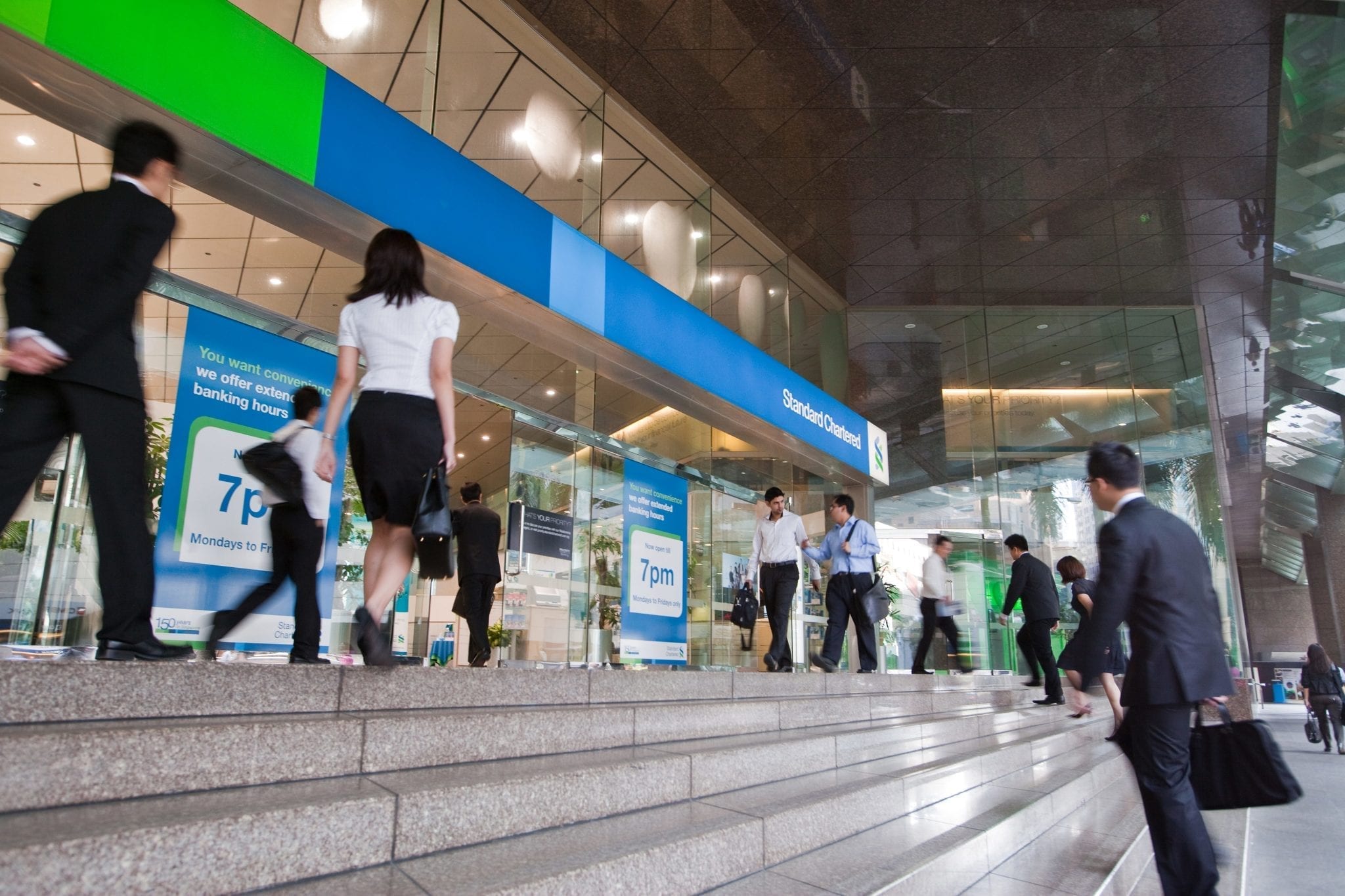
    Standard Chartered Plc plans to transfer its Thai retail-banking business to Thailand’s Tisco Financial Group Pcl next year, exiting an operation that the U.K. lender said lacked the scale to generate adequate returns.

    The net asset value is about 5.5 billion baht ($153 million), according to a stock exchange filing by Tisco on Thursday, which didn’t disclose a price for the deal. Tisco shares climbed to a record.

    Standard Chartered will continue to operate corporate, institutional and commercial banking businesses in Thailand, but the small size of the retail operation made it “increasingly difficult to achieve the returns that we aspire to,” the lender’s Thai head, Plakorn Wanglee, said in a press release.

    “It’s very tough to survive in Thailand’s retail-banking business for small players with very fierce competition,” Isara Ordeedolchest, an analyst at SCB Securities in Bangkok, said by phone. “The outlook for banks should improve significantly in 2017 as a consumption recovery and higher government spending will spur economic growth.”

    The Asia-focused Standard Chartered is targeting a turnaround after last year posting its first annual pretax loss since 1989. In a sign that the Thai operations were not a bright spot, the bank in February recorded a $126 million goodwill impairment on its business in the country.

    One unit of Tisco Financial, Tisco Bank Pcl, will take over operations including personal lending, mortgages and deposits, while another, All-Ways Co., will take over the credit-card business, the exchange filing said. The deal is subject to approvals.

  • Thai telcos bracing for a challenging 2017

    Thai telcos bracing for a challenging 2017

    After a rough 2016 there is no respite in sight for Thailand’s telecoms sector, with operators still dealing with heavy costs accrued from recent 4G auctions, strict competition and OTT challengers.

    AIS CEO Somchai Lertsuthivong as stating that he has never seen as challenging a year for the mobile sector as 2016, after nearly three decades of experience.

    AIS and DTAC, which together have a revenue market share of around 80%, have both cut their financial forecasts for 2016 as a result of these challenges.

    AIS expects to report an eibtda margin decline of between 37% and 38% in 2016 from 45.6% in 2015 due to the rising costs as well as one-off expenses related to the shutdown of its 2G network. Dtac expects its ebitda margin to decline to 27% to 30% compared to 31.8% in 2015.

    Operators expect 2017 to be just as challenging. As well as high spectrum costs, operators have had to grapple with a surge in operating costs as they offered heavy subsidies including free 4G handsets to lure customers.

    The sector will also have to deal with surging data consumption as 4G take-up increases. According to the report, Dtac plans to transition away from competing on price with heavy subsidies, and instead compete by offering a superior customer experience.

    AIS is meanwhile responding to the OTT threat by pursuing more digital partnerships with local content providers and businesses. Operators are also exploring partnering with cable providers to offer triple-play services bundling internet, telephone and TV.

  • Jubilee Enterprise plans stores for two diamond brands

    Jubilee Enterprise plans stores for two diamond brands

    Jubilee Enterprise, a listed diamond-jewellery retailer in Thailand, has revealed a plan to open physical stores under two strategic brands.

    Chief executive officer Unyarat Pornprakit said Jubilee Enterprise was currently managing two brands, Jubilee Diamond and Forevermark.

    “Jubilee Diamond is a diamond-jewellery brand that the company owns, which is currently the No 1 diamond-jewellery brand in Thailand, with the largest number of outlets, more than 120 branches across the country,” she said.

    “Meanwhile, Forevermark is a diamond brand owned by De Beers Group for which Jubilee Enterprise is Thailand’s exclusive authorised retailer.

    “The business plans for the two brands are different in direction and each will contribute to the company in a different way.

    “Forevermark has so far been in Thailand for less than a year but is the No 1 diamond brand in the world. Forevermark has a unique diamond selection process and works exclusively with top-class diamond cutters, which results in all Forevermark diamonds being stunningly beautiful. The difference is so obvious we can experience it with the naked eye.

    “‘Beautiful’ is one of the promises of the Forevermark brand, where other promises are ‘rare’ and ‘responsibly sourced’. Therefore the plan for Forevermark involves brand education and outlet expansion.

    “We currently only have three doors outlets for Forevermark but all of them perform quite well. We plan to have at least three and as many as five more doors outlets by the end of 2017. We see potential in more locations within Bangkok as well as other major cities,” Unyarat said.

    She said that for now the company only had Forevermark exclusive rights for Thailand, including e-commerce. Thus no plans to take Forevermark outside the country are on the drawing board yet.

    The focus of the outlet expansion for Forevermark will be physical stores in Thailand.

    For Jubilee Diamond, the company is looking into the obvious potential within Cambodia, Laos, Myanmar and Vietnam but no solid plans have been drafted yet.

    As Thailand’s retail developers have started their own overseas expansion, the company’s choice of investment platforms has also increased. Its expansion strategy will likely involve business partners, but not for financial reasons.

    “One of the key trigger points will be when our e-commerce platform is launched. Even without the platform, there are some demands from nearby countries through digital channels. Therefore, physical expansion may not be our first overseas initiative,” Unyarat said.

    She said the budget for next year’s expansion would mainly go into diamond inventory, which can always be liquidated. Normally, the investment per branch expansion is around Bt7 million and Bt10 million. So the total cost for the new outlets would be between Bt80 million and Bt100 million next year. Other costs are significantly less critical, thus make the company’s expansion plan a safe move.

    “Jubilee Diamond’s business plan does not have brand expansion as a key strategy, since the brand is already the largest in the market.

    The key business driver for Jubilee Diamond is market differentiation, which comes from product innovation, a unique brand experience, and supply sourcing strategy.

    “Best-quality diamonds have always been the brand’s key strength, but a few years ago, Jubilee Diamond began slowly introducing a unique brand experience and product innovation,” she said.

    Unyarat said the company’s outlet-expansion strategy would be tied closely with partners that are major retail developers.

    “For the Jubilee Diamond brand, you can expect to find our stores in all major shopping complexes and department stores. So by next year, there should be at least over 125 Jubilee Diamond stores throughout Thailand,” she said.