Tag: bank

  • CIMB divests insurance broking business for RM59.6m

    CIMB divests insurance broking business for RM59.6m

    CIMB Group Holdings Bhd’s wholly-owned indirect subsidiary CIG Bhd yesterday entered into a share purchase agreement with HBG Asia Holdings Ltd and HBG Malaysia Sdn Bhd (Howden) to divest its remaining 51% stake in CIMB Howden Insurance Brokers Sdn Bhd (CHIB) to Howden for RM59.6 million.

    The group said approval from Bank Negara Malaysia in relation to the proposed divestment was received by Howden on Nov 27, 2018.

    “CHIB currently operates an insurance broking business and the proposed divestment is in line with CIMB’s aspirations to further streamline and focus on its core banking businesses. As part of the proposed divestment, CHIB will cease to be an associate of CIG,“ CIMB said.

  • ​Vietnam to remain a fast growing Asian economy

    ​Vietnam to remain a fast growing Asian economy

    With a 2019 GDP growth of 6.9 percent, Vietnam will remain one of the fastest growing economies in Asia. “We remain positive on Vietnam’s medium-term growth on strong manufacturing activity as FDI inflows to electronics manufacturing remain strong,” says economist Chidu Narayanan of Standard Chartered Bank. According to a report recently issued by the bank, the country is likely to reach GDP growth of 6.9 percent this year.

    The manufacturing sector has expanded by double digits for most of the past four years and this pace is likely to continue in 2019, says the report.

    The bank expects manufacturing growth to remain strong this year, though mildly lower than in 2018. Strong FDI inflows to manufacturing will likely support robust manufacturing output, it says.

    Standard Chartered economists also forecast FDI disbursement to stay at $15 billion this year and FDI inflows to the manufacturing sector, particularly electronics manufacturing, to remain high in the medium term.

    FDI disbursement in Vietnam reached a record $19.1 billion in 2018, a year-on-year increase of 9.1 percent,  according to the Ministry of Planning and Investment.

    “Most macro-economic indicators improved in 2018, interest and foreign exchange rates were kept stable despite the Fed’s hike in interest rates and U.S.-China tension, and non-performing loans were well-managed below three percent,” says Nirukt Sapru, CEO Vietnam and ASEAN and South Asia Cluster Markets.

    “We believe that the Vietnamese economy will remain one of the fastest growing in Asia and likely the fastest-growing ASEAN economy in 2019.”

    The World Bank forecast that Vietnam’s GDP is likely to drop to 6.6 percent in 2019 and 6.5 percent in 2020. Meanwhile, the Asian Development Bank (ADB) estimates the country’s GDP for 2019 at 6.8 percent.

    Vietnam’s GDP growth of 7.08 percent in 2018 was the highest in a decade, according to the General Statistics Office.

  • CIMB Thai’s FY18 net profit drops on higher tax expenses

    CIMB Thai’s FY18 net profit drops on higher tax expenses

    CIMB Thai Bank PCL’s unaudited con-solidated net profit for the year ended Dec 31, 2018 (FY18) fell 98.2% year on year to 6.9 million baht (RM883,732), dragged down mainly by higher income tax expenses. Profit before tax decreased 44.5% to 271.2 million baht year on year, mainly due to a 9.6% increase in operating expenses and lower net fee and service income and other income of 7.0% and 2.6% respectively. This was offset by a 5.3% growth in net interest income and a 2.6% decline in provisions.

    President and CEO Kittiphun Anutarasoti said CIMB Thai group’s consolidated operating income, on a year-on-year basis, increased 2.9% from 2017 to 13.54 billion baht from higher net interest income of 5.3% on the back of loan expansion and higher interest income on investments.

    Net interest margin over earning assets stood at 3.71% in 2018, compared with 3.89% in 2017 as a result of lower yield on earning asset.

    As at Dec 31, 2018, CIMB Thai’s total gross loans stood at 227.8 billion baht, making an increase of 6.9% from Dec 31, 2017.

    Deposits stood at 234.3 billion baht, an increase of 6.5% from at the end of December 2017. CIMB Thai said the modified loan-to-deposit ratio was higher at 97.2% against 96.8% as at Dec 31, 2017.

    The gross non-performing loan (NPL) stood at 9.9 billion baht, with a lower gross NPL ratio of 4.3% compared with 4.8% as at Dec 31, 2017. The lower NPL ratio was due to more efficient risk management policies, improved asset quality management and loan collection processes as well as the sale of some NPLs in 2018.

  • Vietcombank’s profit skyrockets, Vietinbank’s falls

    Vietcombank’s profit skyrockets, Vietinbank’s falls

    Two of Vietnam’s largest banks reported contrasting performances in 2018, with Vietcombank’s profits rising by 63.5 percent and Vietinbank’s falling by 27 percent. Vietcombank, the largest listed bank by market capitalization, said profit before tax was VND18.02 trillion ($772.73 million) last year, up 63.5 percent over 2017. Vietcombank earlier this month raised VND6.2 trillion ($265.86 million) from selling a 3 percent stake to foreign investors.

    Singapore sovereign fund GIC bought 2.55 percent while Japan’s Mizuho Bank bought the remaining 0.45 percent to keep its 15 percent stake unchanged. Nghiem Xuan Thanh, Vietcombank’s chairman, said at a recent conference his bank had achieved all its target last year.

    Bad debts last year accounted for 0.97 percent of total loans and the bank hopes to keep it below 1 percent this year too. Vietcombank plans to have its total asset value increased by 12 percent, and its capital mobilization up by 13 percent this year.

    Vietinbank, the fourth largest listed bank by market cap, saw profit before tax slip to VND6.7 trillion ($287.3 million) in 2018 from VND9.2 trillion ($394.5 million) in 2017. Asset growth, credit growth and capital mobilization grew by 6-10 percent, lower than targeted.

    The lender’s proposal to increase charter capital has not been approved. Its chairman Le Duc Tho said increasing capital is “vital” since it has remained unchanged for years. The State Bank of Vietnam owns 65 percent of the bank, while foreign ownership has reached the 30 percent cap.

  • Maybank Malaysia bags ‘The Banker’s Bank’ award

    Maybank Malaysia bags ‘The Banker’s Bank’ award

    Malayan Banking Bhd (Maybank) clinched The Banker’s Bank of the Year 2018 in Malaysia award with its fresh thinking on how to provide the best service quality to previously underserved consumers. In a statement, The Banker Editorial said Maybank launched HouzKEY, an innovative rent-to-own product, the first of its kind in Malaysia, recognising a gap in the market to provide services to Islamic banking customers.

    “With a growing demand for affordable homes in the country, Maybank created this alternative solution, which allows for home ownership through a leasing scheme that does not require a deposit.

    “Customers have a flat rate rental payment for five years, and at the end of that time, have the option to purchase the property at a price agreed at the start of the contract, continue to rent with a 2% annual rent increase, or to terminate the contract with no obligation,” it said.

    The scheme is Shariah-compliant, being based on the Ijarah principle of leasing.

    Maybank president/CEO Datuk Abdul Farid Alias said the bedrock of its success is predicated on the bank’s mission of humanising financial services, which drives it to innovate and offer financial solutions that enrich the lives of customers.

  • Bank Negara: US$101.4b international reserves at end-2018

    Bank Negara: US$101.4b international reserves at end-2018

    Bank Negara Malaysia’s (BNM) international reserves remained unchanged at US$101.4 billion (about RM417.06 billion) as at Dec 31, 2018, from Dec 14, 2018. The central bank said in a statement that the reserves position is sufficient to finance 7.4 months of retained imports and is 1.0 time the short-term external debt.

  • Vietnam targets credit growth of 14 pct in 2019

    Vietnam targets credit growth of 14 pct in 2019

    The State Bank of Vietnam targets credit growth of 14 percent this year, the same as last year. The focus of new loans would be priority sectors such as manufacturing, agriculture and small and medium enterprises, Nguyen Thi Hong, Deputy Governor of the central bank, said. Credit growth in the Vietnamese banking sector last year was 14 percent, the lowest rate since 2014.

    The figure announced by the State Bank of Vietnam (SBV) Monday was well short of the 17 percent targeted for the year.

    According to officials from the SBV’s Department of Credit for Economic Sectors, lending grew sharply in the early months of the year before tapering off. It was primarily targeted at priority sectors such as manufacturing and processing.

    Credit to the commercial and services sectors saw the highest growth rate, 16 percent. Lending to industry and construction grew by 12.1 percent and to agriculture, by 8.8 percent.

    Overall, interest rates remained steady despite rising interest rates in global markets. In Vietnam, interest rates are commonly around 6-9 percent a year for short-term and 9-11 percent a year for medium and long-term.

    The non-performing loans ratio was down to 1.89 percent from 1.99 percent in 2017 and 2.46 percent in 2016.

  • Vietnamese banks report solid profits, employees hopeful of high bonuses

    Vietnamese banks report solid profits, employees hopeful of high bonuses

    With Vietnamese banks reporting substantial profits last year many of their employees are expecting higher Lunar New Year bonuses. The banking sector’s overall profit before tax increased by 40 percent year-on-year, according to the National Financial Supervisory Commission. Vietcombank, the largest bank by market capitalization, said in a recent report that its consolidated pre-tax profit was up 62 percent to VND18.3 trillion ($789.55 million).

    TPBank said pre-tax profit doubled to VND2.26 trillion ($97.5 million), exceeding its target of VND2.2 trillion ($94.93 million). The lender’s profit has almost quadrupled against 2015.

    Sacombank’s profit before tax of VND2.2 trillion ($94.93 million) was 20 percent higher than its target.

    Bank employees are thrilled by the performance ahead of Tet, Vietnam’s Lunar New Year, which falls on February 5 this year.

    Mai, a Sacombank worker who asked to be identified only by her given name, said: “Our bank’s profit is a few times that of 2017, so we hope to have a higher bonus.”

    Minh Nhat of Orient Commercial Bank, said his bank determines Tet bonuses based on the performance of each branch and individual. Last year his most productive colleagues had received a five-month bonus, while everyone got at least a month’s salary as bonus. He hopes this year it would be even higher.

    Le Minh Tan, director of the Ho Chi Minh City Department of Labor, Invalids and Social Affairs, told VnExpress that the highest Tet bonus this year is by a HCMC-based bank — VND1.17 billion ($50,493) for an employee.

    Companies plan to pay VND3.4 million ($147) on average, 30 percent higher than last year, he added.

    Three bank leaders said they are still calculating the rewards.

    “We calculate rewards using personal KPI (key performance indicator) and branch productivity, so the bonus will vary between individuals,” one CEO said, adding that some employees would receive a three- or four-month bonus or even higher, while some would get nothing.

  • Vietcombank to sell 3 percent stake to foreign investors

    Vietcombank to sell 3 percent stake to foreign investors

    Vietcombank, Vietnam’s largest bank by market cap, has received permission from the securities watchdog to sell a 3 percent stake to foreign investors. The green light from the State Securities Commission (SSC) will allow the lender to make a private placement of 3 percent as part of its plan to ultimately sell 10 percent. The 3 percent could fetch around $270 million based on its current stock price.

    Vietcombank last month received approval from the State Bank of Vietnam (SBV) to increase its charter capital by selling 10 percent to the Government of Singapore Investment Corporation (GIC) and existing strategic partner, Japanese bank Mizuho.

    Now GIC will buy 2.55 percent while Mizuho Bank will buy the remaining 0.45 percent to keep its current 15 percent stake unchanged.

    Last September the SBV approved Vietcombank’s proposal to increase its charter capital from VND35.98 trillion ($1.55 billion) to VND39.57 trillion ($1.7 billion). The capital has remained unchanged since 2016.

    Vietcombank is one of many Vietnamese lenders that have been seeking to increase capital to meet international capital adequacy norms.

    The country’s banks need to increase their charter capital to meet the Basel II capital adequacy ratio (CAR).

    The accords prescribe capital of 8 percent of risk-weighted assets for all financial institutions, including in Vietnam, to cover operational risks.

    State-owned BIDV, the second biggest bank by market capitalization, said last October it wanted to sell new shares to South Korea’s KEB Hana Bank, giving it a 15 percent stake in the company. The sale would be worth $735 million.

    Vietnam caps foreign ownership of banks at 30 percent. The country has nine wholly-owned foreign banks, four state-owned banks and 31 domestic joint-stock banks.

  • Indonesia’s BRI Signs Partnership Agreement With Alipay

    Indonesia’s BRI Signs Partnership Agreement With Alipay

    Bank Rakyat Indonesia, Indonesia’s biggest state-owned lender, started the year with key strategic announcements, including an alliance with Chinese payment platform Alipay and plans to acquire a local insurance company and a small lender. BRI signed a memorandum of understanding with Alipay, a subsidiary of Chinese technology giant Alibaba, on Thursday to secure an opportunity to serve the growing number of Chinese tourists visiting Indonesia.

    “As China has its own payment system, we must be able to facilitate their [Chinese tourists’] needs. This move is aimed at supporting the country’s tourism industry,” Handayani, consumer director at BRI, said after an extraordinary shareholder meeting on Thursday.

    He said there are several matters that must still be discussed, including the acquisition of a permit.

    “We are currently integrating the business operation. We are now developing the IT system [for the service],” Handayani said, adding that the payment service will be launched in tourism areas, such as Bali, first.

    About 2 million Chinese tourists visited Indonesia between January and November last year, representing a 14 percent increase from the corresponding period in 2017.

    Insurance Company

    In addition to the partnership with Alipay, the lender has also set aside Rp 1.5 trillion ($105 million) this year to acquire an insurance company focused on covering property damage. BRI currently only has a life insurer, BRI Life.”This year, we want to have an insurance company. We are going to have a complete service in the financial industry,” BRI president director Suprajarto said.

    He said BRI was still observing the market and exploring several candidates before making a choice. The acquisition is slated for completion in the first half of this year, he added.

    Suprajarto said the acquisition of a general insurer would take precedence over the plan to acquire a small lender.

    This is because the Financial Services Authority (OJK) has asked BRI to acquire a lender in the categories BUKU I (banks with core capital below Rp 1 trillion) or BUKU II (banks with core capital between Rp 1 trillion and Rp 5 trillion).

    “It requires a large amount of funding, so we are now focusing on organic growth [instead of acquiring another lender],” Suprajarto said.

    BRI posted Rp 23.5 trillion in net profit in the first nine months of last year, which was 15 percent higher than the same period in 2017, thanks to a 17 percent surge in loan growth to Rp 809 trillion between January and September.

    BRI Appoints Deputy President Director

    BRI also announced the appointment of Sunarso as deputy president director and the dismissal of Jeffry J. Wurangian as commissioner and Kuswiyoto as director of corporate banking.Handayani said the changes were subject to approval by central bank.

  • Outlook for local banking sector remains challenging: Kenanga Research

    Outlook for local banking sector remains challenging: Kenanga Research

    The banking sector’s outlook is challenging due to external concerns while clarity and direction on the domestic front remain murky, according to Kenanga Research, which maintained a neutral stance for the sector as no fundamental change is expected, and the sector lacks concrete catalysts. “We view the industry with caution as uncertainties and headwinds still prevail. The industry remains unexciting, dragged by moderate loan growth and soft capital markets. Prevailing negative sentiment both globally and domestically will continue to drive volatility and uncertainty in the industry. Caution will still prevail due to the soft economy outlook globally,“ the research house said in a note today.

    It said banks with healthy asset quality (hence low impairment allowances) will still be the favour due to their defensive quality.

    “As such, selective asset growth will still be the focus for the banks. Despite stable economic outlook in the domestic environment coupled with low unemployment, we opine that cautiousness and selective assets growth will still prevail in the industry,“ Kenanga Research explained.

    It said loan growth moving forward will still be moderate as uncertainties prevail with fee-based income expected to be soft as a result of the volatile capital market. However, with the stable outlook, this will support a moderate and stable credit charge for the industry.

    “We expect impairment allowances (credit costs) to be stable and consistent (as it had been generally in 2018) which will lend support to the banks’ bottom line. We do not discount another potential up-cycle of impairment allowances, especially those highly exposed to the energy sector (CIMB, Maybank and RHB Bank) as energy prices have been under pressure due to the perceived economic slowdown both domestically and globally.”

    Kenanga Research expects mild compression for net interest margin (NIM) as most of the banks’ loan-to-deposit ratio and loan-to-fund ratio are over 90% and 80%, respectively, as compression will be mitigated by soft credit demand. The deferment of NSFR (net stable funding ratio) into 2020 plus the absence of high credit demand will support the outlook for a stable to mild compression in NIM.

    “However, looking at the slowing momentum in household demand, we do not discount the likelihood of competitive lending rates in the short term as banks strive to achieve their loan growth target. This competition will ultimately lead to further downside pressure on NIM.”

    The research house has revised downwards the 2018/2019 earnings estimates by 80bps/30bps to +6.7%/+5.6% respectively.

    “For 2019, earnings are slower at +5.6% year-on-year (yoy) as we based from these assumptions of credit charge at 0.33%; and slight compression on NIM by 3bps and a higher pace from fee-based income (+6.6% yoy due to a lower base).”

    It also toned its outlook on loan growth for FY18 at +4.7% (from +4.9% previously) on account of revision of prevailing headwinds.

    Kenanga Research reiterated its outperform call for BIMB Holdings Bhd, as its financing portfolio (70% of total financing) is skewed towards household (75% first-time buyers for residential property) with focus on growing its personal financing will minimise NIM compression.

    Another preferred pick is Malaysia Building Society Bhd (MBSB), which is expected to achieve 3-4% growth driven by corporate loans/financing as another RM950 million is expected to be disbursed in Q4 18.


  • Voon Seng Chuan is new AmBank Malaysia chairman

    Voon Seng Chuan is new AmBank Malaysia chairman

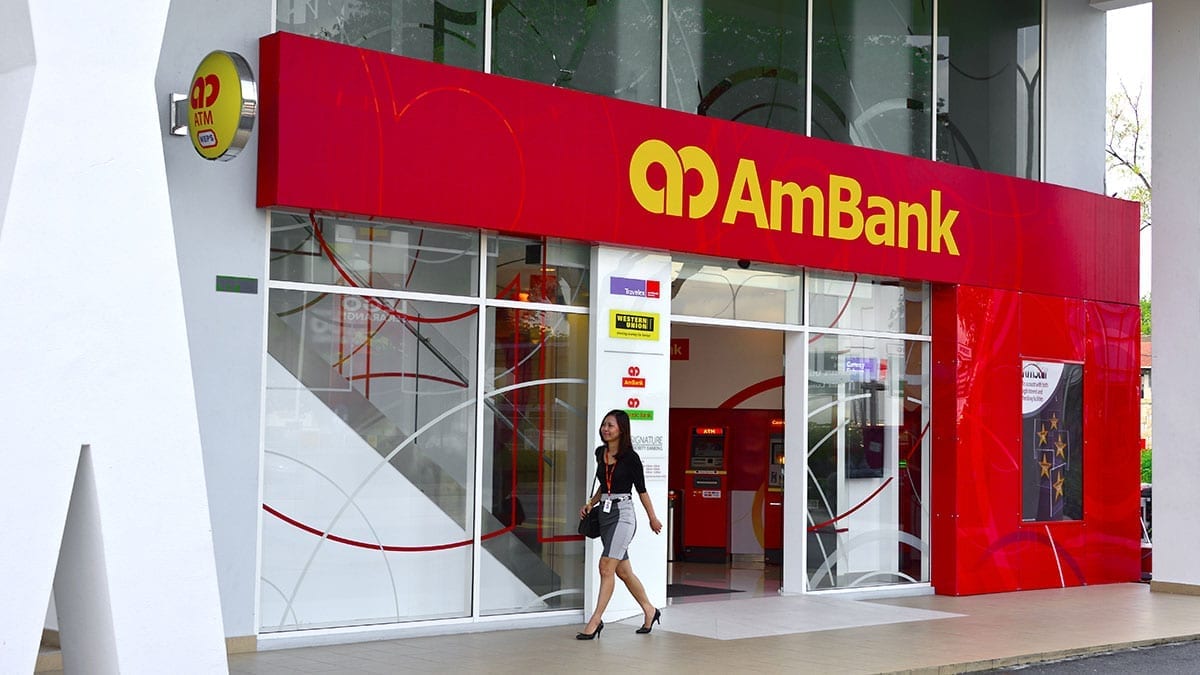
    AMMB Holdings Bhd has appointed Voon Seng Chuan (pic) as the new chairman of AmBank (M) Bhd with effect from Jan 1, 2019. “Voon, a Malaysian, aged 60, has been a member of the board of directors of AmBank since June 18, 2015. He is also a member of the board of directors of AMMB,” AMMB said in a stock exchange filing on its directorship/chairmanship transition plan.

    Voon replaces Tan Sri Azman Hashim, 79, who will be retiring from six entities in the AmBank group in stages over a two-year period announced last year.

  • Indonesia December Inflation Cools, Stays Within Bank Indonesia Target

    Indonesia December Inflation Cools, Stays Within Bank Indonesia Target

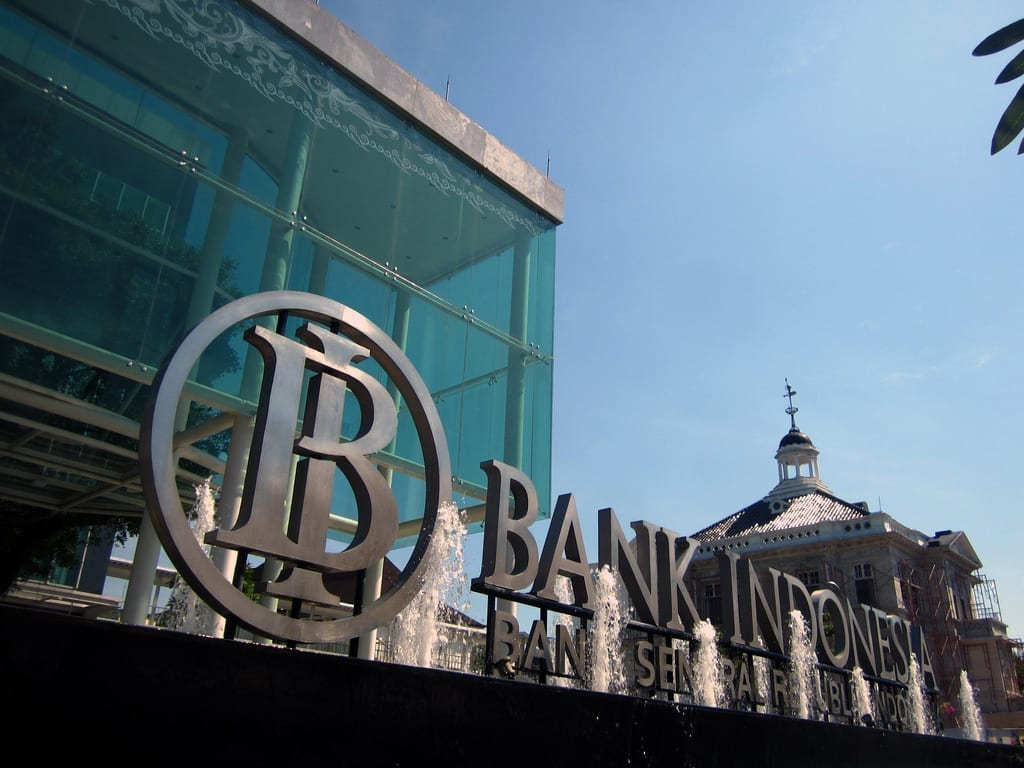
    Indonesia’s December annual inflation rate eased, but the pace was quicker than expected, data from the Central Statistics Agency, or BPS, showed on Wednesday. The annual inflation rate in December was 3.13 percent, the agency said, lower than November’s 3.23 percent, but quicker than the median forecast of 2.98 percent. The December rate was well within Bank Indonesia’s target range of 2.5 percent to 4.5 percent for 2018.

    On a monthly basis, the consumer price index rose 0.62 percent due to rising food prices and transportation fares.

    The annual core inflation rate, which excludes government-controlled and volatile prices, was 3.07 percent, matching the poll’s prediction and representing a slight acceleration from November’s 3.03 percent.

    The central bank raised interest rates six times last year to defend the rupiah, which hit its lowest in 20 years in October. However, the currency pared some losses closer to the end of the year due to capital inflows

  • Vietnamese banks deposit rates rise as usual at year end

    Vietnamese banks deposit rates rise as usual at year end

    Banks usually hike deposit interest rates and even offer promotions at the year end, and this year has been no different. On December 19 Sacombank announced a rise in interest rates on deposits of three months from 5.2-5.3 percent to 5.5 percent, and on deposits of 12 months from 6.9 percent to 7.7 percent. VPBank has increased its rates by 0.1-0.7 percentage points, with deposits of 18 months and more carrying the highest rate of 7.8 percent.

    State-owned banks such as BIDV and Vietinbank have hiked rates by 0.1 to 0.5 percentage points.

    The management of a joint-stock bank headquartered in the south said lending usually rises in the last quarter of the year to meet the rising demand for short-term credit to serve the working capital needs of companies.

    As a result, many banks increase their deposit rates, especially for short terms, it said.

    Besides, experts said lenders are running out of time to use 45 percent of short-term capital for medium- and long-term loans, with the ratio to be reduced to 40 percent on January 1.

    The National Financial Supervisory Commission has recently estimated that credit growth to have slowed significantly to 15 percent this year from 18 percent in 2017.

  • Malaysia’s CIMB to gain RM200m from stockbroking business transfer

    Malaysia’s CIMB to gain RM200m from stockbroking business transfer

    CIMB Group Holdings Bhd is expected to record a gain of disposal of approximately RM200 million from the process of transferring the group’s stockbroking business to its joint venture company with China Galaxy Securities Co Ltd.

    This comes after taking into account the premium on the disposal of approximately RM433 million and goodwill attributable to the business.

    CIMB said the consideration in connection with the proposed business transfer will be satisfied in cash and it was determined based on the future prospects and net asset value of the in-scope business as at Dec 31, 2015, which amounted to RM565.6 million.

    The consideration is subject to closing audit adjustments, if any.

    Jupiter Securities, the subsidiary of China Galaxy Securities Co Ltd (CGS)-CIMB Holdings Sdn Bhd, which is the Malaysian joint venture entity, will operate the stockbroking business.

    CIMB said in a stock exchange filing that its wholly owned subsidiary CIMB Group Sdn Bhd (CIMBG), China Galaxy’s wholly owned unit China Galaxy International Financial Holdings Ltd (CGI), and CGS-CIMB Holdings Sdn Bhd has inked a share subscription agreement for the subscription of new shares in CGS-CIMB Holdings Sdn Bhd.

    The proposed business transfer entails the sale of CIMB Investment Bank Bhd’s cash equities business and 100% equity interest in CIMB Futures Sdn Bhd as well as CIMB Bank Bhd’s equity financing services business and share margin financing granted in connection with the cash equities to Jupiter Securities.

    After the completion of the exercise, CIMBG and CGI will hold 50% stake each in the Malaysian JV entity.

    The exercises are expected to be completed in the first half of 2019.