Tag: Banking

  • Standard Chartered Hires Senior Strategist From BCG

    Standard Chartered Hires Senior Strategist From BCG

    The move continues the bank’s string of similar hires from top global consulting firms to its Singapore office.

    Standard Chartered has hired Douglas Jackson as managing director of group strategy, who moved from Boston Consulting Group earlier this month.

    His move continues a string of recent hires by the bank, which has been bringing on consultants due to its restructuring drives that have taken place since the appointment of CEO Bill Winters in 2015.

    The publication noted the bank’s 2019 hire of Pierre Paoli, who moved from BCG to lead its strategic initiatives unit for commercial and institutional banking, the hire of IBM consultant Sushil Anand as head of computational and digital advisory for wealth management, and former Deloitte and UBS strategist Christopher Williams as global head of strategy, governance and change for technology services.

    The bank, which makes two-thirds of its profits from Asia, will certainly benefit from Jackson’s intimate familiarity with the region, where he helped global and local companies realize their ambitions in Southeast Asia. His expertise includes strategy, business model innovation, risk management and operations transformation, particularly in finance and the public sector.

    According to his LinkedIn profile, Jackson spent more than 10 years at the management consulting firm’s Vietnam office, most recently as a senior advisor. His time in the country also included a secondment at Vietnam International Bank in Hanoi. Prior to that, Jackson was also stationed in Thailand for almost 10 years as country manager of A.T. Kearney, and was a branch manager for J.P. Morgan in Seattle.

  • Citi Singapore to Shut Iconic Branch

    Citi Singapore to Shut Iconic Branch

    As part of its network reconfiguration, Citi is shuttering its iconic branch at McDonald House on 28 February.

    For its replacement, the U.S. bank said it will soon launch a whole new and exciting retail banking branch experience after its MacDonald House lease expires at the end of this month. Details on the new branch were not revealed.

    Citi consistently reviews its branch network strategy. Clients today increasingly bank on mobile, with almost 100 percent of financial transactions being able to be served through digital platforms. Our retail footprint and the way we serve customers will continue to evolve,» said a Citibank Singapore spokesperson.

    MacDonald House, situated across the road from Dhoby Ghaut MRT station, was initially built for a bank. It became gazetted as a national monument in 2003 and has a place in Singapore’s history as the site of a bombing attack in 1965 during the Indonesia-Malaysia confrontation, or the Konfrontasi.

    Citi commenced business at the MacDonald House in 2005, taking up 37,000 sq ft of space over four floors. The 14 staff currently at the MacDonald House branch will be redeployed to the bank’s remaining 13 branches in Singapore, the Citi spokesperson added.

    The bank’s latest branch network rejig comes as part of the review led by Citibank Singapore’s new chief executive Brendan Carney, who moved to Singapore from South Korea in May last year.

    The lender’s move also comes amidst a change in the banking landscape, as 21 consortiums vie for the five digital bank licenses offered by the city-state.

  • Citibank’s Singapore Head of Retail Exits

    Citibank’s Singapore Head of Retail Exits

    Citi’s head of retail banking in the city-state leaves after more than two decades with the American lender.

    Charles Wong exits the bank after nearly five years in his last role as Singapore head of retail banking. A spokesperson for the bank confirmed his exit.

    In 2015, Wong was appointed to his current role to oversee the retail banking business alongside wealth management, bancassurance, sales and network distribution.

    With over 20 years of experience at Citi, Wong has held a range of roles in retail banking, bancassurance, credit payment products and marketing across Asia Pacific. He was seconded to Citibank’s China business from 2006 to 2008 where he was the head of branch expansion and ATM distribution as well as director for CitiBusiness and customer experience. He was also previously involved in the launch of the Citi Priority segment across APAC which targets emerging affluent customers.

  • OCBC Automates Cooperation with Law Enforcers

    OCBC Automates Cooperation with Law Enforcers

    OCBC has implemented an automated solution that accelerates collaboration with law enforcement agencies by up to 100-fold.

    On average, it takes between 10 days and three months for banks to respond to production orders or requests by law enforcement agencies to provide information for investigation on the bank accounts of individuals or companies. With the new solution – Production Orders: Electronic Transmission (POET) – OCBC will cut turnaround time to just one or two working days with minimal manual processing assuming the information requested does not exceed 13 months.

    By greatly reducing the turnaround time for production orders, we are doing our part to put the squeeze on criminals, said Loretta Yuen, OCBC’s head of group legal and regulatory compliance.

    After a successful pilot, OCBC launched POET in collaboration with the Commercial Affairs Department (CAD) in July 2019. Since then, it has extended collaboration to other agencies including the Singapore Customs, Inland Revenue Authority of Singapore (IRAS), the Corrupt Practices Investigations Bureau (CPIB) and various units under the Singapore Police Force. It is in collaboration with more than 10 law enforcement agencies and expects about 70 percent of production orders to come through POET.

    Other banks are also considering to adopt the solution to improve compliance efficiency. In addition to DBS and UOB, the report noted that foreign banks in Singapore also expressed interest in POET.

    Collaboration with regulators aside, Yuen also highlighted the benefit of data gathered by POET for banks not only to respond to requests but to identify compliance risk early.

    We can use it as additional surveillance risk indicators, as well as in intelligence data mining and transactional link analysis to identify hidden relationships and/or clustering relationships that may pose money laundering risks to the bank, Yuen said.

    On average, OCBC receives more than 1,000 production orders per month from law enforcement agencies and the figure is projected to rise in the coming years.

  • UBS to Hire Investment Bankers in Performance Bid

    UBS to Hire Investment Bankers in Performance Bid

    The investment bank of UBS didn’t deliver as much as the bank had hoped it would in 2019. The heads of the unit have reacted to the underperformance by setting new hiring targets.

    UBS wants to sign experienced staff to boost its investment bank in the U.S., according to a report. The move follows after the publication of the unit’s disappointing performance in 2019.

    According to the hiring plan, UBS aims to add 20 managing directors to the ranks of the investment bank over a two-to-three-year period. Switzerland’s largest bank restructured the investment bank, led by Piero Novelli and Rob Karofsky, in the fourth quarter of 2019 to put its focus on a few, global areas. The number of full-time-equivalents fell by about 150 jobs to 5,332 in that period.

    The bid to boost its U.S. business follows a year in which the division’s profit almost halved. Revenues dropped 9.6 percent and fell across all units of the division.

    UBS Chief Executive Sergio Ermotti labeled the performance as unacceptable and told the unit to deliver more. At the same time, he also dropped the performance target of 15 percent previously set for the division.

  • Techcombank posts double digit growth in profits

    Techcombank posts double digit growth in profits

    Techcombank has reported a 20 percent year-on-year surge in 2019 consolidated pretax profits to more than VND12.8 trillion ($552.8 million).

    The nation’s largest private lender by assets said in its latest financial report that the profit increased as credit risk provision halved to VND917 billion ($39.6 million) last year.

    While the bank’s credit activities continued to develop, its takings from other services remained the same as in 2018 at approximately VND3.25 trillion ($140.5 million).

    The bank saw a 15 percent increase in total revenues to around VND21 trillion ($909.9 million). By the end of 2019, Techcombank’s total assets were worth VND383.7 trillion ($16.5 billion), up 20 percent year-on-year.

    The bank’s bad debt ratio decreased from 1.75 percent at the beginning of the year to 1.3 percent.

  • Swisspartners Opens Office in Singapore

    Swisspartners Opens Office in Singapore

    The Firm has been fully licensed as a trust company by the Singapore Monetary Authority (MAS) since 2010 and is located in the heart of the central business district at 1 George Street, according to further information.

    The board of Swisspartners Marcuard Trust (Singapore) consists of Dorothy Yeo, Evelyn Tay, David Sykes, and Robin Graetz. The firm has a team of professionals based in Singapore. It consists of trust and corporate professionals as well as compliance specialists who speak Mandarin, English, and Italian.

    Asia is important for the trust group to complement our offering in Europe, including our longstanding operations at Swisspartners Marcuard Heritage in Zurich and SPMH (Cyprus) in Larnaca, which was established in 2018, a spokesperson said.

    The company provides wealth planning and wealth structuring, using a variety of tools including trusts, foundations, companies, life insurance, and private label funds. «We continue to see a demand for relocation and residency services from individuals in the region and further afield, and our team is well placed to assist those looking to take up residence in Singapore, the spokesperson further said.

    Singapore is the gateway to Asia and is well placed to benefit from the growing wealth of entrepreneurs in the region who now require wealth planning and wealth structuring. Wealthy individuals and their families are concerned about the preservation of their wealth and wish to ensure that it is safeguarded not just for the next generation but for future generations as well. The growth of the Chinese economy has also spurred growth in other countries in the region and this wealth is looking for a safe home.

    Swisspartners was founded in 1993. Today, it is one of the largest financial service providers in Switzerland and growing internationally. The group’s approximately 120 employees serve discerning private clients from around the world from offices in Zurich, Geneva, Vaduz, and Feldkirch.

  • Money Laundering’s Last Bastion Set to Fall

    Money Laundering’s Last Bastion Set to Fall

    Financial regulators are cracking down on the opaque international fine art market’s untoward methods and loopholes for money laundering. The Swiss «Bouvier case» was the trigger.

    Prosecutors in Geneva and New York are wading through reams of evidence allegedly documenting one of the largest frauds in the secretive market for fine art. Russian oligarch Dmitry Rybolovlev is suing Swiss art dealer Yves Bouvier as well as auction house Sotheby’s.

    Rybolovlev alleges that he was cheated of $380 million in superfluous payments for artworks because of market collusion. In a separate complaint against Bouvier, he is suing for $1 billion, which is what the Russian alleges is how much he overpaid for a total of 38 pieces of fine art.

    The document-rich Bouvier case has preoccupied courts for years – and is exemplary for how opaquely the market for international art is. The cash-friendly marketplace is closely linked to private banking – and art has grown in importance as an asset class.

    A European money-laundering rule aimed at shutting loopholes for fine art came into force two weeks ago. The changes including similar «know your client» rules as apply in banking, for transactions of more than 10,000 euros ($11,084). That means galleries, dealers, agents, and other intermediaries to the rich must apply a type of due diligence to their clients before buying and selling.

    Regulators have also drawn up an extensive list of fine art of various mediums which are subject to value-added tax at purchase. It is meant to force buyers as well as sellers into a regulatory framework, and to cleanse the market of improprieties.

    Glitzy art fairs in Basel, Geneva, Hong Kong, and Miami have until now been accompanied by lots of cash – as well as more than a whiff of scandal. The specter of sudsing out ill-gotten money with a few pricey art buys is one that clashes with the image of well-heeled, refined culture mavens that galleries and auction houses have long cultivated.

    The estimated $70 billion annual art market until now has operated largely outside the purview of international regulators – as well as to its own capitalist tune. «It can be hidden or smuggled, transactions often are private, and prices can be subjective and manipulated— and extremely high,» former U.S. prosecutor Peter Hardy said.

    In other words, a valuable work of art is the perfect vehicle to conceal untaxed assets, or to launder dirty money.

    Commissions in art deals can be astronomical, while collusion and price-fixing through agents and intermediaries are reportedly rampant – and until the Bouvier case blew open, super-wealthy art clientele had rarely complained about it.

    Undoubtedly wounded in pride over being hoodwinked, Rybolovlev was the first major art buyer to blow the whistle, so to speak. Bouvier is known more as «king of Swiss freeports», tax-free storage facilities that play a huge role in stowing illicit loot, than as an art dealer. The Swiss government estimates that the country’s freeports hold more than $100 billion in assets – in secret, and untaxed.

    A Louvre director called the facilities «the biggest museums that no one can visit». The European rules are set to rob art sellers and auction houses one of their biggest advantages: vendor anonymity.

    The move comes as private banking is forced to abandon secrecy in major jurisdictions like Switzerland – a bid to crack down on lost tax income. It remains unclear whether customs and tax officials have the resources to enforce compliance in the art market – but the new money-laundering rules are a first step to force the industry into an era of oversight.
  • Banking systems experience intense Tet surge

    Banking systems experience intense Tet surge

    Banks, ATMs, and online banking systems have been overloaded towards the end of the Lunar New Year, forcing customers to wait long hours.

    Hoa went to a major bank on Hanoi’s Duy Tan Street early one recent afternoon to process the payment of a loan.

    She was happy to notice that her turn would come soon, based on the token number she received, but it took an hour for her to be called.

    The bank was full of faces weary from the long wait, which seemed 30 minutes on average. People found ways to occupy themselves, with some even taking out laptops to work while they waited. Others grew restive and frustrated and left early without bothering for their turn to come.

    A similar scene has been enacted for several days in many banks. On Tuesday (27th of the last lunar month),  the waiting room of a bank in Hanoi’s Dong Da district had around 50 customers waiting at around 3 p.m. Each and every counter was occupied, and the staff had barely any time to break.

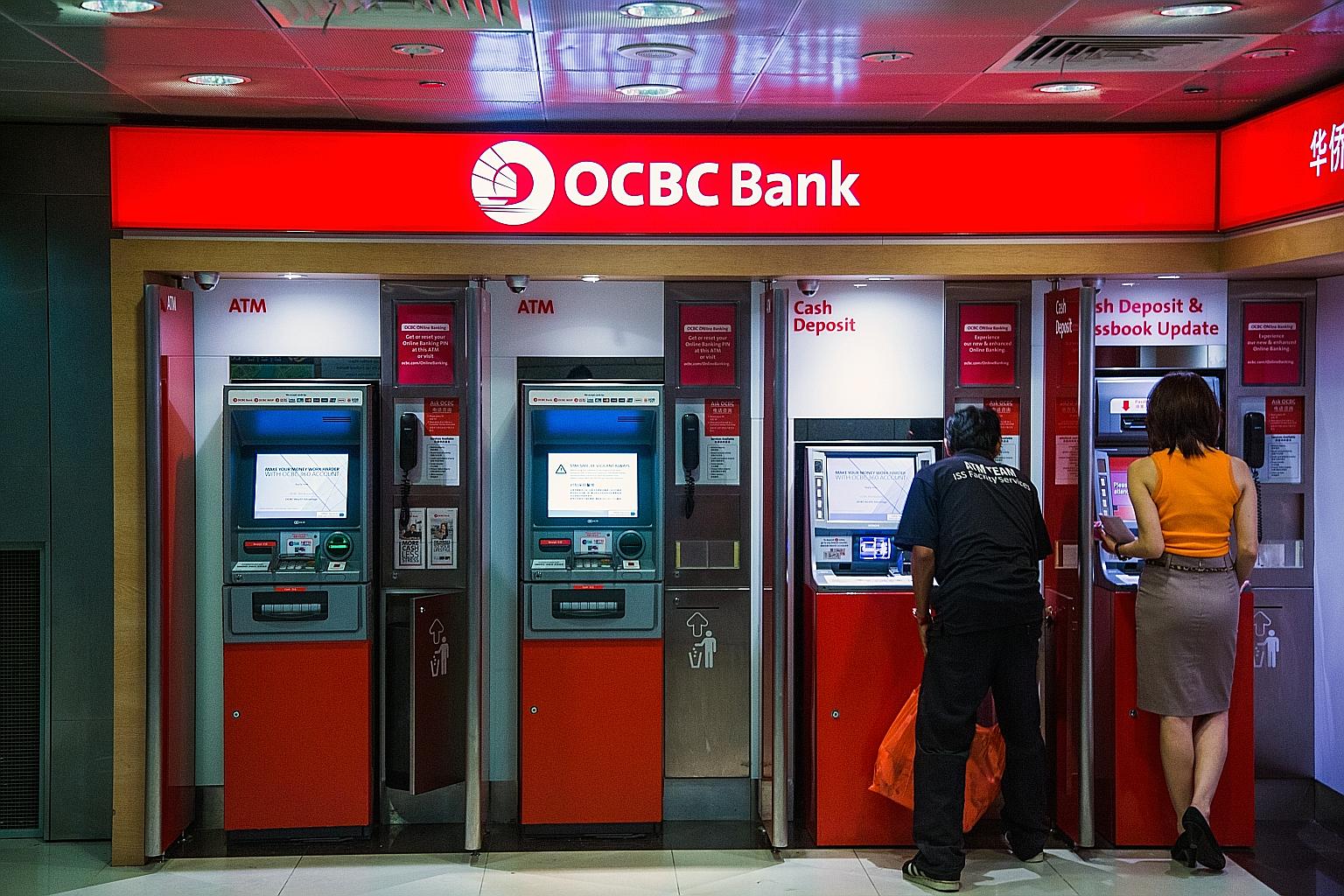
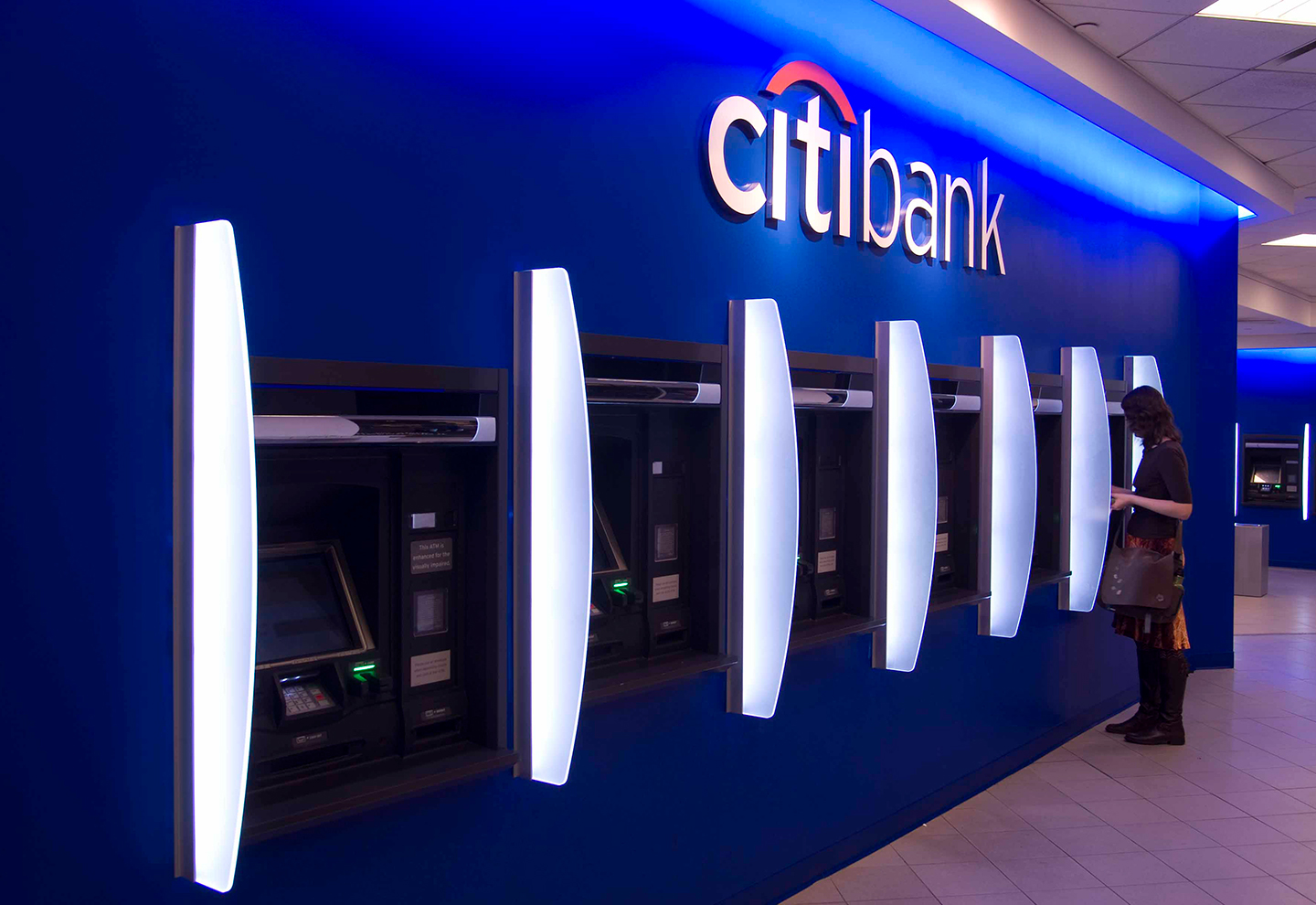
    Long queues in front of banks have become a common sight these days. At a mall on the city’s Ba Trieu street, people were also lining up in front of ATMs. Some of the machines are broken, some were overloaded due to a large amount of transactions, and some ran out of cash.

    In highly frequented places, the number of customers seeking banking services kept increasing day after day, slowing down every operation.

    The situation was not much better with online banking systems, which have also been overloaded. Many users complained they could not access their apps, experienced system failure and encountered long delays in carrying out a transaction.

  • Singapore Firms Eye Malaysia Digital Bank Licenses

    Singapore Firms Eye Malaysia Digital Bank Licenses

    Five licenses are up for grabs under a new regime announced by Bank Negara Malaysia, the country’s central bank.

    Singapore-based ride-hailing giant Grab and gaming technology firm Razer are exploring the feasibility of applying for a Malaysian digital bank license.

    Local lenders Hong Leong Bank, Maybank, CIMB, as well as Ant Financial, Malaysian telecommunications conglomerate Axiata and BigPay, the financial services arm of low-cost airline AirAsia, are also reportedly interested in the license.

    Grab, together with telecoms giant SingTel, and Razer, as the lead in a six-member consortium, were among the 21 applicants for up to five licenses to be issued under Singapore’s digital bank regime, set to be launched in 2020.

    In December, Malaysia’s central bank announced that it would issue five new digital banking licenses under a proposed framework that will be finalized in the first half of 2020, which will cater to online banks offering both conventional and sharia-compliant services.

    The draft proposal said the new Internet-based lenders could help close the gap in Malaysia’s underserved customers and unbanked individuals. The minimum capital requirement of RM100 million ($24.5 million) for the virtual bank’s foundational phase, which would be increased to RM300 million subsequently, is substantially lower than Singapore’s requirements.

  • ComfortDelGro Gets OCBC Green Loan

    ComfortDelGro Gets OCBC Green Loan

    The transport operator becomes the first Singapore land transport company to adopt a green loan, which will be used to finance its hybrid bus fleet in Melbourne, Australia. Singapore land transport operator ComfortDelGro’s Australia subsidiary has received a A$25 million ($17.2 million) green loan from OCBC Bank, a joint statement on Tuesday announced.

    The loan was structured in accordance with the Green Loan Principles issued in 2018 by the Loan Market Association and Asia Pacific Loan Market Association. It will be used to purchase 50 hybrid buses that use 30 percent less fuel and emit significantly less noise when idling.

    As an environment-conscious transport company, sustainability considerations are indeed at the core of our business strategy, and this green financing is a natural fit for us, Yang Ban Seng, managing director and Group CEO of ComfortDelGro, said in the statement.

    The ComfortDelGro was added to the Dow Jones Sustainability Asia Pacific Index (DJSI Asia Pacific), which serves as a benchmark for investors who integrate sustainability considerations into their portfolios, in September 2019.

    OCBC said the green loan is an important step towards its goal of building a S$10 billion ($7.42 billion) sustainable finance portfolio by 2022.

    «We hope this green loan by ComfortDelGro sends a positive message to encourage peer industry players to take steps to support sustainable urban development through green financing options,» Elaine Lam, OCBC’s head of Global Corporate Banking, said.

  • Analysts Downgrade Thailand’s Oldest Banks

    Analysts Downgrade Thailand’s Oldest Banks

    Siam Commercial Bank, one of Southeast Asia’s largest lenders, has prompted cuts from analysts on concerns of its loan book.

    After the bank reported its fourth-quarter results, nearly a third of the analysts who cover the Thai bank cut their recommendations the past week, wiping out nearly $2 billion from its market value. Asia Plus, Credit Suisse and J.P. Morgan Chase were among the brokerages that cut ratings.

    Thailand’s economy in 2020 is still surrounded by negative factors. Asset quality is still at risk and needs to be watched closely. said Therdsak Thaveeteeratham, an analyst at Asia Plus Securities.

    Siam Commercial and other Thai lenders have closed branches while increasing digital banking in an effort to boost earnings. However, a struggling economy has increased bad loans at the bank, which is more than a century old and counts King Maha Vajiralongkorn as its biggest shareholder.

    Siam Commercial’s shares posted their biggest one-day decline since 2008 on January 20, the first trading day after the fourth-quarter earnings report showed a jump in bad-loan provisions.

    Still, the downgrades and reaction may be overdone as Siam Commercial raised loan-loss provisions in 2019, according to Diksha Gera, a Bloomberg Intelligence analyst. The bank may consider boosting the net interest margin and cut costs to counter weak revenue, she said.

    The bigger risk we see is potential M&A following recent moves of other local competitors such as Bangkok Bank to make acquisitions, she notes.

    Bangkok Bank last month announced that it would acquire a controlling stake in Indonesia’s PT Bank Permata for about $2.7 billion to expand its presence in Southeast Asia’s biggest economy.a

  • HSBC Singapore Launches Green Deposit Account

    HSBC Singapore Launches Green Deposit Account

    HSBC Singapore offers its first green deposit account for corporate clients on Thursday, allowing them to embark on the sustainability path. These accounts will accept the Singdollar and U.S. dollar.

    Corporate customers of HSBC in Singapore and the U.K. will have a way to support environmentally-friendly projects, as these two markets become the first that HSBC offers such products.  Deposits will finance green initiatives such as renewable energy, energy efficiency, and biodiversity conservation.

    The green deposit account enables companies to directly apportion cash savings into projects which directly benefit the environment, said David Koh, head of global liquidity and cash management in HSBC Singapore in a media statement. «Given that liquidity is critical for business operations, this is a simple and immediate solution for any corporation to begin or widen their sustainability strategy.

    Standard Chartered has a similar product named sustainable deposit offering – a deposit product linked to sustainable development goals, which it launched in Singapore last year, among other markets.

    The launch of such products comes as the need for investment in sustainable innovation and solutions becomes more urgent in South-east Asia, given the region’s susceptibility to climate change, the increasing depletion of natural resources and the growing level of natural disasters, according to HSBC. The Asian Development Bank forecasted that if left unaddressed, climate change could shave 11 percent off South-east Asia’s GDP by the end of the century.

    Despite much talk and activities around ESG-linked financial products, many banks stand accused of not doing enough to combat climate change at the World Economic Forum in Davos on Tuesday. Leaders of some big banks and other financial companies have resisted calls that they should refuse to work with clients that are major polluters.

    Mike Corbat, chief executive of Citibank, said it was not the role of banks to ensure that companies were adopting environmentally friendly business models by unilaterally cutting off finance for polluting businesses. I don’t want to be the sharp end of the spear, meaning I don’t want to have to be the one telling companies or enforcing standards in an industry or business. A bank’s job is to support the communities in which it operates. It is not to dictate outcomes,» said Corbat.

    Goldman Sachs’ chief, whose firm recently worked on the initial public offering of oil company Saudi Aramco, said the bank would not «draw a line» by refusing to advise clients that are major polluters.

    If you’re looking for a line, there’s not a line. There’s a transition that’s going on, and my view is this is going to be a multi-decade transition where we see changes in the way people allocate capital, said Goldman Sachs’ chief executive David Solomon during a panel discussion.

  • Investment Banker Bonuses Cut in Asia

    Investment Banker Bonuses Cut in Asia

    Investment bankers at global banks in Asia will see lower bonuses this year due to a slump in dealmaking in the region.

    The bonus pool at UBS’ investment banking unit is 14 percent lower than 2019 for Asia ex-Japan, and 9 percent lower at Morgan Stanley.

    At Citi the decline was lower, at 6 percent, while Goldman Sachs kept overall bonuses flat, the report, which cited unnamed sources, said.-

    According to the publication, slowing economic growth in China, which reached a 30-year low in 2019, was partly behind the slump in dealmaking, with the value of mergers falling 9 percent. Fee compression was also cited as a factor behind the lower bonuses.

    UBS, which is undergoing a global revamp of its business, took a hit as it was suspended from sponsoring IPOs in Hong Kong. The ban was lifted two months early in January.

    Following a record year in 2018, Morgan Stanley’s overall investment banking revenue declined about 12 percent, and its Asia bonus pool was cut after lower merger and acquisition fees, a source said.

  • HSBC Axes 100 Equity Jobs

    HSBC Axes 100 Equity Jobs

    HSBC will offload around 100 employees in its equities business including research, sales, trading and back-office functions.vMost of the cuts will be made in the bank’s continental European trading floors, according to a report citing anonymous sources. A handful of layoffs will apply to Hong Kong.

    The bank could not comment on the matter ahead of scheduled reporting of its annual results for 2019.

    HSBC is undergoing a major cost-cutting exercise under interim chief Noel Quinn and was reportedly reviewing its equities business as part of the latest round of cuts which could total 10,000 jobs in Europe. This also follows announcements in August by the bank to layoff more than 4,700 jobs to cut 4 percent of wage costs.

    HSBC is expected to redirect its European equities business to focus on its core home market in the U.K., sources added, while retaining the trading hub in Paris to serve continental Europe. As part of Its retreat in the region, the bank will also seek to sell its French retail business and has repeatedly hired Lazard to support the estimated $1.1 billion deal.