Tag: Banking

  • Former Citi Banker Returns to Head FIG in Hong Kong

    Former Citi Banker Returns to Head FIG in Hong Kong

    A former investment banker with Citi will be returning to the American lender to lead its financial institution’s group for Hong Kong.

    Loretta Ko joins as the head of the FIG unit for Hong Kong from Banco Santander, where she held the same position. In addition to Citi, where she spent 15 years between 1989 and 2004, she had previously also worked for the likes of ANZ and Standard Chartered.

    Hong Kong financial institutions (group) is a significant and growing part of corporate banking in the country as well as a critical contributor to the broader Asia Pacific financial institutions franchise, said a report citing the bank’s statement.

    Not unlike many major competitors, Citi has placed a focus on creating a quantitive gender balance in its workforce which includes a target of having women make up at least 40 percent of assistance vice president to managing director-leveled jobs by 2021-end.

    According to the bank, Asia is rapidly making progress towards that goal with the current figure at 39 percent. In 2019, 14 of the total 45 newly named managing directors (31 percent) in Asia were female, up from eight in the previous year.

  • Ant Financial Services targets 40 million service providers

    Ant Financial Services targets 40 million service providers

    Ant Financial Services subsidiary Alipay says it will spend the next three years opening up its online payments platform to support the digital transformation of 40 million service providers across China.

    “The service sector in China is still in the nascent stages of digital transformation, and that means it has huge untapped potential,” said Ant Financial CEO Simon Hu.

    He said consumer demand for digitalized services has been expanding rapidly in Mainland China with the number of searches for lifestyle services within the Alipay app surging 300 percent last year alone. Currently, just 1 million service providers are on the platform.

    “Alipay’s success has always depended on the success of our partners, and that is why we believe the only way to best serve consumers is to open up our platform further, so service providers can better tap into consumer demands,” he said.

    “Building a one-stop digital lifestyle platform not only creates immense value for our users – it will also play an essential role in accelerating the digital transformation of the service industry and unlocking more growth opportunities.”

    Alipay will work with 50,000 independent software vendors to help the service providers digitize their operations, helping service companies in fields including consumer retail, food-and-beverage, hotels-and-accommodations, transportation and medical services.

    Hu said that during the coronavirus outbreak, Alipay launched an incentive program for service providers to create mini-programs that could help consumers deal with the impact, including providing for the needs of people forced to stay at home and minimizing physical contact with service providers. It took just one week for more than 1200 developers to respond and 181 mini-programs were created allowing ‘contactless services’ in areas such as grocery delivery, medical and legal advice, logistics and public services. One, offering free medical advice by AliHealth, attracted an average of 700,000 visits daily.

    “Amid the ongoing coronavirus outbreak, we have also seen how digital technology can be used to help service providers become more agile and respond effectively to the fast-changing market environment,” said Hu.

    Another example was Beijing grocery startup Meicai, which connects farmers with consumers and restaurants. A mini-program making its delivery services available to Alipay users amid the coronavirus outbreak drew more than 800,000 new users and attracted orders from 80 cities across China.

  • CIMB Chief Steps Down To Take Finance Minister Role

    CIMB Chief Steps Down To Take Finance Minister Role

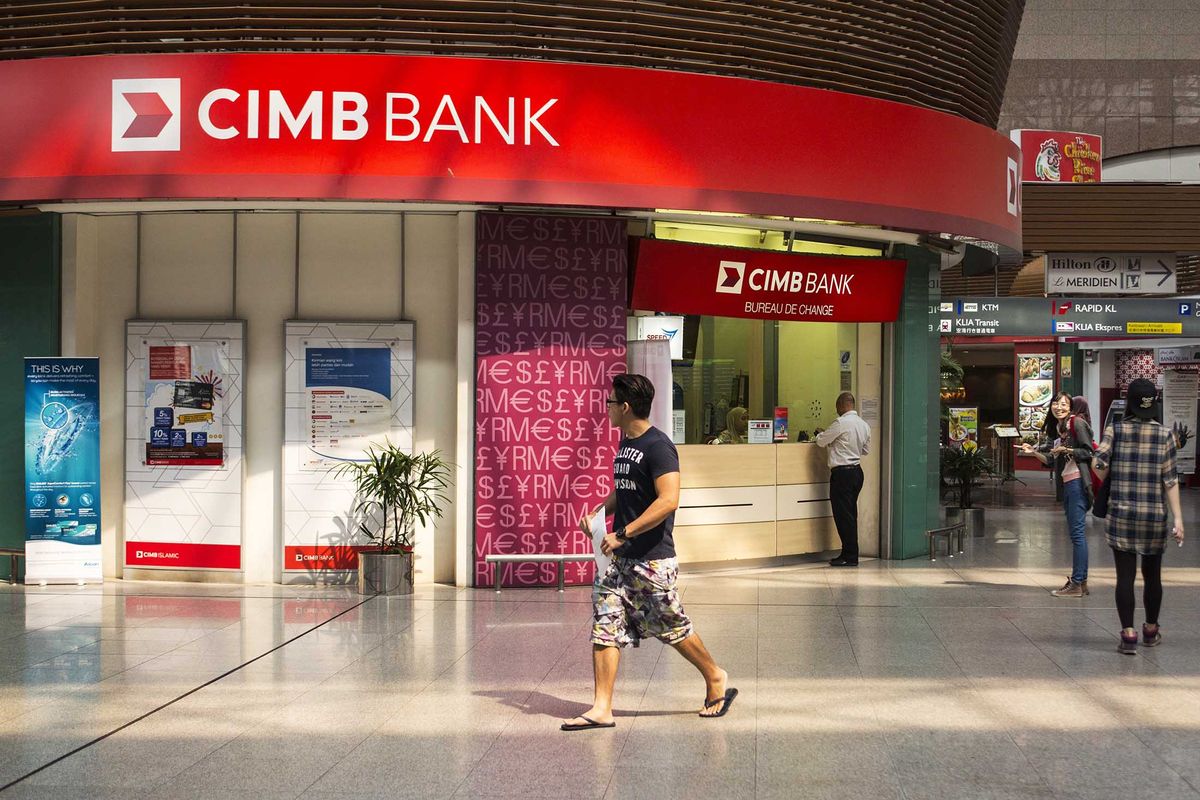
    CIMB Group Holdings announced on Monday that its chief has relinquished his post on Monday, as he has been appointed the new Finance Minister in Malaysia.

    Zafrul Tengku Abdul Aziz , who has been appointed the new Finance Minister on Monday, has resigned as group CEO of CIMB Group Holdings and CEO of CIMB Bank. He has also resigned from all other board positions on the same date, the lender said in a statement on Monday.

    The appointment of Zafrul was announced by Prime Minister Muhyiddin Yassin when he unveiled his new Cabinet. Tengku Zafrul has served the Group for six years when he re-joined in 2014. He has done an outstanding job, shaping CIMB’s transformation under our T18 and Forward23 strategic plans, said Chairman of CIMB Group Holdings Mohd Nasir Ahmad.

    In his place, the board has appointed Omar Siddiq, currently the Group Chief Operating Officer, as Officer-in-Charge for CIMB Group and CIMB Bank Berhad, marking a start in the group’s succession plan.

    CIMB Group is Malaysia’s second-largest financial services provider by assets, offering consumer banking, commercial banking, investment banking, Islamic banking, and asset management products and services. Headquartered in Kuala Lumpur, the Group is present in all 10 Southeast Asian nations (Malaysia, Indonesia, Singapore, Thailand, Cambodia, Brunei, Vietnam, Myanmar, Laos and Philippines), with 702 branches as at 31 December 2019.

    Beyond Southeast Asia, the Group has market presence in China, Hong Kong, India, Korea, the U.S., and U.K. CIMB Group operates its business through three main brand entities, CIMB Bank, CIMB Investment Bank, and CIMB Islamic. CIMB Group is also the 92.5 percent shareholder of Bank CIMB Niaga in Indonesia, and 94.8 percent shareholder of CIMB Thai in Thailand.

  • HSBC Taps Zoom to Maintain Client Interaction

    HSBC Taps Zoom to Maintain Client Interaction

    The bank is rolling out video conferencing for its Jade customers and says it will extend the service to HSBC Premier customers in the next few weeks.

    Amid the Covid-19 outbreak, HSBC is hoping remote conferencing services will help the bank enhance communication between customers and its relationship managers and investment specialists.

    In a statement on Wednesday, the bank said it has rolled out video conferencing using the Zoom service to interact and conduct wealth management related activities with Jade customers.

    A virtual face-to-face interaction will facilitate more in-depth discussion between customers and relationship managers, especially on more detailed wealth planning topics, said Greg Hingston, head of retail banking and wealth management, Hong Kong.

    Jade focuses on clients with a minimum account size of $1 million, a segment the bank describes as emerging wealth, in contrast with HSBC Private Banking, which requires a minimum account size of $5 million.

    The service gives customers access to dedicated relationship managers and specialists, customized and exclusive investment solutions, as well as luxury concierge services and «exclusive experiences.»

    As of end-August 2019, it had more than 150,000 customers globally in eight markets. In 2019, four Jade Centres were opened across Singapore, Hong Kong, and Shanghai. This year, HSBC opened two more Jade Centres in Hong Kong, and plans to open one in Beijing.

    HSBC has been building its wealth teams across Asia, as it announced the launch of a new global business, combining retail banking and wealth management and global private banking on Monday.

  • Axa Appoints Managing Director In Newly-Merged Unit

    Axa Appoints Managing Director In Newly-Merged Unit

    Axa Insurance Singapore named a managing director for retail and health, as part of a broader strategy to streamline its businesses.

    Effective immediately, Julien Callard will lead the retail and health strategic business unit in a newly expanded role, with responsibility for driving the continued growth of Axa’s retail business and health business as well as the respective distribution functions. This includes developing a differentiated value proposition and offerings that will strengthen its position as a health partner to its customers.

    Over the past 20 years, Callard has held several leadership roles across the Axa Group and developed deep and extensive knowledge of the business, said Jean Drouffe, CEO of Axa Singapore in a statement.

    The appointment is part of a broader strategy to streamline and strengthen Axa’s business by merging its retail and health strategic business units, in order to become a more customer-centered company, the insurance group said. Callard originally joined the Axa Group in 2000 and he has held senior positions across multiple countries spanning actuarial, risk, marketing and reinsurance.

    Prior to joining Axa Singapore, he was Head of retail property and casualty at Axa Mexico. He has worked in operational and functional positions across retail, commercial, and reinsurance lines.

  • Sergio Ermotti Set to Leave UBS

    Sergio Ermotti Set to Leave UBS

    UBS Chief Executive Sergio Ermotti will leave the bank after retiring from his position later this year. He won’t become the chairman of Switzerland’s largest bank, as some observers had expected.

    Instead, Sergio Ermotti on April 17 will stand for election as a non-executive member of the board of Swiss Re, the world’s second-largest reinsurer.

    In 2021, he will be nominated to succeed Walter Kielholz as chairman, according to a statement by Swiss Re on Tuesday.

    Kielholz is one of the heavyweights in Swiss finance and has been chairman of Swiss Re since 2009. He was on the board of the reinsurer for more than 20 years. Between 2003 and 2009, Kielholz was chairman of Credit Suisse.

    I am honored to be following in the footsteps of Walter Kielholz, who over the past decades immensely furthered the development not only of Swiss Re, but the entire Swiss financial center, said Ermotti, according to the statement.

    Today’s announcement put paid to speculation that CEO Ermotti would be replacing Chairman Axel Weber after retiring from his current position at the end of October. When the bank announced Ermotti’s departure at the end of February, it didn’t make a statement about a potential handover of responsibilities at the top of the bank.

    At the end of his tenure at UBS, Ermotti will have been CEO of Switzerland’s biggest bank for nine years. Together with Weber, who was elected chairman of the bank in 2012, he has moved UBS away from the classic investment banking model toward a strategy based on wealth management.

    More recently, the talk had been about differences of opinion at the top as the board was said to be unhappy how Ermotti had set up his succession plan. UBS has not been able to give the share price a boost, which has never recovered from the financial crisis.

    The appointment of Dutch banker Ralph Hamers in February as Ermotti’s successor came as a major surprise. Hamers is known for his digital banking expertise and will need to get UBS ready for the future.

  • HSBC Hires Wealth Teams Across Asia

    HSBC Hires Wealth Teams Across Asia

    HSBC has announced the launch of a new global business, combining retail banking and wealth management and global private banking. Recruitment for wealth teams across Hong Kong, Singapore, and mainland China is on track.

    HSBC’s new unit will become one of the world’s largest global wealth managers with $.4 trillion in assets, with nearly half of the assets from Asia, according to a media release on Monday. Wealth and personal banking will cover the entire spectrum of private wealth, from retail clients to ultra-high net worth (UHNW) individuals.

    Across Asia, where wealth pools are growing faster than in any other region, HSBC’s wealth revenues grew 12 percent in 2019 (year on year) to $.7 billion.

    This move creates one of the world’s largest and fastest-growing wealth franchises, centered in Asia and serving clients around the world. HSBC’s wealth propositions are compelling, increasingly digital and support individuals no matter where they are in their wealth journey, from first-time investors – to clients considering generational planning needs, Charlie Nunn, CEO of Wealth and Personal Banking, HSBC, said.

    In 2019, HSBC grew affluent and emerging high net worth clients globally in Premier1 and Jade, respectively, by 7 percent and 14 percent year on year. Over half of Jade’s total clients globally are in Asia. Global private banking, where profit before tax grew by 19 percent, attracted a record $23 billion of net new money in 2019, two-thirds of which were in Asia. 2019 also saw an increase in Asia client assets of 22 percent to $51 billion.

    Recruitment for wealth teams across Hong Kong, Singapore, and mainland China is on track. Since 2017, both businesses have recruited 800 people, including private bank relationship managers, investment counselors, UHNW solution specialists, and product specialists, and Jade directors and relationship managers, investment and insurance specialists.

    In 2019, four Jade Centres were opened across Singapore, Hong Kong, and Shanghai. This year, HSBC has recently opened two more Jade Centres in Hong Kong and plans to open one in Beijing.

  • HSBC Hires Wealth Teams Across Asia

    HSBC Hires Wealth Teams Across Asia

    HSBC has announced the launch of a new global business, combining retail banking and wealth management and global private banking. Recruitment for wealth teams across Hong Kong, Singapore and mainland China is on track.

    HSBC’s new unit will become one of the world’s largest global wealth managers with $.4 trillion in assets, with nearly half of the assets from Asia, according to a media release on Monday. Wealth and personal banking will cover the entire spectrum of private wealth, from retail clients to ultra-high net worth (UHNW) individuals.

    Across Asia, where wealth pools are growing faster than in any other region, HSBC’s wealth revenues grew 12 percent in 2019 (year on year) to $.7 billion.

    This move creates one of the world’s largest and fastest-growing wealth franchises, centered in Asia and serving clients around the world. HSBC’s wealth propositions are compelling, increasingly digital and support individuals no matter where they are in their wealth journey, from first-time investors – to clients considering generational planning needs, Charlie Nunn, CEO of Wealth and Personal Banking, HSBC, said.

    In 2019, HSBC grew affluent and emerging high net worth clients globally in Premier1 and Jade, respectively, by 7 percent and 14 percent year on year. Over half of Jade’s total clients globally are in Asia. Global private banking, where profit before tax grew by 19 percent, attracted a record $23 billion of net new money in 2019, two-thirds of which were in Asia. 2019 also saw an increase in Asia client assets of 22 percent to $51 billion.

    Recruitment for wealth teams across Hong Kong, Singapore, and mainland China is on track. Since 2017, both businesses have recruited 800 people, including private bank relationship managers, investment counselors, UHNW solution specialists, and product specialists, and Jade directors and relationship managers, investment and insurance specialists.

    In 2019, four Jade Centres were opened across Singapore, Hong Kong, and Shanghai. This year, HSBC has recently opened two more Jade Centres in Hong Kong and plans to open one in Beijing.

  • OCBC Cuts Days In Issuing First Electronic Banker’s Guarantee

    OCBC Cuts Days In Issuing First Electronic Banker’s Guarantee

    OCBC Bank has issued an electronic banker’s guarantee (eBG), making it the first lender to tap on Singapore Custom’s Electronic Guarantee Program.

    OCBC Bank became the first bank to leverage Singapore Customs’ electronic Banker’s Guarantee program launched on Monday, issuing an electronic banker’s guarantee (eBG) to Singapore Customs on behalf of vCargo Cloud, an Infocomm Technology solution and service provider that performs customs declaration services for forwarders and shippers.

    It has taken some time for trade finance to be digitalized, but the momentum has picked up over the last few years. Already, close to half of our trade transacting customers who were previously sent in paper trade applications are now doing so via our internet banking portal Velocity@ocbc,» said Melvyn Low, Head, Global Transaction Banking, OCBC Bank in a media statement.

    «And now, with this inaugural eBG, we have seen the end to end digitalization of the Banker’s Guarantee process, which is a milestone for the trade industry’s digital transformation,» added Low. OCBC Bank said its API connectivity with the Networked Trade Platform (NTP) has enabled the bank to electronically transmit details of its customers’ eBG to Singapore Customs.

    As a result, the time taken from an application – which can be done via the bank’s business online banking platform Velocity@ocbc – to delivery of the Banker’s Guarantee to Singapore Customs, has gone from 7 working days to 1 working day. Businesses can benefit from this more efficient process as it mitigates the risk and costs that result from delays and disruptions to their imports into Singapore.

  • DBS Enhances Advice and Client Engagement for HNWIs

    DBS Enhances Advice and Client Engagement for HNWIs

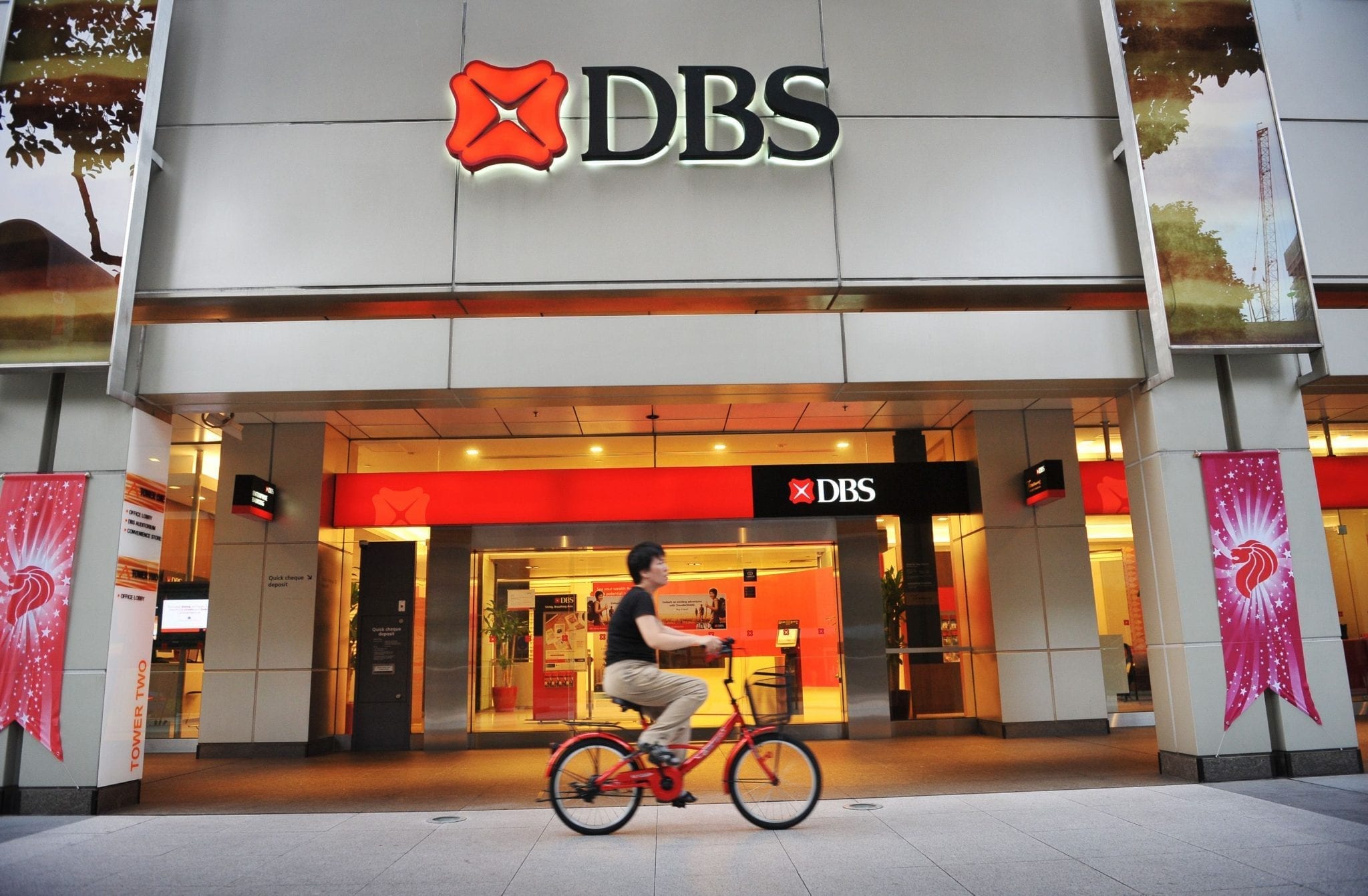
    DBS is ramping up its portfolio advisory capabilities to provide Private Bank and Treasures clients with more insightful and comprehensive investment reviews.

    DBS is introducing a portfolio review tool, co-developed with wealth technology provider EdgeLab, to give clients in-depth assessments of their portfolio performance and risk exposures, the bank announced in a statement on Thursday.

    According to the bank, the tool addresses gaps in traditional client investment reviews, which often miss valuable contextual information such as the performance of each investment against the wider portfolio or equivalent benchmarks, and where the overall portfolio risk exposures lie.

    Understanding what you own and how each investment impacts your portfolio is fundamental to making robust investment decisions. It is key to navigating today’s uncertain markets, where it is important to go back to basics, and not leave things to luck or chance, Sim S Lim, group head of Consumer Banking and Wealth Management, said in the statement.

    A report with this information takes only five minutes to generate, and will allow relationship managers (RMs) to offer more personalized and relevant investment recommendations, DBS said. The report will also be provided as supplements to monthly client statements.

    The bank said that in the next phase of the development of the tool, it will equip RMs with the ability to stimulate investments into existing portfolios, as well as propose and construct new client portfolios.

    Among its efforts to enable more informed decision-making, DBS also recently added MSCI ESG Ratings, which measures a company’s resilience to long-term, financially relevant environmental, social and governance (ESG) risks, into its suite of wealth products, advisory and discretionary portfolio services.

  • Stanchart Pushes Back Target as Earnings Surge

    Stanchart Pushes Back Target as Earnings Surge

    Standard Chartered on Thursday has pushed back its target return on tangible equity, despite posting a commendable increase in annual profits. The revenue growth came from its main markets.

    The lender posted a pretax profit of $3.71 billion for 2019, up from $2.55 billion in 2018, according to its results statement. The 45.5 percent increase in profits defied the headwinds of global trade tensions and protests in Hong Kong.

    However, this is slightly below the $3.94 billion average of analysts’ forecasts compiled by the bank.

    The bank highlighted that its target of a 10 percent return on tangible equity, previously set for 2021, would be pushed back. In October, the global lender said that the goal had become more difficult amid worsening global economic conditions.

    These headwinds are expected to be transitory, but we now believe it will take longer to achieve our RoTE target of 10 percent than we previously envisaged,” it said in an earnings statement to the stock exchange.

    Stanchart’s results announcement comes after rival HSBC Holdings warned it could suffer loan losses of up to $600 million if the virus outbreak continues into the second half of the year.

    The bank added it has approved the buyback of up to $500 million worth of shares, which will commence shortly. It is in the midst of reviewing whether to do further capital return upon completing the sale of its stake in Indonesian lender Permata.

  • BNP Paribas Negative On India’s Consumption Recovery

    BNP Paribas Negative On India’s Consumption Recovery

    The expectation for India’s consumption to recover in 2020 is getting pushed out further, according to forecasts by BNP Paribas.

    Given that the nation’s slowest economic expansion in 10 years has led to a deceleration in local consumer staples sales for the sixth straight quarter, the brokerage expects India’s consumption recovery to be delayed.

    There is a lack of meaningful catalysts for consumption to recover to its potential in the year to December, Kunal Vora, a Mumbai-based analyst at BNP Paribas Securities India wrote in a note to clients. A sustainable recovery in rural income growth and a sharp uptick in consumer sentiment index are necessary for recovery.

    The brokerage last month turned negative on the consumer goods sector, pointing out that lower raw material prices and tax cuts were masking underlying weakness in sales. Consumer sentiment in the nation has worsened to an almost five-year low while manufacturing slack at companies widened to the most on record, data from the Reserve Bank of India showed this month.

    The federal budget for the year starting April 1 didn’t offer much in terms of big-bang stimulus to boost rural incomes. Meanwhile, economic growth is still weighed down by bad debts in its banking sector. The three months to Dec. 31 marked the sixth consecutive quarter of moderation in aggregate revenue growth for consumer staples, and management commentaries indicate companies are uncertain about the timing of recovery.

  • Axa Mandiri Lays Out Plans to Grow Premium Income

    Axa Mandiri Lays Out Plans to Grow Premium Income

    Axa Mandiri Financial Services, one of Indonesia’s major insurance companies, expects to maintain double-digit growth in premium income this year, by tapping into the large customer base of its parent company, Bank Mandiri.

    Axa Mandiri Financial Services (Axa Mandiri)’s president director Handojo G. Kusuma said that the insurer would market its products more intensively to customers of Bank Mandiri, which has one of the largest customer bases in the country.

    We hope to book double-digit growth in premium income by tailoring insurance products to the special needs of Bank Mandiri customers,» said Kusuma, who was quoted.

    Despite having worked together with Bank Mandiri for many years, Axa Mandiri’s penetration among the bank’s clients was still below optimal levels, he noted.

    To realize the targeted double-digit growth in premium income, Axa Mandiri did a data analytics study on Bank Mandiri’s market segmentation. «By understanding the needs of each segment better, we will be able to improve upselling and cross-selling,» Kusuma added.

    To effectively market to the millennials, the company would study the behavior and characteristics of customers in that segment and offer an affordable and easy-to-understand retail package that would be relevant and convenient for them, Handojo explained.

    For the growing halal market, the company planned to expand its portfolio of sharia-compliant products to between 20 percent and 25 percent of its business in the upcoming year from 4 to 5 percent at present.

    If we look at the market share potential, we can say that 90 percent of Indonesians are Muslims, [hence] we will continue to grow our sharia business, said Axa Mandiri sales director Henky Oktavianus.

    He added that the company was still studying the sharia market segmentation of its sister company, Bank Syariah Mandiri, to understand what products to offer its clients and how best to sell them.

    Axa Mandiri booked a gross premium income of 9.5 trillion rupiahs ($698.5 million) in 2019, an increase of 11 percent from 8.59 trillion rupiahs in 2018. Net investment touched 668 billion rupiahs in 2019, following a deficit of 1.68 trillion rupiahs in 2018.

    As a result, revenue totaled Rp 10.74 trillion in 2019, a 44 percent year-on-year increase. Net profit, therefore, rose 6 percent to  1 trillion rupiahs in 2019.

    Axa Mandiri is jointly owned by Bank Mandiri, which has a 51 percent stake, and Axa Group’s National Mutual International, which holds 49 percent.
  • DBS Enhances Advice and Client Engagement for HNWIs

    DBS Enhances Advice and Client Engagement for HNWIs

    DBS is ramping up its portfolio advisory capabilities to provide Private Bank and Treasures clients with more insightful and comprehensive investment reviews.

    DBS is introducing a portfolio review tool, co-developed with wealth technology provider EdgeLab, to give clients in-depth assessments of their portfolio performance and risk exposures, the bank announced in a statement on Thursday.

    According to the bank, the tool addresses gaps in traditional client investment reviews, which often miss valuable contextual information such as the performance of each investment against the wider portfolio or equivalent benchmarks, and where the overall portfolio risk exposures lie.

    Understanding what you own and how each investment impacts your portfolio is fundamental to making robust investment decisions. It is key to navigating today’s uncertain markets, where it is important to go back to basics, and not leave things to luck or chance,» Sim S Lim, group head of Consumer Banking and Wealth Management, said in the statement.

    A report with this information takes only five minutes to generate, and will allow relationship managers (RMs) to offer more personalized and relevant investment recommendations, DBS said. The report will also be provided as supplements to monthly client statements.

    The bank said that in the next phase of the development of the tool, it will equip RMs with the ability to stimulate investments into existing portfolios, as well as propose and construct new client portfolios.

    Among its efforts to enable more informed decision-making, DBS also recently added MSCI ESG Ratings, which measures a company’s resilience to long-term, financially relevant environmental, social and governance (ESG) risks, into its suite of wealth products, advisory and discretionary portfolio services.

  • Stanchart Pushes Back Target As Earnings Surged

    Stanchart Pushes Back Target As Earnings Surged

    Standard Chartered on Thursday has pushed back its target return on tangible equity, despite posting a commendable increase in annual profits. The revenue growth came from its main markets.

    The lender posted a pretax profit of $3.71 billion for 2019, up from $2.55 billion in 2018, according to its results statement. The 45.5 percent increase in profits defied the headwinds of global trade tensions and protests in Hong Kong.

    However, this is slightly below the $3.94 billion average of analysts’ forecasts compiled by the bank.

    The bank highlighted that its target of a 10 percent return on tangible equity, previously set for 2021, would be pushed back. In October, the global lender said that the goal had become more difficult amid worsening global economic conditions.

    These headwinds are expected to be transitory, but we now believe it will take longer to achieve our RoTE target of 10 percent than we previously envisaged,” it said in an earnings statement to the stock exchange.

    Stanchart’s results announcement comes after rival HSBC Holdings warned it could suffer loan losses of up to $600 million if the virus outbreak continues into the second half of the year.

    The bank added it has approved the buyback of up to $500 million worth of shares, which will commence shortly. It is in the midst of reviewing whether to do further capital return upon completing the sale of its stake in Indonesian lender Permata.