Tag: Banking

  • UOB Malaysia Offers Moratorium For Loan Repayments Up To a Year

    UOB Malaysia Offers Moratorium For Loan Repayments Up To a Year

    UOB Malaysia on Friday announced immediate liquidity relief assistance for customers affected by COVID-19, as the government activated the army to enforce its restricted movement order.

    Two days after the Malaysian government enforced a Movement Control Order (MCO) to curb the spread of COVID-19, UOB Malaysia announced a slew of measures to help its corporate clients, especially small- and medium-sized enterprises (SMEs), and individual customers, to have more flexibility in their cash flow management and to ease their financial burden.

    We are committed to supporting and helping our customers who are impacted by COVID-19 and we will respond swiftly in helping them alleviate their financial burden, said Wong Kim Choong, Chief Executive Officer, UOB Malaysia said in a media statement.

    UOB Malaysia’s measures for its customers will be assessed and approved on a case-by-case basis. The bank will continue to evaluate its list of relief measures for both its conventional and Islamic banking customers to ensure it provides them with an adequate level of support to help them through this difficult time. Relief measures introduced by UOB Malaysia for both its conventional and Islamic banking customers include:

    • Moratorium on their loan repayments for up to one year;
    • Flexibility to request an extension of trade bills maturing between 18 and 31 March 2020 for clients with good track records. Clients can also choose to repay their trade repayments at the original maturity date;
    • Applications for the government-administered Special Relief Facility through UOB Malaysia; and
    • Review to grant additional facilities based on clients’ financing needs for those who need access to additional financing.

  • Australian Banks Launch Small Biz Relief Package

    Australian Banks Launch Small Biz Relief Package

    In the midst of an ongoing outbreak, Australian lenders help lighten the load for affected small businesses which are estimated to house 5 million workers in the country.

    The relief package will apply to more than A$100 billion of existing small business loans and provides a 6-month deferral of loan payments for those affected by the coronavirus, according to the Australian Banking Association. This follows recent collaboration between banks, the Australian treasurer and government to identify support measures.

    This could put as much as $4.6 billion back into the pockets of small businesses as they battle through these difficult times,» said the association’s CEO Anna Bligh in a statement. This is a multi-billion-dollar lifeline for small businesses when they need it most, to help keep the doors open and keep people in jobs.

    In a relatively rare scenario, banks globally have an opportunity to play the role of financial rescuer after the last crisis when large parts of the industry benefited from taxpayer-backed bailouts. Outside of Australia, for example, Swiss financial giant Credit Suisse’s chief executive had suggested co-establishing a lending fund targeting small businesses in the country alongside fellow giant UBS.

    While this is first and foremost a health crisis, this pandemic has begun to have serious impacts across the economy, with small businesses beginning to feel the devastating effects, Bligh added. Australia’s banks have supported the country through difficult times in the past and continue to do so.

  • UBS Disperses Calming Drops

    UBS Disperses Calming Drops

    The world’s largest wealth manager sought to soothe investor nerves amid market turmoil sparked by the coronavirus pandemic.

    Swiss-based UBS said it had observed «little to no» disruption in service to wealthy clients as trading volumes surged amid a stock and bond market rout. Worries that the coronavirus pandemic’s effect on the global economy is overshadowing broad policy moves meant to counter the fallout.

    The remarks address a pandemic expected to wreak economic havoc: Deutsche Bank on Wednesday predicted a global recession, with the demand to plunge in China this quarter and in Europe and the U.S. next. Rating agency Moody’s noted that global investment banks’ solid liquidity allows them to manage rising drawdown demands.

    Private banks like UBS are seeing volume surge as investors shift their portfolios and hunt for liquidity to meet margin calls. We have seen little to no disruptions in service to our clients and have successfully managed very high volumes across our businesses, particularly in our trading operations, finance chief Kirt Gardner said on Wednesday.

    He underscored UBS’ conservative capital cushion, its ample liquidity and funding, and successful stress tests. «While previous economic growth projections are clearly no longer valid, it is too early to forecast the impact» – and it depends on official responses from health, monetary, and other authorities, he noted.

  • HSBC cutting 35,000 Jobs in a Pandemic

    HSBC cutting 35,000 Jobs in a Pandemic

    Newly confirmed HSBC group chief executive Noel Quinn has barely enough time to celebrate as he grapples with how to cut 35,000 jobs in the midst of a coronavirus pandemic that has claimed nearly 9,000 lives.

    Cutting jobs in the middle of a global health crisis has more than just economic effects – there are also social and political ones. Depending on the location and segment, a mistimed axing – more so given that authorities are rushing to provide monetary and fiscal support sometimes targeting the working class – could result in varying levels of internal and external backlash.

    HSBC’s Quinn faces an uphill battle as the effects of the coronavirus pandemic threaten to slow down the British bank’s cost-cutting plans.

    One of the key elements of the revamp involves the reduction of physical branches with a focus on the U.S. and the U.K. where coronavirus cases are ramping up. In addition to the obvious social risks linked to a current wholesale layoff of branch employees, HSBC also faces logistical hurdles when unwinding branches.

    In the U.K. where the bank is looking to cut 27 more branches this year, it has already had to shut down two locations temporarily – Burnley and Northampton – due to confirmed cases of staff infection. And in the U.S., where HSBC said it would cut one-third or about 80 branches, competitors are already taking major precautions including JPMorgan Chase which will reportedly close around 20 percent of its branches.

    Interestingly, Quinn had previously said that the group considered a full exit from the U.S. retail market but opted, in the end, to keep the business as a key source of dollar liquidity and funding for the group.

    Layoffs in the broader workforce will also be more difficult to execute until the effects of the outbreak are better contained. In addition to temporarily closed branches, at least two staff at HSBC – one in London and one in Dubai – have already been diagnosed with Covid-19 and staff within the vicinity have been told to work from home to slow down any potential contagion.

    You can’t fire a trader in Europe over the phone when he is either working from home or taking care of a sick family member, said a report citing an unnamed HSBC source.

    Although not alone in facing job cut headwinds, HSBC accounts for a dominant share (46 percent) of the 75,700 job cuts disclosed by banks worldwide as of December 2019. But still, it remains confident about the longer-term prospects most notably in Asia where it is betting on China’s wealthy to boost profitability. HSBC’s Asia private banking head Tan Siew Meng recently earmarked a three-year timeline to triple its number of Greater China billionaire clients.

    We have a history of staying calm in difficult times, dealing with the issues at hand, and standing firm for our customers, said the newly appointed CEO Quinn in an internal e-mail. We must do the same again.

    A spokesperson for the bank said no changes had been made to its plans since the last announcement in February.

  • Citi Appoints Asia Chief Operating Officer

    Citi Appoints Asia Chief Operating Officer

    The senior executive takes on a new role, according to an internal memo shared after two decades with Citi’s equities and markets unit.

    Citi has appointed Andrea Fletcher as its chief operating officer for Asia.

    In the newly created role based in Hong Kong, Fletcher will help drive Citi’s efforts to grow the regional franchise. She will also join the Asia Operating Committee, the announcement said.

    The COO appointment follows the confirmation of Citi’s new chief for the region, Peter Babej, after the regional helm was held for six months by interim head Tim Monger, who will resume his sole chief financial officer role.

    According to her LinkedIn profile, Fletcher joined Citi in 1999 as director of equity and research sales, based in Sydney. Her 20-year career at the bank is split almost equally between Australia and Hong Kong, with her most recent role being managing director and global head of client strategy, equities and prime finance.

    She helped establish the Citi Women’s Network in Hong Kong and Australia, while also playing an active role in Citi’s diversity, recruiting, mentoring and leadership development efforts both internally and externally with the bank’s clients.

  • HSBC Confirms Permanent CEO

    HSBC Confirms Permanent CEO

    HSBC finally settles on a permanent group chief executive seven months after the exit of predecessor John Flint.

    Former interim chief executive Noel Quinn will take the top job permanently, effective immediately, adding much-needed stability at the helm and settling months of uncertainty, according to the bank.

    Quinn took over the interim role following the short-lived two-year stint of Flint in August 2019. Since then, the bank has repeatedly said that succession remained underway, most notably during the last annual results when Quinn presented the group strategy but remained as interim head. Multiple names had emerged as potential successors to Flint including UniCredit chief executive Jean Pierre Mustier, who reportedly withdrew interest last month.

    The bank’s decision to name Quinn at the new CEO will bode well for stability especially given the recent shuffles made at the top. They include newly appointed regional chief executives for the U.S. (Michael Roberts), China (Mark Wang Yunfeng) alongside the Middle East, North Africa, Turkey, Latin America, Canada and most of Europe (Stephen Moss).

    As the new permanent chief executive, Quinn will reportedly earn a base salary of over $1.5 million per annum.

    Noel has proven to be the outstanding candidate to take on a role permanently that he has performed impressively on an interim basis since August 2019, said HSBC chairman Mark Tucker in a statement.

  • UBP Hires Singapore COO

    UBP Hires Singapore COO

    UBP hires a new chief operating officer for Singapore from a rival private bank in the city-state.

    Jérôme Thuillier joins UBP as its new Singapore COO, effective as of yesterday. Thuillier most recently with Bank of Singapore where he was a program director responsible for building an integrated wealth management tech platform. Pervasively, he had also held leadership roles with Barclay Wealth including COO of its global investment solutions arm.

    Thuillier’s predecessor, Michael Moncarz, was named the Singapore COO in February 2017.

    According to the release, Thuillier joins not only with most of his financial career in Asia but also some local language skills including «a good understanding of Mandarin and basic Japanese,» according to a release.

  • Bank Stocks Slide

    Bank Stocks Slide

    The share prices of UBS and Credit Suisse tumbled in line with their European counterparts. Investors fear the coronavirus will spark a wider recession – and banks will bear the brunt.

    Credit Suisse shed more than 13 percent in early trading on Monday, losing more than the wider European banking index, which slid 12 percent. Meanwhile, UBS’ stock fell more than 11 percent.

    The slides illustrate that investors don’t believe a massive, coordinated plan by central banks overnight will be adequate to stave off recession sparked by the coronavirus pandemic. European banks, which have long procrastinated shaping up following the 2008/09 crisis, are especially vulnerable to this.

    Overnight, the U.S. central bank released its big guns with its second cut in two weeks and other policy easing measures. Major U.S. banks including J.P. Morgan said they would suspend share buybacks – a method preferred by banks to return capital to shareholders because it typically boosts stock prices.

    Credit Suisse has previously expected to buy back as much as 1 billion Swiss francs ($1.1 billion) in its own stock by year-end, but this is subject to economic conditions that have now changed dramatically. UBS is in the middle of a 2 billion franc, three-year buyback.

  • Citi Targets Doubling of Singapore WM Market Share

    Citi Targets Doubling of Singapore WM Market Share

    From its current 5 percent, Citibank Singapore plans to double its wealth management market share alongside the number of clients by 2025.

    The bank’s Singapore chief executive Brendan Carney believed that the retail and wealth management business could further accelerate growth after assets grew 11 percent in 2019, including 19 percent client asset growth from its wealth management segment.

    We think there’s another gear that we can shift into and go from double-digit growth to really strong double-digit growth, Carney said.

    As part of the growth plans, the bank made investments in the tens of millions in a new flagship wealth management center based in one of Singapore’s major shopping and luxury areas, Orchard Road. The 30,000 square foot wealth management center will occupy four storeys including two floors for 400 relationship managers and specialists as well as two floors for client meetings and events.

    Though the bank hopes to add at least one more flagship center, its broader plan in the city-state is to reduce its branch presence. By the end of 2020, it targets three from 14 branches to 11 – one wealth management center, seven branches and three instant banking centers for basic transactional services.

    Still, Carney noted that Citi is not a digital-only bank and has not aspirations to become one. In fact, Citi will look to grow its client-facing staff by 20-25 percent over the next three to five years and also boost training for its existing relationship managers.

  • Apple waives interest for Apple Card users amid COVID-19 pandemic

    Apple waives interest for Apple Card users amid COVID-19 pandemic

    Other than the very obvious health concerns caused by COVID-19, the ongoing pandemic is also causing much economic trouble. Apple introduced a customer assistance program for Apple Card users to help offset financial concerns.

    Many Apple Card users on Reddit have reportedly received an email about the new customer assistance program. Under this program, cardholders can skip their March payments without any additional interest.

    Apple hasn’t explicitly stated any eligibility requirements, so it looks like all Apple Card holders are eligible. They can enroll in this program in at least two ways: firstly, Apple evidently provides a direct link in their email announcing the program, which can be used to enroll.

    The other method is just as simple, with cardholders able to enroll through text by iMessaging the Apple Card Support line the following text: “I would like to enroll in the Customer Assistance Program”. The support number can be found in Apple’s support page for the credit card.

    Clearly, Apple is taking the COVID-19 outbreak very seriously, closing all Apple Stores outside of China for the time being as well as regulating App Store entries related to the virus. This latest offer is a kind gesture to its customers during a difficult time.

  • DBS, Revenue Projections are a Moving Target

    DBS, Revenue Projections are a Moving Target

    DBS’ Tan Su Shan followed up on the estimates for a 2 percent of revenue cut, underlining that potential revisions could come should the pandemic prolong.

    Soon after the bank’s chief executive Piyush Gupta announced a modest 1-2 percent revenue reduction, institutional banking head Tan Su Shan followed up by adding that the matter was a «moving target» and that potential revisions could come.

    We are living day by day, week by week right now, she said in a report, highlighting that the estimate was based on the assumption that the pandemic would subside by mid-year. «The key here is to stay with the clients, watch everyone’s positions and make sure everyone is okay.»

    According to Tan, non-performing loans are expected to increase from small and medium-sized enterprises across tourism, apparel, hospitality and other sectors tied to consumer demand. Nonetheless, she noted that Singapore and other parts of Asia are observing signs of stability fuelled by government stimulus though business confidence and a recovery in consumer demand still lag.

    For 2019, DBS demonstrated resilience posting a 14 percent increase to net profits to a record S$6.4 billion ($4.5 billion) from a 10 percent year-on-year income increase. From such a position, its modest revenue cut projection signals greater risks in the broader financial industry, especially amongst players with greater China exposure.

    AIA, for example, noted that face-to-face meetings in China, which account for 40 percent of sales, took a hit, though its online sales managed to partially offset the loss. Its soon to retire chief executive and president Ng Keng Hooi noted the headwinds the insurer faced from the coronavirus and low-interest rates but remains optimistic that  «the industry would overcome this down cycle and come out stronger», in a report.

  • BNP Paribas Wins VCC Mandate

    BNP Paribas Wins VCC Mandate

    It will provide fund administration and global custody services in Singapore to Kamet Capital Partners.

    Multi-family office Kamet Capital Partners, one of the first fund managers to use Singapore’s Variable Capital Company (VCC) structure, is partnering BNP Paribas Securities Services in its plans to use the VCC.

    We selected BNP Paribas Securities Services for its attention to client needs and willingness to grow alongside Kamet, said Kerry Goh, chief executive officer of Kamet Capital Partners, said in a statement issued by BNP Paribas on Tuesday.

    Goh founded Kamet in 2017 after leaving Julius Baer, where he was head of portfolio management, Asia. Kamet’s Long Term Capital fund invests 60–70 percent of its portfolio in public securities, and the balance in alternatives and private investments.

    The VCC framework, launched in January, is part of Singapore’s plans to attract more funds to base themselves in the city-state.

    Catered to the needs of global investment funds and investors, fund managers will have greater flexibility in share issuance/redemption and the payment of dividends. Managers can also incorporate multiple funds in a single VCC to save costs.

    The initiative has already borne fruit, with Mindful Wealth redomiciling its flagship fund to Singapore under the framework, and RF Fund Management announcing it would be setting up its inaugural private equity fund to focus on fintech and property investments in Asia.

  • HSBC Names New Head of China Investment Bank

    HSBC Names New Head of China Investment Bank

    Leadership shuffles continue under the watch of HSBC’s interim chief executive Noel Quinn including the latest renaming of the head of its China investment banking arm to succeed David Liao.

    Mark Wang Yunfeng, most recently the bank’s China head of global banking and markets, succeeds Liao as president and chief executive of China. Previously, he had held senior roles with Bank of China and Deutsche Bank.

    Liao will remain with the bank and be shifted to another senior position.

    China is central to HSBC’s strategic aim of accelerating growth from its Asian franchise,» said Peter Wong, HSBC’s China chairman. «With his extensive banking experience, particularly in driving China-related business in trading and capital markets, Mark will lead one of the group’s most important markets, helping us to support our customers’ businesses within as well as outside the mainland.

    Wang’s promotion follows a series of other shuffles at HSBC’s top management globally including the appointment this year of Stephen Moss, former group CEO chief of staff, as the regional chief executive overseeing the Middle East, North Africa and Turkey; Latin America and Canada; and most of Europe. Last year, the U.S. CEO was also renamed to former Citi banker Michael Roberts.

    But the question remains about the shuffling of the highest rank. The permanence of Quinn’s role continues to be in doubt since he was named interim head, succeeding John Flint who lasted just 18 months. Onlookers expected closure to the matter during the last annual meeting but no such thing occurred and the bank responded by saying that the appointment process was «ongoing» and in line with its six to 12-month timetable.

    In addition to a massive group overhaul involving up to 35,000 job cuts and a target of $4.5 billion in annual cost savings, the bank faces political headwinds for its China business. Wang takes on an investment bank whose interests in the mainland have already landed it in the crossfires twice including the U.S.-Huawei debacle and the controversial closure an account linked to pro-democracy activities in Hong Kong last year.

    Still, the region will be equipped with internal tailwinds. The bank is set to concentrate its bets on Asia despite the said hurdles alongside a broader challenging environment that now includes a coronavirus pandemic. HSBC most recently announced that it had already hired 800 people since 2017 for its affluent banking businesses in Hong Kong, China and Singapore.

  • OCBC Enables Encashment of Cheques at ATMs

    OCBC Enables Encashment of Cheques at ATMs

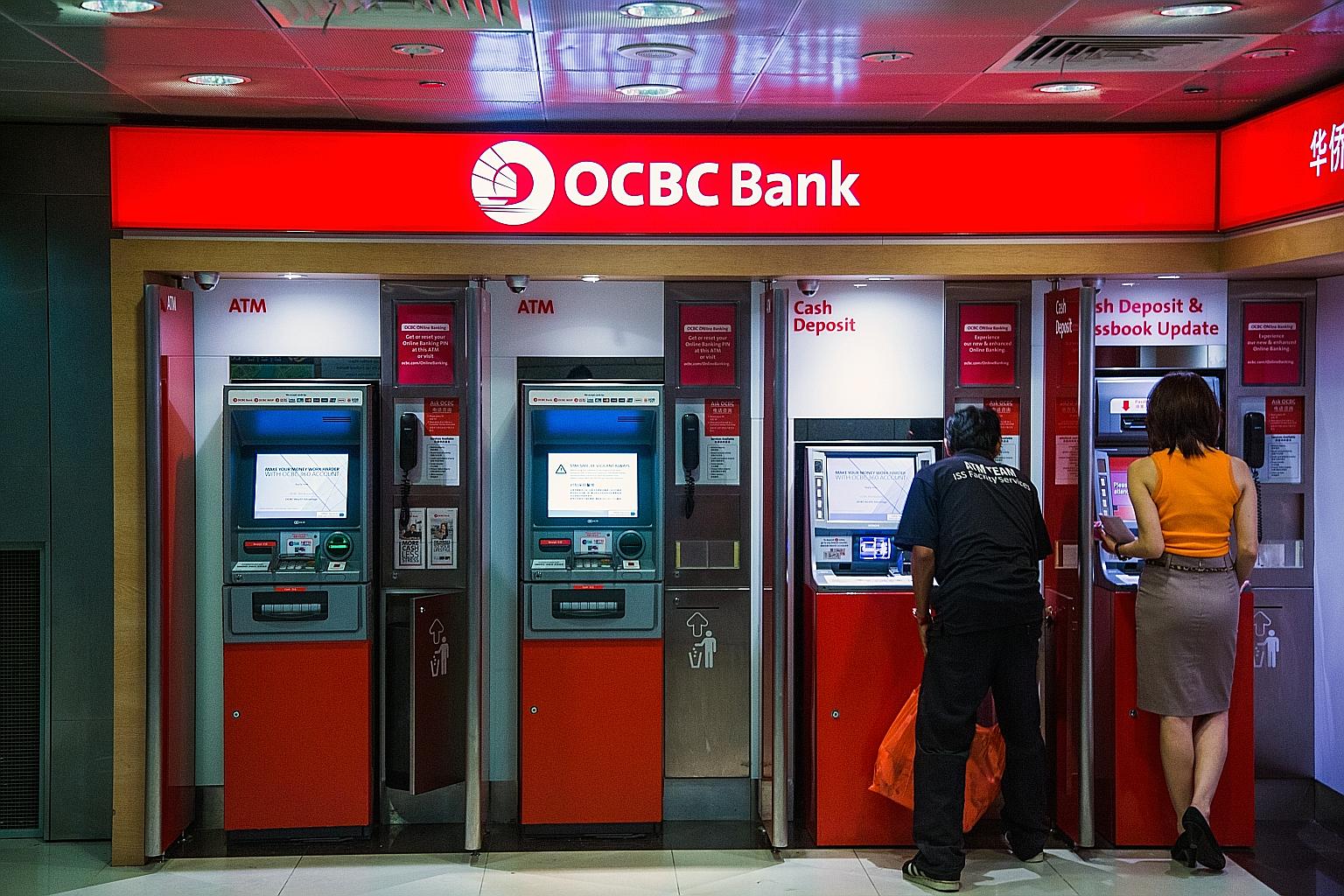
    OCBC Bank has rolled out a cheque encashment service across all its next-generation ATMs at 23 branches, making it the first bank to offer such services in Southeast Asia.

    Recognizing that there are still segments of customers who require services like cheque encashments, OCBC has enabled its next-generation ATMs to process 90 percent of all the cheques usually encashed at its branch teller counters.

    It takes up a significant amount of time for a customer and counter teller staff just to fulfill a single such transaction. We have addressed this by enabling transactions such as cheque encashment to be performed seamlessly on our next-generation ATMs instead, said Sunny Quek, OCBC Bank’s Singapore head of consumer financial services, in a media statement on Thursday.

    Since February this year, customers have been able to encash cheques – for up to a maximum of $30,000 in a single cheque – by depositing them into the ATM to instantly get cash. As a result, the average cheque encashment transaction time has been reduced to under three minutes at the ATM, as customers can save about 60 percent of their time compared to waiting to be served at a branch.

    All the necessary security checks and verifications are performed by the lender’s «digital ambassadors,» or staff located at its branch on mobile tablets in real-time, to ensure security. The next-generation ATMs have already processed cheque encashments totaling close to S$17 million, the bank said.

    Even as Singapore pushes to become cheque free by 2025, cash cheques continue to be used by small and medium-sized enterprises (SMEs), typically to pay staff salaries, get cash for daily business operations, or pay vendors for services rendered.

    While cheque usage by OCBC Bank’s retail banking customers has fallen 40 percent since 2018, one in six cash transactions performed by OCBC Bank tellers over the counter are still cash cheque encashment, with 95 percent of these cheques issued by SMEs.

  • Citi Singapore Doubles Paternity Leave

    Citi Singapore Doubles Paternity Leave

    The move is part of the bank’s initiatives to create an inclusive workplace and follows moves to increase female representation in senior roles and narrow the wage gap between male and female staff.

    Citi Singapore is extending its paid paternity leave from the government-mandated two weeks, to four weeks, under enhanced parental leave policies that are being rolled out globally in 74 markets this year.

    This move is in line with Citi’s new global paid parental leave policy to recognize the role that both parents play in raising a child, as well as to build an inclusive workplace, a statement on Wednesday said.

    The policy was launched on January 21, but will be backdated to January 1 for the first 18 markets, which includes Singapore. The leave, which applies to staff of all nationalities, must be used within the year of the child’s birth. New mothers will continue to receive 16 weeks of paid leave, the bank said.

    The move helps to drive greater gender equality, transform the perception that caregiving is only a female responsibility and create a more level playing field at home and at work, Jorge Osorio, head of human resources, Citi Singapore, said.

    In January, the bank said it would work towards increasing global representation of women in Assistant Vice President to Managing Director level roles to a minimum of 40 percent by 2021 to address its unadjusted pay gap. The share of females in such roles in Singapore grew from 32 percent in December 2017, to 36 percent in December 2019.