Tag: Banking

  • UBS Ventures Into Insurance Ecosystem

    UBS Ventures Into Insurance Ecosystem

    The wealth manager is partnering with reinsurer Swiss Re, in a bid to expand its reach with clients as challengers to the traditional finance industry lurk.

    The path to an ecosystem for banks and insurers is inevitably deals or partnerships: Switzerland’s hidebound financial center is seeing a revival of old constructions like «bancassurance,» which foundered in an initial effort 20 years ago.

    UBS is getting in on the idea, launching a mortgage solution offering together with Swiss Re on Wednesday. The bundling of banking and insurance products via Swiss Re’s insurtech subsidiary Iptiq is a bid to digitize production and distribution via platforms – an idea pioneered by Chinese internet giant Alibaba.

    Iptiq is poised to be carved out of Swiss Re’s life capital division next year. It will be placed into its own division reporting directly to CEO Christian Mumenthaler, underscoring its strategic importance to the reinsurer. The Swiss wealth manager’s initial efforts into platforms are the recently-launched Key 4 as well as Atrium, a mortgage broker launched in 2017.

    UBS wants to bake Iptiq into its domestic mortgage lending business – a step in the direction of an ecosystem for homeownership. Specifically, Iptiq is a data-backed product engine on which business clients can design tailored solutions – and maintain their client interface.

    For example, Iptiq could offer UBS’ borrowers protection against the invalidity or life insurance. UBS isn’t alone in its efforts to build a wider ecosystem to interest its clients: Raiffeisen and insurer Mobiliar plan to build a joint product and services platform.

    The cozy ties between Swiss Re and the Zurich-based bank are underscored by UBS CEO Sergio Ermotti, who is poised to take over as chairman of the reinsurer in April. Incoming CEO Ralph Hamers is a huge proponent of financial institutions as part of a wider, genuine ecosystem.

    The Swiss Re tie-up comes shortly after UBS in February partnered with Zurich Insurance to bank as well as insure start-ups. While bancassurance ventures are relatively common abroad, Switzerland still has considerable potential, UBS said. 

    With Iptiq, the world’s largest wealth manager is still proceeding cautiously: it will initially trial the partnership with a region in central Switzerland. UBS said it plans to unfurl the offering across Switzerland next year.
  • Healthcare Fund Assets Surge at Standard Chartered Private Bank

    Healthcare Fund Assets Surge at Standard Chartered Private Bank

    Assets under management within recommended healthcare funds surged at Standard Chartered Private Bank as part of a broader trend of increasing adoption in sustainable investing. Recommended healthcare fund AUMs surged 50 percent year-on-year, according to a recent Standard Chartered report, despite market volatility. Driven by the pandemic, this was in line with the growing demand for sustainable investing including a focus on United Nations Sustainable Development Goals (SDG) like clean water and sanitation, and good health and well-being.

    There were also lower drawdowns year-to-date in healthcare funds and during the market pullback in March 2020, highlighting the resilience of the sector, the bank said. This strong performance stands out when compared to the broader equity market in particular, which has fallen 15 percent year-to-date (MSCI ACWI, as of 14 Apr 2020) versus the funds’ performance.

    Globally, as many 90 percents of investors are interested in sustainable investments, according to the bank’s recently conducted survey. Even Asia where sustainability is still in its nascency, the gap is closing with 43 percent of respondents considering allocating 5-15 percent of their funds in sustainable investments compared to 42 percent globally. 8 percent of respondents in the region are considering investing more than 25 percent of their funds in the space.

    Despite the growing relevance, investors remain resistant. Although 98 percent of affluent investors are interested in sustainable investing, 93 percent were apprehensive about the subject.

    Banks, therefore, play a critical role in providing essential guidance to clients to unlock the growing momentum for sustainable investing, the bank added. «Besides the lack of knowledge and apprehension, the other top barriers to investment in this segment are lack of motivation and advice.

    The report also highlighted Singapore’s promising future as a center for sustainable investment demand. In addition to 39 percent of Singaporean respondents willing to allocate 5-15 percent of funds in the space, the city-state was home to individuals who were globally the most knowledgeable in sustainable living, responsible investing, and social investing means.

    In fact, Standard Chartered kicked off an environmental, social, and governance (ESG) awareness campaign in June this year and has since seen a 90 percent spike in AUMs from ESG funds offered on the bank’s platform.

    There is definitely heightened interest and greater demand among investors in Singapore to make a positive impact on society and the environment, while still achieving their financial goals, said Sumeet Bhambri, ASEAN, and South Asia and head of wealth management, Singapore, Standard Chartered Bank. What is important is closing the gap between investor interest and awareness of the ESG solutions available to them.

  • UBS Overseer’s Dealings

    UBS Overseer’s Dealings

    Dieter Wemmer is capping an illustrious finance career with a seat on UBS’ board. He is also partnering with a fearsome hedge fund – which may soon roil the financial industry.  In the Netherlands, the mention of Elliot Management is synonymous with unwelcome activism: the U.S.-based hedge fund in 2017 attempted to force AkzoNobel into an unwanted merger with American PPG Industries. The warring factions buried the hatchet – via a lengthy court battle.

    Elliott has a new target: it snapped up three percent of the largest Dutch insurer NN in February. Last month, Elliott called for NN to cut costs and to boost cash flow by taking more risk in its bond portfolio, in a website devoted to the campaign dubbed the time is now.

    Led by Paul Singer, Elliott has marshaled influential support for its efforts – Dieter Wemmer supports the U.S. hedge fund, and also bought a small stake in NN. There are ways to generate higher investment returns without taking on unusual risks, the German-Swiss executive told Dutch daily NRC Handelsblad last month.

    Wemmer and the activist fund are a surprising match, and a coup for Elliott: the 63-year-old looks back on a distinguished executive career in the insurance industry. He worked his way up to finance chief of Swiss insurer Zurich, where he was a leading contender to replace then-CEO James Schiro. Zurich’s board in 2010 picked Martin Senn instead – a five-year tenure that ended quietly in 2015 (Senn died by suicide six months later).

    Wemmer, a Cologne native, had moved to Allianz as their finance chief in 2011, a role he inhabited until reaching retirement age three years ago. He had in 2016 been elected to UBS’ board, where he is a member of the governance and nomination committee (as well as audit and pay bodies).

    The Rhinelander’s career enshrined him into Europe’s financial establishment, and Wemmer is also highly thought of both because he is sharp as a tack (he has a Ph.D. in mathematics) and because he is an excellent manager. In 2012, he was elected Swiss blue-chip finance boss of the year by CFO Forum. Those who have worked for Wemmer, who didn’t respond to a request for comment about his plans with Elliott, speak glowingly of him.

    Wemmer signaled a conciliatory stance in his comments to NRC Handelsblad about NN: «The team can either listen to us or ignore us (…) we trust the company and the management.» Given Elliott’s 70-slide barrage, Wemmer sounds like he has been assigned the good guy role in a good cop, bad cop strategy.

    Elliott’s efforts bore fruit: NN, led by David Knibbe, is dropping its initial resistance and dipping into somewhat riskier investments, which should lift free cash flow. The insurer last month promised to keep raising its dividend yearly.

    The concession paves the way for the kerfuffle to calm down – and what of Wemmer? In Switzerland, he is touted as a candidate to preside either UBS or Credit Suisse, where both banks are seeking a new chairman.

    At Credit Suisse, Chairman Urs Rohner is in the twilight of his a ten-year tenure overseeing the Swiss bank – a stay beyond April of next year would likely reignite a power play with the bank’s biggest shareholder. At UBS, Axel Weber is scheduled to hand over the reins in the boardroom by 2022.

    UBS’ succession search could be complicated by the bank’s domestic head, Axel Lehmann. The Swiss banker and insurance executive knows Wemmer: the duo worked side-by-side at Zurich Insurance as top finance and risk executives.

    Like Wemmer, the 60-year-old Lehmann was also passed over for the CEO role at Zurich. A further small-world quirk: incoming UBS boss Ralph Hamers was responsible for NN in its current form. It was the Dutch banker’s decision to spin off the former Nationale-Nederlanden in 2014, severing ties entirely four years ago.

  • UBS Digital Chief Exits

    UBS Digital Chief Exits

    The bank is losing its chief digital officer after less than one year. She is leaving for a trading services provider to the financial industry.

    Elly Hardwick is leaving the Swiss-based bank and taking a board role at Itiviti, a finance-specialized technology and service provider. Hardwick was a linchpin in UBS’ $2 billion annual technology plan, led by chief information officer Mike Dargan.

    A spokeswoman for UBS said Dargan will take over Hardwick’s role.

    The move is a coup for Itiviti, a 33-year-old Stockholm backed company that helps banks digitize and automate their trading platforms. Hardwick is one of the few prominent women in financial technology and banking: she was Deutsche Bank’s head of innovation for two years before joining UBS.

    Her exit at UBS comes one year after Dargan divvied up a key tech role Hardwick and Rick Carey in what was viewed as shifting from a traditionally free-wheeling innovation and technology discovery towards projects with a tangible benefit for the bank.

    The financial services industry is seeing a significant increase both in opportunities for digitization and in demand for digitized services, Hardwick said in a statement by Itiviti, which is owned by private equity firm Nordic Capital.

    She is also a board member at Axis Capital and at Alpha Bank and previously worked for Booz Allen & Hamilton, Thomson Reuters (now Refinitiv), and was founding CEO of Credit Benchmark.

  • DBS Launches Income Fund for Retiree Investors

    DBS Launches Income Fund for Retiree Investors

    The multi-asset Schroder Asia More+ fund includes a unique decumulation share class targeted at retiree investors.

    DBS Bank on Friday announced the launch of a new fund with Schroders that offers investors an income-generating solution with exposure to a range of investment growth themes across Asia, including technology, consumption, logistics and financial services.

    The fund is available in three share classes – accumulation, distribution, and decumulation – to cater for different investment objectives. The decumulation share class is designed for retirees and investors whose goals have shifted from accumulating wealth to drawing down from assets, and has an intended payout of 6.88 percent per annum, while drawing down from their capital over the long term.

    The concept of decumulation is still relatively new in Singapore, and we hope that this product will get more Singaporeans to think about managing retirement savings in their twilight years, Lim Soon Chong, regional head of investment products and advisory, DBS Consumer Banking and Wealth Management, said about the new fund.

    According to the announcement, the fund was developed using insights gained from the Schroders Global Investor Study, which revealed that Singapore investors have rising income expectations from their investment portfolios and that many are overly optimistic about how long their retirement savings will last.

    The embedded resilience features in this product will help it navigate through the current climate of uncertainty while generating income, through a combination of investing in new emerging growth drivers and income-generating assets, Lily Choh, deputy CEO, Singapore, and head of distribution, Southeast Asia, Schroders, said.

    Customers will be able to invest in Schroder Asia More+ from S$1,000 ($717). The dynamically managed fund has no lock-in period and low management costs, and is approved for investment using funds from the Central Provident Fund (CPF) Supplementary Retirement Scheme. Although primarily invested in Asia, it is weighted towards Singapore-based assets. Investors may choose to invest in  SGD, AUD, or USD.

  • DBS Offers Framework for Sustainable Development

    DBS Offers Framework for Sustainable Development

    The bank said its new framework will help clients on their journeys to more sustainable business models while providing timely transition finance and increasing transparency for transactions and projects.

    DBS has launched the world’s first sustainable and transition finance framework and taxonomy and will offer transition financing as part of the bank’s efforts to help clients from key industries to transition to a low-carbon economy, the bank announced on Tuesday.

    The bank said the framework will form the bedrock for DBS to engage with clients who are furthering their sustainability agenda and serve as a reference to guide clients to adapt and build resilience in the face of climate change, resource scarcity, and address critical global issues such as social inequality.

    At the same time, the taxonomy outlines the way DBS manages transactions that are classified as Green, Transition and/or contributing to the United Nations Sustainable Development Goals (UN SDGs), and summarises eligible economic activities.

    DBS said it will take a prudent, scientific approach to evaluate the transitional qualities of the economic activities and whether clients have a strategy to adapt their businesses to meet the threat of climate change and to limit the global temperature increase to 1.5 degrees Celsius above pre-industrial levels.

    There are many interpretations of what constitutes transition finance. The bottom line is we cannot afford to dismiss clients who carry out activities which are less than dark-green but are nonetheless part of the mainstream economy instrumental to getting us below 1.5-degree temperature increase, Yulanda Chung, head of sustainability, institutional banking, said.

    Every transitional step towards reducing carbon footprint will make a significant, cumulative difference over time, Chung added.

  • HSBC Nets Southeast Asia Equities Duo from Deutsche Bank

    HSBC Nets Southeast Asia Equities Duo from Deutsche Bank

    HSBC bolsters its Southeast Asian equities unit in Singapore with two new hires from Deutsche Bank, furthering its Asia expansion amid a major overhaul. HSBC hires Edward Lee as regional head of equity capital markets and Joy Wang as the head of Southeast Asia equities research, according to a report.

    Lee had over 20 years of industry experience and was most recently with Deutsche Bank as its co-head of investment banking coverage and head of equity capital markets, Southeast Asia.

    Wang was also most recently with Deutsche Bank where she was last its co-head of APAC property equity research in addition to other roles.

    Lee and Wang become the third joiners in less than a year from Deutsche Bank to HSBC in Singapore. In September last year, HSBC named ex-Deutsche Bank regional vice chairman Philip Lee as its new Southeast Asia vice-chairman.

    Restructuring at both HSBC and Deutsche Bank has led to a flurry of talent movement between the two lenders across business divisions. Just last month, Deutsche Bank hired former HSBC private banker Chow Shang-Wei to become the Southeast Asia head of its wealth arm.

    And outside of Asia, HSBC reportedly hired Deutsche Bank’s former co-head of corporate finance for Europe, the Middle East, and Africa Adam Bagshaw as its global co-head of advisory and investment banking coverage.

  • Axa IM Adds Japan Assets to Portfolio

    Axa IM Adds Japan Assets to Portfolio

    The acquisition forms part of the firm’s wider long term strategy on behalf of clients to invest in residential asset classes it believes are supported by strong demographic drivers.

    Axa Investment Managers (IM) – Real Assets has added to its €20 billion portfolios of residential assets under management spread across 15 countries, with the purchase of a multi-generational and multi-sector residential tower in Nagoya, Japan for ¥20 billion ($186 million).

    The newly built Grade A residential tower is located within walking distance of Nagoya’s central business district in a newly redeveloped area. It comprises 430 residential units and 130 co-living units, as well as 66 units comprising a mix of pure residential for the elderly together with care or nursing service options.

    Laurent Jacquemin, head of Asia-Pacific at Axa IM – Real Assets, said the deal «proved particularly attractive given the city’s continued investment in improving local infrastructure coupled with its growing population, both of which underpin the potential for us to generate stable income.»

    The acquisition is the firm’s fourth residential investment in Nagoya and its 12th in Japan, where it has invested more than ¥16 billion in residential assets on behalf of clients. Its previous deal was also for a residential tower in Nagoya, completed in November.

    Axa IM said the Nagoya residential market lacks affordable residential stock for rent that’s suitable for families, while demand is likely to continue to rise in line with robust economic growth and infrastructure investment.


  • Wirecard Assessing Singapore Services

    Wirecard Assessing Singapore Services

    The firm is at the center of one of the region’s biggest corporate accounting scandals in recent years, having admitted that €1.9 billion is missing from its financial accounts. Wirecard has informed the Monetary Authority of Singapore (MAS) that it is assessing if it can continue providing its services in Singapore, which include credit card payments and usage of its pre-paid cards, following its parent company’s insolvency filing in Germany.

    MAS is closely monitoring the operations of Wirecard, the regulator said in a statement on Tuesday, noting that the company has complied with directions to hold customers’ funds in segregated accounts with banks here.

    DBS is seeking details from Wirecard if it can continue to use its services, and will transition to other service providers if necessary, while UOB and OCBC merchant partners use payment gateways by Mastercard and Visa and not Wirecard.

    The German payments processor, once seen as a rising star in the fintech world, has come under intense scrutiny over its alleged improper accounting conduct, which came to a head on June 18, when it was supposed to report its full-year-2019 and first-quarter-2020 results after three delays.

    However, auditor EY said it could not find sufficient audit evidence of the missing €1.9 billion in the firm’s balance sheet.

    This led to the resignation of CEO and largest shareholder Markus Braun on June 19, and his arrest several days later by German authorities on suspicion of market manipulation and false data.

    The Singapore Police Force’s (SPF) Commercial Affairs Department (CAD), which deals with white-collar crimes, started criminal investigations into Wirecard’s operations in the country in February 2019.

    MAS said on Monday that it was working with the Accounting and Corporate Regulatory Authority (ACRA) and CAD to scrutinize other possible aspects of the case.

  • UBS Closes London Harassment Case

    UBS Closes London Harassment Case

    UBS settled a discrimination and harassment lawsuit with a former graduate of the Swiss firm’s investment banking unit in London. A woman who accused the Zurich-based bank of fomenting a culture of harassment and intimidation has settled with UBS, her lawyer said Monday. We are able to confirm that a settlement was reachaed with UBS, Suzanne McKie of Farore Law said, adding that financial details are sealed.

    The settlement brings to a close a more than two-year saga involving a former graduate that roiled both UBS and the wider investment banking industry. The graduate alleged that she had been raped by her superior, and separately that she had been groped by a managing director at an event hosted by UBS. The Swiss bank’s handling via an outside probe by a major London law firm was slammed, and the case is being investigated by the U.K. regulator.

    The graduate alleged that she had been transferred repeatedly against her wish during the investigation by the bank. She also says to have been threatened with dismissal should she discuss her ordeal outside the bank.

    The settlement means the former graduate will withdraw her claim against UBS. The agreement with UBS includes a five-figure donation to British-based whistleblowing charity Protect, which first reported the settlement.

    The episode sparked several changes at UBS, including moving top investment banker Emma Molvidson into an investigative role and beefing up human resources with a J.P. Morgan top executive. Separately, Molvidson, part of an elite cadre of UBS managing directors, added the additional role of employee conduct risk to her remit in April.

  • UBS Names Co-Head of Australasia Equities

    UBS Names Co-Head of Australasia Equities

    A veteran of the Swiss private bank, who left in 2016 after 23 years, is returning to the fold as co-head of equities for Australasia.

    Based in Sydney, Chris Scott will begin his new role in August, working alongside co-head Steve Boxall and reporting to Asia-Pacific head of equities Taichi Takahashi, «AFR» reported on Friday, citing a memo circulated to UBS staff.

    According to his LinkedIn profile, Scott first joined UBS in 1992 spent nine years in Sydney as part of the bank’s equity derivatives team, and subsequently relocated to Tokyo, where he built and managed UBS Japan’s equity trading and derivatives business for 11 years. In 2012, Scott moved to Hong Kong, where he was head of APAC equity derivative trading and co-head of APAC equity derivatives.

    He returned to Sydney in 2016, and has since held roles at Asia Pacific Capital and HEAL Partners.

    The report noted that Scott’s appointment comes amid several high-profile departures of senior investment bankers from UBS in Australia, including country head Matthew Grounds and head of capital markets and head of corporate advisory Guy Fowler in 2019.

    Former co-head of investment banking Aidan Allen also left the firm earlier this month.

  • 10 Million Asia Pacific Small Businesses to Participate in Visa’s Global

    10 Million Asia Pacific Small Businesses to Participate in Visa’s Global

    Visa, today announced a commitment to support 10 million small businesses across Asia Pacific in an effort to get local communities back to business in the wake of the COVID-19 pandemic. Visa is introducing a range of programs and solutions to help small and medium enterprises (SMEs) drive efficiency and sales by accepting and making payments digitally to meet increased demand for cashless payments – both online and in-store. Visa also formed the Visa Economic Empowerment Institute (VEEI) focused on economic and societal issues, including pandemic challenges SMEs face and closing racial and gender opportunity gaps.

    The 10 million pledge is part of a global program that will see Visa supporting 50 million small businesses worldwide. Small businesses will play a vital role in helping communities recover – they account for more than half of global employment and are among the most affected by the pandemic. In Asia Pacific, SMEs account for more than 90 per cent of businesses and employ 50 per cent of the workforce.

    In addition to the economic impacts, COVID-19 is accelerating the use of digital commerce experiences, from people seeking new ways to pay that do not involve touching a terminal to a boom in eCommerce, as stay-home orders result in shopping online instead of in-store. In Asia Pacific, 41% of consumers made five or more eCommerce transactions in the past three months. Three quarters of consumers in the region have said they will keep using digital payments instead of going back to cash, even after the global pandemic has subsided.

    “Commerce across Asia Pacific is shifting further into digital in the wake of COVID-19, from more people ordering essentials online to people looking for secure, touchless ways to pay in person,” said Chris Clark, regional president, Asia Pacific, Visa. “Visa’s role as a payments network means we can help SMEs adapt to these new ways of managing and growing their business, ensuring that these crucial players can recover.”

    To help small businesses, Visa is focusing initially on four strategic areas to promote digital commerce and economic growth, with plans to continue to create products and services as the needs of entrepreneurs change over time. These areas include:

    • Empowering digital-first businesses: Visa has built localised online resource centres – now available in more than 20 countries and territories – providing tools, partner offers and information on how to start, run and grow a digital small business. Visa is teaming up with leading eCommerce platforms such as Shopify and Boutir to help local businesses get online. Visa will be expanding its global partnership with IFundWomen to Asia Pacific, providing grants and digital training to women-owned small businesses in India.
    • Encouraging digital payments:  Deploying easy to adopt touchless payment technology – rapidly, and at scale – is critical to enabling faster, more secure commerce. Visa is working to introduce low-cost digital payments acceptance, including solutions that do not require point-of-sale systems and can enable a merchant’s mobile phone to become a payment terminal. Visa and our partners have launched tap to phone solutions in Malaysia, with more Asia Pacific markets such as Australia, Hong Kong, India, Taiwan and Vietnam to follow. Visa is also supporting SMEs to make business-to-business (B2B) payments digitally. By digitalising procurement payments through the use of a Visa Business Card, SMEs can utilise reconciliation tools and benefit from higher efficiency and data insights, in addition to managing their working capital effectively. Visa has curated special partner offers for SMEs using these business cards, which include access to cloud accounting platforms, digital marketing and professional courses.
    • Incentivising neighbourhood support: Visa partnerships encourage consumers to shop local and remind them that where you shop matters. The Visa Back to Business Project – an online tool that helps consumers identify businesses that may be open in the wake of the pandemic or a natural disaster – is now live in Australia, New Zealand, and the U.S., and further expanding globally. Visa has launched its new ‘Where You Shop Matters’ initiative in Australia and New Zealand that champions and enables entrepreneurs while encouraging consumers to support small businesses. Visa will be expanding the initiative to other Asia Pacific markets such as Hong Kong, Malaysia, Philippines, Singapore and Vietnam.
    • Developing positioning and policy: In addition to the initiatives Visa is undertaking, the company today announced the formation of the Visa Economic Empowerment Institute. This new institute comprises Visa experts and partners who will help address underlying problems and provide insights for SMEs growth and closing racial and gender gaps. Key projects in the next six months will address topics including post-crisis recovery and resilience, urban mobility, closing equality opportunity gaps and insights into the gig economy.

    Suripong Tantiyanon, Country Manager for Visa Thailand, said: “As part of this commitment, Visa Thailand repurposed its available resources and struck new partnerships with fintechs to help small and micro businesses make the necessary digital transformation. The recently-launched Everyone Speaks Visa program is helping businesses of all sizes gain access to digital payments that are fast, convenient and secure.  In addition, as businesses reopen and consumers head back in-store, Visa is committed to ensuring buyers and sellers have the best and safest commerce experience through the acceptance of digital payments.  To that end, Visa is partnering with merchant partners across the country to expand the use of contactless terminals in order to help meet the growing demand for safe, secure and reliable digital payments.”

    Today’s announcement follows a global commitment from the Visa Foundation announced in April, to provide USD210 million in COVID-19 relief funding to address the longer-term needs of the small and micro business community over the next five years.

  • HSBC Singapore Spared as Overhaul Resumes

    HSBC Singapore Spared as Overhaul Resumes

    The bank’s said that the city-state remains a growth market and will continue to hire talent in its bid to become the leading international bank.

    Singapore will not be affected this year by the bank’s restructuring exercise that is expected to see it shed some 35,000 employees globally, people familiar with the matter said.

    The bank said plans to hire more than 400 retail and private banking customer-facing employees by 2023 also remains on track.

    Since 2018, HSBC Singapore has grown its headcount by 10 percent and has invested in our premises, digital capability and propositions in order to grow our customer base and market share,» a spokesperson said, the newspaper reported. «These investments and growth ambitions will continue.

    Yesterday, HSBC lifted its moratorium on job cuts to about 15 percent of its workforce, announced in March at the height of the Covid-19 pandemic.

    HSBC chief executive Noel Quinn, who unveiled the overhaul in February, told the bank’s 235,000 global staff in a memo that the exercise is even more necessary today.

    The British lender is currently at the center of a controversy over its support for Beijing’s new security law for Hong Kong, the bank’s most important market.

  • OCBC Bank to reopen all branches over the next two weeks

    OCBC Bank to reopen all branches over the next two weeks

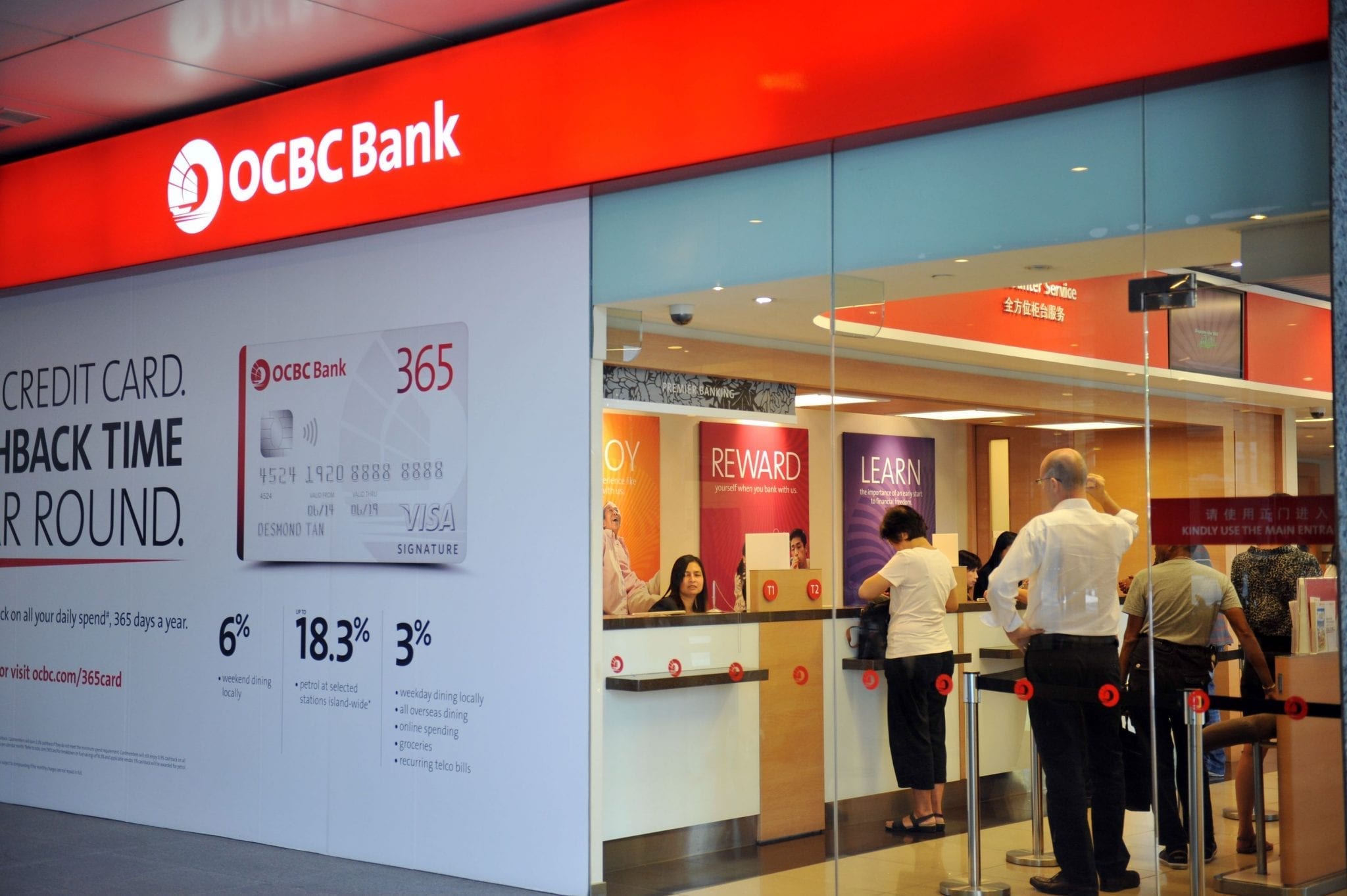
    OCBC Bank announced it would reopen five branches tomorrow, 19 June 2020, due to the expected increase in customer traffic as Singapore enters Phase Two of ‘Safe Re-opening’. They are located in Bishan, Buking Panjang, Jurong West, and at City Square Mall and Paya Lebar Square. This brings the total number of branches open up to 32. The remaining branches which were closed during Singapore’s ‘circuit breaker’ period will progressively reopen over the next two weeks.

    OCBC Bank will also resume all in-person meetings with customers on an appointment basis for all financial services. These meetings can be held within the bank’s premises or at external locations, and include home loan applications, bancassurance sales and wealth management advisory services for bonds, funds, and structured investments (which took effect on bank premises since 12 June 2020) for retail banking. In-person meetings by appointment will also resume for corporate and commercial banking services for large corporates and small-and-medium enterprises (SMEs).

    However, OCBC Bank’s retail banking customers are encouraged to continue to use its virtual wealth advisory service, which includes the comprehensive Financial Needs Analysis, for their financial planning needs. The virtual wealth advisory service via secure video conferencing with an OCBC Bank financial advisor was launched on 18 April 2020during the Circuit Breaker.

    Safe distancing measures continue to be enforced

    For the safety of employees and customers, OCBC Bank employees will wear face masks while rendering the in-person home loans, bancassurance and wealth advisory services. Customers are required to wear face masks. All employees and customers entering OCBC Bank branches have been using SafeEntry since the app was mandated as a contact tracing tool. TraceTogether has been used by all branch employees and by customers who are coming to the branches for face-to-face wealth advisory services.

    Temperature screenings and one metre queue markings at branches are strictly enforced to keep employees and customers safe. Employees also ensure that customers are practicing safe distancing of at least one metre within the branch waiting area. At branch locations where it is feasible, separate queues with seats are provided for elderly and pregnant customers. Branch employees will assist seniors to perform the SafeEntry QR code scanning if they are unable to do so independently.

    Mr Sunny Quek, OCBC Bank’s Head of Consumer Financial Services, Singapore, said: “As we transition to Phase Two of Singapore’s ‘Safe Reopening’, we continue to encourage our customers to use our digital banking platforms for their day-to-day banking needs, and to invest in wealth management products and apply for credit cards, home loans and personal loans. While all our branches will open progressively and we look forward to serving our customers’ needs, our financial advisory services will continue to remain available virtually via video conferencing with our financial advisors, so customers can receive timely investment and financial advice from the comforts of their home, without having to come to a branch.”

    The list of 32 branches and one dedicated OCBC Premier Banking Centre in operation from 19 June 2020 are:

      Branch
    1 Ang Mo Kio
    2 Ang Mo Kio Central
    3 Bedok
    4 Bedok North
    5 Bishan
    6 Bukit Batok
    7 Bukit Panjang
    8 Causeway Point
    9 Choa Chu Kang
    10 City Square Mall
    11 Clementi
    12 Compass One
    13 Harbourfront
    14 Hougang Mall
    15 ION Orchard
    16 Jurong East
    17 Jurong Point
    18 Jurong West
    19 Marine Parade
    20 NEX
    21 NorthPoint
    22 OCBC Centre
    23 Orchard Gateway
    24 Paya Lebar Square
    25 Sixth Avenue
    26 Sun Plaza
    27 Tampines
    28 Thomson
    29 Tiong Bahru Plaza
    30 Toa Payoh Centre
    31 Waterway Point
    32 White Sands
       
      Dedicated OCBC Premier Banking Centre
    1 Parkway Parade

  • Maybank Sued for Loan Pullback

    Maybank Sued for Loan Pullback

    Malayan Bank Berhad – better known as Maybank – is reportedly being sued for effectively thwarting a Manhattan-based proper project after allegedly reneging on a loan agreement.

    American real estate developer Sharif El-Gamal said that the Malaysian lender and other syndicate members ignored and breached their obligations under the building facility and related loan documents which caused «irreparable damage to the plaintiff’s relationship with its contractor, leading to a cessation of all work, according to a report citing a notice last week.

    El-Gamal, also chairman and chief executive of Soho Properties, is seeking an award of more than $245 million which he claims is the net sell-out value of the property that has been filed for disclosure by the loan syndicate.

    According to El-Gamal, Maybank reneged on agreements to provide more than $162 million in syndicated construction loans to fund the project in New York.

    At the time of the project’s announcement, El-Gamal reportedly also said in a statement a senior construction loan totaling US$174 million was received from a syndicate that also included Warba Bank of Kuwait and Intesa Sanpaolo alongside US$45 million in mezzanine financing from MASIC, a Saudi investment firm.