Tag: banks

  • Public Bank launches all-in-one digital payment platform

    Public Bank launches all-in-one digital payment platform

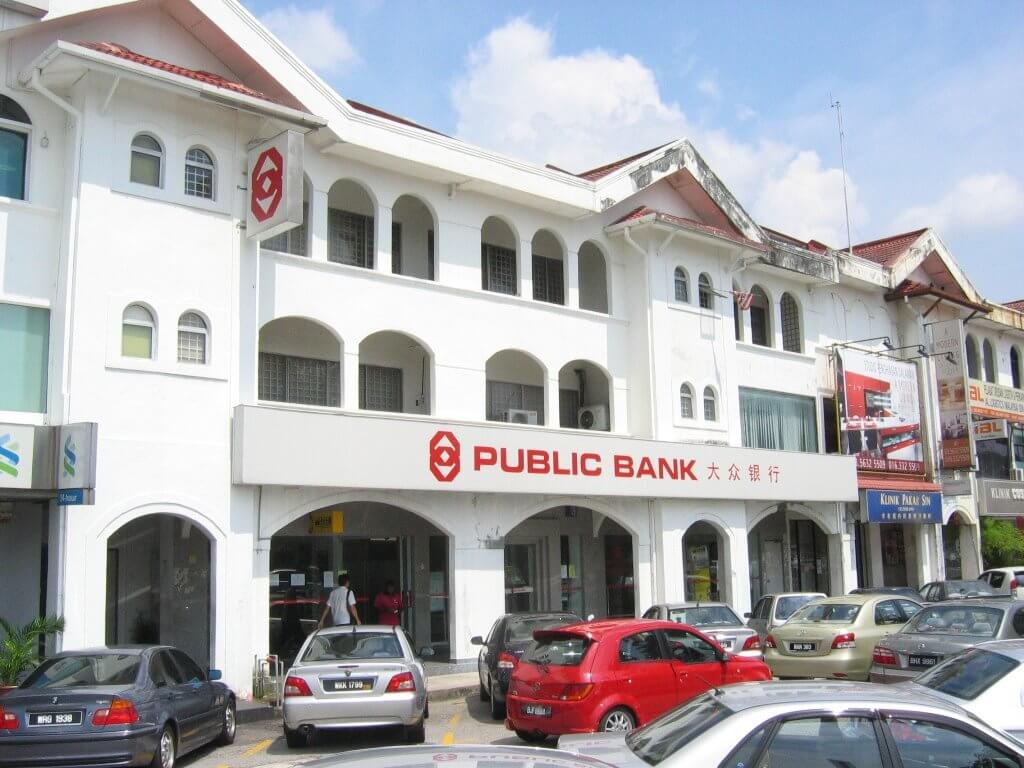
    Public Bank Bhd, in partnership with Revenue Group Bhd, today launched the all-in-one digital payment terminals. This all-in-one digital payment terminal has been piloted at selected merchant outlets of Public Bank and will be made available tomorrow.

    Public Bank managing director and CEO Tan Sri Tay Ah Lek said the first all-in-one digital payment terminal in Malaysia, developed by Revenue, will simplify the payment acceptance process as it will enable the physical retail merchants to accept both card payments and mobile wallet payments in a single digital payment terminal thus providing convenience to them.

    As at end September 2018, Public Bank has more than 60,000 electronic data capture terminals nationwide.

    Tay said it will continue with its strategy of increasing its merchant base and adding on more new acceptance services.

  • Vietnamese banks expect profits to rise

    Vietnamese banks expect profits to rise

    A newly-released central bank survey on business trends among Vietnamese banks found 72.6 percent saying their business situation had improved from the second quarter, with 15.8 percent reporting significant improvement.

    The survey, which was conducted in September, showed that over half, 56.8 percent, of the banks surveyed said that they have hired more staff in the third quarter, higher than the 46 percent in the second quarter.

    But 26.6 percent of them said they still need more staff and 61.5 percent planned to hire more people in the last quarter.

    The banks project lending to grow the most, followed by payments and deposits.

    Over 88 percent expect profits before tax to grow 18.6 percent on average from last year, higher than last year’s expectations of 13.6 percent.

    They expect capital mobilization on average will grow by 5.8 percent in the last quarter and 15.3 percent for the whole year, higher than last year’s 14.9 percent.

    The banks also forecast their outstanding loans to grow by 4.5 percent in the last quarter this year and by 15.2 percent for the whole year thanks to a stable mobilization interest rate.

    Vietnam has nine wholly-owned foreign banks, four state-owned banks and 31 joint-stock banks.

    The country’s credit growth in the first nine months of this year was 9.52 percent, lower than the 11.02 percent of the same period last year.

  • Banks need to Issue New Cards in Indonesia

    Banks need to Issue New Cards in Indonesia

    With the establishment of the national payment gateway Gerbang Pembayaran Nasional (GPN), banks need to distribute new debit cards that work using the gateway to help their customers reduce inter-bank transaction costs.

    The debit cards with GPN’s red eagle logo will be available to the public in January, said BI Governor Agus Martowardojo on Monday, adding that the new cards were accepted by all merchants’ automated teller machines (ATMs) and electronic data capture systems in Indonesia.

    However, BI transformation program head Onny Widjanarko said the GPN cards could not to be used for international transactions such as withdrawing money from foreign ATMs or processing payments in international stores.

    Onny said old debit cards could still be used, but interbank transactions will result in higher costs.

    Agus said banks charged a 2 to 3 percent fee if customers used other bank’s debit cards, but with the new cards the rate would only be about 1 percent.

    He said currently there were 140 kinds of debit cards in Indonesia and 90 percent bear foreign switching network logos.

    Meanwhile, transactions using debit cards in Indonesia reached Rp 17 trillion (US$1.26 billion) per day.

  • Banks apply free on-net money withdrawal, account transfer

    Banks apply free on-net money withdrawal, account transfer

    Despite being allowed to charge on-net fees for automatic telling machine (ATM) transactions, some commercial banks have recently applied the exemption to on-net money withdrawal and account transfer to attract new customers and develop the retail banking segment.

    Platinum debit cards, while Viet Capital Bank and SCB have exempt money withdrawal fee for international and domestic debit cards.

    The exemption of money withdrawal fee at all ATMs nationwide is also being offered by other banks such as TPBank and BaoVietbank.

    Talking about the move, Viet Capital Bank said free money withdrawal via ATM will encourage people to make non-cash payments. This policy is being implemented with great support from banks.

    A representative from another bank said State Bank of Việt Nam approved commercial banks to charge on-net fees for ATM transaction since March 2013 to offset the cost of purchasing machines and periodic maintenance, however, some banks are now willing to offset the losses to increase customers.

    According to the representative, the bank having cardholders still has to pay VNĐ3,300 to their partner for each external money withdrawal. Therefore, ATM operations of the bank have never been profitable.

    Industry insiders admitted that ATM card service companies often incur losses because an ATM costs tens of thousands of US dollars besides large annual maintenance fees. In addition, the cost of renting sites to install ATMs is becoming more and more expensive. Interest from non-term deposits of ATM cardholders therefore is not enough to offset the costs.

    To offset the costs, the money withdrawal fee charged at other banks averages VNĐ1,000-3,000 per transaction and the fee for inter-bank money transfer is VNĐ11,000.

    According to banking experts, the fee exemption policy at some banks is within the banks’ retail banking development plan, and is also a way for banks develop individual customers as well as products and services for the customers.

    This is also the premise based on which banks can promote other products and services, such as Mobile Banking and Internet Banking, they said.

    The country currently has more than 17,000 ATMs nationwide.

  • Indonesian banks urged to update their IT systems

    Indonesian banks urged to update their IT systems

    Indonesian banks have been urged to update their system of information technology so that they could protect themselves from possible cyber attacks that have become more and more massive.

    Bank Indonesia Governor Agus Martowardojo said here on Monday hackers or virus attackers continued to innovate and find loopholes in the IT system and so banking industry and other financial sectors must update their security standard.

    His statement came in the midst of increasing alertness following global virus attack by so-called “”Petya” after global system of IT routed by “Ransomware Wannacry”.

    “All who use technology applications must use the latest version. The latest version usually has been given features to prevent possible cyber attacks,” Martowardojo said.

    “We must not be offguard. We must be prepared because there will certsinly be other innovations that could disrupt the system,” he said.

    The general chairman of the State-owned Banks Association, Maryono, said that until Monday there had been no report coming from four state-owned banks – three of them controlling banking markets -being attacked by Peyya virus.

    “Usually if one bank is hit and so will the others but so far we have received no teport about it,” he said.

    The chief of PT. Bank Central Asia Tbk. which is the countrys largest private bank said Petya did not disrupt the banking system. Howevet cyber attack has been rife to give a warning for banks to improve their IT security system.

    “We will keep safeguarding it. Thank God there has been no problem so far,” BCA president director Jahja Setiaatmadja said.

    The ministry of informatics and communication has earlier called on the people and heads of institutions to take anticipatory measures against global Ransonware Petya cyber attack by preparing backup and updating their IT security system.

    Indonesias financial industry including capital market is worth more than Rp16,000 trillion and so security system in the industry is a very important pillar to maintain trust and sustainability of the industry which also serves as a source of development funding.

    Petya was first known after infecting the server in Russias biggest oil company and disrupted the operation of a bank in Ukraine and paralyzed computers in multinational shipping and advertising companies.

    Petya-infected computer will show a message telling that the system has been blocked and its owner must pay a tansom of US$300 in the form of Bitcoin.

  • Japanese banks plan 90% cut on transfer fees to South Korea

    Japanese banks plan 90% cut on transfer fees to South Korea

    Japanese banks will lower the fees on money transfers to South Korea by 90% as early as 2018 in an effort to remain competitive and prevent customers from switching to foreign rivals.

    The plan was revealed Wednesday by the Japanese Bankers Association at a panel hosted by Japan’s Financial Services Agency. Currently, each transfer is processed individually between the sending and receiving banks, often with the involvement of intermediary banks. Fees range from about 4,000 yen to 5,000 yen ($35.80 to $44.80) per transaction for companies, and are slightly higher for retail customers.

    The dramatically lower fees will be achieved by consolidating all transfers from Japanese banks to a country into one bundle. A single lead bank then will send the entire amount to the destination country once a day, sharply reducing fees paid to intermediary banks.

    Japan’s three megabanks — Mitsubishi UFJ Financial Group, Sumitomo Mitsui Financial Group and Mizuho Financial Group — will be the first to adopt the new framework. Major regional banks are expected to follow suit.

    New financial technology has let some American and European banks reduce international money transfer fees to just several dollars. The planned cut will squeeze the income of these Japanese institutions, but the move is seen as necessary to keep up with foreign rivals.

    Japanese banks will consider reducing fees on transfers to Thailand, Malaysia and other Southeast Asian nations as well.

  • Vietnamese banks look to tap into big data

    Vietnamese banks look to tap into big data

    To successfully deploy big data in the banking sector, there must be a comprehensive strategy using professional teams who have deep understanding of both finance and technology, said Nguyen Kim Anh, Deputy Governor of State Bank of Vietnam.

    At a conference on Thursday in Ha Noi, Anh said that digital data was becoming a new resource and big data was playing an important role in the banking and finance sectors.

    The conference, titled “Big data for banking and financial industry,” was organised by the Banking Academy of Vietnam.

    At the workshop, participants focused on big data technology from a variety of perspectives. They discussed the latest technology and ways for banks and financial institutions to optimise the application of big data into information systems.

    Through the discussion, experts shared hopes that they could identify the opportunities and challenges of big data to improve the productivity, quality and efficiency of financial and banking operations.

    The fourth industrial revolution is taking place across the globe and having a strong impact on all aspects of socio-economic life, according to the experts. It promises to create more opportunities and an impetus for the country development of each nation or organisation.

    The fourth industrial revolution with Internet of Things, automation and artificial intelligence has brought digital data to the centre of the business world.

    Digital data had become a very important resource from which businesses can generate revenue and provide new application ecosystems, services and digital products, said Anh.

    “Therefore, digital data will grow and become an important industry in the fourth industrial revolution,” he added.

    At the workshop, the deputy governor also said that the specificity of banking is creating a huge amount of data from structured data such as transaction histories and customer records to unstructured data such as customer activities on Internet and mobile banking application.

    “Applying big data to exploit the data will bring significant competitive advantages and efficiency for the banking and finance sectors,” he added.

    In addition, Pham Anh Tuan, director of Vietcombank’s tech modernisation department, said that data in the banking system and those collected from the outside include many types. These include structured data, semi-structured data, and unstructured data.

    “The current banking data is unstructured, which meets all big data standards in volume, movement and diversity,” Tuan emphasised.

    The representative of Vietcombank also said that when banks as well as financial institutions identify data with great value, they must consider data assets of the bank. “In other words, data must be treated like any bank assets, which have to be taken care of and ensured on asset security.”

  • Singapore banks seek to simplify online transactions

    Singapore banks seek to simplify online transactions

    Four banks in Singapore are participating in a pilot that aims to explore ways to simplify online banking transactions with the use of the government’s MyInfo online authentication service.

    The pilot is backed by the Smart Nation and Digital Government Office (SNDGO) and Government Technology Agency (GovTech), in collaboration with the Monetary Authority of Singapore (MAS).

    Prospective customers of United Overseas Bank (UOB), Development Bank of Singapore (DBS), Oversea-Chinese Banking Corporation (OCBC) and Standard Chartered Bank (StanChart) with a registered profile on myinfo.gov.sg will be able to apply for a new bank account without needing to submit supporting documentation.

    This aims to provide greater convenience and a faster transaction time for consumers while benefiting banks in the form of higher productivity and lower compliance costs.

    Banks in Singapore currently require users to submit copies of their identity, income and CPF documents for applications. With MyInfo, customers can pre-fill these Government-verified personal particulars into the necessary forms, and avoid the need to submit supporting documents.

    MyInfo has been rolled out for SingPass users since May 2016 for popular government digital services such as balloting of the Housing Development Board’s Build-To-Order (BTO) flats. MyInfo is scheduled to be available on most government digital services with SingPass two-factor authentication (2FA) by 2018.

    Jacqueline Poh, Chief Executive, GovTech, said, “We want to explore how citizen-centric government digital services can be extended to better help industry and transform service-delivery to citizens. We have seen good take-up of MyInfo, and hope that this public-private collaboration will provide citizens with even more benefits.”

    Sopnendu Mohanty, Chief FinTech Officer, MAS, said: “MAS is excited by the opportunities that national infrastructure platforms can bring to the financial industry, such as hassle-free online account opening and instant account activation in the near future. MAS would like to urge the industry to reimagine their customer journey for instant gratification as they leverage platforms like MyInfo.”

    Michael Gorriz, Group CIO, Standard Chartered Bank, said: “Central database and central data-keeping is absolutely the way forward. If you look at the 3 parties – the Singapore government, the citizens and the banks or other entities – it is really a win-win-win situation. So first of all, for the consumer, he only has to enter the data once and then he decides who has access to the data. We as a Bank, we win, because we get qualified data from the consumer, which he puts all due diligence and care in to keep it up to date.”

    After this pilot, MyInfo may be extended later this year to other popular transactions such as applications for credit cards and home loans. MyInfo could also be extended to other sectors with strong citizen touch points such as insurance.

  • Vietnam banks aim for high profit in 2017

    Vietnam banks aim for high profit in 2017

    At the AGM on March 25, LienVietPostBank’s shareholders agreed on this year’s development plan, aiming to reach US$66.2 million in pre-tax profit, 10 per cent higher than that of 2016 (US$59.5 million).

    Furthermore, the expected dividend rate was raised to 12%. LienVietPostBank also planned to raise capital from US$285.1 million to US$309.0 million by issuing 54 million shares.

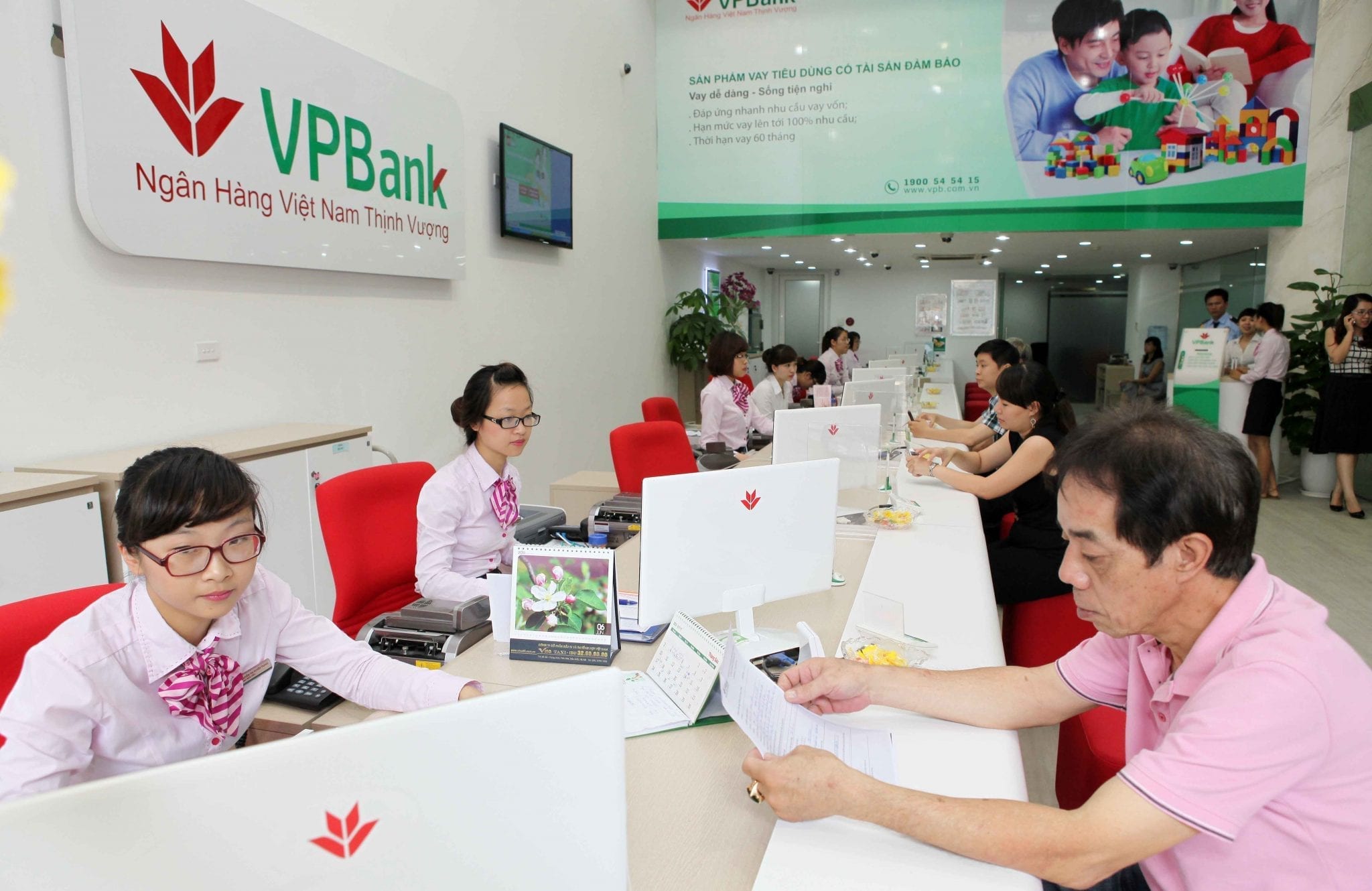
    On April 10, VPBank organised its AGM. According to the AGM’s documents, VPBank’s pre-tax profit goal for this year is US$300.2 million, 38% higher than that of 2016.

    Its total assets are expected to reach US$12.4 million and total outstanding loans and corporate bonds US$8.9 million.

    With this expected total outstanding loan volume, to ensure the capital adequacy ratio (CAR) of 9% stipulated the State Bank of Vietnam (SBV), VPBank’s total capital must reach at least US$794.5 million.

    With its current owner’s equity of VND15.4 trillion (US$679.8 million), VPBank must increase capital by US$132.4-176.6 million.

    Techcombank’s documents for its AGM on April 15 showed that the bank is aming to increase consolidated pre-tax profit by 26% over 2016’s US$221.6 million.

    This year, Techcombank planned to increase its chartered capital by US$220.7 million (from US$391.9 million to US$612.6 million), and raise its total assets to US$12.4 billion.

    Other banks also expect great increases in profit. For instance, at its AGM on April 21, HDBank plans to get shareholders’ approval on the US$72.5 million pre-tax profit target, 28% higher than that of 2016.

    Meanwhile, OCB is planning to aim for US$34.4 million at its AGM, 60% higher than the previous year. Also, Vietcombank’s board of directors has set a goal to reach US$406.1 million in pre-tax profit, a 12% increase on-year.

    Well-founded optimism

    These ambitious figures in expected profit correspond with the results of the survey on business trends in the second quarter of 2017 for credit institutions and foreign bank branches in Vietnam, which was conducted by the Monetary Forecasting and Statistics Department of the SBV.

    According to the results, 89.5% of the credit institutions reported improvements in the first quarter of 2017. 90.4% of the institutions expected great increases in pre-tax profit compared to 2016.

    The expected average increase for the whole system is much higher than that showed in the survey in December 2016 (+ 13.4%).

    The banks’ optimism is due to domestic economic circumstances and good forecasts for the industry.

    According to the report on the economic situation in the first quarter of 2017 and forecasts on the fiscal year conducted by National Financial Supervisory Commission (NFSC), aggregate demand will improve in the upcoming time since directions from the government have initiated major increase in public investments in several key projects and capital disbursement in the application of high-tech agriculture projects.

    This positive attitude is also due to the fact that, despite the recent wake of US protectionism, based on the economic optimistic potential of the US and the globe at large, the International Monetary Fund (IMF) has forecasted the trade growth of Emerging Markets and Developing Economies at 4% in 2017, higher than the estimated 1.9% for 2016.

    A senior leader of the SBV shared with VIR that the bank would adjust the interest rates flexibly, in correspondence to macroeconomic indicators, inflation, and the currency market.

    Also, SBV would continue directing credit institutions to balance their capital and interest rates, economise operating costs, and increase business efficiency to lower interest rates.

    SBV continues its policy on operating currency rates flexibly, closely following the interbank foreign exchange market, the currency rate on the global market, economic and currency balances, and the monetary policy.

    It would also introduce measures to improve credit quality, focus lending on manufacturing and prioritised areas.

    “We would closely inspect the credit granting situation in some industries and fields that have high chances of risk, such as medium-long term credit, credit for large customers, credit for real estate, as well as BOT and BT transportation projects,”, the senior leader shared.
  • Most banks in Vietnam expect profits up, bad debts stable this year

    Most banks in Vietnam expect profits up, bad debts stable this year

    Bad debt in Q2 and in the whole of this year would stay unchanged or dip slightly from Q1. About 90 percent of financial institutions operating in Vietnam are expected to reap higher pre-tax profit in 2017, while they could control or reduce bad debts this year, a State Bank of Vietnam (SBV) survey has found.

    Most of the respondents in the survey, conducted between February 25 and March 9, expected their bad debt to loan ratio in the second quarter and for the whole of 2017 would stay unchanged or below that in the first three months.

    Based on SBV data, bad debts in Vietnamese banks, mostly incurred due to a slowdown in the country’s real estate market in the early 2010s, have been cut to 2.46 percent of loans at the end of November, 2016, from 4.83 percent in December 2014, one year after it set up an institution to deal with toxic loans, the Vietnam Asset Management Corp.

    The survey on business trends for the April-June period, conducted by SBV’s Monetary Forecasting and Statistics Department, has targeted all Vietnamese banks and foreign bank branches in the country and has a response rate of nearly 90 percent.

    Banks expected the annual credit growth to slow to 17.23 percent this year, from the expansion of 18.25 percent in 2016, while deposits in 2017 could grow 16.23 percent from last year, below the 16.76 percent expectation in the December 2016 survey, the SBV said.

    Half of the lenders would keep their fees unchanged for the whole of 2017, while 20 percent of them said they planned slight decrease and another 30 percent said they expected a small rise.

    Banks expressed confidence in the government’s effort to improve business climate and three quarters of the surveyed institutions look forward to a better business situation in the second quarter, while eight in 10 of those believe they can achieve better results in the whole year.

  • Vietnam banks to slam doors on home-based business owners

    Vietnam banks to slam doors on home-based business owners

    Home-based businesses will soon find it, not just increasingly difficult, but impossible to find a bank loan. The central bank has tightened lending criteria for household and other unregistered businesses, meaning they will not be eligible for bank loans.

    With the change coming into effect from March 15, a housewife who wants to earn some extra money by selling handmade soap will have to apply for a consumer loan rather than a commercial loan from the bank.

    A consumer loan is more expensive than a business loan, which will later reflect in the costs of operating her business, limiting revenue growth and profitability.

    Vietnam currently has 5 million unregistered home-based businesses, said Vu Tien Loc, chairman of the Vietnam Chamber of Commerce and Industry (VCCI). However, the country plans to relax the business environment so that by 2020 it will have one million private businesses, most of which will be home-based businesses that have converted to legal entities.

    Loc said because some regulatory requirements, mostly involving administrative procedures and tax policies, are expensive and time-consuming, the vast majority of local businesses choose to remain as home-based micro businesses.

    Also according to the VCCI, about 70 percent of small business owners, including home-based ones, that apply for a bank loan get rejected, even though they are critical to job creation in Vietnam, employing 52 percent of the private sector workforce.

  • Hanoi seeks ideas to develop Red River banks

    Hanoi seeks ideas to develop Red River banks

    Hà Nội authorities have asked three construction giants to devise planning schemes to develop the areas along the iconic Hồng (Red) River that flows past the capital city.

    According to the decision of the municipal authority, three investors — Sun Group, Vingroup and Geleximco — will each devise plans and submit them to the municipal authority for selection.

    They can invite designing consultancy units to collaborate in the project. The final design ideas will be selected by March 30.

    Nguyễn Đức Chung, chairman of the municipal People’s Committee, at a meeting with investors interested in the project, asked them to develop a scheme which ensures the city’s flood-resistant capability, effectively makes use of land funds and creates a modern urban area along the river.

    Additionally, the scheme should give priority to on-site resettlement for residents and to the development of waterway transportation and tourism.

    The city has suggested two options for the scheme.

    Option one is to build a new system comprising roads and dykes to replace the current dyke system. This will serve to protect the city from flood alarm level 3+, or emergency flood condition, which sees general and widespread uncontrollable flooding and severe damage to infrastructure.

    Option two is to build a new system of roads and dykes which can protect the city from flood alarm level 2 or dangerous flood condition. In addition, water reservoirs and canals will also be built to support the current dyke system, which is located further inland, to protect the city from flood alarm level 3+.

    The planning scheme will be divided into two phases, with the first one covering areas on the banks of the river from Thăng Long Bridge to Thanh Trì Bridge and the second one covering the remaining areas.

    The Red River, originating in China, flows past Hà Nội and several provinces in the north of Việt Nam before emptying into the Gulf of Tonkin. Besides being one of the main river systems that play a crucial role in irrigation and waterway traffic, the river is also seen as a symbol of the capital city.

  • Banks post higher performance for 2016

    Banks post higher performance for 2016

    Several commercial banks have in the early days of 2017 posted positive business performance for 2016, with profits much higher than the previous year.

    The Bank for Foreign Trade of Vietnam (Vietcombank) was the first bank to report pre-tax profit in 2016, which hit a record high of 8.2 trillion VND (362 million USD). Its profit surged by 23.4 percent against 2015 and also exceeded the bank’s target for the year by 2.7 percent.

    In 2016, Vietcombank mobilised nearly 600 trillion VND from its depositors, up 19.4 percent from the previous year, while lending an estimated 470 trillion VND, up 18.9 percent.

    Vietcombank Chairman Nghiem Xuan Thanh said in 2016 the bank brought its rate of non-performing loans (NPLs) to 1.44 percent, down four basis points compared with the end of 2015.

    The bank’s capital adequacy ratio, which measures its capital to its risk, was 10.29 percent, higher than the minimum of 9 percent set by the State Bank of Vietnam.

    On solid ground in 2016, Vietcombank has targeted a pre-profit figure of 9.2 trillion VND in 2017, 12 percent higher than last year.

    The bank also expects its total assets to rise by 11 percent in 2017, while it has forecast that its credit growth and capital mobilisation will be 18 percent and 15 percent, respectively. The bank aims to keep its NPLs under 1.5 percent.

    The Vietnam Joint Stock Commercial Bank for Industry and Trade (Vietinbank) also reported a high profit of 8.25 trillion VND in 2016, 4 percent higher than the plan set by the bank’s general meeting of shareholders.

    Nguyen Van Thang, Vietinbank Chairman, said that as of December 31, 2016, the bank’s total merged assets were estimated at 947 trillion VND, up 22 percent from the previous year; while total mobilised capital reached 862 trillion VND, up 21 percent.

    Also in 2016, the bank’s total outstanding loans posted 720 trillion VND, a year-on-year rise of 18 percent, fulfilling the set target. Credit structure witnessed positive transfer with credit for prioritised industries growing 22.4 percent, higher than the common credit growth of the whole system.

    By the end of 2016, the bank continued to effectively manage the quality of assets with bad debt ratio of less than 1 percent.

    Le Duc Tho, General Director of Vietinbank, said in 2017, the bank set a target of a 15-17 percent rise in total assets and an 18 percent increase in outstanding credit.

    In addition, it strives to control the quality of debts, manage the bad debt ratio and ensure profit growth to achieve or exceed the year’s plan set by the general meeting of shareholders.

    The Bank for Investment and Development of Vietnam (BIDV) also estimated a pre-tax profit of 7.5 trillion VND in 2016, a rise of 7 percent against the previous year despite its deduction for the risk provision fund being quite high. In the first nine months of 2016, BIDV spared nearly 7 trillion VND for the fund, jumping 80 percent year-on-year.

    Positive results of BIDV in 2016 came from optimistic credit growth. Its total loans reached over 935 trillion VND, in which 758 trillion VND was offered to economic institutions and individuals, up 17.85 percent compared with 2015, while its deposits totalled 939 trillion VND, up 20.45 percent. The bank could control its bad debt ratio to 1.47 percent of total outstanding loans over the past year.

    Meanwhile, many other banks also surpassed their 2016 pre-tax profit targets, such as ACB, VPBank, Techcombank and VIB.

  • As Vietnamese banks digitise, customer service key

    As Vietnamese banks digitise, customer service key

    Customers must be at the centre of banks’ attention as they make a move towards digital transformation in an effort to adapt to a changing landscape of financial innovation and disruptive technologies.

    This was said by head of Retail Banking at VP Bank, Sandeep Deobhakta, at a conference held in Hà Nội on Thursday, titled, ‘The Future of Finance in Việt Nam 2017.’

    Deobhakta, who has been holding this position since May 2015, said customers in Việt Nam are very open to new technologies and the nascent retail banking industry in Việt Nam can also adopt these technologies faster than other markets if they put customers first.

    In the future, traditional banks might lose business to companies that employ disruptive innovations if they failed to deliver better, simpler and faster solutions to customers, Deobhakta cautioned.

    VP Bank has been working with Timo, Việt Nam’s first mobile-only bank, giving customers better solutions to manage their money, bills and the ability to top up their mobile cards through the Timo app. At Timo Hangouts, one can forget about a typical bank branch and instead enjoy a coffee as one opens an account and uses bank services.

    Timo has about 4,000 customers in the HCM City and opened a Timo Hangout in Hà Nội last October, looking to attract more than 100,000 users by next year.

    Việt Nam has a huge untapped market for financial innovation, with only 20 per cent of the population having bank accounts and 3 per cent owning credit cards, Foo Boon Ping, managing editor of The Asian Banker, said at the conference.

    “The stable GDP growth of around 6 to 7 per cent, low wages, a large population with a high savings and strong innovative approach are crucial factors that will accelerate the financial and industrial development in the Vietnamese market,” he said.

    “Digital transformation is driven by real business needs to transform to become more cost efficient and to serve your customers as their behavior and preferences change,” he added.

    There are only about 36 fin-tech companies in Việt Nam, with most focusing on providing consumers and merchants with online and digital payment solutions.

  • Banks expand networks to attract more customers

    Banks expand networks to attract more customers

    Along with promotion programmes, banks have been expanding their networks in an aim to reach their annual targets.

    In recent months, more bank transaction offices and branches have opened to welcome both individuals and enterprises as customers.

    For instance, the An Bình Commercial Joint-Stock Bank has opened 11 branches and transaction offices in Đà Nẵng and the provinces of Lạng Sơn, Nghệ An, Bình Dương and Gia Lai.

    Bắc Á Bank, by the end of last quarter, had expanded to include 100 transaction offices in 20 province and cities. TP Bank also plans to open more offices in provinces and cities nationwide.

    A leader from An Bình was quoted as saying in Người Lao Động (The Labourer) newspaper that expansion was one of the most important steps in becoming a leading bank in the retail market.

    An expert told the newspaper that estimated growth of the national credit market this year would be 17-18 per cent against last year, if growth increases by 3 per cent per month in the last few months.

    He said this was a good time for banks to expand and introduce promotions to reach their year-end targets.

    As the banking system is too small to fully meet demand, expansion would improve service quality at banks, he added.

    The representative from An Bình Bank said there was strong demand for bank expansion, as this is a traditional channel to approach customers in all regions of the country.

    Morever, demand for lending at the end of a year is very high, prompting banks to expand to serve more customers.

    However, with the opening of more branches and transaction offices, risks can increase as customers worry that service quality and technology will be inadequate. Human resources and management skills may not be ensured as well.

    Experts, however, said there was no need for concern as regulations on controlling expansion in the banking sector, in which banks must show profits and have no more than a 3 per cent bad-debt ratio, would lower the risks.

    Bank expansion will help improve quality and competitiveness as well as increase each bank’s market share, according to experts.