Retail News CRM

Tag: banks

  • Local banks post 4.5pc pre-tax profit rise

    Local banks post 4.5pc pre-tax profit rise

    Local retail banks achieved a moderate 4.5 percent growth in pre-tax profit between January and September this year, the Hong Kong Monetary Authority said yesterday.

    Annualized net interest margin — which measures the difference between the interest income generated by retail banks and the amount of interest paid out to their lenders – stood at 1.32 percent during the period.

    The figure stayed broadly the same as last year, Hong Kong’s de facto central bank said.

    It noted though that the January to September figure marked a slight improvement from the 1.3 percent recorded between January and June this year.

    HKMA attributed profit growth of local banks mainly to an expansion of their income from foreign exchange and derivatives operations and in dividends received from subsidiaries.

    A decline in their operating expenses also boosted the banking industry, but a fall in fee and commission income may offset profit growth.

    As retail banks’ total deposits increased at a faster pace than total loans, the loan-to-deposit ratio of retail banks declined to 55.2 percent at the end of the third quarter from 57 percent a quarter earlier.

    Retail banks’ total loans increased by 1 percent during the period, with loans for use in Hong Kong rising by 1.2 percent and loans for use outside Hong Kong expanding by 0.2 percent.

    The authority said lending by local banks in the mainland expanded by 3.2 percent to a combined HK$4.55 trillion at the end of the third quarter from the previous quarter.

    The HKMA said the loan-to-deposit ratio of local banks declined to 55.2 percent from 57 percent and the setback is attributed to a faster increase of deposits compared to loans that were disbursed to customers.

    Meanwhile, the Hong Kong interbank offered rate, or the rate of interest charged on short-term loans, continued to rise for the 11th day yesterday. One-month HIBOR yesterday edged up to 0.68 percent from 0.675 percent a day earlier, while three-month HIBOR increased from 1 percent to 1.00964 percent, according to data from the Hong Kong Association of Banks.

  • Singapore banks lose up to 40 per cent of new product sales to competitors

    Singapore banks lose up to 40 per cent of new product sales to competitors

    The latest survey by management consulting firm Bain & Company found that Singapore retail banks lose up to 40 per cent of new product sales to competitors that are better at digital marketing, sales and service.

    In its seventh annual report on consumer banking behaviours, the consultancy said such “hidden defection” of consumers – purchasing a new banking product from a competing bank or financial technology firm – could get worse.

    “There are a lot of customers who frankly consider themselves prisoners in their own banks. They don’t switch their primary bank because it’s too much hassle to do so. But they’re going to go elsewhere for any new needs,” said Ms Chew Seow-Chien, partner and head of Bain’s Financial Services practice in Southeast Asia.

    The survey polled more than 137,000 consumers in 21 countries, including Singapore.

    The Singaporean customers polled indicated that they would buy new banking products from a competitor rather than their primary bank up to 40 percent of the time.

    About 30 per cent of them said they would switch their primary bank if it were easy to do so, the research showed.

    Bain noted that fintechs and technology companies are siphoning off customers seeking high-value products and services, such as credit cards, loans, insurance and investments.

    In its research, the consultancy found that deposits made up about 50 per cent of purchases from primary banks in Singapore over the last 12 months, versus just 22 per cent at competing banks.

    Meanwhile, insurance were the most purchased product at competing banks – 31 per cent of purchases – followed closely by credit cards.

    As younger, more plugged-in generations learn how to bank, their purchases of banking products through digital channels, especially online, will rise – making it important for banks to improve their digital offerings, simplify products lines and streamline user experiences.

    “By now, the digital disruption in banking should come as no surprise, and most banks clearly understand the importance of digital migration,” said Ms Chew.

    “The bigger challenge lies in how to organise the transition and instill the necessary changes, both at the frontline and in the back office, to improve how consumers do their banking.”

  • One of SEA’s leading banks teams up with Powerman for two duathlon events

    One of SEA’s leading banks teams up with Powerman for two duathlon events

    Maybank, South East Asia’s fourth largest bank, and Powerman Philippines, the Philippine affiliate of the International Powerman Association (IPA), are hosting two duathlon race events in the Philippines this year.

    The first race, which was held last November 20, 2016 at the SM Mall of Asia by the Bay, Anytime Fitness Powerman Philippines Asian Invitational was co-presented by Maybank. Professional duathletes Jason Loh and Su Teoh from Malaysia and Airi Sawada from Japan flew in to be part of the race’s Elite Category.

    Maybank is also the title presentor of the Powerman Philippines World Series which will be held on December 3 and 4 at the Clark Freeport Zone in Pampanga. Ten professional duathletes including Powerman World from all over the globe including the two-time Powerman World Champion and Powerman Philippines Ambassador Gael Le Bellec three-time and defending Powerman World Champion Emma, and defending Powerman World Champion Seppe Odeyn will fly to the Philippines for this race.

    Aside from having a Powerman Short, this event will also feature the Powerman Classic (10 km run– 60 km bike –10 km run), the Powerkids (for kids ages 6-12) and the Powerteens (for teens aged 13-19).

    The Maybank Powerman Philippines World Series is also a qualifying event for the Powerman Duathlon World Championships to be held in Zofingen, Switzerland in 2017. The event attracts a host of professional and highly competitive age-group athletes, seasoned multi-sport athletes who want to take on a different challenge, and athletes who have just started in the multi-sport category.

    “Maybank welcomes this partnership with Powerman Philippines,” according to Richard C. Lim, Executive Vice President and Head of the Retail Business Group of Maybank Philippines, Inc. “Maybank prides itself in being at the heart of the communities we are present in. Being associated with this important sporting event, with almost 3,000 participants in both races, and leveraging on this type of sports sponsorship platform can definitely help elevate our brand in the Philippines. We are excited by the fact that the biggest event, the Powerman Philippines World Series, will be held in Clark where Maybank has one of its largest branches in North Luzon, an area where we have a strong branch network, the largest of any foreign bank in the country.”

    Mr. Lim added, “Endurance sports are gaining popularity in the country and Maybank wants to capitalize on this and become associated with the positive values that sporting events promote.”

    “The inclusion of Maybank definitely adds prestige to both Powerman events this year,” says Owen Gan, President of Powerman Philippines. “Being one of the largest banks in South East Asia, Maybank will definitely help Powerman in gaining popularity in the Philippines, and eventually in the region, especially now that there are more Powerman events lined up for 2017.”

    Part of the proceeds of Powerman will go towards buying bicycles and other gear for the Batang Tri Grassroots program that supports young individuals who do not have the financial means to enter the world of multi-sports.

  • China tapping 10 Philippine’s banks

    China tapping 10 Philippine’s banks

    State-owned Bank of China is in talks with ten Philippines banks including  Banco de Oro Unibank Inc. and Land Bank of the Philippines to retail the $3-billion fund committed by the Chinese lender to the Philippines.

    A team of high ranking officials from Bank of China’s main office in Beijing attended the first of a series of roadshows in the Philippines to link with local financing institutions including banks and microfinance lenders.

    Bank of China president Jun Deng said more financing institutions and legitimate lenders would be announced soon.

    “This is just the initial phase. We will be having discussions with the banks we invited. Maybe later on, we’ll disclose these banks and the development of our discussions,” he said during the Manila leg of the roadshow held Thursday at Fairmont Hotel in Makati City.

    The roadshow is a pre-event exercise in preparation for the Bank of China’s global SME cross-border trade and investment conference that will take place in Davao City in 2017.

    Bank of China will provide details on how it will disperse financing to Philippine SMEs during the Davao conference.

    The bank said it would also bring in 100 Chinese SMEs interested in the Philippine agro-industrial industry.

    “Agribusiness is one of the key areas important to China. Other interests include technology, renewable energy which is heavy on solar-based power production and the furniture industry,” said International Chamber of Commerce of the Philippines president Jesus Varela.

    Initial talks between the Chinese bankers and Filipino businessmen pointed to Mindanao as the priority area.

    The conference will also serve as a matchmaking event for SMES to have access to financing from credited financing retailers of Bank of China.

    Bank of China said while the $3-billion financing commitment would not be for the sole benefit of SMEs, the bigger portion of the fund will help SMEs grow and build a global enterprise.

    Deng said a portion of the financing would also support important infrastructure and energy projects and programs that would promote industrialization.

    Bank of China held 26 cross-border trade and investment conferences across the world that attracted over 30,000 people from political and business circles and  more than 15,000 enterprises from 60 countries over the past two years.

  • Singapore banks missing the boat in booming SE Asia

    Singapore banks missing the boat in booming SE Asia

    The three local banks are not having a good year, mostly due to forces beyond their control, but they seem to be also scoring own goals – missing opportunities right on their doorstep, our South-east Asian neighbours.

    The past two decades have been a waste in terms of what they should have done, formulating and working out a thoughtful strategy of expansion in ASEAN countries but efforts have been half-hearted and sometimes marred by ineptitude.

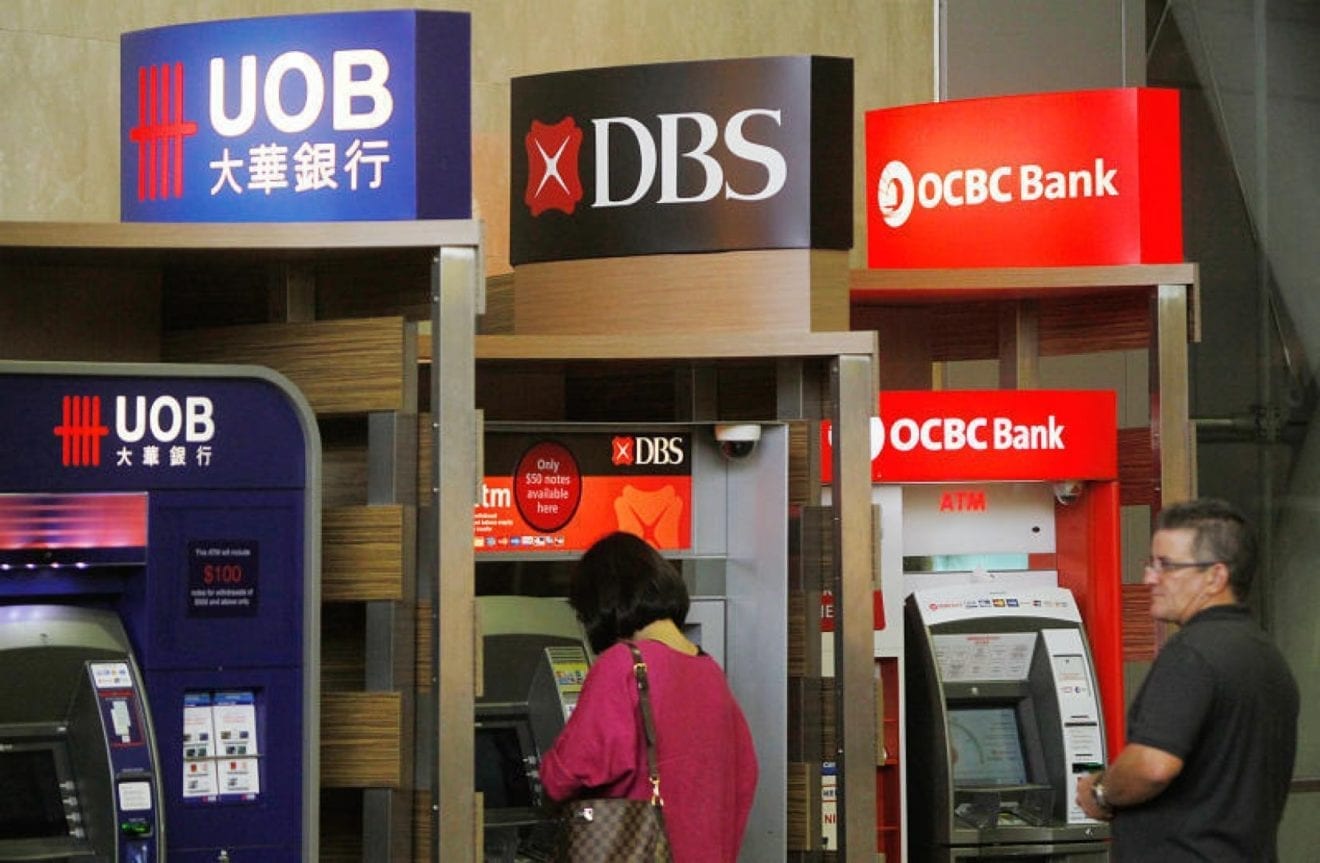
    Singapore contributes the bulk or the lion’s share of profits to DBS Group Holdings, OCBC Bank and United Overseas Bank (UOB) but domestic sluggish growth, a slump in the property market and a prolonged period of weak interest rates are translating to poorer earnings.

    What could have helped is if the banks have a larger presence in the region which is booming; some countries this year and the next are projected to grow more than 6 per cent against 1-2 per cent for Singapore.

    Year to date, the stockmarkets of Indonesia and Vietnam are posting double-digit gains while it’s in the high single digit for Thailand and the Philippines. Singapore equities by contrast is a minus 2 per cent.

    For various reasons, the banks have pretty much neglected the Philippines, Thailand and Vietnam, concentrating on expanding in Greater China.

    All three have Indonesian subsidiaries but progress in getting meaningful traction in ASEAN’s largest economy has been slow. And payback for their Greater China strategy is taking a very long time.

    In Q2, DBS said China recorded a net loss of S$15 million compared with a net profit of S$79 million a year ago and S$23 million in the previous quarter.

    Net profit for Hong Kong halved to S$161 million from S$320 million a year ago.

    OCBC’s Greater China pre-tax profit was unchanged at S$253 million in Q2; UOB posted a pre-tax profit of S$66 million for Greater China, down almost 30 per cent.

    From Malaysia, where OCBC and UOB are among the largest foreign banks, contributions there are somewhat underwhelming.

    In Q2, OCBC’s Malaysia pre-tax profit was up 11 per cent at S$214 million making up 19 per cent of total group earnings.

    UOB’s Q2 pre-tax profit from Malaysia fell almost 9 per cent to S$125 million, and contributed 13 per cent to group total.

    The banks had a golden opportunity to acquire banks in the debt-strapped ASEAN countries following the 1998 Asian financial crisis but they let that slip after some missteps.

    DBS tried with forays in Thailand and the Philippines but quit after huge losses.

    Today, it has some activities in Indonesia which are so small that the bank lumps it under South and South-east Asia. Still, Q2 net profit of South and South-east Asia of S$46 million from breakeven a year ago shows the potential.

    OCBC’s Indonesian business posted Q2 pre-tax profit of S$76 million, or 7 per cent of group total, and up from S$47 million a year ago.

    UOB, which has the most extensive operations in South-east Asia including 157 branches in Thailand and 190 in Indonesia, tried to buy a bank in the Philippines in 1999.

    But stymied by minorities, the bank pulled back in 2005, efforts which left its then chairman and chief executive “allergic” to the Philippines.

    UOB’s Q2 pre-tax profit from Thailand and Indonesia came to a combined S$78 million or 8 per cent of group earnings.

    For sure, it will never be smooth sailing to venture into these countries given that their sometimes chaotic domestic politics, frequent changes in policy, and weak adherence to rules, factors which deter all but the most stout-hearted foreign investors.

    Venturing out of Singapore will always be tough but our deep-pocket banks have the resources.

    The potential of South-east Asia is well documented: the 10 South-east Asian countries with a US$2.4 trillion (S$3.3 trillion) economy and population of 626 million forms one of the largest markets in the world which remains under-banked. It also has a burgeoning educated middle class that is receptive to financial services and products.

    What our banks need is staying power and agility to navigate these unwieldy markets, before they entirely miss the boat.

  • Assets of sharia banks increase to Rp305.5 trillion

    Assets of sharia banks increase to Rp305.5 trillion

    The assets of sharia banks rose 18.49 percent year-on-year to Rp305.5 trillion by July, 2016 on growing third party funds.

    Third party funds held by sharia banks rose 12.54 percent to Rp243 trillion in the same period, Chairman of the Board of Commissioners of the Financial Service Authority (OJK) Muliaman Hadad said in a news release received here on Sunday.

    “The rise in third party fund resulted in an increase of 7.47 percent in sharia financing to Rp220.1 trillion from Rp204.8 trillion,” Muliaman Hadad said at a seminar on sharia financing in Washington, the United States, organized by the World Bank and the Islamic Financial Services Board.

    The rise in sharia financing contributed to increase sharia share of the banking market to 4.81 percent in July, 2016 from 4.6 percent in July 2015. The market share rose to 5.13 percent if conversion of the Aseh Development Bank to Sharia bank was taken into account.

    Muliaman said sharia finance could be an instrument to achieve Sustainable Development Goals (SDGs) as called for by the United Nations.

    “The typical principles of sharia finance which give emphasis on equitable income and is oriented to environmental social activities, make development of sharia financial system very relevant with the SDGS goals,” he said.

    Sharia finance covers not only poverty aspect but also health care, education, gender equal treatment, infrastructure development, economic development, anticipation of climate change, etc, he said.

    He said sharia banking industry has grown in Indonesia as indicated by the decline in Non-Performing Financing (NPF) ratio to 4.81 percent by July 2016.

    Return on Assets (ROA) rose to 1.06 percent by July, 2016 from 0.91 percent by July 2015. As for the ratio of operating cost to operating income has improved to 92.78 percent from 94.19 percent.

    In addition, there was an increase in capital adequacy of sharia banks as reflected in the Capital Adequacy Ratio (CAR) to 14.86 percent in July 2016 from 14.47 percent last year.

    The assets of sharia non bank finance industry rose 23.18 percent to Rp80.1 trillion by July 2016.

    Global sharia bonds contributed 23.3 percent or US$10.15 billion to the total value of international sovereign bonds.

    Indonesia is the first country to issue sharia retail bonds.

    Muliaman said sharia capital market could also play a significant role in financing the governments infrastructure projects.

    Separately a member of the OJK board of commissioner Firdaus Djaelani said in Semarang, the country had sharia banks, 22 conventional banks having sharia units and 165 sharia people financing banks.

    Firdaus said based on data in September, 2016, there were 36 investment managers issuing sharia mutual fund (Reksadana), 12 securities companies issuing sharia on line trading system, 326 issuers and public companies with sharia shares and 51 series of corporate sharia bonds and 53 series of state sharia bonds have been issued.

    Assets in sharia products in the stock exchange were valued at Rp3,272.84 trillion consisting of market capitalization of sharia shares, sharia mutual funds and corporate sharia bonds.

  • Many foreign banks have not complied with SMEs credit policy

    Many foreign banks have not complied with SMEs credit policy

    Bank Indonesia said many banks mainly branches of foreign banks have not complied with the call for setting aside at least 10 percent of their credits for micro, small and medium enterprises (SMEs) .

    Head of Bank Indonesias division for development of SMEs Yunita Resmi Sari in Jakarta said despite facility such linkage branches of foreign banks are still in difficulty in extending credits for SMEs as asked by the central bank.

    “We are aware that foreign banks have limited networks of branches and their capacity is not for SMEs,” Yunita said here on Thursday.

    In 2015, the central bank asked banks to increase the portion of their credits for SMEs by 5 percentage points a year to 20 percent in 2018.

    Yunita , the central bank is preparing a policy on SMEs credits from foreign bank branches.

    Until August, this year, more than 100 of the 119 banks in the country already set aside 10 percent of their credits for SMEs.

    Yunita said the SMEs credit market is still wide open , pointing out only 22 percent of 57.8 million units of SMEs have access to bank credits.

    SMEs account only 19.7 percent or Rp827.3 trillion of the total outstanding credits of banks in the country by the end of the second quarter of 2016.

    The SMEs credits grew 8.3 percent year-on-year in the second quarter of 2016.

  • Bioalpha banks on Indonesian,Chinese markets to boost growth

    Bioalpha banks on Indonesian,Chinese markets to boost growth

    Bioalpha Holdings Bhd is banking on its export markets in Indonesia and China to boost the group’s top line growth in the next two years.

    The firm, which produces halal-certified herbal and non-herbal based health supplement products, said that to date, Indonesia was its core market and expected sales from the region to grow by 50% in the next two years.

    At present, Indonesia sales made up more than 48%, or RM14mil, to the group’s turnover in financial year 2015 (FY15).

    “Indonesia’s market is still growing and in the last five years it has a compounded annual growth rate of about 37%,” managing director William Hon Tian Kok told recently.

    Hon said Bioalpha had gone into Indonesia after it recognised the huge potential in the market to offer its halal-certified products.

    “The risk in Indonesia is also lower because we have existed in the market since 2007 via our first sales office there,” noted Hon.

    But Hon has bigger plans for Indonesia, saying that the company aimed to turn its repackaging facility in the Riau province to a fully-fledged manufacturing plant in the long term.

    In May, Bioalpha’s unit Bioalpha International Sdn Bhd had entered into 60:40 joint venture with Mutia Restiana, a well-connected Indonesian to set up PT Herbal Malindo Makmur, for US$250,000.

    This was funded via internally generated funds.

    Hon said the PT Herbal’s acquisition not only solved product registration issues in Indonesia, but also enabled the group to repackage their semi-finished products in a 4,000 sq ft repackaging facility in Indonesia to be ready this August.

    Inevitably, the acquisition will also widen Bioalpa’s market share via small and medium enterprises and multinational corporations in Indonesia, and enable its existing clients in Malaysia to offer their products there, according to Hon.

    The group intends to double the number of product launches to 20 products in Indonesia by the end of 2017.

    Bioalpha’s second largest export market is China and it made up about 28% of the group’s revenue or RM8.3mil in FY15.

    While Bioalpha was backed by its strong research and development centre, Hon said the demand from China was a result of aggressive advertising and promotional activities that started in 2014.

    “We have about five original design manufacturers in Beijing.

    “And our focus will be the Muslim populated areas like Lanzhou, Xi’an, Xinjiang and Qinghai and we have identified four distributors in these provinces,” he said, adding that Bioalpla already has presence in the southern and central part of China.

    On the local front, Hon revealed that it was on the lookout to expand its retail chain of pharmacies via merger and acquisitions, with the idea of franchising them in the near term.

    Bioalpha now owns 13 retail pharmacies under the brandname Constant, mainly in the Klang Valley.

    Hon said Bioalpha bought Mediconstant Holding Sdn Bhd for RM5mil last year from Ng See Hein and Loh Peng Yeow in December last year with the aim to expand its housebrand supplements.

    “This not only reduce marketing costs but enable us to reach out to customers via new formulations,” he said. adding that domestic sales is expected to grow by 40% in the next two years.

    The company also has a 70:30 joint venture with MyAngkasa Holdings Sdn Bhd, the country’s largest cooperative organisation.

    MyAngkasa is a subsidiary of Angkatan Koperasi Kebanngsaan Malaysia Bhd that has 10,000 cooperatives under its umbrella and eight million members.

    “The earnings potential from this JV is also huge considering that the members can purchase our products on a special discount from our retail pharmacies,” he added.

    Bioalpha has its own organic herbal farms in Desaru in Johor and Pasir Raja in Trengganu.

    More than 20 types of herbs are being harvested at its 300-acre land in Desaru, Kota Tinggi.

    The other is a 1,000-acre farm in Pasir Raja, of which 123 acres are harvested, while the remaining 877 acres are currently being cleared.

    Hon said the company expected to produce about 400 metric tonnes of herbal medicines by 2020.

    The group is also known for its inhouse liquid fermentation process that is able to produce medicinal mushrooms strains.

    One of its bestsellers include tiger milk mushrooms, traditionally used to cure respiratory problems.

    Noteworthy is Bioalpha’s market capitalisation, which has more than doubled to about RM200mil now, compared to when it was first listed in the Ace Market in April, last year.

    The company has dividend policy of 30% of profit after tax and has recently proposed for a bonus issue of 166,666,666 new ordinary shares of RM0.05 each in the company on the basis of one bonus share for every three existing Bioalpha shares held at an entitlement date to be determined later.

    Hon is currently the major shareholder with a 17% stake, followed by Malaysian Technology Development Corp 16.1% interest and Perbadanan Nasional Bhd 10.3%.

    Shares of Bioalpha closed unchanged at 38 sen on Friday, arriving at a market capitalisation of RM190mil.
  • Asian banks fear impact of negative interest rates

    Asian banks fear impact of negative interest rates

    Central banks in emerging Asia that are struggling to revive growth and keep their financial systems stable are facing new risks as their counterparts in Europe and Japan plunge deeper into uncharted policy territory.

    The Bank of Japan in February joined several European central banks in turning policy on its head with a radical prescription of negative interest rates to revive flagging economies, prompting calls from emerging markets for some form of global coordination to avoid a race to the bottom for rates and currencies.

    Concerns about potentially destabilising spillovers into the rest of the world are likely to be a key talking point over the coming week as central banks in Indonesia, Thailand, the Philippines and Taiwan hold policy reviews.

    All four central banks have seen volatile swings in their currencies and stock markets over the past year as the world’s major central banks have taken markedly divergent policy paths.

    Yesterday, Bank Indonesia cut its benchmark interest rate by 25 basis points to 6.75 per cent, its third straight reduction of that size this year as it tries to lift sluggish economic growth.

    While many Asian economies have strengthened their defences since the 1997/98 regional financial crisis, they remain vulnerable to sudden capital outflows.

    Reserve Bank of India governor Raghuram Rajan, a critic of the massive stimulus rolled out in developed economies, has called on global central banks to adopt a system for assessing the wider impact of unconventional monetary policies.

    “It seems fair to say that the benefits seem to be diminishing after years of effort, and the costs increasing,” Mr Rajan said at a three-day International Monetary Fund (IMF) event in New Delhi.

    Low rates have created problems for savers around the world, and debt levels are continuing to rise to unsustainable levels from China and Japan to Europe – feeding fears of a fresh blow to the global economy from financial market dislocation.

    Mr Rajan’s concerns were echoed by his peers in emerging markets such as Indonesia and Malaysia, but few if any in the region expect the likes of the European Central Bank (ECB) to give priority to any nasty side effects for other economies when setting policy.

    “The potential for this (to manage economic crises) is becoming more and more limited as monetary policy rates have already trended closer to zero and quantitative easing is becoming more significant,” Bank Negara Malaysia governor Zeti Akhtar Aziz said.

    She said there is a need for greater policy coordination among countries to prevent over-reliance on monetary policy.

    Mr Juda Agung, Bank Indonesia’s executive director for monetary and economic policy, agreed. “A low-yield environment encourages excessive risk-taking behaviour. At the end, the credibility of the central bank is at stake,” he said.

    Mr Frederic Neumann, co-head of Asian economic research at HSBC, said that emerging economies are right to raise a voice of caution over unconventional policies.

    “Policymakers are backpedalling because it’s not entirely clear what the benefits of negative rates would be,” he said, referring to ECB president Mario Draghi’s suggestion last week that further rate cuts were probably off the table.

    Indeed, a recovery in the euro zone has flagged over the past year and deflation looms large, while Japan’s economy is teetering on the brink of its fourth recession in five years. The IMF has cut its global growth projections for 2016 and 2017, with a slowdown in China rippling across producers of oil, cars and a range of consumer products.

  • Custodian Banks Officially Become DPP Members

    Custodian Banks Officially Become DPP Members

    The Financial Services Authority (OJK), the Indonesian Securities Investor Protection Fund (P3IEI/SIPF) and relevant stakeholders had established the Investor Protection Fund (DPP). The goal is to improve the security of investing in Indonesia’s capital market.

    The Indonesia Stock Exchange (IDX) announced that custodian banks listed in the IDX have been DPP members since January 1, 2016. Thus the number of DPP members now reaches 133 custodians.

    “One hundred and twelve of them are securities brokers (PPE), which administrate customers’ securities accounts, and 21 are custodian banks,” SIPF president director Yoyo Isharsaya said on Thursday, February 4.

    DPP protects investors’ assets deposited at brokers or at a custodian bank. The protected assets are securities that are collectively entrusted to a custodian and recorded in a securities account in a central securities depository (LPP).

    The DPP also protects investors’ funds that are deposited to a fund custodian by opening an account.

    With custodian banks becoming DPP members, the value of investors’ assets are protected by the DPP increased to by 295.27 percent from Rp765.25 trillion per December 31, 2015 to Rp3024.78 trillion per January 1, 2016.

    Investors whose assets are protected by the DPP are those who entrusted their assets and a securities account at the custodian, opened securities sub-accounts at the LPP by a custodian, and have a single investor identification issued by the Central Securities Depository.

  • Malaysian banks in Indonesia to gain from BI rate cut

    Malaysian banks in Indonesia to gain from BI rate cut

    The interest rate cut by Bank Indonesia (BI) last week and further anticipated rate cuts in that country could be a game changer for Malaysian banks in Indonesia as they could see an uplift in their loan growth and earnings amid a challenging economic environment following weaker commodity prices and slower economic growth.

    Malayan Banking Bhd (Maybank) and CIMB Group Holdings Bhd’s units had been bogged down by provisions due to pressure on their asset quality but this scenario is set to change amid signs of further rate cuts by the Indonesian central bank.

    Maybank operates in Indonesia via PT Bank Maybank Indonesia Tbk and has about 80% shareholding in Maybank Indonesia Tbk while CIMB Group has 97.94% stake in PT Bank CIMB Niaga Tbk.

    CIMB Group chief executive Tengku Datuk Seri Zafrul Aziz, via an e-mail, told StarBiz the move to cut interest rates by BI would see further uplift in CIMB Niaga’s loan growth this year.

    “BI is adopting a growth strategy for its 2016 monetary policy. As such, we believe there will be further interest rate cuts this year. We expect CIMB Niaga earnings to improve this year on the back of sustained net interest income, improved non-interest income as well as lower loan provisions,” he said.

    He said the group was still positive on the longer-term growth and opportunities in Indonesia and were placing added focus on the consumer and small-medium enterprise (SME) segments in a bid to boost earnings growth.

    “With the government’s economic policy packages that aim to boost the economic growth in Indonesia, we are cautiously optimistic of our business growth there.

    “On the direction of the gross non-performing loans (NPL) of the industry, it is highly dependent on the macroeconomic shifts from commodity prices, the currency and consumer consumption. For CIMB Niaga, we expect gross NPLs to gradually reduce, going forward, from the high of 2015,” Zafrul added.

    For the third quarter ended Sept 30, 2015, CIMB Niaga’s gross NPL ratio improved to 3.17% compared with 3.35% in the same period a year ago as a result of sales of asset to an affiliated company of CIMB Group. Its loan loss coverage during the period increased to 120.96% from 82.89% a year ago.

    The group’s Indonesian arm posted a net profit of 442 billion rupiah (RM137.4mil) for the third quarter. Comparatively, it recorded 93 billion rupiah a quarter ago.

    The bank kept its position as Indonesia’s fifth largest bank by assets, with total assets standing at 244.29 trillion rupiah, representing a 7.3% increase year-on-year.

    Total gross loans rose 7.2% year-on-year to 178.89 trillion rupiah, driven largely by growth in corporate loans, consumer loans and in micro small-medium enterprise banking, while commercial loans remained flat.

    BI, on Jan 14, announced a 25-basis-point cut in its benchmark policy rate to 7.25% in a bid to lift an economy growing at its slowest rate in six years.

    Zafrul said CIMB Niaga would follow suit with the rate reduction and also make adjustments to its lending interest rate accordingly as the cost of funds would be correspondingly lower.

    He said the banking group has also identified a few key priorities for CIMB Niaga this year. These include looking at ways to optimise its SME franchise, further developing its treasury and market capabilities and growing the consumer banking business while focusing efforts to increase CASA (current account/savings account), improve asset quality and continuing with its stringent cost management initiatives.

    Additionally, Zafrul said CIMB Niaga would play a more active role as the leading digital bank in Indonesia with the support of a new core banking infrastructure.

    Meanwhile, despite weakening asset quality, Maybank Indonesia’s net profit for the nine months ended Sept 30, 2015 increased by 70.7% to 592 billion rupiah (RM187.1mil) from 347 billion rupiah a year ago. Its gross NPL stood at 4.34% in the third quarter from 2.55% last year. The bank posted loans growth of 6.6% to 111.5 trillion rupiah in the nine months from 104.6 trillion rupiah in the same period in 2014.

    On the loan growth for CIMB Niaga and Maybank Indonesia as a result of the interest rate cut, Malaysian Rating Corp Bhd head of banking Sharidan Salleh said: “During the nine months of last year, the two banks’ loans grew by about 7% year-on-year. We expect the banks’ loan growth could be higher in 2016 at about 9%-10% in tandem with the expected higher GDP growth at 5.3% in 2016 from 4.73% in 2015.

    “The economic growth is expected to be supported by Indonesian government-driven infrastructure projects. However, banks’ profits from Indonesian operations could be pressured by provisions and compressed margin. Given the current challenges in the economy, we expect the asset quality of these banks would remain under pressure in 2016.”

    UOB Kay Hian analyst Alexander Margaronis said that based on historical data, significant loan growth in Indonesia might take three quarters to pick up after the first rate hike.

    Furthermore, he said the relationship between time-deposit (TD) rate cuts to BI reference rate cut was 1:1 in the short term with no lag time.

    “As we expect further BI rate cuts down the road, cost of funds could come down further as time deposit rates decrease. This should keep the industry’s net interest margin relatively stable or even higher.

    “In the last major round of rate cuts by the BI (2009-2013), BI reference rates came down by a total of 350 basis points (bps) versus TD rates declining by about 500 bps whereas lending rates came down by about 300 bps,” Margaronis noted.

  • How Chinese Companies Borrow Without Banks

    How Chinese Companies Borrow Without Banks

    China’s new credit surged the most since June as companies increased borrowing in the corporate bond market. Aggregate financing rose to 1.82 trillion yuan ($276 billion) in December, according to a report from the People’s Bank of China. That compares with the median forecast of 1.15 trillion yuan in a Bloomberg survey.

    The data shows companies are turning to alternative sources for credit given banks’ reluctance to lend. It also adds to signs the economy is stabilizing, not slumping as its falling currency and plunging stock market seem to suggest. The First Word Asia team spoke with Mikio Kumada, Executive Director/Global Strategist, LGT Capital Partners.

  • Asian banks failing customers

    Asian banks failing customers

    Affluent Asians expect more from their banks according to new research.

    In an increasingly competitive retail banking market, affluent middle class consumers in Asia expect greater recognition and reward for their loyalty according to a report by the Collinson Group. This expectation is particularly high in China (82 per cent), India (79 per cent) and Singapore (66 per cent) showing Asian banks score poorly.

    “These consumers seek more personalised communications with less than half of consumers in Singapore feeling they receive a high level of personal service and only 35 per cent of consumers feeling that their bank knows and understands them,” said the research house.

    Collinson Group interviewed 4400 affluent middle class consumers (within the top 10-15 per cent income bracket) in Singapore, China, India, Brazil, Italy, the UAE, the UK and the US. It reveals the changing attitudes and expectations of this group towards banks.

    The research shows that while Singaporean consumers are the least satisfied with the service they receive from their banks of all the countries surveyed, they are also the least likely to switch providers, because they feel there is little to differentiate banks. This presents an opportunity for those retail banks which invest in recognising and rewarding customer loyalty.

    Chris Rogers, director of market development with Collinson Group says banks are losing their position as a ‘one-stop shop’ for financial services, with savvy consumers choosing a range of financial service providers.

    “Customers are increasingly looking elsewhere for additional services.”

    Collinson Group research has previously highlighted how today’s affluent consumers place a higher priority on family, altruism and enriching experiences ahead of short-term satisfaction and this is reflected in their expectations of banks. Some 81 per cent of Chinese expect their banks to be ethical.