Retail News CRM

Tag: battery

  • Issues with Samsung Galaxy S10 line results in shorter battery life

    Issues with Samsung Galaxy S10 line results in shorter battery life

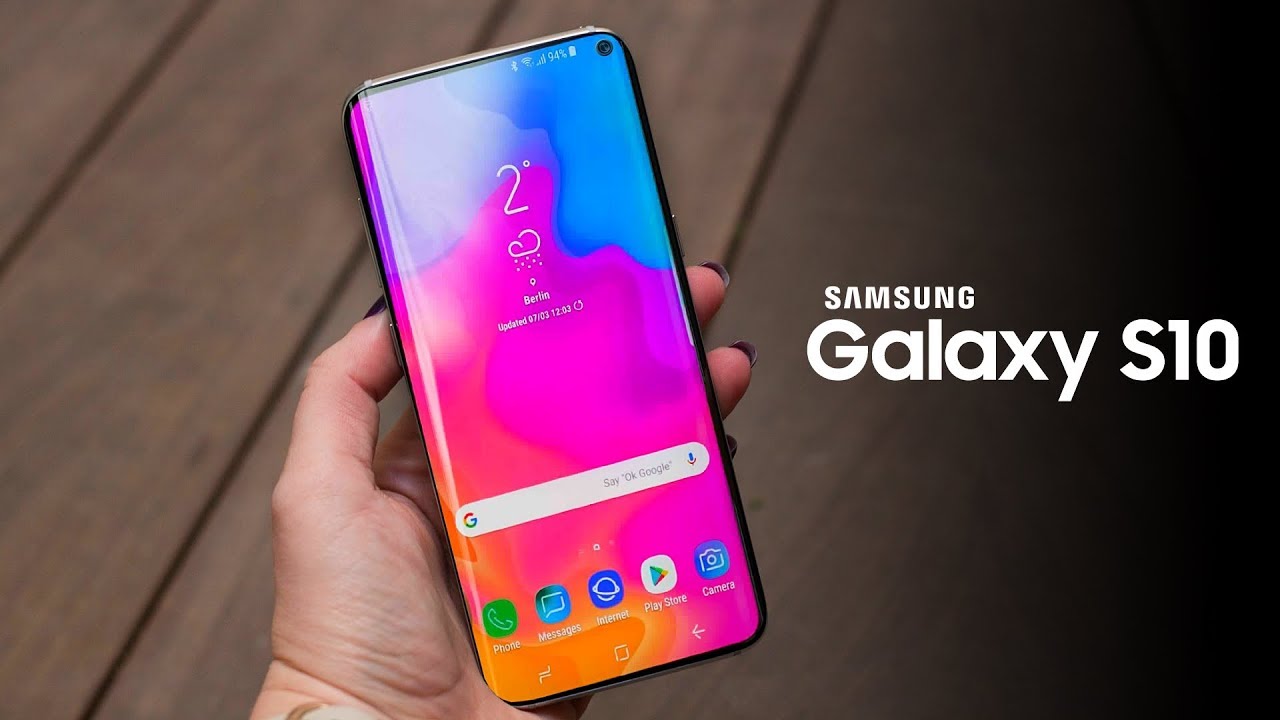
    According to posts on Reddit and the Samsung U.S. community forum made by owners of the new Samsung Galaxy S10 line, the accidental touch protection feature on the phone is not working. This includes the “Block accidental touches” option that is supposed to keep the display off when the phone is in a dark place, like a user’s pocket. The latter uses the handset’s proximity sensor. As a result, not only is the phone butt-dialing random people, when the device is pulled out of a pants pocket, the dialer is often on the display with a bunch of numbers, letters and symbols typed in. Some are blaming the placement of the proximity sensor, which is found on the status bar just above the “%” symbol used to show how much battery life is on the phone.

    Galaxy S10 users say that their phone takes screenshots, opens apps and even turns on the flashlight while in a pocket or a purse. The latter is quite an achievement since it requires the screen to be dragged down twice and the flashlight icon to be tapped. For some users, they can feel the handset vibrating in their pocket and when the device is pulled out from there, it is running hot and the battery is draining faster than it should be. The failure of the accidental touch protection feature to work can lead to some embarrassing moments. For example, a Galaxy S10 owner didn’t realize that his phone had butt-dialed the police emergency number. When he returned home, the cops were there asking if he had an emergency.

    Butt-dialing calls, overheated phones and shorter battery life are some of the symptoms

    One Galaxy S10 user had an interesting theory. He said that the proximity sensor might be seeing light through his pants, keeping the screen on as a result. The sensor is designed to turn off the screen when something is in close proximity to the display. This turns off the screen when you are on a call and the device is placed to your ear, in order to save battery life and prevent accidental touches. The original Apple iPhone was the first smartphone to offer this feature. Testing his theory, this Galaxy S10 user covered up the proximity sensor with his hand with the device in his pocket, and the screen stayed. He believes that Samsung has not calibrated the accidental touch protection correctly. Another user figured that because he had the fingerprint unlock turned on, his phone was constantly scanning for a fingerprint when the display was pressed against his leg with the device in his pocket.

    While many Galaxy S10 owners listed a variety of problems they had trying to keep their phone asleep inside their pocket, one Galaxy S10e user says that he was able to prevent the phone from turning on and butt-dialing from his pocket by disabling the “Lift to Wake” setting. Another user noted that disabling “Always On Display” and “Double Tap to Wake” resulted in more battery life on his phone when he pulled it put of his pocket (50% vs 20%), which he cited as an indication that turning off those features managed to fix the issue.

    But not every Galaxy S10 user who disabled these settings found success. While Samsung forum moderators are certainly aware of this issue, there has been no reaction from Samsung itself. Perhaps Samsung is working on a software update that will fix the problem. For now, if disabling some of the aforementioned features does not help, you might want to consider topping off the battery before you head out just in case your
  • Motorola is taking pre-orders on the phone it says will last up to three days

    Motorola is taking pre-orders on the phone it says will last up to three days

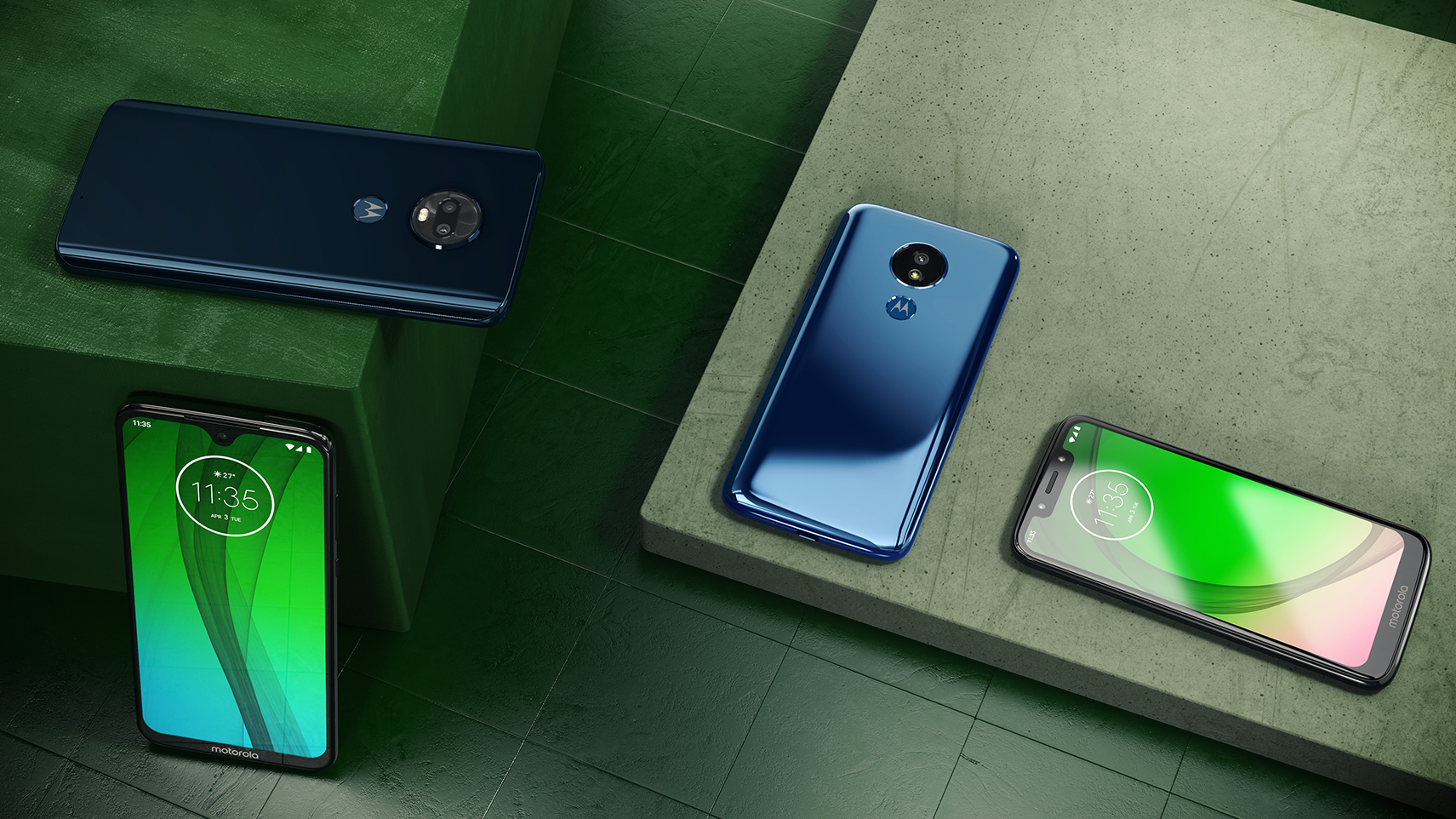
    If a huge battery is the most important feature you want on a new smartphone, you are in luck. Motorola has started accepting pre-orders for the Moto G7 Power. The phone’s claim to fame is the 5000mAh battery that Motorola says will keep the phone running as long as three days on a single charge. Hence, the use of the word “Power” in the phone’s name. With Turbo Charge, you’ll get up to 9 hours of battery life in just 15 minutes. The device is priced at $249.99.

    The Moto G7 Power comes equipped with a 6.2-inch LCD panel carrying a resolution of 720 x 1570 (HD+) and an aspect ratio of 19.63:9. The Snapdragon 632 Mobile Platform is under the hood along with 3GB of RAM and 32GB of native storage. A 512GB capacity microSD slot is available for those seeking additional storage. A 12MP camera adorns the back of the device (f/2.0 aperture) and there is a front-facing 8MP selfie camera. The phone is protected from spills, light rain and sweat thanks to P2i’s nano coating process.

    The Moto G7 Power is available in Marine Blue, and is priced at $249.99. If you finance the purchase, you’ll make 24 monthly payments of less than $11 each. And if you live in the states, the handset is compatible with each of the four major U.S. carriers including Verizon, AT&T, T-Mobile and Sprint. Pre-order the Moto G7 Power directly from Motorola, and you will get a $20 coupon to use on a future Motorola.com purchase.

    The Moto G7 Power is expected to be released on March 22nd.

  • Audi Installs Used Lithium-Ion Batteries In Factory Vehicles

    Audi Installs Used Lithium-Ion Batteries In Factory Vehicles

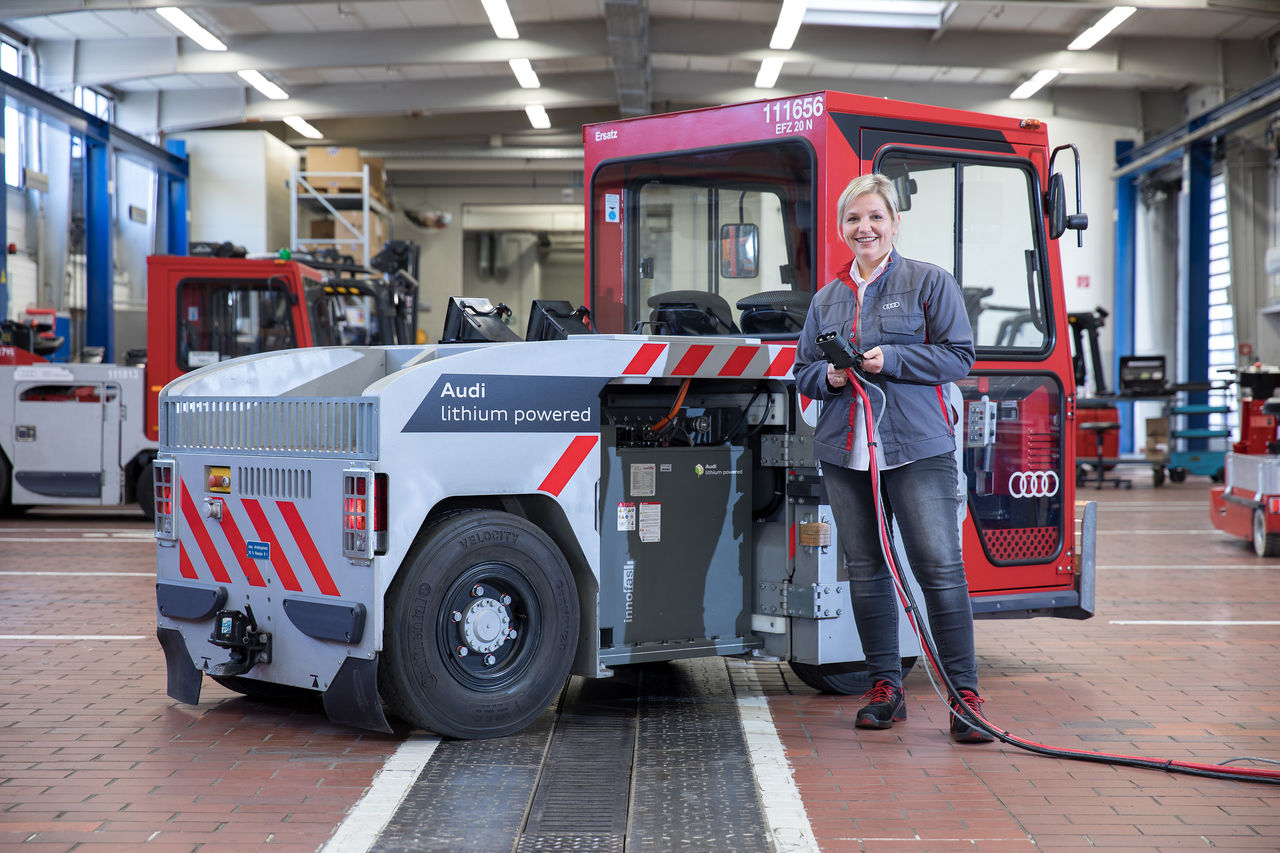
    Audi is testing factory vehicles powered by used lithium-ion batteries at its main plant in Ingolstadt. Audi is obliged by law to take back energy carriers after they have been used in cars because they still have a large proportion of their original charging capacity. An interdisciplinary project team is now investigating how batteries from the Audi e-tron test vehicles, for example, or from hybrid models such as the Audi A3 e-tron and Audi Q7 e-tron, can continue to be used sensibly. A number of other advantages have already become apparent during the test phase.

    Factory vehicles in Audi’s production plants such as fork-lift trucks and tow tractors have so far been powered by lead-acid batteries. When the batteries are empty, employees remove the battery packs weighing up to two tons from the vehicles and connect them to a charging station for several hours. However, lithium-ion batteries can be charged directly where the vehicles are parked during normal downtimes, in breaks between shifts for example. This saves space and also eliminates the high manual effort required to replace the batteries. Audi would save millions if it converted its entire fleet of factory vehicles to lithium-ion batteries at its 16 production sites worldwide.

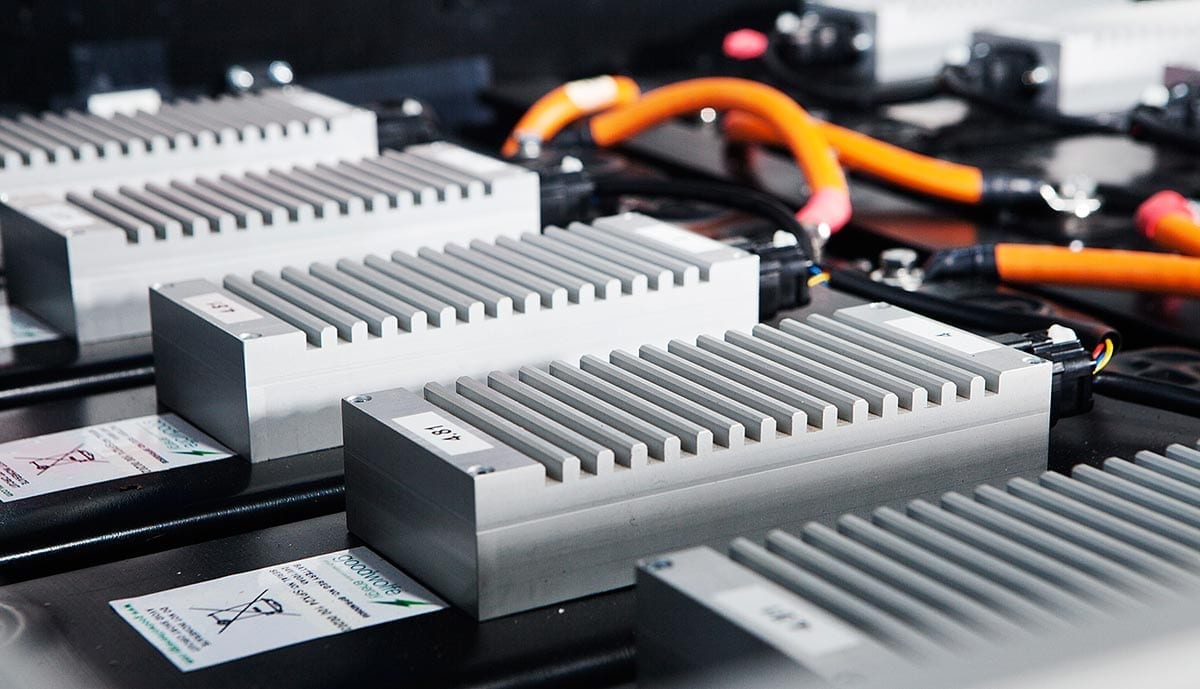
    The battery of an Audi e-tron consists of 36 individual battery modules and is located under the car’s passenger cell between the axles in the form of a flat, wide block. After the batteries are taken back, the project team checks each individual module for its continued usability. They then install 24 modules in each new battery tray. This has the same dimensions and weight as the previous lead-acid batteries of the factory vehicles, so the company can continue to use all of those vehicles without any major investments. In the future, specialised employees could take over the assembly of the second-use batteries in the company’s own battery centre.

  • VW recycling project targets spent batteries

    VW recycling project targets spent batteries

    The auto industry’s big push into electric vehicles will lead to a big problem down the road: What to do with all those lithium ion batteries once they’ve lost their oomph? It’s the central question behind a pilot recycling project that Volkswagen Group plans to launch at a factory in Salzgitter, Germany, about 30 miles from its global headquarters in Wolfsburg. Beginning in 2020, the plant will accept about 1,200 tons of used automotive lithium ion battery packs a year — the equivalent of what’s in about 3,000 EVs today.

    The battery packs will be analyzed and sorted; those with some life left will be given a second use, such as mobile vehicle charging stations similar to the way a power pack can be used to recharge a cellphone. Batteries that are spent will be shredded and ground to a fine powder, Volkswagen says, so their valuable and rare raw materials — including lithium, cobalt, manganese and nickel — can be extracted and sorted for use in new battery packs.

    Volkswagen believes that, within 10 years, it will be able to recycle up to 97 percent of all the raw materials used in the battery packs driving its upcoming EVs. It expects the pilot project to help it reach 72 percent, up from 53 percent today.

    Thomas Tiedje, Volkswagen’s head of technical planning, said the automaker has spent 10 years researching how best to recapture the valuable minerals used to make modern batteries.

    “We already have sustainable battery expertise in the Group and are developing this further,” Tiedje said in a statement.

    While the pilot plant is ramping up in Germany, the company has not determined plans for battery recycling in North America after it begins selling EVs here this year with the Audi e-tron and in 2020 with the Volkswagen I.D. Crozz. “We are in regular contact with our colleagues in [North America] about recycling,” a spokesman said.

    Today’s lithium ion battery packs have an estimated useful first life of about 150,000 miles, or roughly 10 years, given average driving cycles. In Europe and in China, automakers are required to pursue end-of-life strategies for their products, especially those containing materials that are hazardous to the environment. In the U.S., however, similar recycling research efforts are in their infancy, though the nation’s largest EV maker, Tesla, last year said it is working toward a closed-loop battery recycling process at its Gigafactory battery-production locations.

    Playing catch-up

    Just in February, the U.S. Department of Energy launched a three-year, $15 million effort to industrialize the recycling of lithium ion EV batteries. The ReCell Center, at Argonne National Laboratory in suburban Chicago, will coordinate research with automakers, material and battery suppliers, and several universities with the aim of using recycled materials to drive down the cost of EV batteries by 10 to 30 percent, to a goal of $80 per kilowatt-hour.

    One more spin: Volkswagen’s pilot EV battery recycling plant in Germany will test whether cells are still useful or should be recycled.

    “We’re trailing the other countries,” Jeffrey Spangenberger, the center’s director, told Automotive News. “There aren’t many lithium ion battery recyclers in the U.S., so work needs to be done to catch up.”

    Spangenberger said ReCell’s efforts will be focused on “trying to increase the value of the materials coming out of the battery recycling stream. A lot of the processes that are used currently recover low-value materials. We’re trying to find ways to get the materials back that can make more money,” including cobalt, nickel and lithium.

    Reusing the good stuff: Once a battery is no longer useful, it is shredded and dried, with most of the expensive minerals recovered so that they can be reused to make future cells.

    In addition to guiding battery recycling efforts, the research will focus on three areas:

    1. Direct cathode recycling to develop processes that generate products to go back into new batteries without the need for reprocessing.

    2. Recovery and recycling of other battery materials that can be resold for a second use, providing an additional source of revenue.

    3. Design for future batteries to optimize the recapture and recycling of raw materials.

    A big problem fast

    The scope of global automotive lithium ion battery recycling is expected to grow fairly quickly into a huge issue. The International Energy Agency predicts that the number of EVs on the world’s roads could grow from about 2 million today to as many as 140 million by 2030. Volkswagen believes it will sell as many as 15 million battery-electric vehicles globally by 2025.

    In addition to all those extra EVs, higher-powered fast-charging increases the battery degradation rate by as much as 400 percent, Asad Farid, an analyst at Berenberg Thematics, told the Advanced Automotive Battery Conference in Strasbourg, France, in January. That means all those quick-charging EVs will need new battery packs sooner than 10 years. Berenberg estimates that by just 2022, as many as 262,000 metric tons of automotive lithium ion batteries will need to be recycled.

    “The car manufacturers have an upcoming problem, and one that we are already starting to see — this massive volume of batteries,” Johan Stjernberg, CEO of Box of Energy, a Swedish company working with Porsche and Volvo Cars, told Bloomberg last year.

    “The market will be enormous for second-life applications with storage.”

  • SK unit to supply batteries to VW

    SK unit to supply batteries to VW

    SK Innovation is supplying electric car batteries to Volkswagen Group along with existing suppliers LG Chem and Samsung SDI, the Korean battery maker said Wednesday. The Volkswagen Group brands plan to launch 50 new fully electric models by 2025, and the group said it needs more battery supplies in a statement Tuesday. SK Innovation was the last of the four battery suppliers selected by the carmaker.

    SK Innovation will start supplying batteries to Volkswagen cars in Europe from 2019. LG Chem and Samsung SDI are also strategic partners in the auto company’s European operations.

    From 2022, SK Innovation will also supply batteries for the North American market.

    The group’s electric car production in China will source batteries from Chinese partner Contemporary Amperex Technology (CATL) from 2019.

    SK Group’s battery arm is planning on covering Volkswagen orders by setting up new facilities in Europe and the United States. Currently, the company is mulling three locations in the United States, it said, without giving details about the production capacity or the amount of investment. As for its newly-planned European plant, the company said it is considering multiple locations including Hungary, where it is already building a plant.

    When all planned factories are in place, SK Innovation’s battery production capacity will increase to 20 gigawatt-hours per year by 2022, the company said. Despite being a latecomer to the market, SK Innovation has been rapidly expanding its battery business. Daimler and Kia Motors are also using SK batteries.

    Its share of this year’s global battery market, excluding China, was 2.2 percent based on accumulated battery sales through the end of September, according to data from market tracker SNE Research, growing from 1.4 percent the same period last year.

    LG Chem is still the largest local player, with a 17.5 percent market share, followed by Samsung SDI, with an 8.2 percent market share.

    “With SK Innovation, LG Chem, Samsung and CATL, we have found strong partners for the long-term supply of cells for our electric vehicles,” said Stefan Sommer, a Volkswagen board member responsible for components and procurement.

  • LG Chem to build China facility

    LG Chem to build China facility

    LG Chem said Tuesday that it will invest 2.1 trillion won ($1.8 billion) by 2023 to build electric vehicle batteries in China in the latest move to meet growing demand for batteries for zero-emissions cars. Korea’s top chemical company said it has broken ground on a three-story plant on the 198,300-square-meter (49 acre) site in Nanjing in southeastern China.

    The plant is set to roll out electric vehicle batteries that can power more than 500,000 electric vehicles. The first phase of production is set to begin late next year.

    An electric vehicle equipped with LG Chem batteries can travel about 320 kilometers (198 miles) on a single charge, according to LG Chem.

    LG Chem Vice Chairman and CEO Park Jin-soo said the second plant in China will allow the company to better meet rapidly growing global demand.

    LG Chem has another electric vehicle battery plant in Nanjing. It also operates electric vehicle battery plants in Korea, the United States and Poland.

    The electric vehicle battery market has been on the rise as automakers around the world race to go electric due to tightened regulations on greenhouse gas emissions, which scientists say are to blame for global warming.

    Currently, LG Chem is a key supplier of batteries to U.S. auto giant General Motors, Volvo and Renault, as well as Korea’s largest carmaker, Hyundai Motor, and its smaller affiliate, Kia Motors.

  • BMW, Northvolt, Umicore team up on battery recycling

    BMW, Northvolt, Umicore team up on battery recycling

    BMW will team up with Northvolt, which is building Europe’s largest battery factory in Sweden, and Belgium’s Umicore to develop a process for electric car batteries to be recycled, the automaker said in a statement. BMW had a funding investment of undisclosed size in the venture, the Swedish startup, which plans to build a factory in Sweden to produce 32 gigawatt hours (GWh) of battery capacity a year by 2023, said on Monday.

    The partnership could indicate that BMW will source batteries from Northvolt, giving investors confidence to fund the project that is expected to raise debt and equity next year.

    The project aims to create a “closed life cycle loop” for battery cells, which will be manufactured using a recyclable design and used in electric vehicles, then possibly as stationary storage devices before finally being recycled and reused.

  • Honda considers developing all solid-state EV batteries

    Honda considers developing all solid-state EV batteries

    Honda Motor is considering developing all solid-state batteries for electric vehicles (EVs) as a growing number of global automakers look to come up with powerful, next-generation car batteries to reduce vehicle emissions.

    Tighter global emissions regulations are forcing automakers worldwide to shift to electric cars, including all-battery EVs that will require capacity to deliver longer ranges and faster charge times, but at lower cost than lithium-ion batteries.

    “We’ve been researching all solid-state batteries,” Honda spokesman Teruhiko Tatebe said.

    “At the moment we’re not developing them with another automaker.”

    Kyodo News reported on Thursday that Honda and Nissan Motor Co were developing all solid-state EV batteries. Nissan was not immediately available for comment.

    A growing number of automakers including Toyota Motor Corp and Volkswagen  are developing all solid-state batteries, which offer more capacity and better safety than conventional lithium-ion batteries by replacing their liquid electrolyte with a solid, conductive material.

    Earlier this month, Toyota said it was considering jointly developing the next-generation batteries with Panasonic to share high R&D costs.

    The automaker is planning to have a production-ready battery in the early 2020s, and has highlighted the need to accelerate the pace of battery development as it and other automakers plan to ramp up the number of electric models they sell in the coming decades.

  • Tesla cranks up big battery in Australia

    Tesla cranks up big battery in Australia

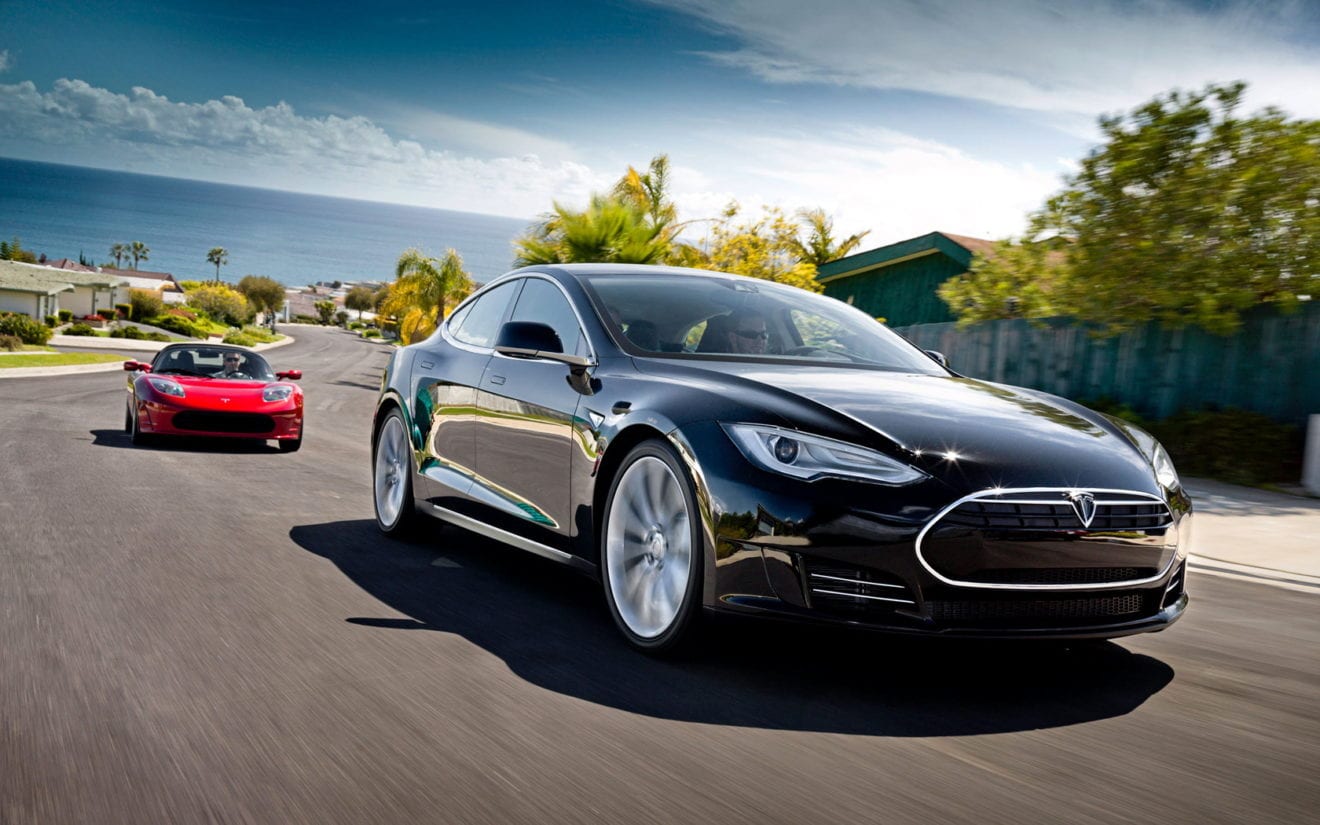
    Tesla has completed construction of the world’s largest lithium ion battery in Australia, putting it on track to meet a 100-day deadline for switching the battery packs on, the South Australian government said on Thursday.

    Tesla won a bid in July to build the 129 megawatt hour battery for South Australia, the country’s most wind power-dependent state, with a vow from Chief Executive Elon Musk to install it within 100 days of signing a grid connection agreement or give it to the state for free.

    When the grid connection deal was signed on Sept 29, Tesla was already half way through installing the battery packs.

    The Tesla Powerpacks have now been fully installed at a wind farm run by France’s Neoen, and testing is set to begin to provide grid security services in South Australia.

    “While others are just talking, we are delivering our energy plan, making South Australia more self-sufficient, and providing back up power and more affordable energy for South Australians this summer,” state Premier Jay Weatherill said in a statement.

    The state has yet to say how much it would pay for the battery, which is part of a AUS$510 million (US$390 million) plan that includes diesel-fired generators to help keep the lights on following a string of blackouts over the past 18 months.

    Australia’s energy market operator has warned that power supply will be tight this summer, particularly in South Australia and neighboring Victoria, where one of the market’s biggest coal-fired power plants was shut in March.
  • Panasonic to launch new auto battery line at ex-TV screen plant in Japan

    Panasonic to launch new auto battery line at ex-TV screen plant in Japan

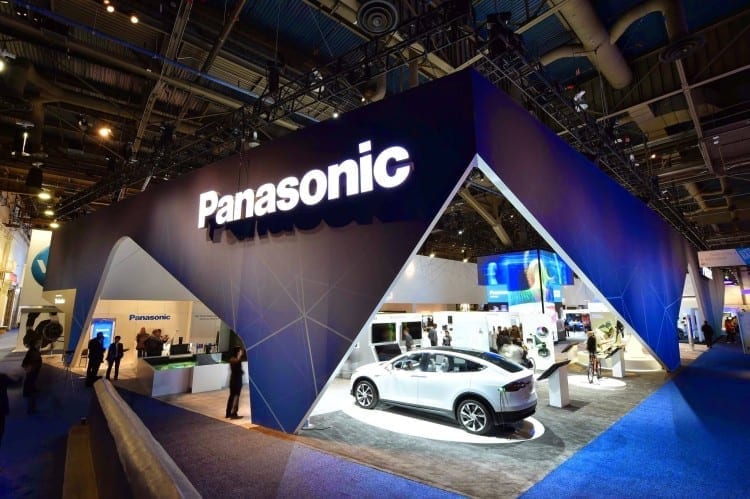
    Japan’s Panasonic said on Friday it will start producing automotive batteries at its former television screen plant in Japan, accelerating its battery drive to meet anticipated demand for electric vehicles.

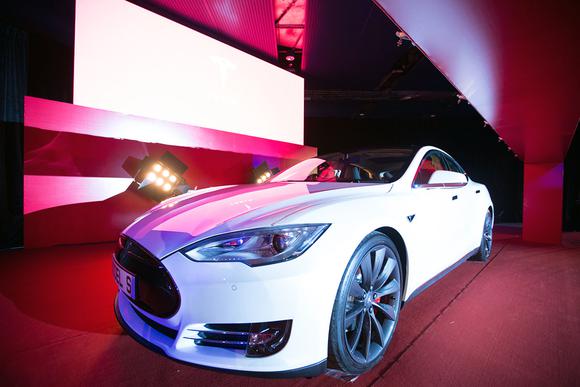
    Panasonic, the exclusive battery cell supplier for Tesla’s mass-market Model 3, is reinventing itself as a provider of advanced auto parts to escape the price competition of smartphones and other lower-margin consumer products.

    The new battery production will start at its LCD plant in Himeji, western Japan, in the financial year from April 2019, using space left vacant after it closed its unprofitable TV screen manufacturing business last year.

    The company declined to comment on the size of new investment or the production capacity of the new line.

    The Himeji plant currently produces screens for vehicle dashboards and medical equipment, but output has dropped significantly after it exited TV screen production.

    Panasonic sees batteries as a key driver for its plan to nearly double its automotive business revenue to 2.5 trillion yen ($22 billion) in the year through March 2022.

    Already one of the leading suppliers of automotive lithium ion batteries, it currently has five production sites in Japan.

    It started mass production of battery cells at Tesla’s Gigafactory in Nevada earlier this year and plans to follow suit at a new plant in Dalian, China.

  • Britain launches fund to boost electric battery technology

    Britain launches fund to boost electric battery technology

    Britain launched a 246 million-pound ($320 million) fund on Monday to boost the development and manufacturing of electric batteries, a major growth area for the car and energy sectors.

    The scheme, which allows those in business and academia to apply for government funds to work on a range of possible electric battery schemes, is part of Britain’s industrial strategy which Prime Minister Theresa May published in January.

    It is designed to take a more hands-on approach to developing key industries to help protect the economy as Britain leaves the European Union.

    Automakers are racing to build greener vehicles and improve charge times in a bid to meet rising customer demand and meet air quality targets but Britain lacks sufficient manufacturing capacity, an area ministers are keen to build up.

    The first tranche comprises a 45 million-pound pot of money which will help to establish a ‘Battery Institute’ for research to help improve the affordability of the technology, which needs to bolster charge and use times, reduce storage sizes and boost capacity.

    Business minister Greg Clark also wants to establish a “National Battery Manufacturing Development facility” which would support the building of electric batteries for the automotive sector.

    “Joining together the research, development, application and manufacture of energy storage technologies – and specifically battery storage – is a huge opportunity for the energy sector and the automotive sector alike,” Clark said in a speech in Birmingham.

    In May, representatives from politics, academia and business in the central English city of Coventry pitched plans to receive part of the funds for a “National Battery Prototyping Centre” which would focus on research and development and testing.

    Japan’s Nissan already builds its electric Leaf at its north of England plant but Britain’s biggest carmaker Jaguar Land Rover is building its first low-emissions model in Austria.

    Its chief executive told Reuters last year that a number of factors needed to be put in place before JLR would build electric models in Britain, including pilot testing and support from science.

    Germany’s BMW favors building its first electric model at its Oxford plant, two sources told Reuters last week, in a decision which is due to be announced in September.

    Clark also said that up to 40 billion pounds could be saved by 2050 with a range of measures designed to better manage energy use, including allowing users to control their appliances from their smartphones.

    But businesses have become more cautious about future investment in Britain ahead of Brexit, worried that the country may lose unfettered and free trade with its biggest export partner at the end of two-year divorce talks in March 2019.

    Many companies have urged the government to push the European Union to agree to a clear and lengthy transitional arrangement to help them make investment decisions.

    Asked on Monday when the government would set out the kind of transitional arrangement it would be seeking, Clark said:

    “During the autumn… and as the negotiations move forward, we hope from their initial discussion, then that’s the time to say more about that.”

  • Australian state picks Tesla to provide grid-scale battery

    Australian state picks Tesla to provide grid-scale battery

    South Australia has picked Tesla to install the world’s largest grid-scale battery that would be paired with a wind farm provided by France’s Neoen, as the state battles to keep the lights on.

    South Australia has raced ahead of the rest of the country in turning to wind power, triggering a shutdown of coal-fired plants that has led to outages across the eastern part of the nation, driving up energy prices.

    The drawback to South Australia’s heavy reliance on renewables has been an inability to adequately store that energy, leading to vulnerabilities when the wind doesn’t blow.

    Under the terms of the agreement, Tesla must deliver the 10-battery within 100 days of a contract being signed or it’s free, matching a commitment made by Tesla Chief Executive Officer Elon Musk in a Twitter post in March.

    There will be a lot of people that will look at this, ‘did they get it done within 100 days? Did it work?’” Musk told reporters in South Australia’s capital city of Adelaide.

    “We are going to make sure it does.”

    Dozens of companies from 10 countries had expressed interest in the South Australian project, which is viewed as a major test for the reliability of large-scale renewable energy use.

    Tesla said in a statement that upon completion by December 2017, the system would be the largest lithium-ion battery storage project in the world, overtaking an 80 megawatt-hour power station at Mira Loma in Ontario, Calif., also built using Tesla batteries.

  • Nornickel bets on battery materials as electric car sales rise

    Nornickel bets on battery materials as electric car sales rise

    Russian miner Norilsk Nickel wants to expand in the market for materials used to make batteries for the fast-growing electric vehicle (EV) sector, its head of marketing and sales told Reuters.

    Nornickel, the world’s second-largest nickel producer and a major cobalt producer, and German chemicals company BASF said on Tuesday they were in talks to supply nickel and cobalt, needed to make lithium-ion batteries, in Europe, as the car industry’s push into electric vehicles gathers pace.

    For Nornickel, this is just the start.

    “We are discussing…transactions with several manufacturers in the industry,” Nornickel’s Markus Meurer said in an interview with Reuters.

    Nornickel and BASF’s talks cover cooperation to set the foundation to supply battery cell producers for electric vehicles in Europe with regionally produced cathode materials, they said on Tuesday.

    Meurer said the project with BASF would be developed over the next few months and that it was too early to say how much metal and in which form it would be supplied.

    “Timing will depend a lot on market development and on technology….The important question is how to enable the ramp-up of production of battery raw materials in parallel with increasing demand,” Meurer said.

    The number of electric vehicles on roads worldwide rose to a record high of 2 million last year, the International Energy Agency (IEA) said this month, as governments clamp down on fossil fuels such as gasoline and diesel.

    UBS recently raised its forecasts for global sales of electric vehicles in 2021 to 3.1 million from 2.5 million and to 14.2 million by 2025 from 9.7 million. It expects electric vehicles to account for 3.1 percent of global car sales in 2021 and 13.7 percent in 2025, against 1 percent this year.

    Last year, nickel demand for electric vehicle batteries rose 20 percent to 15,000 tonnes, according to Nornickel.

    Meurer said he expected demand for nickel from the electric vehicle market to rise to 300,000 tonnes in 10 years from 20,000 tonnes in 2017, making it the second-largest segment for nickel demand after stainless steel.

    Global demand for cobalt, a by-product of nickel and copper, last year was about 100,000 tonnes, of which roughly half was used in batteries to power electric cars. Nornickel produces about 5,000 tonnes of cobalt a year.

    Prices for cobalt metal have nearly tripled to nine-year peaks above $27 a lb from below $10 a lb in Dec 2015.

  • Toyota says aims to develop advanced electric-car battery in a few years

    Toyota says aims to develop advanced electric-car battery in a few years

    Toyota Motor Corp said it aims to develop a new, more advanced electric-car battery “in a few years” that will allow the Japanese automaker to come up with an electrified vehicle with driving range and battery life enhanced by up to 15 percent.

    Such performance-enhanced lithium-ion battery technology will likely enable all its electrified vehicles to be improved, Toyota said.

    “Lithium-ion battery is a key technology for electrifying cars, and there is a clear need, going forward, for improving this technology and its performance even more,” Hisao Yamashige, a battery technology researcher at Toyota, told a media briefing in Tokyo on Thursday.

    Improving the performance of lithium-ion battery technology is a pressing issue for traditional automakers such as Toyota and new entrants such as Tesla Motors Inc because of its limiting characteristics.

    Producers of all-electric battery cars, plug-in electric hybrids, as well as conventional gas-electric hybrids are all striving to source or develop more advanced battery technologies to give their electrified cars a better driving range, battery life, and safety.

    Toyota, Japan’s biggest automaker by volume, has pioneered gasoline-electric hybrids technology and is gearing up to launch a new, near-all-electric plug-in hybrid car called the Prius Prime. It also has recently said it is aiming to come up with an all-electric battery car by 2020.

  • Samsung permanently halts Note7 production

    Samsung permanently halts Note7 production

    Samsung has officially halted production of the Galaxy Note7, following multiple reports of batteries overheating and catching fire even in devices replaced during last month’s recall.

    The company confirmed it has permanently discontinued production of its flagship smartphone, leaving the company without a high-end device to compete against the iPhone 7 with during the holiday shopping season.

    During last month’s major product recall, Samsung had blamed a single battery supplier for the overheating problem that caused the fires, and had switched suppliers for production of the replacement models. But with multiple reports that even replaced devices are catching fire, this explanation is in doubt.

    Samsung is offering Note7 buyers either full refunds, or the option to replace their device with an S7 or S7 Edge and receive a refund for the difference in price.

    Analysts are predicting that permanently ending Note7 sales could cost Samsung up to $17 billion in lost sales, and the potential for reputational damage is arguably even greater.

    Curiously, analysis from mobile application technology company Apteligent suggests that the reports of exploding batteries have done little to deter usage of Note7 devices. As of Sunday, the smartphone reached its highest usage rate since in August launch – 10% higher than the date of the recall. The first reports of replacement devices exploding began circulating days earlier.