Retail News CRM

Tag: BMW

  • BMW Vision DC Roadster Concept Unveiled

    BMW Vision DC Roadster Concept Unveiled

    Electric motors are supposed to be the successor to the internal combustion engine and manufacturers are making the transition towards the electric mobility on both two and four wheels. BMW Motorrad, largely known for its evocative motorcycles is also working on an electric future for itself and is offering a glimpse of the future with its new Vision DC Roadster concept. BMW calls the ‘electrical awakening’ of the twin-cylinder Boxer engine that has powered the bike maker’s motorcycles for over 90 years. The BMW Vision DC Roadster is only a concept for now but could just preview a future Rnine T model with an electric drive.

    Speaking about the new BMW Vision DC Roadster, Edgar Heinrich, Head of Design BMW Motorrad explained, “The boxer engine is the heart of BMW Motorrad – an absolute stalwart of its character. But BMW Motorrad stands for visionary zero-emissions vehicle concepts, too. In view of this, one question that arises is: what would happen if we were to replace the boxer engine with an electric motor and the required battery? The Vision Bike shows how we’re able to retain the identity and iconic appearance of BMW Motorrad in distinctive form while at the same time presenting an exciting new type of riding a pleasure. After all: anyone who’s ever tried it out in practice knows very well that riding on two wheels is just as exciting when its electrically powered! The high level of torque right at set-off makes for breath-taking acceleration. This almost brutal power delivery creates a whole new experience of dynamic performance. And the BMW Motorrad Vision DC Roadster puts a face to this experience.”

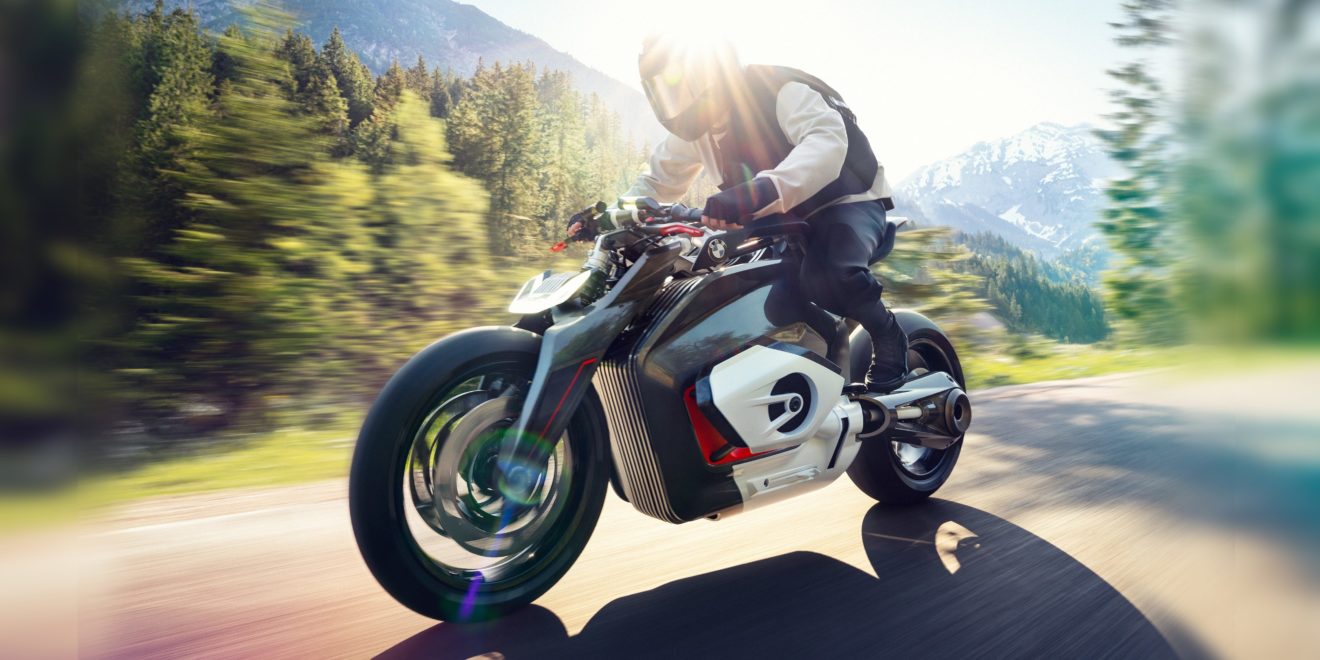
    The BMW Vision DC Roadster is built around a completely new architecture with the battery as its centerpiece. The manufacturer retains the iconic Boxer appearance with its concept of the future, which can be determined as an electric on closer inspection. The bike uses a vertically fitted, longitudinally oriented battery and is mounted in place of the conventional engine, while two side elements protrude with cooling ribs and integrated ventilators, which are quite similar to the cylinder heads on the Boxer engine. The cylinder-shaped electric motor itself is placed underneath the battery and is directly connected to the universal shaft. BMW Motorrad states that the Vision DC Roadster demonstrates a clever drive architecture that visually echoes the history of BMW Motorrad while taking it a step further.

    The design language on the BMW Vision DC Roadster is dynamic with the low front section and the short high rear. The design gives a sense of agility on the motorcycle, while a very interesting bit is the tubular structure that shows up like the skeleton of the motorcycle, replacing where a fuel tank would be placed. The aluminium frame structure also plays a key factor in the with the battery at the centre of the frame. Given the silence that comes along with electric motors, BMW has worked an innovative to denote that the bike is ready with the side cooling elements moving out slightly when the electric motor is turned on.

    The BMW Vision DC Roadster uses extensive cabon fibre and aluminium in its construction that further adds to its visual appeal. The red contrast elements and brushed aluminium around the battery, frame and cooling systems further emphasise on the bike geometry. There’s extensive attention to detail as well with the use of high quality materials throughout the concept. Details like the exposed universal shaft and the Duolever fork add a striking mechanical look to the motorcycle, while the flat U-shaped LED headlight with two compact lenses looks menacing. The taillight comprises two C-shaped LED elements that carry a minimalist look on the motorcycle. BMW says the Vision bike uses tyres exclusively made by Metzeler, while there are five fluorescent elements, each about the size of a postage stamp, integrated in the design for added visibility and graphic effect.

    In addition, BMW also revealed protective riding gear along with the Vision DC Roadster concept with integrated lighting and connectivity aspects. BMW Motorrad conveys the new concept is a symbol of the future of the manufacturer with alternate drive forms. The manufacturer has not yet revealed details on if and when there will be a production version to the concept, but we do see it coming in a torque-filled future closer than ever. And sure looks exciting!
  • BMW Previews Vision M Next Electric Sportscar

    BMW Previews Vision M Next Electric Sportscar

    BMW today previewed the Vision M Next which offers a foretaste of the BMW M brand’s electrified future and yes, this one places the driver right at the centre of all the action. Hosting the exclusive world premiere of the BMW Vision M NEXT is the new NextGen infotainment platform at BMW Welt. The BMW Vision iNEXT and BMW Vision M NEXT Vision Vehicles represent prototype versions of BMW’s future experience concepts ‘Ease’ and ‘Boost’. Ease encompasses all the experiences during a journey when the vehicle assumes the task of driving, so maximum comfort for users while Boost is all about the ultimate active driving experience.

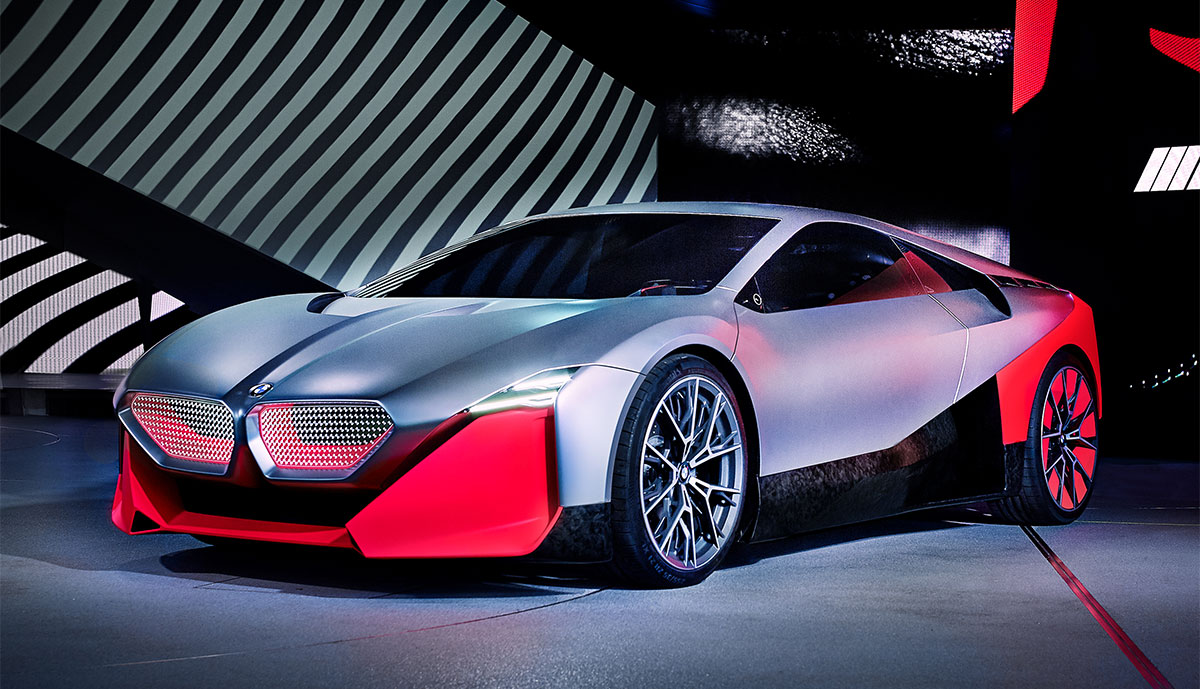
    The BMW Vision M Next draws its inspiration from the iconic BMW Turbo and of course the i8 plug-in hybrid. It’s low-slung, has a wedge-shaped silhouette, gets gullwing doors and a striking colour scheme while maintaining its sports-car proportions. The front and rear ends are finished in the matt-neon shade orange, producing a vivid contrast against the exterior’s otherwise silver metallic paintwork.

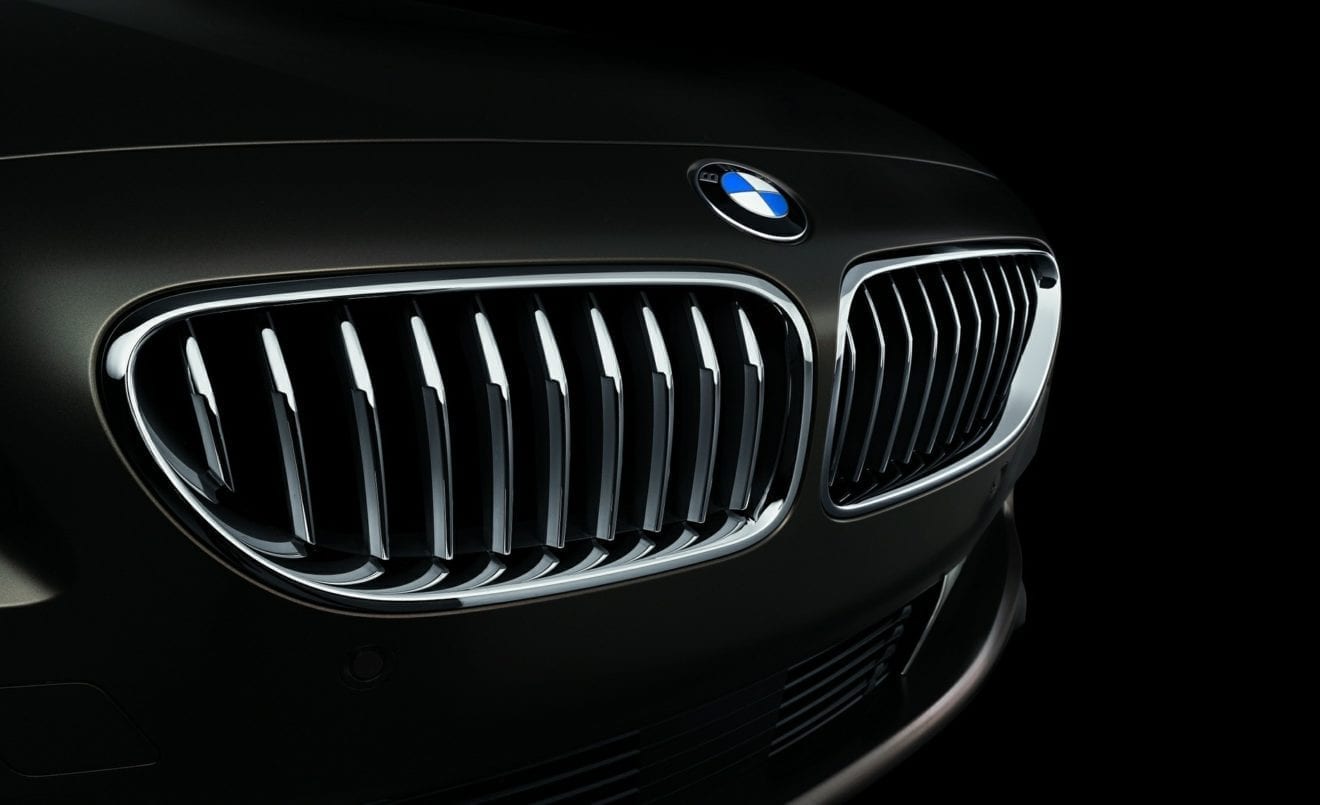
    The signature BMW kidney grille is flanked on either side by triangular elements which are painted in orange. The triangular elements accentuate the air intakes at the sides and the integral headlights. The headlights are positioned on the outer edges of the front end, higher up than the kidney grille. Arranged one above the other rather than side by side and that gives it BMW’s classic four-eyed front end. The black side skirts are made from recycled carbon fibre and make the car look even lower on the road.

    Domagoj Dukec, Vice President BMW Design, said, “The BMW Vision M NEXT is a progressive hybrid sports car that makes a very clear and confident statement, in terms of both appearance and interaction. Where the BMW Vision iNEXT illustrated how autonomous driving is set to transform life on board our vehicles, the BMW Vision M NEXT demonstrates how state-of-the-art technology can also make the experience of driving yourself purer and more emotionally engaging. In both models, the focus is firmly on the people inside. Design and technology make the ‘EASE’ and ‘BOOST’ experiences more natural and more intense,”

    The Vision M Next offers the choice between electric all-wheel drive and pure rear-wheel drive, with either all-electric propulsion or the power of a turbocharged four-cylinder petrol engine. The output stands at 591 bhp and it has a top speed of 300 kmph. 0-100 kmph is done in just under 3 seconds. There is also a BOOST+ mode that puts extra power on tap at the push of a button. The maximum range when driving in all-electric mode is 100 km.

    The rear wheels on the BMW Vision M NEXT measure 22 inches in diameter, making them one inch larger than the front wheels (21 inches) and that gives the car a lovely stance. The design of the rear window takes its cue from the BMW M1. The three-piece louvres are made from glass and emphasise the horizontal focus of the rear-end styling. The rear lights feature the same Laser Wire technology used for the headlights. The two-dimensional reinterpretation of the distinctive pair of BMW roundels from the BMW Turbo and BMW M1 – a gift to BMW aficionados – gives them the impression of floating in the rear lights’ transparent lenses.

    There’s also facial recognition technology in the Vision M Next and his allows the car to unlock automatically as the driver approaches. Pressing the touch sensor on the gullwing doors prompts them to swing open. The cabin is minimalist and revolves entirely around the actively engaged driver, both stylistically and technologically. The seat shells form part of a seat sculpture with a flowing design. They are upholstered in a foam material with shape memory properties that moulds itself to, cushions and supports the body to optimum effect.

  • BMW X1 Faceflift Makes World Debut In Munich

    BMW X1 Faceflift Makes World Debut In Munich

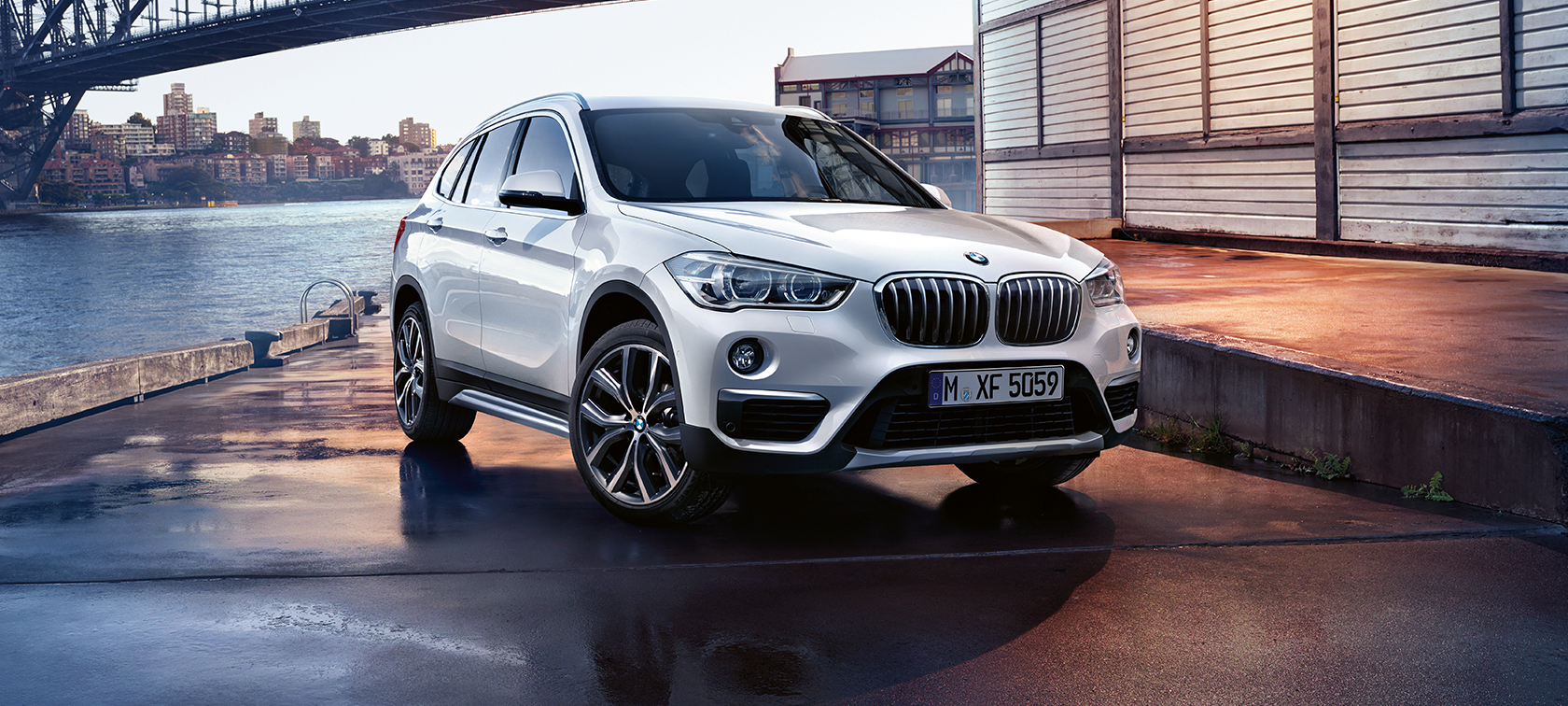
    The youngest SUV in the BMW family has received a comprehensive update and despite being the smallest, it doesn’t look like one. The current generation BMW X1 surprised us with its grown proportions and bold styling and even car enthusiasts confused it with the X3. The new 2020 facelift model builds upon that with clear and prominent revisions made to its face and rear. It looks more dominant sporting larger kidney grilles which merge in the center. The new Adaptive LED headlamps to include sharper light iconography and the bumper along with integrated LED foglamps also houses larger air intakes. The rear end of the X1 also looks stylish. For instance, the new inlay in the body-color rear apron adopts the car’s main body color.

    The driver side wing mirror projects two-tone LED X1 image when the car is unlocked. The new BMW X1 also gets three new body colors- Jucaro Beige metallic, Misano Blue metallic (exclusively for the M Sport model) and the ultra-exclusive BMW Individual Storm Bay metallic along with four new wheel designs. The 2020 BMW X1 Facelift will be offered in three variants- the base X Line, Sport Line and M Sport. The BMW X1 M Sport gets lowered stance, thanks to the M Sport suspension and BMW Individual High-gloss Shadow Line trim gets additional features along with the M Aerodynamics package.

    On the inside, the cabin is finished in high-quality materials and it continues to get contrast stitching on the instrument panel which is finished in black on its upper section and adopts the color of the interior upholstery lower down. The contrast stitching is available for the xLine, Sport Line and M Sport models only. Moreover, the floor mats also gain colored edging and contrast stitching for the edging and customers will get a choice of three upholstery options. There is also a 6.5-inch screen which is standard while customers can also opt for an 8.8-inch or 10.25-inch touch screen which can be operated using the BMW iDrive Controller or voice control and gets built-in navigation. The latest version of BMW’s connected drive is also standard on the new X1. Moreover, the rear seats can be folded down in three sections (40:20:40) and can slide forward by up to 13 cm, however, that is optional. Features such as automatic tailgate operation and Comfort Access are optional as well.

    The new BMW X1 line up will get 16 engine and transmission options globally which will include a range of three-cylinder and four-cylinder engine options. The BMW X1 sDrive16d which is powered by the 1.5-liter three-cylinder engine will be available with either a manual six-speed gearbox or a seven-speed dual-clutch transmission and will develop 114 bhp and 270 Nm of peak torque. The xDrive 25d diesel will get the 2.o-litre, four-cylinder engine which puts out 228 bhp and 450 Nm of peak torque will be mated to an eight-speed auto transmission as standard and will clock triple-digit speed in 6.6 seconds. Finally, the petrol BMW X5 xDrive 25i will use the 2.0-liter, four-cylinder engine which puts out 228 bhp and 350 nm of peak torque and is also mated to an eight-speed auto transmission as standard. It’s 0.1 seconds quicker to 100 kmph than its diesel counterpart and clocks triple-digit speed in 6.5 seconds.

  • BMW X7 And BMW 7 Series Facelift Launch Date Revealed

    BMW X7 And BMW 7 Series Facelift Launch Date Revealed

    BMW has announced that it will be launching the new 7 Series facelift and the all-new X7 SUV in India on July 25, 2019. Talking about the new 7 Series facelift, the most apparent of all the design changes is the massive kidney grille which is 40 percent larger than the one on the outgoing model. The headlights still look sleek and go well with the long bonnet which now looks more sculpted and has even gained muscle along with the fenders. The profile looks almost similar to the outgoing model and there have been subtle changes in the design at the rear.

    The new BMW 7 Series will also get a range of engine options including a new 6.0-liter, V12 motor which churns out 592 bhp and 850 Nm of peak torque and will make its way under the hood of the top-end M760 variant. Then there is the 4.4-liter, V8 motor which produces 516 bhp (up 78 bhp) and 750 Nm of peak torque (100 Nm up) and propels the car to 100 kmph in 3.9 seconds. Finally, the most in-demand of the lot will be the 740L which will now be a plug-in hybrid variant. It will get the same 3.0-liter, in-line six-cylinder engine which produces 276 bhp and 450 Nm of peak torque but will be coupled with an electric motor which will add 111 horses more taking the combined power output to 384 bhp.

    The BMW X7 is an all-new model and it will be the new flagship SUV for BMW, positioned above the X5. The BMW X7 is based on the CLAR platform which also underpins its sedan counterpart- the 7 Series and several other BMW models like the 5 Series and new generation X3. BMW is also developing the next-generation X5 on the same platform. Visually, the new X7 takes design quotient a notch higher with that massive kidney grille, slim LED headlamps and muscular bumper with wheel arches.

    Petrol engine options on the 2019 BMW X7 include the 3.0-liter, in-line six-cylinder petrol with 335 bhp and a 4.4-liter, twin-turbo V8 petrol with 456 bhp. There will also be the 3.0-liter six-cylinder diesel with 256 bhp, along with a more powerful 400 bhp version. A plug-in hybrid version is also said to be in the works, while an M badged model is the one we look forward to. All engines use the 8-speed automatic transmission and get all-wheel drive as standard. The system does come with the option to send power only to the rear wheels, while you get BMW’s Dynamic Handling Package and the Off-Road Package. Upon launch, the BMW X7 will be going up against the Mercedes-Benz GLS, Range Rover Sport and the Audi Q7.

  • BMW 8 Series Gran Coupe Revealed

    BMW 8 Series Gran Coupe Revealed

    BMW has revealed the four-door 2020 8 Series Gran Coupe. The 8 Series Gran Coupe will be available in the rear-wheel drive 840i, all-wheel drive 840i xDrive and M850i xDrive models. The new BMW 8 Series Gran Coupe showcases a sweeping four-door body with wide flanks and sharp creased modern lines. In fact, with a rear track of 1671 mm, the 8 Series Gran Coupe stands on the widest rear track of any BMW automobile; a design criteria which required an update of the Plant Dingolfing assembly line in order to accommodate the new, wider platform.

    From the A-pillar, the 8 Series Gran Coupe design differs from that of the Coupe to both increase interior space and deliver a vehicle with strong presence and authority. The windshield features less rake than in the Coupe to allow the roofline to raise to a higher point above the front seats, providing increased headroom for both front and rear passengers. The roof then merges into the rear trunk lid with fin-like transitional lines to create the visual of a long and flowing body. The rear glass is mounted with increased rake to increase the size of the trunk opening and also acts to from a fixed part of the body’s structure to increase torsional rigidity and reduce noise entering the cabin.

    The standard panoramic glass moonroof stretches from the front windshield all the way back to the rear window and the multi-functional antenna is integrated into the rear glass, eliminating the need for the roof-mounted shark fin antenna, thus allowing for a larger glass roof. The 8 Series Gran Coupe gets Icon Adaptive LED Headlights with Laserlight flank the one piece hexagonal BMW kidney grille surround which frames active air intake slats inside. Large openings in either side of the front bumper give the low-slung front end of the BMW 8 Series Gran Coupe an aggressive appearance. Functional Air Breathers let air flow through the front fenders improving both aerodynamics and styling. The Hofmeister kink in the expansive c-pillar ties the flowing side profile lines of the new Gran Coupe to heavily sculptures rear fenders and trunk lid. Slim LED rear lights stand high above trapezoidal twin exhaust pipes.

    An intelligent mix of lightweight materials helps to reduce weight in the BMW 8 Series Gran Coupe. Aluminium construction is used for the doors, hood, roof, front bulkhead, engine subframe and rear bumper support. The trunk lid is made from dent-resistant plastic while the cabin dashboard support is made from magnesium and parts of the center driveline tunnel are made from carbon-fibre reinforced plastic.

    The BMW 8 Series Gran Coupe seats five people and the longer wheelbase and wider rear flanks of the car have allowed for sizable increases in interior space. Front head room increases by 0.2 inches while rear headroom is up by 3.4 inches. Rear legroom increases by a substantial 7.1 inches while rear shoulder room improves by 7.7 inches. The extended centre console in the 8 Series Gran Coupe is unique to the model and continues into the rear space, dividing the individually-styled right and left seats while still allowing for the rear centre seat space to be used when needed. The rear console offers passengers individual right and left climate controls, air vents, storage tray and USB-C ports.

    The standard heated front sport seats feature integrated headrests and are designed with a thinner profile to allow for greater rear knee space. All four main seats offer generous levels of lateral support so that the performance capabilities of the 8 Series Gran Coupe can be enjoyed by all passengers. The rear seats can be folded down in a 40:20:40 configuration allowing for any variation of passengers and cargo on both short and long trips.

    Under the hood the BMW 840i and 840i xDrive Gran Coupe models are powered by the latest iteration of BMW’s TwinPower 3.0 litre inline 6-cylinder Turbo engine which produces 335 horses and 499 Nm of torque allows the rear-wheel drive 840i Gran Coupe to accelerate from 0 to 98 kmph in 4.9 seconds while the added traction of BMW xDrive allows the 840i xDrive Gran Coupe to reach 98 kmph in 4.6 seconds.

    Both vehicles feature an electronically limited top speed of 209 kmph when equipped with all-season tyres and 249 kmph when equipped with performance tyres.  The new 6-cylinder engine features an exhaust manifold integrated into the cylinder head, a twin-scroll turbocharger with quicker response and direct injection technology working at an increased maximum pressure of 350 bar.

    The BMW M850i xDrive Gran Coupe is powered by the latest generation of the BMW TwinPower 4.4-liter eight-cylinder Turbo engine. Power production is rated at 523 horsepower while torque figures stand at 750 Nm between 1,800 – 4,600 rpm which allow this model to accelerate from 0 to 98 kmph in 3.7 seconds.

    Both engines transfer power to the driveline through the latest improved version of the Steptronic Sport automatic transmission featuring a weight-reducing design, a newly developed controller and a wider gear ratio spread. The BMW Live Cockpit Professional in the 2020 BMW 8 Series Gran Coupe combines the latest-generation of the iDrive, featuring a high-resolution digital 12.3-inch instrument cluster display behind the steering wheel and a 10.25-inch centre display diagonally across.

    The system offers many hardware upgrades including new haptic controls on the iDrive controller, an advanced tablet-like touch interface, and stunning visualizations. The multi-modal approach of the iDrive touch controller, large touchscreen center display, cloud-based voice control, and gesture control allow users to interact in the way of their choosing.  Elements of the BMW Live Cockpit Professional are the Navigation Professional system, a hard-drive-based multimedia system with 32 GB of memory and two USB ports, plus Bluetooth interfaces. The driver can be automatically detected and personal settings activated either using the traditional vehicle key or by downloading the driver’s personal settings to the BMW Cloud.

  • BMW S 1000 RR Recalled Ahead Of India Launch

    BMW S 1000 RR Recalled Ahead Of India Launch

    The 2019 BMW S 1000 RR has had its first recall on a certain production batch in Europe, because of a problem in the gearbox. However, BMW Motorrad clarifies that only a certain batch has been affected, around 340 motorcycles in all, of which 113 are intended for the German market. Only a few of the recalled 340 motorcycles were delivered to customers, and these few customers have already been contacted by BMW Motorrad, a senior press spokesperson is quoted as having said. The issue is with a manufacturing tool which had an “unnoticed defect”, and as a result, an oil hole in the gearbox may not have been executed correctly, which could lead to gearbox damage in the long term.

    “We are now looking at all 340 of the S 1000 RR produced in the time. For those who were made with the help of that machine, we change the engine for safety’s sake,” press spokespersons Gerhard Lindner and Tim Diehl-Thiele are quoted as saying by Motorradonline. “The few customers who already have such a motorcycle are now contacted by BMW,” Lindner is quoted as saying.

    The 2019 BMW S 1000 RR will be launched in India on June 27, and the news may be disheartening for some prospective customers in India. But BMW Motorrad has clarified that only a limited number of motorcycles have been affected by the recall, “during about three weeks of production period” in May. Needless to say, BMW Motorrad has pro-actively issued a recall on the affected motorcycles, and the ones to be made available in India would have gone through a proper quality check before being shipped. Despite the recall, there is an unprecedented demand for the BMW S 1000 RR in Europe and BMW Motorrad is anticipating delays in delivery, owing to the high demand. In the UK alone, delivery may even be delayed in individual cases until the end of 2019.

    The 2019 BMW S 1000 RR is a completely new model, with updated design, new bodywork and a new engine with even more performance and new technology. The all-new 998 cc, in-line four-cylinder engine now puts out 204 bhp at 13,500 rpm with peak torque of 113 Nm kicking in at 10,500 rpm. The engine also sports BMW’s ShiftCam technology, essentially a variable valve timing system, which offers a wider range of torque across the rev range. Also new is an updated electronic suite, with separate riding modes, and a 6-axis IMU-aided cornering ABS, Dynamic Traction Control, Wheelie Control, and rear-wheel lift mitigation. An optional ‘M’ electronics package allows even more customisation of the electronics suite, including Race Pro modes. The 2019 BMW S 1000 RR is expected to be priced at around ₹ 20.5 lakh (ex-showroom).

  • BMW Motorrad Files Patent For Electric Front Wheel Drive

    BMW Motorrad Files Patent For Electric Front Wheel Drive

    BMW Motorrad has filed patents for an electrically-driven front wheel that is likely to be featured in future generation adventure bikes. The patent drawings are ostensibly of an electric front wheel drive system, which will be able to supply drive force in combination with the conventional rear-wheel drive on motorcycles. The drawings show what is an all-in-one unit mounted around a front wheel hub, which will offer drive to the front wheel when needed in particularly steep inclines or slippery surfaces. The system isn’t a full-time two-wheel drive, but can be engaged only when the rider wishes to use it.

    The accompanying patent description does not say much about how it works, or what goes behind the front wheel drive concept, but BMW Motorrad states that it can be applied to motorcycles, as well as other vehicles, including three-wheelers and four-wheel vehicles. A patent application doesn’t always mean that such technologies will be introduced, or neither are these a sure-shot guarantee that BMW Motorrad will in fact introduce an electric two-wheel drive system.

    In fact, more than two years ago, there were reports of BMW Motorrad’s all-wheel drive system as well, on what was to be the world’s first series-production all-wheel drive travel enduro motorcycle with hybrid drive. Called the xDrive Hybrid, that system is similar to the one filed in the new patent application, but two years hence, it is yet to see something of a production form.

    If BMW Motorrad is indeed working on such an all-wheel drive system for motorcycles, with an electric front-wheel drive system, two years is a long time to be working on it, and about time we saw something, at least in concept form. Our guess is, something may be shown at the EICMA show in Milan, in November this year. But then again, who knows? Either ways, it will be interesting to see what the next generation motorcycle technology will be showcased at the world’s most popular motorcycle show in November 2019.

  • BMW 1 Series Breaks Cover

    BMW 1 Series Breaks Cover

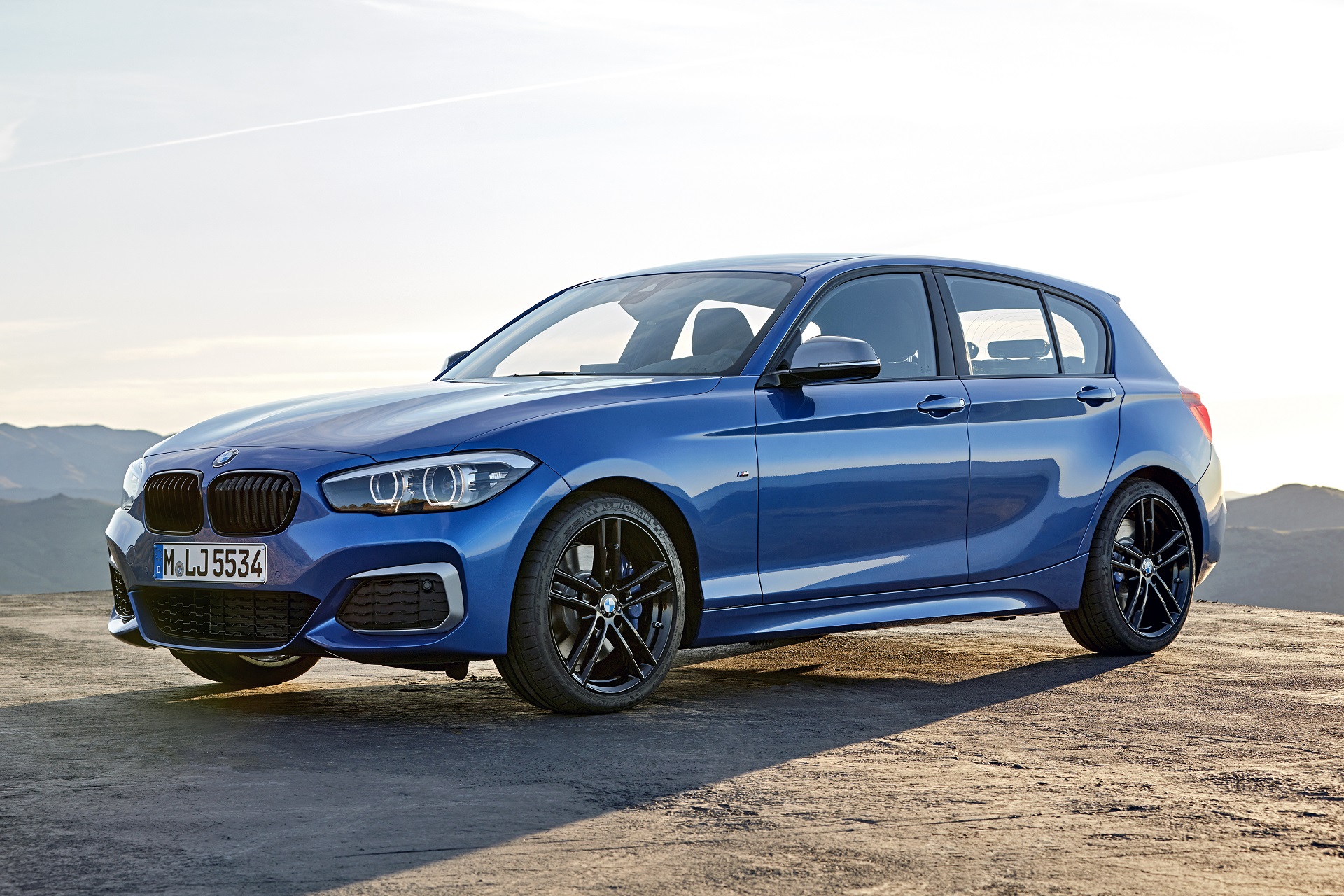
    The BMW 1 Series has been one of the most fun to drive hatchbacks over the previous generations and the automaker has now released the all-new generation of the model. The 2020 BMW 1 Series is quite literally all-new, having been built from the ground up and shares little details with its predecessor. The biggest change by far comes with the front-wheel-drive (FWD) set-up on the third generation that replaces the rear-wheel-drive architecture, which made it such a hoot to drive in the first place. The new 1 Series also comes with All-Wheel Drive (AWD) on the top trims. As a result, the new BMW 1 joins the automaker’s smaller set of FWD cars including the X1, 2 Series and the 1 Series sedan.

    The third generation BMW 1 Series is based on a completely new platform and the design language is also all-new and must we say more proportionate too over the older version. Most prominent are the larger kidney grilles up front that mimic the newer Beamer models, while the bonnet length is long yet in-line with the rest of the body. The headlamps are smartly designed bringing a fresh look and can be had with adaptive full-LEDs that are available as optional. At the sides, the flat beltline on the 1 Series is now slightly raked and the Hofmeister kink gets a subtle update. The rear sports a more athletic appearance with the sharply styled bumper, raked windscreen, and roof spoiler, while the massive wraparound LED taillights to look bold. A first on the new 1er will be the addition of a panoramic sunroof while wheel sizes will range between 16-inch and 19-inch depending on the variant you choose.

    With respect to dimensions, the 2020 1er is 5 mm shorter at 4319 mm (170 inches), whereas the width has increased by 34 mm at 1799 mm. The height is up by 13 mm to 1434 mm, with the wheelbase now shorter by 20 mm and sits at 2670 mm. Nevertheless, the FWD set-up has helped liberate more room in the cabin. You get 33 mm of additional knee room at the rear along with 19 mm of extra headroom and 13 mm of elbow room. The luxury hatchback can also take up more luggage than its predecessor with a cargo capacity of 380 liters, which can be expanded to 1200 liters with the rear seats folded. The automaker says the boot is also wider than before that makes it easy to load and unload luggage, while the tailgate is now electric.

    Inside, the 2020 BMW 1 Series replicates the familiar design language from the larger Beamer models. The car comes with an 8.8-inch touchscreen infotainment system with gesture control and Apple CarPlay compatibility. The instrument console is fully digital and gets a 10.25-inch screen that displays all the necessary information.

    Under the hood, the third generation BMW 1 Series will get two petrol and three diesel engines. The most powerful version will be the M135i xDrive with the 2.0-litre four-cylinder turbocharged motor tuned for 301 bhp and 450 Nm of peak torque. The range-topping model can sprint from 0-100 kmph in 4.8 seconds and has an electronically limited top speed of 250 kmph. An optional M performance package will further shave a tenth of a second on the hatchback. Other engines will range between three- and four-cylinder versions churning out as low as 115 bhp. All units will come paired with a 7-speed dual-clutch or 8-speed Steptronic automatic transmission. There’s a 6-speed manual available as well.

    The new 1 will also come with a host of electronic aids including Lane Departure Warning with active lane return, Active Cruise Control, Lane Change Warning system, rear collision warning and crossing traffic warning. The car also comes with Park Assist, while features like VDC (Variable Damper Control) and  ARB (actuator contiguous wheel slip limitation) technology, further improve the car’s handling capabilities. Customers can also opt for the BMW Digital Key and the BMW Intelligent Personal Assistant on the new 1 Series.

    The all-new BMW 1Series will make its debut in Munich from June 25 to 27 as part of the #NextGen event, while a public showcase has also been planned at Frankfurt in September this year. The previous version of the 1 Series was sold in India, but it’s unclear if the new one will actually make it here. Globally, the car will lock horns against the Mercedes-Benz A-Class, Audi A3 Sportback, Volkswagen Golf and the likes

  • BMW Concept R18 Revealed

    BMW Concept R18 Revealed

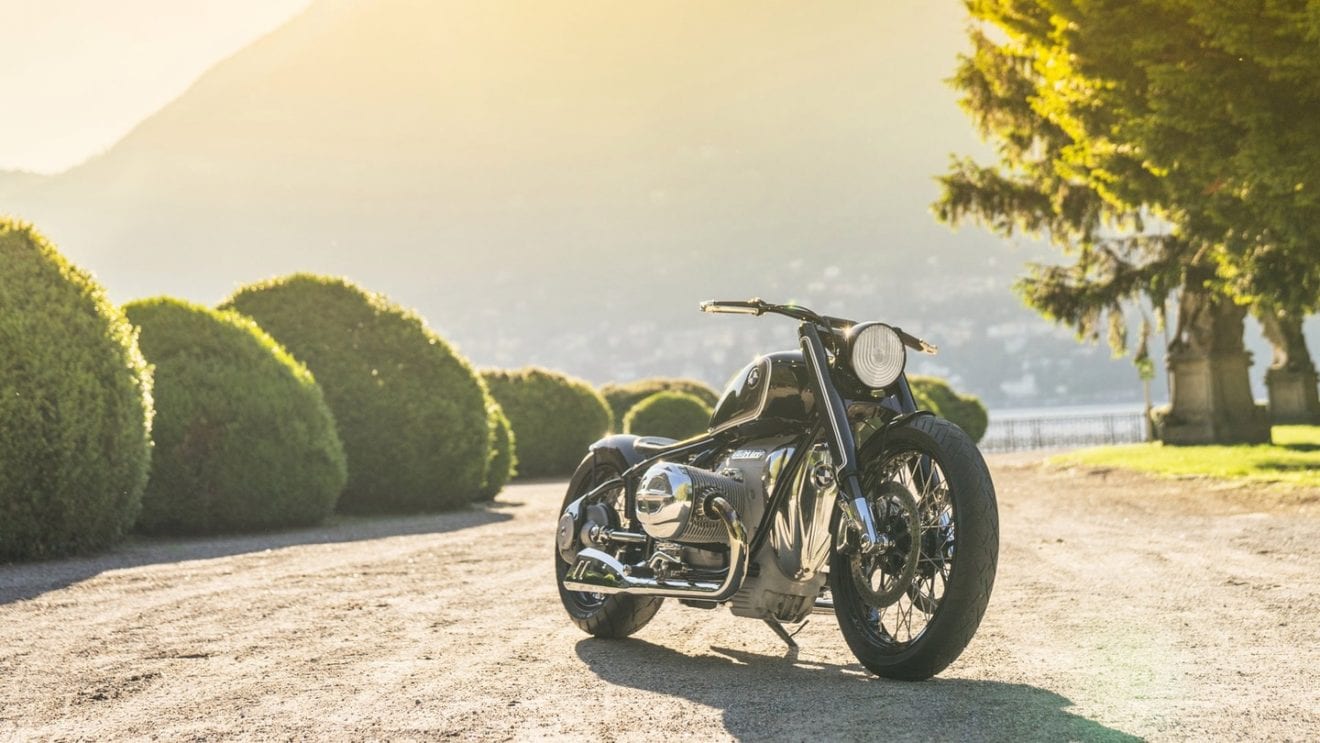
    While BMW Motorrad has a motorcycle or two for almost every occasion and enthusiast, what it lacked was a retro-styled, chrome-laden, laidback cruiser motorcycle, something similar to what Harley-Davidson motorcycles have to offer. But that is set to change. At this year’s Concorso, d’Eleganza Villa d’Este, BMW took the wraps of the Concept R18. It is a beautiful cruiser concept and the design language is similar to that of a bobber motorcycle. The good news is that BMW Motorrad confirms that the Concept R18 will go into production come 2020. In fact, BMW will be launching more such cruiser motorcycles in the future, although exact details are very sketchy at the moment.

    With its ‘factory-custom’ bobber styling, BMW has ensured that it catches the eye of the cruiser motorcycle enthusiast. It says that the R18 is a tribute to the original R5 which made its debut in 1936. The stance of the bike is similar to the 1936 R5 and there are other stylish retro touches such as a teardrop shaped fuel tank, open shaft drive, cantilever suspension et al. The bike gets a 21-inch wheel up front and an 18-inch wheel at the rear, shod with Metzeler Rille tires. Taking the retro quotient higher is the leaf-shaped single seat.

    The BMW Concept R18 gets a massive 1,800 cc boxer-twin engine which has been newly designed and the engine block and transmission are built out of blasted Aluminium. The engine badge bears the name of the concept bike and emphasizes the overall quality. In addition, Solex dual carburetors – similar to those in the BMW 2002 – hark back to the company’s construction history and add the final touch to the motorcycle’s heritage. Will it be coming to India? We are not quite sure at this point in time. But when it does reach international markets, it could very well take on other premium cruiser motorcycle manufacturers such as Harley-Davidson, Indian and Triumph.

  • BMW X5 2019 Launched In India

    BMW X5 2019 Launched In India

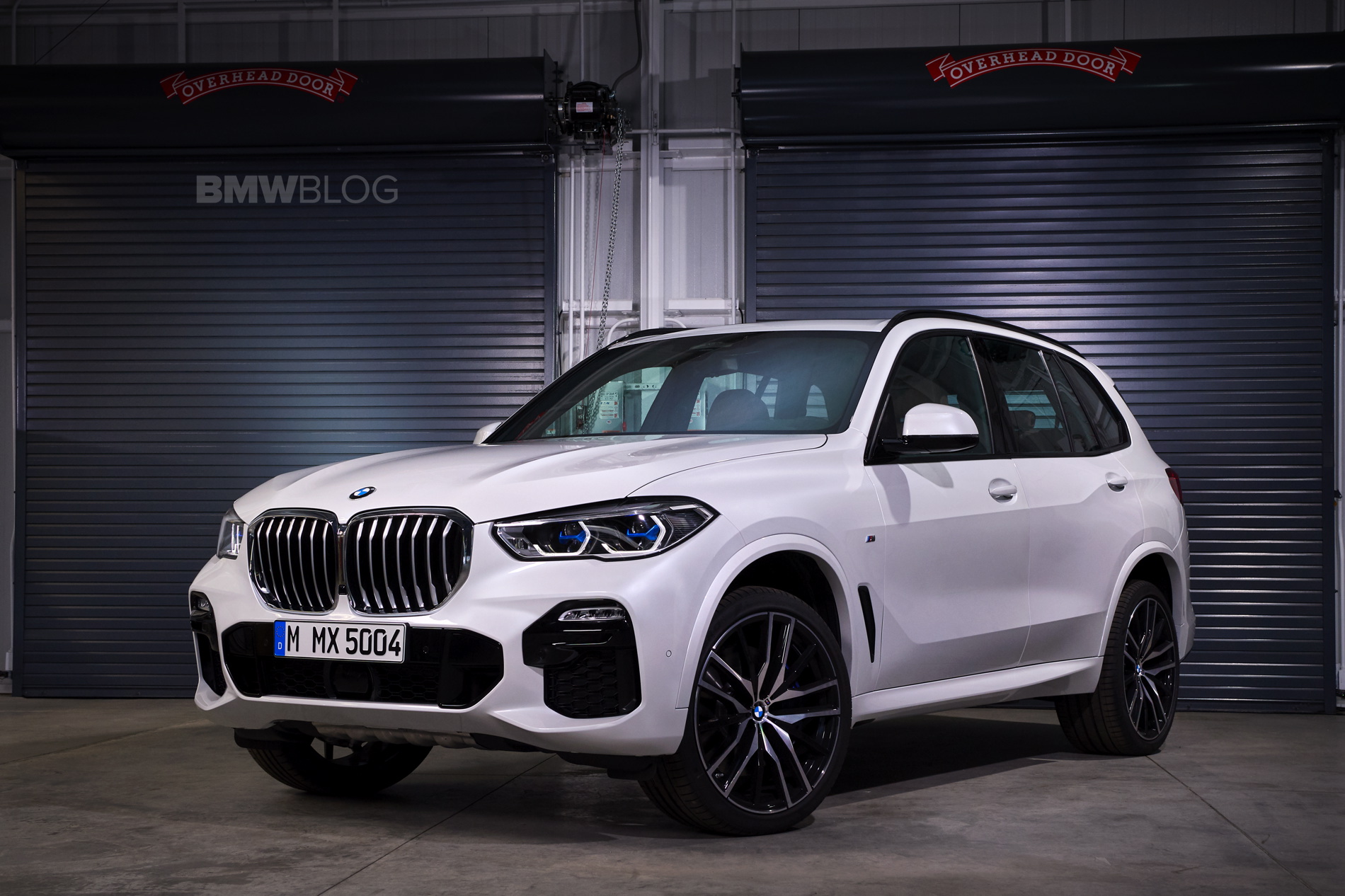
    BMW has launched the new generation of the X5 in India and prices for the SUV start at ₹ 72.90 lakh (ex-showroom India). The company has stated that it will launch 12 new models in the country in 2019 and the new-gen X5 is one among them. The all-new BMW X5 is available in two diesel models – BMW X5 xDrive30d Sport and BMW X5 xDrive30d xLine. The petrol variant BMW X5 xDrive 40i M Sport has also been launched at ₹ 82.40 lakh, however, it will go on sale later in 2019. The price for the new X5 tops out at ₹ 82.40 Lakh.

    Internally codenamed G05, the fourth generation BMW X5 is now based on the CLAR platform that also underpins the 5 Series, 7 Series and the X3 in the automaker’s line-up. The SUV is now larger and more feature-loaded than its predecessor while maintaining the sporty character of the older models. The BMW X5 has been a popular seller for BMW in India but the new gen model has become longer, taller and wider compared to its predecessor.

    It’s the largest X5 ever and this fourth-generation model is 35 mm longer, 32 mm wider and 11 mm taller than its predecessor. The space between the wheels too has increased and it now gains 42 mm on that front and it now stands at 2975 mm. Despite the new model getting bigger, the boot space remains the same at 645 litres that expands to 1,640 liters when the rear seat is folded.

    What’s also different is the way the X5 looks now. The fourth generation BMW X5 gets substantial upgrades on the design and feature front. The signature Kidney grille has grown larger and more imposing on the SUV, while the headlamps are all-LED with X-shaped inserts and get the new adaptive LED DRLs. The front bumper has been reworked and gets larger vents and LED fog lights. The new X5 looks more agile than ever but retains the same silhouette as the older model. The wide LED taillights with the 3D signature add to the distinctive look of the SUV, while the model now gets 21-inch wheels as an option.

    The cabin though is all familiar, in-line with other BMW models and gets the digital instrument console called the BMW Live Cockpit Professional display; along with a floating infotainment screen, updated iDrive along with Apple CarPlay and Android Auto compatibility. Like the other BMW models, you also get gesture and voice commands, as well as a customizable display. The cabin is covered in leather upholstery, while the feature list includes four-zone climate control, wireless charging, screens for rear seat passengers, a panoramic sunroof, welcome carpet light, ambient lighting, and a revised gear-selector lever.

    2019 BMW X5 Key Features

    • Live Cockpit Professional Display
    • Digital Instrument Console
    • Floating Infotainment Screen
    • Updated iDrive System
    • Gesture Control
    • Voice Command
    • Four Zone Climate Control
    • Wireless Charging
    • Rear Passenger Screen
    • Panoramic Sunroof
    • Ambiente Lighting
    The BMW X5 is powered by a 3.0-liter turbo diesel motor.

    Power will come from the 3.0-liter turbo diesel motor tuned for 261 bhp and 620 Nm of peak torque and the BMW X5 can clock triple-digit speeds in 6.5 seconds. The petrol will also be offered soon but for now, there’s just the diesel on offer. The new BMW X5 faces competition from the likes of the Mercedes-Benz GLE,n Volvo XC90, Range Rover Velar, Porsche Cayenne and the Audi Q7.

  • BMW Group Plans To Launch 25 Plug-In’s

    BMW Group Plans To Launch 25 Plug-In’s

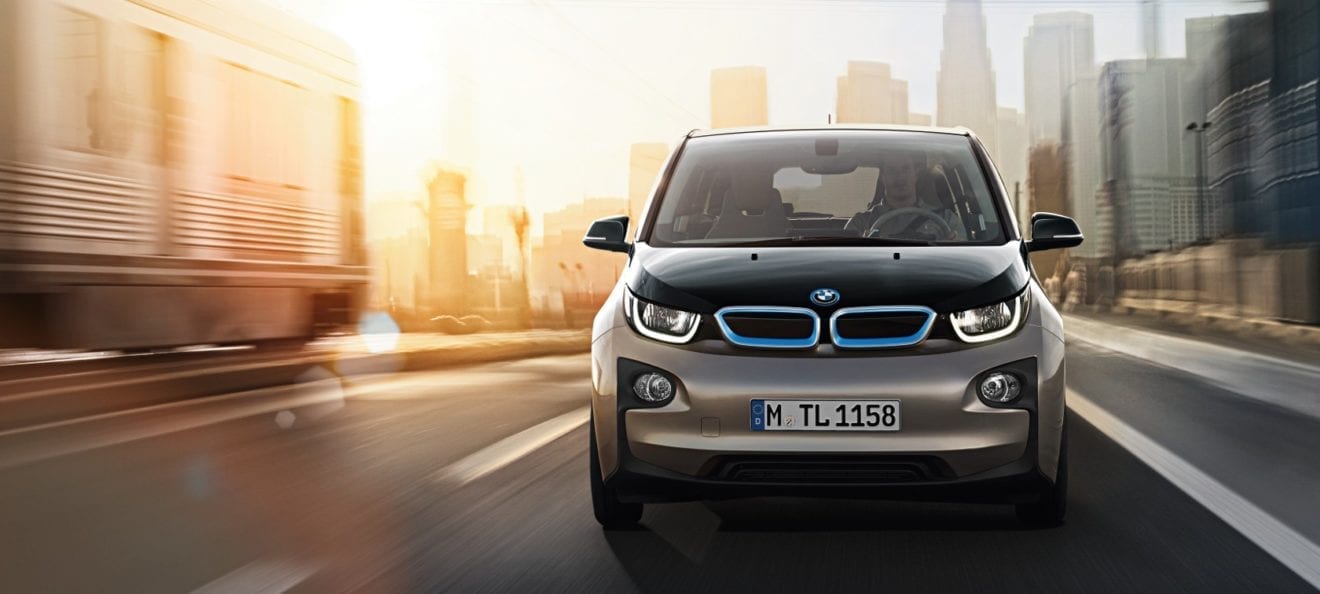
    Since 2013, BMW has been in the game of electric cars and it was then that the company envisioned the future of electrification in automobiles. The ‘i’ brand has been very successful right from the i3 all-electric car to the i8 plug-in hybrid. And now, BMW is looking to expand that portfolio and bring in a lot more cars for its customers. The company announced at an investor meeting that it is going big on its electrification plan. The company plans to launch 25 Plug-In hybrids and 12 All-Electric cars by 2025. Over the next couple of years, the company will focus on bringing out plug-in hybrid versions of its existing models.

    Back in 2017, deliveries of electrified vehicles for BMW jumped by 65.6 percent to 103,080 units. Considering the strong growth it has seen in this space, the BMW Group announced that it will spend more on research and development in 2018. The company spent 6 billion euros in 2017 and that figure jumped to 7 billion in 2018.

    The company met its target of selling 1,40,000 EVs worldwide and has already sold 4 lakh electrified cars across the globe. The company is eyeing the 5 lakh unit sales milestone in 2019. The surge in sales will be helped by the introduction of new products and these will include all-electric BMW iX3, the new i4, and MINI. The BMW Group already manufactures electrified vehicles at ten production facilities.

    In 2019, Plant Oxford will join this list with the start of production of the fully-electric MINI. The BMW i4 is just one of the 25 electrified models that the BMW Group intends to bring to market by 2025. Half of these models will be fully electric. Powered by the fifth generation of battery and drivetrain technology, from 2021 the BMW Group will of offer all-electric vehicles with a range of up to 700 kilometers and plug-in hybrids with an electrical range of up to 100 kilometers.

  • BMW 8 Series Gran Coupe Teased Getting Ready for June

    BMW 8 Series Gran Coupe Teased Getting Ready for June

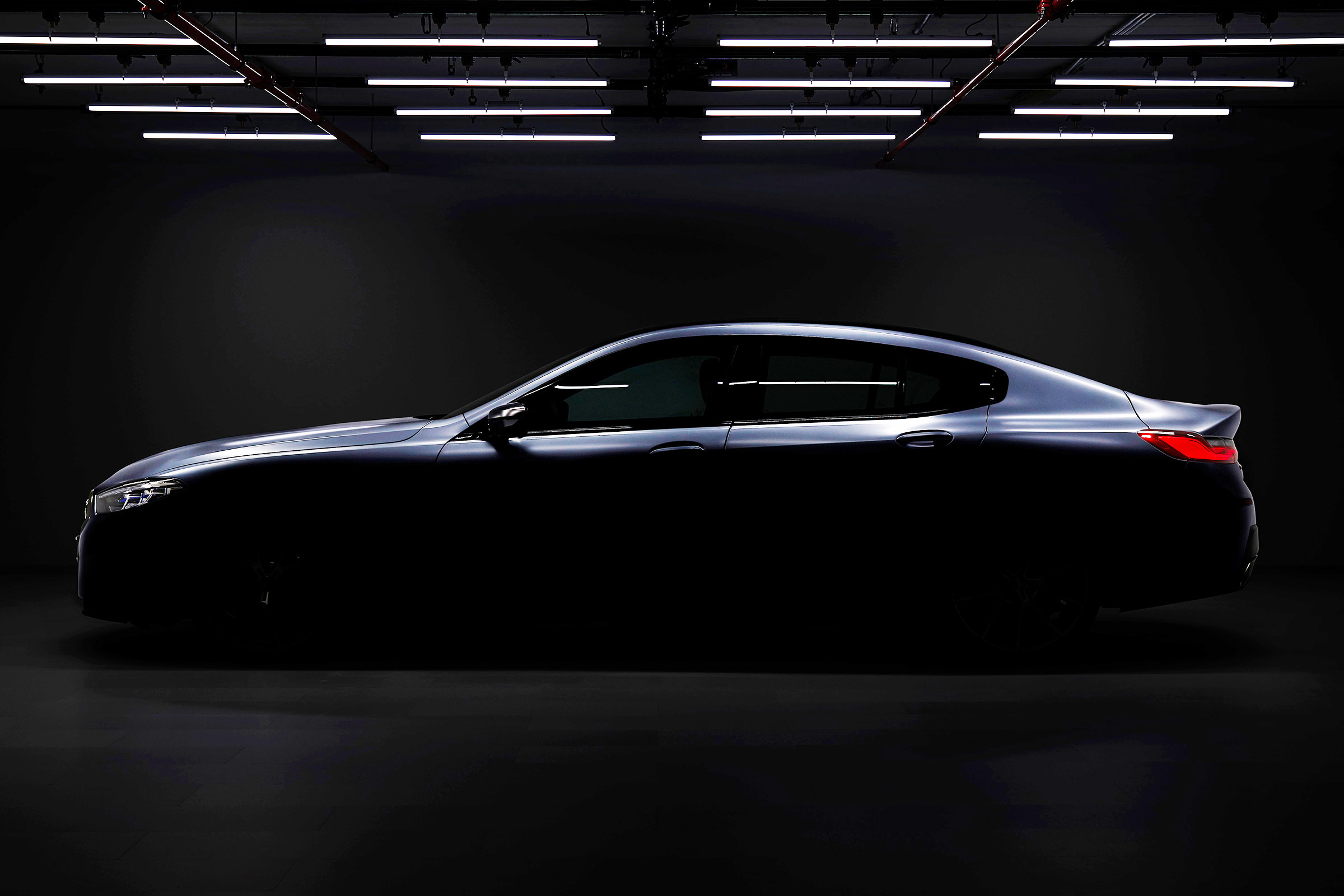
    We’ve gone gaga over the 8 Series Coupe when BMW first teased it. It looks jaw-dropping gorgeous but it left us wondering if the new flagship will be limited to two-doors. Sooner rather than later, the spy pictures of the four-door Gran Coupe surfaced online and we just couldn’t wait to see the car. Finally, the Bavarian carmaker has teased the 8 Series Gran Coupe and has confirmed that the wraps will be pulled off this year in June in Munich.

    BMW came up with a rather interesting strategy to reveal the 8 Series range. Two of the best looking models of the line-up- the two-door coupe and convertible were shown first and they just blew our mind. And finally the four-door Gran Coupe has followed. Though the teaser image reveals the side of the Gran Coupe which looks gracious and sumptuous, the front and rear are expected to be identical to its two-door counterpart. However, the wheelbase will be larger than the Coupe version, given that it will seat four. The sharp flowing character lines build upon the aesthetics and the rising shoulder line looks strong throughout its length. The low slung stance further keeps the sporty quotient intact.

    BMW will launch the 8 Series Gran Coupe in September this year which is when we would get to know more about it including the engine line up. We expect it to share engines with the latest-generation 7 Series sedan. So the 3.0-liter, inline six-cylinder petrol, and diesel engines are expected under the hood.

  • Microsoft, BMW team up to drive industrial IoT adoption

    Microsoft, BMW team up to drive industrial IoT adoption

    Microsoft and BMW have teamed up on a new initiative that they say will speed up the adoption of industrial IoT solutions.

    The two announced  at Hannover Messe earlier this month that they plan to develop an Open Manufacturing Platform (OMP) aimed at enabling faster and more cost-effective innovation in the manufacturing sector.

    In manufacturing today, production and profitability can be hindered by complex, proprietary systems that create data silos and slow productivity.

    The OMP is designed to break down these barriers with the creation of an open technology framework and cross-industry community, the companies said in a joint statement.

    It is expected that the initiative will support the development of smart factory solutions that will be shared by OMP participants across the automotive and broader manufacturing sectors.

    The goal is to significantly accelerate future industrial IoT developments, shorten time to value and drive production efficiencies while addressing common industrial challenges, the companies said.

    The OMP will be built on the Microsoft Azure industrial IoT cloud platform. BMW already manages more than 3,000 machines, robots and autonomous transport systems on Azure cloud, IoT and AI. The company said it will provide use cases to other manufacturers who sign up to the platform.

    Microsoft and BMW said they aim to bring in more manufacturers and suppliers and the goal is to have between four and six partners with them, working on 15 use cases by the end of the year.

    According to the companies, members will have access to reference architecture with open source components to integrate their own systems and a repository of data models to apply machine learning solutions.

    The platform meets the interoperability standards established by OPC.

    “The use of open international industry standards such as OPC UA in the OMP community enables manufacturers, machine builders and suppliers to integrate their existing equipment and systems efficiently and securely,” said Stefan Hoppe, president and CEO of the OPC Foundation. For a long time, companies have promoted proprietary, closed ecosystems — the OMP commitment to open development will shape tomorrow’s manufacturing.”

  • BMW To Buy Cobalt Directly from Australia

    BMW To Buy Cobalt Directly from Australia

    German carmaker BMW will buy cobalt, a key component for electric vehicle (EV) batteries, directly from mines in Australia and Morocco to ensure they are not produced by child labor, an executive said on Tuesday.The announcement came as the London Metal Exchange (LME) launched an initiative under which it could ban or delist brands that are not responsibly sourced by 2022 to help root out metal tainted by child labor or corruption.

    Andreas Wendt, BMW board member responsible for procurement, told a briefing in Paris that the new supply of cobalt would be used in the carmaker’s next generation of EVs in 2020.

    The world’s largest known reserves of cobalt are found in the Democratic Republic of Congo, where the raw ingredient is often mined by small, artisanal operations and supply chains are not strictly monitored.

    BMW said last year it was exploring ways to improve working conditions for mining cobalt in Congo through a pilot project.

  • BMW 620d Gran Turismo Launched In India

    BMW 620d Gran Turismo Launched In India

    Adding a new entry-level variant to the 6 Series GT line-up, BMW India has introduced the new 620d in the country. The new BMW 620d Gran Turismo is priced at ₹ 63.90 lakh and is available in the Luxury Line design scheme. The 6 GT is already available in the 630d GT diesel Luxury Line and M Sport trims, and the new 620d GT joins the model at the automaker’s Chennai-based production facility for local assembly. The new model is now available for bookings at the company’s dealerships and BMW says it diversifies the 6GT’s diesel portfolio. Despite being the more affordable version, the new 620d GT is loaded on all the essential electronics and creature comforts that the German models are known for.

    Speaking on the launch, BMW Group India – President, Dr. Hans-Christian Baertels said, “With the launch of the first-ever BMW 6 Series Gran Turismo, we created a new segment in the Indian luxury car market. Its distinctive vehicle concept, which fuses the long distance comfort of a luxury sedan and modern functionality in an alluring coupé style, has proven to be an instant hit in this class and has become a trend-setter. The BMW 620d Gran Turismo featuring an exceptionally efficient entry level diesel engine further strengthens the portfolio of the first-ever BMW 6 Series Gran Turismo.

    This is for the first time that the BMW 620d Gran Turismo variant is being sold in India. The model can seat five in comfort and gets a host of features including a two-part panorama glass roof, electrically operated adjustable rear seats with electrically operated sunblinds for rear side. There is also a rear-seat Entertainment Professional system with two 10.2-inch colour screens mounted behind the front-seat backrests, a BluRay player, HDMI connection for mobiles, as well as various connections for MP3 players and gaming consoles.

    The design language on the BMW 6 Series GT line-up was updated last year and the model 620d Gran Turismo continues to come with the frameless windows, distinctive coupe roofline, and an automatic tailgate. The wide kidney grille continues to bring the imposing stance and is complemented by the wide Adaptive LED headlights with BMW Selective Beam and cornering lights. The 620d GT also comes with an Active rear spoiler, while the Luxury Line trim adds a dash of chrome to the package for a premium appeal.

    Inside, the BMW 620d Gran Turismo gets a leather-wrapped sports steering wheel, ambient lighting with exclusive colours and fine wood inserts across the cabin. The pearl chrome finish also highlights the exclusivity of the variant.

    With respect to the powertrain, the BMW 620d GT uses the 2.0-litre four-cylinder Twin Turbo diesel engine tuned for 188 bhp and 400 Nm of peak torque available between 1750-2500 rpm. The 620d Gran Turismo is fast and can propel from 0-100 kmph in 7.9 seconds. The motor is paired with an 8-speed Steptronic automatic transmission and gets cruise control, as well as multiple driving modes – Sport, Comfort, Comfort+ , Eco Pro and Adaptive. The car comes with an adaptive 2-axle air suspension with automatic self-levelling for improved ride comfort and also sharpens the driving dynamics.