Tag: BMW

  • BMW Blames Trade Headwinds with Emissions Tests

    BMW Blames Trade Headwinds with Emissions Tests

    Profits at German high-end carmaker BMW tumbled in 2018, the firm said Friday, with trade headwinds and tough new EU emissions tests’ drag on performance set to last into this year.

    “Challenges facing the entire sector are unlikely to diminish in the coming months,” chief executive Harald Krueger said in a statement. Net profit at BMW slumped 16.9 percent to 7.2 billion euros ($8.2 billion), the group said.

    The Munich-based firm pointed to “political uncertainty, a cooling global economy… rising production costs to meet regulatory requirements, exchange rate effects and rising raw materials prices” as weights on its earnings.

    Operating, or underlying, profits fell less sharply, shedding 7.9 percent to 9.1 billion euros. Revenues were less strongly affected, falling 0.8 percent to 97.5 billion. Other carmakers’ scramble to sell cars not certified under the so-called WLTP test cycle before its introduction in September led to “unexpectedly intense competition”, BMW said, penalising the group for its decision to adopt the new procedure early.

    Meanwhile the group’s bottom line also suffered as it was ordered to recall over a million diesel cars to replace faulty components. BMW boosted unit sales at its flagship brand slightly, to 2.1 million cars, but deliveries of Minis fell back 2.8 percent, to 361,500. Luxury subsidiary Rolls-Royce lifted shipments 22 percent, to 4,107. Looking to different world regions, sales in Europe were flat while the Americas and Asia recorded slight growth.

    “Volumes grew signficantly” in China as BMW ramped production of X3 SUVs locally, the group said.

    Bosses said they would offer shareholders their second-highest dividend payout ever, at 3.50 euros per share. Looking ahead to 2019, BMW expects a “slight increase” in unit sales, in part thanks to new models. Investors offered a mildly positive reaction to the news, with BMW stock gaining 1.1 percent to trade at 74.59 euros around 11:30 am in Frankfurt (1030 GMT).

  • BMW And MINI Lifestyle Collection Now Will Be Available On Amazon

    BMW And MINI Lifestyle Collection Now Will Be Available On Amazon

    In a bid to make its original lifestyle collection more accessible to automotive enthusiasts in India, BMW India today announced launching the latest range of BMW and MINI branded products on Amazon India. Customer now have access to a wide range of original BMW and MINI branded clothing, accessories, luggage, and many other types of merchandise, which can now be purchased online.

    Customers now have access to wide range of original clothing, accessories, luggage, and more

    Hans-Christian Baertels, President, BMW Group India said, “The fascinating BMW and MINI Lifestyle Collection is created to add a touch of style, sophistication and inspiration to everyday life. We are thrilled to introduce the unique BMW and MINI Lifestyle Collection for our customers on Amazon India. This will enhance the reach and accessibility of our authentic and aspirational range of lifestyle products beyond the existing retail area in our showrooms. Be it golf equipment, bags, wallets, watches, t-shirts, jackets or even miniature cars, there is always something for everyone.”

    The collection will include products themed after the multiple branches within the BMW family like – BMW M Collection, BMW Motorsport Heritage Collection, BMW i Collection, Montblanc for BMW Special Edition, the BMW Iconic Collection and BMW Miniature Collection. A similar collection of MINI-branded clothing and bags to luggage, accessories and mobility items will also be on offer.

  • BMW Korea announces recall of 99,000 additional vehicles

    BMW Korea announces recall of 99,000 additional vehicles

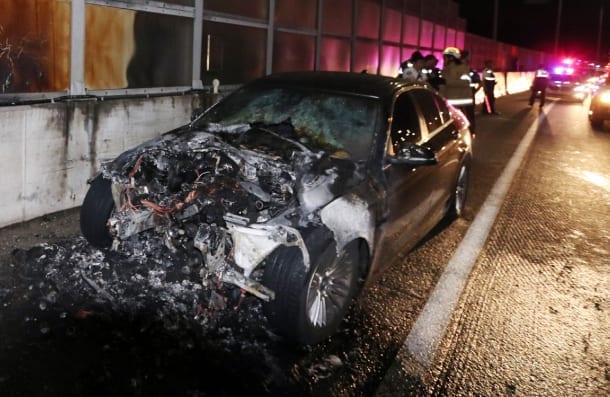
    BMW on Wednesday announced another recall of an additional 99,000 vehicles, with 20,000 of them recalled immediately on concerns of engine fires. The remaining 79,000 will be recalled if replacement parts are found to be faulty. The Ministry of Land, Infrastructure and Transport on Wednesday announced that it has told the German carmaker to follow up with a recall plan that it submitted last week.

    The recall plan followed the investigation results announced by a joint investigation team on Dec. 24 in regard to BMW vehicle catching fire in Korea.

    The investigation team at the time announced that the fires were not only caused by the emission reduction system, or exhaust gas recirculation (EGR) system, but also by the intake manifold.

    The 20,363 vehicles that were in the first recall in July last year will be the first in line to be re-recalled, this time to check the intake manifold.

    These are vehicles with EGR modules that have not been replaced.

    The government said it will also inspect 80,000 BMWs to see if they have any leakage problems.

    Last year, BMW recalled 106,000 vehicles after they began bursting into flames last summer.

  • BMW Group Malaysia achieves another record year of sales

    BMW Group Malaysia achieves another record year of sales

    BMW Group Malaysia delivered a total of 14,338 units of BMW, MINI and BMW Motorrad vehicles last year, marking its eighth consecutive year of record sales. The total number of vehicles delivered last year was 13% higher than 12,681 units delivered in 2017. The group said in a statement that the strong performance in Malaysia reflects the group’s business performance worldwide last year, where a total of 2.65 million BMW, MINI and BMW Motorrad vehicles were delivered.

    Globally, the BMW brand delivered a total of 2.12 million (+1.8%) vehicles, while MINI saw 361,531 new owners. BMW Motorrad also achieved record deliveries with 165,566 new owners, an increase of 0.9% compared to 2017.

    “In 2018, BMW Group Malaysia achieved numerous milestones which contributed to the success we celebrate today. Over the course of the year, we introduced 12 new models across the BMW and MINI brands – of which four were electrified vehicles. We also unveiled two new concept vehicles for the first time ever not only in Malaysia, but in Southeast Asia,” said BMW Group Malaysia managing director Harald Hoelzl.

    Hoelzl said the group also grew its infrastructure for electromobility in Malaysia by introducing new BMW i Charging Facilities in four different states to facilitate its vision for future mobility in Malaysia.

    In 2018, the BMW brand saw 12,008 new owners in Malaysia, 13% higher than 10,618 new owners in 2017 while MINI recorded a double-digit growth of over 18%, delivering 1,200 vehicles last year compared with 1,011 units previously.

    BMW Motorrad saw 1,130 new owners in 2018, which recorded a growth of over 7% compared to 1,052 in 2017.

    BMW Group Malaysia also recorded its best performance for its electrified vehicles in 2018. Of the total cars delivered, 57% comprised of electrified BMW and MINI (7,532).

    Meanwhile, BMW Group Financial Services Malaysia achieved a strong business portfolio with over 6,100 contracts signed in 2018. It successfully financed every four out of 10 BMW and MINI vehicles delivered last year as well as every six out of 10 BMW Motorrad vehicles last year.

    “2019 will be another exciting year for the BMW Group in Malaysia with a strong portfolio of products to be introduced here, mirroring the biggest model offensive for the company worldwide,” said Hoelzl.

  • BMW adding Tmall genie to connected-cars in China

    BMW adding Tmall genie to connected-cars in China

    Alibaba Group’s smart assistant, Tmall Genie, will launch in select vehicles from the BMW Group in China by the end of the year, the two companies announced at CES in Las Vegas. Tmall Genie, a product made by Alibaba’s artificial-intelligence research division, A.I. Labs, will be fully integrated in BMW vehicles, offering drivers a number of in-car entertainment and shopping options while on the road, the companies said.

    As Chinese consumers have come to expect a seamless, digital experience both at home and at brick-and-mortar retail spaces, they should expect the same experience in their car, said Dieter May, senior vice president of Digital Services and Products at BMW Group.

    “With the integration of Alibaba’s Tmall Genie in BMW vehicles in China we are adding a digital ecosystem, which will open up new possibilities that customers can access quickly and safely from the car,” May said. “This development sees BMW reaching a new milestone in China in terms of intelligent connectivity between the customer’s vehicle and their digital touchpoints.”

    The global connected-car market is expected to grow 270% by 2022, with more than 125 million connected passenger cars to be shipped between 2018 and 2022, according to a report from market research firm Counterpoint Insights. The report, released last year, pointed to the technology’s rapid uptake in China as one of the key drivers.

    Monday’s announcement follows the integration last year of “BMW Connected,” the German automaker’s connected-car app, with Tmall Genie. Consumers with Tmall Genie in their home could perform functions such as double checking to make sure the doors and windows of their BMW were open or closed. Now, they will be able to operate vehicle functions through the in-car Tmall Genie.

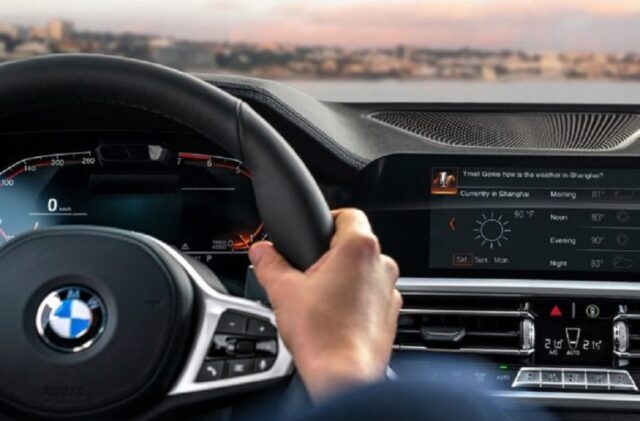
    Drivers can also use Tmall Genie to place online orders, view cinema listings, listen to their favorite playlist or check the weather at their destination, as well as access information from Tmall Genie via audio output or in text and image form on the BMW Display Screen. And they can use Tmall Genie to call up appointments saved in BMW Connected.

    “We launched the ‘AI+Car’ solution last year to provide a more-intelligent and connected experience for Chinese car users through Tmall Genie’s AI-powered voice interaction and service capabilities for cars,” said Alibaba Group Vice President Miffy Chen, who serves as general manager of Alibaba A.I. Labs.

    “Among our collaboration with premium automakers, we are very glad that BMW will be the first premium auto brand to bring selected car models that fully integrate Tmall Genie to the China market,” she said.

    The deal with BMW Group is just the latest involving Tmall Genie’s integration with automobiles. In September, A.I. Labs said it would integrate Tmall Genie into some vehicles made by Gothenburg, Sweden-based Volvo Cars, giving drivers the ability to monitor and control their smart home devices from their cars. Tmall Genie is also compatible with Volvo’s connected-car app, as well as those of Germany’s Daimler and Audi.

    Elsewhere in the autos sector, Alibaba Cloud in September said it would collaborate with German engineering and electronics company Robert Bosch GmbH on a self-parking feature in select sites in China that is powered by cloud software. At the same time, Alibaba also unveiled the latest model of its internet car in partnership with U.S. automaker Ford, which was part of a tie-up signed by the two companies in 2018. Ford Kuga SUV customers now can order a 10.4-inch center screen and software powered by Alibaba-designed operating system AliOS.

  • BMW Korea fined $13M over emissions

    BMW Korea fined $13M over emissions

    A Seoul court fined BMW Korea 14.5 billion won ($12.9 million) for manipulating documents on emissions to sell some 29,000 vehicles in Korea. The Seoul Central District Court announced Thursday that the local unit of BMW is guilty of violating customs law. The automaker was found guilty of forging emissions test papers from 2011 to obtain certification from the National Institute of Environmental Research under the Environment Ministry that its cars meet local emissions standards. Roughly 29,000 cars were certified this way, according to the court.

    “The automaker has undermined government efforts to improve air quality in Korea,” the court said in a statement. “This also damaged local customers’ trust in BMW.”

    The court also added that BMW Korea took substantial profits over the years due to the manipulation, showing no effort to abide by local laws.

    “The reason for making [carmakers go through] a stringent certification process is because car emissions have substantial impact on air quality,” the court said.

    The Seoul court also found six former and current executives of the automaker involved in the case guilty. Three executives were sentenced to eight to 10 months in jail, with three others given a four to six month suspended sentence with probation.

    On Thursday’s ruling, BMW Korea said in its official statement that the company “will respond following an appropriate legal process after thoroughly reviewing the case,” adding that it cannot give a “detailed answer yet.”

    Last month, the Korean unit of rival German automaker Mercedes-Benz was also found guilty of violating the emissions certification process. The court gave Mercedes a 2.81 billion won fine and handed down an eight-month jail sentence to the executive in charge of emissions certifications. The carmaker was charged for failing to get new certifications after changing some emissions-related parts. Mercedes said it will appeal the ruling.

    In its official statement last month, Mercedes said it was an administrative mistake, adding that it was unintentional.

  • 6 months of recalls, but BMWs are still burning in Korea

    6 months of recalls, but BMWs are still burning in Korea

    Things aren’t looking good for beleaguered German automaker BMW, with yet another vehicle reported to have burst into flames on Christmas Day. A BMW 520 sedan caught fire at around 6 p.m. on Tuesday in Gongju, South Chungcheong.

    Earlier that day at 1 a.m., the driver of a BMW 5GT sedan saw black smoke coming out of the back of their vehicle while driving on a highway bound for Pohang, North Gyeongsang. The car, subject to recall, had already gone through safety checks.

    The driver said the car was moving at 110 kilometers per hour (68 miles per hour) on cruise mode, but it started slowing down even though it was moving downhill and then smoke came out the back. The car didn’t burst into flames as the driver immediately pulled over and called the police.

    There were no casualties caused by either incident, but the news stoked fears over the safety of BMW vehicles. Just one day earlier, on Dec. 24, a BMW 320d sedan caught fire in Gwangju.

    The burnt 320d was a 2009 model not included in the 65 models currently subject to recall.

    A public-private investigation team under the Ministry of Land, Infrastructure and Transport had already raised the need of an additional recall for defective designs in exhaust gas recirculation (EGR) system when it released its examination report on BMW fires on Monday.

    The team confirmed that the major cause of the fires was a leaky EGR module, the same conclusion that the German carmaker came to, but disputed BMW’s claims that changing the faulty hardware resolves the issue. The team said there may be a fundamental problem with the EGR design and a simple replacement may not completely resolve that.

    “We spotted coolant boiling within the EGR cooler, and we think the boiling is due to a faulty design of the EGR,” the joint investigation team said in a statement. “If boiling continues, this could lead to a crack in the EGR cooler, [making them leaky.]”

    “New EGR systems won’t lead to fires right away, but the team found that after several years of constant driving heating up the EGR cooler, a similar fire could reoccur as long as the design stays the same,” a spokesperson from the Land Ministry said in a phone call on Wednesday. “We demanded that BMW come up with an explanation regarding EGR design.”

    The joint team also said the intake manifold connected to the leaky EGR coolant should be recalled as well after check-ups if it has been polluted or weakened by a mixture of leaked coolants and engine oil sticking to pipes. The team has delivered its research findings to the carmaker, which has to consult with its German headquarters and come up with a recall plan.

    In the meantime, an increasing number of BMW car owners are signing up to file a suit against the company. Barun Law, which is currently preparing for a class action suit against the carmaker, has collected around 1,000 car owners who would like to take part in the suit as of Wednesday. The Korea Consumer Association is also preparing for a separate suit and has gathered roughly 2,000 participants.

  • BMW assembly on the anvil, says Vietnam auto conglomerate

    BMW assembly on the anvil, says Vietnam auto conglomerate

    THACO, a major player in the country’s commercial vehicle segment, plans to assemble German brand BMW cars in Vietnam. Tran Ba Duong, chairman of the Truong Hai Auto Corporation (THACO), said at a conference last week that BMW cars will be the next vehicle that THACO assembles in the country, following other brands like Peugeot, Kia and Mazda.

    He did not reveal further details about when this would happen and what models would be assembled.

    THACO became the sole authorized distributor of BMW in Vietnam starting January this year, after Ho Chi Minh City-based Euro Auto lost its license for smuggling 133 BMW cars in December 2016.

    Duong had said earlier that he plans to open 15 BMW and MINI (a car brand owned by BMW) showrooms by early next year. However, the company currently runs only one BMW showroom in Hanoi, another in HCMC and one MINI showroom, also in HCMC.

    THACO has not revealed its revenue from selling BMW cars this year, but a source told VnExpress that the company sold almost 400 vehicles in the first half of this year. Euro Auto, at its peak, sold 1,400 BMW and 400 MINI cars a year.

    BMW cars were first assembled in Vietnam in 1995 by the VMC company in Hanoi. However, low sales led to the factory’s shutdown in 2005, and VMC had to spend two years selling its inventory.

    Mercedes-Benz is currently the only luxury car brand that assembles its vehicles in Vietnam, and it tops domestic market sales in this segment. Industry insiders say that if BMW cars are assembled in the country again, they could emerge a strong competitor, especially in terms of price.

  • Hyundai’s Genesis G70 named Motor Trend’s Car of the Year

    Hyundai’s Genesis G70 named Motor Trend’s Car of the Year

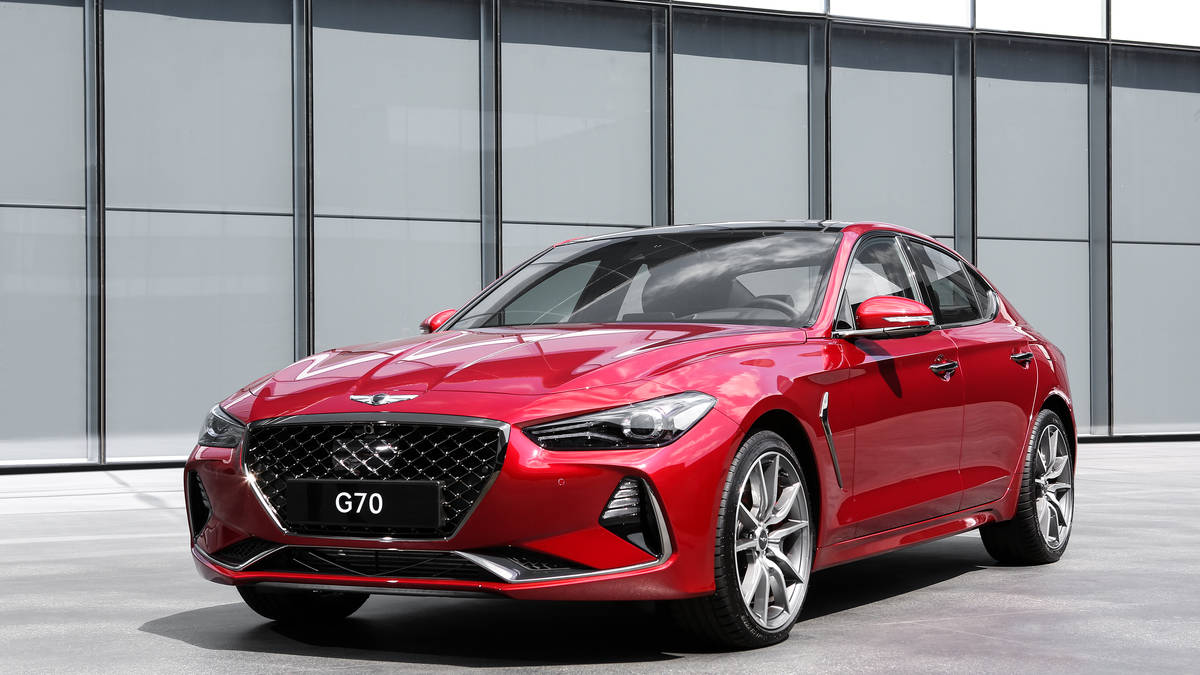
    Hyundai Motor’s luxury Genesis G70 sedan was selected as the Car of the Year by U.S. auto magazine Motor Trend, firmly establishing it as a legitimate alternative to BMW’s long-reigning 3 Series. The G70’s victory was proclaimed in Motor Trend’s January issue with the headline “A Star is Born.” The vehicle competed with 20 other models including the Audi A6, Mercedes-Benz CLS and Lexus ES.

    It is the first time a Korean car has won the award since the media outlet began the Car of the Year award in 1949. Last year, the winner was the Alfa Romeo Giulia, while in 2016, it was the Chevrolet Bolt EV.

    The magazine praised the rapid development that Hyundai Motor has achieved in its quality and brand awareness in such a short time, pointing out that the Korean brand first entered the U.S. market in 1985 selling a “Giugiaro-designed hatchback for the low, low price of $4,995.

    “Fast-forward to the present. How beyond belief is that the same cheap and cheerful automaker – Hyundai – not only has launched a luxury brand but has also built a better BMW 3 Series fighter right out the gate than the Japanese luxury brands have in numerous attempts?” the article read.

    The judging panel, made up of the magazine’s editors and engineering experts from top car brands, praised the sedan’s performance, particularly when equipped with a 3.3-liter engine. Its cousin, Kia Motors’ Stinger, which shares the same platform as the G70, missed the spot last year due to its lack of a sporty suspension.

    As an all-rounder, the Genesis G70 “pulls to infinity and beyond,” said Chris Theodore, a guest judge.

    Hyundai Motor expects its triumph to continue next year with the North American Car of the Year award, which will be announced at the North American International Auto Show in Detroit in January.

    “The Motor Trend’s Car of the Year award is expected to have positive effect in Genesis sales,” a Hyundai Motor spokesman said.

    The Genesis G70 was the first model to be released under Genesis after it was launched independently of the Hyundai brand. Other models – the G90 and G80 – were just partially revamped and renamed versions of existing models under Hyundai.

    The model ranked No. 1 in this year’s J.D. Power survey in quality, pushing aside long-running luxury brands like Porsche and BMW.

    The accolades didn’t translate to sales, however, as it continues to struggle in the U.S. market. The Genesis G70 sold 51 units in October in the United States.

  • BMW expands recall on fire risk to 1.6 million diesel vehicles

    BMW expands recall on fire risk to 1.6 million diesel vehicles

    BMW is recalling about 1.6 million diesel cars to fix a potential fire hazard in their engines, expanding repairs from just under half a million vehicles in Europe and Asia. The voluntary service action follows a BMW investigation that found coolant could leak from the car’s exhaust recirculation unit. The defect can lead to sparks while driving and cause fires in “in extreme cases,” the automaker said Tuesday in a statement.

    South Korea’s government, after reports of 40 fires this year, asked drivers to keep vehicles off roads until undergoing checks. Police also raided the automaker’s office in Seoul to probe the safety issue, after videos of cars engulfed by fire went viral.

    The vehicles affected — diesels with four- and six-cylinder engines — were produced between 2010 and 2017, BMW said.

    After the initial recall announced in August, BMW’s internal investigation found more vehicles with similar technical setups. The company said it will replace the components as necessary.

    BMW last month cut its profit forecast, blaming an increase in warranty provisions alongside trade tensions and pricing pressure.

  • BMW India To Launch 12 New Models In 2019

    BMW India To Launch 12 New Models In 2019

    BMW plans the largest ever product offensive from any manufacturer in India in the coming year. 2019 will see the introduction of a slew of new products that BMW expects will really fire up the market and help strengthen its position in the premium car space. The plan is to bring twelve model launches to India next calendar year from the BMW brand, and two additional new models also from MINI. The motorcycle side of the business will also see two all-new models being added in.

    This will be further supplemented by new variants or updates on existing products, Speaking at the inauguration of BMW India’s brand new headquarters in Gurgaon, Hildegard Wortmann, Senior Vice President – Region Asia Pacific, BMW Group said the new car strategy is planned across the region, with India playing a strong part in it. “On a worldwide scale, it (will be) the biggest product segments that we have done at BMW. So we are really going full blast here into the product segments and I can full-heartedly say, the future is really bright. Fantastic cars coming, strong design aspects, strong performance, and you can feel the joy of BMW in every instance now!”, she added.

    Spearheading that charge will be the most awaited new generation of the BMW 3 Series sedan. The 7th generation G20 just made its public debut at the recently concluded Paris Motor Show and it will get to India next year. There are big expectations from the new sedan, which includes its performance on the road, as well as on the sales charts. Speaking about the 3 series and also another significant upcoming model, Ms Wortmann says, “Clearly if you look at it, the core of BMW business around the 3 series is a very very important part of our business. And having the new 3 series coming is obviously a milestone again. I think I am not exaggerating if I see the 3 series as an icon in the automotive industry, not just in India, but everywhere in the world. So having that model coming next year is very exciting. Personally I think the big news will be the X7, where again we created something very special, very new, and I think that one will have very big impact.” So the other big plan then is a huge offensive of the X range of cars. Currently the X portfolio comprises four models, but in 2019 that will go to seven with the addition of the X7 flagship SUV, as well as the X2 and X4 crossovers. BMW sees much potential for the large and very luxurious X7 in the Asia Pacific region as a whole, but particularly so in India.

    BMW India had its most successful year in India in 2017, with total car sales at 9800 units, which was a 25 per cent growth over the previous year. And it expects 2018 to end even bigger, with the first nine months already showing an 11 per cent year-on-year growth at 7915 units. But next year will clearly be another one for the record books, and also one where it might be able to eye the number one slot again – held by Mercedes-Benz for 3 years straight. “I think we’ve shown over the 11 years that we have to find the right strategy, the right way of approaching the market, and really making sure we grasp what customers desire here, I think last year was a really good jump and I am highly satisfied to seeing the development here. And 2018 as a strong year now, with the major launches – you’ve seen the 6 GT coming and again a new segment that we created. And obviously the future is very bright as I look forward to the next year. 12 launches! So it will definitely keep the team here, spending long evenings in these offices!” says Ms Wortmann.

  • BMW, Northvolt, Umicore team up on battery recycling

    BMW, Northvolt, Umicore team up on battery recycling

    BMW will team up with Northvolt, which is building Europe’s largest battery factory in Sweden, and Belgium’s Umicore to develop a process for electric car batteries to be recycled, the automaker said in a statement. BMW had a funding investment of undisclosed size in the venture, the Swedish startup, which plans to build a factory in Sweden to produce 32 gigawatt hours (GWh) of battery capacity a year by 2023, said on Monday.

    The partnership could indicate that BMW will source batteries from Northvolt, giving investors confidence to fund the project that is expected to raise debt and equity next year.

    The project aims to create a “closed life cycle loop” for battery cells, which will be manufactured using a recyclable design and used in electric vehicles, then possibly as stationary storage devices before finally being recycled and reused.

  • BMW Luxury Lounge Showcases Future Products

    BMW Luxury Lounge Showcases Future Products

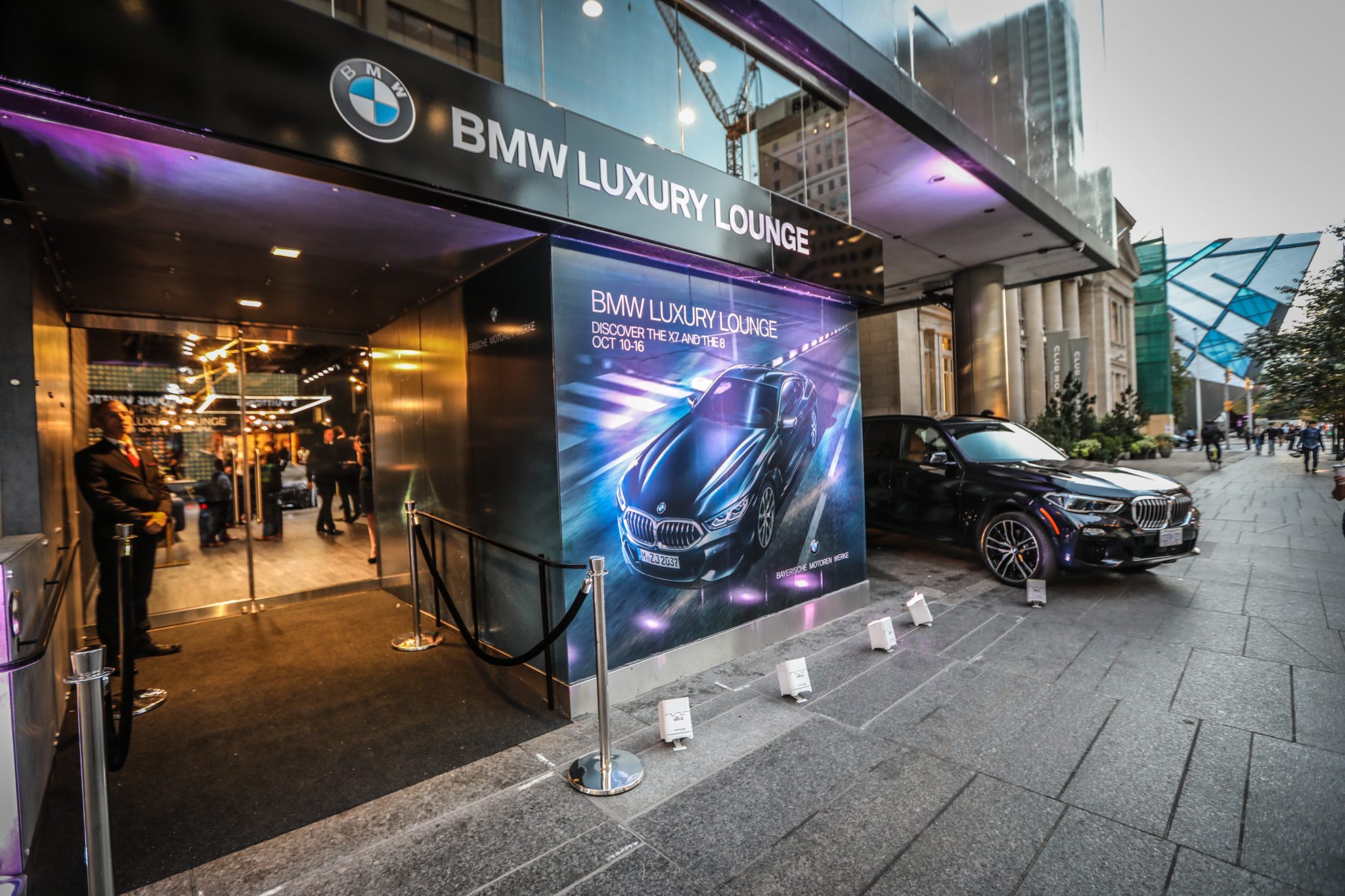
    In the midst of a product offensive that will see many new and refreshed models join its lineup in the coming months, BMW recently staged a limited-run brand experience in Toronto’s Yorkville neighbourhood to showcase two forthcoming models. The display, which has a pop-up feel to it, is known as the BMW Luxury Lounge, a venue open to the public during the day and invite-only events in the evening. As its name would suggest, the point is to generate interest in the brand and get attendees excited for a slew of new BMWs on deck.

    The site of the Luxury Lounge – Bloor St. W. near Avenue Rd. – is fertile ground not only for luxury automotive manufacturers but makers of other luxury goods as well, which is why BMW is partnering with Hugo Boss, Montblanc and Roche Bobois. These brands, along with Samsung Canada and art gallery LUMAS Canada have also contributed to furnishing the space which, with its black and glass walls, wood grain floors and leather sofa, has the feel of modern, minimalist luxury.

    “We’ve taken on this initiative because we believe customers’ expectations of luxury are evolving,” said Sebastian Beuchel, director, BMW brand management, said in a statement. “This beautifully designed space is a showcase for our interpretation of modern, contemporary luxury.”

    Last October, BMW hosted a similar limited engagement exhibit known as the Luxury Excellence Pavilion on Bay St. in the heart of Toronto’s financial district that not only showcased the Munich-based carmaker’s wares, but also those of other several other luxury brands. The feature attraction was the BMW X7 iPerformance, a concept vehicle first shown about a month earlier at the 2017 Frankfurt Motor Show.

    Fast forward a year, and it’s time for the Luxury Lounge, a similar exhibit but with some noteworthy differences.

    Whereas the Luxury Excellence Pavilion ran for almost two weeks (Oct. 16-29), the Luxury Lounge was around for just six days (Oct. 10-16) and there were no test drives from the BMW fleet available.

    In its place are two main attractions that represent the future of BMW and are bound to cause a bit of a stir.

    First up is a vehicle that can’t be discussed in detail but was available for viewing so long as visitors surrendered their mobile phones before entering the curtained-off backroom where it was being shown. A strict no-photo policy was in effect.

    I’m talking about the full-size, three-row 2019 X7 SUV, a vehicle BMW and its dealers are very excited about. The production X7 will make its world premiere at the Los Angeles Auto Show next month and will go on sale early next year. The one being shown in Toronto was an uncamouflaged pre-production copy. Getting it to Toronto took some doing, but its presence made a visit to the Luxury Lounge even more worthwhile.

    Now, in accordance with the wishes of BMW Canada’s communications team, I’ll move along… to the 8-Series coupe which is returning to the lineup after a 20-year hiatus. I have clearance to talk about this one freely.

    Centred in the middle of the Luxury Lounge floor plan was a Dravit (metallic) grey 2019 850i xDrive, trimmed in factory option carbon fibre accents (roof, mirror caps, lip spoiler, rear diffuser, etc.) and optional M Performance 20-inch wheels finished in a metallic gold tint.

    Conceived as a flagship model, the 8 Series is a design and technology carrier and, as such, has features that will eventually spread across the BMW family.

    On this front, a few things stand out. The first thing that caught my eye are the new LED headlights the 8 Series is wearing, which feature standard high beam LaserLight technology (to comply with North American laws they’ll only work at speeds above 60 km/h) along with a more angular shape with two separate elements that still look like BMW headlights when viewed from a distance. Clever.

    Other new design elements include a revised kidney grille that is attached at the centre, a callback to the grilles of 1970s-era BMWs. Also, a BMW rep told me that customized paintwork will be offered on the 8 Series though the company’s Individual program. While they can’t guarantee they’ll be able to match every paint chip or swatch a customer has, BMW aims to make the 8 Series available in more exciting colours than those offered on a traditional list of set finishes.

    Inside, the cabin receives some noteworthy advances headlined by the company’s all-new Operating system 7.0 software, which powers the infotainment and instrument cluster screens. My eye was also drawn to the available glass crystal shift knob and iDrive controller.

    Finally, I’d be remiss if I didn’t mention the powertrain. The 8 is being offered with an overhauled variant of BMW’s 4.4-litre twin-turbocharged V8, which packs 523 horsepower and 553 lb-ft. of torque that is mated to a standard 8-speed automatic and xDrive AWD system.

    Fast? You bet. BMW has the 8 Series’ 0-100 km/h time pegged at 3.7 seconds.

    The best part for consumers and interested auto journalists alike is the wait for the 8 Series arrival won’t last much longer. Customer orders begin on December 8, with deliveries likely to begin in the new year. Pricing info hasn’t been released but will be announced closer to on-sale.

    As for the X7, look for more info when it’s revealed during the media preview days at the Los Angeles Auto Show on Nov. 28-29.
  • BMW Wants Its Electric Cars to Look More Boring

    BMW Wants Its Electric Cars to Look More Boring

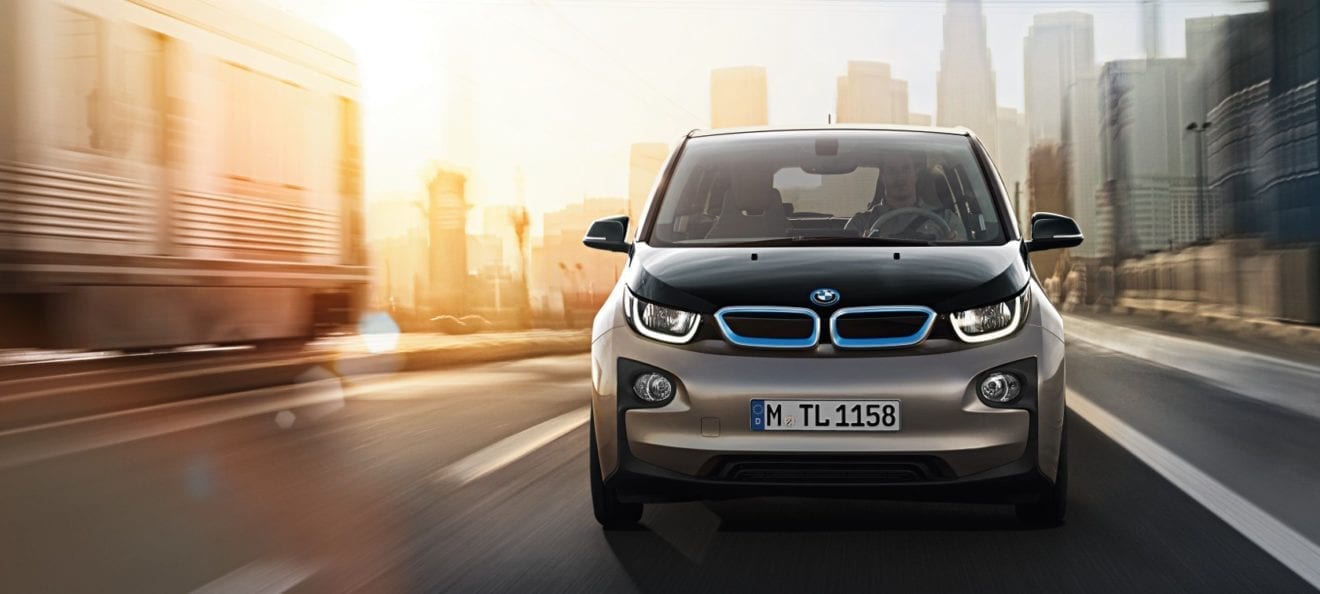
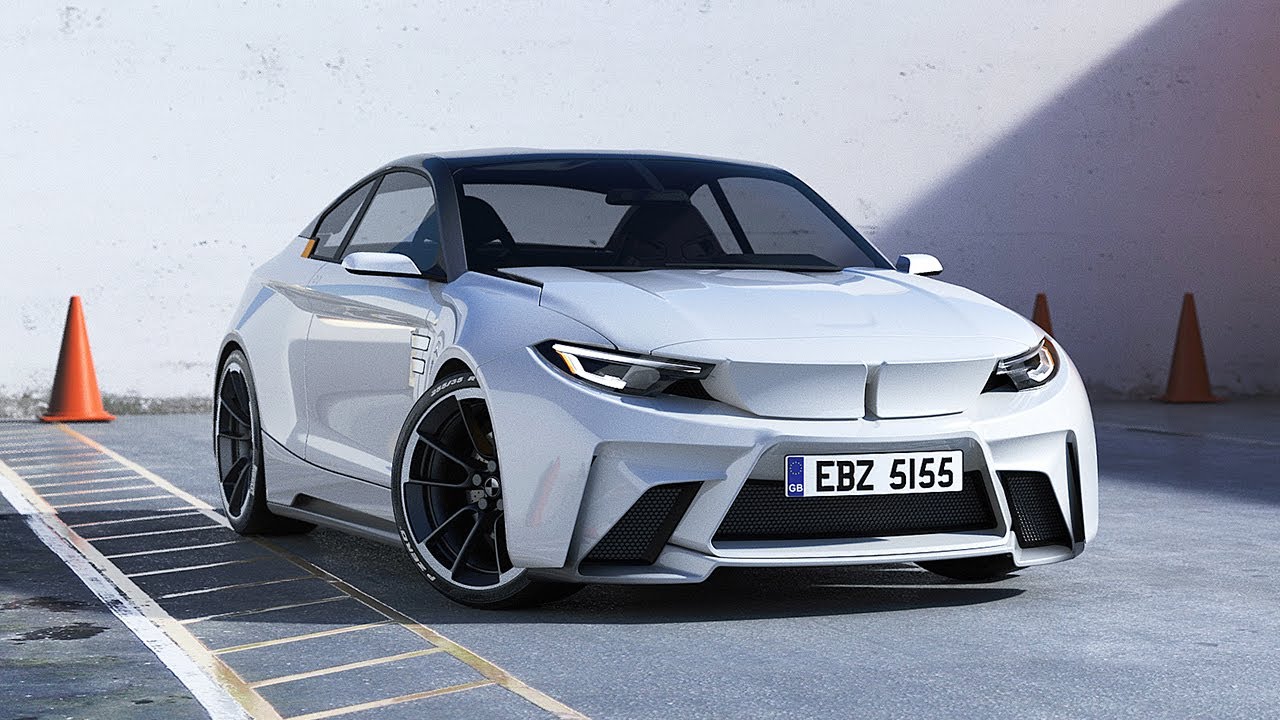
    BMW has decided that despite all the new engineering under the skin of the new 3 Series, the styling of the all-important sedan would only be very mildly updated. At the Paris Motor Show, the Bavarians also displayed a concept of their next i car, the electric iX3 SUV shown above. As far as its exterior goes, the i division’s next move feels like a 180 degree turn from the futuristic i3 city car and i8 plug-in hybrid.

    Indeed, it seems that BMW will dedicate its time to making sure its kidney grilles can keep growing. Indefinitely.

    Now, BMW Design Director Adrian van Hooydonk says that’s all on purpose. Van Hooydonk said that as electrified models get more and more popular, there will be no reason to make i BMWs look unique: Electric mobility will spread through our entire vehicle range in quite a short space of time—to the point that electric or plug-in hybrid is just another option box you tick as you order the car. The fact is that BMW customers want a dynamic car, whether it is a battery-electric vehicle or not, and so there’s is increasingly less reason to make these kinds of cars look different.

    This means BMW will go down a similar route as Audi with its e-tron or Mercedes-Benz with the EQ C—advanced electric vehicles with styling that’s almost exactly the same as their conventional cars. It’s a big shift from BMW’s previous strategy of making its electric cars look decidedly futuristic, and wholly distinct from its other offerings. Notably, Jaguar is committed to making its electric vehicles stand out—look at the I-Pace crossover, with its radical proportions making the most of Jag’s new electric car skateboard platform.

    BMW lost its head of exterior design, Karim Habib, to Infiniti in 2017. Since then, Jozef Kabaň has been responsible for BMW’s core line, while Domagoj Dukec is in charge of the i and M models. Their boss, Adrian van Hooydonk, joined BMW in 1992, becoming head of Designworks USA in 2001, and replacing Chris Bangle as Director of BMW Group Design in 2009. See you at his anniversary party in 2022.

  • BMW plans to take control of China joint ventures

    BMW plans to take control of China joint ventures

    German luxury carmaker BMW announced a plan to take control of its China joint-venture, the first foreign automaker to take advantage of Beijing’s new ownership rules for the sector. BMW will acquire a further 25 per cent stake in the venture with Brilliance China Automotive for €3.6 billion (US$4.2 billion), the company said, bringing its stake to 75 per cent by 2022.

    Foreign automakers have long been restricted to holding no more than a 50 per cent stake in their China operations, but Beijing decided to relax the ownership caps this year.

    The reforms are part of Beijing’s plan to further open its economy to foreign business, after years of facing pressure from the United States and Europe.

    But US and European business groups say the reforms have still not gone far enough, and have pushed for further opening.

    To force the issue, and to hit back at China for alleged theft of American intellectual property, US President Donald Trump has slapped tariffs on roughly half of the imports from China.

    The joint-venture “is the cornerstone of the BMW brand’s sustained success in its largest single market,” said Harald Kruger, BMW’s chairman.

    “BMW Group and Brilliance continue to set a good example of successful cooperation in China,” he said.

    TRADE WAR EFFECT

    The changes in ownership rules are a boon for foreign automakers which will gain a greater share of control and profits from their China operations, but hurt prospects for their Chinese partners.

    Brilliance China’s shares in Hong Kong have plummeted this year, and were suspended from trading on Thursday.

    The two companies had extended their joint venture contract until 2040 and announced a plan to pump €3 billion (US$3.5 billion) into expanding their auto plants in northeast Liaoning province – ramping up production capacity to 650,000 cars early next decade while creating 5,000 new jobs.

    BMW has been hit particularly hard by the US-China trade war with many of its SUVs imported from the US facing new 25 per cent taxes, while cars imported from other countries have benefited from China’s tariff cut for vehicles from 25 per cent to 15 percent.

    With the new production capacity, the China joint-venture will start to produce BMW vehicles like fully-electric BMW iX3 for export globally from 2020, BMW said.

    China’s auto market, the world’s largest, has faced headwinds this year as the economy slows.

    In August, China’s new vehicle sales continued to fall, following a drop in July.