Retail News CRM

Tag: BMW

  • BMW denies collusion on diesel emissions

    BMW denies collusion on diesel emissions

    BMW said that none of its models had been ‘manipulated’ or violated industry regulations. German luxury carmaker BMW on Sunday denied any collusion with industry rivals on emissions from its diesel engines, saying none of its models had been “manipulated” or violated industry regulations.

    As revelations about polluting exhaust continue to buffet Germany’s all-important auto sector, the Munich-based giant sought to distance itself from what it called the “scandaliation of diesel motors”.

    “The fact is that automobiles from the BMW group are not manipulated and comply with the relevant legal requirements,” the company said in a statement.

    “This of course also applies to diesel automobiles. This is confirmed by the relevant results from tests by national and international authorities.”

    Der Spiegel magazine had reported Friday that German carmakers Volkswagen, Audi, Porsche, BMW and Daimler had secretly worked together from the 1990s onwards on issues including polluting emissions from diesel vehicles.

    Volkswagen, which is facing tens of billions of dollars in compensation and fines after admitting in 2015 to cheating on diesel emissions, had reported the cartel to German competition authorities in a letter seen by the weekly, as did Mercedes-Benz maker Daimler.

    According to the report, carmakers held “innumerable meetings” from 2006 onwards about diesel exhaust processing systems designed to reduce emissions of harmful nitrogen oxides (NOx).

    Carmakers agreed to install only small tanks of a treatment solution, AdBlue, used to convert the gases into harmless water and nitrogen, as larger tanks would have been more expensive.

    The size of the AdBlue tanks agreed on was too small to clean exhaust gases by the necessary amount — “laying the foundations for the diesel scandal,” Spiegel reported.

    However BMW said it “firmly dismissed the accusation” that its AdBlue tanks were insufficient, meaning that any “recall or retrofitting for the Euro 6 diesel cars is unnecessary”.

    Volkswagen admitted in September 2015 to installing software in 11 million cars worldwide that reduced NOx emissions when it detected that cars were undergoing regulatory tests.

    More recently, authorities’ suspicion fell on Mercedes-Benz and Smart maker Daimler, with investigators raiding sites belonging to the group in late May.

    The firm recalled some three million cars last week for a software update designed to reduce emissions.

    Meanwhile, VW subsidiary Audi on Friday recalled up to 850,000 cars fitted with its diesel engines for a similar software update.

  • BMW greenlighted to find new dealer in Vietnam

    BMW greenlighted to find new dealer in Vietnam

    Vietnamese government has given the greenlight to the German automobile manufacturer BMW to access and run maintenance services on a batch of 700 BMW cars being held at Vietnamese ports after Euro Auto—BMW’s official distributor in Vietnam—was charged with scandalous violations of counterfeit paperwork.

    The leader of the government also affirmed that the BMW Group in Germany had no part in these violations, only its dealership in Vietnam. Hence, BMW must change its dealer in Vietnam to help maintain a transparent and attractive business environment.

    In order to be able to continue its business in Vietnam, the German automaker will have to terminate the rights of its current partner to import and distribute BMW cars in the country, while looking for another distributor.

    Dealer replacement is needed

    Since 2006, Euro Auto, as the officially authorised distributor of BMW in Vietnam, has helped the company to become one of the most successful luxury car brands in the market after previous failures in manufacturing cars locally, which eventually led to its withdrawal from the Hoa Binh Automobile joint venture.

    In fact, Euro Auto is backed by Sime Darby Group (Malaysia). By the end of 2013, Sime Darby Motors—a major affiliate of the Malaysian multidisciplinary group—has acquired a more than 90 per cent stake in Euro Auto Corp. (EAC) by purchasing Europe Automobiles and other shareholders’ stakes.

    Via Euro Auto, Sime Darby has brought several luxury and premium car models to Vietnam, for example the MINI and BMW brands, through a chain of showrooms and stores in Ho Chi Minh City and Hanoi.

    Currently, Sime Darby is the world’s third largest distributor of BMW. The giant also holds the rights to sell Land Rover, Mini, Rolls-Royce, Jaguar, Lamborghini or Porsche in many neighbouring countries, such as Malaysia, Singapore, Thailand, and China.

    In early 2016, Sime Darby established another subsidiary named Performance Motors Vietnam with similar functions to Euro Auto, selling BMW cars, spare parts, and accessories. When this company came into operation, Euro Auto shifted focus onto imports, while Performance Motors was responsible for distribution. Still, there was no clear separation between the firms regarding their functional businesses as they were both reported doing retail activities in Sime Darby’s 2016 annual report.

    However, after being accused of conducting fraudulent paperwork and declaring low import prices to evade tax, Euro Auto has apparently lost its credibility with other firms.

    In December 2016, the BWM dealer was found to have sold a shipment of imported cars while it was still waiting for clearance from the Ho Chi Minh City customs agency, in addition to violating multiple regulations, according to the Ministry of Finance (MoF).

    The company was accused of forging documents, including purchase contracts and receipts, while failing to provide certificates of origin for its cars—a sign of fraud and scamming. It also bought BMW vehicles without completing customs clearance or receiving the necessary customs authority permits. In December Vietnamese customs officials were ordered to halt all clearance procedures for BMW cars after MoF reported import violations, a ban that is said to be still in effect.

    Afterwards, the Ministry of Public Security announced on April 27 that Nguyen Dang Thao, general director of Euro Auto, and two other individuals involved had been arrested in the course of an investigation of a batch of German luxury cars smuggled into Vietnam. The names of the other two persons have been kept undisclosed.

    At the meeting with Prime Minister Nguyen Xuan Phuc, the top executives of BMW also said that the company was seeking to invest in a factory in Vietnam as it would increase the localisation rate of many car components.

    According to experts, in order to achieve such a goal, the world’s big players usually choose to participate in a joint venture and technology transfer agreement with a local car manufacturer.

    There are many firms wanting to become BMW’s new distributor, including well-known names of the automobile industry and other multidisciplinary corporations that want to expand their portfolios. Yet for BMW, a joint venture with a local firm appears to be the best fit, to assemble cars in Vietnam.

    “Financial capability is not the key factor. Experience and the network infrastructure for distribution are supposed to be the core,” said the director of a luxury car company.

    This is also the path BMW and Sime Darby are pursuing in Malaysia. The joint venture between these two corporations was established in 2003, with a 51 per cent stake held by BMW and a 49 per cent by Sime Darby.

    Shortly after its establishment, the company started manufacturing some of the very first BMW models in Malaysia. To date, the plant has manufactured approximately 20 different commercial vehicle models under the brand names BMW and MINI, including Series 1, Series 3, X1 to X5 or Countryman, among others.

    Most recently, in April 2016, BMW Malaysia unveiled a plan to boost the assembly of BMW 3, 5, and 7 series sedans in Malaysia for export to Vietnam and the Philippines via Sime Darby’s distribution channels.

    Were it not for the Euro Auto incident, according to the company’s plan for 2018, Vietnamese customers would have purchased more BMW cars imported from Malaysia, not Germany. Then, BMW would have been granted tax incentives, particularly a zero per cent import tax, for import activities within the region as long as it could meet the requirement of a 40 per cent localisation rate.

    If BMW also adopts this model in Vietnam, the best possible way is to find a partner with good financial capabilities, a well-established distribution network across the country, and more importantly, a string of readily available factories and warehouses or bases for expansion. Other things involve agreements signed to regulate capital contributions and technology transfer or to attract investment from car accessory manufacturers and gradually increase the localisation rate.

    A long way ahead

    In Vietnam, the availability of these conditions is actually very limited. A prediction from industry insiders reckons that Sime Darby will still be in charge of the distribution of BMW cars, but through a different firm, not Euro Auto.

    It could be Performance Motors or a different agency. However, whoever will be BMW’s new representative, the giant still needs to invest in a joint venture with a large Vietnamese corporation so as to develop the plan to manufacture and assemble cars in Vietnam.

    If BMW cars are assembled and imported in Vietnam by a big company, the model used 20 years ago will come back. Around 1994, BMW cars were assembled at the factory of Hoa Binh Automobile Company (VMC), along with Mazda and Kia cars. However, all companies decided to “get out” because of undesirable failures. Mazda and Kia later came back to Truong Hai and started thriving.

    If BMW ties the knot with a big company, it will be the starting point of a new era for it to become the second luxury car brand manufactured in Vietnam, after Mercedes. The price may decrease if the proportion of domestic factors increases. The battle in the luxury car segment is also getting tougher with more noticeable opportunities for sales booming.

    After all, the luxury car brand of Bavaria is looking for a safe haven in Vietnam. It does not only want an extensive distribution system, services, factories, and warehouses ready for assembly and manufacturing, but also requires a stable policy framework in the long run.
  • Aggressive Thai pricing for 2017 BMW 430i Coupe and Convertible

    Aggressive Thai pricing for 2017 BMW 430i Coupe and Convertible

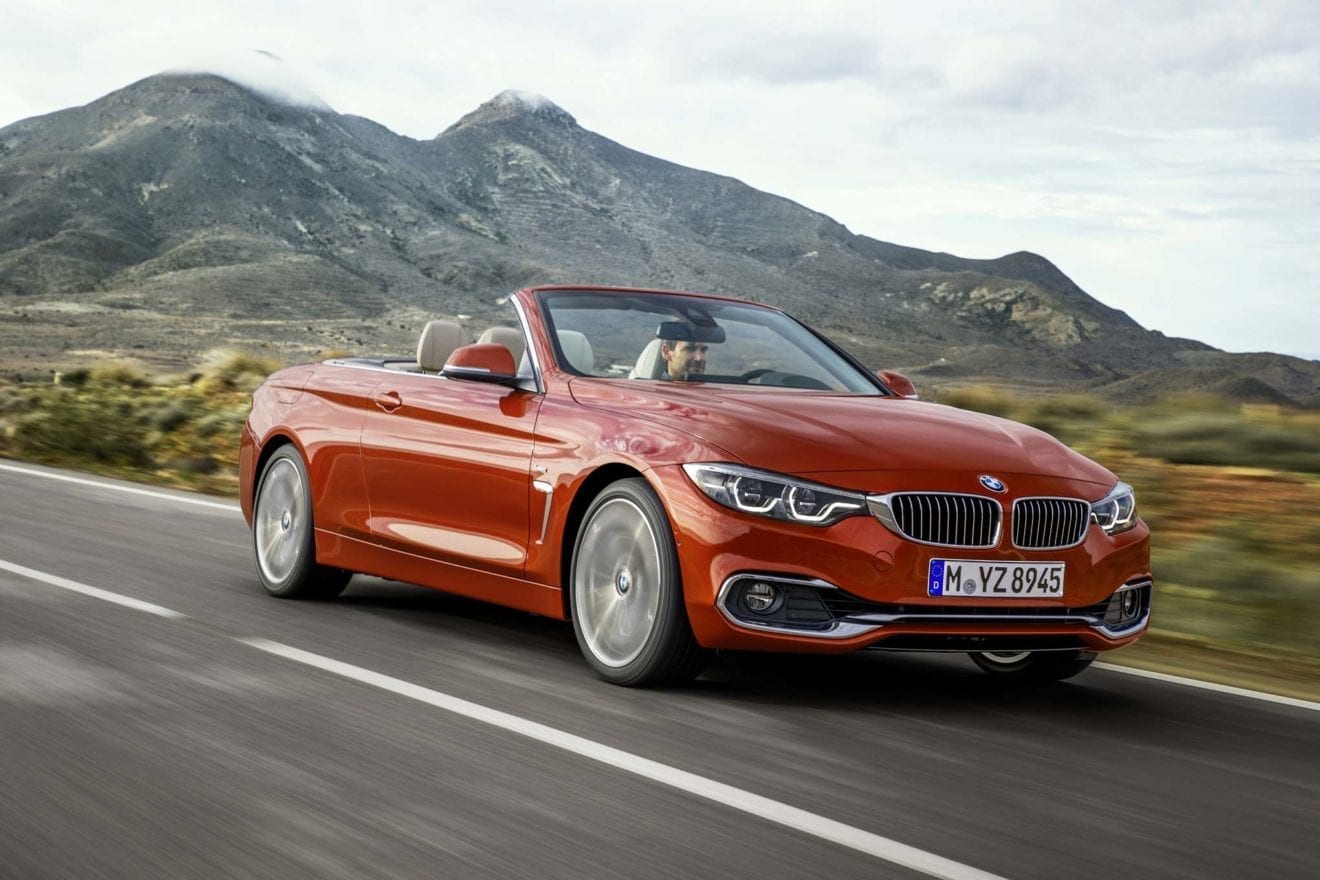
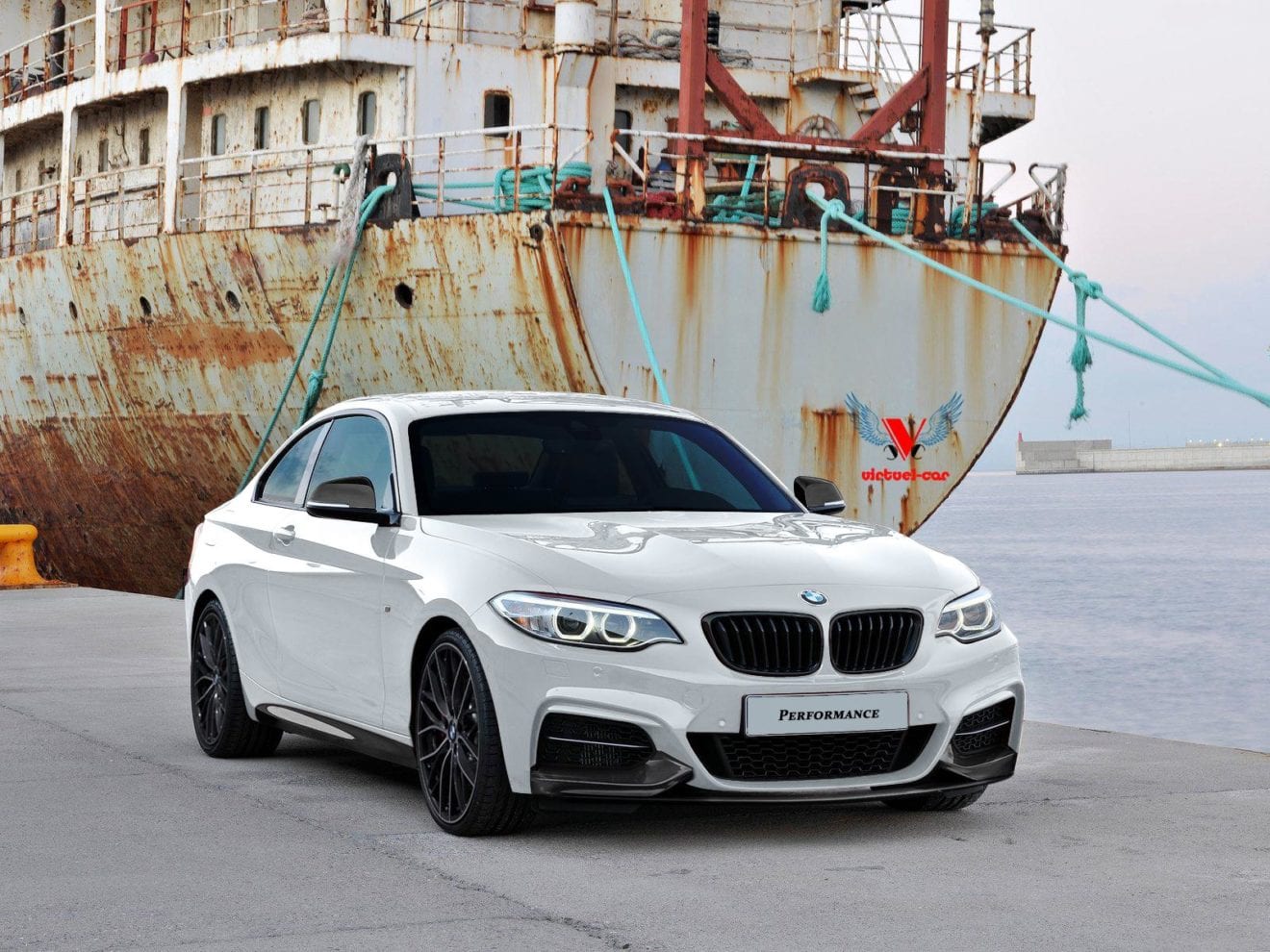
    Due to increased competition in the Thai premium mid-size coupe and convertible segments, BMW Thailand has given the facelifted 4 Series Coupe and Convertible aggressive pricing.

    To be officially launched next week, the two 4 Series models come in 430i forms boasting 252hp 2.0-litre petrol-turbo engine. The 420i Coupe, for one, goes from 0-100kph in 5.8sec and is priced at 3.499 million baht in Luxury spec. The M Sport trim, mainly distinguished with sportier appointments and M-like steering wheel, asks for an additional 300k.

    The 430i enjoys the same 30% excise tax (emitting no more than 150g/km of CO2) as the 420i, which uses a 190hp version of the same 2.0-litre block and is slower from 0-100kph by 1.7sec. Hence, the 420i isn’t available anymore.

    Sales of the pre-facelift diesel-powered 420d have also been discontinued. Two possible reasons could be its higher production costs and Thai preference for petrol power in two-door sports cars.

    How does its competition fare?

    The two most direct rivals in terms of performance are the Audi A5 Coupe 45 TFSI Quattro and Lexus RC200t F-Sport.

    Although the A5 Coupe 45 TFSI boasts the same power and engine size of the 430i Coupe, it is slower from 0-100kph, at 6.3sec. The Audi’s price of 4.299 million baht is also way higher. Even the 190hp 40 TFSI is jaded by the 430i due to its price kicking out at 3.699 million baht.

    The RC200t is in an even more crippling state. It has 245hp from a similar displacing petrol-turbo motor yet is slowest with 7.5sec time. Worse, it asks for 5.49 million baht.

    The Mercedes-Benz C250 Coupe, meanwhile, comes with lesser 211hp 2.0-litre petrol-turbo unit and costs 3.24 million baht for Sport and 3.59 million baht for AMG Dynamic. This kind of means less performance (0-100kph in 6.8sec) for less money.

    What about the open-top 430i?

    The only opponent for the 252hp 430i Convertible is the 245hp C300 Cabriolet. The 430i Convertible Luxury goes for 3.999 million baht and an extra 300k for M Sport. The C300 Cabriolet AMG Dynamic is priced at 4.24 million baht – 59k less than the spec-on-spec M Sport.

  • BMW, competing with Tesla, to introduce electric 3 Series

    BMW, competing with Tesla, to introduce electric 3 Series

    BMW plans to introduce an electric version of its popular 3 Series in September, a move designed to fend off rival Tesla.

    The German carmaker will present the vehicle at the IAA auto show in Frankfurt in September.

    The 3 series, which is a high volume sales model, will have a range of 400 km (248 miles) and is seen as a direct response to the success of Tesla’s Model 3, according to Handelsblatt.

    BMW declined to comment.

  • BMW Plans $1 Billion Expansion in Assembly Plant

    BMW Plans $1 Billion Expansion in Assembly Plant

    Germany-based BMW will invest $1 billion to expand the company’s assembly plant in Spartanburg, South Carolina.

    Dr. Norbert Reithofer, Chairman of the Board of Management, BMW Group, said, “We will expand the plant’s annual production capacity by 50% up to 450,000 vehicles by the end of 2016. Today’s capacity is around 300,000 vehicles. This investment will also create an additional 800 jobs, increasing the total workforce to 8,800 on site.”

    The additional investment will be used to increase capacity, which is necessary to meet strong global demand for BMW X models. “Plant Spartanburg was built to enhance and expand the BMW line-up, underscoring the BMW Group commitment to the United States” said Dr. Reithofer. “In addition to the X3, X5, X6, and the new X4, we are today announcing another all-new, larger X model to be manufactured exclusively at this plant for our world markets: the X7.”

    Harald Krüger, Board of Management member for Production explained the important role of the US for the BMW Group production strategy: “The BMW Group strives for a good balance of growth among all markets and continents. The Spartanburg plant is an important building block in our international network of 28 production and assembly facilities in 13 countries today and makes a vital contribution to profitable, globally-balanced growth.”

    “Our U.S. plant is the best example of our successful strategy of ‘production follows the market’. The state of South Carolina has supported us as a valuable and reliable partner throughout our 20-year involvement in the region, making the United States our second home,” he explained.

    “We are expanding BMW Plant Spartanburg as our center of competence for production of BMW X models and broadening our product portfolio,” Mr. Reithofer said. “This expansion means Spartanburg will have the largest production capacity of any plant in our global production network. This plant already exports, on average, 70% of its annual production with a 2013 value of more than US$ 7.5 billion which, according to the U.S. Department of Commerce, makes BMW the largest U.S. vehicle exporter to non-NAFTA countries.”

    Since production began 20 years ago, in 1994, the Spartanburg plant has produced over 2.6 million vehicles for BMW customers around the world. Currently the BMW X3, X5, X5 M, X6 and X6 M are all produced at the plant.

    “This is the fifth expansion since production began 20 years ago and represents another major investment,” said Manfred Erlacher, President & CEO of BMW Manufacturing. “The increase in annual capacity, the number of models produced, and the number of jobs on site, reinforce the major role BMW is playing in the region’s economic vitality through technological innovation, environmental stewardship, and development of a highly skilled workforce.”

  • Auto supplier Magna to manufacture BMW 5-series plug-in hybrids

    Auto supplier Magna to manufacture BMW 5-series plug-in hybrids

    Canadian auto supplier Magna International Inc will produce BMW’s new 5-series plug-in hybrid at its Austrian factory, the company said on Monday, part of a strategy to produce electric cars on a contract basis for global automakers.

    The BMW 530 plug-in hybrid will be manufactured beginning this summer at Magna’s plant in Graz, Austria, where it already plans to produce Jaguar’s I-PACE SUV beginning in early 2018.

    Global automakers and their suppliers are investing heavily in fully-electric and gasoline-electric hybrid vehicles. Consumer demand is still low versus that for gasoline engine vehicles, but companies are beginning to offer more choices to respond to government mandates for greater sales of vehicles that emit little or no carbon dioxide, and prepare for a future experts believe will be dominated by electric vehicles.

    Rival tier-one auto supplier Continental, for example, said in April it was increasing spending by 300 million euros ($334.68 million) on new products such as charging systems and battery management components related to electric vehicles.

    Magna, North America’s largest automotive supplier and the third globally, is alone among the top auto suppliers to perform contract manufacturing for carmakers. Its Austrian plant can produce about 200,000 cars per year. Magna is currently building a new paint shop in Slovenia due to increased demand.

    A Magna spokeswoman would not comment on a statement by the Slovenian government in March that the auto supplier would potentially invest up to 1.24 billion euros in the country, including a car plant with capacity of 100,000 to 200,000 vehicles per year.

    Having contract manufacturing in its portfolio creates a niche for the company as automakers slowly bring more electrified vehicles to market over the next decade. For automakers, outsourcing the assembly can be an advantage on low-volume models to minimize capital expenditures and avoid tying up their own production lines.

    Swamy Kotagiri, Magna’s chief technology officer, said he sees contract manufacturing of electric vehicles as a “near-term opportunity” for the company, given that by 2025, 40 to 50 percent of all vehicles produced will include some electrification elements.

    “We are setting up knowing the penetration will be higher.”

    Magna has also produced non-electric cars at its Austrian facility, including BMW’s Mini Countryman and Mercedes-Benz’ (DAIGn.DE) luxury G-Wagen SUV.

    Last month, Magna raised its full-year sales forecast on higher demand.

  • Volkswagen woos BMW, Mercedes buyers in new upmarket push

    Volkswagen woos BMW, Mercedes buyers in new upmarket push

    Volkswagen’s troubled mass-market brand is pushing upmarket again with a new flagship model a year after ceasing the flopped Phaeton luxury saloon in a bid to lift margins and revive its post-dieselgate image.

    Volkswagen (VW), traditionally known for its range of practical saloons, hatchbacks and sport-utility vehicles (SUVs), on Wednesday unveiled the new Arteon fastback to woo customers who like upscale cars like BMW’s 4-Series Gran Coupe or Mercedes-Benz’s CLS coupe but at lower prices.

    The four-door Arteon will go on sale in German showrooms next month starting at 34,800 euros ($39,111).

    The world’s largest automaker needs higher-margin models to help fund a strategic shift to electric and self-driving cars as it grapples with billions of euros in costs for its emissions scandal.

    The Arteon, featuring adaptive cruise control and enhanced emergency braking and steering functions, resembles VW luxury brand Audi’s A5 Sportback with its long wheelbase, extended hood and lowered roofline.

    “Cars like this have until now been the domain of premium carmakers,” VW brand chief executive Herbert Diess told reporters. “With the Arteon we are trying to gain a foothold in this business.”

    It’s not the first time the VW brand has pushed upmarket. In 2002, it launched the executive Phaeton saloon which was axed last March after never meeting VW’s original sales target of 20,000 cars per year.

    VW aims to sell up to 40,000 Arteons a year worldwide, Diess said, about the same as the predecessor CC saloon which ceased production last October.

    The Arteon is the latest example of a post-dieselgate product overhaul at the VW brand to revive profitability which has been lagging rivals such as PSA Peugeot Citroen and Toyota.

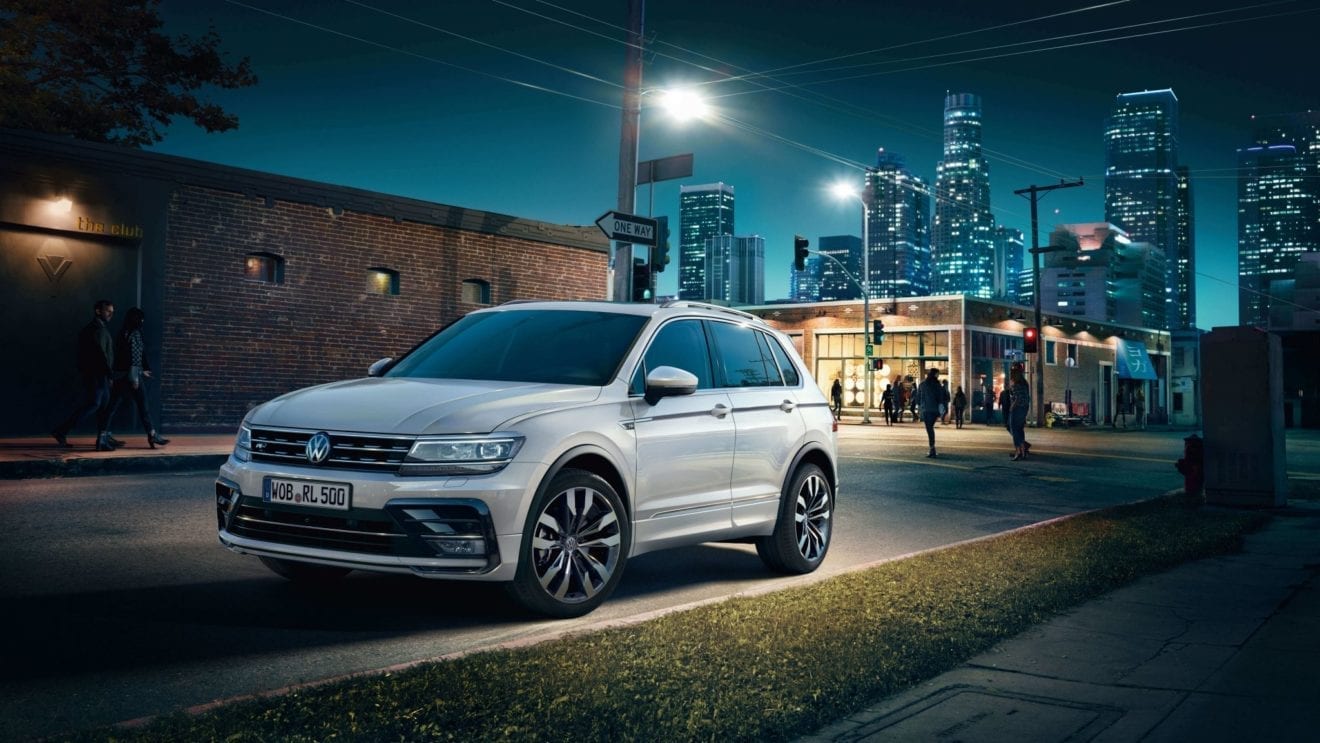
    VW will present redesigned versions of the Polo subcompact, one of its all-time bestsellers, in June and the flagship Touareg SUV in September, after it launched an overhauled Tiguan compact SUV last year.

    Research firm IHS Markit expects the German brand’s new top-of-the-line model to beat sales expectations easily.

    Deliveries of Arteons in core markets of Europe, China and North America may more than double to 81,172 cars by 2025 from 39,265 next year, IHS said.

    By comparison, IHS expects sales of BMW’s 4-Series Gran Coupe to plunge 16 percent to 40,562 models by 2025 while it sees sales of the Mercedes CLS jumping 10 percent to 23,856 cars.

    IHS says China will account for about half of global sales of the Arteon, which will be built in VW’s biggest market and at a factory in Emden, Germany.

  • BMW says shortage of parts from Bosch hampers production

    BMW says shortage of parts from Bosch hampers production

    German carmaker BMW said a shortage of steering gears supplied by Robert Bosch slowed production of several of its compact and mid-sized models and caused stoppages at its plants in South Africa and China.

    “Our supplier Bosch is not currently able to provide us with a sufficient number of steering gears for the BMW 1 Series, 2 Series, 3 Series and 4 Series,” BMW said in a statement on Monday.

    BMW plants in Tiexi, China and Rosslyn, South Africa have extended or pulled forward planned interruptions to production, the carmaker said.

    “We are taking advantage of the flexibility of our processes to minimize economic damage. We expect that Bosch, as the responsible supplier, will compensate for damages,” BMW said.

    Bosch meanwhile blamed the problem on a sub-supplier in Italy, which it did not name.

    “One main component of the steering system is the housing; which Bosch procures from a sub-supplier in Italy. We are currently experiencing delivery problems with this supplier,” it said in an e-mailed statement.

    It said Bosch, BMW and the sub-supplier were doing all they could to resolve the delivery bottlenecks.

  • Supply problems hit production at BMW

    Supply problems hit production at BMW

    Problems at one of its suppliers has forced German carmaker BMW to halt production in Leipzig and could hit its plants in China and South Africa, German magazine Focus reported in its online edition.

    The magazine said problems at one of BMW’s Italian suppliers of parts for its steering technology was the reason for the disruption.

    Citing a BMW spokesman, Focus reported that the carmaker has halted output at its plant in Leipzig, Germany since Friday and may have to reduce production in China and South Africa.

    Production in Munich was also reduced for two days last week, the magazine reported.

    Focus said the disruptions would cost BMW double-digit millions of euros a day, without saying where it got its information from.

    BMW could not immediately be reached for comment outside regular business hours.

  • Korea emerges as top Asian importer of Benz, BMW

    Korea emerges as top Asian importer of Benz, BMW

    Korea has become Asia’s largest importer of Mercedes-Benz and BMW vehicles this year, as the two German carmakers sold more vehicles in Korea than Japan for the first time ever.

    Chinese motorists buy more Mercedes-Benz and BMW vehicles than Koreans do. But both firms roll out and sell their models through joint ventures with local Chinese firms. Hence, Korea is the populous continent’s de facto leader in terms of Mercedes-Benz and BMW vehicle imports.

    The Korea Automobile Importers and Distributors Association (KAIDA) said that Mercedes-Benz sold 24,877 cars in the first fourth months of this year, while BMW sold 18,115, up 48 percent and 32.4 percent from a year earlier, respectively.

    The luxury carmakers sold 21,365 and 15,818 cars respectively in Japan during the January-April period, up just 0.7 percent and 2.2 percent from the previous year.

    Based on its larger population and higher income, Japan has remained the largest Asian importer of the two luxury brands. Japan’s population is more than double that of Korea and its GDP per capita is 20 percent higher than that of Korea.

    But Korea dethroned Japan this year because of a months-long sales ban on Audi-Volkswagen vehicles here. The carmaker stopped selling its vehicles in Korea after the emissions scandal last summer but it did not face such troubles in Japan.

    During the sales suspension, Mercedes-Benz and BMW increased their sales in Korea’s import car market.

    The two combined to sell 57 percent of the import cars in Korea over the four months, up from 41 percent last year. In Japan, however, the figure only edged up from 38 percent to 40 percent.

    Analysts expect Mercedes-Benz and BMW will dominate the market for a while. The KAIDA also said BMW sold more cars than Mercedes-Benz in April.

    Mercedes-Benz maintained its top position until this March but fell to second place due to a short supply of its popular new E-class model. Lexus came in third in the number of sales, followed by Toyota and Honda.

  • BMW 2 Series Coupe and Convertible updated for 2017

    BMW 2 Series Coupe and Convertible updated for 2017

    Baby sports car and open-top counterpart receive mid-life styling tweaks and optional all-wheel-drive in higher-end models. In the typical fashion of facelifted BMWs, changes in the new 2-series Coupe and Convertible are microscopic and would probably only be noticed by eagle-eyed enthusiasts.

    The front end, for one, has changed the most with bigger kidney grilles, restyled air vents and bi-LED lights made standard. While the M Sport trim sees more aggressive-looking bumper design, the lesser Luxury and Sport Lines get more subtle air intakes.
    Like in the recent facelift of the 4-series Coupe and Convertible, both 2-series models get more premium finish inside as well as a newly-designed instrument panel and central touchscreen.

    As the 2-series has no direct rival from Audi, Lexus or Mercedes-Benz – three other premium brands that make compact hatchbacks with front-wheel-drive – BMW is still keen in touting the 2-series as a genuine sports car for driving fans.
    However, the decision to offer xDrive all-wheel-drive in some potent models could be seen as an effort in broadening the appeal of the 2-series to another set of buyers wanting more driving security on slippery roads as well as more predictable manners under hard acceleration.

    The M240i, for one, has 340hp 3.0-litre turbocharged inline-six with eight-speed automatic transmission with optional xDrive system. Likewise, the other petrol and diesel engine variances remain unchanged all the way down to the 218i, featuring 136hp 1.5-litre three-pot turbo motor.

    For the past few years, BMW has tried to lower the price point of the 2-series Coupe as much as possible by merely offering the 218i M Sport in Thai showrooms at 2.599 million baht apiece. However, it is claimed that that the 4-series Coupe is still the favoured choice among Thais. As the pre-facelift 420d Coupe M Sport went for 3.999 million baht, customers thought it might be just better to go for a bigger car with a four-cylinder engine. After all, luxury imports like these aren’t aimed at budget-minded punters.

    The revised 2-series goes on sale in world markets from July, although the Thai BMW office would concentrate more on the facelifted 4-series later this year due to the aforementioned reasons.

  • BMW to raise production capacity to 3 million cars by 2020

    BMW to raise production capacity to 3 million cars by 2020

    German luxury carmaker BMW Group will raise its annual production capacity to 3 million cars by 2020 and plans to build its X5 offroader in China, citing company sources familiar with the plans.

    BMW Group, which includes the Mini and Rolls-Royce brands, and built 2.37 million cars last year, plans to double its production capacity in China to 600,000 cars.

    In North America and Mexico, production capacity will be increased to 750,000 vehicles from 410,000, the paper said, adding that BMW brand wants to overtake rival Mercedes-Benz, which is owned by Daimler, to reclaim the volume sales crown for premium carmakers.

  • New BMW M4 CS revealed

    New BMW M4 CS revealed

    High-performance coupe gets more power to level the 0-100kph time with the two-door Audi RS5 and Mercedes-AMG C63 S. Thanks to an improving competition, BMW has made a fourth version of the M4 called CS (Club Sport) following the regular model, Competition Package and GTS.

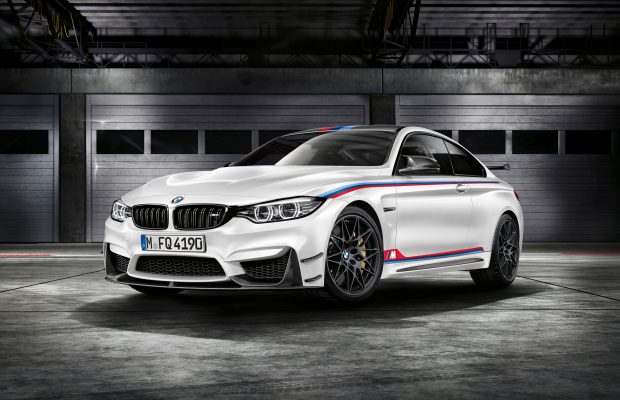
    As seen in these first official pictures, the M4 CS highlights some sporty details like front splitter and rear spoiler made from carbonfibre. Inside, there’s a steering wheel clad with Alcantara and the handles on the slimmed-down door panels have been replaced with loops.

    BMW has tweaked the 3.0-litre twin-turbo inline-six engine to 460hp and 600Nm for the M4 CS. That’s 10hp and 50Nm more than in the M4 Competition Package.

    As a result, the M4 CS goes from 0-100kph in 3.9sec – a tenth of a second quicker than the M4 Competition Package. And because the M4 CS comes with the M Driver’s pack as standard, the electronically limited top speed has been raised from 250kph to 280kph.

    Speaking of the acceleration time, the M4 CS is now level with Audi’s latest RS5 Coupe and Mercedes-AMG C63 S Coupe.

    The M4 GTS is faster with a 3.8sec time. However, BMW’s intention with the M4 CS is to create a go-faster model suited for public roads; the M4 GTS has been developed with the race track in mind.

    That’s one reason why the M4 CS still has rear seats and omits the roll-cage fitted in the two-seat M4 GTS. BMW says the M4 CS’s 7min 38sec lap time around the Nurburgring falls in between the M4 Competition Package and M4 GTS.

    According to BMW, the exhaust sound in the M4 CS can be adjusted by a mode selector. As well, drifts can be made easier in the M4 CS thanks to the M Dynamic diff being modified to allow greater wheel slip.

    Standard in the M4 CS is seven-speed dual-clutch automatic with paddle-shift, M adaptive suspension and Michelin Pilot Sport Cup 2 tyres. Carbon-ceramic brakes, however, are optional.

    The M4 CS will only be built in limited numbers and is expected to command a slight premium over the lesser M4s at just over 10 million baht.

  • BMW i3 Wins Inaugural World Urban Car

    BMW i3 Wins Inaugural World Urban Car

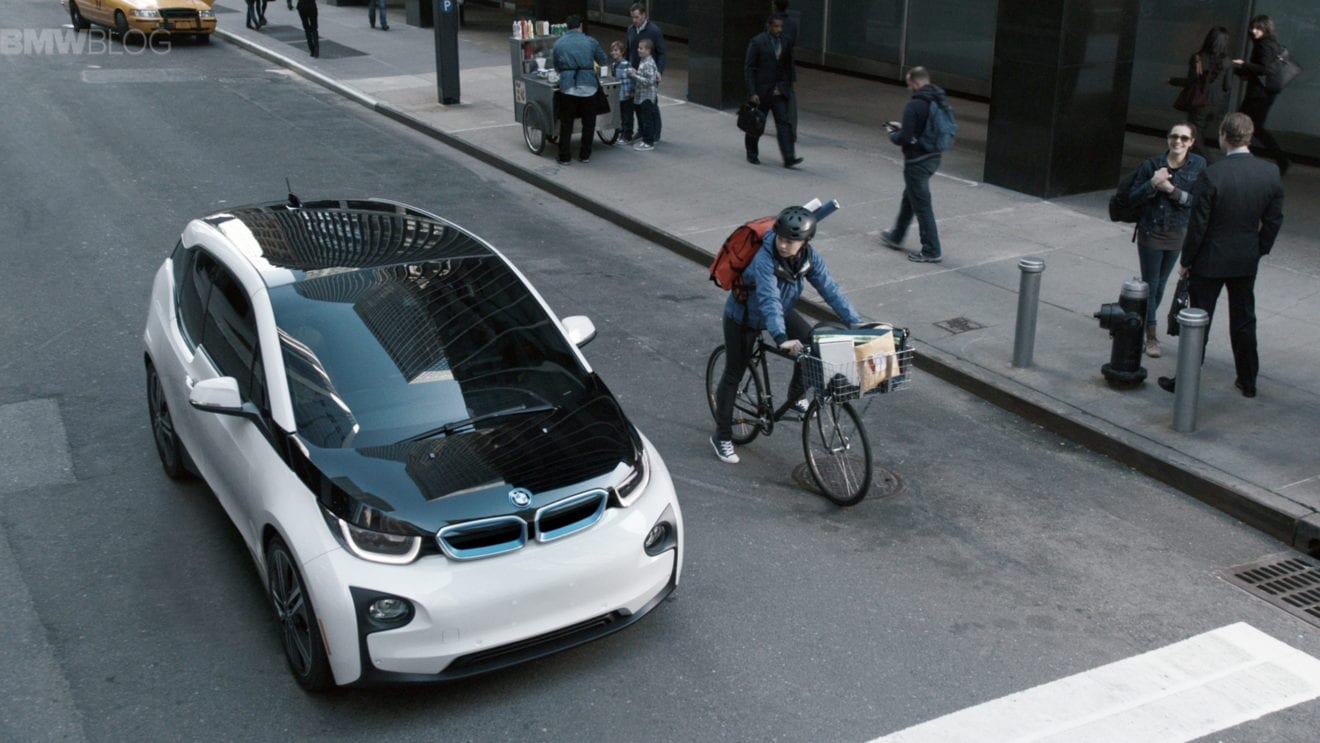
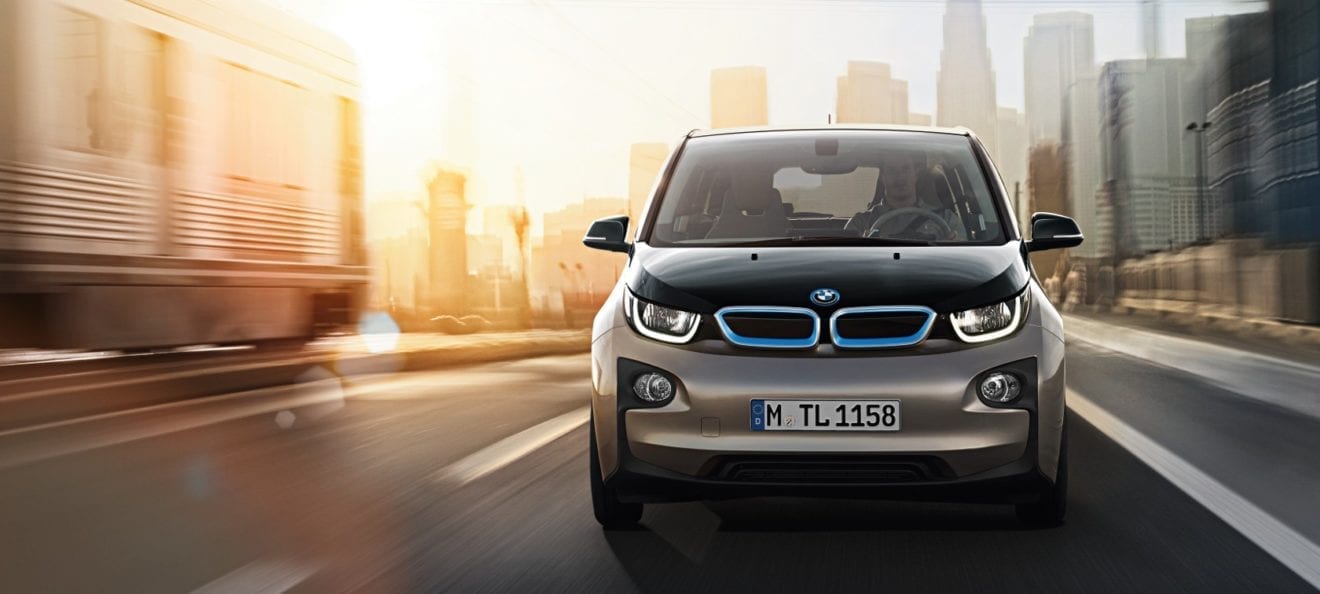
    At a press conference hosted by the New York International Auto Show, Bridgestone Corporation, and Autoneum, the BMW i3 (94Ah) was declared the inaugural winner of the 2017 World Urban Car award.

    “We are delighted and honored that the BMW i3 has been recognized as the World Urban Car,” said Ludwig Willisch, Head of BMW Group Region Americas. “This award highlights BMW Group’s commitment to sustainable mobility through BMW’s first all-electric vehicle made primarily of carbon fiber. The design brief for the BMW i3 was to create a Mega City Vehicle for the cities of the future. Today, the new 2017 BMW i3 (94 Ah) provides more range paired with a high-level of dynamic performance, making it the perfect urban vehicle for people around the world.”

    2017 marks the first year for the World Urban Car award. World Car vice-chairman, Mike Rutherford, commented, “It’s an award whose time has come. Everyday cars in many – perhaps most – parts of the world will have to become smaller if road and parking space is to be found for them in increasingly packed towns and cities whose populations are swelling annually. This year’s winner in our inaugural World Urban Car category proves that these small vehicles don’t have to be cheap, undesirable and unpleasant to drive. Quite the opposite. It is among the best value-for-money products on the market”.

    This year’s winner was chosen from an initial entry list of 7 cars from all over the world, then a short list of three finalists as announced in Geneva last month: the BMW i3 (94 Ah), the Citroen C3 and the Suzuki Ignis

    Vehicles in all award categories are selected and voted on by an international jury panel comprised of 75 top-level automotive journalists from 23 countries around the world. Each juror was appointed by the World Car Steering Committee on the basis of his or her expertise, experience, credibility, and influence. Each juror typically drives and evaluates new vehicles on a regular basis as part of their professional work. Through their respective outlets they collectively reach an audience of many millions world-wide. The international accounting firm KPMG tabulates the jurors’ ballots.

    The Road to World Car began in Paris on September 29, was followed by test-drives in Los Angeles in November, continued in Geneva with the Top Three in the World announcement, and finally ended today with the declaration of the winners in six categories at the New York International Auto Show.

    2017 marks the 11th anniversary of the partnership between World Car and the New York show, and the fourth consecutive year that the World Car Awards have retained their ranking as the number one automotive awards program in the world in terms of media reach.

    The Global Trends Report, co-presented annually by Prime Research and Autoneum, was also released today.The report is the culmination of research and insights across the past six months. Autoneum CEO Martin Hirzel said, “The auto industry is in the midst of an upheaval that goes far beyond anything it has experienced in the past 100 years. Emerging industry trends such as autonomous driving, electric mobility and connected cars are changing not only vehicles and their technologies but also their concepts and forms. As the market leader in acoustic and thermal management for vehicles, Autoneum today already offers a large variety of multifunctional and lightweight technologies and components to meet the requirements of modern mobility. With our recently established “Competence Center for New Mobility” in Sunnyvale, California, Autoneum is taking a committed and active role in driving vehicle advancement by developing innovative technologies and components for all forms of mobility.”

    World Car of the Year is more than just an awards program. The World Car community brings together a large cross section of experts and professionals from every segment of the automotive industry. World Car connects the global industry around the very best of today and inspires, with insights, the ideas and trends of tomorrow. Thus defining The Road Ahead platform shared with our presenting partners Bridgestone Corporation, Prime Research, Autoneum and, most recently, Brembo.

    “As the world’s largest tire and rubber company, we are proud to partner with the World Car program for the 9th consecutive year,” said Mike Martini, president, original equipment tire sales, U.S. and Canada, Bridgestone Americas Tire Operations. “This is an important forum for leaders in the automotive industry to celebrate achievements in innovation, performance and sustainability. As new mobility preferences emerge, we must continue to collaborate across our industry to deliver cutting-edge technology and world-class products that meet the needs of a changing global customer base.”

    In a rapidly changing automotive world, Brembo is also focused firmly on the future and the vehicles it will bring to market. Brembo is committing significant resources to perfecting ever more sophisticated virtual simulation methodologies that includes the study of forms, materials, technologies and surface treatments able to meet the needs of the new-generation vehicles, with a particular focus on environmental impact aspects, which drives all of Brembo’s development activities.

  • BMW plans more purchasing with Daimler

    BMW plans more purchasing with Daimler

    BMW plans to expand its cooperation with Daimler in purchasing components, the carmaker’s new head of purchasing said in an interview with Frankfurter Allgemeine Zeitung.

    “It’s not been fully exploited; there are regular talks and we are discussing jointly purchasing more components,” Markus Duesmann was quoted as saying in an advance copy of the interview, due to be published on Friday.

    He did not give details of the plans or the possible savings that were being targeted.

    Daimler and BMW first started cooperating on purchasing of parts that aren’t crucial to their brand identity in 2008, such as tyres and seat frames.

    Duesmann also said BMW would have to alter its procurement to buy more software in the next few years to meet the trend for electric cars and autonomous driving. BMW could envisage using other battery suppliers too, he added.

    “We are in talks with all the major manufacturers and will make a decision for each model generation,” he said.

    BMW currently gets its batteries from Samsung.