Retail News CRM

Tag: BMW

  • 18th U.S. Takata Death Reported, First In A BMW

    18th U.S. Takata Death Reported, First In A BMW

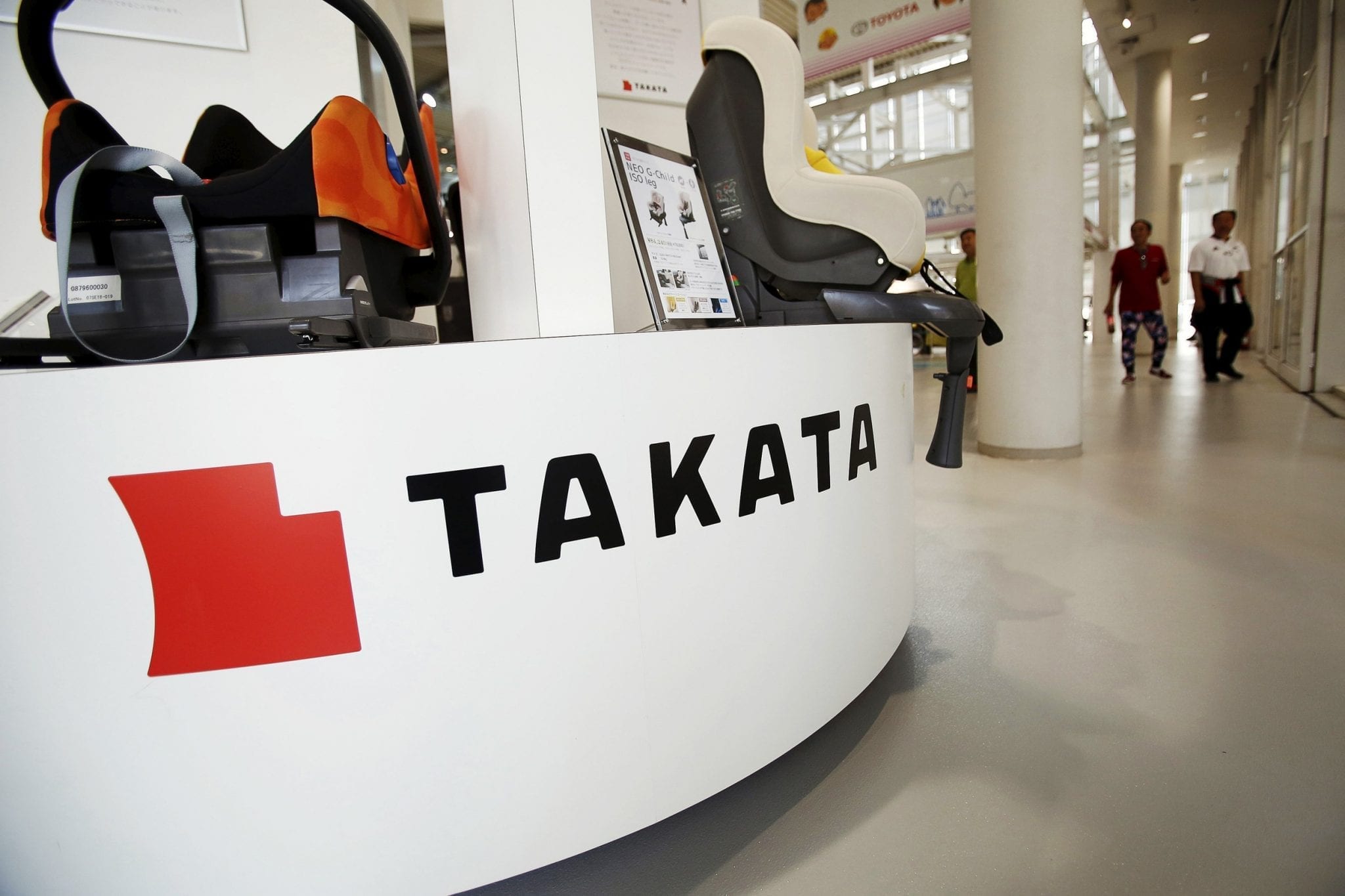
    A U.S. auto safety regulator said on Thursday it identified the 18th U.S. death tied to a Takata airbag inflator rupture after the review of a recent BMW crash. The National Highway Traffic Safety Administration (NHTSA) said it had concluded a Takata airbag inflator rupture during a September crash in Arizona had led to fatal injuries of the driver. This was the first reported Takata death in a BMW vehicle after 15 U.S. deaths in those of Honda Motor Co and two in Ford Motor Co vehicles since 2009.

    BMW said its “engineers will work closely with federal investigators to inspect the vehicle and to understand the details of the incident.”

    The German automaker added it had “been working diligently to identify and contact owners of these older vehicles equipped with recalled Takata airbags.”

    The defect, which leads in rare instances to airbag inflators rupturing and sending metal fragments flying, prompted the largest automotive recall in U.S. history of about 63 million inflators. Worldwide, about 100 million inflators by 19 major automakers were recalled.

    More than 290 U.S. injuries are also tied to faulty Takata inflators and at least 27 deaths worldwide. The issues especially affects older vehicles with long-term exposure to hot, humid conditions. A number of the deaths have occurred in Arizona. Millions of unrepaired airbags remain in cars on U.S. roads.

    NHTSA said in a statement Thursday the “incident underscores the importance of replacing every recalled Takata airbag. When notified of a safety defect, we urge vehicle owners to immediately contact their automaker’s local dealer to schedule a free repair.”
  • BMW Warns Of Pandemic Risks As Third-Quarter Profit Rebounds

    BMW Warns Of Pandemic Risks As Third-Quarter Profit Rebounds

    BMW’s third-quarter profit rose almost 10% thanks to Chinese demand for luxury cars, but the German automaker warned a new wave of coronavirus infections sweeping Europe and the United States posed a “considerable” risk to its business. Sales of luxury models such as the 8 series and X7 helped the carmaker reach a new sales record in the quarter, but the cautious outlook sent BMW shares lower on Wednesday.

    “After a more stable phase in the economic environment in the third quarter, the pandemic is now clearly regaining momentum,” BMW said.

    “If the pandemic takes an even more serious course and the global economy experiences a perceptible downturn, the risk exposure could be considerable, particularly on the demand side.”

    The growing importance of China led BMW to abandon its strategy of seeking “balanced sales across all continents”. BMW shares were down 1% at 1112 GMT, underperforming Germany’s blue-chip DAX index. Like rival Mercedes, BMW’s pretax profit recovered in the third quarter, rising 9.6% to 2.46 billion euros ($2.87 billion), lifted by an 8.6% increase in deliveries.

    The automotive EBIT (earnings before interest and tax) margin rebounded to 6.7%, from minus 10.4% in the second quarter and 6.6% a year earlier.

    “BMW beat mostly on earnings quality with auto margin recovering to year-ago level,” Jefferies analyst Philippe Houchois said, pointing to prudent cost management, lower R&D spending and a rebound in demand from China.

    But after the pandemic-related hit in the spring, BMW still expects overall deliveries of high-end vehicles and group pretax profit this year to be significantly lower than last year.

    Deliveries of BMW and Mini-branded vehicles rose 8.6% in the third quarter, mainly thanks to a 31% spike in China, which helped offset a 15.7% drop in demand in the United States, where the pandemic has hit sales hard.

    The growing importance of China led BMW to abandon its strategy of seeking “balanced sales across all continents”.

    “We don’t like to refer to it as a dependency (on China). What is happening is a natural adjustment,” Chief Executive Oliver Zipse told reporters on a conference call.

    “If we speak about dependencies, we are dependent on our customers,” he said, noting China has a higher population than both Europe and the United States.

    China accounted for 34% of all BMW Group’s new car deliveries in the third quarter, followed by Germany on 13% and the United States on 12%. Zipse also said BMW would come to terms with whoever wins the U.S. presidential election. “Naturally it is in everybody’s interest that there is an unambiguous result,” he added.

    Expecting global demand for premium cars to drop by more than 10% this year, the Munich-based company is adjusting its production footprint. Manufacturing of the BMW X1 and Mini Countryman will be phased out at Dutch contract manufacturer VDL Nedcar, with production moved to BMW plants, Zipse said. The company is also preparing to introduce a new vehicle architecture in 2025, developed to build mainly electric and digitally connected vehicles, he added.

    BMW reiterated it expected to achieve an automotive EBIT margin of 0%-3% this year.

  • BMW R 18 Classic Unveiled

    BMW R 18 Classic Unveiled

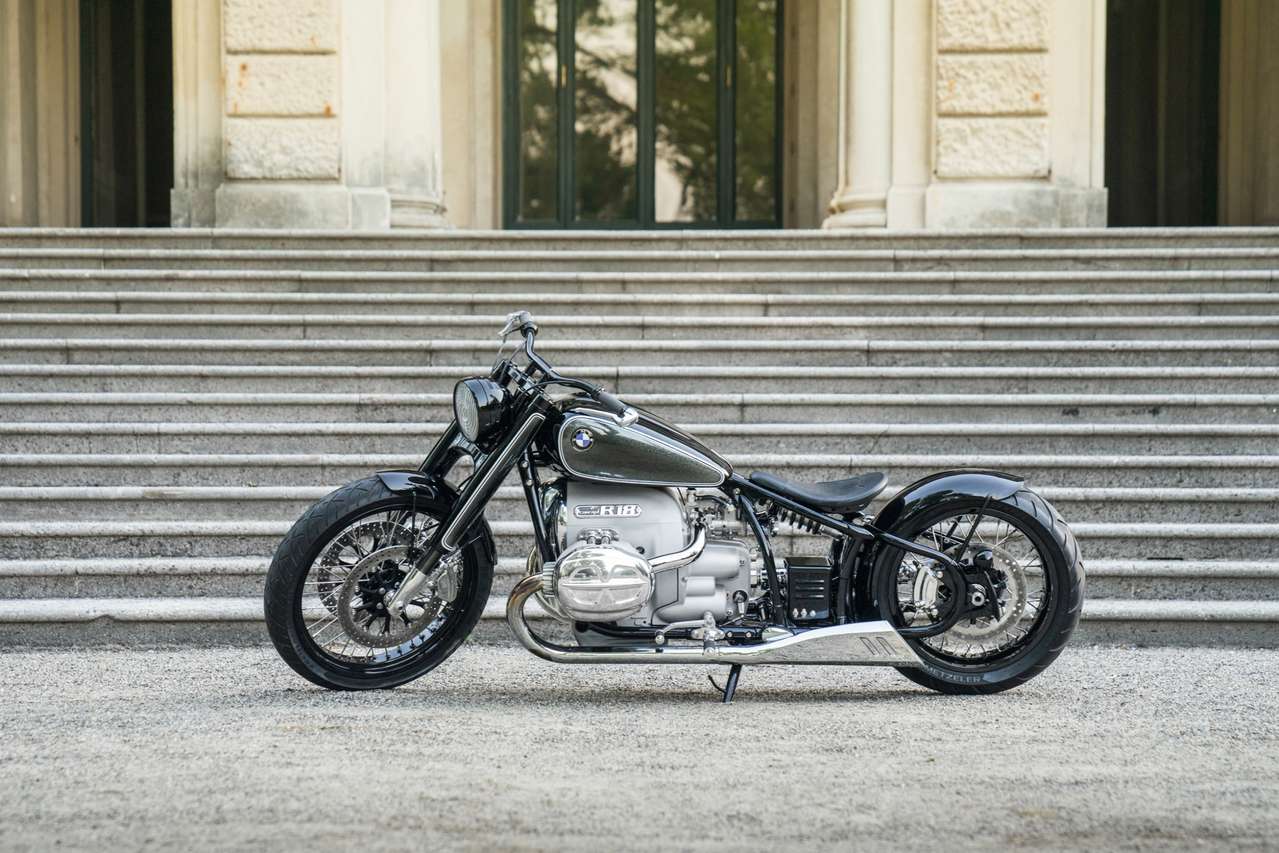
    BMW Motorrad has started introducing its 2021 range of motorcycles, and with the new range, has added a new variant to the BMW R 18 model line-up. The BMW R 18 Classic is based on the standard BMW R 18, but gets some additional equipment to make it more touring friendly, and a slightly different passenger seat. The obvious changes include a clear windshield, a pair of leather-finished saddlebags with traditional looking buckle stays, and all of these are removable, so the R 18 Classic can be turned back to something which is almost identical to the standard BMW R 18.

    On the R 18 Classic, there are also extra LED headlights, a smaller, and wider 16-inch front wheel, instead of the 19-inch front wheel on the base R 18, and also gets standard cruise control. The saddlebags come with 15.5 liters of storage space or 10 liters with the removable liners, and the buckles are cosmetic, just to give the traditional look. The fasteners are more conventional push-in units. The windscreen slots into the top of the forks and attaches to the bolt-on auxiliary light bracket with locking brackets, and can be removed or replaced very quickly and conveniently.

    The powerplant is the same as the R 18, so the 1,802 cc, air-cooled boxer twin puts out the same 91 bhp of power and 157 Nm of peak torque. The engine is mounted on a double-cradle steel frame and the hidden rear suspension system gives the look of a classic hardtail cruiser. There is a modern electronic system, with multiple riding modes, ABS, traction control, engine brake control, which can be monitored and set via a simple LCD unit on the analog speedometer console. There’s also the option of adding an electric reverse gear and hill start control.

    BMW also offers a wide range of extras for both models, the R 18 and the R 18 Classic, with wheel options ranging from 16-inch to 21-inches, different seats, footboards, screens, bars, luggage and cosmetic components, so the standard 345 kg kerb weight of the base R 18 becomes irrelevant with the addition of aftermarket components.

    With the additional components, the BMW R 18 Classic adds some weight too, pushing its kerb weight to 365 kg, compared to 345 kg of the base BMW R 18. The base R 18 is priced at ₹ 18.90 lakh (Ex-showroom) in India, and if BMW Motorrad India decides to introduce the R 18 Classic, expect prices to be around ₹ 21 lakh (Ex-showroom). The BMW R 18 Classic is expected to be offered on sale across BMW Motorrad dealerships by the second quarter of 2021.

  • BMW Loses Millions As Sales Slide During Lockdowns

    BMW Loses Millions As Sales Slide During Lockdowns

    BMW expects to make a profit this year if demand continues to recover, despite posting a record loss for its car division in the second quarter after sales slumped 25% because of coronavirus lockdowns, it said on Wednesday.

    The German manufacturer of BMWs, Minis, and Rolls-Royces said sales had started to recover during the latest three-month period, including a 17% jump in deliveries in China, but the rebound would not fully make up for sales lost to COVID-19.

    As a result of the sales slide, and higher costs for developing low-emission cars, BMW posted a pretax loss of 498 million euros, its first in over 11 years, and an operating loss of 666 million euros ($790 million) for the quarter.

    Shares in BMW fell 3% following the results, with some analysts saying they had not expected such a big loss in earnings before interest and taxes (EBIT).

    BMW, which makes Minis and Rolls-Royces said sales had started to recover during the latest three-month period, including a 17% jump in deliveries in China.

    “What matters now is how robust this upward trend is and when individual markets will follow suit,” said Chief Executive Oliver Zipse, adding that its overall cars sales in July were higher than last year.

    BMW said, however, that its outlook did not factor in the potential impact of the second wave of COVID-19 infections, nor the prospect of a more sustained or deeper recession than expected in its key markets.

    Zipse said on a call that developments in the United States, which has the highest number of COVID-19 cases and deaths worldwide, were “extremely worrying”.

    Sales in the United States made up 12.6% of deliveries in the first half of 2020, down from 15.2% in 2020. Overall, BMW said it expected global demand for luxury cars to fall by a fifth this year.

    The COVID-19 pandemic has already hit carmakers such as Fiat Chrysler, Ford, and Daimler particularly hard at the time when the auto industry is ramping up spending to clean up their combustion engines as well as developing low-emission technologies to conform with stringent European anti-pollution rules.

  • Honda most searched vehicle brand in Vietnam

    Honda most searched vehicle brand in Vietnam

    Honda, Toyota, BMW, Mitsubishi, and Suzuki are the five most googled car brands in Vietnam, market research firm iPrice said.

    The Malaysia-based meta-search website, which operates in Vietnam and six other countries across Southeast Asia, said it considered 22 car brands googled between March 1 and May 31 this year to find the most searched brands.

    Honda topped the list since it produces both motorbikes and cars, and has an 80 percent share of the motorbike market.

    It was also the most googled brand in Thailand and Indonesia. In the Philippines, it was Toyota.

    In Singapore and Hong Kong, which prioritize green transportation, American electric vehicle brand Tesla was in first place.

    Across the seven markets, Honda was the most googled brand with 550,000 searches, followed by Toyota (368,000) and BMW (301,000). Tesla and Mitsubishi tied with 246,000 to round off the top five.

    The study also found that SUVs were the most searched cars in all seven markets, followed by sedans, MPV/WGNs, hatchbacks, and coupes.

    According to data from Vietnamese manufacturer Thanh Cong Motor and the Vietnam Automobile Manufacturers Association (VAMA), Toyota Vios was the most sold model in the first half of this year with 11,244 units.

    Sales of VAMA members, who account for more than 95 percent of the market, were down 30 percent year-on-year to 102,720 vehicles.

  • BMW’s ‘Art of Decoding’ experience in Hong Kong starts with a QR code

    BMW’s ‘Art of Decoding’ experience in Hong Kong starts with a QR code

    BMW is holding its first-ever art-driven motor show in its luxury class showroom in Wan Chai, Hong Kong this month.

    The brand’s “The Art of Decoding” event involves an interactive experiential concept featuring six key aesthetics encouraging visitors to learn more about the BMW DNA.

    Different zones at the exhibition showcase 19 BMW art pieces, in which participants can “decode” using smartphones to learn the stories behind each car model on show.

    Visitors are invited to register online to receive a personal QR code to be activated on-site, before taking photos of a “digit wall” using AR technology to decode the numerical visuals and integrate art aesthetics into the photo.

    Visitors can also present their QR codes on the interactive digital interface, select their favorite illustrations depicting the craft and design of BMW classic series designed by a local artist and create their own personalized branded postcards using their own names.

    Through “The Art of Decoding” journey, visitors will experience BMW contemporary aesthetics, craft, and design, decoding the stories behind every art piece and luxury model

    The event will showcase the latest X5M and X6N models alongside several classics through to July 26.

  • BMW Introduces New Service And Repair Packages For BMW And Mini Cars

    BMW Introduces New Service And Repair Packages For BMW And Mini Cars

    BMW India has introduced new service maintenance packages for BMW and Mini cars in the country. There will be multiple options for the same, based on duration/mileage. ‘Service Inclusive’ offers a range of service packages that cover maintenance, inspection, and wear and tear. BMW offers another range of services called ‘Repair Inclusive’, which takes care of standard warranty extension. Customers just need to make an upfront payment and can avail a wide variety of services. Customers can choose packages according to their usage and needs. The prices of the service/maintenance package will be pre-fixed. The customers have the option of extend or renew the ‘Service Inclusive’ package as well.

    Arlindo Teixeira, acting President, BMW Group India said, “BMW Group India aftersales products and services have a simple aim – Empowering customers to enjoy the journey, mile after mile, year after year. With Service and Repair Inclusive, our customers have complete peace of mind. They don’t have to waste a moment thinking about the cost of maintenance or wear and tear because they know they own the best coverage for their BMW or MINI. It’s all there with Service and Repair Inclusive: the expertise of our service specialists, the use of Original BMW Parts, and the great feeling of knowing their car is in the very best of hands. With new additional benefits, we will continue to offer the best-in-class value while our exceptional service standards will continue to create an unmatched ownership experience.”

    BMW offers three Service Inclusive packages which are Oil Service Inclusive, Service Inclusive Basic, and Service Inclusive Plus. Each package has a different gamut of services that can be availed. Customers can pick anyone for a duration/mileage of their choice starting from 3 years / 40,000 km and extend it up to 10 years / 200,000 km.

    The base oil service package includes only the oil change and oil-related services of the cars and is meant for people whose usage is quite low. The service inclusive basic package includes regular maintenance such as engine oil service, top-ups, a replacement for air filter, fuel filter, microfilter, spark plugs, and brake fluids. The service inclusive plus includes replacement of items that are commonly susceptible to wear and tear such as brake pads, discs, wiper blades, clutch, and all. This is in addition to all the services offered by service inclusive basic.

    Customers can purchase Service Inclusive for their existing cars as well, where the package begins from the date of purchase and not from the date when the warranty starts. For customers with high usage, service packages are available in the business portfolio.

    With ‘Repair Inclusive’, the standard warranty on a vehicle can be extended even after the initial period of 24 months for unlimited mileage, up to a period of 6 years. The cost for all necessary repairs is covered within the agreed mileage/duration. In case of change of ownership of the car, Service and Repair Inclusive are easily transferable as well.

  • BMW S 1000 XR Teased Ahead Of Launch In July

    BMW S 1000 XR Teased Ahead Of Launch In July

    After introducing the F 900 R and the F 900 XR in the country, BMW Motorrad India is now gearing up to launch the 2020 BMW S 1000 XR sports tourer. The upcoming offering has been teased on the company’s social media handles and comes with several upgrades over the current model. The 2020 BMW S 1000 XR made its global debut at EICMA 2019 in November and brings the prowess of the S 1000 RR’s engine with the versatility of a tourer in a compelling package. The model locks horns with the likes of the Ducati Multistrada 1260 S and the Kawasaki Versys 1000 in the segment.

    The 2020 BMW S 1000 XR has been comprehensively updated and comes with a new frame, new design language and a new engine as well. Sharing its underpinnings with the S 1000 RR, the sports tourer also loses those famed asymmetrical headlamps for a sharper-looking front design. The sports tourer gets a standard two-step adjustable windscreen and sharper bodywork. The new flex frame uses the engine as a stress-member that have improved the ergonomics on the motorcycle. The swingarm is 19 percent lighter than the older version, while the bike has lost about 10 kg over its predecessor.

    Power on the 2020 BMW S 1000 XR now comes from the 999 cc in-line four-cylinder petrol engine that has been tuned for more relaxed usability. Unlike the BMW S 1000 RR, the S 1000 XR misses on ShiftCam technology or variable valve timing, and belts out 163 bhp at 11,000 rpm and 114 Nm of peak torque at 9250 rpm. The engine is paired with a 6-speed transmission but the top three gears get longer ratios that alter performance for more highway-dedicated duties.

    The new S 1000 XR also comes with a semi-active suspension that is electronically adjustable and will alter the response setting depending on the terrain the bike is riding on. The bike rides on 17-inch alloy wheels with spoked wheels as an option but the S 1000 XR is not an adventure motorcycle and has limited abilities off-road. It also comes with road-spec tires, while the whole bucket electronic wizardry has been carried over and includes the six-axis IMU, cornering ABS, lean sensing traction control, drag torque control, bi-directional quick-shifter, cruise control, hill assist, wheelie control and more. There are four riding modes – Road, Rain, Dynamic and Pro. The bike also gets a TFT screen, keeping up with the times.

    The 999 cc in-line four-cylinder motor does not get ShiftCam tech from the S 1000 RR on the S 1000 XR

    Pricing on the 2020 BMW S 1000 XR is expected to remain identical to the current model and we expect the sports tourer to carry a price around ₹ 18-20 lakh (ex-showroom), depending on the exchange rate. The S 1000 XR is expected to go on sale sometime next month.

  • BMW Cuts Margin Outlook For Cars Division

    BMW Cuts Margin Outlook For Cars Division

    BMW on Tuesday lowered the outlook for the profitability of its automotive and motorcycles divisions, citing worse-than-expected demand which has been hit by measures to contain the coronavirus.

    BMW said it expects the earnings before interest and taxes (EBIT) margin for the automotive segment to fall within a range between 0% and 3% this year, adjusting its outlook from a previously expected margin range of between 2% and 4%.

    “The decisive factor for the adjustment is that the measures to contain the coronavirus pandemic are lasting longer in several markets and are thus leading to a broader negative impact than was foreseeable in mid-March,” BMW said.

    Delivery volumes in these markets will not rebound within a few weeks as BMW had assumed, with the highest negative impact now expected in the second quarter of 2020, the carmaker said, cautioning that matters could still get worse.

    The third-generation BMW S 1000 RR has been launched in India. It was always one of the best liter-class sportbikes one could ever buy. Here’s everything you need to know about the 2019 BMW S 1000 RR.

    “The updated guidance does not, in particular, include, a longer and deeper recession in major markets, a more severe economic slowdown in China as a result of recessions in other parts of the world,” BMW added.

    Further margin pressure could come from market distortions caused by an even stronger competitive environment or from the second wave of infections and associated containment measures.

    The Munich-based group further said it now expects deliveries of motorcycles to be down significantly from 2019 levels.

    The EBIT margin in the motorcycles segment will now be within a range of between 3% and 5%, rather than 6% and 8%, BMW said.

    Last month BMW warned it was expecting a further decline in global demand even after a 20.6% drop in first-quarter sales to 477,111 vehicles.

    BMW said in March that its pre-tax profit and vehicle deliveries would drop significantly this year as the coronavirus spreads, and that this – combined with higher research and development spending – would lower the profit margin in its automotive segment.

    BMW is due to publish first-quarter earnings on May 6.

  • BMW Begins Online Sales For New & Used Cars Amidst Lockdown In India

    BMW Begins Online Sales For New & Used Cars Amidst Lockdown In India

    Joining the likes of Mercedes-Benz, Honda, and Volkswagen, BMW India has announced its new online platform for the sale of new and used cars. The new BMW Contactless Experience takes the car buying process virtual and enables customers to explore and buy not just new vehicles but pre-owned cars as well. In addition, the Contactless Experience allows customers to book vehicle service and make payments online, all from the safety of their homes. The BMW Contactless Experience was introduced on April 2, 2020, in the country. The new initiative is a part of several measures taken by the automaker for customers during the lockdown.

    Speaking on the new initiative, Arlindo Teixeira, Acting President, BMW Group India said, “At BMW, customers are at the core of everything we do. Amidst the current pandemic situation, we have successfully transformed our business processes and put in place various measures to effectively and efficiently serve our existing customers and prospects by leveraging new-age digital technologies. An industry-first comprehensive initiative, the BMW Contactless Experience offers consumers an all-new way to explore and experience the world of BMW while being in the comfort of their homes. Since its launch in April 2020, we have seen a tremendous increase in customer engagement, configuration requests, and virtual product presentations on this platform. As business dynamics evolve post the current COVID -19 pandemic, the BMW Contactless Experience will play a crucial role in offering seamless sales and aftersales services to our existing and new customers. We will bring joy to our customers no matter where they are.”

    The BMW Contactless Experience not only allows customers to learn about their vehicle online but also personalize their preferred car, finance options, and service packages. A dealer representative online will be interacting with the customer online in real-time to guide the same. Customers can also have a 360-degree view of the vehicle on their phones, tablets of personal devices, and interact with the sales consultant. BMW Financial Services will also help procure finance for the vehicles with customized financial solutions, depending on the customer.

    For existing BMW customers, the Contactless Experience extends to booking a service appointment online, type of service required, and the pick-up and drop details. The service cost estimates and details of the service are sent for customer approval using BMW Smart Video. The serviced vehicles are also fully sanitized before being delivered to customers. The deliveries and servicing, however, will be done adhering to the local government directives post the lockdown. Ensuring the safety of the customers, BMW will sanitize the cars before delivering it to the customer with all the physical documents in a sanitized envelope.

  • BMW Motorrad India Sales Grow By 71 Per Cent In Q1 2020

    BMW Motorrad India Sales Grow By 71 Per Cent In Q1 2020

    BMW Motorrad India has shared its sales report for the first quarter of 2020, and the manufacturer managed to sell 1024 motorcycles between January and March this year. The German motorcycle maker registered a 71.5 percent hike in sales in Q1 2020, as compared to the same period in 2019 wherein it sold 597 units. Driving the sales momentum for the brand were its entry-level motorcycles, the BMW G 310 twins – G 310 R and the G 310 GS – that contributed to over 80 percent to the total sales or a little over 800 units in three months.

    Speaking on the sales growth, Rudratej Singh, President and CEO, BMW Group India said, “BMW Motorrad India has posted robust growth in Q1 2020, a result of the extremely strong brand we have built among motorcycling enthusiasts in India. BMW Motorrad has brought its most aspirational and desirable global products to Indian customers and developed a truly close-knit riding community that attracts riders who use motorcycling as a means to explore life. The BMW 310 and the GS range are particularly popular among the Indian riders. Though our riding events are on hold to ensure social distancing, we are engaging with fellow riders digitally and through social media. We are closely monitoring the market situation and its impact on future demand.”

    The new generation BMW S 1000 RR has found a large audience in India, according to the company

    While the G 310 twins have been hugely popular for BMW Motorrad, the company has also been actively pushing the 310 motorcycles with huge discounts at the dealer level. The discounts range between ₹ 65,000-75,000. The company is yet to announce BS6 compliant versions of the motorcycles.

    The other main contributors for BMW Motorrad continue to be the  R 1250 GS/GSA, F 750/850 GS as well as the 850 GSA, and the BMW S 1000 RR.

  • You might soon unlock your BMW with your iPhone

    You might soon unlock your BMW with your iPhone

    Apple and premium German car manufacturer BMW are seemingly collaborating to bring the CarKey iPhone feature to eligible vehicles of the carmaker. Evidence for this was unraveled in the iOS 14 code, hinting that iPhone users might soon be able to unlock their BMW cars with their iPhones thanks to the CarKey feature. As a reminder, the existence of CarKey itself was revealed in the iOS 13.4 beta back in February.

    Given that BMW was among the very first automakers to adopt Apple’s CarPlay feature a few years back, it would make sense to assume that CarKey could be adopted on upcoming beemers as well.

    It seems that CarKeys could be stored inside the ubiquitous Wallet app and even be shared with other people through iMessage. “Yo, mom, shared me the keys for the car” would sound a whole lot cooler! Code strings suggest that you will not only be able to lock and unlock your vehicle with your device, but also start it remotely. This is already available through the BMW Connected app, but native iOS support would definitely be great. There would seemingly be two ways to unlock the car – either by holding your phone near the NFC-enabled door handle or just having your iPhone in your pocket.

    Apple could use NFC, UWB (ultra-wide band) chip, or a combination of the two. The UWB chip debuted with the iPhone 11-series but has been pretty underused when it comes to features, as it’s currently only used to aid AirDrop discovery.

    On the topic of anti-theft countermeasures, CarKey will enjoy the same level of biometric security that the sensitive data on your iPhone enjoys, but there would seemingly be an option to use CarKey without having to authenticate yourself with a Face ID scan or a PIN code for an even faster experience.

    BMW itself neither denied or acknowledged the rumored functionality. When asked, the company replied rather nonchalantly with “Please understand that at this point we cannot confirm your request nor give you further details. We would like to refer you to our press release, ” which suggests that we could be in for news on the matter very soon.

  • BMW India Shuts Down Chennai Plant

    BMW India Shuts Down Chennai Plant

    BMW Group India has announced a number of measures to restrict employee movement during the novel coronavirus pandemic that’s swept the globe. The automaker has announced that it will be closing the Chennai-based manufacturing facility with immediate effect until March 31, 2020, while employees at The National Sales Company and BMW India Financial Services will work from home during this period. Meanwhile, essential services including security, facility management and healthcare will continue to operate. Furthermore, the German auto giant said that it will keep all its showrooms pan India closed during this period, while aftersales and breakdown services will remain functional albeit with limitations.

    A statement from the BMW Group read, “For the well-being of employees in the midst of the COVID-19 pandemic, work from home has been implemented across BMW Group offices in India with immediate effect. Business continuity is to be ensured across all functions while adhering to all government directives and necessary safety measures. Across the BMW, MINI and BMW Motorrad dealerships in India, staff will work from home to offer services to customers. Aftersales and breakdown services staff will operate as per the local government directives and will be functional with limitations. All showrooms are presently closed and will reopen as per local government advisory.”

    Almost all major automakers including Tata Motors, Mahindra, Maruti Suzuki, FCA India and more have announced plant closures amidst the outbreak. In the luxury space as well, Volvo India had already announced that it has asked its employees to work from home, while Audi India has also shut operations with the closure of the Skoda Auto-Volkswagen facilities across India, while Mercedes-Benz too has closed the Chakan facility, near Pune. The auto industry is estimated to bear a loss of ₹ 15,000 crore every day during this phase, which further adds to the sector’s woes since the past year.

  • BMW’s Dingolfing Plant Tests Fully Connected Logistics

    BMW’s Dingolfing Plant Tests Fully Connected Logistics

    As part of a three-year research project supported by the Bavarian Ministry of Economic Affairs, Regional Development and Energy, the BMW Group and three partner companies from Bavaria are exploring the possibilities for making BMW Group Plant Dingolfing a smart factory for logistics. The ‘Autonomous and Connected Logistics’ research project was officially launched in September 2019 and is now entering the practical phase. A number of innovative Industry 4.0 production technologies are being combined in an overall concept and tested under real conditions at BMW Group Plant Dingolfing. The BMW Group is contributing around 4.8 million euros to the project costs.

    Testing of 5G wireless technology, which, over the course of the project, will be set up at BMW Group Plant Dingolfing as a trial network, will play a key role in linking different logistics solutions. The new mobile telecommunications standard allows large data volumes to be transferred within a very short time. 5G enables real-time connectivity between machinery and equipment.

    Within the BMW Group production network, the BMW Brilliance Automotive joint venture has already rolled out the 5G wireless communications network across all its three plants. The long-term goal is to set up a 5G network at all BMW Group plant locations worldwide. Further sub-projects will explore the use of logistics robots, mobile devices and digital displays in the logistics process and test connectivity between different systems.

    Peter Kiermaier, head of Logistics Planning at BMW Group Plant Dingolfing: “We also want to use new technologies to increase transparency in conventional processes and enable smooth coupling of manual and autonomous technologies.”

  • BMW, Daimler Aim To Cut Emissions 20% This Year With New Electric Models

    BMW, Daimler Aim To Cut Emissions 20% This Year With New Electric Models

    New electric models will help BMW and Daimler cut emissions from the cars they sell by an average of 20% this year, the German automakers predicted on Tuesday, as they strive to meet tough new European pollution rules.

    In a live-streamed event, following the cancellation of this week’s Geneva motor show due to the coronavirus epidemic, BMW presented the i4 four-door coupe with a driving range of up to 600 kilometers, one of a number of new electric models it hopes will stimulate demand for battery-driven cars.

    In a separate webcast, Mercedes-Benz owner Daimler was also bullish about prospects for its growing range of electric cars.

    The European Union set automakers a target to cut carbon dioxide (CO2) emissions by 40% between 2007 and 2021, and has demanded a further 37.5% reduction by 2030.

    But pollution levels from cars have been rising as customers increasingly chose to buy gas-guzzling sport-utility vehicles (SUV), meaning automakers need to ramp up sales of electric cars if they are to avoid hefty fines from 2021.

    They have a mountain to climb. Average fleet emissions for cars in Europe rose for the third year in a row in 2019, with electric vehicles making up only 6% of overall registrations, analysts at JATO Dynamics said on Tuesday.

    BMW already has 500,000 electric and hybrid cars on the road and plans to double that number by the end of next year, including through the launch of the i4 and an iX3 SUV as well as an electric version of its Mini.

    Sales of battery-electric and hybrid vehicles are already up by 43% so far this year, BMW Chief Executive Oliver Zipse said.

    “We believe that we can keep the impact on profits under control,” he added, pledging that every car sold would be profitable.

    BMW stuck to its outlook even as second-quarter earnings fell 20%, hit by currency headwinds and the rising cost of manufacturing electric and hybrid cars to help the carmaker meet stricter emissions limits.

    Electric cars are generally more expensive to build than petrol or diesel-powered vehicles. But BMW said it was saving money, including by delaying the development of a next-generation Mini, to free up resources for the electric campaign.

    “If a vehicle architecture does not need to be renewed, then we do not do it,” Zipse said, adding the Mini was being renewed constantly by updating the powertrain and infotainment options. Around 7,000 electric Mini’s have been ordered so far, he added.

    Daimler, meanwhile, is promoting hybrid cars including a new CLA Shooting Brake, as well as the Mercedes-Benz EQC electric SUV and an electric van, the V-class, as part of its drive to reduce emissions by 20% this year.

    “We are within striking distance of meeting the target,” Chief Executive Ola Kaellenius said. Mercedes-Benz plans to build 50,000 EQC vehicles this year.

    Kaellenius declined to comment on the profitability of electric vehicles. “We don’t communicate individual margins. Electrification is a headwind,” he said.

    Separately, Volkswagen announced the launch of the ID4, a fully electric SUV with an operating range of up to 500 kilometres, which will go on sale in Europe, China and the United States, and start production this year.