Tag: Brands

  • SMEs switch to online for branding, expansion

    SMEs switch to online for branding, expansion

    Indonesian small and medium enterprises (SMEs) are taking advantage of the unique methods of engagement that online services offer them and potential customers.

    The owner of Jakarta-based desserts maker PUYO Desserts, Adrian Agus, owes much of his brand’s success to intensive online campaigns through various social media and messaging apps.

    By connecting directly with his customers through these platforms, Adrian has been able to find a quick way for his colorful home-made puddings to capture the public eye.

    Shortly after he started the business in 2013, Adrian found that social media greatly helped his marketing operations at little cost. In the beginning, PUYO’s marketing campaigns mostly centered on Instagram where it slowly gained traction and attracted loyal followers.

    “Social media campaigns have been very effective for the business. Right now, we’re holding a lot of competitions on Instagram,” he told The Jakarta Post on Thursday, elaborating on the creative engagement that Instagram offers between customer and vendor.

    Gradually, PUYO has branched out to Twitter and LINE to help sell its products, with the use of these services’ operational tools such as LINE’s LINE@ service, which enables the user to send mass messages to all customers that follow its LINE account.

    Japanese-based LINE Corporation itself describes the Line@ feature in its messaging app as “the same as broadcast messaging”. The company, however, says that the idea is more specifically aimed at nurturing businesses.

    Currently, PUYO has over 59,600 followers on its Instagram account and has evolved from being a home-based business in 2013 to having 22 outlets across Greater Jakarta.

    Meanwhile, the social apps behind these successes are increasingly aware of their role in the small business sector.

    Apps such as LINE, KakaoTalk, WeChat or WhatsApp have had their purposes extended beyond the simple text message, with some apps gradually rolling out new features that help small businesses thrive or become more efficient.

    LINE Indonesia’s head of marketing Galuh Chandrakirana explained that the rollouts of the company’s newer features such as Line for PC, Line Group Call and Line Today would help small businesses in making their operations more mobile, as mobility is becoming more emphasized in today’s business world, with SMEs able to benefit from these services through trimming their costs.

    “Features such as Line for PC, which can be opened from desktops, are not geared necessarily for SMEs but it serves to help them cut communications costs. However, we do plan to roll out a feature which is specifically designed to help that sector in the next month or two,” she elaborated.

    Currently, LINE has recorded over 1 million downloads in Indonesia comprising small businesses including online shops, offline retailers, specific communities and bloggers. Up to 40 percent of that figure is active businesses who utilize LINE in their practices.

    Indonesia has the highest number of SMEs in Southeast Asia, with over 50 million operating nationwide, however, only 1 percent of these are officially “connected” online.

    Last month, the government announced its cooperation with online SME promotion service Nurbaya Initiatives to explore new ways of encouraging SMEs to tap into the digital era’s potential.

    Collaborating with state-owned postal company PT Pos Indonesia, Nurbaya is targeting to bring 2 million SMEs online within the next two years. The company will assign a facilitator to provide each participating SME with advice on online promotion, including the setting up of online stores and payment platforms.

    Nurbaya will also assign a relationship manager to every online shop, allowing clients to focus on production. “By our collaboration with the postal service, SMEs will have help in terms of logistics and quality control,” Nurbaya’s CEO Andy Sjarif said.
  • Is Growth For Luxury Brands in China Over?

    Is Growth For Luxury Brands in China Over?

    China and the Chinese played a primary role in the growth of the luxury sector in the past decade. But what was once a boon for luxury goods brands is now turning around.

    Chinese consumers account for the largest portion (31 percent) of global luxury spending, up from only 1 percent in 2000, according to a study by consulting firm Bain & Company. And in the past decade, thanks to China and Chinese shoppers abroad, the luxury goods market worldwide grew by 72 percent in size.

    luxury goods

    (Statista)

    “The relentless expansion of the domestic economy that fueled China’s voracious appetite for the finer things in life has slowed,” Exane BNP Paribas analyst Luca Solca.

    “This only compounds the chilling effect that the government’s anti-corruption campaign has had on demand for luxury fashion and fine jewelry.”

    Many luxury goods brands opened up store after store to tap the Chinese market. The experts are now debating whether they are too exposed to China.

    In his analysis, Solca looked at whether each brand is over- or underexposed to the Chinese market based on the number of stores they have. Accordingly, Versace is the most over-exposed brand with 22 percent of its stores based in China. Moncler, Tod’s, and Dolce&Gabbana are among the overexposed brands as well.

    The only large brands underexposed to China are Hermes, Tiffany, and Michael Kors. And these brands still have some retail expansion opportunity in China, according to Solca.

    (Source: Exane BNP Paribas analysis, RE-Analystics, Business of Fashion)

    (Exane BNP Paribas analysis, RE-Analytics, Business of Fashion)

    Sales of luxury products in the mainland have started to slow down after Chinese regime leader Xi Jinping launched his political anti-corruption campaign in 2013. Many of the Chinese officials and their numerous cronies and associates notorious for using luxury items for bribes stopped shopping for those items.

    A slowdown in the Chinese economy since mid-2015 was the second blow for luxury brands. Some brands have already started closing stores in China.

    “A corollary to the drop in domestic sales is a reduction of the store footprint by most brands, with a greater focus on fewer, larger, and better-located stores” Bain & Company stated in its report on China’s luxury market in 2015.

    Louis Vuitton, which is the most valuable luxury brand in the world, closed six stores and opened two new stores in China in 2015. And the company recently announced the closure of two additional stores located in Shanghai and Shanxi.

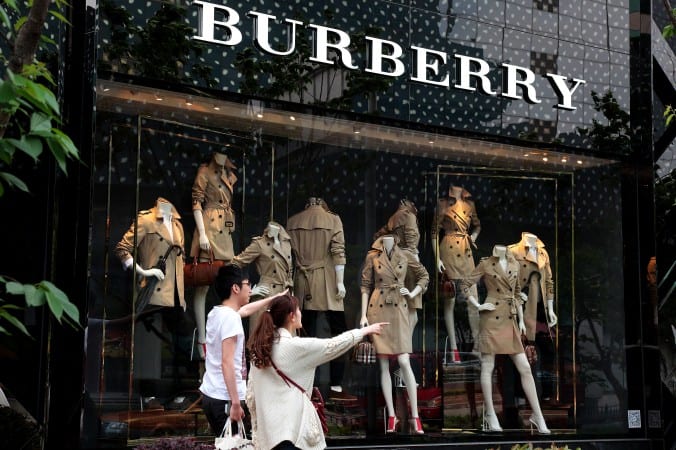
    Meanwhile, Gucci closed five stores in China, Burberry closed two stores, and Prada closed four stores in 2015, according to the Bain report. Due to collapsing demand in China, brands are expected to shut more stores across the country in coming months.

    Adding to the industry’s woes, publicly traded luxury goods companies announced weaker than expected results in April 2016, caused by slowing Chinese tourism in Europe. Burberry Group Plc, Prada SpA,Kering SA, and LVMH Moet Hennessy Louis Vuitton SE all reported disappointing results following terror attacks in Europe.

    According to Bruno Lannes, a Bain partner based in Shanghai, luxury brands should place greater emphasis on exclusive and fashionable collections, digital platform engagement and digital content, as well as pricing, in order to remain competitive in rough times.

  • Berrybenka beefing up eCommerce

    Berrybenka beefing up eCommerce

    With demand from Hong Kong, Brunei and Malaysia, Indonesian fashion brand Berrybenka is taking steps to beef up its eCommerce services.

    It will also be opening more pop-up stores outside Jakarta, its main stronghold, The Jakarta Postreports.

    CEO Jason Lamuda says the brand is also aiming improve customer relations through digital media. It aims to step up customer interaction this year through messaging apps, improve its mobile app, and partner with convenience store ChainIndomaret on a possible new payment mechanism.

    He says this will help promote Berrybenka as a national fashion eCommerce platform. “Our goal in the end is to not only become the most notable fashion brand in Indonesia, but to also help promote the creation of local brands.”

    Berrybenka has 1.5 million subscribers in its database, with demand from Hong Kong, Brunei and Malaysia through sister company Hijabenka. Berrybenka has partnered with around 1000 small and medium enterprises.

    In Indonesia, the company plans pop-up stores in Medan, North Sumatra, Makassar in South Sulawesi, Yogyakarta, Semarang in Central Java, Manado in North Sulawesi and Balikpapan in East Kalimantan. Medan will have the first of the new outlets, opening on Thursday.

    Also being considered are eCommerce hubs for Surabaya, East Java and Bandung, West Java.

    About 90 per cent of Berrybenka sales comprise local products. Between 2013 and 2014, the company had 150 to 200 per cent revenue growth, with a further 200 per cent growth between 2014 and 2015.

  • Gap narrows for Chinese brands

    Gap narrows for Chinese brands

    Chinese brands are closing the gap with international brands as consumers become more concerned about product quality rather than the origin of the brands, according to a latest study.

    As high as 67 percent of consumers said they favor domestic brands, consumer research firm Mintel said in a research report yesterday.

    The study covered 3,000 consumers aged between 20 and 49 in 10 cities.

    The domestic food and beverage brands have a strong following, with 42 percent of the respondents favoring them over foreign products compared with 25 percent that prefer imported snacks.

    For domestic ready-to-drink beverage brands, 44 percent of consumers prefer them against 27 percent that favor foreign products.

    Baby food is an exception with 45 percent of respondents saying they would choose international brands against only 31 percent who favor domestic products.

    “We’ve seen Chinese consumers becoming more value-driven, as they’re more likely to judge a product by its content and quality instead of checking whether it’s an international or domestic brand,” said Laural Gu, Mintel China’s senior lifestyle analyst.

    The study also found that 47 percent of the consumers were more willing to indulge themselves by paying for services instead of products.

  • Adidos and Hotwind? In China, brands get names to show foreign flair

    Adidos and Hotwind? In China, brands get names to show foreign flair

    Chrisdien Deny, a retail chain with more than 500 locations across China, sells belts, shoes and clothing with an “Italian style” – and a logo with the same font as Christian Dior’s.

    Helen Keller, named for the deaf-blind American humanitarian, offers trendy sunglasses and classic spectacles at over 80 stores, with the motto “you see the world, the world sees you.”

    Frognie Zila, a clothing brand sold in 120 stores in China, boasts that its “international” selection is “one of the first choices of successful politicians and businessmen” and features pictures on its website of the Leaning Tower of Pisa and Venetian canals.

    Eager to glaze their products with the sheen of international sophistication, many homegrown retail brands have hit upon a similar formula: Choose a non-Chinese name that gives the impression of being foreign.