Retail News CRM

Tag: Brands

  • Luxury fashion brands start to sell on China’s WeChat messaging app

    Luxury fashion brands start to sell on China’s WeChat messaging app

    China’s Tencent Holdings Ltd. is using its vast social-media network to attract luxury-fashion brands to its WeChat app, potentially opening a new frontier in online retail.

    France’s Longchamp and the U.K.’s Burberry Group PLC have begun selling handbags and clothes on WeChat, China’s most popular messaging app. LVMH Moët Hennessy Louis Vuitton SE’s Givenchy and Dior brands are testing demand for their goods through flash sales on the platform.

    The move signals a challenge to Alibaba Group Holding Ltd., the dominant player in e-commerce in China, where online transactions are expected to reach 6 trillion yuan ($870 billion) this year, according to consulting firm Bain & Co. Alibaba’s sites processed more than $547 billion in transactions in fiscal 2017, which analysts say is more than eBay Inc. and Amazon.com Inc. combined.

    While luxury sales on WeChat are in their infancy, Tencent’s courting of high-end fashion brands is part of a widening battle between China’s internet companies. Alibaba, Tencent and search engine Baidu Inc. are venturing beyond their traditional business lines into payments, social media and e-commerce.

    Upscale brands are rethinking their digital strategies amid a tough environment for luxury sales. Global sales of personal luxury goods were flat in 2016, at EUR239 billion ($267 billion), while global spending on luxury by Chinese consumers fell for the first time last year, according to Bain. Even so, luxury brands are seeing a pickup in mainland China as brands lower prices there and Beijing encourages consumption at home.

    In the U.S., a small number of luxury labels have tested sales on social media including chat apps. But Tencent in China is making inroads with luxury brands by taking advantage of the massive online ecosystem it has built around WeChat, whose more than 900 million users book movie tickets, hail rides, order laundry pickup and pay for utilities without leaving the app.

    The online sales are also fueling WeChat’s mobile wallet, WeChat Pay, against market leader Alipay, launched by Alibaba’s Ant Financial in 2009. Only WeChat Pay can be used on Tencent’s platform. As recently as 2014, Alipay commanded nearly 80% of China’s mobile payments market, but its share slipped to 54% by the first quarter of this year. Tencent’s payment system, including WeChat Pay, had 40% in the first quarter, according to research firm Analysys.

    Last year, Alibaba joined with Mei.com — which received a $100 million investment from Alibaba in 2015. The e-commerce giant is also relying on big data to clean up counterfeit goods listed on its platform. Alibaba is the “world’s leading fighter on counterfeits,” founder Jack Ma said last year.

    In the past year, Alibaba has reduced the number of third-party product listings of goods made by the top 10 luxury fashion brands by an average of 73%, according to L2 Inc., a digital consulting firm. Still, an average of 49,000 total product listings remained as of April on Alibaba’s Taobao site, a bazaar-like platform of small businesses and sellers.

    Affordable brands such as watchmaker Tag Heuer, jeweler Pandora and cosmetics companies have opened on Tmall, Alibaba’s platform for mostly large brands. But most luxury fashion brands remain wary of open platforms such as Alibaba and rival JD.com because they fear losing their aura of exclusivity, according to Danielle Bailey, head of research in Asia Pacific for L2. Burberry is an exception, opening a store on Tmall in 2014.

    Mr. Cassegrain, Longchamp’s CEO, said, though, that WeChat’s appeal is that it isn’t an open platform where luxury goods can be sold along with everyday products. Users must follow Longchamp’s account or scan a QR code to be taken into the brand’s site.

    Burberry, along with watch and jewelry brands Cie. Financière Richemont SA’s Cartier and IWC Schaffhausen, are among the few that have opened full stores on WeChat.

    Cartier advertises on WeChat’s news feed and sells on the platform because “China is one of the most digitalized markets in the world today, and Cartier has to adapt to it,” said Renaud Litre, chief executive of Cartier China.
  • How brands use short videos for marketing in China

    How brands use short videos for marketing in China

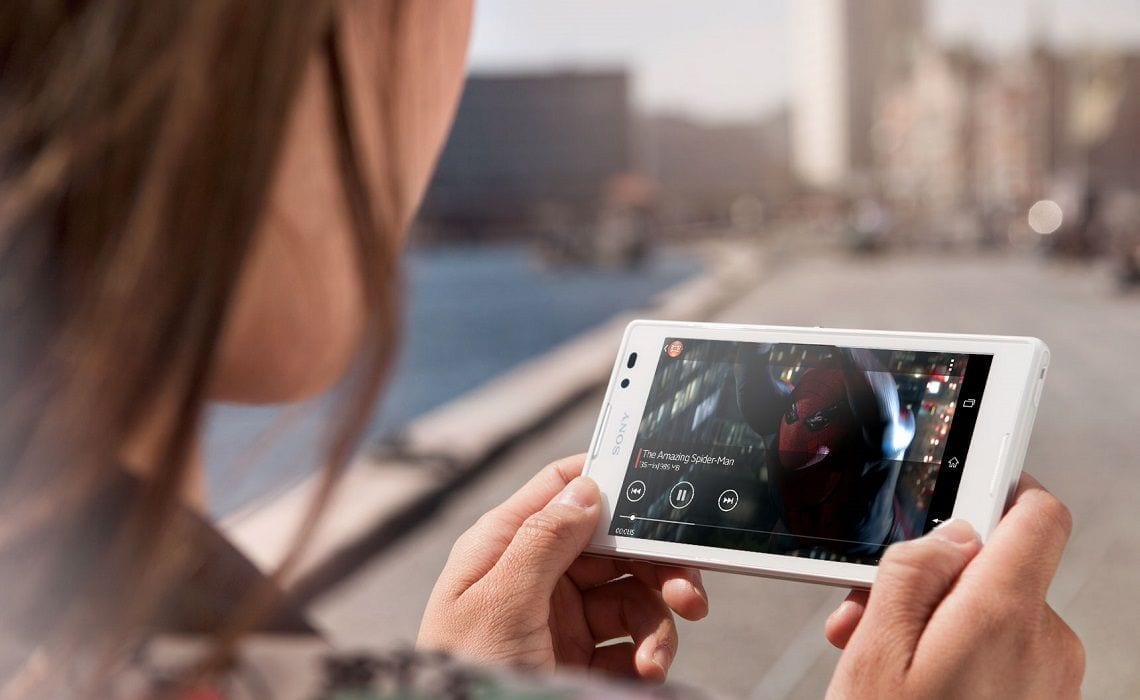
    As the luxury industry discusses Snapchat’s marketing possibilities and, more recently, Instagram’s latest filter feature, brands looking toward the China market are facing a completely different short video industry. It’s one that has witnessed rapid development thanks to the popularity of smartphones and upgraded communication networks in China.

    In March this year, Kuaishou, a popular short video app, was on the receiving end of a US$350 million investment from Tencent, and Alibaba put RMB 2 billion toward the transformation of Tudou from a large, formerly popular online video platform to a short video community. Also, Yixia Technology, owner of Miaopai and Xiaokaxiu, both popular short video apps in China, has already spent RMB 2 billion to encourage short video content creators and producers by building several video creation bases and providing professional studios.

    Short videos are perfect for young, tech savvy consumers who take their phone with them everywhere and use it to access social media or to fill in short breaks in the day between other activities.

    But which short video apps are the most popular in China? Who are the viewers of these short videos? How can brands market to them? What should brands take into consideration when launching short video campaigns?

    China’s short video apps

    Similar to short video platforms like Viddy and Instagram, there are numerous short video platforms and apps in China where users can record real-time short videos and share them with friends. As for users, there were 153 million regularly watching China’s short videos in 2016. This is estimated to reach 242 million by 2017, an increase of 58.2 percent.

    CIWEEK, an internet content magazine, released a list of their top 10 short video apps in China in the first half year in 2016 and Kuaishou, Miaopai, and Meipai were the most popular.

    Of these, there are actually two types of short video platform in China:

    1. Comprehensive platforms: professional short video platforms

    These platforms, such as Meipai, Miaopai, and Xiaokaxiu, provide a one-stop user experience. Users can use various shooting tools, effect settings, and formats while filming or editing a video. They also offer a community for users to share their videos with friends. Short videos uploaded on those platforms can also be shared with WeChat friends, WeChat Moments, and Weibo.

    2. Content recommendation: news apps

    These platforms, such as Toutiao, NetEase, Tencent News, and Yidian Zixun, focus on suggesting popular or professional short videos. These platforms were originally news-based and mass communication oriented. They have millions of viewers and short videos recommended on these platforms can get huge amounts of traffic.

    Who are the viewers?
    The main users of China’s short video apps are young. Most of them belong to the post-90s generation. According to a report published in March 2017 by JIGUANG, a big data provider, users ages 16 to 25 make up 39.7 percent of the total, while users aged 26-35 are at 33.3 percent. Meanwhile, over half of the users are female, making them 69.4 percent of the total number of users.

    In terms of regions, 66.9 percent of the total come from third-tier and below third-tier cities in China. The top 3 provinces for viewer numbers are Guangdong, Henan, and Shandong.

    How are brands using short video?
    Short video is becoming a new favorite marketing tool for brands for several reasons. Short videos can be used for various types of promotional materials, such as product reviews, product seeding, promoting brand culture and more. With interesting and meaningful content, short videos can deliver specific brand messages to a target audience while avoiding the annoyance that longer videos may cause. The production cycle of short videos is quick with great flexibility, which works well with brands’ marketing plans and budgets. Through audience interactions with short videos, brands can better understand their preferences, rapidly improve their user experience, and come up with effective marketing plans quickly. Integrated campaigns launched on short video platforms can be creative and diverse.

  • Supply chain group Tigers launches new e-shop marketplace supporting brands entering china

    Supply chain group Tigers launches new e-shop marketplace supporting brands entering china

    Supply chain group Tigers has launched a new marketplace, called eShop, to support brands entering the rapidly expanding China and Southeast Asia e-commerce markets.

    The digital marketplace, part of Tigers’ suite of e-commerce products, offers a one-stop shop solution, from marketing, to taking payments, managing the supply chain, order fulfilment, and returns.

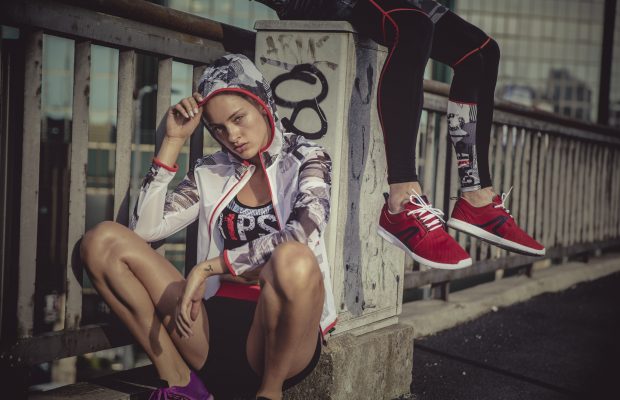
    Up-and-coming Italian designer workout wear Gr1ps, and award-winning golf simulator OptiShot Golf are amongst the first Tigers eShop customers in China, Hong Kong, and Malaysia.

    “Tigers eShop offers a cost-effective, scalable enterprise solution for companies of all sizes,” said Andrew Jillings, chief executive officer and group managing director, Tigers.

    “We can provide fiscal representation to SMEs wanting to enter the China market that do not have a presence there.”

    “The logistics industry has the desire to adopt technology, but few providers are offering a real solution that ultimately services every e-commerce business.

    “Rather than being a one-size fits all, Tigers’ IT systems, which work on a cloud-based operating platform, are flexible enough to meet a large variety of demands.”

    Gr1ps, founded in 2011, designs innovative functional training products and has been recognised as a pioneer in Brazilian Jiu Jitsu and Mixed Martial Arts apparel. “Tigers eShop forms a core part of our sales strategy in acquiring new clients in the Asia market, and increasing brand awareness and exposure through Tigers’ network,” said Katty Fung, chief operating officer, Gr1ps.

    “We look forward to bringing our brand values, of quality and attention to detail, to larger sports and lifestyle communities with this expansion.”

    OptiShot Golf is a golf simulator platform designed by two fans of the game, which allows players to practice and play on replicas of major championship courses, as well as play in global online tournaments, with real clubs and real golf balls.

    “China is an important market for us and the Tigers eShop is an exciting opportunity for us to grow our presence there,” said Kevin Johnston, president and chief operating officer (COO), OptiShot Golf.

    Tigers, which has been operational in Greater China since 1969, has 17 offices across the country and specialises in e-commerce fulfilment, transportation, and supply chain solutions.

    The Hong Kong headquartered supply chain specialist has 65 offices and 32 omni-distribution hubs across China, the USA, Germany, the United Kingdom, the Netherlands, Switzerland, Australia, Malaysia, India, and South Africa.

    Tigers plans to open more eShops across a number of strategic locations.

    “Tigers will continue to focus on our two main assets, our technology and our people,” said Jillings.

    “We are privileged to be working with exciting brands like Gr1ps and OptiShot Golf. They are both dynamic groups with great products and they embrace the online retail space.

    “There is always a learning curve working with companies like these.”

    Tigers can trace its founding origins back to 1888 in the Cape of Good Hope, South Africa, where their South African subsidiary was first founded.

  • China Southern Airlines issues open invitation to brands

    China Southern Airlines issues open invitation to brands

    Li Jianhua, President and CEO, Guangzhou China Southern Airlines (CSN) Inflight Duty Free says it has enjoyed double-digit sales growth in recent years driven by innovation in its product portfolio as well as the introduction of duty free exclusives and a pre-order service.

    “We have redeveloped our products and pricing for specific buyer groups,” said Jiianhua. “But we still need more luxury brands to enter the market to appeal to a new generation of consumers in China.”

    She also implored brand owners in the audience to come forward to begin conversations with CSN, whilst promoting the huge potential of the China inflight market.

    Jianhua charted the company’s rise to success to become ‘the largest airline in Asia by fleet and passengers’ as the carrier claims. Jiianhua highlighted that CSN launched its first inflight retail programme in 2001 and it very quickly began to play a very important role for the airline, not just from a customer engagement perspective, but from a revenue generation standpoint.

    She pointed out that the company wants to extend its global reach, identifying that Southeast Asia represents 31% of the company’s current route quota and with Japan & Korea accounting for 28%.

    She also pointed out that she believes the company has great potential, especially considering that Chinese overseas visitors reached 122m in 2016. As the company expands its route reach and takes advantage of the growing number of passengers Jianhua insists that inflight retail will be available on ‘every international flight’.

    Skincare represents 30% of China Southern’s inflight business.

    She noted that research from Fortune Character suggests that Chinese consumption continues, but has slowed down in recent years and high-end consumers now tend to make more ‘rational’ decisions.

  • Top 30 Chinese global brands: Lenovo, Huwaei, Alibaba rank first

    Top 30 Chinese global brands: Lenovo, Huwaei, Alibaba rank first

    Lenovo is the most powerful Chinese global brand builder, followed by Huawei and Alibaba, according to new research released this week.
    The first “Brand Top 30 Chinese Global Brand Builders”, released by WPP and Kantar Millward Brown in collaboration with Google, said the personal computer and mobile technology firm is the most powerful Chinese export brand with a Brand Power score of 1,682. Lenovo was followed by consumer electronics brand Huawei (1,256) the e-commerce marketplace giant Alibaba (1,047).

    Kantar Millward Brown calculated the Brand Power (the BrandZ measure of consumer predisposition to choose a particular brand) of Chinese brands outside of China across seven countries, supported by research conducted using Google Surveys in September 2016, to find the ranking. The evaluation looked at 167 Chinese brands, the median Brand Power score of which is 85.

    The biggest find was how the Made in China brand is shifting. While established brands currently have an edge over the emerging internet-lead brands, with 57% of the total Brand Power in the ranking, digital brands were the biggest winner.

    Collectively, consumer electronics and mobile gaming lead the ranking, both in terms of the number of brands in the ranking (17) and combined Brand Power (59%). The result reflects the transformation of Chinese brands, which consumers abroad increasingly associate with innovative digital devices and services.

    One challenge facing Chinese brands is that international consumers are generally less aware of, and less likely to consider purchasing, a Chinese brand than a local or globally recognised one, said the research.

    However, awareness and consideration gaps vary, with consumers in France, Germany and Spain more aware of and likely to consider Chinese brands than consumers in Japan, Britain or America, said report authors.

    “The study shows that the movement of ideas and product leadership has expanded globally, with consumers increasingly looking to China as a potential source for the newest and most innovative products and brands,” said David Roth, CEO of EMEA & Asia, The Store WPP.

    “This is the opportune time for Chinese brands to expand abroad, despite the many obstacles and this is why in collaboration with Google we have produced the ground-breaking “BrandZ Top 30 Chinese Global Brand Builders 2017” report. By analysing consumer perceptions of Chinese and non-Chinese brands, we have been able to identify gaps in Chinese brand performance and provide recommendations for brand building strength.”

  • Brandline – Bring Your Brands to Life

    Brandline – Bring Your Brands to Life

    Consumers are exposed to more than 3000 messages a day. The real question now is, what will make your brand stands out? As consumers only spend a few seconds in front of retailer shelf, are the in-store messages targeted properly and relevant? Hence, design solutions that boost the traffic and sales potential in retail environments are sorely needed.

    As the expert in merchandising and in-store communication, HL Display Thailand has the most innovative design and ideal solutions to create a more desirable shopping experience and brand awareness that includes

    • Creating a place where the consumers want to shop
    • Developing impulse buying and customer loyalty
    • Making differentiation from competition
    • Increasing basket size and footfall

    Communicate the brand values and product benefits with Brandline™, the collection of shelf liners, highlighters and accessories, specifically designed to create highly effective on-shelf communication and segmentation. Extending the message areas with additional accessories such as lighting is also reinforcing brand awareness and instantly adding positive disruption visually.

    https://www.youtube.com/watch?v=DUECYwjKfjA

    Health and Beauty category for instance, is a category characterized by many new products introductions coupled to variety of pack sizes and shapes. State of the art message conveyer, cosmetic front rails, sample tester holder, lighting accessories are becoming a must have in store environment, and this is when Brandline™ becomes even more important than ever.

    For further information, Bangkok based HL Display Thailand can be directly contacted during office hour at +66 2276 2445 with the attention to Mr. Thanasun Sakchuenyod, or e-mail to [email protected] or [email protected]. Visit the company website at www.hl-display.com/asia

  • Luxury Brands Advised to Reassess Physical Store Strategy

    Luxury Brands Advised to Reassess Physical Store Strategy

    Luxury brands looking to assess their global brick-and-mortar strategies would do well to remember it’s not a one-size-fits-all approach.

    A recent study by management consulting firm Boston Consulting Group and Bernstein research advises luxury labels to optimize existing physical locations, determine how best to cater to both tourists and locals, and consider streamlining stores in cases for which ecommerce would suffice.

    Looking at retail geographically, the report says some regions are oversaturated while others are ripe for expansion. For luxury brands with multiple stores in New York, Tokyo, London, Paris, Seoul and Hong Kong, the findings show retail is poised to remain strong, as tourists and locals support flagships and secondary locations, respectively.

    The report cautions against adding new doors in top Asian cities like Tokyo, Seoul, Hong Kong, Shanghai, Beijing, Singapore and Taipei where there are already too many locations and the size of the footprints outstrip demand.

    For brands looking to expand, research shows that the U.S. is still a solid market. While luxury companies may find opportunities for new locations in key hubs, the focus in those cities should be on drawing more shoppers into stores, the report said. Opening new stores could be the best approach in second-tier cities where the local population could offer consistent traffic and sales. But first, it’s up to brands to determine which cities represent their best prospects.

    “Brands must continue to invest in the tools and techniques that help them get better and better at segmenting markets and uncovering pockets of demand,” said Oliver Abran, a partner and managing director at BCG’s Paris office and the global leader of the firm’s luxury, fashion and beauty topic area. “Analytics software can be invaluable but it still needs the talent to make it effective and the processes to properly gauge potential markets.”

  • Beauty brands add colour to dull retail scene

    Beauty brands add colour to dull retail scene

    Amid a soft retail scene, one segment has been bucking the trend: beauty products. In fact, beauty brands are growing their bricks- and-mortar presence here in and around Orchard Road.

    At least three international brands are expanding beyond department stores and multi-label beauty chain Sephora to establish standalone stores.

    French company Nars Cosmetics will open its first boutique in Ngee Ann City later this month, a spokesman told. The company’s products are currently available at Sephora, Tangs at Tang Plaza and Robinsons Orchard.

    The move follows double-digit year-on-year growth through its current channels, said the spokesman, and the standalone store will facilitate a multi-channel business model, including e-commerce.

    American brand Urban Decay, previously available only at Sephora, launched its first boutique in VivoCity in 2015 – also its first in the region. It now has stores in Bugis Junction and a flagship outlet in Ngee Ann City which opened last month. It said sales were “outperforming the market”.

    Sales of colour cosmetics here are expected to grow annually to reach more than this amount by 2020, up from an estimated $230.5 million for last year, according to Euromonitor International.

    Meanwhile, MAC Cosmetics, which has 12 stores in Singapore, opened its 1,980 sq ft flagship outlet in ION Orchard last month.

    American brand NYX Professional Makeup opened its first two boutiques in October and November in Bugis Junction and Plaza Singapura, with plans to open more.

    Sales of NYX products at Sephora outlets have more than doubled between 2015 and 2016, but standalone stores allow the company to showcase more products, said marketing manager Jerraine Lim.

    Ms Esther Ho, assistant director at Nanyang Polytechnic’s School of Business Management, said that challenging economic times create opportunities for brands as malls compete to fill the spaces vacated by other retailers.

    Vacancies for retail properties rose to 8.4 per cent at the end of the third quarter of last year – the highest level since the first quarter of 2011, according to data from the Urban Redevelopment Authority.

    “Rentals could be sufficiently depressed to attract new tenants such as Nars into the shopping malls,” said Ms Ho.

    Sales of colour cosmetics in Singapore are expected to grow annually to reach more than $278 million by 2020, up from an estimated $230.5 million for 2016, according to market research firm Euromonitor International.

    This comes even as retail sales, excluding motor vehicles, have fallen every month since February last year, with the latest government data estimating a fall of 0.3 per cent in October over the same period in 2015.

    Still, retail experts said cosmetics sales may be getting a boost as consumers trade big-ticket purchases for “small luxury” items such as expensive lipstick.

    Said Singapore Polytechnic senior retail lecturer Sarah Lim: “Shopping is psychological; the more you buy, the better you feel.”

    Cosmetics stores have an advantage as consumers like to try out products on their skin, while social media influencers help to boost sales by building hype, she added.

    Apart from touting a wider selection of products and exclusive collections, the new boutiques have also incorporated experiential elements.

    Nars’ store will feature a virtual try-on function and photo booth, while NYX’s two stores have interactive beauty bars for customers to follow make-up tutorials. Social media content is also integrated in NYX’s and Urban Decay’s stores.

    “Cosmetics stores are doing well in creating an experience for shoppers; other retailers should take note,” said Ms Lim.

    Healthcare worker Erin Baker, who spends up to $300 a month on cosmetics, said she is excited that more brands are opening boutiques here. “I like going into the store and trying on make-up, and boutiques have a nicer atmosphere and more personal and attentive service,” said the 27-year-old.

  • Ansals Plaza announces grand opening of its key brands

    Ansals Plaza announces grand opening of its key brands

    Delhi’s first mall, Ansal Plaza, repositioned as Delhi’s ultimate Sports and F&B Destination, has opened its door to its two anchor brands, Decathlon, the global sports retail giant and The Arena, Ultra Luxury lounge. During a daylong celebration, Ansal Plaza hosted the grand opening of one of India’s biggest two level Decathlon Khel Gaon store, which is equipped with smart LED screens and open space for sports activities. Agala evening party was also organized to announce the grand launch of The Arena.

    With a bagful of new and unique sporting events like Capoeria (Afro Brazilian marital arts), Blind Cricket, Free motion Ski, Basketball and Zumba , the Grand opening of the Decathlon Khel Gaon store at Ansal Plaza promises to be an exciting affair for the sports enthusiasts of Delhi. A unique costume run for kids and five to 10 km run for adults was also scheduled as a part of Decathlon Khel Gaon store’s Opening Run on Sunday, December 4, 2016.

    The Arena with approx. 13000 sq. feet extravaganza spread across two levels with indoor and outdoor party areas, private and VIP event space, great ambience and a fully stocked up bar. With a great dance floor, superior customer service and exceptional pricing The Arena is another wonderful reason to visit Ansal Plaza.

    Talking about the two grand openings on Saturday, Amit Phull, Head Retail Ansal API said, “We identified that sports shopping experience is one of the niches that lacks in other South Delhi malls and the event and experience that Ansal Plaza offers will help us live up to our promise of being the ultimate sports hub of Delhi. Also, the launch of The Arena along with other premium F&B Brands will help us in establishing the mall as an ultimate destination for various kinds of world cuisine.”

    Caroline Mulliez of Decathlon said, “We are proud to be associated with Ansal Plaza. The strategic location offers the best catchment of sports enthusiast and its vast open space also supports what Decathlon stands for, which is sporty fun at exceptionally affordable prices.”

    Mukul Bajaj, Co-founder, The Arena, said, “We are excited about the launch. We are definite that the prime location of Ansal Plaza at the heart of the city will draw the kind of patrons The Arena is looking for.”

    Sahil Madaan, Owner, Taksim, “Trends meet chic in our very own of serving world cuisine. Taksim, with its International concept offering fusion Turkish and Indian cuisine, is trying to find a balance between a cafe and a restro bar.”

    Ansal Plaza has been the hub of entertainment in Delhi since 1999 as the city’s first mall. With its prime location, excellent parking facility and vast green space, Ansal Plaza promises to continue the tradition of excitement and celebration in its new avatar.

  • Kantar unveils a new corporate identity across its operating brands

    Kantar unveils a new corporate identity across its operating brands

    Kantar today launches a new corporate identity, for the parent brand and its 12-strong family of operating brands, designed to create a much more unified look and feel across the whole business.

    The new identity, developed in close collaboration with WPP branding specialists The Partners, will be rolled out across all external and internal communications channels in the coming months.

    Operating brands not previously Kantar-branded will now take a Kantar prefix and a new, common typeface. For example: TNS and Millward Brown now become Kantar TNS and Kantar Millward Brown just like Kantar Worldpanel. The only exception is Lightspeed GMI, which now rebrands as Lightspeed.

    Along with the rebranding, Kantar is introducing a new tagline, “Inspiration for an extraordinary world”, drawn from its new corporate purpose statement, “To inspire our clients, our people and society to create and flourish in an extraordinary world.”

    Kantar’s new identity reflects and externalises an on-going change programme that started in January. The programme includes the fostering and rewarding of much greater collaboration between operating brands and the creation of a new insights group through much closer alignment of the company’s custom brands. In addition, global operations capabilities have been brought together into a single entity and the company is moving towards more aligned shared services in HR, finance and IT. We will shortly be adding to our portfolio of expert brands with the launch of Kantar Public, uniting our global expertise in governmental and public policy work; and Kantar Consulting, which will draw expertise from several of our brands to provide a full and broader range of marketing and sales consulting solutions and capabilities to our clients.

    Kantar CEO Eric Salama commented: “The rebranding is a tangible, visible expression of our desire to present clients with more easily-navigable and connected solutions that bring together the best of Kantar’s expertise.

    “We believe our clients and partners have started to experience the benefit of this approach – in more rounded, detailed and holistic research and recommendations. And it is helpful that for the first time we really look like a single family of brands serving a common purpose.”

  • SMEs switch to online for branding, expansion

    SMEs switch to online for branding, expansion

    Indonesian small and medium enterprises (SMEs) are taking advantage of the unique methods of engagement that online services offer them and potential customers.

    The owner of Jakarta-based desserts maker PUYO Desserts, Adrian Agus, owes much of his brand’s success to intensive online campaigns through various social media and messaging apps.

    By connecting directly with his customers through these platforms, Adrian has been able to find a quick way for his colorful home-made puddings to capture the public eye.

    Shortly after he started the business in 2013, Adrian found that social media greatly helped his marketing operations at little cost. In the beginning, PUYO’s marketing campaigns mostly centered on Instagram where it slowly gained traction and attracted loyal followers.

    “Social media campaigns have been very effective for the business. Right now, we’re holding a lot of competitions on Instagram,” he told The Jakarta Post on Thursday, elaborating on the creative engagement that Instagram offers between customer and vendor.

    Gradually, PUYO has branched out to Twitter and LINE to help sell its products, with the use of these services’ operational tools such as LINE’s LINE@ service, which enables the user to send mass messages to all customers that follow its LINE account.

    Japanese-based LINE Corporation itself describes the Line@ feature in its messaging app as “the same as broadcast messaging”. The company, however, says that the idea is more specifically aimed at nurturing businesses.

    Currently, PUYO has over 59,600 followers on its Instagram account and has evolved from being a home-based business in 2013 to having 22 outlets across Greater Jakarta.

    Meanwhile, the social apps behind these successes are increasingly aware of their role in the small business sector.

    Apps such as LINE, KakaoTalk, WeChat or WhatsApp have had their purposes extended beyond the simple text message, with some apps gradually rolling out new features that help small businesses thrive or become more efficient.

    LINE Indonesia’s head of marketing Galuh Chandrakirana explained that the rollouts of the company’s newer features such as Line for PC, Line Group Call and Line Today would help small businesses in making their operations more mobile, as mobility is becoming more emphasized in today’s business world, with SMEs able to benefit from these services through trimming their costs.

    “Features such as Line for PC, which can be opened from desktops, are not geared necessarily for SMEs but it serves to help them cut communications costs. However, we do plan to roll out a feature which is specifically designed to help that sector in the next month or two,” she elaborated.

    Currently, LINE has recorded over 1 million downloads in Indonesia comprising small businesses including online shops, offline retailers, specific communities and bloggers. Up to 40 percent of that figure is active businesses who utilize LINE in their practices.

    Indonesia has the highest number of SMEs in Southeast Asia, with over 50 million operating nationwide, however, only 1 percent of these are officially “connected” online.

    Last month, the government announced its cooperation with online SME promotion service Nurbaya Initiatives to explore new ways of encouraging SMEs to tap into the digital era’s potential.

    Collaborating with state-owned postal company PT Pos Indonesia, Nurbaya is targeting to bring 2 million SMEs online within the next two years. The company will assign a facilitator to provide each participating SME with advice on online promotion, including the setting up of online stores and payment platforms.

    Nurbaya will also assign a relationship manager to every online shop, allowing clients to focus on production. “By our collaboration with the postal service, SMEs will have help in terms of logistics and quality control,” Nurbaya’s CEO Andy Sjarif said.

  • Is Growth For Luxury Brands in China Over?

    Is Growth For Luxury Brands in China Over?

    China and the Chinese played a primary role in the growth of the luxury sector in the past decade. But what was once a boon for luxury goods brands is now turning around.

    Chinese consumers account for the largest portion (31 percent) of global luxury spending, up from only 1 percent in 2000, according to a study by consulting firm Bain & Company. And in the past decade, thanks to China and Chinese shoppers abroad, the luxury goods market worldwide grew by 72 percent in size.

    luxury goods

    (Statista)

    “The relentless expansion of the domestic economy that fueled China’s voracious appetite for the finer things in life has slowed,” Exane BNP Paribas analyst Luca Solca.

    “This only compounds the chilling effect that the government’s anti-corruption campaign has had on demand for luxury fashion and fine jewelry.”

    Many luxury goods brands opened up store after store to tap the Chinese market. The experts are now debating whether they are too exposed to China.

    In his analysis, Solca looked at whether each brand is over- or underexposed to the Chinese market based on the number of stores they have. Accordingly, Versace is the most over-exposed brand with 22 percent of its stores based in China. Moncler, Tod’s, and Dolce&Gabbana are among the overexposed brands as well.

    The only large brands underexposed to China are Hermes, Tiffany, and Michael Kors. And these brands still have some retail expansion opportunity in China, according to Solca.

    (Source: Exane BNP Paribas analysis, RE-Analystics, Business of Fashion)

    (Exane BNP Paribas analysis, RE-Analytics, Business of Fashion)

    Sales of luxury products in the mainland have started to slow down after Chinese regime leader Xi Jinping launched his political anti-corruption campaign in 2013. Many of the Chinese officials and their numerous cronies and associates notorious for using luxury items for bribes stopped shopping for those items.

    A slowdown in the Chinese economy since mid-2015 was the second blow for luxury brands. Some brands have already started closing stores in China.

    “A corollary to the drop in domestic sales is a reduction of the store footprint by most brands, with a greater focus on fewer, larger, and better-located stores” Bain & Company stated in its report on China’s luxury market in 2015.

    Louis Vuitton, which is the most valuable luxury brand in the world, closed six stores and opened two new stores in China in 2015. And the company recently announced the closure of two additional stores located in Shanghai and Shanxi.

    Meanwhile, Gucci closed five stores in China, Burberry closed two stores, and Prada closed four stores in 2015, according to the Bain report. Due to collapsing demand in China, brands are expected to shut more stores across the country in coming months.

    Adding to the industry’s woes, publicly traded luxury goods companies announced weaker than expected results in April 2016, caused by slowing Chinese tourism in Europe. Burberry Group Plc, Prada SpA,Kering SA, and LVMH Moet Hennessy Louis Vuitton SE all reported disappointing results following terror attacks in Europe.

    According to Bruno Lannes, a Bain partner based in Shanghai, luxury brands should place greater emphasis on exclusive and fashionable collections, digital platform engagement and digital content, as well as pricing, in order to remain competitive in rough times.

  • Berrybenka beefing up eCommerce

    Berrybenka beefing up eCommerce

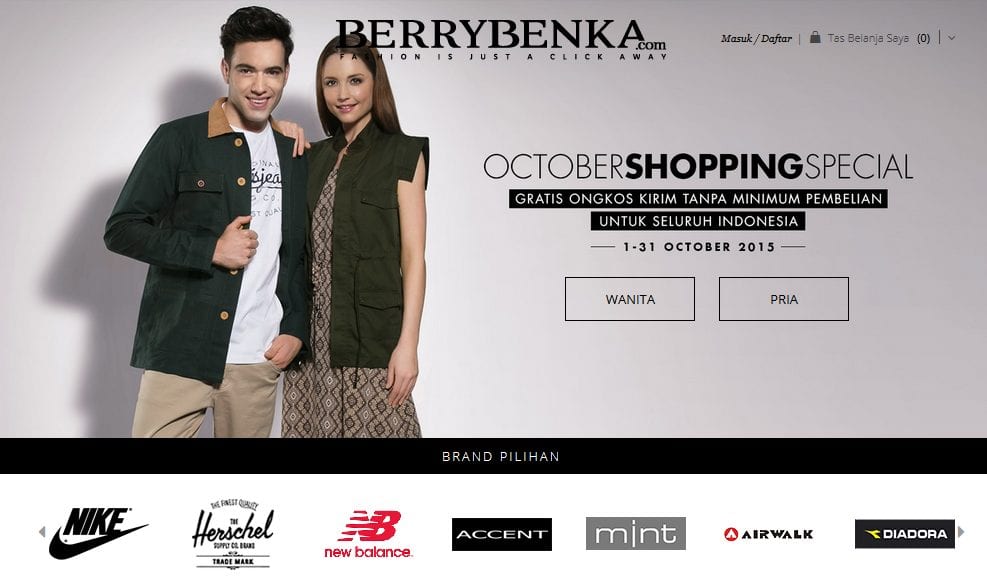
    With demand from Hong Kong, Brunei and Malaysia, Indonesian fashion brand Berrybenka is taking steps to beef up its eCommerce services.

    It will also be opening more pop-up stores outside Jakarta, its main stronghold, The Jakarta Postreports.

    CEO Jason Lamuda says the brand is also aiming improve customer relations through digital media. It aims to step up customer interaction this year through messaging apps, improve its mobile app, and partner with convenience store ChainIndomaret on a possible new payment mechanism.

    He says this will help promote Berrybenka as a national fashion eCommerce platform. “Our goal in the end is to not only become the most notable fashion brand in Indonesia, but to also help promote the creation of local brands.”

    Berrybenka has 1.5 million subscribers in its database, with demand from Hong Kong, Brunei and Malaysia through sister company Hijabenka. Berrybenka has partnered with around 1000 small and medium enterprises.

    In Indonesia, the company plans pop-up stores in Medan, North Sumatra, Makassar in South Sulawesi, Yogyakarta, Semarang in Central Java, Manado in North Sulawesi and Balikpapan in East Kalimantan. Medan will have the first of the new outlets, opening on Thursday.

    Also being considered are eCommerce hubs for Surabaya, East Java and Bandung, West Java.

    About 90 per cent of Berrybenka sales comprise local products. Between 2013 and 2014, the company had 150 to 200 per cent revenue growth, with a further 200 per cent growth between 2014 and 2015.

  • Gap narrows for Chinese brands

    Gap narrows for Chinese brands

    Chinese brands are closing the gap with international brands as consumers become more concerned about product quality rather than the origin of the brands, according to a latest study.

    As high as 67 percent of consumers said they favor domestic brands, consumer research firm Mintel said in a research report yesterday.

    The study covered 3,000 consumers aged between 20 and 49 in 10 cities.

    The domestic food and beverage brands have a strong following, with 42 percent of the respondents favoring them over foreign products compared with 25 percent that prefer imported snacks.

    For domestic ready-to-drink beverage brands, 44 percent of consumers prefer them against 27 percent that favor foreign products.

    Baby food is an exception with 45 percent of respondents saying they would choose international brands against only 31 percent who favor domestic products.

    “We’ve seen Chinese consumers becoming more value-driven, as they’re more likely to judge a product by its content and quality instead of checking whether it’s an international or domestic brand,” said Laural Gu, Mintel China’s senior lifestyle analyst.

    The study also found that 47 percent of the consumers were more willing to indulge themselves by paying for services instead of products.

  • Adidos and Hotwind? In China, brands get names to show foreign flair

    Adidos and Hotwind? In China, brands get names to show foreign flair

    Chrisdien Deny, a retail chain with more than 500 locations across China, sells belts, shoes and clothing with an “Italian style” – and a logo with the same font as Christian Dior’s.

    Helen Keller, named for the deaf-blind American humanitarian, offers trendy sunglasses and classic spectacles at over 80 stores, with the motto “you see the world, the world sees you.”

    Frognie Zila, a clothing brand sold in 120 stores in China, boasts that its “international” selection is “one of the first choices of successful politicians and businessmen” and features pictures on its website of the Leaning Tower of Pisa and Venetian canals.

    Eager to glaze their products with the sheen of international sophistication, many homegrown retail brands have hit upon a similar formula: Choose a non-Chinese name that gives the impression of being foreign.