Tag: broadband

  • TRAI releases consultation paper on satellite gateway

    TRAI releases consultation paper on satellite gateway

    Telecom Regulatory Authority of India (TRAI) has extended an invitation to industry stakeholders to gather inputs on a framework for satellite gateways in India. This will facilitate the launch of satellite communication services in India.

    Prior to this, the Department of Telecommunications (DoT) has requested TRAI to furnish recommendations on licensing framework for establishing a satellite gateway. DoT has requested TRAI to address existing limitations in satellite gateway operations as there is no provision regarding the use of gateway by service providers established by a satellite constellation operator.

    The regulator is called to look into factors and make recommendations on entry fee, license fee, bank guarantee, NOCC charges, and other issues which may concern LEO, MEO and HTS systems.

    TRAI has since released a consultation paper to garner inputs by 13 December.

  • Netflix CEO admits Disney+ hurt it in the U.S.

    Netflix CEO admits Disney+ hurt it in the U.S.

    Netflix on Tuesday announced its fourth-quarter earnings for 2019 and the streaming video company reported the addition of 420,000 net new subscribers in the U.S. during the period. But before you use that stat as proof that the November launch of Disney+ did not effect Netflix during the fourth quarter, guess again. The company expected that it would report 600,000 new subscribers in the states for the period. The 180,000 subscriber shortfall might have been related to the strong start that Disney+ got off to, with 10 million subscribers signed up in the first 24 hours.
    Netflix CEO Reed Hastings admitted after the earnings announcement that Disney+ has “great” content and said that the rival streamer’s strong lineup “takes away a little from us.” While Netflix often falls short of its estimates (it happens half the time, says the Times), Netflix stated that during this past quarter it was impacted by the seven weeks that Disney+ was up and running during the fourth quarter. In the states, Netflix has 61 million subscribers and expects that figure to keep rising until it hits 90 million.
    Netflix added 8.4 million net new subscribers globally from October through December and set company records for the number of subscribers it picked up in Latin America, Asia and Europe during the period. On a quarterly basis, Netflix saw its global subscriber list rise 5.5% bringing the total to 167.1 million customers.
    Netflix will also have some more competition coming starting in the second quarter of this year when NBC Universal’s Peacock streamer launches. The latter’s inventory of content will include extremely popular fare including The Office. NBC/Universal reportedly paid $500 million for a five-year exclusive run for the sitcom on Peacock starting in 2021. The service will have two ad-supported tiers that will be free to Comcast and Cox subscribers although anyone can pay $4.99 a month for the Premium service. Comcast and Cox subscribers can also pay a monthly fee for ad-free streaming.
    Hastings doesn’t expect that Disney+ will negatively impact Netflix in the long term. “Most of their growth in the future is coming out of the linear TV,” the executive said. And frankly, the same might turn out to be true for Peacock.
    During the fourth quarter, Netflix reported net income of $570 million or $1.30 per share. That compares to net of $134 million or 30 cents per share during 2018’s fourth quarter. But last year’s quarter includes a $438 million tax benefit. Revenue rose 30% from the $4.2 billion recorded during 2018’s Q4 to $5.7 billion in 2019. The company announced that The Witcher was viewed by 76 million member households. But Netflix has changed the definition of a view to mean that a subscriber “chose to watch and did watch for at least 2 minutes — long enough to indicate the choice was intentional.” Previously, a viewer had to watch 70% or more of an episode or film to qualify as a view. As a result, Netflix’s future view counts will be hiked by 35%. For example, the number of views credited to Our Planet went from 33 million under the old definition to 45 million using the new definition.
    For the current quarter, Netflix estimates that it will add 7 million net new subscribers globally vs the 9.6 million it added during last year’s first quarter. Netflix expects to see elevated churn levels in the U.S. from January through March. Once again alluding to Disney+, the company’s Chief Financial Officer Spencer Neumann said that Netflix has been experiencing “some elevated churn from pricing and competition.”
  • AirAsia sees in-flight Wi-Fi as next income source

    AirAsia sees in-flight Wi-Fi as next income source

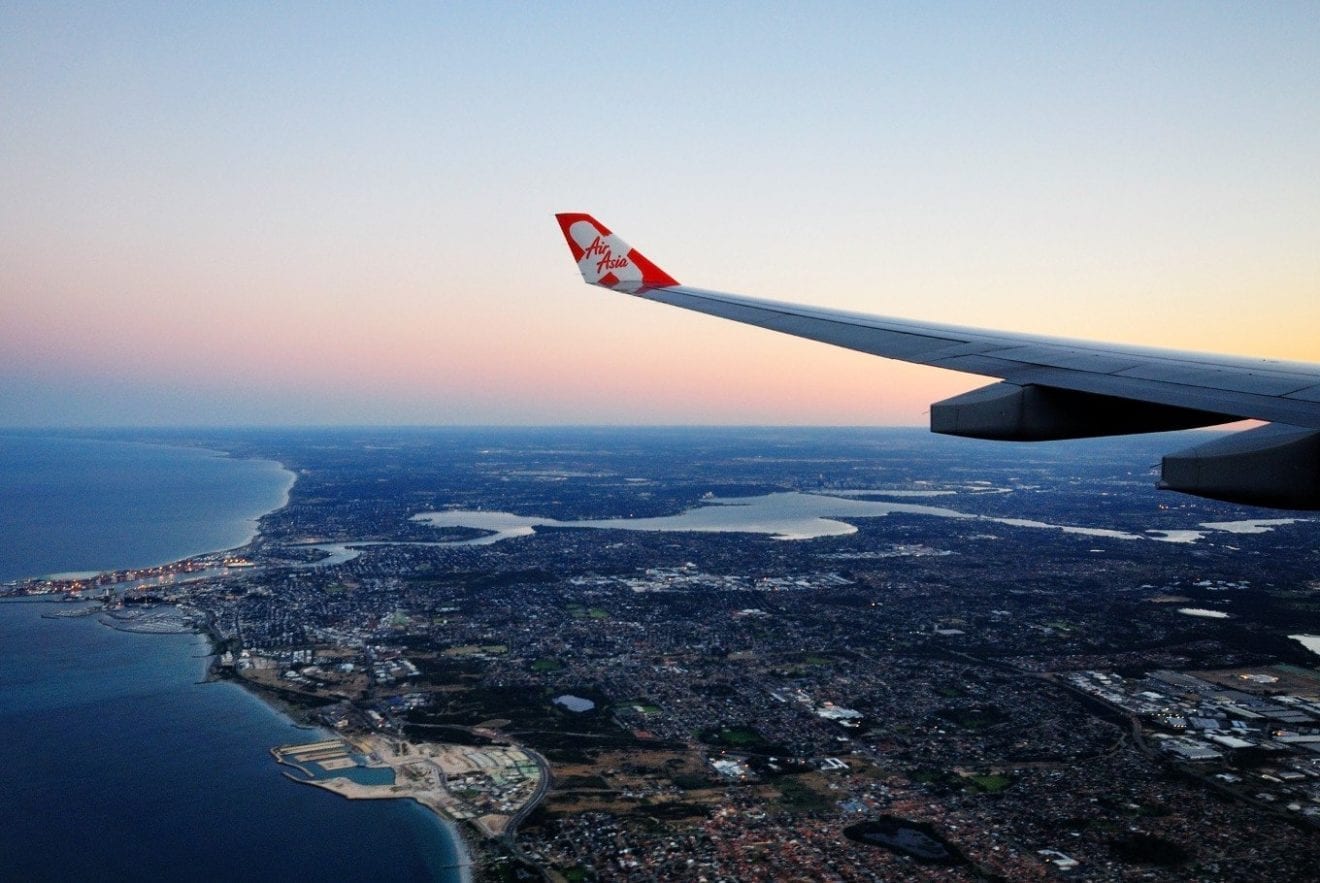
    AirAsia has been exemplary in using digital and disruptive technologies in increasing its ancillary income, including the introduction of in-flight Wi-Fi, which is expected to create a US$130 billion global market by 2035, according to London School of Economics research.

    AirAsia is the pioneer of low-cost airline in-flight Wi-Fi in the region.

    “Currently, we have about slightly over 50% of our aircraft (in Malaysia) Wi-Fi-enabled. We expect AirAsia Wi-Fi to be installed fleetwide in all AirAsia Malaysia in 2020,” chief executive officer Riad Asmat said.

    The other AirAsia companies are expected to follow suit, he said.

    “Wi-Fi these days is like oxygen. The moment you sit in a place the first thing we ask is if it has Wi-Fi and it is slowly gaining traction in the aviation sector,” he told Bernama when asked on the growing sector.

    For the Malaysian operation, the flights are all within the one-to four-hour range.

    “Within the AirAsia Wi-Fi ecosystem, the airline has entertainment, we have our e-shop, digital in-flight magazine and some level of entertainment, especially for kids. Besides enhancing the experience of passengers, the service also enables them to connect with their loved ones on air,” said Riad.

    “Hooking up to the AirAsia” Wi-Fi ecosystem is free (browsing kids entertainment, e-shop and magazine) but if you want to use your social media or do real work, then you’ve got to pay and I believe our rates are competitive as compared with other airlines around the region,” he said.

    A check on the service revealed that the Wi-Fi plans range from RM9 to RM58, with the most basic plan capped at 10MB. There is also a top-of-the-line 200MB plan, which is best for streaming. Riad said more than 30% of its passengers have accessed the AirAsia Wi-Fi services and the figure is expected to hit 50% soon.

    Knowing AirAsia, Riad was also quick to point out that incorporating a lot of its services in the AirAsia Wi-Fi ecosystem would also help them cut costs via fuel-saving.

    “Once the aircraft is Wi-Fi-enabled the in-flight magazine (hardcopy) should not be there. It is fuel-saving,” he said, adding that although the hardcopy uses some of the lightest paper material available, going 100% digital would save kilos for every fleet.

    Hence, Wi-Fi is crucial for AirAsia’s business, he said, noting “it is part and parcel of embracing technology.” Riad, however, said the portion of WiFi contribution now to its overall ancillary income is negligible.

    “But the growth potential is phenomenal because once all the aircraft have the service, people start using dependent on the needs of that day. I am sure you can get business out of it, directly and indirectly, especially when passengers browse and make a purchase via OURSHOP,” he said. OURSHOP is AirAsia’s e-commerce platform.

    However, for the service to have a bigger impact on its ancillary income, Riad said it has to remain attractive, noting the company is constantly on the lookout for more content providers.

    AirAsia currently uses the high-speed Ka-band platform, which claims to provide connectivity beyond basic broadband, supporting real-time video, music streaming and more.

    A recent survey by the International Air Transport Association, which represents some 290 airlines comprising 82 percent of global air traffic, revealed that some 53 percent of surveyed passengers found Wi-Fi important to have.

    The importance is highest in Africa (71 percent), followed by Latin America (68 percent) and the Middle East (67 percent), with the lowest in Europe (44 percent) and North America (49 percent).

    The 2019 Global Passenger Survey was based on 10,877 responses from passengers across 166 countries.

    “With the availability of Wi-Fi connectivity continuing to have a direct impact on the overall travel experience, adopting the latest onboard Wi-Fi technology continues to be an effective way for airlines to distinguish their product offering,” said the association.

    Besides WiFi, Riad said there is also a huge potential to increase ancillary income through its cargo business Teleport, which is the second-largest cargo airline group in Southeast Asia by capacity after Singapore Airlines Cargo as of July 2019, according to the Centre for Aviation.

    “We’re currently utilizing only approximately 15% of the available belly space for cargo, in which approximately 40% of our revenues are generated from connections through our network,” he said.

    It delivered approximately RM206 million in revenue in the financial year 2018 and is on track to deliver approximately RM400 million in financial year 2019.

    “We have invested in technology, with the goal to deliver the same day as standard anywhere within Southeast Asia. Airports are at the heart of this ability to do so,” he noted.

    Riad said AirAsia foresees bigger growth in the small parcel business.

  • Vietnam Airlines to launch inflight Wi-Fi service

    Vietnam Airlines to launch inflight Wi-Fi service

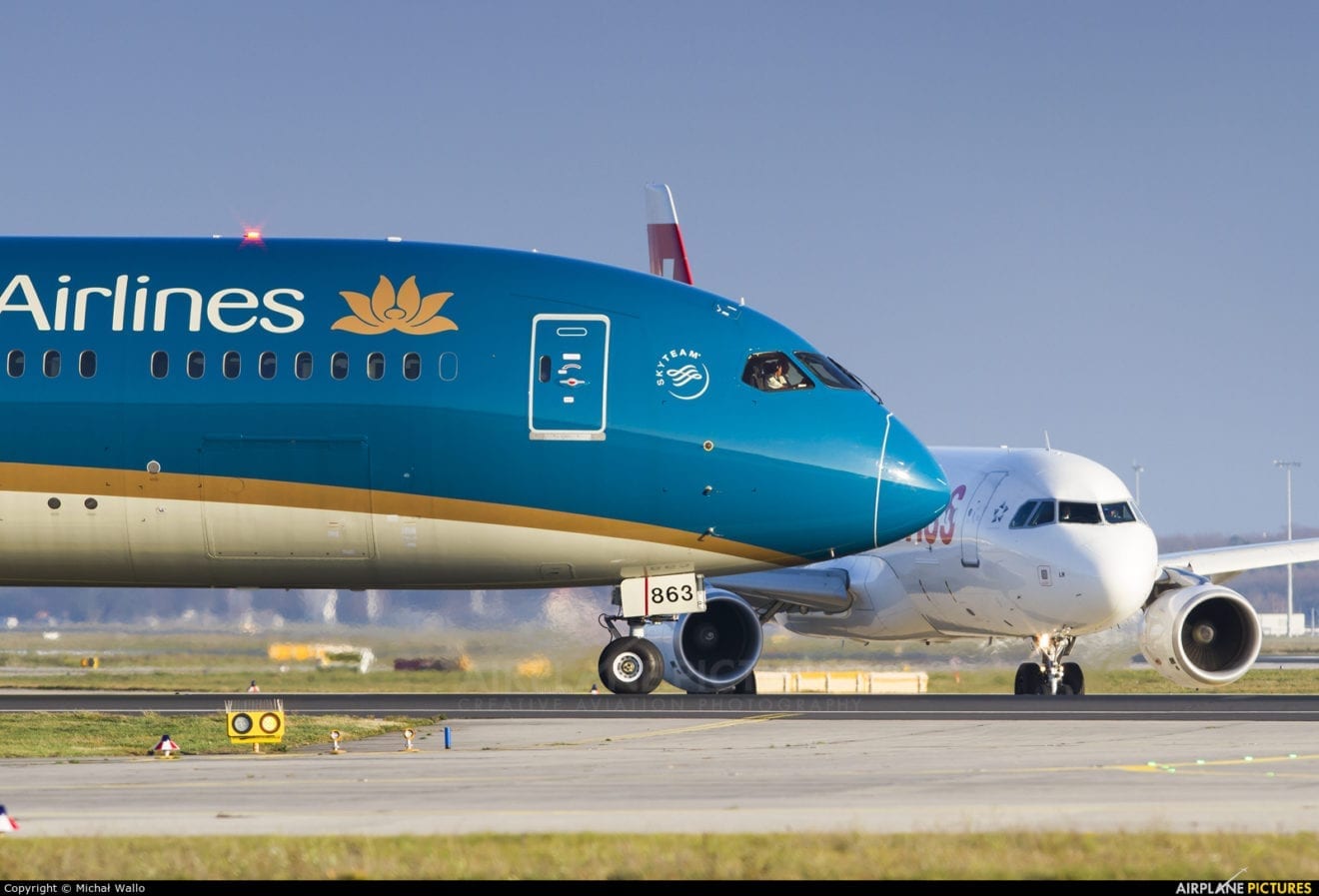
    Vietnam Airlines will launch inflight Wi-Fi service on some flights connecting Hanoi and HCMC with cities in China, Japan and Singapore.

    Passengers will be charged VND75,000-735,000 ($2.95 -$29.95) depending on usage time and capacity.

    Providing inflight Wi-Fi service is one of the steps that Vietnam Airlines is taking towards becoming a digital airlines by 2020 and an international five-star airline in the future.

    The Wi-Fi service will be available on the domestic route from Hanoi to Ho Chi Minh City and international flights from Hanoi to China’s Shanghai and Japan’s Osaka and between HCMC and Osaka and Singapore, the airline said in a statement Monday.

    In the coming months, the airline will continue upgrading and expanding this service to Boeing 787 and other Airbus A350 aircraft with faster speeds, it said.

    Le Hong Ha, deputy general director of Vietnam Airlines, said that when using the service, passengers can send text messages on popular applications such as Viber, iMessage, Messenger and Whatsapp.

    “This is part of Vietnam Airlines’ efforts to catch up with the development trends of the world aviation industry, with many 5-star airlines like Singapore Airlines, Qatar Airways, Cathay Pacific Airways and Lufthansa providing similar services,” Ha said.

    Vietnam Airlines operates flights on 60 international and 33 domestic routes.

  • India has world’s cheapest mobile data rates

    India has world’s cheapest mobile data rates

    Cable.co.uk analyzed 6,313 mobile data plans from 230 different countries from October to November 2018.

    For India’s market, 57 mobile data plans were analyzed and found that the lowest rate per 1GB in the country was 1.41 Rupees ($0.02) while the highest was at 98.83 Rupees ($1.41).

    “A country whose young population has a particularly high technological awareness, India offers a vibrant smartphone market, with strong adoption and many competitors. Data, therefore, is quite staggeringly cheap,” the report mentioned.

    India is home to more than 430 million smartphone users and is the second-largest smartphone market in the world, with China being the first.

    Other countries with cheap mobile data packages include Kyrgyzstan at $0.27, Kazakhstan at $0.49, Ukraine at $0.51, and Rwanda at $0.56.

  • Taiwan overtakes Singapore in broadband speed

    Taiwan overtakes Singapore in broadband speed

    The global average in terms of broadband speed is 11.03Mbps since May 2019, compared to it being 9.14 at the same time last year. The data from this new research was gathered by a US-based open-source project called Measurement Lab (M-Lab).

    “With average broadband speeds rising by 20.65% in the last year the global picture looks rosy. But the truth is faster countries are the ones lifting the average, pulling away at speed and leaving the slowest to stagnate. Last year, we measured the slowest five countries at 88 times slower than the five fastest. This year they are 125 times slower,” commented Dan Howdle, consumer telecoms analyst at Cable.co.uk, with regards to the M-Lab research.

    The top 15 in the league tables of 2019 comprise of all European and Asian countries, with the US being number 16 on the list.

    Some of the European countries that made it to the top 15 were Belgium, the Netherlands, Denmark, Norway, Sweden and Switzerland. As for Asian countries, it included Japan and Singapore.

    The league table showed that downloading a movie in HD of around 5GB in size takes 8 minutes and 2 seconds on average in Taiwan while it took 30 hours in Yemen, which was the last-placed country in the league table.

    M-Lab is led by a variety of teams based at Code for Science and Society, Google Princeton University’s PlanetLab, New America’s Open Technology Institute among others.

    “Average speed rankings by country are.. a great starting point for deeper research and statistical analysis of the state of broadband using M-Lab’s global broadband measurement datasets,” said Chris Ritzo, M-Lab’s programme management and community lead.

    The research carried out 276 million speed tests, all on 70 million IP addresses.

  • Google Fi announces its first Unlimited Plan

    Google Fi announces its first Unlimited Plan

    Google Fi is getting its first Unlimited Plan, which should offer subscribers everything in unlimited quantities. Well, that’s not how it really works in the United States, at least when it comes to data.

    Since the carrier’s launch in 2015, only one plan was available for customers, the Fi Flexible plan. Starting today, Fi is adding a second plan, a Google Fi Unlimited Plan. It will be available for $70 for a single line, but the more people you’re sharing it with, the less it will cost. So, for two lines, the Unlimited Plan is priced at $60, while three lines cost just $50 per line. Finally, if you add between four and six lines, you’ll be paying $45 per individual user (taxes excluded)

    Google Fi’s Unlimited Plan offers 22GB of unthrottled data per line, after which your data speed will be limited. Also, Google mentions that it “may optimize video streaming quality to 480p to extend customers access to high-speed data before they hit 22GB.”

    Besides data, you’ll get unlimited calls and texts, including international calls. Google says that the plan covers free international calls from the US to 50 countries and territories, as well as unlimited data and texting abroad in 200 destinations at no extra charge.

    To make things even more appealing, the Unlimited Plan comes with a Google One membership with 100GB of cloud storage and extra benefits such as expert support across Google, discounts on Google products, and much more.

  • Huawei to sell subsea cable business

    Huawei to sell subsea cable business

    Huawei is reportedly planning to sell its subsea cable business according to a buyer’s filing.

    Made on 31 May 2019 to the Shanghai Stock Exchange, the filing showed that Hengtong Optic-Electric Co, an optical telecoms network vendor, had signed a letter of intent with Huawei Technologies to buy its 51% stake in Huawei Marine Systems.

    Through no price was given, the deal is set to be financed through a combination of cash and shares.

    The news comes weeks after President Trump issued an executive order on “information and communications technology and services supply chain” which gives him and the rest of the US government unprecedented power to ban any business dealing. The order bans Huawei from buying technology from any US company without a license from the US government.

    A few days after the order was issued, the US government then relaxed its embargo on Huawei until 18 August. The Department of Commerce (DoC) issued a temporary general license which sets out limited exclusions to the order giving operators time to get their plans in order.

    “The temporary general license grants operators time to make other arrangements and the Department space to determine the appropriate long term measures for Americans and foreign telecommunications providers that currently rely on Huawei equipment for critical services,” said Secretary of Commerce Wilbur Ross. “In short, this license will allow operations to continue for existing Huawei mobile phone users and rural broadband networks.”

    It has been rumored that the sale of Huawei Marine is happening because the company is now facing stronger scrutiny, which may affect its ability to win new business.

    Speaking to the FT, Fergus Hanson, head of the International Cyber Policy Centre at the Australian Strategic Policy Institute, said, “It’s becoming a more difficult environment when trying to negotiate deals to build cables because [Huawei] is so much in the spotlight.”

  • HMD Global expands enterprise recommended portfolio

    HMD Global expands enterprise recommended portfolio

    HMD Global, licensee for the Nokia smartphone brand, has received Android Enterprise Recommended certification to three new devices in its portfolio.

    The three new devices include the Nokia 9 PureView, the recently announced smartphone with a five-camera array, as well as the Nokia 4.2 and 3.2 devices.

    HMD Global now has 14 Nokia branded devices that have received Android Enterprise Recommended Certification – more than any other smartphone brand.

    More than 50 organizations worldwide – including SAP, contacting and manufacturing company Ineco and industrial design company Mukava – have already deployed devices within this portfolio.

    Google’s Android Enterprise Recommended certification program requires devices to meet an elevated set of hardware, software, security update, user experience and other specifications. It is designed to act as a benchmark for the user experience in a variety of enterprise use cases.

    HMD Global said its recent market research found that 98% of enterprises within the European companies covered by the study use the Android Enterprise Recommended program to influence their choice of devices.

  • SES Networks to provide connectivity luxury cruise ships

    SES Networks to provide connectivity luxury cruise ships

    SES Networks has won a deal to provide high-speed satellite broadband services for a fleet of luxury cruise ships in the Asian market.

    The Luxembourg-based satellite operator has signed a contract to provide its Signature Cruise Solution to Dream Cruises, a subsidiary of Hong Kong’s Genting Cruise Lines.

    Dream Cruises will use the connectivity solution for its cruise ship fleet, consisting of the World Dream, Genting Dream and newly-launched Explorer Dream.

    The solution has already been implemented onboard World Dream and Explorer Dream, and will be introduced on Genting Dream in September.

    It uses SES Networks’ O3b constellation of medium earth orbit (MEO) satellites, with backup from its geostationary fleet for added network resilience, as well as a suite of managed services.

    “Today’s cruise passengers demand excellent connectivity even when they are traveling on the high seas,” Dream Cruises president Thatcher Brown said.

    “As part of our efforts to provide our guests with the best possible services and amenities on board our ships, we partnered with SES Networks because of their high-speed capability to deliver a terrestrial broadband-like internet experience in some of the most challenging of conditions.”

  • 2 in 3 cellcos plan to deploy 5G within 18 months

    2 in 3 cellcos plan to deploy 5G within 18 months

    Mobile service providers anticipate significant new revenue opportunities from the coming deployment of high-speed 5G networks and a host of new IoT-driven use cases

    According to a new survey fielded by the Business Performance Innovation (BPI) Network, in partnership with A10 networks, but they also believe much-improved security will be essential to realizing that potential.

    The new study report, “Securing the Future of a Smart World,” demonstrates that carriers are moving decisively toward 5G commercialization and that security is a top concern.

    • 67% will deploy their first commercial 5G networks within 18 months and another 20% within two years
    • 94% expect growth in network traffic, connected devices and mission-critical IoT use cases to significantly increase security and reliability concerns for 5G networks
    • 79% say 5G is a consideration in current security investments

    “Mobile carriers anticipate significant revenue opportunities and exciting new use cases as they move forward with their 5G deployments. However, the industry also recognizes that 5G will dramatically raise the stakes for ensuring the security and reliability of these networks,” said Gunter Reiss, vice president of A10 Networks.

    “New mission-critical applications like autonomous vehicles, smart cities, and remote patient monitoring will make network reliability vital to the safety and security of people and businesses. Meanwhile, dramatic increases in traffic rates and connected devices will significantly expand the attack surface and scale for cybercriminals.”

    Operators still have a significant amount of work ahead to fortify their networks for the coming of 5G. For example, while more than 80% of mobile operator respondents say they will need to upgrade Gi/SGi firewalls at the core of their networks, only 11% have completed the implementation of new Gi/SGi firewalls.

    Realizing the potential of full-scale 5G networks requires major investments by carriers—and payback on that spend is a crucial issue for the telecommunications industry. Operators see significant opportunities to increase revenues and innovate new business models.

    The top-three benefits derived from 5G

    • 67% – Overall growth in the mobile market
    • 59% – Better customer service and satisfaction
    • 43% – The creation of new 5G-enabled business models

    Top drivers for 5G

    • 61% – Smart cities
    • 48% – Industrial automation and smart manufacturing
    • 39% – High-speed connectivity
    • 35% – Connected vehicles
    • 37% – Fixed wireless

    Assessing 5G security needs

    Chief among security concerns are core network security and DDoS protection.

    • 63% – Advanced DDoS protection the most important security capability needed for 5G networks.
    • 98% of respondents said core network security was either very important (72%) or important (26%) in 5G build-outs.
    • 79% have or will upgrade their Gi/SGi firewalls
    • 73% have or will upgrade their GTP firewall

    “Operators overwhelmingly understand the importance of upgrading security in a more connected and smart world,” continued Reiss.

    “Now it’s time to take decisive action. Carriers need to move ahead aggressively with their plans to upgrade legacy DDoS protection and consolidate security services at the core and edge of their networks to address the growing concerns. A10 Networks 5G security solutions including Gi/SGi firewall, GTP firewall and AI-based DDoS protection enable operators to secure and scale their networks now and protect against the massive cyber threat coming with 5G.”

  • ViewQwest to offer services over TM’s HSBB network

    ViewQwest to offer services over TM’s HSBB network

    Singapore-based fiber operator ViewQwest is expanding its footprint in Malaysia through a new partnership with Telekom Malaysia.

    ViewQwest, which currently has its own fiber network in parts of the Klang Valley and Johor, plans to use Telekom Malaysia’s HSBB network to significantly enhance its availability.

    Through the network reselling agreement, ViewQwest will offer services anywhere Telekom Malaysia offers its Unifi fiber service.

    According to the report, ViewQwest plans to introduce new broadband plans under the agreement in June or July. Speed and pricing will depend on available bandwidth and last mile infrastructure.

    The company will bundle Mesh WiFi products to new subscribers to ensure optimal Wi-Fi experiences, as well as value-added services including a geoblock circumventing Freedom DNS service.

    ViewQwest has revealed it is open to pursuing more joint ventures, acquisitions or network sharing partnerships aimed at allowing it to continue expanding in Malaysia.

  • SES Networks restores connectivity to PNG

    SES Networks restores connectivity to PNG

    SES Networks announced it worked with PNG DataCo to restore mobile and broadband services in Papua New Guinea following an outage caused by a major 7.2 magnitude earthquake.

    The earthquake near the town of Bulolo caused damage to critical terrestrial and subsea transmission nodes between Port Moresby and Madang.

    SES Networks’ contingency teams worked with DataCo to deliver an extra 1.5Gbps of bandwidth to ease network congestion on the operator’s damaged link. This additional bandwidth was made available within hours of receiving a request.

    “Together with DataCo, we are glad that connectivity has been restored swiftly to enable communications and critical disaster recovery services in the immediate aftermath of the earthquake,” SES Networks VP of global fixed data sales Imran Malik Khan said.

    “We recognize the importance of communications services in the event of natural disasters to facilitate quicker information transfer between families and communities, as well as to coordinate recovery and search-and-rescue operations. Our thoughts are with the affected communities, and we offer our well wishes.”

  • Japan bans handset-mobile service bundles

    Japan bans handset-mobile service bundles

    The Japanese government has passed a new bill aimed at reducing mobile prices for consumers and stimulating competition in the mobile market. The new bill includes provisions banning operators from offering bundled device and mobile plans under a single price package.

    The new law, which is due to take effect as early as the third quarter, is aimed at addressing a practice that consumers and lawmakers have complained make it difficult to compare prices between operators.

    Incumbent operators NTT Docomo, SoftBank and KDDI have been under pressure to reduce their mobile charges to help alleviate the financial pressure on consumers. As part of its efforts, the government has been seeking to address the issue of mobile operators offering device subsidies in exchange for relatively high prices for mobile services.

    Responding to this pressure, Docomo last month introduced a simplified fee structure that it says will have the effect of reducing mobile rates by up to 40%, and its rivals are considering following suit.

    The amended legislation also introduces new penalties for companies using misleading sales tactics, as well as a new registration requirement for handset retailers for regulatory purposes.

  • HyalRoute to invest up to $2b in Philippines fiber project

    HyalRoute to invest up to $2b in Philippines fiber project

    Singapore-based shared fiber network provider HyalRoute has signed an agreement with the Philippines’ Department of ICT to invest up to $2 billion expanding to the market.

    The company’s subsidiary Philippine Fiber Optic Cable Network (PFCON) signed a memorandum of understanding with the department committing to deploy the network in various phases between 2019 and 2028.

    The DICT has, in turn, agreed to provide assistance in providing the required permits and licenses, and to closely coordinate with PFCON on the implementation of the project.

    HyalRoute was established with the goal of creating the first region-wide, independent shared fiber network platform in emerging Asia. The company currently provides domestic fiber solutions in Myanmar and Cambodia.

    DICT acting secretary Eliseo M. Rio Jr said the planned deployment will support the government’s own telecommunications ambitions.

    “There is a need for more fiber optic cables in this country, thus this partnership will greatly improve our telecommunication services. We can now have cable networks that anybody can use and this jives with our National Broadband Plan,” he said.

    The deployment will also support the DICT’s Free Public Wi-Fi initiative by allowing its expansion to unserved and underserved areas of the country, Rio added.