Retail News CRM

Tag: broadband

  • Broadband access equipment revenue hits $3.4b in Q4

    Broadband access equipment revenue hits $3.4b in Q4

    The market was bullish in last year’s fourth quarter for broadband access equipment revenue, according to a report, but Converged Cable Access Platform (CCAP) spending declined.

    Dell’Oro Group announced on Monday that broadband access equipment revenue hit $3.4 billion, growing 8% year over year in last year’s fourth quarter compared to the same quarter in 2017.

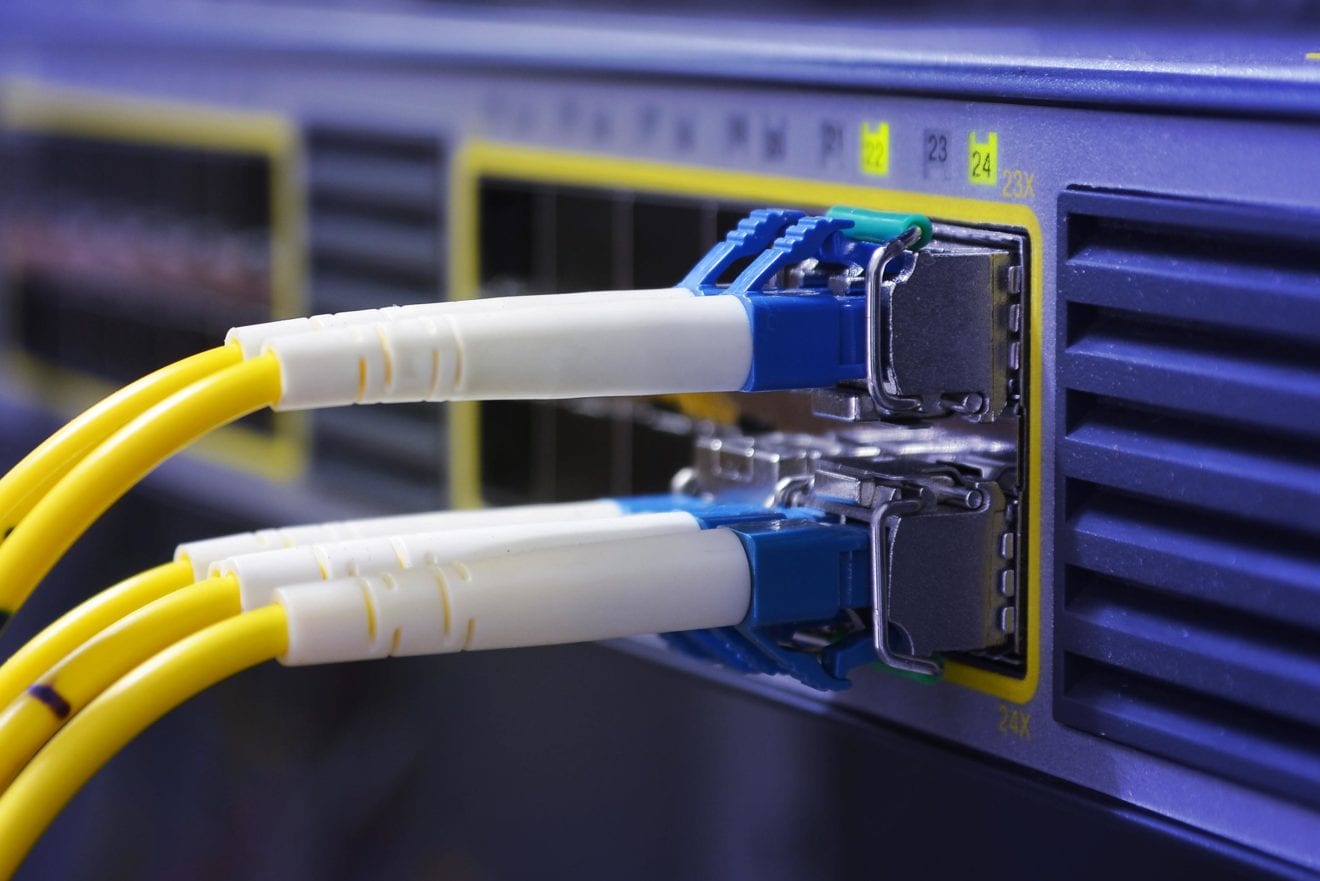
    Increased shipments of GPON optical line terminals (OLTs) and DOCSIS 3.1 customer premises equipment (CPE) counteracted a decline in CCAP spending.

    “FTTH deployments globally continue to show strength,” said Dell’Oro’s Jeff Heynen, research director, broadband access and home networking, in a prepared statement.  “Both 2.5 Gbps GPON and 10 Gbps EPON equipment marked year over year increases, particularly in China. The gains on the telco side helped to offset surprising weakness in cable CCAP spending, as MSOs delay new capacity purchases while they determine how to move forward with distributed access architectures (DAA).”

    Among other capabilities, DAA will give the cable industry a better starting point for virtualized networks and software-defined networking. At last year’s SCTE Cable-Tec Expo, SCTE President and CEO Mark Dzuban said during a panel discussion that the cable industry needed to do a better job of defining DAA in order to launch it at scale.

    Total cable access concentrator revenue was down 18% year over year, mainly due to a slowdown in CCAP license purchases in North America. Cisco, Arris, Casa Systems and Harmonic are among the leading CCAP vendors.

    The total number of DSL port shipments grew 16% year over year with VDSL ports increasing 13% and G.fast ports increasing by a whopping 232%, according to Dell’Oro.

    PON OTL shipments grew 6% over the same timeframe, driven by strong demand for 2.5 Gbps GPON units in China and across the entire Asia-Pacific region.

    Overall, Dell’Oro’s fourth-quarter 2018 Broadband Access Quarterly report said that 2.5 Gbps GPON, 10 Gbps EPON and Gfast equipment all saw increased spending in the quarter.
  • T-Mobile promises cheap 5G services

    T-Mobile promises cheap 5G services

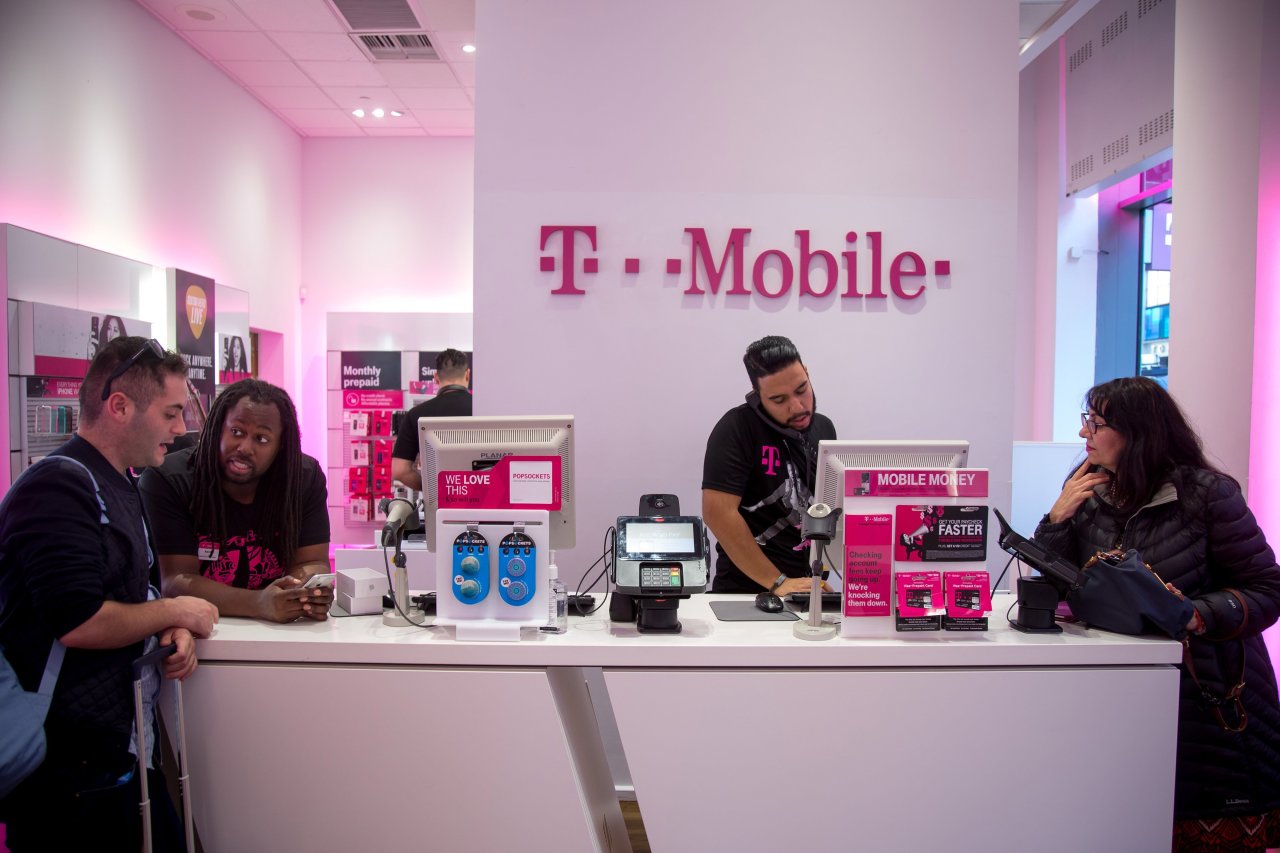
    T-Mobile has just announced that it’s starting limited home internet pilot, an invitation-only test for in-home internet service on LTE, which is meant to connect up to 50,000 homes by the end of the year, in both rural and underserved markets in the United States.

    The carrier states that due to LTE network and spectrum capacity constraints it can’t expand the pilot to more than 50,000 households, but if T-Mobile’s pending merger with Sprint is approved, it will most certainly cover more than half of US households with 5G service by 2024.

    If you’re interested, then you’ll be happy to know that the T-Mobile Home Internet pilot is offered exclusively in areas the carrier expects to deliver speeds of around 50 Mbps through fixed unlimited wireless service over LTE (no data caps). The cost is $50 per month with AutoPay, and there are no annual service contracts, no hidden fees, and no equipment costs.

    Considering customers pay at least $80 per month for wired in-home broadband service these days, T-Mobile pilot programs seems quite a good deal. Moreover, the carrier claims that if the merger with Sprint is approved, it will be able to cover more than half of US household with 5G broadband service by 2024 possibly at the same price.

    Upgrade from LTE to 5G for free, but the monthly fee could be different

    If you’re eligible and chosen to take part in T-Mobile’s Home Internet pilot, a small router will be shipped to you and you’ll be given simple step-by-step instructions on how to install it. You’ll also have to install a mobile app on your phone to optimize placement of router in the house, but that’s just about all you need to do to access T-Mobile’s LTE speeds.

    The router will be upgraded to provide customers 5G services when they will be available in their region, at no additional costs. However, it’s yet unclear whether or not the monthly price will be increased when that happens.

    It’s not the first time that T-Mobile’s CEO John Legere promises something, but it’s also worth mentioning that he kept his promises most of the time.Two weeks ago, I laid out our plans for home broadband with the New T-Mobile. Now, we’re already hard at work building toward that future. We’re w alking the walk and laying the foundation for a world where we can take the fight to Big Cable on behalf of consumers and offer real choice, competition and savings to Americans nationwide.

    Even if 5G services won’t be as cheap as we want them to be, it’s quite clear that thanks to competition customers will have at least a couple of alternatives that will fit their budget. And when it comes to competition, T-Mobile has been able to undercut its rivals many times in the past.

    T-Mobile’s Home Internet pilot is an admirable initiative

    Although all major US carriers announced plans to roll out 5G networks across the country by the end of the year, none have been willing to share anything about prices. Well, at least T-Mobile says it will offer lower prices if Sprint merger is approved.

    T-Mobile’s initiative is quite admirable considering that almost half of American households have no competitive choice for high-speed in-home broadband with speeds of 100Mbps, and in rural areas, more than three quarters have no high-speed service or only one option at their disposal.

    The Un-carrier won’t just bring better internet speeds to rural and underserved areas, but it will also allow 9.5 million households to cut the cord if the merger with Sprint is approved.

    At the other end, AT&T and Verizon are expected to announce their 5G network pricing as well, as both are preparing to launch home 5G services before bringing them to smartphones. It’s a fight between three giants that will have at least one winner: consumers.

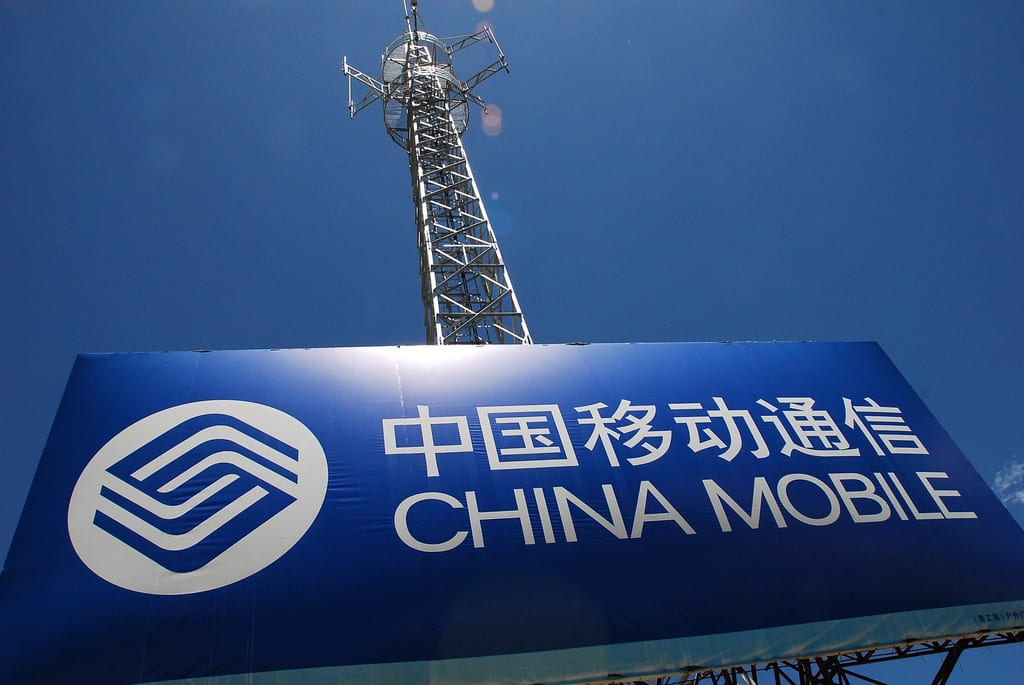
  • China Mobile reports $17.6b profit for 2018

    China Mobile reports $17.6b profit for 2018

    China Mobile has reported a 3.1% increase in net profit for 2018 to 117.78 billion yuan ($17.58 billion) as the company focused on reducing costs and increasing operational efficiency.

    Operating revenue declined 0.5% in reported terms to 736.82 billion yuan, but grew 1.7% after 2017’s results were recalculated using the new IFRS revenue standard..

    Telecommunications service revenue fell a reported 0.4% but grew 3.7% in comparable terms to 670.9 billion yuan.

    The operator’s net profit was also aided by the listing of the company’s tower division China Tower in August last year.

    China Mobile reported a 4.3% increase in its total customer base for the year to 925 million, of which 713 million are 4G customers – a 9.7% increase from 2017. But mobile ARPU fell 8% to 53.1 yuan as a result of strong competition.

    Meanwhile total wireline broadband subscribers increased by 39% to 157 million, of which 147 million were household broadband customers. Household broadband blended ARPU grew 3.2% to 34.4 yuan.

    “2018 was a challenging year for telecommunications operators. Competition amongst peers changed in characteristics as products and services have become homogenized while cross-sector challenges have intensified. The value of traditional telecommunications business rapidly diminished, coupled with multiple challenges from a complex and rapidly-changing policy environment,” China Mobile chairman Yang Jie said.

    “In order to counter market competition, overcome the major obstacles in the ongoing reforms and enhance management, we continued to encourage everyone across the Company to take the ‘Big Connectivity’ strategy even further and implement the integrated development of the “four growth engines”.”

  • Australia to spend $114m to fill more mobile black spots

    Australia to spend $114m to fill more mobile black spots

    The Australian government has allocated A$160 million ($114.1 million) towards extending the national Mobile Black Spot Program for a further two rounds.

    The funding for rounds five and six of the program, which aims to fill gaps in mobile coverage in regional and remote communities, will be used primarily to help improve coverage at public interest premises such as medical facilities, schools and economic centers.

    The additional commitment brings the current government’s funding in the program to A$380 million. So far 1,047 new base stations will be delivered under the program at a total cost of A$760 million. Of these, 682 have been switched on nationally.

    Additional funding is being provided by local and state governments, mobile operators, businesses and community organizations.

    Applications from operators, businesses and local communities for round four of the program recently closed. This round will see 180 new base stations constructed, including 73 which will specifically target public interest premises.

    “Fast and reliable connectivity is essential to ensure regional areas remain competitive with access to the same business and study opportunities as the rest of Australia. We’re ensuring our regions are not left behind,” Australian minister for regional services and deputy leader senator Bridget McKenzie said.

    “All stakeholders are strongly encouraged to submit an application when we open the tender process and take advantage of the additional rounds under this fantastic program.”

  • Konnectivity to buy out remaining shares of M1

    Konnectivity to buy out remaining shares of M1

    Konnectivity, the joint venture buying out Singapore’s M1, has revealed plans to embark on a multi-year transformation of the operator to enhance its competitiveness in the market. The venture revealed it will compulsorily acquire the remaining shares in M1 after securing a 94.55% stake.

    Konnectivity, which is jointly owned by Keppel Corporation and Singapore Press Holdings, announced it will exercise its rights to acquire all remaining M1 shares at the offer price of S$2.06 ($1.52) per share, and then take the company private.

    After the compulsory acquisition, Konnectivity will own 80.69% in M1, while Keppel Corp subsidiary Keppel Telecommunications and Transportation will own the remainder.

    After the acquisition closes, Keppel Corporation and SPH plan to work with M1 on a transformation strategy focused on the three prongs of innovation, technology adoption, and digitalization to help Singapore’s smallest operator better compete with larger rivals Singtel and StarHub.

    “As a member of the Keppel Group, M1 looks forward to working closely with the Keppel Group and with SPH to accelerate the changes needed to deliver even more innovative and compelling products and services, to stay ahead of the competition,” M1 CEO Manjot Singh Mann said.

    “M1 shall endeavour to transform to be at the heart of convergence of various digital services and technologies that present day consumers and enterprises demand. Keppel and SPH bring with them their organisational strengths and stability, which will help us chart our growth plans aggressively, while seeking significant opportunities of synergy with them.”

  • China Unicom profit spikes 457.8% in 2018

    China Unicom profit spikes 457.8% in 2018

    China Unicom has reported a more than five fold growth in net profit for 2018 as a result of strong data revenue growth and benefits from the company’s mixed ownership reform program.

    The annual results show a 457.8% spike in net profit to 10.19 billion yuan, contributing to what the operator called a “V-shaped rebound in profit” following its financial woes in 2016, when the operator’s annual profit shrank by nearly 95%.

    Operating revenue grew 5.8% to 290.88 billion yuan, with service revenue up 5.9% to 260.68 billion yuan.

    Mobile service revenue for the year grew 5.5% from the prior year to 165.1 billion yuan, with mobile data revenue jumping 13.7% to 104.8 billion yuan.

    China Unicom meanwhile recorded total 4G net additions of 45.05 million for the year, taking its total 4G subscriber base to 220 million. This represents 70% of the operator’s total mobile customer base, an eight percentage point increase from 2017.

    Total fixed broadband subscribers meanwhile increased by 4.3 million to more than 80 million, but fixed broadband revenue declined to 42.3 billion yuan due to intense competition and ongoing mobile substitution.

    The operator’s results represent the first full year of implementation of the mixed ownership reform program, which has involved opening up investment in a Chinese mobile operator to private investors for the first time.

    As part of the program, at the direction of the Chinese government, Unicom sold a 35% stake in the company to a group of 14 investors in 2017.

    “Looking ahead, the mixed-ownership reform has powered up the company with differentiated advantages, bringing invaluable opportunities for development,” China Unicom chairman and CEO Wang Xiaochu said.

    He said the company plans to continue to pursue growth based on its “Five New” operating strategy.

    “We intend to unleash more institutional benefits brought by New Governance, activate greater internal vibrancy with New DNA, achieve better efficiency and returns with New Operation, tap into the broader blue ocean with New Energy, and put together greater synergetic advantages with New Ecology.”

  • India has world’s cheapest mobile data

    India has world’s cheapest mobile data

    India is the cheapest country in the world for mobile data, while 10 of the top 20 cheapest countries are in continental Asia, according to analysis from broadband price comparison site cable.co.uk.

    Analysis of mobile data plans in the 230 countries with mobile broadband availability found that Indian operators offer an average price per 1GB of data of $0.26 – well below the global average of $8.53.

    The analysis also shows that Asian countries made up half of the top 20 cheapest markets in the world, with the average price of 1GB of data being well over $1 in Sri Lanka, Mongolia, Myanmar and Bangladesh.

    Malaysia ($1.18 per 1GB), Indonesia ($1.21), Bhutan ($1.25), Iran ($1.28) and Vietnam ($1.31) also made the top 20 list, and only three Asian countries are more expensive than the global average – Taiwan ($9.49), China ($9.89), and South Korea ($15.12).

    The analysis did not include countries in the Oceania/Pacific region. Australia is by far the cheapest country in the region with average prices of $2.47 per 1GB. The most expensive market in the region is Samoa at $30.09.

    “Many of the cheapest countries in which to buy mobile data fall roughly into one of two categories,” Cable.co.uk consumer telecoms analyst Dan Howdle said.

    “Some have excellent mobile and fixed broadband infrastructure and so providers are able to offer large amounts of data, which brings down the price per gigabyte. Others with less advanced broadband networks are heavily reliant on mobile data and the economy dictates that prices must be low, as that’s what people can afford.”

  • India’s copper cabling market to reach $862m by 2023

    India’s copper cabling market to reach $862m by 2023

    The India structured cabling market is projected to reach $861.6 million by 2023, according to Research and Markets.

    Increasing demand for copper cables, growing data center market, higher product launch activities by the market players, and rising demand for bandwidth solutions are the major factors driving the growth of the market.

    Based on wire category, the India structured cabling market is divided into Cat5e, Cat6, Cat6A, and Cat7. The most popular category, Cat6 held the largest market share in 2017. Cat6 owed its popularity to the backward compatibility of this cable with Cat3, Cat5, and Cat5e cable system while providing at least 150 MHz of more frequency range than older types of cables that provides a cost-effective solution for the end users.

    In India, demand for Cat6A is surging owing to its low cost/feature characteristics. It is forecast to grow at 11.9% CAGR. Cat6A cable provides a better cost-effective solution than Cat7 cable and double the bandwidth than Cat6 cable.

    On the basis of application, the India structured cabling market has been categorized into data center and LAN. Data center is expected to register faster growth in the market, during the forecast period, owing to growing demand for cloud computing and cloud storage. This demand is fulfilled by increasing number of data centers in the country.

    The market for data centers in India is expected to reach a value of $4.1 billion by 2020. Tier I cities predominantly, Mumbai, New Delhi, Chennai, Bengaluru, and Pune are expected to be the main locations for data centers in the country.

    Copper cabling has been providing a flexible, reliable, and economical communication medium since decades. Initially, commencing with the analog telephone and continuing with present high-speed digital networks, copper cabling has been the preferred choice for much of the communications infrastructure installed in India’s residential, commercial, industrial and institutional buildings.

  • Broadband Forum releases home Wi-Fi test standard

    Broadband Forum releases home Wi-Fi test standard

    With the rapid development of 4K TV, online gaming and smart homes, statistics from Broadband Forum show that more than 1 billion users now have access to fixed broadband, and Wi-Fi has become an essential part of broadband services provided by operators.

    Operators are increasingly providing service packages featuring Wi-Fi to enhance the home broadband experience of end users. This has created a compelling need to optimize Wi-Fi performance to support end-to-end performance of broadband services, including development of 4K video and VR services, and to minimize operators’ operating and maintenance costs.

    This need is highlighted by Ovum reports, which show that Wi-Fi problems account for 30% to 60% of operators’ broadband complaints.

    Clearly, home Wi-Fi quality is vital to both delivering a high-quality broadband experience and to operators’ operational efficiencies, yet there were no existing unified performance testing standards – until now.

    To address this issue, Broadband Forum announced the release of the first Wi-Fi performance test standard – Technical Report 398 Indoor Wi-Fi Performance Test Standard (TR-398) – during Mobile World Congress 2019.

    TR-398 is the first standard that systematically and quantitatively evaluates home Wi-Fi device performance across six dimensions: receiver sensitivity, throughput, coverage, multi-user support, anti-interference, and stability.

    By defining Key Performance Indicators (KPIs), such as the Wi-Fi equivalent bandwidth (throughput), rate at different distances, and throughput for multiple online users, the standard helps telecom operators and end users select optimal Wi-Fi solutions.

    The TR-398 standard describes the purpose, test scope, conditions, test cases, and standard thresholds for indoor home gateway Wi-Fi performance testing, helping telecom operators efficiently test indoor Wi-Fi performance, develop home networks and video services, and improve home broadband experience.

    From its inception as a project within Broadband Forum, TR-398 has received extensive industry attention. More than 16 operators and equipment vendors have actively participated in and supported the drafting of the standard.

    Many operators around the world are known to be planning to use TR-398 as the Wi-Fi performance admission specification for home broadband customer-premises equipment (CPE).

    According to Broadband Forum CEO Robin Mersh, Wi-Fi is the key infrastructure for broadband Internet access in the connected home and for a high-quality ultra HD video experience.

    “Wi-Fi performance of single gateways must meet service requirements and comply with standards to accelerate industry development,” said Mersh. “The goal of TR-398 is to define carrier-class home Wi-Fi performance. We are delighted that a critical mass of key industry players has participated in crafting this standard and are excited for the role that this standard will play in enabling a superior broadband experience in the connected home of the future.”

  • Construction begins on PEACE cable

    Construction begins on PEACE cable

    Huawei Marine Networks and the 12,000 kilometer PEACE Cable system have hit a new milestone. The project has now entered into the cable and material manufacturing stage, staying on schedule for an RFS date in the first quarter of 2020.

    PEACE stands for Pakistan & East Africa Connecting Europe, which tells you pretty succinctly the route they will be taking. With one end in Pakistan and the other in southern France, it will come ashore in Djibouti and Egypt along the way with an extension south to Somalia, Kenya, and the Sechelles.

    Further plans suggest extending that branch further down to South Africa.  The landing parties on either end will be Pakistan’s Cybernet and Djibouti Telecom, and the agreements for destinations in between are expected to follow in the next few weeks.

    The build promises the lowest latency route between Europe and China, although the materials I have don’t say exactly how they plan to do that – a terrestrial leg through Pakistan and western China perhaps?

    When complete, the PEACE cable promises 16Tbps per fiber pair. An earlier announcement suggested 5 fiber pairs for a total of 60Tbps, though I don’t know if plans have evolved since then.

  • Converge ICT Solutions launches all fiber network

    Converge ICT Solutions launches all fiber network

    Huawei has provided its Agile WAN Solution to the Philippines’ Converge ICT Solutions to support the operator’s goal of rolling out the Philippines’ first pure end-to-end fiber network.

    Converge, which started as a HFC-based cable TV operator, has deployed an extensive all fiber network covering Central Luzon, the Philippines’ Capital Region and South Luzon.

    The company has licenses to operate fixed networks, fiber optics, cable TV, enterprise private lines, fixed broadband, and wireless broadband services.

    The company is expanding on its MAN service market in Metro Manila with high speed optical services, and has been seeking a solution to deliver a reliable, high capacity and elastic network.

    Huawei recommended its Agile WAN Solution for the deployment. Huawei has mostly built Converge’s entire network, from its DWDM backbone and MPLS core through to the MAN and down to the access network.

    Converge COO Jesus Romero said the network upgrade will support the company’s future plans to expand into services such as FTTH, enterprise data services, data center services, cloud services, and smart city services nationwide.

    “Early on we felt we needed a network that was reliable, scalable, cost-effective, and allowed us to easily implement new products and services, and we are very pleased that we were able to, in fact, get that with Huawei,” he said.

    “Huawei has been responsive in terms of support. In terms of pricing, they remain competitive, and they help us a lot with strategy planning, what to do next, and where to go – which is one key area where we feel we should continue and expand cooperation.”

  • StarHub offering free local calls to prepaid customers

    StarHub offering free local calls to prepaid customers

    Singapore’s StarHub has started offering prepaid customers free outgoing local calls as long as they have an active data plan. The company will continue offering prepaid customers free local calls for the duration of their data plan, even if they run out of data.

    StarHub offers customers a choice of six prepaid data plan over its Happy Prepaid app, starting at S$2 for 30MB of data and free outgoing calls for three days. An S$8 mid-tier option adds 1GB and free calls for seven days, while an S$25 plan offers 5GB of data and free calls for 30 days.

    “Just by being on our new prepaid data plans, customers can enjoy the best of two worlds – surfing on Singapore’s fastest 4G network and chatting with family, friends and co-workers easily and affordably,” StarHub VP of marketing Donovan Kik said.

    “Simplicity is key and we will continually enhance our services to ensure we deliver the best possible experience to customers.”

  • Satcom Direct to distribute Intelsat’s FlexExec service

    Satcom Direct to distribute Intelsat’s FlexExec service

    Satellite operator Intelsat has teamed up with business aviation connectivity provider Satcom Direct to provide in-flight broadband connectivity to business jets globally. Satcom Direct has become the first solution partner and master distributor for Inmarsat’s FlexExec service for the business aviation sector. The company will add FlexExec to its new SD Xperience portfolio.

    Under the agreement, Inmarsat will provide Satcom Direct with immediate access to Intelsat’s Ku-band satellite fleet including its high throughput satellites.

    FlexExec is designed to differentiate from the competition by not sharing capacity with commercial aviation or customer broadband customers to provide business jet owners with guaranteed provide seamless, on-demand connectivity.

    “We are delighted that Satcom Direct has chosen FlexExec to be a part of their SD Xperience platform,” Intelsat VP and GM for mobility Mark Rasmussen said.

    “The global footprint, resiliency, redundancy and flexibility of FlexExec’s seamless Ku-band platform will ensure that passengers can easily extend fast, high quality broadband connectivity from their office into the skies.”

  • Spark launches flexible pricing broadband plan

    Spark launches flexible pricing broadband plan

    New Zealand operator Spark has moved to differentiate its broadband offerings by launching a new unlimited fiber broadband plan that offers consumers discounts on months they use less data.

    The company’s “Unplan” branded fiber broadband plan offers unlimited bandwidth for NZ$85 ($55.50) per month.

    But on months where consumers use less than 60GB of data this price reduces to NZ$65, and for months where 60GB to 120GB of data is consumed it reduced to NZ$75.

    An entertainment plan is also available for an additional NZ$10 per month that comes with 6 months of free Netflix and a subscription to the Spark-owned Lightbox SVOD service for the life of the plan.

    The offer is also available via Spark’s fixed wireless broadband service, but restrictions will apply on usage of over 300GB of data in a single month of regular usage of 180GB in an average month.

    “We think it’s a fairer way of offering broadband, as it reflects our customers’ needs. This is the first broadband plan in New Zealand that flexes to reflect customers’ data usage – and it has the potential to save our customers a lot of money,” Spark consumer lead Joe Goddard said.

    “It’s also the first plan that’s only available on new generation broadband options of wireless broadband and fiber.”

  • SLT expects fiber investments to boost broadband growth

    SLT expects fiber investments to boost broadband growth

    Sri Lanka Telecom expects its heavy investments in its fiber network to start paying off, with broadband revenues dominating the company’s balance sheet over the next three years.

    The operator has invested over 70 billion rupees ($446.25 million) to expand its fiber network over the past two years, and connected its 2 millionth household to the network in late 2017.

    Broadband and data services meanwhile accounted for nearly 60% of SLT’s total revenue of 44.5 billion rupees for 2017, up from 38% in 2012.

    The company also has also connected 315 government premises to its fiber network and plans to connect 545 more by the end of this year.

    But SLT noted that margins from data are decreasing even as infrastructure capex grows, and revenue from international voice and other traditional services is on the decline due to the threat from OTT players.

    The company said fiber adoption will also boost third party OTT service consumption, which may further threaten traditional revenue sources but will also contribute to a better return on investment on its fiber network.