Tag: burger king

  • Burger King’s Vietnam Retreat: High-End Competition Forces Fast-Food Giant to Scale Back Operations

    Burger King’s Vietnam Retreat: High-End Competition Forces Fast-Food Giant to Scale Back Operations

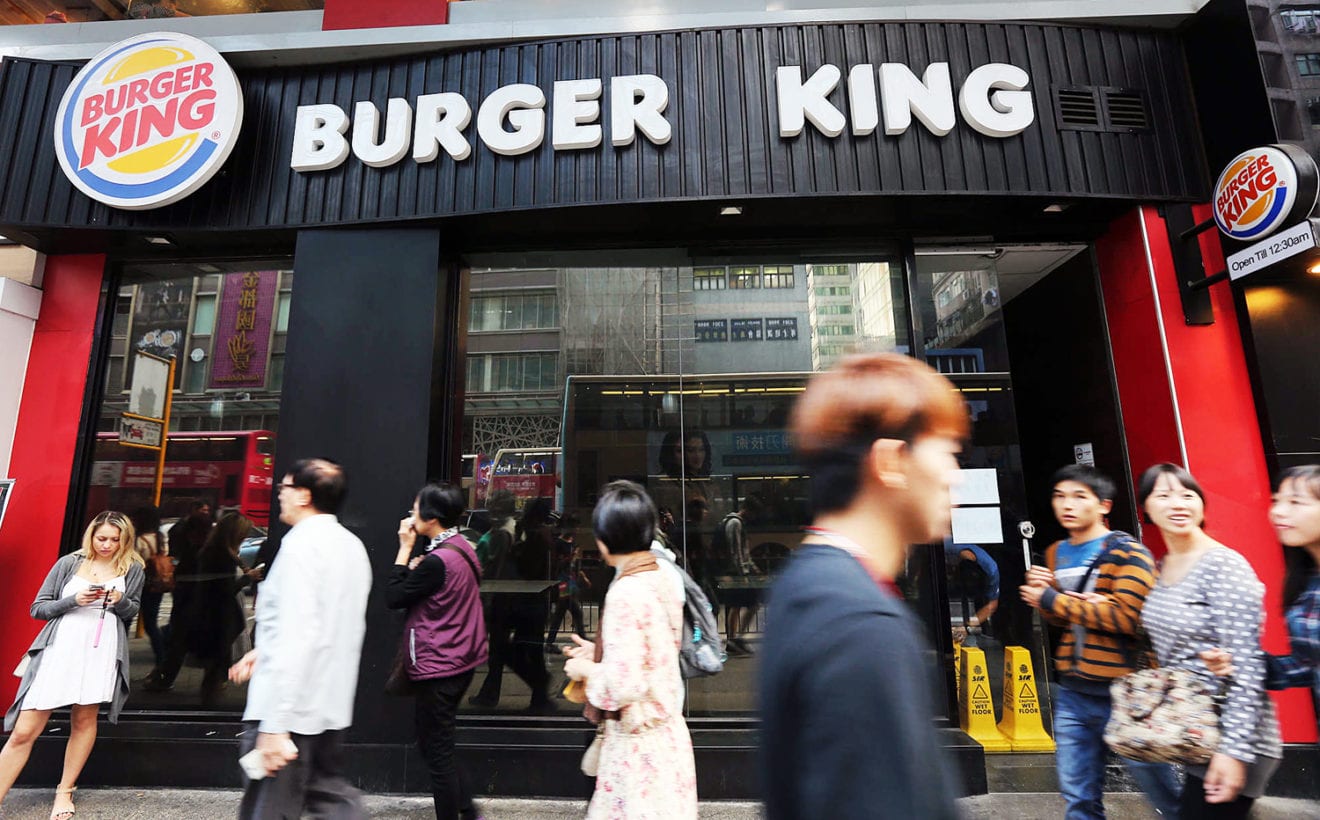
    Burger King, the renowned American fast food titan, has shuttered all its outlets in Hanoi, marking the end of over a decade-long presence in the city and simultaneously narrowing its footprint in Ho Chi Minh City.

    Shutting Down Operations

    Imex Pan Pacific Group (IPPG), the operating partner of Burger King and a local conglomerate that owns a multitude of rival retail brands, acknowledged the cessation of the brand’s operations in all Hanoi outlets roughly two months ago. The process of shutting down varied between one to two months, contingent on the particular outlet. Previously, the city had three Burger King outlets in operation.

    Presently, in Hanoi, the brand’s offerings are solely accessible through an outlet located within the city’s airport. Concurrently, operations in Ho Chi Minh City have been restrained, leaving only three outlets beyond the airport, one of which is conveniently situated in the backpacker haven of Phạm Ngũ Lão.

    The Burger King Journey

    Burger King, established in the United States in 1954, entered the Vietnamese market in 2012 via a franchise contract with IPPG. The grand opening was met with ambitious projections, with plans to establish 60 outlets within a span of five years. However, by 2016, the fast-food chain could only boast of 16 operating outlets, inclusive of one at Ho Chi Minh City’s airport.

    The expansion of Burger King in Vietnam has noticeably contracted over time, an issue some market analysts attribute to cost structures and business performance. The franchise model, based on universally accepted standards encompassing inputs, processes, and quality control, often incurs substantial operating costs. Consequently, when revenue and customer numbers fail to meet expectations, sustaining operations poses a formidable challenge.

    IPPG’s Franchise Strategy

    IPPG, from a franchise standpoint, lays emphasis on diversifying its portfolio, concentrating on the luxury retail sector, apparel, and businesses related to travel. The company, which operates over 1000 stores and collaborates with 138 brands, is progressively expanding its presence in airports, border checkpoints, and shopping centers.

    Johnathan Hanh Nguyen, the founder and chairman of IPPG, in 2019, emphasized the role of site selection in franchise operations. He identified store location, design, and service standards as key factors influencing brand visibility and overall business performance.

    Alternative Business Models

    While certain distributors prioritize scale and coverage, emerging operators such as The Kho Group (TKG) focus on lifestyle positioning, carefully curating brand selection and customer experience. Instead of a broad launch, projects are selectively implemented in cities like Ho Chi Minh City, Hanoi, Da Nang, and Phu Quoc.

    Innovative projects like Malbon are designed as lifestyle spaces with dual-level layouts and integrated community functions. This points to TKG’s strategy of scrutinizing consumption patterns and behavior prior to project launch and gauging success based on brand engagement and repeat visits rather than pure revenue.

    This varied approach highlights the different strategies towards licensing and franchising in Vietnam’s retail sector. While some prioritize network scale and foot traffic, others invest in a curated and unique offering, focusing on store design and brand experience.

    Questions & Answers

    Why did Burger King close its outlets in Hanoi?
    The closure of Burger King’s outlets in Hanoi was attributed to numerous factors including cost structures, business performance, and revenue falling short of expectations.

    What is the current state of Burger King’s operations in Vietnam?
    Burger King has scaled down its operations in Vietnam. As of now, there is only one outlet in Hanoi, located at the city’s airport. In Ho Chi Minh City, only three outlets remain.

    How do new distributors like The Kho Group (TKG) differ in their approach?
    New distributors like TKG emphasize lifestyle positioning. They focus on a careful selection of brand and customer experience, launching projects selectively in certain cities, and gauging success through brand engagement and repeat visits as opposed to pure revenue.
  • Everstone Capital Sells $57M Stake in Burger King’s India, Indonesia Franchisee, Ajanta Pharma Founders to Invest

    Everstone Capital Sells $57M Stake in Burger King’s India, Indonesia Franchisee, Ajanta Pharma Founders to Invest

    Private equity firm Everstone is set to sell its entire stake, amounting to 11.26 per cent, in Restaurant Brands Asia, a franchisee operating in India and Indonesia for fast-food giant Burger King. Those familiar with the matter have confirmed that the deal will be announced soon.

    Equity Stake Valuation

    Everstone Capital’s stake, held via its investment arm QSR Asia Pte Ltd, is presently valued at USD 57 million, based on Refinitiv data. Meanwhile, the market capitalisation of Restaurant Brands Asia stands at USD 437 million in Mumbai.

    New Strategic Investor

    As part of the agreement, a new strategic investor will be introduced to Restaurant Brands Asia. The identity of this investor remains confidential at this point.

    Despite repeated attempts, both Everstone and Restaurant Brands Asia have opted to not comment on the matter.

    Pharma Founders as Potential Investors

    The family office of the founding members of Ajanta Pharma, an Indian pharmaceutical company, is reportedly taking a keen interest in this deal. The family office, which also operates in the restaurant business, is projected to invest up to INR 8 billion (equivalent to USD 88 million) into the company.

    No comment could be obtained from the representatives of the family office either.

    Although it’s unclear what percentage of the company Ajanta would acquire, it’s speculated that they may become the majority stakeholder over time as other shareholders divest their stakes.

    In a recent communication with Indian stock exchanges, Restaurant Brands Asia announced upcoming board meeting plans to discuss and evaluate possible fundraising options, although no further information was provided.

    Questions & Answers

    What is the current stake of Everstone in Restaurant Brands Asia?
    Everstone presently holds an 11.26 per cent stake in Restaurant Brands Asia.

    Who is speculated to be the new strategic investor?
    The family office of the founders of Ajanta Pharma is speculated to be the new strategic investor.

    How much is the family office of Ajanta Pharma expected to invest?
    They are expected to invest up to INR 8 billion (USD 88 million) into the company.

  • Goldman Sachs in Exclusive Talks for $452M Acquisition of Burger King Japan

    Goldman Sachs in Exclusive Talks for $452M Acquisition of Burger King Japan

    Goldman Sachs is reportedly in exclusive negotiations to acquire the Japan operations of Burger King from Hong Kong-based private equity firm, Affinity Equity Partners.

    The transaction is speculated to be worth around 70 billion yen (approximately US$452 million). Goldman Sachs is allegedly preparing to acquire BK Japan Holdings. The latter entity currently operates approximately 310 Burger King locations throughout Japan.

    BK Japan has ambitious plans to expand its footprint. By the end of 2028, the company aims to have established a total of 600 Burger King branches within the country. This represents a substantial growth, considering that the company had only 77 stores in 2019.

    Burger King’s journey in Japan has seen its fair share of highs and lows. The brand initially penetrated the market in the 1990s, only to withdraw in 2001 due to poor performance. However, it made a comeback in 2007 via a franchise partnership led by South Korea’s Lotte Group and Japan’s Revamp. The operations were subsequently handed over to Lotteria, a subsidiary of Lotte, in 2010.

    Questions & Answers

    What is the reported value of the acquisition deal between Goldman Sachs and Burger King’s Japan operations?
    The deal is reportedly worth around 70 billion yen (approximately US$452 million).

    How many Burger King outlets does BK Japan Holdings currently operate?
    BK Japan Holdings currently operates approximately 310 Burger King locations throughout Japan.

    What are BK Japan’s expansion plans?
    BK Japan aims to establish a total of 600 Burger King branches within the country by the end of 2028.

  • Burger King China’s Explosive Expansion: $350M Investment Fuels Rise to 4000 Outlets by 2035

    Burger King China’s Explosive Expansion: $350M Investment Fuels Rise to 4000 Outlets by 2035

    Restaurant Brands International (RBI) has recently confirmed a $350 million investment deal toward their Burger King China operation via a newly formed partnership with Chinese alternative asset manager, CPE. With a well-established reputation for scaling consumer brands within the Chinese markets, CPE’s primary investment will facilitate expansion, marketing, menu innovation, and operations for Burger King’s restaurants across China.

    Joint Venture Objectives

    This joint venture is targeting to more than triple the current Burger King presence in China, from approximately 1250 restaurants to a projected 4000 by the year 2035. Joshua Kobza, CEO of RBI, highlighted the significance of this partnership, recognizing China as “one of the most exciting long-term opportunities for Burger King globally.” The recent investments and newly formed joint venture underscore their confidence in the Chinese market.

    Additionally, Kobza emphasized the potential benefits of this partnership, noting how combining the iconic Burger King brand and RBI’s global scaling abilities with CPE’s local market knowledge and operational expertise can unlock the business’s full potential in China.

    Ownership and Development Agreement

    The completion of this transaction, which is anticipated for the first quarter of next year, will result in CPE owning approximately 83% of Burger King China, leaving RBI with an ownership stake of approximately 17%.

    Further to the partnership, a wholly-owned affiliate of Burger King China will sign a 20-year master development agreement. This will grant the affiliate exclusive rights to develop the Burger King brand within the Chinese market.

    Strategic Alignment and Previous Investments

    This joint venture aligns with RBI’s broader strategy of pairing with experienced local operators and investors to drive profitable growth. This approach, while maintaining a primarily franchised business model globally, is aiming for a net restaurant growth of 5% or more by the end of the 2024-2028 outlook period.

    This recent partnership follows an earlier transaction in February, where RBI purchased stakes in Burger King China from its local franchisee for an estimated $158 million.

    Questions & Answers

    What is the purpose of the joint venture between RBI and CPE?
    The joint venture aims at expanding Burger King’s presence in China from about 1250 to over 4000 restaurants by 2035.

    What will be the ownership split of Burger King China after the transaction?
    Once the transaction is completed, CPE will own approximately 83% of Burger King China, while RBI will hold an estimated 17%.

    What are the terms of the development agreement?
    A wholly-owned affiliate of Burger King China will sign a 20-year master development agreement, which grants the affiliate exclusive rights to develop the Burger King brand in China.

  • Burger King Gears Up for Expansion in China with $350M Investment, Targeting 4,000 Outlets by 2035

    Burger King Gears Up for Expansion in China with $350M Investment, Targeting 4,000 Outlets by 2035

    Restaurant Brands International (RBI) recently secured a $350 million investment for its Burger King China division, as part of a new joint venture with China-based alternative asset manager, CPE. This significant investment will support Burger King’s restaurant expansion, marketing initiatives, menu innovation, and operational processes within China.

    Unleashing Business Potential in China

    The main objective of this joint venture is to extend Burger King’s presence in China from its current standing of 1,250 restaurants to a staggering figure of more than 4,000 by 2035. Joshua Kobza, the CEO of RBI, expressed his excitement about the opportunity, stating that China remains one of the most exhilarating long-term prospects for Burger King on a global scale. He further added that the new joint venture and recent investments highlight their confidence in the Chinese market.

    Kobza also mentioned that this partnership with CPE would help unlock the full potential of the business. This is achievable by amalgamating Burger King’s globally recognized brand and large scale with CPE’s local market insights and operational expertise.

    Transaction Details and Future Growth Plan

    Upon the completion of this transaction, which is anticipated to occur in the first quarter of the upcoming year, CPE will hold an estimated 83% of Burger King China, while RBI will retain about 17%. An essential part of this deal entails that a wholly owned affiliate of Burger King China will sign a 20-year master development agreement. This agreement will provide the affiliate exclusive rights to develop the Burger King brand within the Chinese market.

    This strategic move aligns perfectly with RBI’s approach of teaming up with seasoned local operators and investors. Their shared goal is to drive profitable growth while maintaining a predominantly franchised business model globally. In line with this, the company aims to hit a target of 5% or more net restaurant growth by the end of its 2024–2028 outlook period.

    RBI’s transaction follows another recent investment, where it acquired stakes in Burger King China from its local franchisee for approximately $158 million in February.

    Questions & Answers

    What is the main objective of the joint venture between RBI and CPE?
    The goal is to extend Burger King’s presence in China from its current standing of 1,250 restaurants to more than 4,000 by 2035.

    Who will hold the majority stake in Burger King China after the transaction is completed?
    CPE will own approximately 83% of Burger King China, with RBI holding the remaining approximately 17%.

    What is the net restaurant growth target that RBI aims to achieve by the end of its 2024–2028 outlook period?
    RBI targets a 5% or more net restaurant growth by the end of this period.

  • Burger King parent Restaurant Brands takes full control of China business

    Burger King parent Restaurant Brands takes full control of China business

    Restaurant Brands International said on Tuesday it has bought stakes in Burger King China from its local franchisee for about US$158 million, giving it nearly total ownership of the business.

    The fast food chain operator said it would engage its advisors to work on identifying a new local partner to invest into the business.

    The company has been working on its China strategy for its Burger King business which faced softening demand in the second biggest market, amid a pressured consumer spending and stiff competition.

    Restaurant Brands acquired the stakes in Burger King China from a holding company TFI Asia Holdings BV and a blank-check firm Pangaea Two Acquisition Holdings XXIII.

    Restaurant Brands had 1,474 Burger King restaurants in China, as of December 31, 2024.

  • Hong Kong fund to sell Japan, South Korea Burger King business

    Hong Kong fund to sell Japan, South Korea Burger King business

    Private equity firm Affinity Equity Partners is this week launching the sale of its Burger King fast-food businesses in South Korea and Japan, in a deal that could fetch more than US$1 billion, a person with knowledge of the matter told Reuters.

    Hong Kong-based Affinity has appointed Goldman Sachs to run the sale, which is targeting both private equity investors and strategic buyers, said the person, who declined to be identified as the information is confidential.

    The bank declined to comment.

    Affinity bought full control of Burger King South Korea in 2016 for about US$170 million and a year later acquired the American fast-food brand’s Japan franchise.

    The South Korean business reported 680 billion won (US$572 million) in revenue in 2021, with adjusted earnings before interest, taxes, depreciation, and amortisation (EBITDA) at 80 billion won, said the person, adding its adjusted EBITDA in 2022 is expected to reach 100 billion won.

    Burger King Japan’s adjusted EBITDA in 2021 was 700 million yen (US$6 million), the person said.

    Global fast-food chains such as McDonald’s and Yum! Brands are trading at 20 to 30 times their EBITDA, Refinitiv Eikon data showed. Burger King India is trading at about 25 times of its EBITDA.

    Affinity and Burger King Japan did not immediately respond to a request for comment.

    An official at BKR Corporation, the operator of Burger King in South Korea, declined to comment.

    The Nikkei business daily first reported the sale on Monday (Jan 17).

    It comes as the consumer and retail sector faces tremendous challenges and disruption caused by the coronavirus pandemic.

    In South Korea, businesses have adapted by relying more on deliveries, which has prompted exponential growth for its food delivery apps.

    Burger King Korea said on Monday the number of monthly active users on its mobile app in December exceeded 1.4 million, the highest since the app was launched in May 2016.

    Since Affinity’s acquisition, Burger King has been in an expansion mode in South Korea and Japan.

    Burger King runs 440 outlets in South Korea, more than its rival McDonald’s.

    The Japan franchise said on Monday it would open three new outlets in January, bringing the total there to 149, with plans to open more “aggressively” in 2022.

  • Sale of China’s Burger King franchise at stake

    Sale of China’s Burger King franchise at stake

    TAB Food Investments is looking to sell its 50-per-cent stake in Burger King’s China operations, which could value the asset at more than $1.2 billion, according to Bloomberg.

    TAB Food is the largest global franchisee of Restaurant Brands International and runs more than 1200 Burger King locations across China. The business had expressed interest in launching an IPO for its China operations some time ago, though now may be investigating exiting the business entirely.

    According to sources, the deliberations are still at an early stage, and TAB could still decide to hold on to the business or revive the IPO plans which were postponed in 2018 with no reason given.

    An ongoing sale process isn’t underway, a TAB spokesperson told Bloomberg. The business is the biggest franchisor of Burger King globally and manages close to 2000 restaurants across China and Turkey.

    TAB also holds the rights to the Popeye’s Chicken brand, which has just opened its first store in Shanghai and is set to launch further 1500 in China over the next 10 years.

  • Burger King unveils ‘touchless’ hamburger ordering concept

    Burger King unveils ‘touchless’ hamburger ordering concept

    Burger King has unveiled a new ‘touchless’ concept store, designed to meet the challenges of business during a pandemic and adapt to the future “new normal”.

    The US store features physically contactless experiences such as mobile ordering and curbside pick-up areas and drive-in and walk-up order areas.

    “In March our in-house design and tech team accelerated new restaurant design plans and pushed the limits of what a Burger King restaurant could be,” said Josh Kobza, COO at Restaurant Brands International.

    “We took into consideration how consumer behaviors are changing and how our guests will want to interact with our restaurants. The result is a new design concept that is attractive to guests and will allow our franchisees to maximize their return.”

    Designed in-house, the store is expected to provide multiple ordering and delivery modes and highlight a physical footprint 60-per-cent smaller than a traditional Burger King restaurant.

    A ‘drive-in’ service allows customers to park under canopies doubling as solar power harvesting panels and place orders by scanning a QR code from the Burger King app. For mobile and delivery orders, customers can pick up their orders at coded food lockers.

    To reduce its physical footprint, the store features a “suspended” kitchen and dining room located above the drive-thru lanes. Orders will be delivered from the suspended kitchen by a conveyor belt system, and each lane has its own pick-up spot.

    “The designs we’ve created completely integrate restaurant functionality and technology, said Rapha Abreu, global head of design at Restaurant Brands International. “We designed the interior and exterior spaces like we had a blank sheet of paper, designing without preconceived notions of how a Burger King restaurant should look.”

    Burger King’s first new design stores will be built next year in Miami, Latin America and the Caribbean.

  • Burger King Taiwan gives away 10,000 burgers to McDonald’s, KFC customers

    Burger King Taiwan gives away 10,000 burgers to McDonald’s, KFC customers

    Burger King Taiwan is holding a marketing campaign offering 10,000 free burgers to customers of rivals McDonald’s and KFC.

    Consumers are being invited to swap a same-day receipt for a set meal at either franchise to receive a free Burger King burger.

    Burger King Taiwan, which has traded for 29 years, has lagged behind rival brands in market-share terms and has attempted a comeback over the past several years by shuttering 20 stores and replacing its management team. The brand was taken over by Asian private equity fund Nexus Point in late 2017.

    The brand has since expanded and expanded its reach via local food delivery platforms Foodpanda, Uber Eats, and Deliveroo among others.

    The campaign will run through to December 10.

  • Everstone may quit Burger King Indonesia stake

    Private equity firm Everstone Capital may withdraw from its involvement in Sari Burger Indonesia (SBI), the country’s master franchise owner of Burger King.

    A DealStreetAsia report revealed the firm has been speaking with banks and advisers over the course of this year about the potential move.

    Everstone is currently in a partnership with Indonesian retail firm Mitra Adiperkasa, previously SBI’s sole shareholder. The firm also partners with Mitra Adiperkasa in running Domino’s Pizza in Indonesia.

    Everstone may have difficulties finding a buyer in the territory given tight competition in the industry, according to an opinion published in Nikkei.

  • Burger King APAC opens 3,000th restaurant

    Burger King APAC opens 3,000th restaurant

    The Burger King Asia-Pacific network has reached a milestone, the 3000th restaurant which just opened in Shanghai.

    The new restaurant in China is a joint venture owned by Burger King, TFI TAB Food Investments and Cartesian Capital.

    “We have served the Asia-Pacific market for more than 40 years, and have grown rapidly in the region recently, doubling our restaurant count in just the past five years,” said Sami Siddiqui, president at Burger King Asia-Pacific. “We look forward to many more openings to come as we grow the brand in our fastest-growing region of the world.”

    Burger King has opened more than 1500 restaurants in the region within the last five years, helped by strong franchisee partnerships in major markets, including China, India and South Korea.

  • Burger King China operator mulls Hong Kong IPO

    Burger King China operator mulls Hong Kong IPO

    Burger King China’s owner is mulling a public listing in Hong Kong which could value the business at around US$1 billion.

    According to sources quoted by international business media, the Hong Kong plan is a fallback after plans to list the business in the US last year were shelved.

    Burger King China is owned by Turkish-based company TAB Food Investments. It currently operates about 1000 stores across 150-plus cities in Mainland China.

    One source said the IPO could raise about $200 million, although a fixed figure has not yet been set and the idea is still under consideration. If an IPO proceeds, it would most likely be early next year.

    TAB Food Investments is the world’s largest master franchisee of the Burger King brand, with more than 1700 stores across China and its home market.

    Asked for comment on the reports, the company’s chairman Erhan Kurdoglu told a journalist: “We always assess IPO possibilities. However, there’s no concrete development on that front as of now.”

    TAB Food Investments also holds the franchise rights for Popeyes Louisiana Kitchen and recently announced plans to roll out more than 1500 outlets in China during the next 10 years.

  • Everstone to sell Burger King India franchise

    Everstone to sell Burger King India franchise

    Singapore-based private equity firm Everstone plans to sell its Burger King India franchise.

    The firm is reportedly in advanced discussions with Rahul Bhatia-controlled InterGlobe group to sell the franchise a deal worth US$204 million.

    The fast-food chain operates 140 outlets, spread across cities in north, west and south India. Last year, its sales reached $54 million.

    Everstone has managed Burger King India since 2013, along with Coffee Bean & Tea Leaf, Copper Chimney, Bombay Blue and Noodle Bar in India.

    The discussions between the two parties come at a time when Bhatia is in dispute with Rakesh Gangwal over their flagship airline IndiGo.

  • Burger King slammed for ‘racist’ ad promoting Vietnamese burger

    Burger King slammed for ‘racist’ ad promoting Vietnamese burger

    The clip shows several people tying and failing to eat a burger with large, red chopsticks. A caption accompanying the video read “Take your taste buds all the way to Ho Chi Minh City with our Vietnamese Sweet Chilli Tendercrisp.”

    The video, shared by Maria Mo via the account @mariahmocarey, has received more than 2.7 million views. Mo told that she shared the clip as she was tired of large corporations portraying Asians in an offensive manner.

    “I could not believe that such a concept was approved for such a big, well-known company. It says a lot about what kind of demographics they must employ across the board for their ads.”

    Other social media users were quick to slam the fast foot retailer for making fun of a utensil that has been used across Asia for thousands of years.

    Viet Thanh Nguyen, the Pulitzer Prize-winning Vietnamese-American novelist, shared the clip with the comment “What’s worse, this ad or using chopsticks in your hair?”

    The advertisement was later removed from all of Burger King NZ’s social media platforms.

    Respond to the controversy, Burger King released a statement, saying: “The ad in question is insensitive and does not reflect our brand values regarding diversity and inclusion. We have asked our franchisee in New Zealand to remove the ad immediately.”

    Burger King New Zealand’s Chief Marketing Officer James Woodbridge expressed regret.

    “We are truly sorry that the ad has appeared insensitive to our community. We have removed and it certainly does not reflect our brand values around diversity and inclusion.”

    Burger King entered the Vietnamese market in 2011 but has struggled to win over local consumers. The firm hoped to have 60 outlets in the country by 2016, but as of 2018 had only 11.