Retail News CRM

Tag: burger king

  • Burger King Is Launching an Ice Cream Shake Made from Cereal Favorite Fruit Loops

    Burger King Is Launching an Ice Cream Shake Made from Cereal Favorite Fruit Loops

    Restaurant Brands International is launching the Fruit Loops shake. Yes, for real. The company confirmed to TheStreet the shake will be available for a limited time only at participating restaurants nationwide starting April 17 for a recommended price of $2.99. It’s made from vanilla-flavored soft serve ice cream, Fruit Loops cereal pieces (compliments of Kellogg’s) and sweet sauce.

    Burger King is no stranger to thinking outside the box when it comes to fast-food. The company teamed up with beverage and snack giant Pepsi  last year to develop what it called Mac n’ Cheetos. The snack mashup was a portable combination of mac n’ cheese covered with crispy Cheetos flavor. Last March, it unveiled the “Angriest Whopper,” a burger with a red bun, jalapenos and hot sauce.

    And in September 2016, Burger King sold a black-bunned burger filled with Kraft Heinz’s A1 steak sauce called the Halloween Whopper for a limited time.

  • Burger King, Foodpanda launch April Fool’s Day campaigns

    Burger King, Foodpanda launch April Fool’s Day campaigns

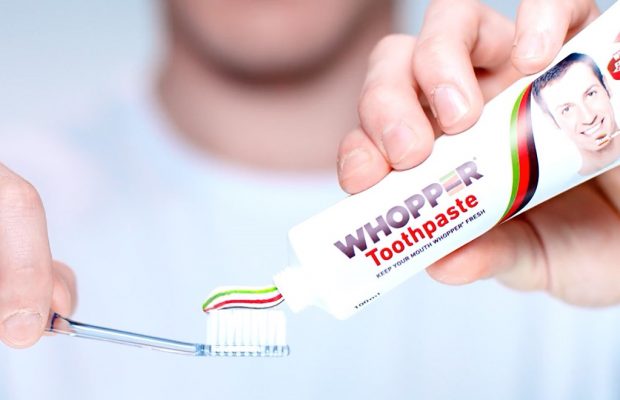
    A Whopper-flavoured toothpaste and a weekend staycation where you can chill in a panda costume… those were the first two April Fool’s Day pranks orchestrated by marketers this silly season.

    Putting aside for a moment the question of whether launching such promotions several days in advance really qualifies as an April 1 stunt, the issue is whether the marketing programs are designed to make the news media look foolish in an era of growing chatter about “fake news”, or are just an entertainment for consumers.

    Foodpanda Singapore issued a media release on Wednesday promoting a “wellness retreat” dubbed The Pandanctuary.  The food delivery service cited “UK research” (not referenced) as finding that more than 10,000 people “enjoy dressing up as animals to escape the pressure of modern living”.

    In the release, MD Aspa Lekka (her name checks out on Google) says: “With studies showing that dressing up like an animal is scientifically proven to reduce stress levels, we wanted to give our busy customers the opportunity to see what it’s like to live like our ‘chilled out’ mascot for the weekend – the beloved panda.”

    The release was distributed by Leon Tan, an account executive with W, whose signature file references an award for “Best new PR consultancy in Asia Pacific”. We sent Tan an email asking him to confirm it was an April Fool’s Day stunt. He didn’t reply.

    But the sheer detail of the promotion was impressive enough to fool the likes of mainstream media including the South China Morning Post, which appeared to treat it seriously in an online article.

    According to the release, Foodpanda has partnered with Studio M Hotel on Nanson Road to create “the ultimate panda experience, decking out bespoke ‘panda rooms’ with bamboo plants, play ropes and large water bowls”. Catering will be provided by Jamie’s Italian.

    The biggest hint of mischief in the campaign was at the bottom of the application form where those interested in participating in the “pandamonium” had until “23.59 on March 31” to apply.

    Here’s a video of The Pandanctuary:

    A whopper

    Meanwhile in Europe, Burger King France and its ad agency Buzzman claim to have teamed up with “experts” to create a signature toothpaste with extracts that recreate the distinctive barbecued beef flavour of its Whopper burger (also note that in western slang, “whopper” means a massive lie).

    They even created a realistic 60-second commercial to promote it, in movie-trailer style with the memorable tagline “the Whopper’s taste is so good, some people will do anything to keep it in their mouths”:

    As Marketing Interactive reported online, considering April Fool’s Day is this week “we can safely assume this is a joke – but we will report back if we get our hands on a sample”.

  • Burger King announced as the Cannes Lions Creative Marketer of the Year 2017

    Burger King announced as the Cannes Lions Creative Marketer of the Year 2017

    The Cannes Lions International Festival of Creativity has today announced Burger King as the Creative Marketer of the Year 2017. The award will honour Burger King for embracing and encouraging creativity across their brand communications and for the inspiring global marketing of their products.

    Burger King has a hugely successful track record at Cannes Lions. The company has totalled 76 awards, including two Grands Prix in 2016 for the ‘McWhopper’ campaign, in Print & Publishing and Media. Burger King also took home a Titanium Grand Prix in 2007 and achieved their first win in 1969, a Silver Lion for ‘Skinny Burger’. Since its launch in 1954, the company has expanded to become one of the largest quick-service restaurants in the world, welcoming more than 11 million people in over 100 countries daily.

    “Burger King is a brand that’s built a reputation for marketing campaigns that are bold, courageous and innovative, constantly challenging the limits of creative excellence,” said Philip Thomas, Chief Executive of Ascential Events. “Burger King believes that being a brand with purpose can achieve long-term advantages and deliver strong business results. That’s why the company is making such an impact.”

    Axel Schwan, Chief Marketing Officer of Burger King, and Fernando Machado, Head of Brand Marketing at Burger King, will collect the award during the 64th Cannes Lions International Festival of Creativity, taking place from 17-24 June 2017.

    Axel Schwan commented, “Creativity is a critical factor when it comes to helping us stand out from the pack and punch higher than our weight. This principle is applied to everything we do, from the way we differentiate ourselves by flame-grilling our burgers to the ground-breaking advertising campaigns we create.”

    Fernando Machado added, “This award is a tribute to the consistently strong creative work done by the Burger King brand over time.”

    Cannes Lions celebrates the ‘Best of Burger King’ on Stories, the new editorial arm of the Festival. From classic campaigns that kick-started digital marketing to modern masterpieces of integration, find out more about some of Burger King’s most famous ads here: https://www.canneslions.com/stories

    Cannes Lions International Festival of Creativity

    Cannes Lions runs for eight days from 17-24 June, in Cannes, France. The main Festival venue is the world famous Palais des Festivals. A ‘Complete’ pass includes entry to all official Festival talks, Awards shows, networking and evening events across the eight days. Passes giving access only to the specialist events – Lions Health, Lions Innovation and Lions Entertainment – which take place right next door to the main Festival venue, are also available.

    Lions Health 17-18 June

    Lions Innovation 19-20 June

    Lions Entertainment 21-22 June

  • Burger King announces Valentine’s Day ‘adults meal,’ complete with ‘adults toy’

    Burger King announces Valentine’s Day ‘adults meal,’ complete with ‘adults toy’

    When making plans for Valentine’s Day, most couples wouldn’t consider Burger King an option for a romantic night out.

    The fast food chain is trying to change that in Israel, where they’re offering a special “adults meal” just in time for Valentine’s Day.

    The adult meal comes with two Whoppers, two orders of french fries, two beers, and one romantic adult toy.

    No word on what that toy might be exactly, though Burger King Israel’s promotional video gives us a few hints. It shows a takeaway box with an eye mask, a feather duster, and a scalp massager.

    The “adults meal” will only be available on Valentine’s Day after 6 p.m. to customers who are 18 years or older at Burger King’s Israel locations.

  • Burger King to launch mobile app this spring

    Burger King to launch mobile app this spring

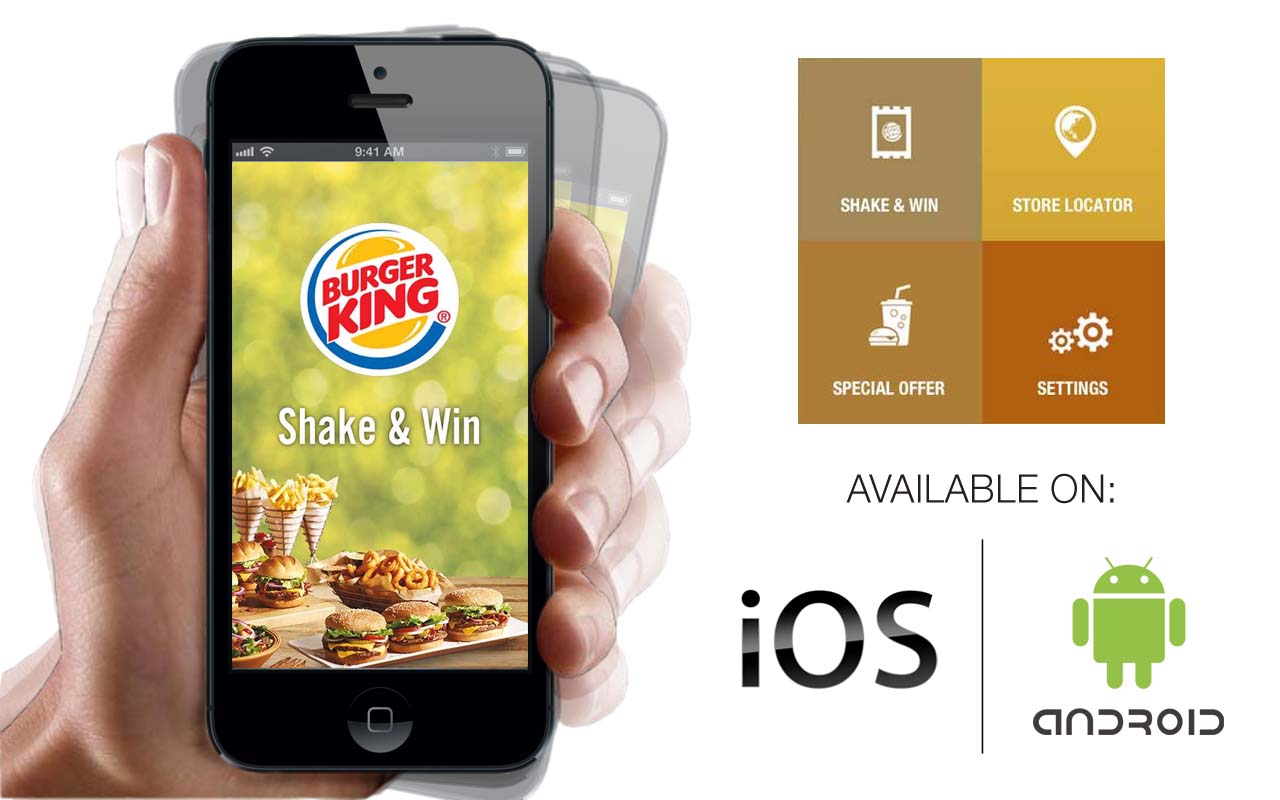
    The parent company of Tim Hortons and Burger King plans to launch an app Canada-wide this spring that would allow customers to order and pay in advance on their smartphone without lining up to pay a cashier.

    The move by Restaurant Brands International follows a similar one by Starbucks and is the latest push towards more automation in the food service industry.

    In the fall of 2015, RBI acquired Brewster App and tasked the startup’s dozen staff to develop the app.

    “The first feature we’re going to be introducing is the ability for a customer to have Tim Hortons (and Burger King) in their pocket,” said Steve Greenwood, RBI’s head of digital.

    Since late December, the app has undergone testing in 25 Tim Hortons cafes in Ontario and 25 Burger King restaurants in Miami. The expansion would see the app rolled out to the roughly 4,000 Tim Hortons and Burger King locations across Canada.

    In October 2015, Starbucks Canada launched a similar app at 300 stores in the Toronto area. The service is now available at various locations in the country, excluding Quebec and New Brunswick, according to the company’s website. The technology is not yet available for users of its French-language app.

    Automated customer service is part of a general trend as people become increasingly accustomed to going online to access services, such as making reservations or pre-selecting movie theatre seats, said David Hardisty, an assistant professor at the Sauder School of Business at the University of British Columbia in Vancouver.

    Mobile order-and-pay applications make shopping faster and more convenient by allowing customers to bypass lines – and for those immersed in their own world, possibly avoid unwanted human interaction, Hardisty said.

    The push towards greater automation could result in cashiers being laid off or put into different roles, but Hardisty said he doesn’t expect such jobs to be eliminated outright.

    “Mostly everybody just uses ATMs and automated stuff all the time, but they still have tellers there,” he said. “Stuff comes up that’s just really hard for a completely automated system to handle.”

    In 2015, self-service kiosks started showing up at McDonald’s restaurants in Canada. Many grocery stores and other retailers also offer self-serve checkouts.

    For RBI, the app could pave the way for other developments, like self-service kiosks, Greenwood said.

    The company already operates self-service kiosks in Burger King restaurants in several international markets and they’re being tested in the U.S., Shannon Hall, an RBI spokeswoman, said in an email.

    Hall said individual franchisees make staffing decisions, but the goal of the app is to drive sales, which should result in more employment opportunities.

    Apps also provide companies with an opportunity to build data on consumer habits and offer promotions and loyalty point programs to customers, Hardisy said.

    “Once you, you’re drawn in for one thing, you also get involved in other things.”

  • Jollibee Winnipeg first Canadian foothold

    Jollibee Winnipeg first Canadian foothold

    Filipino restaurant company and global fast-food chain Jollibee Foods Corporation (JFC) has opened its first Canadian outlet, Jollibee Winnipeg.

    With 35 stores already in North America, it plans to continue its march into Canada with three more outlets next year, at Winnipeg Northgate, Scarborough, and Mississauga, to be followed by Edmonton in 2018.

    In the US, it is also set to open its first store in the state of Florida, in Jacksonville, and its first store for Manhattan, New York.

    “It has been a joy to see the happiness families experience when visiting our locations in the US, and we are thrilled to now bring that same feeling into Canada at such a festive time like this,” says JFC group president for north America and foreign franchise brands Jose Minana.

    “Winnipeg is a fitting choice for Jollibee’s first Canadian store because it has largest density of Filipinos to the total population of the city,” says JFC North America VP/GM Maribeth dela Cruz.

    JFC is currently the largest Asian restaurant company in market capitalisation, working in 12 markets including Brunei, China, Hong Kong, Singapore and Vietnam. It has 3236 stores globally, of which 1111 are Jollibee branded. Other brands in its portfolio are Burger King, Chowking, Greenwich, Hong Zhuang Yuanm Mang Inasal, Red Ribbon and Yonghe King.

    JFC also has investments with the brands 12 Hotpot, Highlands Coffee, Pho 24, Dunkin Donuts in China, and US-based burger chain Smashburger.

  • Burger King sets up second store at new domestic terminal

    Burger King sets up second store at new domestic terminal

    Myanmar is getting its first ever publicly-accessible Burger King outlet, although whopper-enthusiasts will have to make their way to Yangon International Airport’s new domestic terminal to slake their hunger.

    The new Asia World-built domestic terminal – T3 – opened yesterday, with the first flights scheduled to take off later this week, according to Asia World.

    T3 spans some 44,000 square metres, boasts 38 check-in counters and will offer domestic passengers a “well-curated mix of world-renowned and local retail outlets and food and beverage options”, the firm said.

    Among the food options is the country’s “first public Burger King outlet”, according to Asia World. The new international terminal, T2, which opened earlier this year, hosts the country’s first Burger King. But that store is only accessible after going through passport control and customs.

    Thai firm Minor Food Group (MFG) has the franchise rights for Burger King in Myanmar, but could not be reached for comment on the new store. Asia World was also unavailable for comment on whether the new outlet was already up and running.

    Prapat Siangjan, MFG’s general manager for Burger King Thailand, told in August that MFG was considering a second outlet in the domestic terminal. That store would have prices denominated in kyat, and help MFG better gauge public demand, he said.

    Prices at the international terminal restaurant are dollar-denominated and geared towards international tourists, with a standard value whopper meal going for US$8.50.

    The new domestic terminal will also boast international brands including Gloria Jean, Coffee Bean and KFC. The latter chain, operated by Yoma Strategic, is well established in Myanmar, with seven outlets in Yangon and a new store in Mandalay scheduled for 2017.

    T3 opens just a few months after T2 – also Asia World-built – started operations. Passenger numbers at Yangon International Airport terminals have risen three-fold over the past five years, according to Asia World. Yangon’s airport handled 4.68 million passengers in 2015, the firm said.

    All domestic airlines are expected to move their operations to the new terminal, Department of Civil Aviation deputy director general U Ye Htut Aung previously told us. Asia World said the first domestic flights are scheduled to take place from December 9.

    Myanmar has 10 airlines operating domestic flights to 26 local destinations, according to Asia World.

  • US investor buys into Mitra Adiperkasa

    US investor buys into Mitra Adiperkasa

    US private-equity company General Atlantic has made its first investment in Indonesia by buying into lifestyle retailer Mitra Adiperkasa (Map).

    It has subscribed for Rp1.08 trillion (US$80.5 million) in bonds issued by Map which are convertible into shares in its F&B subsidiary Map Boga Adiperkasa (MBA), which runs Cold Stone Creamery, Godiva, Krispy Kreme, Pizza Express and Starbucks in Indonesia. It has more than 300 stores across 24 cities, and has more than doubled its store count over the past five years.

    Map runs multi-channel retail concepts in Indonesia across a diversified portfolio of department stores, sportswear, specialty fashion, F&B, and lifestyle products. It has nearly 2000 retail stores.

    “We believe the rapid rise in Indonesia’s middle and young working classes, the increase in this population’s disposable income, and the continued rural-to-urban migration represents an opportunity for us to strengthen our international food brands and cement our leadership position in the F&B market,” says Map CEO V.P.

    Sharma. A portion of the investment money will be used to accelerate the F&B division’s network expansion.
    “Indonesia’s domestic consumption comprises more than half of gross domestic product, and consumption patterns are increasingly shifting toward modern and aspirational lifestyle brands,” says General Atlantic Southeast Asia head Wai hoong Fock. “These secular trends position MBA’s food & beverage portfolio well for further expansion.”

    Regional commitment

    The partnership, General Atlantic’s first investment in Indonesia, indicates its commitment to long-term market prospects in South-east Asia,” says Fock, who joined General Atlantic from CVC Capital Partners last year to lead its South-east Asia investing program. He is based in the firm’s Singapore office.
    General Atlantic has 18 investment professionals in Asia, based in offices in Beijing, Hong Kong, Mumbai and Singapore. The firm opened its Singapore office in 2011, investing three years later in Singapore-based online mobile entertainment/communication Garena platform. It has also supported the growth of retail and F&B companies including lifestyle brand Tory Burch, luxury fashion brand Zimmermann, restaurant group Barteca Holdings, urban juice-bar concept Joe & The Juice, community accommodation marketplace AirBNB and transportation network company Uber.

    Map has 1921 retail outlets in 68 cities throughout Indonesia. Its retail concepts include department stores (Debenhams, Galeries Lafayette, Seibu and Sogo), fashion and lifestyle (Crabtree & Evelyn, Kipling, Lacoste, Marks & Spencer, Massimo Dutti, Nautica, Sephora, Swarovski, Topman, Topshop and Zara), sports (Converse, Golf House, Oakley, Payless ShoeSource, Reebok, Rockport, Skechers, The Athlete’s Foot and The Sports Warehouse), F&B (Burger King, Cold Stone Creamery, Domino’s Pizza, Godiva, Krispy Kreme and Starbucks), kids (Kidz Station and Oshkosh B’Gosh) and bookstore Kinokuniya.

  • Jollibee Foods counts down to 1000

    Jollibee Foods counts down to 1000

    Jollibee Foods (JFC) has opened the 991st branch of its flagship brand Jollibee in the Philippines, in the Ma-a area of Davao.

    It marks the start of its countdown to its 1000th store, to be unveiled in the first quarter of next year. Its expansion is spread around Cebu, Luzon and Metro Manila “so all the regions will be well represented”, says Jollibee corporate PR and events manager Dennis Reyes.

    “The 1000th store is symbolic, but we cannot divulge yet the exact location,” he says.

    The company opened its first branch in Cubao, Quezon City, and its latest story is the 26th in Davao and 115th in Mindanao.

    Reyes says the countdown campaign is part of Jollibee’s way of thanking its patrons, celebrating its continued expansion as well as the contribution to the local economy with an average of 70 jobs created for every new branch.

    JFC is investing P10.4 billion (US$214.8 million) for capital expenditure this year, with P7.5 billion set for the opening of 200 outlets as well renovations.

    For its latest six months, JFC netted P3.06 billion, or 13.4 per cent more than the same period last year, following a 14.9 per cent increase in system-wide retail sales to P71.45 billion.

    At the end of June, the company had 2528 restaurant outlets in the Philippines under the brands Burger King (62), Chowking (457), Greenwich (237), Jollibee (939), Mang Inasal (455) and Red Ribbon (378).

    JFC also has a 50 per cent interest in 12 Hotpot, Highlands Coffee and Pho 24 (Vietnam), plus a 40 per cent interest in Smashburger (US).

    Outside the Philippines, Jollibee has 80 stores including Vietnam (32) and Hong Kong (1).

  • Asia leads Burger King sales growth

    Asia leads Burger King sales growth

    Burger King sales are growing faster in Asia than in any other part of the world, reports parent Restaurant Brands.

    Sales in Asia rose 5.3 per cent, according to the company’s second quarter earnings data released overnight. Latin America sales rose 4.9 per cent. The performance in those two markets was enough to offset a 0.8 per cent decline in same-restaurant sales across the US and Canada, resulting in flat global systemwide sales growth.

    The success in Asia comes at a time when rivals Yum Brands (parent of KFC and Pizza Hut) and McDonald’s are struggling to maintain growth in Asia, where both companies are trying to sell long-term franchise rights.

    It also partly explains why Restaurant Brands this week announced a priority of expanding its Tim Hortons coffee cafe brand into Asia, with the Philippines the first stop.

    The Asia and Latin American figures were high points in a result best described as “adequate”.

    However, Neil Saunders, CEO of Conlumino, observes that although the headline result of a 0.2 per cent decline in overall revenue looks somewhat gloomy, this is mostly the consequence of a strong US dollar and weak Canadian dollar, which especially affected revenues from Canadian-based Tim Hortons.

    “The underlying numbers are slightly better, with both divisions in positive territory on a comparable sales basis and system-wide sales up by 0.6 per cent even after the impact of exchange rate fluctuations.”

    Saunders says the loss of sales momentum from previous quarters is in line with recent numbers from rivals like McDonald’s and Yum.

    “This trend is being driven, primarily, by a slowdown in spending on eating out by American consumers.  The softness in the US market is disappointing given the initially positive reaction to menu changes and the introduction [by Burger King] of hot dogs. It underlines the fact that menu change and innovation is not now something that can be done periodically: fast food players need to see this as a constant process that has to be supported by ongoing promotions and marketing activity.”

    Saunders believes McDonald’s continues to hold a slight edge over Burger King, and is doing more to shake up its traditional business model to maintain consumer interest and drive growth.

    “All that noted, the one saving grace for Burger King is good cost control which allowed [pre-tax earnings] to grow by 3.7 per cent this quarter.

    “Overall, Restaurant Brands continues to make progress; but with spend tightening and competition intensifying it now needs to up the pace of innovation if it is to grow further,” concluded Saunders.

  • Tim Hortons plans expansion into Southeast Asia starting with the Philippines

    Tim Hortons plans expansion into Southeast Asia starting with the Philippines

    People craving a jolt of caffeine in the Philippines may soon be able to order a double-double at their local Tim Hortons.

    Restaurant Brands International, the multinational owner and operator of Tim Hortons and Burger King, said Thursday it has partnered with a group of investors to establish a master franchise joint venture company to sell the fast-food chain’s coffee and doughnuts in the Southeast Asian country.

    RBI chose the Philippines for its first stop in Southeast Asia because the country has a strong economy and a fast-growing quick-service market, said CEO Daniel Schwartz.

    The Philippines also boasts “a population that has an affinity for coffee and baked goods,” Schwartz added, including those of Tim Hortons’s, the company determined after months of market research.

    RBI didn’t say how many shops it plans to open in the Philippines. But chief financial officer Joshua Kobza said, “We aim to be a leader in the market.”

    Kobza hinted Tim Hortons would aim to match the level of some of its rivals in the local market — many of which boast hundreds of restaurants in the country, he said.

    The stores will serve many of the same staples as Canadian locations, like Timbits and iced capps, as well as some surprises, he added.

    “You’ll have a mix of the kind of products that we know and love here in Canada and some new products.”

    But details about any new offerings likely won’t be divulged until the first Philippines location opens, which Kobza and Schwartz said will open as soon as possible.

    RBI views Tim Hortons’z expansion to the Philippines as a gateway into other markets within the sub-region and other parts of the continent, noted Schwartz.

    Since Tim Hortons and Burger King merged into RBI in late 2014, the company’s been focused on taking the master franchise joint venture model that’s proved successful for Burger King and applying it to help Tim Hortons grow globally.

    “We think it’s a great opportunity,” Schwartz said.

    More international expansion announcements are expected from the company in the future, but all Schwartz will say is, “Stay tuned.”

    The restaurant chain has 4,438 restaurants, not including its 411 limited-service kiosks, as of March 31, 2016, the company’s latest quarterly report said.

    According to Tim Hortons’s 2015 annual report (when it had 25 fewer locations), the majority of those stores are in Canada, with 14.7 per cent in the U.S. and 2.6 per cent in the Middle East.

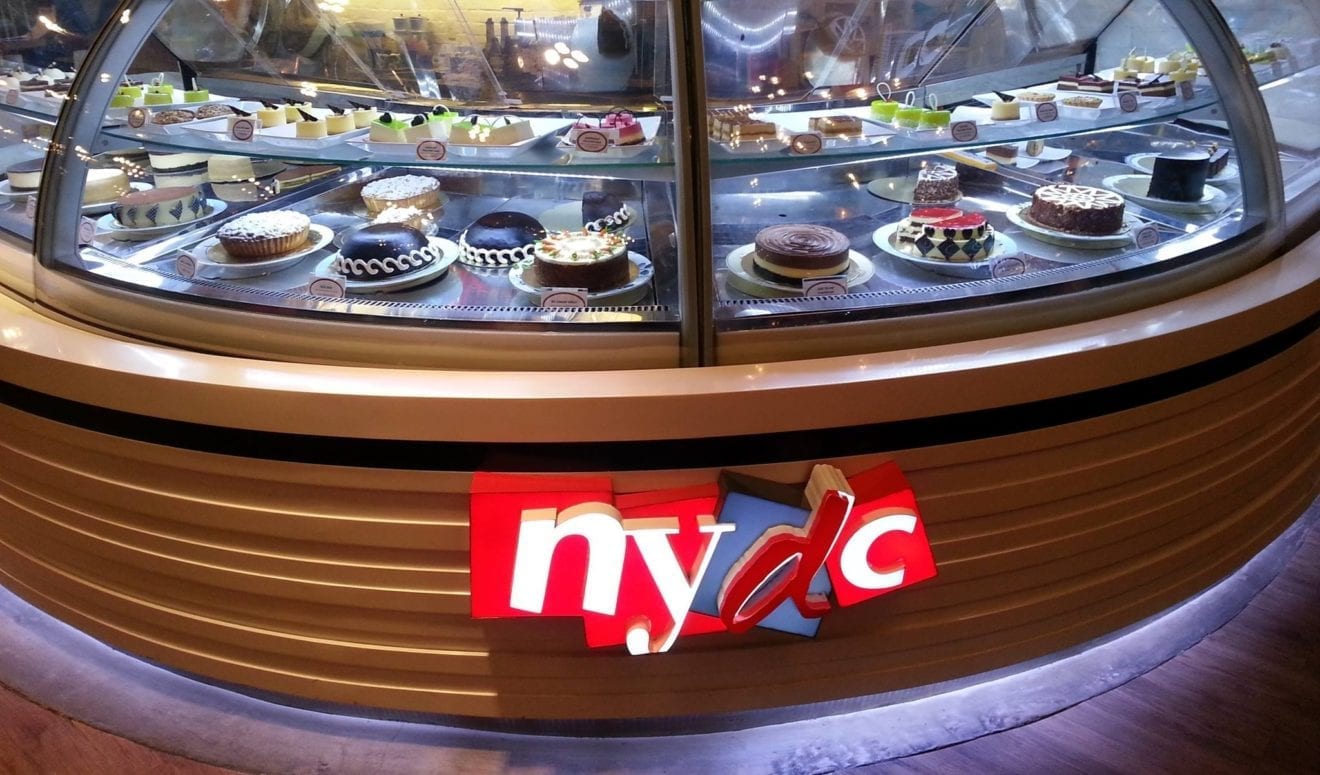
  • NYDC Vietnam closes last store

    NYDC Vietnam closes last store

    The last NYDC Vietnam dessert and cafe restaurant has closed its doors after months of struggling to stay viable.

    The chain sent its goodbyes to its customers via its Facebook page last Wednesday, promising to “return someday”.

    NYDC’s struggles first became apparent in May when it closed three stores in a row – Nguyen Trai, Cantavil, and Crescent stores in Ho Chi Minh City. It continued to operate its highest-profile store inside the Metropolitan Tower in the city’s CBD. However, after six months trying, finally they decided to close their last store.

    Two factors likely led to the demise of NYDC Vietnam: First, the increasing dominance of  local cafe chains such as The Coffee House, Phuc Long, Urban Station, Trung Nguyen, Kafe and Highlands, which offer affordable prices and comfortable spaces. The second is the more recent arrival of international chains, such as Starbucks. Before Starbucks arrived in Vietnam in 2012, NYDC’s main competitors were Gloria’s Jeans and Coffee Bean and Tea Leaf.

    Many foreign food chains have struggled to gain momentum in Vietnam market. Both Gloria’s Jeans and Coffee Bean and Tea Leaf had to close larger outlets about three years ago due to rising rentals. Burger King launched in 2012 with ambitious plans for about 60 stores within five years. It has recently closed several and as of February its network stood at just 16.

    Sean T Ngo, CEO of VF Franchise Consulting, said that even though Vietnam is one of the hottest franchising markets in Southeast Asia, the exit of NYDC from Vietnam clearly demonstrates the challenges that many foreign firms face when entering a developing market like Vietnam.

    “Clear differentiation and positioning from competitors and near perfect execution is required if any foreign brand is to do well in this market place.”

    Brought to Vietnam in 2009 by Singapore’s SUTL Group, NYDC used to be one of the most popular foreign cafe chains in HCMC. The first two outlets were opened in the center of the city, at Metropolitan tower and Now Zone shopping mall, followed by Vincom, Nguyen Trai, Cantavil, and Crescent mall stores. The original plan was to open 20 outlets in five years with more than US$300,000 investment reportedly required for each.

    Opposite to NYDC, SUTL has been successful with its investment in KFC, which now operates more than 140 stores across Vietnam.

  • Affinity buys Burger King Korea

    Affinity buys Burger King Korea

    Burger King Korea has been snapped up by private equity investors.

    Affinity Equity Partners has completed the buyout of the Korean business of the US fast food brand for 210 billion won (US$183.3 million), after agreeing to terms in February. The vendor was VIG Partners.

    Affinity is already planning to open new outlets as a first step in increasing sales.

    Meanwhile, Korean news media report rival fast food chain McDonald’s is seeking a strategic partner to run the local operation and speed up its network expansion.

    “We’re committed to Korea for the long-term and intend to combine our global brand with local insights and expertise,” said Steve Easterbrook, McDonald’s CEO and president.

    “This gives us the ability to enable faster decision-making, achieve restaurant growth and deliver a great restaurant experience for our customers in Korea.”

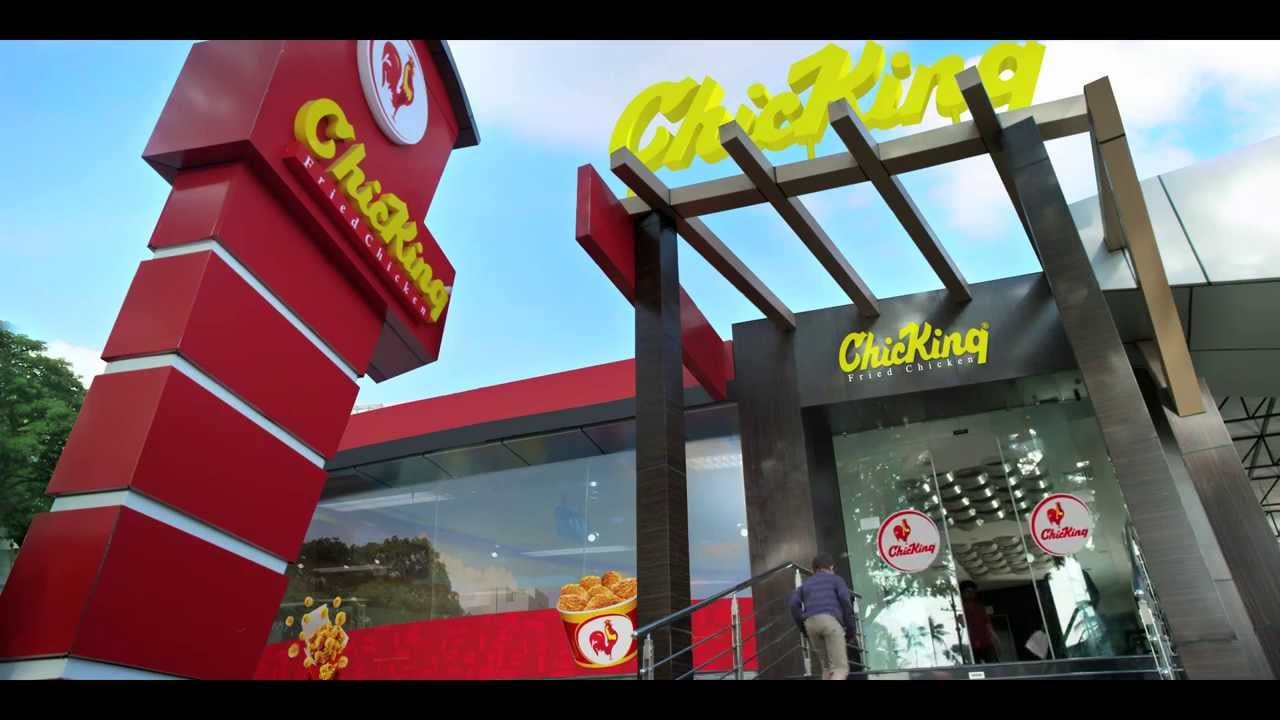
  • Chicking Indonesia launched

    Chicking Indonesia launched

    UAE-based halal fast-food chain franchisee Chicking Indonesia has signed a master franchise agreement to open 20 outlets, starting with Java and Sumatra.

    Competing with major international brands like Burger King, KFC and McDonald’s, Chicking serves fried chicken and related products.

    The master franchise agreement is between BFI Management (DMCC), the franchise management division of Chicking, and PT Ayam Top Dubai for the Indonesian market. Chicking founder and Al Bayan Group MD AP Mansoor says the company will be opening its first European outlet in London next month as part of an aggressive global expansion.

    “We currently have 100-plus outlets in nine countries, and the plan is to reach 500 by 2020,” says Mansoor, who founded the brand 16 years ago.

    “In the UAE we will be opening three more outlets within a couple of months to add to the 17 we already have. We are very confident about the expansion in Southeast Asia after entering Malaysia last year.”

    DMCC CEO Fariq Halim says the appointment of an Indonesian master franchise is a major milestone. Shops will be opened throughout Indonesia, with its growing Muslim population of 200 million people. The flagship outlet will open in Jakarta by the end of the year, and PT Ayam Top Dubai will aim to have 20 outlets within five years.

    PT Ayam Top Dubai was founded by Raymond Bambang Widjaja with Hengki Setiawan and Hermanto Simon, who collectively have more than 75 years’ experience in doing business in Indonesia and Australia.

    “Indonesia has the largest Muslim population in the world and is one of the key markets we have been monitoring,” says Widjaja, who has F&B business and master franchises for national and international brands in Indonesia and Australia.

    “The QSR industry in Indonesia is diverse and predominantly controlled by domestic brands. It is a competitive and challenging market, but we believe we have the right partners to make Chicking a leading brand in Indonesia.”

  • Burger King Vietnam ‘not shutting down’

    Burger King Vietnam ‘not shutting down’

    Burger King Vietnam has refuted media claims the company is planning to exit the Southeast Asian nation.

    The US fast food chain entered Vietnam in 2012, initially opening in Ho Chi Minh City’s Tan Son Nhat international airport, before progressively moving into suburban locations in the city.

    At the time the company projected it would open 60 stores within five years, but three-quarters of the way into that timeline, it still has just 16.

    The closure of three stores in recent months has fuelled speculation the brand may exit the market. But CEO Nguyen Gia Thanh told news website Dau Tu this week that was not the case.

    He said two stores in Ho Chi Minh City were closed to relocate in better sites with more affordable rents.

    The third store closed was in the capital, Hanoi.

    Thanh said Burger King will continue to expand in both cities and is not closing down in Vietnam.

    Vietnamese are not known as big consumers of burgers and Burger King arrived in the market with higher price points than established rivals Jollibee from the Philippines, Lotteria from Korea and fried chicken and burger chain KFC from the US.

    Rival Carl’s Jr has also struggled to make an impression in the market, largely targeting the expat market in districts of Ho Chi Minh where foreigners reside.