Tag: Business

  • BreadTalk buys out joint venture partner in Thailand

    BreadTalk buys out joint venture partner in Thailand

    Minor Group has sold its half share in BreadTalk Thailand to the bakery’s Singapore-listed owner. According to the Straits Times, BreadTalk paid US$5.15 million for the stake, which Minor Group is expected to use to expand its other food and beverage brands in the kingdom, including The Coffee Club.   The BreadTalk Thailand joint venture, called BTM Thailand, was set up in 2014.

    Minor Group’s other brands in Southeast Asia include ThaiExpress, Xin Wang Hong Kong Cafe, Swensens and the Pizza Restaurant Company.

  • Footasylum shares soar after JD Sports takes stake

    Footasylum shares soar after JD Sports takes stake

    Shares in Footasylum soared after British retailer JD Sports said it had acquired an 8.3 percent stake and could buy nearly 30 percent of its smaller rival. JD, which has used a number of corporate acquisitions to assemble its network of more than 2,400 stores over the past two decades, said that it “confirms it is not intending to make an offer for Footasylum” under merger regulations.

    But investors drove shares in the company, which is listed on the secondary market of the London Stock Exchange, rose 58.6 percent to 46 pence in the first hour of trading.

    Footasylum, started by JD Sports co-founder David Makin in 2005, was forced to cut prices at its 60 stores after a disappointing run up to Christmas which saw British consumers rein in spending.

    It now competes with JD Sports, Sports Direct and Asos among others, which are all feeling the impact of sluggish British consumer spending amid squeezed household incomes and uncertainty ahead of Britain’s impending exit from the European Union.

    Makin and fellow JD Sports founder John Wardle were bought out by the company’s current majority owners Pentland Group in 2005 and later resigned as directors.

    Footasylum said in January its full-year core earnings would come in at the lower end of analysts’ estimates.

    JD Sports shares were up about 1 percent at 454.03 pence.

  • VinFast to test its first car for safety in Europe next month

    VinFast to test its first car for safety in Europe next month

    VinFast, Vietnam’s first indigenous car manufacturer, plans to test its first vehicle for safety parameters in Europe on March 6. According to company executives, the vehicle will be tested for international standards to ensure its highest safety. This announcement came after VinFast’s Hai Phong factory successfully manufactured the first body shell of the Lux A2.0, a sedan, Wednesday.

    Shaun William Calvert, deputy general director in charge of production, said the first body shell meets the highest quality requirements.

    VinFast, the car manufacturing unit of Vietnam’s largest private conglomerate Vingroup, showed off its first two car models, a sedan and an SUV, at the Paris Motor Show in France last October just a year after the company’s incorporation, grabbing the attention of the local and international media.

    VinFast’s first cars are expected to hit the road in August 2019.

  • Smartwatch market set for a shakeup: Juniper Research

    Smartwatch market set for a shakeup: Juniper Research

    Big brands are set to lose share in a major shakeup of the smartwatch market. According to Juniper Research, the largest brands in the category now will see their market share fall by 2023 as new niche players gain ground. Four leading brands including Apple, Samsung, Fitbit, and Fossil will see sales decline from an estimated 58 per cent of the market last year to 47 per cent by 2023. The decline is due to the growth of smaller players such as Garmin, Huami and Huawei.

    Smaller players will thrive thanks to strategies tailored for niche markets, their choice of cases or price points, while other brands are releasing premium smartwatches combining the best of fitness, outdoor activity and health features. While Apple will remain the largest single vendor in terms of shipments over the next four years, Huawei will enjoy the fastest growth, at a CAGR of 20 per cent.

    An intensified focus on healthcare integration will also contribute to an increase in smartwatch shipments over the next few years. Juniper forecasts that Apple and Withings will lead this section, followed by Fitbit and Garmin.

    China to become the biggest market

    The rise of smaller players is linked to the rapid expansion of the Chinese market offering lower-priced smartwatches. The Far East and China have now overtaken North America as the largest geographical market, with more than 24 million smartwatches shipped last year, compared to 19.5 million in North America.

    The gap between these two markets will widen by 2023, with the Far East and China trebling its shipments by then.

    Slower hybrid market

    The adoption of hybrid smartwatches will be slower than expected. Last year, hybrid smartwatches represented about 22 per cent of all smartwatch sales. The slower growth is linked to smaller players focusing on digital smartwatches offering more possibilities in terms of apps, connectivity and sensors than hybrid watches, which remain limited in their functionality.

  • Heineken Malaysia 2018 net profit up 4.6%

    Heineken Malaysia 2018 net profit up 4.6%

    Heineken Malaysia Bhd, which posted a 4.6% jump in its net profit for the financial year ended Dec 31, 2018 (FY18), remains cautious about its outlook given the challenging environment due to intense competition, implementation of the sales & service tax (SST), and the continued presence of contraband beer in the market. In line with rising global commodity prices, the group also expects an increase in cost of operations including raw materials and packaging.

    Finance director Szilard Voros said how the group will perform in FY19 also depend on the market, adding that it will benefit if consumers remain optimistic and if efforts to curb illicit trade are stepped up.

    “But we remain cautious because SST was just introduced in September so that also comes with a lag… we also need to see how things settle down after Chinese New Year and see what is the normalised performance and if there’s a growth continuation,” he told reporters at a media and analyst briefing today after announcing the group’s financial results.

    Managing director Roland Bala (pix) said the external environment remains challenging. Amidst slowing global growth rates, currency volatility and uncertainty in the commodity markets, he said the group will need to adopt a cautious approach in cost management.

    “Moving forward, we will continue to invest in our core brands and leverage on our portfolio. As consumer taste profile changes, we will make bets on brands that we believe will have scale,” he added.

    Heineken’s net profit for the fourth quarter ended Dec 31, 2018 grew 6.8% to RM100 million compared with RM93.64 million in the same quarter last year due to higher revenue as well as efficient and effective management of commercial spend and overheads.

    Group revenue grew 12.3% to RM662.28 million as compared to RM589.96 million in the same quarter in 2017 mainly due to increase in sales volume driven by the flagship Tiger brand.

    For the full year period, net profit grew 4.6% to RM282.2 million from RM270.06 million a year ago, while revenue rose 8.3% to RM2.03 billion from RM1.87 billion.

    It has proposed a final dividend of 54 sen per share for the quarter under review, bringing the full-year dividend payout to 94 sen.

  • CU convenience stores parent records sales leap

    CU convenience stores parent records sales leap

    The operator of South Korea’s CU convenience stores, BGF Retail, has achieved KRW189.5 billion (US$168.9 million) in operating profit last year, a leap of more than 600 per cent over last year. The company said on Tuesday its sales had risen by 515.3 per cent to KRW5.77 trillion ($5.14 billion). The results confirmed market predictions of a major upswing for the firm following demerging into separate holding and operating entities in November 2017.

    However, despite the improved trading figures, net profit dropped 98.1 per cent to KRW47.2 billion ($42.06 million). A statement by the firm explained that profits from some business activities made after the demerger had been attributed to the previous year’s statements.

  • US opens doors to Vietnamese mango after years of attempt

    US opens doors to Vietnamese mango after years of attempt

    The US’s Animal and Plant Health Inspection Service has given the green light for the import of mangoes from Vietnam. The license comes exactly 10 years after Vietnam applied for it. To export fresh mangoes to the U.S., farmers and business will need to meet stringent standards. APHIS will inspect each shipment thoroughly before granting phytosanitary certificates.

    Mango is Vietnam’s sixth fresh fruit licensed to be imported into the U.S. after dragon fruit, rambutan, longan, lychee, and star apple fruit.

    Some 96 percent of Vietnam’s mango production is consumed domestically, with the rest exported currently to 40 countries either as fresh fruit or in processed form.

    The main market is China. The other important ones are Europe, South Korea, Japan, Australia, and New Zealand.

  • Life after Karl Lagerfeld

    Life after Karl Lagerfeld

    Chanel has named Virginie Viard, Karl Lagerfeld’s closest collaborator for more than 30 years, as its new creative director, the French fashion house said in a statement following the death of the legendary designer. The move muffled speculation over whether Chanel might seek out another big name to replace Lagerfeld, who was 85 years old. Potential successors often cited by industry observers over the years included Hedi Slimane, now ensconced at Celine, as well as Phoebe Philo, the designer he replaced there, and Alber Elbaz, formerly of Lanvin.

    Those designers would likely have sought to bring their own vision to one of the world’s biggest luxury brands, with $9.6 billion in sales in 2017. Instead, Chanel’s owners, the billionaire Wertheimer family, emphasised continuity in appointing Viard, who the brand said in a statement had been “entrusted by chief executive Alain Wertheimer with the creative work for the collections, so that the legacy of Gabrielle Chanel and Karl Lagerfeld can live on.” The decision is in character for the Wertheimers, who waited 12 years after Gabrielle Chanel died in 1971 before appointing Lagerfeld in 1983.

    Viard, who has been called “Karl’s secret weapon,” joined Chanel as an intern in haute-couture embroidery in 1987, four years after Lagerfeld became creative director of the brand. (She was recommended for the job by a chamberlain of Prince Rainier of Monaco.) After working together at Chanel, Viard joined Lagerfeld at Chloé in 1992 — where he was also the head designer — and worked there for five years before returning to Chanel and working her way up to become director of the company’s fashion design studio.

    “Virginie is the most important person, not only for me but also for the atelier, for everything,” Lagerfeld said in a Netflix documentary released in 2018. “She is my right arm and even if I don’t see her, we are on the phone all the time.”

    Still, Viard remained largely in the shadow of her larger-than-life boss. “I hate being in the spotlight,” she said last year.

    In recent seasons, she began taking a bow with Lagerfeld at the end of each Chanel show, including the Chanel Métiers d’Art show in New York in December 2018, which marked the designer’s final runway appearance. At the end of Chanel’s haute couture show in January 2019, Viard stepped out solo to take a bow, raising concerns about Lagerfeld’s health and prompting the brand to issue a press release.

    Other fashion houses have tapped studio heads who have demonstrated their ability to channel a departed designer’s vision after their deaths, most notably Sarah Burton, the late Alexander McQueen’s right-hand, who was named creative director of the London-based fashion house after McQueen’s suicide in 2010.

    LVMH-owned Italian house Fendi, where Lagerfeld was the artistic director of women’s ready-to-wear and couture collections, has yet to announce a succession plan, saying it intends to take its time to pay the designer the homage he deserves. Fendi is to present Lagerfeld’s last collection on Thursday in Milan.

  • Malaysia ranks second in SEA for Chinese tourist transactions during CNY

    Malaysia ranks second in SEA for Chinese tourist transactions during CNY

    Malaysia is the second largest market in Southeast Asia for Chinese tourists spending over the Chinese New Year holiday season, as recorded by Alipay, the digital payment and lifestyle platform offered by Ant Financial, an affiliate company of Alibaba Group. The transactions were recorded between Feb 4 and 10 this year. Malaysia saw a 16% increase in average per-capita spend by Chinese tourists this year, with a growth in transaction volume by 71% compared to 2018.

    What’s more, Chinese millennials can no longer claim to be the dominant user group spearheading spending while travelling, as 68% of Chinese tourists born between 1960 and 1979 were found to be the main driving force in outbound tourism and overseas consumption.

    Alipay head of business operation for cross-border business Janice Chen said this year’s findings highlight how mobile payment is taking root in China’s outbound tourism market, and it is excited to see the robust growth in the use of Alipay by overseas tourists from third-and-fourth tier cities and middle-aged vacationers.

    “While providing a better experience for Chinese travellers, Alipay is, at the same time, a huge drawcard for overseas merchants as a platform to help grow their business,” Chen said in a statement.

    This is in accordance to a recent report published by Nielsen and Alipay, called the 2018 Trends for Mobile Payment in Chinese Outbound Tourism.

    Chinese tourists are bringing their cashless lifestyles outside of China, paying for 32% of their overall travel transactions using mobile payment, overtaking their use of cash for the first time ever.

    The survey found that merchants offering Alipay as a payment option has experienced growth in both foot traffic (58%) and revenue (56%).

    Heinemann, a travel-retailer with a store in Kuala Lumpur International Airport 2 (KLIA2) has also reported an increase in sales. Its general manager for retail operations Alexander Maas said since implementing Alipay, it is now able to provide added convenience to its customers from China, and provide them with a familiar shopping experience, ultimately seeing over 20% of all its transactions completed on the Alipay app with Chinese tourists.

    With the increased popularity of Alipay among both young and old Chinese tourists, brick-and-mortar retailers across the region can continue to adopt Alipay as a payment option to further boost profitability moving forward.

  • Cashless-payments will be launched soon in Japan

    Cashless-payments will be launched soon in Japan

    More than 50 Japanese banks are joining Tokyo bank J-Coin to set up a cashless payment system developed by Mizuho Financial Group, to be launched late next month. The new service will initially be rolled out to existing account holders at regional banks. Mizuho Bank will initiate the service on March 1, with regional banks to follow after a period of around three weeks.
    Around half of Japan’s regional banks are participating in the scheme at a time when the Japanese government is advocating cashless payments in advance of the 2020 Tokyo Olympics and Paralympics.

    J-Coin payments will be processed via an app using a QR barcode, a phone number or a Line messenger personal ID number. Unlike the prepaid smart cards commonly used in Japan, J-Coin allows transactions between individuals without the need for dedicated scanning devices at point of sale.

    A number of major retailers, including East Japan Railway Co and FamilyMart, have already indicated interest in adopting the system.

    Observers have noted that partnerships with international cashless payment providers such as Alipay could see J-Coin become a preferred method of payment among visitors to Japan.

    The Japanese government, aiming to double digital payments to 40 per cent of all transactions by 2025, will offer rebates of 2 per cent of convenience-store cashless purchases and 5 per cent of cashless purchases at other small- or medium-sized stores for nine months after its consumption tax is raised from 8 per cent to 10 per cent in October this year.

  • CIMB Niaga posts 16.9% net profit growth in 2018

    CIMB Niaga posts 16.9% net profit growth in 2018

    CIMB Group Holdings Bhd’s 92.5%-owned T Bank CIMB Niaga Tbk reported an audited consolidated net profit of 3.5 trillion rupiah (RM1 billion) for the financial year ended Dec 1, 2018 a 16.9% growth compared with a year ago. The bank said the improved net profit came on the back of a 13.8% increase in on-interest income to 3.8 trillion rupiah and a 63 basis-point improvement in credit charges from 2.26% to 1.63% as provisions declined 25.7%.

    CIMB Niaga’s loan loss coverage remains comfortable at 105.86%.

    “We aim to maintain a targeted growth trajectory while keeping asset quality as a priority,” said CIMB Niaga president director Tigor M. Siahan.

    Total loans grew by 1.8% to 188.5 trillion rupiah mainly from growth in mortgages of 11.2% to 30 trillion rupiah, small- and medium enterprise loans of 8.5% to 29.6 trillion rupiah and credit card of 5.5% to 8.6 trillion rupiah.

    With total assets of 266.8 trillion rupiah as at Dec 31, 2018, CIMB Niaga maintained its position as Indonesia’s second largest private owned bank by assets.

    Its capital adequacy ratio stood at 19.66% as at end-December 2018, representing a 106 basis-point increase from the previous year.

    “Going forward, we will continue to focus on expanding our consumer and SME businesses, building our CASA (current account savings account) franchise and strengthening our Sharia business proposition and Sharia-compliant product offerings,” Tigor added.

  • L’Oréal, KÉRASTASE open their flagship store in Hong Kong

    L’Oréal, KÉRASTASE open their flagship store in Hong Kong

    Hong Kong’s stylish hotspot Fashion Walk proudly announces the arrival of SkinCeuticals and KÉRASTASE – two of L’Oréal Hong Kong’s leading beauty brands, introducing a unique all-in-one beauty ritual that tends to your retail, cosmetic and haircare needs. With SkinCeuticals’ global first one-stop skincare flagship store and KÉRASTASE’s haircare concept store, Fashion Walk launches the beauty hub – a cosmetics mecca that is set to transform fashionistas’ beauty experience.

    Ms. Bella Chhoa, Director of Leasing & Management of Hang Lung Properties, describes the addition of SkinCeuticals and KÉRASTASE as the birth of a “Beauty Revolution”.

    “It is a real pleasure to have SkinCeuticals and KÉRASTASE – the two top beauty brands of L’Oréal Hong Kong – join us in Fashion Walk. Causeway Bay is a magnet for trendsetters, yet we all know how scarce retail spaces are right here. At its prime location in the area, Fashion Walk is obviously the hub of international fashion labels. Last year, we extended our partnerships with a number of cosmetics brands. This year, we’ll keep up with the strategic effort. Our brand new beauty hub promises to bring an unprecedented beauty experience to all stylish minds in town.”

    Ms. Eva Yu, President & Managing Director of L’Oréal Hong Kong, also envisions a new chapter in the cosmetics industry prompted by SkinCeuticals’ one-stop skincare flagship store and KÉRASTASE’s haircare concept store at beauty hub.

    “L’Oréal Hong Kong endlessly looks for retail spaces of development potential. The two stores in Fashion Walk feature an exclusive studio for customers to try out every stroke, swipe and dab, which guarantees a one-of-a-kind experience. We’ll put down a remodeling budget of almost ten million dollars to ensure that our customers will revel in the brand new stores.”

    Located in the heart of Causeway Bay, Fashion Walk boasts an occupancy rate of over 95%, housing the flagship stores and concept stores of an impressive array of international chic labels, including the two beauty trailblazers.

    Founded in the USA, SkinCeuticals is guided by its unparalleled Integrated Skincare philosophy that aims to promote and improve skin health. Its first-ever flagship store in Fashion Walk also pledges to provide customers with a range of skin health restoration plans that combine the most trusted dermatological innovations and cosmetological aids.

    French hair and scalp care expert KÉRASTASE has earned its recognition in the field thanks to its commitment to hair care since its founding in 1964. Its concept store in Fashion Walk not only offers a wide selection of cutting-edge products, but also an original mode of retail with hair treatment services in a soothing environment. The professional guidance of KÉRASTASE haircare consultants and bespoke treatments will surely satisfy customers’ desire for exceptional hair.

  • China’s Fosun makes bid for Tom Tailor

    China’s Fosun makes bid for Tom Tailor

    Hong Kong-listed Chinese trading group Fosun has launched a Tom Tailor takeover bid. Fosun has long held a cornerstone stake in the German-listed fashion retailer, which has several thousand stores, franchises and shops-in-shops around the world, trading under its own name selling men’s and women’s fashion and under the womenswear label Bonita. Its core markets are Germany, Austria, Switzerland, Southeastern Europe and Russia.

    Fosun said in a stock exchange filing that the Tom Tailor takeover bid follows an increase in its shareholding which will take its stake above the 35 per cent level which triggers a mandatory takeover offer under German law.

    In a statement, Fosun said it would benefit from the target company’s long-term growth potential.

    “The company considers the transaction to be an attractive investment in its sector as it sees economic potential in Tom Tailor.”

    Founded in Hamburg in 1962, Tom Tailor has encountered challenges in recent years. Its share price has plunged 80 per cent since January last year.

    The company focuses on mid-priced casual wear for men, women and children, accessories, and home textiles.

    Fosun has been expanding its interests in Europe in recent times, acquiring Lanvin last year, along with Austrian luxury lingerie brand Wolford. It also has a stake in menswear label Caruso.

  • PepsiCo franchise rights to be acquired in South, West India

    PepsiCo franchise rights to be acquired in South, West India

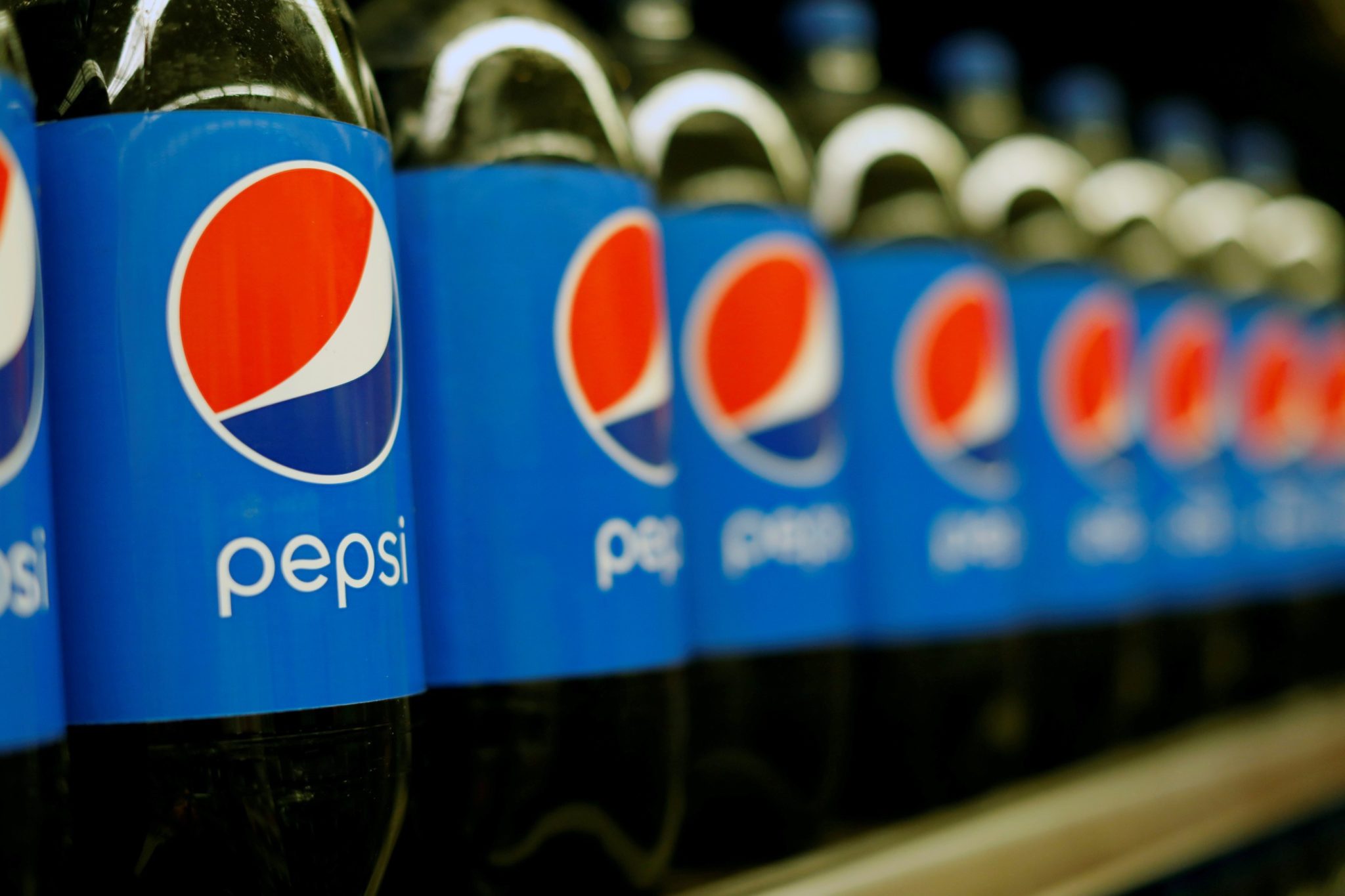
    PepsiCo India’s bottling partner Varun Beverages Monday said its board has approved plans to acquire franchise rights of the beverages and snacks major in South and West regions. The board has approved the company’s intent to enter into a binding agreement with PepsiCo India Holdings to acquire franchise rights in the two regions for a national bottling, sales and distribution footprint in seven states and five UTs, Varun Beverages Ltd (VBL) said in a regulatory filing.

    According to a report, upon completion of these acquisitions, VBL will be a franchise of PepsiCo beverages business across 27 states and seven Union Territories (UTs), it added.

    “The proposed acquisitions are in line with the company’s strategy to expand into contiguous territories and will help to acquire greater scale, operational productivity and efficiency leading to higher revenues and profitable growth,” it said.

    VBL, however, did not disclose financial details of the proposed acquisitions.

    The company further said its board will meet on February 26 to consider raising of capital through Qualified Institutions Placement (QIP).

    Last year in January, VBL had entered into a pact with PepsiCo to sell and distribute the latter’s entire Tropicana range of juices along with Gatorade and Quaker Value-Added Dairy in North and East India.

    VBL already held manufacturing, sales and distribution rights for Tropicana Slice and Tropicana Frutz in the two regions.

    PepsiCo had then stated that North and East regions together accounted for 80 percent of the juice market in India and VBL’s contiguous reach would help it more than double the distribution reach in these states.

  • Petronas Gas Q4 profit weighed down by Kimanis Power

    Petronas Gas Q4 profit weighed down by Kimanis Power

    Petronas Gas Bhd’s net profit fourth quarter ended Dec 31, 2018 fell 34.7% to RM317.90 million from RM486.70 million a year ago, largely attributed to share of losses from a joint venture company, Kimanis Power Sdn Bhd. The losses were due to de-recognition of deferred tax assets amounting to RM124.3 million (being 60% share of the group) in relation to certain tax benefits which now have a seven-year utilisation limit under the new Finance Act 2018.

    Its revenue grew 4.9% to RM1.39 billion compared with RM1.32 billion in the previous year’s corresponding quarter mainly contributed by the second liquiefied natural gas (LNG) regasification terminal in Pengerang, Johor which commenced commercial operations in November 2017, coupled with higher revenue from utilities and gas transportation segment.

    The group has approved a fourth interim dividend of 22 sen per share amounting to RM435.3 million in respect of the financial year ended Dec 31, 2018.

    For the full-year period, Petronas Gas’ net profit grew 0.98% to RM1.81 billion from RM1.79 billion a year ago, while revenue of RM5.5 billion was the highest in history, an increase of 12.3% compared to RM4.90 billion last year.

    The Energy Commission has approved the tariffs for the gas transportation and regasification services for 2019. While the tariffs are expected to affect the group’s transportation and regasification business segment revenues in 2019, both segments are anticipated to continue contributing positively to its earnings.

    The group’s gas processing segment is expected to deliver improved earnings pursuant to the higher fixed remuneration charge under the second term of the 20-year Gas Processing Agreement effective from 2019 until 2023.