Tag: Business

  • 7-Eleven Malaysia appoints Tsai Tzung-Han as director

    7-Eleven Malaysia appoints Tsai Tzung-Han as director

    Convenience store chain operator 7-Eleven Malaysia Holdings Bhd has appointed Tsai Tzung-Han (pix) as a non-independent and non-executive director, effective Jan 16, 2019. Tsai, 42, is currently the vice chairman of Cathay United Bank, a subsidiary of Cathay Financial Holdings which is listed in Taiwan. He also serves as a director on the board of Cathay Life Insurance, the largest life insurer in Taiwan and also a subsidiary of Cathay Financial Holdings.

    Tsai had previously served in various capacities at Cathay Life Insurance, including senior vice president in charge of alternative investments and executive vice president in charge of real estate acquisitions and development, human resources and strategic planning.

    He also ran the strategic planning department for Cathay Financial Holdings from 2010 until 2016 and oversaw the strategic investments into Bank Mayapada in Indonesia, Rizal Commercial Banking Corporation in Philippines and Conning Asset Management in the US.

    He joined Cathay United Bank in 2015 and served as the head of strategic planning until he became the vice chairman in 2016, where he continues to oversee the strategic planning, wealth management, digital banking, data analytics and overseas banking departments.

    Prior to returning to Taiwan, Tsai worked briefly in private equity at Goldman Sachs in New York and in venture capital at Pacific Venture Partners in San Francisco.

    From 2001 until 2003, he was a practicing attorney in the real estate department at Hale and Dorr LLP, currently known as Wilmer Hale, in Boston. Tsai has over 10 years’ experience in investment and business development in finance industry.

  • Indonesia to Regulate Ride-Hailing Rates Threatens Grab, Go-Jek Expansion

    Indonesia to Regulate Ride-Hailing Rates Threatens Grab, Go-Jek Expansion

    The government is preparing to launch regulations fixing the rates drivers and riders for ride-hailing services such as Grab and Go-Jek receive, two officials said this week, creating potential obstacles for the companies’ expansion. The regulations would meet drivers’ demands for more oversight and higher rates but there are concerns that the rising costs to the companies could stifle their development as they battle to dominate the ride-hailing market in Southeast Asia’s biggest economy.

    Singapore-based Grab and homegrown Go-Jek have been locked in price wars in Indonesia, part of a wider fight to bring banking, e-commerce, ride-hailing, food-delivery and other services to every corner of Southeast Asia.

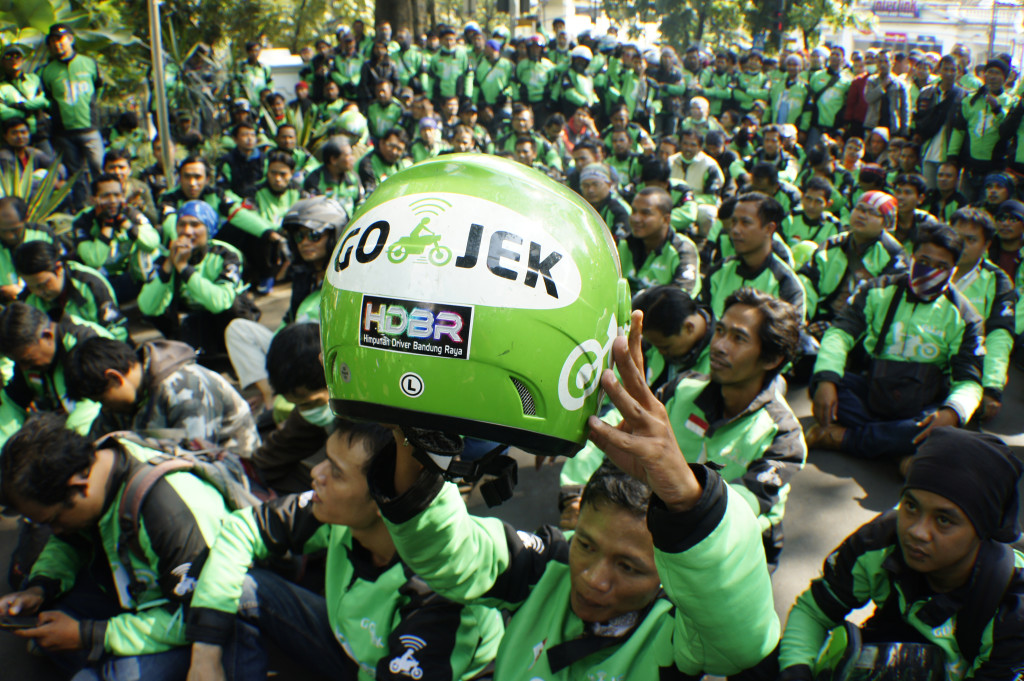
    However, since 2018, motorcycle taxi drivers working for Grab and Go-Jek in Jakarta have held protest rallies calling for higher fares and better conditions.

    The Ministry of Transportation plans to implement minimum and maximum tariffs for car and motorbike ride-hailing that will be “higher than Go-Jek and Grab’s current rates” and impose limits on promotional price cuts, said Budi Setyadi, director general of land transportation at the ministry.

    “This is for the safety and protection of drivers,” he said.

    Ahmad Yani, public transportation director at the ministry, said dependency on incentive-driven payments and low fixed rates per kilometer created a safety risk as it led to drivers overworking.

    He said Grab paid Rp 1,200 (8 US cents) per kilometer with a focus on bonuses, while Go-Jek’s rate was Rp 1,400 per kilometer.

    The officials said fixed fare ranges for motorbikes were still being finalized but would be implemented from March.

    Fixed rates for ride-hailing cars will start in June and be set at between Rp 3,500 and Rp 6,000 per kilometer on the islands of Java, Sumatra and Bali.

    The drivers were pushing for increases to a standard fare of Rp 3,000 to Rp 4,000 per kilometer.

    New Rules

    The firms said they welcomed the new rules, though they had not seen details of the motorbike regulations.”Grab believes the government will develop the best regulatory framework and hopes that all stakeholders will be included in the process,” said Tri Sukma Anreianno, the company’s head of public affairs .

    A Go-Jek spokesman said: “We support the government’s spirit to encourage our driver partners … and hope the regulation will have a positive impact on the sustainability of drivers’ income … and fair business competition.”

    However, both transportation officials said the companies are worried about the pending regulation since they have spent heavily on driver subsidies to slash their customer rates and build their businesses.

    “Grab and Go-Jek have told me they would prefer there was no regulation,” Ahmad said. “Due to the competition between them … they are scared what could happen if they don’t keep up with each other.”

    The Supreme Court blocked a previous attempt in 2017 by the transportation ministry to fix ride-hailing rates after drivers sued, saying the rules favored the taxi firms.

    Both ministry officials said the new regulations met anti-competition standards and followed extensive discussions with driver syndicates.

    Grab and Go-Jek drivers welcomed the prospect of standard fares.

    “I have been working for Grab since 2015. Before, I could earn Rp 300,000 to Rp 400,000 per day. Now, I can only get Rp 150,000,” said Hermansyah, a Grab motorcycle driver partner.

    Another driver, who had worked for both companies, said neither provided much protection, leading drivers to bear operational costs. He asked not to be identified since he had a role in organizing protests.

    The fixed rates will be a challenge to a business model that has depended on cheap passenger prices for growth and could undermine innovation.

    “Cheap fares has been the firms’ main way to attract customers,” said Yayat Suprityatna, urban and transportation observer at Trisakti University in Jakarta.

  • VinFast announces seven new car models

    VinFast announces seven new car models

    VinFast, Vietnam’s first fully-fledged car manufacturer, plans to launch seven new ‘premium’ models. Following the first line of Lux (short for Luxury) automobiles aimed at the high-end segment, VinFast, a unit of Vietnam’s largest private conglomerate, Vingroup, has announced it will launch a Pre (short for Premium) car line with the aim of tapping a larger customer base.

    The company has opened a polling page for customers to vote on the seven most popular models out of a potential 35.

    The seven Pre models will include a hatchback and a CUV (crossover SUV) for the A and B segments; one Sedan and CUV for the C segment; and 1 Sedan, 1 SUV and 1 family car for the D segment.

    VinFast will continue to work closely with the famous Italian studios, Ital Design, Torino Design, and Pininfarina on designing the new models.

    VinFast showed off its first two car models, a sedan and an SUV, at the Paris Motor Show in France last October just a year after its incorporation, grabbing the attention of the local and international media.

    VinFast’s first production models built under its own badge hit the streets in August 2019.

    According to the Vietnam Automobile Manufacturers’ Association, total car sales in the country topped 288,000 units in 2018, up 5.9 percent from around 272,000 units in 2017.

  • BMW Group Malaysia achieves another record year of sales

    BMW Group Malaysia achieves another record year of sales

    BMW Group Malaysia delivered a total of 14,338 units of BMW, MINI and BMW Motorrad vehicles last year, marking its eighth consecutive year of record sales. The total number of vehicles delivered last year was 13% higher than 12,681 units delivered in 2017. The group said in a statement that the strong performance in Malaysia reflects the group’s business performance worldwide last year, where a total of 2.65 million BMW, MINI and BMW Motorrad vehicles were delivered.

    Globally, the BMW brand delivered a total of 2.12 million (+1.8%) vehicles, while MINI saw 361,531 new owners. BMW Motorrad also achieved record deliveries with 165,566 new owners, an increase of 0.9% compared to 2017.

    “In 2018, BMW Group Malaysia achieved numerous milestones which contributed to the success we celebrate today. Over the course of the year, we introduced 12 new models across the BMW and MINI brands – of which four were electrified vehicles. We also unveiled two new concept vehicles for the first time ever not only in Malaysia, but in Southeast Asia,” said BMW Group Malaysia managing director Harald Hoelzl.

    Hoelzl said the group also grew its infrastructure for electromobility in Malaysia by introducing new BMW i Charging Facilities in four different states to facilitate its vision for future mobility in Malaysia.

    In 2018, the BMW brand saw 12,008 new owners in Malaysia, 13% higher than 10,618 new owners in 2017 while MINI recorded a double-digit growth of over 18%, delivering 1,200 vehicles last year compared with 1,011 units previously.

    BMW Motorrad saw 1,130 new owners in 2018, which recorded a growth of over 7% compared to 1,052 in 2017.

    BMW Group Malaysia also recorded its best performance for its electrified vehicles in 2018. Of the total cars delivered, 57% comprised of electrified BMW and MINI (7,532).

    Meanwhile, BMW Group Financial Services Malaysia achieved a strong business portfolio with over 6,100 contracts signed in 2018. It successfully financed every four out of 10 BMW and MINI vehicles delivered last year as well as every six out of 10 BMW Motorrad vehicles last year.

    “2019 will be another exciting year for the BMW Group in Malaysia with a strong portfolio of products to be introduced here, mirroring the biggest model offensive for the company worldwide,” said Hoelzl.

  • Indonesia to put tax on e-commerce transaction

    Indonesia to put tax on e-commerce transaction

    The Ministry of Finance said on Monday that it will impose new rules requiring e-commerce sellers to share data with the authorities, while also stressing that they must pay taxes. Surging smartphone use and a rising middle-class income in Indonesia, home to 260 million people, has made its e-commerce industry a battleground for foreign investors.

    Global consultancy McKinsey projects spending in the Indonesian e-commerce market to rise to as much as $65 billion by 2022, from $8 billion last year, similar to the growth trajectory experienced in China between 2010 and 2015, and the government is trying to squeeze more from a market that traditional retailers have alleged avoids taxes.

    From April, all operators of online marketplaces will have to detail each seller’s turnover and report this to the authorities, the ministry’s tax spokesman Hestu Yoga Saksama said.

    The rules would apply to all online marketplace operators in Southeast Asia’s largest economy, including Lazada and Tokopedia, which are both backed by Chinese e-commerce giant Alibaba, and Bukalapak, which counts China’s Ant Financial among its investors.

    The Directorate General of Taxes said an online seller that makes at least Rp 4.8 billion ($340,000) in turnover must charge value-added tax to customers and pay this to the authorities.

    A seller must also pay income tax of 0.5 percent of turnover if it is a small or medium business, or a 25 percent corporate tax of profit if it is big enterprise, bringing the sector in line with requirements for conventional retailers.

    There were no new taxes being applied, but the rules were put in place to clarify what taxes each player in a marketplace is obliged to pay and to “create an equal treatment with conventional businesses,” the tax office said.

    The Indonesian E-Commerce Association (idEA) criticized the new rules, saying online sellers would instead choose to sell their products through social media, CNBC Indonesia reported.

    Tokopedia and Bukalapak both said they are still studying the possible impacts caused by the rules.

  • Trade war could drag Malaysia’s GDP down to 3.2% this year

    Trade war could drag Malaysia’s GDP down to 3.2% this year

    A full-blown trade war could drag Malaysia’s gross domestic product (GDP) growth to 3.2% this year, from an earlier projection of 4.7%, according to Affin Hwang Investment Bank Bhd head of research and chief economist Alan Tan. Tan said if the trade spat between the US and China were to escalate to a situation where tariffs are fully implemented on all Chinese goods, Malaysia’s GDP growth could be hit closer to 1.5 percentage point.

    “If Malaysia’s GDP is at 5%, the 1.5% will push the GDP growth down to 3.5%,” he told reporters at the press conference in conjunction with the bank’s launch ceremony of its Securities Borrowing and Lending (SBL) facility for retail investors yesterday.

    “Malaysia is an open economy and is still relying on trade. As we know, China today is the major market for Malaysia and if the global trade war were to escalate, we think that the Chinese economy, which has already shown signs of slowing down, may slow even further.

    “Therefore, we are of the view that Malaysia’s exports to China will be slowing down towards the second half of 2019 assuming if the trade war continues to drag on,” he added.

    However, Tan said domestic demand will continue to support the economic growth this year driven by several measures introduced by the government in Budget 2019, supporting the bank’s forecast on the GDP growth at the region of 4.7% this year.

    Additionally, he said that the bank opined that this time around, both US and China will be more willing to negotiate and possibly come out with a trade compromise by end of the first quarter this year, in view of the external uncertainties and weaker business sentiment.

    “Going into 2019, we already seeing signs of slowing down in the US and China. Unlike six months ago, where both economies continue to do relatively well,” he noted.

    Therefore, he said the bank believes that in the second half of 2019, following the resolutions of the global trade war, coupled with the weakening US dollar, interest will come back to the emerging market, including Malaysia.

    However, Tan said the bank expects that the market will remain flat in the first half of 2019 and looking at end-2019 target for the FBM KLCI at 1,810 points.

    On ringgit, he said the local currency is expected to appreciate to RM3.90-RM4.00 level in the second half of 2019, and possibly ending the year at RM3.90 against the US dollar, as the greenback is likely to soften towards the second half of the year.

  • Vietnam wants to excel in IT, telecom

    Vietnam wants to excel in IT, telecom

    Vietnam, which is in a lowly 108th place in the International Telecommunication Union’s ICT Development Index, wants to improve its status. Speaking at a Ministry of Information and Communications (MoIC) conference Tuesday, Prime Minister Nguyen Xuan Phuc emphasized the need for the country to improve its ranking in ICT, one of country’s strengths alongside agriculture and service.

    MoIC Minister Nguyen Manh Hung said the country must use the International Telecommunication Union’s rankings as a guideline and strive to improve to no lower than 50th latest by 2022.

    He stressed that to take the lead in the digital revolution, the country needs to popularize smartphones by licensing 4G and testing 5G technologies to increase capacity, data usage per user and the quality of the mobile network.

    “Vietnam must be on the same line with the world in new technologies. We will not be eight and 10 years behind like we were with 3G and 4G.”

    According to the minister, Vietnam’s development in telecommunications must remain sustainable by shifting resources to explore new markets once the phone market saturates instead of continuing to compete unhealthily on old markets.

    “Mobile money,” which the ministry is trialing now, allows users to transfer money and make purchases through their telecom accounts, and would help bring e-payment to everyone in the country and stimulate economic growth, he said.

    Digital transformation, e-governance and smart cities would be the big stories of 2019, he said.

    “National digital transformation, digital economy and digital society would be the overarching story for decades to come. We need to develop strategies and projects in 2019 to clarify what must be done for each field in the digital economy and the Fourth Industrial Revolution.”

    Speaking about cyber security and safety, he said the Internet, on which the country’s prosperity depends, is itself an unsafe environment.

    “In 2019 there will be no incidents of government agencies’ websites being hacked and having information stolen. Vietnam must become ASEAN’s center for cybersecurity.”

    Vietnam has an opportunity to become one of the world’s major manufacturers of electronic and telecom equipment, he said.

    Globally there are only four major telecom infrastructure and equipment manufacturers — Ericsson, Nokia, Huawei and ZTE – and while China’s Huawei and ZTE enjoy a market share of 60 percent, they are encountering difficulties with the U.S., he pointed out.

    “Vietnam is currently capable of manufacturing 70 percent of telecom equipment [used globally]. With effort, we could become the fourth nation in the world capable of manufacturing and exporting all types of telecom equipment. This must be achieved by 2019-2020.”

    “Vietnamese network operators must use Vietnamese-made equipment if the price and quality are similar.”

    The ministry has set a target of  20-30 percent of operators’ revenues coming from digital content this year instead of the current 6-8 percent, saying the digital content industry is capable of expanding by three or four times to achieve revenues of $3-4 billion.

    “The key to the digital content industry’s growth is that policies must promote it,” said the minister.

  • Strawberrynet celebrate its 20th anniversary

    Strawberrynet celebrate its 20th anniversary

    Hong Kong online beauty pioneer Strawberrynet is celebrating its 20th anniversary. Since its launch in 1998, the e-commerce retailer has expanded to sell to more than 200 markets in 38 languages, with 24-seven pick and pack and customer services. The strawberrynet.com site carries more than 800 established international brands from Europe, the US, Japan and Korea, offering more than 30,000 items across a wide range of categories.

    Its 20-year business span makes it one of the longest-running e-commerce firms globally, launching in the same era as Amazon, eBay and PayPal. The site enjoys top rankings for a beauty-focused international platform on Alexa, ComCore and Internet Retailer.

    Strawberrynet began accumulating big data-style tracking since the early days of the science, making it an early adopter in using AI to understand not only its shopper behaviour, but also product trends for every category and region it traded in, allowing it to optimise and personalise offers for a better user experience.

    According to a statement put out by the firm, “Strawberrynet’s partnership with the world’s major platforms gives more shoppers around the globe access to products that are authentic, and offers that range from classic to chic and newly launched items”.

  • Bossini losses set to double

    Bossini losses set to double

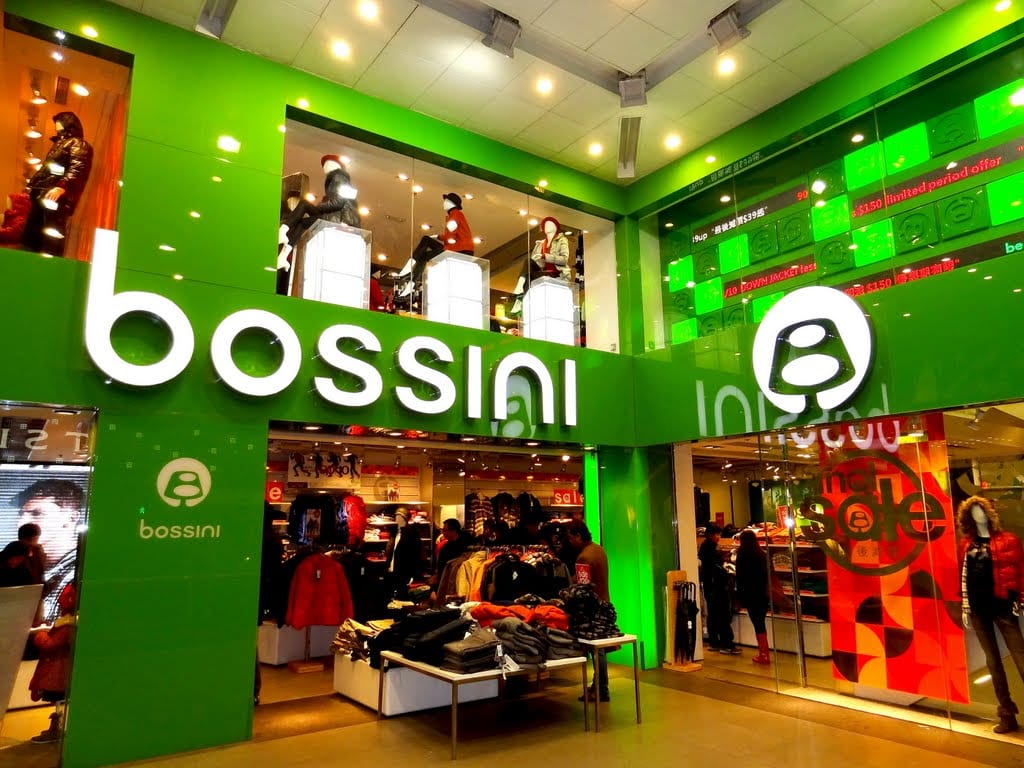
    Bossini International has warned the group is expected to record a loss attributable to owners of between HK$23 million and $28 million (US$2.93 million to $3.6 million) for the six months to December – roughly double the loss of the same period last year. Chairman Bess Tsin said in a stock exchange filing that the loss was largely due to “unseasonal warm winter weather and weak consumer sentiment in several core markets” where the group operates.

    The company said the estimate was based on a preliminary assessment of the company’s accounts for the period and details would be confirmed in late February, when the company announces its annual results.

  • Amazon offers Vietnamese products route to global market

    Amazon offers Vietnamese products route to global market

    Amazon is collaborating with Vietnam’s trade ministry to sell the country’s products on its system globally. Vu Ba Phu, director of the Ministry of Industry and Trade’s Trade Promotion Agency, said while announcing news of the collaboration that the U.S. e-commerce company would help especially small and medium-sized enterprises (SMEs) develop their brands on its website.

    It would also train Vietnamese firms in e-commerce and selling on its system, he said. Vietnamese businesses would be able to reach over 300 million users of the world’s largest online retailer by participating in Amazon Global Selling, he added.

    Bernard Tay, Amazon’s regional director for Southeast Asia, said Vietnam is among the top countries in the region in terms of capability to export via Amazon.

    It has strengths in household products, textile, footwear, and handicrafts, items that sell well on Amazon, he said.

    Vietnamese firms need to make products adopted to global trends and improve their English and branding skills, Tay added.

    Phu said Vietnamese SMEs would have to meet the high standards in many markets.

    “Big markets like the E.U., U.S. and Japan all have strict regulations on product quality and origin, and Vietnamese exports will have to comply with them.”

    Last year Amazon had organized a number of training programs for Vietnamese SMEs on how to sell on its system.

    Chinese e-commerce behemoth Alibaba is also interested in Vietnamese sellers. It started looking for sellers on its AliExpress website last July, saying it wanted to enable them to reach over 200 markets around the world.

    Vietnam’s e-commerce market grew by 25 percent in 2017, according to the Vietnam E-commerce Association (VECOM), which expects this rate to continue until 2020.

  • Hanoi, HCMC hotel rooms getting expensive

    Hanoi, HCMC hotel rooms getting expensive

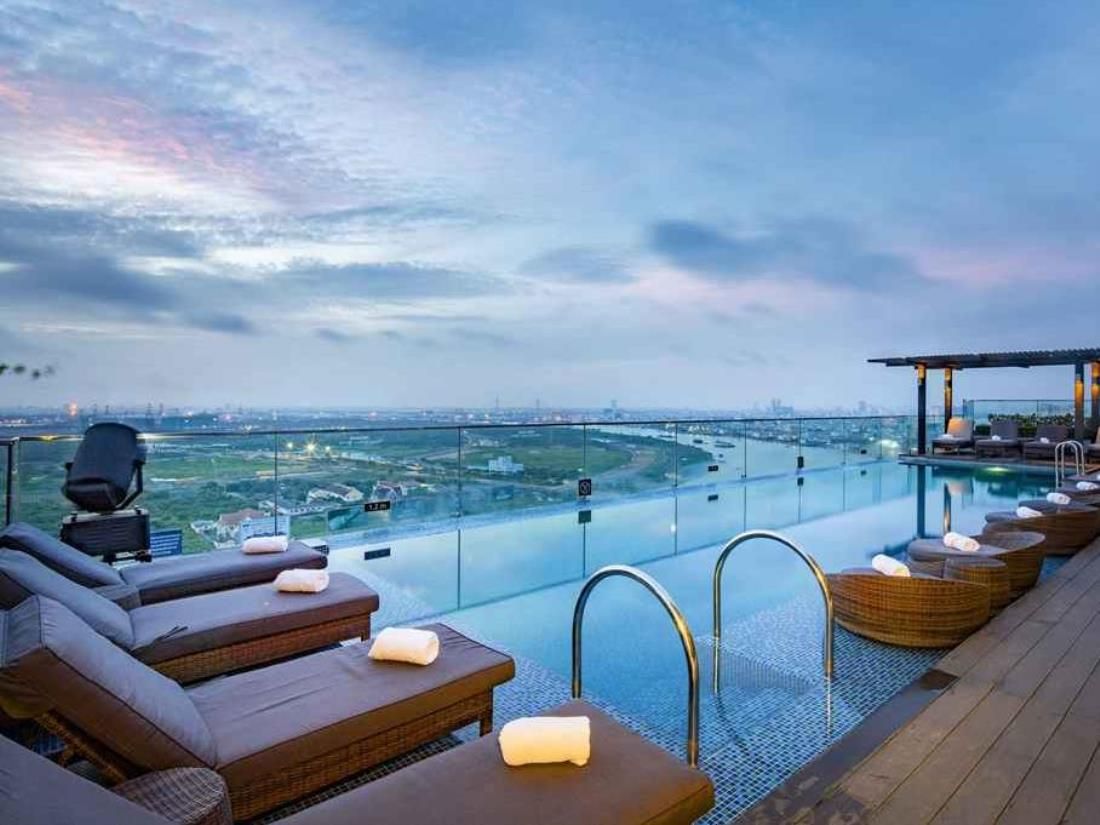
    Hotel room rates in Hanoi and HCMC, at around $110 a night, are the second most expensive in Southeast Asia behind only Singapore. Real estate services firm CBRE Vietnam said at a recent conference that the performance of the four- and five-star hotel segments was very strong in 2018 due to limited supply but constantly increasing demand.

    By the end of the year the average rent in this segment reached $112.6 in Hanoi and $114.1 in HCMC. High-end rooms in Hanoi number 7,770, of which two thirds are in the five-star category, and their average occupancy rate last year was 78.4 percent.

    Most of them are concentrated in the downtown area and Ba Dinh, a central district where most government offices and embassies are located.

    CBRE said in recent years sharing economy models like AirBnB have been trending, with AirBnB supply in Hanoi and Ho Chi Minh City topping 24,000 units compared to 17,500 four- to five-star hotel rooms.

    “However, despite the rapid growth of this model, room-sharing has not a clear impact on business in the four-five-star segment.”

    As of 2017 there were 118 five-star hotels/resorts in Vietnam, almost twice the number in 2013.

    They had an occupancy rate of over 75 percent, 5 percentage points up from 2016, according to global consulting firm Grant Thornton.

    Vietnam National Administration of Tourism (VNAT) statistics show an upsurge in the number of foreign visitors to Vietnam in the last few years. Last year 15.5 million came to the country, a 20 percent rise from 2017.

  • CIMB Thai’s FY18 net profit drops on higher tax expenses

    CIMB Thai’s FY18 net profit drops on higher tax expenses

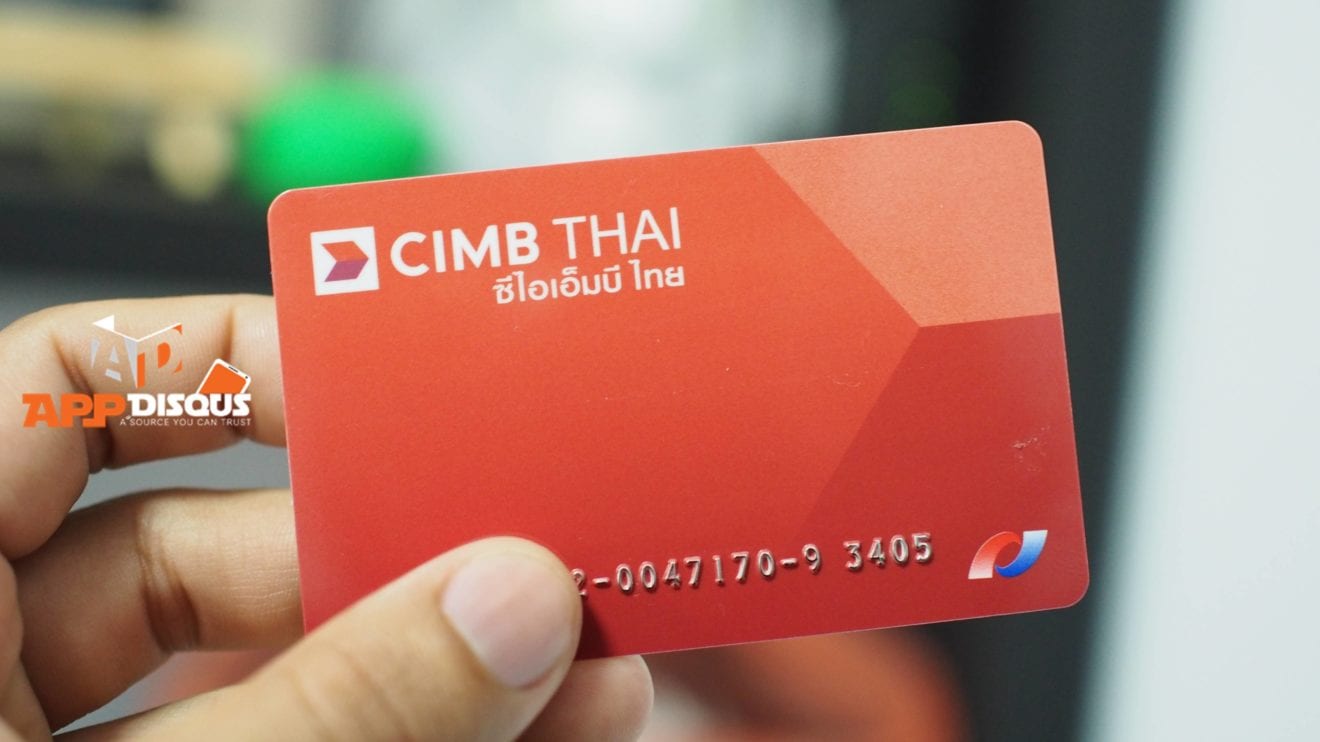
    CIMB Thai Bank PCL’s unaudited con-solidated net profit for the year ended Dec 31, 2018 (FY18) fell 98.2% year on year to 6.9 million baht (RM883,732), dragged down mainly by higher income tax expenses. Profit before tax decreased 44.5% to 271.2 million baht year on year, mainly due to a 9.6% increase in operating expenses and lower net fee and service income and other income of 7.0% and 2.6% respectively. This was offset by a 5.3% growth in net interest income and a 2.6% decline in provisions.

    President and CEO Kittiphun Anutarasoti said CIMB Thai group’s consolidated operating income, on a year-on-year basis, increased 2.9% from 2017 to 13.54 billion baht from higher net interest income of 5.3% on the back of loan expansion and higher interest income on investments.

    Net interest margin over earning assets stood at 3.71% in 2018, compared with 3.89% in 2017 as a result of lower yield on earning asset.

    As at Dec 31, 2018, CIMB Thai’s total gross loans stood at 227.8 billion baht, making an increase of 6.9% from Dec 31, 2017.

    Deposits stood at 234.3 billion baht, an increase of 6.5% from at the end of December 2017. CIMB Thai said the modified loan-to-deposit ratio was higher at 97.2% against 96.8% as at Dec 31, 2017.

    The gross non-performing loan (NPL) stood at 9.9 billion baht, with a lower gross NPL ratio of 4.3% compared with 4.8% as at Dec 31, 2017. The lower NPL ratio was due to more efficient risk management policies, improved asset quality management and loan collection processes as well as the sale of some NPLs in 2018.

  • Thailand franchise market predicted to grow

    Thailand franchise market predicted to grow

    Thailand franchise consultancy Gnosis Co expects a healthy market for franchises in the country. Gnosis MD Sethaphong Phadungpisuth said more than 50 chains from both local and international brands are exploring the market this year following measures to ease regulations on the part of the Business Development Department.

    “The Thailand franchise market will become more active this year. We expect the overall number of new franchise brands both from abroad and the domestic market that will open their franchise in Thailand this year to increase by 10 per cent to about 630 brands”, he said.

    According to Gnosis, some brands have chosen Thailand as a springboard to other Asean countries, in particular Myanmar and Laos.

    Among those diverse brands set to start operations in Thailand this year include Taco Bell, The Edge Learning Centre, and Singaporean hygiene and disinfection products firm Sureclean. Additionally the number of Taiwanese milk tea chains continues to increase in the territory.

    Franchise business in Thailand is estimated to be valued at THB250-300 billion (US$7.84 billion).

  • Shiseido opens new office hub in Singapore

    Shiseido opens new office hub in Singapore

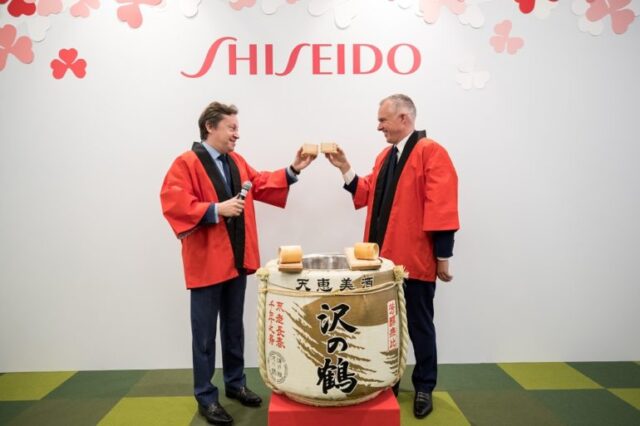
    Shiseido announced the opening of its new office in Singapore, located in the heart of Singapore’s Central Business District. The move is part of Shiseido’s VISION 2020 corporate transformation, as the company focuses on accelerating growth in the second phase of its medium-to-long term strategy. The new office hub will house the regional headquarters of Shiseido Asia Pacific, the global headquarters for Shiseido Travel Retail and the affiliate office of Shiseido Singapore.

    As centres of value creation, this structure facilitates flexible and agile decision making; enabling Shiseido to achieve significant growth through marketing activities attuned to the needs of regional consumers and global travellers.

    As we continue to build for the future, Shiseido is committed to an increased investment in our brands, talent development, beauty innovation and business activities that will positively and sustainably impact society.

    The new office will house three new dedicated facilities:

    • Asia Learning Centre, a first-of-its-kind dedicated training facility that will train approximately 2,000 Shiseido employees from Asia Pacific, Travel Retail, Japan & China each year. Its programmes aim to develop leadership, function-specific and innovation skills and behaviours that are critical in supporting growth and bringing out the best from employees for Shiseido’s continued success.

    • Asia Pacific Innovation Centre, which will enable open-source innovation, Asia Pacific consumer research, as well as create and localize a portfolio of highly specialised products for the Asian market and climate.

    • Life Quality Beauty Centre: As we strive for a society that promotes greater happiness and positivity for everyone, this is a unique facility that provides private, specialized make-up consultations to consumers with significant skin concerns such as port-wine stains, nevus, scars, vitiligo and changes in appearance due to the side effects of medical treatment. Shiseido has helped consumers with serious skin concerns since 1956, when many in Japan suffered from serious skin burns post-war, by developing a foundation called Shiseido Spots Cover.

    Shiseido Asia Pacific and the global headquarters of Travel Retail first established their presence in Singapore in 2016 & 2015 respectively; with the employee base almost doubling to over 250 employees, with nationalities spread across 17 countries.

    The strategic location of the Singapore office puts Shiseido closer to key markets in Asia, enabling the company to leverage the region’s robust potential with its rising middle-class population. Growth in the premium beauty segment in Asia Pacific is forecasted increase by USD$4.4 billion from 2016-2021, while the mass beauty segment is expected to achieve more than triple this amount[1].

    Asia Pacific also represents a key region and engine of growth for the global Travel Retail Channel. Current forecasts estimate that its beauty segment represents a potential market size of USD$26 billion by 2021[2]; the proximity of Shiseido Travel Retail aims to empower and guide the team alongside this growth.

    “Our new regional headquarters is testament to our solid growth in Asia Pacific over the past few years and my commitment to our consumers and employees in the years to come – I am looking forward to our expanded capabilities in leadership & talent development, innovation and harnessing deeper Asian consumer insights. These will play a critical role in accelerating our growth across the region,” said Jean-Philippe Charrier, President & CEO, Shiseido Asia Pacific.

    “As we continue our trajectory towards achieving our Vision 2020 goals, this new modern office for Shiseido Travel Retail aims to be a place of innovation, creativity and collaboration for our global & Asia teams. We hope that this office will be a place to inspire our team and partners in new ways of thinking, continuing our journey in finding new and fresh methods of engaging our hyper connected travelers and pioneering new forms of retail entertainment,” comments Philippe Lesné, President & CEO, Shiseido Travel Retail.

  • Vietnam’s top five brands increase value by $2.3 billion

    Vietnam’s top five brands increase value by $2.3 billion

    Vietnam’s five most valuable brands were worth a combined $8.1 billion in 2018, up $2.3 billion or 39 percent against 2017, Brand Finance estimated. The most valuable brand was military-owned mobile network Viettel at $2.8 billion last year, up 9 percent from $2.57 billion 2017, said the UK brand valuation company. The 47th most valuable telecom brand in the world has operations in Laos, Cambodia, Haiti, Mozambique and Peru.

    In second place was Vinamilk, the country’s largest dairy company by far, which was worth $1.9 billion, up 39 percent. State-owned Vietnam Posts and Telecommunications Group (VNPT) was in third place after increasing its brand value by 84 percent to $1.34 billion.

    In fourth and fifth places were Vinhomes, the real estate subsidiary of Vietnam’s largest private conglomerate Vingroup, and Sabeco, Vietnam’s biggest brewer, at $1.18 billion and $950 million respectively.

    Samir Dixit, CEO, Asia-Pacific of Brand Finance, said: “Branding is the most critical asset of every business. It is difficult to predict the performance and behavior of customers, but the only thing that remains a constant is the brand.”

    Brand Finance’s valuation criteria uses several metrics. The value accorded to each brand is a summary of its financial strength. Each brand also gets a brand rating, which indicates its strength, risk and future potential relative to its competitors.