Tag: Business

  • Zuji Hong Kong goes bancrupt

    Zuji Hong Kong goes bancrupt

    Hong Kong-headquartered online travel agent Zuji collapsed on Friday owing HK$250,000 (US$32,000) to customers awaiting refunds. The firm – which was one of the first online travel agencies in Asia Pacific– failed to have its IATA agency licence renewed due to overdue payments to airlines for tickets sold to travellers.

    “Zuji is no longer a licensed travel agent and cannot continue to operate travel agent business in Hong Kong, but the company has the responsibility to properly handle all booked travel services,” said a spokesperson from Hong Kong’s Commerce and Economic Development Bureau.

    Zuji closed its business in Singapore in late November and shut down its website. But the company has said it will continue operations in Hong Kong. It has announced “technical difficulties” in refunding customers for the time being.

    The company has not explained how it will be able to continue operations without an IATA licence.

  • How Richemont is plotting Yoox Net-a-Porter’s expansion with Alibaba

    How Richemont is plotting Yoox Net-a-Porter’s expansion with Alibaba

    While 2018 saw several luxury conglomerates consolidating their empires through brand acquisitions, others like Yoox Net-a-Porter looked to strategic partnerships. With the new Richemont and Alibaba deal, the company is now able to better bring its retail offerings to the world’s largest luxury audience: China.

    As Richemont’s takeover of e-commerce giant Yoox Net-a-Porter has come to a completion, the Swiss-based luxury group is mapping out its growth ambitions for the platform and working towards solidifying its leadership position in the online space.

    Among Richemont’s top priorities: Tapping into the China opportunity.

    Yoox Net-a-Porter’s presence in the region has been limited to date, as the company lacks the logistical tools to service the market. But as Richemont is looking to scale YNAP post-takeover, China – which is expected to account for half of the global luxury market share by 2025 – can no longer be ignored and provides a viable avenue to achieve the kind of growth the group is looking for.

    Richemont Partnership

    That’s why Richemont formed a strategic partnership with Alibaba earlier this year, that will enable the company to bring all of Yoox Net-a-Porter’s retail offerings to Chinese consumers.

    As part of the joint venture, Alibaba will provide the technology infrastructure, marketing support and payment logistics to power the launch of two new apps, for Net-a-Porter and Mr. Porter.  In addition, both Net-a-Porter and Mr. Porter will open online stores within Alibaba’s Tmall Luxury Pavilion.

    The venture is focusing on YNAP’s on-season, premium luxury sites for the moment. But the company added that in the future Yoox and the Outnet, which sell off-season, discounted stock, and Watchfinder which sells second-hand watches online, will also be able to benefit from the tie-in.

    Johann Rupert, Richemont’s chairman, said that the venture recognizes the growing importance of Chinese consumers both at home and abroad, and readies the company to build up its China business, which is currently still “in its infancy.”

    “We believe that partnering with Alibaba will enable us to become a significant and sustainable online player in this market,” said Rupert, adding that the investment costs of the deal were relatively small and that the company sees clear potential in the tie-in, despite the stagnation in consumer growth in China and the brewing trade war with the U.S. “We would not have done this deal if we could not see potential in the medium and long-term future. Everybody is excited about China and Chinese travellers, and we thought this was the best way to go. We don’t have the tools for China, but Alibaba is a vast ecosystem and marketplace.”

    “Plug and Play” Approach

    The deal has received positive feedback from retail analysts too, who see potential in the strategic marrying of YNAP’s strong brand relationships and curated approach, with Alibaba’s e-commerce leadership in the region, as well as its logistical, technological and marketing capabilities.

    “It’s a sensible move with an obvious appeal, of tapping into Alibaba’s pool of 600 million potential customers,” said Paul Thomas, retail consultant at the U.K.-based firm Retail Remedy, adding that Alibaba’s anti-counterfeiting efforts across all platforms are also more closely aligned with YNAP’s values than other Chinese e-commerce players.

    According to Thomas, partnering with a local player and adopting a “plug and play” approach into China’s bigger digital ecosystem is the best way to go, even for established e-commerce companies.

    “This deal should accelerate YNAP’s top line development in Asia, which only accounted for the group’s sales in 2017,” added Royal Bank of Scotland retail analyst Rogerio Fujimori, explaining that the company is more likely to see sales growth in the long term, given the increasing competition in the e-commerce space.

    The E-commerce Market in China

    Other players like Farfetch, have also been making waves in China.

    The online marketplace – which was valued at $5.8 billion following its IPO – scored a $397m investment from JD.com last year, to help expand its China business. It also purchased Chinese marketing platform CuriosityChina to add to its branding services and be better positioned to help fashion houses amplify their presence in the Chinese market via local social media platforms and digital marketing initiatives.

    “YNAP’s long-term sales potential looks compelling but the increasing competition in the e-commerce space means that higher investment power will be required,” added Fujimori.

    Mario Ortelli, partner at consultancy Ortelli & Co, seconded his thoughts saying that Richemont’s targets to expand into new territories and become more agile are still “a work in progress” and it will take some time until the group can increase value for its shareholders and ensure YNAP becomes profitable.

    For YNAP, the Alibaba deal will also provide an important new growth avenue that will help outweigh the recent loss of a significant portion of its online flagship business. Kering ­– rival luxury group to Richemont – has pulled out of its joint venture with YNAP, through which the company was powering the online platforms of Kering-owned labels such as Alexander McQueen, Bottega Veneta, Balenciaga and Saint Laurent.

    In the longer term, the deal could also provide a gateway into China for Richemont-owned brands such as Cartier, Piaget, Jaeger-LeCoultre and Vacheron Constantin, which have slowly been embracing the world of online commerce joining the carefully curated fine jewellery and watch hubs of Net-a-Porter and Mr Porter – a new, growing category for the platforms that is also providing another additional means of achieving scale.

  • The Alley Taiwan debuts in Singapore

    The Alley Taiwan debuts in Singapore

    Taiwanese bubble-tea chain The Alley is to open its first outlet in Singapore. Despite the undisclosed location, the brand has already got Singaporean bubble-tea fans excited with an announcement on its Instagram and Facebook pages. Established in 2013, The Alley is well-known for its brown sugar tapioca (Deerioca) milk tea served in cups with with round bases.

    The chain has outlets in Canada, US, France, Korea, Japan, China, Hong Kong, Thailand, the Philippines, Australia and New Zealand. The Alley entered Vietnam in November 2017, and now has 35 stores nationwide.

  • Nike appoints new Converse CEO

    Nike appoints new Converse CEO

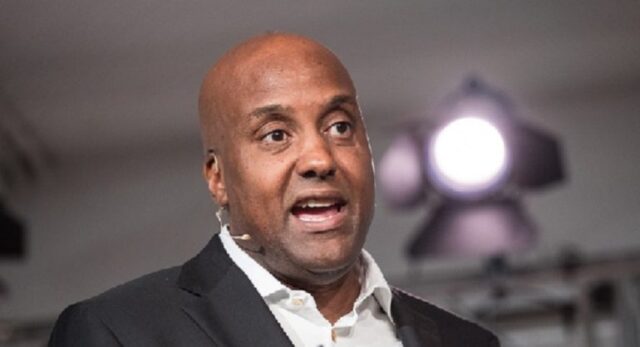
    In the week leading up to Christmas 2018, Nike Inc. said it has recruited a new leader for its Converse brand, naming G. Scott Uzzell as its president and chief executive officer, to helm the heritage sneaker company in the New Year. Uzzell replaces Davide Grasso who has decided to retire at the end of this calendar year. He will report directly to Michael Spillane, President, Categories and Product, Nike Inc.

    Effective January 22, 2019, Uzzell’s new appointment comes at a time when the brand is setting “the stage to move into new spaces by reconnecting to its heritage in sport,” according to a press release in December from Nike Inc.

    “Scott’s unique blend of experience driving both strategic business growth and strong brand development is well-suited to help unlock the full potential of the Converse Brand and lead its next phase of growth globally,” said Michael Spillane, President, Categories and Product, Nike Inc.

    Uzzell comes to Converse from The Coca-Cola Company, where he most recently served as President, Venturing & Emerging Brands Group (VEB).

    As head of Coca-Cola’s VEB Group, the consumer goods executive led a portfolio of high-growth brands for The Coca-Cola Company, including Honest Tea, ZICO Coconut Water, Fairlife Milk and Suja Juice.

    Uzzell began his career within sales and marketing for companies such as Procter & Gamble, Coca-Cola and Nabisco, before returning to Coca-Cola in 2000 in the Strategy & Planning division. Since then, he has held a number of leadership positions across its business including McDonald’s U.S. Division, Global New Business Development, Global Marketing, ZICO and VEB.

    In addition, he is a member on the boards of State Bank and Trust Company; Fairlife and Suja Juice Company, as well as being a member of the Florida A&M University Foundation Board and is part of the Executive Leadership Council (ELC).

    Founded in 1908, Boston-based Converse is today owned by Nike. Converse shoes are sold globally in over 160 countries.

  • LOTS Wholesale Solutions expands footprint with its third store in India

    LOTS Wholesale Solutions expands footprint with its third store in India

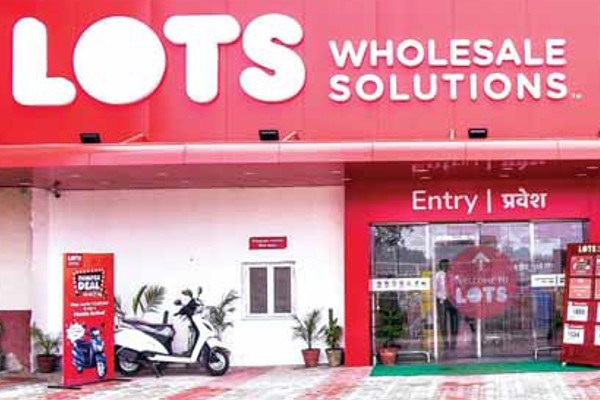
    LOTS Wholesale Solutions, a part of the US$ 50 billion Charoen Pokphand Group and a wholly owned subsidiary of Siam Makro Public Company Limited from Thailand, has unveiled its third wholesale distribution centre in India at Ithum, Sector 62, Noida. In 2018, the company inaugurated their stores at Netaji Subhash Place and Akshardham. The three stores, opened within a span of seven months, will cater to a total of 1,40,000 registered customers in Delhi NCR.

    LOTS Wholesale Solutions store in Noida is the first step towards the company’s commitment of investing Rs 250 crore in the state of Uttar Pradesh. The expansion plan will witness the opening of more stores in the state in the coming years.

    The new store in Noida is spread over an area of 50,000 sq.ft. and will provide its customers with more than 5,500 assorted products in food and non-food categories. It will cater to over 40,000 business customers with a diverse clientele including kiranas, hotels, restaurants and caterers (HoReCa), corporates, MSMEs and institutions such as government agencies, educational institutes and hospitals from the catchment area.

    In addition to the announcement of its third store, LOTS Wholesale Solutions also launched its own brands Basic Plus and PlusMo with an aim to provide best quality products at economical prices. The first two product categories introduced under these brands are bakery items and home-cleaning.

    Talking about the launch of the third store in India, Tanit Chearavanont, Managing Director, LOTS Wholesale Solutions said, ‘Following our values of victory, we have outperformed ourselves and unveiled the third store within a span of seven months. As promised, we delivered our two stores in 2018. Uttar Pradesh was an obvious choice for expansion after Delhi NCR, owing to the proximity to the enormous market opportunity in the state. It fits well within our cluster strategy for the business in India. Aided by government support, we aim to establish an environment of mutual growth for farmers, traders and our business in the state. We will work directly with them to establish a strong supply chain and demand for their products.’

    Featuring specially curated assortments for its members, delivery services, e-commerce, credit facility etc, LOTS Wholesale Solutions is a one-stop shop for all its customer needs.

  • Tesco Asia sales continue dropping despite growth in profit

    Tesco Asia sales continue dropping despite growth in profit

    Tesco Asia like-for-like sales continue to decline while the UK-headquartered company repositions its offer – masking a stronger underlying performance for the business. “We have made good progress in our discussions with suppliers towards a new commercial approach,” explained Tesco CEO Dave Lewis in a quarterly update. “We also accelerated planned changes to our operating model in Thailand, helping to reduce costs and underpinning our profit recovery.”

    Lewis said that despite minor changes to the government-issued welfare cards scheme during the third quarter, Tesco Thailand sales fell by about 1 per cent for the 19-weeks including the key Christmas trading period.

    Restructured Thailand store operations have led to reduced costs, underpinning profit recovery at the expense of sales.

    Referring to Tesco’s global operations, Lewis added: “We have more to do everywhere but remain bang on track to deliver our plans for the year and as we enter our centenary we are in a strong position.”

    The December quarter represented the 12th consecutive quarter of like-for-like sales growth for Tesco globally, with sales up 2.6 per cent.

  • JD.com steps into entertainment industry

    JD.com steps into entertainment industry

    JD.com, China’s largest retailer, has joined forces with Paramount Pictures and global play and entertainment company Hasbro to celebrate the Chinese release of the new TRANSFORMERS movie BUMBLEBEE. On the run in the year 1987, BUMBLEBEE finds refuge in a junkyard in a small Californian beach town. Charlie (Hailee Steinfeld), on the cusp of turning 18 and trying to find her place in the world, discovers BUMBLEBEE, battle-scarred and broken. When Charlie revives him, she quickly learns this is no ordinary, yellow VW bug.

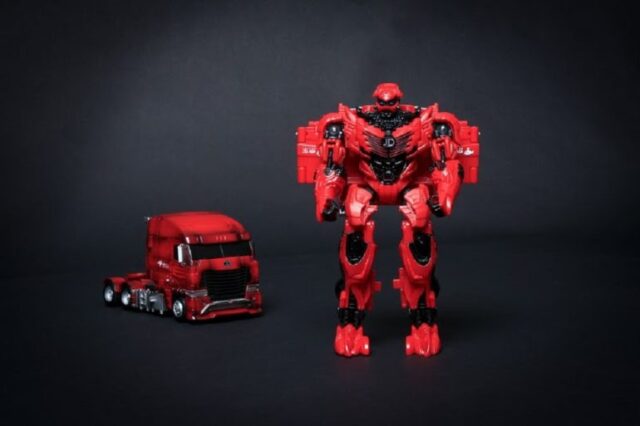
    JD first partnered with Hasbro and the TRANSFORMERS franchise in 2017, releasing a MISSION RED mini short that showed Optimus Prime and Red Knight – a special JD exclusive TRANSFORMERS character – fighting to protect the energon fuel source. This year’s celebration will be accompanied by a series of three mini shorts featuring Panasonic and Chinese menswear brand HLA in which Red Knight protects energon.

    JD and Hasbro are also bringing Red Knight to life by creating an action figure of this TRANSFORMERS bot. Released on Dec 29, 2018, the exclusive action figure is only available on JD.

    JD also launched a “Super BUMBLEBEE Day” sales promotion to coincide with the Jan 4 premiere of the film in China. During the promotion, JD’s more than 300 million customers were able to purchase BUMBLEBEE movie-themed merchandise from Hasbro, Panasonic, HLA, and more. JD has outfitted multiple delivery vans and delivery boxes across China with BUMBLEBEE-themed designs.

  • Vietnam’s coffee traders cut output forecast by 10 percent

    Vietnam’s coffee traders cut output forecast by 10 percent

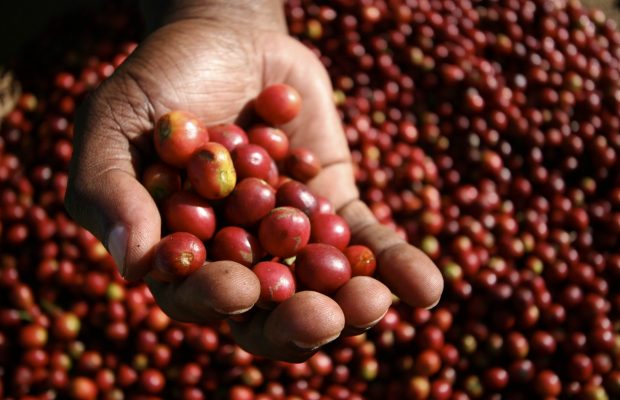
    Traders in Vietnam lowered their coffee output forecasts by 10 percent this week as a bumper harvest came to an end. They now expect an output of about 27 million bags of 60 kg each for the 2018/19 crop year that began on Oct. 1, compared with earlier forecasts of 30 million bags. “We are not surprised to see a lower output as stubbornly low domestic prices have discouraged many farmers to fertilize and water their trees, while weather condition was also not supportive,” a trader based in the province of Dak Lak said on Thursday.

    “Farmers in the Central Highlands have harvested all of the fresh beans of the 2018/19 crop year,” he said.

    Farmers in the Central Highlands, the country’s key coffee growing area, sold coffee at 33,500-34,000 dong ($1.44-$1.47) per kg on Thursday, compared with 33,200 dong-33,700 dong a week earlier.

    “Though output is lower, domestic prices have not risen due to external factors, including larger forecasts by foreign agencies,” said another trader based in Ho chi Minh City.

    Vietnam’s coffee exports in January are forecast to be between 150,000 tonnes and 180,000 tonnes, compared with an estimated 160,000 tonnes in December.

    Traders in Vietnam offered 5 percent black and broken grade 2 robusta at a $40 per tonne discount to the March contract, compared with a $45-$50 discount last week.

    Meanwhile, in Indonesia, trading continued to be muted with traders saying premium for the grade 4 defect 80 robusta stayed unchanged for a fourth straight week at $20-$30 to the March contract.

    “Supply may only start coming around April because some areas in Bengkulu will have some harvest then,” said a trader, referring to a province neighbouring Lampung.

    Main robusta harvest in southern Sumatra typically takes place around the mid-year, but a smaller harvest usually happens a few months earlier.

  • Burberry and Louis Vuitton lose counterfeiting appeal in Singapore

    Burberry and Louis Vuitton lose counterfeiting appeal in Singapore

    Burberry and Louis Vuitton have lost their appeal in a trademark dispute against local transport company Megastar Shipping. The luxury brands alleged that Megastar Shipping had handled counterfeit goods in Singapore that were headed for Indonesia, citing the Trade Marks Act that states a trademark is infringed by any person found to import or export goods using that mark without the proprietor’s consent.

    The upper division of the Singapore Supreme Court found this week that Megastar was not the importer of counterfeit goods shipped from China that were seized in March 2013, and was only intended to handle the goods in transit to their final destination in Indonesia. Megastar Shipping had been listed on seaway bills and arrival notices as the consignee of the goods.

    The appeals court ruled that the protection of IP rights had to be balanced against extending liability for infringement to “honest commercial persons who happened to be tangentially involved” in the shipping of counterfeit goods.

  • American fund acquires stake in Vietnamese organic food firm

    American fund acquires stake in Vietnamese organic food firm

    The Seaf Women’s Opportunity Fund has acquired a 30 percent stake in Organica, promising the Vietnam all-round support. While not mentioning the specific investment value, Jennifer Buckley, SEAF’s senior managing director, said the fund will support Organica in operations, distribution, and network expansion. In addition to being a strategic shareholder, the fund will also give Organica a 5-year loan so that it has sufficient resources to finance expansion plans in the future.

    “This is the first organic food company in Vietnam we have decided to invest in, even though the market [for organic products] is still small,” said Jennifer Buckley. She added that if the company performed well, the fund may acquire it in full in the future.

    Pham Phuong Thao, CEO of Organica, said that the current investment will be enough for the company to implement a 2-3 year plan. In particular, it plans to open more retail stores, improve online sales systems, IT systems and human resources, Thao said.

    Organica is an organic groceries chain established in 2013 with the first store in Ho Chi Minh City. It now has 5 stores in Ho Chi Minh City, Hanoi and Da Nang. Currently, the company has 10 farms in the South and the Central Highlands, totalling a combined area of 300 ha.

    SEAF (Small Enterprise Assistance Funds) is an international investment management group that provides growth capital and business assistance to small and medium enterprises (SMEs) in emerging and transition markets.

    It currently operates in 30 countries and has investments in over 300 small businesses.

  • Samsung ranks second in 2018 U.S. patent grants

    Samsung ranks second in 2018 U.S. patent grants

    Samsung Electronics grabbed the No. 2 spot in U.S. patent grants among global corporate giants in 2018, industry data showed Thursday. Samsung Electronics, the world’s top smartphone and memory chip maker, received 5,850 U.S. patent grants last year, up 13 from the previous year, according to the data from IFI Claims Patent Services, provider of a top global patent data platform.

    IBM topped the list with 9,100 grants, up 1 percent from a year earlier, maintaining the U.S. company’s position as top patent leader for a 26th consecutive year.

    Canon followed Samsung with 3,056. Intel came next with 2,735 then LG Electronics with 2,474. All registered declines from a year earlier.

    Other Korean firms included Samsung Display, which ranked 14th with 1,948 grants. Hyundai Motor placed 19th with 1,369.

    Last year, U.S. patent grants totaled 308,853, down 3.5 percent from the previous year.

    By country, the United States took up the largest share, at 46 percent, followed by Japan with 16 percent, Korea with 6.5 percent, Germany with 5 percent and China 4 percent.

    China was the only major patenting country to report an on-year increase in the 2018 patent grants.

  • Vietnam’s largest airport set for $496 million expansion

    Vietnam’s largest airport set for $496 million expansion

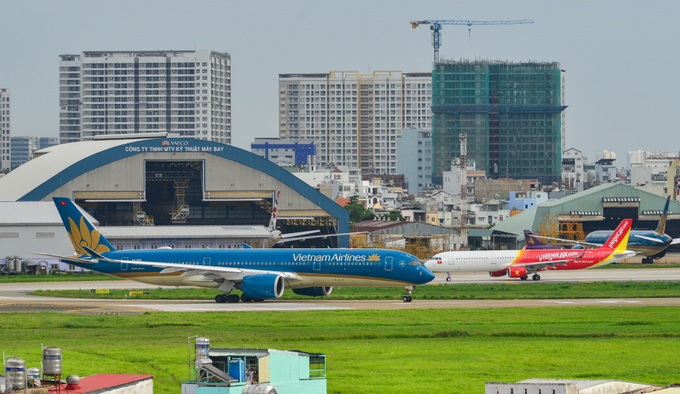
    The Tan Son Nhat Airport could get a third terminal and other facilities at the cost of over $496 million. The Airports Corporation of Vietnam (ACV), which manages and operates civil airports in the country, has submitted to the Ministry of Transport a pre-feasibility report on the construction of a third terminal (T3) at HCMC-based Tan Son Nhat International Airport to reduce overload.

    T3 will be designed to have a capacity of 20 million passengers per year, with total floor area of about 100,000 square meters. ACV proposes to construct in tandem an additional airport apron, a two-lane overhead path, a 5-lane viaduct in front of the terminal and a multi-storey car park. The total cost is estimated at over VND11.43 trillion ($496.18 million).

    The completion of feasibility reports and selection of construction blueprints is set to be finished in February 2020.

    Once T3’s design has been approved, contractors will be chosen via a tendering process so that construction starts in the third quarter of 2020 and can be completed in the second quarter of 2022.

    Because the construction area is located on the Defense Ministry’s land, ACV has suggested allowing a temporary handover of the site in Q1 next year for construction along with completion of necessary legal procedures.

    There are also plans to expand existing terminals T1 and T2 of the Tan Son Nhat airport, raising their combined capacity to 30 million passengers per year.

    The airport currently handles 36 million passengers per year, which is way above its designed capacity of 25 million.

    The Transport Ministry has hired French consulting firm ADPi to work on the plan alongside local firms. The plan proposed by ADPi was approved by the Prime Minister last March and it formed the basis for the new, detailed version.

    ACV has also proposed to the Ministry of Transport that it be assigned as investor for the construction of essential components for the proposed Long Thanh International Airport, including passenger terminal, flying zone (runway, taxiway, apron), and refueling systems.

    ACV chairman Lai Xuan Thanh said that the company is willing to spend between $1-1.5 billion for constructing the first phase of the proposed airport, which is estimated to cost $5.4 billion.

    The Long Thanh Airport, to be built in three phases over three decades, was recently listed by CNN Travel as one of the world’s 16 most exciting airport projects.

    The first phase is scheduled for completion in 2025 when it will be able to handle 25 million passengers annually. The next two phases will be built in 2030-2035 and from 2040-2050.

    The new airport would have an annual capacity of 100 million passengers and five million tons of cargo when completed.

    ACV has announced that in its 2019 plan, the company will spend more than VND10 trillion ($432.71 million) on upgrading and expanding several airports, including Cat Bi in northern Hai Phong City, Vinh in central Nghe An Province, Phu Cat in central Binh Dinh Province, and Noi Bai in Hanoi.

    Most of these upgrades are expected to be completed by the third quarter of 2019.

  • Judge extends Sears lifeline to mid-January

    Judge extends Sears lifeline to mid-January

    Embattled US department store Sears has been granted yet another lifeline, with a bankruptcy auction now scheduled for January 14. That will give billionaire hedge fund operator Edward Lampert, Sears biggest shareholder and former CEO, one final opportunity to preserve the business. At Monday’s auction, he will bid against rival parties seeking to liquidate the business, described by GlobalData Retail MD Neil Saunders as “more like a patient in a coma than a fully functioning retailer”.

    Sears filed for Chapter 11 bankruptcy protection in October and the independent directors of the 126-year-old company are seeking its liquidation, seeing it as the only means by which creditors can retrieve some of the $5 billion in debts it owes. Lampert wants the remaining 425 stores trading under the Sears and Kmart banners to remain open, convinced it can return to viable trading.

    Saunders disagrees and says talk of a potential liquidation of the company suggests the much-storied retailer is now at the end of its long road to collapse.

    “Its recent journey to this point has been characterised by incredibly poor strategic decisions, chronic underinvestment, and continuous financial machinations designed to keep the company afloat. All of this impacted trading, which has remained dire.”

    Saunders says while Lampert has worked hard to rescue the remains of his empire, there is simply not enough financial firepower left in the company to persuade investors of his bid. Indeed, the terms of the deal put forward by Lampert would only likely delay the inevitable and make it far more difficult for creditors to extract their money.

    “Moreover, his track record in putting the company on a sound financial footing has been less than impressive, and we believe this has undermined his credibility with stakeholders.”

    Saunders says there may be interest from people who see value in elements of Sears business such as the automotive side, the online operations, the brands, and the various home services. Those operations include brands like Kenmore appliances, DieHard batteries and Wrangler jeans. “As such, parts of Sears could live on even if the company as we know it will disappear.”

    According to The Wall Street Journal, Sears, which merged with rival Kmart in 2005, has been losing money for seven years under Lampert’s leadership. Sine April 2007, the company has shed 200,000 staff, lost $30 billion in shareholder value and closed more than 1700 stores, leaving it with less than 700 now.

    Saunders says Sears will act as a case study in how not to run a retail operation.

    “It also serves as an example that even the once most powerful and cutting edge of brands can easily fail in a retail environment where change and evolution are the order of the day.”

  • Shilla duty free open new store

    Shilla duty free open new store

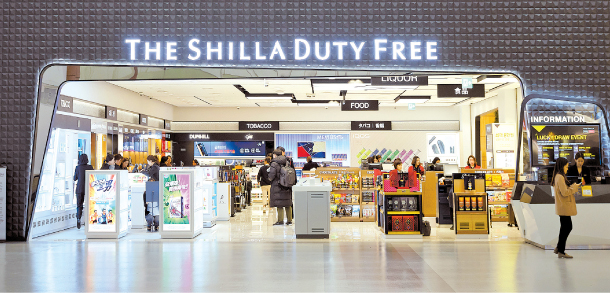
    Shilla Duty Free opens at Gimpo International Airport’s international terminal on Wednesday. The duty-free store run by Hotel Shilla was approved by the government in June last year in a bid against Lotte Duty Free. The duty-free store is renting the place for five years.

  • Vietnam retail sales reported soaring

    Vietnam retail sales reported soaring

    Vietnam retail sales grew at 13 per cent last year, with food and beverage, apparel and household appliances leading the way, according to Savills Vietnam. The country’s Ministry of Industry and Trade has estimated total revenue generated from retail sales and consumer services reached US$191 billion last year. Vietnam retail sales accounted for $143.3 billion of that figure, or more than 75 per cent.

    The highest growth was recorded in precious stones and metals, wood and building materials, food, household appliances, and garments.

    Sales from accommodation and catering services grew by 9.1 per cent to $23.3 billion, accounting for 12.3 per cent of the total retail sales.

    Retail space supply

    The supply of retail space in Vietnam increased by more than 28,000sqm last year with two new shopping centres opening and  several others changing format or closing. Total stock was approximately 1.3 million sqm, up 9 per cent year on year and the average gross rent rose 2 per cent quarter on quarter.

    This year, Savills predicts, new supply in CBD locations will be only 31,700sqm with another 215,000sqm becoming available in non-CBD districts.

    Outlook

    Meanwhile, the ministry predicts total revenue from retailing and consumer services will increase at an average of 13 per cent this year, reaching $255.5 billion.

    Between 2021 and 2025, the predicted growth rate is 14 per cent with total revenue reaching $484.58 billion by 2025.