Tag: car

  • Hyundai Group To Invest $35 Billion In Mobility And Auto Technologies By 2025

    Hyundai Group To Invest $35 Billion In Mobility And Auto Technologies By 2025

    Hyundai Motor Group said it plans to invest 41 trillion won ($35 billion) in mobility and other auto technologies by 2025, part of which will be directed to an ambitious effort to become more competitive in self-driving cars that has also received government backing.

    The plan, which Hyundai said encompasses autonomous, connected and electric cars as well as technology for ride-sharing, comes after the automaker and two of its affiliates announced an investment of $1.6 billion in a venture with U.S. self-driving tech firm Aptiv.

    South Korea’s government is also onboard, unveiling more funding for autonomous vehicle technology with President Moon Jae-in declaring on Tuesday that he expected self-driving cars to account for half of new cars on the country’s roads by 2030.

    “The self-driving market is a golden market to revitalize the economy and create new jobs,” Moon said in a speech at Hyundai Motor’s research centre near Seoul.

    The government intends to spend 1.7 trillion won between 2021 and 2027 on self-driving technology. It expects Hyundai to launch level 4, or fully autonomous, cars for fleet customers in 2024 and for the general public by 2027, an industry ministry official told Reuters.

    But some experts question whether targets set by the government and the automotive group, which also includes Kia Motors Corp, are realistic given the technological and cost challenges and the lack of home-grown technology.

    In a 45-page report on future automotive technology, the government acknowledged South Korea lags in some key areas necessary for self-driving cars such artificial intelligence, sensors and logic chips.

    Other analysts noted that the prospects for self-driving cars are quite murky.

    General Motors Co’s self-driving unit, Cruise, said in July it was delaying the commercial deployment of cars past its target of 2019 as tech firms and automakers acknowledge it will take more time and money than they had expected to make autonomous vehicles safe for unrestricted use on public roads.

    South Korea’s government said it would prepare a regulatory and legal framework for autonomous cars and the safety questions they pose by 2024.

    It is also aiming to lay the technological and legal groundwork for demonstrations of flying cars by 2025. Hyundai Motor’s executive vice-chairman Euisun Chung said last month that the company is looking at developing flying cars.

    Hyundai has also received much government backing for hydrogen fuel cell cars, with Moon calling hydrogen power the “future bread and butter” of Asia’s No. 4 economy and declaring himself an ambassador for the technology.
  • India’s Retail Inflation Surges In September, But Rate Cut Hopes Still High

    India’s Retail Inflation Surges In September, But Rate Cut Hopes Still High

    India’s retail inflation rose close to the central bank’s medium-term target of 4% in September for the first time in 14 months, but analysts still predict a sharp economic slowdown will prompt a sixth consecutive interest rate cut in December.

    Annual retail inflation rose to 3.99% last month, driven by higher food prices, up sharply compared with 3.21% in the previous month, and higher than the 3.70% forecast in a Reuters poll of analysts.

    Retail food prices, which make up nearly half of India’s inflation basket, increased 5.11% in September from a year earlier, compared with 2.99% in August.

    “The uptick in September was backed by sharp sequential uptick in food components, primarily led by vegetables prices. We think the food inflation seasonal uptrend will likely continue in the near term before easing later.”

    “We see headline inflation averaging around 3.7%-3.8% for FY20 and expect the headline print to fiddle above 4% in early part of 1HCY20, but not significant enough to derail the rate-cut cycle.”

    “Some signs of sequential bottoming of food prices are emerging, while there could also be increased policy focus ahead to correct food anomalies to favour agriculture terms of trade.”

    “On the other hand, we continue to see core inflation component fiddling a tad above 4% average in FY20, but admittedly moderating sharply from 5.8% in FY19. That said, the output gap remains significant, we continue to see rate cut cycle extending beyond October by at least another 50 bps, depending on the incoming data ahead.”

    “Reflection of higher inflation in select food items has now begun to show in retail inflation as inflation in meat and fish, vegetables, and pulses jumped in September 2019.”

    “Vegetables and pulses contributed 76.4% of the increase in retail inflation in September over August. Food inflation would continue to rise at least till March 2020 mainly due to base effect. The other items exerting pressure on retail inflation in September 2019 are expenditure on health, education and personal care.”

    “Given the ongoing slowdown in the economy and retail inflation remaining well within the target range of the RBI, India Ratings and Research believes RBI will continue with accommodative policy and expect further rate cut in the policy review of December 2019.”

    “It is mainly prices of vegetables and pulses that have pushed the (inflation) rate higher. With a good monsoon having come to a close, its moderating impact may be felt on the price level due to improved supply of produce.”

  • Nissan Motor Company Appoints New CEO And COO

    Nissan Motor Company Appoints New CEO And COO

    Nissan Motor Company has appointed Makoto Uchida as its new chief executive officer (CEO). Uchida has been serving as a senior vice president in the company along with being the president of Dongfeng Motor Company. The Japanese carmaker has also appointed Ashwani Gupta as chief operating officer (COO) and representative executive officer. Gupta has been serving as chief operating officer (COO) at Mitsubishi Motors. Nissan’s Senior Vice President Jun Seki has been appointed to the position of vice-chief operating officer, reporting to Gupta.

    Speaking on the appointment, Chairman of the Board of Directors, Yasushi Kimura said, “The board concluded that Uchida is the right leader to drive the business forward. Nissan’s Nomination Committee led the nomination process and assessed candidates thoroughly in line with the new three-committee governance structure established in June. We expect Uchida to lead the company as one team, immediately focus on the recovery of the business and revitalize the company. We look forward to Gupta and Seki fully leveraging their expertise and experience to support the new CEO.” Both Uchida and Gupta will be taking on their positions from January 1, 2020.

  • Volvo, Geely To Merge Combustion Engine Operations

    Volvo, Geely To Merge Combustion Engine Operations

    Volvo Cars will merge its engine development and manufacturing assets with those of parent Geely, creating a division to supply in-house brands Lotus, LEVC, Lynk and Proton, and also potential rivals with next-generation combustion and hybrid engines. It marks the latest example of consolidation in the engine manufacturing sector as tighter emissions rules hike development costs at a time when the expansion of electric cars calls into question the long-term demand for gas guzzlers. Rival Volkswagen (VOWG_p.DE), which is in the midst of ramping up mass production of electric cars, has already warned its in-house suppliers to create structures to consolidate combustion engine assets.

    Volvo currently builds 600,000 combustion engines, a number that rises to about 2 million when combined with Geely’s assets, allowing for savings on components and development costs, Volvo Chief Executive Hakan Samuelsson told Reuters.

    That will allow the Gothenburg, Sweden-based brand to more sharply focus its resources on building and developing a range of entirely electrified premium cars.

    “As a general business, combustion engines is most probably not growing. It is important to consolidate and seek synergies. It is another step transforming our company in the direction of electrification,” Samuelsson said in a phone interview. In the medium term, Volvo will drop diesel engines altogether in favor of focusing on hybrid and electric powertrains, requiring further investments in fuel injection, turbocharging and brake recovery technologies.

    Combining its operations with those of Chinese partner Geely will help achieve cost savings, Samuelsson said.

    “On a component level, I see considerable cost savings. Most important is the development side. The engineers will get the resources to take the next step to develop top-notch hybrid engines,” Samuelsson said.

    Geely in August reported a 40% drop in net profit, citing a sharp slowdown in demand for cars, while Volvo has rejigged its global production plans in an effort to reduce the impact of tariffs.

    Geely bought Volvo Cars in 2010 from Ford Motor Co, allowing the Swedish brand to operate on an arms-length basis. But in recent years, it has deepened cooperation between the two brands. Volvo already supplies engines to some Geely-branded vehicles, sharing technology through Geely’s Lynk brand. Both companies share and develop common vehicle platforms.

    Global tariffs, accelerated by a trade war between China and the United States, as well as higher investment requirements for electric and autonomous vehicles, are forcing carmakers to seek new ways to cut and share costs.

    Volvo in 2018 postponed plans to seek a separate stock market listing for the Swedish carmaker, blaming trade tensions.

    The tightening of emissions requirements in both Europe and China is strengthening the industrial logic for combining Volvo’s and Geely’s operations, the Swedish executive said.

    “The emissions requirements are getting tougher everywhere. China is catching up very rapidly. The days when China had outdated technology are gone,” Samuelsson said.

    The new combustion engines business will combine 3,000 employees from Volvo Cars with 5,000 employees from Geely’s combustion engine operations, and include research, development, procurement, manufacturing, IT and finance functions, Volvo said.The creation of the stand-alone business will result in no job losses, Volvo said.

    The new stand-alone supplier could also equip outside rivals struggling to keep up with more stringent regulations.

    “It can be an interesting alternative to third-party customers,” Samuelsson said.

  • BMW M5 Competition Launched In India

    BMW M5 Competition Launched In India

    Well if you thought the BMW M5 was bonkers! Here comes the BMW M5 Competition which has arrived to further up the ante. The BMW M5 Competition has been launched in India as a completely built unit (CBU) at ₹ 1.55 crore, ex-showroom, India. The same 4.4-litre, twin-turbo V8 motor which powers the standard M5 is also the workhorse here but has been uprated to churn out 616 bhp at 6000 rpm and 750 Nm of peak torque. The engine is mated to the eight-speed M Steptronic transmission and takes 3.3 seconds to clock triple-digit speeds as opposed to 3.9 seconds of the standard M5. Just like the standard M5, the M5 competition also gets the M xDrive all-wheel-drive system with DSC and xDrive modes which enables the driver to choose between the 4WD, 4WD Sport and 2WD mode.

    In a bid to balance the performance and fuel efficiency, it also gets the BMW Efficient Dynamics featuring brake energy regeneration, auto start-stop function, a new differential transfer case with optimized warm-up behavior and aerodynamics. Additional standard equipment on the M5 Competition includes dynamic stability control (DSC) including anti-lock braking system (ABS), automatic stability control (ASC), M dynamic mode (MDM), cornering brake control (CBC), dynamic brake control (DBC), dry braking function and active M differential. Moreover, it is also equipped with the M exhaust system with electrically controlled flaps to minimize the exhaust pressure creating a throaty roar exhaust note along with optimizing the efficiency.

    While largely the M5 Competition looks similar to the standard car, there are certain highlights on the outside that tell it’s a bit more special. Elements like the radiator grille, wing mirrors, rear apron, rear spoiler and side air vents finished in BMW individual high-gloss black and the air vents also wear the Competition badge. The roof is made of extremely lightweight and high tensile reinforced carbon fibre plastic and the chrome-plated exhaust pipes get a mild yellow shine.

    On the inside, the M5 competition gets illuminated M5 logo on the sport seats and black seatbelts with the BMW M GmBH design. The double-spoke M steering wheel is borrowed from the standard car while it gets red start-stop button which adds a sense of sportiness as you fire the engine. Moreover, it is pretty well-loaded with almost all the equipment you get in a car of this class. So features like BMW gesture control, BMW display key, wireless charging, BMW head-up display and wireless Apple CarPlay, BMW operating system 7.0 which includes 3D navigation with a high-resolution instrument cluster behind the steering wheel with a 12.3-inch screen and a 10.25-inch control display. Other features include a 600 watt Harman Kardon sourced surround sound system with 16 speakers.

    The BMW M5 Competition is around ₹ 10 lakh more expensive than the standard M5 which is priced at ₹ 1.44, lakh, ex-showroom, India. Out in the marketplace, it will rival the likes of the Mercedes-AMG E 63S and the Audi RS7 Performance.

  • Maruti Suzuki’s Production Improves Amid Festive Season

    Maruti Suzuki’s Production Improves Amid Festive Season

    The prolonged slowdown has been denting production of some of the leading carmakers in India, but the month of September has shown some signs of improvement. Maruti Suzuki in September 2019 has witnessed a lesser de-growth in sales compared to what it recorded in the previous month and that has reflected in production figures as well. Despite a two-day plant shutdown (September 7 and September 9), Maruti Suzuki has recorded a 17.37 percent decline in production last month which is better than 33.67 percent slump it witnessed in August 2019.

    In September 2019, Maruti Suzuki rolled out 130,264 units of passenger vehicles compared to 157,659 units in the same month a year ago, which is a year-on-year decline of 17.37 percent. However, the company had manufactured 110,214 units in August 2019 compared to 166,161 units in the same month last year, witnessing a YoY production decline of 33.67 percent. The improvement is also possible on the anticipation of better festive season sales. The company has recorded 24.8 percent YoY sales decline selling 1,22,640 units in September 2019 including 112,500 units in the domestic market and 2,952 units of domestic OEM sales whereas 7,188 units were exported. However, in August 2019 it witnessed a year-on-year sales decline of 34 percent.

    Maruti Suzuki is already providing attractive discounts across its product range. The company has also slashed prices by ₹ 5000 on select models like the Alto 800, Alto K10, Swift Diesel, Celerio, Baleno Diesel, Ignis, Dzire Diesel, Tour S Diesel, Vitara Brezza and S-Cross. Interestingly, the compact vehicle segment where almost all products underwent a price cut has seen the least production cut at 4.2 percent with a total of 75,264 units being rolled out as compared to 78,589 units. It includes products like the Swift, Dzire, Ignis, Baleno Celerio and the new WagonR. The company is offering discounts of up to ₹ 1.01 lakh on the Vitara Brezza subcompact SUV and production has also improved in the UV segment. The UV segment witnessed a de-growth of 17.05 percent at 18,435 units while the mini segment (including the recently launched S-Presso) recorded a de-growth of 37.61 percent manufacturing 23,073 units. The company rolled out 2350 units of the Ciaz mid-size sedan, down by 50.41 percent and the Vans segment recorded a de-growth of 26.24 percent at 11,142 units.

  • Honda Acquires Drivemode, Developer of Smartphone Apps for Drivers

    Honda Acquires Drivemode, Developer of Smartphone Apps for Drivers

    Honda has acquired all the outstanding shares of the California-based Drivemode, Inc., in order to further strengthen Honda’s vision to create digital and connected mobility products. With the acquisition, Drivemode became a wholly-owned subsidiary of Honda R&D. Drivemode is a startup that develops and operates smartphone-based connected services, excelling in multiple areas such as the development of the user interface and application as well as cloud-based technologies. Honda R&D and Drivemode have been collaborating and conducting joint development activities since 2015. In April 2019, Honda newly established the Digital Solution Center within Honda R&D, which will focus on creating new value through the utilisation of digital technologies.

    With this acquisition, the Digital Solution Centre and Drivemode will work together to accelerate new value creation in the area of connected mobility services. Toshihiro Mibe, President and Representative Director of Honda R&D said, “As a step toward the realization of value creation for mobility and enhancing people’s daily lives, which is an integral part of Honda’s 2030 Vision, we decided to further enhance our collaborative relationship with Drivemode.”

    With the support of Honda, the Drivemode team will focus on providing safe, meaningful software solutions for drivers, and the innovation on mobile-based technology will be for both connected cars and motorcycles.

  • Lamborghini Huracan Evo Spyder Launch Date Announced

    Lamborghini Huracan Evo Spyder Launch Date Announced

    After launching the Lamborghini Huracan Evo coupe earlier this year in February, the Italian marque is now ready to bring in its convertible version – the Huracan Evo Spyder. The new drop-top Hurcan Evo is slated to be launched in India on October 10, with the inauguration of Lamborghini’s new showroom in Mumbai, Maharashtra. Compared to the regular coupe version, the convertible Huracan Evo is 120 kg heavier and comes with an electro-hydraulic roof-folding mechanism that can lower the soft-top in 17 seconds at speeds of up to 50 kmph.

    The Lamborghini Huracan Evo Spyder comes with a familiar design with an 8.4-inch capacitive touchscreen infotainment system

    Visually, the Lamborghini Huracan Evo is identical to the coupe version of the car, save for body-coloured bumpers instead of black ones, and blacked-out A-pillars. At the rear, this too comes with the new ducktail spoiler balanckt downforce and drag on the two-door, while the underbody has been revised to make it more slippery and aerodynamic friendly. The cabin, at the same time, comes with a familiar design with an 8.4-inch capacitive touchscreen infotainment system that offers controls for a bunch of in-car function like climate control, cell-phone connectivity and much more. The system also gets Apple CarPlay along with voice command system and a dual-camera telemetry system with a high-capacity hard disk as part of the features package.

    The Lamborghini Huracan Evo Spyder gets the same 5.2-litre V10 motor that powers the coupe version

    Powering the new Lamborghini Huracan Evo is the same 5.2-litre V10 motor that powers the coupe version. In fact, the engine is tuned to churn out the same 631 bhp at 8,000 rpm and develop the same peak torque of 600 Nm at 6,500 rpm. The engine comes mated to a 7-speed Lamborghini Doppia Frizione (LDF) dual-clutch transmission and comes with an all-wheel-drive system. The Huracan Evo goes from 0-100 kmph in 3.1 seconds, that is 0.2 seconds slower than the coupe version, and 0-200 kmph is achieved in 9.3 seconds, and that is 0.3 seconds slower than the coupe version. However, the top speed is the same 325 kmph.

  • Tesla Automated Parking Problems Seen Liability Of App ‘Driver’ For Now

    Tesla Automated Parking Problems Seen Liability Of App ‘Driver’ For Now

    Tesla Inc owners summoning their driverless cars in parking lots are likely liable for crashes, lawyers said after a series of internet videos showed problems with cars running new software.

    If the accidents pile up, though, Tesla itself is sure to be brought into a legal fight, insurance industry experts said.

    The incidents highlight a shifting landscape for long-held assumptions about auto insurance and accident blame as more car manufacturers offer features that can automate parallel parking, avoid collisions, and take over steering during traffic, among other things.

    A Tesla software update last week added a so-called Smart Summon feature for some customers. When the car is within 200 feet and in their line of sight, they can use a phone app to summon the vehicle in a parking lot. Users start the car by holding down a button and stop the car by releasing it, Tesla said in instructions, warning users to be careful.

    U.S. regulators are looking into parking lot crashes involving Tesla cars driving themselves to their owners, the National Highway Traffic Safety Administration (NHTSA) said on Wednesday.

    “This was an interesting one to explain to my insurance,” wrote one user in YouTube and Twitter video posts of a Tesla scraping against a garage door frame while exiting in summon mode. “Silly feature cost me time and money.”

    Tesla did not respond to a request for comment but Chief Executive Elon Musk on Wednesday tweeted that there were more than 550,000 Smart Summon uses in the first few days.

    Insurance claims for such incidents will go through the car owner’s traditional auto coverage, said Jennifer Dukarski, a lawyer in Ann Arbor, Michigan, who represents automotive suppliers in disputes about safety and autonomous car technology.

    “But as the number of incidents build, you’ll find someone who will entertain a class action [lawsuit] dealing with a product defect,” Dukarski said.

    Automated features also raise the question of whether the owner or the auto manufacturer is at fault when accidents occur.

    “The rationale for the owner being responsible is that the laws have not caught up to autonomous vehicles,” said Keith McKenna, an insurance lawyer in New York who represents corporate policyholders.

    If fully-automated cars someday becomes the norm, liability will shift to manufacturers and their insurance, McKenna said.

    The technology is not sophisticated enough to be deemed “driverless” under California’s motor vehicle rules, the California Department of Motor Vehicles said, essentially leaving the app user outside of the car responsible for accidents.

    Still, limitations to the app and other features make Tesla more responsible when accidents occur, said Mike Morgan, a Florida personal injury lawyer. His firm sued Tesla last year on behalf of a client who blames Tesla for his car crashing into a disabled vehicle.

    “You are still responsible for your car and must monitor it and its surroundings at all times and be within your line of sight because it may not detect all obstacles,” Tesla said in instructions for the new feature.

    But it may be too late to avoid a crash when a user attempts to stop the car, Morgan said.

    “These vehicles provide a false sense of human control,” Morgan said.

  • Toyota, Mahindra Decide To Stop Usage Of Single Use Plastic

    Toyota, Mahindra Decide To Stop Usage Of Single Use Plastic

    Over time cars and car companies have been blamed of contaminating the environment. Be it emission, exhausting fossil fuel or adding up to the noise pollution, cars have been the soft target to point the finger on. That said, the situation need not remain the same always. While carmakers are adhering to the government’s upcoming emission standards, fuel efficiency norms and electrification targets in a bid to curb pollution, some are also taking steps to refine their production methods. Automakers like Toyota and Mahindra have decided to eliminate the use of single-use plastic in their manufacturing process.

    As part of the six challenges to be achieved by 2050, Toyota is trying to establish a recycling-based society and systems. The move ensures zero waste directly to landfills and achieves recyclability of 96 percent, at its operating plant at Bidadi, Karnataka and also helps in reducing45per cent of the plastic footprint. Commenting on the initiative Masakazu Yoshimura, Managing Director, Toyota Kirloskar Motor said, “Keeping in-line with our global Toyota Environment Challenge 2050 and aligned with honorable Prime Minister’s nationwide campaign to limit the consumption of single-use plastic, we have proactively implemented several initiatives encouraging our stakeholders to reduce, recycle and reuse, as a step towards a better tomorrow.”

    Mahindra’s initiative could also be extended in Ford’s Chennai and Sanand plant following their recent JV.

    Along with Toyota, even Mahindra has taken steps in this direction. Pawan Goenka, Managing Director, Mahindra & Mahindra put out in a tweet today that all 15 manufacturing plants of Mahindra & Mahundra have committed to stop using single use plastic latest by the end of this year. The move is crucial, even much so at a time when Mahindra has partnered with Ford in its India operations. It will have 51 per cent ownership in its India business, in-turn taking the charge of its Chennai and Sanand manufacturing plants which means we can hope the initiative being extended to even these plants by the day.

  • Tesla Announces Record Deliveries Of 97,000 Cars In Q3

    Tesla Announces Record Deliveries Of 97,000 Cars In Q3

    Electric car manufacturer Tesla has delivered approximately 97,000 cars around the world in the third quarter of 2019, falling short of the 100,000 milestone the company had hoped for.

    “We achieved record net orders in Q3 and are entering Q4 with an increase in our order backlog. As was also the case in Q2, nearly all of our Model 3 orders were received from customers who did not previously hold a reservation, solidifying the transition to generating strong organic demand,” the company said in a statement on Wednesday.

    During the last quarter the company managed to deliver 95,200 vehicles to customers across the globe, which broke a record the company set in the fourth quarter of last year.

    Earlier, in an e-mail sent to employees Musk said that the company has a chance to deliver at least 100,000 vehicles this quarter. “We have a shot at achieving our first 100,000 vehicle delivery quarter, which is an incredibly exciting milestone for our company!” Musk said.

    In addition, Tesla is buying DeepScale, a California-based small artificial intelligence (AI) start-up, to improve its Autopilot driver assistance system. The acquisition could help Tesla fill the talent gap in the autopilot group.

  • Lanmodo Introduces The World’s First Automatic Car Tent

    Lanmodo Introduces The World’s First Automatic Car Tent

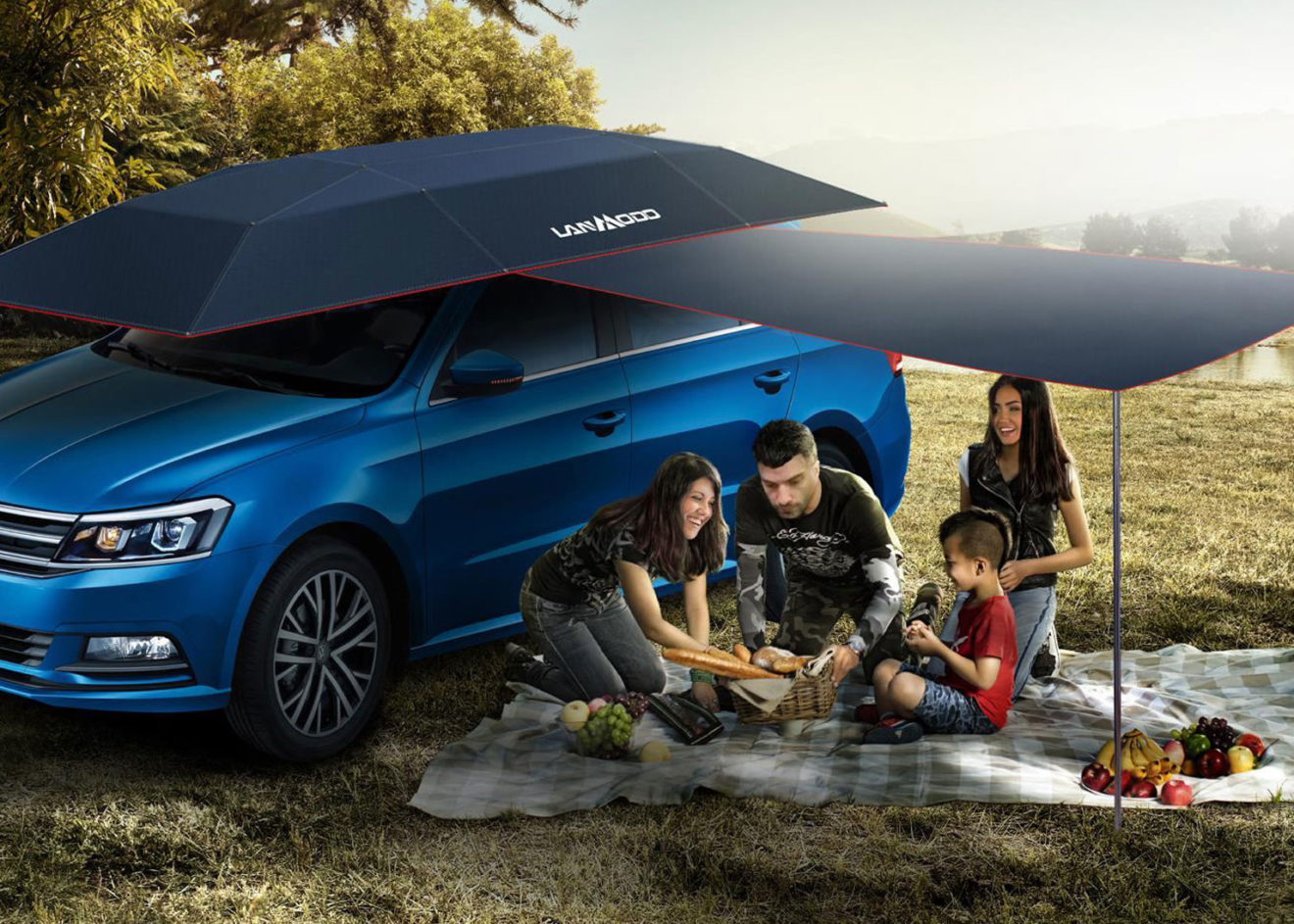
    Founded in 2015, Lanmodo has revolutionised the car tent market with its one of a kind car umbrellas which carry a host of additional benefits.

    For most car owners, the vagaries of weather often breed harsh and unwelcome consequences on the car’s paint finish. These consequences are particularly severe for dark-coloured vehicles whose paint’s susceptibility to rough treatment is more readily apparent.

    In 2017, the company launched the world’s first automatic car tent, which has been recently followed by several variants.

    Automatic car tent

    The Lanmodo automatic car tent is a portable and very versatile car garage. Up until its introduction, the market was only dominated by car covers which would blanket the vehicle. The other option that car owners had was to put up a garage.

    Now, the company has introduced this automated tent which comes in two standard sizes; the 3.5m x 2.1m (small size) which covers most saloons, small cars and hatchbacks and the 4.8m x 2.3m (large pro-four season automatic car tent) for the bigger vehicles such as SUVs and Pick-up trucks.

    This is the first time a car tent features a battery which powers the tent’s remote deployment. As it turns out, Lanmodo has also optimised this battery for other uses as well.

    In a bid to add value to the product, the company has incorporated a USB charging port for recharging electronics such as laptops and phones on the go.  The battery is reported to deliver up to 40 umbrella deployments under a single charge.

    Semi-automatic car umbrella

    As the name suggests, the semi-automatic car umbrella is manually operated and does not feature remote deployment. It, therefore, requires no recharge as it is not battery powered. Aside from that, all the other features are similar to its automated cousin; meaning it can also support the camping tent option.

    These innovative features are sure to cement the company’s position in the car gadget market, coming at a time when global trade has opened up. Not only does the company appear to target the ordinary run-of-the-mill car owners, but its market also includes the off-road nature enthusiasts who will no doubt take advantage of the camping tent extension option that the product offers.

    As it turns out, the company caters for the shipping costs- a welcome reprieve for the overseas customers. According to the company’s representatives, the only time the overseas clients may be forced to pay over and above the purchase price is when their country’s custom’s duty exceeds the set threshold.

    Optional

    In a deliberate move set to liberate consumers, even more, the company has made most of the product’s features optional, meaning purchasers can opt not to purchase some of the bonus features and stick to the traditional basic car tent.

    As would be expected, the price of the product varies per the specifications that a customer goes for. For now, there only appears to be three colour variants; Navy, Silver and Black, but it is hoped that more colourways shall be in the offing soon.

    Protection levels

    All the car tents come with a 201D Oxford cloth canopy, which offers cool shade for those living in sunny areas. The umbrella brings temperatures in the car up to 35ºC lower than under the hot sun and is said to boast of a working environment ranging from -40ºC to 60º. The tent is said to feature protection against other elements such as winds and can hold even with winds of up to 40Km/hr.

    Should the product hold up to this promise, the company shall have managed to meet the needs of a broad spectrum of environments, ranging from the hottest of summers to the most frigid of winters.

    The tent’s support structure, made of a mixture of fibreglass and metal, as well as the plastic tent base, are said to protect the surface of the cars from abrasion.

    Looking out for its European and American clientele, the company also included the snow shake off feature in the automatic tent. This has seen consumers being able to shake off accumulated snow off the cover remotely; thus eliminating the need to brush off snowflakes off their car or umbrella manually.

    With this car tent, you can make a road trip around the US during the NFL season, even during the cold winter season.

    Price

    Depending on the client’s selection, the product’s price range varies from $239-$799 plus a 1year warranty.

    Conclusion

    So far, the product seems to be receiving raving reviews. While the fact that the product can seamlessly move from the extremes of summer to the extremes of winter without compromising on its delivery is impressive, its true test shall be its staying power in a dynamic market.

    The fact that it incorporates all the other added features such as phone charging capabilities is a bonus. Consumers can only hope that the company has even better deals moving

    forward.


  • Ford Self-Driving Cars To Launch In Austin In 2021

    Ford Self-Driving Cars To Launch In Austin In 2021

    Ford Motor said on Wednesday it will add Austin, Texas, to the shortlist of cities where it plans to launch a commercial transportation service using automated vehicles in 2021.

    The U.S. automaker previously said it would begin transporting people and goods in automated vehicles in Miami and Washington.

    Ford’s self-driving system, now being tested in Fusion Hybrid sedans, is being jointly developed with Argo AI, a Pittsburgh-based startup in which Ford and Volkswagen AG together hold a majority stake.

    Sherif Marakby, chief executive of Ford Autonomous Vehicles, said Ford plans to launch the commercial transportation service in 2021 in a purpose-built hybrid vehicle that can be equipped to carry either people or goods.

    Peter Rander, president of Argo AI, said development teams soon will be manually driving the Fusion test vehicles in Austin, mapping the city streets and assessing driver and pedestrian behaviors ahead of the commercial launch.

    Alphabet Inc’s Waymo last year introduced an automated ride service with human attendants in Phoenix, using specially outfitted Chrysler Pacifica Hybrid minivans it buys from Fiat Chrysler Automobiles.

    General Motors Co’s Cruise Automation said in July it planned to delay commercial deployment of automated vehicles in San Francisco beyond its initial target of 2019 because more testing was required.

  • Skoda Dealerships Get A New Corporate Identity Theme Across India

    Skoda Dealerships Get A New Corporate Identity Theme Across India

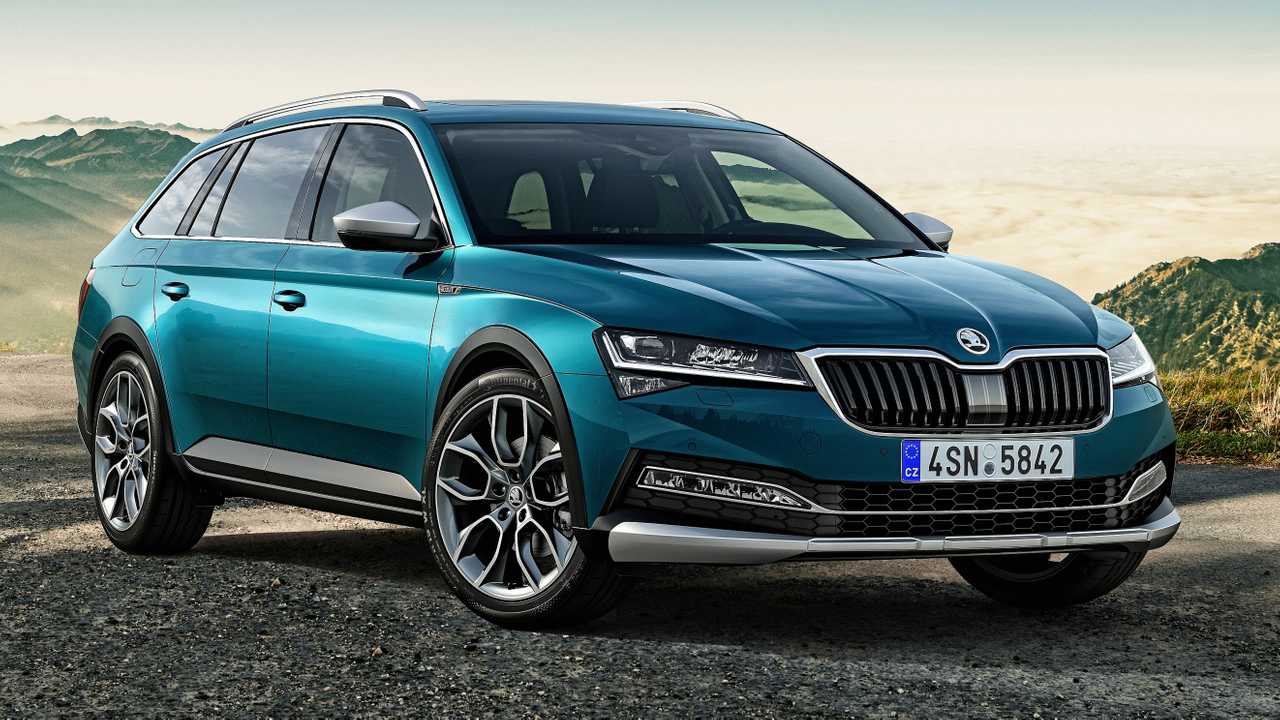
    Skoda Auto India has redesigned and rebranded its entire dealership and service network across 53 cities in India. All 63 dealerships and 61 service stations have been designed according to the new corporate identity and design (CICD) theme. The rebranding is in line with Volkswagen Group’s India 2.0 project and all dealership will get the corporate architecture and functional interiors design concept in a bid to enhance and simplify the customer experience. Skoda along with its dealer partners has invested ₹ 1200 million in India for rebranding its dealerships.

    Zac Hollis, Director – Sales, Service and Marketing at Skoda Auto India said, “Skoda has successfully rebranded its entire network of dealership facilities with a Fresh, Modern, and ‘Simply Clever’ layout that elevates the presentation of the brand and is an important cornerstone of the Skoda led ‘INDIA 2.0’ project. Through our redesigned dealership network we are focusing on strengthening the brand in India while working closely with our channel partners to guarantee sustainability. The transformation of our sales and service facilities envisioned to provide enhanced customer experience, is rated positively by our customers, dealer partners, and sales and service personnel.”

    Skoda is leading the charge for the project India 2.0 which aims at local development and better positioning of the brands (both Volkswagen Passenger Cars and Skoda Auto India) in India. Apart from revamping its dealerships, both companies will also hire local staff in every demography who have a better understanding of the regional culture and are fluent in local language. Moreover, India will see a slew of indigenously developed Skoda and VW model in future which will be based on the MQB AO platform.

  • Tata Motors Ranked 31 In Forbes’ World’s Best Regarded Companies 2019 List

    Tata Motors Ranked 31 In Forbes’ World’s Best Regarded Companies 2019 List

    Tata Motors has recently bagged the 31st spot on Forbes’ World’s Best Regarded Companies 2019 list. The home-grown automaker has been ranked 31 out of the 2000 companies from across the globe, taking a major leap from its 70th position from last year’s list. Furthermore, out of the 16 other Indian Companies in Forbes’ global list, Tata Motors has also emerged amongst the top five ranked global automobile manufacturers. In fact, in addition to Tata Motors, other companies from Tata Group that have been featured on the Forbes list include Tata Consulting Services and Tata Steel.

    The selection process for the Best Regarded Companies involve evaluating over 15,000 survey participants from more than 50 countries. These global companies are then assessed based on several parameters like – trustworthiness, social conduct, company as an employer and performance of the product or service.

    Commenting on being features in the Forbes’ list, Guenter Butschek, CEO & MD, Tata Motors Limited said, “We are delighted to have been featured on the Forbes World’s Best Regarded Companies 2019 List. Being in the top 50, from a total of 2000 and raising the India flag high with 5th rank across the global automobile industry is indeed a great feeling. It is a testament to the aspirational work that Tata Motors has been consistently doing on the business front while holding up the Tata Group’s ethos. We are very happy to have our efforts validated and we are further encouraged to keep the momentum going and create new benchmarks.”