Tag: car

  • Volkswagen Cuts Medium-Term Outlook For Operating Profit

    Volkswagen Cuts Medium-Term Outlook For Operating Profit

    German carmaker Volkswagen on Monday cut its medium-term outlook for operating profit as the industry is being hit by a global downturn.

    VW now expects operating profit before special items to grow by at least 25% in the 2016-2020 period, down from a previous forecast of more than 30%, slides for a presentation showed.

    The Wolfsburg-based company also cut its forecast for medium-term sales growth to 20% from more than 25%.

  • Automobili Pininfarina’s Second Car To Rival The Urus

    Automobili Pininfarina’s Second Car To Rival The Urus

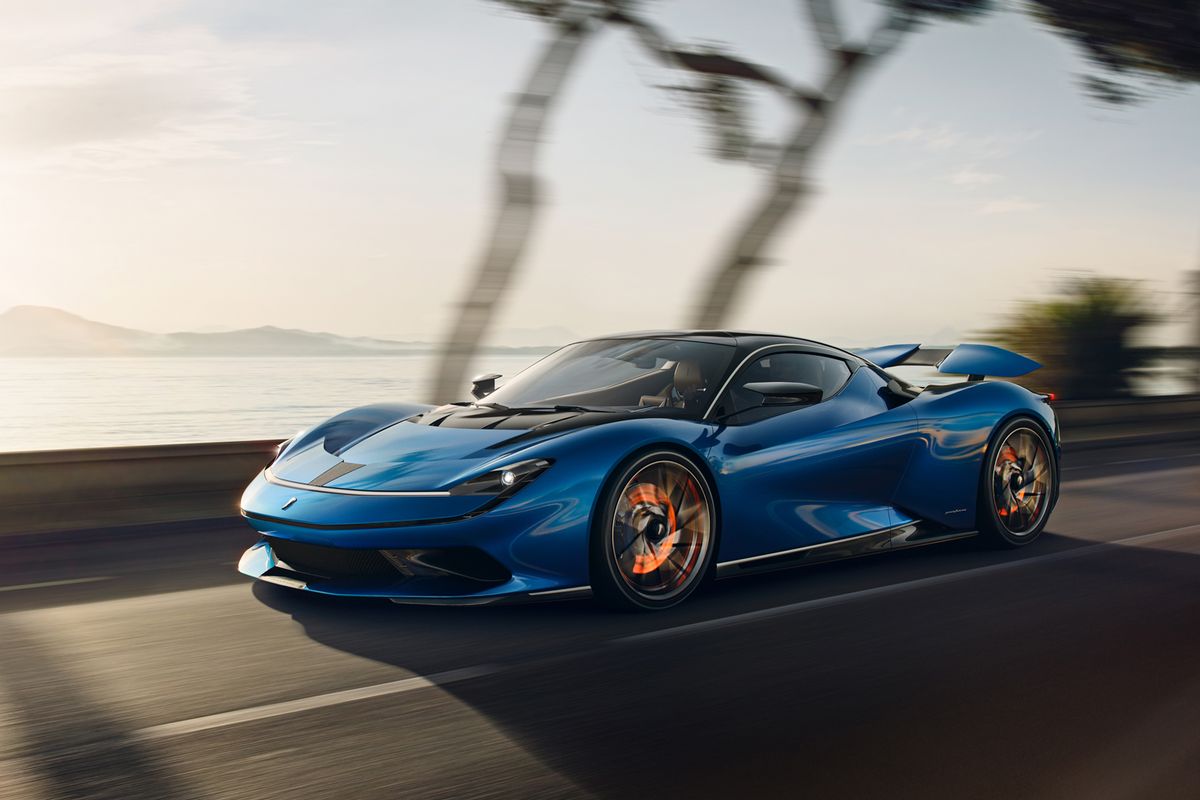
    It was at the 2019 Geneva Motor Show that Mahindra-owned Pininfarina showcased the world’s first luxury electric hyper-performance GT and it’s called the Battista. In fact, the company brought three models to the event. Back then, we told you that it doesn’t stop here and a new model was already in the pipeline. Speaking at a private event in Los Angeles, US, Automobili Pininfarina CEO, Michael Perschke revealed the plans of the company. He said, “We envisage a 5 model family now and by 2025 the family will be complete.”

    While deliveries of the Battista (PF0) will start in 2020, the company is already getting ready to showcase its next product – the PF1. Perschke had already said that the second car will slot somewhere between a Lamborghini Urus, Porsche Panamera Shooting Brake and a Ferrari GTC4 Lusso and of course, it will be an all-electric car. While there’s no doubting why the company is diving into the SUV segment, considering how big a global trend the segment is; it’s interesting to see Pininfarina taking the bull by the horns and streamlining its strategy for the Indian market. While it’s currently under development, and hence not much is known about it, of course, there are some details that Perschke threw some light on.

    In an exclusive interview during the 2019 Geneva Motor Show, Perschke said, “The car will have 4 seats, maybe 5 people can sit in, but it’s going to be super functional, super emotional, superb designs and it’; be a little higher, little longer than the Battista and it’s going to be super exciting and we have to do justice to this brand.” The company has now confirmed that the PF1 will come with a 4-seater configuration but with an optional rear-seat bench to offer a 5-seater variant. The interior trim will be made of rich material 90 per cent of which will be no plastic. However, it went on to state that 90 per cent of the dash will be wood.

    At a private event in Los Angeles though, a few more details were revealed and this includes the approximate price of the car. Perschke said that the second model will be priced from $200,000 ( ₹ 1.43 crore approx.) to $300,000 ( ₹ 2.15 crore) and will slot below the Battista which currently is priced at $2 million. He in fact said that the brand will never build a car which will cost less than $ 150,000 ( ₹ 1 crore approximately)

    Giving some more details about what the PF1 would look like, Luca Borgogno, Head of Design, Pininfarina said, ” The next car will be the first sustainable S-LUV (Sustainable Lifestyle utility vehicle). It will offer performance, luxury and comfort. We want to apply a low bonnet, big fender feeling and glass canopy feel to the car. We will work with suppliers to Boeing to have glass that can be darkened or lightened as the windows in the Dreamliner.” The roof canopy will also have heat reflection.

    On the dimensions front, the PF1 all-electric SUV will be 50mm lower than the Urus; it will be more than 5 metres long, more than 2 metres wide and will have an electric powertrain that will offer upto 1000 bhp. The PF1 will use 3 electric motors; 2 at back, one in front and will boast of a 50:50 weight distribution with 80 percent of weight below the H point since the batteries will be floor mounted.

    The PF1 will be based on a new platform that Pininfarina calls skateboard. The S-LUV will be the first car to be built on this platform and all future cars from Pininfarina will be based on it. The company says that the S-LUV will not be an off-roader but will be able to handle rough roads and some more. The car will come with AWD and air suspension will be part of the package.

    It is also confirmed now that the PF1 will come with 24-inch wheels which is a size bigger than the Lamborghini Urus. Of course, you’re wondering, whether it’s a limited edition model. Well, it isn’t. It was only the production of the Battista that was capped at 150 units. According to the folks at Pininfarina, the volume will vary with each model. As far as the PF1 (S-LUV) goes, it will have a minimum annual production of 1500 units. Between the Battista, PF1 and PF2, the company will not produce more than 5000 units annually.

    Production of the PF1 S-LUV will begin from 2022 and the car will be showcased for the first time as the Pura Vision Concept at the next Pebble Beach Concours d’Elegance.

  • BMW Executive Markus Duesmann Tasked With Reviving Audi

    BMW Executive Markus Duesmann Tasked With Reviving Audi

    Volkswagen on Friday installed former BMW executive Markus Duesmann to reinvent Audi after the German premium brand lost key engineering know-how and influence in the wake of the 2015 diesel-cheating scandal. Duesmann will become chief executive of Audi as well as take on board level responsibility for research and development at Volkswagen Group on April 1 next year, the Wolfsburg-based multi-brand group said on Friday.

    Duesmann’s job will include injecting new meaning into the company’s advertising slogan “Vorsprung Durch Technik”, or “advancement through technology”, after Audi fired a raft of senior engineers in the wake of the diesel scandal. “Markus Duesmann will do everything to unlock the huge potential of the Audi brand,” Volkswagen Group Chief Executive Herbert Diess said at a press conference in Wolfsburg on Friday. Audi, based in Ingolstadt, Bavaria was a major research and development hub within Volkswagen, setting standards in aerodynamic efficiency, lightweight aluminum construction, dual-clutch gearbox technology and four-wheel-drive systems.

    But the premium brand struggled after it was discovered that engine management software, used to manipulate exhaust emissions tests at VW, was designed by Audi engineers, leading to the firing of engineering chiefs and its long-term CEO. After Audi chief Rupert Stadler was dismissed, Audi installed a sales expert, Bram Schot has interim CEO, and the brand struggled to redefine “Vorsprung Durch Technik.”

    “We need to partly refine the ‘Vorsprung’. We are working on it,” Audi’s sales chief Hildegard Wortmann told Reuters at the Frankfurt car show in September. “We don’t need little ‘Vorsprung’ stories, we need real ‘Vorsprung’ stories,” Audi’s current head of research and development, Hans-Joachim Rothenpieler told Reuters. Audi’s electric car e-tron, as well as fuel cell technology, are two pillars upon which Audi can resurrect its brand claim, Rothenpieler said. Audi’s works council chief, Peter Mosch, welcomed the appointment of an external manager. “From Markus Duesmann and his team, we expect the stable utilization of our factories and a more courageous approach.”

  • Renault’s Delbos Vies For CEO Post As Hunt Narrows

    Renault’s Delbos Vies For CEO Post As Hunt Narrows

    Renault’s interim chief executive Clotilde Delbos has applied to take the job on a permanent basis, two sources familiar with the matter said, as the French carmaker edges towards a shortlist likely to also feature several external candidates.Financial chief Delbos was propelled to the job on a temporary basis after CEO Thierry Bollore’s ousting in mid-October, as Renault and its Japanese partner Nissan clear the decks of managers closely associated with the Carlos Ghosn era.

    Ghosn, who chaired the alliance between the two companies, was arrested in Japan a year ago on financial misconduct charges he denies, and Renault and Nissan have been striving to repair their strained ties since.

    Delbos, who joined Renault in 2012, had put herself forward for the CEO job but was not certain to feature on the shortlist of frontrunners, despite being one of the few likely internal candidates, one of the sources said.

    That selection, which would comprise around three names, is expected to be turned over to the group’s nominations committee in the coming days, the source added.

    Delbos declined to comment when asked by Reuters earlier this week whether she had applied. Renault also declined to comment on Friday.The French carmaker, chaired by Jean-Dominique Senard, a former executive at tire maker Michelin parachuted in following the Ghosn scandal, is expected to choose a new CEO by year-end so that the group can try and fully refocus on its operations.

    Like many peers, both Nissan and Renault are struggling with falling sales in a faltering global auto market.

    Several heavyweight external candidates have been cited as good fits for Renault, and the French government, which has a 15% stake in the carmaker, has already made clear it was not opposed to a non-French national getting the job.

    Didier Leroy, a senior Toyota executive who was already seen as a potential replacement for Ghosn when the latter was close to departing last year, has once again been cited in the recruitment process, two other sources close to the situation said.

    “I do not pay attention to these rumors and remain 100%focused on my job at Toyota, where I enjoy a very trustful relationship with Akio Toyoda,” Leroy said, referring to Toyota’s president in a statement sent to Reuters through the Japanese carmaker.

    One of the sources said that Patrick Koller, the Franco-German CEO of car parts maker Faurecia, and Luca de Meo, the Italian boss of Volkswagen-owned SEAT, also ticked many of the boxes for recruiters, namely as both spoke French.

  • Nissan Recalls Nearly 400,000 Vehicles Over Braking System Defect In The US

    Nissan Recalls Nearly 400,000 Vehicles Over Braking System Defect In The US

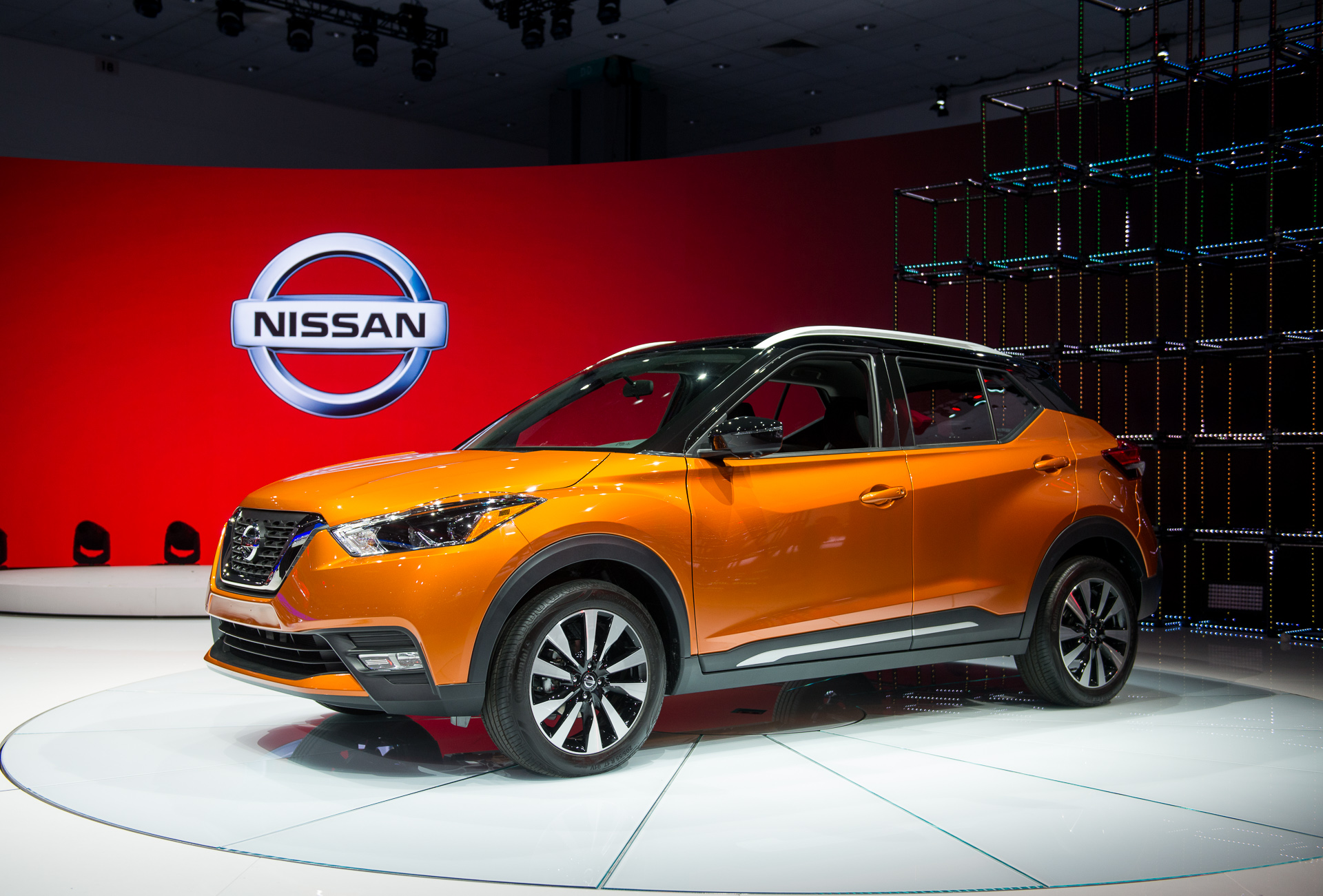
    Japan’s Nissan Motor has said it is recalling 394,025 cars in the United States over a braking system defect, causing concerns that a brake fluid leak could potentially lead to a fire. The leak into internal circuit boards will trigger a warning to drivers, which if ignored may lead to a fire in “rare instances,” Nissan said in a filing dated Nov. 8 with the National Highway Traffic Safety Administration (NHTSA) under recall number 18V-601. “… if the warning is ignored and the vehicle continues to be operated in this condition, the brake fluid leak may potentially create an electrical short in the actuator circuit, which in rare instances, may lead to a fire,” the Japanese automaker said.

    The recall, which was reported on Friday by U.S. media, includes Maxima sedans from 2016 through 2018, Infiniti QX60 luxury crossovers from 2017 to 2019, Murano SUVs from 2015 to 2018 and Pathfinder SUVs from 2017 to 2019, the filing showed.

    The document does not mention whether the brake system defect actually caused any fires or injuries.

    The company also reportedly said that it was working to fix the issue and that owners of the affected cars will be notified starting early next month.

    “Once the remedy is available, owners will receive a final notification letter asking them to bring their vehicle to an authorized Nissan dealer or INFINITI retailer to have the remedy work completed at no cost for parts or labor,” it told NPR in an emailed statement.

    The development comes less than two months after NHTSA opened a preliminary investigation into 553,000 Nissan Rogue sport utility vehicles after reports of their automatic emergency braking systems engaging without warning or an obstruction.

    Improper inspections of brakes, steering wheels, speed measurements and vehicle stability had also caused the company to issue a recall of several thousand vehicles in Japan late last year.

    In September, the company recalled 1.3 million vehicles to fix a problem with its backup camera displays.

  • Toyota subsidiary to set up another airbag plant in northern Vietnam

    Toyota subsidiary to set up another airbag plant in northern Vietnam

    Japanese auto parts maker Toyoda Gosei plans to build another airbag plant in Thai Binh Province at a cost of $16.8 million next year.

    Work on the plant will begin in May 2020. When completed in October 2021 it will help increase the company’s capacity in Vietnam to 25 million airbags annually, Toyoda Gosei said in a statement on Wednesday. It will employ 700 workers initially, increasing to 2,000 by the end of 2023.

    Toyoda Gosei, a subsidiary of Toyota Motor Corp., built its first plant in Vietnam in Hai Phong City in 2004. Last July it opened a $24.6-million second plant at the Tien Hai Industrial Park in Thai Binh Province.

    It plans to increase the capacity of the Hai Phong factory to meet increasing orders. Airbags produced in Vietnam are exported mainly to Japan but also to other markets such as ASEAN and North America.

    Established in 1949, Toyoda Gosei has 67 facilities and factories in 17 countries around the world.

  • Cars to enter airports fee free for 10-15 minutes

    Cars to enter airports fee free for 10-15 minutes

    From 2020, Vietnam’s airports will allow cars to wait 10-15 minutes while dropping or picking up passengers. Each airport will have its specific no-toll timeframe, which will be decided by the government, said Vu The Phiet, General Director of the Airports Corporation of Vietnam (ACV), which manages 21 civilian airports in the country.

    ACV is currently upgrading systems to collect fees digitally, including the function to record the time cars enter and leave the airports.

    For instance, cars entering and leaving Tan Son Nhat or Noi Bai airports will have their license plates photographed while entering. When leaving, if the cars are still within their allowed timeframe, the barrier at the fee collection point will lift on its own, otherwise the cars will have to pay to exit, Phiet said.

    Currently, cars are charged VND15,000 ($0.65) for the first 60 minutes after they enter the airports, and VND5,000 ($0.22) for every 30 minutes thereafter.

  • 2020 Honda City To Be Unveiled This Month In Thailand

    2020 Honda City To Be Unveiled This Month In Thailand

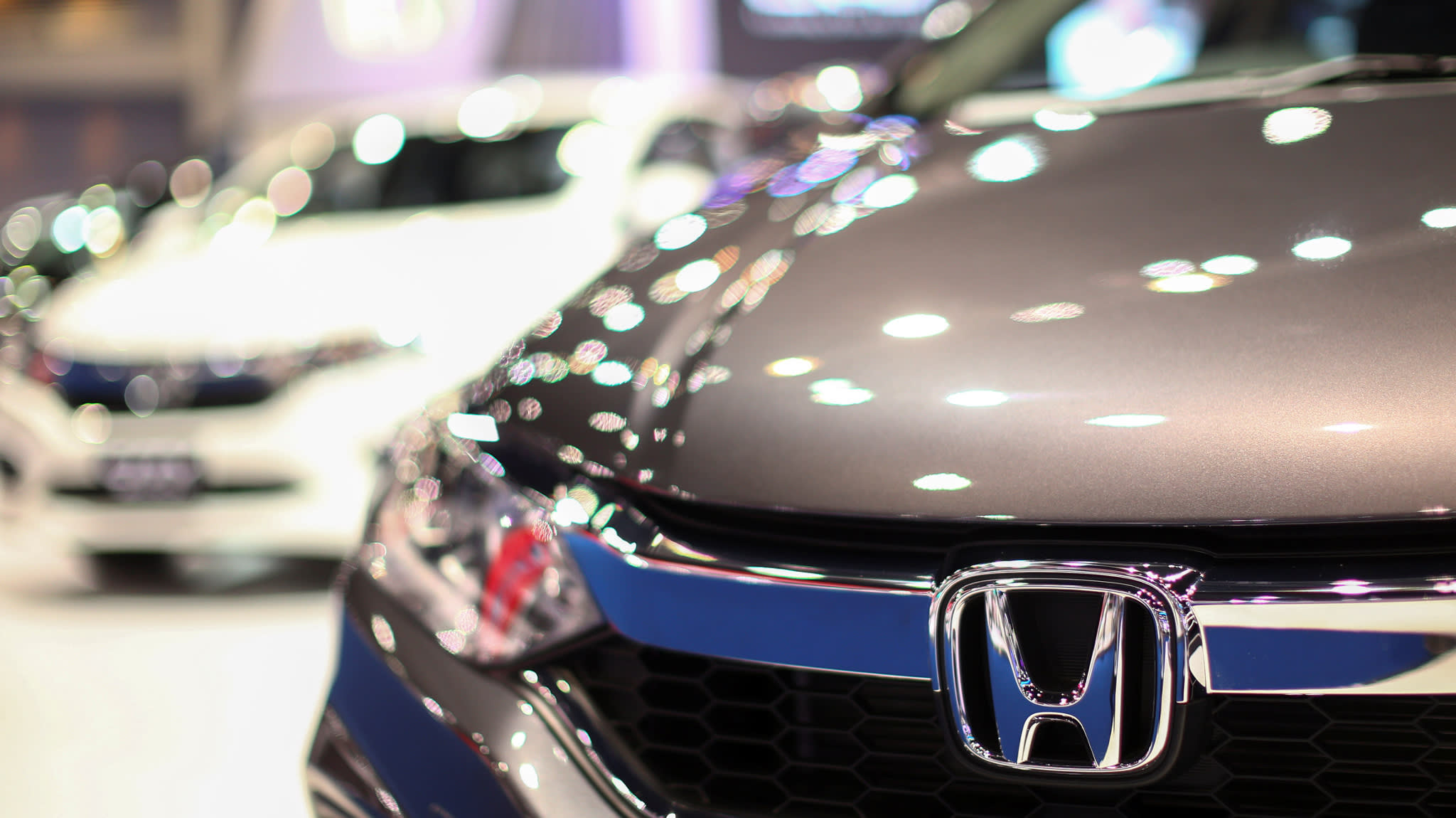
    The next-generation Honda City has been under development for a while now, and the popular-selling sedan is now confirmed to be making its global debut later this month. The 2020 Honda City will be officially unveiled on November 25, 2019, in Thailand; ahead of the Bangkok Motor Show, while the India launch is expected to take place sometime next year. The all-new City is set to get a complete overhaul and is expected to grow in proportions. The Honda promises a sportier exterior design and it will take inspiration from the new Civic and Accord models in the automaker’s line-up, also bringing a premium touch.

    The fifth-generation Honda City (seventh-gen globally) is expected revamped headlamps, a larger and wider chrome grille, and slightly curvaceous silhouette. Expect to the C-shaped LED taillights also making their way on the sedan, as part of the Honda family design. Inside, the car is expected to borrow heavily from the new generation Jazz, sharing the same underpinnings too. The dashboard design is likely to be the same sporting a new touchscreen infotainment system and a digital instrument console. Honda could introduce new connected car tech on the 2020 City along the lines of what MG And Kia offer on their respective cars.

    The big update will be under the hood of the 2020 Honda City that will get the new 1.0-liter VTEC three-pot turbocharged petrol motor for the Thai market. The turbo mill marks a comeback on the car since the first-generation version was introduced in the 1980s, and Honda says the turbocharged engine will provide 33 percent better fuel efficiency while offering improved performance. The unit is expected to churn out about 120 bhp and 200 Nm of peak torque. The smaller motor has been deemed necessary for the sedan to meet the Phase 2 Eco Car criteria in Thailand, which mandates Euro 5 compliance and a fuel consumption figure not exceeding 23.25 kmpl.

    It will also come with the new dual-motor Intelligent Multi-mode Drive (i-MMD) hybrid powertrain that debuted on the all-new Jazz earlier this year. The tried and tested 1.5-liter naturally aspirated iVTEC petrol will continue to be on offer as well churning out about 118 bhp, while the 1.5-liter iDTEC diesel will also remain on offer, particularly in India. India is expected to get a hybrid version of the City, which will help achieve higher efficiency figures and lower emissions as well. Transmission options will include a 5-speed manual, 6-speed manual or a CVT unit, depending on the engine and the market.

    The Honda City remains for ASEAN as well as Latin American markets and will go on sale in other South Asian countries this year. Honda Car India is likely to showcase the model at the 2020 Auto Expo, and we will get a fair idea on the pricing at the same time as well. That being said, do expect a marginal hike in prices when the model goes on sale next year.

  • All-New Ferrari Roma Revealed

    All-New Ferrari Roma Revealed

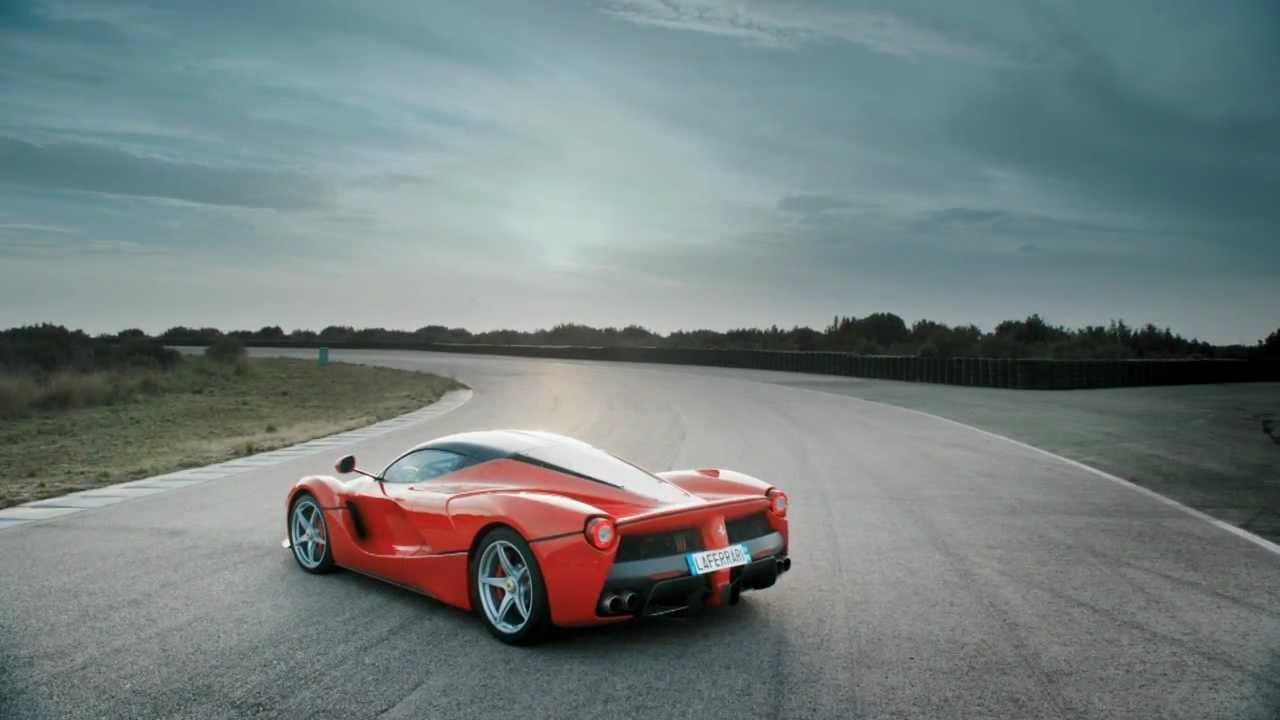
    The new Ferrari Roma is here! It is a brand new model from the Italian marquee and it is one of those cars which make you go weak in the knees, even when you look at it in photographs. The flared fenders, sleek headlamps, and body-colored grille are a departure from traditional Ferrari styling but stunning nonetheless! The Roma is a nod to the Italian ‘La Dolce Vita’ concept which means to live a life full of pleasure and luxury and sure enough, the way the Roma looks and the price tag with which it will come.

    It definitely means that the Roma will be an exclusive affair and it sits in accordance with Ferrari’s plan of launching three brand new cars this year and one can see it on roads, globally, in the first quarter of 2020.

    Sleek lines, elegant silhouette and its understated class, make the Ferrari Roma look like a million bucks!

    Sitting in line with the typical Ferrari design, the Roma looks more like a concept and less of a production car. Sleek lines, elegant silhouette and its understated class, make the Ferrari Roma look like a million bucks! The car is longish at 4.6 metres in length and weighs in at 1,472 kg (dry weight).

    The 4.0-liter turbo V8 sits between the front and the middle and doles out about 620 bhp at 5,750-7,500 rpm along with churning out a massive 760 Nm of peak torque at 3,000-5,750 rpm. There is an 8-speed DCT gearbox which was taken from the SF90 Stradale! The Ferrari Roma has a top-speed in excess of 320 kmph and does the 0-100 kmph sprint in 3.4 seconds. The 0-200 kmph sprint takes 9.3 seconds.

  • Tesla To Build New Plant And Design Centre In Germany

    Tesla To Build New Plant And Design Centre In Germany

    Tesla will build its first European factory and design center near Berlin, giving the U.S. electric car pioneer the coveted “Made in Germany” label just as local rivals Audi, BMW and Mercedes prepare to launch competing cars.

    Tesla Chief Executive Elon Musk announced the move at a prestigious German car awards ceremony late on Tuesday and said the new plant would make batteries, powertrains and cars – starting with the Model Y sports utility vehicle.

    “Everyone knows German engineering is outstanding for sure. You know that is part of the reason why we are locating Gigafactory Europe in Germany,” Musk said at the ceremony in Berlin.

    The plan is a big boost for Germany as a centre for manufacturing after BMW and Mercedes in recent years chose to build new factories in Hungary, and after its auto industry was hit hard by Volkswagen’s admission in 2015 that it cheated U.S. diesel emissions tests.

    Germany’s powerful manufacturing industry has been slowing, with data on Thursday set to show whether Europe’s biggest economy has slipped into recession for the first time since 2013.

    Tesla is struggling to ramp up production and has yet to prove it can be consistently profitable as rivals including Audi-owner Volkswagen retool plants to mass-produce electric cars.

    Musk said the factory would be near Berlin’s new Brandenburg international airport, diversifying the Silicon Valley firm’s production beyond the United States at a time when global trade tariffs make exports more difficult. Besides Europe, Tesla is opening a factory in Shanghai.

    Tesla’s proposed factory will be within commuting distance of Poland, where labor costs are cheaper, a rival manufacturer – who also looked at the site – told Reuters.

    “Tesla’s decision to build an ultra-modern factory for electric cars in Germany is further proof of the appeal of Germany as an automotive hub,” Economy Minister Peter Altmaier said on Wednesday.

    “We think we now have the chance, in the coming years, to become an important international center in this future-oriented sector,” he said.

    The German government has earmarked financial support for making electric car battery cells locally as a way to secure manufacturing jobs as tougher emissions rules threaten demand for older technologies, like diesel engines.

    Dietmar Woidke, the premier of the Brandenburg state that surrounds Berlin, said any official support given to Tesla would be in accordance with European Union rulesAltmaier said there had been no discussion so far about any subsidies for Tesla’s plans, adding the company would be treated like all other carmakers.

    In a high-profile example of the impact of Brexit, Musk said he picked Germany for his new factory over Britain because of uncertainty over the nation’s exit from the European Union.

    “Brexit made it too risky to put a gigafactory in the UK,” he said in an interview with industry website Auto Express.

    Germany’s biggest labor union, the influential IG Metall, was quick to welcome Tesla’s plan. “This strengthens Berlin as an industrial location and creates jobs. We hope this sets an example,” said Birgit Dietze, IG Metall’s regional head.

    Even Germany’s auto industry association, VDA, welcomed the arrival of a U.S. competitor.

    “Elon Musk’s announcement shows how important Germany is as a location for producing electric vehicles in Europe,” VDA said. “We don’t shy away from competition, quite the opposite.”

    German carmakers and suppliers are preparing to build more than 150 electrified vehicles by 2023, VDA said.

    While Germany’s renowned car industry is mainly based in the south of the country, the capital has become a hub for start-ups and has attracted many creative and technology firms since the fall of the Berlin Wall three decades ago.

    “Tesla is coming to Brandenburg with a big investment,” said state premier Woidke, without giving details “We lobbied for this for a long time in intensive talks and with good arguments.”

    Berlin’s minister in charge of economic affairs, Ramona Pop, told public broadcaster RBB there had been talks about creating 6,000 to 7,000 jobs in production alone, with hundreds or even thousands more in areas such as design, software and research.

    Musk’s appearance at the awards ceremony is another example of Tesla’s efforts to give its cars the German stamp of quality.

    It already has an engineering firm in Pruem that specializes in automated manufacturing systems for battery factories and has tested its cars on the Nordschleife, the notorious
  • Tata Motors’ Global Wholesales Down By 19% In October 2019

    Tata Motors’ Global Wholesales Down By 19% In October 2019

    Tata Motors Group has released its global wholesale sales numbers for the month of October 2019. The group’s cumulative wholesales, including Jaguar Land Rover, stood at 89,108 vehicles, registering a decline of 19 percent, as compared to the company’s total wholesales from October 2018, which was around 1,10,009 units. The company’s total passenger vehicle sales for the month of October 2019 stood at 60,630 units, down by about 7 percent, as compared to the 65,193 units sold during the same month last year.

    Tata Group’s passenger vehicle sales also include the global wholesales for Jaguar Land Rover stood at 47,278 vehicles in October 2019. Jaguar’s wholesales for the month were 12,367 vehicles, while Land Rover wholesales for the month were 34,911 vehicles. The total number also includes the 3,721 units sold by CJLR, the joint venture between JLR and Chery Automobiles.

    The company’s total global wholesales from Tata Motors’ commercial vehicles segment stood at 28,478 units in October 2019, registering a de-growth of 36 percent, over October 2018. This also includes sales from Tata Daewoo.

    In India, Tata Motors’ domestic sales reached 39,152 units, as compared to the 57,710 vehicles sold in October 2018, registering a de-growth of around 32 percent.

  • Nissan Cuts Profit Forecast After 70% Quarterly Plunge

    Nissan Cuts Profit Forecast After 70% Quarterly Plunge

    Nissan Motor reported a 70% drop in quarterly profit on Tuesday and cut its full-year forecast to an 11-year low, hit by a strong yen and falling sales, and highlighting the turmoil at the Japanese automaker after the ouster of Carlos Ghosn.

    The latest weak showing from Nissan, which also slashed its interim dividend by 65% after its worst second-quarter performance in 15 years, illustrates the scale of the work ahead for its new executive team, which is due to take over on Dec. 1.

    Following the ouster of former chairman Ghosn almost a year ago, Nissan has been battered by falling profit, uncertainty over its future leadership and tensions with top shareholder Renault SA – whose shares fell 2% to their lowest since April 2013 after Nissan’s downbeat guidance.

    Nissan shares, down 19% this year, closed up 1% at 714.5 yen before the results announcement.

    Operating profit at Japan’s second-biggest automaker by sales came in at 30 billion yen ($275 million) in July-September versus 101.2 billion yen a year earlier.

    That compared with a mean forecast of 47.48 billion yen from nine analyst estimates compiled by Refinitiv. Nissan announced an interim dividend of 10 yen per share, down from 28.50 yen a year ago.

    The company’s global vehicle sales fell 7.5% to 1.27 million in the quarter. Sales in China, its biggest market, fell 2.5%, while those in the United States fell 4.5%.

    “Our sales in China outpaced the market, but sales in other key regions, including the U.S., Europe, and Japan underperformed,” Stephen Ma, a corporate vice president who will become chief financial officer next month, told reporters.

    Slowing demand for cars in the United States and China, the world’s biggest auto markets, has led to cut-throat competition, and Nissan’s slump in first-half sales has knocked operating profit off course from the automaker’s full-year target.

    “We are revisiting all our assumptions, and as you can see that is why we revised down our forecast for sales volume for the full year,” Ma said.

    Nissan slashed its full-year operating profit forecast by 35% to 150 billion yen, which would be its worst full-year performance in 11 years.

    It now sees global retail sales at 5.2 million vehicles, down from a previous forecast for 5.5 million, bracing for its worst annual sales in six years.

    Nissan in the past few weeks has announced a revamp of its top ranks with younger executives including Ma, while naming the head of its China business, 53-year-old Makoto Uchida, as its next chief executive. The company is seeking to draw a line under the legacy of Ghosn, who is awaiting trial in Japan on charges of financial misconduct, which he denies.

    The automaker said it would hold an extraordinary shareholders meeting on Feb. 18, 2020, to vote on a proposal for Uchida and other members of the new executive team to become company directors, while former Nissan CEO Hiroto Saikawa, outgoing interim CEO Yasuhiro Yamauchi and former Renault CEO Thierry Bollore were scheduled to vacate their director posts.

    Years of heavy discounting and fleet sales, particularly in the United States, has cheapened the automaker’s brand image while lowering vehicle resale value and denting profit.

    Nissan is implementing a global recovery plan under which it will axe nearly one-tenth of its workforce and cut global vehicle production by 10% through 2023 to rein in costs which it has said ballooned when Ghosn was CEO.

  • Car Marketplace Eyes Digital Bank License

    Car Marketplace Eyes Digital Bank License

    Used car marketplace Carro is eyeing a wholesale digital banking license in Singapore to expand its business.

    A car marketplace operator may not seem like a natural fit to apply for a digital banking license but it certainly does for Carro’s profitable subsidiary, Genie Financial Services. The license can beef up its underwriting capabilities for automotive-related loans, said Carro’s chief executive, Aaron Tan.

    A lot of times, when we finance end-car dealers, the risk is in not understanding their cash flow. But if we own a digital bank, we believe we can extract quite a bit of information from the car dealers. If they do deposits, their floor financing and hire purchases from us, we will have a very good view, internally, of whether the account conduct is fine and lower our risk of default, said Tan.

    The startup is already in talks with potential partners to apply for the license, which could open the door to SME lending, Tan added. He cites Silicon Valley Bank, which provides banking services to startups in the US, as a model Genie could emulate.

    A license will allow us to do a lot more; for one, we will be able to unlock unsecured loans. Two, it legitimizes our ambition to move beyond just the car vertical… The part that I’m very excited about is banking new-age businesses like startups. This is where we think the future of a company like this should lie, Tan said. The startup operates its used car marketplace in Singapore, Indonesia, and Thailand, and recently invested $30 million in a Malaysian peer.

    Currently, Genie provides loans and insurance services to car dealers and car buyers, along with technology platforms for dealers to manage their stock financing and loan origination. It has a small headcount of 13 and is headed by Helen Neo, a former senior executive vice-president at Maybank and head of personal financial services at HL Bank.

    Genie more than tripled its net profit from the previous year to over S$3 million, on the back of over S$7 million in revenue for the financial year ended March 2019, Neo revealed. She attributes the unit’s substantial margins to a sticky customer base, as well as banks’ support in providing capital.

    Initially, we struggled a bit, as we had to rely on VC funds (for lending). But after we were more engaged in the business, we managed to convince the banks to lend to us… Now, we’ve got at least two banks giving us full support. Today, our (credit) lines with the banks are more than S$80 million,» she said.  Carro is backed by Insignia, Softbank Ventures Asia and EDBI, the investment arm of the Singapore Economic Development Board, among other investors. It has raised some US$108 million in venture funding thus far.

    Carro’s move comes amid a few expressions of interest from other local startups. Peer-to-peer-lender Validus Capital is in talks with OCBC, Keppel Corporation, and Vertex Ventures to form a digital bank consortium. However, fintech Nium (formerly Instarem), one of the first startups to raise its hand to signal interest in a digital banking license, this week said it would no longer proceed to apply for one

  • European Factories At Risk In Peugeot-Fiat Merger

    European Factories At Risk In Peugeot-Fiat Merger

    Fiat Chrysler and Peugeot owner PSA’s pledge not to close factories if they merge is likely to come under heavy strain as the combined group would have spare production capacity of almost six million vehicles in a slowing autos market. The companies last week unveiled plans to create a $50 billion group that would leapfrog Hyundai, General Motors, Ford and Honda to become the world’s No.4 automaker, based on their combined 8.7 million vehicles sold last year.

    The new car and truck making giant would have a potential manufacturing capacity of 14 million vehicles, forecasters LMC Automotive told Reuters. But the industry has entered a downturn and the European small car market in particular – where both PSA and Fiat Chrysler (FCA) are heavily exposed – is under pressure.

    “The utilization rate would be low at 58%, which would leave the group with almost six million units of spare capacity worldwide,” LMC Automotive said. “Europe is likely to bear the brunt of any potential plant closures.”

    Labour unions and politicians have already voiced concerns about job losses, and both France-based PSA and Italian-American FCA have ruled out factory closures in an attempt to quell fears. But a deadline to meet 2021 and 2025 emissions goals in Europe adds pressure on FCA to adopt PSA’s more efficient engines, calling into question some of FCA’s engine plants in Europe – mainly in Italy, as well as in Poland – in particular.

    “The focus will be Europe, where sub-scale product lines, powertrains and future EV (electric vehicle) investments could be combined,” Bernstein Research analyst Max Warburton, said in a recent note.

    A combined PSA-FCA would have a market share of 22% in Europe, September registration data from auto industry association ACEA shows, leapfrogging Volkswagen which, with a market share of 20%, has been the largest carmaker in Europe.

    PSA has already helped Opel, bought from General Motors in 2017, to make progress with emissions targets by rolling out the group’s small car platform and engines to the Opel factory in Zaragossa, Spain, where it builds the Opel Corsa.

    The CMP platform is now used in factories in Poissy, France, Trnava, Slovakia, and Kenitra, Morocco to build Peugeot, Citroen and DS branded vehicles and could be extended to fit FCA’s Lancia, Alfa Romeo and Fiat models to boost economies of scale.

    The market for small cars is under pressure because emissions rules are forcing entry-level cars to add complex catalytic converters, making them less affordable.

    “Under the new CO2 targets these cars will need to get several updates that will be expensive. This will force some players to drop some of these models as the level of investment is very high,” according to Felipe Munoz, global analyst at JATO Dynamics, a forecasting firm.

    PSA has already axed the Opel Adam and Karl models because it became uneconomical to make these entry-level vehicles emissions compliant. Meanwhile, Ford has dropped its Ka model, which shared a platform with FCA’s Fiat 500.

    Overall, the market share of cars in the so-called A and B small car segments is expected to shrink to 38% in Europe by 2021, down from 40% last year, whereas demand for sports utility vehicles is expected to hold up well, LMC’s Sammy Chan said.

    As a result, low volume manufacturing plants in Europe are increasingly vulnerable, such as Fiat’s Kragujevac factory in Serbia and PSA’s Vauxhall plants in Ellesmere Port and Luton in Britain, LMC said.

    In terms of engine plants, PSA has major operations in Tremery and Douvrin in France, and has also retooled the former General Motors Szentgotthard factory in Hungary.

    FCA’s Fiat, Lancia and Alfa Romeo brands currently source their engines from plants in Termoli and Pratola Serra in Italy, as well as the Bielsko-Biala plant in Poland.

    “In terms of engine plants, it is likely that in the long term, one or two FCA plants in Europe would no longer be needed,” LMC said.

  • Ford Plans To Close Engine Plant In Michigan As Part Of UAW Deal

    Ford Plans To Close Engine Plant In Michigan As Part Of UAW Deal

    Ford Motor plans to close an engine plant in Romeo, Michigan, as part of a tentative agreement with the United Auto Workers union for a new four-year contract, a source told Reuters on Thursday. The 600 hourly workers at the plant will be offered jobs at a nearby transmission plant or buyouts, a source said. The UAW said Wednesday the Ford deal “secured over $6 billion in major product investments in American facilities, creating and retaining over 8,500 jobs for our communities.”

    Ford will close the plant in the future under the UAW agreement. Ford and the UAW declined to comment. In March 2017, Ford said it was investing $150 million in the Romeo Engine Plant to boost capacity for engines and new tooling for components, one of three Michigan plants at the time it said were getting new investments. Ford said the investment was to boost the plant building engines for vehicles that include Ford Super Duty, E-Series, Ford Shelby GT 350 Mustang and Shelby GT350R Mustang, along with components for F-Series, Mustang, Explorer and Edge.

    U.S. President Donald Trump praised Ford’s decision to invest in Romeo and two other Michigan plants. “Major investment to be made in three Michigan plants,” Trump posted on Twitter at the time. “Car companies coming back to U.S. JOBS! JOBS! JOBS!”

    In contrast to Ford, General Motors Co endured a 40-day-strike by its U.S. hourly workforce that cost it about $3 billion before winning approval for a new labor deal earlier this month. Detailed terms of the Ford deal were not released, but they are expected to echo those agreed to with GM, as the union typically uses the first deal as a pattern for those that follow.

    The deal includes a signing bonus of $9,000 per person, according to a person familiar with the deal who asked not to be identified. Union members at GM received $11,000 per person. UAW leaders from the various U.S. plants will meet on Friday to potentially approve the deal, which then would be sent to the 55,000 members at Ford for final approval, a union spokesman said.