Tag: car

  • Hyundai Motor net profit plummets 67%

    Hyundai Motor net profit plummets 67%

    Hyundai Motor’s operating profit plummeted 76 percent on-year in the third quarter as a recall in the U.S. and sluggish growth in major markets hurt the automaker’s bottom line. Korea’s No. 1 carmaker by sales announced Thursday that it posted 289 billion won in operating profit in the July-Sept. period.

    Its net profit was 306 billion won, down 67.4 percent on-year.

    “To fortify quality control, Hyundai Motor rolled out a recall related to airbags and engines which resulted in a 500 billion won one-time cost realized in the Q3 report,” said a Hyundai Motor official.

    Operating costs totaled 3.4 trillion won in the third quarter, according to the carmaker, which is 8.6 percent more than during the same period last year.

    Despite good sales in Europe and emerging markets like Brazil and Russia, low demand in the U.S. and China dragged down overall sales. It sold 1.12 million units globally in the third quarter, 0.5 percent less than during the same period last year.

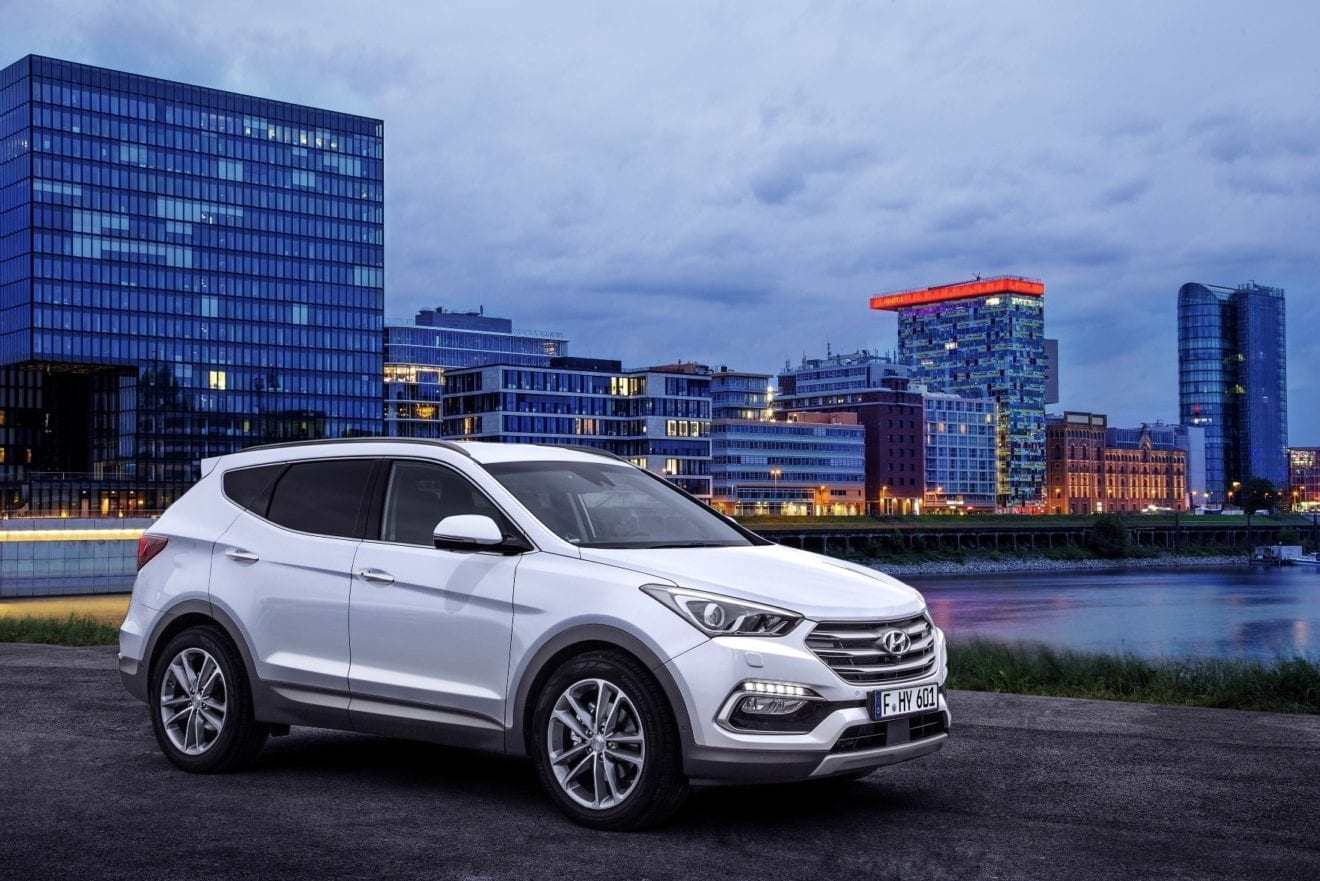
    The domestic market got a bost from the new Santa Fe SUV, but a decreased number of operating days at dealerships resulted in Hyundai Motor selling just 171,443 units, a 1.4 percent drop compared to last year. Chinese sales dropped by 3.7 percent on-year, selling 181,000 units. Sales in the U.S. dropped by 4.1 percent on-year to 302,000 units.

    Hyundai Motor expects profitability to improve in the fourth quarter and going into next year with the launch of new SUV models and a reduction in costs.

    “In the fourth quarter, the new Santa Fe SUV and an upgraded Tucson SUV will launch in the U.S.,” said a Hyundai Motor official.

    “The implementation of a new platform starting next year will help reduce costs and raise efficiency as well.”

    Hyundai Motor shares fell by 5.98 percent to 110,000 won on Thursday as of press time.
  • Hyundai brings wearable robotics to factories

    Hyundai brings wearable robotics to factories

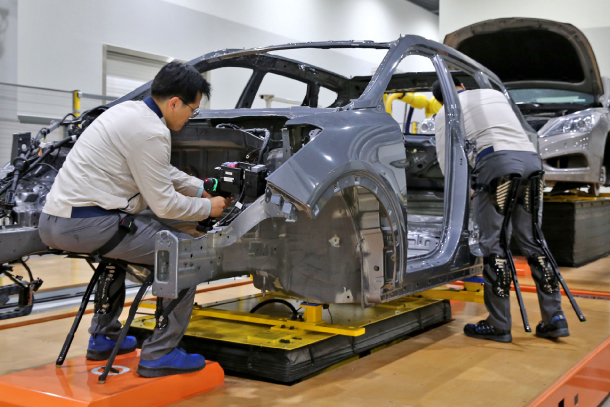
    The Hyundai Motor Group will expand the use of wearable robots at its facilities as it works to make robotics a major source of revenue, the company said Monday. Since September, Korea’s largest automaker has been testing the Hyundai Chairless Exoskeleton (H-CEX) at its North American factory. The H-CEX is an assistive robot for workers who have to stay in a seated position throughout the day. By the end of this year, the carmaker will introduce the Hyundai Vest Exoskeleton (H-VEX) at the same facility.

    The H-CEX, the first wearable developed by Hyundai for use at production sites, reduces the use of waist and lower body muscles by 80 percent, reducing the fatigue that results from being in the same seated position for a long period of time, Hyundai said in statement. The soon-to-be introduced H-VEX exoskeleton is for workers in jobs that require a lot of arm lifting. The machine vest will support the upper body and protect neck and shoulder muscles.

    “By expanding test applications, we hope to prove the technological effectiveness of our wearable robots,” Hyundai said in statement.

    The two exoskeletons were developed by Hyundai’s robotics team, established in May after the company named robotics as one of its five pillars for the future.

    The team is preparing to launch other robots focusing on three main areas: wearables, service robots and mobility robots.

    Hyundai is gearing up to test a hotel robot capable of providing room service and guiding guests. It will be introduced at the Haevichi Hotel & Resort on Jeju Island and at the Rolling Hills Hotel in Hwaseong, Gyeonggi, from the end of this year.

    A car-selling robot with natural language conversation capabilities and artificial intelligence will be prototyped by early next year. By 2020, the automaker plans to introduce a robot that can autonomously charge electric vehicles at charging stations.

    “We believe that robotics could be a solution not only for mobility but also for production in areas suffering from population decline,” a spokesperson for Hyundai said. “We plan to make notable achievements in robotics using technological data we have accumulated while developing autonomous cars.”

    Hyundai is not the only automobile maker bringing exoskeletons to assembly lines. U.S. automaker Ford has tested EksoVest, an upper-body assisting wearable jointly developed with Ekso Bionics. It was introduced at two U.S. factories in November last year. Ford announced in August a plan to bring the robot to 15 plants globally.

    German automakers BMW and Audi are also developing wearable aids for factory workers.

    According to market tracker BIS, the world’s wearable robot market is due to grow by 50 times from $96 million in 2016 to $4.65 billion by 2026.

  • Nissan Leaf approved for vehicle-to-grid use in Germany

    Nissan Leaf approved for vehicle-to-grid use in Germany

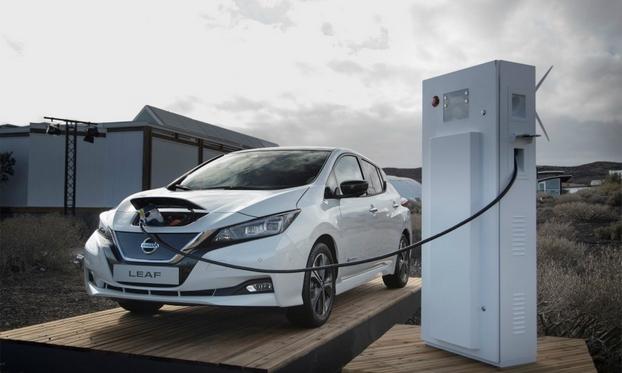
    Nissan’s Leaf is the first electric vehicle to secure regulatory approval as an energy backstop for Germany’s electricity grid. So-called vehicle-to-grid (V2G) technology is a connection between the EV and the grid through which power can flow from the grid to the vehicle and vice-versa, potentially enabling car owners to sell energy to the network. This would allow utilities to use EVs as a backstop if demand rises.

    Nissan said it would initially target corporate clients with fleets of more than 60 electric vehicles, adding that services based on V2G technology would be offered in Germany starting next year.

    “We strongly believe in an emission-free future,” said Guillaume Pelletreau, Vice President and Managing Director, Nissan Center Europe. “Leaf batteries could make an important contribution to energy transition in Germany and a sustainable future.”

    The initiative was also supported by Daimler-backed The Mobility House, local utility Enervie and German transmission system operator Amprion, which is co-owned by RWE and infrastructure investors including Munich Re, Swiss Life and Talanx.

    Nissan is relying on the CHAdeMO charging standard, which has been jointly developed by several Japanese companies as a competitor to Tesla’s supercharger system and the European-backed Combined Charging System (CCS).

    That puts Nissan at odds with European automakers, including BMW and Volkswagen, who are pushing to have the CCS, which is also capable of V2G services, established.

    “Nissan is ahead for now but other technologies, including Tesla’s supercharger can theoretically do the same thing,” said Thomas Raffeiner, chief executive and founder of The Mobility House.

    Nissan has so far sold about 370,000 electric vehicles and, along with top shareholder Renault, has been very active in exploring how car batteries can be integrated into the wider power system.

    While a mass uptake of EVs is expected to put a major strain on the power grid and require billions of euros in infrastructure investments, car batteries have already proven that they can become part of the network.

  • BMW expands recall on fire risk to 1.6 million diesel vehicles

    BMW expands recall on fire risk to 1.6 million diesel vehicles

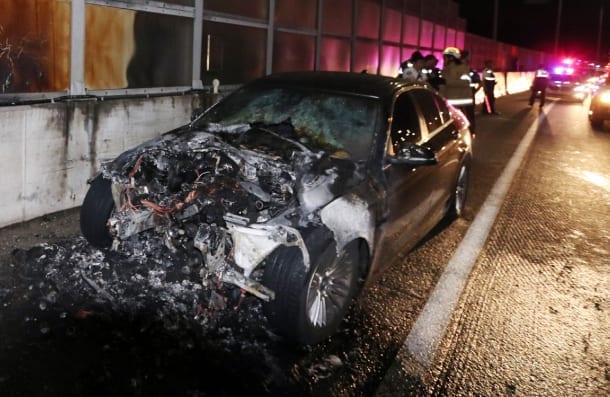
    BMW is recalling about 1.6 million diesel cars to fix a potential fire hazard in their engines, expanding repairs from just under half a million vehicles in Europe and Asia. The voluntary service action follows a BMW investigation that found coolant could leak from the car’s exhaust recirculation unit. The defect can lead to sparks while driving and cause fires in “in extreme cases,” the automaker said Tuesday in a statement.

    South Korea’s government, after reports of 40 fires this year, asked drivers to keep vehicles off roads until undergoing checks. Police also raided the automaker’s office in Seoul to probe the safety issue, after videos of cars engulfed by fire went viral.

    The vehicles affected — diesels with four- and six-cylinder engines — were produced between 2010 and 2017, BMW said.

    After the initial recall announced in August, BMW’s internal investigation found more vehicles with similar technical setups. The company said it will replace the components as necessary.

    BMW last month cut its profit forecast, blaming an increase in warranty provisions alongside trade tensions and pricing pressure.

  • New 2018 Hyundai Santro Launched In India

    New 2018 Hyundai Santro Launched In India

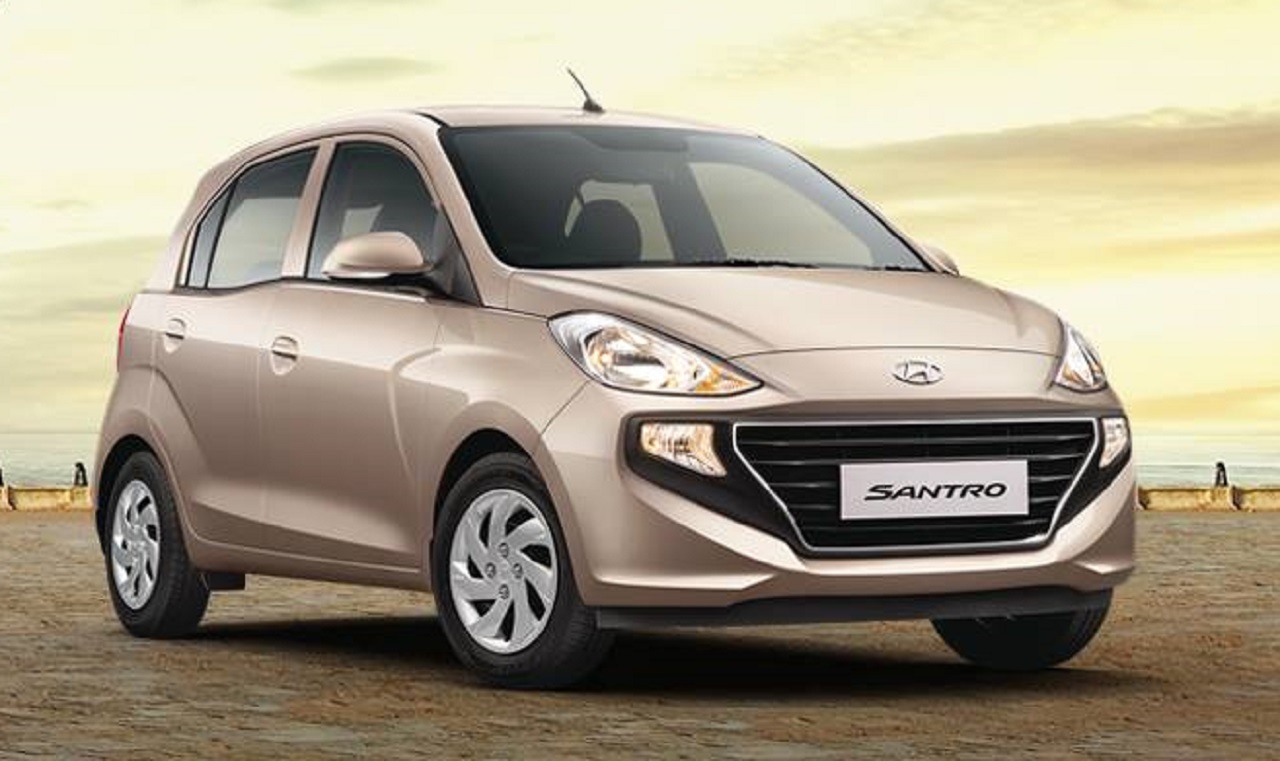
    Hyundai India has launched the all-new 2018 Hyundai Santro in India at a starting price of Rs 3.89 lakh. The new Santro will be available in five variants for the petrol manual version while the petrol automatic and the CNG manual versions gets two variants each. The new Hyundai Santro Prices for the petrol manual range from Rs 3.89-5.45 lakh while the ones for the petrol automatic AMT range from Rs 5.18-5.46 lakh. The new 2018 Hyundai Santro CNG is priced at Rs 5.23-5.64 lakh. The new Hyundai Santro will take on the likes of the Maruti Suzuki Celerio, the Tata Tiago and the Renault Kwid 1-litre apart from the likes of the Maruti Suzuki Wagon R, a new version of which will be launched very soon. The new Hyundai Santro will be slotted in between the Hyundai Eon and the Hyundai Grand i10. Here is a detailed table with all the prices below.

    The Hyundai Santro will be powered by a 1.1-litre, 4-cylinder, naturally aspirated engine, which makes 69 bhp of peak power and 99 Nm of peak torque when powered by petrol. The petrol engine is mated to a 5-speed manual or a new 5-speed AMT gearbox that has been developed by Hyundai in-house. The petrol engine, in both manual and AMT guise are fuel efficient and the Hyundai Santro Mileage is 20.3 kmpl.

    Hyundai Santro Price In India
    Variant Price (ex-showroom, Delhi)
    Santro D-Lite ₹ 3,89,900
    Santro Era ₹ 4,24,900
    Santro Magna ₹ 4,57,900
    Santro Magna AMT ₹ 5,18,900
    Santro Magna CNG ₹ 5,23,900
    Santro Sportz ₹ 4,99,900
    Santro Sportz AMT ₹ 5,46,900
    Santro Sportz CNG ₹ 5,64,900
    Santro Asta ₹ 5,45,900

    There is also a new Hyundai Santro CNG version on offer straight from the factory that makes 59 bhp of peak power and 84 Nm of peak torque. The engine is mated to a 8 kg CNG tank that is mounted in the boot of the Hyundai Santro. The new CNG version of the new Hyundai Santro will offer 30.48 km/kg of fuel economy on CNG fuel. The CNG version also gets duel ECUs to provide a seamless switch between petrol and CNG along with a matrix injector and a filter valve for better performance and more safety respectively.

    The Hyundai Santro gets five variants i.e. D-Lite, Era, Magna, Sportz and the top of the line Asta. The car is available in seven colour options ranging from a bright blue, red or green to the more sombre whites, greys and golds. The new Santro gets no alloy wheels, LED daytime running lights or projector headlamps abut it does get 14-inch wheels as standard along with a set of silver wheelcaps on the higher spec versions while the lower variants will get plain silver wheels with small wheel-hub covers.

    The overall design on the new Santro is quite contemporary. Athough Hyundai claims that the Santro is a tall-boy design, the design is actually a great blend of the conventional Santro tall-boy look and a very typical entry level hatchback. The new Santro also gets a flat back with two mid-set tail lamps. The tail lamps too are conventional and not LED versions. The Santro is also much larger than its predecessor measuring in at 3610 mm in length, 1645 mm in width and 1560 mm in height. The wheelbase on the new Santro is now at 2400 mm and it does offer best in class rear legspace.

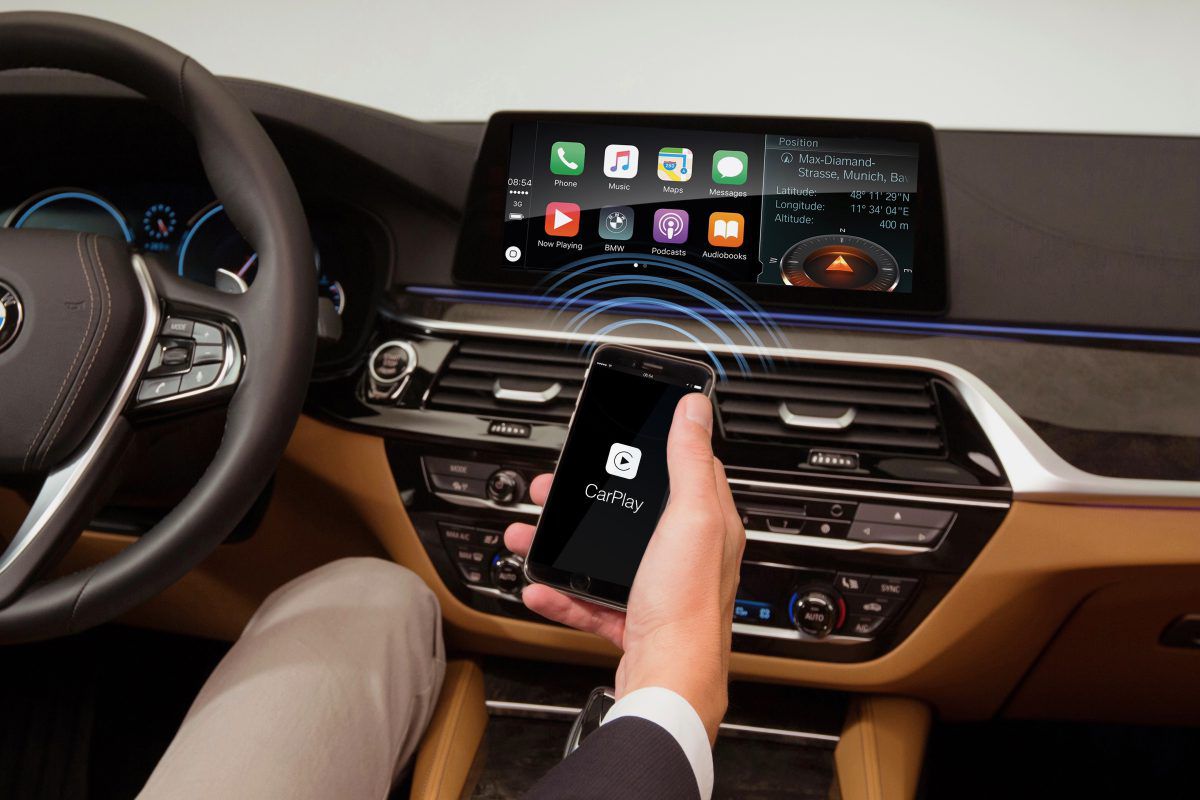
    On the inside, the new Hyundai Santro offers a range of features like a 7-inch touchscreen infotainment system that offers mirrolink and Bluetooth connectivity. The infotainment system also offers the likes of Apple CarPlay aad Android Auto. The new Hyundai Santro also gets rear AC vents – another first in class feature, but does not get climate control. The new Hyundai Santro will also offer a single driver side airbag as standard on all models but will offer a secondary passenger side airbag only on the Asta model. While all variants of th Hyundai Santo will get a beige and grey interior, the Diana Green version in the Asta model will get an all-black interior along with colour matched interior trim and colour matched green seatbelts.

    Hyundai Santro Engine Specifications

    Hyundai Santro Petrol CNG
    Engine 1.1-litre petrol 1.1-litre petrol + CNG
    Max Power 68 bhp @ 5500 rpm 58 bhp @ 5500 rpm
    Max Torque 99 Nm @ 4500 rpm 84 Nm @ 4500 rpm
    Transmission 5-Speed MT/AMT 5-Speed MT
    Fuel Efficiency 20.3 kmpl 30.48 km/kg

    Speaking at the world premiere of the all new Hyundai Santro, Mr. Y K Koo, MD & CEO, Hyundai India said, “Today is a Historic moment as we announce the world premiere of the all new Santro. The Hyundai Santro is an iconic and legendary brand in India that has won the hearts of millions of customers for last two decades. The magic of Santro continues with The all new Santro receiving overwhelming response in less than two weeks.”

    The all-new 2018 Hyundai Santro has already received over 23,500 bookings in just 12 days even before individuals had the chance to see the new car in the metal. Although these bookings were exclusively available online, bookings at dealerships have also officially begun today. The introductory pricing will only be applicable for the first 50,000 customers. Considering the fact that Hyundai will only be making about 10,000 units of the new Santro every month, expect waiting periods of a few weeks to follow. Currently, over 30 per cent of all bookings for the new 2018 Hyundai Santro are for the AMT model.

  • What To Expect from the 2018 Hyundai Santro

    What To Expect from the 2018 Hyundai Santro

    Hyundai is all set to launch the new Santro in the country on October 23 and we’ve already told you a lot about the car. The Santro badge is making a comeback into the country and it’s opportune that the new hatchback comes at the same time as the 20th anniversary of the Santro badge in the country. The Hyundai Santro has enjoyed a lot of success in the country and the company would want to add to the popularity of the car with the launch of the all new model. The Santro continues to carry the tall boy stance that it always had and that brings in a lot of tech which adds to the appeal of the car.

    The company has already received an overwhelming response for the Santro as it has already received more than 14,000 bookings for the car till date. The new Santro will also only come with a set of steel 14-inch wheels with wheel covers and there are no alloy wheels on offer – even on the top of the line Asta variant. Although we can’t show you what the car looks like just yet, we have spent a fair amount of time in the car and we told you all about it in our first drive report

    The 2018 Hyundai Santro is likely to come in 4 variants – Era, Magna, Asta and Sportz. We expect the Sportz and the Asta model to get a 7-inch touchscreen infotainment setup that will support Bluetooth, mirror link and inbuilt navigation. More importantly though, the infotainment setup will also – for the first time in class – support Apple CarPlay and Android Auto.

    The Santro will replace the Eon in the company’s line-up in India and will be the company’s entry level hatchback in the country. This will see it take on cars like the Maruti Suzuki Celerio, Renault Kwid, Tata Tiago among others and this means that the pricing will be around the ₹ 4 lakh bracket. However, it is very likely that the company will undercut its rivals and the base variant will be closer to the ₹ 3.85 lakh mark. The introductory prices are applicable on the first 50,000 units and Hyundai has made sure that there’ll be no changes in the prices for the first 50,000 customers.

    The 2018 Hyundai Santro has grown in dimensions. It’s 45 mm longer now and has a wheelbase of 3610 mm. The company claims that it is a tall-boy design as the Santro has always been, but the overall angular proportions will deceive that at the first glance. On the outside, expect nothing more than what you get in an entry segment car. Essentially, fancy fitments like LED DRLs and alloy wheels won’t be offered on the Santro. It will have halogen headlamps as standard and the Santro will ride on 14-inch steel wheels.

    Hyundai is offering the Santro with a 1.1-litre, four-cylinder petrol engine. The engine develops 68 bhp and 99 Nm of peak torque and will be mated to a five-speed gearbox as standard. Though, the Santro will be the first Hyundai to get the option of an AMT gearbox. There will be also a CNG option on offer where the engine will develop 59 bhp and deliver a fuel economy of 20.3 kmpl.

  • Porsche Mission E Cross Turismo To Go Into Series Production

    Porsche Mission E Cross Turismo To Go Into Series Production

    It was at the 2018 Geneva Motor Show, that Porsche first unveiled the Mission E Cross Turismo concept. Back then, we’d told you that the car looked great and did not have that concept feel to it. It’s very close to something you’d see on actual roads and it was as production ready as it gets. However, Porsche still called it a concept as the Supervisory board of the company had not given the green light for the project. But now the company has said that the Supervisory Board of Porsche AG gave the green light for series production of the concept study Mission E Cross Turismo. The sports car manufacturer will create 300 additional jobs at its headquarters in Zuffenhausen for production of the vehicle, which was presented at the Geneva Motor Show next year.

    The Porsche Mission E Cross Turismo is a derivative of the Taycan

    The Porsche Cross Turismo includes an emotional design with striking off-road elements as well as an innovative display and operating concept with touchscreen and eye-tracking control. It measures in just under 5 metres and has all-wheel drive and can also be charged by induction, at a charging station or using the Porsche home energy storage system.

    The four-door Cross Turismo has an 800-volt architecture and is prepared for connection to the fast charging network. It has a system output of 600 horses and a range of 500 km (NEDC). This enables the Mission E Cross Turismo to accelerate to 100 km/h in less than 3.5 seconds and to reach a speed of 200 km/h in under 12 seconds. The vehicle is a derivative of the Taycan which is the first purely electric Porsche that will be launched in the market in 2019. Porsche plans to invest more than six billion euros in electromobility by 2022.

  • Mahindra Marazzo MPV Gets Apple CarPlay

    Mahindra Marazzo MPV Gets Apple CarPlay

    Mahindra’s latest launch- the Marazzo will now be equipped with Apple CarPlay. The MPV was launched in India on September 3 and it’s infotainment system was Android Auto compatible. The UV maker has now confirmed to carandbike of having received the licence for Apple CarPlay. The company has sold over 4500 units of the Marazzo, which were rolled out of the Nashik plant. All these units did not have Apple Carplay but the company has informed us that all the models sold will be updated with the Apple CarPlay in their schedule service, without any additional cost.

    The timing for the license couldn’t have come at a better time as Mahindra is all set to launch the Y400 in the country in November this year and well, the SUV of course will get both Apple CarPlay and Android Auto now.

    The 7-inch touchscreen infotainment system in the Mahindra Marazzo is claimed to be the most updated unit in Mahindra’s product portfolio boasting of some cool features, for example configurable home screen. Buyers can add personalized images on the infotainment system’s internal memory via the USB socket and select it as the background wallpaper. Moreover, Mahindra has also been innovative with the creature comfort features in the Marazzo.

    The new Mahindra Marazzo is powered by a new 1.5-litre four-cylinder diesel engine that has been tuned to offer a maximum of 121 bhp and develops a peak torque of 300 Nm. The engine only comes mated to a 6-speed manual gearbox, and right now, there is no automatic transmission on offer. Mahindra is also working on the petrol engine and an automatic transmission for the Marazzo and could introduce the same when the BS VI emission norms come into effect from April 2020.

  • Tesla Chief Elon Musk Unveils a $35,000 Model 3

    Tesla Chief Elon Musk Unveils a $35,000 Model 3

    Tesla chief Elon Musk said late Thursday that the automaker was preparing to sell the cheapest version yet of its newest electric car, the Model 3, signaling an attempt to get back to business after months of controversy. Musk said on Twitter that the sedan, with its “midrange” battery pack, would cost $35,000, bringing it in line with the mass-market model he had promised for years would revolutionize the availability of electric cars.

    But that price takes into account federal and state tax rebates. Before the discounts, it will sell for $45,000 – though the company says buyers should think of the car as far cheaper, because of the money they’ll save on gas.

    Musk sparked a frenzy of customer reservations in 2016 when he said the Model 3 would cost $35,000 before incentives, such as a $7,500 federal tax credit – a price point that would help Tesla expand beyond its traditional range of well-heeled buyers. That model, however, remains delayed until 2019, the company said Thursday.

    The surprise announcement, delivered via tweet to Musk’s 23 million followers, comes as Tesla seeks to steer attention away from a chaotic period in which Musk battled with critics, smoked marijuana during an interview and pledged that he had the money to take Tesla private – a promise for which he was sued by the Securities and Exchange Commission, and which he recently settled.

    Musk agreed as part of the settlement to step down as the company’s chairman for three years, opening a prominent void for which the company has yet to fill. But the announcement again highlights Musk’s enduring role as the company’s chief executive, designer and hype man.

    Musk said Thursday the car would be sold via Tesla’s “super simple new order page,” which estimated that delivery for its midrange model would take six to 10 weeks. That model, the company said, could go 260 miles on a single charge.

    The only available Model 3 for the last year has been a long-range version, offered mostly at luxury prices. But Musk said a “truer cost of ownership” for the midrange version would be about $31,000, his estimate for discounting the cost of gas.

    The move could ratchet up the pressure on Tesla’s already-straining California factory and its nationwide system built to deliver cars to customers, which Musk described last month as mired in “delivery logistics hell.”

    “As Model 3 production and sales continue to grow rapidly, we’ve achieved a steady volume in manufacturing capacity, allowing us to diversify our product offering to even more customers,” a Tesla spokesperson said in a statement.

    The move could frustrate Tesla fans who put down a $1,000 deposit two years ago for what they believed would be a sleek electric sedan costing about $27,500 after tax incentives.

    Tesla says the “standard battery” version will not be available for another 4 to 6 months. Musk has said the company, a cash-burning giant that faces billions of dollars in impending debts, must push out more profitable and expensive versions first: Shipping the cheapest “Model 3 right away (would) cause Tesla to lose money & die,” he tweeted in May.

  • Honda Active Has Crossed The 2 Crore Sales Milestone

    Honda Active Has Crossed The 2 Crore Sales Milestone

    Honda Motorcycle and Scooter India (HMSI) has announced that the company’s top-selling two-wheeler, the Honda Activa, has recently breached the 2 crore sales mark in India. Evidently, the popular Honda Active is now the first scooter in the country to cross this huge sales milestone. Interestingly enough, it took the Honda 15 years to breach first one crore sales mark, while the next one crore units were sold in just 3 years, which is four times faster than the time taken to acquire the first 1 crore customers.

    Minoru Kato, President & CEO, Honda Motorcycle & Scooter India Pvt. Ltd. today announced this feat and expressed his gratitude to the 2 crore happy Indian customers, and said “Over 18 years and 5 generations, Honda 2Wheelers India continuously added value to exceed Customers expectations & making Activa the most preferred choice of Indian 2wheeler buyers. We are delighted that Activa partnered over 2 crore Indian families on the move in realizing their dreams. As India’s Love for Activa grows, we remain committed to take on new challenges and bring joy to our customers.”

    2018 Honda Activa 5G was launched at the Auto Expo

    The Honda Active was first launched in the year 2001, and since then we have seen five generations of the scooter in India. The fifth-gen model, the Honda Activa 5G, was launched this year in February, at the 2018 Auto Expo. The Activa was truly a ground-breaking product from the Japanese two-wheeler manufacturer and it has been the country’s top-selling two-wheeler for quite some time now. In fact, in 2017 the Activa becomes not just India’s, but the World’s largest selling two-wheeler.

    The current-generation model – Honda Activa 5G, is powered by a 109 cc, single-cylinder engine which puts out 8 bhp at 7,500 rpm and 9 Nm of peak torque at 5,500 rpm. No other scooter on sale in India has been able to come close to the Activa’s sales success in its segment. In addition to features like Honda’s Combi-break system and HSE technology, the new Activa also comes with a semi-digital instrument cluster with the display showing information like additional service due indicator and ECO options. The scooter also gets a 4-in-1 hook with the seat opener switch like the Grazia and a retractable rear hook.

  • New Hyundai Santro Bookings Cross 14,000 Units

    New Hyundai Santro Bookings Cross 14,000 Units

    The Hyundai Santro is back with a bang. And as if to proclaim that this nameplate still commands the kind of strength it used to, the small car has already garnered over 14,000 bookings. Sources have shared with carandbike that the small car has notched up 14,208 bookings within the first 9 days of pre-bookings having been opened for a token of ₹ 11,000, on October 10 2018. This is even though the variants and prices are not known, and customers have shown a preference for the top spec (Asta) manual variant followed by the top spec (Sportz) AMT version.

    These are pan-India bookings, but sources have shared with carandbike that a large chunk of the bookings are from the southern states, with Tamil Nadu, Andhra Pradesh, Telengana, Karnataka and Kerala accounting for just under half the total bookings so far. The above figure does not include bookings taken on Dussehra (celebrated on October 18 in Western India, October 19 in North India), and so the overall number is expected to shoot up with Dussehra bookings and then more so over this weekend too. Bookings are only open online, and not at dealerships since there is no car in showrooms as yet that people can see. But a number of dealers have shared with carandbike that many potential customers have been visiting their showrooms, and then making the bookings online with their help.

    The Hyundai Santro has bagged over 14,000 bookings in just 9 days

    Hyundai had opened online pre-bookings for the Santro the day after it unveiled the car to media at its Chennai plant. At the time, the Hyundai India MD, YK Koo had also announced a price protection for the first 50,000 customers. and had pretty much guaranteed that the prices announced at launch will be hiked soon after. At that preview we had the chance to see and drive the car, and have told you plenty about it. What we have been unable to do is share our pictures and videos. And while that remains embargoed until launch day – i.e. October 23 2018 – a lot of leaked pictures have already emerged that show the car’s exterior and interior in fairly good detail.

    The 2018 Hyundai Santro will get a 6.5-inch touchscreen infotainment system

    We know there will be a base version – most likely the Era variant, followed by the Magna variant, the fairly well-loaded Sportz trim and the top spec Asta. All variants will sport a driver-side airbag and ABS (anti-lock braking) as standard equipment. The Asta will have dual airbags standard. The Sportz will also get the 7-inch touchscreen with Apple CarPlay, Android Auto, MirrorLink and Voice Commands. The car’s cabin will be finished in a dual-tone palette of beige and black. On the outside, buyers will have 7 colours to choose from, though only the green will get a special interior package in its Asta trim.

    Under the hood, the new Hyundai Santro features a 1.1-litre four-cylinder petrol engine that comes from the company’s Epsilon engine family. The motor is capable of churning out a maximum of 68 bhp and develop a peak torque of 99 Nm, and Hyundai says that it’s already BS-VI ready. Additionally, the 2018 Santro will also come with a factory fitted CNG kit, which can hold up to 8 kg of gas, and offer a reduced power output of 58 bhp, while developing the same 99 Nm of peak torque. Transmission duties are taken care of by a 5-speed manual gearbox in both the versions, however, the petrol trim also gets an optional 5-speed automated manual transmission (AMT) unit. The AMT unit is developed by Hyundai in-house and uses an electric actuator instead of a hydraulic, which is controlled by a separate electric unit. The petrol engine offers a mileage of 20.3 kmpl, while the fuel efficiency of the CNG version is yet to be revealed.

  • Porsche Expects To Repeat Record Vehicle Sales

    Porsche Expects To Repeat Record Vehicle Sales

    Volkswagen’s Porsche sports car brand is confident it can repeat last year’s record sales in 2018, the division’s chief executive told. Porsche sold 196,562 vehicles during the first nine months of the year, with Europe showing a 9 percent increase and China, the world’s largest car market, growing by 4 percent.

    “In light of these good numbers we expect that we can reach last year’s record again,” Oliver Blume said in e-mailed comments on Thursday.

    Porsche delivered 246,375 vehicles in 2017.

  • Samsung Launches New Chipsets To Make Cars Smarter

    Samsung Launches New Chipsets To Make Cars Smarter

    Samsung Electronics, a part of the Samsung Group, has announced the introduction of two new chipsets or processors for the automotive segment for connected cars technology. Christened the Samsung Exynos Auto and Samsung ISOCELL Auto, the new chipsets claim to offer cutting-edge application processor and image sensor technology solutions to the road.  While the former Exynos will help manufacturers develop in-car apps for infotainment, advanced driving assistance systems, and telematics, the ISOCELL Auto is targeted at developing in-vehicle infotainment systems and telematics solutions.

    Talking about the two new chipsets, Kenny Han, vice president of Samsung’s Device Solutions Division said, “Samsung’s new automotive brand solutions, Exynos Auto and ISOCELL Auto, bring Samsung’s market-proven technologies to automotive applications with enhanced features and durability required by the market. With fast telecommunication, accurate sensing and powerful processing capabilities, Samsung’s Auto-branded solutions will enable new driving experiences to next-generation smart vehicles.”

    Processors from Exynos Auto range come in three sub-categories: Exynos Auto V series for advanced in-vehicle infotainment (IVI) systems, Exynos Auto A series for ADAS, and Exynos Auto T series for telematics solutions. On the other hand, Samsung’s ISOCELL image sensors are built on the company’s innovative pixel isolation technology, which provides greater visibility of the road and surroundings even in low-light environments, while enabling more precise identification of objects. The sensors also allow vehicles to perceive road conditions or potential hazards even when driving through tunnels or other high-contrast environments.

  • BMW India To Launch 12 New Models In 2019

    BMW India To Launch 12 New Models In 2019

    BMW plans the largest ever product offensive from any manufacturer in India in the coming year. 2019 will see the introduction of a slew of new products that BMW expects will really fire up the market and help strengthen its position in the premium car space. The plan is to bring twelve model launches to India next calendar year from the BMW brand, and two additional new models also from MINI. The motorcycle side of the business will also see two all-new models being added in.

    This will be further supplemented by new variants or updates on existing products, Speaking at the inauguration of BMW India’s brand new headquarters in Gurgaon, Hildegard Wortmann, Senior Vice President – Region Asia Pacific, BMW Group said the new car strategy is planned across the region, with India playing a strong part in it. “On a worldwide scale, it (will be) the biggest product segments that we have done at BMW. So we are really going full blast here into the product segments and I can full-heartedly say, the future is really bright. Fantastic cars coming, strong design aspects, strong performance, and you can feel the joy of BMW in every instance now!”, she added.

    Spearheading that charge will be the most awaited new generation of the BMW 3 Series sedan. The 7th generation G20 just made its public debut at the recently concluded Paris Motor Show and it will get to India next year. There are big expectations from the new sedan, which includes its performance on the road, as well as on the sales charts. Speaking about the 3 series and also another significant upcoming model, Ms Wortmann says, “Clearly if you look at it, the core of BMW business around the 3 series is a very very important part of our business. And having the new 3 series coming is obviously a milestone again. I think I am not exaggerating if I see the 3 series as an icon in the automotive industry, not just in India, but everywhere in the world. So having that model coming next year is very exciting. Personally I think the big news will be the X7, where again we created something very special, very new, and I think that one will have very big impact.” So the other big plan then is a huge offensive of the X range of cars. Currently the X portfolio comprises four models, but in 2019 that will go to seven with the addition of the X7 flagship SUV, as well as the X2 and X4 crossovers. BMW sees much potential for the large and very luxurious X7 in the Asia Pacific region as a whole, but particularly so in India.

    BMW India had its most successful year in India in 2017, with total car sales at 9800 units, which was a 25 per cent growth over the previous year. And it expects 2018 to end even bigger, with the first nine months already showing an 11 per cent year-on-year growth at 7915 units. But next year will clearly be another one for the record books, and also one where it might be able to eye the number one slot again – held by Mercedes-Benz for 3 years straight. “I think we’ve shown over the 11 years that we have to find the right strategy, the right way of approaching the market, and really making sure we grasp what customers desire here, I think last year was a really good jump and I am highly satisfied to seeing the development here. And 2018 as a strong year now, with the major launches – you’ve seen the 6 GT coming and again a new segment that we created. And obviously the future is very bright as I look forward to the next year. 12 launches! So it will definitely keep the team here, spending long evenings in these offices!” says Ms Wortmann.

  • 2018 Porsche Cayenne India Revealed

    2018 Porsche Cayenne India Revealed

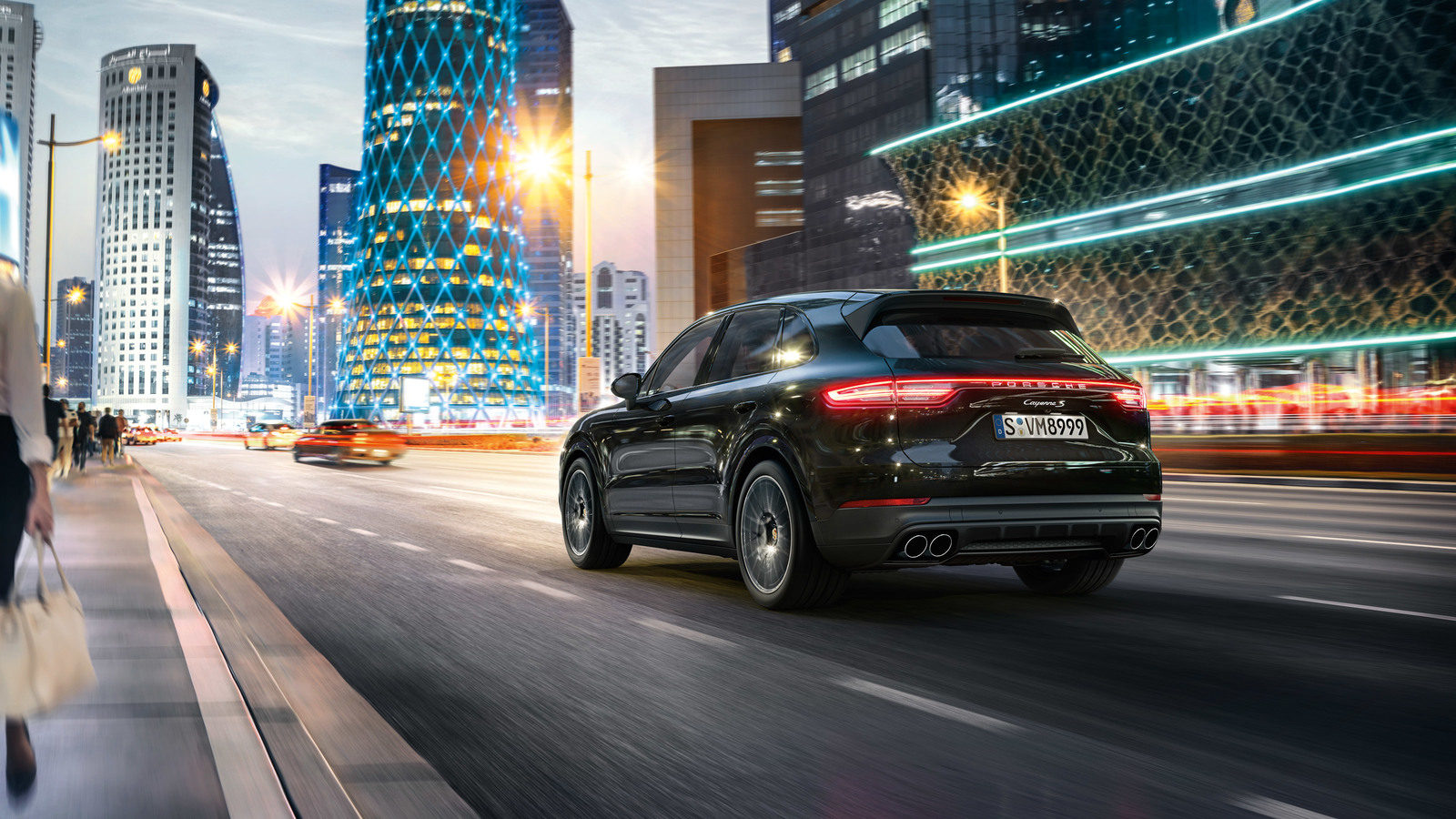
    We’d told you a long time back that the 2018 Porsche Cayenne is all set to land on Indian soil this year. Though the launch has been delayed to the festive season, the company was planning to launch the car in the middle of the year. However, the third generation of the SUV is all set to grace our shores today. Bookings for the new Porsche Cayenne Turbo had already started in September and the first batch of cars will be delivered this year. The all-new model boasts of a new and more agile platform, more powerful engines and for the first time, the option of a hybrid powertrain as well.

    The 2018 Porsche Cayenne SUV gets a host of upgrades over its predecessor including a revised chassis, and a separated link design for the front axle and a multi-link rear axle. The latter though is offered as optional, but further improves the agility on the car. Visually too, the Cayenne has evolved and gets a sharper looking appearance while keeping the appearance similar. The SUV now comes with the Porsche Dynamic Light System (PLDS) or LED Matrix Beam headlights, which also include PDLS.

    In terms of power, the new generation Porsche Cayenne will be offered in a range of engine options including V6 and V8. The standard version will use a 3.0-litre single-turbo V6 with 335 bhp and 450 Nm of peak torque, while the Cayenne S will draw power from the 2.9-litre twin-turbo V6 that produces 433 bhp and 550 Nm of peak torque. The 2018 Cayenne Turbo packs in 542 bhp and 770 Nm of peak torque from a 4.0-litre bi-turbo V8 engine, and is capable of hitting a top speed of 286 kmph.