Tag: cargo

  • Vietjet to venture into cargo business in Malaysia

    Vietjet to venture into cargo business in Malaysia

    In order to enhance and further develop its cargo network, the new-age carrier Vietjet is pleased to announce that its subsidiary and cargo arm, Vietjet Cargo is opening a tender for a cargo General Sales Agent (GSA) in Kuala Lumpur and is inviting companies to bid for the first time in Malaysia on February 2020.

    The GSA will be responsible for all the commercial activities for sales, marketing and promotion on Vietjet’s flight network connecting to over 400 flights daily covering more than 140 destinations across Vietnam and internationally such as Malaysia, China, Japan, Korea and Taiwan, etc. which includes a daily flight from Kuala Lumpur to Ho Chi Minh City.

    The GSA will also be actively controlling the pricing policy and space management, working with the cargo warehouse and ground handling agency, supervising the operations, maximizing the uplifted cargo and securing the service level commitment to clients directly.

    Nguyen Thanh Son, Vietjet Vice President, said: “At Vietjet, we believe in diversification to create sustainable business prospects. Following the establishment of Vietjet Cargo in 2014, we have independently and strategically developed and grown demand for air cargo services in Vietnam in addition to our main function as a commercial airline. Today, we have grown internationally, taking the necessary steps to expand our cargo business to the Malaysian market.

    To-date, Vietjet has transported nearly 100 million passengers in Vietnam with a fleet of 80 Airbus aircraft, comprising the Airbus A320/A321 aircraft, a world-class high-tech airplane in the aviation industry, with a capacity of four to five tons of cargo per flight and more.

    Moving forward, Vietjet will continue to work towards the establishment of its subsidiaries in the aviation industry worldwide, bringing a wide range of services and business opportunities to potential partners not only in Malaysia, but also in other countries while expanding Vietjet’s flight network globally.

  • Tigers Australia boosts e-commerce processing capacity with new omni-channel facility in Sydney

    Tigers Australia boosts e-commerce processing capacity with new omni-channel facility in Sydney

    Tigers has opened a new omni-channel facility in Yennora, Sydney, Australia to meet rising demand in domestic and cross-border e-commerce for B2B, B2C fulfilment and retail scan pack.

    The omni-channel warehouse is fitted with Tigers’ Automated Transport Sortation System and SmartHub: Connect (SH:C) technologies that enable customers to manage orders and view their inventory remotely.

    “The way we all shop is changing and will continue to change,” said Frank Cafasso, Managing Director (MD) Tigers Australia.

    “The Yennora facility, with its state-of-the-art systems, will keep Tigers agile in adapting to the evolving e-commerce market.”

    “The new warehouse’s upgraded capabilities will allow us to facilitate a variety of storage mediums, and with its centralised processing area, the facility will offer increased scalability as the market grows.”

    The new facility expands Tigers’ processing capacity at its Sydney operations to 17,000 pallet locations.

    “E-commerce in Australia will increase not only for domestic but also international (cross-border) trade, and our new Sydney facility is expected to handle an initial 20 percent of our B2C e-commerce traffic, with predicted yearly increases,” added Cafasso.

    The facility will process a range of consumer goods including, cosmetics, apparel, giftware, manchester and homeware among others.

    The new facility is part of Tigers’ two-year strategy to invest in e-commerce and B2B verticals, and similar facilities are planned for construction in Sydney and Melbourne.

    SH:C is the world’s first combined freight, e-commerce, and logistics portal, which gives customers end-to-end visibility of the supply chain globally, from transport, to e-commerce fulfilment delivering cost-effective and customisable solutions.

    The Sydney hub is part of an ongoing global expansion plan for Hong Kong-headquartered Tigers, and the facility was developed by Fife Capital.

  • Kerry Logistics secures accolades at the Asset ESG Awards

    Kerry Logistics secures accolades at the Asset ESG Awards

    Kerry Logistics Network Limited has for the second consecutive year secured the Platinum Award, the highest honour of The Asset ESG Corporate Awards (the ‘Awards’, formerly known as The Asset Corporate Awards), as well as the Best Investor Relations Team Award for the first time.

    Kerry Logistics won the Platinum Award for its laudable efforts in achieving corporate sustainability, with strong management acumen and stringent governance reflected in its financial performance.

    It also received the Best Investor Relations Team Award in recognition of its investor relations team in new initiatives launched, facilitating outreach and enhancing communication with investors and analysts.

    William Ma, Group Managing Director of Kerry Logistics, said: “We are grateful to The Asset for acknowledging Kerry Logistics’ dedication to the environment, to social responsibilities and to upholding the highest standard of corporate governance. To be included among our distinguished peers for the second year running is a testament to our continued efforts.

    “We are also encouraged by the appreciation on the efforts of our investor relations team. In the face of a changing economic and business environment, we will keep maintaining transparency and active communication with our investors while creating value for our stakeholders.”

    Inaugurated in 2000, the Awards are the longest-running and the most prestigious ESG awards program in Asia. Organized by the regional financial magazine The Asset, the Awards are assessed according to financial performance, management, corporate governance, social and environmental responsibility and investor relations.

  • DHL to Invest more in Sustainability and Tech

    DHL to Invest more in Sustainability and Tech

    DHL Express recently unveiled its Strategy 2025 putting digitalization, e-commerce and sustainability in focus as it aims to further expand sustainably.

    John Pearson, CEO DHL Express, made the announcement at the opening of DHL’s €123 million (US$135 million) state-of-the-art hub at Cologne-Bonn Airport saying the “many new technologies” at its Cologne hub shows the basis of our new Strategy 2025.

    “By investing more than €1 billion (US$1.1 billion) annually in technology and infrastructure and by putting the new green logistics center into operation, DHL clearly demonstrates its ambitions,” the international courier said in a statement.

    In particular, it noted the ice energy storage system with over 1.3 million liters holding capacity and 18 kilometers of piping that ensures the hub stays cool in the summer and warm in the winter in its facility and the heat pump and solar panels on the roof making it “an entirely emissions-free solution.”

    “As the experts in export and import, we can only grow by ensuring top quality, which is why we invest more than a billion euros each year in employee training, infrastructure, and digitalization. The main goal here is to increase our transport and delivery capacity for time-sensitive TDI shipments to meet the ever-growing customer demand in the area of e-commerce. At the same time, we’re continuously improving on process efficiency,” Pearson said, noting that its recent quarterly results “show pretty clearly that we’re on the right track.”

    DHL completed the upgrade of its air hub at Cologne-Bonn Airport in August 2019 following a two- year building and renovation phase. In the hub’s 15,000 m2 sorting center, with its 12,000 m2 warehouse and 3,000 m2 office space, several new technologies allow DHL Express to process up to 20,000 shipments per hour on its 2.5-kilometer-long conveyor belt. A number of other additions, including 3D scanners and vacuum lifters, help make life easier for the hub’s 340 employees, who hail from 34 different countries.

    “The €123 million (US$135 million) investment in our new hub clearly shows our commitment to the Cologne-Bonn region and ensures the future of a lot of jobs here,” says Detlef Schmitz, Managing Director of the DHL.

    “This also makes the hub an even more important part of DHL’s international network. With the new direct route between Hong Kong and Cologne, 28 daily flight movements, and our use of state-of-the-art technologies, we are proud to be contributing – sustainably – to the worldwide growth of DHL Express,” he added.

    DHL Express has a presence in over 220 countries and territories. It transports over 400 million shipments per year with 22 hubs worldwide and over 260 dedicated aircraft, 17 partner airlines, and a capacity for over 3,000 flights daily to over 500 airports.

    Fleet modernization

    “We expect continued growth in the coming years, especially in cross-border e-commerce trade,” says Travis Cobb, EVP DHL Global Network Operations.

    “By modernizing our air fleet, we can increase our intercontinental connections and do so with reduced carbon emissions and less fuel consumption. Next year, we will deploy another six brand-new planes from our Boeing order.”

    In 2018, DHL announced its plans to add 14 new Boeing 777 aircrafts to its own fleet.

  • DHL To Debut Zero-Emission Electric Delivery Vans In U.S. Cities

    DHL To Debut Zero-Emission Electric Delivery Vans In U.S. Cities

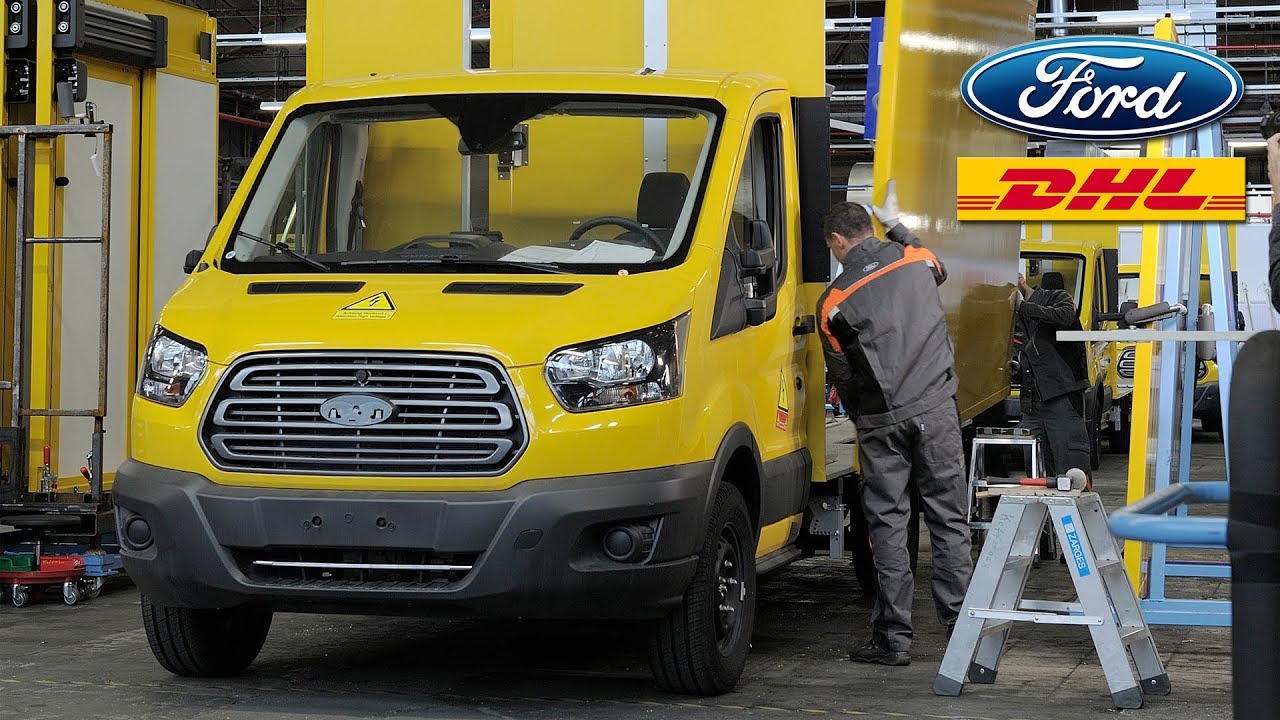
    Deutsche Post DHL Group’s StreetScooter electric vehicle unit will enter the U.S market next year as delivery firms and municipalities work to cut greenhouse gas emissions. DHL will debut StreetScooter’s zero-emission Work L delivery van in two urban U.S markets, one on each coast, starting in Spring 2020, the companies said

    They did not specify which markets would be the first.Full deployment could come in 2022 and 2023, said Ulrich Stuhec, StreetScooter’s chief technology officer, who joined the company from Ford Motor Co in October. Los Angeles, London, Berlin, Tokyo and 30 other cities around the globe have been working to establish zero-emission zones by 2030.

    Those cities hope to curb accumulating greenhouse gases that contribute to extreme weather, higher temperatures and rising sea levels, which have steep economic, environmental and human costs

    The transportation industry – which includes fossil-fuel-burning ships, trains, trucks and planes – accounted for 14% of global greenhouse gas emissions in 2010, according to the United Nations’ Intergovernmental Panel on Climate Change

    Over the last three years, DHL has kicked off “CO2-free last-mile delivery” efforts with German cities like Berlin, Hamburg and Munich. Roughly 10,000 of the 12,000 StreetScooter electric vehicles on the road make DHL deliveries. They operate in Amsterdam, Vienna and cities around Germany – saving roughly 36,000 metric tons of CO2 per truck each year, StreetScooter said.”We have the most experience on the road while others are still working on their first prototypes,” StreetScooter’s Stuhec said in a recent interview. Up-and-coming delivery competitor Amazon.com Inc in September gave the electric vehicle industry a jolt with its plan to order 100,000 electric delivery vans from Rivian Automotive LLC, a company it funds

    The first vans should hit streets in 2021. Meanwhile, Amazon said its delivery partners are using around 200 electric vehicles

    United Parcel Service Inc has 1,000 electric and hybrid electric vehicles in its fleet, and FedEx Corp last year announced plans to deploy 1,000 electric vehicles in California

    DHL fully acquired StreetScooter in 2014

    The unprofitable subsidiary is seeking new investors and customers to further ramp production

    Current partners include the United Kingdom’s Milk & More, which ordered 200 trucks, and Japanese delivery firm Yamato, which has started to deploy 500 planned vehicles

    In September, StreetScooter cracked the world’s biggest electric vehicle market – signing a memorandum of understanding with Chinese carmaker Chery Automobile Co to begin electric van production in 2021

  • M&G Acquires Second Logistics Facility In Asia

    M&G Acquires Second Logistics Facility In Asia

    M&G Real Estate, the real estate fund management arm of M&G Investments, has acquired a $131 million (155.5 billion Won) modern logistics center close to Seoul on behalf of its core Asian property strategy managed by Richard van den Berg.

    Located south of Seoul, Yongin Baegam Logistics Centre is in an established logistics cluster close to the city’s major highways. The approximately 100,000 square-meter four-story asset comprises all the characteristics of a high specification logistics center, catering to all the demands of modern occupiers. The new building tenants include established third-party logistics operators and retailers.

    We are positive about the fundamentals in Asia Pacific’s logistics sector, particularly in Korea, where supply is limited and demand is strong. The relentless demand for faster delivery will push third-party logistics companies to larger, more centralized distribution centers near key transport hubs and highway interchanges, such as ours, said Richard van den Berg in a media statement on Monday.

    The location will remain a key requirement as transportation typically accounts for at least half of logistics providers’ total costs. Yongin Baegam Logistics Centre will provide stable and core income to our investors said Berg.

    This is the second logistics facility for the M&G Asia Property Fund in Korea after Homeplus Hub Logistics Centre, the 64,250 square-meter distribution center acquired in 2017. This purchase coincides with an uptick in consumer spending with expectations for online retailing to grow in Asia Pacific markets from 14 percent to 23 percent by 2023.

    As the logistics sector matures and attracts more interest from investors, spreads between logistics and other asset classes in developed markets have narrowed and Korea is expected to follow the demand for modern well-located facilities.

  • Amazon Hub launches to meet rising demand for flexible delivery

    Amazon Hub launches to meet rising demand for flexible delivery

    Amazon has launched a new service in Australia that allows customers to collect their parcels from hundreds of locations in shopping centres and on high streets in a bid to improve its delivery offer before the biggest online shopping days of the year.

    First launched in the US in 2011, Amazon Hub allows shoppers to ship parcels to convenient third-party locations, rather than their home address. The service includes a “counter” option, where shoppers can collect parcels from bricks-and-mortar retail partners such as convenience stores, and a “locker” option, where they can collect parcels from self-service kiosks in shopping centres, banks and other places.

    The marketplace has now partnered with more than 100 Commonwealth Bank of Australia branches, Victorian Authorised Newsagents Association locations and Stockland shopping centres to bring the service to Australia.

    Hundreds more Amazon Hub locations are due to launch by the end of the year, and thousands more will launch across the country in 2020, the company said in a statement.

    Patrick Supanc, global director of Amazon Hub, said the new service would extend Amazon’s “exceptional customer service” to the delivery experience.

    “Since launching Amazon.com.au in 2017, we’ve committed to making e-commerce rooted in low prices, vast selection and convenience a part of everyday life for Australian customers,” he said.

    “We’re excited now to partner with large and small businesses in Australia to extend Amazon’s exceptional customer service and innovations in delivery by offering a quick and simple pick-up experience.”

    Parcel pick-up on the rise

    The launch comes just one week before Black Friday and Cyber Monday, which are now the biggest online shopping days of the year in Australia.

    E-commerce purchases by volume were up more than 28 per cent year on year during Cyber Week in 2018, according to an annual online shopping report by Australia Post. The five weeks from November 11-December 15 accounted for 15 per cent of all e-commerce transactions that year.

    Australia Post on Monday announced the expansion of its own parcel pick-up service in partnership with fulfilment company Doddle. Booktopia and Peter’s of Kensington are among the first retailers to use the service, which lets customers send their online orders to IGA supermarkets, Priceline pharmacies, shopping centres and other locations.

    Nathan Huppatz, co-founder of ReadyToShip, a shipping platform that lets retailers select the best delivery options for each order and print labels, says parcel pick-up is gaining traction, though it’s not exactly new. Major retailers, such as eBay, The Iconic and Glassons, have offered it as a delivery option for some time through ParcelPoint.

    But Huppatz says consumer demand for flexible delivery times and advancements in the technology that allows retailers to integrate different delivery options at checkout is contributing to arise in pick-up services.

    Until recently, most of the volume going through ReadyToShip has been standard delivery, Huppatz said. But in the last 12 months, there’s been greater uptake of Australia Post’s new on-demand delivery options, including same-day evening and Saturday delivery.

    “There’s definitely a demand out there from consumers to have flexibility, and these days there are more and more solutions to enable that,” he said.

    Integration can be a hurdle

    This is mostly good news for retailers, though Huppatz says parcel pick-up can present problems if the carrier’s integration requires retailers to make too many changes.

    “As soon as a retailer has to start modifying the checkout process or their order or warehouse systems, that’s where it can be a hurdle to overcome,” he said. “If the integration is simple, or you can use an existing carrier, it becomes much easier.”

    Still, he expects to see more retailers offering parcel pick-up in the coming months and is considering how he can stay on top of consumers’ changing preferences.

    “We think over the next 12-24 months, we will see growing demand for access to crowdsourced delivery options, especially for local metro areas,” he said.

    But Huppatz, who also owns the e-commerce site Costumes.com.au, believes there’s another reason Amazon may have launched its parcel pick-up service in Australia.

    “EBay and Amazon are competing with each other quite strongly and are looking to plug any holes they can find in their customer experience,” he said, noting the marketplaces’ recent partnerships with Afterpay and Zip, respectively.

    “Amazon has a ruthless customer focus. Everything is designed to make buying, searching, basically anything to do with their platform better for the customer. If they see a need for customers to pick up their products, you can bet they’ll work on that.”
  • UPS enables Asian businesses to capture growth opportunities with more service enhancements

    UPS enables Asian businesses to capture growth opportunities with more service enhancements

    UPS announced a series of service enhancements that will benefit up to 1.4 million postal codes across 41 countries and territories in the Asia Pacific region, opening opportunities for businesses to develop more resilient supply chain strategies as they look within the region for growth.

    “Asia is an incredibly dynamic, evolving region, and trade in the region is helping to power the global economy—whether it’s through increased consumption in emerging economies such as Vietnam and the Philippines, or through supply chains that weave their way through the region and around the world,” said Ross McCullough, President, UPS Asia Pacific Region.

    “Businesses need greater agility to respond to the needs of customers and the market with more precision than before, and UPS is helping them to achieve this with faster transit times, a broader service footprint and a balanced portfolio of services.”

    The following enhancements are poised to deliver increased flexibility for businesses and support greater demand in the region:

    • Day-definite guarantee with one day faster transit time for UPS Worldwide Expedited service within Asia, enabling the majority of businesses in the region to enjoy delivery in two business days with a guaranteed delivery date
    • Improved geographic reach of UPS Worldwide Express® services with time-definite deliveries for international shipments to 205 new postal codes in Indonesia, Korea and Taiwan
    • Reduced transit time by one day for businesses exporting from Northern Malaysia to major territories in Asia, Europe and the US; from Northern Thailand to Europe and the US; and from major territories in Asia to China with UPS Worldwide Express® Saver service
    • Expansion of UPS Marketplace Shipping to 10[1] additional Asian markets, offering businesses an automated way to process their e-marketplace orders by streamlining the order management and shipping processes, and reaching more end-customers in other parts of the world

    “With service improvements such as guaranteed delivery timing and shorter transit time for UPS Worldwide Expedited®, most businesses shipping within Asia will now have their shipments delivered in as little as two business days,” McCullough added. “This offers an end-to-end service alternative for freight forwarding shippers in the region looking for a scalable solution as they venture into new markets.”

    These enhancements build upon a number of major investments UPS made in its network across the region earlier this year, including: increasing its Shenzhen Asia Pacific Air Hub’s processing capacity by 50%; expanding the reach of UPS Worldwide Express® morning services to reach Australia, Hong Kong, Japan, Singapore, and South Korea; extending pick-up times by up to five hours for export shipments from China, Japan, Taiwan, and South Korea; and commencing Saturday pick-up services in the U.S., enabling import shipments destined for eight markets in Asia to be delivered one day earlier than before.

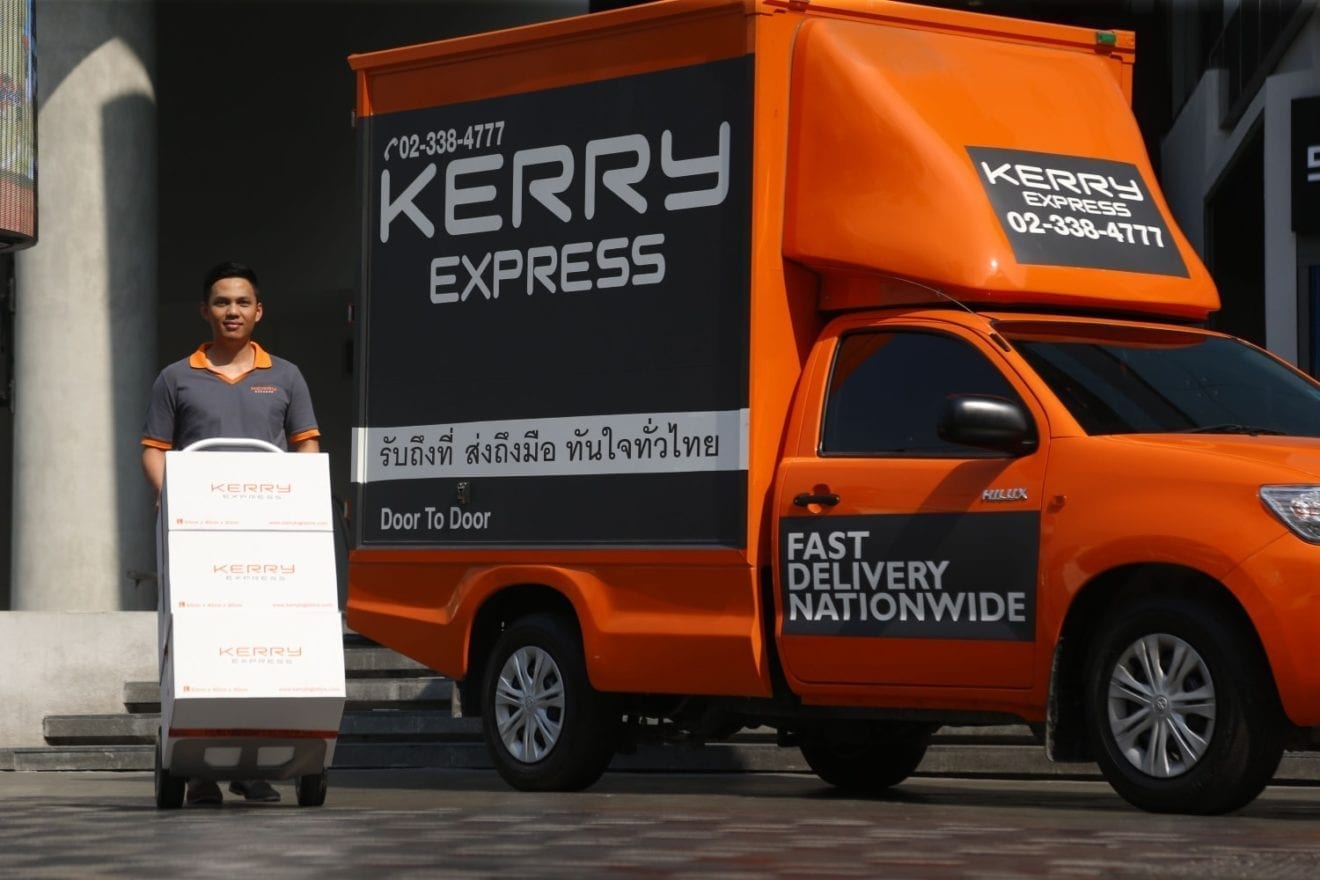
  • Kerry Logistics acquires Turkish forwarder ASAV

    Kerry Logistics acquires Turkish forwarder ASAV

    Kerry Logistics Network Limited announced the acquisition of a majority interest in Turkey’s Asav Lojistik Hizmetleri Anonim Sirketi (‘ASAV’) to further the expansion of its global network and strengthen its international freight forwarding (‘IFF’) capabilities.

    Building upon ASAV’s competitive advantages of established operations and a diversified mix of domestic and international customers, the acquisition will help Kerry Logistics to gain a major foothold in Turkey and further consolidate its network and capabilities in the region.

    Founded in 1994 in Turkey, ASAV was ranked No. 1 in Turkey’s Top 5 Agents by tonnage flown, according to 2017 and 2018 yearly IATA rankings, offering professional air, ocean and road freight to the market.

    ASAV has seven offices across the country, including five in Istanbul, one in Bursa and one in Izmir as well as one in Amsterdam in the Netherlands. It also has a warehouse of 452,000 sq ft in Istanbul combining bonded and non-bonded storage areas plus a bonded warehouse of 21,500 sq ft in Amsterdam.

    Mathieu Biron, Managing Director – Global Freight Forwarding of Kerry Logistics, said: “We are excited to work with ASAV, a young, dynamic and highly professional team, to tap into the business potential of a promising market and create greater synergy with the diverse mix of customers it brings. The partnership is poised to significantly boost our IFF capabilities in Turkey and enrich our resources in the Europe-Asia freight route, instrumental in helping us to further expand our IFF business worldwide.”

    Melek Karabacak, Vice Chairperson of ASAV, said: “For the past 25 years, ASAV has built a solid foundation and a rich customer portfolio in Turkey and the region. Joining Kerry Logistics is exciting news for us. We are looking forward to combining our local and regional expertise with Kerry Logistics’ global network and extensive service offerings to support our ongoing development and provide a broader range of innovative solutions to our existing and future customers.”

    Taking into account the positive profit growth and expansion potential in the IFF division, Kerry Logistics will continue to focus on expanding its IFF business both organically and through mergers and acquisitions.

  • Kerry Logistics wins two awards in Singapore

    Kerry Logistics wins two awards in Singapore

    Kerry Logistics has won the titles of “Asia Pacific Logistics Service Provider of the Year” and “Asia Pacific Road Freight Service Provider of the Year” at the 2019 Frost & Sullivan Asia Pacific Best Practices Awards (the ‘Awards’), presented in Singapore. This marked the third consecutive year that Kerry Logistics has been honoured by the Awards.

    Organised annually by global business consulting firm Frost & Sullivan, the Awards recognise best-in-class companies in the Asia Pacific and identify outstanding businesses in the automotive, energy, building & environment, healthcare, information communication technologies and logistics sectors.

    Award recipients were chosen using rigorous measurements based on actual market performance indicators such as revenue growth, market share and its growth, strong capability in leading new product introduction and innovation, breadth of products and solution offering, new major customer acquisition and business strategy.

    William Ma, Group Managing Director of Kerry Logistics, said: “We are delighted to receive the recognition again and are thankful to Frost & Sullivan for acknowledging our determination in always making our best efforts. The global supply chain is currently undergoing transformative changes, the role in which the logistics industry plays is more important than ever. At Kerry Logistics, we will continue to adhere to industry best practices to facilitate the shifts and enable our customers to swiftly adapt to the adjustments in the supply chain.”

    Sustained by its expanding global network and diverse range of businesses, Kerry Logistics is well-equipped to capitalise on a fast-changing logistics environment. It will maintain its resilient position by further enhancing its service capabilities, expanding its network presence and enlarging its business scale.

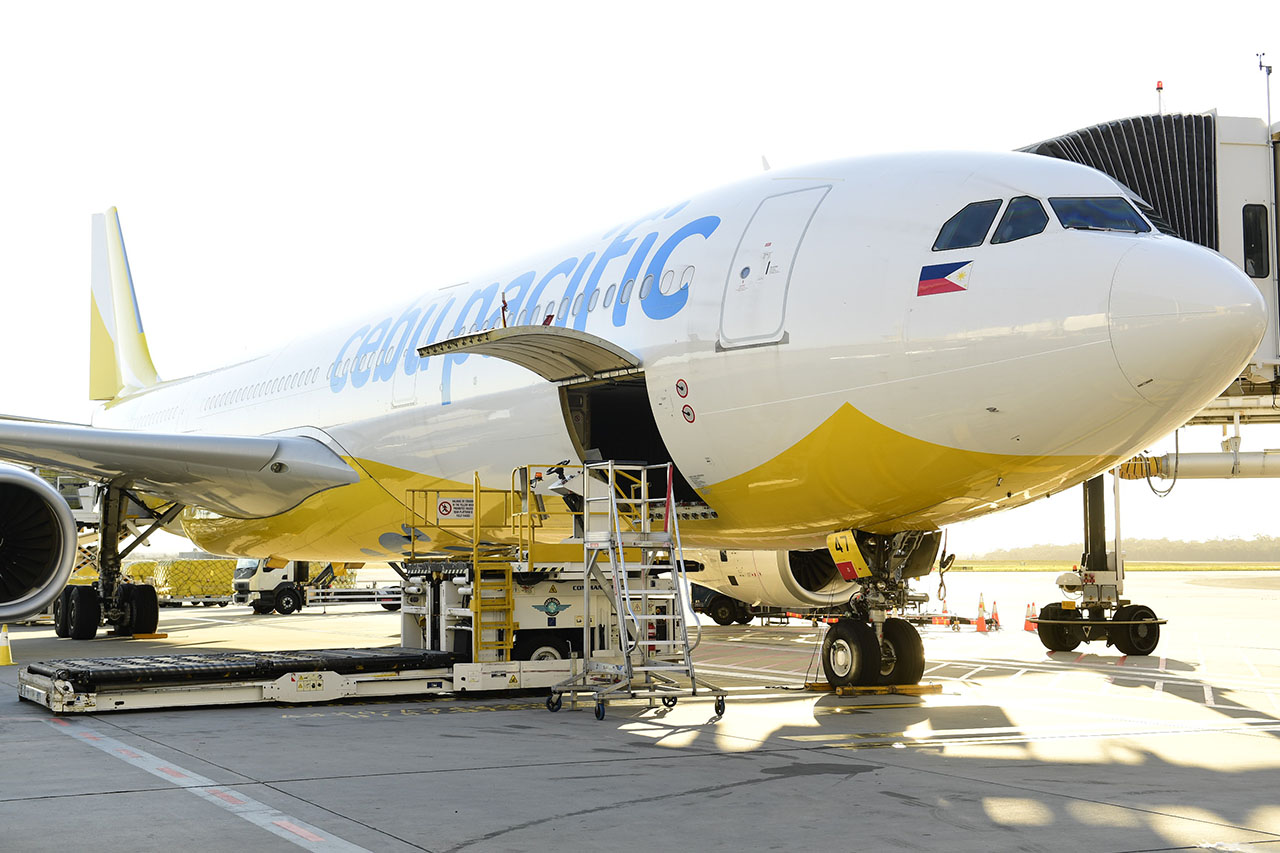
  • Cebu Pacific sees Sangley Airport as its cargo fleet hub

    Cebu Pacific sees Sangley Airport as its cargo fleet hub

    Cebu Pacific intends to make the newly constructed Sangley Airport in Cavite the hub of its cargo aircraft fleet, an official of the budget carrier said Tuesday.

    “This will become the hub and base for our two turboprop freighters that we will have in our fleet,” Cebu Pacific vice president for Cargo Division and Cebgo president Alex Reyes told reporters during the airport operations dry run.

    In June, airlines agreed to use Sangley Airport for general aviation, freight turboprop operations, and commercial turboprop operations.

    “Ang commitment po namin sa gobyerno is we will operate both our cargo freighters here in Sangley,” Reyes said.

    Cebu Pacific earlier said it was looking at increasing the contribution of its cargo business to the company’s overall top line, banking on the country’s growing logistics sector.

    In 2018, Cebu Pacific tapped Swiss IPR Conversions Ltd. to convert two of its ATR 72-500 passenger aircraft into cargo planes as demand for air cargo transport is expected to rise with a growing e-commerce sector.

    During the operations dry run, Cebu Pacific’s air freighter landed in Sangley Airport.

    “We will receive our second turboprop in the first quarter of 2020,” Reyes said.

    “Plano po namin is initially we will fly domestically. So marami pong cities that we would want to link with, from Sangley to Visayas and Mindanao for regular cargo operations back and forth,” he said, noting that Cebu Pacific will eventually fly its cargo fleet to international destinations.

    The Department of Transportation has decided to take over the construction of Sangley Airport in response to President Rodrigo Duterte’s order to develop the airport in Cavite by November to decongest the Ninoy Aquino International Airport (NAIA).

    The government tapped Unimaster Conglomeration Inc. as a contractor for the project, valued at P486.028 million.

    Transportation Secretary Arthur Tugade said the airport will be inaugurated in seven days, particularly as general aviation and freight operations hub.

  • DHL Global Forwarding expands multimodal service to Indonesia

    DHL Global Forwarding expands multimodal service to Indonesia

    International freight service provider DHL Global Forwarding has launched a delivery service to tap into growing shipments from Indonesia to other parts of Asia.

    The service, called Asiaconnect+, officially launched in Jakarta on Tuesday, enabling regional shipments from Indonesia to Singapore, Malaysia, Thailand, or vice versa, using multimodal services combining air and road freight, instead of only air freight or ocean freight.

    “Asiaconnect has been connecting Malaysia, Singapore, Thailand, Vietnam, and China through a cross border network. Today, Indonesia is joining the network,“ said Bruno Selmoni, DHL’s head of road freight and multimodal ASEAN and South Asia during the launch of the new service.

    DHL first introduced the Asiaconnect network in 2011, which at that time connected Singapore, Malaysia, and Thailand through road freight.

    With Indonesia included in the network, shipping from many cities in Indonesia, such as Bandung, Balikpapan, Semarang and Lampung to Singapore, Malaysia, or Thailand will be pooled in Jakarta by air or truck freight first. Then, the goods will be transported to Singapore using air freight before they are transported by truck to a destination such as Kuala Lumpur, Penang, and Bangkok.

    “From Jakarta to Bangkok using DHL Asiaconnect+, for example, will take six days or two days slower [compared to when using air freight]. However, on the other side it comes with a lower price,” said Bruno.

    DHLBruno said with Asiaconnect+,  service for Jakarta – Bangkok shipments could cut logistics costs by 35 percent. Meanwhile, Jakarta to Kuala Lumpur will take four days using Asiacconect+,  one day slower than using air freight but is 32 percent cheaper than using air freight.

    DHL Forwarding Indonesia president director Vincent KC Yong said DHL’s decision to provide Asiaconnect+ was because the logistics company had seen demand for innovative logistics service with competitive costs for regional shipment. Especially since Indonesia’s focus is pushing exports and its biggest market for export in Asia.

  • GreyOrange deploys advanced 12000 per hour Sorter for QuadX

    GreyOrange deploys advanced 12000 per hour Sorter for QuadX

    GreyOrange, a global company that delivers an advanced software and Maximum Life robotics platform, leveraging AI and machine learning to orchestrate supply chains for companies worldwide, today announced the deployment of its 12,000 picks per hour Sorter. The new sorter is a first-of-its kind automated solution by GreyOrange for QuadX, Philippines. Established in 2015, QuadX Inc., headquartered in Manila, is one of the fastest-growing names in the Philippines specializing in cross-border digital logistics and e-commerce payment processing. GreyOrange, with its multiregional presence and multi-industry expertise, currently operates over 42 Sorter sites across India and APAC.

    The GreyOrange Flexible Automation system has been deployed to provide an enhanced and seamless shopping experience for customers, along with the ease of payment and delivery. The 12,000 per hour Sorter, is a combination of two 6,000 per hour sorters, each having 11 arms and capable of sorting up to 480 and 240 unique destinations with and without pre-sorting respectively. It can sort up to 150,000 packages within 12 hours of operation. Pasig City, Metro Manila, Philippines is GreyOrange’s first site in the country and QuadX’s first-ever installation of an automated sorting facility system.

    Speaking about the partnership, Vivekanand, Country Manager, India & APAC, Grey Orange said, “GreyOrange technology will help QuadX realize their vision of re-inventing the shopping experience for customers by optimizing operations and throughput. By effectively sorting packages for the company’s hubs across Manila and the Philippines, this solution will help QuadX meet customers’ order delivery timelines more efficiently and complete orders with less manpower than before.”

    “QuadX believes in transforming shopping experiences for customers by taking the anxiety out of payment and delivery and making online shopping a hassle-free experience. That way, merchants can focus on selling and buyers can have a seamless checkout process in their online journey,” said Ms. Patricia Jacinto, Director of Operations, QuadX. “We are delighted to partner with GreyOrange and we hope that through this partnership, we will be able to leverage the company’s niche expertise to master the growing complexities of customer needs and optimize fulfillment performance while also controlling costs.”

    the logistics sector is expected to reach over PHP 970 billion by the year 2023, suggesting good news for GreyOrange – and for all companies interested in modernizing logistics. Due to this growth, fulfillment centers are turning to technology and robotics to increase efficiency, accuracy and overall productivity.

    GreyOrange is the only Fulfillment Orchestration Platform that combines Always-Solving Intelligence™ and Maximum-Life Robotics™ to optimize fulfillment decisions in real time so customers can keep promises while lowering costs and capturing more revenue. Our always-solving application platform, GreyMatter, orchestrates robots, people, promises, inventory and data to continuously adapt and accelerate accurate fulfillment in distribution centers and warehouses.

  • Tigers continues global growth with new mega hub facility in Rotterdam

    Tigers continues global growth with new mega hub facility in Rotterdam

    Tigers is building a new mega-hub facility in Rotterdam, the Netherlands, as global customer demand and the e-commerce sector continue to grow.

    The multi-million-Euro mega-hub is currently under construction and is scheduled to be officially opened in April 2020, providing another flagship location for Tigers in Europe.

    “Rotterdam is the biggest port in Europe and a key gateway to the continent for the supply chain, which is why Tigers has been based there for the past 20 years,” said Shahar Ayash, Managing Director – UK and Europe, Tigers.

    “The mega hub will be an advanced omnichannel fulfillment center and Tigers’ biggest single operation in Europe, which is being built with longevity and sustainability in mind.

    “E-commerce has also been a huge factor in this development with 70 percent of orders processed in Rotterdam related to the e-commerce sector, which is set for even further future growth.”

    The new mega-hub will replace Tigers’ existing Rotterdam facility and will be more than 550,000 sqft, have 60,000 pallet positions, and 550,000 bin locations.

    The hub is also being built with solar panels on the roof to create a sustainable structure and will be equipped with Tigers’ Cloud-based SmartHub:Connect technology.

    “The new facility will be just 10km from the Port of Rotterdam with close proximity to major road and rail networks, making it strategically located for both first and final mile,” said Ryan Balic, Regional Director Sales, Europe, Tigers.

    “The mega hub will allow our customers to accommodate organic growth and benefit from state-of-the-art facilities, including enhanced security features, multiple storages and picking processes, dedicated B2C returns and VAS processing areas, and an increased number of conveyor scan-pack stations.”

    The Rotterdam mega-hub is part of an ongoing global expansion plan for Hong Kong-headquartered Tigers, and the facility is being constructed by a real estate developer, DHG.

  • Honestbee wins creditor reprieve

    Honestbee wins creditor reprieve

    Struggling grocery retailer and delivery startup Honestbee has been granted a four-month debt moratorium by the Singapore High Court.

    While two months shorter than the protection period the company sought from the court, it allows the business to restructure free from creditor pressure.

    Reports by Singapore business media show Honestbee owed around US$236 million in current liabilities as at the end of June. On top of that it has debt of around $210 million owed to some 1800 convertible noteholders which it is trying to exchange for equity.

    While Honestbee’s debt is a major impediment to the ongoing business, as much as 80 percent of the liability is to investor Brian Koo and entities controlled by himself or family interests.

    Koo stepped down as chairman of Honestbee in mid-September but is believed to support the debt restructuring scheme.

    Following the court decision, Honestbee CEO Lay Ann Ong issued a statement about the company’s immediate future: “A successful recapitalization and restructuring of the business will set a strong path of recovery for the company. This is necessary to ensure that we have the right structure in place moving forward so that we can better serve our customers across Asia.”

    The company will release further details shortly on its recapitalization progress and plans to sell of some parts of the business.