Retail News CRM

Tag: cars

  • Korea’s car companies discuss challenges

    Korea’s car companies discuss challenges

    Representatives of Korea’s major automakers and parts makers and industry officials gathered in Seoul Wednesday to discuss ways to breathe new life into the sluggish sector. The chief executives of the big five automakers — Hyundai Motor, Kia Motors, GM Korea, Renault Samsung and Ssangyong Motor — and their local parts makers and industry associations explored ways to tackle daunting challenges facing the industry.

    Korea’s auto industry is going through a hard time after GM Korea shut down its underutilized Gunsan plant in May, and Hyundai and Kia have been posting generally disappointing earnings this year.

    Small and medium-sized companies that make parts for the carmaker were more vulnerable to falling sales, with more than one-third of such Korean auto parts makers posting losses in the first half of this year, data by the think tank Korea Institute for Industrial Economics and Trade showed.

    They are also in the crosshairs as the United States is weighing slapping tariffs on foreign-made autos and auto parts on national security grounds.

    The participants called for the government to boost domestic demand, provide financial assistance to cash-strapped parts makers and lower regulations in emerging sectors, such as autonomous and electric vehicles.

    The automakers said they will seek ways to maintain over 4 million units in domestic car production and raise the number to 4.5 million by 2025.

    Hyundai Motor, the nation’s leading automaker, said it will invest 220 billion won ($193.8 million) over the next two years to develop an advanced lineup of its hydrogen-fuel electric car Nexo, with a goal of releasing over 30,000 units in the domestic market in 2022.

    GM Korea said it will hold trade shows to help its local contractors tap into the global market and supply 70 billion won in subsidies for small- and medium-sized contractors.

    Renault Samsung said it will operate a research and development fund worth 35 billion won by 2020 and form an alliance with Nissan and Mitsubishi to help its contractors make bids overseas.

    Ssangyong Motor promised to expand use of Korean-made parts and support its contractors in India.

    The Ministry of Trade, Industry and Energy said it will join industry efforts to overcome challenges and drive innovation in the sector.

    “If the auto industry and the government work together, we can come up with measures to deal with the hardship,” Industry Minister Sung Yun-mo said during a meeting with them.

    “We will gather opinions to prepare support measures, especially for parts manufacturers.”

    The ministry said it will unveil a comprehensive support package for the auto industry next month, which includes financial and R&D support as well as deregulatory measures.
  • Hyundai to unveil new large SUV Palisade

    Hyundai to unveil new large SUV Palisade

    Hyundai Motor’s new large SUV, set to be unveiled at the Los Angeles Auto Show later this month, will be called the Palisade. According to the carmaker Friday, its new model for the 2020 model year will be revealed on Nov. 28 during a press event at the L.A. motor show.

    The company will start taking preorders for the SUV in the Korean market starting at the end of this month, earlier than other countries. Hyundai Motor America said Thursday the car will be available in the U.S. market in the summer of 2019. Hyundai said the SUV was named after Pacific Palisades in southern California, an affluent neighborhood that boasts a series of coastal cliffs. The carmaker is hoping that the Palisade will live up to its premium-sounding name.

    The three-row SUV will offer seven or eight passenger seats, according to a spokesperson from Hyundai Motor. The major focus in designing the car is enabling everybody inside the car, even those in the third row, can enjoy their own space. In some vehicles with third rows, space is tight.

    The carmaker said its new Palisade will offer the most seating space among competing vehicles in the same segment. It also promised diverse seat adjustment options and an easy-to-use interface for adjusting car settings for passenger convenience.

    “For large SUVs, carmakers need to offer more value than just the basic driving performance,” a Hyundai spokesman said. “The spacious interior and intuitive interface for safety and convenience services offered in the car are its competitive edge.”

    The carmaker is expecting a lot from this vehicle, as it in hopes to make the Palisade its flagship SUV model when families are increasingly lean towards bigger SUVs over sedans. The Palisade will replace the Max Cruze (Santa Fe XL overseas) as Hyundai’s largest SUV.

    Specifications and pricing for the Palisade were not released on Friday.

  • Automaker Mitsubishi eyes full-scale production in Vietnam

    Automaker Mitsubishi eyes full-scale production in Vietnam

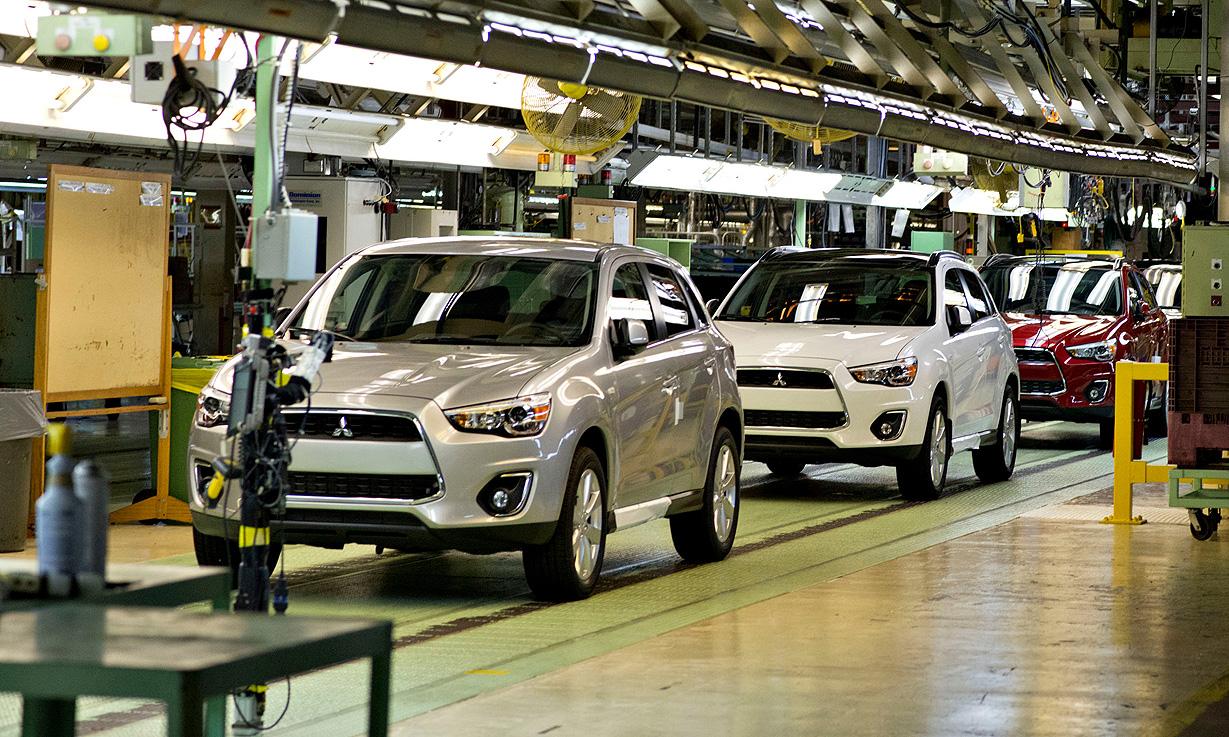
    Japanese automaker Mitsubishi Motors plans to expand its Vietnam operations by moving to full-scale production of parts within the country. The company’s CEO Osamu Masuko said at the global launching ceremony of the Mitsubishi Triton pickup truck in Bangkok that sourcing materials in Vietnam would let the company handle more upstream processes for components.

    “To be a true winner, we must develop production and exports to certain levels in each country,” Masuko said.

    He added that the Vietnamese operations will not simply be limited to assembling modules in a “knock-down kit” production method, referring to the method of manufacturing parts in one country and shipping them to another.

    The ASEAN region is the largest and most profitable market for Mitsubishi Motors, the company said in its annual report for fiscal 2017. Sales in the region went up by 33 percent last year to 275,000 units, while revenue from the region jumped 45 percent for the year to 506.2 billion yen ($4.45 billion).

    In Vietnam, Mitsubishi currently has an assembly plant in the southern province of Binh Duong with a capacity of 5,000 vehicles per year.

    It plans to increase production by having a second plant in the country by 2020, with a capacity of 30,000-50,000 vehicles per year.

    In the first nine months this year, a total of 230,958 automobiles were sold in Vietnam, according to Vietnam Customs. This figure could reach 300,000 by the end of this year, it added.

  • Self-driving car tested out in Korea

    Self-driving car tested out in Korea

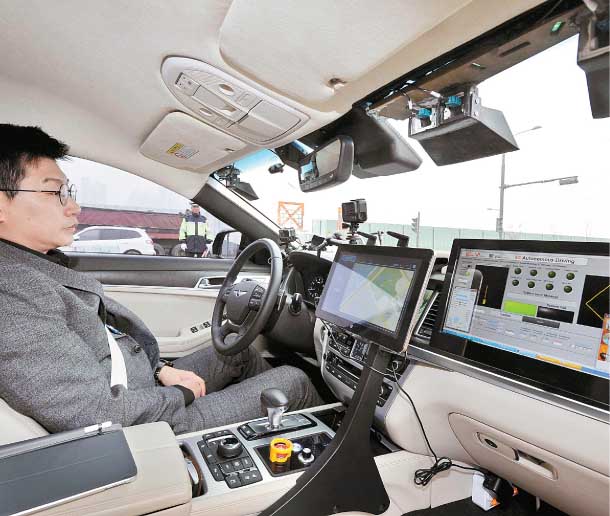
    A user tries out self-driving technology from local car-sharing app Socar in Siheung, Gyeonggi on Wednesday. The technology enables users to hail self-driving cars, and is currently being tested, according to Socar. The technology was jointly developed by Seoul National University, Yonsei University, SK Telecom and autonomous car technology developer SWM.AI.

  • Hyundai opens center for innovation in Israel

    Hyundai opens center for innovation in Israel

    Hyundai Motor opened an innovation center in Tel Aviv and invested in an Israeli artificial intelligence start-up through the center, the automaker said Tuesday. Hyundai Cradle Tel Aviv is the third such initiative established by the Korean carmaker’s investment arm, the others in Korea and Silicon Valley. The Israel-based center, which officially started operations at the end of last month, is dedicated to finding start-ups with expertise in artificial intelligence and computer vision.

    The Tel Aviv center said Tuesday it invested in allegro.ai, a start-up specializing in deep learning-based computer vision. The automaker said the partnership will improve the quality of Hyundai’s products and speed up its deployment of AI technology.

    “Deep learning-based computer vision is one of the core technologies that can be applied to autonomous driving, to navigate roads and make quick decisions in real time,” said Ruby Chen, head of investment at Hyundai Cradle Tel Aviv. “allegro.ai is clearly an innovation leader in that field.”

    The technologies produced by the Israeli start-up make it easy for companies developing autonomous vehicles and drones to manage and control their data sets safely, said Nir Bar-lev CEO and co-founder of allegro.ai in a statement Tuesday.

    Korea’s largest automaker is planning to establish two more centers, in Berlin and Beijing.

    Selecting China as one of its global bases is a strategic move, as the automaker is seeking ways to expand in the world’s most populous consumer market. Hyundai is considering launching its N brand cars in China.

    On Tuesday, Thomas Schemera, head of the product planning and strategy division at Hyundai Motor, said the company is mulling which of its high-performance branded cars to introduce to the Chinese market during the first China International Import Expo, being held at the National Convention and Exhibition Center in Shanghai.

    Hyundai introduced its fuel-cell vehicle NEXO at the expo with an aim to bolster its presence in the growing eco-friendly car market in China.

    The expo is being held for the first time by the Chinese government to help foreign companies introduce their products and find opportunities for business cooperation.

  • Auto imports experience year-end season surge

    Auto imports experience year-end season surge

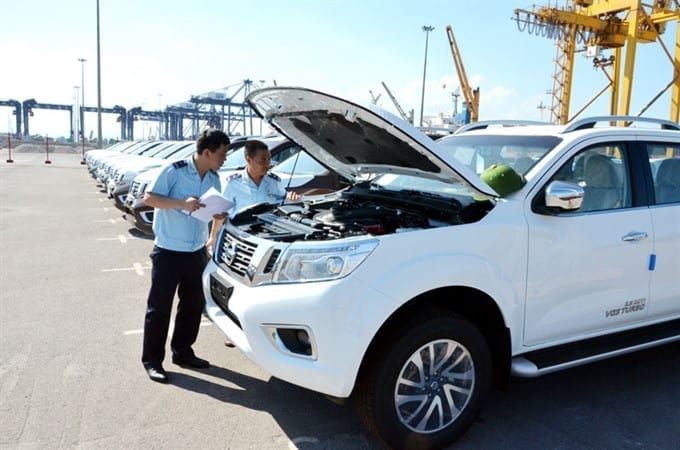
    Up to 13,000 vehicles were imported last month, almost three times the number in October 2017. October also saw the highest number of completely built units (CBUs) imported so far this year, according to Vietnam Customs. However, the total volume of imported cars in the first 10 months of this year decreased over the same period last year, because of a decree that took effect this year, setting tough conditions for car imports.

    As of the end of October, the total number of imported CBUs is estimated at over 53,000 units, down 31 percent from the 77,000 units recorded in the same period last year.

    The number of imported vehicles only started rising since August this year, after a slump that lasted more than six months.

    Vietnam imported 12,380 CBUs worth $329 million in the first half of this year, down 75.5 percent in volume and 68.3 percent in value over the same period last year, according to Vietnam Customs.

    Until now, Thailand and Indonesia have accounted for the main volume of imported CBUs. Most cars sold in Vietnam are foreign brands assembled in the country from kits.

    But a series of free trade agreements have reduced import duties and are opening up the market. A 30 percent import tax on cars from other Association of Southeast Asian Nations (ASEAN) countries was scrapped this year.

    Besides Thailand and Indonesia, Vietnam has imported cars from China, Germany, Slovakia, Hungary, Spain, and few other countries this year.

  • All Kia motoring needs in one handy app

    All Kia motoring needs in one handy app

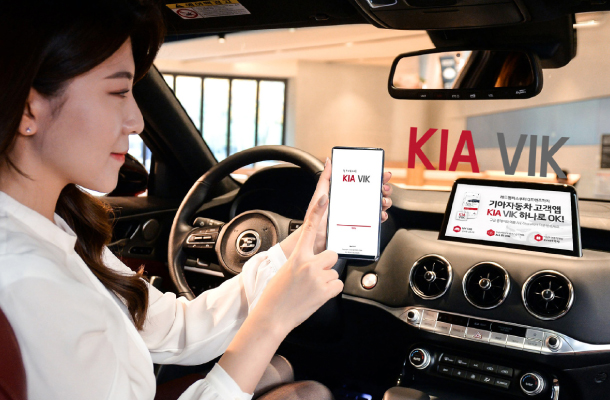
    Kia Motors on Monday launched an all-in-one mobile app that integrates all of its scattered online customer service channels. The new app, dubbed VIK, offers 60 different services including information on car purchases, maintenance and customer membership points and a basic guide to its driver assistive technologies.

    “It’s like having a virtual assistant specializing in car management,” a spokesperson from Kia said.

    The most notable service of the app is the augmented reality (AR) tutorials. If a user scans their steering wheel and dashboard with the in-app camera, the screen shows red dots marked with the specific features that the shown parts control.

    When users click each red dot on their screen, the phone plays a video tutorial of how that particular feature works.

    The AR-based service is made for Kia’s Stinger sedans now, but will be expanded to other models next year, the carmaker said. The app also understands voice commands.

    If a driver thinks something is wrong, they can ask the app where the closest maintenance center is without taking their hands off the steering wheel, Kia said.

    The carmaker said in-app mobile payments will be available soon so that people can pay for maintenance or car accessories without opening up another application. A service dubbed Kia Pay will be added by the end of this year.

    The carmaker is trying to promote the app by adding a social platform for Kia car drivers.

    It created a tab where users can post their trips and experiences with Kia cars. The company said it will award good stories to boost user interest in the newly launched app. To better market the app, Kia inked a partnership with Samsung Electronics on Monday to develop phones customized for Kia customers.

    The two are planning on launching Galaxy smartphones that come with Kia’s service apps, including VIK, preinstalled.

    Kwon Hyug-ho, executive vice president and head of domestic sales at Kia Motors, said the company will continue to expand its partnership with Samsung to make phones specialized for better car management in a press briefing held Monday in Seoul.

  • JD and Toyota partner to expand auto services business

    JD and Toyota partner to expand auto services business

    FAW Toyota, a joint venture between Toyota Motor Company and First Automobile Works, has launched a flagship store on JD.com, China’s largest retailer, allowing customers in China to purchase and schedule maintenance services online and then bring their vehicles to FAW Toyota’s offline service centers at their convenience.

    In addition to auto services, customers can easily purchase a variety of automobile parts and related products.

    After making their online purchases, customers will receive a verification code on their phones, which they can use at FAW Toyota’s offline ‘4S’ stores to redeem their parts, supplies, installation or repair services.

    Auto parts and supplies can also be delivered directly to customers’ homes.

    The partnership was concluded to improve customers’ level of convenience while FAW Toyota will gain insights from the various data it will collect from the platform such as age, gender, and purchasing behavior of shoppers.

    As one of the latest applications of its “Boundaryless Retail” strategy, last month JD launched a new offline automotive initiative called JD Auto Service, known in Chinese as Jingdong Jingche Hui.

    The initiative already includes nearly 200 third-party offline car repair stores.

    Through JD Auto Service, customers can buy auto parts or maintenance services on JD.com, and then go to a JD Auto Service location for installation.

    To ensure high-quality service, each of the offline stores is screened to meet JD’s strict standards before joining the network.

    JD has been leveraging its advanced e-commerce capabilities and offline resources to expand into China’s booming automotive aftermarket business.

    The company’s omnichannel model now covers the entire purchasing process for car parts and services.

    JD currently has partnerships with over 30,000 authorized offline auto stores for complementary service.

    Chinese car owners have so far responded enthusiastically to JD’s omnichannel network.

  • Hyundai Motor sells more than 200,000 Genesis units

    Hyundai Motor sells more than 200,000 Genesis units

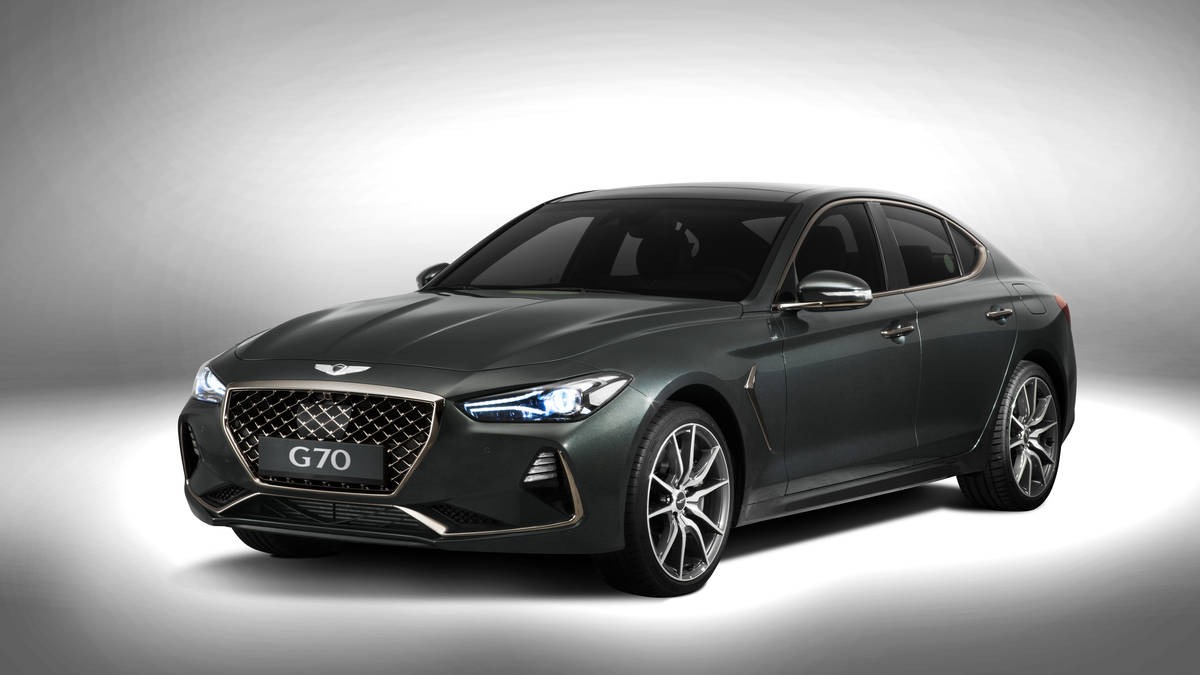
    Sales of Hyundai Motor’s premium Genesis marquee surpassed 200,000 units three years after its official launch, industry data showed Sunday. According to the data, total sales of Genesis vehicles reached 206,882 as of the end of October, touching the 200,000 mark for the first time since November 2015, when Hyundai Motor launched the sub-luxury brand.

    With global sales of 555 units of Genesis cars in the first year, 58,916 units were sold in the following year and 78,889 units in 2017.

    For the first 10 months of 2018, Hyundai saw sales of the brand rise 6.1 percent on year to 68,522 units.

    The executive G80 model was the most popular in the Genesis lineup, with a cumulative 127,283 units sold worldwide, followed by the flagship G90 with 52,417 units sold and the G70 sports sedan with 27,182 units.

    Hyundai Motor said it will strengthen the Genesis lineup by upgrading popular models.

  • Nissan’s latest Leaf EV available for preorder

    Nissan’s latest Leaf EV available for preorder

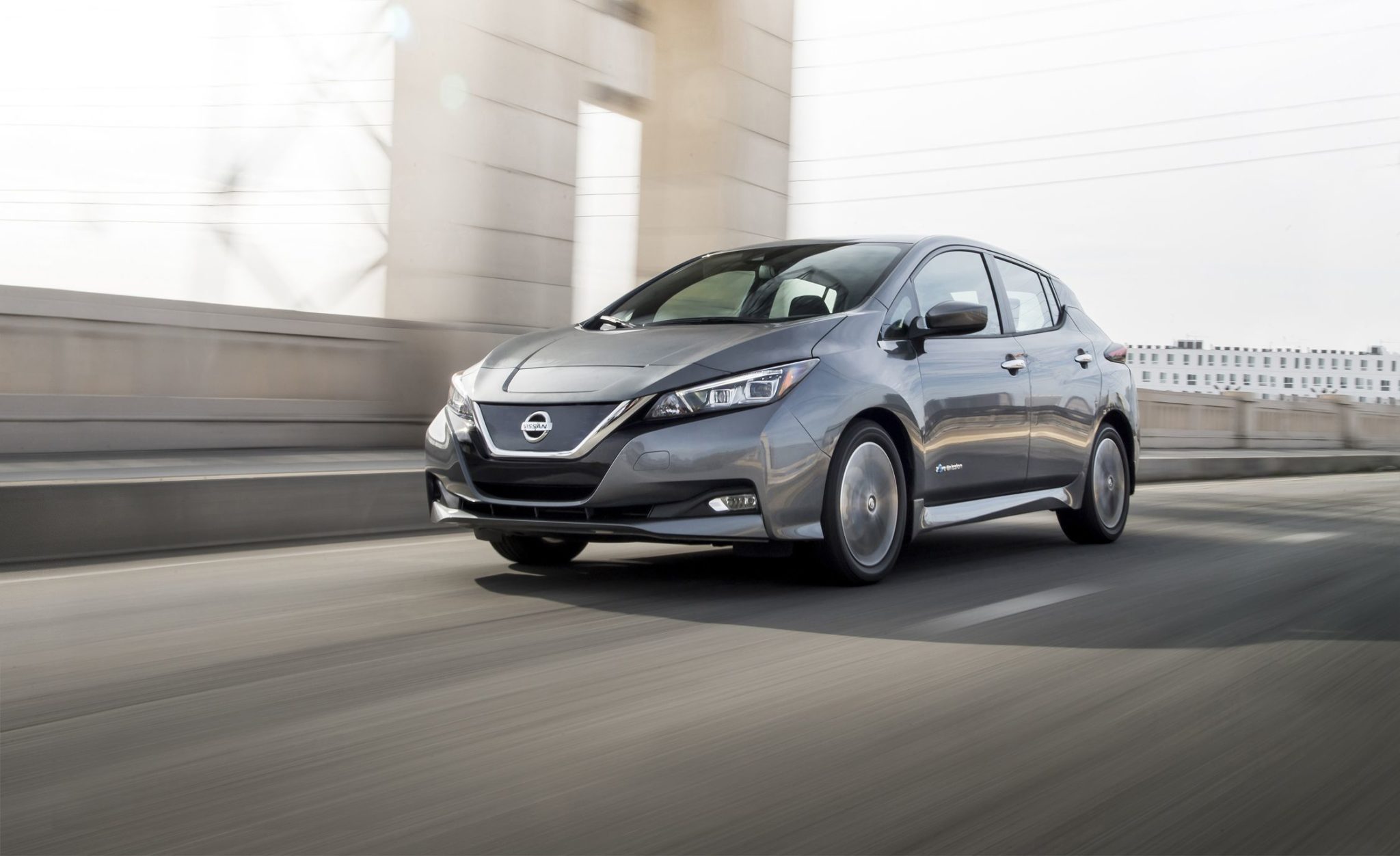
    Nissan Korea Thursday introduced an updated version of its Leaf electric vehicle (EV) at the Daegu International Future Auto Expo, hoping to grow its share of the domestic EV market. The vehicle was released in Japan in September.

    Nissan’s local unit started accepting preorders on Thursday, and the model is expected to be on the roads of Korea in the first quarter of next year.

    The Leaf is not widely known here as Japan’s Nissan is not strong in the domestic market. The car, however, was the world’s first mass produced electric vehicle when introduced 2010. A total of 370,000 units had been sold globally as of October.

    In the latest generation, Leaf comes with advanced performance and smart car technologies, the carmaker said.

    This includes the “e-Pedal,” which enables the driver to accelerate and decelerate with the use of a single pedal. The pedal is linked to a regenerative brake, which produces electricity as it slows the car. The feature is often found in new offerings in the EV market.

    Nissan Korea also says the latest Leaf allows for 360-degree surround view and is capable of maintaining distance with vehicles ahead.

    Performance has been enhanced with a 38 percent increase in horsepower compared to the previous model – now 150 horsepower. Torque is upped by 26 percent.

    Despite multiple improvements, the driving range, important to the success of an electric vehicle, is likely to disappoint Korean consumers.

    The Leaf can travel up to 231 kilometers (143 miles) on a single charge.

    The Kona SUV, from Hyundai Motor, can travel 400 kilometers per charge. GM Korea’s Bolt EV has a 380-kilometer range. The Niro SUV, from Kia Motors, is able to go 380 kilometers on a single charge.

    The exact price hasn’t been announced, but the company said at the event the price will be set under 50 million won.

  • Aston Martin Lagonda Appointed New Director of Investor Relations

    Aston Martin Lagonda Appointed New Director of Investor Relations

    Aston Martin Lagonda Global Holdings plc (AML) has today announced the appointment of Charlotte Cowley to the position of Director of Investor Relations. Charlotte joins Aston Martin from Burberry plc where she served as Vice President, Investor Relations, and was instrumental in establishing their dedicated IR function. Before this, Charlotte worked in corporate broking at UBS and prior to that, equity research at Credit Suisse.

    In this newly created role, Charlotte will lead the investor relations activities for the company and will report to EVP and CFO Mark Wilson, joining during January 2019.

    Aston Martin EVP and CFO Mark Wilson said: ‘Strengthening our Investor Relations team is a key priority for the business following our successful listing on the London Stock Exchange. Charlotte will bring significant experience to the company at this exciting time in our history. I am delighted to welcome Charlotte to the team as we continue on our execution of our Second Century Plan.”

  • GM chairman might visit Korean facility

    GM chairman might visit Korean facility

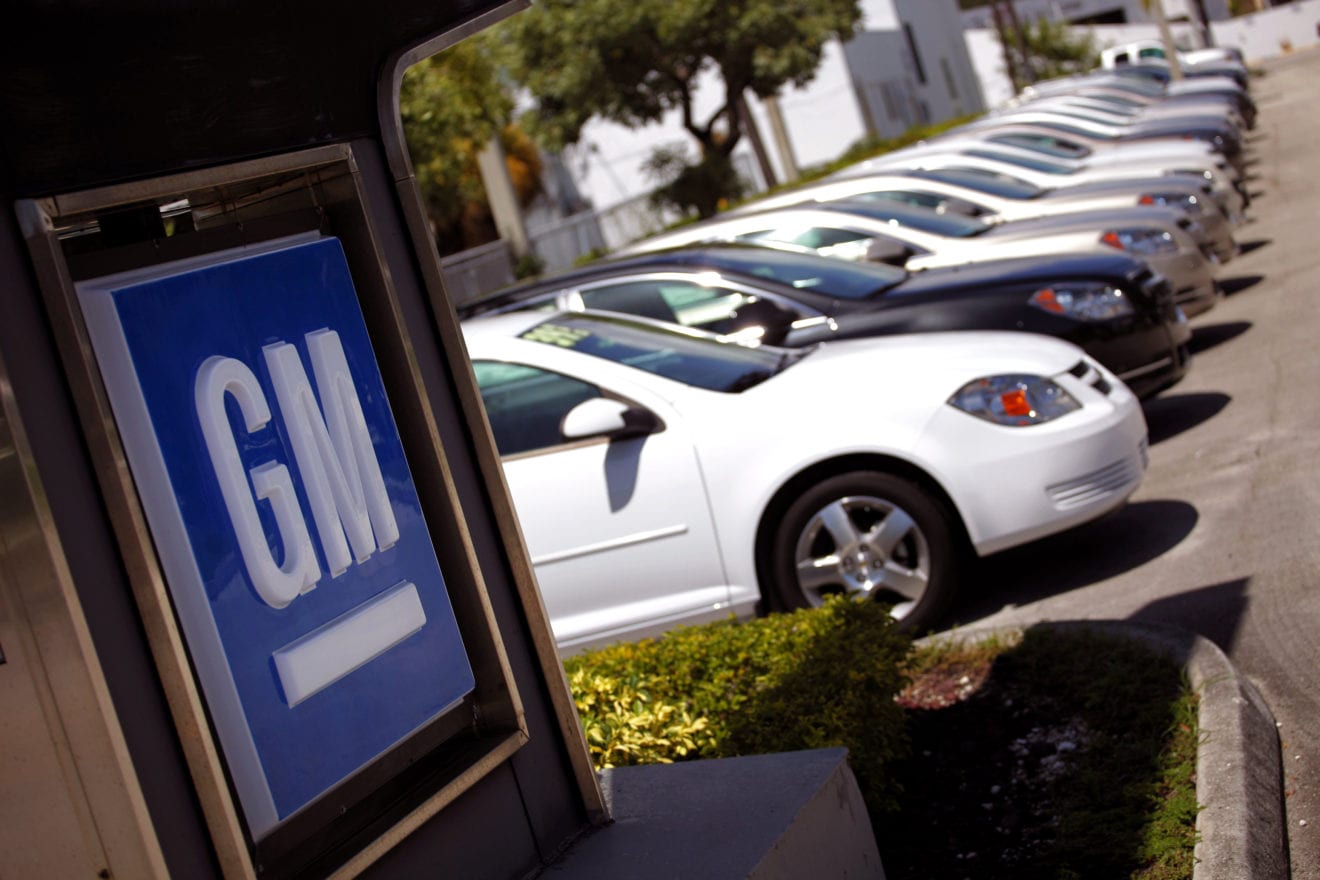
    General Motors Chairman and CEO Mary Barra hinted at visiting Korea soon amid conflict over the spinning off of the Korean unit’s R&D division. If the trip happens, it would be Barra’s first visit to the Korean operations since she became chairman in 2016.

    GM Korea head Kaher Kazem reiterated the company’s commitment to the market during a government audit held Monday. “I would like to visit our Korea operations at some point soon,” Barra wrote in a letter sent to labor union head Lim Han-taek on Oct. 24.

    Lim had requested a meeting with Barra over GM’s decision to spin off the R&D division.

    Since July, GM has been pushing to build a separate R&D center tentatively named GM Korea Technical Center. Management says it will raise work efficiency and competitiveness.

    The labor union has opposed the idea, claiming a separate R&D center will eventually result in the ending of production in Korea, resulting in massive layoffs. On Oct. 19, the automaker approved the plan in a board meeting despite the opposition.

    In the letter, Barra emphasized GM’s dedication to its Korean operations.

    “The specialized unit will benefit from focused management, increased transparency on cost and improved operational efficiency,” Barra wrote in the letter.

    “We think the demerger is an important step to allow both the engineering services company and the manufacturing unit to stand on their own as profitable, viable businesses.”

    During a government audit held Monday at the National Assembly, GM Korea CEO Kazem said the company “has no plan to withdraw from Korea.” His comments assured lawmakers the spinoff is part of GM’s plan to stay in Korea longer than the initially promised 10 years.

    “In fact, we are establishing a long-term commitment to GM Korea. [Building a separate R&D center enables] us to not only upgrade but also introduce new models. We are committed to building a very long-term future for GM Korea,” Kazem said. “The framework agreement says 10 years, but we are looking at longer than that.”

    Kazem added that the company is engaging a number of parties on the possible redevelopment of the currently shut-down Gunsan factory, but he didn’t reveal details. He said he would “review” whether the plan for the Gunsan factory site could be included in the initial framework agreement.

    GM abruptly shut down the Gunsan factory in May. GM Korea has since been beset by speculation of completely shutting down in the country.

    The company and the Korean government have decided to jointly invest 7.7 trillion won ($6.7 billion) to save the ailing unit. GM also promised to stay in the country for the next 10 years.

    A GM Korea official said that Barra’s visit to the country is not yet confirmed.

  • Kia swings to profit in third quarter after 2017 one-off

    Kia swings to profit in third quarter after 2017 one-off

    Kia Motors Friday reported a swing to profit in the third quarter from a loss a year earlier. For the three months ending Sept. 30, Kia posted a net profit of 297.74 billion won ($262 million) from a net loss of 291.77 billion won a year ago, the company said in a statement.

    “In the third quarter of 2017, a one-off cost of 864.1 billion won was reflected in the bottom line when a local court ordered the company to retroactively make an overdue payment to employees,” a company spokesman said.

    According to the court ruling issued in August last year, regular bonuses are to be included in the “ordinary wage” used as the basis for calculating overtime, severance and other payments.

    The won’s strength against the dollar and currencies in emerging markets also weighed on the quarterly net results, the company said.

    Kia reported an operating profit of 117.28 billion won in the third quarter from an operating loss of 427.02 billion won a year earlier. Sales fell 0.24 percent to 14.074 trillion won from 14.108 trillion won over the same period, it said.

  • Hyundai to set up $100 million hydrogen fund in China

    Hyundai to set up $100 million hydrogen fund in China

    Hyundai Motor has partnered with a Chinese institute to set up a $100 million fund for local investments in hydrogen technologies and related industrial infrastructure, the company said Monday. Hyundai Motor and the Beijing-Tsinghua Industrial R&D Institute have kicked off the Hydrogen Energy Fund, with venture capitalists from Asia, Europe and the United States expected to join as investors, Korea’s largest carmaker said in a statement.

    “The fund, once fully set up, will be used in the infrastructure needed for the hydrogen industry and venture startups with core hydrogen technologies,” the statement said.

    Yield Capital, an investment organization under the Chinese institute, will be responsible for raising funds and managing them, it said.

    Hyundai has expanded investments in hydrogen fuel-cell electric vehicles, such as Nexo, while expanding partnerships with global companies to gain a share in the next-generation car markets.

  • Vietnam’s VinFast in deal with PV Oil for electric car charging stations

    Vietnam’s VinFast in deal with PV Oil for electric car charging stations

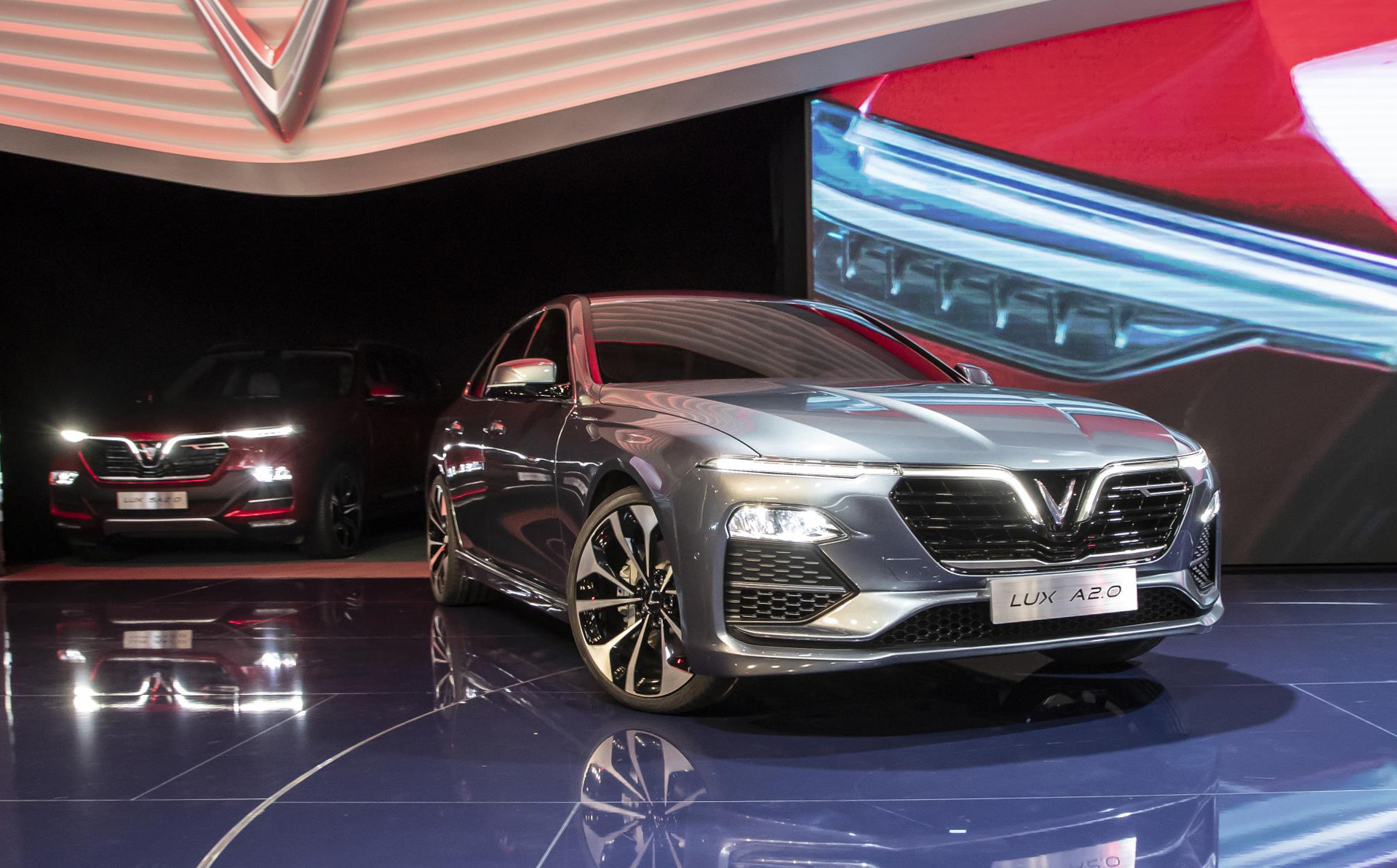
    VinFast on Thursday signed a memorandum of understanding with PetroVietnam Oil Corp. to build charging stations for its electric cars and scooters.

    The company, a unit of Vietnam’s largest conglomerate Vingroup JSC, is building a $3.5-billion scooter and automobile complex in northern Vietnam, with its first production electric scooters slated to hit the streets late this year.

    Thursday’s agreement will pave the way for VinFast to deploy charging stations at 20,000 of PV Oil’s existing service stations in Vietnam by 2020, VinGroup said in a statement.

    This is part of VinFast’s plan to launch between 30,000 and 50,000 charging stations nationwide by 2020, it said.

    VinFast customers will be able to charge their vehicles or change their batteries at these stations, it added.

    VinFast Chief Executive Officer Jim Deluca said in an interview earlier this month that the firm would produce 250,000 electric scooters a year alongside 250,000 cars, in an ambitious production target that is set to eventually increase to 1 million units each a year.

    The company has started on the development of a battery electric vehicle with Germany’s EDAG Engineering.

    Vingroup, which has a market value of about $13.2 billion, also has businesses in property, hospitality, entertainment, retail, healthcare, education, agriculture and smart phone production.