Tag: cebu

  • Cebu Pacific sale offers P299 domestic, P699 international fares

    Cebu Pacific sale offers P299 domestic, P699 international fares

    Cebu Pacific said it was offering domestic and international seats on sale starting Thursday.

    The Philippines’ largest airline said the sale would run until Friday for travel from Nov. 1 to March 31 next year.

    Among the destinations on offer are Boracay, Coron, Puerto Princesa and Siargao at P299 for one-way base fare, Cebu Pacific said.

    Flights to international destinations like Bali, Hong Kong, Bangkok, Beijing, Taipei and Tokyo are also on offer for as low as P699 one-way base fare, the airline said on its website.

    Other destinations like Dubai are also on offer for as low as P1,599; Melbourne for as low as P4,599 all in; and Sydney at P5,599 all in.

    The quoted domestic one-way base fares are inclusive of 7 kg hand carry baggage allowance, but exclusive of web admin fee, 12 percent VAT, terminal fees and fuel surcharge, it said.

    Quoted international one-way fares are inclusive of 7 kg hand-carry baggage allowance, but exclusive of web admin fees for short haul and long haul flights, respectively and P550 international terminal fee and fuel surcharge.

  • Cebu Pacific Q1 profit more than doubles

    Cebu Pacific Q1 profit more than doubles

    Budget airline Cebu Pacific saw profit in the first quarter of the year more than doubled on strong demand and as fuel costs, which weighed on earnings in 2018, eased during the period.

    Cebu Pacific, owned by the Gokongwei family’s JG Summit Holdings, said in a stock exchange filing that net income from January to March this year hit P3.43 billion, up more than 138 percent compared to the same period in 2018.

    The airline, which signaled its intention to expand aggressively this year, also saw total revenues hit P21.18 billion, up 16 percent. Most of this came from passenger ticket sales, which rose 14.6 percent to P15.68 billion. Cebu Pacific, which recently took delivery of newer planes such as the next-generation A321neo, saw passenger volume increase 8.5 percent to 5.3 million. Average fares also ticked higher to P2,965, an increase of 5.7 percent.

    The airline also improved cargo revenues by 12.7 percent to P1.44 billion as well as ancillary revenues, which increased 22.7 percent to P4.1 billion.

    As noted, the carrier’s bottom line was propped up by the 4.3-percent decline in oil prices, a major operating expense.

    The company’s flying expenses alone rose 3.8 percent to P7.17 billion mainly as it ramped up operations.

    Overall, operating expenses went up 8.4 percent to P17.34 billion.

    “The increase was driven by its expanded operations, growth in seat capacity from the acquisition of new aircraft and the weakening of the Philippine peso against the US dollar,” Cebu Pacific said in its filing.

  • Cebu Pacific’s income jumped 138% to P3.4b in first quarter

    Cebu Pacific’s income jumped 138% to P3.4b in first quarter

    Cebu Air, the operator of low-cost carriers Cebu Pacific and Cebgo, said net income jumped 138.4 percent in the first quarter from a year ago, on the back of strong passenger and cargo revenues. The airline unit of the Gokongwei Group said it posted a net income of P3.4 billion from January to March, up from P1.4 billion it earned in the same period last year. Revenues increased 16 percent in the three-month period to P21.17 billion from P18.26 billion it generated a year earlier.

    Passenger revenues increased 14.6 percent to P15.67 billion from P13.67 billion. The increase was attributed to the 8.5-percent growth in passenger volume to 5.289 million from 4.876 million last year as the group added bigger A321 aircraft to its fleet. The average fare went up 5.7 percent to P2,965 in the first quarter from P2,805 a year ago, contributing to the higher revenues. Cargo revenues grew 12.7 percent to P1.44 billion from P1.279 billion following the increase in both yield and volume of cargo transported in 2019. Operating expenses went up 8.4 percent to P17.34 billion from P15.997 billion a year ago.

    Cebu Air said the increase was driven by expanded operations, growth in seat capacity from the acquisition of new aircraft and the weakening of the Philippine peso against the US dollar. The peso depreciated to 52.36 per US dollar in the first quarter from an average of 51.49 a dollar last year. Flying operations expenses increased 3.8 percent to P7.173 billion from P6.910 billion.  “This was mainly accounted for by the increase in pilot training costs,” CEB said. Fuel expenses also went up as the fuel volume increased by 7.9 percent in the quarter.  The MOPS price of fuel slightly went down to $76.50 per barrel in the first quarter from $79.99 a barrel in the same period last year.

  • Cebu Pacific receives highest ranking for safety

    Cebu Pacific receives highest ranking for safety

    Cebu Pacific has now achieved the highest ranking for safety with 7-stars from the world’s only safety and product rating agency AirlineRatings.com

    After careful evaluation and feedback from the airline and aviation industry AirlineRatings.com has upgraded its seven-star safety rating system to give more importance to IOSA and this move elevates Cebu Pacific up to 7-stars – the highest ranking.

    IOSA – the International Air Transport Association Operation Safety Audit – was first introduced in 2003 to curb the disturbing trend in airline accidents that could be attributed to simple processes and maintenance programs.

    Since it was introduced airlines that have completed IOSA have up to a four-fold safer safety record than airlines that do not do the audit.

    In 2017, the all accident rate for airlines on the IOSA registry was nearly four times better than that of non-IOSA airlines (0.56 vs. 2.17 accidents per million flights) and it was nearly three times better over the 2012-16 period.

    Of significant importance to Airlineratings.com is that the audit is done every two years and covers over 1060 parameters.

    AirlineRatings.com now awards an airline that has completed IOSA three stars.

    AirlineRatings.com Editor-in-Chief Geoffrey Thomas congratulated Cebu Pacific on this achievement.

    “Cebu Pacific has become a major part of the fabric of life in the Philippines bringing affordable travel to most,” said Thomas.

    “The airline has a very modern fleet and operationally is now up there with the best.”

    “That is great news for the traveling public,” said Thomas.

    The rating agency has reduced the stars allocated for ICAO compliance from two to one.

    The International Civil Aviation Organization (ICAO) was created to promote the safe and orderly development of international civil aviation throughout the world.

    It sets standards and regulations necessary for aviation safety, security, efficiency, and regularity, as well as for aviation environmental protection.

    It has 8 audit parameters that pertain to safety and they are; Legislation, Organization, Licensing, Operations, Airworthiness, Accident Investigation, Air Navigation Service and Aerodromes.

    If the country meets between 6 and 8 of the audits one star is awarded to the airline. Five secures 1/2 star. However, if any of the criteria are below the average by less than 5 percent it is considered a pass. If the country only meets up to four criteria no star is given.

    The other main criteria are; Is the airline on the European Union (EU) Blacklist; has it a fatality free record for the past 10 years and is the airline FAA (USA) endorsed?

    Cebu Pacific commenced services in March 1996, initially only domestic operations but launched international operations in November 2001.

    It now flies to 64 tourist/business destinations within Asia and operates 67 mainly Airbus aircraft

    Cebu was the first local airline to introduce e-ticketing, prepaid excess baggage and seat selection in the Philippines.

  • Cebu Pacific is Recruiting New Cabin Crew

    Cebu Pacific is Recruiting New Cabin Crew

    One of the Philippines fastest growing airlines, Cebu Pacific is currently recruiting new cabin crew in c, Bacolod, Pampanga and Davao.  Cebu Pacific is aiming to fly more than 200 million passengers by 2020 and currently serves 36 domestic and 26 international destinations across Asia, Australia, the Middle East, and the USA.

    The airline says 2019 will be a year of major expansion as it plans to take delivery of 12 brand new aircraft including Airbus A321neo, five A320s and a regional ATR 72-600.  “2019 is the year we accelerate growth. On average, we will be receiving one brand-new aircraft per month which we can use to increase capacity in key markets or even launch new routes,” explained Lance Gokongwei, the airline’s chief executive.

    Interested candidates will already need to have the right to live and work in the Philippines, as well as the ability to speak and write in both English and Filipino.  Female candidates must be at least 5’3″ tall, while male candidates must a minimum of 5’7″ tall.

    Candidates in Bacolod, Pampanga and Davao can apply via the official Cebu Pacific careers website, while those in Manila can either submit an online application or attend an Open Day.

    Walk-in screenings are taking place every day between Monday and Friday from 9:00am to 11:00am Cebu Pacific Building, along Domestic Road, Pasay City.  Candidates must attend in full business attire and have a copy of their updated resume/CV.

    Cebu Pacific has also made headlines recently after it offered the opportunity for 16 lucky candidates to undergo a “study now, pay later, zero-interest” pilot training program to become fully fledged commercial pilots with guaranteed employment with the airline.

    Here’s how Cebu Pacific describes the opportunity:

    “The Cebu Pacific Cadet Pilot Program is open to all Filipino citizens who are college graduates who are proficient in English. There are no preferred college degrees, and applicants need only have an average grade of at least 70% or its equivalent in subjects related to Math, Physics and English.”

    “The program entails 52 weeks of week integrated flight training, theory and education at Flight Training Adelaide (FTA) in Australia. They will undergo learning modules, train in a flight simulator and then on to an actual aircraft. Successful candidates will receive Diplomas of Aviation for Commercial Pilot License – Aeroplane, Instrument Rating, and for Pilot in Command. They will also undergo an additional four weeks of training to obtain a Pilot’s License under the Civil Aviation Authority of the Philippines.”

    “CEB cadet-pilots need not worry about expenses related to the flight training, as the airline will shoulder the costs first—including a stipend, and amortize the payment for the course while they are employed. The entire program will be financed by Cebu Pacific, and successful cadet-pilots who enter the CEB corps of pilots will reimburse the cost of the program through salary deduction over a maximum of ten years at zero-interest.”

  • Cebu Pacific Expands Horizons to Australia

    Cebu Pacific Expands Horizons to Australia

    Australian cities such as Perth and Cairns, as well as destinations in Japan and India, are on the radar for Philippines budget carrier Cebu Pacific as it expands its fleet of Airbus A321neos. Cebu, which already flies direct to Sydney and Melbourne from Manila, is stepping up its re-fleeting program and took delivery of the first of 32 A321neos at the end of January.

    It expects at least five more of the longer-range, fuel-efficient planes during 2019 to support its expansion plans.

    Cebu is known for packing seats into its bigger Airbus A330s and has followed that strategy with the smaller plane.

    The budget carrier has opted for the Airbus Cabin Flex fuselage modifications to give the A321neo 236 ergonomically-designed Recaro seats, slightly below the 244-seat Airbus maximum.

    It expects and Pratt & Whitney  GTF-powered planes to achieve a 20 percent savings in fuel costs as well as other advantages such as a significantly reduced noise footprint and lower maintenance requirements.

    The January delivery brought the total size of its fleet to 72 aircraft, including 43 Airbus A320s and A321s, eight A330s and 20 ATR turboprops.

    While the airline also has mid- and long-term plans for widebody aircraft, its primary focus is currently on the neos.  It is looking to grow its fleet to 83 aircraft in 2022, with 27 of those neos.

    “This year, we’re taking in 12 new aircraft, (the) bulk of it will be the A321neo,’’ Cebu vice president Lance Gokongwei told AirlineRatings.

    “We are continuously studying new routes and destinations, especially with the A321neo that has Northern Japan, India, and other cities in Australia like Perth and Cairns within its capabilities, but plans are not concrete for now.

    “While the A321neo will give us the capability to possibly service a direct route from the Philippines to Perth, we will make announcements on new routes and destinations in due time.”

    Cebu is the Philippines’ biggest carrier by passengers carried and claims a roughly 50 percent market share in terms of domestic travel and cargo.

    Competitor Philippine Airlines (PAL) is also expanding and received a boost in January when Japan’s All Nippon Airways announced it would invest $US95 million to a 9.5 percent stake in the Filipino carrier. PAL is already using the A321neo to service Brisbane.

    However, Cebu is unfazed by the deal and Gokongwei says it is good for the Philippines aviation industry.

    Gokongwei said the two had been partners for many years, including on code-sharing flights, and the investment was something Cebu had factored into its strategy.

    The low-cost carrier was also looking at tapping opportunities in Japan after establishing an office there in 2018.

    “As for the Philippines, we firmly believe that despite the massive growth in Philippine aviation over the past 20 years, there is still much room for expansion,” Gokongwei said.

    “Less than 50 percent of the Philippine population have traveled via air, as compared with Malaysia or Singapore.

    “People here are used to taking the bus and the boat–whereas air travel can be exponentially convenient and not as expensive as it used to be.”

    The airline executive sais there was still “much room”’ to develop Clark International Airport, the former US air base, as a secondary domestic hub.

    “There is also strong demand for inbound flights from North Asia into Cebu, which we have turned into our beach hub as we fly to key island destinations from there, ‘ he added.

    A key to Cebu’s low-cost model is the ability to offer fares that are up to 40 percent lower than those of its competitors, partly through its investment in new and more efficient aircraft and technology.

    But it isn’t all smooth sailing: net income for the airline’s first nine months of 2018 fell 36 percent to 2.78 billion pesos as it grappled with higher fuel costs and a weakening currency.

    “Despite challenges brought on by volatile fuel prices and the foreign exchange of the Philippine Peso, Cebu Pacific has managed to keep sound fundamentals,’’ Gokongwei said.

    “Revenues have been growing by 12 percent annually for the past eight years and we have maintained healthy operating margins.”

  • Cebu Pacific to launch flights Between Clark, Philippines and Narita

    Cebu Pacific to launch flights Between Clark, Philippines and Narita

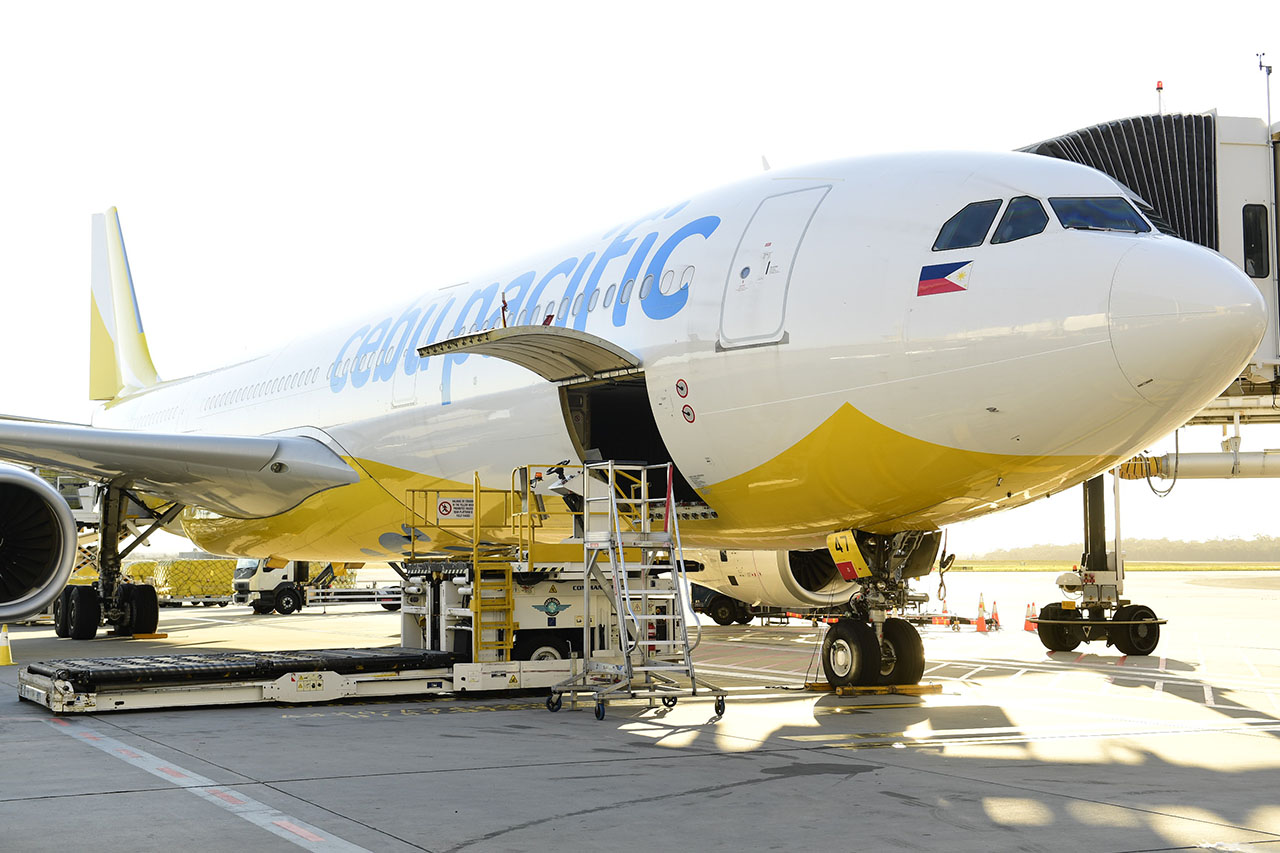
    Cebu Pacific has unveiled plans to launch flights from its rapidly growing hub in Clark, Philippines to Narita Airport.

    The airline will operate four flights per week between Clark and Narita on Mondays, Wednesdays, Fridays and Sundays, beginning Aug 9.

    Cebu Pacific will also begin direct flights between its hubs in Clark and Iloilo; as well as between Clark and Bacolod on Aug 9; as well as daily flights between Clark and Puerto Princesa in Palawan by Oct 9 October 2019.

    The four new routes will boost Cebu Pacific’s total capacity in Clark by 40% in 2019 alone, following a 75% increase in 2018 with the launch of direct flights to and from Davao and Panglao (Bohol); as well as additional frequency for the Clark-Macau route.

    “There is so much untapped potential in Clark, and we are committed to expanding our Clark hub to expand tourism, trade and investment opportunities. This will open up the areas around Clark to more investors and entrepreneurs,” said Candice Iyog, Vice President for Marketing and Distribution of Cebu Pacific.

    With a population of over 23 million in its catchment area, Clark International Airport is one of Asia’s fastest-growing airports, with passenger volume reaching about 2.5 Million in 2018.

    Cebu Pacific has been operating flights in and out of Clark since 2006 and today has direct flights to Cebu, Caticlan, Tagbilaran, Davao, Singapore, Macau and Hong Kong.

    “With direct air service between Clark and Narita, it will be easier for Japanese tourists to access destinations in Pampanga, Pangasinan, Baguio, La Union and the rest of Luzon. Conversely, it will also be easier for residents in these areas to enjoy Tokyo, with a direct flight from Clark,” added Candice Iyog.

    Japan is one of the Philippines’ top sources of inbound tourists, with 631,801 Japanese visiting the country in 2018.

    In 2018, Cebu Pacific flew 20.3 million passengers on over 2,130 weekly flights across 37 domestic and 26 international destinations.

  • Cebu Pacific income dives in 2018

    Cebu Pacific income dives in 2018

    Cebu Air reported its net income plunged 50.6% to P3.9 billion in 2018, from P7.9 billion in the previous year, due to the “challenging macro environment.”

    In a statement over the weekend, the operator of Cebu Pacific noted the high fuel prices, volatile Philippine peso, rising interest rates, increased competition, six-month closure of Boracay, and operational limitations of key airports as factors that affected its bottomline last year.

    Airlines around the world took a hit from rising jet fuel prices last year, which only started going down in the fourth quarter, based on data from the International Air Transport Association (IATA). The average price of jet fuel during the nine-month period was at $85.37 per barrel, 36% up from $62.89 per barrel in the same period in 2017.

    Adding to Cebu Air’s problem is the weakening of the Philippine peso, which recorded an average of P52.66 per dollar in 2018, a steep decline from the P50.40-per-dollar it recorded in 2017.

    But despite the slump in its net income, Cebu Air said its revenue grew by 9% to P74.1 billion in 2018, driven mostly by its cargo business which posted a 19% growth. Passenger revenue was also up 9% to P54.3 billion in 2018.

    “Despite the pressures posed in 2018, we remained resilient. We were able to expand our network by upgauging our flights touching congested airports,” Cebu Pacific Chief Operations Officer Michael Ivan S. Shau was quoted as saying.

    In aviation, “upgauging” is a strategy used by airlines to increase capacity by replacing smaller planes with larger ones.

    Cebu Pacific said it ferried 20.3 million passengers last year, 2.7% higher than the previous year.

    The budget carrier said it is hopeful it will bounce back in 2019 with the acquisition of fuel-efficient planes and opening of new routes.

    “We will continue to pursue our fleet upgauging strategy and invest in the latest aircraft technologies, as well as develop secondary hubs like Cebu and Clark. We will also continue to grow our cargo business with the incoming ATR freighters as well as continue our digital transformation for us to be more agile and adaptable to changing customer expectations,” Mr. Shau said in the statement.

  • Cebu Pacific offers P299 promo fare for all domestic flights

    Cebu Pacific offers P299 promo fare for all domestic flights

    Cebu Pacific on Friday announced a P299 seat sale promo for all domestic flights as part of its “Super Seat Fest” that kicked off on March 1.  Flights to all domestic destinations are available for as low as P299 from March 1 to March 2, the country’s largest carrier said in a Twitter post. No promo code is needed to book discounted seats.

    Travel period for the availed flights are from April 1 to July 31, 2019, the airline said.

    Cebu Pacific earlier said “1 million seats and deals” would be available for the entire month of March to mark its 23rd anniversary.

    Philippine Airlines, meanwhile, announced a P78/$78 base fare promo for domestic and international flights to mark its 78th anniversary.

  • Cebu Pacific Set To Accelerate Expansion with Neos

    Cebu Pacific Set To Accelerate Expansion with Neos

    The Philippines’ Cebu Pacific Air plans to add at least 10 new-generation aircraft to its fleet this year, as it steps up its fleet renewal and expansion plans in a bid to accelerate growth. The country’s largest airline expects to take delivery of five A320neos and five A321neos as part of an ongoing strategy to replace aging aircraft, broaden its network, and up-gauge flights at Manila’s congested Ninoy Aquino International Airport.

    In January, Cebu Pacific took delivery of its first A321neo from Airbus as part of a larger order for 32 of the type. Additional plans call for one ATR 72-600 to arrive sometime this year. The airline now operates a fleet of 35 Airbus A320s, seven A321s, eight ATR 72-500s, 12 ATR 72-600s, and eight A330 widebodies.

    In a securities filing on Monday, the airline announced a 50 percent decline in earnings in 2018, citing challenging market conditions such as high fuel prices, increased competition, the six-month closure of Boracay Airport, and operational limitations at key airports. Net profits fell to $73.8 million from 2017’s $149 million while passenger revenue rose 9 percent year-over-year to $1.4 billion; ancillary revenue grew by 6 percent. The airline generated a 19 percent increase in cargo carried, while passenger numbers rose by 3 percent to 20.3 million.

    “Despite the pressures posed in 2018, we remained resilient,” said Cebu Pacific COO Michael Shau. “We were able to expand our network by up-gauging our flights touching congested airports. 2019 will be a different story though; we have already received the first of our fuel-efficient A321neo orders from Airbus and we expect 10 more new-generation aircraft this year. We also just announced four new domestic routes; 2019 is definitely the year we accelerate our growth.”

    While the airline is planning to add more passenger flights out of its Clark and Cebu hubs, it also sees more opportunity in cargo, reflected in plans to convert two of its ATR 72-500s to large-cargo-door freighters. Once it completes the conversion, Cebu Pacific will become the first low-cost carrier in the world to operate freighters of any type. With operations set for the first quarter of this year, the incoming ATRs will allow the airline to serve smaller airports in the Philippines, thereby allowing for new routes and increased connectivity.

  • Cebu Pacific income down 50.6% in 2018

    Cebu Pacific income down 50.6% in 2018

    The operator of budget carrier Cebu Pacific saw earnings dip by 50.6 percent last year amid challenges such as the closure of a popular tourist destination, rising fuel prices and increased competition.

    In a statement, Gokongwei-owned Cebu Air Inc. said profits fell to P3.9 billion from P7.9 billion a year earlier even as revenues climbed 9 percent to P74.1 billion from P68.03 billion.

    Passenger revenues, in particular, hit P54.3 billion, 9 percent higher than the P49.93 billion recorded in 2017. The listed airline carried 20.3 million passengers last year, up 3 percent from 2017’s 19.7 million.

    The cargo business also witnessed double-digit growth at 19 percent, the firm said.

    “The growth in CEB’s (Cebu Air’s stock symbol) 2018 business came amidst a challenging environment with high fuel prices, a volatile Philippine peso, rising interest rates, increased competition, the six-month closure of Boracay, and operational limitations in the country’s key airports,” the firm said.

    Michael Ivan Shau, Cebu Pacific chief operations officer, said the carrier expected to bounce back due to fleet and network expansions.

    “2019 is definitely the year we accelerate our growth,” Shau said in a statement.

  • Cebu Pacific leads in Philippines-Australia flights

    Cebu Pacific leads in Philippines-Australia flights

    Budget carrier Cebu Pacific has kept its market share lead in the Philippines to Australia route, a statement on Thursday showed. Citing data from Australia’s Bureau of Infrastructure, Transport and Regional Economics from November last year, Cebu Pacific said it cornered a market share of 39.5 percent versus close competitor Philippine Airlines, which had a 38.1-percent share.

    Cebu Pacific flies between Manila, Melbourne and Sydney. It also competes with Qantas, however the Australian carrier’s operations are limited to Manila and Sydney.

    “As more brand-new aircraft enters the CEB (Cebu Pacific) fleet, we are now in a position to seriously study the possibility of expanding to more destinations in Australia. We are encouraged by our performance in the Australia market,” Candice Iyog, vice president for marketing at Cebu Pacific, said in the statement.

    The airline said demand has been going up. For Nov. 2018, some 48,000 passengers flew between Manila, Melbourne and Sydney. The figure represented a growth of 31.3 percent. Cebu Pacific alone carried 18,971 passengers, or a year-on-year growth of 56 percent.

    Cebu Pacific flies five times weekly between Manila and Sydney and thrice a week between Manila and Melbourne. Cebu Pacific is the only low-cost carrier with direct service from Manila to Sydney and Melbourne.

  • Tigerair Taiwan announces Cebu-Taipei flights with seat sale

    Tigerair Taiwan announces Cebu-Taipei flights with seat sale

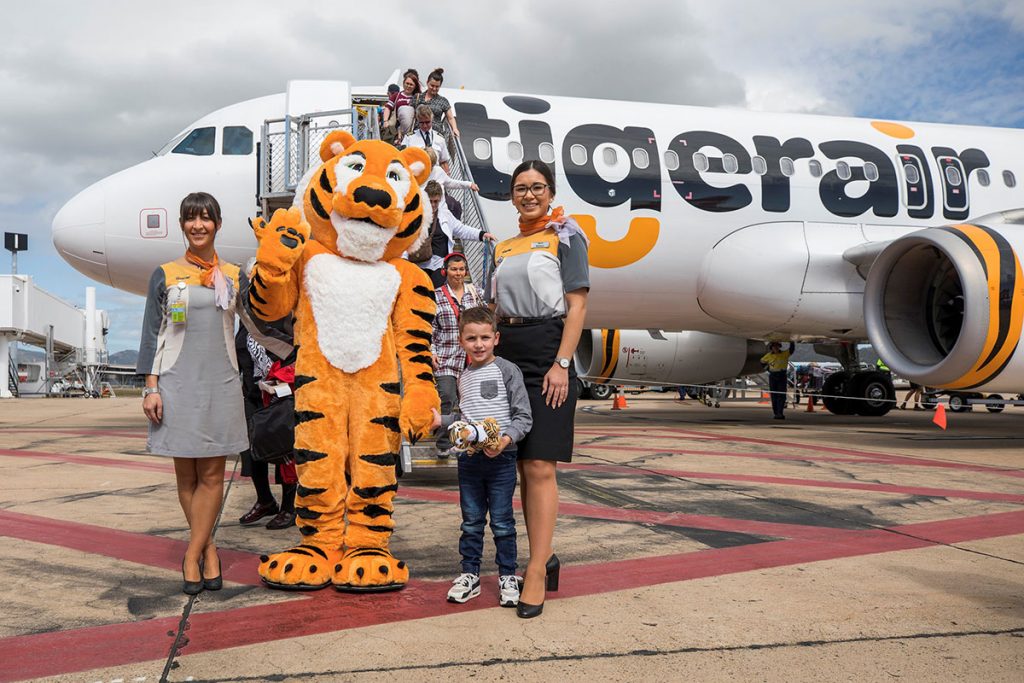
    Tigerair Taiwan said it would start flying between Cebu City and Taipei on Dec. 1. Taiwan’s only low-cost carrier said it would offer a 2-day seat sale for the new route starting Monday. Tigerair will use the new Mactan-Cebu International Airport and will compete with the Philippines’ largest carrier, Cebu Pacific and AirAsia in the Cebu-Taipei route.

    “Tigerair Taiwan’s presence in Cebu shall give Filipinos more access to fun, affordable, and memorable flights to Taipei. We look forward to this development before the year ends,” said Tigerair Taiwan spokesperson Bernard Hsu.

    Tigerair flight IT537 will depart Taipei for Cebu every Tuesday, Thursday, Saturday, and Sunday. The return flight, IT538, will depart Cebu every Monday, Wednesday, Friday, and Sunday.

  • Cebu to get Go Lokal! store by September

    Cebu to get Go Lokal! store by September

    Department of Trade and Industry (DTI) 7 Director Asteria Caberte said this will be the first Go Lokal! branch outside of Metro Manila and will be installed in the new wing of Ayala Center Cebu.

    Go Lokal! is a retail concept store showcasing Philippine products crafted, designed, and produced by micro, small, and medium enterprises (MSMEs).

    “This will be a different concept. It will highlight our export-quality, high-end products,” said Caberte, adding that they target the ballooning tourism market, balikbayans and affluent society as potential buyers of top-tier Filipino-made products.

    Go Lokal! carries everyday products made from indigenous materials that are modern in design, world-class in packaging, and competitively priced, including processed food, home decor, arts and crafts, health and wellness products, fashion apparel, accessories, and eco-friendly products.

    These products undergo extensive product development with specialists from the Design Center of the Philippines to make them suitable for the retail, export, and souvenir markets.

    Besides the upcoming Ayala Center Cebu branch, Caberte will reach out to the officials of the GMR-Megawide Cebu Airport Corp. (GMCAC) for her plan to mount a stand- alone Go Lokal! at the Terminal 1 of the Mactan-Cebu International Airport.

    “We will be talking to them mid-August about our proposed Go Lokal! branch in the domestic terminal,” said Caberte.

    After the completion of Terminal 2, GMCAC will rehabilitate the domestic airport terminal to be consistent with its resort-themed airport.

    Last March, DTI signed an agreement with Shopinas and Air 21 to provide an e-commerce platform for Go Lokal! products.

    “This is a partnership on innovation, which is a key element in DTI’s thrust to support the (MSMEs). Through this platform, our MSMEs will be able to reach out a larger market beyond the boundaries of the country while maximizing their potential,” said DTI secretary Ramon Lopez in a statement.

    A Go Lokal microsite will be available on Shopinas website that will feature MSME products. Items purchased on this platform will be delivered through Air 21.

  • Cebu Pacific to resume Manila-Busuanga flights in June

    Cebu Pacific to resume Manila-Busuanga flights in June

    Cebu Pacific is scheduled to resume flights between Manila and Busuanga, Palawan on Sunday, June 10 – two days after an airport mishap there.

    On Saturday, June 9, flights to and from Busuanga were canceled after a Skyjet plane overshot the runway of the Francisco Reyes Airport late Friday afternoon, June 8.

    In an advisory on Saturday night, Cebu Pacific announced that normal operations will resume on Sunday, and that all of its Cebgo flights will proceed as scheduled.

    It also announced additional Cebgo flights for Sunday to accommodate passengers affected by flight cancelations on Saturday:

    • DG 6049, Manila-Busuanga (Coron), 6:00 am
    • DG 6050, Busuanga (Coron)-Manila, 7:35 am
    • DG 6051, Manila-Busuanga (Coron), 9:30 am
    • DG 6052, Busuanga (Coron)-Manila, 11:05 am
    • DG 6053, Manila-Busuanga (Coron), 1:30 pm
    • DG 6054, Busuanga (Coron)-Manila, 3:05 pm
    • DG 6055, Manila-Busuanga (Coron), 2:50 pm
    • DG 6056, Busuanga (Coron)-Manila, 4:35 pm

    Cebu Pacific said that passengers whose Saturday flights had been canceled “are being notified regarding their new flight schedules.” It added that the passengers have the option to either rebook their flights within 30 days from original departure date, or claim a full refund or travel fund.