Retail News CRM

Tag: cebu

  • Cebu Pacific gives travelers flexibility to rebook flights

    Cebu Pacific gives travelers flexibility to rebook flights

    Available starting October 22, 2019, CEB Flexi gives CEB passengers the freedom to rebook flights until (2) hours before departure, offering convenience and peace of mind. This add-on can be purchased during booking through the airline website, www.cebupacificair.com or the official mobile app.

    “CEB Flexi is a great complement to year-round low fares as it provides the power and option to rebook flights should the need arise. We encourage passengers to book in advance to avail of great low fare deals, now we also provide the ability to change travel dates, giving peace of mind that the flights they booked won’t go to waste,” said Candice Iyog, CEB Vice President for Marketing and Customer Experience.

    Compared to current rebooking fees, CEB Flexi is 60% cheaper, and travelers only have to pay the difference in fare (if applicable). CEB Flexi is priced at PHP499 for domestic flights, PHP799 for international short-haul flights, and PHP1,099 for international long-haul flights. Along with the roll-out of CEB Flexi, all new flights booked starting October 22, 2019 will be non-refundable.

    CEB Flexi is the newest add-on that Cebu Pacific passengers can avail of, giving the power to choose conveniences that best fit their travel needs. Other options include prepaid baggage allowance, in-flight meals and buy-on-board snacks, seat selection, travel insurance, and the CEB WiFi kit.

  • Cebu Pacific to launch Clark-Guangzhou flights

    Cebu Pacific to launch Clark-Guangzhou flights

    Cebu Pacific said it is set to launch in November direct flights between Clark in Pampanga and Guangzhou, China amid increasing demand for leisure and business travel.

    “Cebu Pacific will launch next month direct flights between the Clark International Airport and Guangzhou, China, becoming the first Philippine carrier to link the two cities,” the low-cost carrier said in a statement on Saturday.

    Flights between Clark and Guangzhou will be operating four times a week beginning Nov. 11: Monday, Wednesday, Friday, and Saturday.

    “The flight departs Clark at 11:35pm; while the return flight departs at 3:15am of the next day,” it said.

    Cebu Pacific said the new route will cater to “increasing demand for leisure and business travel” and it will “further enhance the potential for investments in the special economic zones in Central Luzon, including the 9,450-hectare New Clark City.”

    It noted that the Clark International Airport is within proximity to Manila-Clark passenger railway connecting Manila to Clark and a cargo railway connecting Subic to Clark, which are both expected to be operational by 2022.

    “With direct air service between Clark and Guangzhou, it will be easier for entrepreneurs and businessmen in the e-commerce space to meet up with suppliers, Cebu Pacific Vice-President for Commercial Alex B. Reyes was quoted as saying in the statement.

    Guangzhou, one of China’s nine National Central Cities, is a wholesalers’ “haven for retail and popular consumer goods,” the budget carrier noted.

    The low-cost airline currently flies 27 times weekly between the Philippines and mainland China, with direct flights between Shanghai, Manila and Cebu; as well as Manila and Beijing, Guangzhou, Xiamen and Shenzhen.

    Cebu Pacific operator Cebu Air, Inc. recorded a 116% growth in its net income in the first half to P7.14 billion, driven by its increased passenger volume and higher average fares.

    Shares in Cebu Air went up 20 centavos or 0.22% to close at P92.20 apiece on Friday.

  • Cebu Pacific introduces online chatbot for customer support

    Cebu Pacific introduces online chatbot for customer support

    Philippines-based low-cost carrier Cebu Pacific has launched its online travel assistant, Charlie the Chatbot, to provide 24/7 support for customers.

    Charlie, now available on the airline’s website and official Facebook page, can help answer customers’ frequently asked questions, which include flight bookings, inflight meals, baggage allowance and so on.

    Customers who need help can type in their queries in English one at a time, or choose from a variety of suggested topic options when they open the chatbox.

    Charlie’s capabilities also include assisting passengers with their flight check-in, providing flight itineraries and boarding passes, and sharing details of the airline’s ongoing seat sales and promotions.

    “We’ve always talked about being an enabler of fun and accessible travels, and as part of our thrust to enhance customer experience with the airline, we created Charlie,” said Candice Iyog, vice president for marketing and customer experience at Cebu Pacific.

    “As we officially launch our chatbot, we hope to offer convenience and helpful information within our travelers’ fingertips.

    “Charlie still has a long way to go in terms of learning – just like any chatbot. Rest assured, we are continuously working on expanding Charlie’s knowledge in order to provide our passengers with the best customer experience possible.”

    The airline says Charlie has engaged with more than 393,000 passengers since its inception in January this year.

  • Cebu Pacific Air Cargo continues digital transformation with SmartKargo

    Cebu Pacific Air Cargo continues digital transformation with SmartKargo

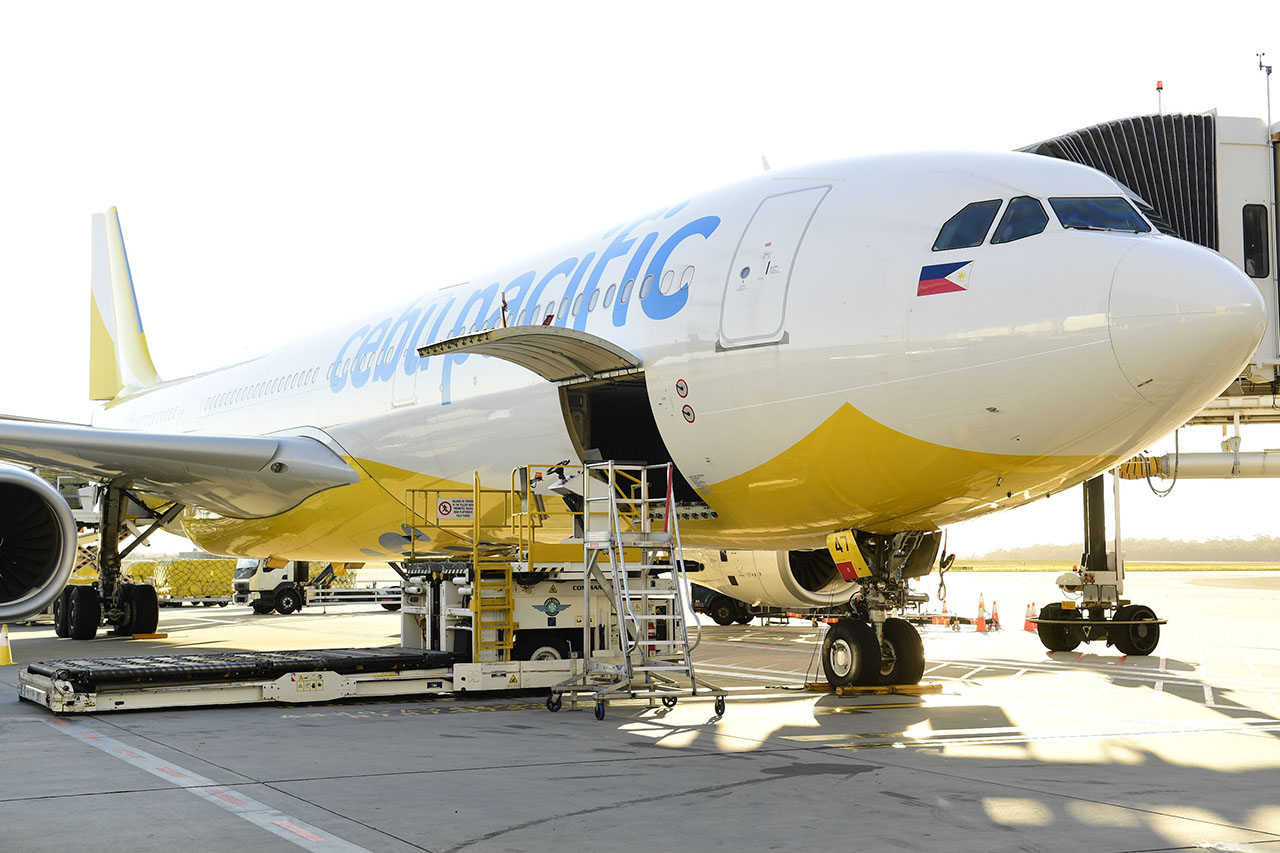
    Cebu Pacific Air has renewed its contract with QuantumID Technologies to ramp up SmartKargo for CEB Cargo. The partnership will continue the cloud-based real-time management of CEB’s air cargo business using the advanced SmartKargo operating system.

    The largest Philippine carrier has utilized the innovative Software as a Service (SaaS) solution to empower customers with real-time shipment information and advanced tools such as mobile apps that streamline customer experience via kiosks at the warehouse.

    The mobile app has also allowed CEB Cargo to enable its clients to manage their shipments end-to-end, from booking to destination. In addition, SmartKargo has helped CEB manage and integrate new dedicated cargo capacity into its fleet.

    “The SmartKargo Cloud solution has equipped CEB Cargo with the advanced digital tools to run our business,” said Alex Reyes, Cebu Pacific Vice President for Commercial. “We are very pleased to continue the partnership, and look forward to sustained growth that SmartKargo has enabled.”

    Enhanced capabilities of SmartKargo allowed CEB Cargo to provide paperless Airway Bills (e-AWBs), and ease of booking for CEB Cargo agents and customers by allowing single-screen data entries. In addition, the solution provides simplified pricing and rate-making capabilities; real-time capacity management; user-configurable business Intelligence and reporting; and integrated Cargo Revenue accounting.

    The platform supports streamlined participation with partners doing e-commerce—facilitating B2B or B2C door-to-door operations via mobile applications as well as third party integration.

    “We at SmartKargo look forward to continuing providing CEB Cargo with solutions and tools to grow their business,” said Jay Shelat, Executive Vice President at QuantumID Technologies. “We are happy and grateful to be working with an outstanding team of cargo professionals and excellent leadership.”

    Cebu Pacific was the first Asian carrier to adopt the SmartKargo Cloud platform in 2013.

  • Cebu Pacific’s New In-Flight Meals Will Make You Look Forward To Eating During Your Flight

    Cebu Pacific’s New In-Flight Meals Will Make You Look Forward To Eating During Your Flight

    Traveling is a double-edged sword. You’re both excited and stressed, even before you get to the airport. One of the things I’ve been taught to do is to eat a full meal before I even leave the house because airport food is too expensive and airplane food is bad. Barely edible, they say!

    Cebu Pacific is here to silence the haters! They recently introduced a new inflight menu that’s all about your favorite Pinoy comfort foods. Described as “homey,” their selection includes Beef Salpicao, Lechon Paksiw, and even Pinoy Spaghetti!

    I know I’m always craving Singaporean food so I was elated to also see Hainanese Chicken Rice on the menu.

    If, however, you don’t feel like having anything heavy, opt for their new sandwiches instead: the Roasted Chicken Sandwich and the Crab Salad Sandwich.

    Vegetarians need not worry: Cebu Pacific didn’t forget about you! Enjoy their Veggie Pesto Sandwich, which consists of tomato, lettuce and mozzarella, and ciabatta bread.

    All of these and more are available for pre-order once you’ve booked a flight with Cebu Pacific. Director for Inflight Catering and Sales JB Bueno shared in a press release, “Our meals being on pre-order also helps us guarantee less food wastage, and is in line with efforts towards more sustainable practices and operations.”

  • Cebu Pacific wants more flights to tense Hong Kong

    Cebu Pacific wants more flights to tense Hong Kong

    The Philippines’ largest budget airline is seeking additional flights to Hong Kong despite ongoing anti-government demonstrations.

    In a filing before the Civil Aeronautics Board, Cebu Pacific said it was seeking added flight entitlements to Hong Kong-based on a provision under the Philippines-Hong Kong Air Services agreement that covers flights from Manila. The CAB has set a hearing on Sept. 16.

    Cebu Pacific has 24 weekly flights between Manila and Hong Kong. It also operates 14 weekly flights from Clark International Airport, two weekly flights from Iloilo and nine weekly flights via Mactan Cebu International Airport.

    This comes despite protests that have, at times, grounded all operations at the Hong Kong International Airport, which the Airports Council International said was the 8th busiest in the world in terms of passenger volume.

    The protests were initially aimed at a bill, eventually shelved by the Hong Kong government, that would have allowed the extradition of fugitives to mainland China. Massive demonstrations, which began in June, show no signs of dissipating.

    Cebu Pacific is ramping up expansion as it takes delivery of new planes.

  • Cebu Pacific expands flights from Clark

    Cebu Pacific expands flights from Clark

    Cebu Pacific, the country’s biggest budget airline, widened its presence at the Clark International Airport in Pampanga province with the opening on Friday of three new routes, including flights to Tokyo, Japan.

    The move opens up tourism and business opportunities for the central Luzon gateway while helping Cebu Pacific ramp up operations as it pursues an aggressive expansion strategy.

    Cebu Pacific on Friday also inaugurated daily flights between Clark Airport and Bacolod and Iloilo.

    Lance Gokongwei, Cebu Pacific CEO, outlined the company’s long history in Clark Airport, which it first tapped as a hub for daily flights to Cebu 13 years ago.

    “Since 2006 we have never stopped flying to Clark. We have always believed in the potential of Clark as a gateway to Manila, to central and northern Luzon, a hub with over 25 million residents,” Gokongwei said during the launch event.

    Cebu Pacific will also be the first airline to link Clark Airport to Narita International Airport in Japan with flights to operate four times a week.

    The new routes will help make Cebu Pacific the largest carrier in Clark Airpo

    Clark Airport is also being positioned as an alternative to the congested Ninoy Aquino International Airport in Manila.

    The Gokongweis are doubling down on their investment in Clark as the family’s JG Summit Holdings, a property, food, retail and airline conglomerate, is part of the consortium that will operate the Pampanga gateway.

    Cebu Pacific earlier announced the start of daily flights between Clark and Puerto Princesa in Palawan by the fourth quarter of 2019.

    The four new routes will boost Cebu Pacific’s total capacity in Clark by 40 percent in 2019 alone. This follows a 75-percent increase in 2018 with the launch of direct commercial air service to and from Davao and Panglao (Bohol) as well as additional frequency for the Clark-Macau route.

  • Cebu Pacific launches P99 domestic seat sale starting Monday

    Cebu Pacific launches P99 domestic seat sale starting Monday

    Budget carrier Cebu Pacific on Monday announced a P99 seat sale for domestic flights one-way from Clark International Airport.

    In an advisory, the airline said the sale started Monday, August 19, and will end on Wednesday, August 21.

    The travel period is from October 1, 2019 to January 31, 2020.

    The P99 one-way flights are Clark to Bacolod, Bohol, Boracay (Caticlan), Cebu, Clark, Davao, Iloilo, and Puerto Princesa.

    Aside from Clark, Cebu Pacific operates flights out of six other strategically placed hubs in the Philippines: Manila, Kalibo, Iloilo, Cebu, Cagayan de Oro (Laguindingan) and Davao.

    The carrier operates over 2,000 weekly flights across 37 domestic and 26 international destinations.

  • Cebu Pacific to assess Mati City flights when airport is ready

    Cebu Pacific to assess Mati City flights when airport is ready

    Budget Carrier Cebu Pacific is ready to assess the viability of flights to Mati City, the capital of Davao Oriental province, as soon as the development of the airport for commercial operations starts. Cebu Pacific Director for Corporate Communications Charo Logarta-Lagamon said in an interview last week that they have always been open to that opportunity.

    “Mati has always been on our radar. But as of now, there is nothing concrete yet given that the airport is not 100% done and there is still a lot of technicalities that need to be ironed out before we can use it for commercial flights,” she said. Ms. Lagamon noted that an online campaign a few years back indicated interest for Mati among travelers. “Mati is one of the choices of netizens. Obviously, there is some market but how big the market is and will that market be viable and sustainable, that is something we need to assess,” she said.

    Last month, Mati City Mayor Michelle Nakpil-Rabat said they are working on land ownership issues relating to the airport so that they can undertake the runway expansion and open it for commercial flights. Meanwhile, Ms. Lagamon said they continue to evaluate potential routes to and from Davao City while “beefing up our Cebu and Clark hubs.” “In fact, we are launching new routes on August 9,” she said.

  • Cebu Pacific offers P88 fare promo for domestic flights

    Cebu Pacific offers P88 fare promo for domestic flights

    Cebu Pacific early Thursday announced a seat sale promo for all domestic and international flights.

    Passengers can avail of the P88 one-way base fare for local flights while one-way base fare for international flights starts at P888.

    Booking period is only available from Aug. 8 to Aug. 9, the airline said.

    Travel period for promo flights are from Dec. 1, 2019 to April 30, 2020.

  • Why Cebu Pacific plans to suspend flights to and from Guam in December

    Why Cebu Pacific plans to suspend flights to and from Guam in December

    Philippine-based low-cost airline Cebu Pacific will suspend its service to and from Guam in December, saying the Guam route “is no longer viable.”

    The last round-trip flights between Manila and Guam will be on Dec. 7, 2019, more than three years since Cebu Pacific’s March 2016 inaugural flight to the island. Cebu Pacific’s entry into the Guam market in 2016 was its first U.S. destination.

    With Cebu Pacific suspending its Manila-Guam service, travelers on the route will be down to two airlines to choose from: United Airlines; and Philippine Airlines.

    “The entry of Cebu Pacific into the market gave the traveling public more choices and a more affordable alternative to fly between these two destinations. However, despite all efforts, the Guam route is no longer viable,” Cebu Pacific said in a July 18 statement.

    Passengers affected by the suspension of the services to Guam are being notified, the airline said.

    To minimize the changes, affected passengers can:

    • re-book on earlier travel dates with Cebu Pacific;
    • get a full refund; or
    • place the full value of the ticket in a travel fund for future use.

    “With limited slots in Manila, Cebu Pacific will reallocate these slots and re-deploy the aircraft to routes where these can serve higher passenger demand,” Cebu Pacific said.

  • Cebu Pacific targets 300 millionth passenger milestone

    Cebu Pacific targets 300 millionth passenger milestone

    Cebu Pacific, the Philippines’ largest airline, said Monday its goal was to fly a total of 300 million passengers by 2022, as it increases capacity and invests in digital tools to drive demand.

    The 300 million milestone can be reached 4 times faster than the 150 million passengers flown in 1996, 21 years after the Gokongwei-led carrier was founded, said its vice president for marketing and distribution, Candice Iyog.

    Cebu Pacific sees “accelerated growth” with the delivery of 12 new Airbus jets this year, president and CEO Lance Gokongwei earlier said.

    The two-fold challenge for Cebu Pacific is making bookings more convenient while handling online traffic, Iyog said.

    “As we continue to invest in brand new higher capacity aircraft, the challenge that we have for us now is flying our next 150 million passengers in just 5 years, 4 times faster than when we did it the first time around,” Iyog said.

    “So the first challenge really was, how might we make ourselves relevant by tapping into user shopping behavior. And then the second job to be done was addressing and improving the customer booking experience,” she added.

    To lure more passengers, Cebu Pacific said it would maximize online tools to make booking easier. It also introduced a “new crazy” seat sale strategy, offering seats in clustered destinations every 2 hours, Iyog said.

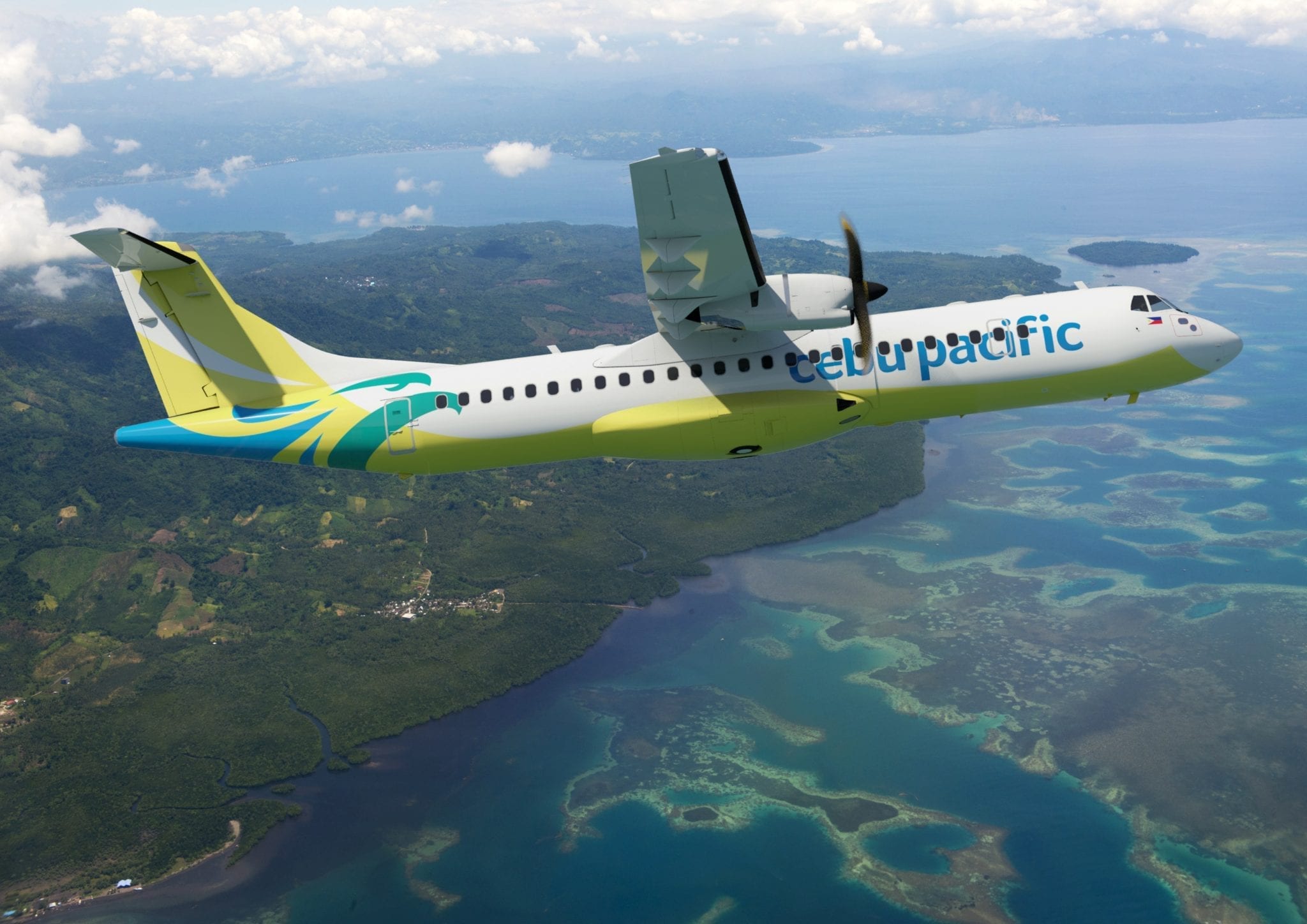
    Cebu Pacific currently operates 1 Airbus A321neo, 36 A320, 7 A321ceo, 8 A330, 8 ATR 72-500, 12 ATR 72-600 as of January 2019.

  • Cebu Pacific sale offers P299 domestic, P699 international fares

    Cebu Pacific sale offers P299 domestic, P699 international fares

    Cebu Pacific said it was offering domestic and international seats on sale starting Thursday.

    The Philippines’ largest airline said the sale would run until Friday for travel from Nov. 1 to March 31 next year.

    Among the destinations on offer are Boracay, Coron, Puerto Princesa and Siargao at P299 for one-way base fare, Cebu Pacific said.

    Flights to international destinations like Bali, Hong Kong, Bangkok, Beijing, Taipei and Tokyo are also on offer for as low as P699 one-way base fare, the airline said on its website.

    Other destinations like Dubai are also on offer for as low as P1,599; Melbourne for as low as P4,599 all in; and Sydney at P5,599 all in.

    The quoted domestic one-way base fares are inclusive of 7 kg hand carry baggage allowance, but exclusive of web admin fee, 12 percent VAT, terminal fees and fuel surcharge, it said.

    Quoted international one-way fares are inclusive of 7 kg hand-carry baggage allowance, but exclusive of web admin fees for short haul and long haul flights, respectively and P550 international terminal fee and fuel surcharge.

  • Cebu Pacific Q1 profit more than doubles

    Cebu Pacific Q1 profit more than doubles

    Budget airline Cebu Pacific saw profit in the first quarter of the year more than doubled on strong demand and as fuel costs, which weighed on earnings in 2018, eased during the period.

    Cebu Pacific, owned by the Gokongwei family’s JG Summit Holdings, said in a stock exchange filing that net income from January to March this year hit P3.43 billion, up more than 138 percent compared to the same period in 2018.

    The airline, which signaled its intention to expand aggressively this year, also saw total revenues hit P21.18 billion, up 16 percent. Most of this came from passenger ticket sales, which rose 14.6 percent to P15.68 billion. Cebu Pacific, which recently took delivery of newer planes such as the next-generation A321neo, saw passenger volume increase 8.5 percent to 5.3 million. Average fares also ticked higher to P2,965, an increase of 5.7 percent.

    The airline also improved cargo revenues by 12.7 percent to P1.44 billion as well as ancillary revenues, which increased 22.7 percent to P4.1 billion.

    As noted, the carrier’s bottom line was propped up by the 4.3-percent decline in oil prices, a major operating expense.

    The company’s flying expenses alone rose 3.8 percent to P7.17 billion mainly as it ramped up operations.

    Overall, operating expenses went up 8.4 percent to P17.34 billion.

    “The increase was driven by its expanded operations, growth in seat capacity from the acquisition of new aircraft and the weakening of the Philippine peso against the US dollar,” Cebu Pacific said in its filing.

  • Cebu Pacific’s income jumped 138% to P3.4b in first quarter

    Cebu Pacific’s income jumped 138% to P3.4b in first quarter

    Cebu Air, the operator of low-cost carriers Cebu Pacific and Cebgo, said net income jumped 138.4 percent in the first quarter from a year ago, on the back of strong passenger and cargo revenues. The airline unit of the Gokongwei Group said it posted a net income of P3.4 billion from January to March, up from P1.4 billion it earned in the same period last year. Revenues increased 16 percent in the three-month period to P21.17 billion from P18.26 billion it generated a year earlier.

    Passenger revenues increased 14.6 percent to P15.67 billion from P13.67 billion. The increase was attributed to the 8.5-percent growth in passenger volume to 5.289 million from 4.876 million last year as the group added bigger A321 aircraft to its fleet. The average fare went up 5.7 percent to P2,965 in the first quarter from P2,805 a year ago, contributing to the higher revenues. Cargo revenues grew 12.7 percent to P1.44 billion from P1.279 billion following the increase in both yield and volume of cargo transported in 2019. Operating expenses went up 8.4 percent to P17.34 billion from P15.997 billion a year ago.

    Cebu Air said the increase was driven by expanded operations, growth in seat capacity from the acquisition of new aircraft and the weakening of the Philippine peso against the US dollar. The peso depreciated to 52.36 per US dollar in the first quarter from an average of 51.49 a dollar last year. Flying operations expenses increased 3.8 percent to P7.173 billion from P6.910 billion.  “This was mainly accounted for by the increase in pilot training costs,” CEB said. Fuel expenses also went up as the fuel volume increased by 7.9 percent in the quarter.  The MOPS price of fuel slightly went down to $76.50 per barrel in the first quarter from $79.99 a barrel in the same period last year.