Tag: Clothing

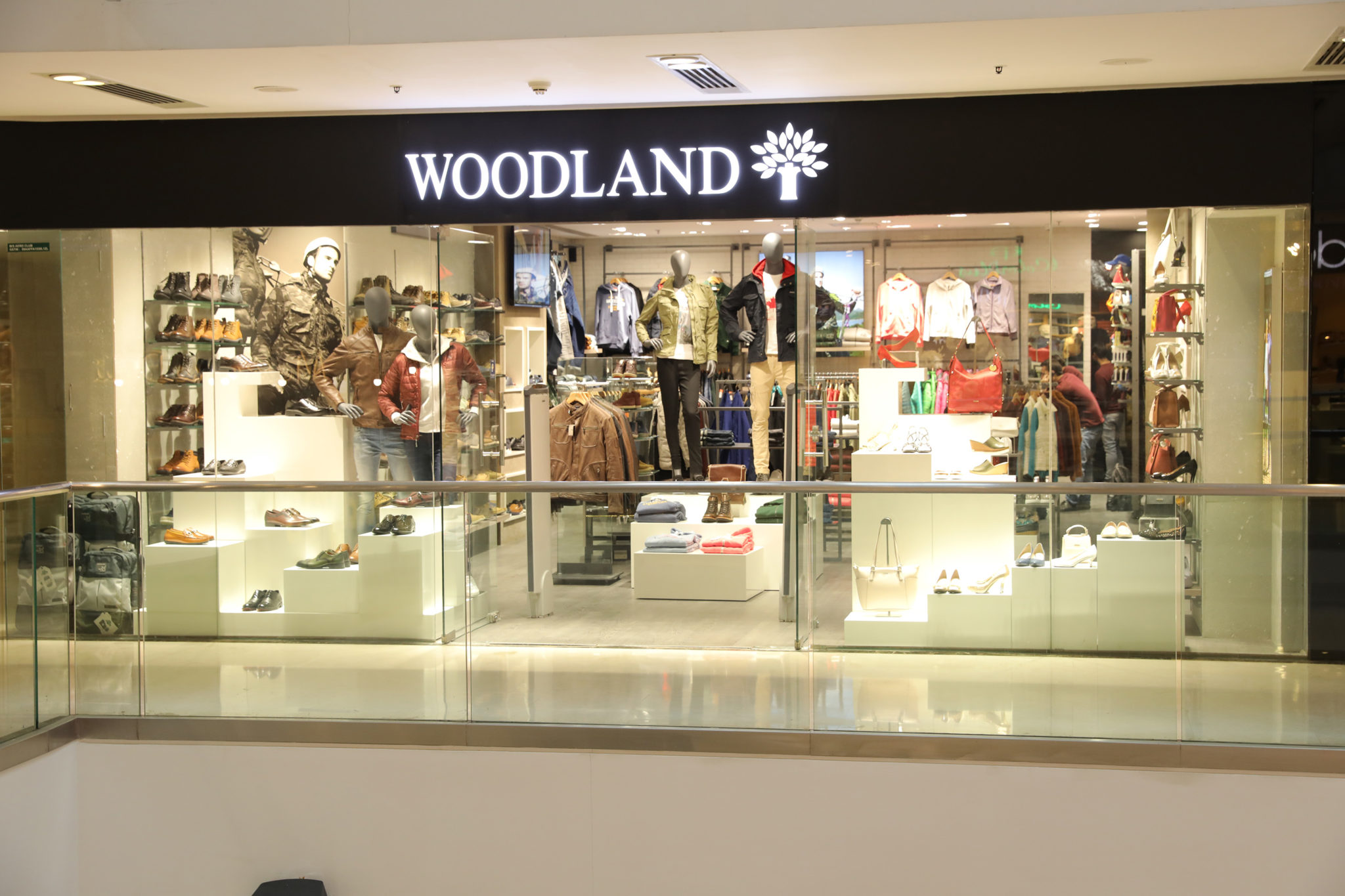
  • Woodland to add 60 stores, strengthen franchise model in India

    Woodland to add 60 stores, strengthen franchise model in India

    With changing lifestyles and increasing affluence, domestic demand for footwear is projected to grow at a faster rate than has been seen in India. Currently, India is the second largest footwear producer in the world, with footwear production accounting for approximately 9.6 per cent (till April 2018) of the global annual production – 22 billion pairs as compared to China, which produces over 60 per cent of the global production.

    The footwear market in India is now dominated by men’s footwear which contributes close to 58 percent of the total Indian footwear retail market and is expected grow at a CAGR of 10 percent by 2020. The women’s footwear segment, however, is projected to grow at a much faster CAGR of 20 percent.

    While the industry is currently dominated by unorganized domestic SME footwear manufacturers, changing consumer behavior and modern lifestyles have led to more organised brands coming into the fray, lured by the potential of bigger sales, but mostly in a bid to give the consumer branded, better quality products, value for money.

    A significant shift was observed post liberalisation when lifestyles expanded to foster great value for the sports/active segment and for casualization as a whole. The technological prowess of global sportswear giants enabled them to functionally and fashionably appeal to a young India. Tapping the unlocked potential in India, Woodland entered India in 1992 when the Indian footwear market was largely unorganized and soon became a recognizable name in the adventure and outdoor segment in India.

    The Right Fit

    The brand boasts of a huge product portfolio aside from footwear, including apparel and accessories.

    “In order to survive in today’s ever-changing and highly competitive market like India, diversifying our product portfolio is inevitable. Keeping a close eye on latest trends and new rising demands, we upgrade our portfolio accordingly,” Harkirat Singh, MD Woodland.

    The demand for the products is different in India and other countries because of the various factors namely demographic conditions, climatic conditions, styling culture.

    “We created a product line specifically for India and since then we have never looked back. Our product positioning was altogether unusual, and we were known as a one definite choice for adventurists, taking the market for rugged and outdoor leather shoes by storm. The phenomenal success in the shoe segment encouraged and motivated us to enter in new segments like clothes, handbags as well,” explains Singh.

    Over a period of time, the brand has expanded its product category and now has an extensive product range including handbags, wallets, travel bags, casual shoes, formal shoes, track pants, eyewear, gloves and outdoor equipment like tents, sleeping bags, umbrellas, trekking poles, waterproof outdoor backpacks.

    The prices of products have been set with a realistic approach since Woodland prides itself on being a customer-friendly brand.

    “The pricing strategy is to keep the prices in sync with the purchasing power of our target customers, which are majorly the youth segment – aged between 17-25 years, college studenst and professionals – who are interested in adventure sports and are on the lookout for stylish, yet value for money products. The price range of our jackets varies from Rs. 5,000 to 35,000 whereas the price range of our footwear starts from 3,000,” says Singh.

    Letting Technology Lead the Way

    With online channels taking over the retail industry, e-commerce has gradually become an inevitable part of the company’s sales and revenue. The company’s portal and other e-commerce sites collectively contribute to the e-commerce sales revenue, thereby adding to volumes. There is also an exclusive range of merchandise for e-commerce sites.

    The availability of Woodland products on all the prominent e-commerce websites enhances the brand visibility among the larger group of audience and helps widen the scope of sales.

    The brand is also a strong believer in Omnichannel retail, investing in online sales which are expected to grow to 40 percent in the next three to four years. It plans to concentrate more on a seamless approach through all available shopping channels, i.e. mobile internet devices, computers, bricks-and-mortar, television, radio, direct mail, catalogue, in-store experience and so on.

    Aside from this, Woodland has a history of exploring innovative technology embedded in products and integrating it with all aspects of the brand.

    “We have already launched GPS embedded jackets, BOA shoes, client T-shirts, and many more new technologies and innovations in products are in pipeline,” says Singh.

    Retail Mapping & Expansion Plans

    Globally, Woodland is present in more than 40 countries. In India, Woodland has a chain of over 600 company-owned stores and is present in over 5,000 multi-brand outlets and is planning on adding another 60 stores in this financial year in an equivalent combination of small towns and metros.

    It is also working towards strengthening its franchise model in India, to grow its presence in smaller cities and towns.

    “We are currently working on entering into more foreign countries in the near future to add to our international kitty. Woodland as a brand is already present in China, Aokang and Hon Kong. Apart from this, we are working on strengthening our presence in South-East Asia, West Asia, Europe and USA,” states Singh.
  • L Brands loss revealed, Victoria’s Secret faces challenge

    L Brands loss revealed, Victoria’s Secret faces challenge

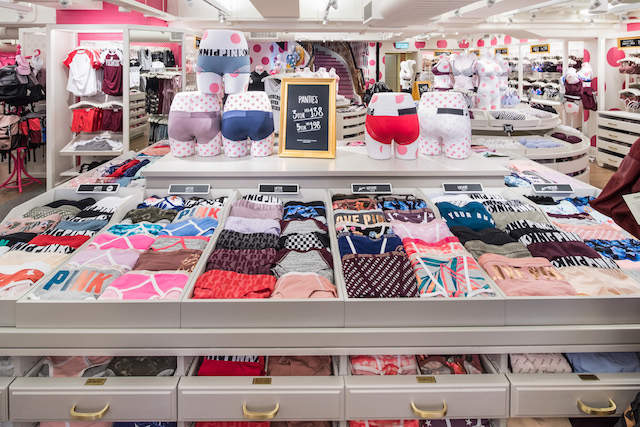
    Lingerie brand Victoria’s Secret needs to reinvent itself, says retail analyst Neil Saunders, commenting in the wake of a US$42.8 million loss by its parent L Brands. “The brand is simply not connecting and resonating with consumers in the way that it once did. Its overt sexuality, its focus on airbrushed glamour, and its dark-and-moody stores are completely out of step with the mood of most modern consumers,” said Saunders, MD of GlobalData Retail.

    “However, this is not a new phenomenon, Victoria’s Secret has been out of kilter for a long period of time – and has seemingly done very little to bring itself back into line.”

    Sales at Victoria’s Secret have fallen in seven out of the last eight quarters, mainly due to its weak diffusion brand Pink, launched in 2002 and aimed at college-aged women.

    “In Pink, fashion errors in loungewear have driven a recent deceleration in performance,” the company admitted in its earnings statement.

    L Brands’ third-quarter results showed an increase in same-store sales of 4 per cent across the group, to $2.77 billion, but Victoria’s Secret store sales fell by 2 per cent.

    The top line was boosted by L Brands’ Bath & Body Works brand. But one-off costs from the closure of Henri Bendel, impairments at Victoria’s Secret and ongoing losses in the La Senza business drove the net loss.

    Saunders described the Victoria’s Secret performance as disappointing, “not only with the sales numbers but by the inertia within the business”.

    He said much of the brand’s failure to change came down to embedded attitudes within management.

    “The recent insensitive comments about transsexuals from chief marketing officer, Ed Razek, in a Vogue interview characterise the problems. Not only are such remarks bad for the brand’s image, but it also earned a sharp public rebuke from the CEO of more incisive rival ThirdLove which has been stealing share from Victoria’s Secret for some time.

    “In theory, the departure of Jan Singer as CEO should help herald in changes someone coming in will have fresh ideas about reviving the fortunes of Victoria’s Secret.”

    L Brands has appointed John Mehas from lifestyle brand Tory Burch as the new CEO of Victoria’s Secret. He will take up the role early next year.

    Pink CEO Denise Landman retired after the release of the L Brands half-year results and she was replaced on October 1 by former Bath & Body Works president for merchandising and product development, Amy Hauk.

    “Our new leaders are coming in with a fresh perspective and looking at everything … our marketing, brand positioning, internal talent, real estate portfolio and cost structure,” said CEO Leslie Wexner.

    Saunders said Bath & Body Works was a stark contrast to the core brand.

    “The company’s wholesome brand image and its focus on small indulgences are paying real dividends – especially in a consumer economy where shoppers have more money to treat themselves. Its strong range development which means assortments are constantly changing encourages regular visits to online and stores. It also means that the company is good at jumping on trends like aromatherapy-based scents and the ongoing popularity of candles. Second, good marketing and promotions help to drive volumes through the business,” said Saunders.

    “Both of these things stem from the fact that the BBW team is much more attuned to the market and consumer trends than is the case at Victoria’s Secret. Indeed, the cultures at the two divisions could not be more different, and we believe that Victoria’s Secret should take a leaf out of its sister brand’s playbook as it looks to reinvent itself.”

  • Farfetch’s CEO calls for an industry-wide halt on discounts

    Farfetch’s CEO calls for an industry-wide halt on discounts

    Fashion brands need to put their foot down and take action to prevent “a race to the bottom” in terms of discounts as they threaten the survival of the whole fashion retail eco-system, Farfetch Chief Executive and Founder José Neves said.

    Online and offline retailers are resorting so much to promotions there are only two months in the year during which there aren’t any: September and February.

    “So, the system is really crumbling,” Neves said. “The industry needs to think very strategically about how they are going to avoid a race to the bottom in terms of promotions and discounts.”

    He recommended that fashion brands turn into concessions those wholesale accounts, both online and offline, that do the most visible and damaging discounts.

    He suggested brands follow the example of Chanel, which last week, announced it was going to turn into concessions its wholesale distribution accounts in the United States with department stores such as Bergdorf Goodman, Neiman Marcus, Bloomingdale’s, Saks Fifth Avenue and Nordstrom.

    Chanel said the move was intended to better control interaction with its customers.

    “The cycle of discounts is getting earlier and earlier,” Neves remarked. “If you speak to the CEO of any brand they will all say the same thing: we don’t let them do that, we shout at them, if you do it next time, we will stop working with you. And guess what, next season it is the same thing again and again, so their threats are useless. This is a preoccupation for the whole industry. People know what is happening. People talk about it and no-one does anything.”

    Heavy discounts at department stores started with the 2008-2009 financial crisis and have never really stopped since.

    Retailers have a herd mentality: if one discounts, the others follow. And no big department store will stop doing discounts by its own initiative for fear of losing business to rivals.

    Neves foresaw that the only way for the industry to get out of this conundrum was for brands to step in and take concrete action.

    However, on a brighter note, Neves foresaw solid growth in demand for fashion in the medium to longer term, in part because consumers increasingly feel they need to invest in fashion to differentiate themselves and look good on their social media accounts.

    He also predicted consumers would have more disposable income due to changing spending patterns.

    “People are not buying cars anymore because they have Uber, they are not buying houses because they were priced out of the property market in most big cities because they need a 40 percent deposit and they will never be able to save that much. They do not buy holiday houses because they have Airbnb, so there is more disposable income to buy fashion,” Neves said.

    In September, Farfetch completed an initial public offering in New York that raised its profile and gave it a cash pile of more than $1 billion. Neves said its funds would be used to finance growth, win market share and make acquisitions “on an opportunistic” basis.

    Neves said Farfetch would only make acquisitions in areas in which it did not have expertise. In July, Farfetch acquired CuriosityChina, a marketing firm specialized in WeChat, the popular Chinese social media.

    In terms of geographic spread, Neves said India and South East Asia were among those regions Farfetch wished to expand into, but for now, the company needed to consolidate its recent expansion efforts which stretch from China, Japan and South Korea to Mexico, Russia, Brazil and the Middle East.

    “At the moment, it is a pause in oxygen for strategy,” Neves said. “But eventually, we will be in every major luxury market in the world.”

  • Goldwin to open first own-brand store

    Goldwin to open first own-brand store

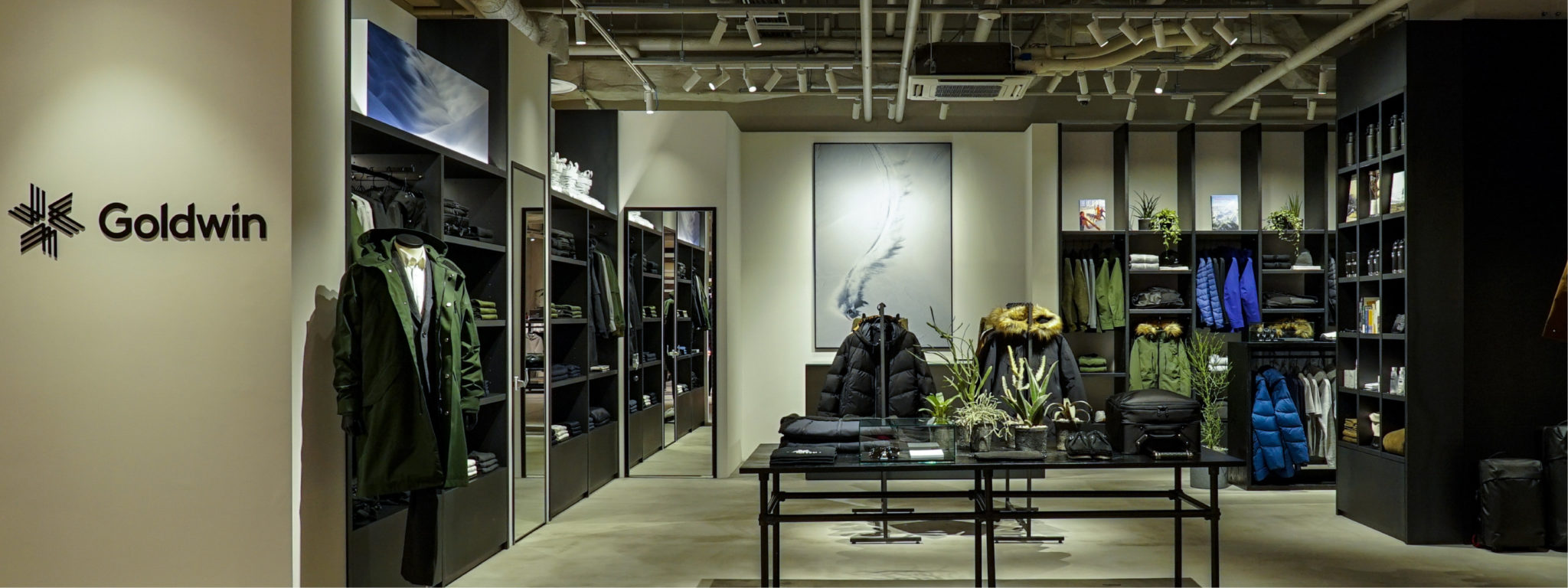
    Japanese outdoor apparel retailer Goldwin is set to open its first independent flagship store in Tokyo. The Marunouchi business district launch, scheduled for November 8, will introduce the brand’s new selection of high-performance sportswear, lifestyle and ski apparel. Highlighted will be two of Goldwin’s best-selling products, the Arris Jacket and the Hooded Spur Gore-Tex Down Coat.

    A Goldwin press release stated that the flagship will allow the firm “to expand its vision and introduce new values, creating a platform where sports and lifestyle merge”.

    Goldwin’s products have previously been made available at The North Face retail stores in Japan and other specialty stores worldwide.

    The company intends to follow this launch with more flagships to open in international locations.

  • Uniqlo acquires stake in Vietnamese brand

    Uniqlo acquires stake in Vietnamese brand

    Uniqlo’s parent, Fast Retailing, has acquired a 35 per cent stake in Hanoi-based women’s fashion brand Elise. Elise, which has more than 100 stores across the country, is said to have received tens of millions of dollars from the deal – a figure much higher than its entire charter capital.

    This is Fast Retailing’s first significant move into Vietnam since it announced it would launch its Uniqlo brand in Ho Chi Minh City next year.

    The store will be operated by a joint venture between Fast Retailing and Mitsubishi Corporation.

    Vietnam is one of the markets Uniqlo is counting on to double its store network in Southeast Asia and Oceania to around 400 by 2022.

    Uniqlo’s arrival in Vietnam will intensify competition for foreign brands as Zara and H&M who have already successfully launched there.

    According to German firm Statistics Portal, Vietnam’s fashion revenue will annually grow 22.5 per cent from 2017 to 2022, and its clothing sales will surge to an estimated US$245 million this year.

    Another fashion group from Japan, Stripe International, has reportedly bought NEM, a Vietnamese fashion brand which targets female office workers.

  • Esprit sales continues to dive

    Esprit sales continues to dive

    Esprit sales slumped further in the first quarter as the embattled fashion brand’s store network continued to shrink. In a stock exchange filing on Friday, Esprit said group revenue for the quarter to September 30 slumped 16.2 per cent year on year in local currency while its own offline store sales area reduced by 10.6 per cent, to HK$3.34 billion (US$425.8 million). The company’s own-managed stores, which account for 37 per cent of the company’s total turnover, fell by 17.8 per cent.

    “The decline was due to a reduction in net sales area of 11.5 per cent year on year, a result of continued rationalisation of our distribution footprint, including the closure of the Australia and New Zealand markets and a decline in comparable retail store sales (excluding e-shop) of 14.1 per cent … mainly due to declining customer traffic to our stores and extended warm summer temperature in Europe which impacted sales of our autumn merchandise,” the company said.

    Offline same-store sales in Asia Pacific grew by 0.3 per cent, mainly due to promotional activities. But online sales, which accounted for 24.9 per cent of the company’s revenue, fell by 14.9 per cent globally.

    Eshop, almost entirely in Europe and representing 24.9 per cent of group revenue, recorded a decrease of 14.9 per cent. Online sales in Asia Pacific, which account for a mere 2.6 per cent of total e-shop sales, plummeted 36.7 per cent, largely blamed on the closure of the Australia-New Zealand business.

    Wholesale revenue, almost entirely from Europe, fell 15.5 per cent.

    The company reiterated comments made after its dire full-year results were released last month, which included a US$325.5 million loss in the year to June 30: “Corrective measures are in place to reignite sales momentum.”

    A strategy plan will be released on November 26 outlining how the company plans to sharpen its brand identity, putting the customer at the centre of everything it does; improve product offering and brand positioning; reduce complexity and improve accountability in the organisation; become a leaner organisation; and eliminate loss-making parts of the business.

  • Ever Glory Worldwide gross sales slip

    Ever Glory Worldwide gross sales slip

    Nasdaq-listed style retailer Ever-Glory Worldwide says first quarter gross sales slid 7.7 per cent.

    The Nanjing-based enterprise reported complete gross sales within the three months to March 31 of US$97.9 million, in contrast with $106 million within the first quarter of final yr.

    It says same-store gross sales in its community of 1206 retail shops slipped 2.9 per cent, however wholesale gross sales to different retailers carrying its strains fell 15.6 per cent. The corporate’s retailer community grew by 230 retailers year-on-year.

    Wholesale gross sales fell most importantly in Germany, France and different European markets, in Japan and the US. However progress within the UK and mainland China made up for a few of the lower.

    Complete gross revenue for the quarter elevated 18.7 per cent to $30.6 million, in comparison with $25.eight million final yr. Complete gross margin elevated 700 foundation factors to 31.three per cent in comparison with 24.three per cent final yr.

    Ever-Glory was the primary Chinese language attire Firm listed on the NYSE in July 2008 earlier than  transferring to Nasdaq on December 31 final yr. It provides attire to ladies underneath its personal manufacturers La go go, Velwin and Sea To Sky in China and describes itself as a number one international attire provide chain answer supplier with a concentrate on middle-to-high finish informal put on, outerwear, and sportswear manufacturers.

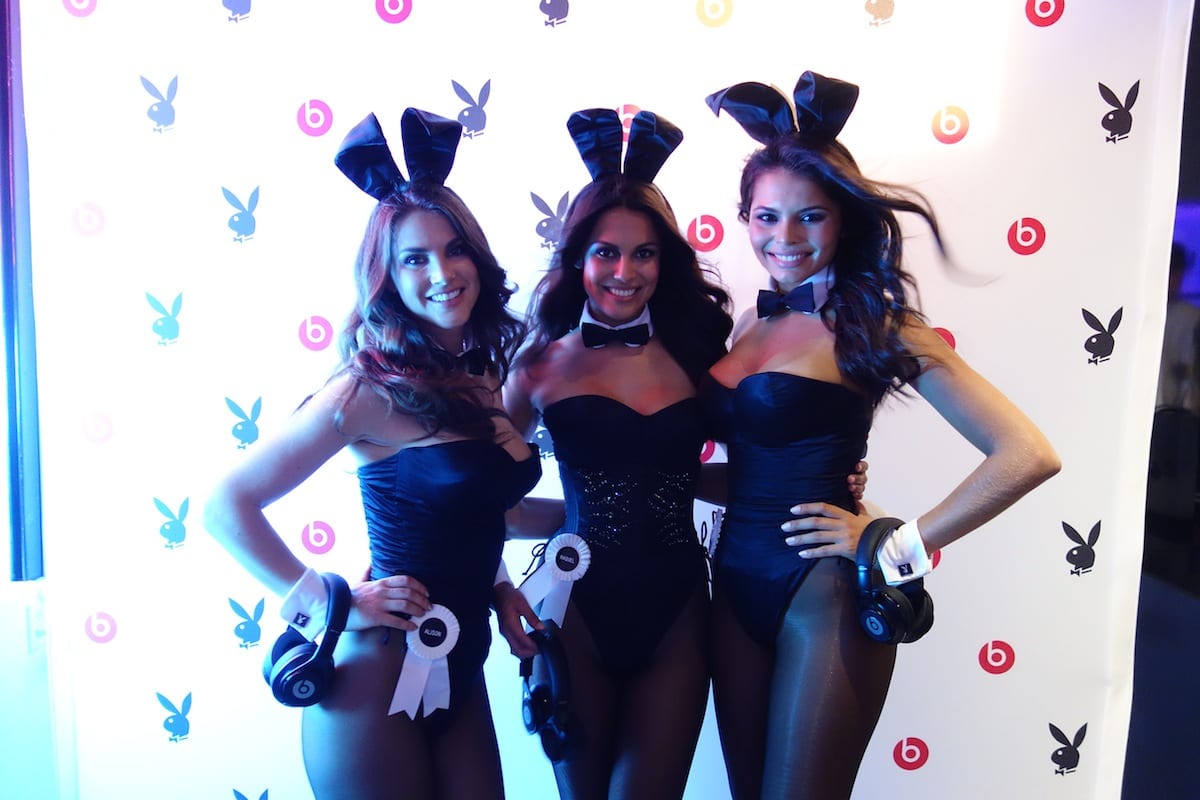
  • Ambitious plan for Playboy China

    Ambitious plan for Playboy China

    Playboy is using its massive brand awareness in China to drive an expansion of its apparel range and enter new retail categories.

    US-based Playboy Enterprises has signed a new 10 year licensing agreement with Handong United to manufacture and distribute an expanded assortment of men’s and women’s fashion apparel, including casual fashion apparel, formal and casual footwear, and accessories, such as belts, bags, backpacks, wallets, and travel luggage. Leveraging Handong’s broad distribution network, Playboy is expected to further expand beyond its current reach from 3100 retail touchpoints in China’s mainland to 3500.

    Playboy China boasts a 97 per cent brand awareness among Chinese consumers according to research house Penn Schoen Berland.

    “We’re proud of the fact that the Playboy brand has achieved household status as the one of the most recognised and popular brands in the world’s leading retail market,” said Scott Flanders, CEO, Playboy Enterprises.

    “To achieve this leadership position without ever having a media entity in China is a testament to the tremendous power of our brand. China is one of our most important markets and we’re committed to working with the highest calibre of partners to develop premium quality products to connect our brand to the future generation of Chinese consumers.”

    Playboy has been building its business in China for 20 years – without any of the printed or digital products it may be best known for in its US home market. In China it is purely an apparel brand and has licensing deals for other products.

    Playboy China generated US$5 billion in retail revenue over the last decade and last year achieved $1.5 billion in retail sales worldwide, more than one-third of that in China. The company wants to achieve revenues of $10 billion during the course of its new partnership with Handong United.

    The brand continues to generate momentum through its portfolio of long time partners in apparel, footwear, luggage and accessories, who actively market the brand through its Physical and VIP sub-brands, which have 1000 and 180 points-of-sales respectively.

    “Playboy has demonstrated success in building a loyal consumer base by introducing a variety of modern apparel and accessories with a renewed focus on attracting a younger male and female consumer base,” said Matt Nordby, president, global licensing and chief revenue officer with Playboy Enterprises.

    “We’re enhancing our licensing portfolio with long-term, brand-enhancing partners, and Handong United is a partner that can deliver a premium and superior product quality. We look forward to teaming with Handong to design and create new products to further grow our China presence and reach the younger fashion-conscious Chinese consumer.”

    Xiaojian Hong, executive officer of Handong United described Playboy as “one of the most famous and treasured brands in China” and a “must-have fashion choice” for men and women across the Mainland.

    Elsewhere in Asia and beyond, Playboy has been expanding its existing audience base and attracting a new generation of consumers by revamping and refining its licensing portfolio, partnering with Lane Crawford in Hong Kong, Beijing and Shanghai, Isetan in Tokyo and Marc Jacobs globally.

  • Fast Retailing Japan reports double-digit growth

    Fast Retailing Japan reports double-digit growth

    In the first fiscal quarter ended 30 November,, the Japanese clothing giant Fast Retailing has totaled revenues of JPY479.5 billion yen (USD4 billion) , an increase of 23  percent over the same period before . For the full year , the management estimates that sales will reach the level of JPY1.6 trillion yen (USD13.5 billion) , an increase of 15.7 percent. In quarter operating profits of the Japanese group were up 39.9 percent to JPY91.3 billion (USD770.7 million) and earnings reached JPY68.8 billion (USD580.8 million) ( + 63.9  percent) .

  • Adidos and Hotwind? In China, brands get names to show foreign flair

    Adidos and Hotwind? In China, brands get names to show foreign flair

    Chrisdien Deny, a retail chain with more than 500 locations across China, sells belts, shoes and clothing with an “Italian style” – and a logo with the same font as Christian Dior’s.

    Helen Keller, named for the deaf-blind American humanitarian, offers trendy sunglasses and classic spectacles at over 80 stores, with the motto “you see the world, the world sees you.”

    Frognie Zila, a clothing brand sold in 120 stores in China, boasts that its “international” selection is “one of the first choices of successful politicians and businessmen” and features pictures on its website of the Leaning Tower of Pisa and Venetian canals.

    Eager to glaze their products with the sheen of international sophistication, many homegrown retail brands have hit upon a similar formula: Choose a non-Chinese name that gives the impression of being foreign.