Tag: Clothing

  • PVH opens third Tommy Hilfiger store

    PVH opens third Tommy Hilfiger store

    US-based PVH Corporation opened its 13th full-price Tommy Hilfiger store in Australia on Friday, just days after the fashion brand held its Tommy Now runway event in Paris, featuring a collection designed in partnership with American actress and brand ambassador, Zendaya.

    The new store, located in Sydney’s Mosman suburb, showcases the TommyXZendaya collection and the brand’s Spring 2019 collection, in keeping with Tommy Hilfiger’s early adoption of the ‘see now, buy  now’ runway trend. Customers can also shop the brand’s denim collection and newly launched men’s and women’s sportswear collections.

    The store, which opened on International Women’s Day, also offers the brand’s IWD capsule collection, which features t-shirts and sweaters with inspirational slogans, such as: “Be the change” and “Powerful”. The brand is donating $1 from every style sold to the International Women’s Development Agency, a non-profit that works to advance women’s rights and gender equality in Asia Pacific.

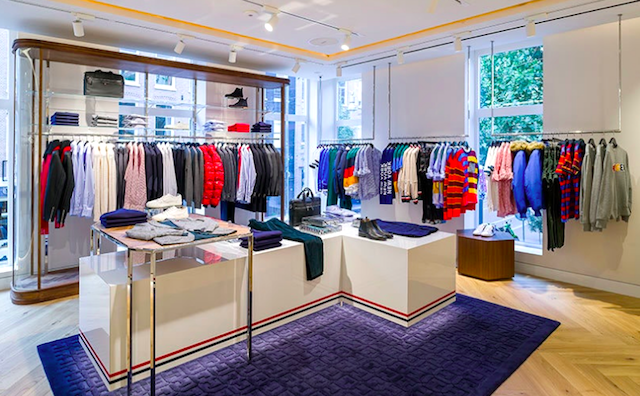
    Spanning 130sqm, the store design reflects Tommy Hilfiger’s new global retail concept, which fuses the brand’s American heritage with clean, modern finishes and a bright, airy aesthetic. A high-resolution digital screen showcases the brand’s latest global campaigns for an immersive brand experience.

    The Mosman store is the third Tommy Hilfiger store to open in the past eight months in Australia, reflecting the parent company’s efforts to minimise its exposure to Myer and other struggling department stores by increasing its retail presence. The brand opened a store in Burwood, NSW, in June 2018 and in Perth, WA, in October. The brand also launched an online presence in Australia in September.

    In a presentation to investors in May 2018, PVH Brands Australia, a 50-50 joint venture between PVH and local apparel retailer Gazal Corporation, which held the licences for  Tommy Hilfiger, Calvin Klein and Van Heusen in the local market, said it would open 34 stores across the brands in the coming years.

    Since then, PVH has announced an agreement to acquire Gazal. The closing, which is subject to shareholder, court and regulatory approvals, is expected to occur in the second quarter of 2019.

    Tommy Hilfiger operates 1800 stores in over 100 countries around the world.
  • OnTheList to launch in Taiwan

    OnTheList to launch in Taiwan

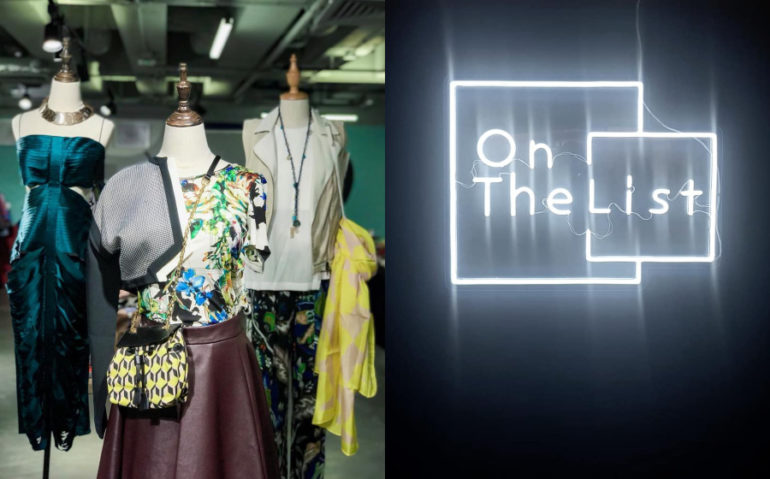
    Founded in 2016, OnTheList is a members-based flash sale company that offers premium goods at unbeatable prices. As of March 2017, OnTheList has called its showroom on Duddell Street, home. In 2018, OnTheList opened pop-up showrooms in Hong Kong, launched in Singapore, and is now ready to expand into other countries in Asia.

    In 2019, OnTheList is jetting off to another Asian city to host the first Flash Sale in Taiwan in March.

  • Warm weather blamed for worsening Bossini International loss

    Warm weather blamed for worsening Bossini International loss

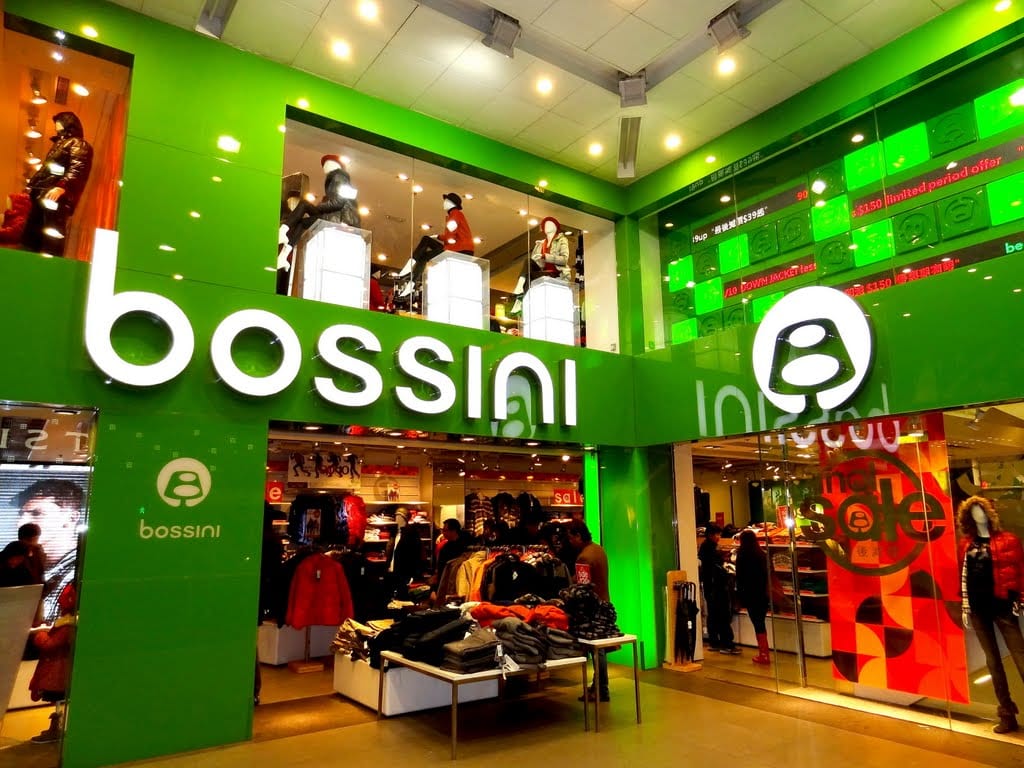
    An unseasonably warm winter and weak consumer sentiment in core markets has been blamed for a more than doubling of losses for Bossini International in the six months to December. The casual-fashion retailer reported a 10 per cent decline in group revenue to HK$875 million (US$111.5 million) and a 5 per cent drop in same-store sales for the period. Gross profit fell 11 per cent and the loss attributable to shareholders ballooned from $12 million in the same period a year earlier to $26 million (US$3.3 million).

    Operating profit in the key Hong Kong and Macau market, where Bossini has 39 stores, improved, despite a 5 per cent decline in same-store sales.

    In Singapore, sales plummeted 23 per cent due to store closures. Same-store sales there fell by 6 per cent, in Taiwan by 7 per cent and in Mainland China by 3 per cent. Group-wide same-store sales fell by 5 per cent, worse than the 2 per cent of the December 2017 half.

    As at the end of last year, Bossini International had a total net retail floor area for directly managed stores of 362,000sqft, about 4000sqft less than a year earlier, across 295 stores, (11 more than a year earlier). It opened 114 franchised stores in markets outside Hong Kong and Macau, taking the total franchised network to 768.

    Hong Kong challenge

    Bossini chairman Man Kuen Bess Tsin said the significant decline in retail sales growth in Hong Kong since July and the negative impact of the devaluation of the Renminbi had impacted on the company’s sales in its home market, which accounts for 66 per cent of group revenue.

    “The Hong Kong retail market presented a cautious optimism if not a mixed picture. Strong inbound tourism, especially from Mainland China, was recorded in Hong Kong. Nevertheless, the consumption per capita started to drop in the third quarter, despite the annually increasing numbers of tourist arrivals in Hong Kong.”

    The group’s total net retail floor area in Hong Kong and Macau reduced from 125,800sqft to 121,600sqft, a decrease of 3 per cent, while sales per square foot slipped 5 per cent to $7200 (from $7600). Operating profit in Hong Kong and Macau was $17 million, up from $12 million for an operating margin of 3 per cent (compared with 2 per cent a year earlier).

    Mainland China revenue decreased 2 per cent.

    Bossini Singapore posted an operating loss of 5 million, 20 per cent more than the comparable period and the operating margin was negative 9 per cent.

    Cautious outlook

    Tsin said Bossini International management is “cautiously optimistic” about the year ahead.

    “However, in face of the complex and volatile global economy and geopolitics, the outlook is full of uncertainties. As an open economy, Hong Kong is particularly vulnerable to the impact of the global situation. At the same time, the local economy and consumption structure are also gradually changing.

    Challenges and opportunities coexist. The group is fundamentally strong with a healthy financial position, which is capable of facing the potential challenges.”

    Tsin said the export franchising business is a main focus of the group.

    “We will further expand and optimise the distribution network, leveraging the economy of scale in market reach and profitability.”

    The company will focus on introducing more new products and designs, with a focus on functionality at the core of its product strategy. Alongside the young adult segment, the company will develop more childrenswear lines to broaden its customer base and it will strengthen supply chain management to improve operational efficiencies.

  • India’s yogi to open clothing stores

    India’s yogi to open clothing stores

    Indian yoga guru Baba Ramdev is making moves into fashion through his firm Patanjali. The brand plans to launch 100 exclusive clothing stores with e-commerce support across India by next year. It is also seeking to open small venues in metropolitan areas. Twenty stores are expected to be operational by the end of this year in cities such as Jaipur, Agra, Patna and Nasik.

    A recent ad campaign for the Baba Ramdev brand sought to “create a movement towards embracing and embodying Indian fashion,” according to a report.

    The firm’s flagship in New Delhi sells around 3000 items under three distinct sub-brands, which will be made available on Amazon, Flipkart and Paytm under the new expansion drive.

  • China’s Fosun makes bid for Tom Tailor

    China’s Fosun makes bid for Tom Tailor

    Hong Kong-listed Chinese trading group Fosun has launched a Tom Tailor takeover bid. Fosun has long held a cornerstone stake in the German-listed fashion retailer, which has several thousand stores, franchises and shops-in-shops around the world, trading under its own name selling men’s and women’s fashion and under the womenswear label Bonita. Its core markets are Germany, Austria, Switzerland, Southeastern Europe and Russia.

    Fosun said in a stock exchange filing that the Tom Tailor takeover bid follows an increase in its shareholding which will take its stake above the 35 per cent level which triggers a mandatory takeover offer under German law.

    In a statement, Fosun said it would benefit from the target company’s long-term growth potential.

    “The company considers the transaction to be an attractive investment in its sector as it sees economic potential in Tom Tailor.”

    Founded in Hamburg in 1962, Tom Tailor has encountered challenges in recent years. Its share price has plunged 80 per cent since January last year.

    The company focuses on mid-priced casual wear for men, women and children, accessories, and home textiles.

    Fosun has been expanding its interests in Europe in recent times, acquiring Lanvin last year, along with Austrian luxury lingerie brand Wolford. It also has a stake in menswear label Caruso.

  • Superdry forays into sports fashion category, to open 50 retail stores in 3 years.

    Superdry forays into sports fashion category, to open 50 retail stores in 3 years.

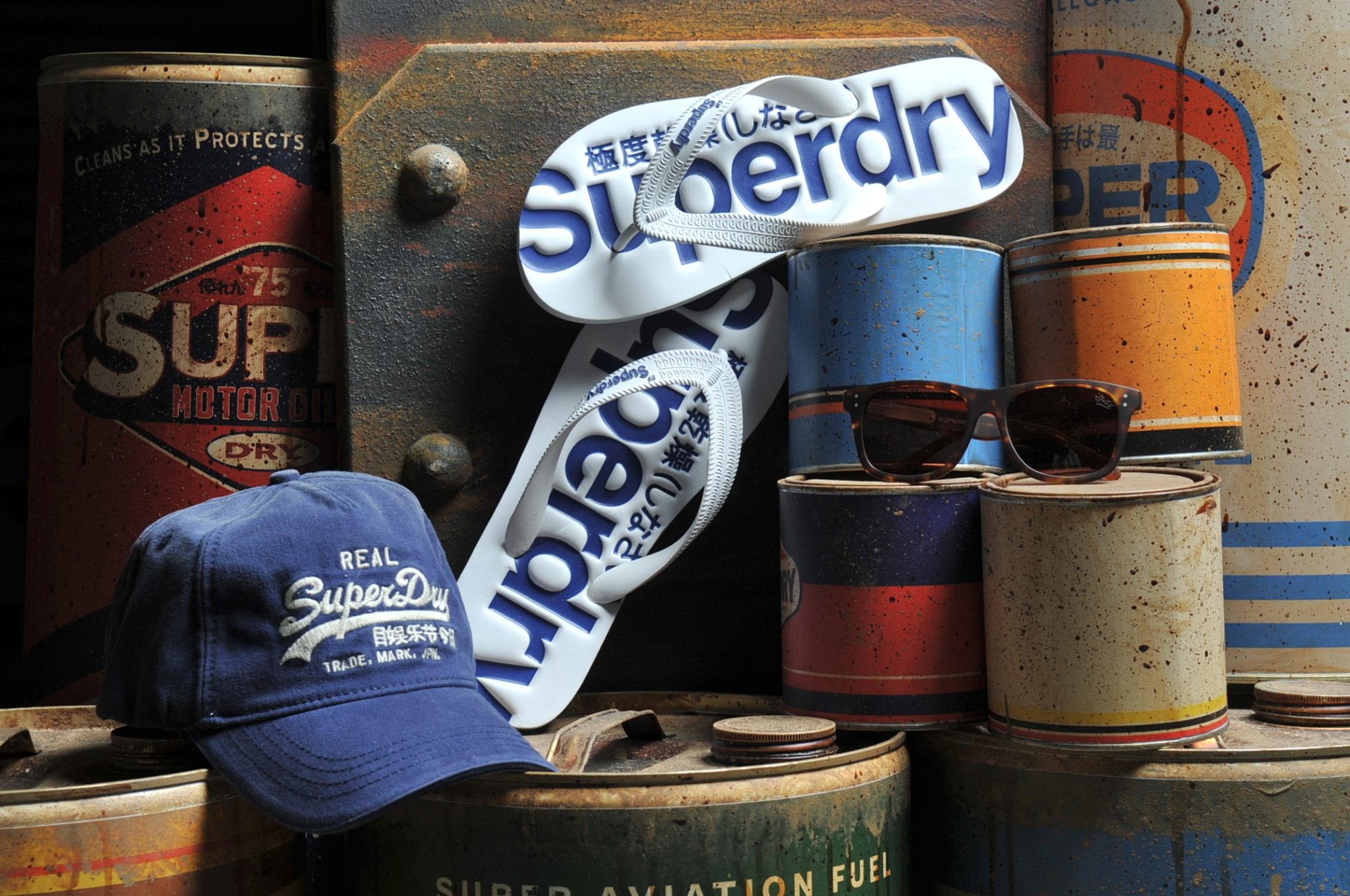
    Recognizing the immense scope in the lucrative fitness market that has hit the country, Superdry announces its venture into Sports category under the name SuperdrySport. The brand is all set to open its first exclusive Sport store in the country that will celebrate technical sports gear, athleisure, great design and outstanding craftsmanship at DLF promenade, Delhi.

    From technical gear to workout essentials, SuperdrySport has everything from active wear, athleisure and sportswear. With pieces engineered to enhance performance and aid- goal focused activity, to more fashion lead items made with sports fabrics but designed more to turn heads, there are items carefully mastered to suit whatever your ability. Geometry and pop grid structures are complimented with layered mesh weaves. The highly technical performance range is created with a distinct ‘win’ attitude featuring compression fits and engineered ventilation designs.

    The 1076sqft, brand-owned Delhi outlet located at this premium location retains the Superdry DNA of clean lines set against raw finishes yet takes a leap forward into the fresh brand of SuperdrySport by merging the future technology, lighting and finishes to enhance the experience of the customers. SuperdrySport stores will have the ability to evolve with seasonal change, product sales and popularity or gender demand allowing maximum traction from every square meter. It is sure to catch the eye of a millennial customer.

    Millennials are increasingly buying clothing that’s characterized by durability and utility, this shift has led to a surge of interest in brands offering innovative designs, new functionality and practical fashion.

    With many celebrities donning the athleisure look, the trend has reached Tier 2 & Tier 3 cities as well. Having understood this potential Superdry plans to open stores in these cities as well soon.

    The report published by Global Industry Analysts Inc., the global market for Sports and Fitness Clothing is projected to reach US $231.7 billion by 2024. The research also indicates that technological developments designed to improve comfort and performance has also led to the growth in sales of sports apparel. The report points out that the Asia-Pacific region is expected to be fastest growing region, with a CAGR of 6.9 percent over the forecast period. Sales came from emerging markets, such as India and Thailand, as well as the US, the world’s largest sportswear market.

  • China’s Trendy Group buys the Denham Group

    China’s Trendy Group buys the Denham Group

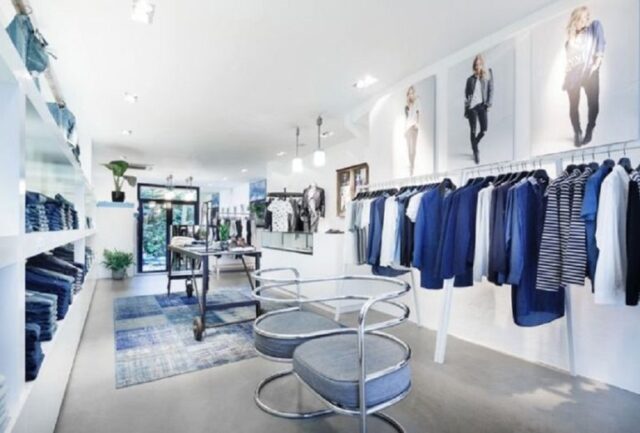
    Dutch denim company Denham Group has a new major shareholder, according to reports in the Netherlands, with China’s Trendy Group named the official buyer. The parent company of denim label Denham the Jeanmaker, Denham Group was snapped up by Trendy from Amsterdam-based investment firm Amlon Capital for an undisclosed amount.

    Denham’s current chief creative officer Jason Denham will remain in the top design spot, following the acquisition, and will remain a shareholder, Trendy said in a press release.

    However, Ludo Onnink, CEO at Denham Group, will depart the company his post, with Andre Chen, senior vice president at Trendy Group, to succeed him.

    Denham Group

    Trendy views the Denham Group acquisition as an opportunity to nurture and expand the Denham brand in current markets such as China, via the production of new items.

    Denham Group and Trendy are familiar allies. Back in March 2017, the companies announced a joint venture to further expand the European denim brand in China, resulting in the opening of 16 retail stores in key cities in Chin. Now, there are plans to further grow the business in the coming years as a result of the acquisition.

    “We see many opportunities to grow the Denham business in the existing markets but also as the most influential denim player in the future,” said Chen.

    “This will not only be achieved by extending our jeans business, but also by adding additional product categories.”

    Founded in 2008 in Amsterdam by Jason Denham, Denham retails in some 20 cities including its local Amsterdam, as well as nearby Antwerp and Hamburg. As for Asia, it is present in Tokyo, Osaka, Shanghai and Seoul.

    In wholesale terms, the label is has global partners and is available for purchase via its namesake online store. The Denham is also headquartered in Amsterdam, with sub-offices in Düsseldorf, Shanghai and Tokyo.

    Launching in 1999, China’s Trendy Group is today a global fashion and denim mecca with a stable that includes fashion brands form the Italian house Sixty Group: Miss Sixty, Killah and Energie.

  • Supermarket, apparel sales not looking good in Japan

    Supermarket, apparel sales not looking good in Japan

    Japanese supermarket sales edged down 0.2 per cent in a third consecutive year of declines, according to figures released by an industrial body this week showing last year’s financial performance. The data for last year shows sluggish consumption regardless of the country’s current period of economic growth. Observers have attributed the slump to a low demand for apparel in supermarkets relative to stronger sales in food.

    Apparel sales fell 5.3 per cent, the 27th straight year of declines, influenced by the warm winter and increased competition with retailers online. Food, by comparison, saw 0.4 per cent higher sales with an uptick in prices for vegetables and sweltering summer temperatures.

    While total sales rose 0.5 per cent to ¥12.99 trillion ($118.71 billion) last year, they still fell short of the hoped-for ¥13 trillion mark for the second year in a row.

    “Spending is weak as a deflationary mindset is still deeply rooted among consumers”, said Atsushi Inoue, a senior official of the Japan Chain Store Association.

  • Vans, The North Face boost parents sales

    Vans, The North Face boost parents sales

    VF Brands has posted strong third-quarter results, with balanced growth across its entire portfolio. The US-listed apparel company, which owns and operates Vans, The North Face, Timberland, Wrangler and Lee, among others, says sales grew 8 per cent in the third quarter, to US$3.9 billion. Its share price soared 12.39 per cent after the announcement on Friday (US time) to $82.47.

    Vans sales soared 25 per cent and The North Face’s, by 14 per cent.

    “VF’s third-quarter results were fuelled by strong growth in our largest brands and balanced growth across the core dimensions of our portfolio,” said VF Brands president, chairman and CEO Steve Rendle.

    Revenue from VF’s ‘active’ segment, which includes brands such as Vans and JanSport, increased 16 per cent, while revenue from its ‘outdoor’ segment, which includes brands such as The North Face and Timberland, increased 11 per cent.

    VF reported $592 million in operating income, 22 per cent up on the prior year. Net income for the period was $463 million, a 613 per cent increase over the $90 million loss posted in the same period last year.

    “Based on the strength of our third-quarter performance and the growth trajectory we see for the remainder of fiscal 2019, we are again increasing our full year outlook,” Rendle said.

    The business expects revenue from its ‘work’ segment, which includes brands such as Dickies, is expected to increase 39 per cent, while revenue from its ‘active’ segment is expected to increase 16 per cent and revenue from its ‘outdoor’ segment is expected to grow 8 per cent.

    VF expects revenue from its ‘jeans’ segment, which includes brands such as Wrangler and Lee, to decline 3 per cent, while direct-to-consumer revenue is expected to increase 13 per cent, and digital revenue is set to increase by more than 30 per cent.

  • Jaspal unveils collection joined by Lynnie Z

    Jaspal unveils collection joined by Lynnie Z

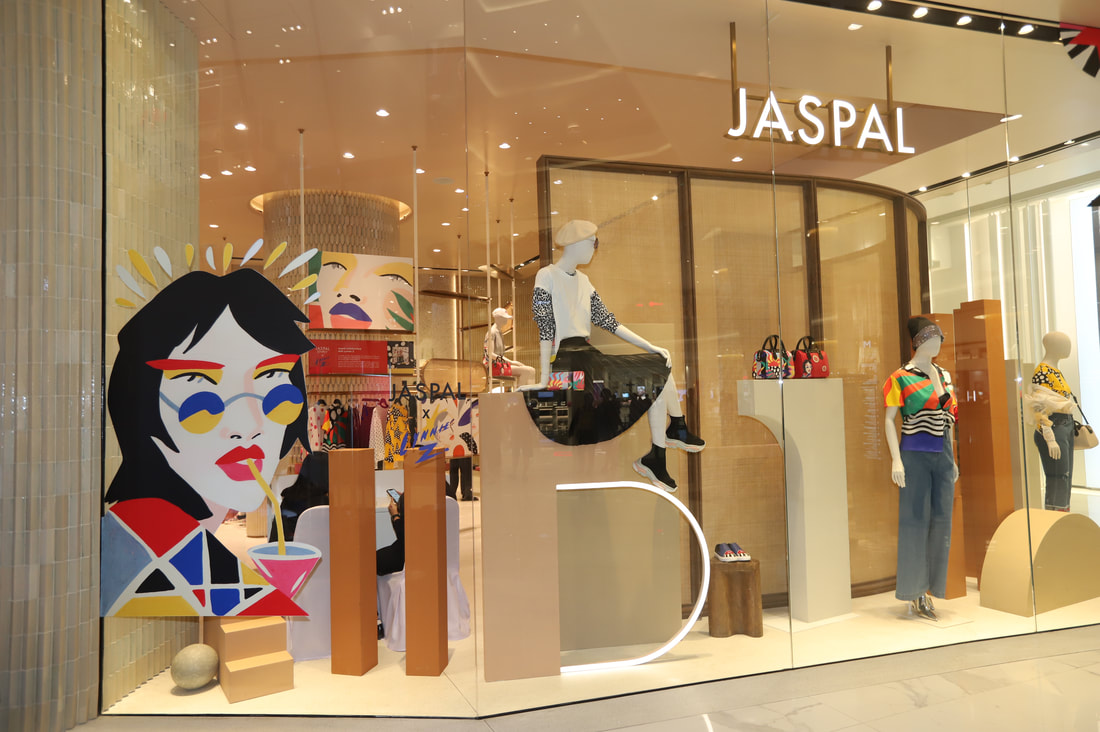
    Thai fashion brand Jaspal has opened a new flagship store featuring its limited edition collaboration with London-based artist Lynnie Z. The partnership with Jaspal’s Hi Life collection marks the opening of the brand’s new IconSiam flagship. It is one of a series of partnerships between Jaspal and global artists to ensure that unique styles emerge each season.

    The Hi Life collection for men and women features stars, hearts, lips and faces as motifs with strong colour themes referencing Africa.

    “I was so honoured to be a part of such a wonderful project,” said Z. “Thailand has an outstanding heritage and Thai people love art and fashion, which is the reason why I decided to come on board. Also, I think Jaspal and I share the same artistic soul, and, more importantly, the brand fully understands the story relayed behind my works,” she said.

    “To me, this project was really wonderful, allowing me to create a masterpiece collection with a famous local brand, and communicate my inspiration, passion, and uniqueness through the collection. This is one of the best works I’ve ever created. As for the process in making this collection, for the most part, I came up with ideas and colours from my sketchbook. These are organic and abrupt but they reflect a liveliness that I wanted to communicate through the collection.”

    View the images of the collection below (6 images) :

  • Tech startup Blinq to focus on Southeast Asia

    Tech startup Blinq to focus on Southeast Asia

    Tech startup Blinq is targeting Southeast Asia with software which allows users to virtually try on and purchase designer apparel and accessories from online luxury and contemporary fashion retailers globally. “Blinq uses AR and algorithmic patterns to provide users with the latest trends and personalised fittings from their digital devices,” explains entrepreneur and Blinq founder Bob Chua.

    “It also allows users to choose how they would like to consume fashion, which may not necessarily be to buy, but to also rent, subscribe, or pay later for latest luxury designs from major and upcoming brands across Southeast Asia.”

    A rental-subscription model provides users the option of renting designer apparel and accessories, while the back-end automated warehousing operation enables brands to fulfil their products throughout the Asia-Pacific region.

    Citing McKinsey’s global fashion report, Chua says the personal luxury market is predicted to grow to US$500 billion by next year, with close to 44 per cent coming from Asia.

    “There is clear retail disruption happening everywhere, and e-commerce adoption in the luxury space is growing at a staggering rate here in Asia. We see a major opportunity.

    “In a way we are fusing the successful models of Asos, Farfetch, Rent-the-Runway and The Real Real into a single platform, while targeting affluent Asians.”

    Chua says the company plans to monetise its platform by white-labelling its virtual changing room AR features to other e-commerce sites, which will ultimately reduce returns and increase purchasing propensity for retailers.

    He says Blinq has secured significant seed funding and is currently en route to a next fundraising round.

  • The Indian Luxury Outlook 2019

    The Indian Luxury Outlook 2019

    As 2018 comes to a cold & wintry end, as political environment hots up, as new alliances, mergers and acquisitions take shape in business & politics, as GST corrections & FDI norms in ecommerce are tinkered, what is it that the Indian Luxury Industry can look forward to?

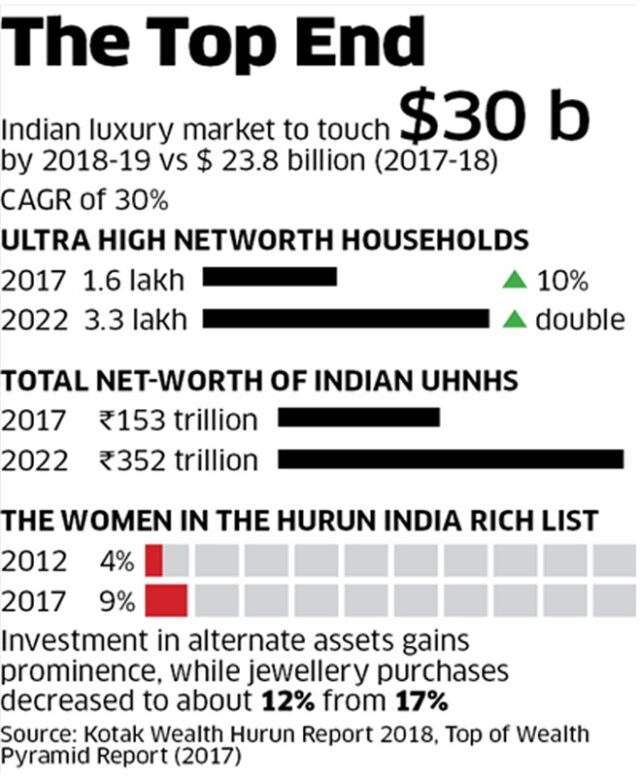
    Assocham figures continue to be optimistic and bullish. As per last projection, not only is the industry expected to be of a size of USD 30b by the year end 2018, but is also to continue its growth trajectory unhindered. But alas, the suddenly disturbed seemingly stable political applecart, the floundering rupee, the growing uncertainty, and the eminent global slowdown of 2020 looms large. Ground reality for luxury could be different. Industry insiders, trade analysts and brands all alike seek the pot of gold at the end of the rainbow.

    A seeming direction that the Indian Luxury Industry could take or adopt from the rest of the world appears as under:

    1. Consolidation is the key: With Reliance brands having taken over Genesis Retail in 2018, the largest fashion and accessory conglomerate of Indian Luxury and premium space has taken shape. With almost no competition, the all-powerful group is set to be the only point of entry into India. Surely independent brands and smaller groups continue to offer their wares, the sheer strength, negotiation powers and might of Reliance will perhaps be the single most driver of the fashion & Luxury space.
    2. Power of the Common Man: Someone wise enough once said ‘don’t underestimate the power of the common man’. Sure enough, luxury has slowly spread its wings to the hitherto sleepy tier I & tier II towns. The fast emerging Indian market is not only witnessing demand for luxury products from the Metros but also Tier I and Tier II cities which have a sizable number of HNIs (High Net-worth Individuals). Alongside, an increase in wealth for the middle class coupled with internet penetration has resulted in newer segments of first-time luxury buyers. This has given ample space for a whole lot of brands to set up shop in India, retail their brands through distribution networks. This surely will be the next growth driver for Luxury in India.
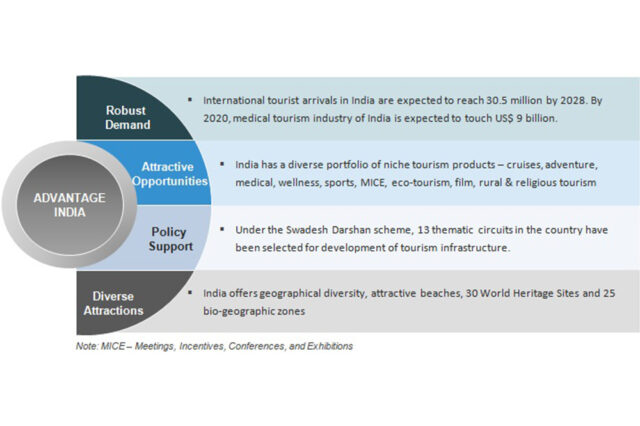
    3. Travel, Tourism &Hospitality will drive further growth to the value pie: With increased e-visa processing, faster on the ground arrival support, eye catchy Incredible India campaigns, the tourist inflow from within and outside is likely to further increase. Statistics according to a new report of the World Travel and Tourism Council (WTTC) reveal that India’s travel and tourism sector ranks 7th in the world in terms of its total contribution to the country’s GDP.During January-October 2018 FEEs from tourism increased 8.30 per cent year-on-year to US$ 23.54 billion.


      Source : www.ibef.or


    4. The Great Big Fat Indian Wedding carnivals will drive luxury: The wedding industry and the wedding service industry sets unprecedented benchmarks. According to a 2017 KPMG report titled Market Study of Online Matrimony and Marriage Services in India, the marriage services industry is estimated to be worth approximately US $53.77 billion (Rs 3, 68,100cr).This is one sector which adds incremental sales to all sectors of the industry – from beauty, fashion, accessories,  photography, jewellery, travel, hospitality, gifting to also the cuisine segment. With high standards being set by the likes of stars like Anushka Sharma – ViratKohli ; Priyanka Chopra – Nick Jonas& finally the Ambani weddings, the aspiration of average Indian to splurge on weddings is reaching a new peak. With Rolex watches as gifts to the entire wedding procession to bespoke clothing from super luxury brands to not only the entire family but the whole procession adds further fillip to the trade.
    5. Technology and Luxury: From high end home appliances such as Sub Zero Wolf to tech controlled homes like Home Automat, luxury and technology seem to marry and create an inseparable union. What was earlier restricted to high end laptops and computer systems demand has now invaded the mobile space, the home entertainment space besides the affluent kitchens. Super expensive mobiles from Iphone X to Hanmac are finding a demand que beyond their imagination in India.
    6. Technology and Retail: Omni-presence now means beyond just available everywhere to also be ‘Phygital’. A merger of the physical and digital retail is quietly invading the global retail. Amazon Go has already launched 8 number of cashier less stores& plans to ramp up to 3000 by 2021. Can India, the tech brain of the world be far behind? In Bangalore, Decathlon launched a similar store by introducing a ‘phygital experience’- an innovative mix of physical retail and digital touch points. From virtual reality to digital payments the intent is to create a fun, unique and immersive user experience designed to engage and add value to for them at every step of the way while choosing their favourite sports gear.On other hand, another concept store called ‘Watasale’ went further to create cashier less store, its first store in Kochi and have plans to expand to other cities including Bengaluru and New Delhi in the near future. Can Indian Luxury ignore this anymore?
    7. Predictive Analysis to Predictive Selling: The Indian fashion industry proudly receives its first futuristic analysis software, ‘Stylumia’. Created by ex Myntra founder Ganesh Subramanium, the software will assist in better buying to be able to improve efficiencies and sell through ratios. Most Luxury brands dependent on the human predictions of the buyer can now resort to technology and manage their budgets better. This coupled with predictive selling, could bring in the much needed correction in stocks over load with luxury brands.
    8. Experiential retail, Virtual Reality and Artificial Intelligence: These three aspects will come to the forefront: Brands like Arvind have introduced Magic Mirrors through its brand Creyate Custom Clothing. Also, Shoppers Stop has launched an innovative augmented reality-based dressing room: ‘The Magic Mirror’. It is an intelligent photo booth that gives customers the option to select and view apparel and accessories on themselves without having to physically ‘try on’ the desired products. Apart from this, ecommerce players such as Lenskart(Eyewear) and Caratlane (Jewellery) are already into Virtual trial of the products by customers.
    9. Rent a Luxury / Reusable Luxury are a reality: What started as a trickle two years back, is now a stream with more ventures offering specialised product categories arriving at the horizon.Websites such as Confidential Couture offer usable Luxury Goods while Ziniosa & Rent A Closet offer fashion on rent.And now, even the affluent women are renting high end jewellery for their wedding. The fashion rental market is becoming the biggest trend. A wedding suit or gown worth Rs. one lakh could be rented for as low as Rs. 2000 to Rs. 2500! It is estimated that the online wedding rental  business is worth Rs. 100 crore and the existing players have claimed a 25 to 50 per cent year-on-year surge in business (Black Book).
    10. Sustainable, Authentic and Responsible Luxury is being sought for: GrassRootby Anita Dongre and Nicobar by Good Earth are few names that are famous for their Sustainable offerings.Slowly but surely, the well exposed Indian consumer seeks value over mere brand name. Value definitions are shifting rapidly in line with global shifts. A brand who pays heed to such demands will perhaps go a long way.
    11. SUVs take over the roads:  Various variants of SUVs have been introduced by automakers of all categories. From Mahindra XUV 500 to Lamborghini Urus, Rolls Royce Cullanin to Porsche Cayenne, almost all Luxury brands have come up with their SUV variant. Sale of SUVs grew seven times faster than that of passenger sedans. While small cars and sedans managed a growth of 3% in the last financial year, the sales of SUV grew 21%. The share of SUVs in overall passenger vehicle sales rose to nearly 30 % in 2017-18, compared to 14% recorded at the end of March 2017-18.According to numbers released by Society of Indian Automobile Manufacturers (Siam), 9.2 lakh SUVs were sold in 2017-18 against 7.6 lakh units in the previous year.
  • What is Amazon’s Japan bestseller fashion?

    What is Amazon’s Japan bestseller fashion?

    Amazon Japan has revealed its most popular items sold on the online retailer’s platform in the last twelve months, with basics and sportswear taking the top spot in both fashion and accessories, and footwear categories. According to the ‘Amazon Ranking Grand Prize 2018’, the United Athle 5.6 Ounce High Quality T-shirt took first place in the clothing and accessories category. In a classic design, the affordable fashion item was followed in popularity by the brand’s crew neck t-shirt, which came in second place.

    Looking at the top 20 apparel brands, Champion gained five spots in the report, while in the womenswear section, casual tops by And It_ sat high in the rankings.

    Asics’ running shoes won both first and second place in footwear, while Anello’s poly-canvas mini bag proved popular in the bag category.

    In watches, Casio’s G-Shock shock-resistant smart-watch continued to gain popularity, with the Casio brand featuring 11 times in the Amazon Japan top 20. In the jewellery ranking, products by Tiffany & Co. gained in popularity too, said the report.

    The “Amazon Ranking Grand Prize 2018” ranked the U.S. e-commerce giant site’s most popular products by category for the period beginning in November 13, 2017, and ending on October 31, 2018.

    In the last twelve months, retail expenditure has continued to grow in Japan.

    In September, the archipelago nation recorded its 11th consecutive month of retail revenue growth, with sales up 2.1% on the same period last year, according to data by the Japanese trade ministry.

    Specifically, online shopping is at the forefront of this drive with the Japanese love for online shopping helped by the trend to online shop using mobile phones.

    In the latest Criteo survey, mobile devices accounted for 55% of all EC transactions in Japan, up 4 points on the year.

    Transactions through smartphones increased 9%, and tablets 3%, but purchases by PC were down 9%, said the report.

  • Shinsegae International Opens Select Shop for S. Korean Designer

    Shinsegae International Opens Select Shop for S. Korean Designer

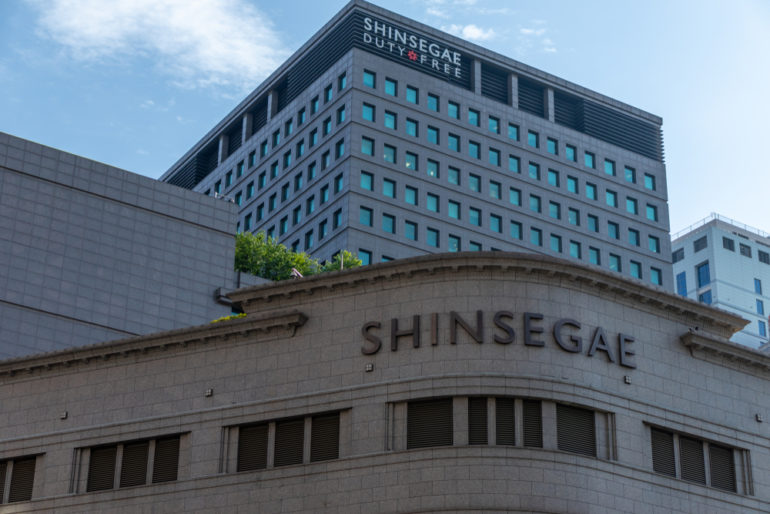
    South Korean retailer Shinsegae International aims to promote South Korean designer brands through a new online store. The company says ‘Select Shop’ will specialise in South Korean designer brands, on its S.I.Village online shopping portal. Select Shop accommodates 30 designer brands for clothing, bags, and footwear.

    “Select Shop will serve as a new channel for South Korean designers as well as for young and sensational new brands, which will also boost the competitiveness of our online shopping mall,” said a Shinsegae International spokesperson.

    Shinsegae International said S.I.Village’s high-end reputation is what encouraged many of the designers to join Select Shop.

    To mark the grand opening, Select Shop will provide discounts of 5 to 20 per cent on all member products and will give away movie tickets to the first 300 customers to make a purchase on Select Shop.

    The website will also be the exclusive distributor for 99 T-shirts designed in collaboration with 99%IS by Bajowoo.

  • India Ancestry opens first store in Kolkata

    India Ancestry opens first store in Kolkata

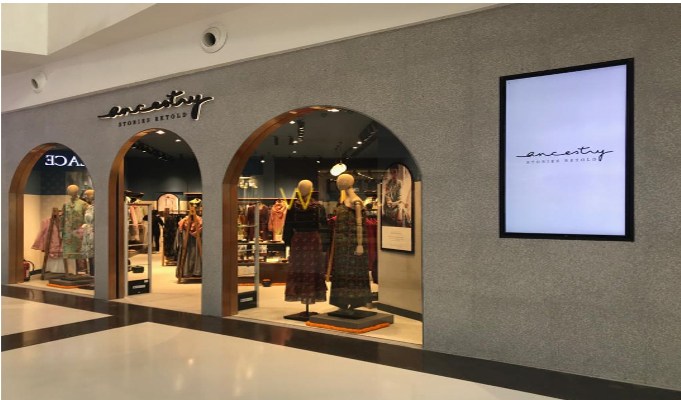
    The newest brand from Future Style Lab, Ancestry, which launched its maiden store in the capital city in May, has recently opened its first store in Kolkata, South City Mall. The brand, which presents a contemporary take on traditional Indian fashion and lifestyle, has earned many accolades in India’s fashion circles already and seems all geared up to woo Kolkatites too.

    Ancestry is inspired by the evolving face of the new age Indian who is self-assured, professionally competent and curious to discover new paths. The brand’s offering, encompassing women’s apparel & accessories, home furnishings, and other lifestyle products, is constantly evolving and is in line with international trends, and yet interestingly rooted in Indian heritage and crafts.

    With pricing that is perfectly suited to any urban Indian’s pockets, Ancestry’s unique collection of dresses, tops, and tunics are created completely using natural fabrics, thereby offering an unmatched quality and fashion sensibilities in that price range. This is one of the key reasons why the brand’s products have nearly flown off the shelves at its current stores in Delhi and Mumbai.

    For the new store launch, Manjula Tiwari, CEO at Future Style Lab, the parent company of Ancestry, said, “Ancestry provides an unparalleled, modern-day experience of old-style Indian artistries, and we’re sure that the brand’s offering will find much love and appreciation with our consumers in Kolkata. We’re truly excited about launching this store, and are thankful to South City Mall for providing us with an impeccable space and opportunity, right in the heart of Kolkata.”

    Ancestry’s tagline #StoriesRetold, perfectly sums up its ethos, for every line of products the brand comes up with tells the story of a particular craft or tradition, but in a way that is suited to the new-age lifestyle.