Tag: cloud

  • Mega-Clouds Drive Shift to Mega-Data Centers in Singapore

    Mega-Clouds Drive Shift to Mega-Data Centers in Singapore

    While Singapore has for years been the default data center location for US and European companies wanting to serve clients in Asia, the rise of the mega-clouds is changing market dynamics there as it has done in other major data center markets around the world.

    Companies like Microsoft and Google have built their own data centers in Singapore and leased capacity from data center providers there. Social networks LinkedIn (now owned by Microsoft) and Facebook occupy leased data center space on the island. There’s also demand from Asian mega-clouds, such as Alibaba.

    As they do elsewhere around the world – in places like Northern Virginia, Dallas, Chicago, and Dublin – these companies are generally after big multi-megawatt data center leases, driving more demand for wholesale data center services in Singapore than there has been historically.

    That’s according to recent data on the Singapore data center market from Structure Research, which says the market profile has shifted to “one that is increasingly geared to wholesale deployments.” Most of the 150 or so megawatts of new data center capacity that would be coming online in 2016 and 2017 was being built for wholesale deals, Jabez Tan, research director at Structure, told us in an interview.

    As Tan notes in an article for Data Center Knowledge that also ran this week, the trend toward wholesale can be observed in all major Asia-Pacific markets.

    The Singapore data center market has been growing steadily over the last several years, but the analysts’ data shows its next phase of growth is being driven primarily by wholesale data center demand from cloud giants, pushing providers to build data centers at massive scale. That 150-plus megawatts would be delivered across only eight data centers.

    Structure expects the Singapore market to generate $811 million in revenue in 2016 and grow 9 percent in 2017. The research firm projects the market will reach $1.6 billion in size by 2020, growing at a compound annual rate of 9 percent.

    In addition to being one of Asia’s primary commercial and financial hubs, Singapore is a hub for international connectivity, with landing stations for submarine cables linking it to major Asia-Pacific markets in India, China, Japan, and Australia, as well as the numerous emerging markets in the region, such as Thailand, Vietnam, Indonesia, and Singapore’s next-door neighbor Malaysia. In short, if you want network access to virtually all Asia-Pacific markets from one place, that place is Singapore. The city-state’s robust infrastructure, political stability, and a business-friendly government also help.

    There are 45 data center providers in Singapore as of 2016, with 53 unique operational data centers, according to Structure. Together, their critical power capacity is 240MW. The two top providers in the market are local telco Singtel and the Redwood City, California-based colocation giant Equinix. The two companies have a combined share of 55 percent in the Singapore data center market. Other top providers are Digital Realty Trust, Keppel Data Centers, Global Switch, and NTT Communications.

    Not all demand for data center capacity in Singapore is coming from cloud giants of course. There are plenty of examples of smaller companies, such as system integrators and other IT service providers from China and elsewhere overseas, taking data center space in Singapore to serve clients throughout AsiaPacific.

    Some of the recent examples include Retarus, a Munich-based messaging service provider, which announced a new data center in Singapore last month. The company lists Adidas, Bayer, Sony, and Honda as its clients. Another one is Fpweb.net, a St. Louis, Missouri-based managed cloud and security services firm, which announced a data center in Singapore earlier this month, promising it would reduce latency for its clients in Southeast Asia.

    While data center providers building in Singapore are mostly after the lucrative multi-megawatt cloud deals, they generally don’t pigeonhole themselves into being strictly wholesale or strictly retail providers. A company may prefer wholesale deals but it will sign retail colocation deals as well, Tan said. It goes the other way too. Equinix, for example, a company that specializes in retail colocation inside its network-rich facilities, has done some wholesale deals in Singapore, he said. Equinix usually makes the exception if a major strategic customer wants a wholesale deployment.

    Tan was not confident there would be enough demand for all the new wholesale capacity coming online in the 2016-2017 timeframe. Lots of empty facilities and only so many deals to go around usually means pricing for wholesale data center space will come down. “It’s pretty aggressive in terms of chasing after deals in Singapore,” he said.

  • Global average connection speed grows 2.3% in Q3

    Global average connection speed grows 2.3% in Q3

    The global average connection speed increased 2.3% sequentially and 21% year on year to 6.3 Mbps in the third quarter of 2016, Akamai’s latest State of the Internet report shows.

    South Korea maintained its lead with the highest average connection speed at 26.3 Mbps in the third quarter, but this was down from 27Mbps in Q2, which was itself down 7.2% compared to the first quarter.

    The global average peak connection speed increased 3.4% sequentially and 16% year-on-year to 37.2 Mbps in the third quarter, rising 16% year over year. Singapore continued to have the highest average peak connection speed, at 162 Mbps in the third quarter.

    Meanwhile, global 10 Mbps broadband adoption rose 5.4% quarter over quarter, and 15 Mbps and 25 Mbps broadband adoption rates increased 6.5% and 5.3%, respectively.

    Asia-Pacific region continued to lead the world in average peak connection speeds in the third quarter. Four of the Top 10 countries in average peak connection speeds were from the region.

    Singapore, Hong Kong and South Korea all had average peak connection speeds above 100 Mbps again, with Indonesia close behind at 99.3 Mbps.

    Eleven of the 14 qualifying surveyed Asia Pacific countries/regions posted increases in 15 Mbps adoption, ranging from 3.7% in Singapore to 94% in Vietnam.

    Global average mobile connection speeds meanwhile ranged from a high of 23.7 Mbps in the United Kingdom to a low of 2.2 Mbps in Venezuela.

    “The holiday season serves as one of the true tests of internet connectivity as consumers activate slews of connected devices at the same time and more families are at home collectively pushing their broadband capabilities to the limit,” said David Belson, editor of the State of the Internet Report.

    “The good news is those limits are getting higher as we have continued to observe positive long-term trends in both average and average peak connection speeds around the world. While ‘batteries not included’ may still cause unwelcome surprises, we’re optimistic that connection speeds won’t spoil the holidays this year.”

  • BT partners with DCI on Indonesia cloud venture

    BT partners with DCI on Indonesia cloud venture

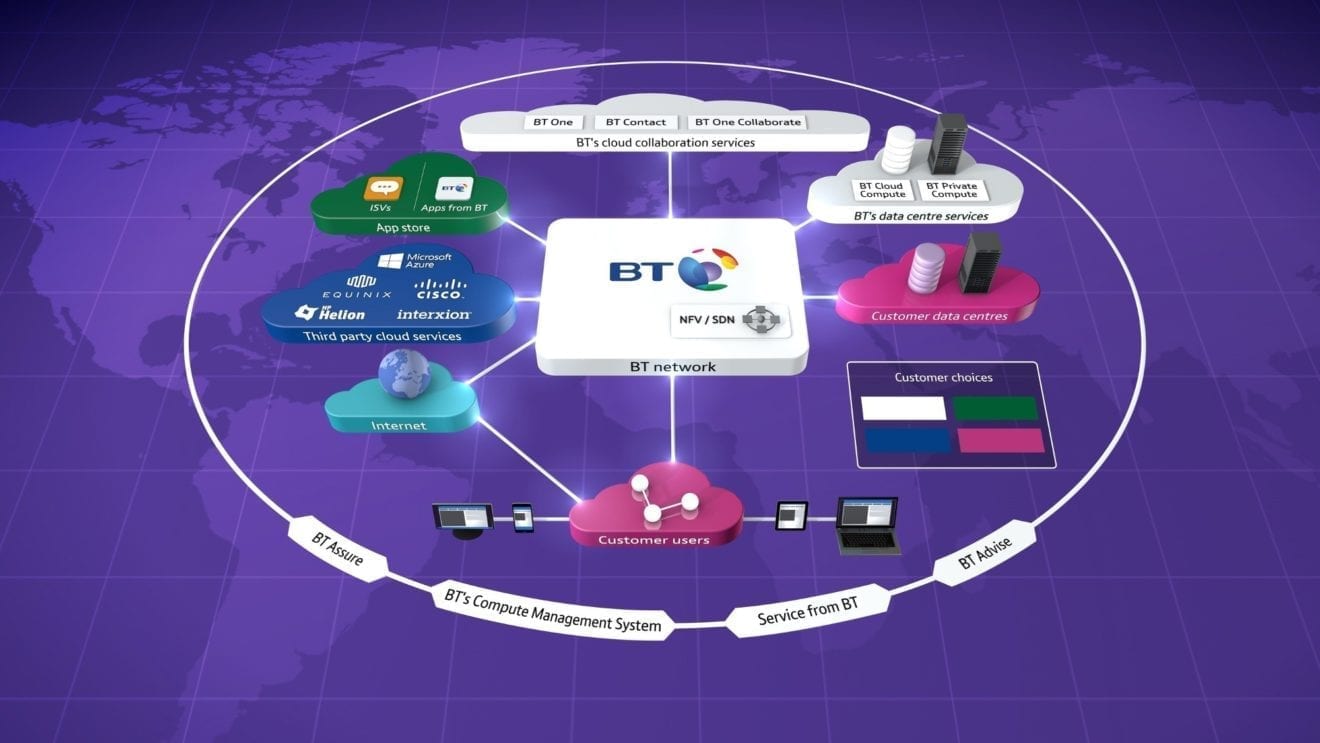
    BT, DCI Indonesia, and Equinix, a DCI partner, announced that they are working together to provide private cloud infrastructure in Indonesia.

    The companies said by using BT’s private cloud solutions as part of the BT Compute portfolio, enterprises active in Indonesia will now be able to reap the full benefits of the cloud to realise their digital transformation, launch new services more rapidly, mitigate risks, reduce costs and focus on business growth.

    The combination of BT and DCI data center capabilities also enables international businesses expanding into Indonesia to accelerate market entry, as they no longer need to invest time and resources to set up their own data center infrastructure and deploy business critical applications.

    Ron Totton, Southeast Asia managing director, BT, said, “Indonesia is a promising market for BT, where demand for private cloud and data center services is growing fast, especially in sectors such as finance, energy, and the telecom industry.”

    “This collaboration with DCI builds on our Cloud of Clouds portfolio strategy and is aligned to our ambition to be the world’s leading cloud services integrator. This will help give BT customers a competitive advantage in Indonesia and beyond,” Totton said.

    Through this collaboration, BT becomes the first global networked IT services provider to offer private cloud infrastructure in Indonesia. BT will be hosting its Point of Presence in DCI’s data center. By using the BT Private Compute platform, businesses can run a full range of applications, from network and storage to computing and security without having to invest into their own cloud infrastructure.

    DCI Indonesia is the only tier-IV data center service provider in Indonesia providing the most stringent service level agreement of 99.999% uptime through dual configuration infrastructure that ensures redundancy.

    Marina Budiman, president director of DCI, said “DCI is well-positioned to support the BT Private Compute platform.”

    “With DCI’s fault-tolerant infrastructure, strong financial ecosystem and global interconnection through Equinix’s Cloud Exchange, we believe our collaboration will provide BT’s customers with the best-in-class service in Indonesia,” Budiman said .

    Last year, BT was awarded the Siskomdat license, enabling it to offer its portfolio of networked IT services and applications directly to customers in Indonesia.

    DCI Indonesia has zero history of downtime since the first time it serves the market. This exceptional performance comes from solid experience from industry players with more than 20 years of experience in information technology, data center services and infrastructure management.

  • VMware, Taiwan’s III join Broadband Forum

    VMware, Taiwan’s III join Broadband Forum

    VMware, Taiwan’s Institute for Information Industry (III) and the USA’s Methode Electronics have become the latest members of the Broadband Forum.

    The latest additions highlight recent developments within the Broadband Forum to address the constantly changing technological landscape and increase the focus of its work.

    The industry body is also working to collaborate more with open source communities and increase the amount of work it does in the software space.

    VMware, III and Methode Electronics will complement this, with all three companies having backgrounds in virtualization, electronics and R&D.

    The new members are already playing an active part in the Forum, with representatives attending the Forum’s most recent Quarterly Meeting, held in Berlin. Moving forward, they will continue to play a full role in activities and Working Groups.

    III believes its membership will enhance the prosperous development of industries and incubate new industries, as well as promote links between local industries and the rest of the world.

    “Actively participating with an international organization like the Broadband Forum is just the beginning for III,” commented Dr Ko-Yang Wang, director general of the III’s Industry Development Augmentation Division (IDAD).

    “Looking into the future, III fully supports the Forum’s new Broadband 20/20 vision and we are fully confident that its realization will be the next big thing for broadband.”

    The developments in Berlin – including the publication of the landmark Network Enhanced Residential Gateway (NERG) Virtualization Technical Report (TR-317), the first finished project in the Forum’s NFV realm – followed on from the Forum’s Special Meeting in Atlanta, where Service Providers gave their views and visions on how the network needs to develop.

    “We’re delighted to welcome VMware, III and Methode Electronics into the Broadband Forum family,” Broadband Forum CEO Robin Mersh said.

    “Our recent meetings have illustrated our ability to keep up with the rapid pace of change within the industry and work together to create a faster and highly relevant Broadband Forum. Welcoming exciting, progressive new members such as these three companies means that we will continue to be the voice of broadband for the industry.”

  • Malaysia’s MMU, Teradata ink pact on big data analytics skills

    Malaysia’s MMU, Teradata ink pact on big data analytics skills

    Multimedia University, Malaysia (MMU) and Teradata have announced a strategic partnership to collaborate on education and research in an effort to cultivate the next generation of data science professionals and experts in Malaysia.

    Through this co-operation, MMU will gain access to the Teradata University Network (TUN), a web-based portal that provides complementary teaching and learning tools used by more than 45,000 students around the world to share expertise, access knowledge as well as information on how to enhance both curriculum and align research to the current industry needs.

    Teradata University Network currently has over 5,500 registered faculty members, from over 2,400 universities, in 115 countries, with thousands of student users.

    A key to the success of Teradata University Network is that it is led by academics to ensure the content will meet the needs of today’s classrooms.

    Leveraging the partnership, MMU’s Faculty of Computing and Informatics will offer a Data Science Specialization as part of its Bachelor of Computer Science degree.

    This step was taken following the formalization of a Data Science Institute (DSI) at MMU last month designed to cater to both research and industry engagement of MMU’s expertise in this area.

    “This MoU facilitates greater input from a leading industry player, and Teradata has committed to provide experts to support exposure to our students and staff alike to its services and solutions,” said MMU president Ahmad Rafi Mohamed Eshaq.

  • Alibaba Cloud to open new data centers

    Alibaba Cloud to open new data centers

    Alibaba Cloud has announced plans to open four new data centers by the end of 2016 in the Middle East, Europe, Australia and Japan.

    The new centers are expected to boost its data center network to 14 locations, covering key economic centers around the world. The data center in the Middle East, located in Dubai in the United Arab Emirates, commenced initial operations today.

    Alibaba Cloud’s expansion aims to provide customers in Asia and worldwide with improved latency and greater access to diverse offerings, including data storage and analytics services, enterprise-level middleware, and cloud security services. The new data centers are expected to support Alibaba Cloud’s growing client base beyond the current 2.3 million.

    Extending its global footprint in the Asia-Pacific, Alibaba Cloud will open a new data center in Sydney, Australia by the end of 2016.

    Alibaba Cloud will bring its most popular cloud services in data storage and processing services, enterprise-level middleware, and cloud security services to the Australian market. A dedicated team will be based in Australia, and build up a cloud ecosystem with local technology partners to drive cloud and big-data business in the region.

    The planned new Japan Data Center, hosted by SB Cloud Corporation, a joint venture between Softbank and Alibaba Group, will meanwhile provide Japanese enterprises with public cloud computing services from Alibaba Cloud.

    With the joint venture, Alibaba Cloud will further expand its cloud computing service platform by leveraging SoftBank’s extensive enterprise customer base in Japan.

    “Alibaba Cloud has contributed significantly to China’s technology advancement, establishing critical commerce infrastructure to enable cross-border businesses, online marketplaces, payments, logistics, cloud computing and big data to work together seamlessly,” Alibaba Cloud president Simon Hu said.

    “We want to establish cloud computing as the digital foundation for the new global economy using the opportunities of cloud computing to empower businesses of all sizes across all markets.”

  • PCCW Global connects to Djibouti Data Center

    PCCW Global connects to Djibouti Data Center

    PCCW Global, the international operating division of Richard Li-owned HKT, has selected Djibouti Data Center (DDC) to facilitate network expansion and the provision of colocation and undersea fiber cable access services in East Africa.

    The Djibouti Data Center has been built to Tier III data center standards and serves as a major meeting point for undersea fiber cable systems including the new Asia-Africa-Europe-1 (AAE-1) submarine cable designed to connect Asia, the Middle East, Africa and Europe.

    The AAE-1 system, of which PCCW Global is a founder consortium member, will employ 100Gbps technology, with a capacity of more than 40 terabits to provide customers with low-latency and direct connectivity around the world.

    The 25,000km-long submarine cable is expected to be ready for service by early 2017, connecting Djibouti with Hong Kong, Vietnam, Cambodia, Malaysia, Singapore, Thailand, Myanmar, India, Pakistan, Oman, UAE, Qatar, Yemen, Saudi Arabia, Egypt, Greece, Italy and France.

    “The addition of AAE-1 to PCCW Global’s existing undersea fiber cable assets in the region will enable us to provide even more robust services, along with lower latency and increased diversity, boosting services levels for our customers,” said Jordick Wong, senior vice president of product and vendor management at PCCW Global.

    Wong said the partnership with DDC is an important element of its wider pan-African development and expansion plans.

    It enables PCCW Global to establish cross-connect and colocation facilities directly adjacent to Djibouti Telecom’s cable landing stations. In addition to supporting AAE-1 in the near future, the DDC provides access to fiber-cable systems such as EIG, EASSy, Aden-Djibouti, and Ethiopia-Djibouti, Wong added.

  • Lane Crawford selects Orange Services’ Cloud to improve digital shopping experience

    Lane Crawford selects Orange Services’ Cloud to improve digital shopping experience

    Orange Business Services has been selected by Lane Crawford, a multi-brand designer label luxury retailer, to provide a cloud-based platform to extend, secure and manage its IT resources in Hong Kong and China. This deployment will enable Lane Crawford to marry offline strengths with digital advantages and offer its customers a more connected retail experience.

    Founded in 1850, Hong Kong-based Lane Crawford is widely recognized as a leading retailer of specialty and luxury goods in Hong Kong and China. Through Orange Business Services’ cloud platform, Lane Crawford will have higher flexibility and scalability to accommodate changes in demand due to seasonal shopping, sales and promotional activities, and ad-hoc use. By adopting a cloud-based platform, Lane Crawford can appropriately align its business with the rapid growth of online shopping in China and meet the needs of new and existing customers.  In addition to meeting Lane Crawford’s needs for its digital transformation, Orange Business Services’ solution delivers an enhanced level of security infrastructure and business continuity plans.

     “Lane Crawford has a long history of delivering high quality products and excellent experiences to its customers,” said Jack Zhang, General Manager, Orange Business Services China.  “We are very pleased to have been selected as a partner in their digital transformation journey and to support them based on our deep understanding of the retail business and Lane Crawford’s existing infrastructure environment.”

    Lane Crawford selected Orange Business Services’ cloud platform for its ability to easily scale to meet rapid changes in consumer demand and its one-stop solution for all the needs it had for connectivity, flexibility and security.  Orange Business Services’ platform is fully compatible with other business critical applications being used by Lane Crawford.

     “Our former infrastructure did not provide adequate flexibility for scalability or future business growth,” said Raymond Liu, Senior Manager, IT Infrastructure, Lane Crawford.  “Orange Business Services’ cloud-based solution gives us cost-efficient performance, enhanced security and protection, and support of on-line transaction applications.  For Lane Crawford, this is a critical step forward in our digital transformation.”

  • China Mobile deploys wideband Massive MIMO

    China Mobile deploys wideband Massive MIMO

    China Mobile Shanghai and Huawei have jointly deployed the world’s first wideband Massive MIMO site to help improve 4G network spectral efficiency.

    China Mobile has been focusing on the design of wideband Massive MIMO as part of its research on 5G. The technology been oriented specifically towards large-scale commercial use by the operator.

    Wideband Massive MIMO allows a single module to support the activation of three 2.6-GHz carriers, potentially allowing for a three-fold increase in the spectral efficiency of cells.

    The live deployment in Shanghai has achieved peak cell throughput rates of 72Mpbs using an uplink 8-stream capability configuration, as well as 630Mbps downlink.

    Huawei said the technology supports a smooth transition to CloudRAN architecture, while its in-house developed chips and optimization techniques helps provide processing capabilities four times higher than that of the industry standard.

    The technology is particularly suited to meeting specialized coverage requirements such as high-rise buildings.

  • AsiaInfo strengthens cloud computing portfolio

    AsiaInfo strengthens cloud computing portfolio

    Chinese telecoms IT software company AsiaInfo has signed a strategic co-operation agreement with Alibaba Cloud, the cloud computing arm of Alibaba Group.

    The two companies said they will work together on projects and jointly promote China as a center of excellence for cloud computing services and innovation.

    The partnership will also see the pair share a wide range of resources and jointly build a more open cloud ecosystem to form the basis of a comprehensive portfolio of cloud-based services.

    AsiaInfo said the company is stepping up its transition from a supplier of IT solutions to telco service providers, to a specialist in enabling digital business transformation for operators, their partners and other enterprises.

    Cloud-based delivery platforms and exchanges play a key role in the company’s vision of the industrial and business-led Internet, and the partnership with Alibaba Cloud will enable the company to continue to develop and deliver advanced operator and business solutions, the company added.

    “We are entering a new era of the internet. An era where people and things become customers, where service providers and businesses become operators, and where cloud-based business technology platforms will form both the backbone and the brains of the digital network,” said AsiaInfo CEO Michael Wu.

    “Our partnership with Alibaba Cloud will ensure we stay at the forefront of developments and provide innovative and ground-breaking solutions to our customers.”

  • CenturyLink to sell data centers for $2.15b

    CenturyLink to sell data centers for $2.15b

    US-based global operator CenturyLink has arranged to sell its data centers and colocation business to a consortium led by BC Partners and Medina for $2.15 billion.

    CenturyLink plans to use the net proceeds from this sale to partly fund its acquisition of Level 3 Communications announced last week

    Under terms of the agreement, the consortium will assume ownership of CenturyLink’s portfolio of 57 data centers at closing. The data center portfolio includes approximately 195 megawatts of power across 2.6 million square feet of raised floor capacity.

    Post-sale, the company will continue to focus on offering customers a wide range of IT services and solutions, including network, managed hosting and cloud.

    Though it will no longer own the data centers, CenturyLink will continue to offer colocation services as part of its product portfolio through its commercial relationships to be entered into at closing with the BC Partners/Medina-led consortium.

    “After conducting a thorough review process, we are pleased to have reached an agreement with BC Partners,”  CenturyLink CEO Glen F. Post III said.

    “We believe this transaction will benefit customers, employees and investors. Both CenturyLink and BC Partners have a strong customer focus and are committed to ensuring a seamless transition of the customers and their colocation environments.”

  • BT to build cloud infrastructure for Randstad

    BT to build cloud infrastructure for Randstad

    HR services provider Randstad Group has contracted BT to build a new global IT infrastructure providing cloud connectivity to more than 3,500 sites worldwide.

    The network will connect 37 countries in Europe, North- and South-America, Middle East and Asia-Pacific.

    BT will consolidate, centralize and standardize Randstad’s network infrastructure, currently sourced from multiple domestic and regional providers. The new infrastructure uses BT’s IP Connect and Internet Connect services to combine the reliability and security of IP-based VPNs with the flexibility of internet connections.

    The network infrastructure will use BT’s Cloud Connect service to deliver high performance connectivity to multiple Amazon Web Services locations. In addition, BT One Cloud will deliver cloud-based voice services for Randstad’s 33,000 employees, hosted from data centers in Europe, North America and Asia. BT will also standardize Randstad’s in-office – fixed and wireless – networks.

    “We were looking for a global network and cloud services integration partner to help us gain more control over our network estate, increase efficiencies, maximize the benefits of the cloud and help accelerate our digital transformation,” said Bernardo Payet, general manager of Randstad Global IT Solutions.

    Payet said BT will take away the burden of managing a multitude of different suppliers and make it easier for us to implement new services for our employees and customers.

    “Our ambition is to be the leading global cloud services integrator, offering customers unparalleled choice, security, resilience, speed, flexibility and agility on their digital transformation journey,” BT Global Services president of Europe and global telecom markets  Corrado Sciolla said.

  • Bata moves infrastructure into the cloud

    Bata moves infrastructure into the cloud

    Datapipe has partnered with footwear retailer Bata to drive its digital transformation by moving its technology infrastructures to the cloud.

    Bata is seeing strong growth in Asia’s multibillion-dollar footwear market, specifically in India, China and Southeast Asia. The company tapped Datapipe, a specialist in managed cloud services for the enterprise, to manage its cloud deployment and deliver the security, speed, cost-efficiencies, and scalability required for these high-growth markets.

    Bata’s global sourcing infrastructure, hosted on Amazon Web Services (AWS), is increasingly reliant on cutting-edge cloud infrastructure for its day-to-day operations including its Point of Sale (PoS) system, warehousing, logistics, and purchase order processes. As a managed cloud-service provider and AWS premier consulting partner, Datapipe was selected to assist Bata with developing and growing its presence in Asia by unlocking operational efficiencies.

    Jason Singh, head of marketing for APAC at Datapipe said that with Bata’s rapid growth in emerging markets, the company needed an IT infrastructure that was secure, scalable, and incredibly reliable.

    “We worked closely with Bata to optimise its AWS architecture and practice. This freed up the company’s technology team to focus on other core aspects of its business. As a result, Bata’s focus is where it should be: serving its customers and managing its production facilities, while Datapipe manages its cloud deployments.”

    To bolster Bata’s digital transformation, particularly around best practice design and security, Datapipe adopted a two-phased approach to ensure an optimised environment. Datapipe first redesigned Bata’s existing cloud environment based on AWS best practices including platform based security configurations. The second phase will deploy comprehensive network and instance-based security controls and services, ensuring secure connections to Bata’s eCommerce websites for users in the region.

    Jeremy Chong, director, global footwear services at Bata said the Datapipe team has strengthened the security and efficiency of Bata’s cloud infrastructure, allowing the company to focus on business growth.

    Bata has more than 5200 retail stores in 70 countries and production facilities in 18 countries. The APAC footwear market is projected to reach US$127.2 billion in annual revenues by 2020, according to Euromonitor, up from $104 billion in 2015. Growth in the global footwear market will be fuelled by demand from developing markets in Asia, according to Verdict Financial. eMarketer, meanwhile, predicts worldwide retail eCommerce sales will reach $1.915 trillion in 2016, with double-digit growth due to hit $4 trillion by 2020.

  • Hangzhou to harness Alibaba Cloud’s AI, analytics tools

    Hangzhou to harness Alibaba Cloud’s AI, analytics tools

    Alibaba Cloud announced at its recent Computing Conference that it will provide its AI, deep learning and data analytics capabilities for two new cutting-edge developments in China.

    Initiated by the Hangzhou government, the “Hangzhou City Brain” is set to address the city’s urban living challenges. As the hub to consolidate data and provide real-time analysis, the “Hangzhou City Brain” will rely on Alibaba Cloud’s AI program ET and big data analytics capabilities to perform real-time traffic prediction with its video and image recognition technologies.

    The project will support transportation departments’ efforts to ease traffic congestion and provide users with real-time traffic recommendations and travel routes.

    “By establishing the Hangzhou City Brain, Hangzhou is taking the lead in harnessing artificial intelligence and deep learning technologies to promote greater sustainability and improve the quality of urban living for Chinese citizens. Alibaba Cloud is proud to support and be part of this important development, “said Dr Jian Wang, chairman of Alibaba Group’s technology steering committee.

    With automated traffic system capabilities, intelligent adjustments of traffic lights will be performed on the spot; when a vehicle changes direction, the green light will automatically be extended. The pilot of world’s most advanced smart traffic management system in the Hangzhou’s Xiaoshan District, which started in September this year, has since seen an increase in traffic speed by 11%.

    The project is being led by the Hangzhou government in coordination with 13 firms including Alibaba Cloud. As part of the project, a research and development team of scientists from various companies has been formed.

    Forming the backbone of the “Hangzhou City Brain” data processing and analysis capabilities is Apsara, Alibaba Cloud’s large scale computing operating system, which is able to cluster millions of servers into a super computer and to support a multitude of cloud-based services by analyzing terabytes of data points. This computational engine is one of the largest of its kind in the world and uses propriety algorithms.

    Paving the way for astronomical data storage and analytics

    Aiming to leverage its technologies for astronomical data collection and analysis, Alibaba Cloud also announced at the Computing Conference its research collaboration with the National Astronomical Observatory of China (NAOC) on deep space exploration.

    The plans are to set up a data and research centre for astronomy, as well as a virtual solar observatory which will be supported by Apsara’s massive scalability and advanced capabilities to process astronomical data.

  • Alibaba Cloud picks Datapipe as global MSP partner

    Alibaba Cloud picks Datapipe as global MSP partner

    Alibaba Cloud has selected Datapipe as a global managed service provider partner, to help organizations entering China or Chinese companies venturing abroad adopt cloud environments.

    Under the partnership, Alibaba Cloud customers can look to Datapipe to plan, build and run their cloud environments. Datapipe will provide migration, management, and security of Alibaba Cloud solutions for computing, storage, database, CDN and big data.

    China-based Joyful Journey Travel is Datapipe’s first managed Alibaba Cloud client and is the first company to provide financial services to travelers in China.

    Datapipe’s team worked with Joyful Journey Travel to develop a solution based on Alibaba Cloud services including Elastic Computer Service instances, AsparaDB for Relationship Database Systems and Alibaba’s Cloud based CDN.

    “As a pioneer in managed cloud services the addition of Alibaba Cloud to Datapipe’s supported platforms and service capabilities was a natural step,” Datapipe VP of Asia Colin Chan said.

    “We look forward to working closely with Alibaba Cloud to help drive the global adoption of best practice enterprise cloud solutions.”

    “We’re pleased to welcome Datapipe as our global managed service provider partner,” Alibaba Cloud director of global marketplace alliances Unique Song added.

    “Datapipe’s experience in managing cloud environments for customers around the globe makes them well-positioned to help drive Alibaba Cloud deployments for customers in both China and overseas.”