Retail News CRM

Tag: cloud

  • India’s GCX expands cloud ecosystem

    India’s GCX expands cloud ecosystem

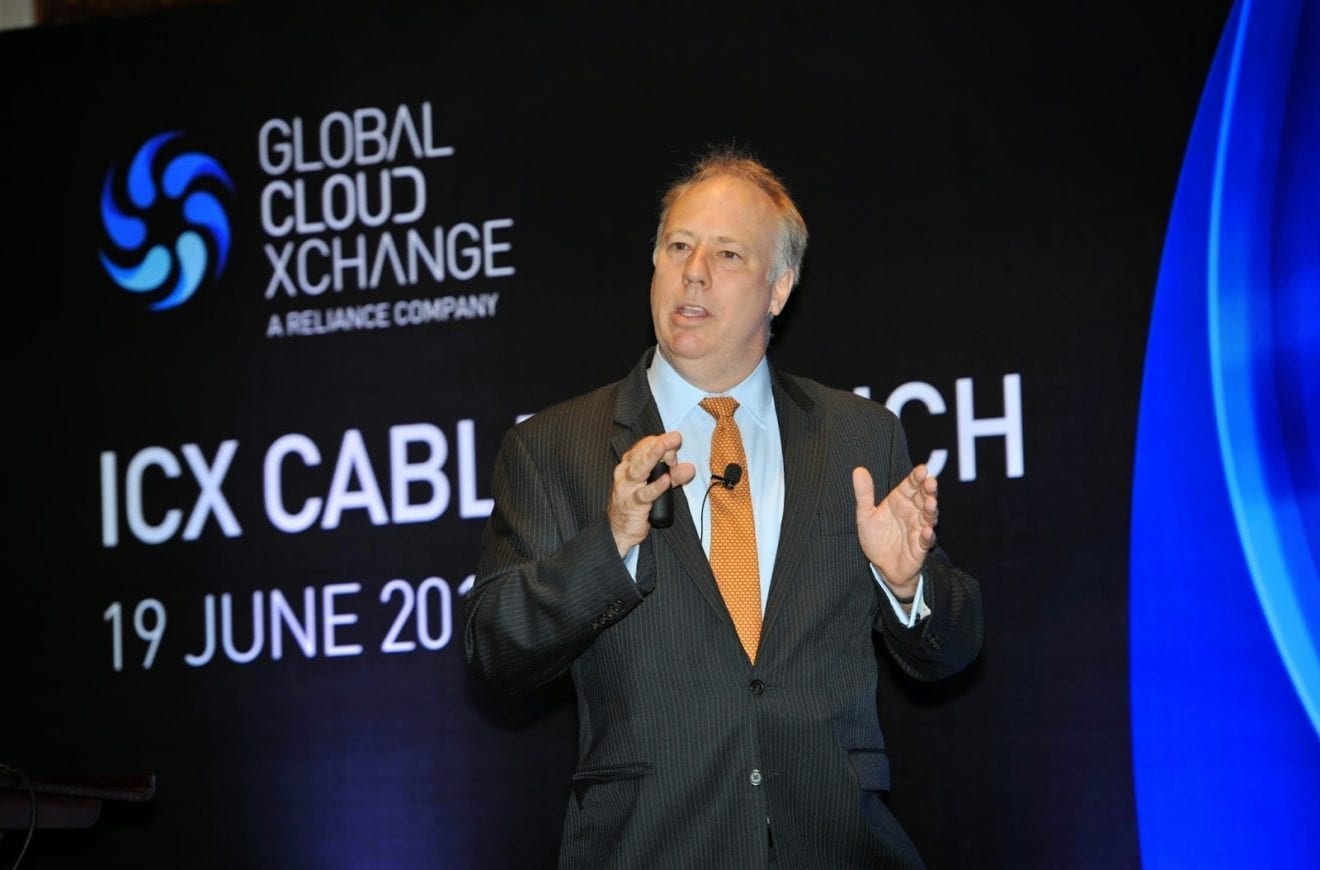
    Reliance Communications subsidiary Global Cloud Xchange (GCX) has expanded its cloud ecosystem with the addition of support for Microsoft Azure ExpressRoute.

    The company is offering access to ExpressRoute via its CLOUD X Fusion service in Chennai.

    CLOUD X Fusion allows enterprises to use Ethernet or MPLS VPN to privately connect their on-premise network or data center directly to Microsoft’s cloud platforms.

    Besides Chennai, CLOUD X nodes have been launched in Delhi, Mumbai, Bangalore and Hyderabad, as well as Hong Kong, California, London and New York.

    “As India enterprises enter a new era of digital globalization, they require sophisticated new levels of support to tap into opportunities from the convergence of Big Data and the IoT, to the latest augmented reality apps,” RCom and GCX SVP of global product management Braham Singh said.

    “Through the interconnection of CLOUD X Fusion and Microsoft Azure ExpressRoute, customers will benefit from the added flexibility and global reach to be more competitive as we look at new opportunities from the ‘Digital India’ initiatives.”

  • Equinix completes second phase of TY5 data center in Tokyo

    Equinix completes second phase of TY5 data center in Tokyo

    Equinix has completed the second phase expansion of its 10th International Business Exchange (IBX) data center in Tokyo, the TY5.

    Phase two adds an additional 375 cabinets to the facility, bringing the total capacity of the data center to 725 cabinets. The second phase expansion follows the opening of TY5 in March of this year and brings the total investment in the facility to $43 million.

    This announcement highlights Equinix’s continued investment in Asia-Pacific, as well as demand from local and global companies wanting to benefit from leading interconnection services in Japan, particularly across the cloud and financial sectors.

    Equinix plays a critical role in supporting the interconnected era, underpinning digital economies and enabling businesses to accelerate their performance for continued success and growth. In 2016, it has opened four new IBX data centers in Dallas, São Paulo, Sydney and Tokyo, creating more capacity for global companies to connect with their partners, customers and employees.

    The expansion of TY5 follows Equinix’s acquisition of Bit-isle, a leading Japanese data center and managed service provider, which more than doubled the company’s footprint in Japan. The move means both domestic and international enterprise customers can now benefit from Equinix’s increased presence in the country, spanning 10 data centers in Tokyo and two in Osaka.

    The completion of the phase two expansion will support growing customer demand for carrier neutral data centers with direct connectivity to Equinix’s financial ecosystem in TY3. TY5 is in close proximity to the Japan Exchange and Tokyo Commodity Exchange, providing financial services companies with reliable, low-latency connectivity to key financial institutions and business partners.

    TY5 enables domestic and multinational companies to expand into the growing Japan market, providing them with access to over 1,400 domestic and international network providers within Platform Equinix.

    Platform Equinix now includes over 146 data centers in 40 markets around the world.

    TY5 was recently awarded the LEED Green Building Rating System Gold Certification for its high building standards.

    The award recognizes best-in-class building strategies and practices across seven categories: sustainable sites, water efficiency, energy and atmosphere, materials and resources, indoor environmental quality, innovation in design and regional priority.

  • Ericsson, Equinix enter hybrid cloud alliance

    Ericsson, Equinix enter hybrid cloud alliance

    Ericsson and Equinix have developed a joint offering designed to help enterprises capture the true benefits of hybrid and multi cloud adoption.

    The offering leverages the Equinix Cloud Exchange (ECX) and the Apcera platform from Ericsson.

    The initial target enterprises will be finance and insurance companies in Southeast Asia and Oceania to help solve their challenges on data compliance and regulation and at the same time give the agility that enterprises need.

    The finance and insurance industry have strict compliance regulations on data and this limitats their ability to pursue a multi-cloud strategy. Ericsson and Equinix’s joint offering will address this challenge by enabling enterprises to deploy any application on any cloud infrastructure with high performance and secure connections that meet compliance regulations.

    “To be able to meet the market demand for hybrid cloud and multi cloud, Ericsson is delighted to partner with Equinix,” commented Ludvig Landgren, VP for network applications and  cloud infrastructure at Ericsson Southeast Asia and Oceania.

    “We will jointly support enterprises, initially addressing South East Asia and Oceania customers, moving workloads and data across multiple clouds using one port with on-demand, automated connectivity.”

    The initial deployment is scheduled for December, 2016.

  • Public cloud market set to grow 17% in 2016

    Public cloud market set to grow 17% in 2016

    The worldwide public cloud services market is projected to grow 17% in 2016 to $208.6 billion, according to Gartner.

    The highest growth will come from IaaS, which is projected to grow 43% in 2016. SaaS, one of the largest segments in the global cloud services market, is expected to grow 22% in 2016 to reach $38.9 billion.

    “There’s no question there is great appetite within organizations to use cloud services, but there are still challenges for organizations as they make the move to the cloud,” said Sid Nag, research director at Gartner. “Even with the high rate of predicted growth, a large number of organizations still have no current plans to use cloud services.”

    IT modernization is currently the top driver of public cloud adoption, followed by cost savings, innovation, agility and other benefits. The focus on IT modernization indicates a more sophisticated and strategic use of public cloud services.

    Security and/or privacy concerns continue to be the top inhibitors to public cloud adoption, despite the strong security track record and increased transparency of leading cloud providers.

    Most organizations are already using a combination of cloud services from different cloud providers. While public cloud usage will continue to increase, the use of private cloud and hosted private cloud services is also expected to increase at least through 2017.

    The increased use of multiple public cloud providers, plus growth in various types of private cloud services, will create a multi-cloud environment in most enterprises and a need to coordinate cloud usage using hybrid scenarios.

    Although hybrid cloud scenarios will dominate, there are many challenges that inhibit working hybrid cloud implementations. Organizations that are not planning to use hybrid cloud indicated a number of concerns, including integration challenges, application incompatibilities, a lack of management tools, a lack of common APIs and a lack of vendor support.

  • IIJ, TCCT launch joint cloud services in Thailand

    IIJ, TCCT launch joint cloud services in Thailand

    Internet Initiative Japan and Thai data center and IT infrastructure provider TCC Technology (TCCT) have jointly launched a new cloud service in Thailand named Leap GIO Cloud.

    The new service is being operated by Leap Solutions Asia (LSA), a joint venture between the two companies.

    Targeted at local Thai companies and Japanese enterprises doing business in the market, Leap GIO Cloud encompasses both public and private cloud services.

    The public cloud service can be self-provisioned and billed on an hourly or monthly basis, while the private cloud service is being offered for a monthly fee.

    LSA has also secured SAP certifications for hosting services, cloud services and SAP HANA operations services, and will use these certifications to offer support for implementing and operating SAP BASIS in the cloud.

    LSA was established in April  as a 60/40 joint venture majority-owned by TCCT.  The joint venture aims to become a market leader in Thailand’s cloud sector.

  • Korea and Singapore’s broadband lead narrows

    Korea and Singapore’s broadband lead narrows

    South Korea continued to have the highest average connection speed in the world at 27 Mbps while Singapore maintained its position as the country with the highest average peak connection speed at 157.3 Mbps.

    These were among the findings of the Akamai Technologies’ Second Quarter, 2016 State of the Internet Report.

    Both countries, however, registered declines in average connection speed and average peak connection speed, respectively, at 7.2% (South Korea) and 7.1% (Singapore) compared to the first quarter.

    Meanwhile, the global average connection speed decreased 2.3% quarter over quarter to 6.1 Mbps, while the global average peak connection speed increased 3.7% to 36 Mbps. The 10 Mbps broadband adoption rate grew 0.7% quarter over quarter, but 15 Mbps and 25 Mbps broadband adoption rates fell 0.8% and 2.1%, respectively.

    In Asia-Pacific, the report noted that 14 of the 15 surveyed countries had average connection speeds above the 4 Mbps broadband threshold. Indonesia registered a 148% gain in average connection speed in the second quarter and the only country to see its speed double compared to the previous year.

    In the mobile space, Akamai reported that average mobile connection speeds ranged from a high of 23.1 Mbps in the United Kingdom to a low of 2.2 Mbps in Venezuela. The report noted that in the upcoming quarters, it expects to see mobile speeds continue to climb as 4G LTE becomes deployed more broadly worldwide.

    In Asia-Pacific, South Korea (11.1 Mbps) also led the world in average mobile connection in the second quarter of 2016, followed by New Zealand (9.8 Mbps), Japan (9.5 Mbps), Taiwan (9.3 Mbps), Australia (8.9 Mbps), and the Philippines (8.5 Mbps).

  • BT, Microsoft “simplify” hybrid cloud

    BT, Microsoft “simplify” hybrid cloud

    BT has announced the availability of BT Compute for Microsoft Azure, a new service that allows BT customers to order Microsoft Azure alongside BT’s own cloud services.

    The service enables customers to build hybrid cloud infrastructure with a single service wrap, contract and on a single bill.

    BT customers already use private and public cloud services – also known as hybrid cloud – hosted in BT Compute’s 48 data center globally.

    With BT acting as their cloud services integrator, and by using CMS, customers can manage their cloud services end-to-end from data center to network, maximizing the benefits and minimizing the complexity, risk and costs of moving to the cloud. Using local delivery with global scale allows BT to meet the evolving needs of organizations for cloud services and at the same time address the complexity of regulatory requirements.

    Integration of Microsoft Azure into the CMS expands the choice for BT customers. They gain access to Microsoft’s rapidly growing collection of integrated cloud services, including Infrastructure as a Service (Iaas) and Platform as a Service (PaaS) computing capabilities.

    Neil Lock, VP BT compute at global services, said “Hybrid cloud has become a major focus for many large enterprises as they choose a variety of cloud solutions to suit their complex business needs.”

    “In fact, BT research suggests that 90% of its largest customers expect to be using a combination of public and private cloud in the next few years. Through our relationship with Microsoft, customers can build their own hybrid cloud environment and enjoy the benefits of Azure whilst removing costly management concerns from the equation,” the executive said.

    The service will be available during the final quarter of the year.

  • Samsung, HPE team on telco cloud

    Samsung, HPE team on telco cloud

    Samsung and Hewlett Packard Enterprise (HPE) have sealed a partnership to jointly provide carriers with integrated network functions virtualization (NFV)infrastructure and virtual network functions (VNF) solutions.

    Under the partnership, the companies will work together to merge Samsung’s carrier network and HPE’s IT telecoms expertise.

    The integrated solutions will help carriers facilitate the transformation of their networks from monolithic, proprietary appliances to cloud-based networks enabled by NFV.

    As part of the partnership, Samsung will join the HPE OpenNFV Partner Program as a carrier-grade network equipment provider.

    “We see profound potential on joining the HPE OpenNFV Partner Program to ensure a variety of choices for carriers in selecting NFV providers, along with the commercially-proven NFV solution we developed in 2015,” said Woojune Kim, vice president and head of strategy group in next generation communication team at Samsung Electronics.

    The program is a broad ecosystem of NFV technology, application and service partners that have tested and validated solutions on ETSI-compliant HPE OpenNFV infrastructure.

    “HPE and Samsung have already collaborated successfully behind the scenes on NFV projects that are transforming communications service providers and their old school networks to agile telco cloud environments ready to satisfy the ever increasing demands of their customers while reducing cost,” said Werner Schaefer, vice president & general manager, NFV, HPE.

    “By formalizing our partnership with Samsung, we further expand our work to bring NFV benefits to the CSP ecosystem.”

    The partnership also includes a joint go-to-market strategy with ready-to-install third party solutions. Carriers can choose from various third party offerings, already verified by the HPE OpenNFV Partner Program, such as virtual private-LTE network service, vCPE and SD-WAN.

    The pair will also provide telcos with NFV systems integration services to help ensure new technologies are implemented, the companies said.

  • AIS ramps up fiber competition

    AIS ramps up fiber competition

    Thailand’s top mobile operator AIS is gearing up to launch what it says will be the country’s fastest fiber broadband services.

    The operator aims to attract 300,000 users to its fiber service this year, increasing to 2 million by 2019.

    The operator first entered the fiber broadband fray in April and has already been shaking up the market. The company currently has around 200,000 subscribers to its existing fiber services, a roughly 2% share of the total market.

    Now the company aims to disrupt the market further, with plans to offer an entry-level 20Mbps service for 590 baht ($17) per month, comparable to the prices of ADSL broadband services.

    AIS will also offer 50Mbps services for 888 baht per month and 100Mbps services for 1,888 baht per month. All packages will include free WiFi routers, free AIS internet TV and free installation.

    With the new packages AIS has increased its target monthly fiber net additions to 45,000, up from a previous target of 30,000-35,000.

  • Huawei unveils newest security solution for SDN

    Huawei unveils newest security solution for SDN

    Huawei has unveiled its latest SDN security solution which promises to “guarantees the security of enterprise tenants’ applications hosted on the cloud”.

    Based on the core component Agile Controller, the solution virtualizes hardware security devices and offers a variety of services for online subscription.

    The automated security deployment capability also greatly improves cloud service protection efficiency.

    While more and more enterprises are using cloud services to reduce costs and improve flexibility, enterprises seldom consider security before this change. As storage, computing, and network resources all become virtualized, manual configuration and adjustment of security resources can no longer adapt to quick service development in a flexible and cost effective way.

    Moreover, cloud-based service deployment eliminates network security boundaries. Virtual networks, especially the virtual machine (VM) layer, urgently need effective security protection.

    As common threats have evolved to advanced persistent threats (APTs) that can hide for a longer period of time and are more difficult to detect, traditional APT defense methods also need to adapt to software-defined network (SDN)environments.

    “As more services are migrating to the cloud, the boundary of security threats becomes blurred,” said Liu Lizhu, GM of Huawei Enterprise Network Product Line’s Security Gateway Domain.

    “Data center services are facing more severe security risks after SDN technology is used, as such no companies, regions, or organizations are free from such risks. Huawei Software-defined Security Solution will guarantee innovative, scalable, and efficient cloud services for tenants and help enterprises accelerate business transformation and upgrade.”

  • Globe to deploy fiber in 20,000 villages

    Globe to deploy fiber in 20,000 villages

    The Philippines’ Globe Telecom has committed to connect 2 million Filipino homes with high-speed internet access with a speed of at least 10Mbps and above by 2020.

    The operator plans to deploy fiber in 20,000 villages across the country to achieve this goal.

    “That will change a lot for families because families today are so dependent on the internet,” said Globe President and CEO Ernest Cu at an event on Friday night.

    “Industries and Business Process Outsourcing (BPO) also cannot flourish without dependable connection to the United States, the UK, Australia and to the rest of the world.”

    “We are committed to spending $500 million to upgrade the network of Globe to enable continuous growth among enterprises in the Philippines,” he added.

    Since the joint purchase of the telco assets owned by San Miguel Corporation (SMC) by Globe Telecom and PLDT last May, both companies have been rolling out LTE 700-MHz cell sites across the country. In the Globe network, around 250 such cell ties will have been activated in Metro Manila by the end of this month, at least 188 of which will be active in the National Capital Region.

    Cu said the goal is to deploy at least 500 LTE 700-MHz cell sites nationwide by the end of 2016.

    The majority of these sites will cover major business districts and highly urbanized and populated areas in the country, including Metro Manila, Metro Cebu, and Metro Davao.

    Globe’s chief executive emphasized that the company is maximizing the use of the previously idle 700-MHz band in fulfillment of its commitment to the National Telecommunications Commission to improve the overall internet experience of its customers following the sell-out of SMC’s telco assets.

    “One of our goals its to try to create an experience as close to first world internet as possible. You can now do this with mobile, given the amount of spectrum that we have,” he said.

    Parallel to this, Globe has also started rolling out a capacity expansion program for its corporate data network to address the bandwidth requirement of its enterprise clients. The company will be equipping 61 of its corporate sites with fiber technology.

  • Banks, NBTC agree on 5 step m-banking security plan

    Banks, NBTC agree on 5 step m-banking security plan

    The National Broadcasting and Telecommunications Commission hosted a meeting with representatives from the Bank of Thailand, the Thai Bankers Association and the Telecommunications Association of Thailand.

    The participants have agreed on a five-step plan to tighten KYC rules to increase confidence in eBanking and mobile banking in the run up to the launch of Thailand’s Promptpay national mobile payments system.

    1. The NBTC, BOT, TCT and mobile operators will create a set of KYC rules. The NBTC will order telcos to follow them strictly and will evaluate compliance with the new rules.
    2. Banks and mobile operators will launch an awareness campaign for people to tell their banks when their mobile phone or SIM is lost.
    3. If it can be proven that the customer has told their bank that their SIM has been lost, they will not be held responsible for monetary losses.
    4. A system will be set up for banks to be notified automatically when new SIMs are issued. Until such a system is in place, banks will give telcos a watchlist of telephone numbers that are linked to Internet banking, mobile banking or Promptpay accounts for their special attention.
    5. Issuing new SIM cards for accounts linked to bank accounts can only be done in person by the account holder and not via proxy.

    Meanwhile, NBTC Secretary General Takorn Tantasit has banned the import of all Galaxy Note 7 phones due to their exploding batteries. Phones from affected batches are immediately banned from being imported and the import of new note 7 batches can only resume once Samsung provides the NBTC with satisfactory electrical and safety test results.

  • Malaysia-Singapore-Indonesia cable commissioned

    Malaysia-Singapore-Indonesia cable commissioned

    A new subsea cable company has contracted Huawei Marine Networks to deploy a 250km cable system connecting Malaysia, Singapore and Indonesia.

    Super Sea Cable Networks (SEAX) has commissioned construction of its SEAX-1 cable, which will connect Mersing on the eastern seaboard of Peninsular Malaysia with Singapore’s Changi and Indonesia’s Batam.

    Construction of the 24-fiber-pair system is expected to be complete by the end of next year. SEAX’s market focus will be wholesale operators in emerging markets, including Tier 1, Tier 2 and Tier 3 carriers who want to own but not operate cable systems.

    SEAX’s five-year plan is to target, Thailand, the Philippines, Cambodia, Vietnam and Myanmar in addition to Malaysia and Indonesia.

    The company has a facilities-based operator license in Singapore, an affiliate company in Indonesia and is partnered with telecoms infrastructure provider SACOFA in Malaysia.

    “SEAX-1 passes through one of the busiest region in the Asia Pacific region, where bandwidth demands are increasing exponentially,” SEAX CEO Joseph Lim said.

    “We believe this new submarine cable system will relieve bandwidth pressures on existing infrastructure and continue to provide this region with high-speed, reliable connectivity that will fast-track its growth.”

    Indonesia’s PT Telkom last week contracted NEC to build a subsea cable system connecting six large Indonesian islands with Singapore.

  • Telkom contracts NEC for new subsea cable

    Telkom contracts NEC for new subsea cable

    Indonesia’s PT Telkom has contracted NEC to build a cable system connecting six of the nation’s large islands with Singapore.

    The Indonesia Global Gateway Cable System will link the islands of Sumatra, Batam, Java, Bali, Kalimantan and Sulawesi.

    As well as providing enhanced connectivity between nine major Indonesian cities, the cable will link to Singapore and provide direct connectivity with two international subsea cables that land in Europe and the US respectively.

    The 100Gbps, eight wavelength, four fiber pair cable system will span around 5,300km in total. It is scheduled for completion in early 2018.

    “NEC is honored to be selected once again by Telkom as the supplier of an optical fiber submarine cable system, the advanced 100Gb/s IGG system,” NEC general manager for submarine networks Toru Kawauchi said.

    “Since first building an optical fiber submarine cable system for Telkom in 1991, NEC has continuously helped to expand Indonesia’s domestic connectivity, the Papua Cable System (SMPCS) being the latest such contribution.”

    The Sulawesi Maluku Papua Cable System connects eight provinces in eastern Indonesia – East Nusa Tenggara, Maluku, North Maluku, North Sulawesi, Papua, Southeast Sulawesi, South Sulawesi and West Papua.

    The nine cities that will be connected via the IGG system are Dumai, Batam, Jakarta, Madura, Bali, Makassar, Bilikpapan, Takaran and Manado.

  • VMware launches cross-cloud architecture

    VMware launches cross-cloud architecture

    VMware launched its Cross-Cloud Architecture at VMworld 2016, along with a partnership with IBM Cloud and plans to extend to Google, Microsoft Azure and Amazon Web Services.

    The architecture is designed to let network operators manage, provide uniform policies for and secure applications running across public, private and hybrid clouds.

    Cross-Cloud Architecture is available in two main parts:

    • The VMware Cloud Foundation is designed to allow network operators to launch private clouds and extend them to the public cloud. It is an integration that VMware says will combine some of its existing compute, storage and networking virtualization offerings, helping organizations run and manage existing on-premises applications on both private and public clouds.
    • Cross Cloud Services, announced as a technology preview, runs applications across multiple public clouds, including IBM, AWS, Microsoft Azure and Google, as well as VMware’s vCloud Air hybrid cloud architecture and the vCloud Air Network of 4,000 service providers.

    The new Cross-Cloud strategy sees the company focusing more on selling products that work with existing leaders, rather than trying to establish itself as an alternative to AWS, Google or Azure. It will also provide an essential orchestration layer that helps network operators coordinate cloud applications

    As more companies run applications on rented infrastructure over the internet rather than their own data centers, providing the link to the different technologies customers use is a growing opportunity for VMware and something that it can also provide to partners like IBM.

    Earlier this year, IBM and VMware set out to tackle one of the industry’s most pressing challenges: extending existing VMware workloads from on-premises environments to the cloud without incurring the cost and risk associated with retooling operations, re-architecting applications and re-designing security policies.

    During a presentation, Guido Appenzeller, chief technology strategy officer of networking and security at VMware and Robert LeBlanc, senior vice president, IBM Cloud said that Cloud Foundation will “automatically provision pre-configured” software-defined data centers on IBM Cloud “in hours versus weeks or months.”