Retail News CRM

Tag: cloud

  • NTT Com launches high-speed broadband in Myanmar

    NTT Com launches high-speed broadband in Myanmar

    Japan’s NTT Communications has launched high-speed internet services for enterprises in Myanmar, starting with the Yangon area.

    The company has secured a network service license from Myanmar’s Ministry of Transport and Communications, and has started offering the new Digi-Path Premier service in the market.

    The service provides dedicated, fully managed circuits from 1Mbps to connect enterprises with NTT Com’s global network, with 24/7 monitoring of circuits. Delivery of circuits can require as little as one month.

    NTT Com is also providing optional services including global IP address, web hosting, mail hosting, rental routers, managed firewalls, internet VPN and file transfers.

    NTT Com, along with NEC and Sumitomo, jointly deployed a 30Gbps core optical network between three major Myanmar cities in 2013, under contract from the Myanmar government. The operator established an office in the nation in October 2012, the first in the country from a foreign operator.

    The operator said it is now providing internet connections to enterprises globally including in seven Southeast Asian countries – Singapore, Malaysia, Indonesia, Thailand, Vietnam and Cambodia, as well as Myanmar.

  • Fujitsu, Oracle form cloud alliance in Japan

    Fujitsu, Oracle form cloud alliance in Japan

    Fujitsu and Oracle are forming a new alliance to deliver cloud services to customers in Japan and their international subsidiaries.

    Under the alliance, Oracle’s Cloud Application and Platform services – such as Oracle Database Cloud Service and Oracle Human Capital Management (HCM) Cloud – will be powered by Fujitsu’s datacenters in Japan. Under the new strategic alliance, Fujitsu will work to drive sales of robust cloud offerings to companies in Japan and their subsidiaries around the world.

    Fujitsu will install the Oracle Cloud services in its data centers in Japan and connect them to its K5 cloud service in order to deliver enterprise-grade cloud services.

    The first Oracle application that will be offered to Fujitsu customers under the joint offering is Oracle HCM Cloud. As part of the agreement, Fujitsu will implement Oracle HCM Cloud to gain insight into its workforce throughout the company’s worldwide network of offices.

    The combination of these solutions including Oracle Database Cloud Service, Oracle HCM Cloud, and K5, will enable Fujitsu and Oracle to deliver mission critical systems over a cloud environment within Fujitsu’s data centers while maintaining the high levels of performance and reliability that had previously been achieved in on-premise environments.

    “We at Fujitsu support the digital transformation of our customers, and aim to contribute to optimized customer systems and business growth with the roll out of our Digital Business Platform MetaArc,” said Shingo Kagawa, SEVP, head of digital services business & CTO, Fujitsu Limited.

    “In particular, we offer the core cloud service on MetaArc, K5, which addresses systems of engagement (SoE) and systems of record (SoR). Oracle is a leader in Japan’s database market segment and possesses strong capabilities in the SoR domain. Now, as we look to strengthen MetaArc and K5, taking part in this strategic alliance with Oracle will work to meet the cloud needs of our customers.”

    “In order to realize the full business potential of cloud computing, organizations need secure, reliable and high-performing cloud solutions,” said Edward Screven, Chief Corporate Architect, Oracle.

    “Oracle’s new strategic alliance with Fujitsu will allow companies in Japan to take advantage of an integrated cloud offering to support their transition to the cloud.

  • HGC launches cloud backup service

    HGC launches cloud backup service

    Hutchison Global Communications (HGC) has launched a one-stop enterprise-grade cloud backup service to augment its cloud portfolio.

    The Backup-as-a-Service offering is designed to allow enterprises to back up files, operating systems and applications at he Wong Chuk Hang data center run by HGC GlobalCentre (HGCGC).

    HGC Cloud Backup supports a wide range of brands, operating systems, applications and cloud platforms. It is designed to allow companies to restore and retrieve specific stores of data without the need to recover the entire content of a backup.

    The service is being offered under a pay-as-you-go model and is supported by an online self-service portal.

    HGCGC data centers are designed to meet ISO information security standards, and customers can opt for a private leased line to further improve security.

    In order to enhance the service, HGC has also revealed plans to introduce data backup replication by the end of the year. Backup data will be stored at Kwai Chung as well as the Wong Chuk Hang data centers.

    “Launch of HGC Cloud Backup greatly enriches our portfolio of cloud services,”HTHKH COO Jennifer Tan commented.

    “This new Backup-as-a-Service capability – plus the planned dual data center backup and replication solution – will minimize the worrying risks associated with data storage. Customers will therefore be in a much better position to protect their digital assets and recover critical information during disaster incidents, thereby ensuring robust business continuity.”

  • Singtel launches Singapore’s first OTT video portal app

    Singtel launches Singapore’s first OTT video portal app

    Singtel has expanded its media content portfolio with the launch of Singapore’s first OTT video portal app, open to the operator’s postpaid mobile customers.

    The operator’s new Cast portal will offer content from major providers including Viu and Nickelodeon, delivered over Singtel’s nationwide 4G network.

    Cast offers a choice of four content packs – premium, kids, Asian hits and Hallyu – with each priced at S$4.90 ($3.63) per month for a 12-month contract or S$6.90 per month contract-free. Customers can choose to pay an additional S$3 per month for an add-on pack including 1GB of data

    The premium pack offers a range of Korean and Japanese dramas, while the kids pack includes programming from the Nickelodeon and Nick Jr pay TV channels.

    Asian hits include popular movies from Singapore, Taiwan, Hong Kong and China, while Hallyu offers the most popular Korean entertainment.

    “Our customers are huge fans of entertainment on-the-go and we know that they want greater flexibility with what they watch and also when and how they watch it,” Singtel managing director of home consumer Singapore Goh Seow Eng said.

    “We are forging ahead in the OTT space through more strategic partnerships with strong content providers such as Viu and Nickelodeon. We look forward to partnering more top content providers to offer an ever-growing selection on Cast that will give our customers greater choice and the best entertainment experience.”

  • AWS opens first Indian region

    AWS opens first Indian region

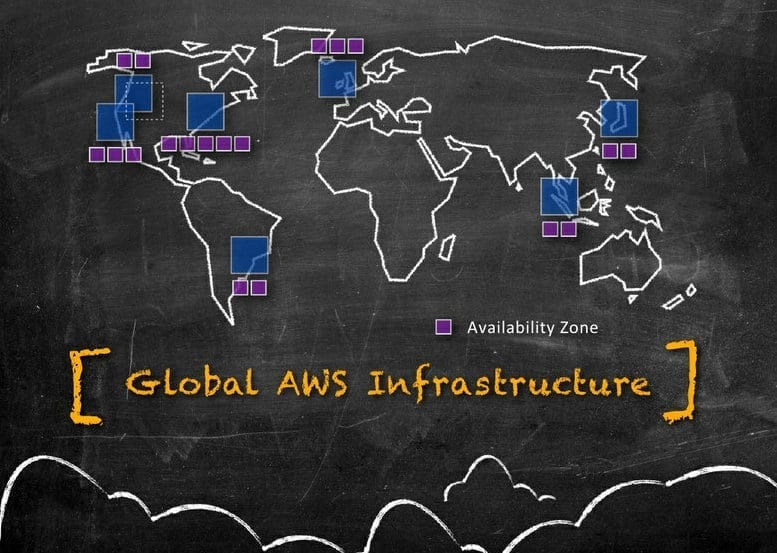
    AWS has launched two data centers in Mumbai, taking the total number of Availability Zones to 35 across 13 technology infrastructure regions globally. With these data centers, Mumbai becomes AWS’ sixth region in Asia Pacific.

    The new AWS Mumbai Region consists of two separate Availability Zones at launch. Availability Zones refer to data centers in separate, distinct locations within a single region that are engineered to be operationally independent of other Availability Zones, with independent power, cooling, and physical security.

    AWS customers focused on high availability can architect their applications to run in multiple Availability Zones to achieve even higher fault-tolerance.

    According to Andy Jassy, CEO of AWS CEO Andy Jassy said more than 75,000 customers in India are using other AWS Regions.

    “These same 75,000 Indian customers, along with others interested in starting use of AWS, have asked for an AWS India Region so they can move their applications that require low latency and data sovereignty,” he said.

    “We’re excited to make this available today, with the same pay-as-you-go pricing, ability to get started immediately without having to negotiate enterprise agreements or wait days for access, and unmatched functionality that customers enjoy in AWS Regions worldwide.”

    AWS is also partnering with India’s National Institute of Electronics and Information Technology to train 25,000 people on cloud technologies.

  • Cisco dives deeper into data center visibility

    Cisco dives deeper into data center visibility

    Cisco has announced Cisco Tetration Analytics, a platform designed to help customers gain complete visibility across everything — packet, flow, speed — in the data center in real time.

    Cisco Tetration Analytics gathers telemetry from hardware and software sensors, and then analyzes the information using advanced machine learning techniques.

    Tetration addresses critical data center operations such as policy compliance, application forensics, and the move to a whitelist security model. Through continuous monitoring, analysis, and reporting, the Tetration Analytics platform provides IT managers with a deep understanding of the data center that will simplify operational reliability, zero-trust operations and application migrations to SDN solutions and the cloud.

    With Cisco Tetration Analytics, organizations can understand what applications are dependent on each other throughout their data center and into the cloud, and move from reactive to proactive — make informed operational decisions and validate the effect of policy changes before they are implemented.

    Firms can also search across billions of flows in less than a second using Tetration’s forensics search engine and user interface, and continuously monitor application behavior to quickly identify any deviation in communication patterns.

    “Gaining much deeper visibility into the data center and automating actionable analysis across a company’s infrastructure marks a critical technology advancement in building secure digital business models like cloud, mobile and IoT,” said David Goeckeler, SVP and general manager of Cisco’s Networking and Security Business Group.

    “We believe the insights we gain from applications and the data center overall will enhance existing software solutions and drive the future development of new advanced software that will improve business operations, efficiency and customer experiences,” said Goeckeler.

  • More than 1 in 4 cloud apps are high risk

    More than 1 in 4 cloud apps are high risk

    More than a quarter (27%) of third-party apps can be classified as high risk, according to research from CloudLock Cyberlab.

    Analysis conducted across 10 million users, 1 billion files, and nearly 160,000 unique applications found that cybercriminals can exploit weaknesses in high-risk apps to gain programmatic access to corporate platforms impersonating end users. 

    The shadow IT dilemma is meanwhile only becoming more challenging as usage is increasing exponentially year over year, the company said.

    The past three years saw nearly a 30 times increase in the number of apps detected, from 5,500 to nearly 160,000. Each application instance represents a backdoor through which hackers can infiltrate and externalize sensitive corporate assets.

    CloudLock Cyberlab said an organization may embrace its employees’ “shadow” exploration of innovative technology solutions and sanction a subset of these apps as Productivity IT, but it’s essential to closely monitor the connected third-party apps and identify cloud native malware in real time.

    Security conscious enterprises recognize the high risk associated with connected third-party apps and take immediate action. While apps can be banned for any number of reasons, including concerns around productivity, a clear majority are banned because of the security vulnerabilities they introduce. 

    The key recommendation is to reduce cloud app risk by establishing an acceptable use policy, with which organizations can significantly reduce the application risk level organization-wide. Automating whitelisting or banning of potentially risky applications is an effective strategy. 

    “The shift to the cloud creates a new, virtual security perimeter that includes third-party apps granted access to corporate systems,” said Ayse Kaya Firat, CloudLock director of customer insights and analytics.

    “Today, most employees leverage a wide variety of apps to get their jobs done efficiently, unwittingly exposing corporate data and systems to malware and the possibility of data theft.”

  • Cloud computing can help firms cut costs

    Cloud computing can help firms cut costs

    With the rise of cloud computing in business practices worldwide, Microsoft is encouraging Indonesian industries and businesses to take advantage of this technology in their day-to-day operations, mainly due to the cost-cutting advantages that it offers.

    Microsoft Indonesia’s national technology officer Tony Seno Hartono explained that by using public cloud services, such as the ones Microsoft offers through its Azure service, Indonesia’s businesses could significantly increase their operational efficiency, by 25 to 50 percent.

    This is due to the fact that cloud services provide many streamlined features such as server management, data storage and even the electricity to keep the data-storing servers alive. “It can help businesses decrease their operational costs, because using cloud services is basically like outsourcing. Microsoft has a huge data center, capable of storing data and managing it for you. Why not utilize our services?” he said on Monday.

    Microsoft, he continued, is in talks with an unspecified telecom operator to build a data center in Indonesia, but says the negotiations are still ongoing. Indonesian users of Azure currently have their data stored in Microsoft’s data centers abroad, such as in Singapore and the US.

    Adding to the virtues of cloud computing, Tony elaborated that the local creative industry could also harness the benefits of Microsoft’s multiple data centers for creating works of art. One example is in the animation industry, where higher quality animations require massive amounts of time and data to be rendered.

    During the making of James Cameron’s blockbuster film Avatar, Cameron collaborated with Microsoft to render the CGI animations using their public cloud services, thus saving the film production time and costs.

    Tony said that if Cameron had not utilized Microsoft’s multiple data centers, the animations from Avatar would have taken many years to render properly due to the film’s scale and size.

    Within the film industry in Indonesia, many have expressed interest in using Microsoft servers but none have used them so far, because the industry still remains small, and large-scale animation jobs in Indonesia tend to be taken to foreign animation studios to be worked on, Tony added.

    From the perspective of Winastwan Gora, chief operating officer of tech education start-up Kelase, the usage of Azure cloud services has benefitted his company’s operations and has helped cut costs.

    Kelase signed up for Microsoft’s BizSpark service, for three years of Azure usage with a usage cost limit of US$150 per month. The move guaranteed them space on Microsoft’s data centers abroad for storing and processing their information.

    “By utilizing the Azure cloud, we were able to improve our communications and marketing efforts and also, our analytical and source control mechanisms became easier to carry out compared with other means. In other words, it’s now easier for the company to be run digitally,” Gora said.


  • Salesforce moves into eCommerce with $2.8b M&A

    Salesforce moves into eCommerce with $2.8b M&A

    Salesforce.com is moving beyond CRM and into e-commerce with the acquisition of cloud service provider Demandware.

    It will use the purchase to kick-start a new field of business, the Salesforce Commerce Cloud, it said Wednesday.

    The company already has its Sales Cloud, Service Cloud, Marketing Cloud, Analytics Cloud.

    By rebranding Demandware Commerce Cloud as its own, Salesforce will be able to combine e-commerce, order management, point-of-sale, store operations and predictive intelligence into its own platform.

    Commerce Cloud will allow Salesforce customers to connect with their own clients in new ways, the company said, while Demandware customers will gain access to sales, marketing and analytics functions from Salesforce.

    “There are so many ways it accelerates our mission to transform retail,” Demandware CEO Tom Ebling said in a conference call to discuss the deal.

    Being part of Salesforce will add to Demandware’s credibility when approaching large accounts, he said.

    It will also help the company expand to new countries. “We’ve just got started in places like Japan and Italy but there are many other untapped geographies for us,” he said.

    A third area where it will benefit is omnichannel marketing, helping retailers engage customers everywhere. “The combination of CRM capabilities, knowledge of the customer, with the commerce engine will be a way to accelerate that capability,” he said.

    Salesforce’s Chief Product Officer Alex Dayon said the deal will increase its customers’ insight into their business.

    “Our customers’ information systems are going to be powered by data. You need a complete view of your customers. Having commerce as part of the CRM platform is important,” he said during the same conference call.

    He hammered home the need for more data in response to a question about Salesforce’s ad targeting capabilities.

    “For us it’s all about the data, whether you use your own data, your own targeting, or whether you connect to companies like Google or Facebook,” he said.

    The companies expect to close the deal, worth around $2.8 billion net of cash acquired, before August.

  • IP traffic set to nearly triple over next five years

    IP traffic set to nearly triple over next five years

    Global IP traffic is on track to nearly triple over the next five years as more than a billion new internet users come online, according to Cisco’s latest Visual Networking Index.

    IP traffic is forecast to grow at a CAGR of 22% over the period of 2015 to 2020 to reach 194.4 exabytes per month, Cisco said

    APAC will account for more than a third of global IP traffic in 2020, the study predicts. Total traffic in the region is expected to grow at a 22% CAGR to 67.8 exabytes per month.

    By 2020, the company predicts that there will be around 4.1 billion internet users worldwide, up from 3 billion in 2015. Smartphone traffic accounted for 47% of total global IP traffic in 2015, and is expected to grow to account for a wide majority (71%) by 2020.

    Due in part to the rapid growth of the IoT, global IP networks are expected to support up to 10 billion new devices and connections over the five-year forecast period, bringing the total up to 26.3 billion, or 3.4 devices and connections per capita.

    Internet video will continue to dominate traffic, accounting for 79% of global internet traffic by 2020, up from 63% in 2015. Global networks will relay the equivalent of one million video minutes per second, Cisco predicts. HD and ultra HD video will make up 82% of internet video traffic.

  • CatchPlay Launches Streaming Service in Indonesia Amid Land Grab

    CatchPlay Launches Streaming Service in Indonesia Amid Land Grab

    Taiwanese film distribution and production company CatchPlay group has launched a streaming video-on-demand service in Indonesia with the country’s state-owned telecommunications giant Telkom Indonesia after offering such a service in Taiwan in March.

    The cost of the service is $1.42 for local or Hollywood library titles, $2.15 for new releases, or a paid subscription of $4.81 per month.

    With a population of 260 million people, Indonesia is a logical market to expand outside of Taiwan, said Daphne Yang, CEO of CatchPlay, which will provide the latest Hollywood movies, as well as local films to subscribers. “It’s the biggest market in Southeast Asia. Also, not just in population, it’s a very vibrant market in terms of social networks,” Yang tells. “It’s the number four Twitter country in the whole world [and] number four in terms of user base on Facebook as well. We think that level of involvement in social networking would definitely help entertainment content consumption. We see a lot of potential in this country.”

    Indonesia has seen such online video players coming into the market as Neftlix, Hooq and iFlix in the past six months. “The market’s at a very early stage of development and it’s a land grab – it’s all about driving up consumption and then converting that to payment and using the telecommunications integration and carrier billing model as the way forward for that,” said Vivek Couto, executive director of research and consulting firm Media Partners Asia.

    However, there are only 5.5 million fixed broadband users in the country, and the infrastructure is insufficient to provide for the growth of the OTT market, he said. But the number of mobile broadband users will be close to 90 million by the end of 2016, according to Couto. “While Indonesia lags Singapore and Hong Kong and is also trailing Thailand and Malaysia, there is growing investment in next-generation fixed and mobile infrastructure, but progress is slow, especially outside Jakarta,” said Couto.

    “There has been an increasing trend of OTT adoption in Indonesia,” says Harsh Upadhyay, analyst at Singapore’s Analysys Mason. “This growth suggests that interest from end users has been high.” But he also highlights that fixed and wireless high-speed coverage “is not entirely available even in big cities of Indonesia.”

    CatchPlay thinks the key to entering the Indonesian market is to find the right partner, in their case the telecommunications giant Telkom, which is the top IPTV service provider in Indonesia. Over the past nine months, it has reached 1.6 million subscribers for its IPTV service, explains Yang. As was evident in the blocking of Netflix at the beginning of the year in Indonesia due to content deemed inappropriate by Telkom, the telecommunications giant holds the power in the bargain. Yang said its new service would be provided only to adults who have a password to the Telkom’s Indihome IPTV service.

    The Indonesian government has also brought out suggested regulations in the past few months regarding OTT services. Foreign companies should set up permanent business establishments, pay taxes and evaluate joint ventures with local OTT players, they suggest. In the recent draft regulation, the government is also trying to restrict access to certain content and services.

    Said Upadhyay: “The regulation also specifically mentions the objective of protecting Indonesian telecom operators, and hence raises important questions around net neutrality and competition. The regulation threatens the openness of the Indonesian OTT market and is likely to discourage international OTT providers from offering services to Indonesians.”

  • gen-E launches OpsCenter InfiniView BI platform

    gen-E launches OpsCenter InfiniView BI platform

    gen-E launched its business intelligence platform OpsCenter InfiniView, which “goes deeper and broader than current advanced analytics software” by combining and analyzing data across an entire business and comparing it against thousands of industry best practice KPIs.

    The automated results and recommendations are presented via a real-time dashboard view to help leaders make better decisions, improve efficiency, and gain full insight into the health and performance of their business.

    OpsCenter InfiniView analyzes aggregated data and adds context to the data streams on how it impacts each other. This provides a top-down business perspective on what is happening in the environment and the reasons behind it to see how and what needs to be done to adjust the KPI.

    “Though advanced analytics has certainly accelerated digital transformation initiatives of some companies, current market solutions stop at providing visual representations of data, leaving much of the heavy lifting of analysis to department heads and business leaders,” said Marc Hayden, gen-E CEO. “OpsCenter InfiniView provides decision making support through actual insights – it’s more intelligent business analytics.”

  • Imposium launches cloud-based ad platform

    Imposium launches cloud-based ad platform

    Imposium has launched a platform that provides marketers, advertisers, media planners, buyers, and creative directors to harness personalized, dynamic, contextualized video.

    The eponymous platform is a real-time video ad generator that promises to deliver algorithmic video for commercials and entertainment with a highly personalized, one-to-one viewer experience.

    The platform analyzes existing customer profiles and behavior data then dynamically generates relevant, personalized ads on the fly. These ads are then delivered in the form of a data-driven “video story” that features your product, brand, or narrative using Imposium’s proven backend technology.

    As a cloud-based dynamic platform, Imposium’s delivery of ads works inside browsers or mobile apps, and even on-site for experiential installments. It uses both context and relevance to deliver the most optimized advertising experience possible to audiences.

    These personalized ads allow marketers to hyper-target prospects by things like geography, social profiles, interests, or relevant real life events. These elements allow Imposium to generate highly informed, pre-educated candidates that result in greater conversions and sales.

    “With this type of contextual marketing, we connect brands and storytellers with target demographics like never before,” said Jason Nickel, president of Imposium.

    “In a world dominated by video marketing, Imposium enables online and experiential video campaigns to be very personal, with a format that uses elements made for many, but appears to be produced just for you,” said Nickel.

  • Google may get approval to test Loon in India

    Google may get approval to test Loon in India

    Google is reportedly in discussions with the Indian government to test its Project Loon in the nation through a four-day pilot program.

    The company is likely to secure approval for the test in Andhra Pradesh or Maharashtra. State-owned operator BSNL is co-ordinating with Google on the project, providing space, spectrum coordination and equipment testing, according to the report.

    The companies are evaluating the use of either the 700-MHz or 2500-MHz bands for the pilot, and the latter seems the more likely choice as it would not require the approval of the Department of Telecom. BSNL has 20 MHz of spectrum in the 2500-MHz band across 14 of India’s 22 telecom circles.

    Project Loon is a Google “moon shot” aimed at providing internet connectivity via a network of high-altitude helium balloons circling the globe.

    Trials of the technology are also being conducted in the US, Australia, Brazil, Indonesia, New Zealand and Sri Lanka. The technology is being developed with a particular focus on improving connectivity in emerging nations

  • Telstra invests in security company vArmour

    Telstra invests in security company vArmour

    Australian operator Telstra has formed a partnership with – and made an investment in – data center and cloud security company vArmour.

    Under the agreement, investment arm Telstra Ventures has participated in vArmour’s recent $41 million Series D funding round.

    Telstra will also add vArmour’s security offerings to its portfolio of enterprise services. In the long term, the operator said it will also be able to develop security consulting and managed services for its customers.

    The vArmour platform is designed to give organizations application-layer control over their networks to help stave off, detect and respond to cyber threats.

    Jeremy Howe, Telstra’s director of IP Data and Security Solutions, commented that the acquisition is aimed at addressing its enterprise customers’ evolving security demands.

    “We see a growing demand among enterprise customers for solutions that help them secure their data in a private, public and hybrid cloud mix. One of the main concerns companies have in embracing cloud services is data control and security,” he said.

    “vArmour’s distributed security software addresses the problem of traffic blindspots inside data centers. This helps businesses protect themselves from one of the critical emerging threats in the security environment, in addition to the benefits of having greater visibility of what is going on with your data.”