Retail News CRM

Tag: cloud

  • Alibaba Cloud, IIPL to support Singapore startups

    Alibaba Cloud, IIPL to support Singapore startups

    Alibaba Cloud and Infocomm Investments (IIPL) have announced plans to collaborate to drive technology innovations in Singapore, built upon Alibaba Cloud’s support network and suite of cloud infrastructure services.

    The announcement was made at the Create@Alibaba Cloud Start-up Contest (CACSC).

    The collaboration will combine Infocomm Investments’ existing initiatives for local startups and technology innovations and Alibaba Cloud’s cloud computing resources.

    It will focus on extending sophisticated networking solutions and big data intelligence to a broader base of Singaporean start-ups under Alibaba Cloud’s first global startup program, Create@Alibaba Cloud.

    Alibaba Cloud will also pave way for start-ups in Singapore to leverage Alibaba Cloud’s ecosystem and to gain access to the China market as well as multiple business network resources and funding opportunities.

    In addition, the collaboration will foster innovative exchanges between Singapore and China’s startup ecosystems by inviting accelerators, incubators, and start-ups in Singapore to participate in startup activities in China and vice versa.

    This marks the start of a long term collaboration between both ecosystems to drive innovation, the companies said.

    “We are very proud to work with Infocomm Investments to build a more robust start-up ecosystem in Singapore,” said Sicheng Yu, vice president of Alibaba Group and general manager of Alibaba Cloud Global.

    “This underscores our on-going commitment to drive technology innovation in Singapore, as well as to support local start-ups in their business growth through our cloud capabilities and extensive support network in both local and global markets.”

    The Create@Alibaba Cloud Start-up Contest (CACSC), organized in partnership with Infocomm Investments, is Alibaba Cloud’s first ever global start-up competition, which is aimed at championing start-ups and maximizing their potential.

  • Huawei, Indonesian partners build cloud platform

    Huawei, Indonesian partners build cloud platform

    PT Huawei Tech Investment (Huawei Indonesia) has worked with Accenture, Cloudera, Anabatic, IDPRO, Infosys and Telkomsigma to build a new cloud ecosystem.

    The new solution, FusionSphere 6.0, was launched during the recent Huawei Cloud Conference Indonesia.

    FusionSphere 6.0 is an enterprise-class cloud operating system that helps customers deploy virtual servers, private clouds, public clouds, hybrid clouds, cloud desktops and NFVI.

    The ecosystem brings the concept of open source which used in components, architecture, and ecosystem enabling customers to have more choices in software. Huawei FusionSphere 6.0 keeps pace with the open-source OpenStack community, complies with the native OpenStack standards, and supports OpenStack APIs.

    Third-party applications developed based on native OpenStack can run on Huawei FusionSphere 6.0 without having to make changes.

    The platform is designed to help enterprises overcome the challenges faced during different stages of IT transformation, making enterprise business and workflow more effective and efficient in the deal with changes in the market, lowering investments on IT assets and human resources.

    “Huawei enthusiastically built a win-win cloud ecosystem with partners,” Huawei Indonesia CEO Liu Haosheng said.

    “We would like to share our successful practices in the global ICT sector, and to use the most innovative and competitive ICT technologies, products, and solutions to support our strategic business partners in Indonesia , creating values and benefits for their users in the cloud era.”

    At the conference, Huawei Indonesia also shared its successful practices in cloud transformation in cooperation with Accenture, as partners, for Telkomsigma.

    This successful practice in cloud transformation embodies Huawei Indonesia’s commitment to do innovation together with partners in an effort to build an open cloud ecosystem to help customers accelerate the transformation toward cloud solutions.

  • IBM opens 9th APAC cloud center in Korea

    IBM opens 9th APAC cloud center in Korea

    IBM has launched its first cloud data center in Korea together with SK Holdings, a Korean IT services company IBM partnered with last year.

    The company’s ninth cloud data center in Asia Pacific, it is the latest step in IBM’s ongoing expansion of the physical infrastructure that supports its cloud services. The facility in Pangyo, outside of Seoul, is the 47th site in this global cloud data center network.

    IBM is going after the Korean public cloud services market, which IDC expects to grow from $445 million last year to $1 billion in 2019. Target customers are both Korean enterprises and start-ups, according to IBM’s announcement.

    The cloud data center will have the capacity to support “thousands of servers,” IBM said.

    Its services include public, cloud, and hybrid environments, as well as IBM’s extensive Platform-as-a-Service portfolio, collectively branded Bluemix. Among them are APIs for the company’s “cognitive computing” capabilities called Watson, which developers can use to build those capabilities into applications they design.

  • Browser and search engine UCWeb claims 50pc market shares in India and Indonesia

    Browser and search engine UCWeb claims 50pc market shares in India and Indonesia

    UCWeb, the mobile browsing arm of e-commerce giant Alibaba Group which is behind the UC Browser, is claiming more than 50 per cent shares of both the Indian and Indonesian mobile browser and search engine markets, six years after entering the countries for the first time.

    The company also revealed it has reached the milestone of recording more than 400 million monthly active users globally, including 88 million in India.

    Amid stagnant growth in mobile internet usage and cutthroat competition in its home market, the Chinese company said the successes have been built on its relentless effort to adapt to both media environments, spearheaded by local sales teams, and a lack of any strong local competitors.

    “In these markets [UCWeb] has focused on being a big ‘platform’ that enables users to discover content.

    Indian viewers have a much stronger appetite for sport, music and videos, while less interest in social and gossip news, as in China

    He Xiaopeng, UCWeb’s president

    “We don’t care about short-term revenue and profit overseas. And we don’t rely on small apps to acquire traffic,” said He Xiaopeng, UCWeb’s president.

    His comments came as the company officially shortened its name from UCWeb to just “UC”, in an effort to highlight its upgrade from being a simple browser to what officials called a “digital media and entertainment platform”, which along with other operations such as Alibaba Music, and Alibaba Pictures, form the company’s growing culture and entertainment matrix.

    In a separate announcement, it said in partnership with Mumbai entertainment TV station Colors, it is also launching an English language news conglomerate, “UC News”.

    “India is among the few markets that still see traditional media outlets growing,” He explained.

    “This is different from China and Indonesia, where social media and online celebrity culture dominate.

    “Indian viewers have a much stronger appetite for sport, music and videos, while less interest in social and gossip news, as in China,” He said.

    The company employs nearly 100 staff in India, and a few less in Indonesia, mainly business development and marketing staff, who are backed up by much larger technical and products team in Guangzhou, He said, within a total workforce of 500.

    Chen Chao, the company’s general manager, said it is relatively easy building a successful presence in markets like India and Indonesia, where users are happier to accept foreign companies, and there is a lack of competitive local firms.

    UCWeb has far less interest in developed markets such as Japan, he added, for instance.

    The company’s expansion in the emerging markets comes as growth in the number of mobile internet users has plateaued in China, and browser competition has intensified between rivals such as QQ, which is backed by Tencent, and Baidu’s own browser.

    Zhu Dalin, an analyst with Analysys International, said the announcements underlined UCWeb’s ambition to become a major platform, which alll users can access easily.

    “It is also stressing its customised feeds, but its competitors are doing this.

    “China’s mobile internet landscape has changed so fast that it may not necessarily have developed in the way that UC wished,” said Zhu.

    Unlike during the personal computer age, mobile users can now access content through a various of ways, so browsers such as UC have to fight even harder for users, analysts say.

    India and Indonesia have become natural targets for UCWeb, despite having to overcome tough regulatory risks.

    The company has also built a strong presence in Iran, before being blocked by the Iranian government overnight, along with Facebook and Google.

    He Xiaopeng said the biggest challenge in India turned out to be poor infrastructure, on top of a lack of electricity, water and online payment tools.

    UCWeb’s local operating experience could potentially be an asset for its parent Alibaba, which is also exploring opportunities in markets including India.


  • Bukalapak CEO Shows Confidence in Indonesia’s Internet Business

    Bukalapak CEO Shows Confidence in Indonesia’s Internet Business

    Ahmad Zaky, CEO of Indonesian e-commerce company Bukalapak.com, said that the growth of Indonesian internet business has the ability to compete with Japan and ASEAN countries. One of the strong supporting factors of Indonesia’s internet business is demography.

    “Our population mostly consists of young internet users,” Zaky said at the Investor Summit Grand City Expo event in Surabaya, Friday, August 19, 2016.

    Zaky predicted that currently, around 60 percent of the Indonesian population has access to the internet. Combined with the demography factor, Zaky forecasted that all Indonesian citizen will be able to use the internet in the next five years. “In the next five years, people not using the internet will feel alienated,” Zaky said.

    Zaky added that the rapid development of smartphone technology is another factor that supports the growth of internet users. “I can’t imagine, within the next 10 years, everything must have already use digital technology,” Zaky said.

    Zaky also compared the number of Indonesian population, which could reach up to 300 million, with Japan’s population. “Japanese population is not that many. It tends to decrease,” Zaky explained.

    Another driver of Indonesian internet business, according to Zaky, is the increasing sales of smartphones. Zaky said that smartphone sales could reach as high as 3.5 million in just one month. As a result, Zaky asserted that in the next two to three years, there will be 100 to 150 million smartphone users in Indonesia. “This is why I am confident that the internet business in Indonesia could exceed Japan,” Zaky explained.

    Zaky said that in order to overrun ASEAN and Japan internet companies, local internet business players must be able to dominate the domestic market.

    Other supporting factor, as Zaky explained, is the number of potential customers in Indonesia. For example, Zaky said that the largest number of Google PlayStore customers is from Indonesia. Foreign applications such as BlackBerry Messenger, Whatsapp, and games like Clash of Clans or Pokemon Go, are mainly downloaded by Indonesians. “Now imagine if Indonesian people were to create games or applications to be sold at PlayStore,” Zaky said.

    However, Zaky also highlighted the challenges that must be faced in the era of global competition, one of which is price competitiveness. Zaky said that nowadays, people can buy cheaper goods from China rather than Indonesia through e-commerce. “Well this will depend on the President’s discretion in developing the needed infrastructure,” Zaky said.

    Nevertheless, Zaky remains optimistic that the current economic growth can strengthen Indonesia’s position in the Asian region. “If we can conquer Indonesian [market], we can conquer ASEAN,” Zaky concluded.

  • New Zealand’s Ministry of Health approves MS cloud services

    New Zealand’s Ministry of Health approves MS cloud services

    New Zealand’s Ministry of Health has officially approved the use of cloud services for advancing the country’s electronic health service capabilities.

    Specifically, Microsoft’s core cloud services Azure, Office 365 and Dynamics CRM Online have been deemed to meet the ministry’s requirements for storage of personal health information.

    Barrie Sheers, Managing Director for Microsoft New Zealand, said the government’s decision to use Microsoft’s Trusted Public Cloud services will be transformative for the eHealth agenda in New Zealand.

    “New Zealand’s health tech industry is today worth $1.3 billion to the local economy, and our country significantly punches above its weight on the international stage with health tech innovation,” he said.

    “With leading exporters like Orion Health and more than a hundred other smaller independent software vendors, the health tech sector in New Zealand is one that continues to grow and provide a burgeoning opportunity for export to the fast growing global health market.”

    With the advent of personalized medicine, genomics, intelligent sensors, advanced diagnostics and laboratory tests, data usage by health organizations will also increase as the sector builds ever more advanced models of the human body, according to Gabe Rijpma, senior director of health and social services Asia at Microsoft.

    “Being able to process all this data, store it, analyze it and make intelligent predictions on the results will usher in a new era of healthcare that will radically transform the way care is both diagnosed and delivered,” he said.

    Rijpma who is based at Microsoft NZ’s Christchurch office, said the local health tech sector has already been rapidly adopting the public cloud to develop futuristic solutions, but they have not been able to sell those solutions in international markets until now.

    “Now the local health tech sector will be able to use New Zealand as a fertile ground for new innovation and also deliver their world firsts here, too,” he added.

  • PLDT opens Philippines’ biggest data center

    PLDT opens Philippines’ biggest data center

    Philippine service provider PLDT has opened the country’s biggest data center at major business district Makati City.

    The new facility has been built to serve a wide range of organizations, particularly those handling vital data such as banks, business process outsourcing (BPO) firms, IT and content providers and government institutions.

    Set up by PLDT subsidiary ePLDT, the newest VITRO Data Center sits on a nearly two-hectare property with 3,600-rack capacity. It is equipped with systems and facilities to guarantee continuous operations, ensuring that businesses can utilize robust and scalable digital infrastructure, as well as world-class 24/7 technical support capabilities.

    “PLDT is investing heavily in our VITRO data centers as we believe that these facilities are one of the basic building blocks of the country’s digital economy. This data center will be a vital resource for companies as they ramp up their own digital services,” said PLDT Chairman and CEO Manuel V. Pangilinan.

    The new earthquake-resistant, purpose-built data center in Makati is built on solid ground without seismic faults within its proximity. In addition, special architectural techniques and materials planning were implemented to provide the data center with fire-rated concrete walls and flood-protected design.

    As a result, VITRO Makati is rated to withstand earthquakes up to intensity eight in the Richter scale. The data center is also compliant with global design standards.

    “’PLDT recognizes how vital it is for enterprises to ensure stable operations despite changes in the external environment. The need for scalable and secure hosting facilities to house and manage critical platforms is also growing in importance as the enterprise becomes more data-driven as a result of continuous digital transformation initiatives,” said PLDT executive vice president and ePLDT president and CEO Eric R. Alberto.

    To address the growing concern over digital security, VITRO Makati offers one of the most secure and impenetrable structures in the Philippines with an eight-layer security design, guaranteeing that data and applications will always be protected.

    Each major component of the facility is configured with redundant counterparts in place that seamlessly operate to anticipate adverse events, including power generators and  Uninterrupted Power Supply (UPS) units, among others.

    As part of the VITRO network of data centers, VITRO Makati also serves as a carrier-neutral Internet Exchange facility that provides numerous IP peering services, enabling access to local and international content.

    VITRO Makati is also a Nexcenter-certified facility, allowing its clients to use globally standardized Nexcenter services of world leader NTT Com at some 140 locations in 84 cities of 19 countries, in addition to NTT Com’s Arcstar Universal One private-network service, which is already available in the Philippines and which is largely used by the country’s BPO industry.

    “As the world becomes even more digitally connected, Filipino enterprises must leverage on new technologies to ensure the security and resilience of their operations. PLDT’s digital platforms can enable enterprises to take advantage of disruptive technologies, secure their operations, and promote growth in their businesses,” said Alberto.

    The PLDT Group now operates seven data centers all over the country with a total rack capacity of nearly 7,000 to serve the needs of small, medium, and large enterprises across various industries, including banking, financial services, outsourcing, telecoms, and gaming.

  • Cloud infra services up 52% year on year to $9.5b

    Cloud infra services up 52% year on year to $9.5b

    Worldwide cloud infrastructure services expenditure grew 52.3% year on year in Q2 2016, reflecting the ongoing adoption by businesses and expanding use of consumer-centric services, such as social media, gaming and video streaming.

    Amazon’s AWS remained the leading cloud infrastructure services provider, accounting for 30.4% of total spend, according to a new report from Canalys Research.

    Its early mover advantage, aggressive pricing, broad geographic coverage and wide range of service offerings are key factors behind its success. But it is under growing pressure from Microsoft Azure, Google Cloud Platform and IBM SoftLayer.

    Overall, these four providers represented 60.5% of total worldwide cloud infrastructure services spend.

    Daniel Lu, analyst at Canalys Research said, “The need for scalable and on-demand infrastructure is being driven by application testing, development and hosting; content delivery, big data and analytics; machine learning, IoT, disaster recovery and back-up; plus storage.”

    “But not every organization and every workload will migrate to the cloud. Cost is a major issue, but also compliance and regulations, security concerns, and application readiness are determining factors in cloud migration strategies. The adoption of hybrid cloud and on-premises solutions is prevalent as organizations seek to get the best of both worlds,” Lu noted.

    The total value of the cloud infrastructure services market was $9.5 billion in the second quarter of 2016.

    North America remained the largest market, representing 55.3% of the worldwide total, followed by EMEA at 24.7%, Asia Pacific at 15.9% and Latin America at 4.0%. For full-year 2016, Canalys predicts that the worldwide market will grow 50.3% to reach $37.8 billion.

  • Security on cloud still a major challenge for global firms, says study

    Security on cloud still a major challenge for global firms, says study

    Despite the continued importance of cloud computing resources to organizations, companies are not adopting appropriate governance and security measures to protect sensitive data in the cloud.

    This is just one of the findings of a Ponemon Institute study titled “The 2016 Global Cloud Data Security Study,” commissioned by digital security firm Gemalto.

    The study surveyed more than 3,400 IT and IT security practitioners worldwide to gain a better understanding of key trends in data governance and security practices for cloud-based services.

    According to 73% of respondents, cloud-based services and platforms are considered important to their organization’s operations and 81% said they will be more so over the next two years. In fact, 36% of respondents said their companies’ total IT and data processing needs were met using cloud resources today and that they expected this to increase to 45% over the next two years.

    Although cloud-based resources are becoming more important to companies’ IT operations and business strategies, 54% of respondents did not agree their companies have a proactive approach to managing security and complying with privacy and data protection regulations in cloud environments. This is despite the fact that 65% of respondents said their organizations are committed to protecting confidential or sensitive information in the cloud. Furthermore, 56% did not agree their organization is careful about sharing sensitive information in the cloud with third parties such as business partners, contractors and vendors.
    Larry Ponemon, chairman and founder of Ponemon Institute, said, “Cloud security continues to be a challenge for companies, especially in dealing with the complexity of privacy and data protection regulations.”

    “To ensure compliance, it is important for companies to consider deploying such technologies as encryption, tokenization or other cryptographic solutions to secure sensitive data transferred and stored in the cloud,” Ponemon said.

    Jason Hart, VP and CTO for Data Protection at Gemalto, said, “Organizations have embraced the cloud with its benefits of cost and flexibility but they are still struggling with maintaining control of their data and compliance in virtual environments.”

    “It’s quite obvious security measures are not keeping pace because the cloud challenges traditional approaches of protecting data when it was just stored on the network. It is an issue that can only be solved with a data-centric approach in which IT organizations can uniformly protect customer and corporate information across the dozens of cloud-based services their employees and internal departments rely every day,” Hart said.
    More customer information is being stored in the cloud and is considered the data most at risk.
    According to the survey, customer information, emails, consumer data, employee records and payment information are the types of data most often stored in the cloud. Since 2014, the storage of customer information in the cloud has increased the most, from 53% in 2014 to 62% of respondents saying their company was doing this today.

  • Australia’s Megaport expands to Europe

    Australia’s Megaport expands to Europe

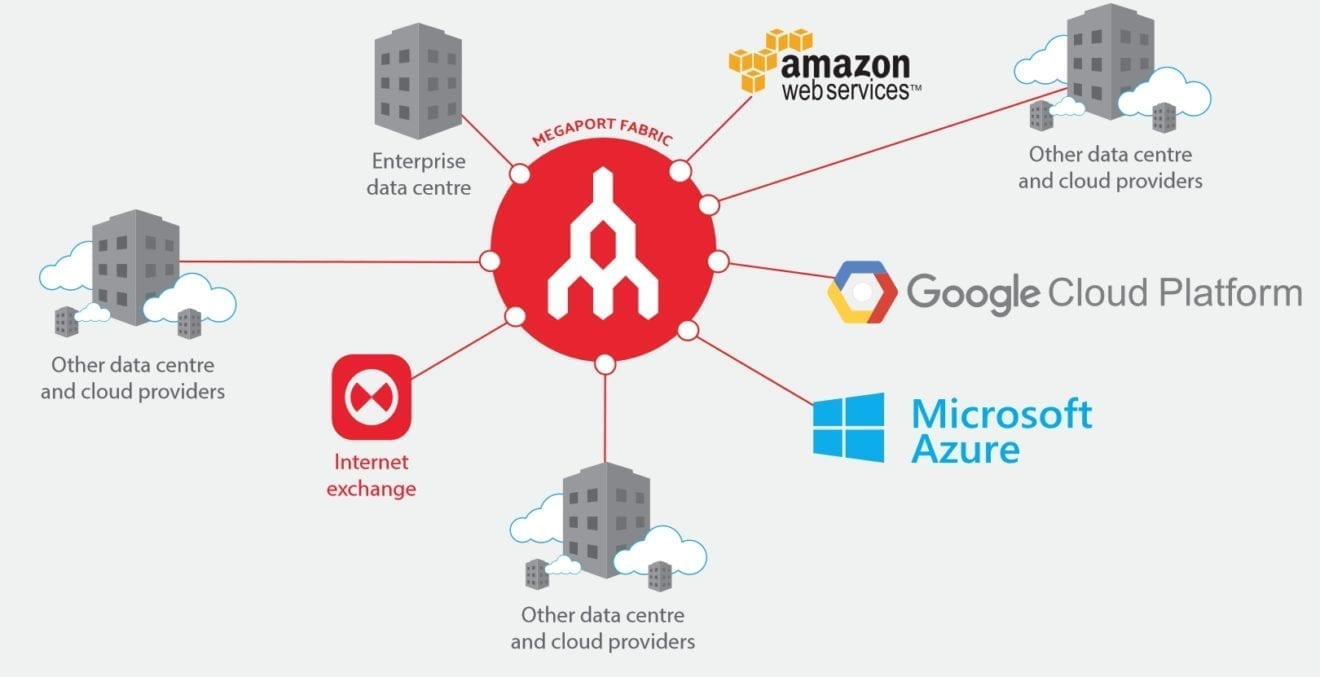
    Australian interconnection upstart Megaport has long been planning to invade Europe this year.  Today they not only formally launched their elastic interconnection platform on the continent, but they revealed two acquisitions that let them hit the ground running in a big way.

    Megaport has signed an agreement to buy Berlin-based Peering GmbH, Germany’s second largest IX provider. ECIX serves some 180 customers across 30 PoPs in Germany, giving Megaport immediate depth in the continent’s biggest market. The deal is expected to close in early August.

    Megaport’s other M&A move gives them an immediate presence in eastern Europe via the acquisition of Bulgarian-based OM-NIX Group AD.

    As one might infer from the IX part of their name, OM-NIX also specializes in interconnection, with extensive reach in Eastern Europe and especially the Balkans. Beyond the ECIX footprint, the deal adds another 18 locations to Megaport’s reach in Europe.

    Put those together with 9 other locations they have been developing organically, and Megaport’s European launch will span 57 locations in 19 cities in 13 countries. The acquisitions cost them some A$3.1 million ($2.3 million) and bring in annualized revenue of A$4.5 million.

    Over the past year, Megaport has expanded its interconnection footprint in markets throughout North America. The buildout has been quite rapid, and the move into Europe accelerates it even further.

    While the next phase is likely more adding revenue on top of the infrastructure they have built out, I have to wonder if they won’t keep going east. It wouldn’t take much to add a PoP or two in the Middle East and India on their way back around the globe to Singapore and Australia.

  • Datapipe drives Baozun digital transformation

    Datapipe drives Baozun digital transformation

    Datapipe, a leading global provider of managed hosting and cloud services for the enterprise, has led the cloud migration and digital transformation of China’s largest brand eCommerce services provider Baozun Inc.

    Baozun has shifted its IT systems to Datapipe’s managed cloud, tapping Datapipe’s expertise as a Managed Services Provider to handle its cloud migration and maintenance. Results include decreasing the time to on-board new clients by 500 per cent, reducing the cost of hosting by 20 per cent, reducing maintenance  from 200 man hours to virtually zero, freeing Baozun’s IT team of over 20 employees to focus on core business activities. Datapipe also reduced Baozun’s server downtime to zero per cent, enabling Baozun to guarantee a 99.95 per cent uptime to its clients – which include over 100 global brands in over 50 countries.

    With operations across China, Hong Kong, Taiwan and the rest of Asia Pacific, Baozun offers end-to-end brand eCommerce solutions to more-than 100 international clients. These include brands in the apparel, appliances, electronics, home and furnishing, food and health, cosmetics, insurance and automobile categories. Baozun helps these companies operate eCommerce sites on China’s most popular online marketplaces, such as Alibaba’s Tmall and JD.com. Key to ensuring their clients’ success is the ability for Baozun to provide scalable, highly available and secure end to end solutions integrating front end shopping experiences with supply chain management and distribution systems.

    Colin Chan, VP of Asia at Datapipe says Baozun has hundreds of global business partners, spanning millions of customers and transactions.

    “Given the scope of its operations, ‎and the unique nature of eCommerce in China, where some days have 1000-times the transaction and visitor numbers than others, the challenge of ensuring infrastructure is able to scale up to meet business demand‎ is very real. We’re pleased to work with Baozun, by migrating their core workloads to a 100 per cent scalable cloud environment and providing management of their infrastructure 24×7.

    “With their IT now supporting their ever-growing business, Baozun is better positioned to take aim at the multi-trillion dollar eCommerce opportunity in China and Asia wide.”

    Prior to working with Datapipe, all of Baozun’s data ran on web servers hosted externally – unsustainable given the business’ rapid growth, because as transactions volumes grew, so too did the server load; consequently, server sizes increased, placing significant pressure on its IT team around maintenance, cost, speed and scale.

    Tony Wu, CTO at Baozun, says Datapipe came highly recommended. “They brought significant expertise in managing cloud environments – including for other large eCommerce ‎businesses in China. They delivered a high-level of customer support, were very affordable and are able to provide open source as well as private cloud services to meet our unique needs. By Datapipe managing our cloud deployment, Baozun is able to focus on other crucial technology processes, accelerating our growth and delivering shareholder value.”

    China surpassed the US last year to become the world’s largest retail eCommerce market, and is expected to cross US$1.21 trillion in retail eCommerce sales in 2017, according to eMarketer. While eCommerce is growing strongly, running an eCommerce business comes with its own set of unique challenges, particularly around scale. When online promotions are launched, for example, Baozun sees significant spikes in sales volumes – up to 100x that of a normal day. On Singles Day in 2015 (11 November), Baozun processed 650,000 orders in the first hour and 3.5 million orders within a span of 24 hours.

    Datapipe recently drove the eCommerce transformation of Challenger Technologies Limited, Singapore’s largest electronics retailer. The company is seeing rapid growth across Asia-Pacific. It has doubled regional manpower year-on-year, with close to 100 employees now in Hong Kong and double the customer base in the region.

    Datapipe is the managed hosting and cloud services provider with the most complete set of services, global locations, and industry leading partners. Datapipe delivers choice, control and confidence in architecting, deploying, and managing multi-platform hybrid IT solutions tailored to individual customer needs. Optimising mission-critical and day-to-day enterprise IT operations, Datapipe enables businesses to transform, innovate, and scale. Backed by a global team of experienced professionals and next-generation data centers Datapipe provides comprehensive security, governance, orchestration, and analytics solutions.

  • Philippines to develop national broadband plan

    Philippines to develop national broadband plan

    Philippine president Rodrigo Duterte announced in his first State of the Nation Address (SONA) on Monday that he wants the newly created Department of Information and Communications Technology (DICT) to develop a national broadband plan to accelerate the deployment of fiber and wireless technologies to improve internet speed.

    He also announced that Wi-Fi access shall be provided at no charge in selected public places, including parks, places, public libraries, schools, government hospitals, train stations, airports, and seaports.

    A previous government initiative to establish a National Broadband Network (NBN) was scrapped in 2007 after the $329-million contract awarded to Chinese telecommunications firm ZTE for the project had been investigated in the Senate.

    In 2011, the then Commission on Information Communications Technologies (CICT) had also released a five-year digital roadmap that aimed to craft a vision for ICT use in governance, including the creation of a national broadband policy that would enable the environment for broadband development and use.

    Duterte’s call for a new national broadband plan came on the heels of a wide public clamor for fast and affordable internet. The Philippines had ranked poorly in many global indices for digital readiness.

    The country trails behind its Southeast Asian neighbors, for example, in the latest Network Readiness Index published by the World Economic Forum, which measures how economies use the opportunities offered by ICT for increased competitiveness. At 77th place in a 139-country study, the Philippines was behind Singapore (1st), Malaysia (31st), Thailand (62nd), Indonesia (73rd).

    Duterte’s assumption into office on June 30 came at a favorable time as the law mandating the creation of the DICT as the primary body that would create policies and drive the national ICT agenda was signed by former President Benigno Simeon Aquino III last May.

    The country’s first appointed DICT Secretary Rodolfo A. Salalima affirmed in his first media interview that the government cannot expect the commercial service providers to be in all parts of the country and there would be a need for the government to establish an ‘infostructure’ in the countryside and provide service.

    Shortly before Duterte’s inauguration as the country’s 16th president last June, Globe Telecom had called on the government to help develop broadband access in the Philippines by investing in internet infrastructure in rural and far-flung areas.Globe President and CEO Ernest Cu said in a media statement that telecommunication operators in the country are unable to deploy infrastructure in rural areas due to business viability issues.

    “There are a lot of localities in the country that cannot be reached economically. What we propose is for the government to build the infrastructure, such as submarine cables, and then rent these facilities out to telco operators,” he said, citing the case of Sulu and Basilan provinces in the Autonomous Region for Muslim Mindanao.

  • Alibaba introduces IP collaboration platform

    Alibaba introduces IP collaboration platform

    Alibaba Group has launched an online platform designed to streamline IP-related communications between brands and Alibaba.

    The new IP Joint-Force System aims to build greater and more collaborative working relationships with global brands as the company strengthens its efforts against counterfeits and IP infringement.

    “E-commerce has become a way of life for consumers both in China and around the world. As the internet sector continues to evolve, brands and online marketplaces alike face new IP enforcement challenges,” said Jessie Zheng, chief platform governance officer at Alibaba Group.

    With over a billion products listed across Alibaba Group’s marketplaces at any given time, its data analytics and processing technologies enabled the company to proactively remove more than 120 million infringing product listings from its marketplaces in 2015, which it said is eight times the number of counterfeit products removed based on takedown requests from brands.

    Under the new IP Joint-Force System, each participating brand will be assigned a dedicated online portal and Alibaba account manager to enhance collaboration, heighten transparency around IP enforcement efforts, and reinforce mutual understanding and trust.

    The system will also enable Alibaba to directly and efficiently seek information from rights holders regarding suspected counterfeit product listings, which Alibaba, as a third-party marketplace, is unable to authenticate on its own with full certainty.

    Alibaba will then initiate the Good Faith Takedown process and immediately remove the listing without required subsequent correspondence with the brand.

    Alibaba recently held the inaugural Rights Holders Collaboration Summit to engage international brands and the intellectual property enforcement community to enhance collaboration in the collective fight against IP infringement.

    More than 100 domestic Chinese and international brands and trade associations attended the event, including Louis Vuitton, Burberry, Apple, Mars, Hewlett-Packard, the Chinese-British Business Council (CBBC) and the Quality Brand Protection Committee (QBPC), among others.

    “The Rights Holders Collaboration Summit and new IP Joint-Force System are some of the many ways Alibaba is working closely with rights holders in our efforts to eradicate counterfeits both online and offline,” Zheng said.

  • Telkom launches 1Gbps broadband for enterprises

    Telkom launches 1Gbps broadband for enterprises

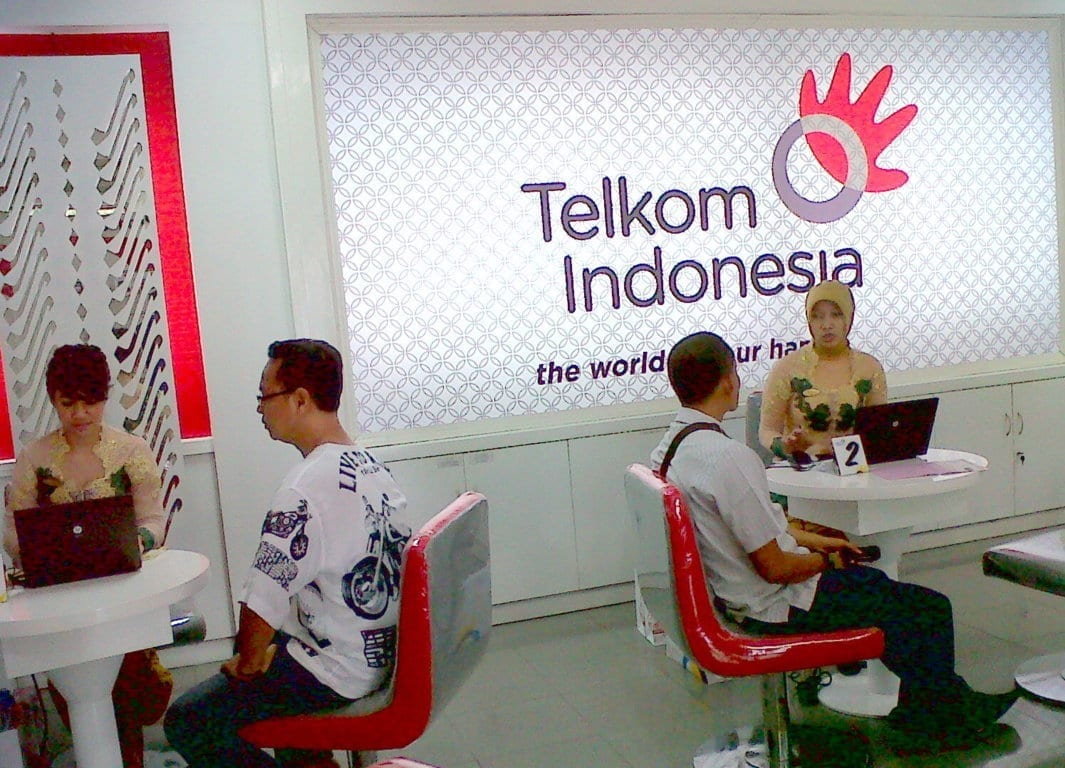
    Indonesia’s PT Telkom has launched a new line of high-speed broadband services for enterprise customers offering speeds of up to 1Gbps.

    The operator’s new Smart Office Pro services are designed to meet business customers’ requirements for high-speed broadband in the digital age.

    The company is offering a 1Gbps package bundled with up to 1,000 minutes of free voice calls, IPTV and bundled services including storage, hosting and managed services.

    At a press conference announcing the new offers, Telkom director enterprise and business services Muhammad Awaluddin said the service aims to help customers benefit from increased efficiency, flexibility, stability, sustainability ad continuity.

    He added that the launch is in line with the operator’s commitment to building a digital society in Indonesia, which itself also aligns with the government’s vision of transforming the nation into a digital economy.

  • Telstra acquires MSC Mobility

    Telstra acquires MSC Mobility

    Telstra has acquired local enterprise mobility solutions provider and decade-long channel partner MSC Mobility (MSC), in a move to bolster its enterprise mobility offerings.

    MSC provides mobile device management and provisioning services for large organizations, including providing devices and support to end users, and professional services, including strategy consulting and mobility solutions design.

    The company’s core capability is its enterprise mobility management platform, which incorporates mobile device management software such as Airwatch and MobileIron.

    The platform has already been rolled out and delivered device management services for “a large number of the telco’s enterprise customers”, Telstra said in a statement.

    Telstra did not disclose the value of the deal. The acquisition, which will be completed within coming weeks, will enable Telstra to manage the end-to-end enterprise mobility lifecycle, including valuable reporting and analytics that help customers drive better business outcomes, the telco noted.

    Telstra executive director of global products Michelle Bendschneider said that the deal is a key step in the incumbent’s focus on enterprise mobility, which has been prioritized as a fundamental part of Telstra’s growth strategy.

    “This acquisition is an investment capturing the fastest growing segment of the enterprise mobility market: managing the supply of apps, content and mobile services to enterprises,” the executive said.

    “To achieve our growth aspirations in enterprise mobility, we need to develop our customer relationships from a holistic mobility view, rather than just what sits on their device or tablet.”

    Bendschneider added that MSC’s established processes and platform can be expanded to host and support the service in Asia, Europe and the US.

    The acquisition of MSC is Telstra’s latest buy in weeks, after it acquired Microsoft partner Readify earlier this month to boost its cloud offerings for enterprises.

    In February, Telstra also made a strategic investment in Chinese cloud storage service provider, Qiniu, through its investment arm, Telstra Ventures, a month after it acquired another Microsoft partner, Kloud.