Retail News CRM

Tag: cloud

  • IPC, 1-Net plan interconnected data center network

    IPC, 1-Net plan interconnected data center network

    Philippines cloud services and data center provider IPC (IP Converge Data Services) has teamed up with 1-Net in Singapore to provide its customers with an interconnected data center network.

    This collaboration enables both organization to extend their data center capacity for faster access and deployment of customers in the countries.

    IPC and 1-Net are both data center providers who operate carrier-neutral and telco-grade internet data centers in Philippines and Singapore respectively.

    This strategic partnership will strengthen the data center services of both providers, ensuring that customers’ data is securely stored. This will also enable enterprises to run mission-critical systems in our facilities while they grow their businesses in the two countries.

    The partnership will enable both IPC and 1-Net to deploy customers in both Philippines and Singapore with a single contract, allowing quicker deployment without the need to renegotiate service level agreements and contracts.

    “Our partnership with 1-Net virtually expands the data center footprint of both companies. Gaining access to data center facilities in Singapore enables our enterprise customers to extend their network into the more mature market in Singapore, and likewise offers the same benefit to regional players present in Singapore who are looking to expand into our bustling Philippines economy for business expansion,” said IPC Chief Executive Officer Reynaldo R. Huergas.
  • Huawei pushing into public cloud market

    Huawei pushing into public cloud market

    Huawei is entering the public cloud market, placing the company in competition with AliCloud, AWS and other major global public cloud providers.

    At the Huawei Global Analyst Summit in Shenzhen yesterday, Huawei said it will work with industry partners to promote ten scenario-specific cloud services covering HPC Cloud, SAP Cloud, IoT Cloud and other common scenarios.

    “Cloud technology is becoming the new growth engine as digital transformations accelerate,” Huawei president of cloud business unit and IT product line Zheng Yelai said at the event.

    “Huawei has continued to step up its R&D, one result culminating in the cloud service offering. Huawei has become the preferred partner for many of the world’s top customers and will continue to provide high-quality cloud services with our partners as we persist in building a healthy ecology in the sector.”

    The vendor is establishing a dedicated cloud division with 2,000 staff and last month launched 54 full-stack public cloud services in ten categories. Huawei said since the launch it has attracted customers in China, Europe, North America, Latin America and the South Pacific.

    Huawei is also working with operators including China Mobile, Deutsche Telekom and Telefonica to provide tailored public cloud services to their respective customers.

  • Australia’s TPG to enter local mobile market

    Australia’s TPG to enter local mobile market

    Fast-growing Australian fixed line operator TPG Telecom has bid A$1.26 billion ($944.8 million) to acquire 2×10 MHz of valuable 700-MHz spectrum, and plans to build its own mobile network using the bandwidth.

    TPG has revealed plans to spend A$600 million over three years to deploy a mobile network that covers 80% of the Australian population.

    As well as its imminent 700-MHz holdings, TPG also holds spectrum in the 1.8-GHz and 2.5-GHz bands. The operator plans to deploy a network consisting of around 2,000 to 2,500 sites, and use its extensive 21,000km fiber network as backhaul.

    TPG currently operates as an MVNO over Vodafone Australia’s network, but now plans to invest in deploying its own network. The company estimates it can break even with around 500,000 subscribers.

    CEO David Teoh said TPG expects to have several advantages over incumbent operators Telstra, Optus and Vodafone due to the ability to operate fewer mobile towers and deploy advanced mobile technology on its network, without the requirement to support legacy equipment and networking standards.

    “We believe that our mobile strategy will be complementary to our ongoing fixed line business, with the ability to bundle mobile and fixed services expected to have a beneficial effect on our already low fixed services customer churn,” he said.

    TPG was also recently selected to become Singapore’s fourth mobile operator after bidding S$105 million ($74.8 million) for a license and spectrum, and last week successfully bid S$23.8 million for 10 MHz of 2500-MHz spectrum.

    The Australian 700-MHz auction raised more than A$1.5 billion – significantly higher than the A$857 million reserve price – with Vodafone Australia also securing 2x5MHz of spectrum for A$285.9 million.

    The licenses will commence in April 2018 and expire at the end of 2029.

  • Cloud boom fuels demand for identity-as-a-service

    Cloud boom fuels demand for identity-as-a-service

    The rising adoption of cloud computing, especially among small and medium organizations, is fueling demand for new identity and access management business models such as Identity as a Service (IDaaS), Frost & Sullivan said.

    IDaaS will strike a balance between on-premise and cloud identity management, as well as significantly lower the cost of ownership of IAM solutions.

    The research firm noted that IAM challenges are more business-centric than technology-centric. Segments such as administration, authentication and auditing are developing technologies to improve service accuracy and cost efficiency.

    Emerging services like Platform-as-a-Service (PaaS) and Infrastructure-as-a-Service (IaaS) are contributing heavily to the growth of IAM technologies.

    “The shifting of enterprise solutions to the cloud has created a complex architecture that requires more advanced IAM solutions than the ones currently offered by traditional identity management vendors,” noted Frost & Sullivan TechVision Industry Analyst Swapnadeep Nayak.

    “The emergence of IDaaS has proven beneficial to enterprises, as it will assist with regulatory compliance, reduce the expenses involved in extending on-premise solutions to the cloud, and support the same features as enterprises’ legacy systems.”

    As most of the recent IT trends have been mobile centric, IAM solution providers need to ensure their innovations are mobile friendly to attract the attention of enterprises. Supporting cross-platform visualization and advanced analytics, as well as portable biometric technology, will give a huge boost to technology adoption rates.

    “Biometric authentication is a key area that is experiencing significant technology development, especially with regard to accuracy levels of validation and flexibility of usage,” noted Nayak. “Analytics is also growing rapidly due to the emergence of futuristic solutions like neural networks and machine learning.”

  • Extreme Networks to buy Brocade’s data center assets

    Extreme Networks to buy Brocade’s data center assets

    Software-driven networking vendor Extreme Networks has arranged to buy the data center networking business of Brocade for $55 million.

    Extreme Networks has entered an agreement with Broadcom – which itself arranged to purchase Brocade in November last year for around $5.9 billion – to purchase Brocade’s data center switching, routing and analytics business.

    The acquisition is expected to close within 60 days after the closing of Broadcom’s acquisition of Brocade, which is due during the quarter ending in July.

    Extreme Networks said it expects the purchase to be earnings accretive by fiscal 2018 and to generate over $230 million in new annualized revenue.

    “The addition of Brocade’s data center networking business significantly strengthens our position in the expanding high-end data center market and reinforces our strategy of delivering software-driven networking solutions focused on enterprise customers,” Extreme Networks president and CEO Ed Meyercord said.

    “Today’s announcement, coupled with our recent announcements regarding our position as the stalking horse bidder of Avaya’s networking business and the successful completion of the integration of Zebra’s wireless LAN business, along with Extreme’s organic investments in R&D, will result in a state of the art, newly-refreshed portfolio of enterprise solutions for our customers.”

    Broadcom announced an intention to divest Brocade’s IP networking business as part of its planned acquisition of the vendor, focusing on the company’s remaining fiber channel storage area network business.

  • Huawei unveils All-Cloud Network architecture

    Huawei unveils All-Cloud Network architecture

    Huawei unveiled its All-Cloud Network architecture for enterprises at last week’s CeBIT 2017, in a bid to help enterprises accelerate their digital transformation.

    The vendor’s new architecture is comprised of three parts – ubiquitous connections, an open cloud platform and a social technology industry application.

    The architecture consists of CloudFabric – designed to build a simple, efficient, and open cloud data center network as well as CloudDCI to build an on-demand and smart data center interconnection network based on cloud services.

    The portfolio also includes CloudCampus, which aims to enable cloud management of the network throughout the entire lifecycle, from network deployment to O&M, as well as all Wi-Fi access in the campus network. CloudEPN meanwhile includes on-demand value-added network services for enterprises.

    Finally, Edge-Computing-IoT (EC-IoT) is a security solution designed to meet predictive maintenance requirements and enable digital transformation for vertical industries.

    “Digital transformation not only means applying new technologies such as cloud computing, SDN, and NFV, but also involves reforming business models, operational modes, and thinking patterns,” said Kevin Hu, president of Huawei Switch & Enterprise Gateway product line.

    “The All-Cloud Network architecture will deliver ubiquitous connections, an open cloud platform, and social technology industry applications to enterprises. In addition, it will simplify network resource management and enhance the value of network data. All of these factors will create an open network for enterprises to reap business benefits with tremendous potential.”

  • Mavenir unveils new cloud platform

    Mavenir unveils new cloud platform

    Mavenir has launched its cloud-based Rich Communication Services (RCS) Platform and Hub, further expanding its suite of flagship RCS solutions.

    The firm said the solution currently supports tens of millions of subscribers worldwide.

    It added that with its new RCS Platform and Hub, Mavenir provides communications service providers (CSPs) with an innovative approach to quickly and efficiently deploy secure and advanced communications, while capitalizing on new monetization services but without the high costs and complexity associated with large-scale network infrastructure projects.

    The Mavenir RCS Platform can be easily deployed either directly in the operator network, as a Mavenir-hosted model or managed across a hybrid model that results in a combination of both.

    This approach, allows CSPs to decide which functionalities they want to remain in their network, such as customer data – bringing back control to the operators and expanding their role in the digital economy.

    These new additions to Mavenir’s suite of RCS solutions, provides CSPs with greater control over their RCS deployment options, driving openness and interoperability, the company further said.

    Mavenir’s unique offering in RCS solutions is underpinned by its dedication to driving an industry-wide ecosystem, open to any business who plays a part in advanced communications. This will support the roll out of richer experiences to device users and provide CSPs with access to new monetization channels from enterprise application to person (A2P) flows to dynamic mobile marketing and chatbot frameworks.  Such a capability is critical, as CSPs move to NFV environments, and start to support Internet of Things (IoT) and 5G network traffic.

  • Cloud components market to hit $41b by 2021, says report

    Cloud components market to hit $41b by 2021, says report

    Ongoing customer build-outs of hybrid environments is fueling cloud components growth as IT vendors modernized hardware and software portfolios.

    According to a report from Technology Business Research (TBR) the cloud components market, which encompasses the foundational building blocks for on premises cloud environments, will grow from an estimated $27 billion in 2016 to $41 billion in 2021 at an 8.4% CAGR.

    Cloud hardware components revenue will generate most of total cloud components revenue; however, we expect long-term market growth will be sustained by cloud software components as hybrid cloud demands rise and underlying cloud infrastructure becomes commoditized, TBR said.

    Sanjay Medvitz, TBR cloud analyst, said, “Enterprise hybrid IT environments continue to grow, increasingly encompassing disparate on-premises and cloud assets as well as infrastructures from multiple vendors, driving up the importance for software solutions that provide efficient management, orchestration and cloud services capabilities to ease complexities.”

    “Accordingly, vendors such as IBM and Oracle are shifting focus to cloud software businesses that offer high-value opportunities for long-term success,” Medvitz said.

    From a hardware perspective, customers’ ongoing migrations to public cloud services and software-defined storage-enabling hyper converged platforms will render standards-based servers as critical aspects of cloud computing environments across a range of customer segments.

    Meanwhile, TBR notes that customers will invest in flash storage capabilities, along with gradual build-outs of virtualized network implementations to further accelerate performance, simplicity and reliability of their hybrid and heterogeneous cloud data centers.

    Industry stalwarts Hewlett Packard Enterprise, IBM, Dell EMC and Cisco held top market share among cloud components vendors in 2016, leveraging legacy hardware and software strengths and large install bases alongside investments in private and hybrid cloud-enabling technologies such as hyper-converged to win customer modernization engagements.

    Market leaders will continue to modernize legacy assets, innovating hardware and software together to create common architectures and building out cloud based versions of traditional solutions to promote flexible cloud on-ramps and meet evolving customer hybrid IT needs.

  • Equinix expands Hong Kong footprint to meet demand

    Equinix expands Hong Kong footprint to meet demand

    Equinix is expanding its Hong Kong footprint to accommodate local interconnection needs and increasing numbers of inbound cloud service providers.

    This latest expansion of Equinix’s Hong Kong footprint adds over 1,400 new cabinets and brings the company’s total investment in the city to over $250 million.

    The expansion in Hong Kong includes 515 new cabinets in HK1 and represents an incremental investment of $16 million and adds 900 new cabinets in HK2 and represents an incremental investment of $39 million. It is the latest in a series of expansions across Asia-Pacific to meet the rising demand for interconnection services, with other recent expansions including Melbourne, Tokyo and Sydney.

    The new development will enable Equinix to support the growing needs of an increasing variety of enterprises – such as FSI and FinTech, e-payments and logistics – to interconnect with cloud and technology providers.

    Equinix’s cloud and IT ecosystem has continued to gain momentum in Hong Kong. Its cloud customer-base has grown significantly since 2014, as local and international internet security and CSPs are increasingly choosing to deploy with Equinix Hong Kong as their initial entry point or hub location for the Asia-Pacific region.

    Major cloud service providers in Equinix Hong Kong now include Alibaba Cloud, the cloud computing arm of Alibaba Group, Microsoft Azure & Office 365 and Google Cloud. According to Cisco, global cloud IP traffic will almost quadruple in over the next 5 years, this expansion will enable Equinix to meet the needs of Hong Kong customers looking to take advantage of this growth.

    One Hong Kong customer taking advantage of Equinix’s increased capability is ClusterTech Limited, which specializes in using cloud, high performance computing and big data technologies to solve challenging technical problems and improve operational efficiency for their customers. The company is in the process of adding more resources within Equinix’s IBX data centers to launch a new solution that will enable environmental engineering companies to run complex simulation applications.

    In addition to supporting the core cloud needs of customers, Equinix is now also in an excellent position to accommodate the growing trend towards multi-cloud convergence and “interconnected commerce” that Equinix experts predict will be a key feature of the IT landscape over the coming year.

    The additional capacity comes online at a time when Equinix is predicting IoT will become a concrete reality – evolving from independent, single-vendor solutions to those that talk to each other and rely on the same data.

    With the Hong Kong expansion, Equinix will relieve the growing pressure on corporate-centric networks by distributing the traffic more broadly, as well as better control the performance of the streaming IoT information for more real-time business and operational insight.

  • Cloudbric opens IDCs in Hong Kong and Vietnam

    Cloudbric opens IDCs in Hong Kong and Vietnam

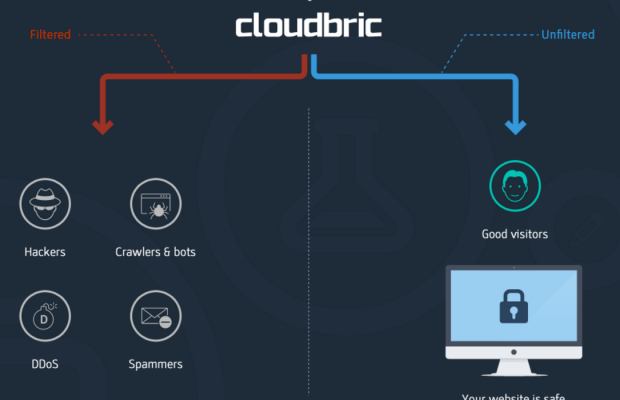
    Web application firewall (WAF) service provider Cloudbric announced the opening of five internet data centers, including facilities in Hong Kong and Vietnam, in response to the growing, global demand for cloud services.

    The new data centers are located in New Jersey (US), Hong Kong, Binh Duong and Ho Chi Minh City (Vietnam) as well as Amsterdam (the Netherlands)

    Additionally, with Cloudbric’s growing partnership base, the expansion of IDCs means Cloudbric’s customers can benefit from greater WAF infrastructure and experience elite security better than ever.

    Enterprises of all sizes rely on and often expect websites to be up and running without any lapses. Maintaining this uptime depends on strategically placed data centers to handle high-volume requests. As a result, Cloudbric is not only increasing its network capacity through its IDC expansion but also introducing an all-inclusive, fully-managed WAF service to a wide range of IT service and solution providers.

    Regarding Cloudbric’s current partnership model, VP of Product & Technology TJ Jung says “From individuals to small or mid-size businesses and enterprises, we are growing our service to reach all parts of the globe by engaging in partnerships with different solutions providers in the IT industry, and Cloudbric is excited to continue in this endeavor. Partnering with data centers, for example, means Cloudbric can be deployed on their own infrastructures instead of relying on external networks – making the delivery of Cloudbric’s advanced WAF to their clients a seamless process.”

    Utilizing the precise, trusted technology created by Penta Security Systems, Cloudbric’s WAF can intelligently recognize and block both unknown and known web attacks with its logic analysis engine. Through Cloudbric, various service providers can also benefit from quality customer service and a user-friendly, intuitive dashboard and extend it to their own end users. With new IDCs and thus even greater bandwidth, Cloudbric’s ability to withstand cyber attacks such as DDoS attacks is augmented.

    Cloudbric currently has plans to open ten additional IDCs in Q2, specifically in cities across North America, the Middle East, and South America. Cloudbric will continue to appeal to various service providers in its expansion of WAF infrastructure.

  • Malaysia-Cambodia-Thailand subsea cable launches

    Malaysia-Cambodia-Thailand subsea cable launches

    A new subsea cable connecting Malaysia, Cambodia and Thailand has been launched in Cambodia, adding at least 30Tbps of regional capacity.

    The Malaysia-Cambodia-Thailand (MCT) cable system was designed and deployed by Huawei Marine for Cambodia’s EZECOM, Telekom Malaysia and Symphony Communication of Thailand.

    The 1,300km cable system uses 100Gbps technology, and will connect to other submarie cable systems, including the Asia-America Gateway (AAG).

    Speaking at the launch of the system, EZECOM CEO Paul Blanche-Horgan said the launch is the culmination of six years of work. He said the launch of the cable will improve the security of Cambodia’s connection to the internet.

    “With this cable, we are now directly connected POP to POP, which means a much more secure connection for Cambodia. This is of great importance, as [Cambodian deputy prime minister and minister of interior] Samdech Krolahom does understand, for the context of national security as well as certain key sectors like banking.”

    Samdech Krolahom himself said that with the new cable, “Cambodia now has faster, more reliable, more affordable and, most importantly, a more secure internet connection for all.”

  • Cloud-based online charging system debuts through Netcracker

    Cloud-based online charging system debuts through Netcracker

    Netcracker Technology has unveiled its Cloud-Based Online Charging System (OCS), a next-generation offering that has been optimized to meet the requirements of the digital world.

    As the industry’s first always-active OCS platform, Netcracker’s Cloud-Based OCS addresses all of the key pain points associated with legacy, hardware-based charging systems.

    The platform enables always-on availability at a lower cost as well as cloud elasticity and scalability in order to keep up with the demands of digitalization.

    The platform also enables converged revenue management scenarios; support for VoLTE, virtualized, 5G and IoT services; deployment flexibility across any physical and virtual environment; and embedded analytics.

    “Netcracker’s Cloud-Based OCS underscores the right approach for service providers that are looking to monetize cloud and virtualized services in today’s digital world,” said Karl Whitelock, global director of operations, orchestration, data analytics and monetization (ODAM) at Stratecast.

    “As a software-centric solution that relies on configurable parameters and not complex customized code, Netcracker’s scalable OCS can help to address any level of transaction processing need, which is essential for delivering future-proof operations in the journey to becoming true digital services providers,” said Whitelock.

    Sanjay Mewada, chief strategy officer at Netcracker, said traditional revenue management platforms have not been able to keep pace with the needs of communications service providers as they transform into digital service providers.

    “Netcracker has evolved its OCS to address these precise needs,” said Mewada. “Our Cloud OCS, with its unparalleled elasticity, always-on availability and embedded analytics, removes the barriers to digitalization and allows our customers to rapidly monetize digital offerings, such as VoLTE, 5G, virtualized and IoT services.”

  • Colt Asia Cloud PBX Service to launch in April

    Colt Asia Cloud PBX Service to launch in April

    Colt Technology Services has announced it will launch its Colt Asia Cloud PBX Service for enterprises in the region starting in April.

    The company will offer an all-in-one solution combining PBX functionality, IP phones and remote access connectivity to the office.

    The service is aimed at alleviating customers from the need of purchasing their own PBX. Instead customers will use the PBX system installed within Colt’s data centers in exchange for a a small upfront cost and monthly fee.

    Calls made using the service within the same organization will be treated as internal extension numbers and be placeable for free.

    Numbers provided by the company will be able to use the full set of PBX features including call transfer, hold and conference calling.

    “Cloud computing is already a standard in today’s IT environment. This reality also applies to voice communications, including telephony, that are indispensable to corporate business,” Colt CCO for Asia Kenji Hioki said.

    “With this service, Colt is dramatically reducing the cost of acquiring PBX and corporate telephony, in turn reducing the associated maintenance and overhead expenses that come with a communications network spanning multiple sites.”

  • ‘Super 7’ accelerate cloud, says TBR

    ‘Super 7’ accelerate cloud, says TBR

    A report identified the seven largest (“Super 7”) technology firms which are best positioned to provide access to cloud services for global firms.

    Alphabet, Amazon, Facebook, Microsoft, Alibaba, Baidu and Tencent also view their cloud businesses as critical to their growth over at least the next five years, a report from Technology Business Research (TBR) said.

    Chris Antlitz, a telecom senior analyst at TBR, said “All of the Super 7 companies are aggressively building data center footprints globally and are baking in significantly more capacity than they currently need in anticipation of future data traffic growth.”

    “However, despite the addition of extra capacity upfront, capex growth will remain robust through the next five years as workloads increasingly move to the cloud and as the digital ecosystem flourishes worldwide,” the analyst said.

    Of the $16.9 billion in capex spent by the “Super 7” on ICT in 2016, TBR estimates around 75% was for data center infrastructure, with the balance of ICT capex spent primarily on optical transport, routers, switches, software and broadband access initiatives.

    The report said the Super 7 are investing heavily on not only data centers to support the internal operations of their core businesses, but also for their external cloud services businesses, which are growing much faster than their core digital businesses.

    Some vendors are gaining traction with webscale companies, with revenues increasing and the scope of engagements widening. Generally speaking, vendors that align their portfolios and innovation road maps with webscale requirements stand to win the most business from webscale companies.

    TBR’s Webscale ICT Market Landscape tracks the ICT-related initiatives of the seven largest webscale companies in the world. The report provides a market assessment, deep dives into company strategies and analyzes capex trends, particularly as they pertain to ICT. Vendors are also covered from the perspective of relative opportunities with webscale companies as customers.

  • CenturyLink launches ‘multi-cloud’ management strategy

    CenturyLink launches ‘multi-cloud’ management strategy

    CenturyLink has launched CenturyLink Cloud Application Manager, a new orchestration platform designed to simplify deployment of enterprise workloads, managed services, and third-party cloud resources.

    The tech firm said this cloud-agnostic management platform enables companies to better manage applications and workloads across hybrid hosting environments – in customer private clouds, colocation centers and public cloud environments.

    In a business climate where companies need to simplify management and governance of applications across multiple cloud infrastructures without sacrificing control or visibility, Cloud Application Manager delivers flexibility that enterprises need to quickly provision, deploy and migrate workloads to the environment that best matches business requirements, the company said.

    “Many of our customers and partners struggle with the business challenge of determining the best execution venue for their business applications. We designed Cloud Application Manager to give our customers a wide variety of infrastructure options across diverse public and private cloud environments,” David Shacochis, VP of hybrid IT product management at CenturyLink said.

    “Cloud Application Manager helps companies avoid vendor lock-in, automate application deployments, scale workloads across disparate hosting environments, and optimize their costs over time. These benefits are available in a self-service model, or one that is actively managed by CenturyLink team members,” the executive said.

    Users can consume Cloud Application Manager via the cloud version (SaaS) or the data center version (a virtual appliance that runs on-premises in their data center). This usage-based platform allows customers to consume the value-added services they need with a consolidated bill and a simplified, yet powerful, interface, the company further said.