Tag: cloud

  • Gaming on cloud nine

    Gaming on cloud nine

    Console and game developers constantly have to reinvent themselves in order to stay ahead of the competition, and it would appear that cloud gaming is the next big thing in playing online games. According to gaming experts, the year 2021 is shaping up to be a significant year for cloud gaming. According to experts, Microsoft will be a substantial source of cloud gaming sales in 2021. Several companies have been attempting to create “cloud gaming” for a few years now. This is similar to how Apple Music or Spotify download music, except for video games.

    Let’s look at some of the platforms that will be offering these services and how they differ.

    Google Stadia 

    Google is constantly trying to improve their user experiences. Google Stadia is the first actual long-term forecast for cloud gaming. Gamers are about to get a welcome reprieve after spending years bound to the console update cycle. Stadia gives you access to an ever-expanding digital game library that works on any computer. We’ve finally put it to the test in our own house, and we can confidently claim that it’s a genuine console alternative and, in time, a possible platform killer. It does a lot of things correctly. The service offers on-the-go streaming via phones and tablets, as well as at home on PCs and Chromecast, in addition to remarkably enjoyable output with little to no latency on our home network. Furthermore, Stadia includes built-in YouTube Gaming live-streaming and, if you purchase the Premiere Edition, an ergonomic Wi-Fi controller that decreases latency, demonstrating Google’s thorough examination of Stadia.

    Like every other streaming service, your experience would be drastically different depending on your distance from Google’s servers and your communication speed. Unlike consoles, which work about the same from one place to the next, there’s no guarantee that we’ll all have the same experience when it comes to game-streaming. There are a few minor issues with the service that will be resolved over time, but if Google can clear up the mystery surrounding Pro and turn on all of the functionality it promised, it might be the end-all game-streaming site.

    Project X-Cloud 

    Microsoft’s Xbox Game Pass Ultimate is simply a monthly subscription that includes various providers. Subscribers get Xbox Game Pass for consoles, PC, Xbox Live Gold, EA Play, and access to Xbox Cloud Gaming (Beta) on Android devices all in one package. That means you’ll be able to choose from a wide range of games on console or PC, all of which you’ll be able to play online, and you might never have to buy a game on the Xbox One or one of the recent Xbox Series S / Xbox Series X consoles again. You won’t need an Xbox or a PC to play your favourite games for the first time because you can stream them from the cloud to your computer.

    Link problems and video latency remind you that this isn’t a 1 to 1 experience, but we’re getting closer to making the ‘on the go’ console gaming experience. Combining Game Pass with XCloud is a very appealing prospect, mainly because Game Pass is still one of the best deals in gaming. Since everybody has a phone and lots of people have controllers, the ability to throw your controller in your pocket and access your Xbox library from anywhere might be a big selling point for Microsoft.

    Nvidia GeForce

    Nvidia has been working on its GeForce Now subscription service for a few years, and it has now graduated from beta to a fully commercially available subscription service. Though it isn’t ideal, it is a convenient and user-friendly service for playing PC games on non-gaming computers. Free and Founders membership tiers are eligible for GeForce Now. The Founders membership gives you preferential access to Nvidia’s systems, as well as streaming with RTX ray-tracing allowed and six-hour gaming sessions. The free membership disables RTX and only allows you to play for an hour at a time before having to wait in line to use Nvidia’s computers again.

    GeForce Now, like all other game streaming services, demands a lot of internet bandwidth and speed. For 720p60 game streaming, you’ll need at least a 15Mbps link, and for 1080p60 game streaming, you’ll need at least a 25Mbps connection. To link to your router, you’ll need either a wired or a 5GHz Wi-Fi connection. Although there are a lot of games available, you might have trouble finding them because the user interface for selecting games isn’t very good.

    Conclusion

    Although each of the three platforms has advantages and disadvantages, it appears that the cloud gaming industry is waiting for most people’s internet speeds to improve. The technology exists and performs admirably under ideal conditions. However, the inconsistency of options for playing games you already own on the go means that none of these services will be as familiar or reliable as console gaming for a long time. Regardless of this, the future appears very exciting, and this new technology could attract new gamers.

     

  • Global public cloud spending to reach $332.3 billion in 2021

    Global public cloud spending to reach $332.3 billion in 2021

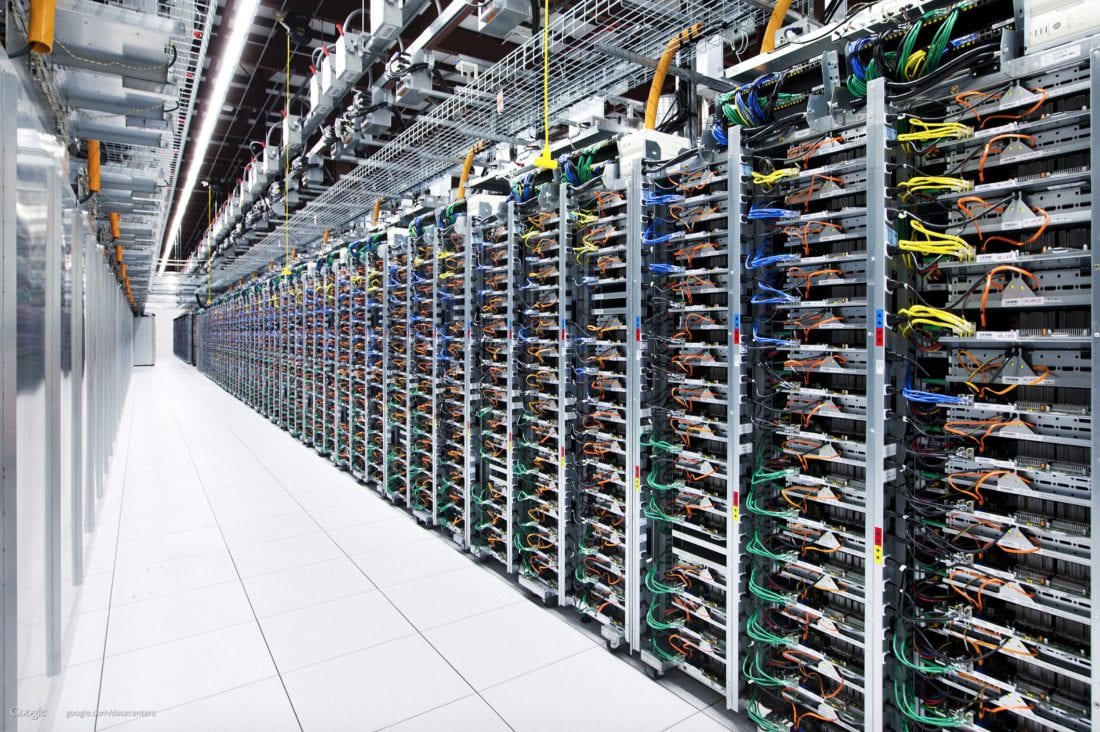
    Spending on global public cloud services is projected to reach $332.3 billion in 2021, increasing by 23.1% from $270 billion in 2020. According to Gartner, growth in cloud spending can be attributed to increased adoption in technologies such as virtualization, edge computing and containerization.

    Driven by demand for composable applications, software-as-a-service (SaaS) will account for the largest market segment to reach $122.6 billion in 2021. Gartner cited that SaaS-based applications will be instrumental in countries’ efforts to produce and distribute COVID-19 vaccinations, in areas such as automation and supply chain. These applications will help CIOs validate the shift to cloud.

    Desktop-as-a-service will experience the highest growth at 67.7% to reach $2 billion, while infrastructure-as-a-service will grow by 38.5% this year to reach $82 billion. In 2022, growth in these areas is expected to slow down.

    While cloud services boomed in the past year, Gartner predicts that spending on cloud might take a different note in 2021 and 2022 as enterprises shift away from infrastructure and application migration towards advanced applications integrating AI and IoT and 5G.

    In the first quarter of 2021, research and analytics firm Canalys reported that global cloud services infrastructure spending grew to $41.8 billion to represent a 35% year-on-year increment and 5% quarter-on-quarter growth.

  • How operators can accelerate industry transformation in an e-commerce cloud-network era

    How operators can accelerate industry transformation in an e-commerce cloud-network era

    The fourth industrial revolution, led by enabling technologies such as IoT, AI, cloud computing, and big data, serves as the impetus for enterprises to migrate their services to the cloud. Fueled by countries’ tech imperative and national strategy to digitalize economies and societies, enterprise cloud adoption is poised to grow, with IDC predicting that 85% of enterprises will have deployed new digital infrastructure in the cloud by 2025.

    As cloud applications evolve and become increasingly distributed, enterprises will strategically upgrade from single cloud to multi-cloud and hybrid cloud (private cloud + public cloud). Consequently, enterprise network requirements will have to change, evolving from traditional “fast cloud, slow network” to intelligent cloud-networks with integrated cloud-network scheduling to facilitate e-commerce. In addition, enterprises will have to move away from “good cloud, poor network” to deliver consistent experience to users.

    Faced with increased competition from OTT cloud providers, operators must upgrade existing cloud network operation systems and leverage network advantages to chart growth in the cloud era.

    Key challenges operators face when upgrading to cloud-network operation

    Compared with OTT cloud providers, operators face greater challenges when upgrading to cloud-network operations. For a start, the current experience offered by the operator’s private line products leaves much to be desired when matched against user-centric products offered by OTT cloud providers. While OTT cloud providers offer cloud features such as real-time provisioning, pay-per-use, online subscription, and network visualization, network-centric operators must evolve from manual processing based on tickets to automate processing to reduce long service provisioning, amongst other upgrades.

    Given their larger and more complex network layers, operators also tend to encounter more technical issues when ensuring quality-guaranteed virtual networks. Finally, operators have to overcome a lack of integrating standards and specifications, interface customization among systems, and excessive BSS, OSS, and controller vendors – all of which add complexity to system integrations and delay service rollouts.

    Recommendations for operators to build competitive cloud-networks

    COVID-19 has fast-tracked enterprise cloud adoption by two to three years and accelerated digtialization across industries. China’s online education industry, for instance, has reported growth as online learning products garnered more than 300 million users when schools shuttered for months. In the wake of COVID-19, many provinces started to embrace a digital-first approach, with cloudification leading change across industries.

    For instance, China Telecom Ningxia became the first operator to adopt an intelligent cloud-network to achieve multi-cloud interoperability in the healthcare sector. Tapping on this capability, many small and medium-sized hospitals in Ningxia now rely on technologies such as medical imaging cloud to leverage resources in larger-sized hospitals to provide telemedicine consultations.

    For operators to seize growth in a rapidly-evolving cloud environment, Guo Dazheng, president of NCE Data Communication Domain at Huawei recommends the following:

    1. Improve cloud-network operations in three areas

    Firstly, operators seeking to develop cloud-network services should deliver integrated cloud-network scheduling capable of producing networks as responsive as clouds. Secondly, operators should fully exploit the wide coverage of operator networks to provide cloud access connections with guaranteed SLAs and deliver consistent cloud and network experience. Thirdly, operators can offer enterprise users one-stop subscription of cloud-network products and comprehensive e-commerce service experience.

    1. Upgrade cloud-network IT architecture across three layers

    To drive comprehensive service automation and e-commerce operations on the cloud-network, while also maximizing the network operation and localization service advantages of operators, systematic technology transformation must occur at three layers: the network infrastructure layer; network management and control layer; and network operation layer.

    At the network infrastructure layer, protocols should be simplified. As such, complex protocols in traditional network should be replaced by an intelligent cloud-network that offers two simplified alternatives – the EVPN and SRv6. As a next-generation SDN network enabling protocol, SRv6 helps intelligent management and control systems achieve centralized path computation and cross-domain one-hop through while avoiding VPN concatenation.

    At the intelligent management and control layer, network-as-a-service (NaaS) should be deployed to counter complex integration in conventional NMSs. Utilizing NaaS technology, the intelligent cloud-network provides tenant-level service-oriented interfaces for the OSS, while shielding technical details relating to the network. As a result, tenant network provisioning and adjustment can be completed with fewer parameters to significantly simplify OSS integration.

    Finally, the network operation layer should integrate conventional OSS and BSS functions, as well as multi-cloud integration aggregation, cloud access connection, and other tenant portals related to cloud-network products. This architecture invokes the network service capabilities of the intelligent management and control layer through service-oriented interfaces, while one-stop subscriptions to cloud-network products provide tenants with an ideal e-commerce shopping experience. Long service provisioning timelines characteristic of traditional operations that are ticket-driven and laden with manual workloads will also be significantly reduced.

    1. Integrate cloud-network operation systems as a collective industry effort

    In the absence of unified architectural standards, the industry currently faces complicated OSS/BSS integrations and long integration testing times. To address this, Huawei is committed to building an integration lab capable of connecting OSS/BSS vendors, operators, and scientific research institutes. This integration lab is a one-stop portal where all users can gain OSS/BSS integration experience, study the intelligent cloud-network solution and OSS/BSS success cases, or apply for resources for interconnection testing to achieve win-win for all stakeholders in the OSS/BSS value chain. With an OSS/BSS integration ecosystem and streamlined OSS/BSS service processes, more operators can replicate China Telecom Ningxia’s success in efficiently developing network convergence capabilities for intelligent cloud-network projects.

    Toward next-generation intelligent cloud-networks

    Though still in its infancy stage, intelligent cloud-network IT architecture is an important enabler as operators look to power emerging technologies across industries.

    Moving forward, Huawei looks forward to working closely with operators, OSS/BSS partners, and industry alliances to deliver integrated cloud-network scheduling and consistent cloud-network experience. Doing so will not only drive meaningful change across thousands of industries but also ease operators’ transition from traditional ICT services to future-proof DICT services.


  • Nokia debuts innovative public cloud charging for CSPs on AWS

    Nokia debuts innovative public cloud charging for CSPs on AWS

    Nokia has today announced the deployment of its cloud-native convergent charging solution on Amazon Web Services (AWS) to accelerate communications service providers (CSPs) migration of business-critical, high-frequency charging applications to the public cloud, and to deliver the benefits of the cloud for 5G.

    This announcement, which builds on an existing relationship with AWS, enables CSPs to efficiently run workloads on AWS and pioneer new monetization schemas as part of their journey towards deploying business support systems (BSS) in the public cloud.

    As a containerized network function (CNF) on AWS, Nokia Converged Charging (NCC) provides true continuous availability, supporting the high frequency, low latency demands of an always-on, real-time convergent charging system built for the needs of the 5G economy. This enables CSPs to tap new revenue streams from 5G capabilities, including differentiated pricing, network slicing, and flexible product offerings, such as IoT and B2B2X.

    According to Analysys Mason, “SaaS and public cloud will make inroads into the market for monetization platforms by growing more than 6.5X from 2019 to 2025 and increase its share to over 14% of the total spend.” NCC’s architecture can support CSPs at every step of their public cloud journey, from the deployment of greenfield sub-brands as a first step towards hosting testing environments to full production workloads of the main brand on the public cloud.

    Fabio Cerone, EMEA Telco Managing Director at AWS, said: “We are pleased that Nokia is expanding its relationship with AWS by offering its cloud-native convergent charging system on AWS and connecting it to various services, such as with analytics to pioneer new monetization schemas. As the world becomes increasingly cloud-centric, it’s important that our customers can leverage cloud-native solutions to unleash the potential benefits of the cloud and 5G.”

  • PCCW Global selects Telco Systems to expand managed SD-WAN services

    PCCW Global selects Telco Systems to expand managed SD-WAN services

    Telco Systems, a leading provider of innovative Network Edge solutions for communications infrastructure and service management, announced that PCCW Global has selected Telco Systems’ NFVTime uCPE solution to enrich its managed SD-WAN service portfolio and VNF-based service offerings.

    PCCW Global is a leading global telecommunications carrier, providing scalable, reliable and cost-effective software-defined networking solutions to multinational enterprises and communication service providers.PCCW Global will use Telco Systems’ NFVTime uCPE solution to offer managed SD-WAN, router, and firewall services through its global network of nearly 200 wholesale partners operating in over 160 countries. NFVTime will provide PCCW Global with a complete environment for quick service deployments, centralized management and ongoing orchestration of virtualized network functions (VNFs) running on a diverse range of white-box devices.NFVTime features zero-touch provisioning that ensures all new white box devices and third-party VNFs are configured, up-to-date and fully operational within minutes. With a rapid BYOD onboarding process for any white box, PCCW Global will be able to select devices based on the local availability, reducing the time to activation. For PCCW Global, this will ensure diversity in sourcing, lowering overall costs and improving performance over time.

    “We are proud to welcome PCCW Global as a new customer and provide the technology innovation for its ambitious strategic plans for rolling out NFV services across its international operations,” explained Ariel Efrati, CEO at Telco Systems. “We are confident that as we continue to develop industry-leading virtualized edge solutions, we will further enable PCCW Global to deliver additional innovative services for connectivity, edge computing and 5G applications.”

    “We are excited about the expansion of our SD-WAN services to include uCPE and NFV technologies and the benefits they will bring to our users,” said Jordick Wong, Senior Vice President of Innovation, Planning and Procurement at PCCW Global. “Our service already brings a true end-to-end managed global SD-WAN solution that is fully supported by our international network.”

    In addition, Telco Systems reports that the analyst firm STL Partners recently recognized the company as one of the top Edge computing companies to watch in 2021. Telco Systems was recognized by STL Partners for its NFVTime uCPE solution for allowing service providers to rapidly deploy scalable and customized VNF services from the Network Edge.

  • Enterprise spending on cloud surged to almost $130 bln in 2020

    Enterprise spending on cloud surged to almost $130 bln in 2020

    According to the findings of Synergy Research Group, enterprises are continuing to spend heavily on cloud infrastructure. In fact, this spending grew by 35% in 2020 to reach almost $130 billion.

    On the other hand, enterprise spending on data center hardware and software dropped by 6% to under $90 billion. “This continued a decade-long trend of explosive growth in cloud and virtual stagnation in the market for enterprise-owned data center equipment,” stated Synergy.

    Due to the COVID-19 pandemic in 2020, the shift in worldwide IT operations is observed. In detail, the average annual spending growth for data centers was just 2%, while for cloud services it was 52%. Cloud services include infrastructure-as-a-service (IaaS), platform-as-a-service (PaaS), and hosted private cloud.

    “Over the last 10 years, we have seen a dramatic increase in computer capabilities, increasingly sophisticated enterprise applications, and an explosion in the amount of data being generated and processed, resulting in an ever-growing need for data center capacity. However, 60% of the servers now being sold are going into cloud providers’ data centers and not those of enterprises,” said John Dinsdale, a chief analyst at Synergy Research Group. “We do not expect to see such a drastic reduction in spending on enterprise data centers over the next five years, but for sure we will continue to see aggressive cloud growth over that period.”

    Within the $130 billion cloud infrastructure services market, the major segments with the highest growth rates over the decade were mainly within PaaS, especially database, Internet of Things (IoT), and data analytics. In line with this, the IaaS share of the total market held reasonably steady while managed private cloud service share declined somewhat.

    In 2020, worldwide spending on enterprise data center hardware and software was $89 billion. The major segments with the highest growth rates over the decade were virtualization software, Ethernet switches, and network security. Overall, the server share remained steady while storage share declined.

  • Dropbox Passwords app will soon be free for everyone

    Dropbox Passwords app will soon be free for everyone

    Dropbox is probably one of the most popular cloud services out there. It’s easy to take advantage of what it has to offer and, more importantly, its basic features are completely free. Dropbox Passwords is an extension of the main service that’s meant to provide more security to users who more often than not are using Dropbox to send passwords.

    However, Dropbox Passwords is not a free service and those who want to use it must pay a $9.99 monthly subscription. Passwords is included in the Dropbox Plus subscription along with other benefits, but a free version will soon be available for those who’d like to use it.

    Dropbox announced today that Passwords will be available for free to all users starting in early April. The limited version of Passwords will include some basic features that should be enough for those who don’t want to pay the $9.99 monthly subscription.

    For example, with a free Dropbox Basic plan, users will be allowed to store up to 50 passwords, as well as access them anywhere with automatic syncing on up to three devices. Also, Dropbox will add a feature after launch that will allow users to share any password with anyone through the Passwords app. If you’d like to try out Dropbox Passwords once it becomes available, don’t forget to sign up to be notified when it becomes available.

  • Bosch, Microsoft Join Forces To Develop Vehicle Software Platform

    Bosch, Microsoft Join Forces To Develop Vehicle Software Platform

    Bosch will work with Microsoft on a software platform for vehicles, it said on Thursday, as it strives to get a foot in the door to the fast-growing market for electromobility and automated driving technologies. By using cloud technology, the software platform will ensure that vehicles’ control units and computers can get software throughout their lifetime, the German auto supplier said.

    By using cloud technology, the software platform will ensure that vehicles’ control units and computers can get software throughout their lifetime

    The technology is based on Microsoft Azure and includes software modules from Bosch, it said, adding that they plan to use the software platform in-vehicle prototypes by the end of 2021. “We are thus creating the conditions for wireless updates to work just as smoothly and conveniently on vehicles as they do on smartphones,” said Bosch Managing Director Markus Heyn.

    The companies will also cooperate to adapt existing software tools to let automakers and suppliers to simplify and accelerate their own software updates. Last week, German carmaker Volkswagen AG announced similar cooperation with Microsoft to use its cloud computing services to help it streamline its software development efforts for self-driving cars.

  • Tata Communications partners Google Cloud India for public cloud services

    Tata Communications partners Google Cloud India for public cloud services

    Tata Communications, a global digital ecosystem enabler, announced its partnership with Google Cloud to drive cloud adoption and transform Indian businesses. With this partnership, Tata Communications has further expanded its managed public cloud services portfolio to include capabilities for Google Cloud.

    The partnership between Tata Communications and Google Cloud India will enable organizations to deploy and access Google Cloud services through Tata Communications’ IZO™ Managed Cloud while providing them ease-of-use coupled with end-to-end services, including cloud architecture planning, workload migration and ongoing operational support.

    As a Google Cloud India Partner, Tata Communications will support organizations with services across infrastructure modernization, data center transformation, application modernization, smart analytics, multi-cloud deployments and more.

    Tata Communications IZO™ Managed Cloud provides the right expertise, infrastructure, and support services to drive business growth and improve performance. Tata Communications’ IZO™ Cloud Command portal offers a single-pane-of-glass orchestration tool that integrates different enterprise IT environments into a single dashboard and simplifies the management and orchestration of the IT estate, offering a unified cloud experience. It provides a comprehensive view of IT resource utilization (across on-premise, private, Google Cloud), thus enabling greater control for the customer, resulting in cost efficiencies and improved productivity.

    With the current global scenario, there is wider recognition for business resilience and agility that cloud enables; most businesses are now beginning to explore a cloud-first model. DevOps, a set of practices that combine software development and IT operations, has become an important requirement for enterprises. To make applications future-ready, businesses are modernizing them by leveraging Containers and Kubernetes (an open-source platform for container orchestration), as they offer businesses the scalability and portability they need to be agile and build a competitive edge, enabling self-service provisioning and capacity-on-demand with ease.

    Tata Communications’ services can manage Kubernetes on Google Cloud platform that can enable application modernization seamlessly, which is an essential need as enterprises graduate in the hybrid multi-cloud environments.

    According to an IDC survey, more than 60 percent of Indian organizations plan to leverage cloud platforms for digital innovation, as they re-strategize their IT spending plans. Tata Communications and Google Cloud India together have market-leading capabilities across a spectrum of services for customers looking to reframe their business blueprint.

    “The current demands on enterprises to manage and optimize their cloud solutions has never been more important, especially in the wake of COVID-19 and our increasing reliance on cloud infrastructure,” says Rajesh Awasthi, Global Head of Cloud and Managed Hosting Services at Tata Communications. “As organizations migrate to Google Cloud, they need a partner that will support them across their entire IT ecosystem and deliver a unified cloud management platform that offers greater transparency, control and security of their data and applications.”

    “The true test of 2021 will be how organizations adopt a cloud-first approach. Through our partnership with Tata Communications, we will be able to provide our customers with a unified, end-to-end experience that will remove the complexity in cloud management and help them transform at speed and scale”, said Amitabh Jacob, Head of Partners and Alliances at Google Cloud India.

  • Google Appoints Cloud Business Leader for APAC

    Google Appoints Cloud Business Leader for APAC

    He succeeds Rick Harshman, who leaves the organization for a new opportunity after almost five years in the role.

    Google has appointed technology leader Karan Bajwa as vice president for Google Cloud in APAC, the company announced in a statement on Tuesday.

    Bajwa, who is currently based in India, where he leads Google Cloud’s operations in the country, will relocate to Singapore in 2021 for the expanded role in which he will lead all regional revenue and go-to-market operations for Google Cloud, including Google Cloud Platform (GCP) and Google Workspace.

    Before joining Google in March 2020, Bajwa a managing director for India and South Asia at IBM for almost four years. Prior to IBM, he worked with Microsoft for nine years, his last role being the managing director for the company’s operations in India.

    Google Cloud is growing rapidly in a region that is fast adopting digital transformation tools, particularly in the financial services space. Among its clients are BRI Bank, Gojek, NTUC Fairprice Co-Operative, Goldman Sachs, Citi, ANZ Bank, and more.

    The company launched its GCP regions, from where its public cloud resources are located, in Jakarta and Seoul last year, with planned expansions in Dubai and Melbourne in 2021.

    «With the disruptions of 2020 behind us, a true test of 2021 will be how companies replatform and build on the cloud not only for resilience but agility and innovation, and I’m excited for the opportunity to lead Google Cloud’s business in APAC to maximize this next phase of growth,» Bajwa said about his new appointment.

  • Trend Micro Announces World’s First Cloud-Native File Storage Security

    Trend Micro Announces World’s First Cloud-Native File Storage Security

    Trend Micro, the leader in cloud security, today announced the world’s first cloud-native, fully serverless file storage security tool for organizations building applications in the cloud. Trend Micro Cloud One – File Storage Security is designed to mitigate threats across the cloud environment and support strict compliance requirements.

    The explosion of cloud-based file and object storage presents a new attack vector for threat actors to target with malicious files. Cloud One – File Storage Security provides automated anti-malware scanning to keep information safe and ease compliance needs.

    “Global organizations are increasingly looking to public cloud providers to drive IT agility, cost savings and business growth. But while the provider deals with security of the cloud, the customer is responsible for everything inside their cloud environment,” said Mark Nunnikhoven, vice president of cloud research for Trend Micro. “This is a highly scalable, automated scanning tool that’s fast to deploy with no added infrastructure, allowing organizations to confidently store cloud files and data associated with their cloud applications.”

    Backed by Trend Micro’s 30+ years of cybersecurity experience and industry leading threat intelligence, the tool blocks known bad files, and looks for hidden or changing malware variants.

    The scanner itself is a lightweight, cloud-native serverless function that’s designed for minimal operational overhead. This architecture enables fast, seamless deployment and flexible integration with organizations’ existing custom workflows for added value.

    The tool supports various compliance requirements that call for anti-malware scanning of cloud files while maintaining data sovereignty.

    Trend Micro Cloud One – File Storage Security is available now for AWS S3, with support for Microsoft Azure Blob storage and Google Cloud Storage coming soon.

    Using Trend Micro’s Cloud One platform, teams can implement a range of security services and compliance checks without hindering agile cloud development and deployment. This single cloud-native security seamlessly complements and integrates with existing AWS, Microsoft® Azure™, VMware®, and Google Cloud™ toolsets.

  • BMW Group And AWS Collaborate To Develop IT Solutions

    BMW Group And AWS Collaborate To Develop IT Solutions

    Amazon Web Services (AWS) and the BMW Group announced a comprehensive strategic collaboration. The goal of the collaboration is to further accelerate the BMW Group’s pace of innovation by placing data and analytics at the centre of its decision-making. The companies will combine their strengths to jointly develop cloud-based IT and software solutions that increase efficiency, performance, and sustainability across all company processes, from vehicle development to after-sales services.

    As part of the wide-ranging collaboration, the BMW Group will migrate data from across its business units and operations in over a hundred countries to AWS. The move will encompass a number of the BMW Group’s central IT systems and databases for functions such as sales, manufacturing, and maintenance, and will help increase agility, achieve new insights from data analysis and more quickly innovate new customer experiences. In addition, the companies will invest in enabling and training up to 5,000 software-engineers in the latest AWS technologies to empower the BMW Group’s global workforce to make better use of data.

    Alexander Buresch, CIO and Senior Vice President, BMW Group IT said, “We are making data central to the way we work and we look forward to collaborating with AWS to merge our talents, continuing to raise the bar for innovation among automakers and delivering exciting new experiences for our customers around the world.”

    A key element of the collaboration is the further development of the Cloud Data Hub of the BMW Group. It is the central platform for managing company-wide data and data solutions in the cloud. The Cloud Data Hub offers BMW Group employees across all corporate divisions a central starting point for implementing analytical and data-driven applications. Via the Cloud Data Hub, employees use various AWS services already today to process, interrogate and enrich development-, production-, sales- and vehicle performance data in the order of several petabytes and to gain insights through the application of machine learning. For example, this will enable the BMW Group to better forecast the demand for its range of vehicle models and equipment options worldwide. In this way, planning in purchasing, production and sales can be optimized and, as a result, customer satisfaction can be increased.

  • Restaurants find silver lining in cloud kitchens

    Restaurants find silver lining in cloud kitchens

    Amid business blues courtesy of the Covid-19 pandemic, cloud kitchens are finding increasing favor from restaurants in Vietnam’s two major cities.

    Nguyen Van Tung saw revenue from the two restaurants he runs in Saigon plunge 70 percent after the Covid-19 pandemic disrupted daily life in Vietnam. He cut his staff from four to two, but the business continued to suffer.

    Then he joined two cloud kitchens, centralized food production facilities set up for multiple restaurants to prepare food, specifically for deliveries. Things began to look up for Tung, then.

    The two kitchens, operated by ride-hailing company Grab, have helped increase revenue, Tung said.

    Another restaurant owner in the city, Ton Nu Quy Nhi, joined a cloud kitchen after demand for her traditional Saigon food surged two to three times amidst the pandemic. Expanding and managing her restaurant would have been expensive and difficult, so she decided to partner with a cloud kitchen service.

    “I don’t know if the business will continue to thrive next year, so I went with the cheapest expansion option, using the cloud kitchen.”

    Tung and Nhi are among many small business owners in Vietnam who want to take advantage of rising demand for food delivery services in major cities.

    There are at least seven cloud kitchens operating in HCMC and Hanoi, three of them operated by Grab, two by South Korean ride-hailing company Baemin and another two by independent companies.

    The cloud kitchens help lower costs, being located outside of high-rent locations. They help established restaurants with dining-in services to expand their delivery operations without adding stress to the existing kitchen, free up parking space taken by the delivery vehicles, and expand users’ reach to new neighborhoods.

    Hoang Tung, founder of the FoodHome cloud kitchen in Hanoi, said that his facility was fully rented and he was mobilizing funds to open a new one in the Old Quarter area.

    Tung said restaurants are moving their cooking to cloud kitchens because they want to focus on selling via apps to access a market of 20 million users that is growing by 30 percent annually.

    Industry insiders said that the Covid-19 pandemic has been a catalyst in the recent transition from traditional brick and mortar kitchens to cloud kitchens.

    Nguyen Ngoc Giao, manager of GrabKitchen, said that this model allows restaurant owners to expand quickly at minimum cost. “Amid the Covid-19 pandemic, opening a physical store carries greater risks than an online one.”

    Huy Ngo, founder of a fast food and dessert restaurant chain in Da Nang City and Hoi An Town, has recently started trying out the cloud kitchen model after having to close five of seven branches due to Covid-19 impacts.

    The new model allows Huy to focus only on ensuring high food quality inputs. The cloud kitchen employees will help prepare food for delivery, which means operating costs are just half or one-third of his traditional physical store.

    Even big and established restaurant chains are also jumping on to the cloud kitchen bandwagon, though it is yet to become a tried and tested concept in Vietnam. Fried chicken chain Otoke Chicken, with 15 outlets, has established a cloud kitchen in Saigon’s Binh Thanh District, seeking to expand its delivery service.

    Details of average investment and rents charged were not available at the time of writing.

    When Grab launched a cloud kitchen in Saigon’s Thu Duc District last year, it had 12 restaurants make food exclusively for GrabFood drivers to pick up and deliver to customers.

    Then Grab had given them space to cook for free, with the restaurants having to pay their utility bills and a commission on orders received.

    Jerry Lim, CEO of Grab Vietnam, had said then the cloud kitchen model has great potential in Vietnam, and that his company would open more such facilities in Saigon, Hanoi and Da Nang.
    However, this concept does not guarantee success for all restaurants. The cloud kitchen service, Now Station, began operations in 2017, but closed a year later.

    Giao of GrabKitchen said there have been cases where restaurants and the service have had to part ways. He declined to get more specific.

    The food delivery services have also come under scrutiny for excessive use of plastic wrappings and cutlery. Giao said his company is studying the possibility of using more environment-friendly materials.

    Tung of FoodHome said that joining a cloud kitchen doesn’t mean young business owners will not fail, but it will help them “fail fast and fail cheap” so they can get back up fast and try out other new ideas.

  • My Volkswagen Connect App Launched

    My Volkswagen Connect App Launched

    Volkswagen India has joined the connected car bandwagon with the launch of the ‘My Volkswagen Connect’ mobile app. The new interactive sim-based app brings connected car technology to Volkswagen cars sold in the country and provides access to a host of features like vehicle telematics, geofencing, remote tracking and more. The app is available for both Android and iOS devices. The new Polo GT TSI and the Vento Highline Plus will get the new My Volkswagen Connect app as standard, the company has said in a statement.

    Commenting on the launch, Steffen Knapp, Director, Volkswagen Passenger Cars India said, “At Volkswagen India, we have relentlessly been working towards enhancing and providing our customers the best of technology and connected solutions. Today, we introduced the upgraded ‘My Volkswagen Connect’ app that offers customer convenience and safety at their fingertips. Customers will have access to real-time vehicle analysis and assistance that would make them aware of their vehicle condition, driving patterns, and enhance the overall fun-to-drive experience that a Volkswagen stands for.”The new Volkswagen connected car app essentially uses a dongle that’s plugged in the car’s on-board diagnostics (OBD) port that relays information on the mobile app. The app offers a range of data that includes the user’s driving style quantifying speed, braking behavior, coolant temperature, acceleration, and rpm. The app also enables users to locate the point of interest and also reach out to customer care or roadside assistance, in case of emergencies.

    The My Volkswagen Connect app also has the provision to scan and store vehicular documents for a paperless record. You can also use the app to set reminders for vehicle insurance renewal. Volkswagen India is offering the app with a three-year subscription for free and three years of warranty. Similarly, Honda Cars India also offers the Honda Connect app on its cars, while Nissan offers the Nissan Connect app on the same lines. It is noteworthy to mention that both companies among several others have been offering the technology for about a few years now.

  • Singtel launches Singapore’s first 5G standalone trial network for enterprises

    Singtel launches Singapore’s first 5G standalone trial network for enterprises

    Singtel has deployed the nation’s first 5G standalone (SA) trial network at its 5G Garage testing facility. The network, which utilizes 3.5GHz spectrum and Ericsson’s advanced Massive MIMO (Multiple-input multiple-output) technology to deliver ultra-fast speeds and low-latency or response times, provides enterprises with early access to 5G to develop and trial 5G solutions.

    Mr Bill Chang, Chief Executive Officer of Group Enterprise at Singtel said, “COVID-19 has brought a new urgency to digital transformation for many sectors. Having unveiled our first 5G use case with our 24/7 unmanned pop-up retail store in September, our 5G SA trial network offers enterprises from across industries the opportunity to develop and test applications to accelerate automation and digitalization. With 5G’s low latency and scalability, enterprises can not only drive efficiencies and make better and more cost-effective decisions but also deliver richer customer experiences. The launch of this 5G SA trial network is also an important step as we get ready for commercial 5G SA. We welcome enterprises to harness the power of 5G to future-proof their businesses and catalyze their digital transformation at 5G Garage.”

    Global cloud gaming provider, Ubitus, is the first enterprise to use Singtel’s 5G SA network for a 5G cloud gaming trial. The trial demonstrated a 5G cloud gaming experience that consistently delivered 85% lower latency of between 8 to 11 milliseconds compared to cloud gaming on 4G. It was conducted on Singtel’s multi-access edge computing (MEC) platform which integrates 5G’s ultra-low latency and high bandwidth capabilities with powerful cloud computing performance. This allows rich graphics to be processed on dedicated servers and transferred directly to devices, significantly cutting lag times, which is critical to the gaming experience.

    “We are very excited about the potential of Singtel’s 5G SA and MEC to push the envelope on cloud gaming. The trials will inform our designs for exciting games which will test gamers’ reflexes and instincts. We will leverage the ultra-low latency of 5G and MEC to offer immersive, hyper-realistic gaming experience,” said Mr Wesley Kuo, Ubitus’ Chief Executive Officer.

    5G and MEC’s ability to integrate with technologies such as Internet of Things, analytics, robotics, artificial intelligence and augmented, virtual or mixed reality enables enterprises across industries to leverage the low latency in applications requiring little or no lag times. These include remote surgery, smart manufacturing, autonomous driving, remote robotic repair and maintenance and virtual reality-enabled live concerts. By removing the need for data to be sent all the way to public clouds to be processed and sent back, MEC is not only able to better serve mission-critical data connectivity, it also enables enterprises to optimize their total cost of ownership for hosting, dedicated link provisioning and data transfer.

    Since the launch of 5G Garage with Ericsson and Singapore Polytechnic in January 2019, Singtel has successfully developed ten 5G use cases together with more than 20 start-ups and enterprises in areas such as robotics, virtual reality, artificial intelligence and drones. Singtel has also collaborated with PSA to trial maritime 5G use cases to optimize port operations at the future Tuas Port. In addition, Singtel is working with the Agency for Science, Technology and Research’s Advanced Remanufacturing and Technology Centre, and JTC to enable enterprises to develop and test advanced 5G-powered manufacturing solutions.

    Singtel’s 5G SA cloud gaming trial follows the recent unveiling of UNBOXED, its 5G-powered unmanned pop-up retail store, and the launch of Singtel’s 5G NSA network trial that offers consumer and enterprise customers an early taste of ultra-fast 5G mobile speeds.