Retail News CRM

Tag: cloud

  • Apple’s hefty new 6TB and 12TB iCloud+ plans are now available for your hoarding pleasure

    Apple’s hefty new 6TB and 12TB iCloud+ plans are now available for your hoarding pleasure

    Although last Tuesday was very clearly Apple’s big day in the spotlight for the season, the Cupertino-based tech giant is treating its hardcore fans and devoted followers to a bunch of exciting announcements today as well.

    These include the highly anticipated public rollouts of the latest iOS, iPadOS, watchOS, and tvOS versions but also something else that was originally announced at last week’s iPhone 15 family launch event, going largely unnoticed due to the sheer number of objectively more glamorous products and features introduced for the fall.

    We’re talking about two new iCloud+ options, which are now available in the US at $29.99 and $59.99 a month. That may sound like a lot of money to spend on cloud storage for your iPhone, iPad, Mac, or even Windows computer (because it is a lot of money), but you do get a lot of storage (as well as other cool stuff) at these sky-high monthly rates.

    Specifically, you’re looking at a hefty 6TB allotment for the “cheaper” of the two newly released plans and an even larger 12TB bucket at the disposal of anyone willing to cough up 60 bucks every… single… month. Of course, the humbler 2TB, 200GB, and 50GB options are not going anywhere, and they’re unfortunately not getting any more affordable either, still fetching $9.99, $2.99, and $0.99 respectively a month stateside.

    All iCloud+ plans come with “premium” features like Private Relay for Safari users, Hide My Email, HomeKit Secure Video, and custom email domains, thus providing very stiff competition in terms of both versatility and affordability for rival platforms like Google One.

    In case you’re wondering, Google’s cloud storage service doesn’t have these same tiers, offering 5 and 10TB allotments in exchange for $25 and $50, respectively, and 20 and 30TB options at $100 and $150, respectively.
  • Apple raises iCloud+ prices

    Apple raises iCloud+ prices

    Backing up your photos, videos, and important documents to the cloud is super handy. It keeps everything safe, even if your phone gets stolen or breaks. But, of course, this convenience comes at a price.For many Apple product users, iCloud+ is a familiar and widely used cloud storage service. Recently, Apple has raised the prices of its cloud storage in the UK and several other countries. The prices have increased by approximately 25%. iCloud+ offers additional features such as more storage space, a custom email domain, and HomeKit Secure Video, which are not available in the free version.

    When you create your Apple ID for the first time, Apple provides you with 5GB of free storage on iCloud. If you require more space, you can upgrade by choosing one of the iCloud+ subscription plans. Until recently, the prices in the UK were £0.79 per month for 50GB, £2.49 per month for 200GB, and £6.99 per month for 2TB.

    With the new pricing, these subscription plans have become slightly more expensive, now costing £0.99 per month, £2.99 per month, and £8.99 per month, respectively. The price increase affects not only iCloud+ users in the UK but also those in Poland, Romania, Turkey, Sweden, the Arab Emirates, and other countries. However, for now, the price for the service remains the same in the US.
    The higher prices without any additional storage upgrades may not be appealing to users, especially considering the availability of alternatives. There are numerous other cloud services to explore, such as Google Drive, which offers 15GB of free storage upon registering a Google account, as well as Dropbox and Microsoft’s OneDrive cloud storage.
    You can even make your own iCloud alternative using a network-attached storage (NAS) device – read our guide on how to make your cloud backup service for more details.
    Apple gave iCloud.com a fresh makeover last year, giving it a more modern and user-friendly look. However, redesigning the website might not be sufficient in a highly competitive market.
  • Public Cloud Services to Reach US$165.2 Billion in 2026

    Public Cloud Services to Reach US$165.2 Billion in 2026

    The public cloud services market in Asia Pacific, excluding Japan, will reach US$165.2 billion in 2026, according to IDC. The PCS market is to grow at a higher year-over-year (YoY) rate in 2022 at 31.4% in comparison to 30.0% in 2021, as cloud migration continues to accelerate. However, IDC expects the YoY growth rates to slow down beginning in 2023 with a YoY growth of 28.3%, to 22.4% in 2026.

    “Majority of organizations have pivoted rapidly toward a digital-centric modus operandi to adapt to new ways of operating, working and selling products and services amid various disruptions. These organizations progressively demand better outcomes from their adoption of digital technologies to increase efficiency, accelerate time to market, provide empathetic customer experience, make quicker decisions and respond faster to customers. In IDC’s view, cloud technologies are the core building blocks for the future of digital infrastructure that can meet these challenges,” said Estelle Quek, senior research manager, Cloud Services, IDC Asia/Pacific.

    Infrastructure as a service (IaaS) will achieve a market value of US$80.7 billion and make up 48.8% of the Asia-Pacific  PCS market in 2026. IDC predicts more organizations will continue to accelerate IaaS adoption to reduce risks associated with capital expenditure and to operate more efficiently and profitably. Organizations are progressively pursuing consistency, security, performance and compliance across all resources by deploying, operating and scaling digital infrastructure in dedicated datacenters (DCs), private cloud, PCS and edge locations.

    Platform as a service (PaaS) will reach a market value of US$27.4 billion, contributing to 16.6% of the Asia-Pacific PCS market in 2026. Growth is fueled by organizations that are gradually shifting application development in-house to have better control and those exploring ways to allocate development functions to non-IT staff using low-code/no-code platforms.

    Software as a service (SaaS) will grow almost three times, from US$20.8 billion in 2021 to US$57.1 billion in 2026, contributing to 34.6% of the entire Asia-Pacific PCS market by then. SaaS growth is attributed to continued adoption of core enterprise applications, such as customer relationship management (CRM) and enterprise resource management (ERM). These remain top priorities as organizations desire to obtain 360-degree visibility and better service for their customers and to improve internal planning and operations by streamlining business processes and activities.

    “The PCS market’s growth is fueled by organizations’ DX acceleration and cloud-first approach with continuous adoption of hybrid work, business, or operations and the desire to drive better business outcomes, improve efficiencies, and create an empathetic customer experience to augment customer retention rate and enhance pr

  • M1 Launches Cloud Gaming Service Zolaz

    M1 Launches Cloud Gaming Service Zolaz

    M1 has announced that it is launching Zolaz, a cloud gaming subscription service that allows customers to play anywhere, anytime and on any device.

    Zolaz caters to both mid-core and casual gamers with an “all-you-can-play” on-demand gaming experience. Subscribers will gain instant and unlimited access to over 400 high-quality PC and console titles, including those by AAA publishersSimilar to Netflix and Spotify’s click-and-play models, games are streamed directly to users’ preferred devices without the need to wait for download and installation. A single account can be shared with up to four other profiles.

    Games in the catalog include the BAFTA Games Award-nominated first-person shooter, Metro Exodus; the action RPG co-op shooter from the Warhammer world, Warhammer: Chaosbane; and the popular party game, Overcooked. Individual high scores and game history can also be stored directly in the cloud, freeing up device data storage.

    “Cloud gaming has always been a possibility, but its potential has so far depended on network speeds, data tariffs and latency. M1’s True 5G network resolves this with its high speed and low latency so that graphically intensive games can now be seamlessly played on-the-go and without need for expensive hardware,” said Manjot Singh Mann, chief executive officer, M1. “M1 is on track to roll-out nationwide 5G outdoor coverage by the end of this year. Zolaz is part of our 5G ambitions to develop and launch 5G commercial use cases across consumer, enterprise and government sectors.”

  • Asia a Hotspot for US-China Cloud Giants

    Asia a Hotspot for US-China Cloud Giants

    Cloud computing momentum continues to build in Asia as cloud giants channel more attention toward the fast-growing region. Demonstrating this, Oracle Cloud, Google Cloud and Tencent Cloud successively announced – within a week’s time in August – expansion plans to capture cloud market opportunities in Asia.

    As one example, Oracle Cloud has just established a new Oracle Cloud Singapore Region to meet the rising demand for cloud services. According to Chin Ying Loong, regional managing director for ASEAN & South Asia Growing Economies (SAGE),

    Google Cloud, meanwhile, has its eye on Singapore’s neighboring country, Malaysia, where it announced the establishment of the first cloud region in the country, a move set to advance the next phase of the country’s economic growth. Google Cloud has said that this new region is its “most significant infrastructure investment in Malaysia to date to support its growing local customer base, including companies in regulated industries.”

    In addition, Google Cloud will also add a cloud region in Thailand. According to research by Google, with an economy expected to reach $57 billion by 2025, Thailand is a strategic cloud market that is predicted to churn out $79.5 billion in annual economic value in the country by 2030. This would put Google Cloud in direct competition with major industry players like AWS and Tencent. A new cloud region will also be added in New Zealand – totaling three new regions in the Asia Pacific.

    Karan Bajwa, vice president for Google Cloud, Asia Pacific, noted, “When they launch, these new regions will join our 34 cloud regions in operation around the world — 11 of which are located in Asia Pacific — delivering high-performance services running on the cleanest cloud in the industry.”

    Moreover, Google just opened its third data center in Singapore in August, in a move “to build the country into its regional hub for its network of data centers, cloud regions and subsea cables.”

    Also setting sights on different countries in the region, Tencent Cloud recently announced its partnership with CITIC Telecom’s subsidiary, Acclivis, to deliver private, public and hybrid cloud services, as well as ICT solutions to cater to the demands of enterprises in Southeast Asia, China and Hong Kong. Through this partnership, Tencent Cloud aims to expand its footprint beyond China to offer its services in Southeast Asian markets. According to IDC, Southeast Asia is the fastest-growing cloud computing market and is expected to be valued at $40.32 billion by 2025, attributed in large part to India.

    This wave of interest is spurred by increased cloud reliance as more organizations recognize the long-term benefits of embracing the cloud. Across Asia, governments are investing in cloud computing to fuel digital transformation, which in turn drives greater innovation in the private sector.

    In Asia Pacific, China is the largest cloud market, followed by Japan, India, South Korea and Australia. The clear cloud leaders in this region are AWS and Alibaba. According to Synergy Research Group, Asia Pacific now accounts for one-third of the global cloud market and is growing more rapidly than North America or EMEA regional markets.

    AWS, the global leader in the cloud computing market, posted a strong 33% revenue growth from its cloud business in the second quarter of 2021, signaling strong growth, albeit slower than the growth of rivals Google Cloud and Microsoft.

    Alibaba Cloud – the largest cloud provider in the Asia Pacific and the third largest globally, behind AWS, Microsoft and Google Cloud – posted a 60% hike in revenue in Southeast Asia alone last year, with plans to continue to leverage further overseas market opportunities outside of China.

    While China is dominated by local cloud companies like Alibaba Cloud and Tencent, the rest of the region is a playing field between Chinese and US cloud giants. The succession of cloud expansion announcements in the region is a clear indication that Asia is the coveted region for unprecedented cloud growth.

  • Tencent Cloud Teams Up With Acclivis to Bring Cloud and ICT Offerings in SE Asia, Mainland China and HK

    Tencent Cloud Teams Up With Acclivis to Bring Cloud and ICT Offerings in SE Asia, Mainland China and HK

    Tencent Cloud and technology services provider Acclivis Technologies and Solutions announced that they have signed a strategic partnership to bring private, public and hybrid cloud and ICT solutions to enterprises in Southeast Asia, mainland China and Hong Kong.

    Tapping Acclivis’ presence in Singapore, Malaysia, Indonesia, Thailand, Philippines and Hong Kong as well as Tencent Cloud’s expertise and experience in China, the collaboration primes both parties to be the go-to partners for Southeast Asian enterprises who want to access China as well as Chinese enterprises keen to expand in Southeast Asia.

    The combined platform will offer Tencent Cloud’s cloud computing services and industry solutions available for verticals including financial services, entertainment, gaming, media and entertainment, retail and more.

    Additionally, the collaboration also provides a one-stop ICT platform featuring the internet services, managed services and IT end-user support provided by Acclivis to address the diverse and interconnected needs of every enterprise’s digital transformation journey.

    This full-suite ICT platform will allow enterprises to enjoy a better customer experience through simplified IT management using AI and machine learning, and also reap cost savings from the synergies expected from the partnership.

    Further highlighting Tencent Cloud’s commitment to bringing only the best cloud solutions to every part of the world, Tencent Cloud said it is pleased to team up with Acclivis to serve Southeast Asian enterprises who want to expand their reach to China.

    Kenneth Siow, regional director for Southeast Asia and general manager of Singapore, Malaysia and Indonesia, Tencent Cloud International, said, “Enterprises all over Southeast Asia have clamored for cloud technology that would help them easily connect their businesses to China. We are pleased to enter this new agreement with Acclivis to help businesses and organizations expand their global footprints, whether they are from Southeast Asia or China.”

    Meanwhile, Marcus Cheng, CEO of Acclivis Technologies and Solutions, added, “Acclivis’ mission is to provide reliable and comprehensive ICT solutions to help organizations realize the power of digital transformation. Leveraging on our deep roots in Southeast Asia, our internet connectivity and managed services capabilities, and Tencent Cloud’s years of experience in providing cloud services to various industries, our new partnership will put us ahead of the curve to access greater opportunities in Southeast Asia and China.”

  • Banks Rising to the Cloud

    Banks Rising to the Cloud

    Many Swiss retail banks want to move part of their IT to the cloud but certain practicalities are holding them back.

    After big banks have discovered the benefits of using the data cloud, smaller and medium-sized retail banks are starting to get to grips with cloud computing, according to a study by Lucerne University of Applied Sciences and Arts.

    The study listed several reasons in favor of managing part of the IT infrastructure and customer data via a cloud service. Although banks predominantly are focussed on saving costs, a switch to the cloud is becoming unavoidable because software is increasingly only available as a service on the cloud and the introduction of new business models is equally reliant on cloud infrastructure.

    Banks see the greatest risk in having the data stored abroad, as it the case with the majority of providers. However,  the authors of the study found that banks always found ways to protect data confidentiality by means of technical, organizational and, in some cases, contractual measures.

    With many products only being offered in a subscription model (Software as a Service, SaaS), banks primarily want to use cloud computing at their workplace. Important areas of use behind this are named as efficiently developing software in a public cloud and operating SaaS products at the customer interface.

    The retail banks surveyed expect to have moved over 60 percent of their workload to a cloud in the next three years. About one-fifth is expected to run in a public cloud, one-quarter in a private cloud and the rest in a community cloud.

    IT managers are skeptical when it comes to the practicality of shifting to the new infrastructure. For many it is not clear whether operating their core banking system on the cloud by 2024 is technically feasible and economically viable.

    According to a 2021 estimate by the Boston Consulting Group (BCG), banks worldwide operate around 15 percent of their workload in a public cloud. In the future, UBS intends to run one third of its workload in the public cloud, one third in the private cloud and the remaining third traditionally on the mainframe.

  • AirAsia powers Super App with Google Cloud

    AirAsia powers Super App with Google Cloud

    AirAsia has unveiled a five-year strategic collaboration with Google Cloud to advance Super App capabilities through cloud-based co-innovation across Southeast Asia.

    Central to such efforts will be the combination of core competencies to nurture technology talent, the co-creation of software tools for “open innovation” and the delivery of data-driven intelligence targeting micro-, small- and medium-sized enterprises (MSMEs) on the platform. This is in addition to improved accessibility for diverse users in cities and rural areas.

    Operating as a, forming part of Capital A’s digital pillar alongside AirAsia as a multinational airline.

    The platform offers flight and hotel bookings, e-commerce, food and parcel delivery, ride-hailing, financial and health services and on-demand education among others, supported by an integrated rewards program and mobile wallet.

    Since launching in 2020, Super App has become one of three unicorns headquartered in Malaysia, according to Credit Suisse, and currently houses 51 million users across ASEAN.

    “Five years ago, when I decided to move our digital journey to its next stage, I was looking for a partner to help us reach that nirvana, much like how Airbus and General Electric helped us grow from a little two-plane operation to become the fourth-largest airline in Asia,” said Tony Fernandes, CEO of Capital A.

    “I went around the US looking for that partner, met Diane Greene from Google Cloud, and the journey started. With Thomas and his team, we are now on the road to disrupting the digital platform arena in the same vein as we did airlines.”

    Despite acknowledging that Capital A is “late in the game” from a digital perspective, Fernandes said Super App now operates at the “centre of our ecosystem” of e-commerce, logistics and fintech.

    “We are determined to give all 700 million people in ASEAN inclusivity, accessibility and value,” he added. “With Google’s help, our ecosystem will not only be transactional, but be about building community, and enriching that community – not just the customers but partners like restaurants, airlines, hotels, and drivers. What we are doing is not evolutionary, but revolutionary. I’m going to enjoy the ride with Google.”

    To help create an “agile culture and co-innovation talent engine”, Super App and Google Cloud will establish a Cloud Centre of Excellence (CCoE) consisting of AirAsia Allstars and Google Cloud technologists.

    The move is designed to “embed an agile culture” across all Super App business units to “accelerate product development velocity” and up-skill talent, supported by access to Google Cloud’s Site Reliability Engineering (SRE) and MLOps best practices.

    “To benefit everyone across Southeast Asia’s heterogeneous communities, the Super App must be simple and easy-to-use while underpinned by inclusive design, interoperability and personalisation,” outlined Amanda Woo, CEO, Super App.

    “It’s therefore crucial that we leverage Google’s rich experience in building global platforms and ecosystems to equip and engage more talent, entrepreneurs a

  • SES expands multi-cloud offerings with Oracle Cloud Infrastructure FastConnect

    SES expands multi-cloud offerings with Oracle Cloud Infrastructure FastConnect

    SES will be offering private, dedicated connectivity to Oracle Cloud through Oracle Cloud Infrastructure (OCI) FastConnect. Customers can harness the power of Oracle Cloud locally, including Oracle Autonomous Database, to unlock innovation and drive business growth.

    The direct access to Oracle Cloud as a FastConnect partner is part of SES’s strategy of offering customers high-performance, low-latency and secure connections to the leading public cloud providers.

    SES will be using its Cloud Direct service to connect customers to Oracle Cloud applications and services over its network of medium earth orbit (MEO) and geostationary (GEO) satellites – a key advantage for enterprises, the government and other customers who require low-latency and secure connections in remote, rural or other locations with limited network options. The Cloud Direct service will also be available on SES’s next-generation MEO constellation, O3b mPOWER, launching this year. O3b mPOWER will provide SES customers with satellite-enabled cloud connection, supporting multi-gigabit services that adapt dynamically to network demand.

    With OCI, customers benefit from best-in-class security, consistent high performance, simple predictable pricing, and the tools and expertise needed to bring enterprise workloads to the cloud quickly and efficiently.

    “As the only multi-orbit satellite provider with direct cloud connections to four of the top five public cloud providers, SES empowers our customers with the flexibility and options to optimize their cloud services for reach, latency, performance or other business requirements,” said Sergy Mummert, senior vice president, sales global cloud & strategic partnerships at SES. “The launch of O3b mPOWER this year will massively scale the intelligent service automation and flexibility of our Cloud Direct service and help with new cloud capabilities for customers around the world.”

    OCI’s extensive network of more than 70 FastConnect global and regional partners offer customers dedicated connectivity to Oracle Cloud regions and OCI services – providing customers with the best options anywhere in the world.

    Specifically architected to meet the needs of the enterprise, Oracle Cloud is a next-generation cloud that delivers powerful compute and networking performance and a comprehensive portfolio of infrastructure and platform cloud services from application development and business analytics to data management, integration, security, artificial intelligence (AI), and blockchain. With unique architecture and capabilities, Oracle Cloud delivers unmatched security, performance, and cost savings. Oracle Cloud is the only cloud built to run Oracle Autonomous Database, the industry’s first and only self-driving database.

  • M1 and Blacknut to deliver 5G-powered cloud gaming services in Singapore

    M1 and Blacknut to deliver 5G-powered cloud gaming services in Singapore

    M1 Limited (M1) has announced an exclusive partnership with market-leading cloud gaming specialist Blacknut, to bring an all-you-can-play 5G-powered cloud gaming service to Singapore.

    Boasting the world’s largest catalog for cloud gaming, Blacknut has a unified gaming platform that is fully integrated within the M1 ecosystem, enabling users to have unlimited access to more than 450 high-quality PC and console titles, including renowned hits like Overcooked, Lord of Fallen, Modern Combat 5, Asphalt9 and more. Serious and casual gamers will soon be able to discover a seamless “click & play” experience, anytime and anywhere, regardless of their device – television, PC, tablet, or mobile.

    Leveraging the high speed and ultra-low latency of M1’s True 5G network, this upcoming cloud gaming service ensures seamless and uninterrupted gaming experiences for subscribers.

    “True 5G not only transforms businesses but also consumer experiences. We are excited to show the game-changing prowess of 5G through our partnership with Blacknut, to level up gaming experiences for Singaporean gamers. Powered by 5G connectivity, M1 is on track to create an inclusive gaming ecosystem by enabling affordable and accessible gaming options,” said Manjot Singh Mann, chief executive officer, M1.

    “We are very proud to support M1 in their 5G deployments with Blacknut Cloud Gaming. We are pleased that our platform is a great fit and fully aligned with M1’s 5G ambitions. Pairing Blacknut with M1’s 5G connectivity delivers ultra-responsive cloud gaming backed by a fast, reliable network and the best market solution to fulfil M1’s vision for Singapore,” said Olivier Avaro, chief executive officer, Blacknut.

    Since its launch in July, M1’s True 5G network coverage has expanded to about 65% of Singapore, and with the continual growth of the infrastructure, customers can expect to soon enjoy more innovative and diversified digital experiences and even more OTT offerings.

    M1 has been a frontrunner in Singapore’s 5G development and was the first telco in the nation to embark on 5G trials as early as 2018. To date, M1 has a record of more than 15 5G use cases and trials across consumer, enterprise and government sectors. To further the 5G ambition and fully unleash the power of True 5G for all, M1 is also working with Workforce Singapore (WSG) to upskill and train close to 10% of the entire workforce to build a pool of talent with up-to-date skills in 5G and emerging technologies.

    Details of the cloud gaming subscription plan will be announced during the official launch in Q2 2022.

  • Grammarly update brings major improvements to iPhone and iPad apps

    Grammarly update brings major improvements to iPhone and iPad apps

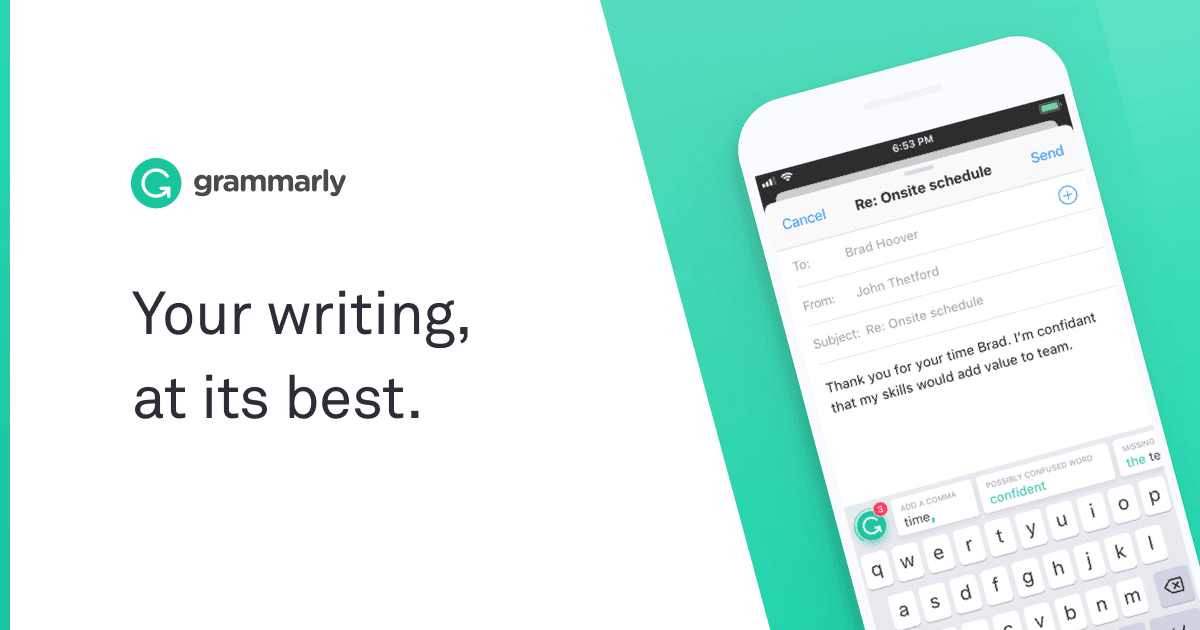
    Grammarly, the cloud-based app that checks your spelling, grammar, punctuation, and clarity to suggest better solutions for your writing style is getting an important update, which adds important features to iPhone and iPad apps.

    Apart from bumping the app to version 2.0, Grammarly developers introduced a brand-new editor for iPhone and iPad, which promises to offer users writing feedback on long-form documents, as well as personal statistics and milestones to help them improve while using the app. More importantly, the new editor is compatible with hardware keyboards too.

    Next in line, we have support for Safari extensions, which allows users to bring the app to just about any mobile web app. Last but not least, Grammarly Keyboard, one of the several apps included in Grammarly, now allows users to access the service’s writing suggestions in any mobile app.

    Of course, the usual bug fixes and performance improvement changes are included in the update too, so if you’re a long-time Grammarly user, then you’ll probably notice some of these too. Keep in mind that Grammarly requires a monthly subscription, but it will considerably improve your writing style, as well as highlight mistakes and makes suggestions for non-native speakers.

  • Singapore Firm Partners China’s The9 for Cloud Crypto Mining

    Singapore Firm Partners China’s The9 for Cloud Crypto Mining

    Singapore Myanmar Investco (SMI) will develop a cryptocurrency cloud-mining platform with The9, according to a memorandum of understanding signed by the two sides.

    The mining business is expected to be launched in the fourth quarter of the year, subject to regulatory approval, SMI said in an announcement on Friday.

    Operations will be hosted in a range of facilities across Canada, U.S., Central Asia and the ASEAN region, and will cover a basket of cryptocurrencies inclusive of bitcoin (BTC), filecoin (FIL) and chia (XCH). This move follows SMI’s entering into a subscription agreement with The9 for new shares in SMI, which was announced in June.

    SMI also said it reached an agreement with Chinese cloud mining software-as-a-service company Nhash for technical and support services for five years, as well as an option to purchase up to 4,000 crypto mining machines.

    SGX-listed SMI is an investment and management company focused on Myanmar. In June, it announced its intention to pivot to cryptocurrencies and to diversify its core business to include gaming, digital entertainment and robotics.

    Originally an online gaming firm, Nasdaq-listed The9 pivoted into mining in January and started operations the next month. However, it has been facing regulatory headwinds in China, where it operates. Like other miners, The9 has been looking to shift operations abroad.

  • Facebook’s mobile cloud gaming service now covers the entire US

    Facebook’s mobile cloud gaming service now covers the entire US

    Just like other giants in the industry (Microsoft, Google, NVIDIA), Facebook has its own cloud gaming service. Announced last year, the closed beta of Facebook’s cloud gaming platform promises to offer a decent catalog of games that can be played instantly, with no installs, while on the move.

    The service was launched with just a handful of cloud-streamed games on Android and web in select US regions. Today, Facebook announced that its cloud gaming platform is accessible to over 98% of people in the mainland United States.

    Also, the company revealed that it’s on track to hit 100% by fall of this year and that it will start rolling out the service in Canada and Mexico. By early 2022, Facebook plans to reach Western and Central Europe with its cloud gaming platform.

    The announcement includes one other highlight that involves a new partnership with a major game developer: Ubisoft. Under the new partnership, Facebook’s cloud gaming platform will add more titles to its catalog starting with Assassin’s Creed Rebellion, which was launched as a cloud-streamed game on Facebook Gaming.

    Ubisoft’s Assassin’s Creed game can be played on the Facebook app on Android and the web (via fb.gg/play). In addition to Rebellion, Facebook has added two other Ubisoft titles to its portfolio of streamable games: Hungry Shark Evolution and Hungry Dragon. Two others will be added in the coming months: Mighty Quest and Trials Frontier.

  • Google Messages will become the default messaging app for AT&T Android users

    Google Messages will become the default messaging app for AT&T Android users

    RCS (Rich Communication Services) is not something new, it’s just that many smartphone users don’t have access to the feature. AT&T and Google want to change that by making Messages the default messaging app for all the carrier’s customers in the United States who use Android phones.

    Google announced that it has teamed up with AT&T to upgrade the SMS experience with enhanced messaging features included in Messages. That means that AT&T Android users will benefit from expanded chat features based on RCS, as well as other enhanced features.

    Just to recap, RCS makes it possible for users to send higher-quality videos, share full-resolution pictures, send and receive messages over Wi-Fi or data, as well as participate in group chats that are easy to manage. Also, with the Messages app, users can see when someone is replying to a text.

    But wait, there’s more! Google confirmed that it’s now rolling out end-to-end encryption for one-on-one RCS conversations between people using Messages and those who have chat features enabled, another step forward to making messaging more secure for everyone using Android devices.

  • AT&T to move its 5G mobile network to Microsoft’s Azure cloud

    AT&T to move its 5G mobile network to Microsoft’s Azure cloud

    Microsoft and AT&T announced they inked a deal to provide the carrier with increased productivity and cost-efficiency of its 5G network services. Under the new partnership, AT&T will move its 5G mobile network to the Microsoft Azure cloud, while the Redmond-based company will gain access to the carrier’s intellectual property and technical expertise to grow Azure for Operators, its top-tier telecom offering.

    Furthermore, Microsoft confirmed that it will purchase AT&T’s Network Cloud platform technology, which the carrier’s 5G core network runs on. Furthermore, Microsoft will buy AT&T’s engineering and lifecycle management software that is typically used to design and deploy network cloud platforms specifically made for carriers.

    Regardless of the acquisitions announced today, AT&T will continue to operate its network and manage customer relationships, it’s just that it will now use Microsoft’s infrastructure.

    Naturally, Microsoft will be responsible for deploying both the software development and the carrier’s Network Cloud, as well as for bringing AT&T’s existing network cloud to Azure over the next three years. The announcement mentions that neither company is disclosing details on financial terms.