Tag: coffee

  • Malaysia’s Zus Coffee secures $57m funding, to expand into Singapore, Brunei

    Malaysia’s Zus Coffee secures $57m funding, to expand into Singapore, Brunei

    Malaysian coffee chain Zus Coffee has secured a US$57.27 million (RM 250) investment to support its expansion in Singapore and Brunei this year. The funding was secured from a consortium comprising private equity firm KV Asia Capital, Malaysian pension fund KWAP, and Indonesia’s Kapal Api Group.

    Founded in 2019, Zus Coffee has expanded to become one of Malaysia’s largest coffee chains, with an estimated  550 stores.

    It has also extended its footprint to the Philippines, where it operates 50 stores. This is following a strategic partnership with the Filipino hospitality group Choi Garden Restaurant Company, which acquired a 35 percent stake in the company last year.

    The Edge reports that the investment from KV Asia Capital will be raised in two phases: an initial US$10.7 million (RM 50 million), followed by an additional $42.8 million (RM 200 million) at a later date.

    KV Asia Capital has already invested in several other companies in Southeast Asia. These include the Taguig-based Wildflour Hospitality Group, the Vietnamese logistics firm Bee Logistics, the Indonesian beauty brand Victoria Care, the health food supplement company DXN, and the Malaysian supermarket chain TF Value Mart.

    Ernst & Young Malaysia acted as an adviser for the transaction.

  • As it exits other markets, Flash Coffee doubles down on Indonesia

    As it exits other markets, Flash Coffee doubles down on Indonesia

    Flash Coffee is expanding its footprint in Indonesia, with new store openings planned across Jakarta and Bandung and the rollout of new food and beverage offerings.

    The coffee chain said each outlet offers a larger space with a sit-and-stay design to encourage customers to have their coffees in-store. At the same time, it launched a more user-friendly process for digital ordering on its proprietary app.

    After last year’s restructuring, the company said its main focus is now on Indonesia and franchising the brand in other countries, following the closure of Flash Coffee in other Asian markets and the sale of its brand in Thailand as a franchise.

    Flash Coffee founder and CEO David Bruinier thanked its customer base and said the company is “just getting started” on its Indonesian expansion.

    “We are now expanding our footprint in the country, with plans to add many new stores to our portfolio within the next 12 months,” he added.

    The coffee chain now operates 67 stores and reported an increase in revenue per store by over 50 percent from early this year, reaching operational profitability.

    Launched in Singapore in 2020, the “tech-driven” coffee chain is now backed by New York-based venture capital firm White Star Capital as its largest shareholder after raising US$50 million in a Series B funding round last year.

    Jakob Angele, executive chairman of Flash Coffee and venture partner at White Star Capital, said the company is pleased with the brand’s success in Indonesia.

    “Indonesia is one of the most exciting and vibrant coffee markets worldwide. Flash Coffee is uniquely positioned to serve its growing demand for high-quality coffee,” he concluded.

  • Vietnam’s coffee export value rises 31% in 7 months

    Vietnam’s coffee export value rises 31% in 7 months

    Vietnam exported 964,000 tonnes of coffee in the first 7 months of 2024, worth nearly US$3.54 billion, down 13.8% in volume but up 30.9% in value compared to the same period last year.

    The Agency of Foreign Trade under the Ministry of Industry and Trade and the Vietnam Industry and Trade Information Center forecast that Vietnam’s coffee exports in the remaining months of the third quarter would decrease due to low supply.

    Supply will not increase until October, when the 2024-25 coffee harvest begins. Statistics from the Ministry of Agriculture and Rural Development show that the country’s coffee output is estimated at 1.47 million tonnes in the 2023-24 crop year, the lowest level in four years, down 20% compared to the 2022-23 crop year.

    Coffee output in the 2024-25 crop year is forecasted to continue to decrease due to unfavorable weather factors.

    Without including the inventory carried over from the previous year, Vietnam will only have about 200,000 tonnes left to export from now until September.

    However, the Vietnamese coffee industry will benefit in terms of price.

    The Global Robusta coffee prices would fluctuate in a strong and prolonged upward trend due to concerns about scarce supply from Vietnam.

    According to the International Coffee Organization (ICO), the world may face a shortage of Robusta coffee of up to 35 million bags (60kg/bag) by 2040.

  • Luckin Coffee to launch in Malaysia

    Luckin Coffee to launch in Malaysia

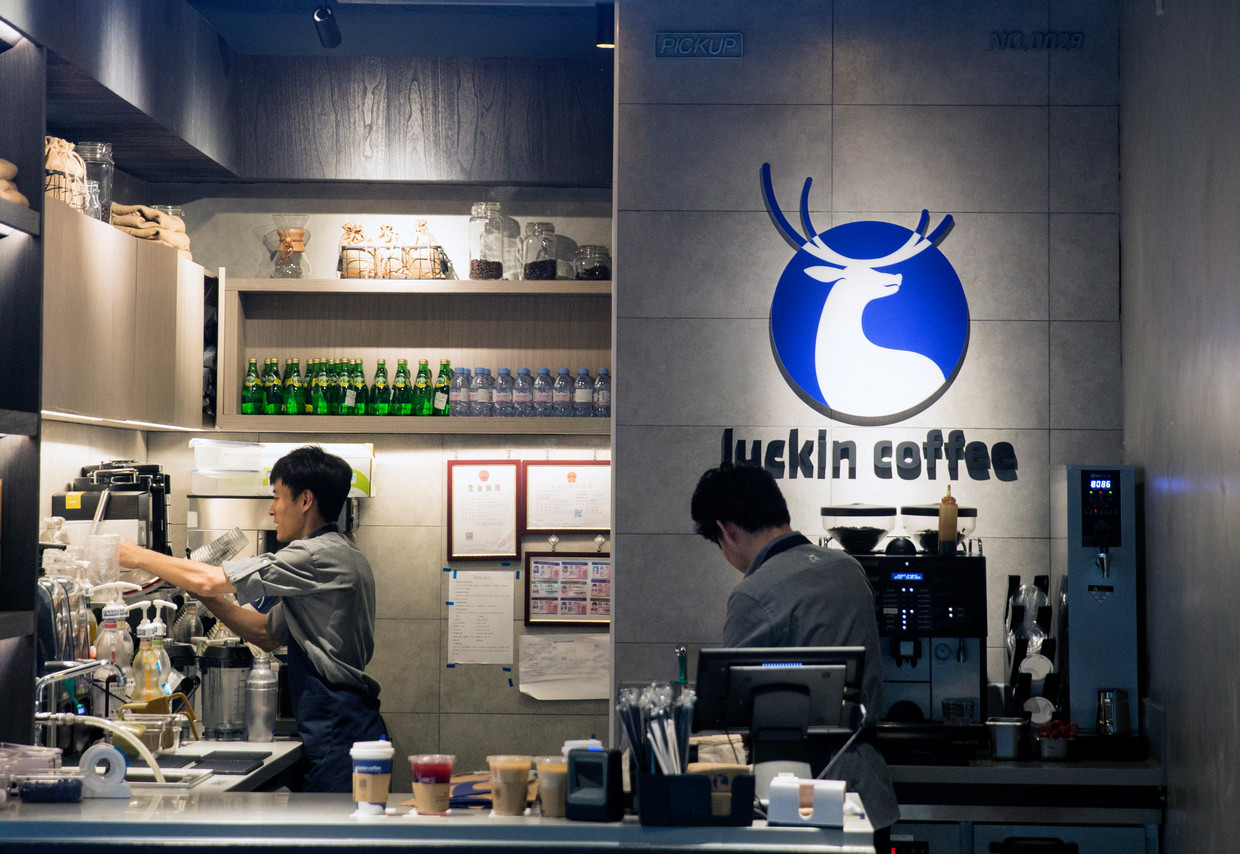
    Chinese chain Luckin Coffee will launch its first location in Malaysia, its second overseas market after Singapore.

    According to local sources, the launch is in collaboration with a Bursa Malaysia-listed company. Luckin Coffee intends to grow its market footprint over the next five years, with stores opening nationwide.

    Luckin Coffee, founded in 2017, is one of the fastest-growing coffee chains, surpassing Starbucks as China’s largest.

    The brand operates more than 18,000 stores in China and 32 locations in Singapore.

    Last year, Luckin Coffee sold more than 5.42 million cups of the alcohol-infused latte it launched with Kweichow Moutai on its first day of business, setting a new sales record for the Chinese coffee company.

    In May, the coffee company stated that its first-quarter revenues increased 41.5 percent yearly to US$869.5 million, owing to increased product sales and additional shop openings. The coffee business opened 2342 net new outlets over the year, including two in Singapore, bringing the total number of stores to 18,590 by the end of March.

  • Indonesian coffee brand Tomoro Coffee plans expansion in the Philippines

    Indonesian coffee brand Tomoro Coffee plans expansion in the Philippines

    Indonesian coffee chain Tomoro Coffee has announced a US$10 million investment to expand its presence in the Philippines.

    According to World Coffee Portal, Tomoro Coffee aims to establish 100 stores in the country by the end of this year.

    The first Tomoro Coffee store in the Philippines opened in April at the Wynn Plaza apartment complex in Manila. Since then, the chain has opened five sites in the country, including a three-story flagship location at Far Eastern University this month.

    Tomoro Coffee, which boasts more than 500 outlets in Indonesia since its launch last August, is aggressively pursuing international growth.

    Its recent milestones include debuting in China last year, in Singapore in February, and opening a roastery in Jakarta in May.

    The brand plans to produce 2400 tonnes of coffee annually to support its expansion.

    “We are pleased to announce our expansion into the Philippines and are committed to providing fresh coffee to our customers regularly,” said Tomoro Coffee.

    “This marks a significant step in our journey to reach 1000 stores across Southeast Asia within the next 12 months.”

    Tomoro Coffee is actively seeking franchise partners to facilitate its expansion.

  • Some Vietnam coffee farms thrive despite drought

    Some Vietnam coffee farms thrive despite drought

    Vietnamese coffee growers have been hit hard this year by the worst drought in nearly a decade, raising concerns of pricier espressos across the world, even as some farmers keep yields healthy with clever countermeasures.

    Domestic forecasts for next season’s harvest in Vietnam, the world’s second biggest coffee producer, remain grim.

    The Mercantile Exchange of Vietnam (MVX) expects a 10-16% fall in output because of the extreme heat that hit the Central Highlands coffee region between March and early May, according to deputy head Nguyen Ngoc Quynh.

    However, a return of rains in recent weeks has improved the outlook, boosting confidence among farmers and officials. But it remains unclear whether the improved weather will help boost output and drive down prices of robusta beans, the variety most commonly found in espressos and instant coffees, of which Vietnam is the world’s top producer.

    “I expect the country’s output to fall by 10-15%, but my farm will increase production”, said Nguyen Huu Long, who grows coffee in a 50-hectare plantation in Gia Lai, one of the top coffee-producing provinces in Vietnam.

    To protect his trees during the heatwave, he kept the soil around the plants moist by covering it with leaves. Contrary to the local practice of cutting trees after a few years to boost soil quality, he keeps his growing for decades. As a result, plants have deeper roots and broader access to underground water reserves.

    Farmers in his plantation also soften the soil around plants to improve absorption of rainwater and fertilisers, said Doan Van Thang, 39.

    Tran Thi Huong, a tenant farmer who works in another plantation 20 km from Pleiku, Gia Lai’s capital, resorted to using more water than usual. Thanks to abundant reserves from canals built by local authorities, she could keep her plants sufficiently irrigated during the heatwave.

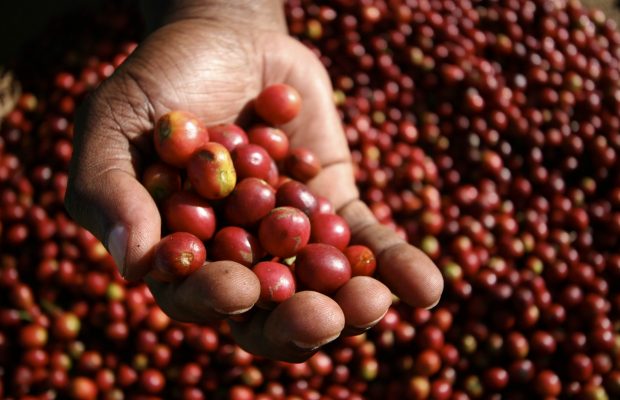
    Coffee cherries are smaller than in previous years, but she expects the overall output to be unaffected. It also helped that she timely intervened with biopesticides against bugs that were more numerous than usual because of the extreme weather.

    That is in line with the forecast from the United States Department of Agriculture (USDA) which estimates Vietnam’s next harvest would be roughly steady versus the current season’s output – far less pessimistic than domestic projections.

    Bitter price effect?

    Whatever the impact on the harvest will be, coffee prices for drinkers around the world are likely to rise.

    Wholesale prices in Vietnam and London-traded robusta futures have risen to record highs earlier this year mostly after an underwhelming harvest in Vietnam and because of fears over the country’s next harvest after the drought, according to multiple traders and analysts.

    Record wholesale prices have so far had a limited impact on consumer prices, with coffee inflation up by only 1.6% in the 27-country European Union in April, according to the latest Eurostat data, and 2.5% in robusta-loving Italy.

    While well below price rises from a year earlier, it was higher than 1% in the March E.U. reading, a sign roasters may have started to pass their higher costs on consumers.

    Besides, worries about Vietnam are far from over, as insufficient rains after the drought or excessive downpours before the upcoming October harvest season could further reduce output, warned a Vietnam-based trader.

    The high wholesale prices may also be there to stay, as robusta demand is growing globally and farmers have boosted their leverage in the current circumstances, with many hving also replaced coffee plants with pungent smelling durian, a tropical fruit experiencing huge demand in China.

    “They have the financial ability to hoard and hold on goods, so they will not be in a hurry to sell,” said Le Thanh Son, of Simexco, one of Vietnam’s biggest coffee exporters.

  • Grinders Coffee unveils new look after a decade

    Grinders Coffee unveils new look after a decade

    Grinders Coffee has unveiled new packaging design and branding – its first change in more than a decade.

    The new look features artwork on premium products such as Crema, Espresso, Rich Espresso, and Organic, and includes a new slimline pack for the 200g grind.

    ”The new premium packs have illustrations on the side that speak to the Grinders philosophy, connecting each of our major pillars through a fun and light-hearted attitude,” said Burcu De La Cruz, marketing manager at Grinders Coffee.

    According to the brand, the launch reflects its commitment to sustainability, reflecting community demands.

    Grinders Coffee, based in Melbourne, is one of Australia’s largest coffee roasters. The brand specialises in roasting beans with a rich fragrance and aroma. Last year, Grinders Coffee launched Cafe-Q, a premium coffee bean variety, in supermarkets.

  • Vietnam’s coffee prices on the rise

    Vietnam’s coffee prices on the rise

    Coffee prices continued to rise sharply, ranging from VND122,000 – 123,500 (US$4.8-4.86) per kilogram in the Central Highlands, Vietnam’s largest coffee growing area.

    Accordingly, the highest price was reported in Dak Nong province, at VND123,500 per kilogram on June 5.

    In Dak Lak province, coffee prices increased by VND3,000 per kilogram compared to June 4 to reach VND123,000 per kilogram. The product is being purchased at the same price in Gia Lai and Kon Tum.

    The weakening of the U.S. dollar to its lowest level in the past two weeks, and speculative activities in many countries worldwide, among other factors, are driving up the prices of most commodities, including coffee.

    The prices of Robusta coffee in London have seen significant increases, hovering around US$3,846-4,319 per tonne. Arabica coffee prices in New York have also experienced the rising trend.

    In addition to Brazil, other countries such as Colombia, Peru, and Honduras are in the coffee harvest season. Although production has slightly increased, it is still lower than market demand, leading to a continued upward trend in coffee prices.

  • Starbucks faces price war in China as low-cost rivals gain ground

    Starbucks faces price war in China as low-cost rivals gain ground

    As Starbucks faces stiff competition for its brew in China from fast-growing, low-cost rivals who have chipped into its market share, the coffee chain is increasingly being dragged into a price war it says it wants to avoid.

    The stakes are high for Starbucks, which has come under growing pressure from investors recently due to weaker sales in its two biggest markets – the United States and China.

    While the Seattle-based company has got its work cut out in the world’s second-biggest economy, where its rival Luckin Coffee pipped it to the top spot on annual sales for the first time in 2023, management is convinced it does not need to get into a race to the bottom on prices.

    “We are not interested in entering the price war,” Starbucks’ China CEO Belinda Wong said in January. “We are focusing on capturing high quality but profitable, sustainable growth.” Those sentiments were repeated by founder Howard Schultz on a visit to Shanghai in March.

    However, analysts, Reuters checks and Chinese consumers posting on social media point to an increase in discount coupons being offered by Starbucks through its own mini-programs, as well as via the coffee-maker’s livestreams on Douyin, and third-party delivery platforms popular for ordering coffee.

    In effect, Starbucks has made it relatively easy for Chinese consumers to buy its most commonly ordered coffees with 30% discounts or two-for-one coupons without dropping their listed prices, sliding down a slippery slope of increased discounting towards a potential price war.

    While Reuters was unable quantify just how much Starbucks’ use of discount coupons has increased and the firm declined to comment on its coupons policy, these types of discounting practices were once a rarity from the U.S. coffee maker. In 2024, however, they have become easily available.

    Walker Shen, 38, is an office worker from Shanghai who frequently uses discount coupons to buy his daily coffee. He has noticed an increase in push notifications from Starbucks in recent months offering him 30% off coupons.

    “I think less people are drinking Starbucks now,” Shen said, adding that “most people aren’t that demanding when it comes to quality,” meaning fewer consumers were willing to pay a premium for Starbucks.

    The emergence of a price war in the coffee sector in China comes amid a persistent deflationary environment, exacerbated by weak consumer sentiment as the economy struggles to recover and wages stagnate.

    Unfortunately for Starbucks, says Jason Yu, greater China managing director of market research firm Kantar Worldpanel, it doesn’t really have a choice but to compete to some degree on price in a market where low cost battles have become “the new normal”.

    “Strengthening the promotional offers and increasing the intensity of their promotions, being very active on social media, are essential moves to maintain their position so market share is not further eroded,” he added.

    In second quarter results released at the beginning of May, Starbucks said same-store sales in China – its second-largest market – fell 11%, prompting it to slash annual sales forecast.

    The coffee chain had a 13.6% market share of China’s cafe and bar market in 2022, according to the most recent available data. Daxue Consulting, a market research firm, estimated China’s roast coffee market at $11.7 billion in 2023 and projected it to grow to $13.25 billion by 2025.

    Starbucks remains more discerning in its approach to distributing discount coupons than others, says independent food and beverage analyst Zhu Danpeng.

    “Starbucks will do promotions, but their promotion volume will be small, they will be in a specific period of time, or for some specific products,” he said.

    Starbucks China CEO Wong last year said “Deep Brew”, the firm’s AI data analytics engine, would allow it to pitch discounts to “the right customers at the right time” in China, though the firm declined to comment on the use of Deep Brew as part of its current strategy.

    Coffee for beans

    The list price of a large Luckin latte at 29 yuan ($4.00) is not far off Starbucks’ latte price (33 yuan), but Luckin actually often sells lattes at 9.9 yuan with a widely-available coupon.

    Offerings from other competitors are even cheaper, with Cotti, a chain launched by former Luckin Chairman Charles Lu, offering Americanos for 8.8 yuan with a coupon and KFC’s KCoffee allowing members to buy 5 yuan coffees for 30 days on a 10-yuan membership fee.

    Helped by its steep discounts and quicker store expansion – with 18,590 stores already more than double the 9,000 Starbucks says it will open in China by 2025 – Luckin revenue reached 24.86 billion yuan ($3.45 billion) in 2023, surpassing Starbucks’ comparable annual sales of $3.16 billion in China.

    Though price will be an important factor in consumer decision-making for the foreseeable future, Starbucks won’t beat its competition in a race to the bottom, Kantar’s Yu says, adding that the American firm should continue with its strategy of offering a premium in-store experience its competitors can’t match.

    “Starbucks needs to compete on price but not only compete on price,” he said. “They need to lead in innovation, lead in the conversation about coffee and lead in creating emotional value for consumers, or they will lose out more to the local competition.”

  • Nespresso launches Maple Pecan flavour capsule

    Nespresso launches Maple Pecan flavour capsule

    Nespresso has launched a Maple Pecan flavour capsule for its Vertuo coffee machine.

    Described as having a rich caramel flavour balanced with notes of maple syrup and nuttiness, the coffee is served in a 230ml cup size and can be enjoyed with milk, hot, frothed, or chilled over ice.

    Nespresso coffee ambassador Mitch Monaghan recommends extracting this coffee using Expert Mode to brew a double espresso, perfect for a strong iced latte or cappuccino, then topping the coffee with maple syrup and crushed pecans to enhance the flavours of the blend.

    “We’ve had many coffee lovers who’ve seen the hype overseas reaching out to ask us when Maple Pecan will come to Australia,” said Monaghan. “I’m happy to say the wait is over!”

    Maple Pecan joins the brand’s permanent collection of flavoured coffees from the Vertuo Barista Creations range and is available to purchase in Nespresso boutiques and online.

  • Vietnam coffee farmers boost irrigation but running low on water, says report

    Vietnam coffee farmers boost irrigation but running low on water, says report

    farmers in Vietnam, the world’s largest producer of robusta coffee, have sharply increased irrigation use in the country’s main producing regions amid excessive dryness, but they are now running low on water, a report said on Monday.

    So far this season, many farmers have used irrigation as much as seven times already, compared with five times usually in a normal season, and they are seeing the need to irrigate coffee trees for an eighth time if they have water, said J.Ganes Consulting LLC in notes from a crop tour in Vietnam.

    “The severe water deficiency and extreme temperatures have caused nutrient imbalances for the trees,” said soft commodities analyst Judith Ganes, president of J.Ganes Consulting, adding that wells used by the farmers to get water for irrigation are running low.

    The report says that the hot and dry environment has favored the spread of pests such as cochinilla in some farms. That insect can hurt flowers and small fruits in the trees, leading to lower agricultural yields.

    An intense heat wave is sweeping through Southeast Asia, and maximum temperatures measured in several parts of northern and central Vietnam ranged from 40.2 to 44.0 degrees Celsius (104-111°F), the country’s national weather agency said on Sunday, adding that temperatures will not subside until Wednesday.

    Vietnam’s weather was the latest factor behind record high prices for robusta coffee . The market was already hot due to below-average production for Vietnam and Indonesia in the last crop, and now the climate conditions have not been favorable for the development of the new crop.

    The report regarding one of the main coffee-producing regions in Vietnam said, “The incidence of cochinilla in Gia Lai is extensive and not yet under control. The speed at which cochinilla can spread is very fast, and so this situation is very concerning.”

    Ganes said there is forecast for rains coming in May, which could relieve the dryness.

  • Nescafe and Arnott’s launch White Choc Tim Tam-inspired coffee

    Nescafe and Arnott’s launch White Choc Tim Tam-inspired coffee

    Nescafe and Arnott’s have teamed up to launch another Tim Tam-inspired drink, Nescafe White Choc Mocha.

    The new flavour combines creamy coffee with the white chocolate taste of Tim Tam biscuits.

    “Nescafe is always looking for ways to delight and surprise our consumers,” said Olga Starus, head of marketing – coffee, at Nestle.

    “Following the overwhelmingly positive response to the Nescafe Mocha inspired by Tim Tam range, we decided to take this collaboration of two iconic brands up a notch with this rich, velvety white chocolate twist.”

    Nescafe White Choc Mocha inspired by Tim Tam will be available with an RRP of $7.60 for a box of eight sachets at Woolworths stores nationwide.

  • Coffee chain Single O expanding Japanese footprint after early success

    Coffee chain Single O expanding Japanese footprint after early success

    Sydney-based coffee roaster Single O will open Ryogoku Roastworks, its second cafe in Japan on Friday, replacing the brand’s existing roastery.

    In a further sign of ongoing expansion in Japan, Single O will launch its Shibuya coffee bar in July.

    The new roastery and cafe will serve Single O’s signature coffee Reservoir and will feature self-serve batch brew taps, and a breakfast and lunch menu.

    It will also have four times the current production capacity, accommodating the company’s growing Japanese customer base.

    “We hit the ground running in Japan a decade ago, and the response we’ve had since then has honestly blown us away – we’re now roasting for 130 wholesale partners across Japan,” said Single O co-founder Dion Cohen.

    “Moving the roastery into a bigger and better space is really an opportunity to double down in support of those partners and grow our offering.”

    Single O Japan GM Yu Yamamoto, who has been an integral part of the brand for 15 years, will spearhead the opening.

    Yamamoto joined Single O Surry Hills on an overseas exchange and eventually led the team’s expansion in Japan, heading the launch of the original roastery in 2014 and the Hamacho cafe in 2021.

  • Coffee prices soar to record high as supply shrinks

    Coffee prices soar to record high as supply shrinks

    Coffee prices surged 11.3% to a historic high of VND98,100 (US$3.95) per kilogram on Wednesday as inventories dwindle and production is forecast to decline.

    The price represented a 110% increase from a year ago. On online coffee business forums, many farmers and traders have expressed surprise at the unprecedented prices, which were around VND70,800 at the beginning of the year.

    Prices also rose globally, with the May robusta LRCc2 futures contract rising to an all-time high of $5,999 per ton and the May Arabica KCc1 to $4,186.5. According to Nguyen Hai Nam, chairman of the Vietnam Coffee Cocoa Association, the sharp increase in prices is due to a decline in production and record low inventories.

    He said droughts in coffee-growing countries caused by climate change and the El Nino phenomenon have declined global production. His association expects coffee harvests to be 10% lower this year since farmers have shifted to other crops due to low prices in recent years. Shipping disruptions and freight hikes due to the Red Sea tensions also contribute to higher global prices, he added.

    The skyrocketing prices have heavily impacted traders. Nguyen Loan, a coffee merchant in Dak Lak Province, said she is cutting back on purchases due to the record prices, pointing out that even large traders are hesitant to stock up on coffee.

    “I previously agreed to sell 1,000 tons of coffee to an exporter at VND70,000 per kilogram. At the current prices, I cannot procure enough stock to deliver.”

    Phan Minh Thong, chairman of agricultural products exporter Phuc Sinh Group, said coffee merchants are demanding as much as VND99,000 per kilogram.

    The company had to make some small purchases and bear the losses to maintain its operations.

    “The company has faced huge losses recently. We will incur bigger losses if we buy more.”

    According to traders, importers are now buying coffee from India and Brazil instead of Vietnam because of its high prices.

    With Brazil’s coffee crop set to harvest in April, prices in the global market might soon cool down.

    In the first two months of the year Vietnam exported 438,000 tons of coffee for $1.4 billion, according to data from the General Department of Customs.

    They represented increases of 28% and 85% year-on-year.

  • Coach opens first cafe and fine-dining experience in Indonesia

    Coach opens first cafe and fine-dining experience in Indonesia

    Coach is expanding into the food and beverage business by launching its first concept dining experience in Jakarta, Indonesia.

    The destination comprises The Coach Restaurant and Coach Coffee Shop at Grand Indonesia Mall.

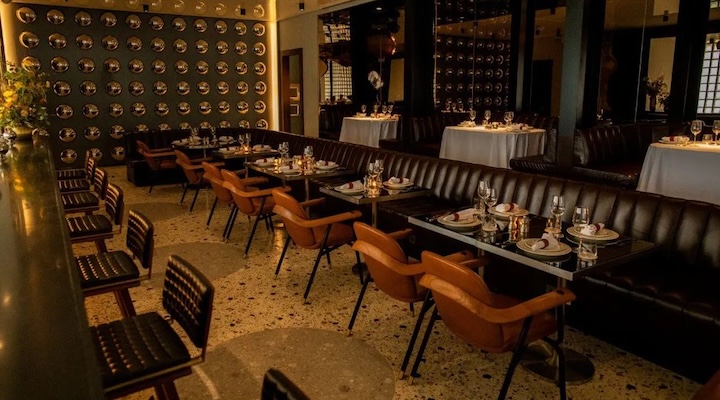
    The Coach Restaurant, designed by Coach creative director Stuart Vevers and William Sofield of Studio Sofield, serves traditional New York steakhouse cuisine.

    It reportedly incorporates natural and industrial materials in its architectural aspects, a nod to Coach’s craftsmanship and New York roots.

    Meanwhile, the Coach Coffee Shop contains New York cityscape wallpaper and industrial design elements.

    Coach and Brawn & Brains Coffee collaborated to open the world’s first cafe in Singapore last year. A month later, the luxury retailer opened Coach Airways, an aviation travel-themed store at the Freeport A’Famosa Outlet in Malacca, Malaysia.