Tag: coffee

  • Starbucks Plans To Step Up Digital Marketing Efforts

    Starbucks Plans To Step Up Digital Marketing Efforts

    The coffee chain added 1.6 million new U.S. members to its Starbucks rewards program. In addition, Starbucks discovered that members of Starbucks rewards were buying more: Over the quarter, their spend increased to 39 percent of U.S. company-operated sales.

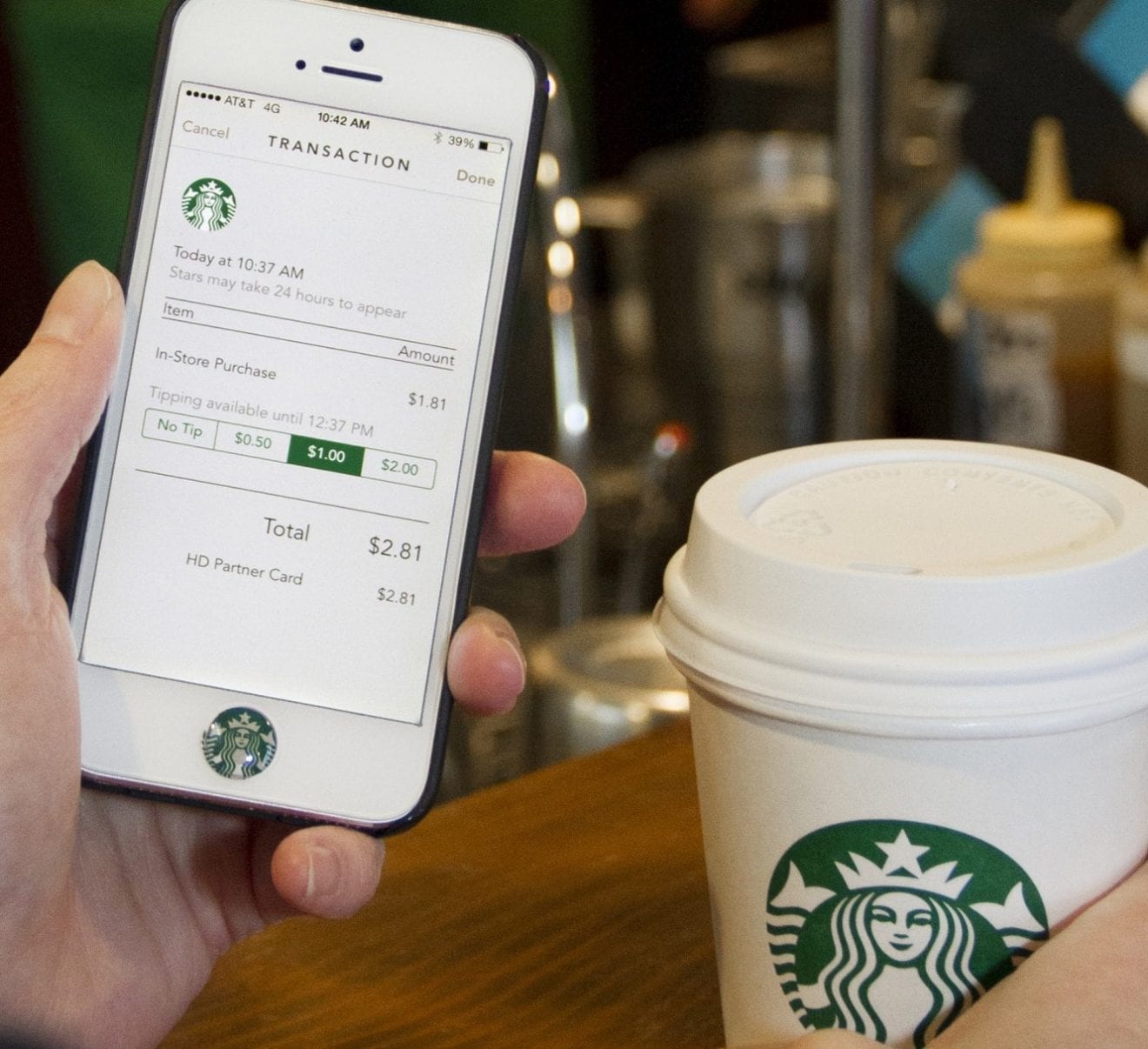
    Beyond its loyalty program, Starbucks noted that customers were taking advantage of opportunities to skip the counter: Mobile Order & Pay represented 12 percent of U.S. company-operated transactions during the quarter.

    Overall, Starbucks also saw growth in comparable store sales in both the U.S. and abroad. Global comparable store sales rose by 2 percent, essentially in line with analysts’ estimates of 1.9 percent. Americas and U.S. comp store sales also increased 2 percent, while China comp store sales rose at the slightly higher rate of 4 percent.

    In terms of financials, Starbucks reported better-than-expected sales: The coffee chain beat revenue estimates by $100 million, with revenues of $6 billion, and met analysts’ earnings estimates at $0.53 per share. Starbucks President and CEO Kevin Johnson said the company reported solid results for the quarter.

    “Starbucks Q2 of fiscal 2018 represented another quarter of record financial results, highlighted by accelerating momentum across our Americas business — particularly in the U.S. — continued strong performance in China and our strongest comp growth in Japan in five quarters,” Johnson said in a press release.

    Digital Expansion

    One of Starbucks’ key priorities is to expand its digital interactions with customers.

    “Establishing digital relationships with many more customers represents a significant growth opportunity, as we have proven that a direct communications channel combined with personalization enhances the customer experience and drives customer engagement,” Johnson said during the call.

    To expand its digital relationships, Starbucks is implementing new ways to attract digitally registered customers beyond the rewards program. For example, the coffee chain is offering its Mobile Order & Pay to all customers and leveraging Wi-Fi sign-ins at its brick-and-mortar stores. In addition, Starbucks is reinventing Frappuccino Happy Hour through the use of single-use digital coupons. Johnson said these efforts are already yielding results and will generate a few million more registered users by the year’s end.

    This difference is driving a shift in Starbucks’ marketing strategy. In the past, Starbucks has offered a drumbeat of promotional offers that have not necessarily led to sustained sales. For example, the company offered a Frappuccino Happy Hour to all of its customers over a short period of time. But that strategy didn’t work: The deal didn’t improve sales of other drinks in 2017. The promotion saw “a lower-than-expected lift in non-discounted Frappuccino beverages following Happy Hour,” Chief Financial Officer Scott Maw explained on a July 2017 conference call.

    As a result, the company is taking a new approach. Starbucks’ updated program will sign customers up for direct digital relationships and promote a variety of beverages throughout the year. In essence, the goal behind the shift is to transition from a short-term, one-and-done approach for promotions to more sustained marketing efforts. Through this strategy, the company is expanding its digital reach beyond its loyal rewards members to connect with as many non-rewards customers as possible. Starbucks can now personalize its communications to customers while also gaining direct access to them.

    China Expansion

    Starbucks already has 3,200 company-operated stores in 141 cities across Mainland China, but the coffee chain anticipates a larger potential market there.

    “The opportunities for Starbucks in China, which are significant, are growing along with the size and scale of our business,” Johnson said on the call.

    To that end, the company is holding a China Investor Tour. Of course, the company is no stranger to China: It’s been in the Chinese market for 20 years. According to Johnson, the middle-class population in China stands around 600 million people, which could provide an expanded market for the company.

    “No Western company or brand is better positioned to benefit from the rapidly expanding Chinese middle class than Starbucks,” Johnson said.
  • Phuc Long makes it debut in Danang

    Phuc Long makes it debut in Danang

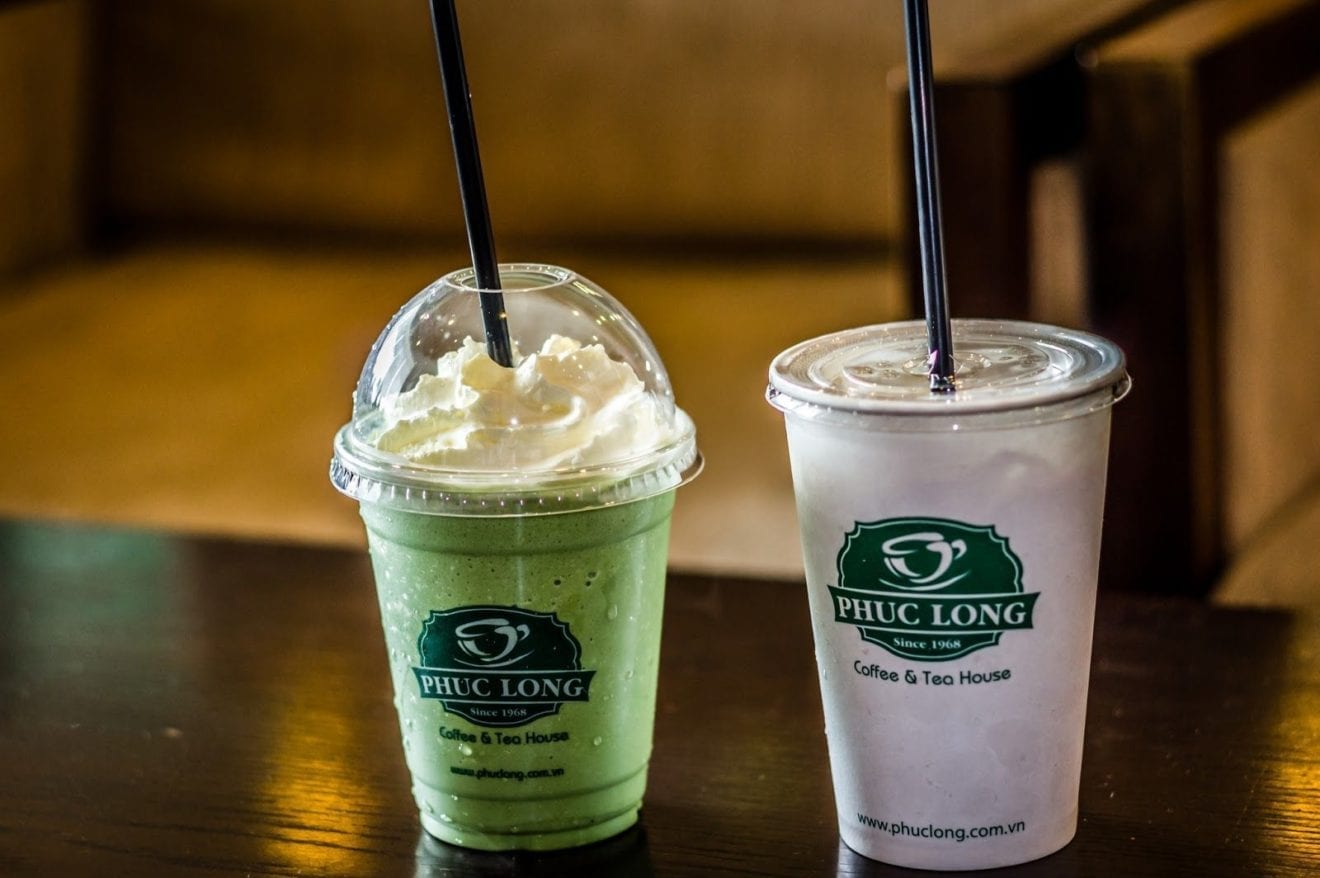
    Vietnamese coffee and tea chain Phuc Long has opened its first Danang outlet.

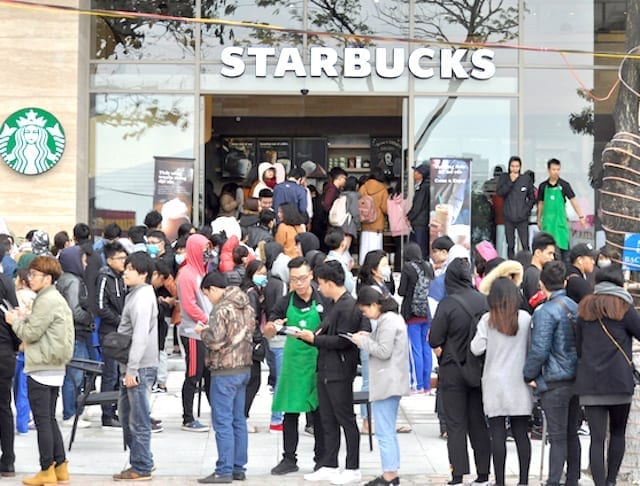
    Located on the second floor of Lotte Mart, the new Phuc Long Danang store drew long queues on opening day, as it offered three days of launch promotional activity. From today until Sunday, customers who come early and check-in on Facebook will get free vouchers and coffee mugs.

    Phuc Long has partnered with Grab to offer discount for rides to its store – for both GrabBike and GrabCar.

    The second Phuc Long Danang outlet will open soon on Nguyen Van Linh.

  • Gloria Jeans to expand with 40 stores in Germany

    Gloria Jeans to expand with 40 stores in Germany

    A local scandal hasn’t dampened Retail Food Group’s international ambitions, with the franchise giant announcing that its troubled Gloria Jeans brand will expand into Germany.

    A 10-year master franchise agreement has been signed with a group of local businessmen who are slated to open 40 Gloria Jeans outlets in Germany over the next five years.

    The deal follows a slate Master Franchise Agreements signed by RFG across the Donut King and Crust Pizza Gourmet Pizza brands in recent months as it looks to diversify its operations outside of Australia.

    Gloria Jeans already has master franchise deals in the Czech Republic, Poland and Romania but Germany will considerably bolster its presence outside of eastern-Europe.

    The first German Gloria Jeans store will be in Cologne and will open by the middle of this year.

    Retail Food Group has been embarking on a modernization plan for the coffee brand recently, unveiling new store concepts to try and excite shoppers after sales from its beverages division struggled to gain traction last year.

    RFG’s chief executive of international Mike Gilbert said Europe was an important market for the business and that Gloria Jeans was positioned for success in Germany.

    “Germany has a growing speciality coffee market and Gloria Jean’s Coffees has an outstanding offering to meet that need. It’s an offering that is already very successful with close to 900 outlets throughout the world,” he said.

    “Retail Food Group is actively marketing our brands in Europe and see this region as a key part of our international growth strategy.”

    International has been one of the few bright spots for RFG in recent months as it navigates slowing trading and the fall-out from media reports that its business model is treating franchisees poorly.

    In March the business booked a $87.8 million half-year loss, flagging the closure of up to 200 stores of its thousand-plus stores.

  • Starbucks CEO apologises

    Starbucks CEO apologises

    Starbucks has found itself in the middle of a public relations disaster in the United States after an incident in one of its Philadelphia stores last week that saw two African American men arrested went viral.

    Starbucks chief executive Kevin Johnston has issued a statement unreservedly apologising to the men, who were handcuffed by half a dozen police officers in an outlet last Thursday following a dispute with a store manager.

    The men, who were waiting for a friend, were asked to leave after using the bathroom without making a purchase but refused, at which time the manager called 991, local police said.

    A video of the arrest was shared millions of times on social media over the weekend, sparking calls to boycott the coffee chain and protests outside of its stores.

    In a public statement Johnstone said the incident led to a “reprehensible outcome” and that he would be personally overseeing a review of Starbuck’s training processes.

    “We have immediately begun a thorough investigation of our practices. In addition to our own review, we will work with outside experts and community leaders to understand and adopt best practices,” he said.

    “The video shot by customers is very hard to watch and the actions in it are not representative of our Starbucks mission and values.

    “Regretfully, our practices and training led to a bad outcome—the basis for the call to the Philadelphia police department was wrong,” Johnston continued.

    Johnstone has offered to meet the two men in person to offer a face-to-face apology.

    Philadephia mayor Jim Kenney said the incident exemplified an example of racial discrimination, adding that he has referred the matter to the Philadelphia commission on human relations.

    “I am heartbroken to see Philadelphia in the headlines for an incident that — at least based on what we know at this point — appears to exemplify what racial discrimination looks like in 2018,” he said in a statement.

  • Starbucks Uruguay opens first cafe in the country

    Starbucks Uruguay opens first cafe in the country

    Starbucks Uruguay has opened its first cafe, located in the capital city Montevideo.

    The Seattle-headquartered coffee giant appointed Alsea International as its local partner, a leading restaurant operator in Latin America and Spain, whose brand portfolio already includes Domino’s Pizza, Burger King, Chili’s, California Pizza Kitchen, PF Chang’s, Italianni’s, The Cheesecake Factory, Archie’s and Foster’s Hollywood. It has 3300 stores in total in Mexico, Argentina, Chile, Colombia, Brazil and Spain, including 900 Starbucks outlets in include Mexico, Colombia, Argentina and Chile.

    The debut Starbucks Uruguay store is located in the Montevideo Shopping mall. Starbucks says the store’s design honors Montevideo city and its culture. Exposed concrete columns and ceilings bring character and texture to the store. Custom leather details  – a material with great local relevance – are designed to evoke a warm ambience. The cafe has a green living wall with local plants to connect the store to the origins and environment of a coffee farm.

    One of the most striking features of the store is a mural painted by Nicolas Alfalfa, a local artist. Alfalfa was able to illustrate the Siren, the iconic symbol of the Starbucks brand, over a concrete finish, extending across the back wall of the store and which can be observed from any point within the space.

    “Our first store in the beautiful country of Uruguay marks a key milestone for our expansion in Latin America,” said Ricardo Rico, Starbucks GM and VP for Latin America.

    Federico Tejado, director of Alsea International, said at least five Starbucks Uruguay stores would be opened this year and 10 by 2020.

    “We are proud to present a one-of-a-kind store that will make all our partners and customers in Uruguay feel proud,” said Pablo Jaratz, GM of Starbucks Uruguay. “Our passionate and knowledgeable baristas have spent many months training with some of our best Starbucks baristas, coffee masters and experienced partners only for this day.”

  • Ediya Coffee drops plan to launch an IPO for China

    Ediya Coffee drops plan to launch an IPO for China

    South Korea’s Ediya Coffee has dropped its plan to go public this year, opting instead to re-enter China through Beijing.

    “In terms of growth and profit margin, we are fully ready for an IPO, but we decided we must tend to our franchisees first,” says CEO Moon Chang-ki.

    In a move that would have led to Korea’s first coffee stock, Ediya Coffee in December appointed Mirae Asset Daewoo as its underwriter for an IPO this year. Ediya had decided to list to help it challenge Starbucks Coffee on Ediya’s home territory.

    Meanwhile, labour costs have shot up in South Korea after the hourly minimum wage was pushed up by 16.4 per cent to KRW7530 (US$7) from January.

    “The subsidy to help franchisees sustain staff increased by 4.5 billion won,” says Moon, partly admitting the spike in labour cost had disrupted the IPO schedule. Instead, the coffee chain will renew its overseas campaign, starting with a shop in Beijing next year. It had pulled out of China in 2008 after three years.

    Moon acquired Ediya Coffee from its founder in 2004. Twelve years later it became the first homegrown coffee brand to run 2000 stores. It is expected to open its 2500th store this month. The company generated KRW700 billion in sales last year and as about 10,000 employees.

  • Starbucks Coffee Korea walks the talk

    Starbucks Coffee Korea walks the talk

    Voice recognition ordering has been introduced by Starbucks Coffee Korea, thanks to a 50/50 JV between Starbucks Coffee International and Shinsegae Group.

    Starbucks Coffee Korea has become the first retailer to use Samsung’s intelligent assistant Bixby, available on certain Samsung Galaxy devices, to allow for end-to-end ordering and payment.

    The features are an extension of Starbucks Siren Order, the company’s mobile order-and-pay technology that lets customers in South Korea order and pay for their purchases before arriving at the store.

    Bixby allows members of Starbucks loyalty program (My Starbucks Rewards) to place an order and pay through voice recognition “on command”. Customers simply speak as they would to a barista, including modifying their drinks to meet their preferences.

  • Starbucks Hong Kong adds alcohol to IFC Mall menu

    Starbucks Hong Kong adds alcohol to IFC Mall menu

    Starbucks Hong Kong has opened its first cafe serving alcohol – including coffee-infused craft beers, exclusive to the city.

    Starbucks’ local licensee, the Dairy Farm International subsidiary Coffee Concepts, says the move is part of its strategy of elevating the chain’s ‘Third Place’ experience for its customers through continuous innovation in its coffee offer and in-store experience.

    After a month-long refit, the store on the level 2 podium of IFC Mall in Central was formally unveiled to media last evening. It has been upgraded into the Starbucks Reserve format in a bid to attract customers after work as well as during the day.

    And besides gourmet coffee blends, a Starbucks Reserve range of merchandise and beer, the cafe offers a selection of wines and light meal menu featuring dips, cured-meat-and-cheese board, bacon-wrapped asparagus skewers and baked meatballs.

    Craft beer partnership

    Starbucks Hong Kong has released two coffee-infused craft beers created in partnership with a local brewery. A company spokesperson says the two beers are infused with “signature notes of Starbucks coffee, leaving a refreshing taste on the tongue”.

    “The Caramel Macchiato Cream Ale is inspired by the signature Starbucks Caramel Macchiato. Cream ale is harmoniously brewed with pre-ground Starbucks Colombian coffee and delectable caramel for more than 18 hours, resulting in an irresistibly smooth taste with nutty notes and a subtle caramel sweetness, as well as a brilliant golden colour.

    “The Mocha Brown Ale marries a robust brown ale with the indulgent chocolate and soft spice notes of Starbucks Caffe Mocha. Brewed with Starbucks Guatemala Antigua cold-brewed coffee and cocoa nibs, the intense brown ale will surprise customers with its distinctive contrast of dark-brown hue and luscious sweetness.”

    Starbucks Hong Kong is also launching three bottled beers including Hiiro Seed Guava Love, a fruity beer with a tropical pink guava aroma, brewed locally by Hitachino Nest Beer.


    The Starbucks Reserve wine list features four red wines (pinot noir, merlot, cabernet sauvignon and shiraz), three white wines (sauvignon blanc, chardonnay and riesling) and an Italian prosecco.

    Starbucks says that extending the ‘Third Place’ experience (in which home and workplace are the first and second places) the Starbucks Reserve Coffee Experience Bar provides “the widest in-store offerings for customers as they connect with colleagues and friends over their beverages of choice”.

  • Korea coffee market grows to 512 cups per person

    Korea coffee market grows to 512 cups per person

    Korea’s domestic coffee market surpassed 10 trillion won in 2017 for the first time ever as demand for the brew continues to rise, market data showed.

    According to the Korea Customs Service (KCS), the country’s coffee market stood at 11.7 trillion won (US$10.8 billion), up more than threefold from around the middle 3 trillion won level a decade earlier.

    This translates into 26.5 billion cups of coffee being served last year and an average of 512 cups being consumed per person. Asia’s fourth-largest economy has 51.7 million people.

    Broken down, coffee mixes ranked No. 1, accounting for well over 13 billion cups, followed by fresh roasted coffee making up 4.8 billion cups, with the remainder being canned coffee and various coffee-flavored drinks.

    The latest data showed that while people drank more, the price of a cup of coffee has also shot up in the past 10 years, with more people drinking expensive brews than before.

    The average price for a cup of fresh roasted coffee stood at 1,636 won, with this market reaching 7.85 trillion won market last year, while in 2007, it stood at just 900 billion won.

    In the past, Korea’s domestic market was dominated by coffee mixes and instant coffee, but this changed with the opening of Starbucks and Coffee Bean & Tea Leaf stores in the late 1990s and early 2000s.

    Starbucks Coffee Korea, the local unit of the global beverage company, reported sales topping 1 trillion won in 2016, 17 years after it opened its first outlet here in 1999, with the company’s operating profit hitting the 100 billion won mark for the first time last year.

    Besides the growth of big coffee chains, local trends are leading to more stores operating their own roasting machines and becoming more high-end to meet consumers’ diversified demands.

    But per capita consumption of coffee is far below that of such countries as the United States.

  • Indonesia signs US$1b deal to buy 11 Russian jets

    Indonesia signs US$1b deal to buy 11 Russian jets

    Indonesia has inked a billion-dollar deal to buy 11 Sukhoi Su-35 jets from Russia, an official said Saturday.

    The contract, signed by both countries’ representatives in Jakarta on Wednesday, is worth a total US$1.14 billion (RM4.43 billion), Indonesia defence ministry spokesman Totok Sugiharto said.

    The deal comes after Indonesia said in August that it would seek to trade palm oil, coffee and tea for Russian fighter jets, saying it wanted to capitalise on international sanctions on Moscow.

    The EU and US have targeted Russia with sanctions for alleged meddling in the US presidential election and its annexation of Crimea.

    However, Indonesia’s trade minister said the sanctions could be good news for his country as Russia is forced to seek new markets to import from.

    Indonesia and Russia signed a memorandum of understanding to exchange 11 Russian-made Sukhoi fighters for key commodities in Moscow early August.

    It was not announced Saturday in what form payment would be made.

  • Korea’s Twosome Place, Ediya coffee chains planning an IPO

    Korea’s Twosome Place, Ediya coffee chains planning an IPO

    Two South Korean coffee franchises are pushing ahead with IPOs to raise funds for expansion both domestically and globally.

    A Twosome Place and Ediya Coffee are seeking to challenge Starbucks Coffee, which dominates the Korean market. It says Ediya aims to be listed by the end of next year, which would be a first for a coffee shop franchise.

    Ediya would probably use the new capital to build a roasting factory and to expand overseas. The company ranks third in Korea in terms of sales and first in store numbers. With 2200 stores, it has posted KW150 billion (US$139.5 million) in sales, following Starbucks (more than KW1 trillion) and Twosome (KW200 billion).

    Meanwhile, Twosome plans to separate from CJ Foodville to become a subsidiary in February. It is also expected to list on the Seoul bourse to raise more funds.

    Korea already has more than 90,000 coffee shops, but is still attracting global chains. US Blue Bottle Coffee has established a local subsidiary and expects to open its first Seoul store in March.

  • Starbucks opens largest store yet in Korea

    Starbucks opens largest store yet in Korea

    Starbucks Korea opened its largest store yet in Seoul’s Jongno district today, in a move to solidify the brand’s already strong presence in an increasingly competitive market.

    The coffee shop, at Jongno Tower, covers 1097sqm on the first and second floors of the building – making it four times bigger than the chain’s typical 264sqm store size.

    The latest move by the US coffeehouse chain comes on the heels of low-cost coffeehouse Ediya Coffee’s decision to open a flagship store of a similar size last year in Gangnam District.

    A wide range of menu items and premium services to differentiate from other locations will be on offer, such as herbal teas ‘Teavana Blueberry Bliss’ and ‘Teavana Citrus Lavender Sage’, which will be available at four of the Teavana-inspired stores across the country including the Jongno location.

    Some 100 beverages and 60 bakery products will be available at the new location, 30 per cent more than the average number of items available at other stores.

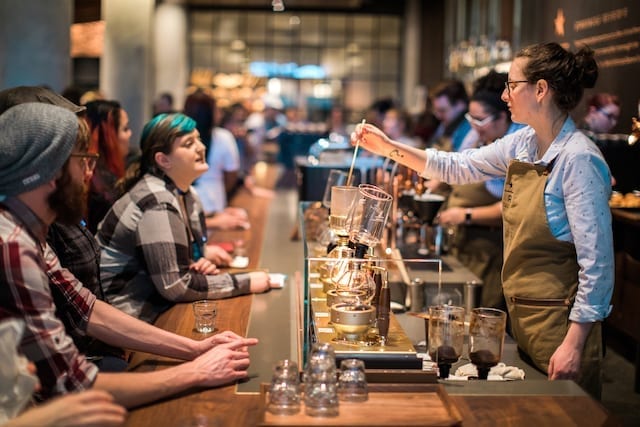
    Siphon coffee makers will be used to brew some of the drinks at the new coffee shop, while an exclusive trial program available at the store’s community room will introduce some completely new offerings such as Origin Flight and Brew Comparison.

    In addition, seven types of rice products made in South Korea using Starbucks coffee grounds as a fertiliser will also be on sale, including beans & sweet potato rice chips.

    A large-scale artwork installed on one side of the store uses traditional Korean fabric to recreate the coffee chain’s signature Siren logo with a Korean touch, a fitting addition for Jongno District, a neighborhood boasting traditional venues such as Gyeongbokgung Palace and Insadong.

    Starbucks currently operates about 1100 stores across South Korea.

    Earlier this month, the American coffeehouse opened its largest store in the world in Shanghai, China

  • Lee’s Coffee Expands to New Markets in Southeast Asia

    Lee’s Coffee Expands to New Markets in Southeast Asia

    Lee’s Coffee, a subsidiary of Lee’s Sandwiches, is exporting their famous “Cà Phê Sữa Đá” to the Philippines, building on its partnership with S&R Membership Shopping. S&R offers high quality products with a wide- variety selection of imported grocery items from all over the world. In this world class shopping club, customers can purchase a variety of Lee’s Coffee concentrated latte, vanilla latte, and triple shot latte 16oz bottles.

    “We are proud to bring an elevated and unique coffee experience to Philippines with the introduction of our America’s #1 Vietnamese Coffee,” said Chieu Le, President of Lee’s Coffee. “For many Filipino Americans returning to their homeland, the coffee will also bring to their delight a familiar taste of the California refreshment.”

    Lee’s Coffee embarked on a mission to share their love and passion for Vietnamese style coffee in the United States. Through their family recipe, the “Cà Phê Sữa Đá” became a community favorite, propelling the flavors of their country into the mainstream with availability in Costco Wholesale, Lee’s Sandwiches, and leading Asian supermarket chains in the USAPhilippines, and Vietnam.

  • Nespresso announces $50m coffee investment in Colombia

    Nespresso announces $50m coffee investment in Colombia

    Nespresso will invest $50 million in coffee cultivation in Colombia as it expands its coffee-sourcing programme for the first time into several former conflict zones in the country.

    The Nestlé brand said that the pledge builds on its long-term commitment to Colombian coffee and its efforts to improve production in regions previously impacted by the conflict, including reviving the industry in areas where production was lost.

    The announcement follows the launch of Nespresso’s limited-edition Aurora de la Paz, a coffee sourced from the region of Caquetá and unveiled earlier this year.

    Early indications suggest that the brand will source up to five times more coffee from Caquetá in 2018, as it expands its efforts into areas that were inaccessible before the peace accord.

    The extension of the program will see coffee-sourcing for the first time from San Vicente del Caguán, a community that found itself at the centre of the armed conflict.

    This region has unique climate, with arabica coffees grown at a low altitude and low temperatures. Combined with the high humidity, this characterises the coffee with rich, fruity notes and fine acidity.

    President Juan Manuel Santos addressed the Nespresso Sustainability Advisory Board, where he welcomed the company’s commitment. He cited the investment as an important contribution to the development of post-conflict areas.

    “Colombian coffee is the finest in the world,” he said. “I welcome Nespresso’s commitment to our country, which highlights the many opportunities that peace opens for Colombia.”

    Nespresso CEO Jean-Marc Duvoisin added: “Quality coffee, and the premiums that farmers can earn, present a very strong opportunity for the long-term sustainability and resilience of coffee farming communities. We are delighted to bring this incredible coffee to the world.”

    Nespresso’s agronomists have started working with more than 500 producers in the Caquetá region in order to implement its AAA sustainable quality programme. The initiative works directly with farmers to improve their productivity, quality and sustainability by sharing good practice, providing technical assistance, and improving standards in farmers’ environmental and social welfare.

    The Caquetá farmers will join the 33,000 Colombian farmers already enrolled in the programme, which was launched in the country in 2004 and ia supported by a team of 150 local agronomists. The extension of the programme into San Vicente will be implemented with the support of Nespresso’s strategic partner, the Colombian Coffee Growers Federation (FNC).

    FNC CEO Roberto Velez said: “We are honoured to build on our partnership with Nespresso, to renew the commitment we have made to Colombia’s coffee farmers and to work together with our communities for a lasting, peaceful and prosperous future.”

    Nespresso Sustainability Innovation Fund CEO Guillaume Le Cunff said: “Our work and partnership with farmers in Colombia is another example of how the Nespresso AAA sustainable quality programme impacts not just the production of the highest quality coffee, but also farmer lives and communities. We look forward to expanding our work with farmers in former conflict zones and extending our commitment to Colombia.”

  • Food helps, says Starbucks boss

    Food helps, says Starbucks boss

    Food and digital innovation are helping attract customers into stores, says Starbucks Corporation CEO/president Kevin Johnson.

    He was commenting on the coffee giant’s growth during its fourth quarter and fiscal year ending October 1.

    For the quarter, net revenues for the China/Asia Pacific segment grew 2 per cent to US$859.9 million. Excluding $56.9 million for an extra week last year’s fourth quarter, net revenues grew 10 per cent, primarily driven by incremental revenues from 1036 store openings over the past 12 months and a 2 per cent growth in comparable store sales. The increase was partially offset by unfavourable foreign currency translation.

    China comparative-store sales increased 8 per cent, driven by a 7 per cent increase in transactions.

    Overall four-quarter operating income grew 5 per cent to $201.7 million, while the operating margin expanded 60 points to 23.5 per cent, primarily driven by higher income from joint ventures, and partially offset by the lapping of the 53rd week in fourth quarter.

    Consolidated net revenues were steady for the quarter at $5.7 billion, excluding $412.4 million for the extra week. Consolidated net revenues grew 8 per cent.

    GAAP operating income of $1 billion declined 16.7 per cent while non-GAAP operating income grew 2.8 per cent to $1.1 billion. GAAP operating margin of 17.9 per cent declined 360 points while the non-GAAP decline was 20 per cent, down 90 points.

    The increased operating loss was primarily because of restructuring and impairment costs related to the company’s strategy to close Teavana tea retail stores and focus on the brand within Starbucks stores.

    Global comparable store sales increased 2 per cent, driven by a 2 per cent increase in average ticket and a 1 per cent increase in transactions; but up 3 per cent excluding the impact from Hurricanes Harvey and Irma. The impact from the hurricanes affected consolidated and US comparative store growth by 1 per cent as more than 1000 stores were temporarily closed.

    Revenue growth

    For the year, global comparable-store sales increased 3 per cent while consolidated net revenues grew 5 per cent to $22.4 billion. Excluding $412.4 million for the extra week in the fourth quarter last year, consolidated net revenues grew 7 per cent year-on-year.

    GAAP operating income of $4.1 billion declined 0.9 per cent compared while non-GAAP operating income grew 7.8 per cent to $4.4 billion.
    GAAP operating margin of 18.5 per cent declined 110 points, but was up 10 points to 19.7 per cent non-GAAP.

    Starbucks opened 603 stores globally, taking its total to 27,339 across 75 countries.

    Johnson says system improvements are enabling the company to drive increased throughput, particularly in its busiest stores at peak times.

    In September, the company announced it had entered into an agreement with long-time strategic partner Maxim’s Caterers in Asia to fully licence Starbucks business in Singapore, including transitioning the more than 130 company-run Starbucks stores. The partnership started in Hong Kong in 2000, and together they run more than 210 outlets across Cambodia, Hong Kong, Macau and Vietnam.