Tag: consumer electronics

  • Deepinder Goyal Defends 30 Million Dollar Wearable Brand Temple

    Deepinder Goyal Defends 30 Million Dollar Wearable Brand Temple

    Zomato founder Deepinder Goyal has poured $20 million of his own capital into Temple, an Indian consumer tech hardware venture that has absorbed $30 million in total development costs.

    Goyal, who stepped away from his role as Eternal chief executive to focus on the business, defended the wearable brand after medical practitioners and online reviewers questioned its scientific backing.

    Unacademy co-founder Gaurav Munjal gave the product high-profile backing this week, reporting that he wore the head-mounted monitor for roughly 30 to 40 nights. Munjal found the hardware stayed secure during workouts and sleep, while outperforming rival fitness bands such as Whoop in comfort and automatic chewing detection.

    Hardware design and jaw tracking

    Temple tracks sleep stages, mental strain through an entropy metric, and jaw motion to record food consumption. The hardware monitors chewing patterns directly, sending prompt notifications after meals to log nutrition without requiring manual initial entries from the wearer.

    Hardware comfort remains the central pitch for the headpiece. Munjal noted the unit is light enough that users forget they are wearing it, though he cautioned that the current companion software lags behind competitors on interface design. The industrial design also draws attention in public settings, frequently forcing users to explain the headpiece during business meetings.

    Return windows against scientific doubts

    Goyal countered public scepticism by offering a 14-day return policy without conditions, contrasting the retail guarantee directly against stricter hardware sales policies in India. The refund term gives consumers immediate recourse while the venture readies its initial research findings for wider release.

    Early stage hardware development carries steep cash-burn risks for Asian tech executives stepping away from established software platforms. Building a proprietary consumer electronics business out of India requires sustained testing and clinical validation that fast-moving e-commerce businesses rarely face. Goyal maintains that the business model depends entirely on immediate utility, stating the company would collapse before clawing back a tenth of its research investment if users discover the hardware fails to deliver on its tracking claims.

    Wearable competition and retail positioning

    Consumer health hardware across Asia remains dominated by wristbands and smart rings from international players like Apple and Whoop. Convincing shoppers to adopt a noticeable forehead sensor presents a heavy retail hurdle, regardless of how accurate its chewing sensors prove to be.

    Retail buyers and consumer technology investors will judge Temple on whether it can convert tech founders into ordinary retail buyers across Asian cities. Most wellness devices struggle to retain users past the first three months once the novelty of biometric readouts wears off, making app updates and software clarity critical to customer retention.

    Backing from domestic founders

    Munjal framed the venture as a necessary push to build international hardware brands out of India rather than relying solely on packaged food exporters. The domestic tech sector has historically excelled in platform software and logistics networks, while advanced sensor engineering and biometric manufacturing remained concentrated in East Asian supply hubs.

    Temple plans to publish academic preprints detailing its sensor mechanics ahead of peer-reviewed journals, alongside unreleased software modules still under development.


  • Awinic Plans Controlling Stake in Yutai Semiconductor as Profit Drops 61%

    Awinic Plans Controlling Stake in Yutai Semiconductor as Profit Drops 61%

    Awinic Technologies suspended trading of its shares and convertible bonds on November 10 as it plans to buy a controlling stake in Yutai Semiconductor through shares and cash.

    The chip designer holds nearly CNY 3.783 billion in cash-like reserves, giving it the balance sheet capacity to fund a transaction that may constitute a major asset restructuring.

    Awinic plans to issue new shares, pay cash, and raise matching funds to secure all or part of the target business. Trading will halt for no more than 10 trading days. The four initial selling partnerships named in company filings are Shanghai Yubo, Shanghai Jinweili, Shanghai Yitiai, and Shanghai Yuzong. Together, Shanghai Yubo and Shanghai Jinweili hold a combined 38.43 percent of Yutai. No formal agreement is signed, and the final valuation and transaction ratio remain unset.

    The Sticking Point at SG Micro

    The deal immediately runs into an awkward structural problem. SG Micro, a direct competitor in analog chips, sits on Yutai’s register as the second-largest shareholder with a 25.95 percent holding. That stake gives SG Micro the use to either block a clean sweep or demand terms that alter the economics of the buyout. Awinic cannot absorb Yutai cleanly without addressing whether its chief domestic rival exits or stays embedded in the cap table.

    For hardware suppliers and brand procurement teams, consolidation among domestic analog suppliers reduces bargaining use. Phone makers and consumer gadget assemblers often rely on fragmented domestic chip shops to keep component costs low. If Awinic absorbs Yutai’s catalogue, buyers face a more consolidated supplier base across low-voltage and medium-voltage power lines. Competitors will watch whether SG Micro tenders its stock or uses its minority position to slow the integration.

    Balance Sheet Buffer Against Dropping Profits

    Awinic needs product diversification because its core consumer electronics business is stalling. In the first three quarters of 2026, the company posted revenue of CNY 2.117 billion, down 2.75 percent from the previous year. Net profit attributable to shareholders plunged 61.08 percent to CNY 107 million, while operating cash flow dropped 93.18 percent to CNY 22.66 million. Tight memory chip supply held back production schedules at smartphone factories, while mature-process foundry capacity squeezed gross margins.

    Cash reserves provide the only real protection for the buyer. Awinic entered October with CNY 703 million in monetary funds and CNY 3.08 billion in trading financial assets. Paying part of the acquisition in cash prevents excessive equity dilution at a time when Awinic’s valuation multiple is depressed by falling earnings. Issuing too much stock when net profit excluding non-recurring items fell 87.53 percent would trigger resistance from institutional investors.

    A Tortuous Path to Liquidity

    Yutai has tried and failed to reach the public markets twice before. SG Micro originally purchased 28.7 percent of the business for CNY 115 million in December 2018, before launching a CNY 1.07 billion bid for the remaining 71.3 percent in late 2019 that collapsed in October 2020. Yutai then filed for an independent listing on the STAR Market in 2022 to raise CNY 750 million for research and industrialization facilities, but the application stalled before tutoring restarted in 2023 without an outcome.

    Founded in November 2017 in Nantong by former Maxim Integrated designers, Yutai sells more than 500 power management products across 10 categories, including DC-DC converters, battery management chips, and interface protection circuits. Backers across four funding rounds include Transsion Holdings, SK Hynix Semiconductor (China), SMIC Capital, Longcheer Technology, and Leishi Investment. Its parts sell into smart meters, routers, power banks, and security cameras, giving Awinic a path beyond saturated smartphone sockets.

    Regulators and investors are now waiting for the restructuring framework before trading resumes at the end of the 10-day halt.

  • PrimeBOT Produces 10,000Th Personal Robot as Output Doubles in 14 Days

    PrimeBOT Produces 10,000Th Personal Robot as Output Doubles in 14 Days

    PrimeBOT produced its 10,000th personal robot on November 8, doubling its cumulative factory run after assembling 5,000 units over a 14-day stretch.

    Parent company Swancor Advanced Materials reached the production milestone following an initial build of 5,000 units completed on October 25, according to operational disclosures reported by Sina Technology.

    Alongside the factory output, Liu Dongfang, co-president of the robotics business and head of its Q business division, claimed a monthly user activity rate above 98 percent, three hours of average daily connection time, and over 100 daily interactions per user. Liu also reported peak concurrent online connections above 40 percent, though the company provided no independent audit, sample sizes, observation periods, or definitions for what constitutes an active interaction.

    Factory Throughput Diverges From Retail Checkout

    Assembly line speed does not measure consumer sell-through. PrimeBOT began mass manufacturing whole units in October, yet the disclosures give no figures for retail sales, channel inventory, distributor deliveries or product returns. The 10,000 units represent machinery exiting the manufacturing line rather than active domestic installations.

    Retail buyers and consumer electronics merchandisers face an unverified supply pipeline. Factory output tells purchasing desks what a manufacturer can assemble, but without audited register data or warehouse turnover metrics, the commercial demand for companion robots remains speculative. Production yield rates and warranty provisions also stay undisclosed.

    Hardware operators in consumer tech know that claimed software engagement often obscures low functional utility. An active connection status requires only an open network socket or a charging dock handshake, which does not prove that a consumer is actively using the machine. Daily online metrics give no indication of physical tasks accomplished or sustained household utility beyond initial novelty.

    Companion Hardware Built for Low Barriers

    PrimeBOT builds two small consumer units: the Q1, an 0.8-meter-tall humanoid that folds into a backpack, and the T1, which converts between a wheeled humanoid and a four-legged chassis. Neither unit performs household domestic labor. Both designs focus on home companionship, interactive play and educational programming.

    The joint venture behind the hardware pairs industrial materials maker Shangwei New Materials, also known as Swancor Advanced Materials, with domestic robotics developer AgiBOT. By building the Q1 as an open-source system with customizable, 3D-printable outer shells and user-designed personality software, the venture aims at hobbyists, students and entry-level buyers rather than commercial service sectors.

    Physical form factors dictate retail price ceilings. Standard industrial and service humanoids run into tens of thousands of dollars, limiting personal household adoption across Asia. PrimeBOT aims to compress hardware unit costs through compact components and automated line testing, though the company has not published official retail pricing sheets for open channel sales.

    The Manufacturing Ramp From October

    Initial distribution started weeks before the factory doubled its run rate. PrimeBOT launched first customer handovers for both the Q1 and T1 units in October, leading into the factory ramp that reached 5,000 total finished units on October 25. That cadence accelerated to 5,000 additional units during the subsequent 14 days.

    Earlier releases positioned the Q1 platform as a customizable entry point for personal robotics, with software hooks permitting non-technical buyers to alter speech traits and behavior. The subsequent factory disclosures moved executive commentary away from product customization toward high-volume manufacturing throughput and claimed engagement statistics.

    The next metric to monitor is retail sell-through and channel inventory levels across Asian retail partners as the holiday sales quarter progresses. PrimeBOT has yet to release audited delivery counts or confirm sustained household retention rates past the initial handover phase.

  • Sony Launches US$60 MDR-3R Wired Headphones Inspired by 1979 Walkman

    Sony Launches US$60 MDR-3R Wired Headphones Inspired by 1979 Walkman

    Sony Group launched the US$60 MDR-3R wired headphones, reviving the design shipped alongside the original Walkman in 1979.

    Joining a broader revival in retro tech, the set updates the vintage format with a USB-C connector, a built-in microphone for voice calls and an in-line remote control.

    Retail distribution runs through Sony, Amazon, Best Buy and other retailers. A co-branded special edition priced at US$80 tied to Netflix series Stranger Things features custom packaging, show branding engraved on the hardware, and red and black earpads, sold directly through Netflix, Amazon and Sony. The standard US$60 release ships with interchangeable blue and orange earpads.

    Re-engineering the 1979 Walkman Acoustic Profile

    Sony kept the 23-millimetre driver units from its vintage predecessor to recreate the sonic signature of the original late-seventies set. The company said in a statement that it made subtle refinements to modernise frequency response for digital streaming formats while retaining a lightweight frame for long sessions.

    The headset excludes active noise cancellation, relying entirely on open-back, on-ear foam pads. Skipping rechargeable battery cells allows Sony to sell the product at a fraction of its wireless noise-cancelling overhead line.

    Budget Audio and the Wired Resurgence

    Consumer electronics distributors face shifting inventory demands as budget wired gear gains traction against wireless Bluetooth earbuds. Apple anchored the category with its US$19 wired EarPods, while Bose recently rolled out US$99 noise-cancelling wired earbuds that have run out of stock repeatedly across retail channels.

    Shoppers choose physical cable hookups to eliminate battery degradation, skip charging cycles, and secure zero-latency audio for video recording and voice calls. Sony is capturing this margin by repurposing intellectual property that is nearly five decades old, reducing research overhead while locking in immediate consumer familiarity.

    Category Competition and Margin Pressure

    The push represents a calculated retreat from the feature bloat that pushed premium consumer headphones into four-figure retail brackets. Bose proved that buyers will pay US$99 for wired audio when premium components are included, but Sony is taking an even leaner route by stripping out active electronics entirely to hit US$60.

    The risk sits in retail durability. Cheap wired sets face fierce price erosion from unbranded peripheral makers that dominate online marketplaces. Sony relies entirely on industrial design nostalgia and acoustic tuning credibility to defend a fourfold price premium over generic alternatives.

    Distribution Pipeline and Product Timelines

    The MDR-3R rollout builds on recurring retro hardware cycles across Japanese technology firms, following decades of portable audio experimentation after the original 1979 Walkman transformed personal listening. Retail inventory allocations across global online storefronts and physical electronics chains are active now, with sales figures across both the standard unit and the Netflix tie-in expected to show up in consumer hardware volume reports over the coming quarter.

  • Acer Targets 15% Consumer PC Growth in Taiwan Despite Rising Component Costs

    Acer Targets 15% Consumer PC Growth in Taiwan Despite Rising Component Costs

    Acer expects consumer PC shipments in Taiwan to increase by more than 15 percent in 2026, driven by Singles’ Day discount promotions and strong year-end demand.

    The Taipei-based hardware manufacturer matched that run rate through the first 10 months of the year, reporting 15 percent annual volume growth across the local domestic market.

    Rising component prices, particularly for memory and silicon modules, pushed average retail selling prices higher across the sector. Acer Taiwan brand product and marketing manager Wu Ke-chien said revenue growth would outpace unit volume gains as hardware manufacturers pass procurement inflation on to shoppers. The company is maintaining its target for shipment expansion above 15 percent through November and December despite component delivery bottlenecks.

    Component Crunch Reshapes Hardware Margins

    Processors, dynamic random-access memory and solid-state storage expanded to represent about 68 percent of the bill of materials for a 900-dollar mainstream notebook by late 2026, up from 45 percent early last year. Conventional memory contract prices are forecast to rise another 10 to 15 percent in the fourth quarter, while flash storage is projected to increase 15 to 20 percent. Preserving gross margins on comparable consumer hardware under those input cost conditions requires retail list price increases approaching 80 percent.

    Shortages are acute for discrete graphics cards and select mainstream central processors. Acer global headquarters allocates available inventory centrally across world territories, restricting local commercial pipelines. Discrete graphics models generate between 15 and 18 percent of Acer consumer notebook transactions in Taiwan, though company management targets 18 to 20 percent if component allocations improve.

    Assembly Moves Back to Mainland Plants

    Component inflation is forcing Asian electronics brands to reconsider their Southeast Asian manufacturing footprints. Rising memory expenses led brands including Acer, Asus and HP to transfer select consumer laptop assembly back to mainland Chinese facilities from factories in Thailand and Vietnam. The shift unwinds part of the diversified production footprint established across Southeast Asia amid US-China trade tensions.

    Total notebook production outside mainland China is slipping from 24 percent of global volume in 2025 to 21 percent in 2026, with research projections tracking a drop below 20 percent by 2027. Major Taiwanese original design manufacturers like Quanta Computer, Compal Electronics and Inventec are redirecting floor space toward server hardware. Enterprise servers accounted for over 80 percent of Quanta revenue in the second quarter of 2026, freeing PC contract orders for Chinese assemblers such as Luxshare Precision Industry, Huaqin Technology and Longcheer Technology.

    Display Niches and Retail Lineup Expansion

    Consumer demand patterns in retail channels are fragmenting into specialized hardware segments. Alongside artificial intelligence laptops, tablets and ultra-lightweight notebooks introduced for the Singles’ Day retail period, Acer expanded its portable external monitor portfolio with screen sizes between 14 and 23.8 inches. Portable screens secured a 20 percent share of Taiwan’s total external mobile display market, creating an unexpected retail volume driver.

    Securing low-cost silicon remains the deciding factor for regional consumer electronics margins. HP and Dell were qualifying DRAM from Chinese domestic supplier ChangXin Memory Technologies during 2026, while Acer and Asus asked Chinese production partners to source memory for some notebooks.

    Acer reported its strongest second-quarter revenue performance in 13 years earlier in July 2026, followed by a seasonal tablet shipment rebound in September. Full-year local results hinge on whether retail sales volume during the November Singles’ Day promotions and December holiday shopping cycles can hold the targeted 15 percent growth rate against rising shelf tags.

  • Sony Lifts Gaming Sales Forecast to 4.83 Trillion Yen

    Sony Lifts Gaming Sales Forecast to 4.83 Trillion Yen

    Sony increased its full-year sales forecast for its Game & Network Services division to 4.83 trillion yen, up 6 per cent from an earlier estimate of 4.54 trillion yen.

    In financial results released on 5 November for the second quarter of the 2026 financial year, the company also lifted its annual operating profit target for the segment from 660 billion yen to 700 billion yen.

    Higher sales of non-first-party titles, tighter cost management, and expanding revenue from PlayStation Plus network services drove the revision. During the July-to-September period, segment sales rose 9 per cent year on year to 1.21 trillion yen, while operating income jumped 83 per cent to 220.1 billion yen despite a decline in hardware sales.

    Network Software Offsets Console Volume

    Hardware demand moderated across the July-to-September quarter, yet Sony lifted margins by shifting its earnings base deeper into software purchases and recurring subscriptions. The corporate upgrade relies directly on royalties collected from outside publishers rather than its own proprietary game rollouts. Digital purchases eliminate standard distribution fees and physical disc pressing costs, keeping gross margins wider even when unit counts level off.

    Hardware remains the hook that locks consumers into Sony’s ecosystem, but the commercial weight has shifted to digital network access. Rival hardware makers face identical pressures as console lifecycles mature.

    Wolverine Sells 2.4 Million Units

    Sony disclosed opening sales figures for Marvel’s Wolverine, confirming the PlayStation 5 exclusive title sold 2.4 million copies globally across its first 50 days. The title was developed by subsidiary studio Insomniac Games and debuted on 15 September 2026. This release represents a separate superhero project following its Spider-Man series.

    That volume tracks below earlier studio debuts. Marvel’s Spider-Man 2 sold 2.5 million units in its opening 24 hours in October 2023, surpassing 5 million units within 11 days. The gap reflects both a standalone character rollout without established gaming sequel momentum and changing seasonal consumer demand patterns in early autumn.

    The Third-Party Pipeline

    The updated full-year forecast includes anticipated commercial tailwinds from outside studio titles, headlined by Rockstar Games’ Grand Theft Auto 6. Sony secured promotional alignment for the title, using PlayStation 5 marketing slots to pitch hardware features including haptic trigger resistance and spatial audio processing. Rockstar’s public distribution channels list both the PlayStation 5 and Xbox Series X and Series S as launch platforms.

    Consolidated digital storefronts capture a percentage cut of all third-party digital purchases, in-game spending, and add-on content without carrying development overhead. This cut cushions Sony’s balance sheet against volatile development schedules from its wholly-owned creative teams. The publisher carries none of the financial write-down liability if third-party production timelines stretch.

    Earlier Platform Performance

    The quarterly report follows a period where platform hardware volumes peaked earlier in the console cycle.

    The group’s operational attention now shifts to retail store channels and digital fulfillment when Grand Theft Auto 6 launches globally on 19 November 2026.

  • Nintendo Quarterly Profit Falls 29Pc to 73.5 Billion Yen as Switch 2 Cools

    Nintendo Quarterly Profit Falls 29Pc to 73.5 Billion Yen as Switch 2 Cools

    Nintendo posted a 29 per cent drop in second-quarter net profit to 73.5 billion yen, missing market forecasts as unit sales for its Switch 2 console slowed.

    The Japanese gaming company fell short of the 82.2 billion yen average estimate compiled by Bloomberg for the July-September period.

    First-half net profit still climbed 11 per cent year-on-year, supported by earlier momentum and software purchases. Operating profit jumped nearly 50 per cent across the six months, aided by steady software transactions and a windfall from US tariff refunds.

    Hardware Volume Drops After Launch Year

    Consumer demand for hardware pulled back sharply across global channels. Nintendo sold nearly 6.5 million Switch 2 consoles during the six months, down from almost 10.4 million units in the comparative period a year earlier when the hardware debuted.

    Component costs hit margins across electronics supply chains this year. Higher prices for memory chips, driven by enterprise demand for artificial intelligence hardware, forced Nintendo to raise the retail price of the Switch 2 console.

    Retail buyers now face a more cautious consumer base. Without an immediate pipeline of top-tier first-party games through the summer, store shelves saw console inventory move at a noticeably slower pace than during the record-breaking 2025 launch cycle.

    Divergence Across Tokyo Tech Giants

    The consumer electronics divide widened between Japan’s two premier entertainment hardware makers this quarter. Sony upgraded its full-year earnings outlook to 1.33 trillion yen, powered by games, theatrical releases and music distribution.

    Sony recorded a 44 per cent jump in second-quarter net profit to 449.6 billion yen. While Sony benefited from favourable foreign exchange rates and box office contributions from titles like Spider-Man: Brand New Day, Nintendo remained exposed to single-platform hardware dependency.

    For consumer tech merchants across Asia, Nintendo’s numbers indicate that price increases on maturing hardware require immediate software drivers to sustain floor traffic. Sony gains additional momentum heading into November with third-party software releases, whereas Nintendo must rely heavily on its internal intellectual property catalog to protect device sell-through.

    Holiday Software Push

    Nintendo is turning to legacy catalog revivals to rebuild retail engagement ahead of the critical shopping season. The company rolled out a remake of The Legend of Zelda: Ocarina of Time to coincide with the franchise’s 40th anniversary.

    The title registered a Metacritic score of 96 out of 100 on the eve of release. Management intends to tap the existing hardware base to generate recurring digital revenue while software sales recover.

    Full-year net profit guidance remains unchanged at 310 billion yen. Retailers and suppliers will measure holiday checkout volumes against that target as shopping campaigns open across regional markets.

  • Casio Announces Release of CMK-100 Mechanical Watch

    Casio Announces Release of CMK-100 Mechanical Watch

    Casio Computer Co., Ltd. Announced on Oct. 29, 2026, that it will release the CMK-100, an automatic mechanical timepiece featuring a lightweight titanium case and 10-bar water resistance.

    The Tokyo company created the model in response to rising demand for mechanical watches, targeting everyday and business wear.

    Five versions comprise the release, offering black, gray, and brown dials matched with titanium, nylon, or leather bands.

    Titanium Specs and Pricing Across Five References

    Each model in the CMK-100 family uses a lightweight titanium case with a hairline finish across the body and bezel, paired with a sapphire crystal and 100 meters of water resistance. Power comes from an automatic mechanical movement manufactured in Japan. The dials feature a matte texture intended to suppress reflection, anchored by raised indexes treated with multiple layers of phosphorescent paint for night visibility.

    Retail pricing splits across three strap configurations. The entry model, the CMK-100TC-1A on a black nylon strap, sells for $320. Two mid-tier variations, the CMK-100TCC-8A on grey nylon and the CMK-100TL-1A on black Italian leather, retail at $350 each. A brown Italian leather version designated CMK-100TCL-5A carries a $375 price tag, while the flagship CMK-100TD-1A with a solid titanium bracelet tops the catalog at $440.

    Challenging Competitors on Department Store Shelves

    Casio is putting mechanical movements inside titanium cases at competitive price points. By pricing titanium automatics below $450, Casio undercuts many comparable Japanese and Swiss mechanical field watches that trade on heritage rather than aggressive bill-of-materials value.

    For watch retail buyers and multi-brand department store operators across the region, the launch creates a margin challenge. Casio built its distribution scale on high-volume G-Shock and standard digital quartz lines that require minimal customer education. Selling mechanical timepieces forces sales clerks to pitch power reserves, sweep seconds, and automatic winding against entrenched mechanical catalogs.

    The Transition Out of Digital Resin

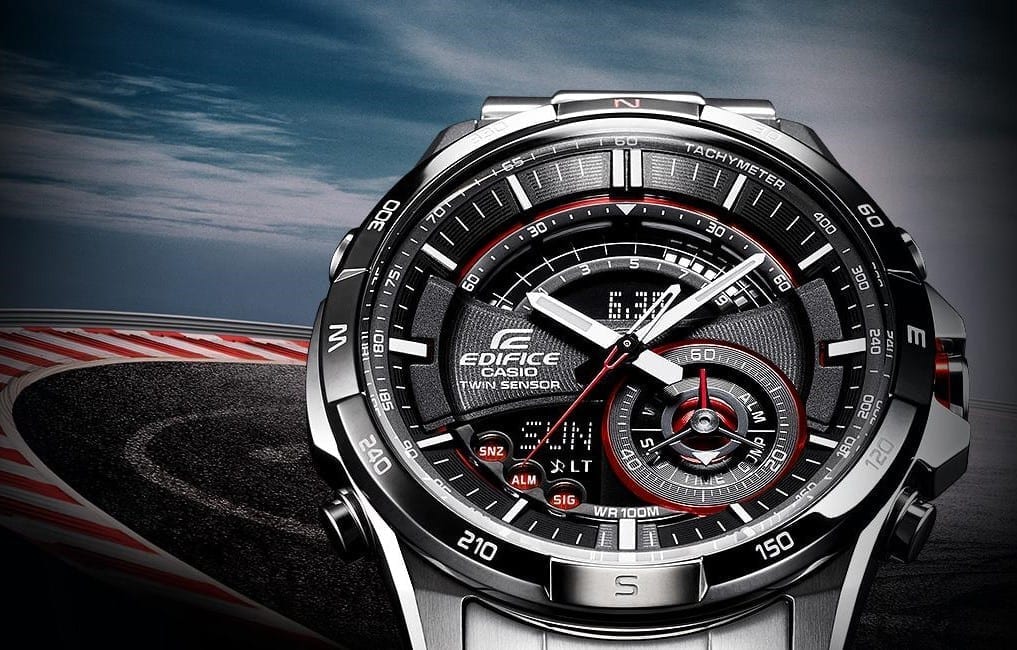
    The CMK-100 marks Casio’s second deliberate step into mechanical movements after decades of relying on quartz modules. The company tested consumer appetite for winding gears earlier in 2026 with the Edifice EFK collection, an integrated sport-watch series that introduced Casio’s first automatic calibres to market.

    The CMK100 is Casio’s response to the overwhelming demand of our introduction into the automatic timepiece category

    Said Shermeen Greenmun, vice president of timepiece at Casio America, framing the new line as a field watch designed for outdoor exploration and daily wear.

    Retail Rollout Begins in November

    Stock arrives at select physical retailers, Casio’s direct e-commerce portals, and the dedicated G-Shock Soho storefront in November 2026. The initial retail reception across North America and key Asian consumer hubs will determine whether Casio expands automatic calibres into its core resin-shock lineups next year.

  • Samsung Posts Record Tech Profit on Memory Demand but Shares Slide

    Samsung Posts Record Tech Profit on Memory Demand but Shares Slide

    Samsung Electronics delivered the tech sector’s highest quarterly profit on Thursday in Seoul, but its shares tumbled as investors balked at the escalating capital spending required to service artificial intelligence infrastructure.

    The company said on Oct. 29 that heavy appetite for memory products will run through upcoming quarters as hardware vendors and cloud operators build out AI computing clusters.

    Spending Outpaces Dividend Expectations

    Shareholders sold down the stock despite the blockbuster headline figures, reacting directly to the sheer scale of reinvestment needed to sustain technical leadership. Big allocations for fabrication equipment, advanced packaging lines, and server components left institutional investors dissatisfied with immediate capital returns.

    Hardware manufacturers across Asia face the same squeeze. Memory lines require billions of dollars in fresh cash before producing top-tier silicon, shrinking the free cash flow available for payouts even during record quarters.

    Demand from Servers and Personal Agents

    The South Korean manufacturer pointed to accelerating buildouts of enterprise data centres and the arrival of personal AI agents on consumer devices as the dual engines behind memory demand. Server operators continue to soak up high-bandwidth memory chips to keep accelerators fed with data.

    Smartphone vendors and laptop brands across Asia are also preparing their component pipelines for local device processing. That switch requires higher minimum configurations of DRAM in consumer phones, protecting semiconductor makers from typical seasonal troughs.

    The Balance of Supply and Capital Risk

    For component distributors, device assemblers, and electronics retailers across the region, Samsung’s heavy production spending offers both volume security and price uncertainty. If the buildout of personal AI devices stumbles at retail, excessive chip inventories will depress pricing across downstream channels.

    Rival foundries and competing memory suppliers in Taiwan and South Korea are maintaining similar capital budgets to defend client allocations. That leaves the broader electronics supply chain exposed to an oversupply shock if corporate software budgets tighten.

    Earlier Cycles and What to Watch

    Memory markets regularly swing between inventory gluts and acute shortages, with producers historically suffering margin collapses after periods of unbridled factory construction. The current cycle differs only in the customer base, which is anchored by cash-rich cloud titans rather than consumer electronics brands alone.

    Markets now turn to the sustainability of server procurement through the coming quarters, alongside Samsung’s upcoming capital expenditure filings, to see whether production increases outpace corporate orders.

  • Samsung Australia Survey Finds 72% of Consumers Bulk Cook to Ease Bills and Stress

    Samsung Australia Survey Finds 72% of Consumers Bulk Cook to Ease Bills and Stress

    Samsung Australia reported that approximately 72 per cent of surveyed consumers are using bulk cooking to ease grocery bills and stress, pushing demand toward larger refrigeration units across the country.

    A third of respondents, or 34 per cent, stated their existing refrigerator is too small to store batch-prepared food.

    Data collected by research firm PureProfile across a nationally representative sample of 1,008 Australian adults in February 2026 showed that 62 per cent prepared meals in bulk specifically to save money. Another 69 per cent said batch cooking reduced their overall weekly grocery spend, while 59 per cent claimed that bulk cooking helps meet health and nutrition goals. The practice carries over beyond winter, with 56 per cent planning weekend meal prep through spring.

    Refrigeration Limits Drive White Goods Replacements

    Household space constraints are creating clear friction points inside domestic kitchens. Roughly 24 per cent of respondents admitted to stacking food containers unsafely to fit prepared meals into existing shelves. That behavior jumped to 45 per cent among shoppers aged 18 to 24, and reached 43 per cent among those aged 25 to 29.

    For consumer electronics retailers, this bottleneck directly alters what buyers look for on the sales floor. Category tracking from WorldPanel ComTech in February 2026 found that internal volume and energy efficiency have become the two primary features Australians seek when shopping for replacement refrigerators. Consumers are bypassing basic top-mount configurations in favor of wide-format French-door platforms that fit standard kitchen cavities while maximizing usable depth.

    Hardware Margins Shift Toward Smart Connected Units

    Appliance vendors across Asia-Pacific are positioning premium, connected models to capture these replacements rather than competing purely on shelf dimensions. Samsung is pitching its screen-equipped Family Hub units, which integrate internal tracking and automated menu building via its SmartThings application to counter food spoilage. White goods makers face a consumer base managing tighter grocery allowances, making energy efficiency ratings a decisive commercial factor alongside interior literage.

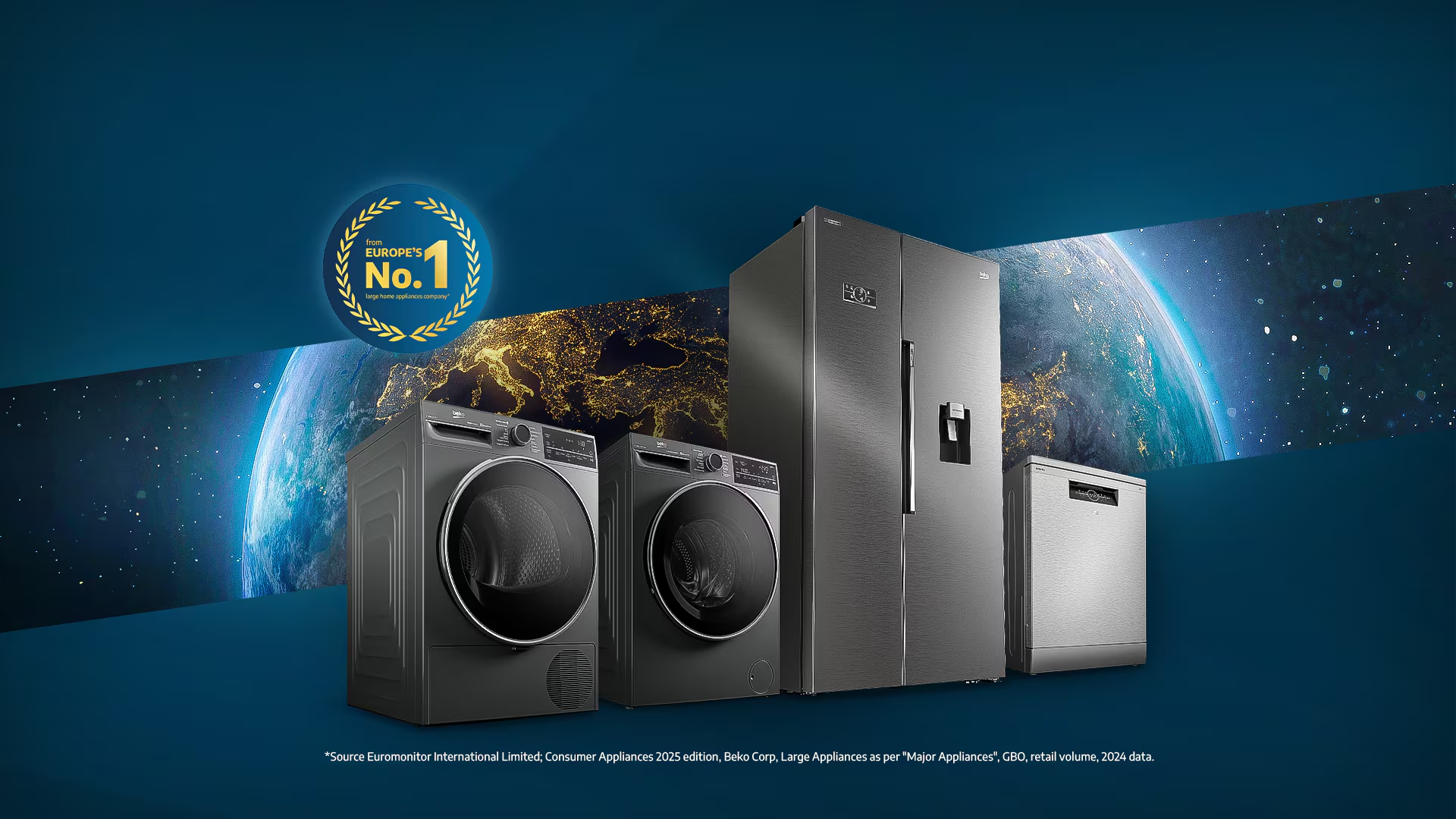
    French-door refrigerators are incredibly popular amongst Australians who rely on bulk cooking to stay on top of bills and schedules because they benefit from large internal capacities, flexible shelving, and in-built beverage centres that give easy access to ice and water, all while fitting into most standard refrigerator kitchen cavities.

    Retailers operating in Australia stand to gain if shoppers trade up to larger formats ahead of annual promotional discount cycles. The risk for manufacturers lies in price sensitivity. While shoppers want larger capacities to economize on food, high interest rates and housing costs constrain disposable cash for discretionary premium upgrades.

    Retail Channel Alignment Ahead of Clearance Periods

    Appliance brands spent the past two years navigating softening consumer durables demand as post-pandemic replacement cycles slowed across developed Asia-Pacific territories. To reignite volume, brands have linked connected home software to tangible cost reductions, such as power monitoring and grocery budgeting tools. Earlier in 2026, Finder named Samsung’s refrigeration range as top value and most recommended in its annual consumer satisfaction review.

    Attention now turns to retailer floor allocations during fourth-quarter promotional clearances, where appliance manufacturers will test whether capacity upgrades translate into sustained retail register sales.

  • Shenzhen Scooter Maker LEQI Expands Abroad with Xiaomi Backing

    Shenzhen Scooter Maker LEQI Expands Abroad with Xiaomi Backing

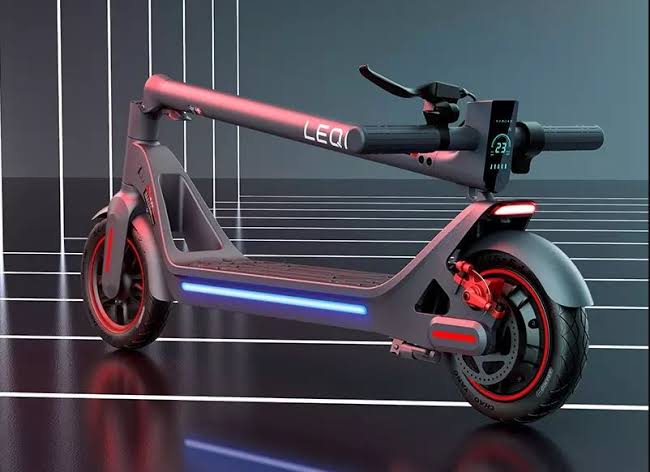
    Shenzhen micro-mobility manufacturer LEQI took first place in worldwide electric scooter shipments in 2025, pushing its overseas expansion beyond basic marketplace sales into specialised categories including rideable luggage and dirt bikes.

    Its subsidiary Megawheels logged 2 million users and took the top market share spot in Japan, while industry tracker QYResearch placed the brand fourth globally in the two-wheeled self-balancing scooter segment in 2026.

    Founded in 2016, the hardware maker sells directly through Amazon, eBay, its own digital storefronts and commercial wholesale channels. The product catalogue now reaches beyond basic stand-up scooters to include electric bicycles, high-speed electric motorcycles and the L3 Smart Electric Suitcase, a motorised carry-on fitted with a fold-out chassis and obstacle-avoidance sensors.

    Engineering Beyond Marketplaces

    Online marketplaces offer Chinese consumer hardware makers an easy route into foreign households without physical dealership networks. The friction surfaces when foreign buyers require local warranty service, replacement battery packs or street-legal certifications.

    Instead of relying purely on commodity e-scooter platforms, LEQI has attempted to share core electric-drive and battery-management software across diverse form factors. High-power-density drivetrains and adaptive sensor software developed for off-road bikes feed into airport transit gear, giving the company higher retail price points than standard commuter devices command.

    The European Compliance Hurdle

    For cross-border consumer brands, technical compliance dictates shelf space faster than digital marketing. German road regulations, for instance, demand strict national operating permits that keep most direct-to-consumer Chinese imports off public cycle tracks.

    LEQI secured Germany’s Allgemeine Betriebserlaubnis road approval for its LEQIsmart A11 scooter in 2023, giving it a regulatory wedge against rivals selling uncertified hardware. Retaining that foothold requires constant updates as European municipal regulators revise speed limits and pavement use rules.

    Funding The Global Network

    Capital from domestic technology giants is financing the step into heavier engineering. LEQI closed a Series B funding round in March 2026 backed by Xiaomi Group and Shunwei Capital.

    That cash injection followed a corporate restructuring in 2021, when the business established its dual-brand strategy split between Megawheels and the primary LEQI nameplate. Proceeds from the 2026 round target artificial intelligence decision-making systems for vehicle control, higher-density battery units and physical supply chain hubs in key destination markets.

    The central test for LEQI is whether its software systems and overseas service networks can support higher-margin vehicles such as dirt bikes before hardware competitors duplicate its rideable luggage designs.

  • Apple Starts Selling US$1,999 IPhone Duo

    Apple Starts Selling US$1,999 IPhone Duo

    Apple began selling its first folding phone, the US$1,999 iPhone Duo, on Friday (Oct 23), betting the device can transform the foldables market after nearly two decades of making only incremental updates to the iPhone.

    The launch marks an early trial for new Apple chief executive officer John Ternus, who unveiled the hardware barely a week after taking charge in September.

    Apple enters a niche segment where rivals such as Samsung Electronics and Huawei Technologies have sold premium foldables for years.

    Channel Allocations and Asian Retail Constraints

    Within minutes of pre-orders opening on Oct 16, Apple’s estimated delivery dates for the Duo had slipped to late January as demand outpaced supply. The company called the response from customers “nothing short of extraordinary”.

    The limited supplies could disappoint Apple fans lining up in front of stores to buy the Duo. Apple told Reuters that walk-in availability would vary by country, with limited stocks in the US, Australia, Canada, Mexico and much of Britain and Europe. In China, France, Hong Kong, India and Japan, units would be available only for customers who had ordered online. In the China-governed territory of Macau, where the iPhone Duo will be available for walk-in customers only, fans already started lining up hours in advance, social media posts and media reports showed.

    Rivalry With Incumbents in Regional Markets

    Early reviews have praised the US$1,999 Duo’s premium design as well as its sturdy and barely visible hinge, a major feat for the phones whose prominent creased screen has long been a major drawback and potential deterrent to buyers. But reviewers have also said that camera compromises including the absence of a telephoto lens and third-party apps that still need to be reworked for the new display size could disappoint some buyers.

    They have noted that iPhone Duo in its smaller, folded state is less handy for the litany of quick tasks that most users carry out each day on standard iPhones, leading several prominent reviewers to recommend against the Duo for many Apple customers.

    “Foldables have been an established category for years, but adoption has remained relatively limited compared with conventional smartphones. Apple’s entry could bring the format to a much broader audience,” said Francisco Jeronimo, vice-president at market research firm IDC.

    IDC expects Apple will take 44 per cent of the foldable value in 2026 on 31 per cent of foldable units. By 2027, it will become the market leader in the category both in value and units shipped, according to the firm.

    “Apple has made a convincing case for this form factor,” Jeronimo said after spending a week with the Duo. “Now comes the next test: turning excitement into availability, adoption and a lasting new chapter for the smartphone market,” Jeronimo added.

    Executive Leadership and Product History

    “It’s been a lot of fun trying the Duo out for a week, but it feels like I’ve gotten to use an extraordinarily polished prototype, not a finished product that I’d want to buy and carry,” longtime Apple commentator John Gruber, the author of the blog Daring Fireball, wrote in a review.

    Tech commentator Marques Brownlee, popularly known as MKBHD, said in a YouTube review that “if you’re just a regular person who doesn’t do much more than texting, social media and browsing here and there, then it is probably a no”.

    “But if the US$2,000 doesn’t mean much to you, and you like the idea, after the learning curve and getting used to not having facial identification, it is a really fun phone.”

  • Vibe Technology Introduces Souvi AI Memory Device

    Vibe Technology Introduces Souvi AI Memory Device

    Shanghai startup Vibe Technology introduced Souvi, an outdoor AI memory device designed to help users record and preserve travel experiences.

    Led by CEO Deng Jiawei, the company showed the hardware at technology events including BEYOND 2026, VivaTech in France, the World Artificial Intelligence Conference, and the Autumn Edition of the HKTDC Hong Kong Electronics Fair.

    Unlike traditional action cameras or voice-focused wearables, Souvi combines low-interruption recording with AI-driven content processing to turn raw photos and videos into curated journals, video summaries, and interactive memory pages.

    Vibe Technology relies on open-source vision models adapted in-house to orchestrate content generation tasks, filtering out redundant frames while assembling narrative timelines. The system attempts to recognise personal context rather than merely picking high-contrast scenic shots, preventing the synthetic fabrication of events that did not occur.

    Crowdfunding and Asian Market Expansion

    Chief executive Deng Jiawei confirmed the company is planning consumer rollouts across Japan, South Korea, and North America. Vibe Technology will turn to online crowdfunding campaigns to test initial consumer demand before committing to traditional retail distribution channels.

    The hardware appeared during industry exhibitions including BEYOND 2026, VivaTech in France, the World Artificial Intelligence Conference, and the HKTDC Hong Kong Electronics Fair Autumn Edition.

    Hardware startups across East Asia face an increasingly crowded consumer electronics market where multi-purpose smartphones already capture high-definition video with minimal friction. Dedicated travel cameras must offer genuine automation advantages to convince casual holidaymakers to buy and carry an extra piece of battery-powered gear.

    Software Strategy and Memory Operating Systems

    Vibe Technology intends to treat the physical wearable as a feeder mechanism for a wider personal memory operating system. The software architecture will eventually ingest media files from third-party gadgets, building searchable archives that span years of trips across different territories.

    “We focus on AI and personal memory because AI can help people work more efficiently while giving them new ways to preserve their life experiences,” Deng Jiawei, the company’s CEO, said in an interview with TechNode.

    The company has deliberately avoided positioning the hardware against workplace voice transcribers or rugged sports cameras built for extreme athletics. Souvi targets recreational walking and urban leisure trips, a segment where users value lightweight builds over heavy waterproof casings.

    Commercial Risks and Data Gaps

    Consumer uptake for standalone AI wearables remains unproven globally, with several high-profile Western gadgets struggling to maintain daily active use after initial launch campaigns. Hardware manufacturers must demonstrate that automated curation solves a problem large enough to justify recurring charging routines and accessory upkeep.

    Vibe Technology has not published purchase data or user retention metrics. Sustained sales will depend on whether casual tourists trust private cloud servers with sensitive personal travel logs and whether automated editing remains accurate across complex trip environments.

  • Beko Expands Singer Bangladesh Operations as Bilateral Trade Eyes $2 Billion

    Beko Expands Singer Bangladesh Operations as Bilateral Trade Eyes $2 Billion

    Beko and parent group Koç Holding sent top leadership to inspect manufacturing plants and retail sites across Bangladesh, anchoring expansion plans around a $2 billion bilateral trade target.

    The push follows bilateral trade between Türkiye and Bangladesh touching approximately $1.36 billion in 2025.

    Executive Delegation in Narayanganj

    Polat Şen, president of the consumer durables group at Koç Holding, toured Beko’s manufacturing facility in Narayanganj alongside Zafer Üstüner, chief commercial officer for Asia, Russia and South Africa at Beko and chief executive of Arçelik Hitachi. Nihat Bayız, chief production and technology officer at Beko, joined the group to review technical operations.

    Singer Bangladesh managing director and chief executive MHM Fairoz hosted the delegation across the production plant, Singer | Beko concept stores, and the company’s newly relocated corporate headquarters. The fresh corporate base adopts Beko’s standardized workplace format.

    Retail Footprint and Factory Upgrades

    The operational overhaul spans direct production capacity and front-facing shop floors. Singer Bangladesh opened concept stores designed to merge consumer appliances with digital retail experiences, replacing older, single-line retail formats that dominated suburban trade.

    Local manufacturing in Narayanganj provides Beko with direct assembly lines inside the country, avoiding stiff import duties on fully built consumer durables. Producing locally lets the group price refrigerators, washing machines and televisions against regional competitors while insulating supply chains from freight bottlenecks.

    Market Competition and Commercial Risks

    RetailNews Asia views the appliance build-out as a calculated attempt to break domestic market leaders’ tight grip on Bangladeshi households. Domestic competitors maintain an extensive dealer network and integrated supply chain across secondary cities, giving them cost advantages that foreign brands struggle to meet without domestic fabrication.

    Suppliers and floor operators face margin pressures as consumer spending in South Asia adjusts to currency fluctuations and shifting energy tariffs. Beko’s commitment assumes middle-income appliance demand will outrun inflation risks, though financing terms for high-ticket white goods remain sensitive to local interest rates.

    Industrial Trajectory and Trade Targets

    Koç Holding operates Singer Bangladesh through its consumer durables flagship to secure a distribution base with deep brand recall. The subsequent deployment of modern concept shops and the Narayanganj factory build on capital allocation designed to convert Singer from an assembler of imported kits into an integrated appliance maker.

    Government trade planners are steering trade flows toward the $2 billion threshold, leaning on industrial equipment, electronics and textiles to clear the remaining trade gap. Factory output volumes from Narayanganj and the pace of concept store rollouts across major districts determine whether Singer Bangladesh holds off domestic champions through the next fiscal cycle.

  • Alibaba Launches Qwen Glasses N1 for 2,218 Yuan

    Alibaba Launches Qwen Glasses N1 for 2,218 Yuan

    Alibaba Group Holding launched its latest smart glasses series on Tuesday, introducing the Qwen Glasses N1 priced at 2,218 yuan for the standard version.

    An advanced version featuring eye tracking for visual interaction starts at 2,600 yuan, entering a market where 909,000 smart glasses were sold in China in the first half of 2026, according to Luo Tu Technology.

    Hardware prices in China remain lower than foreign alternatives, with Xiaomi AI glasses retailing for about 2,000 yuan (US$298) compared to US$450 for Meta Platforms’ Ray-Ban Gen 3 glasses, according to Mark Natkin of Marbridge Consulting, while Counterpoint reported the global average selling price stood at US$360 in late 2025.

    Tourist Sites Deploy Wearable Audio Guides

    Domestic tourism operators are testing the hardware as automated, hands-free tour guides. Hangzhou Culture, Radio, TV and Tourism Bureau partnered with Alibaba in May to deploy Qwen Glasses for real-time cultural interpretation and navigation. In Shanghai, management at Yuyuan Garden has started running trials using smart glasses to handle multilingual translation and point-of-interest explanations for incoming visitors.

    The devices rely on built-in cameras, microphones and onboard language models to identify landmarks, translate physical street signs and feed spoken itinerary advice into the user’s ears. IDC China data shows the broader smart eyewear category, covering both AI and non-AI models, will reach 18.66 million shipments worldwide by the end of the year.

    Ecosystem Split Limits Cross-Border Utility

    Chinese hardware makers face an immediate structural barrier when marketing these devices to outbound travelers. Domestic models rely on integrations with mainland platforms like Baidu Maps and Alipay. Outside China, those service layers lose accuracy and merchant coverage, leaving travelers with reduced functionality on foreign networks.

    Foreign manufacturers run into the inverse problem. Meta does not officially sell its Ray-Ban hardware in mainland China, and domestic consumers who import the frames cannot easily access the underlying cloud AI servers without virtual private networks. For retail distributors, this division confines each product line largely to its domestic home turf despite the universal appeal of hands-free travel navigation.

    Hardware Constraints Challenge Mass Adoption

    Battery performance and processing limits continue to dictate form factors. Meta states its Ray-Ban Gen 2 and Oakley HSTN frames run for eight hours on an internal charge, relying on bundled charging cases to provide up to 48 hours of total battery life. To achieve deeper mixed-reality computing, Meta built upcoming 1,300-dollar virtual reality glasses by separating the computing unit into a tethered 3.5-ounce module.

    For consumer tech brands, keeping the form factor lightweight means offloading processing to paired smartphones. Analysts point out that until onboard battery density improves and vision processing latency drops, complex tasks such as booking transit tickets and scanning detailed menus will remain anchored to handset screens rather than spectacle frames.

    Alibaba Expands Travel Tech Alliances

    Alibaba has stepped up hardware deployments across municipal cultural programs over the past two quarters to build practical use cases for its proprietary Qwen model. Beyond its Hangzhou municipal project, the group joined a bilateral cultural exchange association with Italy to test cross-border AI translation before rolling out commercial shipments of the N1 frames.

    Supply chain trackers at IDC China project sales momentum to hinge on the holiday travel quarters. Luo Tu Technology will release full-year 2026 smart eyewear sales figures for the China market in January, providing the first comprehensive tally of whether sub-300-dollar price points can turn wearable tour guides into standard consumer gear.