Retail News CRM

Tag: convenience store

  • Korean convenience stores start selling Covid-19 self-testing kits

    Korean convenience stores start selling Covid-19 self-testing kits

    Coronavirus self-test kits became available in supermarkets and convenience stores across the country Thursday as South Korea is seeking to step up its testing capacity with no letup of new virus cases insight.

    Self-test kits by two local drugmakers – Humasis Inc. and SD Biosensor Co. – have been sold at local pharmacies after receiving approval for emergency use last month, and they have hit shelves of supermarkets and convenience stores to provide easier access to the public.

    GS25, a convenience store chain, on Wednesday, started sales of test kits by Humasis and SD Biosensor at some of its stores, and its rival 7-Eleven said it will begin sales Friday.

    E-Mart, the nation’s largest discount store chain, said its major outlets in Seoul began to offer Humasis’ test kits earlier in the day and will distribute more in other stores.

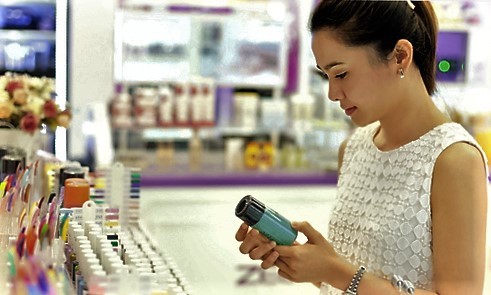
    CJ Olive Young, a major health and beauty store chain, said it will sell Humasis’ kits starting Friday at offline stores and on its online channel, with a parcel delivery service available.

    A growing number of new cases has prompted the nation’s health authority to approve the use of at-home virus tests to detect patients at an early stage.

    Users can collect samples from their noses on their own for testing, and the results come out within 15-30 minutes.

    If users receive a positive result from the self-test, they are required to visit screening stations to undergo preemptive polymerase chain reaction (PCR) tests to get a more accurate result.

    On Thursday, the country reported 574 more COVID-19 cases, raising the total caseload to 125,519, the Korea Disease Control and Prevention Agency said.

  • CU opens first store in Malaysia in collaboration with MyNews

    CU opens first store in Malaysia in collaboration with MyNews

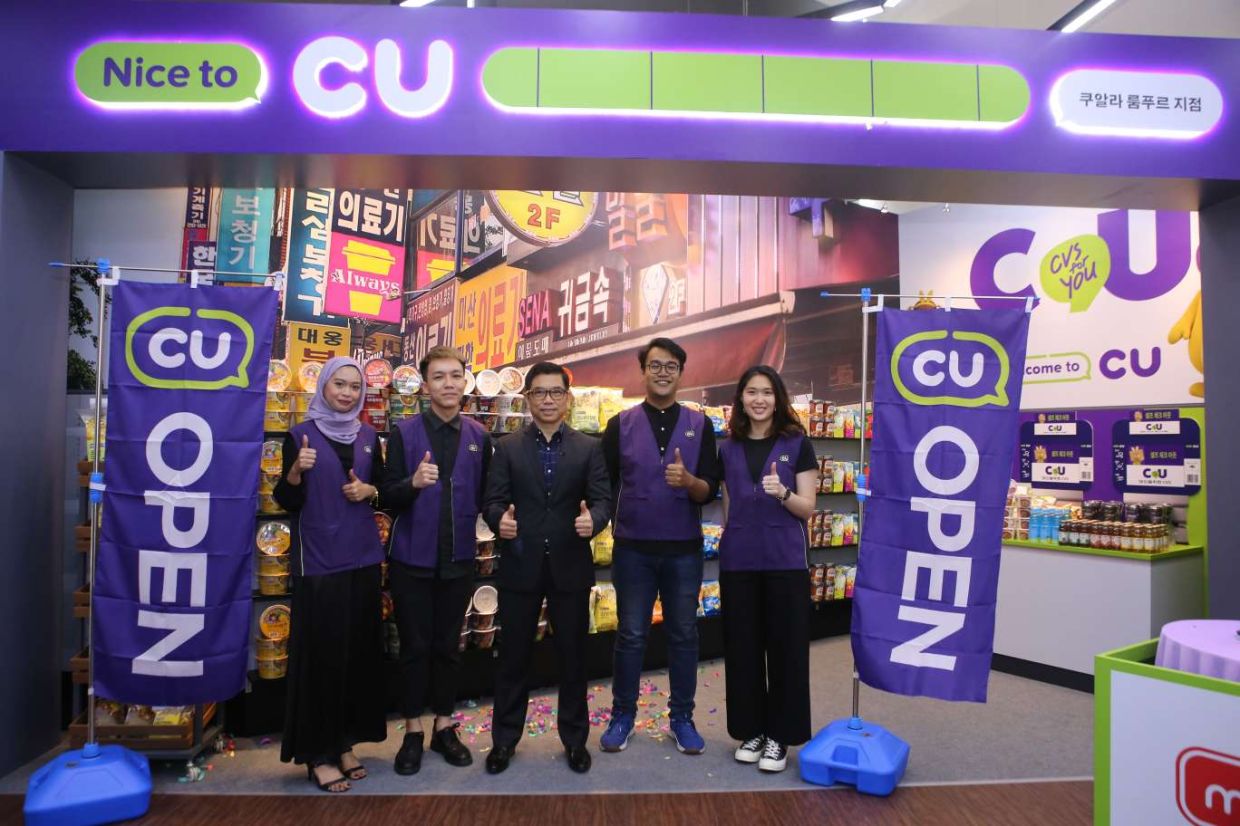
    CU has opened the doors of its first store in Malaysia, signaling a full-fledged entry into the country. CU is one of the big three convenience store chains in South Korea in terms of the number of stores, and the chain is owned by South Korean company BGF Retail Co Ltd.

    CU announced today that it opened its first store in Kuala Lumpur, making Malaysia the second foreign market the convenience store chain made an entry into after entering Mongolia in 2018. Malaysia’s first CU store has opened inside a shopping mall in Kuala Lumpur’s middle-class neighborhood. The store is large-sized, measuring approximately 165 square meters.

    The opening ceremony of the store was attended by prominent individuals such as Lim Hyung-geun, head of BGF Retail’s overseas business department, myNEWS Holdings Bhd CEO Dang Tai Luk, South Korean Ambassador to Malaysia Lee Chi-beom, and Kwon Young-jin, a director at the Korea Trade-Investment Promotion Agency (KOTRA).

    CU used BGF’s global system exclusively for overseas business for the first time in making the entrance into the Malaysian market. The South Korean convenience store chain is aiming to be the first of its industry to not only bring South Korea’s convenience store model built on decades of knowledge and experiences but also South Korean IT technologies to overseas markets.

    CU’s entry into Malaysia marks the first attempt to introduce a South Korean convenience store’s brand and system to a foreign company that operates local brands of its region. It is also an instance where a company in the retail and distribution industry was able to bear fruit from its pursuit of establishing a business in the Southeast Asian region. CU’s entrance into Malaysia is also quite significant in that the move throws a challenge to 7-Eleven, a powerhouse in the traditional convenience store business.

    With about 2,400 stores under its belt in Malaysia, 7-Eleven is the No. 1 company in its industry in Malaysia. In second place is myNEWS Holdings, a partner company of BGF, with 530 stores across the country. Japanese convenience chain FamilyMart is ranked third with about 200 stores in the country.

    CU has set a goal to open 50 new stores within a year and aspires to become No. 1 in the industry in the mid- to long-term by adding more than 500 stores over the next five years.

    CU is gearing up to expand the number of its new store openings following the opening of its first store in Malaysia, and at the same time, it is preparing to gradually convert existing myNEWS.com stores into CU stores. As a result, it is expected that CU’s stores and Japanese convenience stores will be duking it out for market share of the Malaysian convenience store market in the future.

  • 7-Eleven Malaysia appoints CEO team

    7-Eleven Malaysia appoints CEO team

    7-Eleven Malaysia Holdings Bhd has appointed CFO Wong Wai Keong and executive director Tan U-Ming as the co-CEOs for the company, effective Dec 1, 2020. Wong will also be appointed as an executive director of the company, effective Nov 1, 2020.

    They will jointly succeed Colin George Harvey, who will relinquish his post as executive director and CEO effective Dec 1, 2020 for health reasons. Harvey will continue with the company in his new capacity as an advisor and consultant.

    7-Eleven Malaysia chairman Tan Sri Abdul Hamid Embong said Wong and Tan’s combined 15 years of experience with the company will provide the strength and stability needed to weather through the uncertain economic conditions caused by the Covid-19 pandemic.

    Wong was appointed as CFO of the company in March 2018. Prior to joining 7-Eleven Malaysia, he was the group finance director of SyAqua Group Inc overseeing the Asian markets and Florida, USA where he was involved in the organization expansion and was instrumental in transforming the group into an integrated functional business. He has previously held management roles in Avon Cosmetics, KFCH Marketing, Ayamas Food Corp, Abbott Laboratories, and Wyeth. He was also a lead application consultant with JD Edwards.

    Wong is also a member of the Chartered Institute of Management Accountant, the Malaysian Institute of Accountants, and the Chartered Global Management Accountants.

    Tan was appointed as a director of 7-Eleven Malaysia Sdn Bhd in 2008, where he was responsible for overseeing the merchandising, supply chain, procurement and marketing functions. He was appointed to the position of executive director in 2011. Tan was appointed to the board of 7-Eleven Malaysia in August 2013. He currently holds directorships in other private companies of various industries.

  • 7-Eleven Malaysia keeps profit levels as before Covid-19 outbreak

    7-Eleven Malaysia keeps profit levels as before Covid-19 outbreak

    Convenience-store chain 7-Eleven Malaysia has maintained its profitability despite the impact of the coronavirus pandemic.

    Profit for the first half of the current financial year from the brand’s convenience-store and pharmaceutical businesses hit US$5.8 million and $1.4 million respectively. The group’s consolidated profit after tax for the half-year was $3.35 million.

    The business remained healthy despite the Covid-19 restrictions that enforced restricted hours and the temporary closure of some stores. Stores are still unable to trade 24 hours.

    While the business remained profitable, most product categories recorded lower revenues, with the exception of tobacco, which grew 22.7 percent during the reporting period.

    The group expects to explore further opportunities for growth in the second half of its financial year as trading conditions gradually recover.

  • FamilyMart set to test robotic c-store staff

    FamilyMart set to test robotic c-store staff

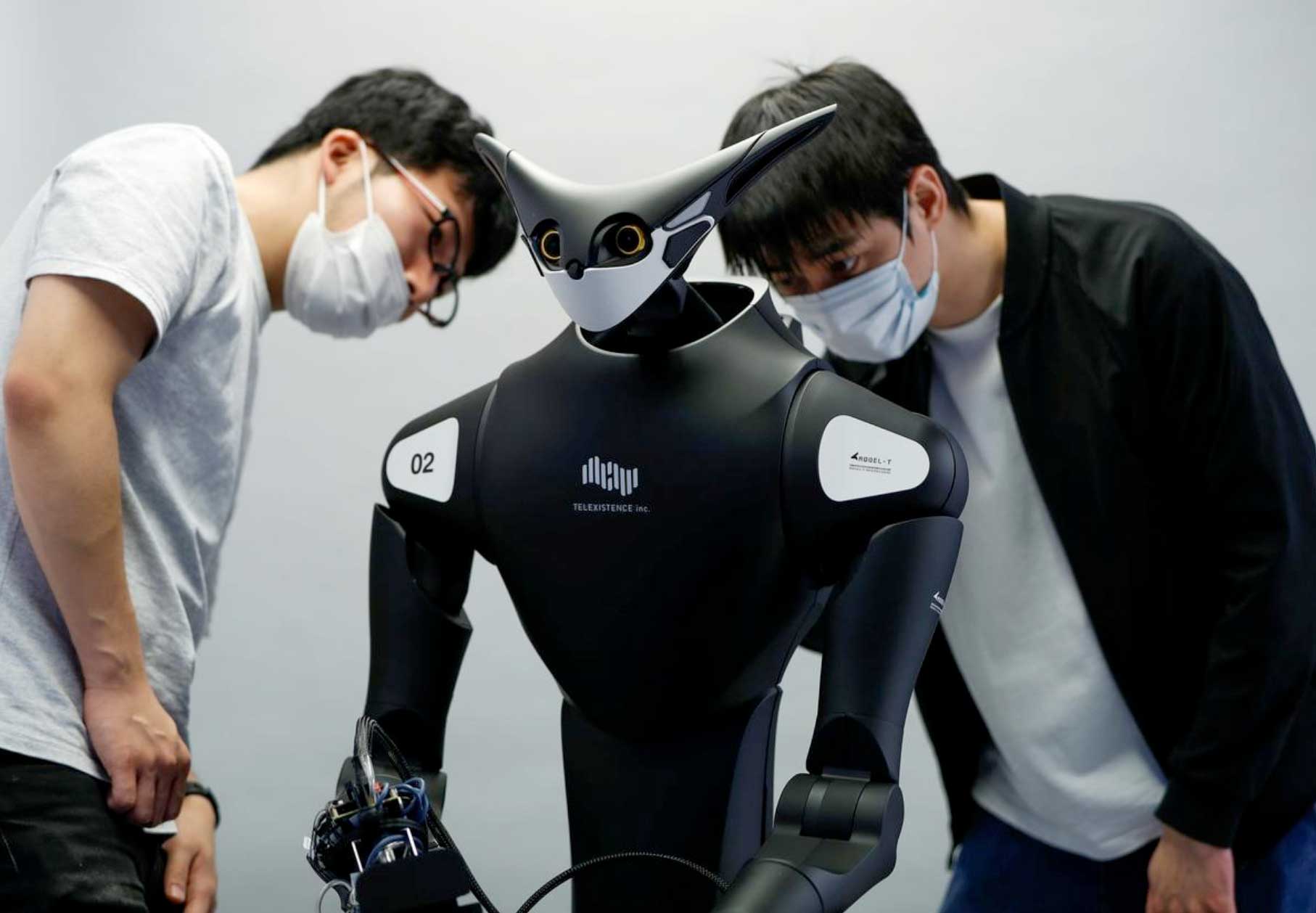
    FamilyMart will this month deploy a robot that vaguely resembles a kangaroo to stack sandwiches, drinks and ready meals on shelves at a Japanese convenience store. The robot’s maker, Telexistence, hopes the trial will help trigger a wave of retail automation.

    Following the trial, FamilyMart says it plans to use robot workers at 20 stores around Tokyo by 2022. At first, people will operate them remotely – until the machines’ artificial intelligence (AI) can learn to mimic human movements. Rival convenience store chain Lawson is deploying its first robot in September, according to Telexistence.

    “It advances the scope and scale of human existence,” the robot maker’s chief executive, Jin Tomioka, said as he explained how its technology lets people sense and experience places other than where they are.

    The idea, dubbed the existence, was first proposed by the start up’s co-founder, University of Tokyo professor Susumu Tachi, four decades ago.

    Their company has received funding from technology investment company SoftBank Group and cell phone service operator KDDI in Japan, with overseas investors including Airbus Ventures, the venture capital arm of European aircraft maker Airbus SE.

    It dubbed its robot the Model T, a nod to the Ford Motor car that began the era of mass motoring a century ago.

    Its quirky design is meant to help shoppers feel at ease because people can feel uncomfortable around robots that look too human.

    Robots are still a rare sight in public. Although they can outperform humans in manufacturing plants built around them, they struggle with simple tasks in more unpredictable urban settings.

    Solving that performance problem could help businesses in industrialized nations, particularly those in rapidly aging Japan, cope with fewer workers. Firms hit by the coronavirus outbreak may also need to operate with fewer people.

    Since the outbreak started, hotels, restaurants, and even gas and oil companies have contacted Telexistence, Tomioka said.

    “It’s difficult to tell now what impact robots might have in restaurants – it could mean fewer people, but it could also create new jobs,” said Niki Harada, an official at Japan’s Restaurant Workers Union.

    Using human operators with virtual reality goggles and motion-sensor controls to train its machines slashes the cost of retail robotics compared with complex programming that can cost 10 times more than as the hardware and take months to complete, Telexistence says.

    Although FamilyMart will still need humans to control its robots, operators can be anywhere and include people who would not normally work in stores, said Tomohiro Kano, a general manager in charge of franchise development.

    “There are about 1.6 million people in Japan, who for various reasons are not active in the workforce,” he said.

    Future te existence robots could also be used in hospitals so doctors could perform operations from remote locations, predicted Professor Takeo Kanade, an AI and robotics scientist at Carnegie Mellon University in the United States, who joined Telexistence in February as an adviser.

    It might take another 20 years before robots can work in people’s homes, however, he said.

    “In order for robots to be really usable at home, we really have to be able to communicate. The fundamental thing that is lacking is knowing how humans behave.”
  • South Korean convenience stores wind back 24-hour service

    South Korean convenience stores wind back 24-hour service

    South Korean convenience-store owners are canceling 24-service as minimum wage rise has eroded profits.

    Last year, president Moon Jae-in launched a campaign to raise the hourly minimum wage by 29 percent over two years. With night-shift employees earning time-and-a-half pay, franchisees have been struggling to pay part-time staff during the small hours.

    Not all stores traded around the clock when Shinsegae group launched the Emart convenience-store chan in 2014. Three Korean c-store giants, GS Retail, BGF Retail and Lotte Group, now allow its franchisees to close stores at night if the outlets lose money overnight for three months.

    In a market with the highest rate of c-stores per capita, South Korean convenience-store owners are shifting their focus to automated, unmanned stores. Emart is trialing a cashier-free store in Seoul with more than 30 cameras installed. Payments are made with credit card information stored in advance. Meanwhile, Lotte operates 17 unmanned outlets where products are scanned and identified by its shapes.

    Last year, many 7-Eleven and Familymart stores in Japan had to overturn its 24-hour operations as they were suffering from the labor shortage.

  • South Korea’s CU convenience store chain to open in Vietnam

    South Korea’s CU convenience store chain to open in Vietnam

    South Korea’s CU convenience store chain will expand its footprint to Vietnam, its second international market after Mongolia.

    BGF Retail, the operator of CU, signed a master-franchise agreement with CUVN, a Vietnam-based convenience store operator, on Tuesday. CUVN will be in charge of investment and operations in Vietnam market as BGF Retail contributes its brand and business background.

    BGF Retail and CUVN plan to open their first store in Vietnam by June next year.

    Park Jae-koo, CEO of BGF Retail, said the company will continue to expand internationally making forays into growing emerging markets.

    With the new expansion, the South Korean convenience store operator expects to gain a strong position in the Southeast Asian market as Vietnam’s economy has witnessed significant growth during recent years.

    Rival network GS25 has already launched in Vietnam, opening stores in Ho Chi Minh City.

  • 7-Eleven Malaysia predicts improved trading conditions

    7-Eleven Malaysia predicts improved trading conditions

    7-Eleven Malaysia CEO Colin Harvey believes the company can do ever better this year after a modest improvement in sales last financial year. The company’s revenue crept up 1.3 per cent last year to RM2.22 billion (US$546 million), with after-tax profit up 2.4 per cent to RM51.3 million ($12.6 million). Harvey says sales growth was driven by new stores and an improvement in same-store sales and consumer-promotion activity.

    “We continue to see opportunity for improvement. We are confident that our strategy roadmap focussed on strengthening the key areas of assortment, supply chain, operational excellence, store base, and digitally enabling the organisation will bear fruit in terms of financial performance, and overall customer shopping experience.”

    7-Eleven Malaysia’s board believes the trading conditions for the next quarter will improve,  driven by domestic demand and anticipated heighted consumer sentiment. The group plans to “continue to refresh the 7-Eleven brand in the mind of the customer” through innovative promotions, products and pricing.

  • 7-Eleven Taiwan to sell freshly-baked Domino’s Pizza

    7-Eleven Taiwan to sell freshly-baked Domino’s Pizza

    Taiwan 7-Eleven operator President Chain Store Corp is trialling a dual-branded store with Domino’s Pizza in Taipei’s Xinyi District. In doing so, the Taiwanese retail company has created the first convenience store in the country to offer fresh-cooked pizza with groceries and if successful, it will pave the way for a roll-out in selected stores.

    With Taiwan’s convenience-store market penetration the second highest in the world, sitting between South Korea and Japan, operators are seeking ways to achieve growth by means other than opening new stores.

    The trial store will allow customers to watch the pizza-making process. Pizzas will be priced from US$2.90 to $6.80, depending on serving size.

    President Chain Store is targeting busy working people in what is one of the capital city’s more upmarket neighbourhoods. The company hopes pizza will boost sales of complementary items such as beverages and other meal items.

    President Chain Store’s rival Taiwan familyMart has already partnered with companies to offer financial, catering and laundry services and health foods in its stores.

  • Seoul to get its first Emart Traders branch next month

    Seoul to get its first Emart Traders branch next month

    Emart, a Shinsegae Group company, will open a new branch of Traders, its big-box warehouse chain, in Seoul next month. It will be the first branch in the capital. The outlet will be located in Wolgye-dong, Nowon District, northern Seoul, with the opening scheduled for March 14. The Wolgye Traders is being built in the parking lot of Emart’s Wolgye store. The warehouse store will be 9,917 square meters (106,746 square feet) in size, with 45,302 square meters of floor area.

    Emart said the annual sales goal for the first Seoul branch of Traders is 140 billion won ($12.6 million). The company is planning to raise the new branch’s competitiveness by offering instant and fresh food at prices that could be 45 to 50 percent lower than the average price at department stores.

    There are currently 15 Traders branches nationwide, and Emart is planning to expand the number to 18 by the end of this year.

  • Emart24 ups the booze to capture solo drinker market

    Emart24 ups the booze to capture solo drinker market

    Convenience store chain Emart24 will expand its alcohol selection tenfold at around 500 branches this year, the brand said Wednesday. The products will be offered using the shop-in-shop model with 120 products, including wine, whiskey and micro-beers, displayed in a dedicated corner. Three to six racks will be added at each outlet to hold the products.

    The company explained the efforts are motivated by the rise of solo drinkers, those who enjoy a few drinks after work as opposed to drinking in larger groups.

    The reduction of the workweek to 52 hours and changing lifestyles, which prioritize work-life balance, have further driven up the number of solo drinkers. Before the announcement, the convenience store tested the shop-in-shop model at 19 branches for two months from November. Sales of wine, craft beer and whiskey increased 20-fold. Overall sales at these 19 branches doubled.

    Emart24 said it plans to expand the shop-in-shop concept to products other than alcohol in the future. It is considering fresh food and imported snacks.

  • CU convenience stores parent records sales leap

    CU convenience stores parent records sales leap

    The operator of South Korea’s CU convenience stores, BGF Retail, has achieved KRW189.5 billion (US$168.9 million) in operating profit last year, a leap of more than 600 per cent over last year. The company said on Tuesday its sales had risen by 515.3 per cent to KRW5.77 trillion ($5.14 billion). The results confirmed market predictions of a major upswing for the firm following demerging into separate holding and operating entities in November 2017.

    However, despite the improved trading figures, net profit dropped 98.1 per cent to KRW47.2 billion ($42.06 million). A statement by the firm explained that profits from some business activities made after the demerger had been attributed to the previous year’s statements.

  • FamilyMart Malaysia to open 300 more stores by 2022

    FamilyMart Malaysia to open 300 more stores by 2022

    QL Resources, the Malaysian operator of Japanese convenience store chain FamilyMart, is going ahead with plans to open 300 stores by March 2022, despite a slump in the economy. The firm opened 30 FamilyMart Malaysia outlets within the last financial year and plans to reach 90 new stores for the year ending March 31, 2019.

    “We still stick to our plan to open 300 stores in five years”, said QL chairman Chia Song Kun.

    Market leadership in the territory is currently controlled by 7-Eleven Malaysia, which operates more than 2000 stores in Malaysia. A major shareholder in the firm recently announced plans to open another 200 outlets this year.

    Malaysian spending is increasingly focused on domestic trade as exports continue to be affected by the US-China trade war.

  • 7-Eleven may make India foray with Future Group

    7-Eleven may make India foray with Future Group

    Convenience store chain 7-Eleven is holding advanced talks with India’s Future Group to enter the territory. The parties may announce an agreement to launch a network of 7-Eleven India stores next month, according to inside reports. Future Group would operate small format stores as a master franchisee, with a focus on food retailing. The partnership is expected to help Future extend its reach to buyers beyond its own existing store network.

    “Future Group has a number of neighbourhood stores through their own format launches and through acquisitions”, observed Devangshu Dutta, CEO at consultancy firm Third Eyesight. “Some of them could surely be repurposed to 7-Eleven convenience stores, while there could be other franchisees appointed for specific sites or territories,” he said.

    “However, becoming a franchisee entails costs and restrictions. The question is whether there is enough margin available in the business to allow for so many tiers of stakeholders.”

    7-Eleven India potential partner Future Group runs 1,444 stores in 409 cities, specialising in food and grocery retailing.

  • 7-Eleven Malaysia appoints Tsai Tzung-Han as director

    7-Eleven Malaysia appoints Tsai Tzung-Han as director

    Convenience store chain operator 7-Eleven Malaysia Holdings Bhd has appointed Tsai Tzung-Han (pix) as a non-independent and non-executive director, effective Jan 16, 2019. Tsai, 42, is currently the vice chairman of Cathay United Bank, a subsidiary of Cathay Financial Holdings which is listed in Taiwan. He also serves as a director on the board of Cathay Life Insurance, the largest life insurer in Taiwan and also a subsidiary of Cathay Financial Holdings.

    Tsai had previously served in various capacities at Cathay Life Insurance, including senior vice president in charge of alternative investments and executive vice president in charge of real estate acquisitions and development, human resources and strategic planning.

    He also ran the strategic planning department for Cathay Financial Holdings from 2010 until 2016 and oversaw the strategic investments into Bank Mayapada in Indonesia, Rizal Commercial Banking Corporation in Philippines and Conning Asset Management in the US.

    He joined Cathay United Bank in 2015 and served as the head of strategic planning until he became the vice chairman in 2016, where he continues to oversee the strategic planning, wealth management, digital banking, data analytics and overseas banking departments.

    Prior to returning to Taiwan, Tsai worked briefly in private equity at Goldman Sachs in New York and in venture capital at Pacific Venture Partners in San Francisco.

    From 2001 until 2003, he was a practicing attorney in the real estate department at Hale and Dorr LLP, currently known as Wilmer Hale, in Boston. Tsai has over 10 years’ experience in investment and business development in finance industry.