Retail News CRM

Tag: convenience store

  • Heat Wave Boosts Retail Sales

    Heat Wave Boosts Retail Sales

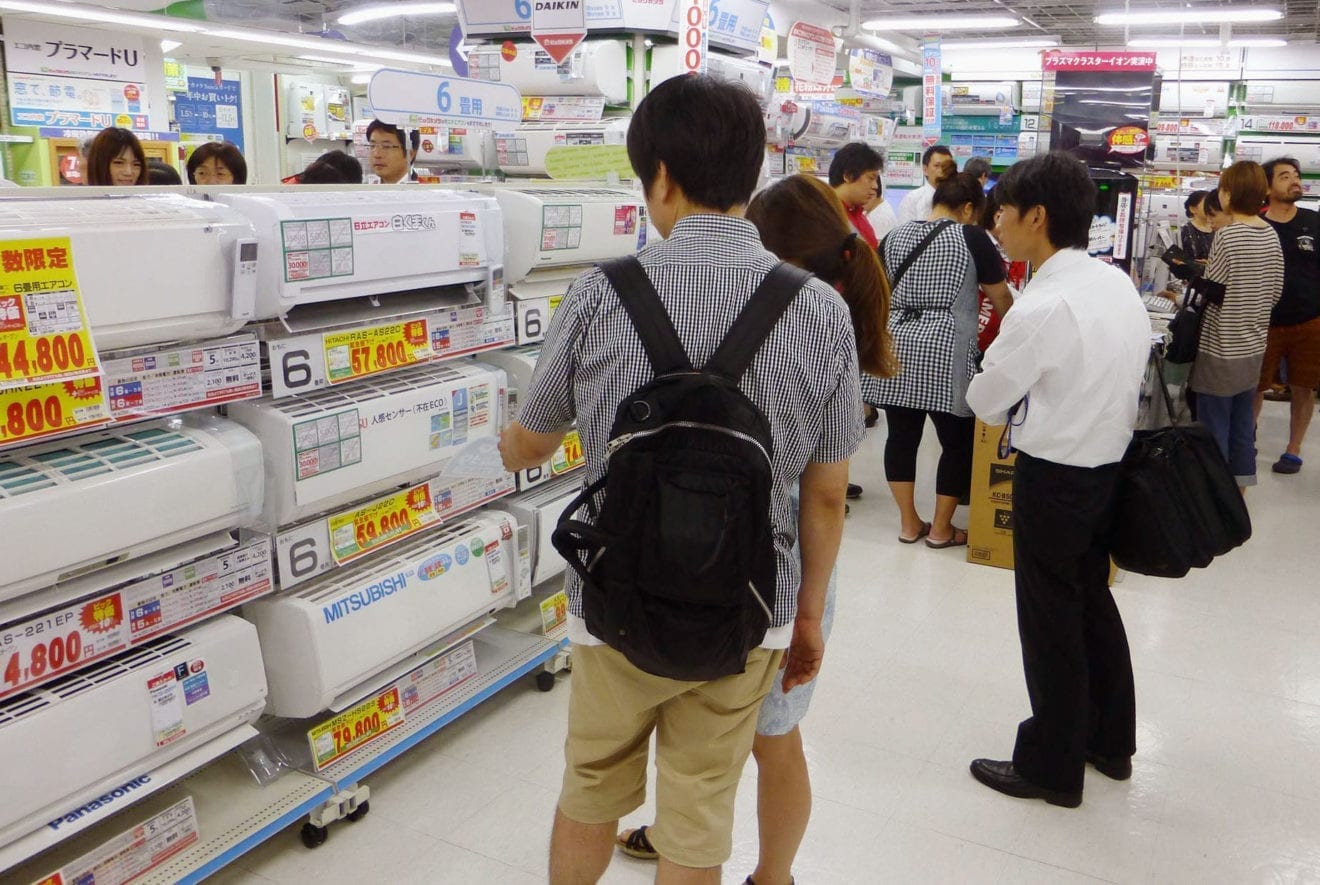
    A prolonged heat wave in South Korea is boosting sales of local retailers, cafes, hotels and theaters as people flock to those air-conditioned places to get relief, industry sources said Tuesday.

    The entire country has been hit by the scorching weather for the past two weeks, with daytime highs soaring above 35 degrees in Seoul and most other regions and the mercury staying above 25 C even at night.

    According to Lotte Department Store, its same-store sales climbed 4.1 percent between July 25 and Sunday from the corresponding period a year earlier.

    Sales of consumer electronics products rose by the highest rate of 24.5 percent, with those at food courts expanding 14.1 percent.

    “Sales of air conditioners and electric fans recorded a strong on-year increase, leading the overall gain in shipments of home appliances,” a Lotte Department Store official said.

    Discount giant E-Mart estimated its July sales have gone up 8 percent from the same month a year ago. In the first seven days of this month, sales of air conditioners soared 53 percent on-year with peaches and other fruits also chalking up brisk sales.

    The heat wave also comes as a boon to Seoul’s luxury hotels with swimming pools as an increasing number of people spend their summer vacations there instead of going to the beach or other places.

    Lotte Hotel Seoul, one of the country’s best luxury hotels, said sales of its “summer package” doubled between July 25 and Sunday from the same period a year earlier. The Plaza Hotel Seoul also posted a 40 percent surge in sales of its summer package.

    In addition, coffee shops and cinemas have enjoyed booming trade for the past several weeks as more people visited them to seek relief from the searing heat, according to the sources. “More people are expected to flock to air-conditioned places to cool off as the heat wave is forecast to last for some time,” an industry official said.

    The Korea Meteorological Administration forecast the heat wave gripping the country is likely to continue till mid-August with daytime highs hovering around 35 C.

  • Expansion brings some cash for VinMart

    Expansion brings some cash for VinMart

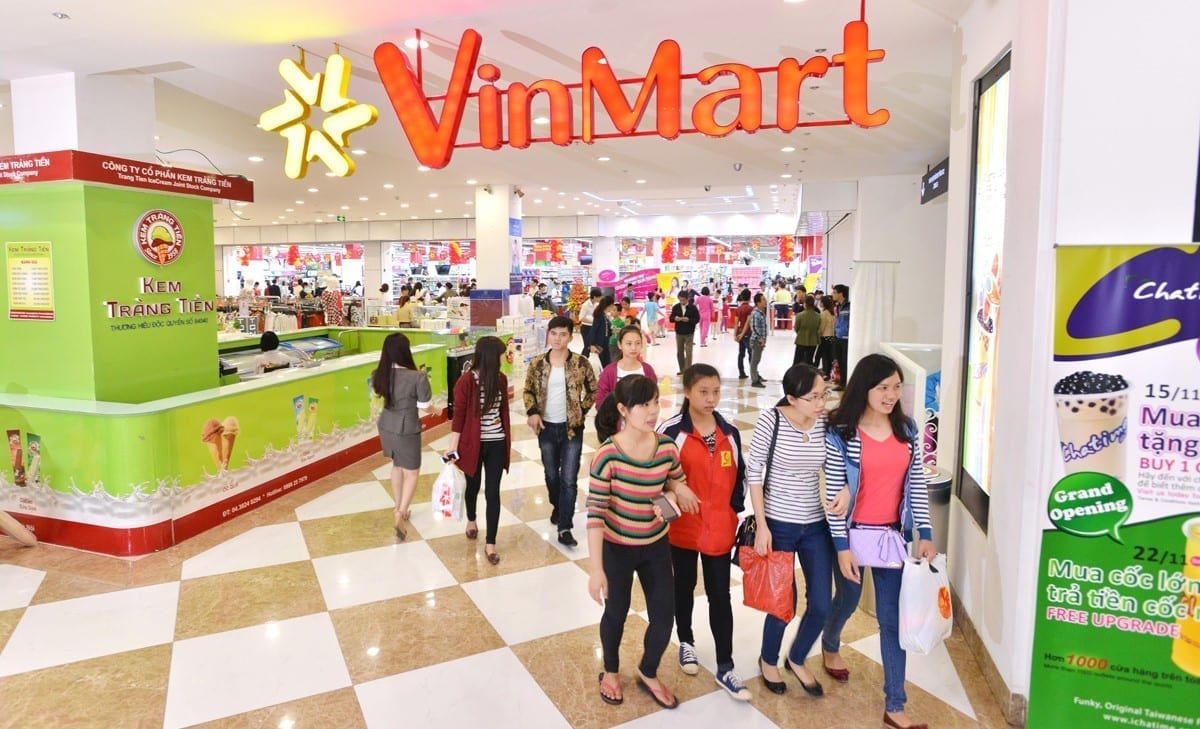
    Vietnamese supermarket chain VinMart has tripled its revenue in the second quarter of this year.

    Parent VinGroup says the group achieved VND2,465 billion (US$110.6 million) in sales of its supermarkets and convenience stores, a 226 per cent increase compared to the same period last year.

    One of the reasons for VinMart’s growth is the group’s strategy to bring its convenience stores VinMart+ to “every corner of Vietnam”, making it a part of consumers’ daily shopping routines.

    Up until July, after almost two years of operation, VinMart has 50 supermarkets and 830 convenience stores nationwide, which means the company has been opening three supermarkets a month and 46 c-stores.

    A standout of VinMart+ is the fresh food, distributed by green brand VinEco. The products are exclusive greenhouse vegetables, grown using Israeli technology.

    With this self-supply and self-control strategy, VinGroup has been creating a strong competitive strength in the market.

    Besides VinMart, its other divisions contributed to VinGroup’s profit in the quarter of VND 2,926 billion ($131.2 million): VinHomes, Vincom Retail, Vinpearl Land, Vinschool, Vinmec, and VinPro.

  • ‘Pokemon Go’ catapults c-store sales in Korea

    ‘Pokemon Go’ catapults c-store sales in Korea

    Convenience stores in some areas in South Korea are enjoying a boom in sales brought by the latest mobile game craze ‘Pokemon Go’.

    ‘Pokémon Go’, an augmented reality app developed by Niantic, requires players to walk around and catch creatures called Pokémon using one’s smartphone.

    The hit game is not yet available in the country but a technical glitch made it accessible in a few locations such as Sokcho, Ulsan, and Busan driving people to flock to these areas, according to The Korea Herald.

    Top South Korean c-store operator CU reported that its outlets in Sokcho saw a jump in sales notably in battery charging services which rose by 388 percent and mobile accessories such as portable batteries and earphones by 82.4 percent.

    A rise in demand for ice cream and cold beverages due to summer heat has also been seen so the Sokcho branch of retail chain E-mart offers free ice water, as part of its marketing campaign, to ‘Pokémon Go’ players who can catch Pokémon creatures on its premises.

    Travel agencies, hotels, and retailers selling Pokémon merchandise are also cashing in on the game phenomenon.

  • Convenience stores: Staying relevant in harsh times

    Convenience stores: Staying relevant in harsh times

    For Malaysian consumers, the last couple of years have been a mercurial ride with the implementation of the Goods and Services Tax (GST) and the subsequent effects of it as well as other global and domestic events which have rippled through prices of goods and services.

    As cost of goods and services gradually increases, most consumers have cut down their spending, to save on essentials.

    Softening consumer confidence have also taken a toll on businesses. In particular, the retail sector was affected more significantly by lower consumer confidence.

    Nevertheless, at the start of 2016, statistics and reports have shown that consumer confidence in Malaysia are slowly recovering and there are signs of of it stabilising.

    According to Nielsen Global Survey of Consumer Confidence and Spending Intentions, the Malaysian consumer confidence remain stable at the start of the first quarter of 2016 with 79 percentage points (pp), dipping one point from previous quarter).

    Globally, the report showed that Malaysia held on to its ranking as 36 most confident country in the first quarter (1Q) 2016 (unchanged from last quarter). Of note, the average global consumer confidence is 98 pp (one pp from previous quarter). Consumer confidence levels above and below a baseline of 100 indicate degrees of optimism and pessimism.

    However, while there are signs pointing towards improvements in consumer sentiments in Malaysia, analysts and industry observers are still cautiously optimistic on consumer trends.

    SOURCE: Nielsen Global Survey of Consumer Confidence and Spending Intentions 1Q16

    SOURCE: Nielsen Global Survey of Consumer Confidence and Spending Intentions 1Q16

    Richard Hall, country manager of Nielsen Malaysia, pointed out in a statement, “With no real changes in the economic outlook, Malaysians’ confidence remains low and we see that this trend will continue to be the case until the pressure on the ringgit ease.

    “Only when the pressure of the ringgit improves, can consumers start to feel the burden of their day-to-day spending lessen.”

    Nielsen noted that while the nation’s fiscal status (52 per cent compared to 50 per cent in prior quarter) continues to top the list of major concerns among Malaysian consumers, nearly a quarter of the respondents have cited that job security is now their second top worry (22 per cent).

    “Recessionary sentiments among Malaysians continue to remain high (84 per cent, unchanged from last quarter) with only one in five respondents feeling positive that the country will be out of an economic recession in the coming 12 months (22 per cent, unchanged from prior quarter),” the survey reported.

    The survey also revealed that consumers in Malaysia would continue to reduce household spending even when economic conditions would improve with nearly nine in 10 Malaysian consumers changing their spending habits in the past year to improve saving (88 per cent).

    It said, the top three areas where consumers in Malaysia would continue to cut back even when economic conditions do improve are spending less on new clothes (65 per cent), reducing out of home  entertainment (56 per cent) and switching to cheaper grocery brands (51 per cent).

    “Despite the fact that none of the economic key performance indexes (KPI) indicate that the country is in a recession, consumers continue to believe that the current situation and the future for the country is not positive.

    “To change this attitude will require a step change in the current environment,” Hall observed.

    Affin Hwang Investment Bank Bhd’s research arm (Affin Hwang Capital) in a recent report highlighted  the main themes affecting consumerism include the implementation of GST and the weakened ringgit against the US dollar.

    “While the consumer sentiment is at its all-time low with consumers mainly worried about the higher costs of living, income levels and the economy, several macroeconomic indicators are pointing towards an improvement,” it pointed out.

    “Consumers have been hit by higher costs of living, with headline inflation spiking to a high of 4.2 per cent year-on-year (y-o-y) as of February 2016.

    “Both Malaysian Institute of Economic Research (MIER) and Nielsen surveys highlight job security and income worries as key concerns among consumers, in addition to the current state of the economy,” it said.

    In a separate report, the research arm of TA Securities Holdings Bhd (TA Securities) expected consumer sentiment to remain weak in 2Q and continue to remain flattish throughout the year.

    However, it pointed out that consumer sentiment level, according to MIER, have rebounded by 9.1 points, suggesting that consumers have adjusted their spending pattern to take into account the impact of GST their purchasing activities.

    “Coupled with financial aids given by the government through BR1M, reduction in employees’ EPF contribution, and increase in minimum wage for private and public sectors workers that will be implemented on July 1 this year, could lessen the impact of demand slowdown,” it added.


    Grocery retail retains growth despite headwinds

    A closer look into the consumer sector shows that while consumer sentiments is expected to remain subdued in the near-term, Malaysian consumers’ purchasing power is improving in certain categories.

    According to Nielsen, consumer purchasing power in the Fast Moving Consumer Goods (FMCG) category gained traction in 1Q of 2016 versus the same quarter in the prior year (4.7 per cent).

    It added, all FMCG super categories registered a healthier growth lead by beverage (8.8 per cent), grocery (4.3 per cent), household (3.9 per cent), health & wellness (2.7 per cent), snack & confectionary (two per cent) and personal care (1.7 per cent).

    “In spite of the FMCG industry having a strong start to last year due to the GST introduction in April 2015, we have been pleasantly surprised to see the majority of categories still in growth, with the modern trade leading the way.

    “While there has negative sentiments surrounding the increasing cost of living, consumers still need to buy groceries and it looks like they are not necessarily down trading their purchasing decisions,” Hall noted.

    In Malaysia, while hypermarkets still dominate the general FMCG or grocery markets, there are growth opportunities for convenience stores given that demand still remains strong for FMCG or grocery goods.

    In a report, the research arm of DBS Bank Ltd (DBS Group Research) pointed out, “There is room for Malaysia to grow its convenience stores as the number of convenience stores per one million total population lags behind Indonesia, Singapore and Thailand.

    “However, it leads Asean-5 in supermarket and hypermarket outlets-to-population ratio. Among the three main modern grocery retail formats, convenience stores registered the fastest growth from 2009 to 2014 at 17 per cent compounded annual growth rate (CAGR),” it said.

    It also noted that convenient stores offer products and services that are within reach of consumers compared to supermarkets and hypermarkets.

    “The layout of many Malaysia towns tends to be spaced out and it is common for people to commute in cars. As such, there are many big box hypermarket developments in Malaysia.

    “Hypermarkets are seen as a convenient place with a wide selection of products for consumers to visit. Supermarkets in suburban neighbourhoods play the role of supplementing hypermarkets, while convenience stores offer 24-hour service.

    It also pointed out that generally, purchasing habits for consumers in Asia have also shifted with convenience as a key factor in their purchasing habits.

    “Formats penetrate Asean food consumption in different manners. Supermarkets will always be a key feature in malls located in densely populated cities.

    “Convenience stores are strong in penetrating every corner of cities and in obscure locations outside them. Hypermarkets are capable of capturing consumption in more spaced-out locations with high automobile accessibility.

    “With modern and traditional grocery retailers situated in cities and neighbourhoods, it is convenient for consumers to pick up grocery items physically and even on the move,” it said.

    Convenience store retailers are likely to sustain growth, given their aggressive outlet expansion to meet demand for convenience, DBS Group Research observed.

    With that, BizHive takes a look at some of Malaysia’s top convenience store retailers.


    7-Eleven the ‘go-to’ convenience store

    Since its listing on Bursa Malaysia in 2014, 7-Eleven Malaysia Bhd (SEM) has grown by leaps and bound across the nation.

    With a market share of 82 per cent of the standalone convenience store segment as of March 2014, SEM, which manages the 7-Eleven convenience store chain in Malaysia, is the largest convenience store operator in the nation.

    TA03438

    As of Dec 31, 2015, SEM has a total of 1,944 stores serving more than 900,000 customers per day. According to its 2015 Annual Report, 1,793 or 92.2 per cent of its stores are corporate-owned while 7.8 per cent are operated by franchises.

    “Sales and profits both delievered impressive results despite the difficult retail market environment which was significantly impacted by the introduction of GST for the first time on April 1, 2015.

    “On top of this, consumer confidence was measured at a 10-year low level in 3Q15 which also subsequently impact consumers spending behaviour,” said Shalet Marian, independent none-executive/chairman of SEM, in her chairman’s statement from its 2015 Annual Report.

    “Despite the earlier mentioned headwinds in the the total FMCG retail market in 2015, the company has recorded a strong six per cent growth rate in total sales compared to the previous year.

    “Total sales amounted to RM2.006 billion although our same store sales showed marginal decline of 3.6 per cent as a result of the GST impact on sales values.”

    This year, according to previous news report, SEM expects to spend between RM85 million and RM90 million as part of its expansion plan which includes the opening of 200 new stores this year.

    SEM chief executive officer Gary Brown was quoted as saying that this expansion would see more outlets in Klang Valley, the east coast, as well as Penang, Johor and Melaka.

    “We will continue to invest in new stores and building our network. The investment also included refurbishment of our existing 200 stores this year,” he said to reporters after the group’s AGM.

    He was quoted as saying that the company had also set aside major capital expenditure to continue to upgrade its new information technology (IT) system.

    “The new IT system project which started in 2014 costing RM66 million is expected for completion by the middle of this year,” said Brown.

    Marian added, “Our plan is to continue to bring 7-Eleven true convenience to more and more customers in Malaysia and as such we expect to expand our store network by approximately 200 new stores in 2016.”

    In 2015, SEM had opened 199 new stores nationwide. As at December 31, 2015, the group has total cash reserves of RM126 million.

    Meanwhile, on SEM’s performance in 1Q16, the research arm of Maybank Investment Bank Bhd (Maybank IB Research) noted that its results were in line with expectations but the research house remains cautious of its earnings outlook.

    “We continue to expect new store openings and better contribution from its refurbished stores to help drive growth.

    “As a recap, for 2016 and beyond, we understand that SEM targets to open 200 stores per annum. Nonetheless, we remain cautious on its near term earnings as it will be facing some near term headwinds such as the minimum wage hike come July 1, 2016.

    “In the longer term however, we expect SEM to eventually pass the higher cost through to consumers via higher merchandise prices,” it opined.

    Aside from that, recently, SEM had signed a memorandum of understanding with Brahim’s SATS Food Services Sdn Bhd (BSFS), a 51 per cent owned subsidiary of Brahim’s Holdings Bhd (BHB).

    This will expose Brahim’s to a wider market via SEM’s close to 2,000 stores network all across Malaysia, which is in line with the objective of the strategic partnership between BHB and SATS Ltd (SATS) to venture into non-airline business in Malaysia.

    Analysts believe that this is a synergistic partnership as it could benefit both parties which are currently faced but headwinds in the consumer sector.

    “We understand that some convenience store players domestically has been facing some supply chain issues (such as product quality, consistency and choices) mainly due to dependence on multiple fresh food suppliers and scale and reach of the existing food suppliers.

    “Therefore, collaboration with a sizeable party could benefit SEM in the longer term in terms of cost efficiencies and consistency of product quality/choices while not having to move away from its core competence of managing convenience stores.

    “To note that fresh food and services as a percentage of merchandise sales has been fairly stable, at est. 10 per cent,” Maybank IB Research opined.

    Under this MoU, BSFS is expected to provide packaged ready to eat (RTE) meals such as panini sandwiches, the ever popular nasi lemak and fried rice that would be branded under 7-Eleven’s proprietary food service brand of  ‘Fresh to Go’.

    Looking ahead, Marian said, “Despite the current uncertainty and consumer confidence issues which impact our customers and their spending behaviour, I am confident about the growth prospects of our company as we are resilient and have positioned ourselves to maintain our market leadership position not just in 2016 but for the years beyond.”

    Bison: Malaysia’s largest home-grown retailer

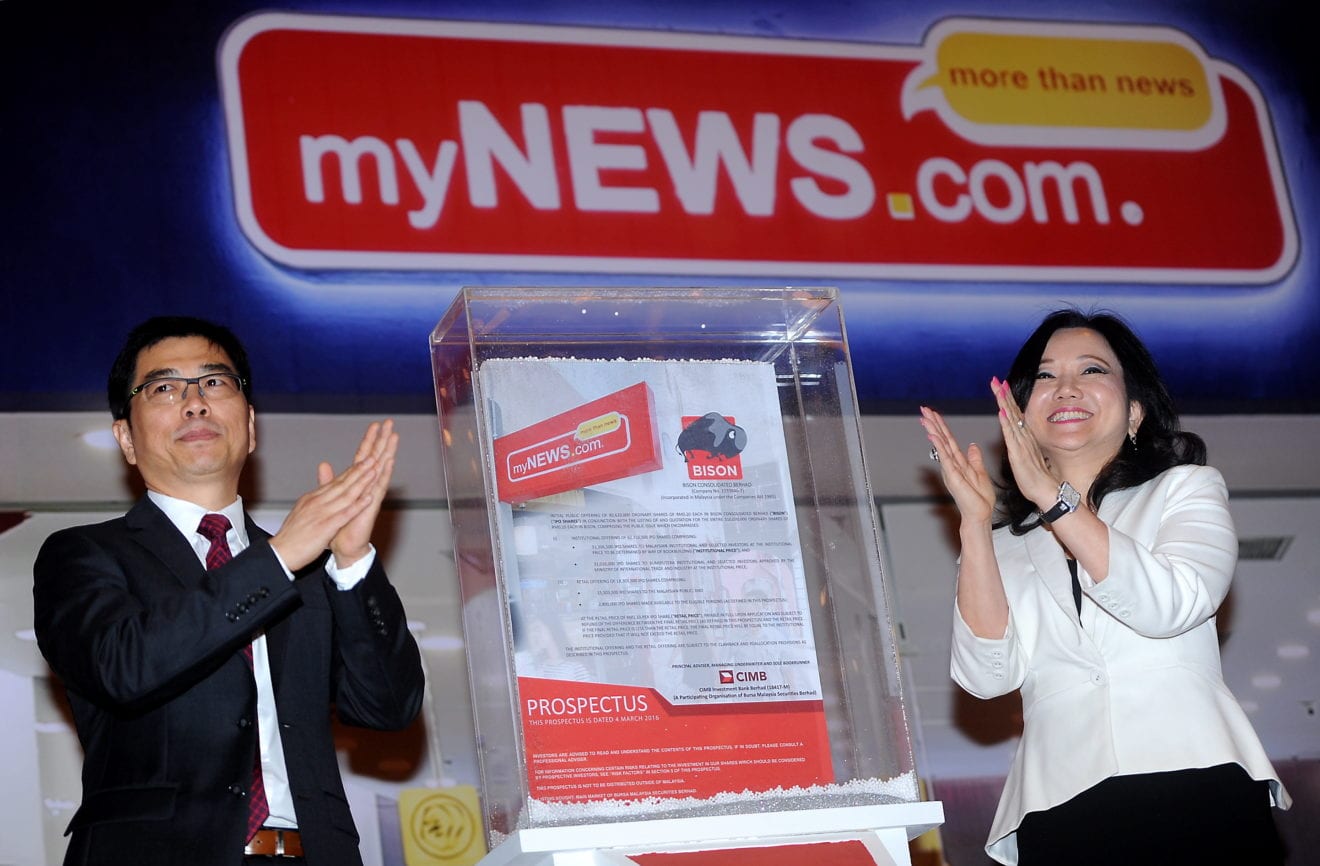
    Incorporated in 2013 as Prempac Sdn Bhd and converted into a public limited company in 2015, Bison Consolidated Sdn Bhd (Bison) was successfully listed on Bursa Malaysia earlier this year in March.

    The research arm of CIMB Investment Bank Bhd (CIMB Research) cited Bison as Malaysia’s largest home-grown convenience store operator and has an estimated total market share of 8.6 per cent in 2015, with up to 255 outlets (including eight, WHSmith outlets).

    TA03439

    Through its subsidiaries, the group provides unique offerings under its main trade name ‘myNews.com’ a press and convenience retailing business.

    According to its initial public offering (IPO) prospectus, Bison also operates other outlets under the trade names of ‘newsplus’ ‘MAGBiT’, and THE FRONT PAGE’ as well as under the trade name of ‘WHSmith’ through its join venture with WH Smith Travel, an indirect wholly-owned subsidiary of UK-based WH Smith Plc.

    While it was incorporated in 2013, Bison’s conception can be tracked back to 1996 with the establishment of Bison’s first newsstand outlet under the brand name ‘MAGBiT’.

    CIMB Research highlighted that over the last few years, Bison has been registering positive and consistent revenue and core net profit growth, with a two-year compounded annual growth rate (CAGR) of 17.4 per cent and 7.5 per cent, respectively.

    “The double-digit revenue growth was mainly driven by higher merchandise sales, consumer services and advertising and promotion, which were boosted by the growth in the number of stores for the group,” it added.

    The research team also noted that for the past three years, Bison?s gross profit margin has expanded from 33.3 per cent in FY13 to 34.2 per cent in FY15.

    “The consistently better margins can be attributed to the increase in revenue from its consumer services as well as its advertising and promotion revenue, which carry no cost components due to its nature as fee income,” it said.

    In Malaysia, the retail convenience store sector has been viewed as largely underpenetrated.

    According to a study by Smith Zander, Malaysia’s retail convenience store penetration rate is 135 stores per million people, far below that of more developed countries in the Asian region, such as Singapore (162 stores/million people), Hong Kong (190 stores/million people), Japan (407 stores/million people), Taiwan (419 stores/million people) and South Korea (485 stores/million people).

    As such, CIMB Research believes that this industry still has plenty of potential to play catch-up.

    “Given Bison’s established and well-known presence in the domestic retail convenience store industry, management believes that the group is well positioned to capture the significant growth opportunities available,” it added.

    “With an estimated market share of 8.6 per cent (in terms of total number of outlets in 2015), Bison is the second-largest retail convenience store industry player in Malaysia.

    “Even though the retail convenience store scene remains highly competitive, we are not overly concerned as Bison has an extensive and strategic store network compared to the smaller players, which mostly hold less than one per cent of the market share (based on the latest publicly-available data collated by Smith Zander),” it commented.

    While Bison, like every other retailer, faces headwinds such as weak consumer sentiments, the research team said the group would be able to withstand these challenges as most of its earnings are derived from its merchandise sales which are mostly generated from food and beverages and small ticket items.

    It also noted that the group could benefit from its commission-based income from consumer services and advertising and promotions.

    It further pointed out that despite the overall weaker market conditions, Bison had managed to generate a healthy net profit growth of 7.4 and 7.5 per cent y-o-y in FY14 and FY15, respectively.

    Overall, CIMB Research forecast Bison to deliver a two-year profit CAGR of 31.1 per cent against 25.5 per cent revenue CAGR, based on the group’s net profit of RM13.5 million recorded in FY15.

    “We are forecasting for turnover to be fuelled by a conservative SSSG of 1.4 per cent over the next two years (in line with the historical three-year SSSG CAGR of 1.4 per cent) on the back of the group’s expansion plans for its outlets and increased income from its advertising and promotion as well as consumer services.

    “Our SSSG assumption has also factored in the potentially softer consumer spending backdrop amid concerns of mounting prices and a gloomier job outlook.

    “We highlight that despite the implementation of GST in April 2015 and rising living costs, the group still managed to chalk up commendable 19.3 per cent y-o-y growth for its FY15 revenue.”


    FamilyMart enters the fray

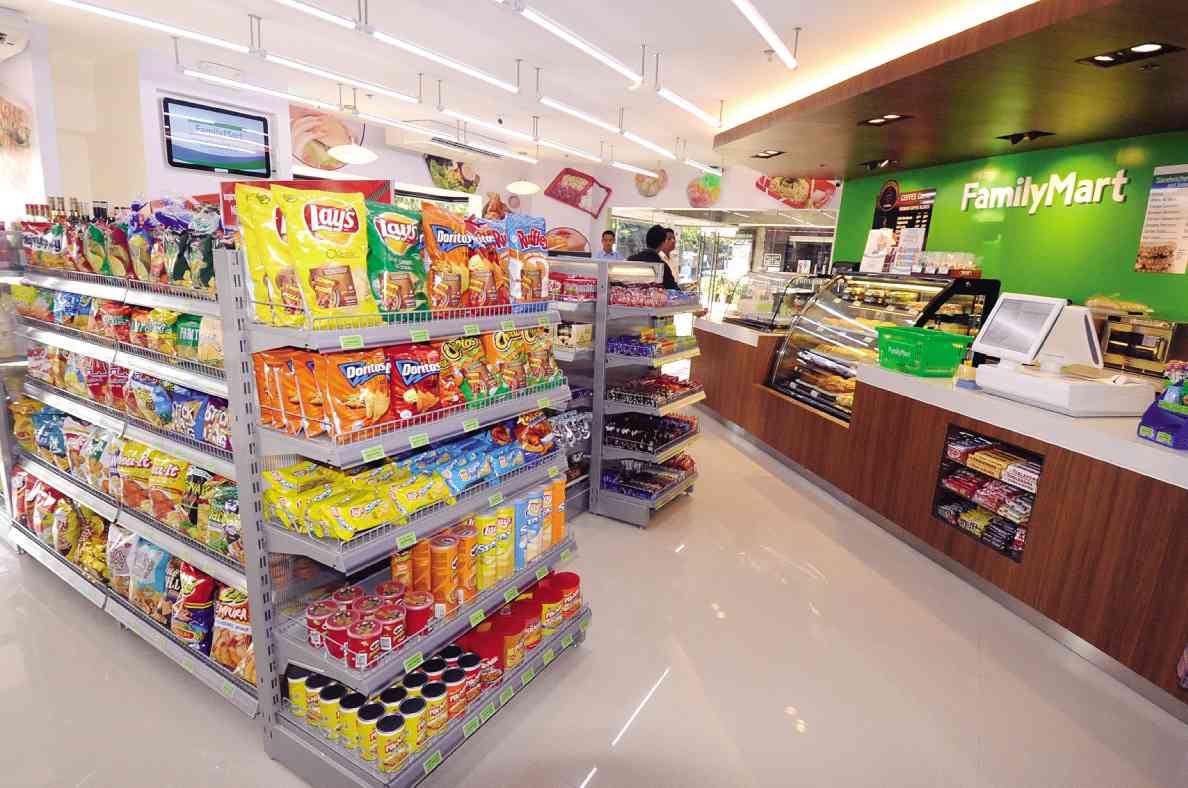
    The FamilyMart brand of convenience store, owned and founded by Japanese-based FamilyMart Co Ltd, has over 17,540 stores in seven countries worldwide, as at March 31, 2016.

    Ranked as the second largest convenience store chain in the world, the convenience store focuses on retailing convenience products, with emphasis on ‘nakashoku’ or ready-to-eat/take-out food and beverages.

    Earlier this year, FamilyMart as well as QL Resources Bhd’s (QL Resources) wholly owned subsidiary, Maxincome Resources Sdn Bhd have announced earlier this year that they will be bringing in the popular brand into Malaysia to serve the rising demand of consumers here.

    To note, Maxincome Resources has signed an area franchise agreement with FamilyMart which grants QL Resources via Maxincome Resources, the exclusive master franchisee rights to develop and operate FamilyMart convenience stores in Malaysia for 20 years, renewable for subsequent periods at the option of the Master Franchisee.

    With this agreement, QL Resources anticipates to open the first FamilyMart in Malaysia by December 2016.

    “FamilyMart Co Ltd’s philosophy and values resonate with QL Resources’ mission of providing nourishing agro-based products for the benefit of all. Their emphasis of delivering quality food is also a value that QL Resources, as a food company values and sees synergy in.

    “In addition to this synergistic effect, this expansion is a long-term investment which also opens up bigger growth opportunities in the consumer market for the group. It fits into our strategy of strengthening and expanding integration of the group’s value chain,” said QL Resources.

    Basing their target on the track record of FamilyMart stores in other countries, QL Resources aims to have 300 FamilyMart stores in Malaysia in five years.

    This development came as a surprise for analysts as the convenience store market in Malaysia has thriving competition with the presence of the dominant 7-Eleven chain as well as Bison’s retail convenience stores.

    However, analysts believe QL Resources’ foray into the convenience store sector as well as its experience as a food producer makes this franchise beneficial for the company.

    AllianceDBS Research Sdn Bhd (AllianceDBS) in a recent report, highlighted that the focus on read-to-eat food and beverage might bring synergistic benefits to QL Resources’ surimi-based products, snack foods, and processed poultry product businesses.

    “The strong FamilyMart brand name is also a positive factor – it already has a strong presence in neighbouring country Thailand with circa 1,200 stores. This venture will lengthen the value chain of QL Resources’ agro-food operations, and offers the chance to deliver another steady cash generation business if QL Resources manages to secure strategic locations for its outlets,” it opined.

    The research arm of Public Investment Bank Bhd (PublicInvest Research) also believed that through this convenience store concept, QL Resources would have the direct channel to consumers versus its current reach mainly to distributors.

    “With its manufacturing capabilities to support the food service industry coupled with product development, we believe QL Resources’ food brands can grow further on the platform of FamilyMart and potentially to other markets with FamilyMart’s presence,” it commented.

    The research team also pointed out that through reviews, the hroup had identified key factors that reveal more emphasis on lifestyle and quality preferences whilst having the convenience factor.

    These include consumer trends which sees rising importance in product quality and convenience, the rise in urbanisation to 80 to 85 per cent by 2027, young demographics with the median age at 27 to 28 years, Malaysia’s target of a GNI per capita of US$15,690 by 2020 and the 11th Malaysia Plan which aims to strengthen infrastructure thus the expenditure on public transport would serve only to create convenient store business opportunities.

    Overall, it said, “The FamilyMart contributions will only begin to bear fruit in the longer-term due to its initial expected six to seven year gestation period. In the medium term however, this move would only serve to enhance its branding recognition which could boost sales for its products.”

    AllianceDBS Research also believed that the earnings impact on FY16 to FY17F would likely be negligible given the expected number of store openings in the near term and the necessary gestation period.

    All in, there is a global drive towards convenience channels in Asia with more consumers opting for an easier and more convenient way to shop for their groceries.

    As the consumer sector slowly begins to stabilise from the support of the government and Malaysia’s recovering economy, the retail convenience store sector would likely see more room for growth in the country.
     

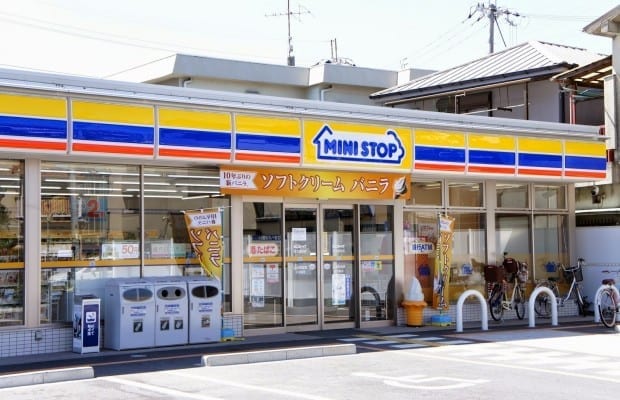
  • Ministop closing up shop in Indonesia for now

    Ministop closing up shop in Indonesia for now

    Japanese convenience store operator Ministop is pulling out of the Indonesian market, at least for the time being.

    The company announced Friday that it is terminating a franchise agreement with local retailer Bahagia Niaga Lestari, which wants to concentrate resources in other areas.

    The retailer is Ministop’s sole franchisee in Indonesia. So when the six franchise stores it operates there are closed, the country will have no Ministops.

    Ministop said it will search for a new partner and plan a return to Indonesia, since the convenience store market there has growth potential.

    Ministop had inked the franchise agreement with Bahagia Niaga Lestari in 2012 because Indonesia bars foreign companies from investing in retail stores with less than 400 sq. meters of floor space. The first Ministop in that country opened in June 2013.

  • Bison expands to Myanmar with 2 outlets at airport

    Bison expands to Myanmar with 2 outlets at airport

    Bison Consolidated Bhd is expanding its myNEWS.com press and convenience retail brand to Myanmar via a management agreement (MA) with Singapore-based SMI Retail Pte Ltd.

    In a filing with Bursa Malaysia yesterday, Bison said its wholly owned subsidiary Bison Stores Sdn Bhd has signed the MA with SMI Retail, a wholly owned subsidiary of Singapore-listed Singapore Myanmar Investco Limited.

    SMI Retail intends to establish two myNEWS.com outlets at the new terminal of Yangon International Airport and has agreed to enter into the MA to appoint Bison Stores as the independent contractor to provide management services and advisory support.

    Under the MA, Bison Stores agrees to grant SMI Retail a revocable, non-exclusive, non-transferable license to the proprietary business format and retail management and control system developed by Bison Store.

    The MA is valid for five years and is renewable for a further five years upon mutual agreement. SMI Retail’s right to use the Intellectual Property Right is derived solely from the MA.

    If required, SMI Retail will provide assistance in obtaining registration of any trademarks or other intellectual property rights need in Myanmar.

    SMI Retail will also pay Bison Stores a minimum monthly management fee or a percentage of the gross revenue of the business, whichever is higher. All salaries, remuneration, related expenses and costs of secondment of the outlet management and support staff will also be borne by SMI Retail.

    The MA is subject to approval of any other relevant authorities or any other third parties with respect to the implementation of the MA, if required.

  • Cheap convenience store coffees enjoy growing popularity

    Cheap convenience store coffees enjoy growing popularity

    Low-cost coffees at Korean convenience stores are increasingly popular among price-conscious consumers, posing a threat to coffee shop franchises, industry data showed Monday.

    Local convenience stores have served canned coffee and instant coffee with hot water for years, but they are expanding sales of higher-quality drinks through self-serve coffee bars to get a bigger chunk of the rapidly growing market.

    The nation’s top three convenience store chains, which each have over 7,000 outlets nationwide, offer coffee at around 1,000 won (87 cents), a price one-third or one-fourth that of major franchise coffee shops.

    Helped by affordable prices, coffee sales at major convenience store chains have soared in the first quarter compared to a year ago.

    7-Eleven, operated by Lotte’s affiliate Korea Seven, said sales at “Seven Cafe” jumped nearly four times in the first three months of this year, without elaborating on the specific sales figures.

    GS 25, a chain under GS Retail, also saw coffee sales at “Cafe 25” rise nearly three-fold during the period, and CU, a chain by BGF Retail, said its sales at “Cafe GET” rose 62 percent.

    Convenience stores plan to expand their on-the-go coffee services this year as well as bakery items and ice beverage menus this summer to expand coffee-related sales. The 7-Eleven and GS 25 chains plan to triple the machine to 3,000 this year, according to company officials.

    As major chains are set to expand coffee services to edge out their rivals, industry officials expect the competition to accelerate polarization in the market between mini take-out stores and trendy cafes. Their fast rise poses a threat to franchise coffee shops, which have posted lackluster performances amid a supply glut and rising rental fees in major retail strips.

    Ediya, a homegrown coffee brand that has the largest number of shops nationwide, said the average sales per store slipped 2 percent in 2015 from a year ago.

    “We have been paying keen attention to convenience store coffees. After in-depth discussions with employees late year, we concluded that creating Ediya’s own taste is the most important,” Ediya CEO Moon Chang-ki said during last week’s press conference.

    “Despite the influx of cheap coffee, we will strengthen R&D to improve the quality of our coffee products.”

    The coffee market was valued at 6 trillion won last year and was expected to grow about 10 percent in the next five years.

    Amid the coffee craze, convenience store coffee grew at the fastest pace to snip away the market share of other caffeine beverages. Coffee sales at convenience stores amounted to 40 billion won ($34.7 million) in 2015 and are expected to expand to 100 billion won this year, according to industry data.

  • Indonesia retail Japanese convenience stores think small to survive

    Indonesia retail Japanese convenience stores think small to survive

    Japanese convenience store operators are shrinking the size of their outlets in Indonesia amid growing competition from local rivals. But the strategy of pursuing profitability over scale runs the risk of downsizing the companies out of the market.

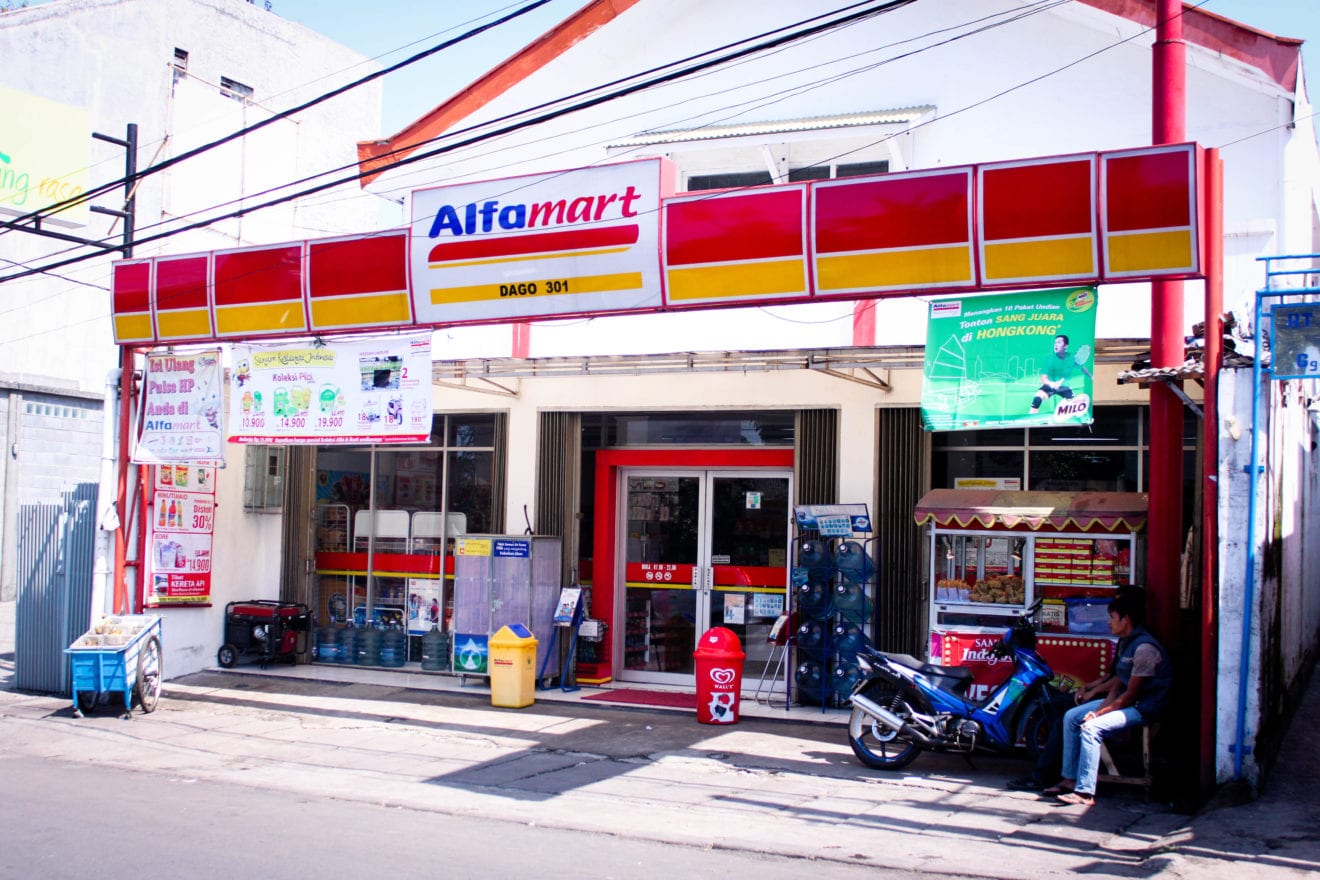
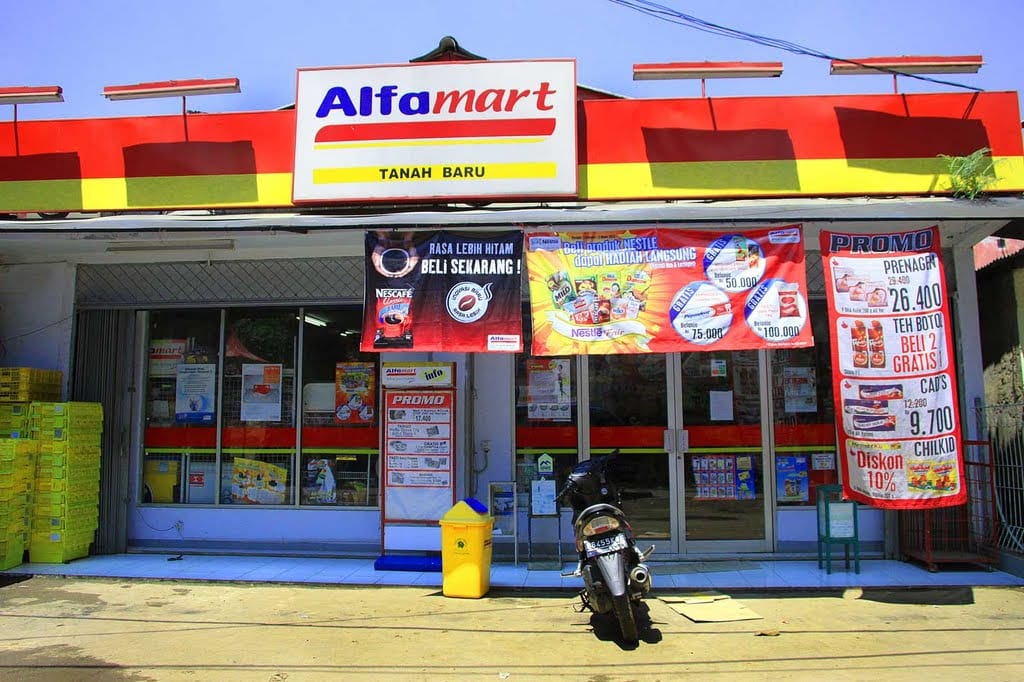
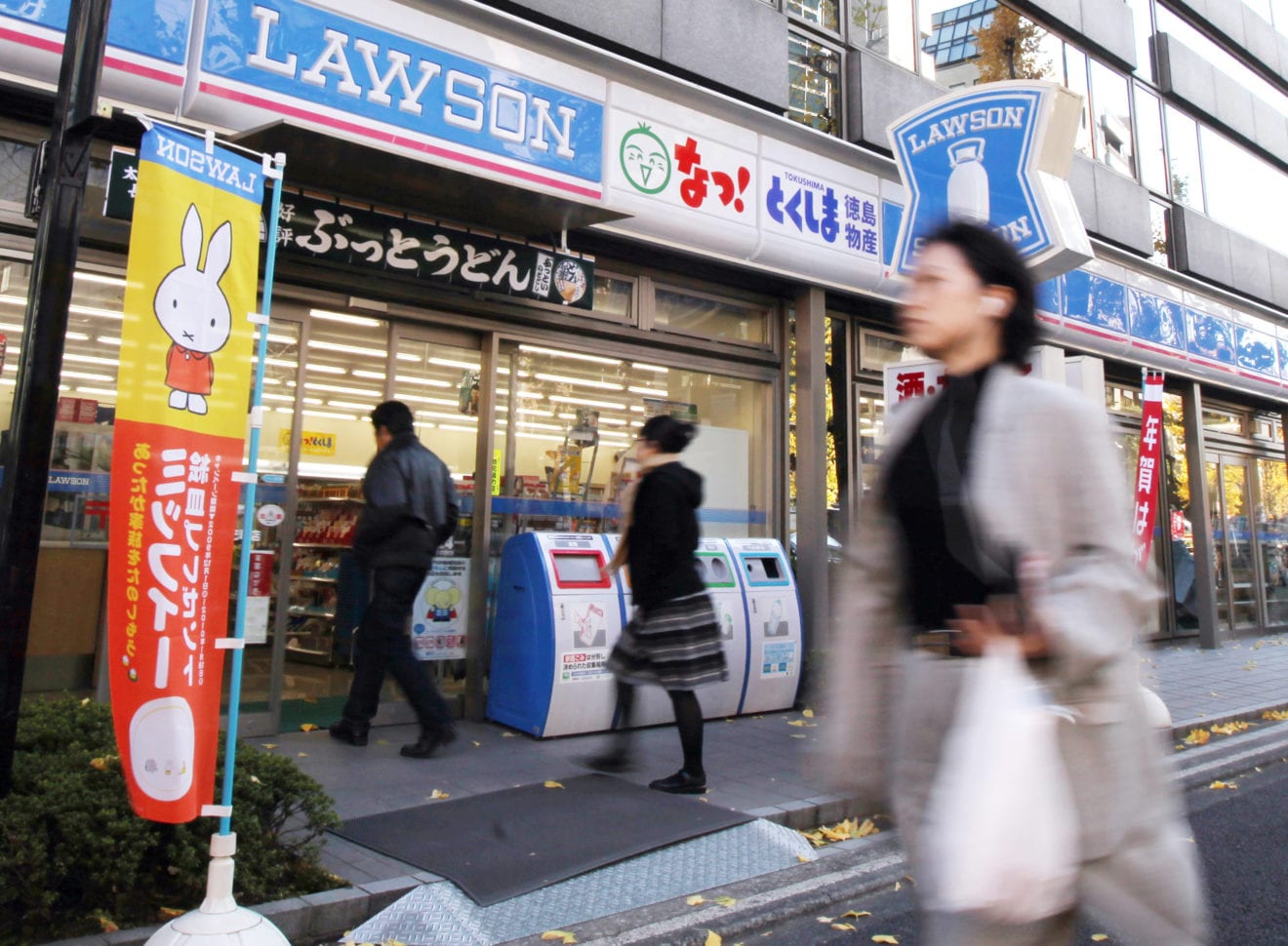
    In Jakarta, the two leading local operators — Indomaret and Alfamart — have over 10,000 outlets each. Japanese rivals are finding it difficult to stay competitive with their traditional focus on larger shops, which often include cafes. To fight back, Lawson and Seven-Eleven Japan plan to increase the number of smaller stores in office and commercial buildings.

    During lunchtime in an office building in Jakarta, people form long lines to buy bento box lunches, bread products and other items at a Lawson outlet. A karaage, or deep-fried chicken, bento sells for 45,000 rupiah ($3.20). “It’s my turn to pick up lunch today,” said a female office worker as she carried a shopping bag full of food from the store.

    The outlet, which opened in August, is Lawson’s first small store in an office building. It is less than half the size of a typical Lawson shop in Indonesia and has only one row of shelves. Midi Utama Indonesia, the local retailer that runs the stores, has been considering such new locations as shopping malls and train stations, one official said.

    Lawson entered Indonesia in 2011 after granting Midi a license to operate its stores. The Japanese company was ambitious, with plans to open 10,000 outlets in the first 10 years. But in mid-2013, after having opened just 80 shops in the country, sluggish profits forced it to withdraw from Bali. Lawson cut the number from 60 to 50 in 2014. Today, there are only some 40 Lawsons in Indonesia.

    In the meantime, Indomaret and Alfamart have been steadily increasing their store networks. They have adopted some of the techniques brought in by Japanese rivals, such as in-store cooking and in-store cafes. Duskin, a Japanese housekeeping equipment company, chose Indomaret over Japanese players as its local partner to run Mister Donut when it entered the market this year.

    Following the money  

    With their limited number of stores, Japanese operators are finding it hard to continue offering the level of product and service quality associated with Japan while still turning a profit. As a result, they are betting on small outlets in commercial buildings to drive earnings. In explaining the shift, a FamilyMart official cited “the high income level of customers and the easy-to-predict demand structure.”

    FamilyMart plans to start opening stores in office buildings and upscale condominiums in 2016. Its existing 25 outlets are in stand-alone buildings or buildings shared with Japan’s Yoshinoya chain of gyudon beef bowl restaurants.

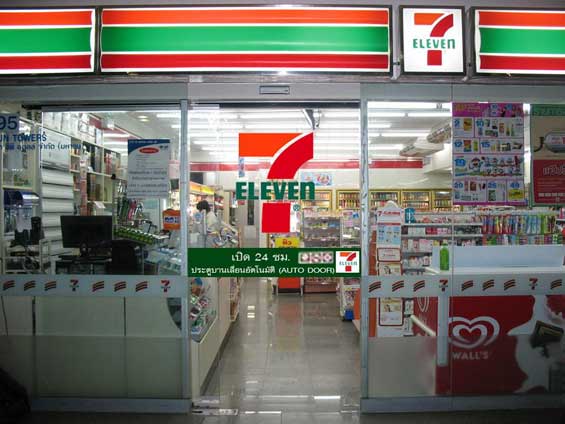
    Seven-Eleven Japan, the largest Japanese convenience store operator in Indonesia, is considering opening more small stores in train stations, commercial buildings and other busy locations, according to Modern Internasional, the operator of 7-Eleven stores there.

    Ministop, which has six Indonesian outlets, the fewest among Japanese companies, plans to cut costs by operating smaller stores and revamping its product lineup. For example, the matcha green tea-flavored soft ice cream it is promoting is selling three times as well as the chocolate flavor, the company said.

    According to Alfamart, Indonesia’s convenience store market grew about 13% by sales in the first nine months of this year. Though that is down from 19% in the same period last year, the growth is still significant compared with midsize retailers such as supermarkets, which saw 3.6% growth.

    Japanese players are not alone in their “go small” approach. Local operators are also increasing the number of smaller outlets in train stations and other facilities amid a shortage of space to build stand-alone stores, and also because of the difficulty in obtaining approval from authorities in the metropolitan area.

    With local rivals not only adding more stores to their already-large networks but also adopting strategies similar to those used by their foreign counterparts, the pressure on Japanese operators to find new ways to remain competitive will likely increase.

  • Indonesia’s Alfamart to expand retail footprint in the Philippines

    Indonesia’s Alfamart to expand retail footprint in the Philippines

    PT Sumber Alfaria Trijaya Tbk (Alfamart), an Indonesia based convenience store chain operator, is planning to expand its footprint in the Philippines to about 160 stores by the end of this year. The move is expected to help strengthen the company’s presence in the south east Asian region and help boost income from exports.

    As of August, the company has 60 Alfamart outlets in the Philippines.

    According to Hans Prawira, president director of Alfamart, the company is targeting to operate over than 100 outlets in the Philippines, through its unit, Alfamart Retail Asia. “The project will be funded by loans from Philippine banks,” he added in an official statement.

    Alfamart and Philippine-based SM Retail Supermarket, a subsidiary of SM Group has set a joint venture company (JVC) to operate the retail outlets. Alfamart holds a 35 per cent stake in the JV and SM Retail Supermarket holds 65 per cent.

    Indonesia’s heavily regulated retail market – particularly relating to the aspects of franchising and foreign investment  – may have driven Alfamart to look for growth overseas.

    Indonesian franchise regulation requires 40 per cent of all stores to be company-owned and the remaining shares owned by franchisee holder, while 80 of product offerings have to be locally sourced for two years.

    The smaller format of mini-marts will provide SM with the flexibility to foray into urban area. At the same time, it will be able to rely on Alfamart’s know-how and experience of operating the stores under comparable market conditions in Indonesia.

    In Indonesia, the company plans to open 1,200 new outlets by the end of this year. “More than 50 per cent will be opened outside Java. We already have a distribution channel in Pontianak, Banjarmasin, Manado, and the latest one, in February, in Batam,” Hans said.

    As of March 31, the company had 10,068 Alfamart outlets, of which 2,958 are managed under a franchise scheme, while the rest are owned by the company.

    The company also operates 809 Alfamidi and 48 Lawson convenient stores with larger size than Alfamart.

    With over 10,000 stores in the portfolio, Alfamart controls about 50 per cent of Indonesia’s convenience store market through multiple brands – Alfamart, Alfamidi, and Lawson.

  • Onions-for-One Help Korea’s GS Retail Survive Depressed Markets

    Onions-for-One Help Korea’s GS Retail Survive Depressed Markets

    Convenience store owners love people like Bae Moon Sung. The 34-year-old finance worker lives alone and shops for almost everything at his local minimart.

    “Onions, cucumbers, they come in compact packages at convenience stores, which is more suitable for a single-person household like me,” he said. “They’re open 24 hours and they’re everywhere.”

    People like Bae are driving an expansion in convenience store chains that’s helping them outperform in depressed markets. Shares of GS Retail are up 112 per cent this year through Wednesday versus a 13 per cent slump in a gauge tracking consumer companies on the MSCI Korea Index. The risk the operator of GS25 outlets won’t pay its debt on time has fallen to 0.08 per cent from 0.14 per cent at the end of 2014, according to a Bloomberg default-risk model. Shares in CU store operator BGF Retail have risen 165 per cent.

    The chains’ popularity is in stark contrast to the overall industry in Asia’s fourth-largest economy. Department store sales fell 3.9 per cent in the first quarter, and that was before a deadly respiratory virus sapped confidence. Smaller households in Seoul as the population ages and family sizes shrink means consumers aren’t buying in bulk at supermarkets.

    “Retailers are suffering from low economic growth and online price competition,” Yu Jung Hyun, an analyst in Seoul at Daishin Securities, said. “But convenience stores have their own market. People still need to buy basic items close at hand.”

    Sales at the four main convenience store chains — CU, GS25, 7-Eleven and Buy the Way — have risen every quarter since at least the second three months of 2013, Ministry of Trade, Industry & Energy data show. In May, sales were up 31.5 per cent from a year earlier thanks to more outlets and an increase in the price of cigarettes. Discount store sales meanwhile have dropped every quarter since the second quarter of 2012, the ministry’s data show.


  • 7-Eleven Malaysia strikes upmarket

    7-Eleven Malaysia strikes upmarket

    Listed retailer 7-Eleven Malaysia says it is going to open 200 new shops across the nation this yr – and refurbish 200 extra. A 3rd of these might be within the Klang Valley, the guts of larger Kuala Lumpur.

    The enlargement and rejuvenation, estimated to value as much as RM90 million (US$24 million) is a part of a transfer upmarket because it seeks to distinguish the corporate from rival comfort retailer codecs.

    CEO Gary Brown says the corporate needs to create a extra inviting, heat surroundings in-store to draw extra clients.

    Newer shops opened in Malaysia function espresso, meals to organize onsite, tables and chairs, vibrant fitouts and a extra spacious surroundings.

    “We now have additionally included extra recent meals, use light-emitting diode lighting at our shops that are energy-saving in addition to organise on-going strategic promotions,” he informed a press convention after the corporate’s annual assembly this week.

    7-Eleven Malaysia has about 80 per cent of the Malaysian comfort retailer market, however is dealing with growing competitors from new native manufacturers.

    Its in depth retailer community positions itself as a possible supply service level for on-line retailers and courier companies. Brown says talks are underway to determine such ventures as one other supply of revenue for the enterprise – and as a drawcard for patrons who may purchase merchandise when accumulating or making deliveries.

    “As soon as concluded, the pilot undertaking is predicted to function by the fourth quarter of this yr at chosen shops,” he stated, with out disclosing additional particulars.

  • Markets dropping lead over comfort shops

    Markets dropping lead over comfort shops

    Moist markets and conventional shops stay the popular retail channels for Vietnamese consumers, although they’re beneath menace as shoppers shift away, based on a Nielsen report launched on Wednesday.

    The 2 have seen a decline in gross sales of 5 per cent and 17 per cent respectively since 2012.

    The frequency of visits additionally decreased.

    Whereas shoppers have turn into extra “savvy” of their buying behaviour in recent times, the necessity for comfort continues to develop.

    In Viet Nam, retailer enlargement additionally continues to realize momentum, particularly in city areas.

    Comfort shops greater than doubled from 147 in 2012 to 348 final yr, whereas mini marts elevated from 863 to 1452.

    This new demand is being led by time-poor and predominantly younger buyers in making on a regular basis meals and grocery purchases, and has been a key driver in comfort retailer enlargement.

    Some 22 per cent of shoppers store for meals and grocery extra typically at comfort shops in comparison with 12 months in the past.

    Meals and drinks are driving comfort retailer gross sales, with 86 per cent of shoppers shopping for both and 62 per cent of beverage consumers additionally shopping for meals and 51 per cent of meals consumers additionally shopping for drinks.

    Vaughan Ryan, managing director of Nielsen Viet Nam, stated: “Comfort shouldn’t be a retailer entrance, however relatively a lifestyle. Shoppers are more and more demanding merchandise and options that assist them of their more and more busy life.

    “In consequence we’ll see the emergence in Viet Nam of each the comfort channel and e-commerce to satisfy this shopper demand.”

    To deal with these shifts, retailers should deepen their understanding of this evolving shopper behaviour, foresee altering wants and develop methods which are targeted on differentiation in areas that matter most to consumers, he added.

  • Alfamart Set to Open Up To 120 Shops in Philippines

    Alfamart Set to Open Up To 120 Shops in Philippines

     Sumber Alfaria Trijaya, the operator of the Alfamart comfort retailer chain, plans to open between 100 and 120 new shops within the Philippines via its subsidiary Alfamart Retail Asia, as a part of the corporate’s regional enlargement plan.

    The corporate has estimated the brand new shops will value Rp 50 billion ($three.eight million) and has secured a mortgage from banks within the Philippines to fund the funding.

    The corporate’s Philippines shops are operated as a part of a three way partnership between Alfamart Retail Asia and native retailer SM Retail Grocery store. Alfamart Retail Asia has 35 % fairness within the enterprise.

    Presently the enterprise operates 44 shops.

    Sumber Alfaria Trijaya plans to open 1,200 shops in Indonesia this yr, and has set apart Rp 2 trillion from its inner money fund for the enlargement. The retailer had 10,086 shops in Indonesia on the finish of March, together with 2,958 franchise shops.

  • Japan’s convenience stores catering more to elderly as demographics shift

    Japan’s convenience stores catering more to elderly as demographics shift

    The nation’s convenience stores are changing with the times, shedding their image as places for young shoppers keen on fast food, concert tickets and comic books, and increasingly catering to older clientele.

    As the population grays and people live longer, the small, near-ubiquitous stores are revising their offerings to suit the tastes and needs of seniors by introducing home delivery, healthy bento boxed meals and a one-stop shop where pharmacies share floor space.

    Some are setting up elderly care support counters, and in a stab at becoming social meeting spots, are offering seating and even karaoke boxes.

    In a move symbolizing the change, second-ranking Lawson Inc. on April 3 opened its first outlet with a nursing care consultation desk in Kawaguchi, Saitama Prefecture. The outlet will have managers and advisers available for consultation all day, every day of the week. The company plans to launch another one in the prefecture by summer.

    In fiscal 1989, people aged 29 and younger at 7-Eleven convenience stores accounted for 63 percent of daily customers. That declined to about 29 percent in fiscal 2013, according to recent statistics from Seven & i Holdings Co.

    Customers 50 or older, who previously represented only 9 percent of all customers, rose to 30 percent in the same period, representing the age bracket with the largest share, according to the statistics.

    FamilyMart Co. says people 50 and older account for about 30 percent of its customers, too.

    Convenience stores specifically targeting the elderly are changing the image of the sector as a testing ground for marketing to teenagers. And while the Lawson outlet may be an extreme example and experimental in nature, others in the industry, while not going that far, have quietly shifted their marketing tack in recent years to focus further on seniors.

    Operators are increasingly changing their food lineups to appeal to older shoppers. They seek, for example, quality, known-to-be-safe products, including higher-end foodstuffs, rather than the cheap, filling bento meals preferred by young shoppers.

    A notable change is their bento and other ready-to eat foods offered under their respective house brands, where the companies are competing with each other to offer healthy ingredients and those that are either locally sourced or from a renowned region.

    Leading the way in this area is Seven-Eleven Japan Co., the top industry player with more than 17,000 outlets and sales totaling ¥4.82 trillion for the year ended in February. The Seven & i Holdings subsidiary’s Seven Premium product lineup generated ¥800 billion in revenue that year, featuring foods consumed at home.

    While its self-service coffee and doughnuts, fried chicken and other fast food offerings remain a key sales driver, the shift is slowly underway. The company aims to boost sales of the products to ¥1 trillion this year.

    Masayuki Kubota, chief strategist at Rakuten Securities Economic Research Institute, said the main focus of convenience stores is not the elderly per se, but the overall shift from young to older shoppers, which is reflected in the food on offer.

    “Until maybe a decade ago, the image of convenience stores was of a place where young people away from home could pick up food of their preference, like fast food restaurants,” said Kubota.

    “At that point, strategies targeting males in their 20s was important. . . . But now female customers in their 40s and 50s are increasing.”

    More conspicuous changes toward a higher customer age range, too, are underway. The top three players — including third-ranking FamilyMart and Lawson — all have introduced home delivery services, stocking meals and cooking ingredients aimed at meeting the demands of health- and quality-conscious seniors who prefer to eat at home.

    The services also target orders for daily necessities ranging from toilet paper and detergent to light bulbs.

    FamilyMart acquired Senior Life Create Co. and launched a home delivery service in December 2012, taking advantage of the latter’s Takuhai Cook 123 bento meal delivery for aged residents. The service is offered in seven districts, including two in Tokyo.

    “A key area that convenience store operators like us need to address is how to close the so-called ‘last mile,’ ” to reach out to residents at home, said Shinsuke Otsuki, manager of FamilyMart’s corporate planning division.

    A Seven-Eleven Japan spokesman said the company’s Seven Meal delivery service is the result of “trying to offer a broad range of services to meet the needs of an aging society.” Of the service, which is offered at some 13,200 outlets nationwide, about 60 percent of the users are over 60, he said.

    Because of the nature of the shift, taking place slowly as customer profiles change to higher age ranges, the changes in marketing remain inconspicuous, at least for now.

    But examples abound. FamilyMart’s Otsuki said the increase in larger bathrooms with grab rails at its outlets are targeted at older customers in general, not only the disabled.

    The company has also set eat-in areas as a standard feature for new outlets — floor space permitting — providing a place for the elderly to gather to chat, especially in rural areas where there are few such facilities.

    FamilyMart is experimenting with over 30 combination outlets that share space with drug stores through a tie-up with Saitama Prefecture-based Drug Ace and Osaka’s Higuchi Yakkyoku drug store chains.

    “We’ve even opened a combination store with a karaoke box in the Kamata district” of Tokyo, said Otsuki. “This may prove a senior-targeting outlet because many senior customers come here in the daytime to practice singing.”

    “I think convenience stores will continue to change as the nation’s demography changes, rather than under management initiatives,” said Rakuten’s Kubota.

    “Currently, food is the main merchandise, but the customer profile is changing to a higher age group, and so I would think demand for food will decline and they may begin to sell more products other than food.”

    He added, convenience stores’ main offerings may shift from goods to services, “because in an economic structural change, there’s the tendency for services to increase. Convenience stores in the future could be centered on services rather than goods.”