Tag: crypto

  • Binance Coins Suffers $100 Million Hack

    Binance Coins Suffers $100 Million Hack

    Binance has been hit with a hack that resulted in the theft of around $100 million of tokens issued by the crypto giant.

    $100 to $110 million of Binance Coin has been stolen, according to a spokesperson for Binance-backed BNB Chain. This is likely due to a hack involving the bridge, BSC Token Hub, which has now been suspended.

    BNB Chain is working with security services to freeze the transfer of stolen funds with at least $7 million already frozen.

    According to Binance co-founder Changpeng Zhao, the blockchain issues are contained now and the firm in all likelihood will cover any fund that the hackers get away with.

    The crypto market has been largely under pressure in 2022 with not only a $2 trillion plunge in market value but also an estimated $2 billion lost to hacks, often by North Korea-linked actors.

  • Vietnam crypto trading second highest in ASEAN

    Vietnam crypto trading second highest in ASEAN

    Vietnam is the second biggest cryptocurrency market in ASEAN behind Thailand with a transaction value exceeding $100 million a year, a new report has found.

    It was followed by Singapore, the Philippines, and Indonesia, according to a report by cryptocurrency data provider Chainalysis.

    Vietnam, along with Thailand and the Philippines, also record high web traffic to non-fungible token marketplaces, which could be explained by the large number of blockchain gamers, it added.

    An estimated 25% of Filipinos and 23% of Vietnamese have played a play-to-earn game, and at one point, players based in the Philippines made up 40% of Vietnam-based Axie Infinity’s playerbase.

    In an earlier report, Chainalysis said that this is the second year that Vietnam ranks highest in its cryptocurrency adoption index.

  • Cryptominers lose big after Ethereum ‘merge’

    Cryptominers lose big after Ethereum ‘merge’

    Vietnamese crypto miners say they have suffered heavy losses with their mining rigs turning useless after Ethereum, the second-largest cryptocurrency, completed its switch to a more energy-efficient framework.

    “Goodbye Ethereum”, “no more chances” and “sell off rigs” have become the most used keywords on online groups of Vietnamese crypto miners after Ethereum successfully changed its protocol from proof-of-work (PoW) to proof-of-stake (PoS).

    The technical upgrade, called “The Merge”, was completed in the early hours of Thursday morning. It significantly reduces the amount of energy used by the network and sets the stage for Ethereum to lower its fees and massively expand its user base.

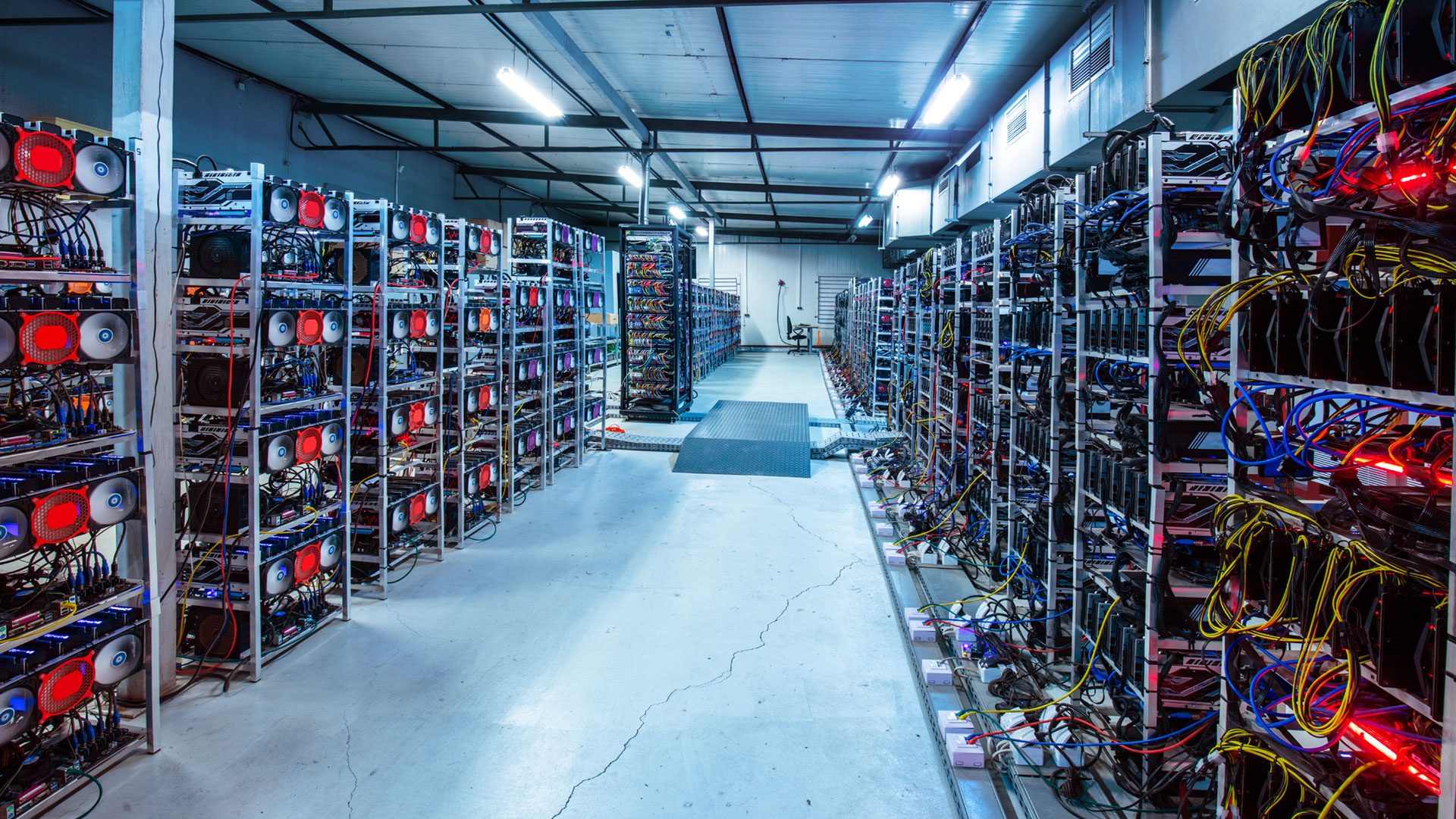
    The change will no longer require miners to use “mining rigs” and vast amounts of energy to solve arbitrary mathematical equations. These rigs have become useless for mining the popular cryptocurrency.

    Given that most Vietnamese crypto miners were mining Ethereum, many are in trouble.

    “We all knew this day will come and we have been prepared, but some hoped ‘The Merge’ would happen later so we could mine some more,” said Ngoc Can, administrator of a social group on crypto mining.”All mining pools have closed down, so miners can no longer mine and have to turn off their rigs,” Can said.

    Ethermine, the largest Ethereum mining pool, has also announced that it is shutting down its servers. Unpaid balance of miners will be automatically paid in several days, it said.

    A miner from Dong Nai said large crypto farms were being affected the most. “I started mining four years ago and expanded my farm after breaking even. I haven’t recouped my new investment and it is s almost impossible to sell it,” he said.

    “Many of my friends have collapsed and don’t know what to do with their assets”, the miner added.

    Another miner from Binh Dinh said he planned to mine other cryptocurrencies but gave up after discovering that electricity bills would eat up any profit.

    “I spent my family’s savings on the mining rig. I don’t know how to recover from that”, he said.

    “I regret gambling on these cryptocurrencies.”

    Many cryptominers also expect that Ethereum will be split into a new branch that still allows PoW mechanism, but that prospect is uncertain at this point.

  • Ethereum Merge is getting Close

    Ethereum Merge is getting Close

    The crypto world is holding its breath as Ethereum’s upgrade nears and no one knows what the consequences will be. Dominik Spicher from 21 Analytics said which Swiss platform is likely to benefit the most from the switch.

    Any day now starting this Saturday, Ethereum will change the way it verifies transactions on its system in a technological upgrade.

    What is remarkable about the upgrade is that it is being done on a running system, one which holds around $300 billion without counting the assets that run via its platform, co-founder of 21 Analytics Dominik Spicher said in an interview.

    Flying at 30,000 Feet

    The oft-used analogy is that such an upgrade «equates to changing a plane’s engine while it is 30,000 feet off the ground,» he added. The engine of blockchain technologies is the mechanism used to find a consensus, which allows participants to transact with each other and create smart contracts.

    Until now, Ethereum has done this by using the proof-of-work (PoW) concept, but as of next week, it will apply a method called proof-of-stake (PoS).

    A Stake Through the Heart of Work

    One key difference between the two mechanisms is that to participate in PoS one needs to hold the system’s native currency, in this case, Ether, whereas the prerequisites for PoW are external, such as electricity and hardware. PoW verifications can take place without any resources internal to the chain, which is seen as one of its main advantages.

    For Ethereum, this is about to change now that stake is required.

    By relying on users who are prepared to lock away assets, the platform also can confiscate a user’s stake if they misbehave by approving two conflicting transactions, for example. Furthermore, it makes the process more centralized.

    Essentially, those with the largest stake will end up with a certain amount of power in the system, Spicher said. Paradoxically, this sounds like a development that will make the system more centralized, although one of blockchain technology’s main purposes is to be decentralized.

    Swiss Winner

    Bitcoin Suisse, which is one of the larger holders of Ethereum coins, will be the one gaining from all of this, using its stake to earn the right to verify transactions on the ether network and reaping transaction and commission fees in the process.

    Spicher, whose co-owned company 21 Analytics provides compliance and data protection software to clients who transact with blockchain assets, is particularly interested to see how Ethereum deals with confiscating stakes from people who decide to censor certain transactions, for example to sanctioned addresses.

    Although diverging paths are accounted for within Ethereum’s model with so-called hard forks, they still need to be managed. In PoS where every step in the mining process can be tracked it is easier to do this. But when this work process falls away and is replaced by stake as in PoS traceability, it is much harder and likely to cause huge problems, Spicher said.

    Rise of the Machines

    On the blockchain, as in life, where different opinions and money are involved, fights erupt easily.

    If we can let the machines do their thing, it will probably be clean. But if people need to start discussing which chain is the correct one to follow after the change, that’s where it will get messy, he added.

    Bitcoin’s Replacement?

    There is the oft-stated idea that by switching to the new energy-friendly verification process, Ether will become more attractive than Bitcoin. Yet this assumption ignores that Bitcoin has a whole different value proposition,  Spicher explains.

    Bitcoin’s main aim is to be an alternative to national currencies. Ethereum however, was created as an open-source platform to allow anyone to create applications within the Ethereum network using its native currency.

    Their differing purposes make them attractive to investors for different reasons. Although traders, exchanges, and crypto hedge funds may benefit from Bitcoin in times of high volatility, its main value is seen as a long-term, stable and conservative store of value, Spicher said.

    Investors who buy Ethereum however, are betting on the currency fueling a myriad of applications running on its platform in the future and accruing value that way, he added.

  • Singapore Considers More Tightening for Retail Crypto

    Singapore Considers More Tightening for Retail Crypto

    The Monetary Authority Singapore is reeling back on retail access to cryptocurrencies with the latest consideration for more curbs.

    The MAS is considering tightening crypto rules for retail investors by «adding friction» to mass access, according to managing director Ravi Menon in a speech published online. This includes the possible addition of suitability tests as well as restrictions on the use of leverage and credit.

    Market volatility this year has led a number of crypto players in the city-state to suffer including exchange Zipmex and lender Hodlnaut. In the latest, fallen Singapore hedge fund Three Arrows’ co-founder Su Zhu reemerged in public to deliver an affidavit defending himself against liquidator claims.

    Despite its concerns, Menon notes that a regulatory ban is not a viable option as it is «not likely to work».

    The cryptocurrency world is borderless. With just a mobile phone, Singaporeans have access to any number of crypto exchanges in the world and can buy or sell any number of cryptocurrencies, Menon said in the opening address of a seminar held today.

    Singapore continues to rethink mass access to cryptocurrencies following guidelines issued in January to limit trading services providers from public promotion.

  • Cryptocurrency ATM Installation Rates in the Doldrums

    Cryptocurrency ATM Installation Rates in the Doldrums

    As cryptocurrencies were booming, the number of cryptocurrency ATMs grew accordingly. Now that Bitcoin & Co are trading well below last year’s highs, the pace of installations is waning.

    There are currently around 39,000 cryptocurrency ATMs installed worldwide, corresponding to a nearly 4,000 percent increase since 2017. But since the beginning of 2022, installation rates have plummeted as the cryptocurrency market crashed.

    Crypto ATM installations saw a meteoric rise from January 2020 to January 2022, increasing fivefold to 34,388 machines worldwide. But since the start of the year, barely 5,000 new machines have been installed, and this month, a net total of 44 were even removed. The last time the net number dropped for an entire month was in November 2015, according to US business magazine Forbes.

    The customers are less active, hence the operators get less volume, hence (they) don’t grow that fast and don’t install that many ATMs Patrick Mueller of online service Coin ATM Radar told Forbes. As of July, the net increase in ATMs was 572, modest compared to the peak of 2000 set in 2021. «However if you compare to the last bull cycle in 2017-2018, there was only around 250 net growth per month. So in the current bear cycle, we are still 2 (times) higher than the previous bull cycle, Mueller notes.

    The first physical ATM was installed in Vancouver, Canada, in October 2013, and of the roughly 39,000 crypto ATMs in operation, 95 percent are in North America. The US has by far the largest share of the global market at 87.9 percent, followed by Canada at 6.3 percent and Spain at 0.6 percent.

    In Europe, a net of 15 machines has been removed this year, while 78 machines have been shut down in the United States. Switzerland currently has 150 cryptocurrency ATMs, according to Coin ATM Radar, with Zurich having the most with 46 ahead of Geneva’s 19 and 17 in Lausanne.

    Still Low Penetration

    Overall, the global installation rate of crypto ATMs is still very low. This may be partly because crypto ATMs do not function like typical ATMs, since they are rarely operated by financial institutions and do not link to bank accounts.

    Instead, users deposit cash that is transferred to a digital wallet via a cryptocurrency QR code. Despite the integration of new cryptocurrencies, bitcoin remains the leading asset with over 99 percent of crypto ATMs supporting it.

  • High Taxes Are Driving a Crypto Exodus in Japan

    Japan’s cryptocurrency industry is undergoing a wave of exits to friendlier markets due to the high corporate tax rate.

    At least 20 firms are choosing to establish their crypto business elsewhere and leave Japan, said Sota Watanabe, chief executive of digital infrastructure developer Stake Technologies, in an interview with Bloomberg.

    Crypto firms have been exiting Japan in recent years due to pressure from high taxes including a corporate tax rate of about 30 percent and an individual tax rate of up to 55 percent for crypto gains.

    In an effort to maintain the competitiveness of crypto in Japan, two of the top industry bodies – the Japan Cryptoasset Business Association and the Japan Virtual and Crypto assets Exchange Association – are reportedly submitting a proposal to the financial regulator for tax changes.

    According to a separate report citing a memo, the two groups planned to ask the government to stop taxing paper gains for crypto holdings held by companies for purposes other than short-term trading. The lobby groups also propose a uniform 20 percent income tax on individual investors’ crypto gains, instead of the current arrangement with rates as high as 55 percent.

    According to Watanabe, Japan is lagging behind in the global tech race while a growing number of governments elsewhere are ramping up efforts to woo crypto firms.

    Japan is an impossible place to do business,» he said. «The global battle for a Web 3.0 hegemony is underway, and yet, Japan isn’t even at the start line.

    Stake Technologies relocated to Singapore in 2020 over tax pressures but Watanabe hopes to return to his home country of Japan, assuming that the government will yield to industry calls and lower corporate taxes on crypto next year. He also noted that it may take a few more years before the tax rate for individual investors is reduced.

  • Stores’ claims of accepting Pi payment turn out to be misleading

    Stores’ claims of accepting Pi payment turn out to be misleading

    Some stores accept payment in cryptocurrency Pi but only partially and require buyers to pay mainly in cash.

    “I saw a post selling a used iPhone 11 and thought I could buy it with a dozen Pi tokens,” Thanh Son of HCMC said.

    But it turned out he could only pay 10 percent with Pi and the remaining VND12.5 million ($535) had to be paid in cash.

    “I can easily buy the same phone for VND12.5 million without spending a single Pi,” he said wistfully, adding it was a trick sellers used to entice Pi owners.

    He later contacted some other sellers and got pretty much the same answer.

    “Some places require a smaller proportion of cash but they undervalue Pi.”

    Some investors had begun to claim they bought food and equipment using Pi on social media since July 13 when the cryptocurrency’s developers allowed it to be traded.

    Cryptocurrencies are not legal tender in Vietnam, and issuing, trading or using one for payment attract fines of up to VND100 million.

    Sellers try to avoid legal risks by calling deals using Pi “exchanges” rather than “transactions.”

    A person who asked not to be identified said they had put down a VND10 million deposit for a car after the dealer made an offer “exclusively for the Pi owner community.”

    But the seller actually does not accept payment using Pi.

    He reportedly told the person: “Once Pi enters the open mainnet phase, you guys, Pi owners, can offer it for legal tender. Then you bring the legal tender to us and take your car.”

    The dealer claimed over 100 people had deposited. It is far from clear when, and if ever, the crypto will become legal tender.

    There is a chance the people would lose their deposits, an expert warned.

  • Vietnamese buy Bitcoin in hope it has bottomed

    Vietnamese buy Bitcoin in hope it has bottomed

    Many investors are buying Bitcoin after the cryptocurrency’s price fell to US$20,000, its lowest level since December 2020. Thanh Binh of HCMC says he turned off notifications on his crypto trading app after buying it at $38,000 and losing over VND40 million ($1,720).

    But he has returned and bought a 10th of a token after prices dropped below $20,000.

    “The market has bottomed out and will recover by the end of this year, and so this is the right time for buying in,” he says hopefully.

    Hai Ly of the southern province of Dong Nai has invested VND70 million in Bitcoin and Ethereum, the two largest tokens by market cap. She wanted to diversify her portfolio and thinks their current prices are reasonable.

    She says Bitcoin operates in four-year cycles, and prices fall sharply at the end of each cycle before scaling new peaks.

    “The current cycle started in January 2019 and ended between May and July this year. Considering other factors, the current crypto slump is not abnormal.”

    Prices will recover and hit a new peak by mid-2023, she says.

    Many investors see an opportunity in the current fall in cryptocurrency prices though the recent sell-offs wiped billions of dollars from the market.

    Search related to Bitcoin has surged to the highest levels in a year according to data from analytical website Google Trends.

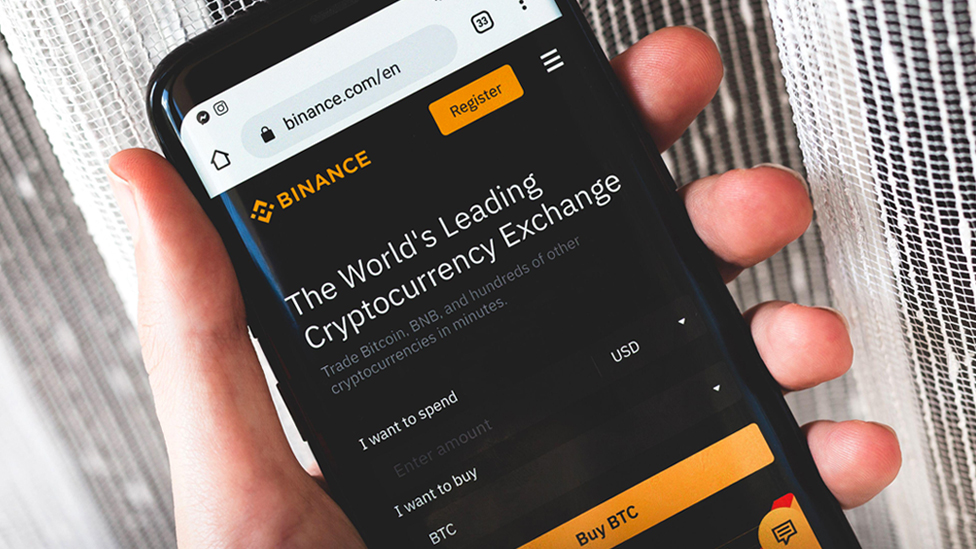
    Hope is also fueled by rumors that Binance, the largest cryptocurrency exchange, has quietly bottom fished a large amount of Bitcoin.

    Over 100,000 tokens have been added to the exchange’s cold wallet (physical device that keeps cryptocurrency completely offline), crypto-focused site Coingape has discovered from on-chain data.

    They amount to 0.5 percent of all mined Bitcoin and are worth over $2 billion at current prices. But CEO Changpeng Zhao denies it, saying the increase “means more users deposited in Binance.”

    Money is also coming into crypto-centric investment funds. They have raised over $125 million in the week ended June 6 and $506 million in the year-to-date, asset management company CoinShares reported.

    Short-term Bitcoin funds, mainly used for speculating on the cryptocurrency’s slump, received $1.3 million. Bitcoin is being traded the fastest in a year, Yahoo Finance said.

    But there are risks associated with bottom fishing Bitcoin and other cryptocurrencies, experts warn.

    Le Sy Nguyen, ASEAN regional manager of crypto exchange Bybit, says current prices are not attractive.

    The collapse of cryptocurrency Luna and its paired stablecoin Tether, and recent interest hikes in the U.S. have greatly affected market sentiments, with many investors opting out trading on extreme fear.

    “Anything can happen in this [volatile] period, which poses great risks to investors who try to benefit from bottom fishing in the short term.”

    He says investors should invest for the long term or wait until the market stabilizes. “But no one can be sure whether it has hit bottom.”

    The slump could prolong until the end of this year, he says.

    The founder of a digital assets startup, who does not want to be named, says it is impossible to give advice on whether to buy or not at the “current sensitive time.”

    “It is inappropriate to evaluate digital assets using methods used for stocks, as they do not generate income like companies The number of wallets, users and transactions are key indicators of this market.”

  • Vietnamese regain hope in ‘next Bitcoin’

    Vietnamese regain hope in ‘next Bitcoin’

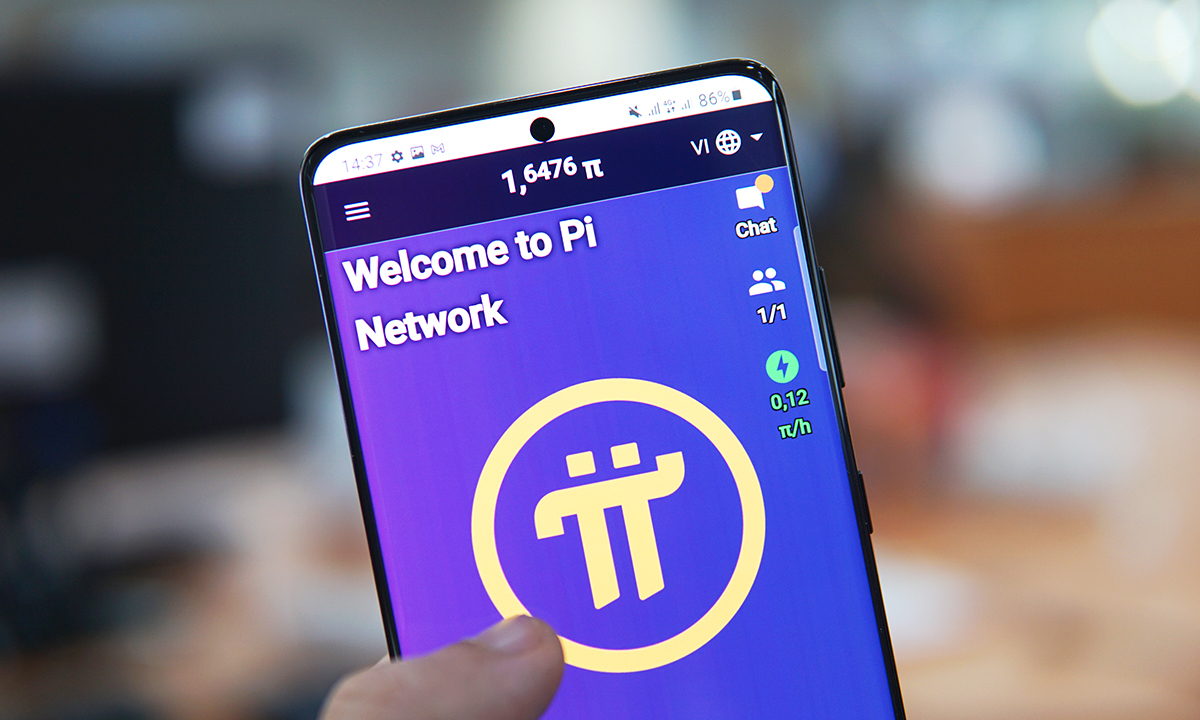
    People are rushing to mine cryptocurrency Pi prompted by news of new developments including an open mainnet launch.

    Open mainnet, which is said to allow users to trade the token for other cryptocurrencies, “will begin on 2022 Pi Day (14/3) or Pi2 Day (28/6)” depending on “the maturity of the Enclosed Network economy and the progress of KYC (know-your-customer),” its developer announced last year.

    “My two-year wait will finally pay off if everything happens as planned,” Thanh Lam, a Pi investor in HCMC said.

    Like many amateur investors in Vietnam, Lam started investing in the cryptocurrency in 2020 and now has over a thousand tokens. He quit logging into the app daily a while ago after he was disappointed with the delay by the developer.

    But he returned recently after many users were asked for KYC and the fact Pi2 Day was imminent.

    “If Pi can reach the target price of a few hundreds or thousands of dollars, my 1,000 tokens will be enough.”

    He is eagerly waiting for his KYC process, a minimum requirement for most cryptocurrencies to verify users’ legality and prevent money laundering.

    “If I am not verified, my tokens will be useless.”

    Other users take a harsher approach to the cryptocurrency. “If nothing happens by the end of June, I’ll delete the [Pi Network] app,” Ngoc Nhu, 28, from the central province of Binh Dinh said.

    “I don’t expect prices to hit thousands of dollars like others, but hope it will be of some value so that my two years of efforts are not wasted.”

    Pi Browser, the mobile app meant for the KYC, recently became the fourth most downloaded non-gaming app in Vietnam on Apple App Store, and sixth most downloaded on Google Play store.

    The search for ‘KYC Pi’ has also doubled from last December, according to analysis tool Google Trend.

    Phien Vo, an administrator of a Pi group with over 130,000 members, said: “KYC is the most important step. Next steps can only be carried out once the authentication process succeeds.”

    On Monday Pi Network’s developer said the KYC process has been completed for over half the users. There were an estimated 35 million users as of May, and up to 90,000 can be authenticated in a day.

    The developer’s promises have sparked great expectations. A poll on a Pi group found 75 percent of nearly 3,400 users believing in a ‘consensus price’ of US$6,700.

    But it is now worth nothing since it has not been listed on any exchange. Pi and other cryptocurrencies are not legal tender in Vietnam, Dao Minh Tu, the deputy governor of the State Bank of Vietnam, has said.

    “Currently, most forecasts of Pi’s value are baseless,” Vo said, adding that prices would only be determined once it enters the open mainnet phase.

  • A Swiss Crypto Lender Partners with Major US Bank

    A Swiss Crypto Lender Partners with Major US Bank

    Zurigg-based crypto lender Nexo is looking to take advantage of the consolidation in the crypto world. With help from a US bank, it sees itself as financially well equipped to take over the assets of struggling competitors.

    In what is increasingly looking like a repeat of the consolidation of companies following the burst of the dot-com bubble,  quite a few crypto companies are unlikely to survive the current crash or at the very least have been severely hobbled in the wake of the collapse. Other companies, however, will emerge stronger from the crypto winter.

    Zug-domiciled crypto lending platform Nexo plans to provide liquidity during the current market turmoil by acquiring the assets of struggling crypto companies. In doing so, it intends to play a key role in the upcoming consolidation of the blockchain space.

    To that end, the crypto platform is enlisting support from a major US bank. In a blog post, Nexo announced that the company is being advised by banking giant Citigroup. Acquisitions are expected to help crypto investors regain access to blocked funds. Nexo is already in contact with a number of troubled crypto companies and has offered them various options for help.

    Celsius, which is threatened with insolvency and suffering from a huge liquidity crisis, recently froze withdrawals and transfers between accounts as a result of cryptocurrencies’ rapid downward slide. According to media reports, Celsius is also seeking help from Citigroup, last week having hired the bank to advise on possible financing.

    To paraphrase Shakespeare, for many firms this is the winter of their crypto discontent.

  • Vietnam’s Luna investors face turbulence

    Vietnam’s Luna investors face turbulence

    The ‘revived’ Luna cryptocurrency has dashed many investors’ hopes by falling to an all-time low. Hoang Anh, a marketer in Hanoi, said he owns both the new and old versions of Terra’s cryptocurrency, Luna and Lunc, or Luna Classic.

    He had viewed Lunc, whose market cap has fallen to less than a billion dollars from US$40 billion a couple months ago, as a gamble, but was hopeful about the new version.

    Like many other amateur investors, he too bought Luna in early June at $8 a token after it had doubled to over $11 on May 31. But it has since plummeted to $2-3 despite a rebound in most large-cap cryptocurrencies.

    Anh said he had to sell to cut a portion losses, but kept the rest in the hope the price would recover following measures by the development team.

    Another Hanoian investor, Duc Duyet, bought $1,000 worth of Luna on May 31 as a long-term investment and also bought some Lunc to try bottom-fishing.

    But Luna has lost over 70 percent of its value since, while Lunc has fallen close to his cost price after making some gains.

    “Perhaps I should delete the trading app so that I don’t have to worry about it any more.”

    The Luna investor community in Vietnam is in pain. Some bought not only Luna and Lunc but also some other Terra-related cryptocurrencies like ANC and USTC. Overall, their values have fallen by at least 20 percent.

    “Are we being scammed for a second time, everyone?” Ngoc Bach, an investor, posted in a cryptocurrency group.

    In those groups, members are divided into two camps: some still have faith in the development team and are holding on to the tokens, waiting for prices to surge, but others have thrown in the towel and sold out.

    Nguyen Tien Bac, an administrator of a group, said many Vietnamese investors are still looking to profit from Luna and Lunc.

    They believe Lunc, once among the top 10 cryptocurrency by market cap, is “too big to fail” while the new Luna reached the billion-dollar mark immediately after listing.

    But Bac warned that prices are unlikely to climb any since supply of tokens in the trillions now.

    “Gains, if any, will possibly be because of manipulation.”

    A recent expose and the development team’s silence have dragged Luna’s price down, according to the blockchain-focused website CryptoSlate.

    On June 6, a Twitter-based Terra community whistleblower known as “FatMan” revealed that Terraform Labs, developer of Luna, and its founder Do Kwon had other secret and shadow wallets holding at least 42 million LUNA tokens, worth over $200 million.

    This went against their claim of only issuing to the community and not holding any Luna.

    Terraform Labs has yet to respond to FatMan’s allegation.

    Do Kwon’s Twitter account has also been silent about future plans recently, and even went private for some time, heightening investor fears over crypto rug pulling.

    CoinDesk reporter Krisztian Sandor said investing in either Luna or Lunc was “highly risky at this point”.

    “It’s like purchasing a house burned down to ashes or putting money upfront for plans that only exist on paper, respectively.”

    He called Lunc’s prospect “uncertain”, as developers now have little incentive to build any project on top of it.

    For the newer cryptocurrency, the challenge is how many of the numerous protocols and development teams that were building on old Terra would stick around to develop applications.

    Therefore, activity and user numbers pertaining to the new blockchain “would ultimately determine how much Luna is worth and if it will succeed,” he said.

  • Dubious move to earn crypto copycats emerge in Vietnam

    Dubious move to earn crypto copycats emerge in Vietnam

    Hai Hoang was invited to join a ‘make love to make money’ project, a copy of the increasingly popular ‘move to earn’ crypto trend.

    The Da Nang office worker said he is curious to know how the app works, but members rarely talk about it, mainly discussing the token price.

    It is one of the many apps trying to replicate the success of the ‘move to earn’ trend, in which users spend a few hundred to a few thousand dollars to buy shoes and jog to earn cryptocurrencies.

    The ways they reward users vary, and include driving, sleeping and even having sex.

    But they have two things in common: few details are given out about how they operate, and participants are urged to invest as soon as possible to make the most profit.

    Tran Dinh, executive member of the Vietnam Blockchain Association, said some crypto move to earn projects have succeeded, but many others have collapsed, while some are just scams, he warned.

    Quan Ngoc, a move to earn game developer in HCMC said the dubious apps contribute nothing to the community, and merely create a bad image for the industry.

    Online security tool ScamAdviser gave a sex to earn app, SexN, a low trust score, saying it could be a scam.

    “We lowered the sexn.finance review score as we found several websites on the same server with a low trust score. Online scammers have a tendency to set up multiple malicious websites on one server, sometimes in the hundreds.”

    Earlier a click to earn app called CryptoBike was accused of scamming users to the tune of $1.4 million.

    SleepN, a sleep to earn app that attracted the crypto community’s attention, turned out to be a joke.

    “Many apps are ponzi schemes in disguise, trying to scam new investors,” Dinh said.

    Users should research the market to avoid dubious apps, analysts said.

    In the past it was not uncommon for blockchain developers to stay anonymous, but many have decided to come out to demonstrate their projects’ legitimacy following many scams.

    It is imperative that users find out about the development team before deciding to invest, Dinh said.

    He pointed out that move to earn scams are not confined to Vietnam but also plague more developed markets like the U.S. and Europe.

  • Cryptominers unplug rigs as bottom falls out of market

    Cryptominers unplug rigs as bottom falls out of market

    Cryptominers are powering down operations, even selling equipment, as cryptocurrency prices continue to plummet. Nguyen Binh, a cryptominer in the southern Dong Nai Province, said his rigs can mine almost one Ethereum (around $2,000) a month, but hardly breaks even.

    “Electricity bills have taken away half of what I earned. With depreciation and operation and maintenance costs, I am losing money.

    “If prices of Bitcoin or Ethereum (the two largest cryptocurrencies) cannot recover in the next few months, more miners will have to shut down their machines.”

    He estimated that miners are losing 30-40 percent on selling graphic processing units, a key component in mining.Minh Nghia, administrator of a mining group, said some miners have disassembled their rigs to resell but are unable to find buyers despite falling prices.

    “Some told me they sold all their hardware and tokens but still cannot recoup their losses.

    “Financially independent miners can keep mining and wait until prices increase, but those who borrowed are finding themselves in hot water: They either sell their equipment and suffer losses or keep mining and cannot pay electricity bills and interest.”

    Experienced miner Tan Ha said many have unplugged their rigs.

    “GPUs, like other electronic devices, have a certain lifespan. It is not ideal to keep them running amid a plummeting crypto market, and so some miners choose to power down operations until prices recover.

    He said there is a high chance that prices might not recover for a long time.

    Bitcoin, the largest cryptocurrency by market cap, has fallen to $28,720 on May 18, the lowest in two years and down by half compared to its all-time peak of over $68,000 last November.

    Meanwhile, cryptocurrencies overall have lost nearly $800 billion in market value in the past month, according to data site CoinMarketCap, as investors fret about tightening monetary policy.

  • Careers in Crypto After the Crash

    Careers in Crypto After the Crash

    This month’s crypto crash is unlikely to keep graduates, drawn to blockchain, from continuing their careers in crypto. With top-notch master’s degrees in banking and finance from the University of St Gallen, Markus Geissler (27) and Bastian Wetzel (26) would be prime catches for a bank or financial institution. However, they rejected offers from major financial establishments, each joining a startup anchored in blockchain technology.

    Geissler and Wetzel are part of a shift that has been happening over the last three years. Previously graduates would spend three to five years working with an established financial player before venturing out to fintechs, whereas now, they are going directly after university, the head of Page Executive Switzerland, Stephan Surber, said.

    A look at other financial hubs shows that Swiss alumni are no exception, with fnlondon recently citing career progression, a lack of hierarchy, and token options, with significant upside potential, as crypto bait luring young professionals away from Wall Street. That was before the crash.

    Not About Cryptocurrencies

    Yet even this month’s dramatic fall in crypto markets has done little to put Geissler or Wetzel off the companies they work for.

    Blockchain is not just about cryptocurrencies» Wetzel said.  He works at Crypto Valley Venture Capital (CV VC), a young investment company that invests in startups based on blockchain. For so many use cases that CV VC funds, people wouldn’t actually know that they are using Blockchain, he added.

    Although the crypto market is declining this week. I’m not worried about the discount, because there is a proven benefit of what we do at Daura, a company specialized in tokenizing shares of unlisted small-to-medium-sized Swiss companies, Geissler said.

    Lower salaries aren’t a deterrent either. While fintechs might pay less than established institutions, some makeup for the fallout with equity in the company, Surber said.

    For Geissler, joining Daura didn’t mean taking a significant pay cut in comparison to his peers who joined investment banks, especially when one takes the hours they work into account, he said.

    Attracted to Technology

    In Surber’s observation, the trade-off lies in the work that the graduates end up doing: Young people are attracted by the broad range of responsibilities and by the technology itself, he said. Adding that «it takes longer for graduates to develop such skills at a bank.

    For Wetzel it is being at the forefront, watching technology evolve in front of him that brought him to CV VC: As early-stage investors, we see where innovation is heading, he said. I really feel like I’m part of the innovation.

    He reckons this wouldn’t be the case had he taken the offer that an established consultancy firm made him last year. The role would have involved advising traditional banks and asset managers on their blockchain technology, helping them «to adapt to innovation that has already happened,» he said.

    Driver’s Seat

    Geissler, who previously worked at one of Switzerland’s biggest banks for three years during his studies, swayed between private equity and investment banking roles because those seemed familiar, before finally getting sucked into this new environment of tokenization, of blockchain technology, he said.

    The allure of assuming a broad range of responsibility was also a hook.

    Now, as a part of Daura’s three soon to-be-four people strong management team, Geissler finds himself in the driver’s seat: At a bank, or let’s say at a financial institution I would probably also have been the person who is told what to do and when to do it,  he adds.

    Risk and Innovation

    For Wetzel taking risk goes hand in hand with innovation,» something he has learned over the 15 investments he has been involved in over the last six months, which he admits is kinda crazy.

    Besides the vast exposure he gets from his job, Wetzel cherishes the collaborative environment where superiors are keen to share their knowledge, as in the end, you want to learn from people, he said.

    Considering that the startup CV VC invests in focus on areas including decentralized finance, supply chain solutions, or real estate, there are plenty of topics to get his head around.

    Learning from Others

    Understanding blockchain technology is an advantage CV VC has over other early-stage investment companies, Wetzel said, as the startups themselves are also looking for investors they can learn from.

    When investment companies without the technological knowledge end up making investments, «they don’t have the resources or the network to help the startups grow,» he said.

    Seeing financial markets become more democratic is a key motivator for Geissler. Daura’s objective to allow individuals to become the true owner of their shares, by enabling them to transfer their tokens without a financial intermediary directly and without any cost, is game-changing for the industry and something he is proud to be part of.

    It’s not about the revolution, but more about the evolution of financial markets in Switzerland, he said. At some point, there has to be some sort of consolidation as there are so many tokens and so many projects, he said, conceding that there is a hype around certain projects.

    Back to Banks

    Large banks will drive this consolidation, as they buy up fintechs for certain financial products they have fine-tuned. Ironically, this will make them «more interesting to work for again sooner or later, but not for me. At least not now, Geissler said.

    For those who don’t know which path to take, working with a corporate is good because you still learn a lot and you have the opportunity to change your path at any time, Wetzel said. However, those, who know their future is in crypto, had better begin building their network soon because the industry is moving fast! he added.