Tag: crypto

  • Singapore-Based Crypto Platform Inks Blockbuster Sports Deal

    Singapore-Based Crypto Platform Inks Blockbuster Sports Deal

    Crypto.com has bought the naming rights to the arena that is home to NBA team Los Angeles Lakers, in what is said to be one of the largest naming deals in sports history.

    The Staples Center in Los Angeles, home to the Lakers basketball team as well as the L.A. Kings hockey team and women’s basketball team Los Angeles Sparks, will be renamed the Crypto.com Arena, following a $700 million deal announced on Wednesday.

    The partnership, which takes effect on December 25, will last for 20 years, and ends the arena’s 22-year partnership with the office supplies retailer.

    The deal underscores the rapidly growing influence and widespread adoption of Crypto.com’s cryptocurrency platform and NFT marketplace worldwide, Crypto.com said.

    Crypto.com was founded by e-commerce exec Kris Marszalek as Monaco in 2016, before its rebranding as Crypto.com in 2018. The platform boasts more than 10 million customers today. The crypto exchange’s logo already adorns the jerseys of the National Basketball Association (NBA) Philadelphia 76ers team.

    Earlier this year, rival crypto exchange FTX became the first crypto business to secure naming rights to a major sports venue when it paid $135 million for the naming rights to the home of NBA team Miami Heat in a 19-year deal. Crypto.com then secured a sponsorship deal with hockey team Montreal Canadiens to have its logo brandished on the ice at its home arena, the Bell Centre.

    The platform’s native token, CRO, currently the 16th largest cryptocurrency by market cap, jumped 35 percent in the 24 hours after the announcement to reach $0.545.

  • OneDegree Offers Crypto-Linked Insurance

    OneDegree Offers Crypto-Linked Insurance

    Hong Kong-based OneDegree has launched a new insurance solution that provides digital asset protection for cryptocurrencies.

    Digital insurer OneDegree has partnered with crypto exchange Hong Kong Digital Asset Exchange (HKbitEX) to offer protection for digital currencies, according to a statement.

    In its bid to strengthen the exchange’s safety and security for institutional investors, OneDegree will offer up to $100 million in coverage to HKbitEX to cover covering losses from damage, hacking, and theft.

    In addition to private key loss, OneDegree will also cover misappropriation due to physical damage to wallets caused by natural events; cybersecurity threats and employee theft.

    We have witnessed a very strong inbound demand for insurance to protect against threats to digital assets, said OneDegree co-founder Alvin Kwock.

  • Huobi Pulls Plug on Services in Singapore

    Huobi Pulls Plug on Services in Singapore

    The cryptocurrency exchange, one of the world’s largest, will be gradually phase out access to its services for Singapore-based users and close their accounts on March 31, 2022, to comply with local regulations.

    To comply with the laws of Singapore, we will have to include Singapore as a restricted jurisdiction. Regrettably, this means Huobi Global can no longer offer services to Singapore-based users, Huobi said in an announcement, advising them to take immediate action to close out all active positions and withdraw all digital assets.

    In a statement, Huobi said this was a planned move ahead of the launch of Huobi Singapore – a new, regulated entity that is expected to launch by the end of the year.

    Huobi Singapore is here to stay for good…and we are excited to launch a new platform…committed to complying with both local and international regulations to provide a regulated and safe trading platform for retail and corporate users, Edward Chen, executive director and CEO of Huobi Singapore, said.

    In September, MAS ordered Binance to halt services for Singapore-based users. The regulator said the exchange provided payment services to and solicited business from Singapore residents without an appropriate license.

    Despite this, Singapore is among the most crypto-friendly jurisdictions globally, with the Monetary Authority of Singapore trying to position the city-state as a global crypto hub.

    Some 70 firms, including the Singapore units of Coinbase, Kraken, and Binance, are seeking permits to provide cryptocurrency services in the city-state, according to a report on Thursday. Bybit and KuCoin have also set up their headquarters in the city.

  • How Cryptos Bait Clients

    How Cryptos Bait Clients

    Traditional banks look on as clients are cleverly lured away by cryptocurrency providers.

    How about a Lamborghini? The latest iPhone? Or simply five bitcoins? Cryptocurrency providers dangle potential prospects with the allure of never-ending riches as a way of smoothing their entry into the world of digital currencies.

    Greed is always the start. Bitcoin, as the world’s eminent cryptocurrency, is constantly at a new high. Kick yourself for not being invested. One thing is sure. You always want to know more.

    Landing on Some Platform

    You start searching the internet and find plenty of stuff when you look up crypto or bitcoin. That is also where many crypto platforms lurk, ably guiding users to their websites. An example of that is crypto.com. It paid a tidy sum for the domain name – and it almost always features at the top of any search engine.

    But cryptos do a great deal more than just that to get new clients. Their second play is a simple one. Get current clients to recommend their platform and they often spend a good deal of money doing just that.

    Starting Bonus

    Up to $50 or $100 a head are on offer for new clients. It allows them to start buying and selling coins immediately. They can also transfer them to other platforms or simply pay the money into their bank accounts if they want to. It allows them to experience the brave new crypto world without risking their own money. As it is often at the start that beginner’s mistakes are made – but when that happens at least they haven’t lost real money.

    Entry Quiz

    Crypto firms have been banging on the ad drum in the U.S. in a big way, particularly when the government was sending stimulus checks out. Cryptocurrency investments were touted as a great inflation hedge. The pitch worked and the main American platforms saw buoyant uptake as a result.

    Coinbase, a known listed crypto provider, has found another way to attract users. Anyone interested can answer a quiz. They are rewarded with coins that they can send to their private banking account should they want to. But what they are really after is getting them to playfully engage with virtual money early on.

    Simple Apps

    The providers also do everything they can to cut complexity and become as attractive to as many people as possible. Internet domain names are difficult to remember – so they offer simple apps with very few functions for beginners. Practiced, experienced users are directed to broader websites.

    Storytelling is also rampant. Investors and clients are frequently relayed heartwarming stories about how the lives of some have been changed since they started investing in crypto.

    Ask the CEO

    Such stories can also be told live at so-called Ask-Me-Anything (AMA) rounds. The heads of the platforms make themselves available online to tell everyone what their business model is. They also try to allay the uncertainties of anyone interested. It provides a genuine, real-world touch.

    They also answer one of the main burning questions proactively. How do investors actually get their money back? The companies cooperate with the main credit card companies including Visa and Mastercard. You can use crypto for normal purchases online. Not only does that build confidence – but it also integrates digital money into daily life.

    Naturally, they don’t refrain from pointing out the regulatory licenses they have in order to leave a serious, institutional impression. But new clients have to look closely if they actually want to understand what license the providers have and what it is for.

    Using it for Mortgages

    In the meantime, crypto providers have a range of products on offer. No one really needs a legacy bank anymore. Mortgage anyone? No problem. High-interest deposit? No problem. Instantaneous payment to the other side of the world? No problem.

    What are the established banks doing against all of this? Instead of actively trying to keep clients, they instead try to scare them off by threatening a dire picture of catastrophic losses. They often build barriers when clients appear to become interested in digital money. Banks and sometimes credit card companies often don’t execute payments for crypto platforms.

    But with that, they risk angering their clients – possibly pushing them away completely.
  • China Intensfies Crypto Ban

    China Intensfies Crypto Ban

    China is ramping up its cryptocurrency prohibition efforts again with a directive issued by ten institutions last Friday covering a range of activities including offshore transactions and hiring.

    All crypto transactions in China are banned, according to authorities in a statement that highlighted examples such as Tether, Bitcoin and Ether.

    Banned crypto-related activities extend to services provided by offshore exchanges to domestic residents.

    The statement was issued by the People’s Bank of China alongside nine other institutions that included the supreme court, the police and the internet and securities watchdogs.

    The nation’s top economic planning agency asking local officials to investigate abnormal power usage, call in loans and eliminate preferential tax treatment to accelerate the shutdown of mining operations.

    In addition, crypto platforms will also be forbidden to hire locally for roles like marketing, tech and payment, limiting their ability to serve Chinese customers.

    The latest efforts are part of an ongoing crackdown that traces back to September 2017 when authorities first banned initial coin offerings in China.

  • Binance Halts Crypto Trading for Singapore Users

    Binance Halts Crypto Trading for Singapore Users

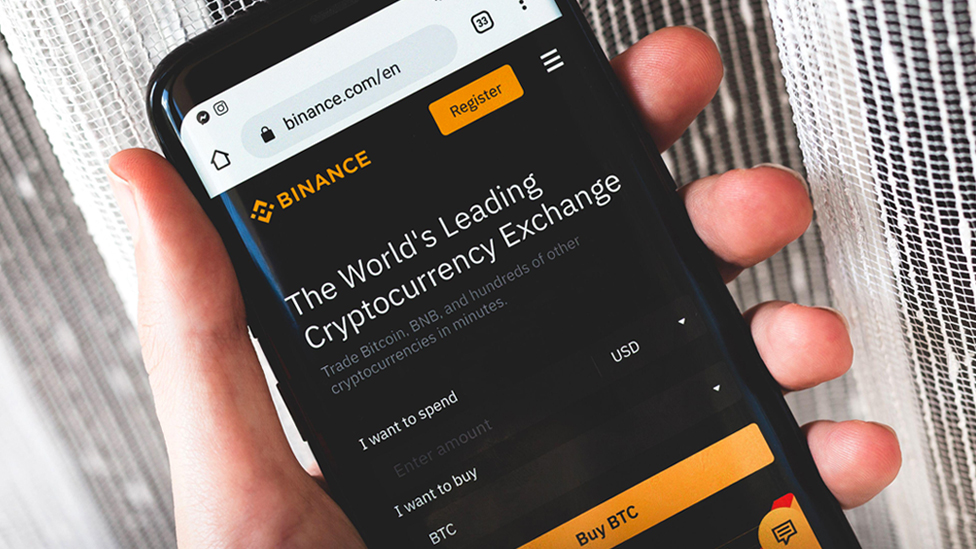
    Binance announced a new round of curbs for its Singapore business, restricting crypto trading for users in the city-state.

    Users in Singapore will no longer be able to deposit fiat money, trade or purchase crypto via Binance.com from October 26, according to a statement.

    Advisers were also told to cease all related trades, withdraw fiat assets and redeem tokens by the deadline.

    We will be restricting Singapore users in respect of the regulated payments services in line with our commitment to compliance, said Binance. Our aim is to create a sustainable ecosystem around blockchain technology and digital assets, and we hope that such efforts will help the industry grow in the local market in the long-run.

    While the Monetary Authority of Singapore has issued warnings about potential breaches of the Payment Services Act at Binance.com, which is operated by Binance, it is currently reviewing a license application from Binance.sg, which is operated by Binance Asia Services (BAS).

    Binance.sg is viewed by some users as the lighter version of Binance.com with a smaller offering and significantly less liquidity.

  • Crypto Exchange FTX Quits Hong Kong

    Crypto Exchange FTX Quits Hong Kong

    The digital assets derivatives exchange has moved its headquarters to Nassau, the Bahamas, citing friendlier regulation and no mandatory quarantine upon arrival in-country.

    The company’s chief executive officer, 29-year-old billionaire Sam Bankman-Fried told industry publication Blockworks that the proactive stance taken by The Bahamas and its regulatory bodies on cryptocurrencies» is one of the primary reasons FTX is moving to the Caribbean island.

    Ryan Salame, recently appointed CEO of FTX Digital Markets, will be responsible for leading its local initiatives in the Bahamas. In addition, FTX Digital Markets will be expanding its presence in the country to support transferred and local employees.

    Hong Kong authorities have been taking an increasingly hard stance towards cryptocurrencies, barring non-accredited investors from accessing the local crypto market.

    Blockworks experts also cited unclear regulations around custody and inconsistencies with how the city’s different regulatory bodies treat crypto as reasons why firms in this sector are finding it increasingly hard to operate in Hong Kong.

  • MAS Orders Binance Halt

    MAS Orders Binance Halt

    The Monetary Authority of Singapore has ordered crypto giant Binance to halt its services in the city-state over a potential breach of local payment rules.

    Binance must stop offering services in Singapore, according to a report citing a MAS statement, over a potential breach of the Payment Services Act.

    According to the regulator, Binance provided payment services to and solicited business from Singapore residents without an appropriate license.

    In response, Binance said its Singapore operations are conducted via Binance Asia Services (BAS) which is a separate legal entity from Binance.com.

    BAS operates Binance.sg, does not offer any products or services via Binance.com, and has its own local executive and management team.

    BAS has submitted a license application and is currently exempt from holding one for digital payment token services, MAS said, adding that the application remains under review and is subject to the firm demonstrating that it is able to meet requirements.

    On the other hand, Binance didn’t apply for a license under local law and the regulator has added the crypto firm to its investor alert list.

    MAS has been engaging BAS and expects an immediate it to begin an orderly suspension of its facilitation of transfers of digital payment token assets between BAS and Binance, the regulator added.

  • Citi Eyes Crypto Opportunities

    Citi Eyes Crypto Opportunities

    The U.S. bank joins its peers in ramping up crypto-related efforts as client demand spikes  Citi is awaiting regulatory approval to trade bitcoin futures on the Chicago Mercantile Exchange (CME), Coindesk reported on Wednesday, citing two sources, including one at the bank.

    One of the sources said the bank is actively recruiting traders to its London crypto trading desk to begin working with bitcoin futures, though Citi denied this in a statement to «Insider.» It also denied that it was looking into products like bitcoin exchange-traded notes.

    We are presently considering products such as futures for some of our institutional clients, as these operate under strong regulatory frameworks, a spokesperson told the publication.

    Citi’s Wall Street rivals have shown increased interest in the space of late. Goldman Sachs reportedly restarted its crypto trading desk in March to deal bitcoin futures and non-deliverable forwards to support clients like hedge funds. In June, it also announced plans to offer options and futures trading in ether, and in July, its asset management unit filed for an application with the U.S. Securities and Exchange Commission to offer an exchange-traded fund (ETF) focused on crypto-related companies.

    J.P. Morgan opened access for its wealth clients to five related funds and BNY Mellon joined a crypto consortium that includes State Street and six unnamed banks.

    In July, Bank of America’s prime brokerage unit started the clearing and settlement of cryptocurrency exchange-traded products (ETPs) for hedge funds in Europe.

  • Vietnam leads globally in cryptocurrency adoption

    Vietnam leads globally in cryptocurrency adoption

    Vietnam leads globally in cryptocurrency adoption with 41 percent of respondents claiming to have bought Bitcoin and the like, according to a recent survey.

    Twenty percent of Vietnamese said they had purchased Bitcoin, the highest among 27 countries polled with 42,000 respondents, according to the survey by U.S. based financial consultancy Finder.

    “Remittance payments may have played a significant role in these numbers, with cryptocurrency an option for migrants who want to send money home and avoid exchange fees,” the report stated.

    Despite having the 53rd largest economy based on gross domestic product, Vietnam placed 13th in realized Bitcoin gains for 2020, according to Cointelegraph.

    Adoption was especially high in Asia, with 30 percent of respondents in Indonesia and India claiming to have bought cryptocurrency, the Finder’s survey found.

    In Malaysia and the Philippines, this proportion was 29 percent and 28 percent, respectively.

    There were between 1,160 and 2,511 respondents for each country covered in the study.

    Data from Statista in February showed Vietnam had the second-highest rate in terms of cryptocurrency use among 74 surveyed economies, driven by remittance payments.

    Bitcoin and other cryptocurrencies are not recognized as legitimate means of payment in Vietnam. The State Bank of Vietnam has warned that owning, trading and using cryptocurrencies are risky and not protected by law.

  • DBS Receives In-Principle Crypto Approval in Singapore

    DBS Receives In-Principle Crypto Approval in Singapore

    DBS becomes Singapore’s second crypto player to secure an in-principle approval from the Monetary Authority of Singapore to offer token services.

    DBS Vickers – the brokerage arm of DBS – has received in-principle approval from the MAS under the Payment Services (PS) Act to provide digital payment token services, according to a statement.

    As a member of DBS Digital Exchange (DDEx), DBS Vickers will be able to «directly support asset managers and companies to trade in digital payment tokens through DDEx.

    DBS will also upgrade its digital exchange with operations running beyond the previous Asian hours to round-the-clock trading from August 16.

    We have seen keen interest among asset managers and corporates for access to digital payment token services, and with DBSV receiving in-principle approval under the PS Act, we are well-placed to meet this growing demand,» said DBS group head of capital markets Eng-Kwok Seat Moey.

    This could add to DDEx’s volumes in the coming months, and, coupled with DDEx going operational round-the-clock, help accelerate growth for DDEx. We are confident of doubling our investor base by the end of the year.

    DDEx has just completed its second quarter since launching in December 2020 and houses around 400 investors with close to S$130 million ($95.8 million) of digital assets in its custodial services.

    Trading volume in the second quarter reached S$180 million, more than quintupling the previous quarter.

    In June, DDEx listed its inaugural security token offering in the form of a S$15 million digital bond.

  • Goldman Sachs Asset Management Files for Crypto-Linked ETF

    Goldman Sachs Asset Management Files for Crypto-Linked ETF

    Goldman Sachs continues ramping up its crypto-related efforts with the latest filing for an exchange-traded fund that will track related companies.

    Goldman Sachs’s asset management unit filed for an application with the U.S. Securities and Exchange Commission to offer an exchange-traded fund (ETF) focused on crypto-related companies.

    The Goldman Sachs Innovate DeFi and Blockchain Equity ETF will track the Solactive Decentralized Finance and Blockchain Index, according to the filing which is seeking approval as soon as practicable after the effective date of the Registration Statement».

    Goldman Sachs has been increasingly expanding its cryptocurrency offering in recent months.

    The bank reportedly restarted its crypto trading desk in March to deal bitcoin futures and non-deliverable forwards to support clients like hedge funds. And in June, it also announced plans to offer options and futures trading in ether – the second-largest cryptocurrency behind bitcoin.

    Goldman Sachs is not the lone Wall Street giant eyeing crypto opportunities with U.S. rivals J.P. Morgan recently opening access for its wealth clients to five related funds and BNY Mellon joining a crypto consortium that includes State Street and six unnamed banks.

  • Nearly Half of Singaporeans Own Cryptocurrency

    Nearly Half of Singaporeans Own Cryptocurrency

    Despite market volatility and regulatory pressures, the outlook for crypto adoption remains positive especially in Singapore where nearly half of its residents own the digital asset class, according to a survey.

    43 percent of Singaporeans own cryptocurrency, according to a survey by Independent Reserve, a digital set exchange with operations in the city-state since 2020. And adoption is expected to continue to rise with 46 percent of respondents plan to buy crypto in the next 12 months.

    Naturally, awareness has been high in Singapore with 93 percent claiming they have knowledge of cryptocurrencies and 90 percent claiming they heard of bitcoin.

    Unsurprisingly, younger individuals have led adoption rates at 66 percent for those aged 26 to 45 compared to 31 percent cumulatively for all other age groups.

    The same age group was also twice as likely to buy crypto in the next 12 months at 61 percent.

    Crypto adoption is expected to increase in Singapore with 59 percent of Singaporeans believing it will reach mass-scale adoption and 70 percent for those under the age of 45.

    The price outlook is also positive with half of the respondents expecting bitcoin’s value to rise to S$50,000 by 2030. 13 percent of those under 45 forecast bitcoin’s price to reach S$250,000 by the same year. The data is based on a survey of 1,000 Singaporeans conducted by Independent Reserve.

    Independent Reserve also launched its inaugural Cryptocurrency Index for Singapore and scored it at 63 out of 100 using criteria based on awareness, adoption, trust and confidence.

    With digital currency gaining momentum worldwide, Singapore continues to emerge as a key hub in Asia due to its robust and well-regulated financial markets infrastructure and openness to new technologies,» said Independent Reserve CEO Adrian Przelozny.

    The strong awareness and adoption of crypto among Singaporeans in the survey findings are probably a natural reflection of the country’s progressiveness and commitment to preparing for the future.

  • J.P. Morgan Opens Crypto Fund Access to All Wealth Clients

    J.P. Morgan Opens Crypto Fund Access to All Wealth Clients

    J.P. Morgan has reportedly allowed all of its wealth management clients to access cryptocurrencies via funds.

    J.P. Morgan’s wealth management clients gained access to five crypto products, effective July 19.

    Four of the products are from Grayscale Investments and one is from Osprey funds.

    According to the memo, J.P Morgan advisors will only execute unsolicited crypto trades for clients, including those who use the bank’s Chase trading app.

    J.P. Morgan is the latest U.S. bank to ramp up its digital currency offering following global custodian BNY Mellon’s entry into a crypto consortium that includes State Street and six other banks.

  • Singapore Firm Partners China’s The9 for Cloud Crypto Mining

    Singapore Firm Partners China’s The9 for Cloud Crypto Mining

    Singapore Myanmar Investco (SMI) will develop a cryptocurrency cloud-mining platform with The9, according to a memorandum of understanding signed by the two sides.

    The mining business is expected to be launched in the fourth quarter of the year, subject to regulatory approval, SMI said in an announcement on Friday.

    Operations will be hosted in a range of facilities across Canada, U.S., Central Asia and the ASEAN region, and will cover a basket of cryptocurrencies inclusive of bitcoin (BTC), filecoin (FIL) and chia (XCH). This move follows SMI’s entering into a subscription agreement with The9 for new shares in SMI, which was announced in June.

    SMI also said it reached an agreement with Chinese cloud mining software-as-a-service company Nhash for technical and support services for five years, as well as an option to purchase up to 4,000 crypto mining machines.

    SGX-listed SMI is an investment and management company focused on Myanmar. In June, it announced its intention to pivot to cryptocurrencies and to diversify its core business to include gaming, digital entertainment and robotics.

    Originally an online gaming firm, Nasdaq-listed The9 pivoted into mining in January and started operations the next month. However, it has been facing regulatory headwinds in China, where it operates. Like other miners, The9 has been looking to shift operations abroad.