Retail News CRM

Tag: crypto

  • Crypto Leader Sets Sights on Seizing US IPO Opportunity for Major Growth

    Crypto Leader Sets Sights on Seizing US IPO Opportunity for Major Growth

    Coinshares, one of the oldest and largest players in the digital asset management ecosystem, is inching closer to its ambitious goal of listing on a U.S. stock exchange, driven by a wave of more crypto-friendly regulations. The company revealed this exciting prospect as it presented its quarterly results on Tuesday.

    The Numbers That Speak Volumes

    The first quarter of 2025 saw Coinshares reporting a net profit of $23.8 million, a drop from $41.5 million in the same period last year. Nevertheless, the company noted a “robust performance across all platforms.” Coinshares Physical, the company’s flagship product, continues to dominate the European market for crypto exchange-traded products (ETPs), attracting net inflows of $268 million—three times more than its closest competitor, despite challenging market conditions where Bitcoin fell by 12.1% and Ethereum plummeted by 45.2%.

    A Market in Flux

    While Coinshares demonstrated resilience, other platforms have shown a “mixed picture” with notable net outflows. The Capital Markets division of Coinshares achieved moderate results this quarter, with profits and other income reaching $11.9 million, indicating a return to normalcy following the extraordinary post-election rally in the previous quarter.

    The Ethereum Effect

    However, the sharp depreciation of Ethereum took a toll on staking revenues, which dipped 26% quarter-on-quarter to $5.6 million.

    Eyes on the U.S. Market

    Having made its debut on the Stockholm exchange in 2021, Coinshares is keen to expand its footprint in the U.S., the world’s largest market for digital assets. The company sees the current favorable regulatory climate in the U.S. as a turning point in making this goal more attainable.

    Analyst Coverage and Investor Engagement

    In a bid to enhance liquidity for its shares, Coinshares is ramping up analyst coverage and conducting roadshows to engage institutional investors. The company also made headlines recently by distributing its first quarterly dividend for 2024 on May 6, signaling its commitment to shareholder value.

    Changing the Financial Game

    Effective January 1, 2025, Coinshares switched its accounting currency from British pounds to U.S. dollars to better align with its operational landscape. This strategic move could very well be a precursor to the much-anticipated U.S. IPO.

    Leading from the Front

    CEO Jean-Marie Mognetti reflected on the company’s performance, stating, “Our proactive approach to market volatility has allowed us not only to remain resilient but also to continue growing, particularly through our Coinshares Physical platform, which is surpassing its peers at an unprecedented pace.” Regarding the prospective U.S. IPO, he added, “As the U.S. regulatory landscape evolves positively, our goal is becoming increasingly realistic and aligns with our strategy to strengthen Coinshares’ presence in the world’s largest capital market for digital assets.”

    Global Footprint with Local Impact

    Coinshares offers an array of financial services, including asset management and trading for digital assets. With its roots in the crypto sector stretching back to 2013, the company has its headquarters in Jersey and maintains a robust presence with offices in France, Sweden, Switzerland, the United Kingdom, and the USA. Coinshares has also made investments in the Geneva-based digital bank Flowbank, which faced a closure ordered by Finma in 2024.

    Who knew that a company deeply entrenched in digital assets could make market moves so impactful? Watch out, Wall Street; Coinshares is gearing up for some serious disruption!

    Questions & Answers

    What is Coinshares’ net profit for the first quarter of 2025?
    Coinshares reported a net profit of $23.8 million for the first quarter of 2025.

    What factors contributed to the drop in staking revenues?
    The steep decline in Ethereum’s value negatively impacted staking revenues, leading to a quarter-on-quarter decrease of 26% to $5.6 million.

    When did Coinshares change its accounting currency?
    Coinshares switched its accounting currency from British pounds to U.S. dollars, effective January 1, 2025, to better reflect the economic environment in which it operates.

  • Eric Trump Accuses Banks of Sabotaging Retail Growth Strategies

    Eric Trump Accuses Banks of Sabotaging Retail Growth Strategies

    Eric Trump Advocates for Crypto Revolution at Token2049 in Dubai

    In a compelling presentation at the cryptocurrency forum Token2049, held in Dubai, Eric Trump, Executive Vice President of The Trump Organization, delivered a fervent endorsement of cryptocurrencies, highlighting significant flaws in traditional banking systems.

    Traditional Banking Under Fire

    Trump’s critique focused on the outdated financial transaction system known as SWIFT, which he argued operates at a sluggish pace compared to the rapid capabilities of cryptocurrency. He emphasized how blockchain technology allows for instantaneous cashless payments via smartphones, proclaiming that virtual currencies like Bitcoin render traditional banking “obsolete.”

    A Personal Struggle with Banking

    Sharing insights from his entrepreneurial experiences, Trump detailed the frustrations he encounters with conventional banking practices. “Every Friday, I trace wire transfers, and I know I’m not alone in this struggle,” he stated. He further condemned mainstream financial institutions, like JP Morgan Chase, for their rigid policies, expressing concerns about their power to freeze accounts and impact lives with minimal notice.

    Trump posited that such inefficiencies could lead to the extinction of major banks within the next decade if they fail to adapt. He claimed that the so-called “cancel culture,” which seeks to silence conservative voices, finds an ally in the traditional finance sector.

    Emphasizing Crypto Freedom

    Trump’s dynamic address resonated with the audience at Dubai’s Madinat Jumeirah, where he rallied support for the decentralized finance platform World Liberty Financial. “Crypto means freedom,” he asserted, as he encouraged attendees to embrace the potential of digital currencies. Despite a moment of silence when he acknowledged the U.S. dollar’s dominance, attendees applauded his vision for the future of financial freedom.

    Dubai’s Forward-Thinking Approach

    Acknowledging the efforts of Dubai and the Gulf Emirates in promoting digital currencies, Trump praised the region’s proactive stance on making cryptocurrency socially acceptable. His closing remarks underscored a mission intertwined with ideals of financial liberation.

    The next Token2049 summit is set to take place on October 1-2 in Singapore, marking a continuation of the global dialogue surrounding the future of digital finance.

    This passionate endorsement by Eric Trump highlights the ongoing shift in consumer trends toward cryptocurrencies, exemplifying a potential inflection point within the retail and financial sectors. As consumer demand for faster, more efficient methods of transaction continues to surge, the implications for traditional banking could be profound, shaping a new landscape for how transactions are handled in the future.

  • Arizona Legislature pushes for a state bitcoin reserve

    Arizona Legislature pushes for a state bitcoin reserve

    The Arizona Legislature approved a pair of bills Monday that could pave the way to create the country’s first state Bitcoin reserve.

    The fate of the bills, which mimic President Donald Trump’s moves on the national level, is now in the hands of Democratic Gov. Katie Hobbs. 

    The pair of bills, both led by Republicans and passed largely along partisan lines through the House and the Senate, would allow the state to invest up to 10% of its public funds in digital assets like bitcoin. According to a 2023 audit, Arizona holds more than $30 billion in state-managed assets.  

    If Hobbs signs them into law, Arizona will become the first state to have its own cryptocurrency reserve. If Hobbs uses her veto power, the bills are dead. 

    A spokesperson declined to comment on how she plans to proceed. 

    Republican state Sen. Wendy Rogers, who sponsored one of the pieces of legislation, said it’s in Hobbs’ best interest to sign the legislation. “Crypto and bitcoin have a huge following nationwide and in Arizona. They are wildly popular with the youth and independents,” Rogers said, adding: “I certainly hope she signs it, because she can take credit and it will make her look good.”

    Trump announced a “strategic crypto reserve” in March, but the announcement bothered some cryptocurrency supporters after he posted on his social media platform that the reserve will include lesser-known cryptocurrencies besides bitcoin, which are more prone to volatility. 

    Barrett Marson, a Republican political consultant based in Phoenix, said GOP members of the Arizona Legislature are taking their cues from Trump. “Arizona Republicans are nothing if not attuned to what Trump is doing and always finding a way to replicate that here in the state,” Marson said. 

    Marson, who said he isn’t sure whether Hobbs will sign the bills or veto them, said he believes crypto’s mercurial nature is likely to be a consideration. “Gov. Hobbs will undoubtedly consider how volatile bitcoin can be when she decides whether to sign or veto this effort,” he said. 

    But Rogers isn’t concerned. “I do not have any concerns about the volatility of bitcoin simply because if you zoom out on all of the charts, it always increases in value,” she said, before she argued that bitcoin is a “hedge against inflation.” 

    “I can’t speak for the other cryptocurrencies, as those need to be analyzed on an individual basis,” she said.

  • Blackrock Launches ‘Swiss’ Bitcoin ETP in Europe

    Blackrock Launches ‘Swiss’ Bitcoin ETP in Europe

    On Tuesday, Blackrock launched the iShares Bitcoin ETP, providing European investors with access to Bitcoin without the need to directly trade or hold the cryptocurrency.

    The securities are backed by Bitcoin held by Coinbase, which is also responsible for the custody solution and the process controls safeguarding the private keys. For the iShares Bitcoin ETP, the Bitcoins are transferred daily from the trading wallet to segregated offline wallets («cold storage»).

    There’s a lot of Switzerland in the iShares Bitcoin ETP. BlackRock Switzerland played a key role in its development, said Dirk Klee, Country Head for Switzerland.

    The iShares Bitcoin ETP carries a total expense ratio (TER) of 25 basis points, with a temporary reduction to 15 basis points in effect through the end of the year. The underlying Swiss special purpose vehicle (SPV) is exempt from Swiss stamp duty on both purchases and sales.

    Blackrock took its time before launching the iShares Bitcoin ETP. Ultimately, it was the evolution of the cryptocurrency space in recent years—combined with growing client demand—that prompted the firm to move forward.

    «We believe ETPs can play a key role in building a bridge between crypto and traditional finance, due to their efficiency and ease of use,» said Klee. For investors with appropriate governance frameworks and sufficient risk tolerance, a 1% to 2% allocation to Bitcoin in multi-asset portfolios is justifiable, he added.

  • Warning Signals from the Crypto Valley

    Warning Signals from the Crypto Valley

    As a Crypto-Nation, Switzerland has made headlines for many years. However, the tide may be turning now.

    On January 20, 2025, Donald Trump will move into the White House for the second term. By then, the Crypto Valley will be closely monitoring the US President’s policies. Trump’s plans could cause a major upheaval in Switzerland.

    In addition to introducing massive tariffs and tightening immigration policies, Trump has also announced his intention to overhaul the previously restrictive policy on Bitcoin and other cryptocurrencies, aiming to implement crypto-friendly regulations.

    Among other things, Trump wants to attract mining companies: Bitcoin made in the USA. This will involve massively expanding the energy-producing economy to ensure that enough cheap energy is available at all times.

    At the same time, Trump aims to promote stablecoins and bitcoins and establish a strategic national Bitcoin reserve.

    Trump’s promises have sparked a surge in cryptocurrency prices in recent months. In December, Bitcoin’s price briefly surpassed the magical threshold of $100,000.

    If the US President delivers on his promises, it would be a true game-changer. This would not go unnoticed in Crypto Valley», says a senior manager at a crypto company based in Zug. However, he does not want to be named publicly, as the matter is too sensitive.

    Cryptocurrencies and Switzerland have long been a success story. As early as 2013, Switzerland set up attractive conditions for the industry, ahead of many other nations. With over 1,000 blockchain companies, Switzerland became an international hub, with the canton of Zug at the forefront. The region came to be known as Crypto Valley.

    But the honeymoon is over. A sense of unease is spreading within the industry. Bitcoin pioneer Niklas Nikolajsen, a Danish national who moved to Switzerland in 2011 and now lives in Zug, recently told the Neue Zürcher Zeitung (NZZ) that Switzerland is no longer an attractive location for crypto businesses.

    Once, even a Federal Councilor visited the offices of crypto companies. In this politically favorable environment, the Financial Market Supervisory Authority (FINMA) even granted two crypto companies a banking license. That would be unthinkable today. When the political pressure faded, FINMA lost its nerve», Nikolajsen said.

    One point of contention is the treatment of stablecoins, which are crypto-assets pegged to a currency like the dollar, euro, or Swiss franc. FINMA now requires that all parties involved in stablecoin transactions be identified and has set concrete requirements for stablecoin issuers and the banks that provide backup guarantees. This has caused an outcry within crypto companies.

    Along with the developments in the US, this unease could quickly become toxic. If conditions for the crypto industry are relaxed under Trump while tightening in Switzerland, many companies are likely to leave the country. «No one is planning to move yet, but if Switzerland doesn’t take action soon, the decision will be made quickly», several crypto managers told finews.ch.

    One such move could be for the Swiss National Bank to be mandated to invest in Bitcoin, as proposed by a popular initiative. «If Switzerland only offers what everyone else does, we’re out of the picture. The Swiss market simply doesn’t offer enough», said one manager, putting it bluntly.

  • Bitcoin tops $100,000 on optimism over Trump crypto plans

    Bitcoin tops $100,000 on optimism over Trump crypto plans

    Bitcoin rose above $100,000 for the first time on Thursday as the election of Republican Donald Trump as president of the United States spurred expectations that his administration will create a friendly regulatory environment for cryptocurrencies.

    Bitcoin has more than doubled in value this year and is up about 45% in the four weeks since Trump’s sweeping election victory, which also saw a slew of pro-crypto lawmakers being elected to Congress.

    It last traded at $100,027 as of 9:40 a.m. Thursday, up 2.2% on the previous session, after earlier rising as high as $100,277.

    “We’re witnessing a paradigm shift. After four years of political purgatory, bitcoin and the entire digital asset ecosystem are on the brink of entering the financial mainstream,” said Mike Novogratz, founder and CEO of U.S. crypto firm Galaxy Digital.

    “This momentum is fueled by institutional adoption, advancements in tokenization and payments, and a clearer regulatory path.”

    More than 16 years after its creation, bitcoin appears on the cusp of mainstream acceptance, despite naysayers and a history of controversies.

    “Bitcoin crossing $100,000 is more than just a milestone; it’s a testament to shifting tides in finance, technology, and geopolitics,” said Justin D’Anethan, a Hong Kong-based independent crypto analyst.

    “The figure not that long ago dismissed as fantasy, stands as a reality.”

    Trump embraced digital assets during his campaign, promising to make the United States the “crypto capital of the planet” and to accumulate a national stockpile of bitcoin.

    Crypto investors see an end to increased scrutiny under U.S. Securities and Exchange Commission Chair Gary Gensler, who said last week he would step down in January when Trump takes office.

    On Wednesday, Trump said he would nominate Paul Atkins to run the Securities and Exchange Commission. Atkins, a former SEC commissioner, has been involved in crypto policy as co-chair of the Token Alliance, which works to “develop best practices for digital asset issuances and trading platforms,” and the Chamber of Digital Commerce.

    A slew of crypto companies including Ripple, Kraken and Circle are jostling for a seat on Trump’s promised crypto advisory council, seeking a say in his planned overhaul of U.S. policy, according to several digital asset industry executives.

    Trump’s businesses may also have a stake in the sector. He unveiled a new crypto business, World Liberty Financial, in September. Although details about the business have been scarce, investors have taken his personal interest in the sector as a bullish signal.

    Trump’s social media company is in advanced talks to buy crypto trading firm Bakkt, the Financial Times reported last week, citing two people with knowledge of the talks.

    Trump Media and Technology Group, which operates Truth Social, is close to an all-stock acquisition of Bakkt, according to the FT report.

    Billionaire Elon Musk, a major Trump ally, is also a proponent of cryptocurrencies.

    Bitcoin’s rebound from a slide below $16,000 in late 2022 has been rapid, boosted by the approval of U.S.-listed bitcoin exchange-traded funds in January this year.

    The Securities and Exchange Commission had long attempted to block ETFs from investing in bitcoin, citing investor protection concerns, but the products have allowed more investors, including institutional investors, to gain exposure to bitcoin.

    More than $4 billion has streamed into U.S.-listed bitcoin exchange-traded funds since the election.

    “We were trading basically sideways for about seven months, then immediately after November 5, U.S. investors resumed buying hand-over-fist,” said Joe McCann, CEO and founder of Asymmetric, a Miami digital assets hedge fund.

    There was a strong debut for options on BlackRock’s ETF in November with call options – bets on the price going up – substantially more popular than puts. McCann calculated the put to call ratio at about 22 to one.

    Crypto-related stocks have soared along with the bitcoin price, with shares in bitcoin miner MARA Holdings up around 65% in November.

    Two years ago, the industry was wracked by scandal with the collapse of the FTX crypto exchange and the jailing of its founder Sam Bankman-Fried.

    The cryptocurrency industry also has been criticized for its massive energy usage, while crypto crime remains a concern, too.

    Market participants are keeping a close eye on what happens now that bitcoin has broken above $100,000, with investors and speculators possibly looking to pocket some of their recent gains.

    “But once we flush out those sell orders, this could go higher still, and very rapidly,” said Steven McClurg, founder of Canary Capital, a digital asset.

  • Singapore ranks first globally in crypto adoption

    Singapore ranks first globally in crypto adoption

    Singapore has secured the top spot globally in crypto adoption this year, thanks to high scores in technology and regulatory environment, according to a recent study.

    The country scores 9.5 over 10 in innovation and technology, 9.1 in economic factors, and 8.3 in regulatory environment, according to the Henley Crypto Adoption Index 2024 by British investment migration consultancy Henley and Partners.

    Three other parameters that the company used to rank the level of crypto-friendliness among countries and territories were infrastructure adoption, public adoption and tax-friendliness.

    Hong Kong (China) came second with the highest score in economic factors, 9.8.

    It was followed by the United Arab Emirates, the U.S. and the U.K.

    Henly said that it studied crypto-friendly countries that host investment migration programs, based on their adoption and integration of cryptocurrencies and blockchain.

    Its index provides crypto investors with a comprehensive overview of the extent to which these countries are embracing this emerging technology.

    In another study, Henley found that the number of individuals holding more than US$1 million in cryptocurrency assets worldwide has doubled over the past year, reaching 172,300 as of June-end.

    There are now 28 crypto billionaires in the world, it added.

    In another report released earlier this year, crypto payment firm Triple-A said that Singapore boasts one of the highest crypto ownership rates globally.

    Around 24.4% of its population own crypto assets, compared to the global average of 6.8%.

    Bitcoin, the leading crypto, surged to a new peak of over $73,000 in March and is now hovering around $59,000.

  • Bitpanda Enters Into Partnership With Deutsche Bank

    Bitpanda Enters Into Partnership With Deutsche Bank

    Deutsche Bank will provide Bitpanda customers with real-time payment solutions for incoming and outgoing transactions. This partnership between a Tier 1 bank and an emerging crypto company marks a significant step for the entire digital asset industry.

    As part of the collaboration, Deutsche Bank will provide Bitpanda with access to local IBANs in Germany. Customers will therefore be able to deposit or withdraw fiat currencies at Bitpanda, with transactions being processed via Deutsche Bank.

    According to a press release on Tuesday, this API-based account solution is expected to streamline and enhance the experience for users and ensure confidence, speed, and efficiency.

    Bitpanda is a regulated multi-asset broker platform offering more than 2,800 selected virtual assets and indices as well as stocks, ETFs and commodities to retail investors.

    With over 4 million users and counting, the Austrian-fintech envisions the further cooperation with traditional financial service providers as a strategic and pivotal goal to «shape the future of the financial service industry.»

    Meanwhile, Deutsche Bank can thereby venture into entirely new business areas.

    Bringing the best parts of the industry together is where we can create real value for people, says the deputy Bitpanda CEO, Lukas Enzersdorfer-Konrad. «Deutsche Bank’s commitment to working with new and innovative players in the financial industry continues to make our partnership possible.

    With Bitpanda, a recognised and regulated fintech provider, we are confident to help build a secure and trusted environment for users in this innovative field of virtual asset investing, added Kilian Thalhammer, Global Head of Merchant Solutions, Deutsche Bank.

  • Vietnam ranks third in crypto gains

    Vietnam ranks third in crypto gains

    Vietnam ranked third globally in cryptocurrency gains last year with US$1.18 billion in profits, according to a report from U.S. crypto data provider Chainalysis.

    It was behind the U.S. ($9.36 billion) and the U.K. ($1.39 billion). China and Indonesia were in fourth and fifth places with $1.15 billion and $1.06 billion.

    Vietnam’s crypto gains were doubled that of Spain and the Philippines and triple that of Thailand.

    Eight countries recorded more than $1 billion.

    Chainalysis said the positive trends of 2023 have carried over into 2024, with notable crypto assets like Bitcoin achieving all-time highs in the wake of Bitcoin exchange-traded fund approvals and increased institutional adoption.

    “If these trends continue, we may see gains more in line with those we saw in 2021,” it said, adding that as of March 13 Bitcoin was up 65.4% and Ether was up 70.2%.

    The large crypto gains in Vietnam, however, might be enjoyed only by the minority.

    A report by Coin98 Insights earlier this year showed that 64% recorded no profit last year, with 44% of them making losses.

  • Bitcoin Experiences Second Big Bang

    Bitcoin Experiences Second Big Bang

    The world’s oldest cryptocurrency is moving from the periphery of the financial system to the center of Wall Street after Bitcoin spot ETFs were approved for the U.S. mass market. The door to a new era of digital assets is now open.

    The granting of approval to 11 Bitcoin spot ETFs by the U.S. Securities and Exchange Commission (SEC) – just on (yesterday) Wednesday afternoon local time and therefore at the last minute – marks a historic breakthrough for the cryptocurrency sector. It was long overdue after years of waiting and has finally become reality.

    The SEC decision has far-reaching consequences for the future of Bitcoin and other digital currencies. It is not simply a matter of regulatory approval, it is a recognition that Bitcoin is now a mature asset class, as well as a sign of trust and legitimacy.

    Particularly revealing is the role of Wall Street heavyweights like Blackrock, Fidelity, Invesco and the Swiss crypto pioneer 21Shares. Their involvement has played a crucial role in restoring trust in cryptocurrencies after the scandalous horror year 2022 and cementing their legitimacy as an asset class.

    Their actions also show that cryptocurrencies today are more than just a niche or speculative instrument. They are a growing asset class to be taken seriously with the potential to complement and enrich the global financial system.

    Institutional investors who have been waiting for regulatory clarity and security now have a door to a world that has largely been outside their investment universe. This could trigger a new wave of investment and interest in cryptocurrencies that goes far beyond the current crop of investors.

    The approval is also a significant step towards the development of the infrastructure for the cryptocurrency. This will not only encourage further innovation and investment in this area, but also highlight the need for robust and transparent regulation.

    In a market often beset by speculation and uncertainty, this development provides a certain degree of stability and predictability.

    But its integration into the traditional financial system also brings with it new regulatory challenges and potential risks. The crypto industry must therefore continue working with the regulatory authorities to ensure a balance between innovation and consumer protection.

    Satoshi Nakamoto, Bitcoin’s mysterious creator, laid the foundations for a financial revolution in 2008 with his visionary concept of a cryptocurrency. With spot ETFs approved on Wall Street, Bitcoin is now experiencing its second big bang about 15 years later, although probably not quite as its founder imagined.

    All in all, the SEC’s decision is a new milestone for the crypto world and will usher in a new phase of professionalization and integration into the global financial system.

  • SEC Authorizes Spot Bitcoin ETFs

    SEC Authorizes Spot Bitcoin ETFs

    The Securities and Exchange Commission has delivered a landmark approval of spot Bitcoin exchange-traded funds. This is a highly anticipated event that is expected to further crypto’s entry into mainstream finance.

    The US Securities and Exchange Commission (SEC) has approved 11 applications for spot Bitcoin exchange-traded funds (ETF), including those from BlackRock, Ark Investments, Fidelity, Invesco and more.

    Since 2004, this agency has had experience overseeing spot non-security commodity exchange-traded products (ETPs), such as those holding certain precious metals. That experience will be valuable in our oversight of spot bitcoin ETP trading,» said SEC chairman Gary Gensler in a statement highlighting investor protection.

    Despite approving the inaugural entry of spot Bitcoin in the ETF industry, Gensler noted that this did not reflect positive sentiments about the digital asset class.

    Though we’re merit neutral, I’d note that the underlying assets in the metals ETPs have consumer and industrial uses, while, in contrast, bitcoin is primarily a speculative, volatile asset that’s also used for illicit activity including ransomware, money laundering, sanction evasion and terrorist financing,» Gensler added.

    While we approved the listing and trading of certain spot bitcoin ETP shares today, we did not approve or endorse bitcoin. Investors should remain cautious about the myriad risks associated with bitcoin and products whose value is tied to crypto,» he said.

  • Pi Network-like cryptocurrency mining apps come back

    Pi Network-like cryptocurrency mining apps come back

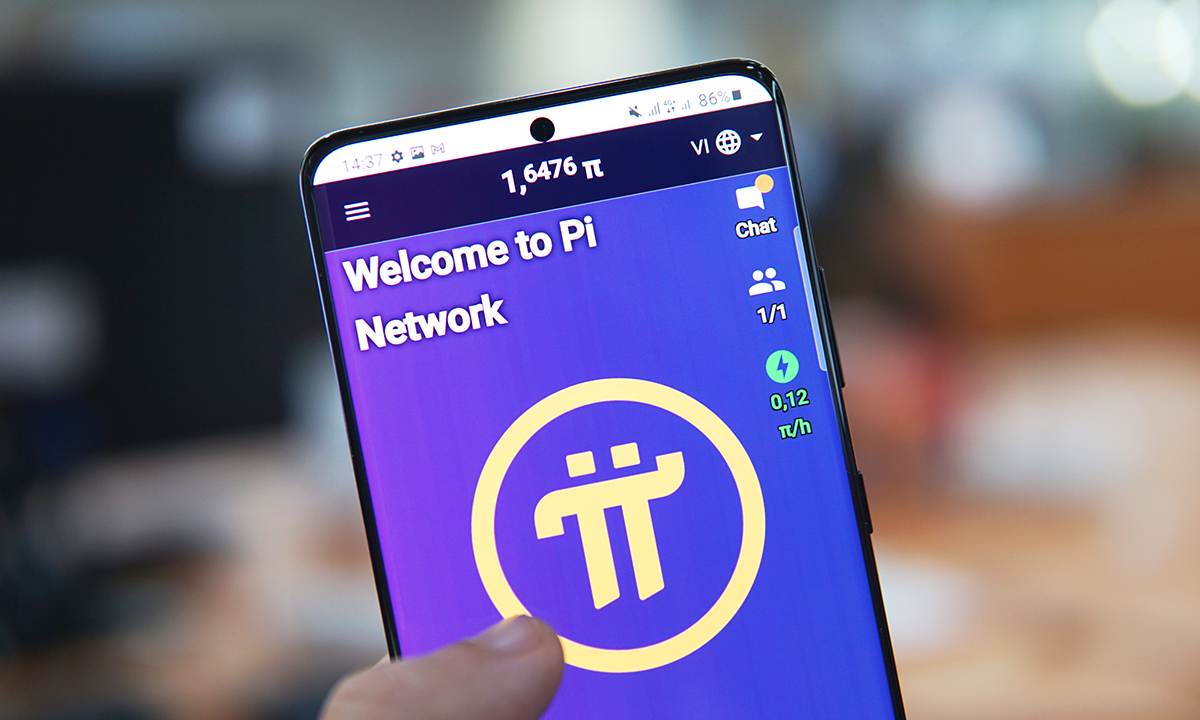
    Many cryptocurrency mining applications similar to Pi Network are being introduced again on Facebook and Telegram accounts in Vietnam.

    “Starting a business with 0 dong from Peace Network. Having an opportunity like Pi Network, why not try it?,” an account named Ngoc Van posted on a Facebook group about blockchain with more than 100,000 members, with instructions to download an app with pronunciation like Pi Network. He also spammed comments on many other groups with similar content.

    Ngoc Van said in the past month, he has “recruited” about 100 members to “mine” virtual currency.

    Not only Peace Network, he also installed a series of similar applications such as Rubi, StarCoin, LGBT Network, and BNP Network.

    “Compared to Pi, participating in a new project brings more opportunities because the amount of mining is more. Maybe some projects will bring real money,” Ngoc Van said.

    “As long as one or two of the projects go public, I can make some money. Otherwise, I have nothing to lose but a little time to spend every day,” he added.

    Cryptocurrency mining applications have appeared, disappeared and reappeared.

    According to the administrator of a blockchain group with 200,000 members on Facebook, the number of spam posts about cryptocurrency mining applications has increased day by day over the past few months, and they have had to use filters to block similar content.

    “Every day, dozens of such posts are submitted but not approved,” the administrator said. Compared to the craze two years ago, the applications are now more diverse, showing the expected amount of money earned if cryptocurrency mining projects are listed on digital currency exchanges in the future, assigning more tasks for users besides taking attendance.

    Some apps even have white papers and development roadmaps. The apps support web, iOS and Android operating systems.

    However, apps are basically the same way the Pi Network works. Users need to download the apps, then register, enter the referral code and “take attendance” every 24 hours.

    The Rubi app was released in May and now has over 100,000 downloads, a white paper but a vague development roadmap.

    “New apps are made professionally and methodically, not as simple as before, making more people trust them,” commented Giang Nam, a cryptocurrency player for more than five years.

    “With the mentality of losing nothing and fear of missing out, hundreds of thousands of people still install the apps and take attendance every day,” Giang Nam said.

    Among 10 such apps, most of which have between 10,000 and hundreds of thousands of downloads.

    When installing, apps require providing a lot of important information, such as accessing location, reading and modifying the contents of memory, reading contacts, and accessing the network.

    Previously, apps needed only users’ names and email addresses or phone numbers.

    Currently, users are required to complete KYC (identity verification) from the beginning, including providing personal information, a photo of ID cards or passports, a selfie portrait, in addition to a phone number and an email address.

    “This is a huge data warehouse that the people behind the apps are targeting. Users think they have nothing to lose, but in reality they face many risks due to the disclosure of personal information, from the making of forged documents to receiving scam calls or messages,” Giang Nam said.

    Vo Do Thang, director of the Athena Cyber Security Center, said most of cryptocurrency mining apps aim to collect user data.

    “There aren’t any apps that give free money,” Thang said, adding that “this trick is actually to entice users to provide personal information.”

    According to him, these data will then be collected to serve many purposes.

    With the data, artificial intelligence (AI) can accurately classify each person, even make “a genealogy” of each person to see who they are related to, what they do, what their habits or hobbies are to perform tricks in a way that makes it difficult for the victims to detect.

    “Before downloading any app, it is necessary to consider who is behind the app, how reputable it is. Avoid clicking and becoming a prey for bad guys”, Thang said.

    Philips Hung Cao, deputy general Director of cybersecurity company VinCSS, said KYC on many unlicensed cryptocurrency mining apps is not managed and supervised by the authorities.

    If KYC is required, users should ask at least three questions: Is personal information protected under privacy laws and regulations? Is the information shared with third parties? If the personal information declared on the app is leaked and used for fraudulent purposes, who will be responsible for compensation? “With these three questions, unlicensed virtual currency mining apps certainly cannot meet and users will understand themselves that they should not do eKYC or KYC,” he said.

    Another source of revenue for cryptocurrency mining apps on smartphones is advertising. Most the apps include ads, forcing users to see before accessing a feature.

    In addition to the risk of information being stolen, experts say such apps also waste time, take up phone resources, and create a feeling of “virtual hope” for participants.

    After five years of being present and receiving many expectations, money earned by using cryptocurrency mining app Pi Network is still worthless now, and the team behind it is almost silent.

    Pi Network has been under investigation after critics said it lacks the transparency associated with blockchain, and could be used for nefarious purposes like fraud and data collection.

    Cryptocurrencies are not recognized as a legitimate means of payment in Vietnam whose central bank has warned that owning, trading and using cryptocurrencies are risky and not protected by law.

  • Cryptocurrencies and Vietnam

    Cryptocurrencies and Vietnam

    Vietnam rightfully occupies one of the leading positions among the ASEAN countries in the market for cryptocurrencies and various blockchain technologies, which are currently the focus of most modern companies. This country is overtaken only by Thailand, which, by the strength of the transaction, exceeds $100 million in annual turnover for the purchase and sale of cryptocurrencies.

    This happened despite that in 2018, Vietnamese banks almost completely banned cryptocurrencies as a method of payment. In 2021, there was a thaw, and the Vietnamese government issued a directive with frameworks that would allow tracking money laundering attempts using cryptocurrencies. We have one of the strongest countries, which uses cryptocurrencies quite legally, quite profitable and quite successful.

    Vietnamese people and blockchain games

    Both last year and this year, there has been an increased interest among Vietnamese residents in blockchain games or even gambling analogues. This trend has captured all continents at once. Vietnam has become exceptional because a large portion of the population owns different types of NFT tokens and successfully interacts with them in certain blockchain games. Since NFT is currently an increasingly unpopular means for investing and earning funds, the Vietnamese people have switched to a more stable income through entertainment.

    One in five Vietnamese check new bitcoin casinos at least twice in their lives, which are currently operating and offer exceptional offers for all their players, unlike traditional or land-based counterparts with a huge number of different restrictions.

    Why Bitcoin Casino?

    Bitcoin casinos are one of the most popular solutions that are not neglected by the Vietnamese people. These establishments provide a huge number of different benefits that can be a good start for various kinds of bonuses or advanced gaming sessions with big winnings due to the increased RTP level. You can take a look at some of the main benefits we have described below.

    Safety

    Playing at a blockchain-based casino provides a higher level of security compared to traditional methods. The unique nature of blockchain technology ensures the safety of transactions, and its evolving transparency means you can verify each one without relying on centralized entities. This heightened transparency allows you to easily identify and resolve any transaction errors, and if the casino is licensed, you can take legal action against it just as you would against a traditional gambling establishment.

    Mobile Gaming

    The ubiquity of mobile devices has made mobile gaming commonplace. If you look at a cryptocurrency casino, you will be surprised at the rapid progress in the development of mobile applications and providing end customers with a comfortable game. Before, you had to download certain apps to run them on your phone and play comfortably. Now you can forget about it and start playing right from your browser. Bitcoin casinos are among the pioneers of this trend, utilizing HTML5 technology to the fullest. It is worth noting that Bitcoin casinos often lead the way in adopting new technologies aimed at improving user convenience.

    Fast service delivery

    The blockchain provides a quick and secure means of processing transactions, making it well-suited for online gambling. Not only do games run smoothly on the blockchain, but deposits and withdrawals from your casino account are also processed rapidly. You can use a range of popular cryptocurrencies to carry out your transactions. Later on, we will examine the most commonly used cryptocurrencies among Indian cryptocurrency casino players.

    Conclusion

    Blockchain casinos are one of the most preferred gambling options for Vietnamese people because there are practically no legal land-based gambling establishments on the territory of the country itself. At the same time, the government is trying to ban online gambling establishments on popular sites that are currently positioning themselves as classic or fundamental casinos that have been on the market for several decades. All these problems are solved by blockchain and modern methods of user anonymization.

    Moreover, the blockchain allows all players to feel completely safe due to the specifics of the algorithms that provide an honest and transparent result. You can read numerous studies by various researchers about exactly how the Bitcoin casino random number generator works. It is a more transparent and secure platform than even traditional and fundamental online gambling establishments.


  • EU Gets First Crypto Rulebook

    EU Gets First Crypto Rulebook

    Switzerland was early to adopt a regulatory framework for digital assets. Now Europe has approved an EU-wide crypto rulebook.

    The European Parliament is adopting the Markets in Cryptoassets (MiCA) regulation, scheduled to come into force from mid 2024 onwards, it said in a statement Thursday.

    The regulation aims to increase customer protection for crypto-assets that are not regulated by existing financial services legislation. It will affect crypto asset issuers, crypto asset service providers including exchanges, custody providers, investment advisors, and stablecoin issuers.

    While MiCA introduces harmonized regulation within the EU, «the Swiss Distributed Ledgter Technology Act goes further and provides additional legal clarity regarding the civil and insolvency law treatment of digital assets which are not present in the MiCA regulation,» Jan Brzezek, CEO and founder of Crypto Finance, an entity belonging to Deutsche Boerse Group, said.

    MiCA’s cap limiting stablecoin transactions to €200 million transactions per day, could impact institutional adoption, Brzezek added.

    EU regulation might draw companies away from the US, where companies, including Coinbase, have criticized the lack of clarity given by the Securities and Exchange Commission.

    By contrast, in Switzerland blockchain companies have benefited from the country’s early regulation of the industry as it helped professionalize the market.

    MiCA is an important step toward «legitimizing the asset class and opening the door for more institutional adoption and innovation,» Zug-based 21Shares wrote in an emailed newsletter ahead of Thursday’s parliament vote.

  • Bitcoin pushes past $30,000 as investors eye end of rate rises

    Bitcoin pushes past $30,000 as investors eye end of rate rises

    Major cryptocurrency bitcoin breached the key $30,000 level for the first time in 10 months on Tuesday, adding to its steady gains as investors raised bets that the U.S. Federal Reserve will soon end its aggressive monetary tightening campaign.

    Bitcoin peaked at $30,438 in Asian trade and was last 2% higher at $30,262. It has gained about 6% since the start of the month, after rising 23% in March.

    The token’s surge follows Friday’s closely-watched U.S. nonfarm payrolls report that showed employers maintained a strong pace of hiring in March, pointing to a still-resilient economy.

    However, banking sector turmoil sparked by last month’s collapse of Silicon Valley Bank has raised market expectations that the Fed is unlikely to lift interest rates much higher for longer as it looks to ease the stress on the sector.

    “The reason behind the broad-based rally in crypto is traders’ optimism toward central banks’ monetary policy,” said Tina Teng, markets analyst at CMC Markets.

    “Bets for a sooner Fed pivot on rate hikes have been dramatically strengthened following the bank turmoil in early March.”

    Ether , the second largest cryptocurrency, stood near last week’s roughly eight-month peak of $1,942.50. It was last 0.75% higher at $1,925.80.

    Crypto investors are eagerly anticipating a major revamp to the Ethereum blockchain this week to allow them to access more than $33 billion of ether currency.

    Dubbed Shapella, the software upgrade will let market players redeem their “staked ether” – coins they have deposited and locked up on the network over the past three years in return for interest.