Retail News CRM

Tag: currency

  • Vietnamese currency hits 2-year low against dollar

    Vietnamese currency hits 2-year low against dollar

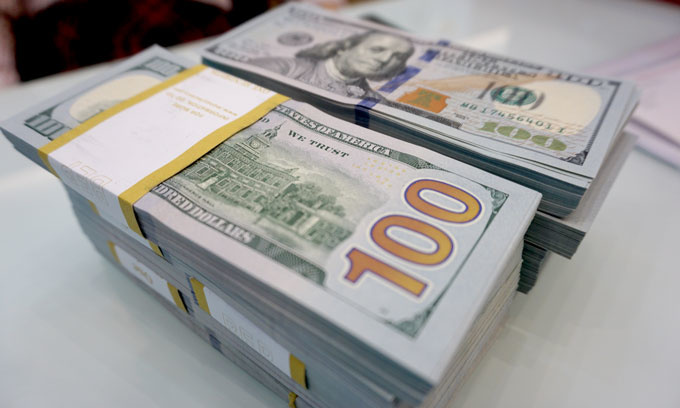
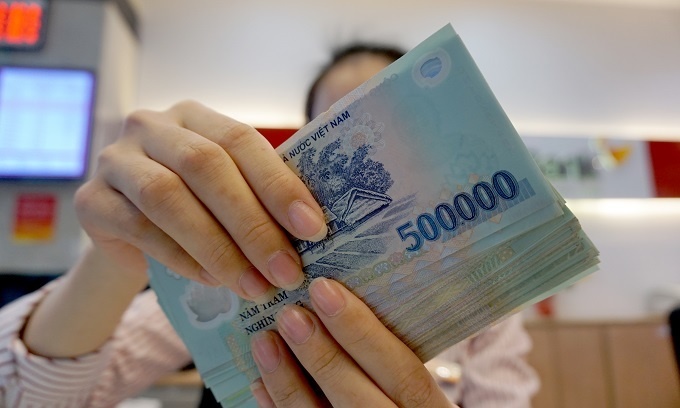
    Vietnamese banks on Monday traded the dong against the U.S. dollar at the lowest rate in two years as the greenback strengthens globally amid economic uncertainty. The Vietnamese dong declined by 0.3 percent from last weekend to VND23,510 per U.S. dollar at state-owned Vietcombank.

    It fell by 0.34 percent at BIDV and 0.26 percent at Vietinbank, also state-owned lenders. Among private lenders, the currency is 0.21 percent weaker at Sacombank, and 0.17 percent weaker at Eximbank. The changes came after the State Bank of Vietnam on Monday let the Vietnamese dong slide by 0.04 percent against the greenback to VND23,121, the lowest this year.

    It has been pumping more U.S. dollar into the market to reduce pressure on the exchange rate.

    RongViet Securities estimates that the central bank has sold over $10 billion to the market this year, or around 10 percent of Vietnam’s foreign exchange reserves, to stabilize the market.

    The U.S. Dollar Index has been hovering around a 20-year high mark since last month amid global economic uncertainty caused by the Russia-Ukraine crisis and supply chain disruptions due to China’s “zero-Covid” policy.

    Concerns of global inflation has urged investors to buy more U.S. dollars as a safe-haven currency.

  • Crypto Bank Raises Money for Foreign Expansion

    Crypto Bank Raises Money for Foreign Expansion

    Seba is raising nearly $120 million, in a bid to fuel its expansion outside of Switzerland. Zug-based Seba raised 110 million Swiss francs ($118 million) from a host of new and existing investors, it said in a statement on Wednesday. The round was significantly oversubscribed, with demand far exceeding the initial funding target, the fledgling bank said. It didn’t disclose a valuation of itself, as rivals have done.

    Seba said it will use the funds to keep hiring and to expand into new markets. Investors in this round included Altive, Ordway Selections, Summer Capital, DeFi Technologies, Alameda Research, and Julius Baer.

    This comes just days after rival Sygnum raised $90 million in Asia-focused fundraising. The two banks were both granted licenses in Switzerland 28 months ago.

  • Swissquote To Launch Crypto Exchange

    Swissquote To Launch Crypto Exchange

    Switzerland’s largest online bank is riding the crypto wave. Swissquote’s ambitions include setting up its own trading platform for digital currencies, sales manager Jan De Schepper said.

    Swissquote plans to open its own crypto exchange before the end of the first half of 2022. We want to enable more trading in various cryptocurrencies on the platform, Jan De Schepper said.

    Other ambitions in the crypto space include becoming the leading Swiss provider of digital assets. To achieve this the broker aims to add more cryptocurrencies to its offering, in addition to stablecoins and staking services, which are currently in high demand.

    Swissquote’s crypto exchange starts its operations as planned, there will be a sudden surge in trading platforms for digital assets in Switzerland.

    In recent weeks, Swiss Stock Exchange SIX launched a fully licensed digital exchange, SDX. Just days later, Berner Kantonalbank launched SMEIX, a platform that lists tokenized small caps.

    In September 2020, crypto bank Sygnum got the green light from regulators to launch its new trading system, which also acts as an exchange for crypto assets.

    Last June, Deutsche Boerse bought Swiss fintech Crypto Finance; the acquisition gives Germany’s exchange a direct entry point for digital asset investments, including post-trade services.

    Swissquote has already bulked up its workforce in response to the surging demand for digital tokens and coins last spring and will continue hiring to fuel further expansion. Our compliance and customer service teams were almost overrun by the crypto rush, recalls De Schepper.

    The hiring spree has paid off in reducing waiting times for clients calling in. Now, we regularly manage to open a trading account on the same day, De Schepper says. In exceptional cases when special clarification is needed, account opening can take up to a week, he says.

    Net income from crypto investments increased by over 1000 percent to 63.2 million Swiss francs in the first half of 2021. At the end of 2021, Swissquote expects to double its pre-tax profit.  However, expenses will also rise: Swissquote is investing heavily in infrastructure.

    The online brokers have a clear head start over other institutions as many Swiss institutions remained cautious about cryptocurrencies for a long time, mainly for compliance reasons.

    However, with recent record prices, the mood has changed as Swissquote CEO Marc Buerki recently said in an interview: Traditional banks have at times gone into panic mode, trying to catch up with developments in the space.

    Setting up a brand new crypto offering from scratch is costly and requires a lot of time and expertise, De Schepper points out while spotting a sales opportunity: In the current market phase, banks would be better off partnering with an established bank like Swissquote, he says.

  • Citi Eyes Crypto Opportunities

    Citi Eyes Crypto Opportunities

    The U.S. bank joins its peers in ramping up crypto-related efforts as client demand spikes  Citi is awaiting regulatory approval to trade bitcoin futures on the Chicago Mercantile Exchange (CME), Coindesk reported on Wednesday, citing two sources, including one at the bank.

    One of the sources said the bank is actively recruiting traders to its London crypto trading desk to begin working with bitcoin futures, though Citi denied this in a statement to «Insider.» It also denied that it was looking into products like bitcoin exchange-traded notes.

    We are presently considering products such as futures for some of our institutional clients, as these operate under strong regulatory frameworks, a spokesperson told the publication.

    Citi’s Wall Street rivals have shown increased interest in the space of late. Goldman Sachs reportedly restarted its crypto trading desk in March to deal bitcoin futures and non-deliverable forwards to support clients like hedge funds. In June, it also announced plans to offer options and futures trading in ether, and in July, its asset management unit filed for an application with the U.S. Securities and Exchange Commission to offer an exchange-traded fund (ETF) focused on crypto-related companies.

    J.P. Morgan opened access for its wealth clients to five related funds and BNY Mellon joined a crypto consortium that includes State Street and six unnamed banks.

    In July, Bank of America’s prime brokerage unit started the clearing and settlement of cryptocurrency exchange-traded products (ETPs) for hedge funds in Europe.

  • Thai Central Bank to Trial Retail Digital Currency

    Thai Central Bank to Trial Retail Digital Currency

    The pilot will initially be conducted on a limited group under the BOT before it is expanded to the public, retail stores, banks and non-banking facilities.

    The Bank of Thailand is set to begin testing a retail central bank digital currency (CBDC) in the second quarter of 2022, the central bank said in a statement on Thursday.

    The BOT will assess all results and associated risks from the Pilot Test, to ensure that Retail CBDC is beneficial to the public, business sector, and country as a whole, and does not undermine economic and financial stability in the future, Vachira Arromdee, BOT assistant governor, said in the statement.

    BOT said public demand for retail CBDC will gradually rise over time and that CBDC could become an alternative payment option in the future.

    It cited a public survey and focus group discussions conducted in April 2021, in which most respondents agreed with the BOT’s approach to retail CBDC development and viewed the currency as a beneficial infrastructure open to access and competition, with the potential to foster greater development of a safe financial innovation in the future.

    Respondents also agreed that the CBDC design guidelines can help mitigate any negative impacts on the Thai financial sector.

  • Vietnam leads globally in cryptocurrency adoption

    Vietnam leads globally in cryptocurrency adoption

    Vietnam leads globally in cryptocurrency adoption with 41 percent of respondents claiming to have bought Bitcoin and the like, according to a recent survey.

    Twenty percent of Vietnamese said they had purchased Bitcoin, the highest among 27 countries polled with 42,000 respondents, according to the survey by U.S. based financial consultancy Finder.

    “Remittance payments may have played a significant role in these numbers, with cryptocurrency an option for migrants who want to send money home and avoid exchange fees,” the report stated.

    Despite having the 53rd largest economy based on gross domestic product, Vietnam placed 13th in realized Bitcoin gains for 2020, according to Cointelegraph.

    Adoption was especially high in Asia, with 30 percent of respondents in Indonesia and India claiming to have bought cryptocurrency, the Finder’s survey found.

    In Malaysia and the Philippines, this proportion was 29 percent and 28 percent, respectively.

    There were between 1,160 and 2,511 respondents for each country covered in the study.

    Data from Statista in February showed Vietnam had the second-highest rate in terms of cryptocurrency use among 74 surveyed economies, driven by remittance payments.

    Bitcoin and other cryptocurrencies are not recognized as legitimate means of payment in Vietnam. The State Bank of Vietnam has warned that owning, trading and using cryptocurrencies are risky and not protected by law.
  • US gets its way as Vietnam agrees not to devalue currency

    US gets its way as Vietnam agrees not to devalue currency

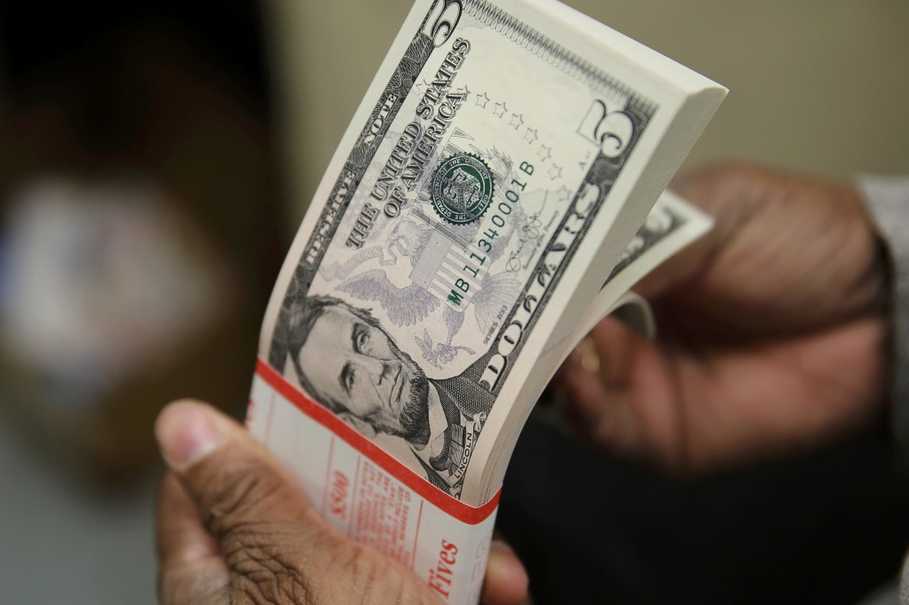
    The U.S. Trade Representative’s office has determined that no tariff action is warranted against Vietnam after its central bank agreed to refrain from “competitive devaluation” of the dong.

    “I commend Vietnam for its commitment to addressing U.S. concerns with its currency practices,” U.S. Trade Representative Katherine Tai said in a statement.

    The recent agreement between the U.S. Treasury and the State Bank of Vietnam “provides a satisfactory resolution of the matter subject to investigation and accordingly that no trade action is warranted at this time,” the statement said.

    Under the agreement, Vietnam committed not to devalue its currency for trade advantage and to make its monetary and exchange rate policies more transparent.

    The deal follows months of U.S. pressure and a rising trade surplus with that country.

    The U.S. had declared Vietnam a currency manipulator and threatened to impose punitive tariffs on its exports.

    Vietnam rejected this repeatedly, saying it did not manipulate its currency for unfair trade advantages.

  • J.P. Morgan Opens Crypto Fund Access to All Wealth Clients

    J.P. Morgan Opens Crypto Fund Access to All Wealth Clients

    J.P. Morgan has reportedly allowed all of its wealth management clients to access cryptocurrencies via funds.

    J.P. Morgan’s wealth management clients gained access to five crypto products, effective July 19.

    Four of the products are from Grayscale Investments and one is from Osprey funds.

    According to the memo, J.P Morgan advisors will only execute unsolicited crypto trades for clients, including those who use the bank’s Chase trading app.

    J.P. Morgan is the latest U.S. bank to ramp up its digital currency offering following global custodian BNY Mellon’s entry into a crypto consortium that includes State Street and six other banks.

  • Vietnam pledges not to devalue currency in agreement with US Treasury

    Vietnam pledges not to devalue currency in agreement with US Treasury

    Vietnam has pledged not to deliberately weaken its dong currency, reaching an agreement with the U.S. Treasury to make its monetary and exchange rate policies more transparent.

    The agreement, announced in a joint statement by Treasury Secretary Janet Yellen and State Bank of Vietnam Governor Nguyen Thi Hong after a virtual meeting on Monday, follows months of U.S. pressure on Vietnam over its currency practices and ballooning U.S. trade surplus.

    The Trump administration in its final weeks had declared Vietnam a currency manipulator and had threatened to impose punitive tariffs on imports from Vietnam.

    Vietnam, which benefited from the shift of U.S. supply chains away from China amid a tariff war, saw its goods trade surplus with the United State jump 25 percent in 2020 to $69.7 billion despite the Covid-19 pandemic. Vietnam is a growing source of U.S. imports of furniture, electronics, computers and apparel.

    In the joint statement, Vietnam confirmed its commitment under International Monetary Fund rules “to avoid manipulating its exchange rate in order to prevent effective balance of payments adjustment or to gain an unfair competitive advantage and will refrain from any competitive devaluation of the Vietnamese dong.”

    The Vietnamese central bank said the focus of its monetary policy framework is “to promote macroeconomic stability and to control inflation.”

    But the central bank agreed to “improve exchange rate flexibility over time,” allowing the dong to move in line with the development of the country’s markets and economic fundamentals, and to further modernize and make more transparent its monetary policy and exchange rate framework.

    The Treasury said it would inform other U.S. government agencies about the agreement to address U.S. concerns.

    “I believe the State Bank of Vietnam’s attention to these issues over time not only will address Treasury’s concerns, but also will support the further development of Vietnam’s financial markets and enhance its macroeconomic and financial resilience,” Yellen said in the statement.

    The Treasury under Yellen in April removed a “currency manipulator” label from Vietnam that had been imposed by the Trump administration last December. But the Treasury said that Vietnam, along with Taiwan and Switzerland, had tripped its thresholds for the designation under a 2015 law.

    The department at the time said it would commence “enhanced engagement” with Hanoi to correct the situation, which led Vietnam’s foreign currency intervention and global current account surplus to exceed 2 percent of its GDP.

  • Vietnam to trial virtual currency

    Vietnam to trial virtual currency

    The Vietnamese government has ordered its central bank to study virtual money using blockchain technology over three years amid rising interests in this type of currency.

    The State Bank of Vietnam will be in charge of studying and trialing the use of virtual money from this year until 2023 as part of key objects in mastering core technologies, according to a government decision.

    The government does not give a clear definition of virtual currency and assets.

    For now, cryptocurrencies remain an illegal means of transaction in Vietnam. However, the trading of Bitcoin and the like is popular with many investors using foreign platforms and social media to make money from this asset.

    Vietnam has the second-highest rate of cryptocurrency usage among 74 economies, according to a survey by market researcher Statista.

  • Hong Kong Explores Central Bank Digital Currency

    Hong Kong Explores Central Bank Digital Currency

    The Hong Kong Monetary Authority is exploring the feasibility of issuing a digital currency for the city, joining central banking efforts worldwide to create electronic money.

    A paper exploring the feasibility of issuing a retail-focused central bank digital currency (CBDC) will be delivered within 12 months, according to the HKMA at a recent media briefing.

    Issues that will be considered in the paper include potential use cases, data privacy, anti-money laundering standards, and more.

    In addition, HKMA officials also announced a new trial to explore how Hong Kong residents can top up a digital yuan wallet using the city’s local payment system.

    People are now a lot more used to digital payments and if other central banks are exploring possible use cases for CBDCs you have to try out to see whether you can make it successful, said HKMA chief executive Eddie Yue at the briefing.

    This marks the second stage of e-CNY trials in Hong Kong following a smaller scale trial also focused on the usage of digital yuan wallets in Hong Kong.

  • MAS Teases Multi-Currency Payment System for Digital Currencies

    MAS Teases Multi-Currency Payment System for Digital Currencies

    The Monetary Authority of Singapore (MAS) discussed the creation of a common platform for international payment settlements that will be more efficient than current arrangements.

    While there is growing global interest in the issuance of Central Bank Digital Currencies (CBDCs) for domestic payments, multiple CBDC (m-CBDC) arrangements could lead to a significant improvement in the speed, cost and transparency of cross-border payments, MAS said.

    In a blog post on Thursday by Toh Wee Kee, specialist leader (distributed ledger technology), MAS discussed unbundling the digital currency stack to improve governability of m-CBDC networks and create a viable path towards making m-CBDC arrangements a reality.

    MAS is partnering with the BIS Innovation Hub and the central banking community on Project Dunbar to design, develop and test new m-CBDC models for cross-border settlement, Toh said in the blog post.

    The central bank previously developed a prototype multi-currency wholesale settlement network, which enabled issuance or distribution of different digital currencies on a common network, as part of Project Ubin.

    You will soon hear about the commercial launch of a multi-currency payment system for digital currencies, Sopnendu Mohanty, MAS chief fintech officer, said in a LinkedIn post.

    We feel strongly about sharing our experience and contribute towards advancing central banks’ interest on m-CBDCs, he added.

  • HSBC Swims Against Crypto Tide

    HSBC Swims Against Crypto Tide

    The bank banned customers of its online trading platform InvestDirect from adding MicroStrategy stock to their portfolios, calling them a «virtual currency product.

    HSBC has no appetite for direct exposure to virtual currencies [VCs] and limited appetite to facilitate products or securities that derive their value from VCs,» a HSBC spokesperson said in a statement.

    Last week, a message from the bank to InvestDirect customers dated March 29 surfaced on social media, saying that it will only allow the holding, sale and outgoing transfer of MicroStrategy shares, and will ban new purchases or incoming transfers.

    MicroStrategy, a business intelligence and cloud-based software company founded in 1989 by bitcoin evangelist Michael Saylor, currently holds about $5.5 billion in bitcoin, or about 80 percent of its $6.8 billion market capitalization.

    The company adopted a policy last year to primarily hold bitcoin instead of cash, and has been purchasing the cryptocurrency with its extra cash and paying its directors in BTC.

    HSBC said the ban on MicroStrategy follows its policy on cryptocurrencies, which has been in place since 2018. Its move comes against the growing number of financial firms and companies that are embracing cryptocurrencies.

    Other companies that also have large holdings of bitcoin on their balance sheets include carmaker Tesla and payments processor Square, though it is not clear if a similar ban would apply to their shares.

    Goldman Sachs has said it would offer investments in bitcoin and other digital assets to its wealth clients, while Morgan Stanley will roll out a bitcoin offering to wealth management clients.

    Outside of the U.S., notable global banks that have also launched crypto offerings include Standard Chartered and DBS.

    MicroStrategy shares soared on Tuesday, up about 18 percent to $848.5, as the price of bitcoin reached a new high of $63,000, 7 percent higher than the day before.

    The surge in investor interest comes ahead of a hotly anticipated direct listing of CoinBase, the U.S.’ largest cryptocurrency exchange, on Nasdaq on Wednesday.

  • GIC Bets on Digital Assets

    GIC Bets on Digital Assets

    The blue chip-focused Singapore sovereign wealth fund has invested in a crypto bank, in a signal that digital assets are here to stay.

    In an announcement on its blog last week, U.S.-based digital asset bank Anchorage said it raised $80 million in a Series C funding round led by GIC.

    Joining the sovereign wealth fund were U.S. venture capital firms Andreessen Horowitz, Blockchain Capital, and Lux, as well as Portuguese fund Indico.

    Anchorage said the new capital will allow it to «rapidly scale to meet the rising demand for participation in the digital asset space, particularly among corporations and traditional financial institutions.»

    It also said that it wants to be a crypto partner to neo banks, challenger banks, and traditional banks, and make institutional decentralized finance (DeFi) participation accessible.

    In 2018, GIC was among investors who raised $300 million for Coinbase, a digital currency exchange headquartered in San Francisco, California.

    The news came as a surprise as CEO Lim Chow Kiat previously said that GIC would avoid crypto-related investments as it goes against GIC’s investment mandate, which is «to preserve and enhance the international purchasing power of Singapore’s financial reserves.»

  • Google Pay continues to expand in the US, nearly 90 new banks now supported

    Google Pay continues to expand in the US, nearly 90 new banks now supported

    Google Pay is pretty big in the US, and starting this week it will get even bigger. Currently, thousands of banks and financial institutions offer customers support for Google Pay, so the 89 names added this week will probably feel like a grain in the sand.

    The list of 89 banks that now support Google Pay is below, so if you didn’t find yours among the 3,000 supported banks listed on Google’s support site, you can look for it here. The list is ordered alphabetically for easier reading

    1st Trust Bank, Inc. (KY), Algonquin State Bank, Alliance Bank Central Texas (TX), Bank of Advance (MO), Bank of Herscher (IL), Bank of Newington (GA), Bank of Old Monroe (MO), Bossier Federal Credit Union (LA), Buckeye State Bank (OH), Central Valley Community Bank, Clean Energy Federal Credit Union (CO), Clearwater Credit Union, Community Partners Savings Bank (IL), Dover Federal Credit Union (DE), E-Central Credit Union, Exchange Bank of Northeast Missouri (MO), Families and Schools Together Federal Credit Union, Farmers – Merchants Bank of Illinois (IL), Farmers and Drovers Bank, Financial Horizons Credit Union, First Century Bank (TN), First Federal Savings Bank (IN), First Financial Bank, NA.

    First Nebraska Bank, FirstCapital Bank of Texas, Fort Davis State Bank Franklin Mint Federal Credit Union, Gateway Metro Federal Credit Union, Genoa Community Bank, Gowanda Area Federal Credit Union, GreenState Credit Union (IA), Greenville Heritage Federal Credit Union, Gulf Capital Bank (TX), HNB First Bank (AL), Hardin County Savings Bank (IA), Harris County Federal Credit Union (TX), Heartland Credit Union (IL), Heartland Credit Union (MI), Honolulu Fire Department FCU (HI), Hurricane Creek Federal Credit Union (AR)

    Jersey State Bank (IL), Jolt Credit Union (MI), KSW Federal Credit Union, Lakeview Federal Credit Union, Latrobe Area Hospital FCU (PA), Live Life Federal Credit Union, Magnolia Bank (KY), Martha’s Vineyard Savings Bank (MA), Millyard Bank (NH), Minnwest Bank (MN), Mountain Credit Union (NC), Mt. McKinley Bank, Needham Bank (MA), Northwest Christian Credit Union, One Community Bank (WI), One Source Federal Credit Union (TX), Partners Bank of California, Pawtucket Credit Union, People’s United Bank, National Association (CT).

    Peoples Bank & Trust Co (MO), Plains Commerce Bank Raritan Bay Federal Credit Union Rio Grande Valley Credit Union, Rollstone Bank & Trust (MA), SPE Federal Credit Union (PA), Sabine Federal Credit Union, Saco Valley Credit Union, Safra National Bank of New York (NY), San Luis Valley Federal Bank, Savings Bank of Walpole (NH), Secured Advantage, Federal Credit Union, Sentry Credit Union (WI), Southbridge Credit Union (MA).

    Springfield First Community Bank, St. Louis Bank, Susquehanna Valley Federal Credit Union, Taunton Federal Credit Union, Telcomm Credit Union (MO), Texas Regional Bank, The Bank of Salem (MO), The New Orleans Firemen’s Federal Credit Union, Treasury Department Federal Credit Union (DC), TruStar Federal Credit Union (MN), United Credit Union, Varo Bank, National Association, WESLA Federal Credit Union, WESTcoasin Credit Union (WI), Wells River Savings Bank (VT), and WestStar Bank (TX).

    Ok, 3,000 is a big number, but there’s a chance that many Google Pay users won’t find their banks on this huge list. Well, judging by the constant wave of banks and financial institutions that are getting Google Pay support each month, sooner or later we’ll be able to use the mobile payment service across all America.